

Acta Chimica Sinica ›› 2025, Vol. 83 ›› Issue (11): 1293-1299.DOI: 10.6023/A25050156 Previous Articles Next Articles
Special Issue: “中国青年化学家”合辑
Communication
成泽恺a, 温子扬a, 李红卫b, 李娜a,*( ), 王欢a,*()
投稿日期:2025-05-11
发布日期:2025-08-12
作者简介:★ “中国青年化学家”专辑.
基金资助:
Cheng Zekaia, Wen Ziyanga, Li Hongweib, Li Naa,*(), Wang Huana,*()
Received:2025-05-11
Published:2025-08-12
Contact:
*E-mail: About author:★For the VSI “Rising Stars in Chemistry”.
Supported by:Share
Cheng Zekai, Wen Ziyang, Li Hongwei, Li Na, Wang Huan. Rotational Diffusion Kinetics of Copper (I) Catalyzed Alkyne-Azide Cycloaddition Reactions★[J]. Acta Chimica Sinica, 2025, 83(11): 1293-1299.
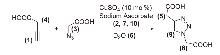


| [1] |
(a)
doi: 10.1021/ar0001719 |
|
(b)
doi: 10.1119/1.10903 |
|
|
(c)
doi: 10.1021/acs.chemrev.9b00819 |
|
| [2] |
(a)
doi: 10.1126/science.279.5350.527 pmid: 11163133 |
|
(b)
pmid: 11163133 |
|
|
(c)
doi: 10.1016/s0955-0674(00)00173-3 pmid: 11163133 |
|
|
(d)
doi: 10.1038/nrm4084 pmid: 11163133 |
|
|
(e)
doi: 10.1186/s13578-020-00522-z pmid: 11163133 |
|
|
(f)
pmid: 11163133 |
|
|
(g)
doi: 10.6023/A23040151 pmid: 11163133 |
|
|
(杜思南, 赵丽曼, 张泽新, 陈国颂, 化学学报, 2023, 81, 741.)
doi: 10.6023/A23040151 pmid: 11163133 |
|
| [3] |
(a)
doi: 10.1039/b818609j |
|
(b)
doi: 10.1038/nature10587 |
|
|
(c)
doi: 10.1126/science.1094791 |
|
|
(d)
doi: 10.6023/A23040190 |
|
|
(郑靖, 刘金坤, 曾国超, 罗淳译, 吴广磊, 侯旭, 化学学报, 2023, 81, 1394.)
doi: 10.6023/A23040190 |
|
|
(e)
doi: 10.3866/PKU.WHXB201803024 |
|
|
(柳平英, 刘春艳, 刘倩, 马晶, 物理化学学报, 2018, 34, 1171.)
|
|
| [4] |
(a)
doi: 10.1021/acs.chemrev.9b00288 pmid: 17878982 |
|
(b)
doi: 10.1021/jacs.0c13388 pmid: 17878982 |
|
|
(c)
pmid: 17878982 |
|
| [5] |
(a)
doi: 10.1039/C2NR32518G pmid: 26019728 |
|
(b)
pmid: 26019728 |
|
|
(c)
doi: 10.1038/ncomms14384 pmid: 26019728 |
|
| [6] |
doi: 10.1126/science.aba8425 |
| [7] |
doi: 10.1021/jacs.2c13172 |
| [8] |
(a)
pmid: 35078321 |
|
(b)
doi: 10.1021/jacs.1c09455 pmid: 35078321 |
|
|
(c)
doi: 10.1021/jacs.1c11754 pmid: 35078321 |
|
|
(d)
doi: 10.1002/anie.v58.52 pmid: 35078321 |
|
| [9] |
(a)
doi: 10.1021/acs.jpclett.1c00066 pmid: 33656893 |
|
(b)
pmid: 33656893 |
|
| [10] |
doi: 10.1021/acs.jpcb.9b00895 |
| [11] |
doi: 10.1021/ja102296k |
| [12] |
(a)
doi: 10.1021/ac504028n pmid: 35424604 |
|
(b)
doi: 10.1039/d2ra00058j pmid: 35424604 |
|
| [13] |
doi: 10.1002/mrc.v52.10 |
| [14] |
|
| [15] |
(a)
doi: 10.1021/acs.jchemed.0c00663 |
|
(b)
|
|
| [16] |
(a)
doi: 10.1038/s41570-021-00281-6 |
|
(b)
doi: 10.7498/aps |
|
|
(马奥杰, 陈颂佳, 李玉秀, 陈颖, 物理学报, 2021, 70, 148201.)
|
|
| [17] |
(a)
doi: 10.1016/j.ccr.2011.06.028 |
|
(b)
doi: 10.1002/anie.v46:12 |
|
|
(c)
doi: 10.1002/anie.v54.10 |
|
|
(d)
|
|
|
(e)
doi: 10.1002/tcr.201600002 |
|
| [18] |
(a)
doi: 10.1016/j.aca.2020.05.061 pmid: 20232898 |
|
(b)
doi: 10.1021/cr900267p pmid: 20232898 |
|
|
(c)
pmid: 20232898 |
|
|
(d)
pmid: 20232898 |
| [1] | LIU Xia; LIU Shou-Xin*; LI Fang; FANG Yu; WANG Yi-Juan; YU Juan. Complexation between P(AA-g-NIPAM) and PNIPAM Studied by Fluorescence Techniques [J]. Acta Chimica Sinica, 2007, 65(19): 2163-2168. |
| Viewed | ||||||
|
Full text |
|
|||||
|
Abstract |
|
|||||
