Acta Chimica Sinica ›› 2026, Vol. 84 ›› Issue (9): 1399-1404.DOI: 10.6023/A26070262 Previous Articles Next Articles
Communication
彭佳a,†, 杨云a,†, 蔡迎丽a, 易荣楠b,*( ), 姜东方c, 唐裕才d,e, 吴超a,*(), 叶龙武a,*(), 何卫民a,*()
投稿日期:2026-07-23
发布日期:2026-08-17
通讯作者:
易荣楠, 吴超, 叶龙武, 何卫民
作者简介:† 共同第一作者
基金资助:
Jia Penga, Yun Yanga, Yingli Caia, Rongnan Yib,*(), Dongfang Jiangc, Yucai Tangd,e, Chao Wua,*(), Longwu Yea,*(), Weimin Hea,*()
Received:2026-07-23
Published:2026-08-17
Contact:
Rongnan Yi, Chao Wu, Longwu Ye, Weimin He
About author:† The authors contributed equally to this work.
Supported by:Share
Jia Peng, Yun Yang, Yingli Cai, Rongnan Yi, Dongfang Jiang, Yucai Tang, Chao Wu, Longwu Ye, Weimin He. Visible-Light-Triggered Self-Catalyzed Tandem Difluoromethylation/Cyclization of 2-Isocyanobiphenyls with Alkyl Bromodifluoroacetates[J]. Acta Chimica Sinica, 2026, 84(9): 1399-1404.
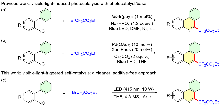
| Entry | Varying from the standard conditions | Yieldb/% |
|---|---|---|
| 1 | None | 83 |
| 2 | LED (405 nm, 10 W) was used | 76 |
| 3 | LED (385 nm, 10 W) was used | 71 |
| 4 | LED (425 nm, 10 W) was used | 68 |
| 5 | LED (455 nm, 10 W) was used | 60 |
| 6 | LED (415 nm, 8 W) was used | 61 |
| 7 | 2-MeTHF was used | 78 |
| 8 | 1,4-Dioxane was used | 33 |
| 9 | MeCN was used | 39 |
| 10 | DCE was used | N.R. |
| 11 | DMSO was used | N.R. |
| 12 | Without 4 Å MS | 43 |
| 13 | Without light | N.R. |
| 14 | Under Air | Trace |
| Entry | Varying from the standard conditions | Yieldb/% |
|---|---|---|
| 1 | None | 83 |
| 2 | LED (405 nm, 10 W) was used | 76 |
| 3 | LED (385 nm, 10 W) was used | 71 |
| 4 | LED (425 nm, 10 W) was used | 68 |
| 5 | LED (455 nm, 10 W) was used | 60 |
| 6 | LED (415 nm, 8 W) was used | 61 |
| 7 | 2-MeTHF was used | 78 |
| 8 | 1,4-Dioxane was used | 33 |
| 9 | MeCN was used | 39 |
| 10 | DCE was used | N.R. |
| 11 | DMSO was used | N.R. |
| 12 | Without 4 Å MS | 43 |
| 13 | Without light | N.R. |
| 14 | Under Air | Trace |
| [1] |
(a)
doi: 10.1021/acs.chemrev.1c00311 |
|
(b)
doi: 10.1016/j.cclet.2024.110469 |
|
|
(c)
doi: 10.6023/A24030090 |
|
|
(李康葵, 龙先扬, 黄岳, 祝诗发, 化学学报, 2024, 82, 658.)
doi: 10.6023/A24030090 |
|
|
(d)
doi: 10.1039/D6OB00896H |
|
|
(e)
|
|
| [2] |
(a)
doi: 10.6023/A24100329 |
|
(辛翠, 蒋俊, 邓紫微, 欧丽娟, 何卫民, 化学学报, 2024, 82, 1109.)
doi: 10.6023/A24100329 |
|
|
(b)
doi: 10.1016/j.cclet.2024.110568 |
|
|
(c)
doi: 10.1016/j.cclet.2025.111070 |
|
|
(d)
doi: 10.1016/j.cclet.2024.110446 |
|
|
(e)
doi: 10.1039/D5OB01627D |
|
|
(f)
doi: 10.1021/acs.orglett.6c00194 |
|
|
(g)
doi: 10.1038/s41467-026-68969-1 |
|
|
(h)
doi: 10.1016/S1872-2067(26)65170-4 |
|
| [3] |
(a)
doi: 10.1021/acs.orglett.3c02073 |
|
(b)
doi: 10.1021/acs.joc.5c02108 |
|
|
(c)
doi: 10.1039/D5QO00540J |
|
|
(d)
doi: 10.1021/acs.joc.5c02090 |
|
|
(e)
doi: 10.1039/D5CC04878H |
|
|
(f)
doi: 10.6023/cjoc202511006 |
|
|
(鄢东, 何卫保, 唐裕才, 辛翠, 杨梓, 陈祥, 有机化学, 2026, 46, 2327.)
doi: 10.6023/cjoc202511006 |
|
|
(g)
doi: 10.1002/ejoc.v29.34 |
|
|
(h)
|
|
| [4] |
(a)
doi: 10.1039/D3CC03317A |
|
(b)
|
|
|
(c)
doi: 10.1016/j.cclet.2024.109514 |
|
|
(d)
doi: 10.1039/D5CC04758G |
|
|
(e)
|
|
|
(f)
doi: 10.1021/acs.joc.6c00202 |
|
|
(g)
doi: 10.1021/acs.orglett.6c01403 |
|
|
(h)
doi: 10.1021/acs.orglett.6c00743 |
|
| [5] |
(a)
|
|
(徐毅栲, 王泽树, 何卫民, 叶龙武, 有机化学, 2024, 44, 2049.)
doi: 10.6023/cjoc202400029 |
|
|
(b)
doi: 10.6023/cjoc202400014 |
|
|
易荣楠, 何卫民, 有机化学, 2024, 44, 1035.
doi: 10.6023/cjoc202400014 |
|
|
(c)
doi: 10.1016/S1872-2067(23)64615-7 |
|
|
(d)
doi: 10.1016/S1872-2067(25)64764-4 |
|
|
(e)
doi: 10.1021/acs.joc.5c01813 |
|
|
(f)
doi: 10.6023/cjoc202500013 |
|
|
(鄢东, 何卫民, 有机化学, 2025, 45, 1781.)
doi: 10.6023/cjoc202500013 |
|
|
(g)
doi: 10.1021/acs.orglett.6c02556 |
|
|
(h)
doi: 10.1021/acs.orglett.5c04925 |
|
| [6] |
(a)
doi: 10.1021/acs.joc.5c02498 |
|
(b)
doi: 10.1021/acs.joc.5c02000 |
|
|
(c)
doi: 10.1021/acs.joc.6c00085 |
|
|
(d)
doi: 10.1016/j.cclet.2025.111402 |
|
|
(e)
doi: 10.1016/j.cclet.2025.111776 |
|
|
(f)
doi: 10.1039/D5OB01848J |
|
|
(g)
doi: 10.1021/acs.joc.6c00230 |
|
| [7] |
(a)
doi: 10.1039/D3CS00190C |
|
(b)
doi: 10.1039/D4QO00249K |
|
|
(c)
doi: 10.1021/acs.joc.5c01659 |
|
|
(d)
doi: 10.1021/acs.orglett.5c00220 |
|
|
(e)
doi: 10.1039/D6QO00369A |
|
|
(f)
doi: 10.6023/cjoc202601030 |
|
|
(李婷, 欧阳文韬, 易荣楠, 唐欲才, 杨梓, 吴超, 何卫民, 有机化学, 2026, 46, 1668.)
doi: 10.6023/cjoc202601030 |
|
|
(g)
doi: 10.1021/acs.joc.6c01356 |
|
|
(h)
doi: 10.1021/acs.joc.6c01501 |
|
| [8] |
(a)
doi: 10.6023/A23080386 |
|
(李珊, 路俊欣, 刘杰, 蒋绿齐, 易文斌, 化学学报, 2024, 82, 110.)
doi: 10.6023/A23080386 |
|
|
(b)
doi: 10.1016/j.cclet.2024.109986 |
|
|
(c)
doi: 10.1016/j.jfluchem.2026.110527 |
|
| [9] |
(a)
|
|
(b)
doi: 10.1021/acs.joc.5c01666 |
|
|
(c)
doi: 10.1021/acs.orglett.6c00531 |
|
|
(d)
doi: 10.1039/D6CC01889K |
|
|
(e)
|
|
| [10] |
doi: 10.1021/jm300943r |
| [11] |
(a)
doi: 10.1007/s11030-023-10743-2 |
|
(b)
doi: 10.6023/A25040113 |
|
|
(唐俊鸿, 周聪颖, 王成明, 化学学报, 2025, 83, 557.)
doi: 10.6023/A25040113 |
|
|
(c)
doi: 10.6023/A25060202 |
|
|
(彭琼慧, 彭佳, 蔡迎丽, 王祖利, 易荣楠, 沈超, 何卫民, 化学学报, 2025, 83, 1013.)
doi: 10.6023/A25060202 |
|
|
(d)
|
|
|
(e)
doi: 10.1002/cjoc.v43.12 |
|
|
(f)
doi: 10.1021/acs.joc.5c02796 |
|
| [12] |
(a)
doi: 10.1021/ol501081h |
|
(b)
doi: 10.1021/acs.orglett.5b02739 |
|
|
(c)
doi: 10.1002/ejoc.v2017.22 |
|
|
(d)
doi: 10.1039/C8QO00887F |
|
|
(e)
doi: 10.1021/acs.orglett.2c03148 |
|
| [13] |
doi: 10.1002/anie.201308376 pmid: 24222447 |
| [14] |
doi: 10.1016/j.tet.2022.132939 |
| [15] |
(a)
doi: 10.6023/cjoc202401010 |
|
(王家晟, 王泽树, 何卫民, 叶龙武, 有机化学, 2024, 44, 1786.)
doi: 10.6023/cjoc202401010 |
|
|
(b)
doi: 10.6023/cjoc202506034 |
|
|
(何卫保, 易荣楠, 杨梓, 伍智林, 何卫民, 有机化学, 2025, 45, 3534.)
|
|
|
(c)
doi: 10.6023/A25050173 |
|
|
(文延萃, 朱丽君, 易荣楠, 沈超, 祝海涛, 王祖利, 何卫民, 化学学报, 2025, 83, 1124.)
doi: 10.6023/A25050173 |
|
|
(d)
doi: 10.1016/j.cclet.2025.111795 |
|
|
(e)
doi: 10.6023/cjoc202501016 |
|
|
(伍智林, 罗伟, 丁柔, 辛翠, 王从洋, 何卫民, 有机化学, 2025, 45, 3691.)
|
|
|
(f)
doi: 10.1021/acs.joc.6c00337 |
|
|
(g)
doi: 10.1021/acs.joc.6c01075 |
|
| [16] |
(a)
doi: 10.1039/D2QO02019J |
|
(b)
doi: 10.1021/acs.joc.3c02781 |
|
|
(c)
doi: 10.1039/D0GC03761C |
| [1] | Zijie Zeng, Ziling Peng, Chen Wang, Fatang Tan, Xinyun Wang, Po Keung Wong, Wei Wang. Study on the Nitrogen Vacancy in Carbon Nitride Photocatalysts for Visible-Light-Driven H2O2 Production [J]. Acta Chimica Sinica, 2026, 84(6): 879-887. |
| [2] | Chencheng Wang, Banlai Ouyang, Pinyong Zhong, Yingrong Zhang, Jinbiao Liu. Photocatalyzed Desulfurative Cyclization of 2-Aminobenzyl Alcohols and Isothiocyanates for the Synthesis of 2-Amino-1,3-Benzoxazines [J]. Acta Chimica Sinica, 2026, 84(1): 1-7. |
| [3] | Qionghui Peng, Jia Peng, Yingli Cai, Zuli Wang, Rongnan Yi, Chao Shen, Weimin He. Ph2O-Mediated CeO2-Photocatalyzed Semi-Heterogeneous Fluoroalkylation of 2-Isocyanobiaryls [J]. Acta Chimica Sinica, 2025, 83(9): 1013-1017. |
| [4] | Junhong Tang, Congying Zhou, Chengming Wang. Iminyl Radicals from Acyl Oximes by N-Heterocyclic Carbene Catalysis: A Rapid Approach to Phenanthridines [J]. Acta Chimica Sinica, 2025, 83(6): 557-562. |
| [5] | Min Yang, Baibai Ye, Jianqiang Chen, Jie Wu. Visible-light Photocatalytic Alkylsulfonylation of Aroylhydrazides with Alkylsulfonyl Radicals [J]. Acta Chimica Sinica, 2022, 80(1): 11-15. |
| [6] | Dong Kui, Liu Qiang, Wu Li-Zhu. Cross-Coupling Hydrogen Evolution Reactions [J]. Acta Chimica Sinica, 2020, 78(4): 299-310. |
| [7] | Chen, Yilin, Chang, Liang, Zuo, Zhiwei. Visible Light Photoredox-Induced Smiles Rearrangement [J]. Acta Chimica Sinica, 2019, 77(9): 794-802. |
| [8] | Dai, Jianling, Lei, Wenlong, Liu, Qiang. Visible-Light-Driven Difluoroalkylation of Aromatics Catalyzed by Copper [J]. Acta Chimica Sinica, 2019, 77(9): 911-915. |
| [9] | Liu Ruxue, He Xiaoyan, Niu Litong, Lv Bolin, Yu Fei, Zhang Zhe, Yang Zhiwang. Hierarchical In2S3/CdIn2S4 Heterostructured Nanohybrids as Photocatalyst for Coupling of Benzyl Amines under Visible Light [J]. Acta Chim. Sinica, 2019, 77(7): 653-660. |
| [10] | Ma Yali, Liu Ruxue, Meng Shuangyan, Niu Litong, Yang Zhiwang, Lei Ziqiang. Preparation and Photocatalytic Activity of Fe-ZrO2 Composites from UiO-66 Precursor under Visible Light Irritation [J]. Acta Chimica Sinica, 2019, 77(2): 153-159. |
| [11] | OU FA;WU FUGEN. Critical phenomena of the bistability in chemical reactions and Landau theory of phase transitions [J]. Acta Chimica Sinica, 1996, 54(3): 218-225. |
| Viewed | ||||||
|
Full text |
|
|||||
|
Abstract |
|
|||||