Article

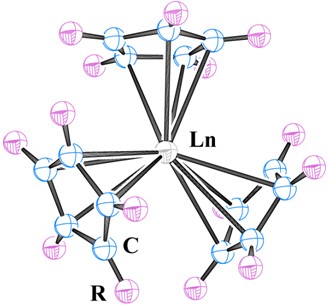
Theoretical Investigations on Tris(pentamethylcyclopentadienyl) Rare Earth Metal Complexes (C5Me5)3Ln (Ln=Sc, Y, La)

  • Qiu Yixiang ,
  • Wang Shuguang
Expand
  • School of Chemistry and Chemical Technology, Shanghai Jiaotong University, Shanghai 200240

Received date: 2012-04-01

  Online published: 2012-08-06

Supported by

Project supported by the National Natural Science Foundation of China (No. 20973109).

Abstract

The molecular geometric and electronic structures of tris(pentamethylcyclopentadienyl) rare earth metal complexes (C5Me5)3Ln (Ln=Sc, Y, La) were investigated by means of ab initio HF, MP2 and density functional theory (DFT) methods. The bonding energies of Ln-C5Me5 were also analyzed on the basis of calculations. To study the effect of the exchange-correlation (XC) functional on the structural parameters and bonding energies, LDA (Xα, SVWN3, SVWN5), GGA (BP86, BLYP), meta-GGA (TPSS) and hybrid (B3LYP, PBE0, TPSSh, M06, M06-HF, M06-2X) functionals have been used. Calculations were carried out with the TZVPP basis sets. The geometry structural parameters from the different methods were compared to the experimental values. The Ln-C distance of (C5Me5)3Ln shows a dramatic reduction of about 15 pm from HF to MP2 level. These differences demonstrates the importance of electron correlation on the Ln-C5Me5 bonds. In (C5Me5)3Ln complexes, the geometric parameters differ much for different DFT exchange-correlation functional. For the Ln-C bond length, the theoretical values closest to the experiment were the M06-2X and M06 methods, with the deviation of only 1.2 and 2.5 pm, respectively. Thus, the M06-2X methods appear to be the most reliable for predicting the molecular structures of (C5Me5)3Ln. The studies of the electronic structures showed that the (C5Me5)3Ln satisfied the 18-electron rule, so these complexes had high stability. The (n-1)d and ns orbitals of Ln atom had a better overlap with the π orbitals of C5Me5. Our calculations revealed that the geometries of (C5R5)3Ln (R=H, Me) were influenced significantly by the “Ln-C5R5 bonding effect” and “C5R5-C5R5 steric effect”, while the thermal stabilities were influenced by whether atomic radius of Ln was suitable for the ring size of (C5R5)3. Therefore, the introduction of specific substituents into C5R5 could affect the π orbital energies, Ln-C5R5 distance and C5R5-C5R5 distance, and then control the Ln-C5R5 bonding strength and stability of (C5R5)3Ln.

Cite this article

Qiu Yixiang , Wang Shuguang . Theoretical Investigations on Tris(pentamethylcyclopentadienyl) Rare Earth Metal Complexes (C5Me5)3Ln (Ln=Sc, Y, La)[J]. Acta Chimica Sinica, 2012 , 70(18) : 1930 -1938 . DOI: 10.6023/A12040084

References

[1] Schumann, H.; Meesemarktscheffel, J. A.; Esser, L. Chem. Rev. 1995, 95, 865.

[2] Wilkinson, G.; Birmingham, J. M. J. Am. Chem. Soc. 1954, 76, 6210.

[3] Birmingham, J. M.; Wilkinson, G. J. Am. Chem. Soc. 1956, 78, 42.

[4] Schaverien, C. J. Adv. Organomet. Chem. 1994, 36, 283.

[5] Anwander, R.; Herrmann, W. A. Top. Curr. Chem. 1996, 179, 1.

[6] Evans, W. J. Coord. Chem. Rev. 2000, 206, 263.   

[7] Evans, W. J.; Gonzales, S. L.; Ziller, J. W. J. Am. Chem. Soc. 1991, 113, 7423.

[8] Evans, W. J.; Forrestal, K. J.; Leman, J. T.; Ziller, J. W. Organometallics 1996, 15, 527.   

[9] Evans, W. J.; DeCoster, D. M.; Greaves, J. Macromolecules 1995, 28, 7929.   

[10] Evans, W. J.; Forrestal, K. J.; Ziller, J. W. J. Am. Chem. Soc. 1995, 117, 12635.

[11] Evans, W. J.; Forrestal, K. J.; Ziller, J. W. J. Am. Chem. Soc. 1998, 120, 9273.

[12] Evans, W. J.; Forrestal, K. J.; Ansari, M. A.; Ziller, J. W. J. Am. Chem. Soc. 1998, 120, 2180.

[13] Evans, W. J.; Davis, B. L.; Champagne, T. M.; Ziller, J. W. Proc. Natl. Acad. Sci. U. S. A. 2006, 103, 12678.

[14] Evans, W. J.; Davis, B. L.; Ziller, J. W. Inorg. Chem. 2001, 40, 6341.   

[15] Evans, W. J.; Perotti, J. M.; Kozimor, S. A.; Champagne, T. M.; Davis, B. L.; Nyce, G. W.; Fujimoto, C. H.; Clark, R. D.; Johnston, M. A.; Ziller, J. W. Organometallics 2005, 24, 3916.   

[16] Evans, W. J.; Seibel, C. A.; Ziller, J. W. J. Am. Chem. Soc. 1998, 120, 6745.

[17] Min, X.-M. Acta Chim. Sinica 1992, 50, 449. (闵新民, 化学学报, 1992, 50, 449.)

[18] Min, X.-M. Acta Chim. Sinica 1994, 52, 996. (闵新民, 化学学报, 1994, 52, 996.)

[19] Xu, Z.-F.; Xie, Y.-M.; Feng, W.-L.; Schaefer III, H. F. J. Phys. Chem. A 2003, 107, 2716.

[20] Evans, W. J.; Mueller, T. J.; Ziller, J. W. J. Am. Chem. Soc. 2009, 131, 2678.

[21] Ryan, M. F.; Eyler, J. R.; Richardson, D. E. J. Am. Chem. Soc. 1992, 114, 8611.

[22] Sunderlint, L. S.; Armentrout, P. B. J. Am. Chem. Soc. 1989, 111, 3845.

[23] Ephritikhine, M. Chem. Rev. 1997, 97, 2193.

[24] Mueller, T. J.; Ziller, J. W.; Evans, W. J. Dalton Trans. 2010, 39, 6767.   

[25] Weigend, F.; Ahlrichs, R. Phys. Chem. Chem. Phys. 2005, 7, 3297.

[26] TURBOMOLE V6.3 2011, a development of University of Karlsruhe and Forschungszentrum Karlsruhe GmbH, 19892007, TURBOMOLE GmbH, since 2007; available from http://www.turbomole.com.   

Outlines

/