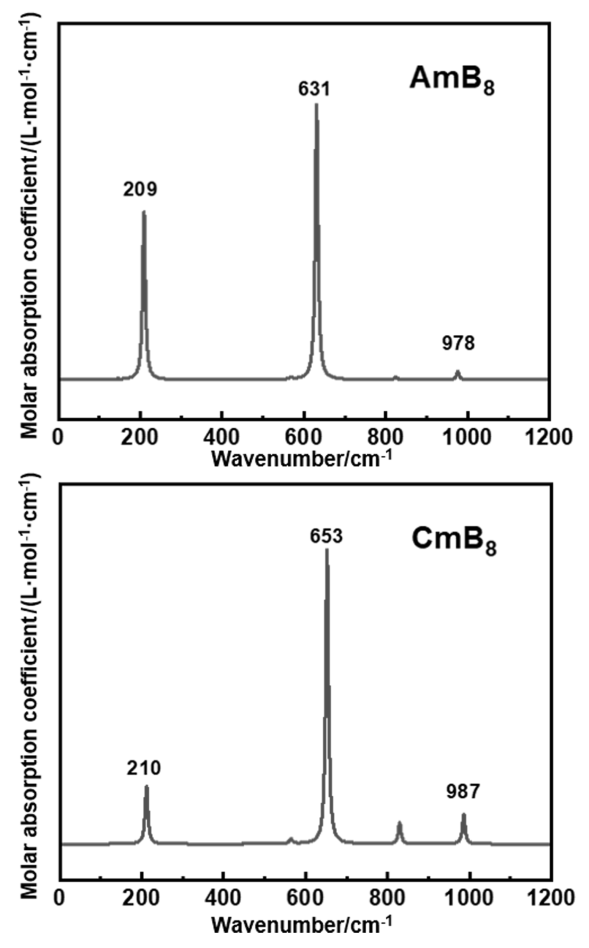
Theoretical studies of divalent actinide complexes AnB8

  • Zhang Naixin ,
  • Shi Weiqun ,
  • Wang Congzhi
Expand
  • aCollege of Nuclear Science and Technology, Harbin Engineering University, Harbin 150001, China;
    bLaboratory of Nuclear Energy Chemistry, Institute of High Energy Physics, Chinese Academy of Sciences, Beijing, 100049, China;
    cInstitute of Nuclear Fuel Cycle and Materials, School of Mechanical Engineering, Shanghai Jiao Tong University, Shanghai, 200240, China

Received date: 2025-08-10

  Online published: 2025-10-11

Supported by

National Natural Science Foundation of China (12175269).

Abstract

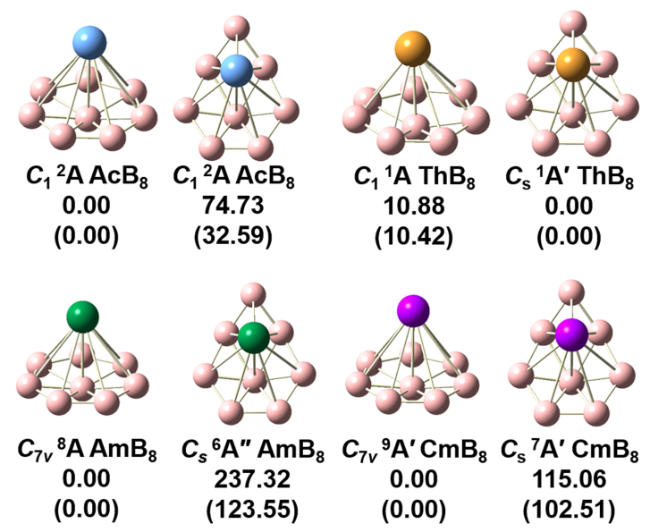
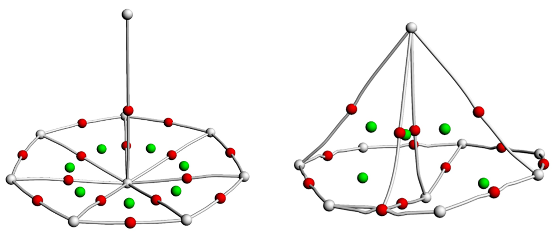
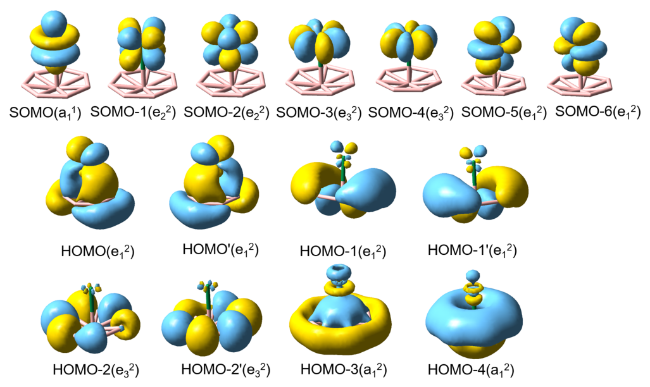
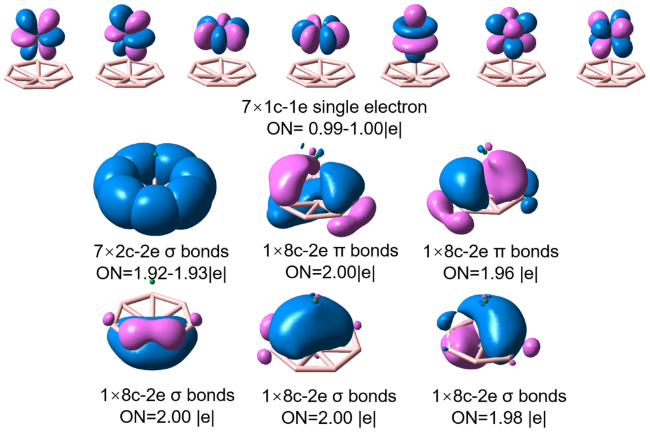
Due to the electron-deficient characteristics of boron, boron clusters exhibit a variety of structures with size changes, and the doping of different metal atoms can further enrich the structures and properties of boron clusters. We investigated a series of actinide metal-doped boron clusters AnB8 (An = Ac, Th, Am, Cm) by using the global minimum structural searches and density functional theory (DFT) methods. For each isomer, different spin states were considered at the PBE0/6-311+G*/RECP and TPSSH/6-311+G*/RECP theoretical levels. It is found that each AnB8 cluster possesses two configurations, half-sandwich and chair-like structures. Except for ThB8, the half-sandwich structures of AcB8, AmB8 and CmB8 are more stable, while the energy difference between the two structures of ThB8 is small, indicating that both may coexist in experiments. The half-sandwich structures of AcB8, ThB8, AmB8, and CmB8 correspond to doublet, singlet, octet, and nonet states, respectively. ThB8 is a closed-shell singlet system, in which the electronic configuration of the Th element may be [Rn]6d2. VDD (Voronoi deformation density) and Hirshfeld charges suggest that charge flows from the actinide elements to the boron ligands. The half-sandwich structures of these boron clusters are stable MII[B82-]-type divalent actinide complexes. Molecular orbital (MO) analysis shows that the An-B bonding orbitals of AcB8 and ThB8 mainly originate from An 6d orbitals, while those of AmB8 and CmB8 are primarily contributed by An 5f orbitals. Other analyses of bonding properties also indicate that there exist covalent interactions between An and B atoms in all complexes, and ThB8 has stronger covalent interactions. For these AnB8 complexes, the B82- ligands show double aromaticity features, which have six delocalized σ electrons and six delocalized π electrons. According to dissociation energy analysis, all the AnB8 complexes are highly stable, especially ThB8. These results indicate that the B82- ligands are capable of stabilizing the divalent actinides.

Cite this article

Zhang Naixin , Shi Weiqun , Wang Congzhi . Theoretical studies of divalent actinide complexes AnB8[J]. Acta Chimica Sinica, 0 : 2 . DOI: 10.6023/A25080276

References

[1] Li W.-L.; Chen Q.; Tian W.-J.; Bai H.; Zhao Y.-F.; Hu H.-S. J. Am. Chem. Soc.,2014, 136, 12257.
[2] Zhai H.-J.; Zhao Y.-F.; Li W.-L.; Chen Q.; Bai H.; Hu H.-S. Nat. Chem.2014, 6, 727.
[3] Piazza Z.-A.; Hu H.-S.; Li W.-L.; Zhao Y.-F.; Li J.; Wang L.-S. Nat. Commun.2014, 5, 3113.
[4] Zhai H.-J.; Alexandrova A.-N.; Birch K.-A.; Boldyrev A.-I.; Wang, L.-S. Angew. Chem. Int. Edit.2003, 42, 6004.
[5] Oger E.; Crawford N.-R.; Kelting R.; Weis P.; Kappes M.-M.; Ahlrichs, R. Angew. Chem. Int. Edit.2007, 46, 8503.
[6] Zhai, H.-J.; Kiran, B.; Li, J.; Wang L.-S. Nat. Mater. 2003, 2, 827.
[7] Zubarev D.-Y.; Boldyrev, A.-I. J Comput. Chem.2007, 28, 251.
[8] Popov I.-A.; Jian T.; Lopez G.-V.; Boldyrev A.-I.; Wang L.-S. Nat. Commun.2015, 6, 8654.
[9] Chen W.-J.; Ma Y.-Y.; Chen T.-T.; Ao M.-Z.; Yuan D.-F.; Chen Q. Nanoscale.2021, 13, 3868.
[10] Sai L.-W.; Wu X.; Gao N.; Zhao J.-J.; King R.-B. Nanoscale.2017, 9, 13905.
[11] Sergeeva A.-P.; Zubarev D.-Y.; Zhai H.-J.; Boldyrev A.-I.; Wang, L.-S. J. Am. Chem. Soc.2008, 130, 7244.
[12] Romanescu C.; Galeev T.-R.; Li W.-L.; Boldyrev A.-I.; Wang L.-S. Angew. Chem. Int. Edit.2011, 50, 9334.
[13] Jiang X.-L.; Dong X.-R.; Xu C.-Q.; Li, J. Phys. Chem. Chem. Phys.2025, 27, 3773.
[14] Jian T.; Chen X.-N.; Li S.-D.; Boldyrev A.-I.; Li J.; Wang, L.-S. Chem. Soc. Rev.2019, 48, 3550.
[15] Li W.-L.; Chen X.; Jian, T; Chen T.-T.; Li J.; Wang, L.-S. Nat. Rev. Chem.2017, 1, 0071.
[16] Barroso J.; Pan S.; Merino, G. Chem. Soc. Rev.2022, 51, 1098.
[17] Hu C.; Gao S.-J.; Liu F.-L.; Zhai H.-J. Chem-Asian J.2025, 8.
[18] Wang, L.-S. Acc. Chem. Res. 2024, 57, 2428.
[19] Galeev T.-R.; Romanescu C.; Li W.-L.; Wang L.-S.; Boldyrev A.-I.Angew. Chem. Int. Edit. 2012, 51, 2101.
[20] Zhai H-J; Miao C-Q; Li S-D; Wang, L-S. J. Phys. Chem. A.2010, 114, 12155.
[21] Wang Y.-J.; Feng L.-Y.; Zhai, H.-J. Phys. Chem. Chem. Phys.2019, 21, 18338.
[22] Liang W.-Y.; Das A.; Dong X.; Cui Z.-H.Phys. Chem. Chem. Phys. 2018, 20, 16202.
[23] Gribanova T.-N.; Minyaev R.-M.; Minkin V.-I. Chem. Phys.2019, 522, 44.
[24] Li H.-R.; Zhang C.; Li S.-D.Acta Chim Sinica. 2022, 80, 888(In Chinese).李海茹, 张层, 李思殿. 化学学报 2022, 80, 888.
[25] Chen, W.-J., Zhang Y.-Y.; Li W.-L.; Choi H.-W.; Li J.; Wang L.-S. Chem. Commun.2022, 58, 3134.
[26] Kulichenko M.; Chen W.-J.; Choi H.-W.; Yuan D.-F.; Boldyrev A.-I.; Wang, L.-S. J. Vac. Sci. Technol. A.2022, 40, 042201.
[27] Galeev T.-R.; Romanescu C.; Li W.-L.; Wang L.-S.; Boldyrev, A.-I. J. Chem. Phys.2011, 135, 104301.
[28] Alexandrova A.-N.; Zhai H.-J.; Wang L.-S.; Boldyrev A.-I. Inorg. Chem.2004, 43, 3552.
[29] Chen W.-J.; Pozdeev A.-S.; Choi H.-W.; Boldyrev A.-I.; Yuan D.-F.; Popov, I.-A. Phys. Chem. Chem. Phys.2024, 26, 12928.
[30] Chen W.-J.; Kulichenko M.; Choi H.-W.; Cavanagh J.; Yuan D.-F.; Boldyrev, A.-I. J. Phys. Chem. A.2021, 125, 6751.
[31] Eulenstein A.-R.; Franzke Y.-J.; Lichtenberger N.; Wilson R.-J.; Deubner H.-L.; Kraus F. Nat. Chem.2021, 13, 1755.
[32] Zhang N.-X.; Wang C.-Z.; Wu Q.-Y.; Lan J.-H.; Chai Z.-F.; Shi, W.-Q. Phys. Chem. Chem. Phys.2022, 24, 5921.
[33] Li W.-L.; Burkhardt. J. Phys. Chem. Chem. Phys.2024, 26, 16091.
[34] Zhang N.-X.; Wu Q.-Y.; Lan J.-H.; Shi W.-Q.; Wang C.-Z. Molecules2024, 29, 5815.
[35] Jiang W.-Y.; DeYonker N.-J.; Wilson, A.-K. J. Chem. Theory. Comput.2012, 8, 460.
[36] Tekarli S.-M.; Drummond M.-L.; Williams T.-G.; Cundari T.-R.; Wilson, A.-K. J. Phys. Chem. A.2009, 113, 8607.
[37] Khan S.-N.; Miliordos, E. J. Phys. Chem. A.2019, 123, 5590.
[38] Wu Q.-Y.; Lan J.-H.; Wang C.-Z.; Cheng Z.-P.; Chai Z.-F.; Gibson J.-K. Dalton Trans.2016, 45, 3102.
[39] Pyykkö, P. Phys. Chem. Chem. Phys.2011, 13, 161.
[40] Pyykkö P; Atsumi, M. Chem. Eur. J.2009, 15, 186.
[41] Guerra C.-F.; Handgraaf J.-W.; Baerends E.-J.; Bickelhaupt, F.-M. J. Comput. Chem.2004, 25, 189.
[42] Hirshfeld, F.-L. Theor. Chim. Acta. 1977, 44, 129.
[43] Bader R.-F.Atoms in molecules: a quantum theory. Clarendon Press; Oxford; New York; 1990.
[44] Becke A.-D.; Edgecombe, K.-E. J. Chem. Phys.1990, 92, 5397.
[45] Zubarev D.-Y.; Boldyrev, A.-I. Phys. Chem. Chem. Phys.2008, 10, 5207.
[46] Wang Y.-C.; Lv J.-A.; Zhu L.; Ma, Y.-M. Phys. Rev. B.2010, 82, 094116.
[47] Wang Y.-C.; Lv J.; Zhu L.; Ma Y.-M.Comput. Phys. Commun. 2012, 183, 2063.
[48] Lv J.; Wang Y.-C.; Zhu L.; Ma, Y.-M. J. Chem. Phys.2012, 137, 084104.
[49] Wang Y.; Miao M.; Lv J.; Zhu L.; Yin K.; Liu, H. J. Chem. Phys.2012, 137, 224108.
[50] Kresse G.; Hafner. J. Phys. Rev. B.1993, 48, 13115.
[51] Kresse G.; Furthmuller. J. Phys. Rev. B.1996, 54, 11169.
[52] Wang C.-Z.; Bo T.; Lan J.-H.; Wu Q.-Y.; Chai Z.-F.; Gibson J.-K. Chem. Commun.2018, 54, 2248.
[53] Li F.-Y.; Jin P.; Jiang D.-E.; Wang L.; Zhang S.-B.; Zhao, J.-J. J. Chem. Phys.2012, 136, 074302.
[54] Yan, L.-J. Inorg. Chem. 2022, 61, 10652.
[55] Zhang N.-X.; Wang C.-Z.; Zhao Y.-B.; Shi, W.-Q. J. Radioanal. Nucl. Chem.2022, 44, 549(In Chinese). 张乃心,王聪芝,赵玉宝,石伟群. 核化学与放射化学,2022, 44, 549.
[56] Zhang N.-X.; Wang C.-Z.; Shi W.-Q.J. Radioanal. Nucl. Chem. 2023, 45, 160(In Chinese).张乃心, 王聪芝, 石伟群.核化学与放射化学,2023, 45, 160.
[57] Burkhardt J.; Chen T.-T.; Chen W.-J.; Yuan D.-F.; Li W.-L.; Wang L.-S. Inorg. Chem.2024, 63, 17215.
[58] Burkhardt J.; Li W.-L.Inorg. Chem.2024, 63, 18313.
[59] Frisch M.-T.; Schlegel H.; Scuseria G.; Robb M.; Cheeseman J.; Scalmani G.; Barone V.; Petersson G.; Nakatsuji H.; Li X.; Caricato M.; Marenich A. V.; Bloino J.; Janesko B. G.; Gomperts R.; Mennucci B.; Hratchian H. P.; Ortiz J. V.; Izmaylov A. F.; Sonnenberg J. L.; Williams-Young, D.; Ding, F.; Lipparini, F.; Egidi, F.; Goings, J.; Peng, B.; Petrone, A.; Henderson, T.; Ranasinghe, D.; Zakrzewski, V. G.; Gao, J.; Rega, N.; Zheng, G.; Liang, W.; Hada, M.; Ehara, M.; Toyota, K.; Fukuda, R.; Hasegawa, J.; Ishida, M.; Nakajima, T.; Honda, Y.; Kitao, O.; Nakai, H.; Vreven, T.; Throssell, K.; Montgomery, J. A., Jr.; Peralta, J. E.; Ogliaro, F.; Bearpark, M.; Heyd, J. J.; Brothers, E. N.; Kudin, K. N.; Staroverov, V. N.; Kobayashi, R.; Normand, J.; Raghavachari, K.; Rendell, A.; Burant, J. C.; Iyengar, S. S.; Tomasi, J.; Cossi, M.; Millam, J. M.; Klene, M.; Adamo, C.; Cammi, R.; Ochterski, J. W.; Martin, R. L.; Morokuma, K.; Farkas, O.; Foresman, J. B.; Fox, D. J. Gaussian 16 , Rev. B.01. Wallingford, CT: Gaussian Ict; 2016.
[60] Lu T.; Chen, F.-W. J. Comput. Chem.2012, 33, 580.
[61] Lu T.J. Chem. Phys. 2024, 161, 082503.
Outlines

/