


1 Introduction
One-pot synthetic strategies enable multiple bond-forming events and sequential transformations to be executed in a single reaction vessel, circumventing intermediate isolation and purification. This streamlined operation can substantially reduce solvent use, energy input, processing time, and overall operational complexity. However, the development of effective one-pot sequences remains nontrivial: successive transformations must be mutually compatible, and components carried over from earlier steps (e.g., byproducts, unconsumed starting materials, catalysts, or excess reagents) can compromise downstream reactivity and selectivity. As a result, simply combining individually optimized steps in a single vessel often proves ineffective in practice. In this context, significant research efforts have been devoted to the development of pot-economical protocols, which are now employed extensively in synthetic and medicinal chemistry.[1]
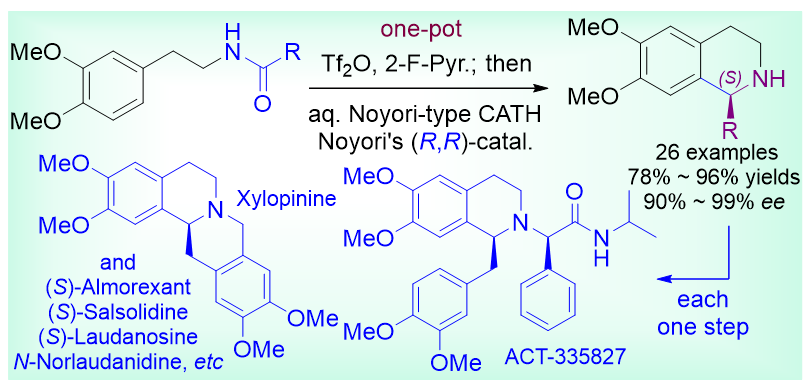
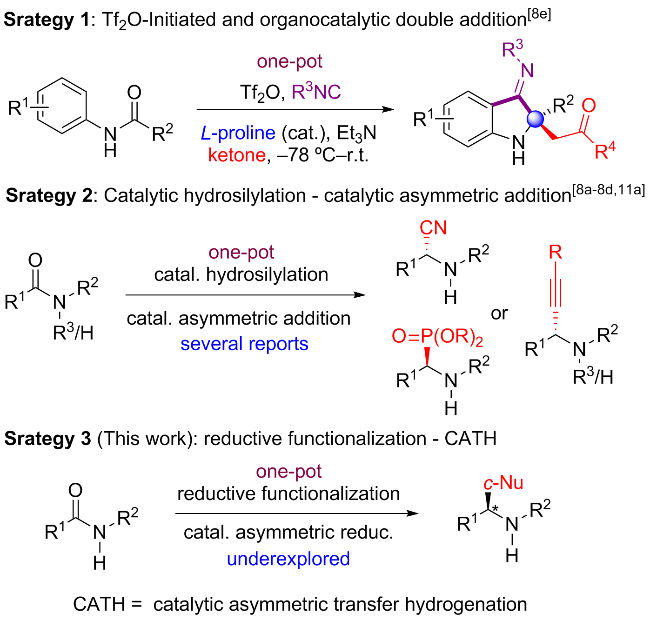
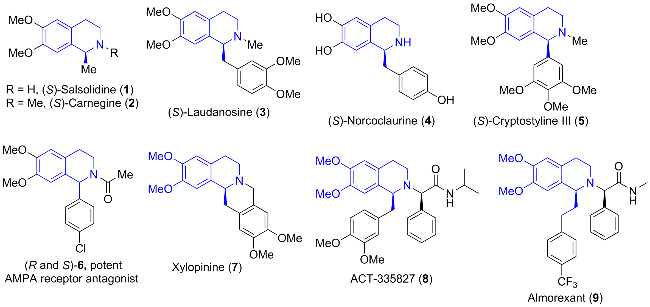
Amides represent a class of highly attractive starting materials in organic synthesis due to their widespread occurrence and high stability, particularly for synthesizing functionalized amine motifs prevalent in bioactive alkaloids and medicinal agents. However, the inherent high stability of amides complicates their direct transformation, traditionally requiring multi-step procedures or harsh reaction conditions with classical reagents such as P2O5, POCl3, and COCl2. Since the seminal work of Ghosez,[2] and significant early contribution of Charette[3] and Movassaghi,[4] triflic anhydride (Tf2O) has proven to be a privileged reagent for amide activation. Over the past fifteen years, major advances have enabled a series of direct, reductive functionalization of amides under mild conditions,[5] driven notably by the contributions from the research groups of Chida/Sato,[5e,6] Dixon,[5f,7] Huang,[5l,8] Pace,[5a,5b,9] Furman,[5h,5i,10] Wang,[11] and others.[12] On the other hand, based on the amide activation, Maulide’s group has developed a series of methods for the non-reductive transformation of amides.[5d,13] Despite these advancements, the direct catalytic enantioselective reductive functionalization of amides to access chiral amines remains a substantial challenge. The first example of the enantioselective reductive transformation of amides dealt with a catalytic reductive bis-functionalization that involves an initial addition of isocyanide, followed by a robust proline-catalyzed enantioselective addition of a ketone, resulting in a variety of 2,2-disubstituted 3-iminoindolines (Scheme 1, Strategy 1).[8e] In 2016, our group developed the Ir/Cu catalyzed reductive alkynylation of amides.[8l] Inspired from this relay catalysis strategy, catalytic asymmetric reductive cyanation and phosphonylation,[8d] and catalytic asymmetric reductive alkynylation[c,11a] and 1,3-dipolar cycloaddition[8a] of amides have been achieved via Ir-catalyzed hydrosilylation with [Si—H][h] followed by catalytic enantioselective addition (Scheme 1, Strategy 2). Strategy 2 benefits from the good compatibility between the relatively unreactive silane used in super-stoichiometric amounts in the initial hydrosilylation (the first stage) and the asymmetric functionalization system (the second stage). Motivated by Strategies 1 and 2, a strategy features first reductive functionalizing amides followed by catalytic enantioselective reduction was envisioned (Strategy 3). We opted for N-arylethylamides as amide substrates to explore this strategy, because the tetrahydroisoquinoline (THIQ) products represent the structural motifs of a series of bioactive alkaloids and “lead compounds” (Figure 1).[14] In addition, on one hand, Tf2O/2-chloropyridine (2-Cl-Pyr.)-mediated Bischler- Napieralski dehydracyclization of amides has been established by Movassaghi,[4b] and on the other hand, Noyori’s seminal work on the catalytic asymmetric transfer hydrogenation (CATH) of cyclic imines[15] paved the way to abovementioned heterocyclic targets. The major issue for merging the two reactions into one-pot protocol arises from the incompatibility of the two reaction systems. This proved to be challenging as can be seen from the fact that, despite several stepwise investigations on this approach have been well conducted,[14,15d,16] the one-pot, catalytic asymmetric reductive transformation of amides to tetrahydroisoquinolines remains elusive. In pursuing our long-term interest in developing methodologies for C—C bond formation through the direct transformation of amides, we were interested in the asymmetric Strategy 3. Herein we report the successful integration of the modified Bischler-Napieralski reaction with Noyori-type CATH to forge a one-pot catalytic asymmetric synthesis of tetrahydroisoquinoline alkaloids from N-arylethylamides.
2 Results and Discussion
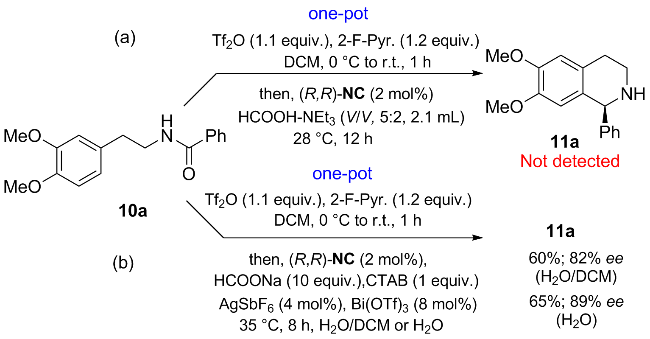
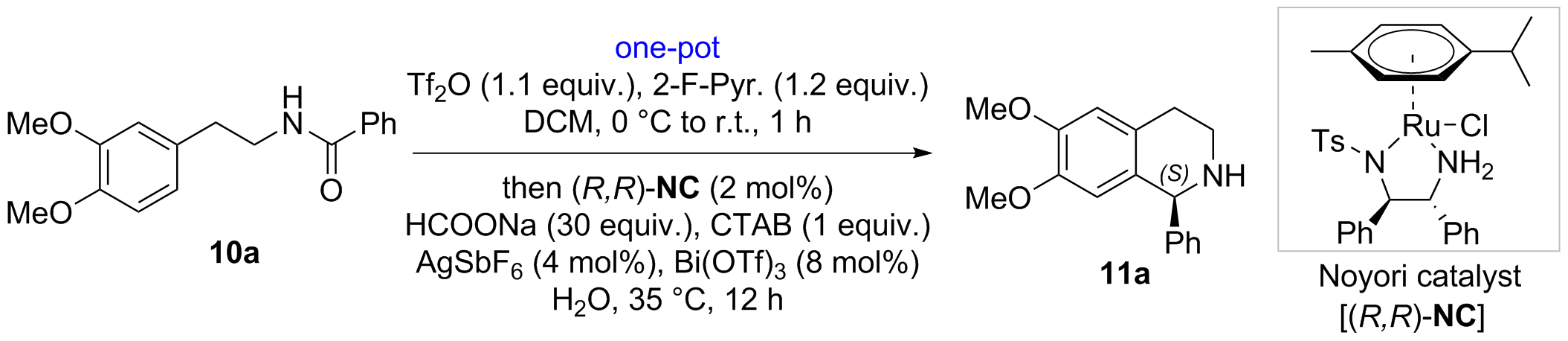
As mentioned in the introduction, Movassaghi and coworkers established the modern version of the Bischler- Napieralski reaction employing Tf2O/2-Cl-Pyr. system.[4b] On the other hand, both Movassaghi’s seminal study on the dehydrative N-pyridinylation of amides[4e] and our systematic investigations[5l] on the activation of secondary amides showed that Tf2O/2-fluoropyridine (2-F-Pyr.)[4b] to be an advantageous combination.[5l,17] Thus, this system was adopted for our investigation. The one-pot sequence involving Tf2O/2-F-Pyr.-promoted Bischler-Napieralski reaction followed by Noyori asymmetric transfer hydrogenation (ATH) was initially attempted (Scheme 2a). However, under the standard Noyori catalytic conditions,[15b] the expected product, 6,7-dimethoxy-1-substituted tetrahydro- isoquinoline 11a, was not obtained. To mitigate potential interference from the in situ generated super-stoichiometric amounts of acid (TfOH), base additive (2-F-Pyr.) or pyridinium species on the ATH catalytic system, the modified aqueous Noyori-type ATH conditions were subsequently evaluated.[18] Thus, amide 10a was first treated with Tf2O/2-F-Pyr. for 1 h, then Noyori catalyst [(R,R)-NC] was introduced, utilizing water as the solvent and HCOONa (10 equiv.) as the hydrogen donor.[18a-18c] Cetyltrimethylammonium bromide (CTAB, 1 equiv.) was employed as the phase transfer catalyst to facilitate reaction at the aqueous-organic interface owing to the poor solubility of organic substrates.[18b-18d] AgSbF6 (4 mol%) was added to abstract chloride from the catalyst and accelerate transfer hydrogenation,[18e,18f] while Lewis acid Bi(OTf)3 (8 mol%) was used to enhance the reactivity of the Bischler-Napieralski-derived imine intermediate.[18f] To our delight, the reaction was carried out at 35 ℃ for 8 h yielding product 11a in 60% yield and 82% ee (Scheme 2b). Notably, the removal of solvent dichloromethane (DCM) from the Bischler-Napieralski reaction mixture, followed by the continuation of the ATH process, further improved the yield and enantioselectivity to 65% and 89% ee, respectively.
We subsequently optimized the reaction conditions, as summarized in Table 1. The optimal conditions were established as follows: amide 10a was first treated under our previously established activation conditions[17] using Tf2O (1.1 equiv.) and 2-F-Pyr. (1.2 equiv.) in DCM at 0 ℃, then warmed to room temperature and stirred until the complete consumption of substrate [monitored with thin layer chromatography (TLC), 1—2 h]. After the removal of DCM under reduced pressure, the ATH reaction was continued by adding a Noyori catalyst (2 mol%), CTAB (1.0 equiv.), AgSbF6 (4 mol%), Bi(OTf)3 (8 mol%), and sodium formate (HCOONa, 30 equiv.), with water (0.1 mol/L) as the solvent. The reaction mixture was warmed to 35 ℃ and stirred for 12 h, yielding 96% with an enantioselectivity of 94% ee (Entry 1). Reducing the catalyst loading to 1, 0.5, and 0.1 mol% led to a gradual decrease in yield, culminating at 34% (Entries 2—4). The omission of either Bi(OTf)3 or AgSbF6 led to significantly diminished yields (40% and 33%, respectively; Entries 5, 6), and decreasing the quantities of the additive partner also resulted in marked decreases in yield (Entries 7, 8). Screening of the reductant revealed that increasing the amount of HCOONa to 40 equiv. yielded a slightly lower result of 93%, while reducing it to 20 or 10 equiv. substantially decreased the yield to 73% and 65%, respectively (Entries 9, 10). Alternative formate salts, including HCOOK, HCOOLi, and HCOONH4, were found to be less effective (Entries 12—14). Conducting the ATH at room temperature for 18 h resulted in a reduced yield of 85% (Entry 15). Notably, throughout these modifications, enantioselectivity remained largely unaffected, consistently exceeding 90% ee in the most cases. Additionally, the specific optical rotation of 9a, [α]D25=-8.2 (c 0.5, EtOH), matches the reported data for the known (S)-enantiomer {lit.18f [α]D20=-7.9 (c 0.5, EtOH)}, thereby confirming that the transfer hydrogenation occurred selectively on the re-face of the imine intermediate.
Table 1 Optimization of reaction conditions |
| Entry | Variation from standard condition | Yielda/% | eeb/% |
|---|---|---|---|
| 1 | none | 96 | 94 |
| 2 | 1 mol% (R,R)-NC | 86 | 93 |
| 3 | 0.5 mol% (R,R)-NC | 52 | 90 |
| 4 | 0.1 mol% (R,R)-NC | 34 | 92 |
| 5 | no Bi(OTf)3 | 40 | 89 |
| 6 | no AgSbF6 | 33 | 91 |
| 7 | 3 mol% AgSbF6, 6 mol% Bi(OTf)3 | 65 | 89 |
| 8 | 2 mol% AgSbF6, 4 mol% Bi(OTf)3 | 45 | 91 |
| 9 | 20 equiv. HCOONa | 73 | 90 |
| 10 | 10 equiv. HCOONa | 65 | 89 |
| 11 | 40 equiv. HCOONa | 93 | 92 |
| 12 | HCOOK instead of HCOONa | 13 | 90 |
| 13 | HCOOLi instead of HCOONa | 8 | 90 |
| 14 | HCOONH4 instead of HCOONa | 49 | 89 |
| 15 | r.t. for 18 h | 85 | 92 |
a Isolated yield; b Eantiomeric excesses were determined by chiral HPLC. |
With the optimal conditions established, we next evaluated the N-arylethyl amide scope of this transformation (Table 2). For aromatic amides, the reaction proved compatible with a range of para-substituted benzamides bearing electron-withdrawing groups including halogens (10b—10e), cyano (10f), CF₃ (10g), nitro (10h), and ester (10i), as well as electron-donating group methoxy (10j). These substrates afforded the corresponding products in good yields (78%—95%) and high enantioselectivities (90%—99% ee). It is worth noting that para-chloro- (10c) or nitro- (10h) benzamides required extended ATH reaction times (18 h and 20 h, respectively). For ortho-substituted benzamides with steric hindrance, such as the methoxy (10k) and methyl (10l) derivatives, the ATH reaction required elevated temperatures (45 ℃ and 40 ℃, respectively) for 12 h, yet still delivered good results (79%, 95% ee and 86%, 93% ee, respectively). Additionally, in the case of 3,4,5-trimethoxybenzamide 10m also afforded the corresponding product 11m with a good yield (87%) and enantioselectivity (91% ee). Naphthamide 10n required an ATH reaction temperature of 55 ℃, yielding 88% with 92% ee.
Table 2 Scope of amidesa |
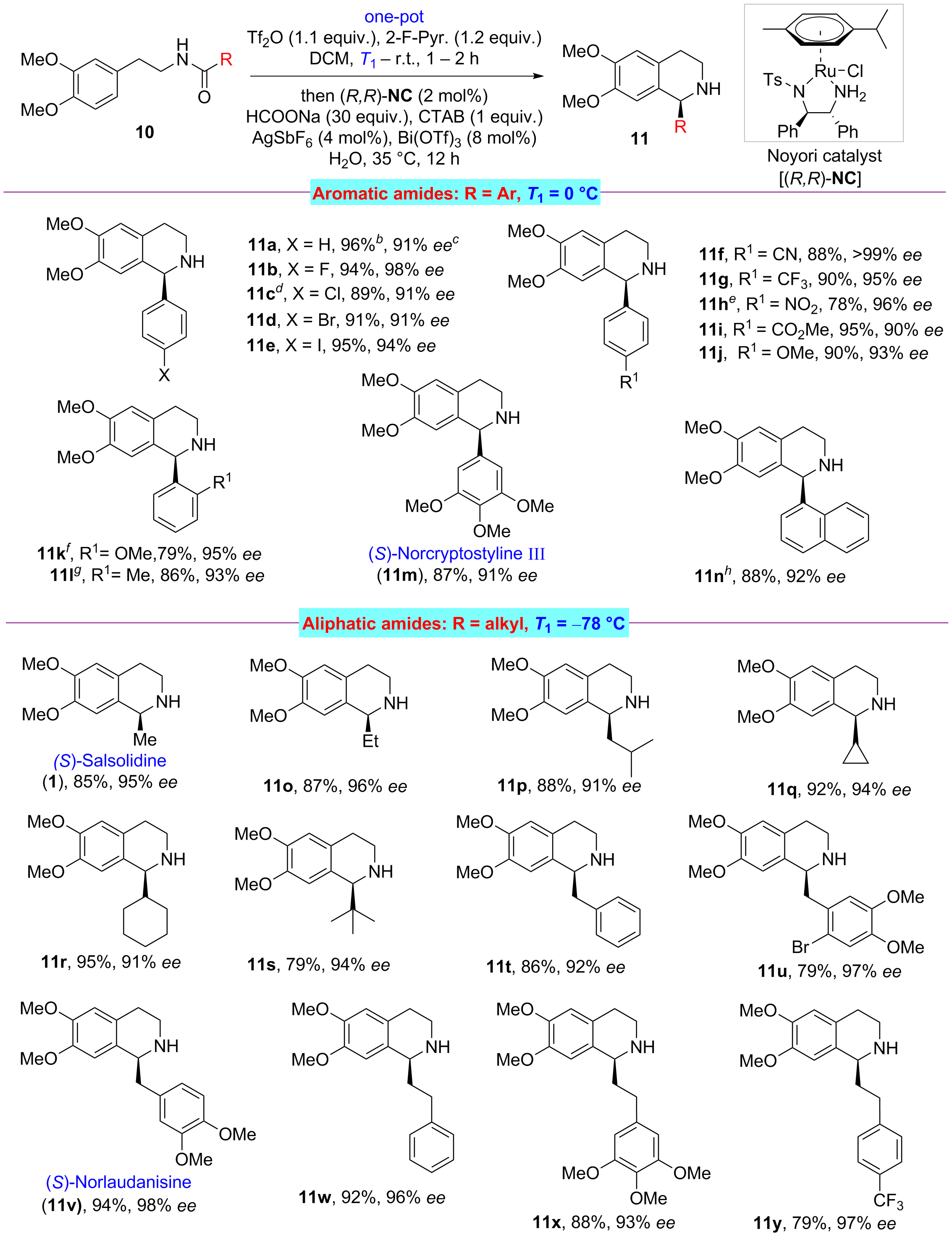 |
a Reaction conditions: amide (0.5 mmol), Tf2O (1.1 equiv.), 2-F-Pyr. (1.2 equiv.), DCM, T1—r.t., 1—2 h (monitored with TLC), removing DCM; then Noyori catalyst (2 mol%), CTAB (1.0 equiv.), HCOONa (30.0 equiv.), H2O (5 mL), 35 ℃, 12 h. b Isolated yield. c Eantiomeric excesses were determined by chiral HPLC. d Time for ATH: 18 h. e Time for ATH: 20 h. f ATH at 45 ℃; g ATH at 40 ℃; h ATH at 55 ℃. |
For aliphatic amide substrates (Table 2), the reaction with Tf2O/2-F-Pyr. was conducted at -78 ℃,[17] followed by warming to room temperature for an additional 1—2 h (monitored with TLC), prior to subjecting the reaction mixture to the standard asymmetric transfer hydrogenation (ATH) conditions. The methyl-substituted amide substrate was successfully converted to the natural product (S)-salsolidine (1), a potent inhibitor of human monoamine oxidase A and B (MAO A and B),[19] with 85% yield and 95% ee. Other alkyl-substituted amides, including ethyl (10o), isobutyl (10p), cyclopropyl (10q), and cyclohexyl (10r), and the more sterically hindered tert-butyl (10s), also afforded excellent yields (79%—95%) and high ee values (91%—96%). Furthermore, the reaction demonstrated good compatibility with benzyl (10t—10v) and phenethyl (10w—10y) substituted amides, delivering the corresponding products in good yields (79%—94%) and excellent enantioselectivities (92%—98% ee).
To further demonstrate the scalability and utility of this synthetic strategy, we conducted a reaction using amide 10v on a 5 mmol scale under the standard conditions, yielding (S)-norlaudanosine (11v, 1.48 g) with a commendable yield of 86% and maintaining an enantiomeric excess (ee) of 97% (Scheme 3). Next, the obtained (S)-norlaudanosine (11v) was subjected to N-methylation under the methylation conditions developed by our group (Pd/C, MeOH, H2).[20] However, after 3 days of reaction at 40 ℃, only a modest yield of 12% was obtained. To enhance the reaction efficiency, aqueous formaldehyde was introduced, affording the natural product (S)-laudanosine (3)[21] in 95% yield and 94% ee after 8 h at room temperature (Scheme 3A-1). This opium alkaloid is known to act as a selective α₁-adrenoceptor blocker,[22] and exhibits interactions with γ-aminobutyric acid (GABA), opioid receptors, and central nicotinic acetylcholine receptors.[23] Additionally, compound 11v underwent a Pictet-Spengler reaction in the presence of formaldehyde and hydrochloride, leading to the formation of another opium alkaloid xylopinine (7), which exhibits antimicrobial, anti- inflammatory, antipsychotic, and analgesic activities (Scheme 3A-2).[23-24] Furthermore, the treatment of norlaudanosine (11v) with amide 12 in 2-butanone at reflux furnished ACT-335827 (8), a selective and brain-penetrant orexin receptor type I antagonist (Scheme 3A-3).[25]
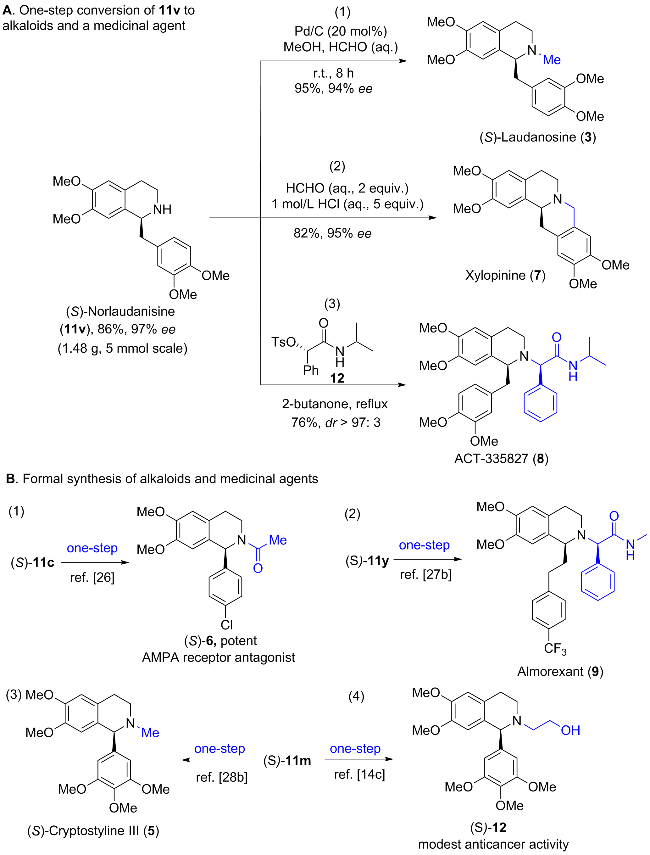
Compound (S)-6 is a potent non-competitive antagonist of the 2-amino-3-(3-hydroxy-5-methylisoxazol-4-yl)- propionic acid (AMPA) receptor, exhibiting anticonvulsant activity and capable of preventing epileptic seizures.[26] Almorexant (9) serves as a potent non-peptide antagonist of human orexin receptors, significantly influencing the regulation of the sleep-wake cycle and related functions of the hypothalamus.[27] Cryptostyline III (5) was isolated from the orchid Cryptostylis fulva[28] and is of notable biological interest, as numerous analogs of this class have been investigated as selective molecular probes for the D₁ dopamine receptor (DRD1).[29] Compound (S)-13 exhibits a modest cytotoxic activity on L1210 murine leukemia cell line.[14c] Notably, these four bioactive molecules are each accessible in a single step using the established procedure from the corresponding tetrahydroisoquinoline precursors 11c (Scheme 3B-1),[26] 11y (Scheme 3B-2),[27b] and 11m (Scheme 3B-3).[14c,28b] Consequently, the preparation of compounds 11c, 11y and 11m constituted a formal synthesis of (S)-6, almorexant (9), (S)-cryptostyline III (5), and (S)-13.
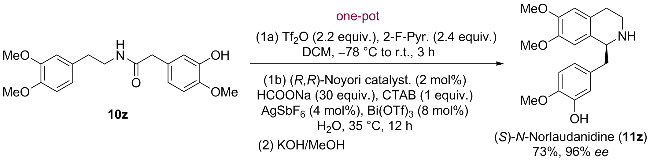
Considering that many tetrahydroisoquinoline natural products bear hydroxy-substituted aryl groups, such as (S)-norcoclaurine (4), we investigated the reaction of hydroxyl group-bearing amide 10z. The presence of the hydroxyl group required the use of a twofold amount of Tf2O/2-F-Pyr. (2.2 equiv./2.4 equiv.) in the initial activation step. Following this, asymmetric transfer hydrogenation was conducted under otherwise standard conditions, affording a triflate intermediate, which, without purification, was treated directly with KOH in methanol, delivering opium alkaloid (S)-N-norlaudanidine (11z) in 73% yield and 96% ee (Scheme 4).[30]


3 Conclusions
We have realized the one-pot, catalytic asymmetric, reductive Bischler-Napieralski-type reaction for the synthesis of 1-substituted tetrahydroisoquinolines (THIQs) from N-arylethyl amides, which constituted the first example of the direct, catalytic asymmetric transformation of amides by a new strategy. The key to this strategy lies in identifying a compatible pair of reaction systems: the Tf2O/2-F-Pyr.-mediated Bischler-Napieralski dehydrative cyclization of amides and the aqueous Noyori-type catalytic asymmetric transfer hydrogenation (CATH) of cyclic imine intermediates. The process is characterized by high yield and excellent enantiomeric selectivity, demonstrating robust substrate applicability, functional group tolerance, and scalability. This protocol enables direct access to the alkaloid (S)-salsolidine (1), and provides efficient two-step syntheses of alkaloids (S)-laudanosine (3), (S)-xylopinine (7), (S)-N-norlaudanidine (11z), and medicinal agent of ACT-335827 (8). Furthermore, the preparation of the corresponding chiral tetrahydroisoquinoline products established formal syntheses of (S)-6, almorexant (9), (S)-cryptostyline III (5), and (S)-13. These underscore the practical value of this method for the efficient construction of stereodefined nitrogen-containing heterocycles. Further investigation on this strategy is ongoing in our laboratory, and the results will be reported in due course.
(Cheng, B.)