


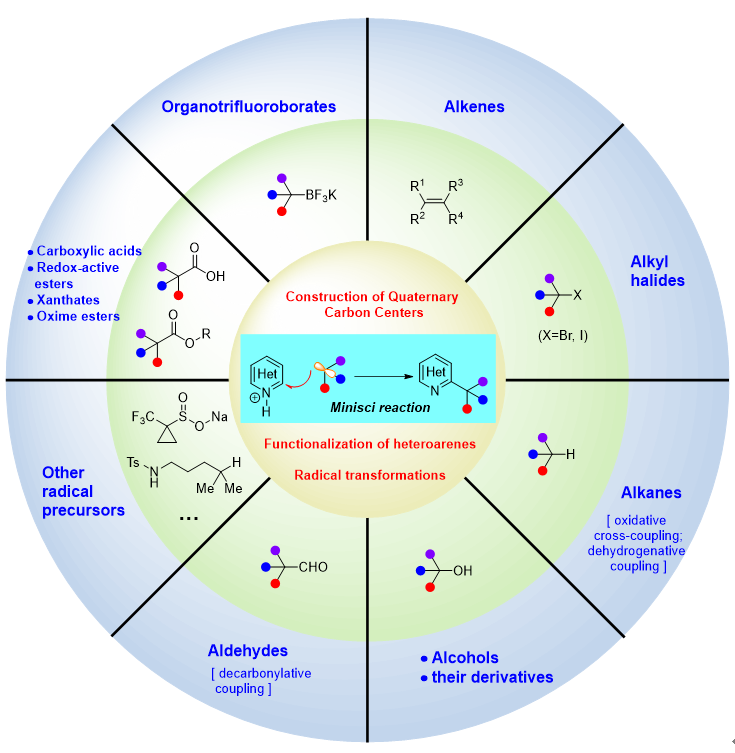
1 引言
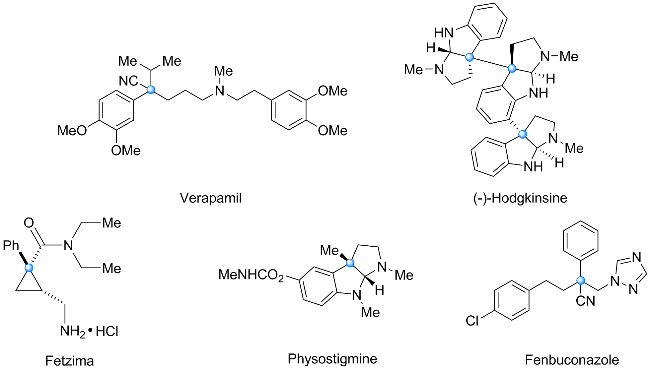
季碳是指与四个碳原子直接相连的碳原子, 许多天然产物和药物分子中都含有季碳中心[1-3]. 例如, 生物碱Physostigmine[4]和(-)-Hodgkinsine[5], 临床用于治疗重度抑郁症的Fetzima[6], 用于治疗高血压(通过外消旋体给药)的Verapamil[6], 具有广谱抗真菌活性的Fenbuconazole[6]等(Scheme 1). 再者, 在候选药物分子中引入季碳中心可显著增强其生物活性、靶向选择性和代谢稳定性等[7]. 因此, 季碳中心的构建已成为有机合成和药物化学领域的重要研究方向[6,8-9]. MacMillan、Baran等课题组[10-13]都对此进行了研究, 并取得了一系列进展. 但该领域仍面临诸多挑战, 高度拥挤的空间结构导致C—C键成键困难; 三级碳底物易发生β-H消除, 不仅显著降低了反应效率, 还致使反应的应用范围和使用价值受到极大限制. 因此, 开发新型、简单、高效构建季碳中心的方法对学术研究和生产应用都具有重要意义.
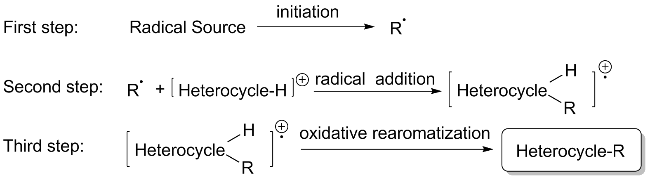
早在1971年, Minisci课题组[26]就报道了三甲基乙酸作为自由基前体时, 可以与喹啉、吡啶反应, 构建含有季碳中心的芳杂环衍生物, 这对生物活性分子与功能材料的合成以及后期修饰改造具有重要意义. 本文从不同的自由基前体出发, 综述了近年来Minisci反应构建季碳中心的相关研究进展, 希望为该领域发展提供参考.
2 羧酸/酯及其衍生物作为自由基前体构建季碳中心
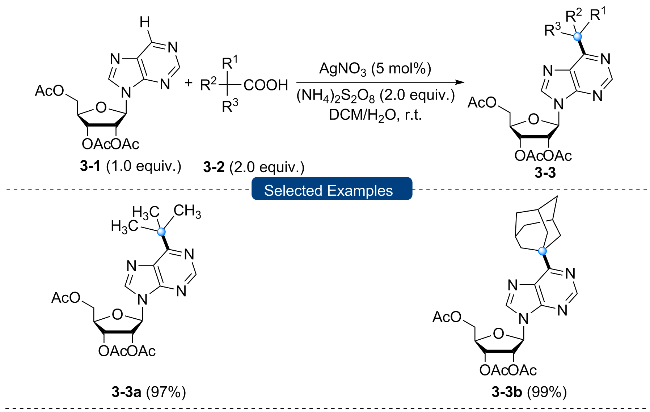
羧酸/酯及其衍生物具有来源广泛、制备简单和毒性低等优点, 已成为有机合成领域重要的反应原料. 2014年, 郭海明课题组[27]在AgNO3-(NH4)2S2O8体系下, 探索了伯、仲和叔脂肪族羧酸与嘌呤核苷的Minisci反应(Scheme 3), 成功实现了嘌呤核苷C-6位的选择性烷基化. 与经典的Minisci反应一样, 该体系采用AgNO3作为催化剂, (NH4)2S2O8作为氧化剂. 研究发现当使用空间位阻较大的叔烷基羧酸作为自由基前体时, 反应仍能高效进行, 可向核苷分子之中引入季碳结构. 该方法使用简单易得的羧酸作为原料, 为嘌呤及其衍生物的后期结构修饰提供了高效实用的新策略, 对药物研发具有重要意义.

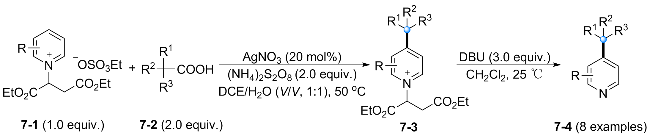
以往的报道显示, 区域选择性差是Minisci反应面临的主要局限之一. 当底物含有多个反应位点时, 控制Minisci反应的区域选择性较为困难, 这不仅导致目标产物的产率较低, 还面临混合产物分离纯化困难等各种问题, 严重限制了该方法在有机合成中的应用价值. 在药物分子中, 吡啶结构是最常见的芳杂环之一, 而吡啶的C-4位选择性烷基化一直是杂环化学中的一个长期挑战. 2021年, Baran课题组[31]利用马来酸酯衍生物作为吡啶的封闭基团, 实现了吡啶C-4位的Minisci型脱羧烷基化, 构建了一系列4-烷基吡啶类化合物, 为合成4-烷基吡啶类化合物提供了新策略(Scheme 7). 当使用三级羧酸作为底物时, 能够选择性地在吡啶C-4位引入季碳中心, 为构建吡啶类季碳化合物提供了新思路.
3 硼酸盐作为自由基前体构建季碳中心
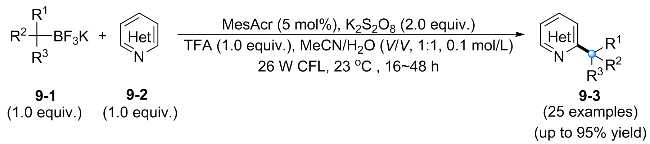
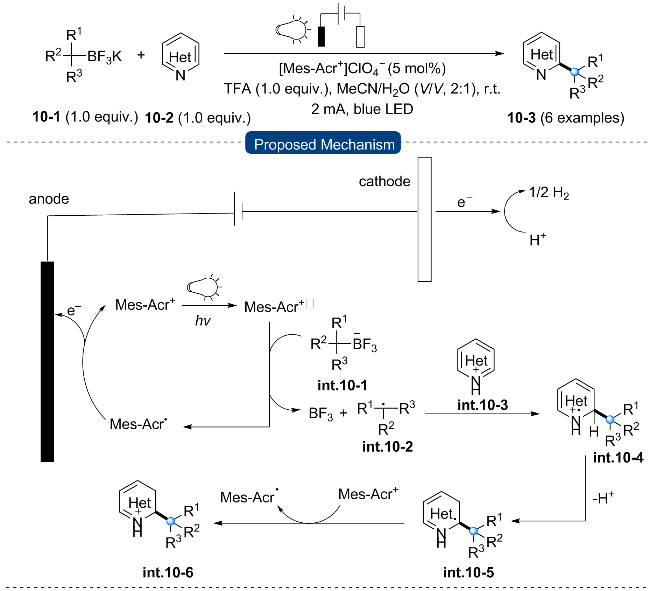
有机电化学合成具有无需使用有毒或危险的氧化剂和还原剂、产品易分离、环境污染小等优势. 在有机电化学合成中, 可以通过控制电极电位来调控电极反应速度, 合成一些传统方法难以合成的化学品. 光催化反应体系一般具有反应活性高、条件温和、官能团耐受性好、底物普适性广等优点. 2018年, 徐海超课题组[34]将电化学无需化学氧化剂的特点与光化学产生自由基的优势相结合, 开发了一种绿色可持续的光电协同的Minisci反应(Scheme 10). 在反应过程中, 吖啶光催化剂Mes-Acr+在光照作用下变为激发态, 激发态的光催化剂与烷基三氟硼酸盐发生单电子转移得到烷基自由基int.10-2, 烷基自由基对氮芳杂环加成得到中间体int.10-4, int.10-4脱质子之后得到中间体int.10-5, 随后int.10-5被吖啶光催化剂Mes-Acr+氧化芳构化得到烷基化产物与Mes-Acr▪自由基, Mes-Acr▪在阳极被氧化生成Mes-Acr+完成催化循环. 叔烷基三氟硼酸盐在该体系中也能够顺利转化, 从而实现季碳中心的构建.
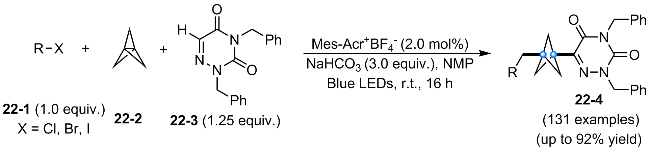
4 烯烃作为自由基前体构建季碳中心

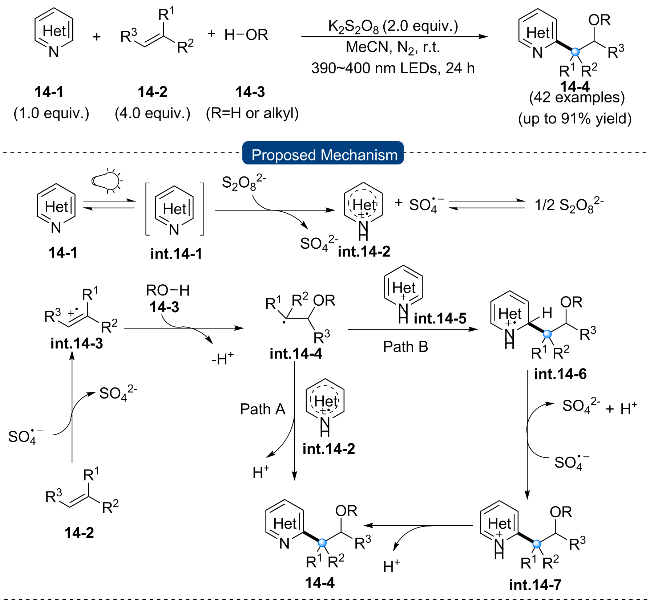

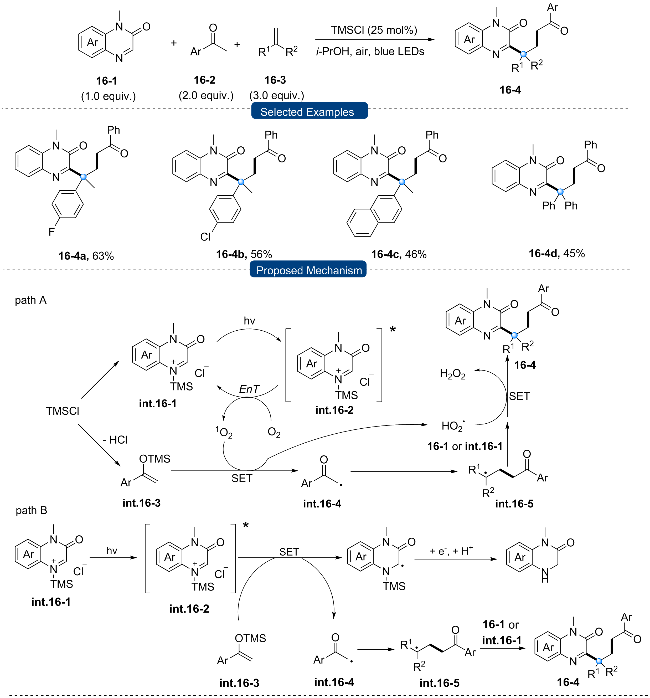
5 卤代烃作为自由基前体构建季碳中心
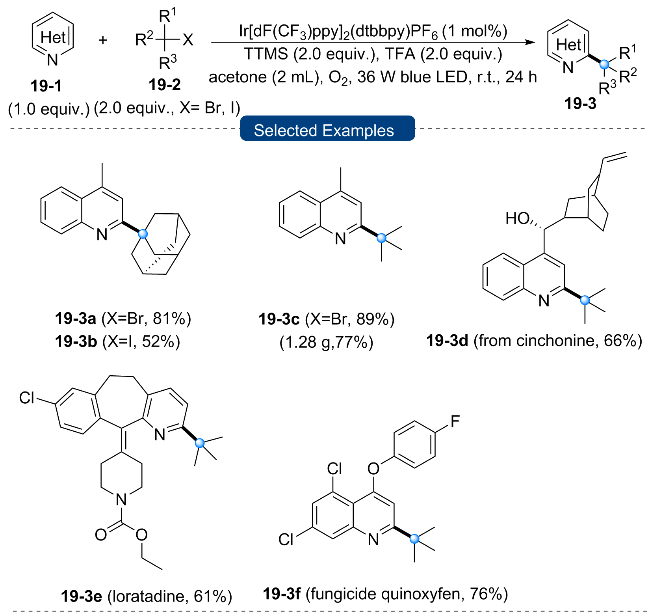
卤代烃常作为亲电试剂参与各种偶联反应, 其也可作为优异的自由基前体参与Minisci反应, 实现季碳中心的构建. 但以卤代烃为自由基前体通过Minisci反应构建季碳中心的相关研究相对较少.
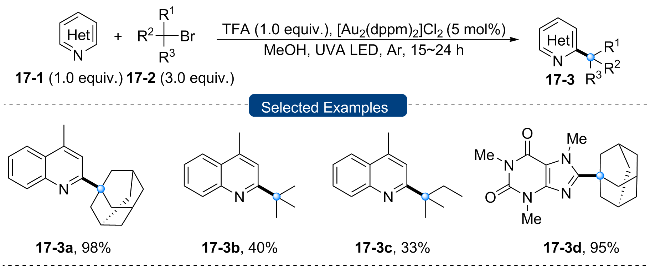
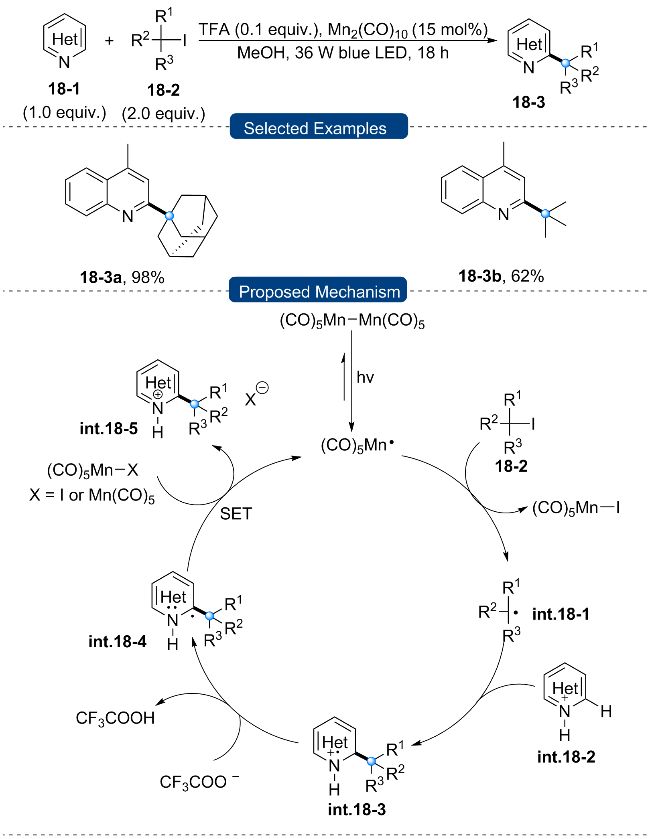
6 烷烃作为自由基前体构建季碳中心
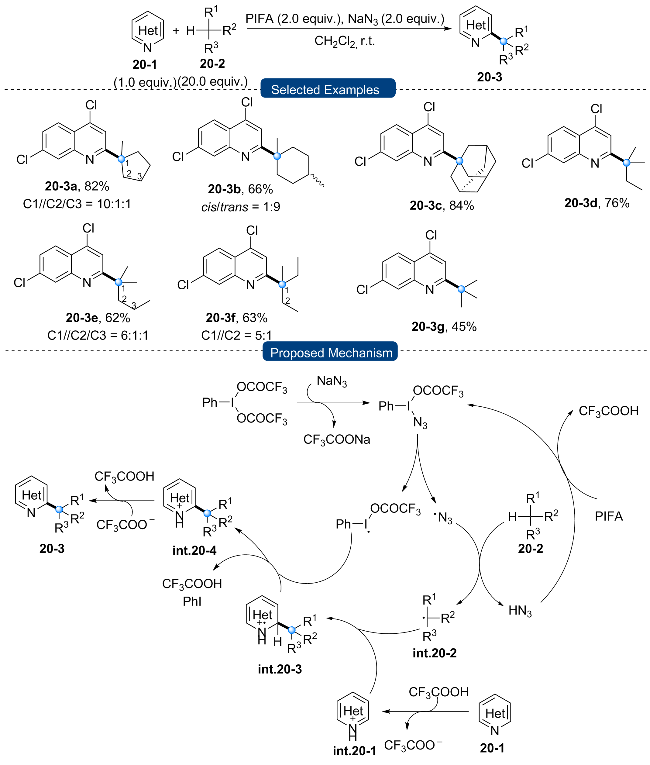
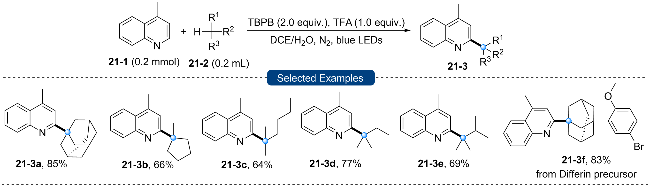
烷烃是构成石油的主要成分之一, 也是最简单的一类有机化合物. 脂肪族碳氢键在有机化合物中普遍存在, 且是反应活性最低的化学键之一. 发展烷烃直接选择性的C—H官能团化方法是化学领域一个长期且重要的目标.
2013年, Burgmann课题组[44]在该领域取得突破性进展, 该团队报道了一种简单烷烃与缺电子芳杂环的Minisci反应, 该反应对于简单烷烃的C—H官能团化以及Minisci反应都具有重要意义(Scheme 20). 该体系无需过渡金属催化, 在[双(三氟乙酰氧基)碘]苯(PIFA)和NaN3的作用下, 即可实现简单烷烃的C—H官能团化. 反应具有一定区域选择性, 一些具有多反应位点的烷烃参与反应时, 倾向于生成季碳化合物. 但是由于未活化烷烃各个位点的C—H键差异性很小, 当烷烃含有多个反应位点时, 会得到极性相近的混合产物, 产物的分离纯化存在较大问题, 这极大地限制了该方法的应用潜力.
7 醇及其衍生物作为自由基前体构建季碳中心
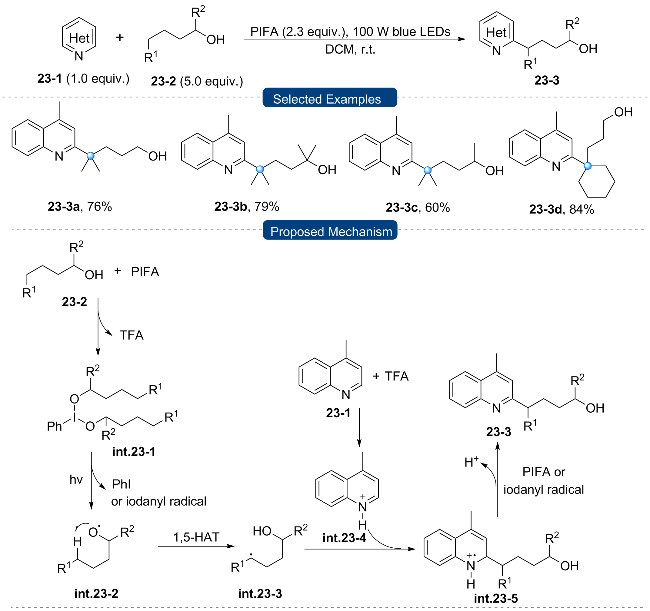
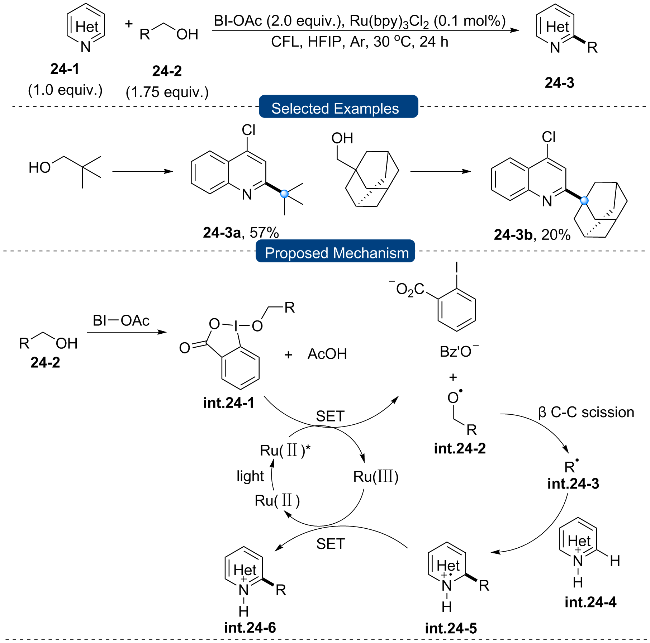
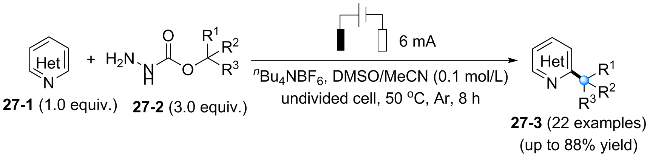
醇类是自然界中分布最广、含量最丰富的有机化合物之一, 同时也是化学合成中常见的原料. 但是在Minisci反应中直接使用醇类化合物作为烷基自由基前体的报道较少, 这是由于醇类化合物中C—O键的键能较高, 难以直接均裂产生碳自由基. 通过适当的策略, 醇类化合物也可被巧妙地转化为相应的碳自由基, 进而实现与缺电子芳杂环的Minisci反应[47].
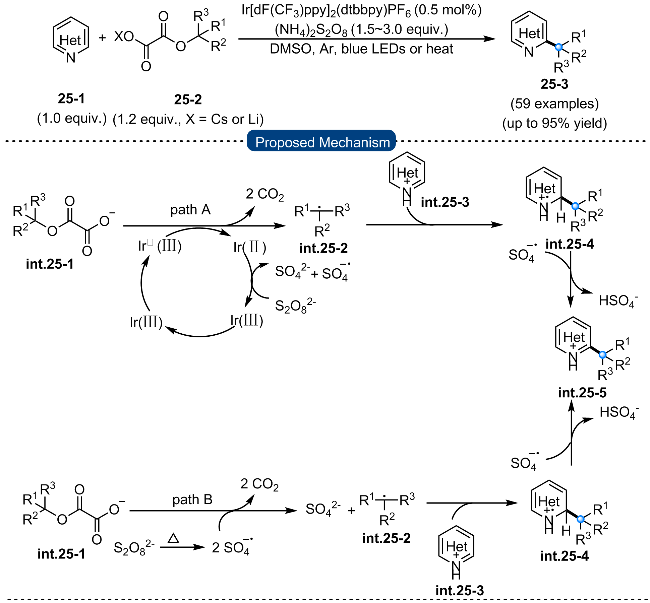
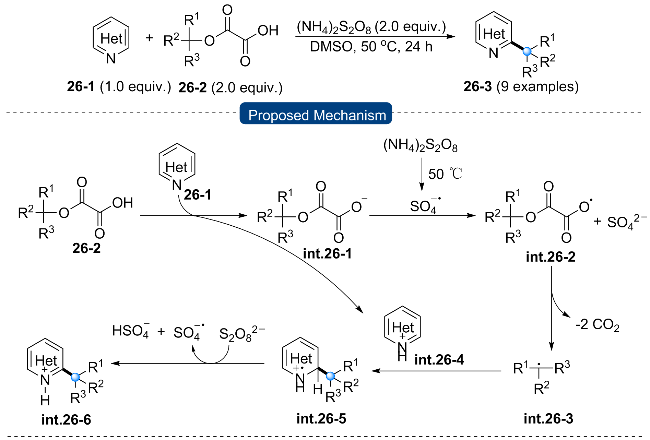
2019年, Overman课题组[50]开发了一种以叔醇衍生的草酸盐类化合物为自由基前体的Minisci反应(Scheme 25). 该反应具有广泛的底物范围, 不仅能耐受多种结构的三级草酸盐前体, 还兼容喹啉、吡啶、喹喔啉等多种缺电子芳杂环. 同时作者团队利用该方法成功实现了菲咯琳配体、嘌呤核苷、金鸡纳碱、法舒地尔的后期修饰, 体现了该方法强大的应用潜力. 作者团队发现, 该反应既能在光催化条件下进行, 也能在加热条件下顺利进行. 根据相关的机理研究, 作者团队提出了两种可能的反应机理. 其一, 在光催化照射下, Ir(Ⅲ)催化剂从基态变为激发态, 草酸盐被激发态的⁕Ir(Ⅲ)催化剂氧化, 脱去两分子CO2, 得到叔烷基自由基int.25-2与Ir(Ⅱ), 叔烷基自由基与质子化的芳杂环进行自由基加成得到自由基正离子中间体int.25-4, 自由基正离子中间体再被$\text{SO}_{4}^{-\centerdot }$氧化芳构化, 得到目标产物25-3. 同时, Ir(Ⅱ)被${{\text{S}}_{2}}\text{O}_{8}^{2-}$氧化, 得到Ir(Ⅲ), 实现催化循环. 其二, 在加热条件下, ${{\text{S}}_{2}}\text{O}_{8}^{2-}$受热产生$\text{SO}_{4}^{-\centerdot }$, 草酸盐被$\text{SO}_{4}^{-\centerdot }$氧化脱去两分子CO2, 得到叔烷基自由基int.25-2, 叔烷基自由基与质子化的芳杂环进行自由基加成, 而后再被$\text{SO}_{4}^{-\centerdot }$氧化芳构化, 得到目标产物25-3. 该报道对Minisci反应构建季碳中心进行了较为系统的研究, 极大推动了该领域的发展.
8 醛作为自由基前体构建季碳中心
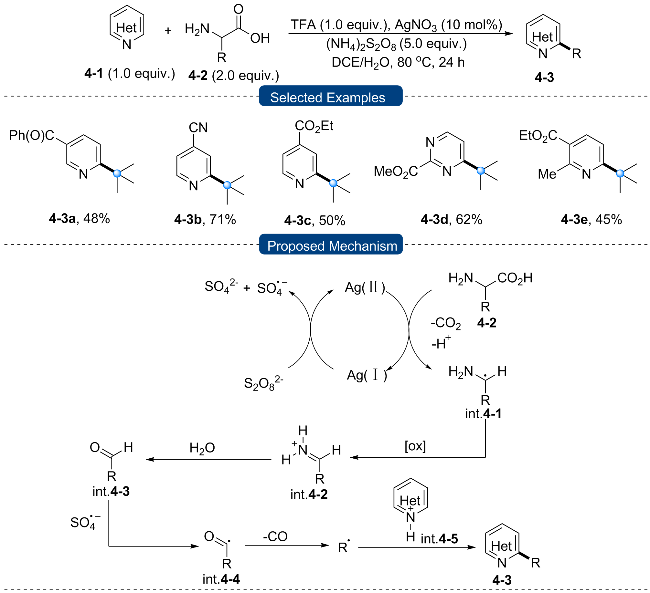
醛也是Minisci反应中理想的自由基前体, 其既可以用作酰基化试剂, 也可用作烷基化试剂. 2019年, 黄华文课题组[53]开发了一种在空气气氛下, 可见光介导醛脱羰基的Minisci型烷基化反应, 这是第一例可见光诱导醛的光氧化还原脱羰基构建C—C键的反应(Scheme 28). 该反应体系中, 卤化物添加剂对反应十分重要; 作者团队探索了一系列卤化物添加剂, 发现只有溴化物对这种脱羰烷基化反应有效, 氯化物与碘化物则完全抑制该反应. 在一系列溴化物中, NaBr对反应的促进效果最好, 作者团队猜测可能是NaBr增加了整个体系的氧化能力. 在该体系下, 特戊醛作为底物时, 能够与含有多种官能团的喹啉以及不同类型的缺电子杂环化合物进行反应, 实现季碳中心的构建.

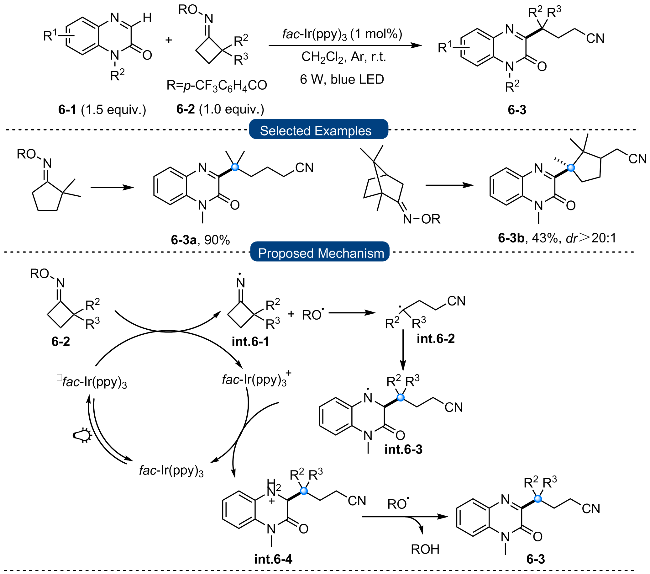
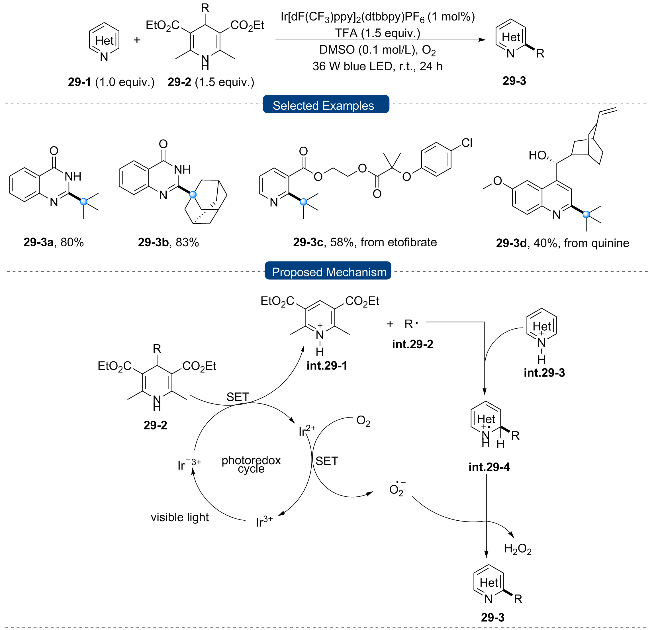
醛作为Minisci反应中的烷基自由基前体时, 现有的脱羰反应方案往往会因脱羰不完全而产生烷基化产物和酰化产物的混合物. 此外, 所报道的以醛为自由基前体的Minisci反应通常需要过量的强氧化剂. 2017年, Molander课题组[54]报道了由醛制备的4-烷基-1,4-二氢吡啶可以在温和条件下产生烷基自由基, 该过程不需要经过酰基自由基中间体, 避免了严苛的反应条件和酰化副产物的产生. 2020年, 汪清民课题组[55]在此基础之上, 实现了可见光介导的杂芳烃与4-烷基-1,4-二氢吡啶的Minisci C—H烷基化反应(Scheme 29). 该反应条件温和, 以氧气作为氧化剂, 在室温下即可进行, 适用于复杂含氮分子的后期C—H烷基化, 亦能向药物分子之中引入季碳中心.
9 其它化合物作为自由基前体构建季碳中心



10 总结与展望
季碳中心作为一类重要的有机结构单元, 广泛存在于天然产物及药物分子中, 开发简单高效的季碳构建方法对有机合成和药物化学发展意义重大. Minisci反应是一种利用亲核性碳自由基对质子化的缺电子芳杂环进行自由基加成的反应, 该反应能够有效地实现缺电子芳杂环的官能团化, 在有机合成化学和药物化学中得到了广泛的应用. 开发通过Minisci反应构建季碳中心的方法, 有助于加速新型药物研发以及复杂有机化合物的合成, 对推动医药产业发展具有潜在的应用价值.
本文从羧酸/酯及其衍生物、硼酸盐类化合物、烯烃等自由基前体出发, 综述了通过Minisci反应构建季碳中心的研究进展. 目前, 该类反应已成功实现了向吡啶、喹啉、嘌呤等重要芳杂环结构中引入季碳中心. 然而, 该领域仍面临空间位阻效应、β-H消除副反应以及区域选择性和对映选择性控制困难等诸多问题, 这些因素都限制了该领域的发展.
基于当前研究进展, 未来通过Minisci反应构建季碳中心的研究可聚焦于以下几个方向: 首先, 在反应底物方面, Minisci反应的自由基前体多为羧酸/酯及其衍生物, 开发结构更加简单、易于获取的叔烷基自由基前体将有助于推动该领域快速发展. 其次, 在区域选择性方面, 如何有效地控制反应的区域选择性, 实现季碳中心的精准引入将是未来研究的重点方向. 再次, 发展对映选择性的Minisci反应构建手性季碳中心仍然亟待开发新的合成策略. 此外, 在反应体系方面, 现有催化体系仍面临需要化学计量的辅剂、反应体系复杂、后处理困难等问题, 开发更加经济高效、环境友好的Minisci反应体系将是实现季碳中心绿色构建的主要工作之一. 相信随着研究的深入和合成方法的创新, 通过Minisci反应构建季碳中心将会取得进一步的发展.
(Cheng, B.)