Article

Synthesis of Mono/Di-Substituted Fluorescent Probes for Detection of H2S

  • 刘聪 ,
  • 王艺霈 ,
  • 张天宇 ,
  • 覃文武
Expand
  • College of Chemistry and Chemical Engineering, Lanzhou University, lanzhou 730000

Received date: 2026-06-10

  Online published: 2026-08-25

Supported by

The project was supported by the National Natural ScienceFoundation of China (21771092).

Abstract

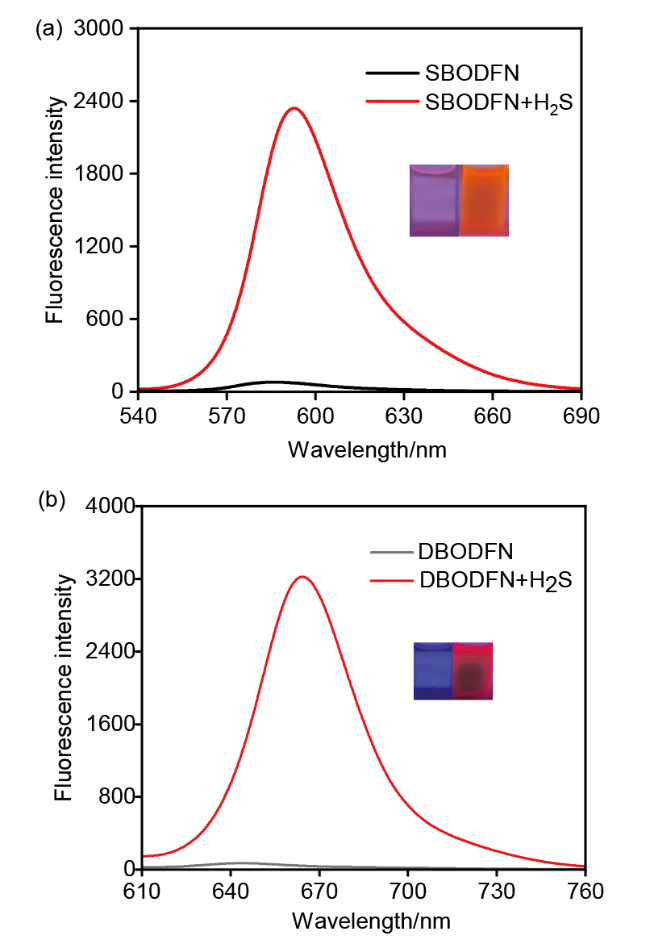
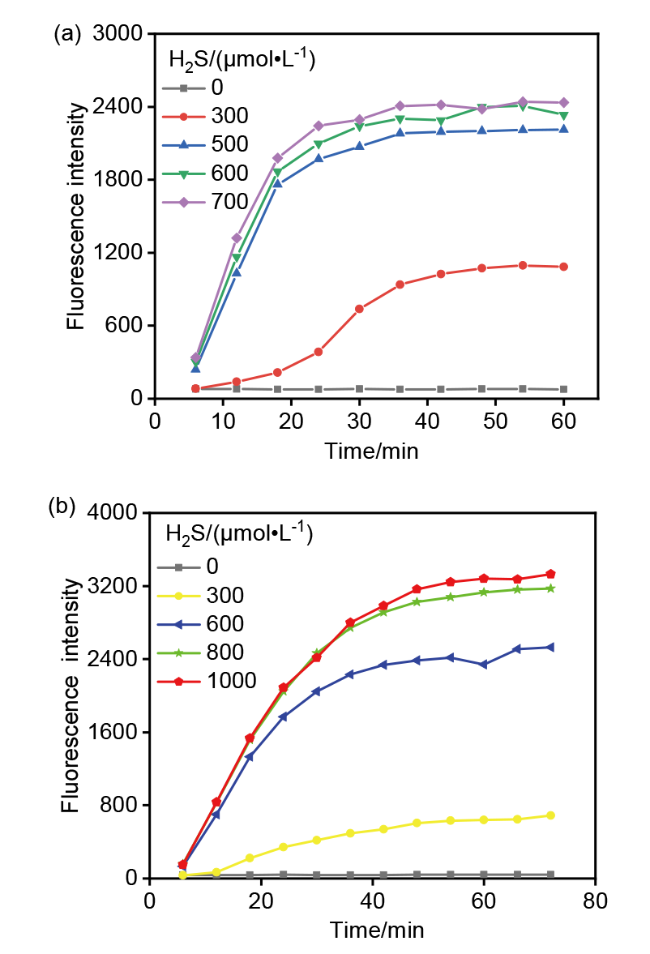
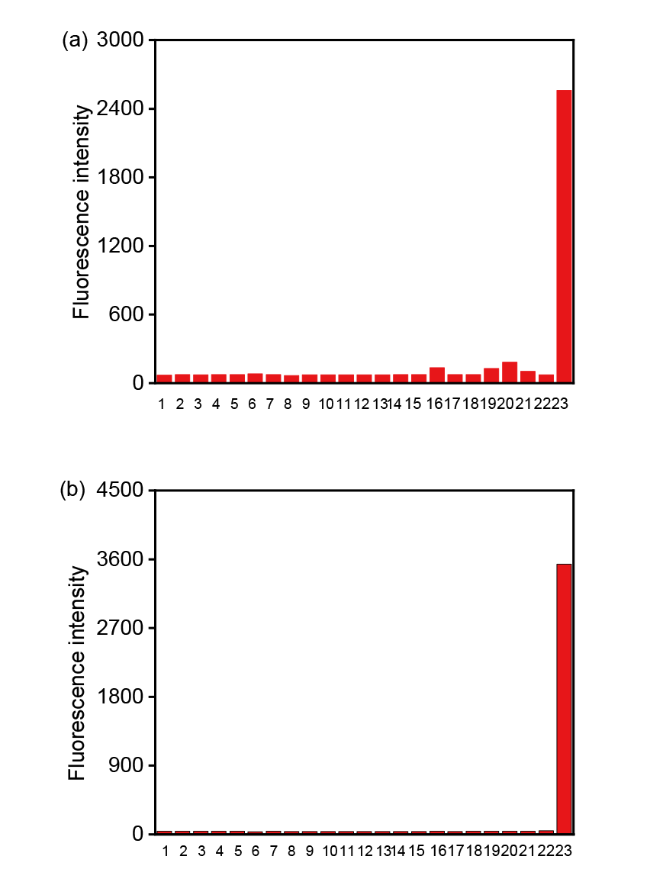
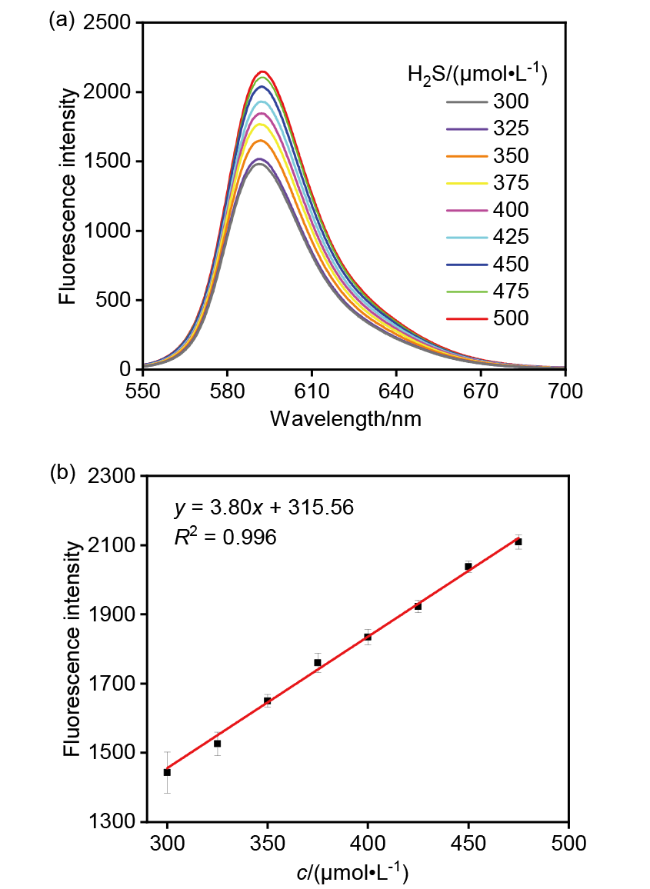
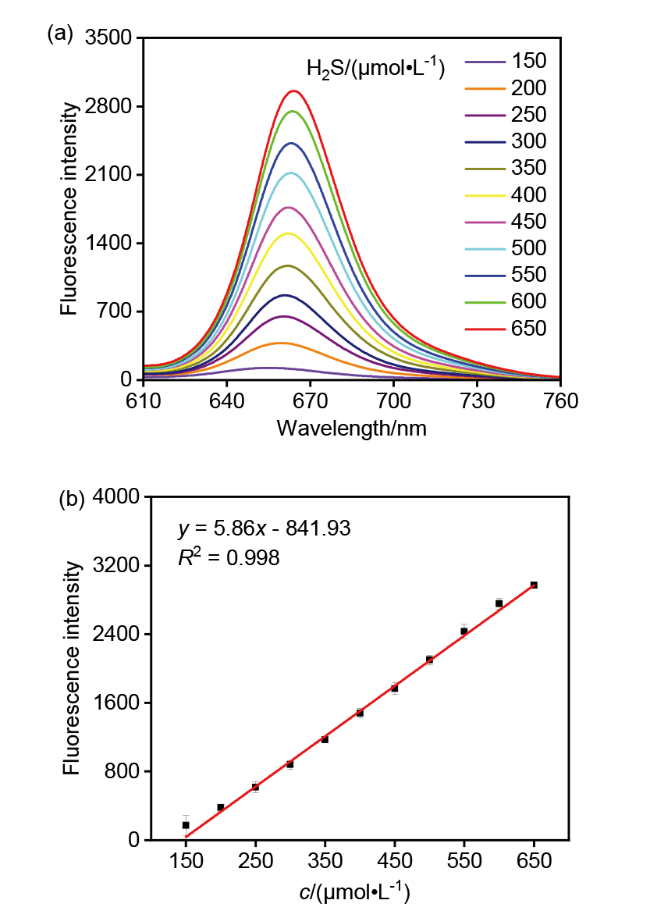
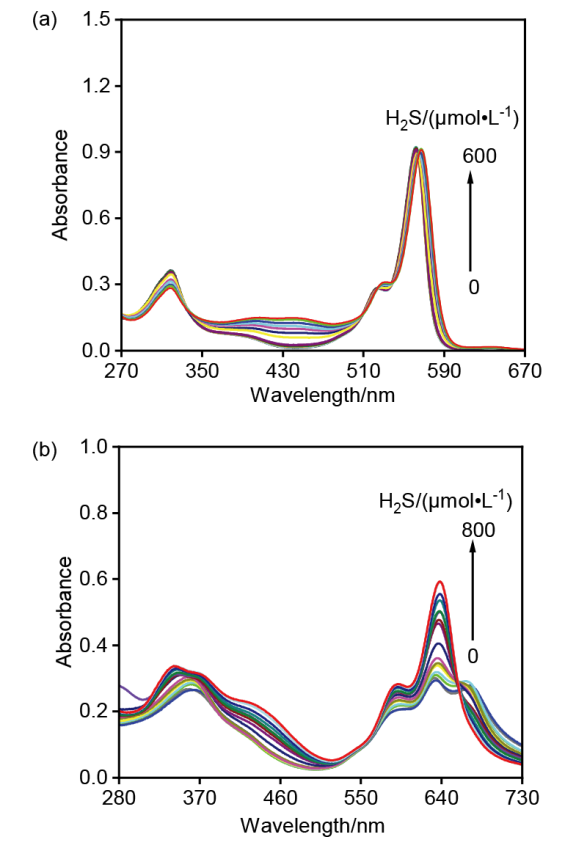
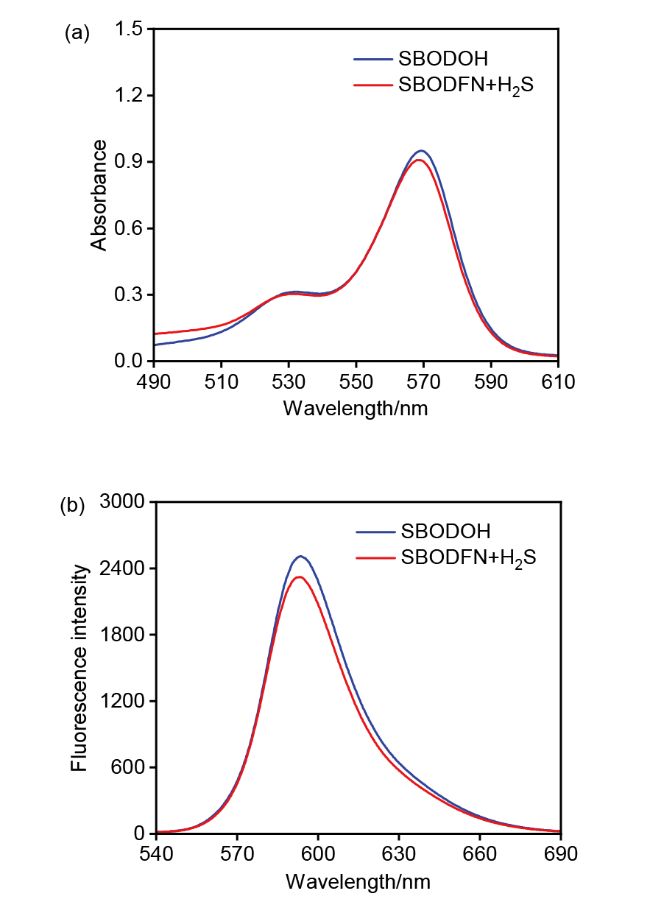
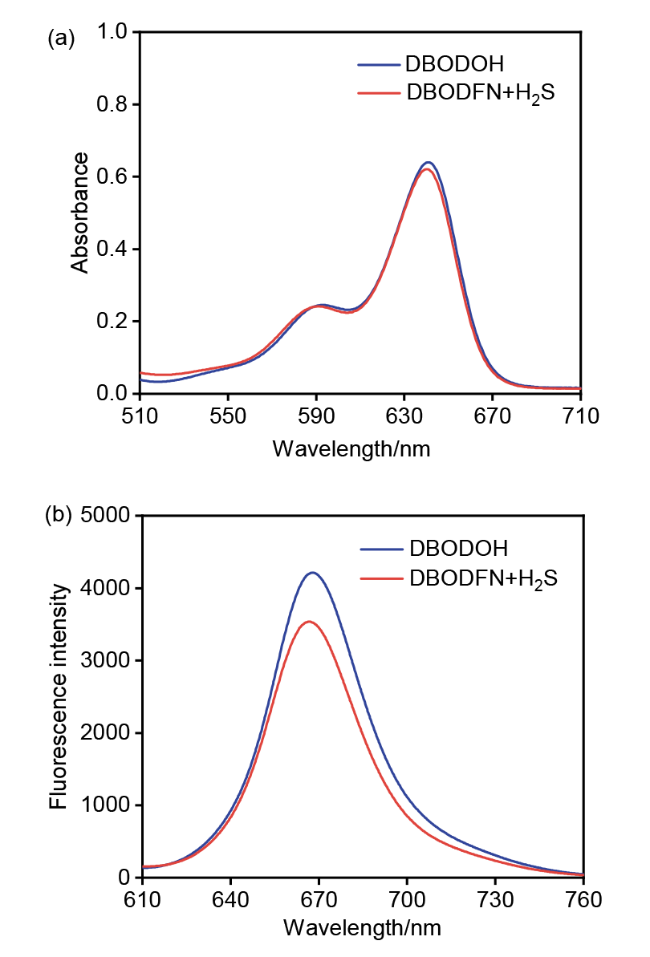
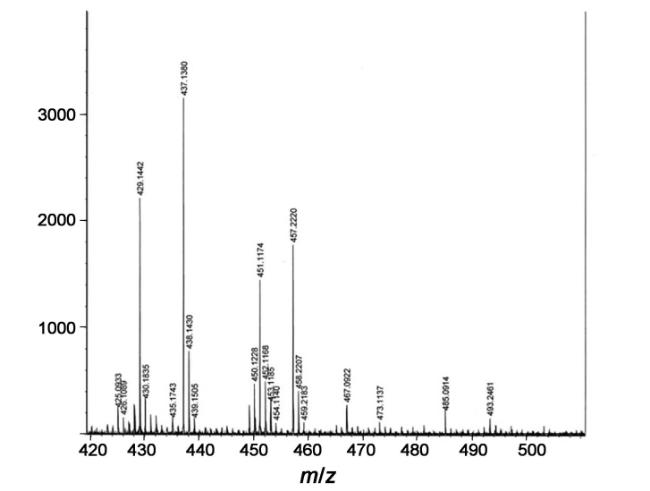
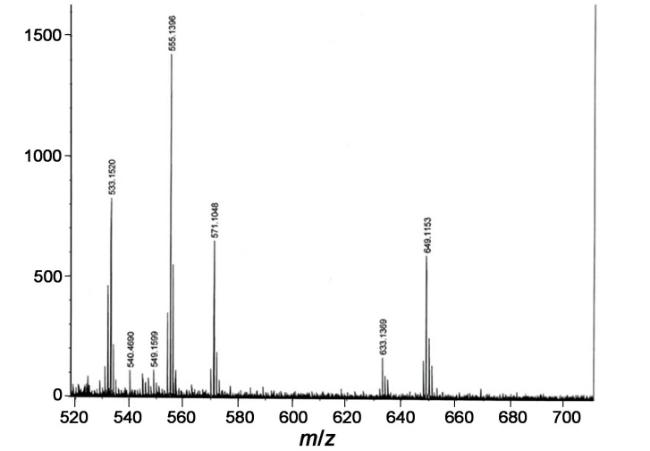
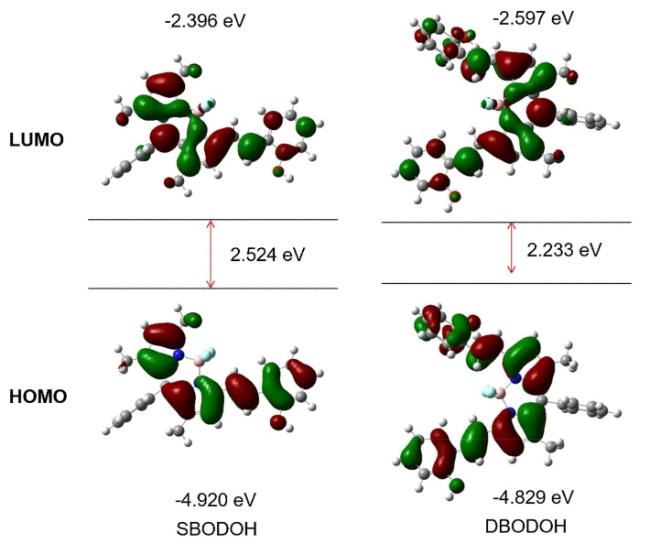
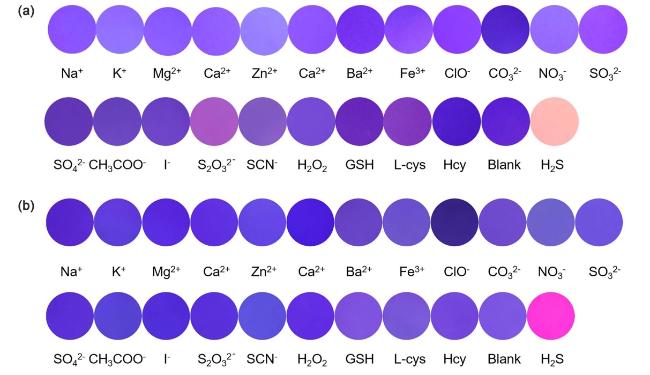
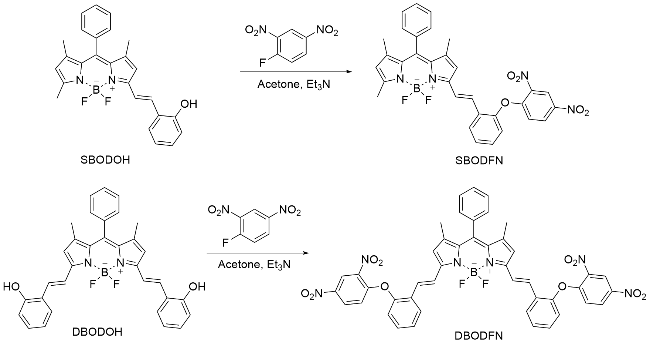
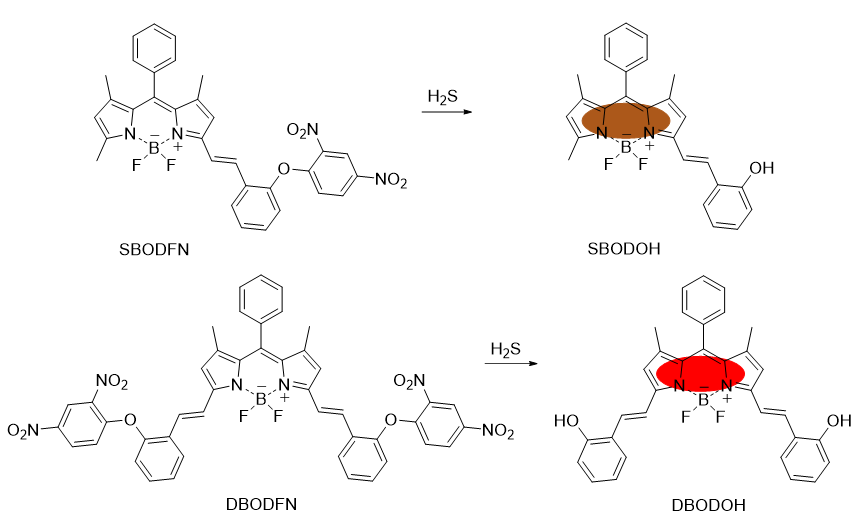
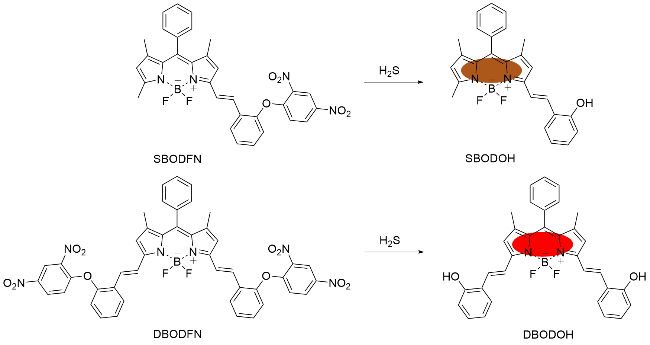
Hydrogen sulfide (H2S) is a highly toxic gaseous pollutant. It is of significant importance to achieve precise detection of H2S in multiple fields including environmental monitoring, industrial safety, and biomedicine. The use of single probe for detecting H2S may lead to error due to the complex and changeable nature of the actual environment, while the synthesis of traditional dual probes requires more cost and time. BODIPY fluorophores exhibit excellent optical properties and multiple modification sites. Therefore, this study designed and synthesized mono-substituted fluorescent probe SBODFN and di-substituted fluorescent probe DBODFN based on BODIPY for the detection of H2S. In these probes, the 2,4-dinitrophenyl (DNP) group strongly suppressed intramolecular charge transfer (ICT) through its electron-withdrawing effect, resulting in initial fluorescence quenching. Upon H2S-induced cleavage of the ether bond to release the hydroxyl group, the restored ICT effect led to significant fluorescence enhancement. DBODFN exhibited a stronger ICT effect due to its extended conjugated structure, displaying a markedly red-shifted fluorescence emission (663 nm, red) compared to SBODFN (593 nm, orange-yellow). Both SBODFN and DBODFN exhibited rapid response times and excellent selectivity. SBODFN and DBODFN completely reacted with H2S within 36 min and 42 min, respectively. The detection of H2S by both SBODFN and DBODFN was not affected by other analytes including cations, anions, and small molecules. Quantitative analysis revealed that SBODFN had a detection limit of 0.38 μmol/L within the concentration range of 300-475 μmol/L, while DBODFN achieved a lower detection limit of 0.20 μmol/L across a broader concentration range of 150-650 μmol/L. The formation of SBODOH and DBODOH was confirmed by the comparison of UV-Vis absorption and fluorescence spectra, as well as by mass spectrometry. The energy gap between the highest occupied molecular orbital (HOMO) and the lowest unoccupied molecular orbital (LUMO) of SBODOH (2.524 eV) was larger than that of DBODOH (2.233 eV), which was consistent with the experimentally measured emission wavelengths. SBODFN and DBODFN could serve as solid-state fluorescent probes for visual detection of H2S. Finally, SBODFN and DBODFN successfully achieved quantitative detection of H2S in three different types of water samples.

Cite this article

刘聪 , 王艺霈 , 张天宇 , 覃文武 . Synthesis of Mono/Di-Substituted Fluorescent Probes for Detection of H2S[J]. Acta Chimica Sinica, 0 : 26060194 -26060194 . DOI: 10.6023/A26060194

References

[1] Li H.; Fang Y.; Yan J.; Ren X.; Zheng C.; Wu B.; Wang S.; Li Z.; Hua H.; Wang P.; Li, D. Trac. Trends Anal. Chem.2021, 134, 116117.
[2] Lv L.; Luo W.; Diao, Q. Spectrochim. Acta, Part A2021, 246, 118959.
[3] Tu P.; Yin Z.; Xie H.; Yin X.; Wang S.; Fan H.; Zhang, J. Anal. Chim. Acta2026, 1381, 344792.
[4] Xiong P.; Cheng W.; Chen X.; Niu H. Talanta2025, 281, 126869.
[5] Du, Y.-Z.; Li, S.-Y.; Cheng, S.-L.; Jia, H.-J; Wang, Z.; Han, L.-M.; Zhu, N. Acta Chim. Sinica 2026, 84, 93-100 (in Chinese).(杜云哲,李曙懿,程思柳,贾慧劼,王政,韩利民,竺宁,化学学报,2026,84,93-100)
[6] Yang, W.-Y.; Liang, H.; Qiao, Z.-W. Acta Chim. Sinica 2018, 76, 785-792 (in Chinese).(杨文远,梁红,乔智威,化学学报,2018,76,785-792)
[7] Feng G.; Li Z.; Zhang X.; Huang H.; Zhai P.; Jiang Y.; Fan M.; Xu Z.; Wang X.; Ying M.; Yang C.; Dong B.; Yong K.; Shao Y.; Xu G. Dyes Pigm.2022, 207, 110740.
[8] Liu T.; Wang S.; Zhao K.; Miao J.; Zhao B.; Lin Z. Dyes Pigm.2023, 217, 111418.
[9] Yu B.; Chen C.; Ru J.; Luo W.; Liu W. Talanta2018, 188, 370.
[10] Long L.; Cao S.; Jin B.; Yuan X.; Han Y.; Wang K.Food Anal. Method.2019, 12, 852.
[11] Yuan M.; Chang Y.; Du Y.; Liu M.; Liu Z.; Xu K.Chem. Eng.J. 2025, 516, 164230.
[12] Zhu C.; Lang Y.; Shi L.; Ma X.; Bai R.; Xu Y.; Zhang S.; Zhang, X. Spectrochim. Acta, Part A2026, 347, 127006.
[13] Shang Z.; Meng Q.; Tian D.; Wang Y.; Zhang Z.; Zhang Z.; Zhang R.Food Chem. 2023, 427, 136701.
[14] Lu W.; Chen Z.; Wu X.; Li H.; Zhang X.; Wu Y.Microchem. J.2025, 218, 115252.
[15] Zhang L.; Zhu H.; Zhao C.; Gu X.Chin. Chem.Lett. 2017, 28, 218.
[16] Chen X.; Mei Y.; Li H.; Song, Q. Sens. Actuators, B2022, 354, 131202.
[17] Ma B.; Tian D.; Yan S.; Li X.; Dai F.; Zhou, B. Sens. Actuators, B2021, 327, 128937.
[18] Ren Y.; Wang N.; Yang J.; Chen X.; Gao F.; Xiao Y.; Hua H.; Li D. Microchem. J.2025, 218, 115730.
[19] Wang Y.; Li S.; Zhu X.; Shi X.; Liu X.; Zhang, H. Anal. Chim. Acta2022, 1202, 339670.
[20] Yang X.; Zhang S.; Luo F.; Zhang Y.; Yan D.; Lai M.; Ye Y.; Sun K.; Ji X. Biosens. Bioelectron.2025, 267, 116798.
[21] Li X.; Xiong Y.; Dong P.; Zhang K.; Yan B.; Huang C.; James T. D.; Li Y.; Jia X. Talanta2025, 290, 127808.
[22] Liu, H.; Wang, J.; Liu, J.; Liu, T.; Xue, S.; aBIOTECH 2021, 2, 32.
[23] Qi F.; Zhang Y.; Wang B.; Chen W.; Yang L.; Yang Z.; Song, X. Sens. Actuators, B2019, 296, 126533.
[24] Zhang L.; Cui X.; Rao Z.; Xu Y.; Li J.; Zhang W.; Tu Q.; Wang J.; Yuan, M. Spectrochim. Acta, Part A2026, 359, 127955.
[25] Qin J.; Kong F.; Huang J.; Xiao B.; Bian Y.; Shao, C. Anal. Chim. Acta2025, 1337, 343558.
[26] Sun P.; Chen H.; Lu S.; Hai J.; Guo W.; Jing Y.; Wang B. Anal. Chem.2022, 94, 11573.
[27] Zhao X.; Li Y.; Jiang Y.; Yang B.; Liu C.; Liu Z. Talanta2019, 197, 326.
[28] Chen J.; Liu T.; Chen Y.; Luo M.; Zhu H.; Xu Z.; Liu Y.; Wu N. Chem. Commun.2025, 61, 18822.
[29] Lin X.; Lu X.; Zhou J.; Ren H.; Dong X.; Zhao W.; Chen, Z. Spectrochim. Acta, Part A2019, 213, 416-422.
[30] Zhou L.; Cheng Z.; Li N.; Ge Y.; Xie H.; Zhu K.; Zhou A.; Zhang J.; Wang K.; Jiang, C. Spectrochim. Acta, Part A2020, 240, 118578.
[31] Yue X.; Wang J.; Han J.; Wang B.; Song X. Chem. Commun.2020, 56, 2849.
[32] Guan X.; Lu H.; Ge X.; Yin Y.; Ouyang J.; Na N.ACS Sens. 2022,7, 2483.
[33] Noushija M. K.; Krishna A. V.; Shanmugaraju S. Sens. Diagn.2026, 5,184.
[34] Zhu C.; Lang Y.; Shi L.; Ma X.; Bai R.; Xu Y.; Zhang S.; Zhang, X. Spectrochim. Acta, Part A2026, 347, 127006.
[35] Yu, H.-B.; Li, H.-L.; Zhang, X.-F; Xiao, Y.; Fang, P.-J.; Lv, C.-J.; Hou, W. Acta Chim. Sinica 2015, 73, 450-456 (in Chinese).(于海波,李红玲,张新富,肖义,方沛菊,吕春娇,侯伟,化学学报,2015,73,450-456)
[36] Shimamoto, KHanaoka, K. Nitric Oxide, 2015, 46, 72.
[37] Vikrant K.; Kumar V.; Ok Y. S.; Kim K.; Deep, A. TrAC, Trends Anal. Chem.2018, 105, 263.
[38] Urriza-Arsuaga I.; Bedoya M.; Orellana G. Anal. Chem.2019, 91, 2231.
[39] Xie J.; Gong H.; Du Z.; Hong C.; Luo, W. Spectrochim. Acta, Part A2026, 346, 126918.
[40] Chen W.; Pacheco A.; Takano Y.; Day J. J.; Hanaoka K.; Xian, M. Angew. Chem., Int. Ed.2016, 55, 9993.
[41] He, C.; Liu, S.-Q.; Cheng, F.-M.; Hao, Y.-Q.; Chen, S.; Zhang, P.-S.; Zeng, R.-J. Chin. J. Org. Chem. 2024, 44, 2869-2875 (in Chinese).(何春,刘姝祺,成奋民,郝远强,陈述,张培盛,曾荣今,有机化学,2024,44,2869-2875)
[42] Wang, R.-X.; Zhang, D.-J.; Wu, J.; Liu, C.-B. Acta Chim. Sinica 2007, 65, 107-110 (in Chinese).(王若曦,张冬菊,武剑,刘成卜,2007,65,107-110)
[43] Chen X.; Mei Y.; Li H.; Song, Q. Sens. Actuators, B2022, 354: 131202.
[44] Wang X.; Mejia E.; Zuo Y.; Lv Z.; Wang Z. J. Fluoresc.2025, 35, 6069-6077.
[45] Klfout H.; Stewart A.; Elkhalifa M.; He, H. ACS Appl. Mater. Interfaces2017, 9, 39873.
[46] Wang L.; Wu Q.; Kang Z.; Guo X.; Miao W.; Li Z.; Zuo H.; Wang H.; Si H.; Jiao L.; Hao E. Org. Lett.2023, 25, 5055.
[47] Shu H.; Guo M.; Wang M.; Fan S.; Zhou M.; Xu L.; Rao Y.; Osuka A.; Song J. Org. Lett.2023, 25, 1817.
Outlines

/