



1 Introduction
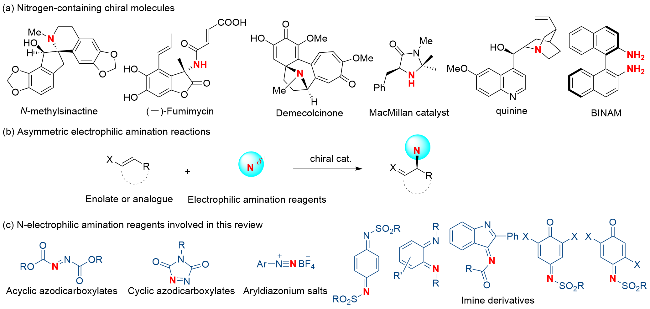
Chiral amines serve as crucial chiral components in biologically active natural products and pharmaceuticals,[1] primarily due to their capacity for hydrogen bonding interactions with biomacromolecules (Figure 1, a). Moreover, optically active amines have widespread utility as resolving agents, chiral organocatalysts,[2] and ligands[3] in asymmetric synthesis, as well as material science. This has spurred significant interest in the asymmetric synthesis of chiral amines using catalytic enantioselective methods. Over recent decades, various practical protocols have emerged for asymmetrically synthesizing chiral amines, including kinetic resolution,[4] asymmetric reduction of imines and enamines,[5] asymmetric additions to imines,[6] and other methodologies.[7] In addition to these approaches, the catalytic asymmetric electrophilic amination reaction stands out as another practical method for generating chiral amines. This method involves the addition of prochiral nucleophiles with an electrophilic amination reagent, often utilizing commercially available azodicarboxylates, to form chiral C—N bonds within the chiral amine structures[1a,8] (Figure 1, b). Since Evans et al.[9] disclosed the first catalytic enantioselective electrophilic amination reaction of N-acyloxazolidinones with di-tert-butyl azodicarboxylate enabled by chiral Lewis acid catalysis in 1997, several distinct catalytic systems have emerged using a series of electrophilic amination reagents, encompassing both chiral transition metal catalysis[10] and organocataly-sis[1b,1c,11] (Figure 1, c).
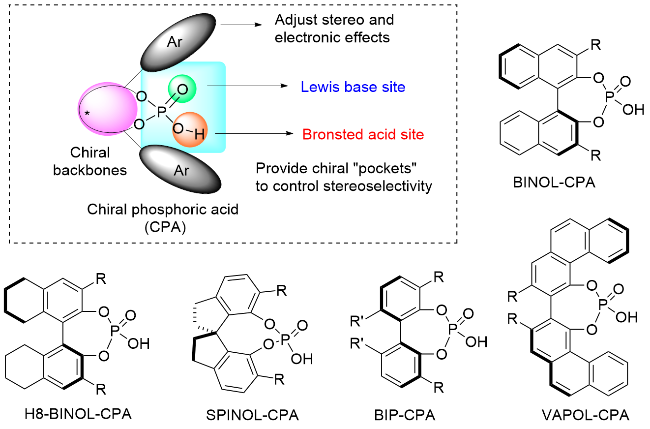
Since Akiyama et al.[12] and Terada et al.[13] pioneered the use of 1,1'-bi-2,2'-naphthol (BINOL)-derived chiral phosphoric acid (CPA) catalysts in the asymmetric Mannich reaction in 2004, CPA catalysts have been extensively explored in diverse asymmetric reactions. Their stability, mild reaction conditions, high reactivity, broad compatibility, and exceptional stereoselectivity control have established them one of the most versatile chiral organocatalysts.[14] CPA catalysts are generally regarded as bifunctional catalysts with two distinct catalytic sites (Figure 2). The OH group on the phosphorus atom functions as a Brønsted acid site, while P=O acts as a Lewis base site, enabling the simultaneous activation of both nucleophiles and electrophiles. The catalyst chiral characteristics stem from the chiral framework of the diol precursors, typically axially chiral structures like BINOL, H8-BINOL, SPINOL, BIP, and VAPOL derivatives, which are widely employed in developing CPA catalysts. Moreover, the ortho-substi-tutions of the CPA catalyst can efficiently modify the stereo and electronic effects, thereby creating a chiral microenvironment with the chiral scaffolds that regulate the stereoselectivity of reactions.
Given the potent activation capability of CPA catalysts on nitrogen-containing double bonds, such as imines, it is unsurprising to envision that these chiral catalysts can also activate azodicarboxylates with N=N bonds. Since the pioneering work by Masson and Zhu et al.[15] in 2011 on the enantioselective amination of enamides with azodicarboxylates using chiral phosphoric acid catalysts, a range of nucleophiles have been developed for involvement in asymmetric electrophilic amination reactions, which produced various types of chiral amines, featuring point chirality, axial chirality, planar chirality and inherent chirality.
This review will present a comprehensive overview of recent advances in CPA-catalyzed asymmetric electrophilic amination reactions published from 2011 to date, and it will be categorized by different N-electrophilic rea-gents, including azo reagents, aryldiazonium salts, and imine derivatives. Moreover reactions which using azodicarboxylates (diazodicarboxamides) as N-electrophiles will be further categorized based on nucleophile classes, such as enamides, carbonyl compounds, indoles, phenols, arylamines and others. Furthermore, our insights into future developments in this field are offered.
2 CPA-catalyzed enantioselective electrophilic amination with azo reagents
Azodicarboxylates[16] have emerged as one of the most prevalent electrophilic amination reagents in catalytic asymmetric electrophilic amination reactions, due to their high reactivity, commercial availability, tunable steric effect and facile derivatization into amine or hydrazine moieties. Furthermore, cyclic diazodicarboxamides, a type of azo reagent not commercially accessible, have exhibited enhanced reactivity and stereoselectivity in certain reactions, leading to their studies in enantioselective electrophilic amination reactions as well.
2.1 CPA-catalyzed enantioselective electrophilic amination with enamides
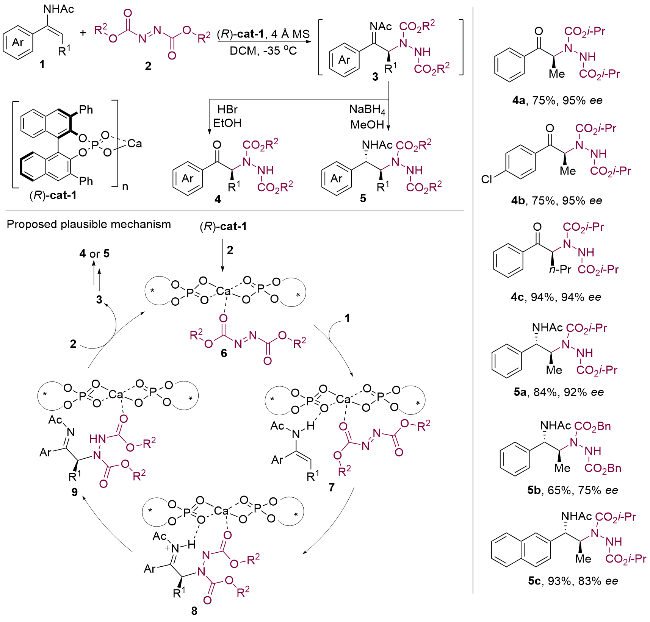
In 2011, Masson, Zhu and co-workers[15] reported the first example of asymmetric α-aminations of enamides with azodicarboxylates using chiral phosphoric acid catalyst. They employed a chiral calcium phosphate (R)-CPA 1 derived from BINOL-CPA, which enabled a smooth reaction between enamides 1 and azodicarboxylates 2 to produce chiral intermediate 1,2-hydrazinoimines 3. These intermediates could subsequent undergo one-pot conversions with HBr or NaBH4, yielding 1,2-hydrazinoketones 4 or syn-1,2-disubstituted 1,2-diamines 5 with high yields and enantioselectivities (Scheme 1). In 2014, the same research group[17a] provided comprehensive insights into this catalytic asymmetric amination reaction. A combined approach involving NMR spectroscopy, MS analysis, and density functional theory (DFT) calculations was employed to gain deeper insights into the mechanistic aspects of the calcium phosphate-catalyzed amination reaction.
Building upon prior research, Masson et al.[17b] introduced the three-component CPA-catalyzed enantioselective electrophilic amination of α-unsubstituted enecarbamates using dibenzyl azodicarboxylate and either alcohol or H2O as the nucleophiles in 2015. The process involved the formation of an unstable iminium intermediate from enecarbamates 10 and azodicarboxylate 2a under the catalysis of (R)-cat-2, which was subsequently captured by alcohol or H2O, yielding the desired product 12 (Scheme 2, a). Consequent reduction or oxidation of 12 yielded the chiral 1,2-diamines 13 and α-hydrazinoimides 14 with high yields and enantioselectivities. In 2017, the Masson group[17c] extended their research through the initial enantioselective three-component amination of enecarbamates 10 with azodicarboxylate 2a and alcohol or thiol, yielding stable α-hydrazinoimine analogs that were subsequently diversified into various 1,2-substituted 1,2-diamines 15 using an array of nucleophiles, including CN, N3, allyl, aryl, and heteroaryl nucleophiles (Scheme 2, b).
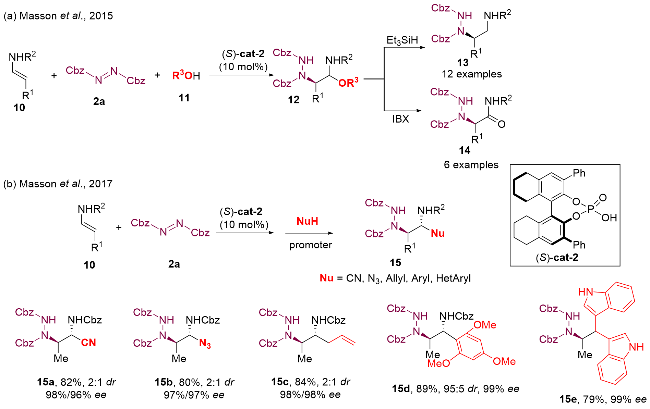
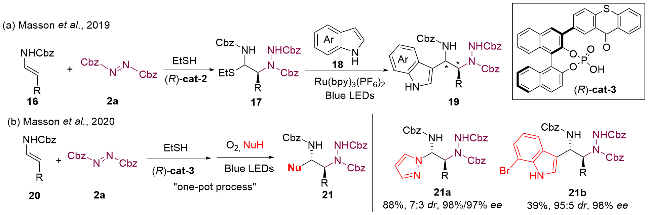
Given the limitation observed where employing indoles as nucleophiles in previous research resulted in the synthesis of the symmetrical bis-indolyl-substituted product 15e in the presence of Lewis acid promoters, the authors aimed to develop a condition that can afford α-hydrazinoimine intermediate under neutral and Lewis-acid free conditions, thereby facilitating the formation of the mono-indolyl-substituted products. In 2019, Masson and co-workers[18] successfully achieved the enantioselective synthesis of α,β-substituted tryptamines by merging an enantioselective three-component electrophilic amination reaction of enamides with a photocatalyzed Friedel-Crafts reaction involving indoles (Scheme 3, a). To enable a streamlined one-pot reaction without the need for an additional transition metal photocatalyst, in 2020, they[19] designed and synthesized a CPA catalyst embedding a visible-light-sensitive thioxanthone unit (cat-3), which was effectively deployed in the one-pot enantioselective synthesis of 1,2-diamines 21 under blue light irradiation (Scheme 3, b). Moreover, some new chiral chimeric photo-organocata-lysts with C1 and C2 symmetry have been prepared, which have also been applied in this reaction.[20]
2.2 CPA-catalyzed enantioselective electrophilic amination of carbonyl compounds
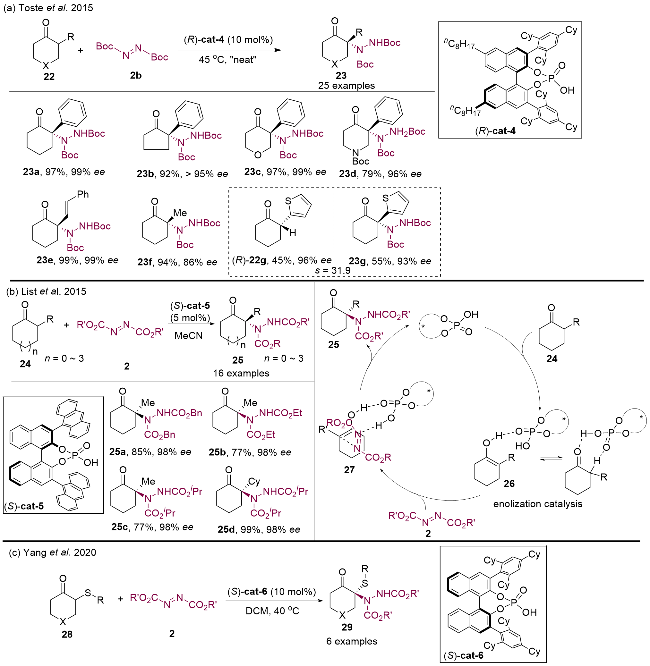
Compared to enamides, a type of activated enolate analog, the direct asymmetric electrophilic α-amination of carbonyl compounds poses a greater challenge, notably with unactivated carbonyl compounds. In 2015, Toste and co-worker[21] reported (R)-cat-4-catalyzed direct regio-and enantioselective amination of various α-branched cyclic ketones 22 with azodicarboxylate 2b, which yielded products 23 with a nitrogen-containing quaternary stereocenter in high yields and excellent enantioselectivities (Scheme 4, a). Notably, an unusual “neat” condition was implemented to enhance the reactivity of this reaction. Moreover, kinetic resolution of certain racemic ketones could be achieved, providing both the amination products and the recovered α-branched cyclic ketones with high enantioselectivity. Moreover, List and co-workers[22] simultaneously reported similar results, using (R)-cat-5 as the chiral catalyst and acetonitrile as the solvent (Scheme 4, b). The authors proposed a plausible mechanism involving the formation of the thermodynamically stable enol intermediate to explain the regioselectivity of this reaction. In 2020, Yang and co-workers[23] further extended this CPA-catalyzed amination reaction to α-sulfanyl cyclic ketones, which produced the chiral S,N-acetals with good yields and enantioselectivities (Scheme 4, c).
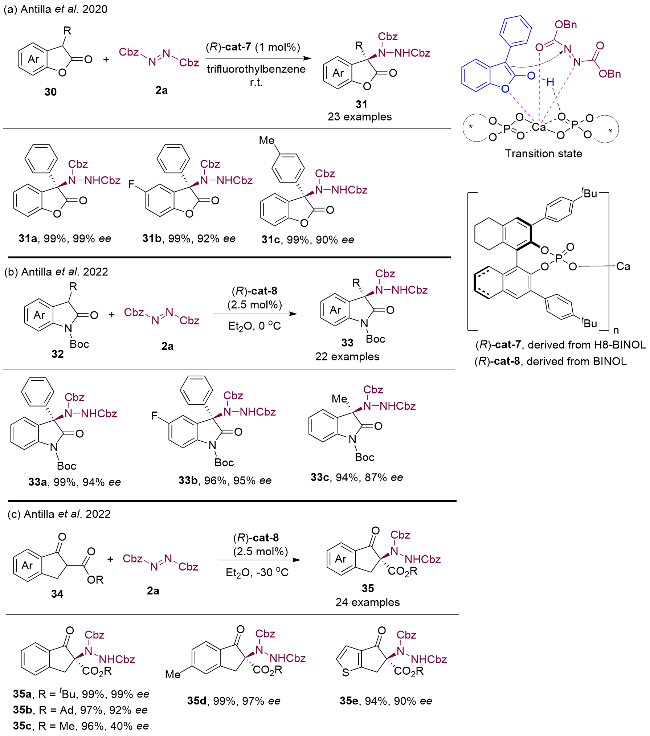
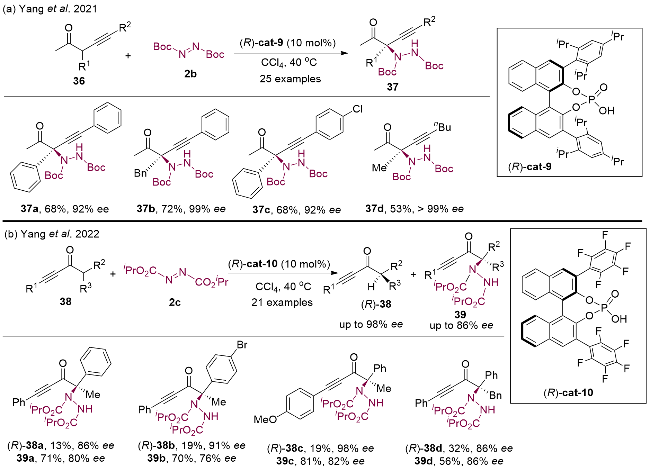
In 2020, Antilla and co-workers[24] reported the direct enantioselective amination of 3-aryl-2-benzofuranones 30 with dibenzyl azodicarboxylate 2a enabled by chiral calcium phosphate catalyst (R)-cat-7 (Scheme 5, a). This reaction could provide products 31 with good yield (up to 99% yield) and high enantioselectivities (up to 99% ee) with low catalyst loading (1 mol%) under mild condition. A plausible transition state for enantioselective amination was proposed. In this state, the chiral calcium phosphate catalyst activates both the 3-aryl-2-benzofuranone substrates and the azodicarboxylates, bringing them into close proximity to facilitate the enantioselective formation of the C—N bond. In 2022, the same group[25] extended their research by employing the chiral calcium phosphate complex (R)-cat-8 as a catalyst to achieve the enantioselective electrophilic amination of 3-aryl-2-oxindoles 32 (Scheme 5, b) and cyclic β-keto esters 34 (Scheme 5, c)[26] by using azodicarboxylate 2, which yielded the corresponding α-amination products with good to high enantioselectivities. In contrast to previous research on cyclic α-branched ketones, the asymmetric amination of acyclic α-branched ketones has posed challenges due to the additional requirement in controlling the geometry of the generated enol intermediates. In 2021, our group[27] reported the regio-and enantio-selective amination of α-branched acyclic ketones enabled by an α-alkynyl group (Scheme 6, a). This method proved effective with a range of α-alkynyl-substi-tuted ketones 36 using di-tert-butyl azodicarboxylate 2b under the catalysis of (R)-cat-9, which yielded α-hydrazido-α-alkynyl ketone products 37 with high enantioselectivities. Significantly, control experiments confirmed the critical role of the α-alkynyl group in the ketone substrate for both reactivity and stereoselectivity of the reaction. Building on these findings, in 2021, our group[28] further reported the asymmetric amination of acyclic α-branched ynones 38 utilizing diisopropyl azodicarboxylate 2c in the presence of the CPA catalyst (R)-cat-10, which produced α-tertiary hydrazine-substituted ketone products 39 with high enantioselectivity (Scheme 6, b). Remarkably, in contrast to the prior studies on the enantioselective amination of α-alkynyl-substituted ketones, we observed kinetic resolution of the racemic ketone substrates. This resulted in the recovery of chiral ketones with high enantioselectivity, although the overall recovery yield was low (typically <20% yield), indicating that this process deviates from a typical kinetic resolution (KR) process.
2.3 CPA-Catalyzed enantioselective electrophilic amination of indoles
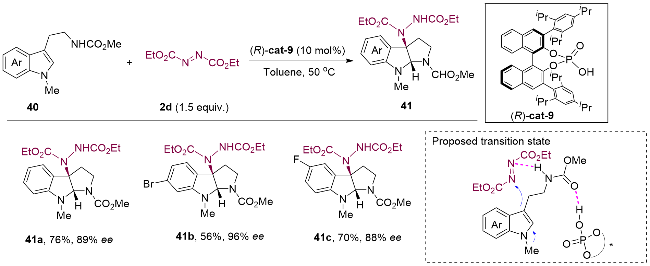
In 2012, Antilla and co-workers[31] reported the first example on asymmetric synthesis of pyrroloindolines trough a catalytic enantioselective electrophilic amination followed by intramolecular cyclization. The CPA (R)-cat-9 catalyzed reaction between tryptamines 40 and diethyl dicarboxylate (DEAD) 2d produced a series of pyrroloindoline derivatives 41 with good yields and high enantioselectivities, featuring adjacent N-containing stereocenters. Due to the high enantioselectivity observed with the N-methyl-ated indole substrate in these reactions, a plausible transition state incorporating dual hydrogen bonding between the carbamate group of 40 and both azodicarboxylate and CPA catalyst was proposed.
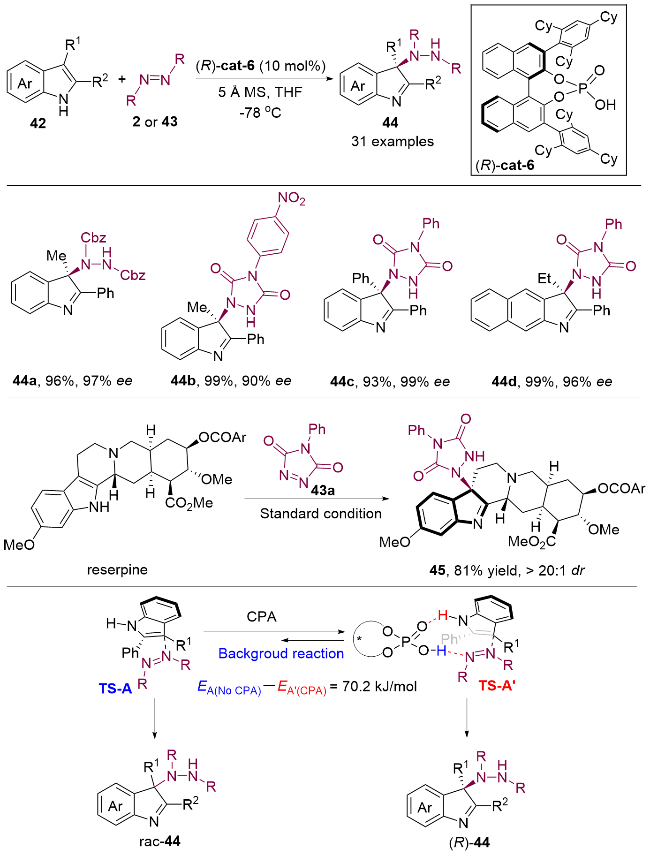
In 2022, Zhang and co-workers[32] disclosed an effective method for the enantioselective synthesis of chiral aza-quaternary carbon-containing indolenines 44 via CPA-catalyzed CADA reaction (Scheme 8). By employing (R)-cat-6 as the chiral catalyst, the asymmetric electrophilic amination reaction of various C(2),C(3)-disubsti-tuted indoles 42 and azodicarboxylates 2 or diazodicarboxamides 43 yielded the dearomatized indolenine products 44 with high yields and excellent stereoselectivities. Furthermore, this approach could also be applied for modifying complex drug molecules, such as reserpine, to produce compound 45. Even though the reaction could occur without a CPA catalyst, DFT calculations indicated a Gibbs free energy gap of 70.2 kJ/mol between transition states TS-A (without CPA catalysis) and TS-A' (with CPA catalysis), which enabled the asymmetric catalytic system to surpass the uncatalyzed reaction and regulate the enantioselectivity of the reaction.
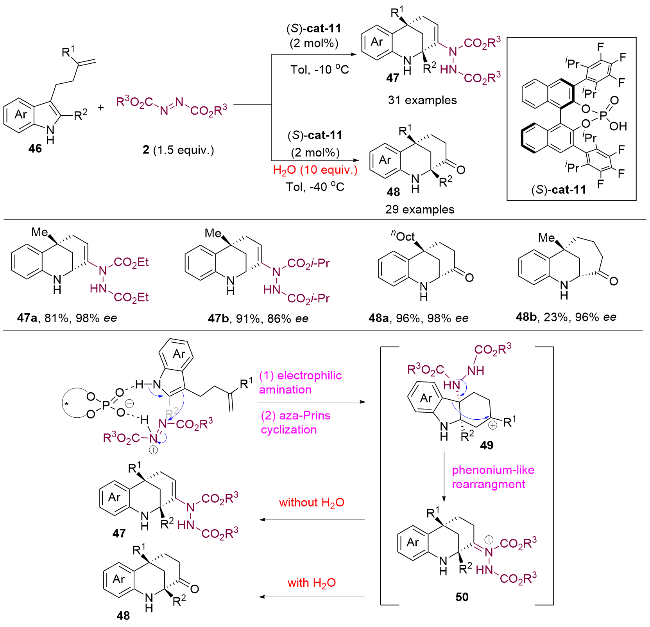
In 2023, You, Zheng and co-workers[33] reported an efficient method for enantioselective synthesis of chiral aza-[3.3.1]-bicyclic enamine 47 and ketones 48. This was achieved by asymmetric dearomatization of indoles 46 using azodicarboxylates 2 through a cascade electrophilic amination and subsequent aza-Prins cyclization/pheno-nium-like rearrangement (Scheme 9). The newly designed fluorine-containing chiral phosphoric acid (S)-cat-11 played a crucial role in this cascade reaction, leading to the formation of chiral bicyclic frameworks with high enantioselectivities. The involvement of H2O in this reaction significantly impacts the final product, leading to the formation of either ketones or enamine products.
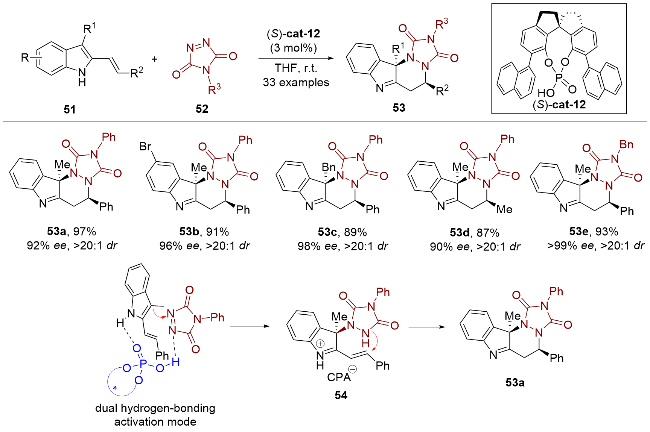
In 2024, Mei, Xu, Wang and co-workers[34] reported the first catalytic asymmetric dearomative azo-Diels-Alder reaction between 2-vinylindoles 51 and triazoledione 52 (Scheme 10). A variety of tetracyclic indole derivatives 53 were obtained with good to excellent yields and with excellent diastereo-and enantio-selectivities by using CPA (S)-cat-12. Control experiments revealed a dual hydrogen-bonding activation mechanism between the substrate and catalyst. Furthermore, comprehensive DFT calculations indicated that the reaction proceeded through a mechanism involving the aminative dearomatization intermediate 54 with the C(3)—N bond formation serving as the rate-limiting and selectivity-determining step.
In addition to the construction of centrally chiral molecules through the CADA reaction, CPA-catalyzed enantioselective electrophilic amination reaction can also be used to produce axially chiral indolyl atropisomers. However, due to the lower rotation barrier of five-membered heterobiaryl scaffolds compared to the more prevalent six-membered biaryl counterparts, their catalytic asymmetric synthesis has received less attention.
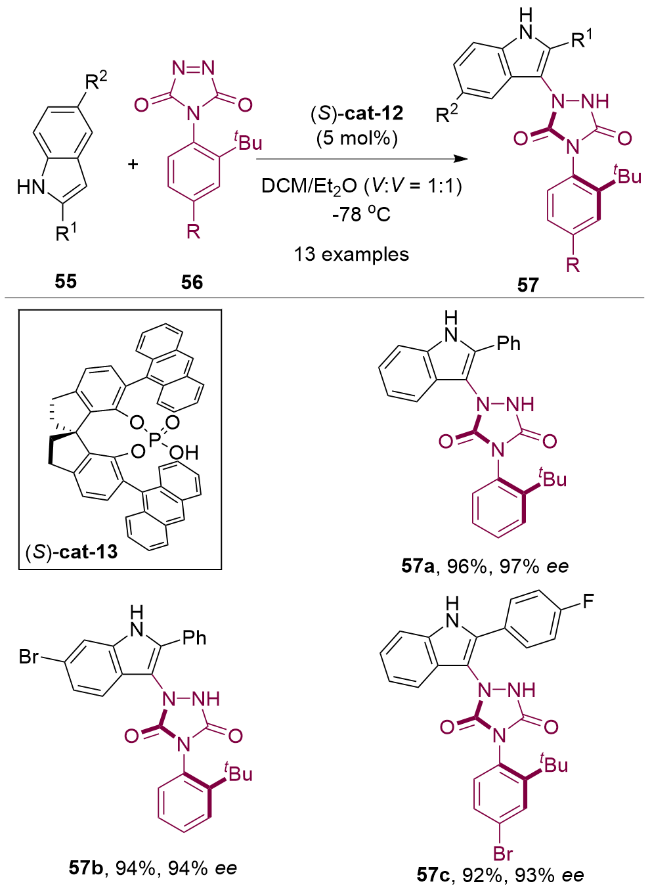
In 2016, Tan and co-workers[35] reported the catalytic enantioselective synthesis of axially chiral urazoles throu-gh an enantioselective desymmetrization strategy (Scheme 11). Beginning with a prochiral 4-aryl-1,2,4-triazole-3,5-dione (ATAD), the (S)-cat-13-catalyzed asymmetric electrophilic amination with 2-substituted indoles 55 as nucleophiles broke the substrate symmetry, leading to the generation of a variety of axially chiral urazole derivatives 56 with high yields and high enantioselectivities. Notably, the sterically hindered ortho-tert-butyl group on the 4-aryl groups of the compounds 57 was essential for the configurational stability of the resulting products. Moreover, 2-naphthols were also utilized as nucleophiles to realize the desymmetrization of 56, albeit a different type of bifunctional organocatalyst was necessary for this process.
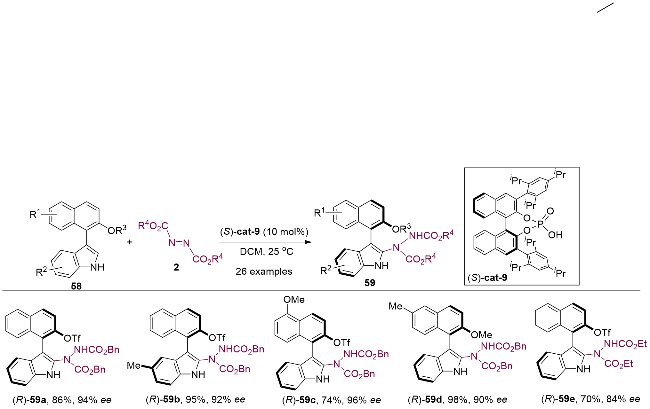
In 2019, Shi, Zhang and co-workers[36] disclosed the asymmetric synthesis of axially chiral naphthyl-indole atropoisomers by employing a dynamic kinetic resolution (DKR) strategy through asymmetric addition reactions of racemic substrates. The racemic naphthyl-indoles 58 were utilized as substrates, possessing unstable axial chirality that could undergo rapid racemization (Scheme 12). Through (S)-cat-9 catalyzed asymmetric electrophilic amination with azodicarboxylates 2, a sterically bulky hydrazine group was introduced at the C(2)-position of the indole moiety, resulting in the formation of a series of configurationally stable axially chiral naphthyl-indoles 59 with good yields and high enantioselectivities. Furthermore, o-hydroxybenzyl alcohols were demonstrated to be viable electrophiles for the asymmetric synthesis of naphthyl-indole atropoisomers under CPA catalysis.
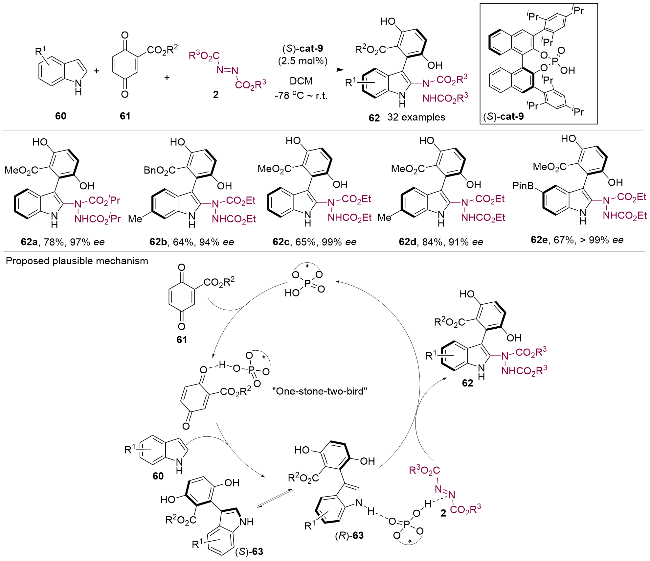
Building upon this strategy for synthesizing indole-based atropoisomers, Lu and co-workers[37] introduced a more straightforward and general method for asymmetric synthesis of these axially chiral products through atroposelective 2,3-difunctionalization of simple indoles in 2024 (Scheme 13). In this approach, benzoquinones 61 and azodicarboxylates 2 are both activated by (S)-cat-9 to engage with simple indoles 60, resulting in the formation of axially chiral 2,3-disubstituted indole atropisomers 62 within a single catalytic system. Specifically, within this one-pot reaction, the CPA initially activated benzoquinones 61 to react with simple indoles 60, producing C(3)-functionalized indoles 63, which was subsequently engaged with the other electrophile, azodicarboxylates 2, at the C(2) position of the indoles. Aligning with prior research, the second electrophilic amination step played as the enantiodetermining step, ensuring the stable axial chirality of the resultant products.
2.4 CPA-catalyzed enantioselective electrophilic amination of phenols and naphthols
Similar to indoles, phenols and naphthols are electron-rich arenes, which have been extensively used as nucleophiles in asymmetric reactions. In the context of specific enantioselective electrophilic amination reactions, two primary strategies have emerged: aminative CADA reactions and the asymmetric synthesis of axially chiral atropisomers through aromatic amination.
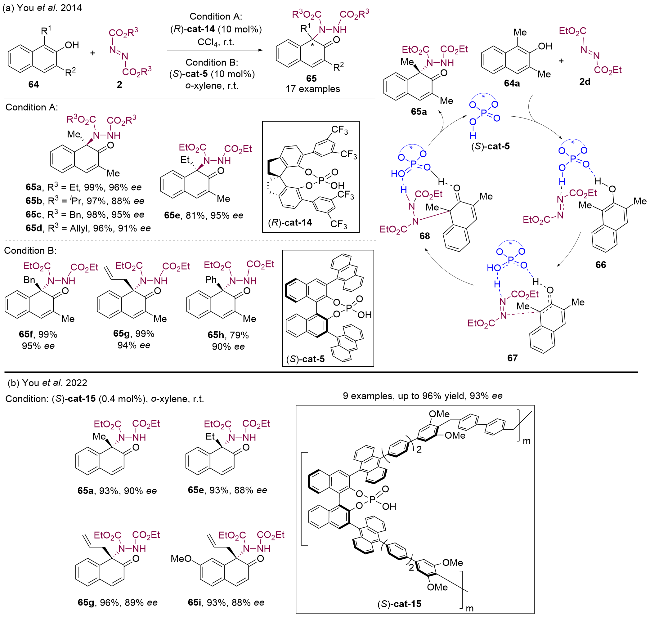
In 2014, You and co-workers[38] presented the highly efficient catalytic asymmetric dearomatization of 2-naphth-ols through CPA-catalyzed electrophilic amination reaction. Employing either (R)-cat-14 or (S)-cat-5 as catalysts for the amination reaction with azodicarboxylates 2, the CADA reaction of various C(1),C(3)-disubstituted 2-naphthols 64 afforded the functionalized 2-naphthalenone products 65 with nitrogen-containing quaternary stereocenter in excellent yields and enantioselectivities (Scheme 14, a). Remarkably, the catalyst loading could be decreased to as low as 0.05 mol% without compromising the efficiency and enantioselectivity of this reaction. In 2017, Sunoj and colleagues[39] reported a reversal in the stereo-induction sense from R to S during this reaction by switching the 3,3'-aryl substituent of the CPA catalyst from 3,5-(CF3)2C6H3 to 9-anthracenyl group, and investigated the origin of this outcome through detailed DFT calculations. In 2022, You, Tu, Gu et al.[40] introduced a novel robust solid hyper-crosslinked porous (S)-cat-15, which have been found successful application in the asymmetric aminative dearomatization of β-naphthols with azodicarboxylates (Scheme 14, b).
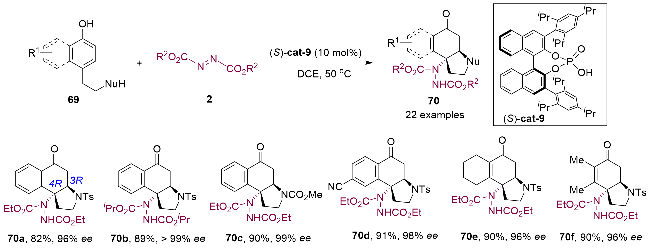
In 2019, You and co-workers[41] reported an intermolecular asymmetric dearomatization reaction of α-naphthols 69 featuring a tethered nucleophile at the C(4) position of the naphthol ring. The reaction involved a highly selective (S)-cat-9-catalyzed aminative dearomatization of 69 with azodicarboxylate 2, which was followed by an intramolecular Michael addition sequence. This resulted in a diverse range of functionalized cyclic ketones 70 with high yields and enantioselectivity (Scheme 15). Mechanistic investigation indicated that enantioselectivity is established during the aminative dearomatization step, with the Michael addition serving as the rate-limiting step.
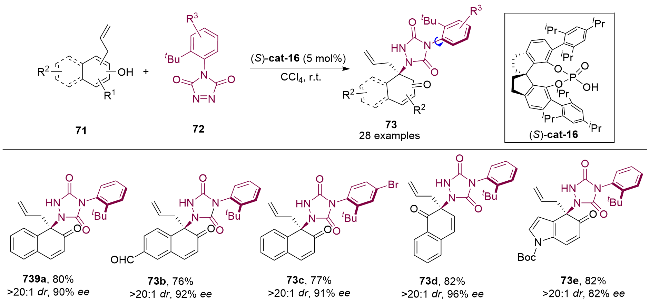
In 2023, Chandra Pan and colleagues[42] described the asymmetric aminative dearomatization of naphthols 71 using diazodicarboxamides 72 featuring a N-(o-t-BuC6H4) group as the electrophilic amination reagent, which yielded naphthalenone products 73 with both central chirality and axial chirality (Scheme 16). Under the catalysis of (S)-cat-16, various 2-naphthols, 1-naphthols, and substituted phenols can participate in the reaction with diazodicarboxamides 72, resulting in products 73 with good yields and high diastereoselectivity and enantioselectivity.
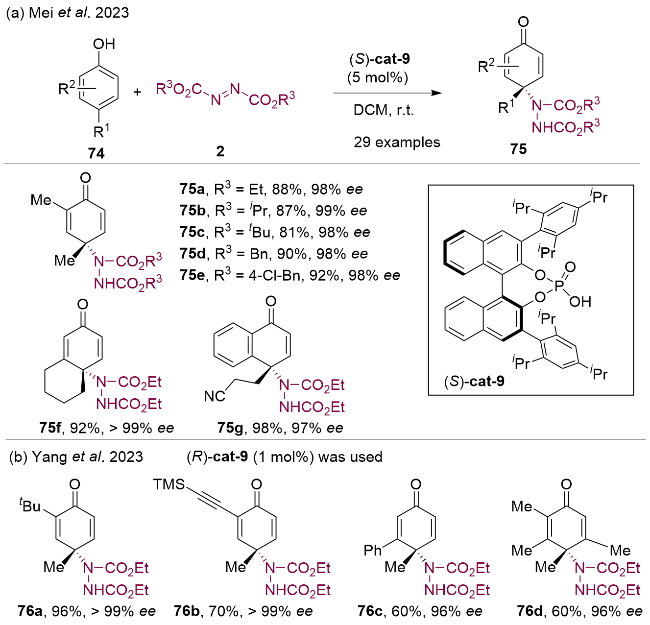
While several CADA methods have been disclosed for substituted naphthols, including the aminative dearomatization method, the analogous method for phenols remains limited due to their strong aromaticity and challenges related to regioselectivity at the C(2)-or C(4)-positions. In 2023, the Mei group[43] and our group[44] independently showcased that CPA-catalyzed para-regioselective electrophilic amination with azodicarboxylate could be leveraged for the asymmetric dearomatization of substituted phenols (Scheme 17). Both studies utilized cat-9 as the optimal catalyst, demonstrating versatility of this method with a diverse set of substituted phenols 74 and various azodicarboxylates 2. This approach yielded a range of chiral 2,5-cyclohexadienones (75 or 76) featuring 4-aza-quarter-nary stereocenters, exhibiting excellent yields and enantioselectivities.
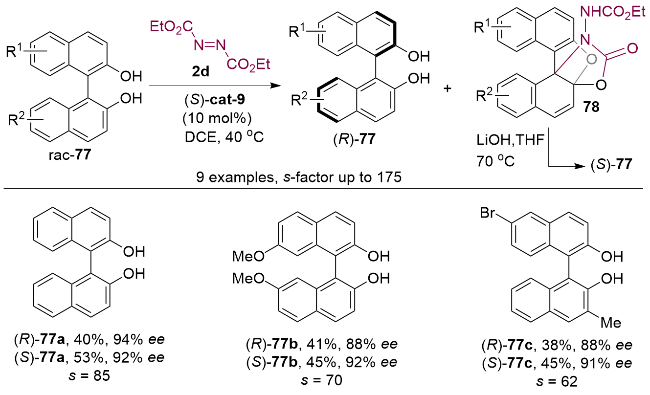
In addition, the CPA-catalyzed aminative dearomatization reaction of 2-naphthols could also be utilized for the kinetic resolution of racemic naphthols, such as the racemic BINOLs (Scheme 18). In 2022, Tan and co-workers[45] reported a straightforward synthesis of racemic BINOLs 77 through a photocatalyzed cross-coupling reaction, which then underwent (S)-cat-9-catalyzed electrophilic amination with azodicarboxylate 2d to give the recovered (R)-77 and the dearomatization product 78 with high kinetic resolution performance, with s-factors of up to 175. Notably, the dearomatized products could be readily converted into the starting BINOLs under basic conditions, thus providing a convenient route to obtain both enantiomers of BINOLs with high enantioselectivity.
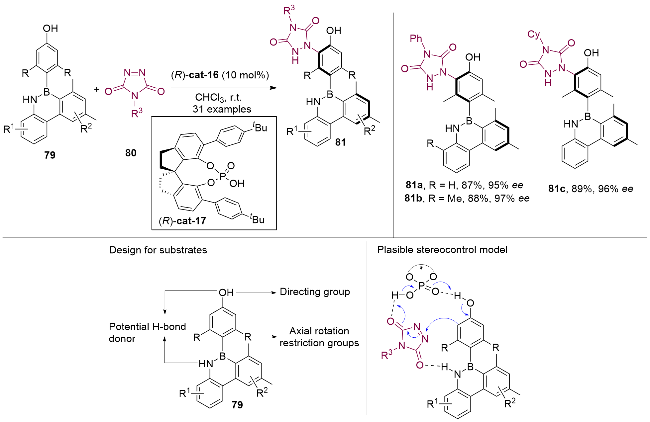
Beyond its use in the asymmetric dearomatization reactions of naphthols and phenols, this CPA-catalyzed asymmetric aminative reaction could also be utilized in the atroposelective synthesis of axially chiral compounds via aromatic C—H amination reaction. In 2021, Tan, Zhang, Xiang and co-workers[46] reported the enantioselective synthesis of a novel type of axially chiral B-aryl-1,2-aza-borines through an enantioselective desymmetrization strategy. The (R)-cat-17-catalyzed ortho-selective C—H amination of the phenol moiety in the prochiral B-aryl-1,2-azaborines 79 with diazodicarboxamides 80 broke the symmetry, leading to the formation of axially chiral heterobiaryl atropisomers 81 under mild conditions, which featured a stereogenic B—C bond (Scheme 19). Remarkably, in this study, the azaborine substrates 79 were intricately designed to encompass crucial components, such as potential H-bond donors (NH and OH), a directing group (OH), and axial rotation restriction groups (3,5-disubstitu-tions), which facilitated remote stereochemical control through hydrogen-bonding interactions with the CPA catalyst. Additionally, their control experiments indicated that the reaction time could be significantly reduced by leveraging the weakly acidic proton of NH in azaborine.
2.5 Catalytic enantioselective electrophilic amination of arylamines
Much like phenols and naphthols, arylamines are electron-rich arenes that can participate in various reactions as nucleophiles, however, their reactions with azodicarboxylates exhibit distinctions. While phenols and naphthols tend to yield dearomatization products, arylamines predominantly produce C—H amination products. Additionally, the amino group in arylamines can also act as a nucleophile, resulting in the formation of triazane products. In the recent years, our group have conducted extensive studies on the CPA-catalyzed asymmetric electrophilic amination of arylamines, employing strategies including kinetic resolution, enantioselective desymmetrization and atroposelective synthesis. These efforts have led to the successful asymmetric synthesis of various centrally chiral, axially chiral, planar chiral and inherently chiral molecules.
2.5.1 Asymmetric synthesis of centrally chiral molecules via CPA-catalyzed amination of arylamines
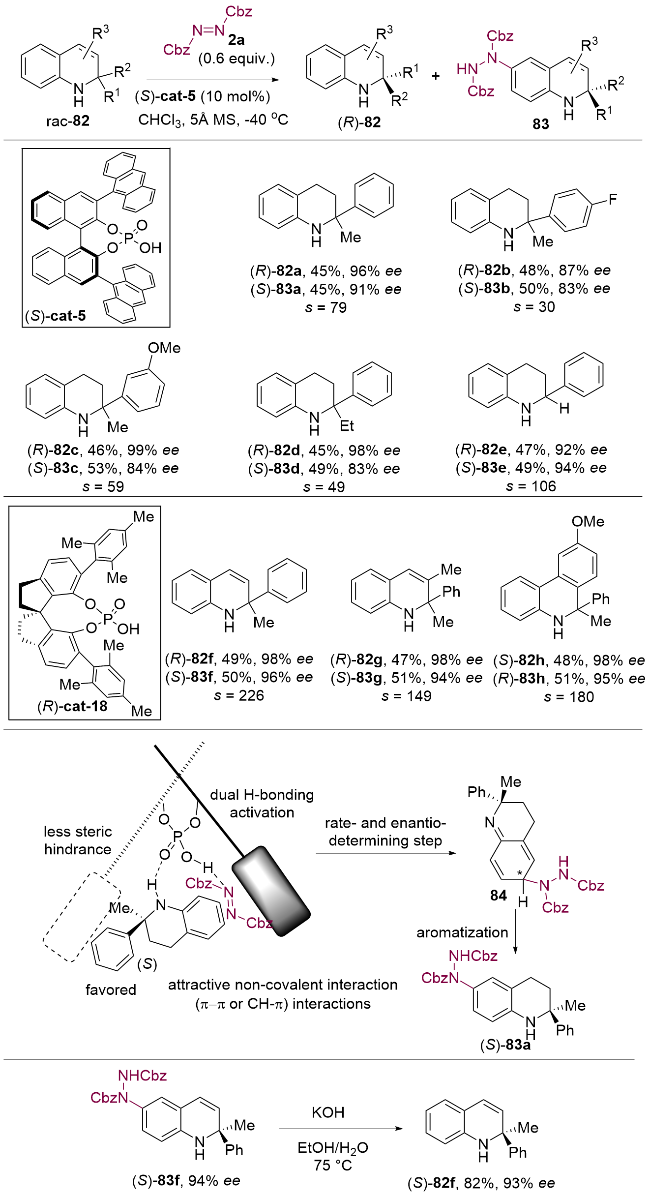
Compared to the well-established KR of α-secondary amines, the KR of α-tertiary amines has seen limited development due to the challenging stereodiscrimination involving three non-hydrogen groups. In 2021, our group[47] developed the first kinetic resolution of α,α-disubstituted hydroquinoline derivatives through CPA-catalyzed electrophilic aminations with dibenzyl azodicarboxylate (Scheme 20). A series of α,α-disubstituted tetrahydroquin-olines (THQs, 82) were effectively kinetically resolved with high s-factors using dibenzyl dicarboxylate 2a and (S)-cat-5 catalyst. Furthermore, employing the CPA catalyst (R)-cat-18 enabled the successful resolution of α,α-disubstituted dihydroquinolines (DHQs, 82f~82g) and 5,6-dihydrophenanthridines (82h) with excellent KR performances, which yielded both recovered starting materials and the para-amination products (83f~83h) with high enantioselectivities. Through a series of control experiments, the authors proposed that the electrophilic addition leading to the formation of the dearomatized intermediate 84 was the pivotal step determining both the rate and enantioselectivity. Furthermore, the hydrazine group in the chiral products (S)-83f could be easily eliminated under strong basic conditions, yielding the enantioenriched (S)-82f.
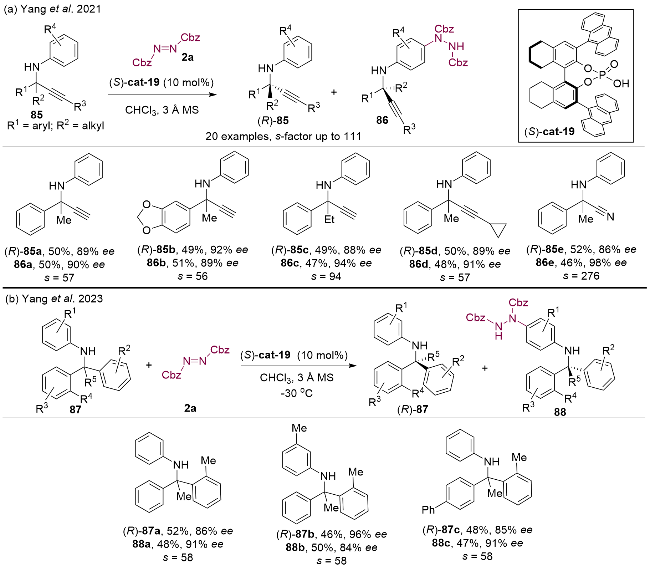
Kinetic resolution of acyclic molecules is considered more challenging than that of cyclic molecules due to their inherently more flexible molecular conformation. Nevertheless, in 2021, our group[48] realized the first KR of acyclic α-tertiary propargylic amines using this method. A wide variety of N-aryl α-tertiary propargylic amines 85 underwent successful kinetic resolution using dibenzyl azodicarboxylate 2a in the presence of (S)-cat-19, exhibiting high KR performance (with s-factors up to 111) (Scheme 21, a). The electron-rich N-aryl group in the resulting products 86 could be cleaved under oxidative conditions, yielding synthetically valuable propargylic primary amines. Additionally, the α-tertiary amines 85e, containing an α-CN group (a product of the Strecker reaction), could also be kinetically resolved with high stereoselectivity using the same reaction conditions. In 2023, utilizing the identical catalyst (S)-cat-19 and dibenzyl azodicarboxylate 2a as the electrophile, our group[49] successfully advanced the asymmetric synthesis of highly sterically congested α-tertiary amines 88 through CPA-catalyzed asymmetric amination of aniline derivatives 87 via kinetic resolution, which were previously challenging to access using other asymmetric methods (Scheme 21, b).
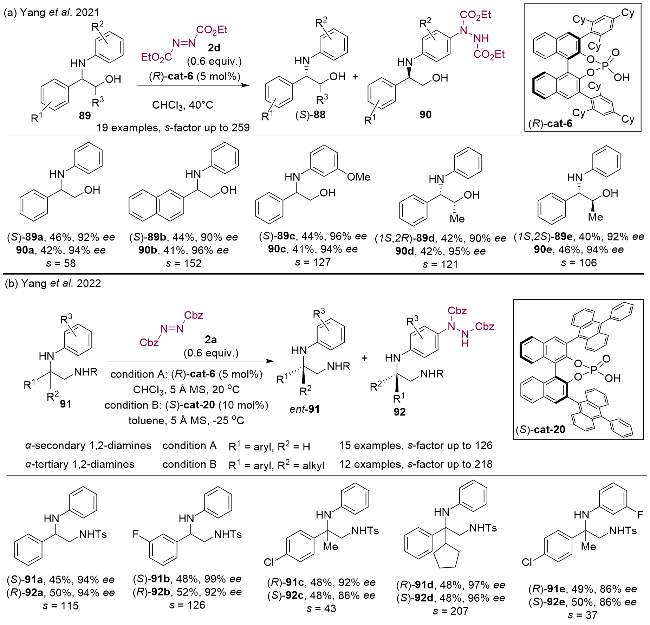
In addition to the success achieved with the kinetic resolution of α-tertiary amines, our group also demonstrated that this approach could be extended to the kinetic resolution of arylamines containing functional groups, such as N-aryl β-amino alcohols 89[50] and 1,2-diamines 91.[51] The effective kinetic resolution of N-aryl β-amino alcohols 89 was accomplished through the catalysis of (R)-cat-6 with diethyl azodicarboxylate 2d (Scheme 22, a). Control experiments provided further evidence of the crucial involvement of both the NH and OH groups in these reactions. In the KR of 1,2-diamines 91, dibenzyl azodicarboxylate 2a was used as the amination reagent. For the KR of α-tertiary 1,2-diamines, (R)-cat-6 served as the optimal catalyst, whereas (S)-cat-20 was utilized for the KR of α-secondary 1,2-diamines. This KR reaction represented a significant advancement as the first example of KR of 1,2-diamines, highlighting the distinctive chemoselectivity of this method targeting the N-aryl moiety over other amino groups (Scheme 22, b).
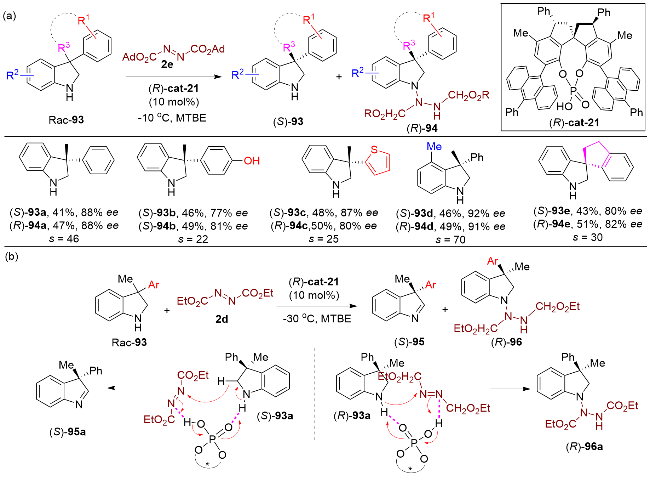
In addition to the kinetic resolution of arylamines with α-stereocenter, our group[52] further challenged this method for the KR of amines with β-quaternary stereocenter in 2023. By using the (R)-cat-21-catalyzed N-amination reaction with sterically hindered azodicarboxylates 2e, we successfully achieved the kinetic resolution of a series of 3,3-disubstituted indoline 93 with high KR performances (with s-factors up to 70), including the C(3)-spirocyclic substituted variants 93e (Scheme 23). Notably, when employing the less hindered azodicarboxylate 2d, an intriguing parallel kinetic resolution (PKR)[53] was realized, which produced both the N-amination triazane products 96 and the dehydrogenated imine-type products 95 with good to high enantioselectivities. Detailed experimental investigations were carried out to reveal that under the dual hydrogen-bonding activation of the CPA catalyst, (R)-93a exhibited a preference for N-amination to produce (R)-96a, while (S)-93a favored hydrogen transfer to yield (S)-95a, effectively facilitating the PKR process.
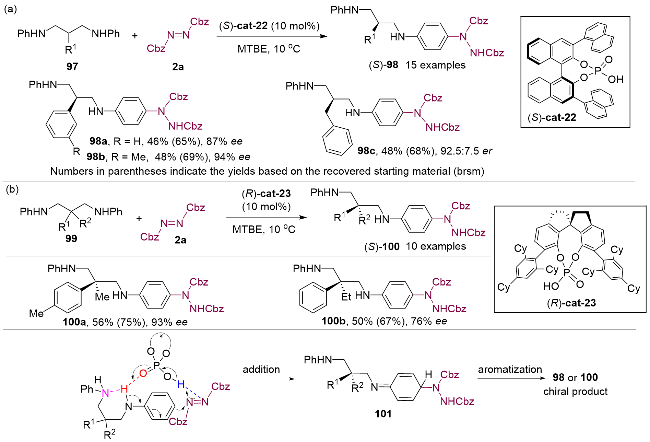
Enantioselective desymmetrization stands out as a potent strategy for generating chiral molecules from relatively simple prochiral substrate, which proved especially efficient in forming all-carbon quaternary stereocenters and remote stereocenters.[54] In 2021, our group[55] reported the enantioselective desymmetrization of 1,3-propanediamines through asymmetric para-aminations of anilines (Scheme 24, a). Starting with the prochiral 2-substituted N-aryl 1,3-propanediamines 97, the (S)-cat-22-catalyzed amination with dibenzyl azodicarboxylate 2a led to the formation of the desymmetrized 1,3-propanediamine products 98 featuring a tertiary stereocenter with high enantioselectivities, albeit in modest yields. Moreover, this method could also be extended to the desymmetrization of 2,2-disubsti-tuted 1,3-propanediamines 99 using (R)-cat-23, which generated the products 100 with a C(2) all-carbon quaternary stereocenter (Scheme 24, b). After conducting control experiments and preliminary mechanistic investigations, a plausible mechanism was postulated, suggesting that the asymmetric transition state engages dual H-bonding activation and significant intramolecular H-bonding, which offered valuable insights for the advancement of asymmetric reactions involving remote chiral stereocenters.
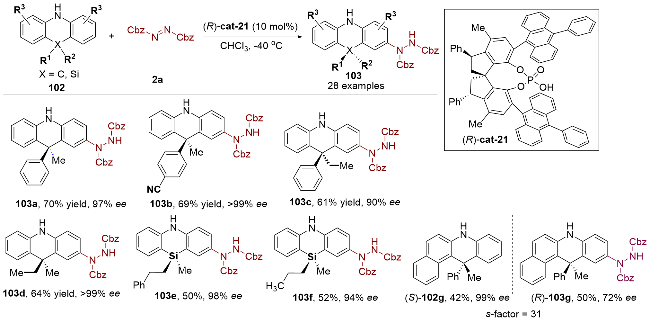
In 2022, our group[56] further disclosed the remote enantioselective desymmetrization of 9,9-disubstituted 9,10-dihydroacridines 102 through asymmetric aromatic aminations with dibenzyl azodicarboxylate 2a, which was enabled by a novel spirocyclic CPA catalyst (R)-cat-21 (Scheme 25). This method proved highly effective in constructing remote quaternary all-carbon stereocenters (103a~103d) and silicon stereogenic centres (103e~103f) with high enantioselectivities, which are difficult to access by other methods. Furthermore, this method demonstrated applicability in the kinetic resolution of racemic dihydroacridine derivatives 102g, showcasing the excellent compatibility and versatility of this asymmetric catalytic method.
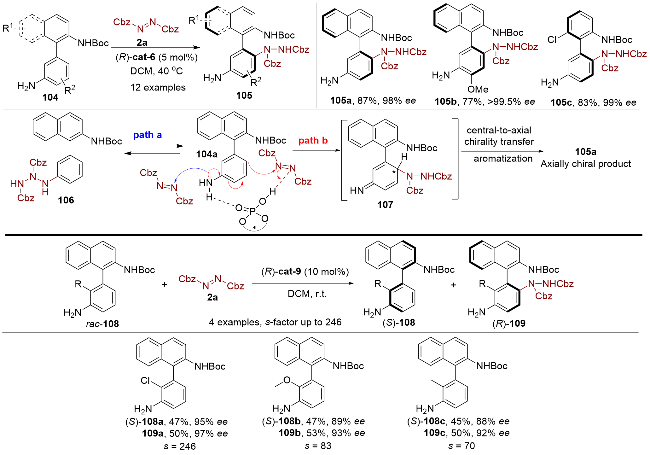
2.5.2 Asymmetric synthesis of axially chiral molecules via CPA-catalyzed amination of arylamines
In 2019, our group[57] reported the atroposelective synthesis of the axially chiral biaryl compounds bearing potential diamine and amino alcohol functionalities using an asymmetric C—H amination reaction. Staring with the achiral biaryl 104 containing an aniline moiety, the CPA (R)-cat-6-catalyzed para-amination with dibenzyl azodicarboxylate 2a resulted in the formation of the axially chiral products 105 with high enantioselectivities (Scheme 26). Mechanistic studies suggested that the formation of N-amination triazane products 106 was a reversible process. The para-selective amination of the aniline substrate generated the centrally chiral intermediate 107 through a dual hydrogen-bonding activation mode, which subsequently underwent a central-to-axial chirality conversion process, resulting in the formation of axially chiral products. Furthermore, the kinetic resolution of a series of 2-substituted racemic biaryl aniline substrates 108 demonstrated high KR performance (with s-factors up to 246) when employing CPA (R)-cat-9. In addition, the atroposelective synthesis of biaryl amino alcohols derivatives could be achieved by using the phenol-containing substrate through a para-selective asymmetric C—H amination reaction.
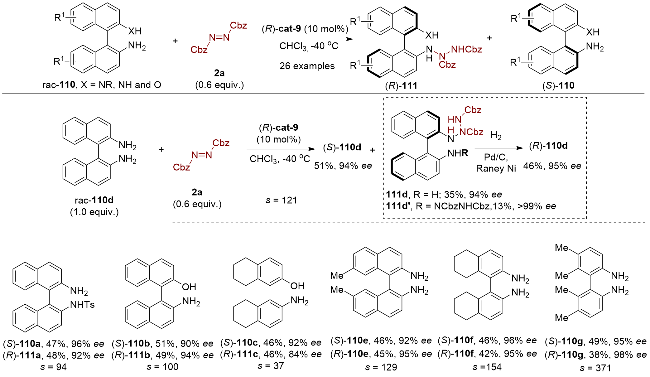
1,1'-Binaphthyl-2,2'-diamines (BINAMs) and 2-amino 2'-hydroxy-1,1'-binaphthyls (NOBINs) represent privileged chiral scaffolds in developing chiral catalysts and ligands, attracting significant attention to their asymmetric synthesis. In 2020, our group[58] reported a CPA-catalyzed versatile kinetic resolution protocol for protecting-group-free BINAMs and NOBINs using the asymmetric triazane formation reaction with azodicarboxylates instead of the previous C—H amination reaction. A rang of mono-N-prote-cted (110a) and unprotected BINAMs (110b, 110c), as well as free NOBIN derivatives (110d, 110e) and diphenyl diamines (110f, 110g), were effectively kinetically resolved through the treatment of dibenzyl azodicarboxylate 2a enabled by (R)-cat-9, which led to high enantioselectivities in both the recovered BINAMs and NOBINs and the triazane products 111 (Scheme 27). The unique reactivity at the unprotected amino group ensures that no protecting groups are required in the substrates. It is noteworthy that the unprotected BINAM derivatives (110d~110g) would yield both the mono-and bis-triazane products simultaneously, while this mixture can be easily reduced under catalytic hydrogenation conditions to produce the opposite enantiomer of the starting material.
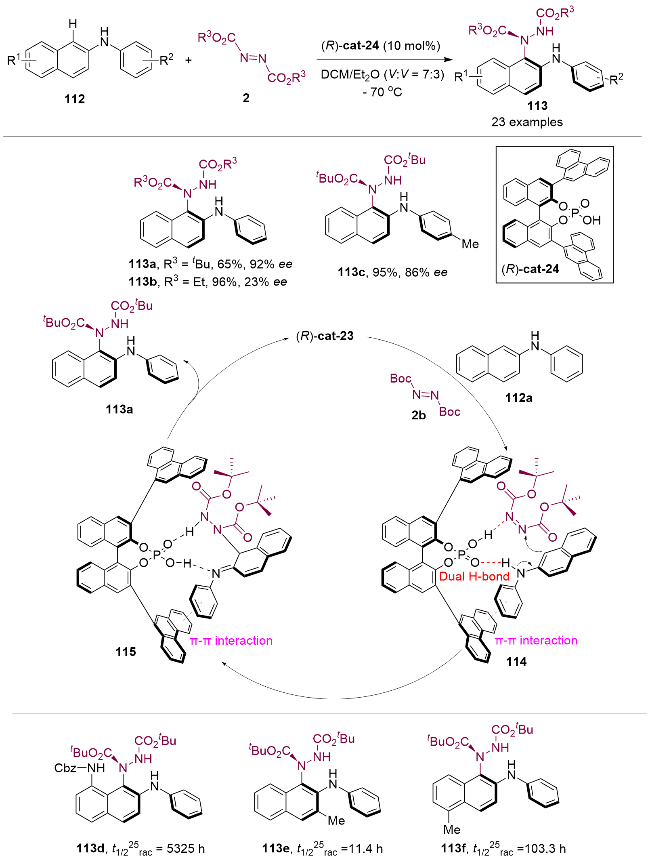
Beyond the widely studied biaryl-type atropisomers, other forms of axially chiral atropisomers, like the N-C atropisomer, have been relatively underexplored in catalytic asymmetric synthesis, especially regarding the direct enantioselective formation of the C—N bond.[59] In 2019, Zhang and co-workers[60] reported the highly enantioselective synthesis of C-N atropoisomers 113 via (R)-cat-24-catalyzed C—H amination of the N-aryl 2-naphthylamine 112 with azodicarboxylates 2 (Scheme 28). Control experiments demonstrated the crucial role of the N-aryl groups in achieving high enantioselectivity in these reactions, which promoted a proposed reaction mechanism that incorporates π-π interactions and dual H-bond synergistic activation. Nevertheless, limitations persisted in the configurational stability of these N—C atropoisomers, with only the C(8)-substituted product 113d exhibiting high configurational stability, while other products experienced considerable racemization even at room temperature.
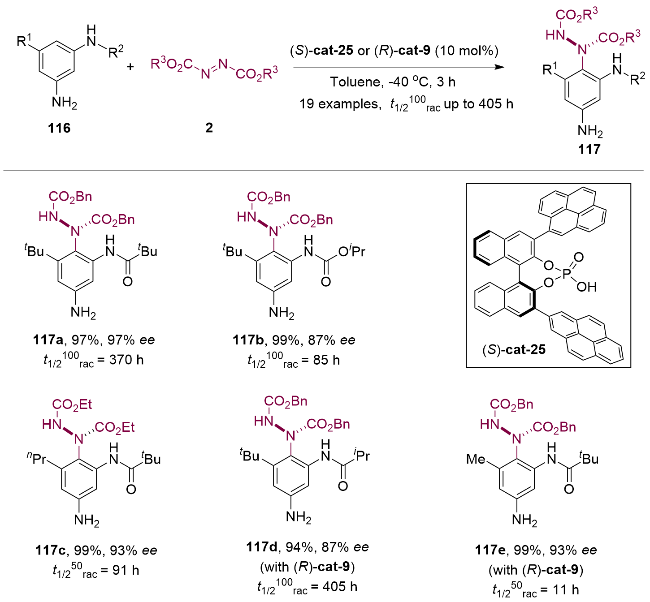
Given the relatively low configurational stability of the 2-naphthol/2-naphthylamine-derived hydrazine-based N-C atropisomers, our group[61] reported the atroposelective synthesis of configurationally stable non-biaryl N-C atro-pisomers 117 in 2020. This was achieved by direct enantioselective amination of 1,3-benzenediamine derivatives 116 with azodicarboxylates 2, facilitated by the (S)-cat-25 or (R)-cat-9 catalyst (Scheme 29). The incorporation of a sterically bulky 2-tert-butyl group was identified as crucial for ensuring the high configurational stability of these products, with racemization half-lives up to 405 h at 100 ℃. Furthermore, the presence of the ortho-amido group was determined to be critical for achieving high enantioselectivity in these reactions, potentially forming hydrogen bonds with the CPA catalyst.
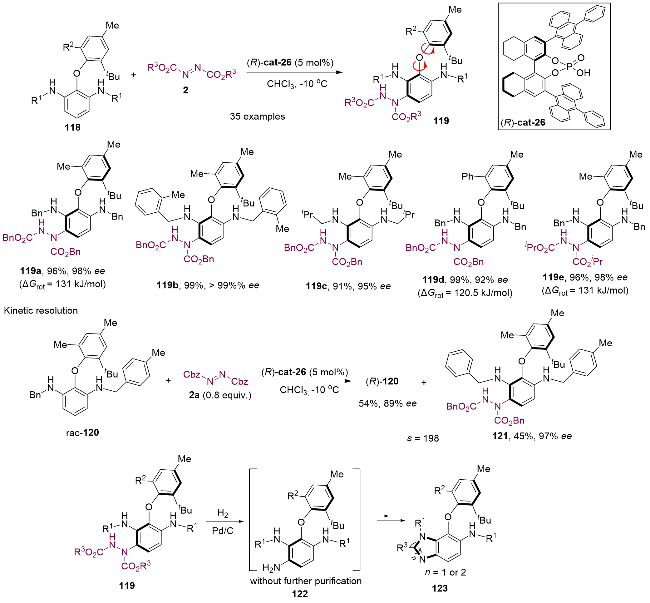
While significant research has focused on the catalytic enantioselective synthesis of atropisomers with a single chiral axis, methods for atropisomers featuring two potentially contiguous axes, such as axially chiral diaryl ethers and diarylamines, have received comparatively less attention.[62] In 2023, our group[63] reported the catalytic asymmetric synthesis of axially chiral diaryl ethers via an enantioselective desymmetrization protocol (Scheme 30). The prochiral symmetric 2,6-diamino-substituted diaryl ethers 118 underwent an asymmetric C—H amination reaction with various azodicarboxylates 2 catalyzed by CPA (R)-cat-26, leading to the desymmetrization of the substrate and formation of axially chiral diaryl ethers 119 with excellent yields and enantioselectivities. Remarkably, these axially chiral products demonstrated excellent configurational stability, with racemization barriers >125.5 kJ/mol. Moreover, this approach proved to be effective for the kinetic resolution of racemic substrates 120, displaying outstanding KR performance (with s-factor values up to 198). The hydrazine group in chiral products 119 could be efficiently cleaved through simple hydrogenation conditions, yielding the 1,2-benzenediamine moiety for diverse transformations into novel azaarene-containing diaryl ether atropisomers.
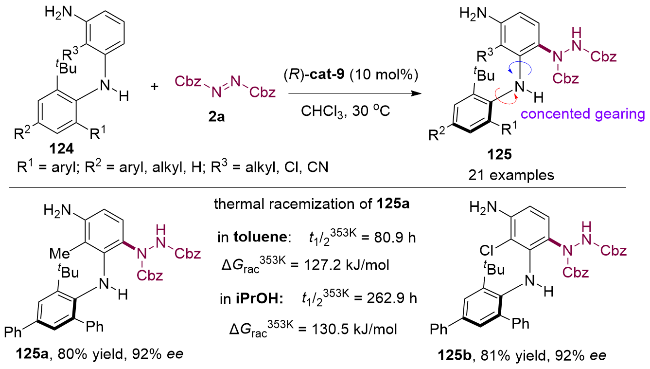
Similarly to diaryl ether atropisomers, diarylamine atropisomers can be viewed as having two contiguous chiral C—N axes. Previous research on their catalytic asymmetric synthesis primarily focused on N-aryl quinoid-type atropisomers, where an intramolecular hydrogen bond stabilizes one C—N axis. In 2024, our group[64] reported the enantioselective synthesis of axially chiral diarylamines via CPA-catalyzed asymmetric electrophilic aromatic ami-nation. Starting with achiral diarylamine substrates 124 containing three ortho-substitutions, the CPA (R)-cat-9-catalyzed C—H amination using azodicarboxylates 2 afforded a variety of acyclic secondary diarylamine atropisomers 125 in good yields with high enantioselectivities (Scheme 31). Both experimental studies and DFT calculations suggested that the high configurational stability of these diarylamine atropoisomers was primarily attributed to steric hindrance rather than intramolecular hydrogen bonding.
2.5.3 Asymmetric synthesis of planarly chiral and inherently chiral molecules via CPA-catalyzed amination of arylamines
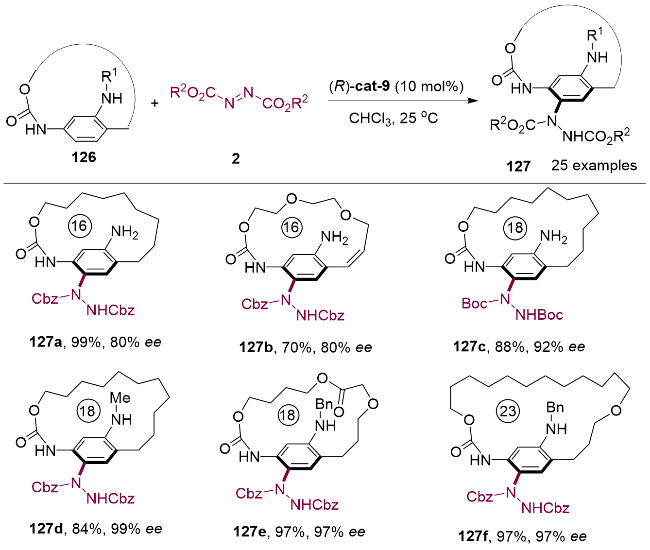
Planar-chiral macrocycles are a unique class of planar-chiral molecules where the flipping of the benzene ring is constrained by the ansa chain and the ring substitu-tions.[65] As they can be viewed as a type of atropoisomers, a similar strategy for constructing axially chiral atropoisomers could also be applied for the asymmetric synthesis of planar-chiral macrocycles. In 2022, Yang, Xue and co-workers[66] reported the enantioselective synthesis of planar-chiral macrocycles through CPA-catalyzed C—H amination. By introducing a steric hindered hydrazine group into the aniline-containing achiral macrocycles 126 and using (R)-cat-9-catalyzed C—H amination with various azodicarboxylates 2, a variety of planar-chiral macrocycles 127 with varying ring sizes could be afforded with excellent yields and high enantioselectivities (Scheme 32). Remarkably, increasing steric hindrance by incorporating N-alkyl group into the achiral substrates allowed for the extension of the ring size to a 23-member ring (127f). Control experiments and DFT calculations highlighted the vital role of the N—H motifs of the amino group in both reactivities and enantioselectivities, with electrophilic addition identified as the rate-and enantio-determining step.
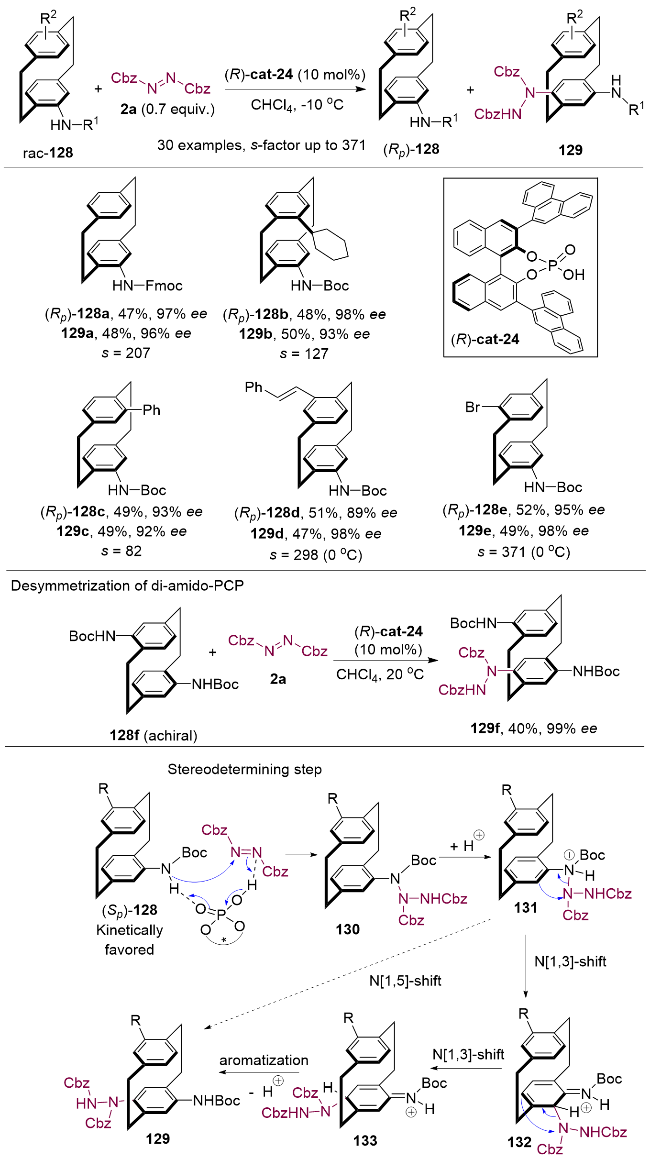
[2.2]Paracyclophanes represent another class of planar-chiral molecules distinct from planar-chiral macrocycles. Due to their relatively small ring size, the flipping of the benzene ring is precluded. Consequently, a simple substitution on the [2.2]paracyclophane renders it planarly chiral, making kinetic resolution the most feasible method for the asymmetric synthesis of planar-chiral [2.2]paracyclo-phanes. In 2023, our group[67] reported the efficient kinetic resolution of amido[2.2]paracyclophanes via CPA-cataly-zed asymmetric electrophilic amination. Various racemic substituted amido[2.2]paracyclophanes 128, featuring pseudo-geminal, pseudo-ortho, pseudo-meta and pseudo-para disubstitutions, were effectively kinetically resolved with high KR performance through the CPA (R)-cat-24-catalyzed C—H amination reaction using dibenzyl azodicarboxylates 2a (Scheme 33). Moreover, this method could also be utilized for the enantioselective desymmetrization of achiral pseudo-para-substituted diamido[2.2]paracyclo-phane (128f). Detailed experimental studies suggested a C—H amination mechanism that began with the formation of triazane 130, followed by a hydrazine-shift from the amino group to the para-position (through two consecutive N[1,3]-rearrangements or one N[1,5]-rearrangements), with the CPA-catalyzed N-amination step serving as the stereodetermining step.
Molecular chirality is commonly categorized into four types: central chirality, axial chirality, planar chirality, and helical chirality. However, unique forms of chirality can arise from the overall dissymmetry of a molecule that do not fit into these four types, which has been termed as inherent chirality,[68] exemplified by structures like calixa-renes[69] and saddle-shaped eight-membered cyclic compounds[70].
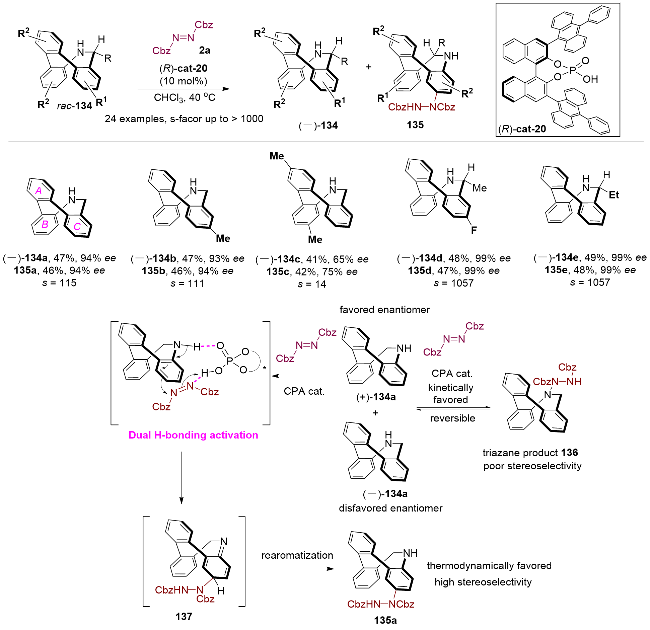
In 2024, our group[71] reported the asymmetric synthesis of inherently chiral saddle-shaped eight-membered N-heterocycles via kinetic resolution. A wide range of racemic 9,10-dihydrotribenzoazocines 134, featuring inherent chirality alone or with an additional stereocenter, could be kinetically resolved using CPA (R)-cat-20-catalyzed C—H amination reaction with dibenzyl azodicarboxylate 2a, affording both the recovered starting material (SM) and the C—H amination products 135 with high enantioselectivities (Scheme 34). Control experiments indicated that the N-amination triazane products 136 are the kinetically favored products, with this step being reversible. In contrast, the C—H amination products were thermodynamically favored, and the CPA-catalyzed C—H amination step was identified as the stereodetermining step.
3 CPA-catalyzed enantioselective electrophilic amination with aryldiazonium salts
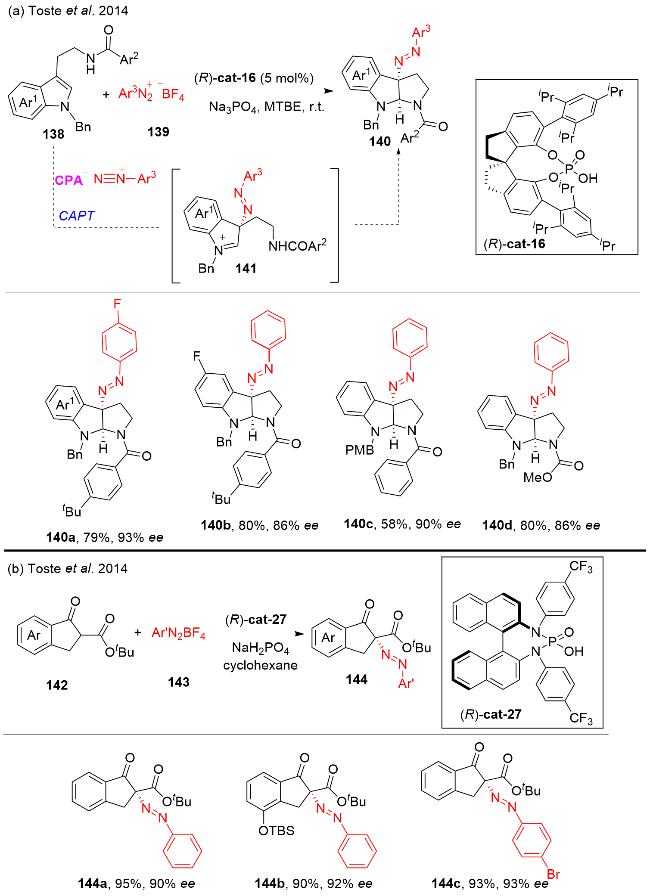
Aryldiazonium salts are valuable organic reagents utilized in various applications, including serving as electrophilic amination reagents. However, due to their high reactivity and activation challenges, the catalytic enantioselective electrophilic amination reaction using aryldiazonium salts remains relatively unexplored. In 2014, Toste and co-workers[72] achieved the asymmetric synthesis of pyrroloindolines through aminative dearomatization using an ingenious chiral anion phase transfer[73] (CAPT) strategy with aryldiazonium salt. Starting from tryptamine derivatives 138, the dearomative cyclization with aryldiazonium tetrafluoroborates 139 in the presence of (R)-cat-16 and Na3PO4 in methyl tert-butyl ether (MTBE) afforded a series of chiral C(3)-diazenated pyrroloindolines 140 with good yields and enantioselectivities (Scheme 35, a). The phase transfer of the insoluble aryldiazonium tetrafluoroborates 139 facilitated by the chiral sodium phosphate derived from CPA (R)-cat-16 led to a soluble chiral ion pair, which was enantioselectively attacked by the indole moiety of tryptamine 138, resulting in the formation of the dearomatization chiral intermediate 141. Subsequent cyclization then produced the chiral pyrroloindoline products. In 2015, the Toste group[74] extended this approach to the highly enantioselective α-amination of cyclic β-keto esters 142 with aryldiazonium salt 143 (Scheme 35, b). A novel BINAM-derived (R)-cat-27 was employed as the optimal catalyst, resulting in chiral indanone products containing N-containing quaternary stereocenters with high yields and enantioselectivities.
4 CPA-catalyzed enantioselective electrophilic amination with imine derivatives
Imines are frequently utilized as electrophiles with the carbon atom serving as the electrophilic site due to inherent polarity. Nonetheless, under certain conditions, such as when there is a favorable energy for aromatization, the polarity of the imine can be reversed, thereby making the nitrogen atom function as the electrophilic site.
p-Quinone diimine (p-QDI) derivatives represent valuable building blocks in organic synthesis, commonly utilized as Michael acceptors through a 1,4-addition mode, yielding the corresponding arylation products. In 2022, Zhong, Liao and co-workers[75] reported the first enantioselective 1,6-addition of p-quinone diimines 145 with 2-substituted indoles 146 for the asymmetric synthesis of 3-arylaminoindoles atropoisomers 147 enabled by CPA (R)-cat-5 (Scheme 36). Remarkably, the one-pot reaction between phenylenedisulfonamides 148 and indoles could be successfully performed to give the axially chiral product without compromising enantioselectivity, which was made possible through the utilization of stoichiometric hypervalent iodine reagent PhIO in conjunction with CPA catalysis. Control experiments indicated that an ionic mechanism rather than a radical addition pathway previously proposed for 1,6-addition to quinones. Furthermore, DFT calculations elucidated the origin of 1,6-addition selectivity, encompassing the increased electrophilicity of the nitrogen atom in N-arylsulfonyl p-QDIs, enhanced the aromaticity of 1,6-addition transition state and intermediate, as well as a more exergonic driving force for the initial C—N bond formation compared to the C—C bond formation. Furthermore, in 2024, Ling and co-workers[76] reported the asymmetric synthesis of C-N atropisomers 147 from indole 146 and phenylenedisulfonamides 148 through a novel strategy of asymmetric counter anion-directed electrocatalysis strategy, which did not require the use of stoichiometric amount of chemical oxidant. Additionally, DFT calculations provided support for the indole radical cation being the key intermediate in the reaction, rather than a neutral indolyl radical.
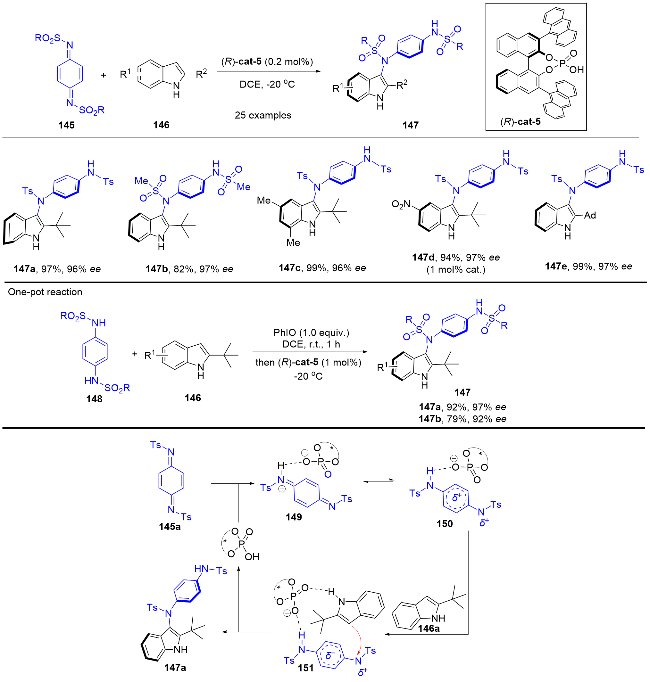
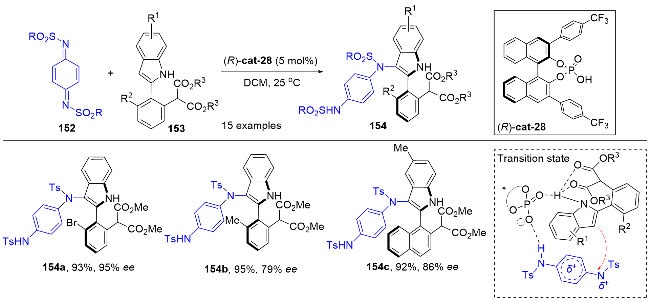
It is worth noting that the sterically bulky tert-butyl group at the C(2) position of indoles was pivotal for the configurational stability of the C-N atropisomers produced in the Zhong and co-workers’ work, while substituting it with an aryl group would lead to the absence of C-N atropisomerism. In 2024, Tan, Chen and co-workers[77] reported the asymmetric synthesis of axially chiral 2-arylindoles bearing a chiral C—C axis using this method (Scheme 37). The 2-arylsubstituted indoles 153, with a sterically hin-dered 2,6-disubstituted phenyl group, underwent the asy-mmetric 1,6-addition with p-QDIs 152 under the catalysis of (R)-cat-28, which afforded a variety of indole-based atropisomers 154 with excellent yields and high enantioselectivities.
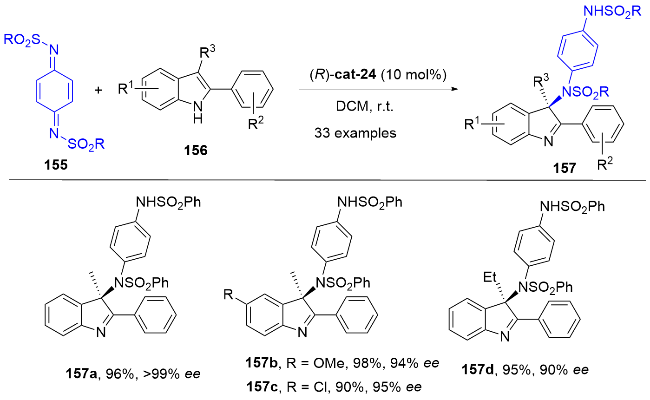
In 2024, Singh and co-workers[78] reported the electrophilic 1,6-addition of p-QDIs for the asymmetric aminative dearomatization of indoles. Similar to previous work using azodicarboxylate as the electrophilic amination reagent for asymmetric dearomatization, a series of 2-aryl-3-alkyl-sub-stituted indoles 156 underwent the CPA (R)-cat-24-cata-lyzed asymmetric 1,6-addition with QDIs 155, yielding optically active aza-quaternary indolenines 157 with high yields and excellent enantioselectivities (Scheme 38). Moreover, the one-pot method employing iodosobenzene (PhIO) as the in-situ oxidant for p-QDI generation was successfully demonstrated.
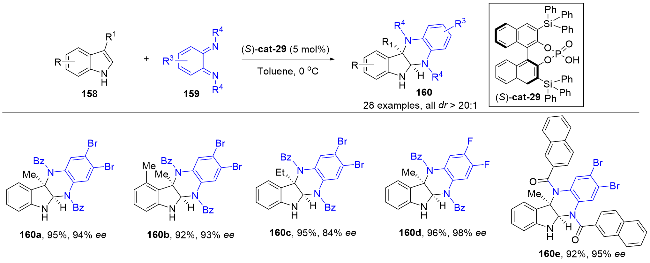
In contrast to p-quinone diimine (p-QDI) derivatives, their ‘ortho’-analogs, o-quinone diimine (o-QDI) derivatives exhibit higher electrophilicity and a propensity for easy dimerization/aromatization, rendering them suitable as N-electrophiles. In 2023, the Mei group[79] reported the catalytic asymmetric dearomatization of indoles with o-QDI (Scheme 39). A series of 3-substituted indoles 158 underwent a dearomative [4+2] cycloaddition reaction with o-QDI 159 in the presence of CPA (R)-cat-29, which resulted in the formation of six-membered ring fused indolines 160 with excellent yields and enantioselectivities. Control experiments demonstrated that the indole NH is vital for both reactivity and stereoselectivity. Moreover, when 2,3-disubstituted indoles were employed as nucleophiles, the corresponding arylative dearomatization products were obtained, highlighting the value of this method in diversity-oriented synthesis.
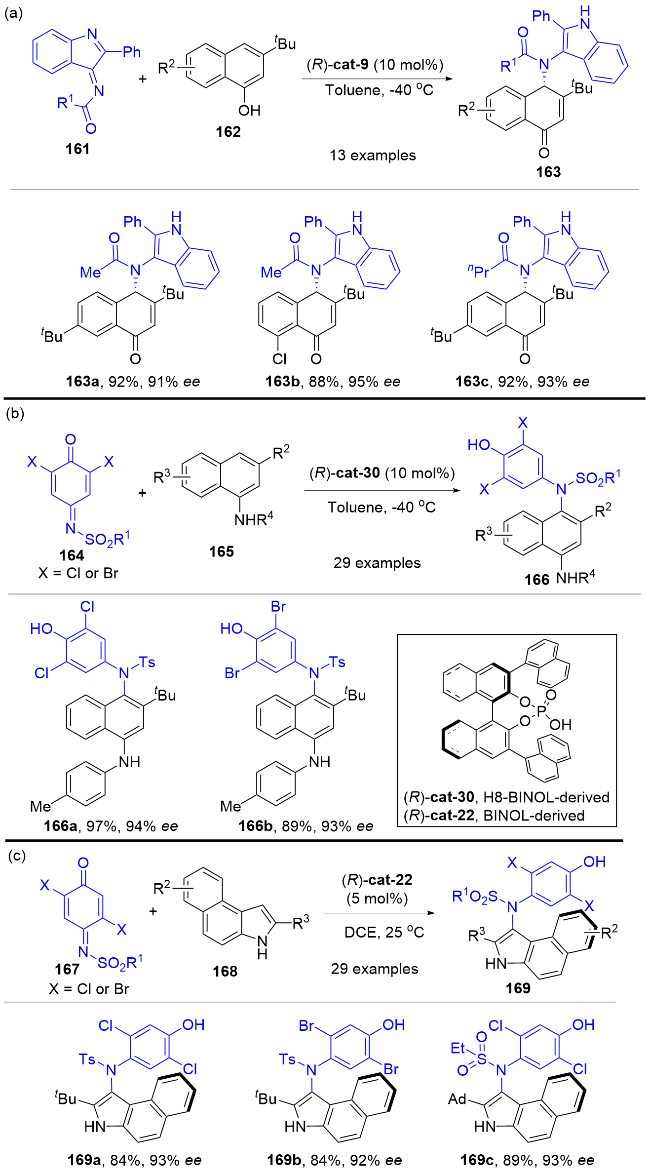
In 2023, Tan, Houk, and co-workers[80] disclosed the utilization of various imine derivatives, beyond QDIs, as N-electrophiles in CPA-catalyzed asymmetric reactions. They utilized an aromatization-promoted polarity umpolung approach, which allowed the nucleophile to selectively target the nitrogen atom within the imine group, representing a general strategy to develop umpolung reactions. When 2-phenylindole-based imines 161 were used as the electrophile, the (R)-cat-9-catalyzed reaction with 3-tert-butylnaphthalen-1-ols 162 afforded the C-4 aminated dearomatization products 163, where the imines 161 acted as a N-electrophile (Scheme 40, a). Interestingly, these products did not undergo further aromatization process to form the substituted naphthols, likely due to the steric hindrance of the tert-butyl group, which could impede the deprotonation-aromatization process. Moreover, employing iminoquinones 164 as the electrophile, the asymmetric 1,6-addition by 3-tBu-substituted 1-naphthyl-amines 165, catalyzed by (R)-cat-30, afforded the axially chiral C-N atropisomers 166 in high yield and enantioselectivity (Scheme 40, b). In addition, the (R)-cat-22 catalyzed addition of 2-substituted benzoindoles 168 with iminoquinones 167 also proceeded through a 1,6-addition process, leading to the formation of atropisomers 169 featuring a C—N stereogenic axis (Scheme 40, c). Notably, all these asymmetric electrophilic amination reactions involving N-electrophilic imines proceeded via an ionic mechanism, which was supported by control experiments and DFT calculations studies.


5 Summary and Outlook
Nitrogen-containing compounds stands out as one of the most critical class of organic molecules. Consequently, the catalytic asymmetric synthesis of these compounds has garnered significant research interest, and the enantioselective electrophilic amination represents a feasible strategy for producing enantioenriched chiral amines. In this review, we present a comprehensive overview of recent advances in catalytic enantioselective electrophilic amination enabled by chiral phosphoric acid (CPA) catalysts, renowned for their versatility and potency in chiral organocatalysis.
Various electrophilic amination reagent, such as azodicarboxylates (diazodicarboxamides) and aryldiazonium salts, have been utilized in these asymmetric amination reactions. Notably, recent advances have introduced several imine-type electrophiles as novel N-electrophiles in these reactions, employing an aromatization-driven polarity umpolung strategy. Moreover, besides constructing traditional chiral amine derivatives with N-containing stereogenic stereocenters, these methods have been extended to the asymmetric synthesis of novel axially chiral, planarly chiral and inherently chiral molecule through strategies such as kinetic resolution and enantioselective desymmetrization.
Although significant advancements have been achieved in CPA-catalyzed asymmetric electrophilic amination reactions, there remain notable limitations requiring resolution. Firstly, the current nucleophiles employed for CPA-catalyzed electrophilic amination, such as enamides, indoles, phenols, and arylamines, are relatively active. Enhancing compatibility with typical unactivated carbonyl compounds, alkenes, and arenes is essential and may require the development of novel high-activity CPA catalysts. Secondly, the present electrophilic amination reagents are primarily limited to azodicarboxylates. Developing new types of electrophilic amination with a focus on enhancing their electrophilic reactivity and atom economy is essential. Thirdly, the current methodologies predominantly rely on a conventional ionic mechanism. Integrating the rapid advancements in photocatalysis and radical chemistry with CPA-catalyzed electrophilic amination could unveil a novel frontier in asymmetric amination reactions. We strongly believe that with the collaborative efforts of numerous chemists, these identified limitations can be overcome, leading to significant progress in this field in the near future.
(Zhao, C.)