


1 Introduction
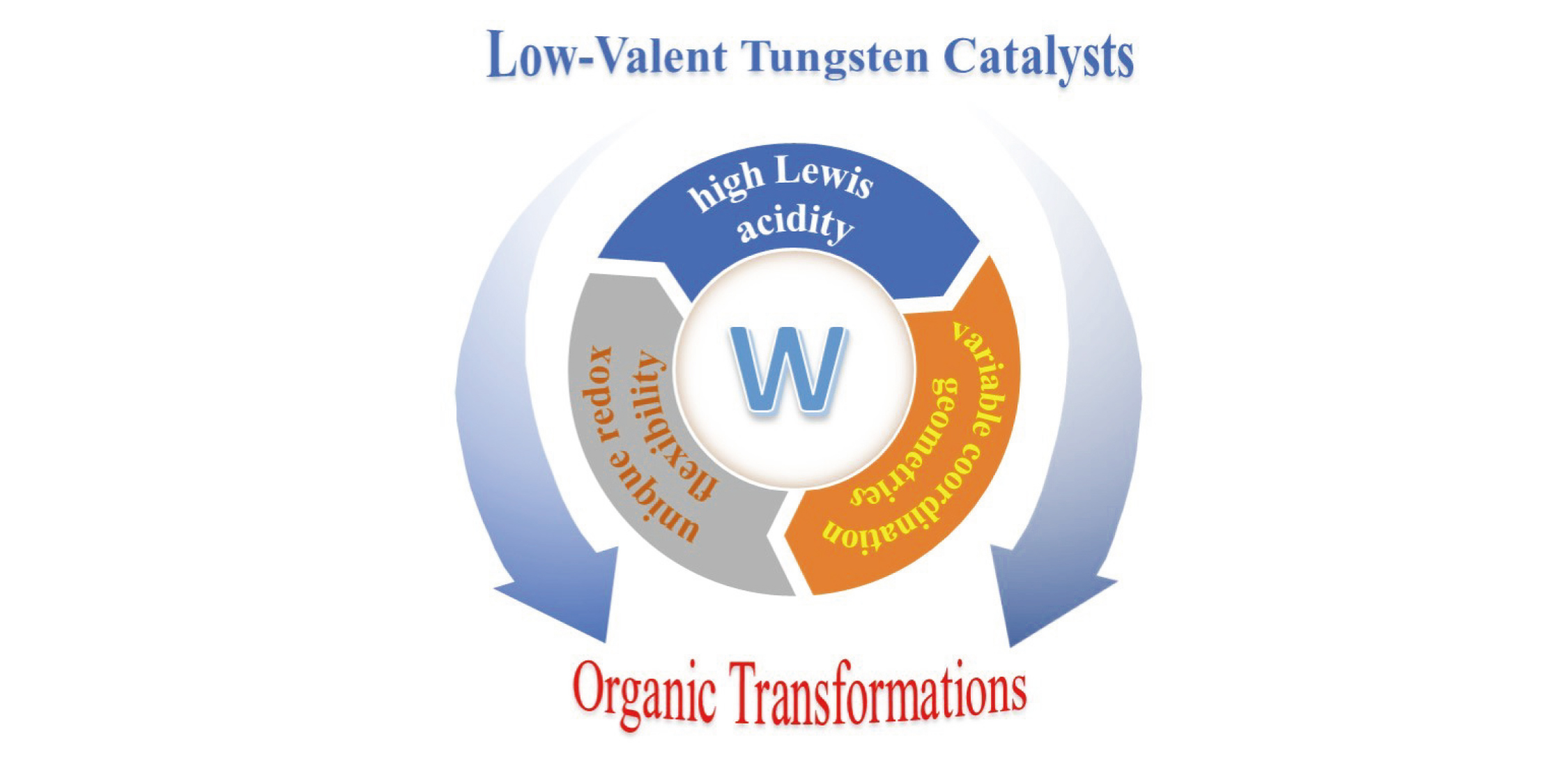
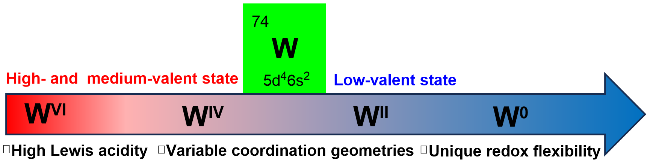
Tungsten has been widely utilized in metallic materials owing to its relatively high natural abundance, exceptional hardness, and high thermal stability.[1] However, its potential in catalytic organic transformations remains underexplored compared to its extensive applications in materials science. Tungsten’s capacity to adopt multiple coordination geometries,[2-5] enhanced Lewis acidity relative to later transition metals,[6] and potential for redox reactions[7] have fueled growing interest in its applications for organic transfor-mations. Tungsten exhibits a broad range of oxidation states, with the +VI state representing its highest and most common formal oxidation level. In catalytic contexts, species with oxidation states of +II or lower are generally classified as low-valent tungsten (Figure 1).
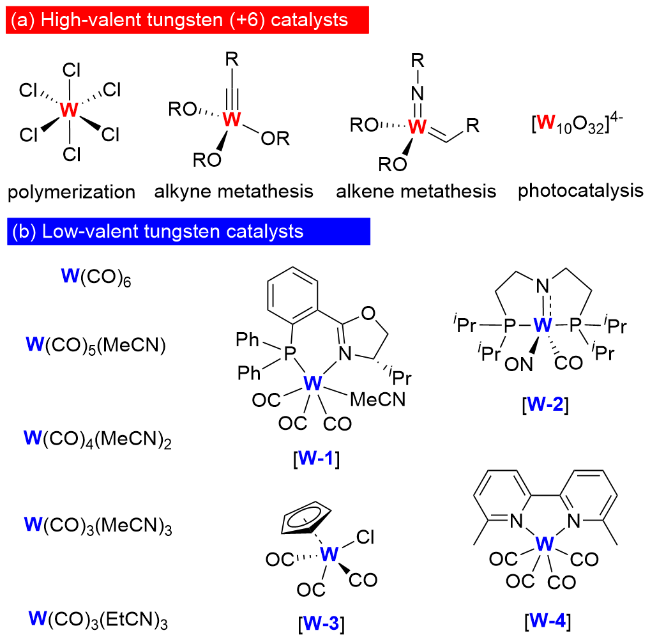
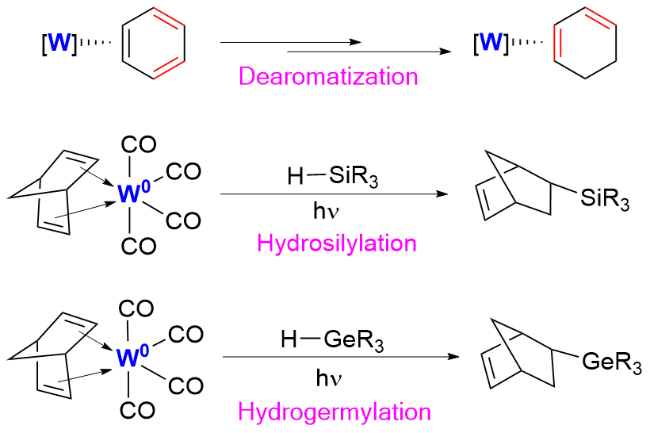
While high-valent tungsten complexes in fixed oxidation states (Figure 2, a) are used for alkene/alkyne metathesis reactions,[8-9] polymerization reactions,[10-11] and photocatalytic reactions,[12-13] significant progress has been made in recent decades in low-valent tungsten-catalyzed organic reactions (Figure 2, b), building upon earlier stoichiometric work such as dearomatization[6,14] and alkene hydrofunctionalization[3-4] (Scheme 1).
Despite this progress, a comprehensive review integrating progress in reaction design, mechanistic understanding, and substrate scope expansion remains lacking. This review summarizes the key catalytic methodologies using low- valent tungsten, organized by reaction type to highlight their synthetic utility. Our goal is to accelerate innovation in this rapidly evolving field by providing critical insights into the unique catalytic behavior of tungsten.
2 Allylic substitution reactions
2.1 Allylic alkylations
In 1983, Trost and Hung[15] pioneered the application of low-valent tungsten catalysts in allylic alkylation reactions. Employing the tungsten complex W(CO)3(MeCN)3 in conjunction with a strong σ-donor type ligand like 2,2'-bipyridine (bpy), nucleophilic attack predominantly at the more substituted position of π-allyl intermediates regardless of the nucleophile was achieved in the alkylation of aryl-substituted allylic substrates, which contrasted sharply with palladium-catalyzed systems that typically target the less hindered terminus. The effect of the aromatic ring on regioselectivity is discerned by comparing the results to an alkyl-substituted π-allyl group. In the latter cases, steric demands of the nucleophile compete with the steric demands of the metal template to dominate the regioselectivity. Thus, the activation by the aryl group for displacement at a benzylic position conspires with the steric demands of the metal template to give high regioselectivity in the aryl-substituted series with the tungsten catalyst (Scheme 2, a). The stereochemical outcome of this reaction aligns with patterns observed in molybdenum- and palladium-cata- lyzed systems (Scheme 2, b). The chemoselectivity of the tungsten-catalyzed alkylation was another highlight. The catalyst discriminated between leaving groups based on substitution patterns. The dicarbonate permits easy replace- ment of the secondary carbonate without affecting the primary carbonate for the limited reaction times employed (5 h). This “timed release” strategy demonstrates the potential of tungsten in complex molecule synthesis (Scheme 2, c).
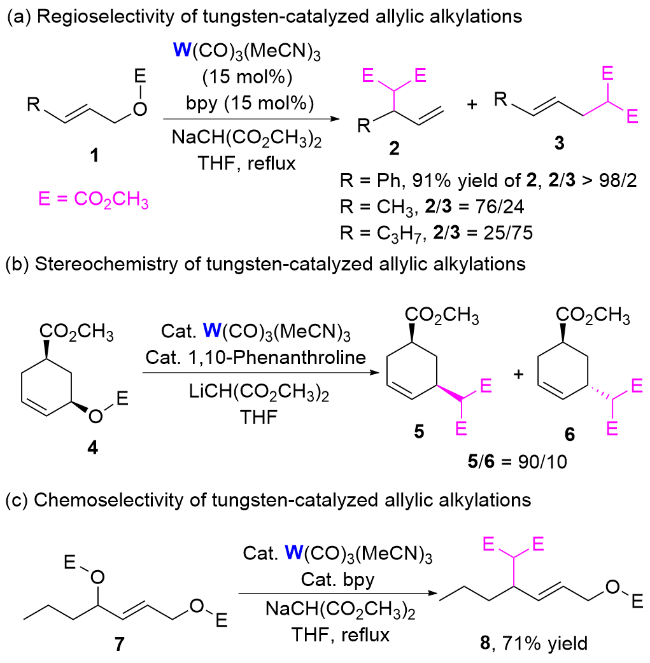
While the tungsten catalyst was less reactive than either the molybdenum or especially the palladium catalysts, the electronic and steric demands of tungsten catalyst permit a level of regiochemical control not available with molybdenum or palladium catalyzed systems. The study established tungsten as a unique platform for regiocontrolled allylic alkylation, laying the groundwork for its application in complex polyfunctional molecule synthesis.
Based on their earlier studies with palladium, molybdenum, and tungsten-catalyzed allylic alkylation, Trost and Hung[16] further deciphered the understanding of regiochemical control in transition-metal-catalyzed allylic alkylations. By integrating molecular orbital (MO) calculations with systematic experimental studies, they proposed a model to rationalize the divergent regioselectivity observed across different metal templates.
Allylmetal complexes can be viewed as allyl cations bonded to zero-valent metal. In order to generate the simplest possible model, they probed the question of the intrinsic bias for nucleophilic attack on the cation itself in the absence of any steric or metal effects. Taking the phenyl- pentadienyl cation as an example, the predicted order of attack based on charge distribution considerations should be C(1)≈C(3)>C(5). Frontier orbital considerations as revealed by the lowest unoccupied molecular orbital (LUMO) coefficients yield exactly the same predicted order. In the absence of any Michael-type addition, and assuming that equilibration of the two regioisomeric complexes A and B is slow relative to alkylation, the regiochemistry of alkylation will also depend on which complex is generated. On the basis of charge and frontier orbital considerations, complex A should alkylate at C(3) and complex B almost equally at C(1) and C(3) (Scheme 3, a).
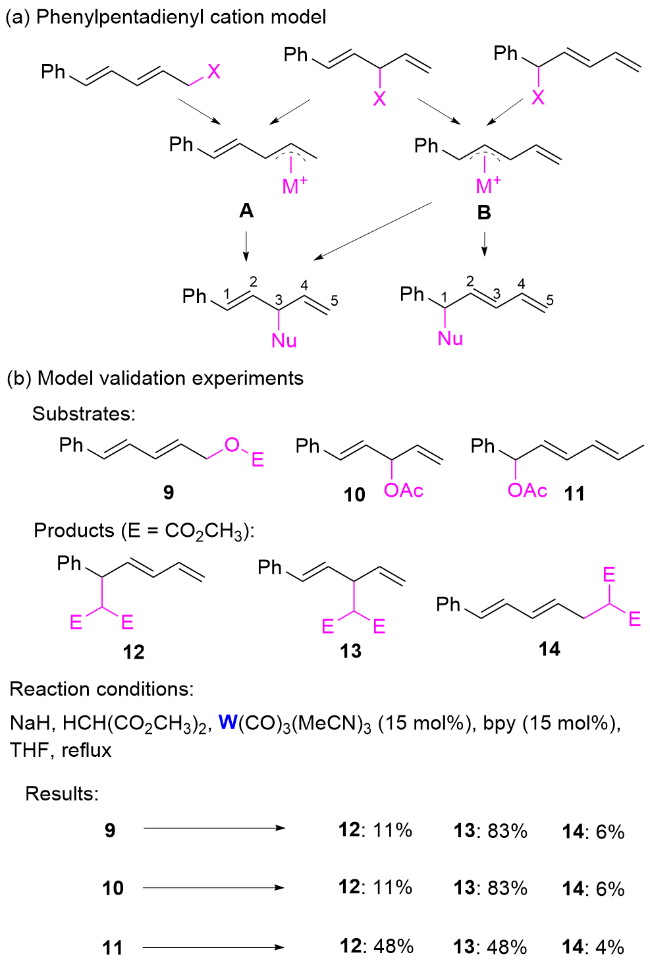
The researchers validated their model using tungsten- catalyzed alkylations of poly-unsaturated substrates under optimized conditions. Substrate 9 yielded products 12 (11%), 13 (83%) and 14 (6%), and the results were in accord with complex A as the major species leading predominantly to 13. Subjecting 11 to similar conditions led to a 1∶1 mixture of 12 (48%) and 13 (48%) as well as a trace of 14 (4%), in excellent accord with predictions based upon complex B. The strikingly different results starting from 9 and 11 support the initial supposition that equilibration of complexes A and B is not important on the time scale for alkylation. Use of 10 as substrate is complicated by the question of which complex, A or B, is generated. Experimentally, the product ratio was virtually identical to that derived from use of 9. This fingerprint strongly suggests that the tungsten template has a strong steric bias to generate complex A rather than complex B. Thus, regio- selectivity in the initial ionization step based on steric factors combines with regioselectivity in the alkylation step based on electronic factors to give a good level of selectivity for formation of 13 (Scheme 3, b).
These results underscored the dominance of electronic effects in tungsten-catalyzed reactions, contrasting with palladium systems, where steric factors dictated regioselectivity. Molybdenum catalysts appear to fall between these extremes: electronic factors dominate with unhindered nucleophiles, whereas steric factors prevail with sterically demanding nucleophiles. The selectivity observable makes these metal-catalyzed reactions of great value in the synthesis of highly unsaturated polyenes.
In 1987, they demonstrated groundbreaking control over chemoselectivity in allylic alkylation reactions using difunctional substrates, leveraging distinct transition-metal catalysts to differentiate identical leaving groups (Scheme 4).[17] By employing palladium and tungsten catalysts under tailored conditions, they achieved precise selectivity in reactions that traditionally posed challenges due to com-peting pathways. Palladium catalysts, mimicking an SN2- type mechanism, favored ionization at primary carbons, as evidenced by the clean conversion of dicarbonate 15 to product 16. Conversely, tungsten catalysts, operating through an SN1-like electronic bias, selectively activated more substituted carbons, enabling exclusive formation of product 17 from the same substrate. This dichotomy highlighted the ability to manipulate reaction mechanisms via catalyst choice, circumventing the need for chemically distinct leaving groups (Scheme 4).
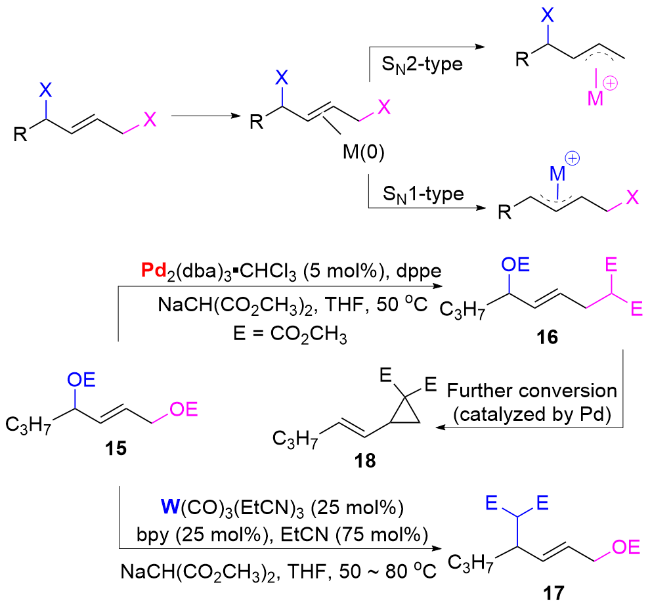
By rationalizing catalyst behavior in terms of SN1/ SN2-type transition states, the authors provided a framework for solving chemoselective challenges in complex molecule synthesis. This approach expanded the utility of tungsten catalysis, offering synthetic strategies complementary to palladium and molybdenum systems, particularly for electronically biased transformations.
In 1995, Lloyd-Jones and Pfaltz[18] advanced asymmetric catalysis by introducing chiral phosphanodihydrooxazole ligands in tungsten-catalyzed allylic substitution reactions. Using tungsten complexes with chiral phosphanodihydrooxazole ligands as catalysts, they achieved enantioselective alkylation of allylic phosphates. For arylpropargyl phosphates, the tungsten catalyst [W-1] facilitated the reactions at -10~25 ℃, yielding products with up to 96% ee and moderate regioselectivity ratios (Scheme 5).
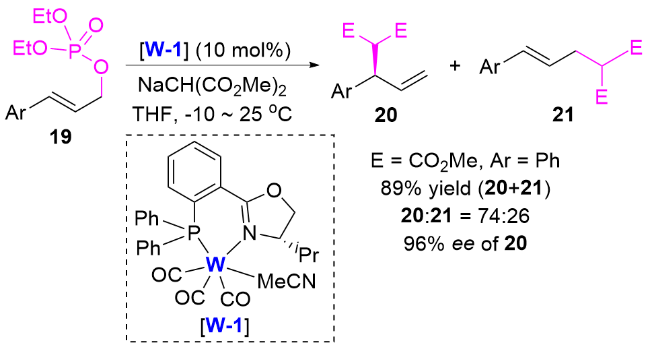
This research expanded the toolkit for asymmetric catalysis, demonstrating tungsten’s potential to complement palladium and molybdenum systems. The integration of chiral phosphanodihydrooxazole ligands with tungsten templates opened avenues for designing catalysts with tailored selectivity, particularly for electronically biased substrates.
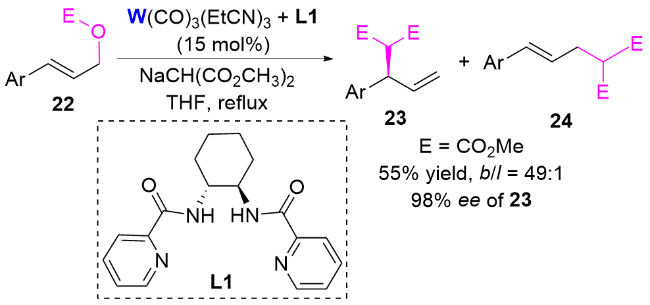
Building on the early advances in tungsten-catalyzed asymmetric allylic alkylation, Trost and Hachiya[19] subsequently reported a distinct catalytic system employing a tungsten complex derived from W(CO)3(EtCN)3 and a chiral bispyridylamide ligand (L1). This system demonstrated remarkable stereocontrol in the reaction of cinnamyl carbonate with dimethyl sodiomalonate. Despite requiring a relatively high catalyst loading (15 mol%), the reaction achieved exceptional enantiocontrol (98% ee) and unprecedented regioselectivity (branched-to-linear ratio of 49∶1), surpassing earlier reports in regiochemical precision. However, the moderate yield (55%) highlighted challenges in catalytic efficiency or potential side reactions, indicating ample room for further optimization (Scheme 6).[20]
2.2 Allylic sulfonylations
While significant advances have been made in low- valent tungsten-catalyzed allylic alkylations using carbon nucleophiles, the corresponding reactions with heteroatom nucleophiles remained underdeveloped for decades. In 2020, Khan and colleagues[21] addressed this gap by reporting the tungsten-catalyzed allylic sulfonylation reaction using sodium sulfinates as heteroatom nucleophiles. The reaction employed W(CO)3(MeCN)3 as a precatalyst in combination with 4,4'-di-tert-butyl-2,2'-bipyridine (L2) as the optimal ligand. This reaction proceeded efficiently at 60 ℃ in ethanol, affording branched allylic sulfones with excellent regioselectivity (>20∶1 b/l), good to high yields (56%~95% yields), and good functional-group tolerance (33 examples) (Scheme 7, a).
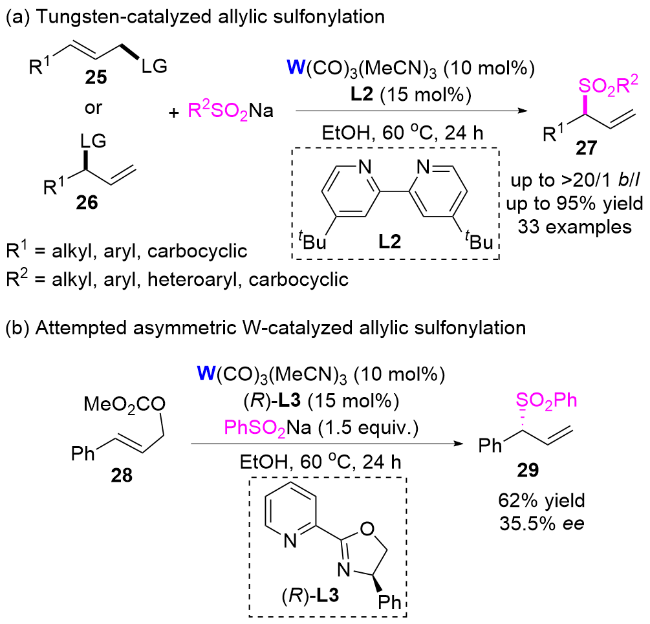
Preliminary efforts toward asymmetric induction were also conducted. Using chiral ligand (R)-L3, the branched allylic sulfone 29 was obtained with 62% yield and 35.5% ee, providing a promising foundation for future development of enantioselective variants (Scheme 7, b).
This methodology underscores the unique capability of low-valent tungsten catalysts to achieve highly regioselective C—S bond formation under mild conditions, offering a complementary approach to existing Pd-, Mo-, and Ir- catalyzed systems.
2.3 Allylic aminations
In 2025, Xu[22] expanded the nucleophile scope of tungsten-catalyzed allylic substitution to nitrogen nucleophiles, reporting a highly regioselective amination of allylic carbonates and phosphates. Using commercially available W(CO)3(MeCN)3 as the precatalyst and 4,4'-di-tert-butyl- 2,2'-bipyridine (L2) as the ligand in ethanol at 80 ℃, the reaction afforded branched allylic amines in moderate to excellent yields (up to 94%) with exceptional regioselectivity (b∶l>20∶1). The system tolerated a broad range of anilines bearing electron-donating or electron- withdrawing substituents, as well as secondary amines such as N-methylaniline. Aliphatic amines, including primary and secondary variants, also participated effectively when allylic phosphates were employed as electrophiles (Scheme 8).
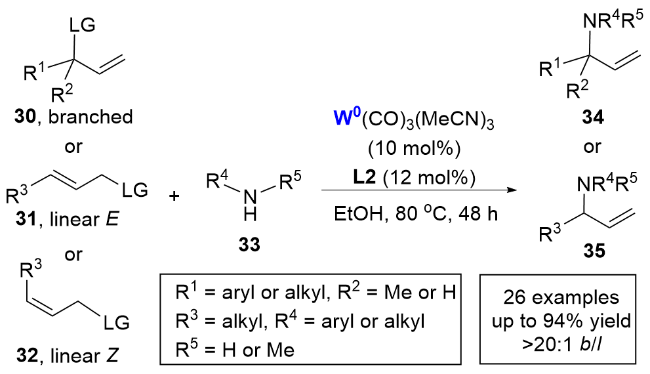
Notably, both (E)- and (Z)-linear allylic carbonates underwent smooth conversion to the branched products with high regioselectivity, underscoring the reaction’s insensitivity to starting alkene geometry. This methodology provides a noble-metal-free alternative to established Ir- or Rh-catalyzed systems, further demonstrating tungsten’s unique ability to enforce branched selectivity in C—N bond-forming reactions under mild conditions.
2.4 Decarboxylative allylic aminations
In 2024, Xu[23] reported a regioselective low-valent tungsten-catalyzed decarboxylative allylic amination of allylic carbamates, which were generated in situ from allylic alcohols and isocyanates. Using W(CO)6 as a precatalyst and 6,6'-dimethyl-2,2'-bipyridine (L4) as the ligand in dichloroethane (DCE) at 60 ℃, the reaction afforded branched allylic amines in moderate to good yields (up to 82%) with excellent regioselectivities (b∶l>20∶1). CO₂ was released as the sole byproduct. The protocol tolerated a broad range of aromatic and aliphatic allylic alcohols and isocyanates, demonstrating good functional group compatibility (Scheme 9).
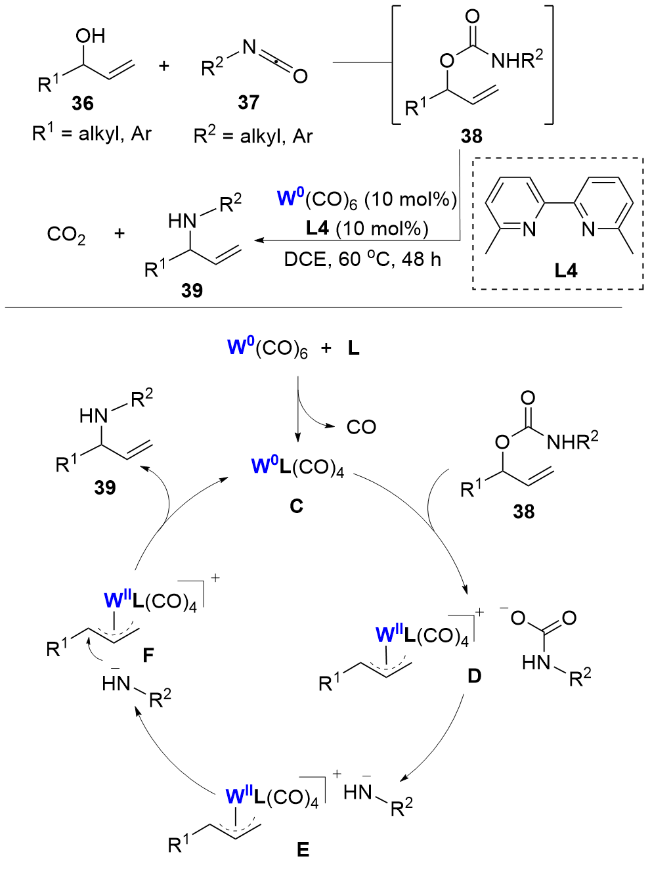
Mechanistic studies supported a catalytic cycle initiated by the reaction of W(CO)6 with ligand to form the active catalyst C. Oxidative addition of allylic carbamate 38 to C generated a zwitterionic intermediate D π-allyl-[WIIL(CO)4]/ carboxylate anion. Subsequent decarboxylation of the carboxylate anion in D afforded a second zwitterionic intermediate E π-allyl-[WIIL(CO)4]/nitrogen anion. Regioselective nucleophilic attack by the nitrogen atom at the more- substituted carbon of the π-allyl moiety finally delivered product 39 and regenerates C.
This work highlights the potential of low-valent tungsten catalysts to mediate challenging C—N bond formations under mild and atom-economical conditions, further expanding the utility of tungsten in sustainable allylic functionalization.
3 Cyclization and cycloaddition reactions
3.1 Transformations of vinylthiiranes to 3,6-dihydro- 1,2-dithiins
The catalytic activity of tungsten carbonyl complexes in transforming vinylthiiranes into 3,6-dihydro-1,2-dithiins was systematically explored by Adams and Perrin in 1999.[24] The tungsten complex W(CO)5(MeCN) demonstrated high efficiency in converting vinylthiirane and its methyl-substituted derivatives 40 into corresponding 3,6- dihydro-1,2-dithiins 41 with concurrent release of butadiene. This reaction proceeded under mild conditions (25 ℃) and was relatively insensitive to air. Substitution effects were notable: methyl groups on the vinyl moiety enhanced reaction rates [turnover frequency (TOF) up to 29 h-1], whereas methyl substituents on the thiirane ring significantly slowed the process (TOF as low as 2 h-1). Phosphine-modified catalysts, such as W(CO)4(PPh3)- (MeCN) and W(CO)4(PMe2Ph)(MeCN), also led to significant increases in the rate of reaction (Scheme 10).
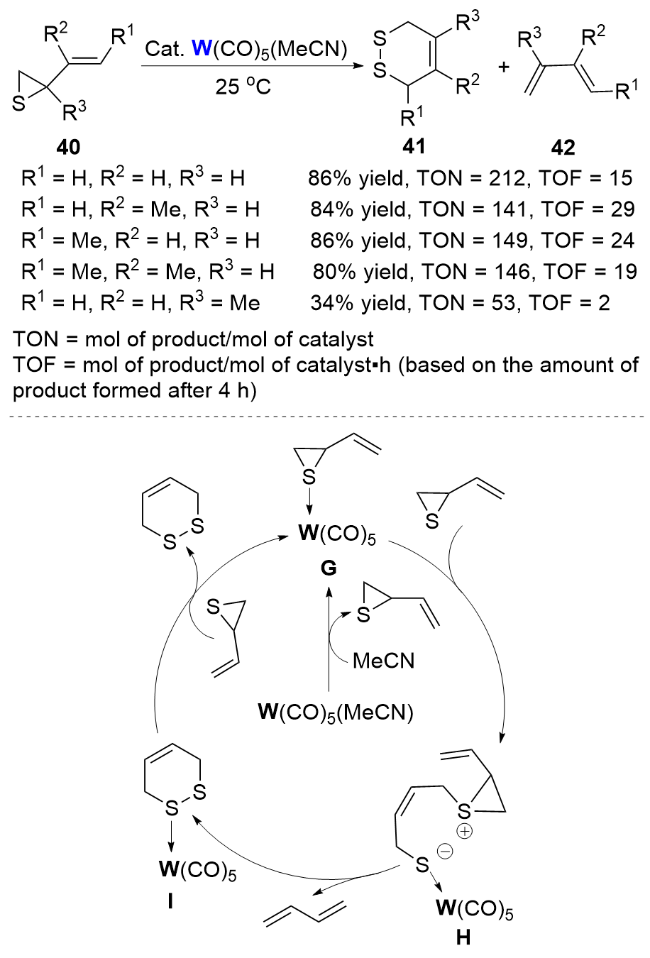
A mechanism was proposed in which a vinylthiirane intermediate underwent spontaneous ring opening, followed by the addition of a second vinylthiirane molecule to the terminal carbon of the extended chain. Subsequent elimination of butadiene (1 equiv.) and sulfur-sulfur bond formation led to intermediate I, which was isolated from catalytic reactions and structurally confirmed by X-ray crystallography. Ligand substitution at the tungsten center regenerated the vinylthiirane intermediate while releasing a dihydrodithiin product. Notably, the dihydrodithiin coordinated to tungsten through one sulfur atom of its disulfide unit, as revealed by crystallographic data.
Overall, this work presents a robust catalytic method for synthesizing dihydrodithiins, leveraging readily accessible reagents and offering insights into substituent effects, ligand modulation, and mechanistic pathways. The long-lived catalyst and operational simplicity highlight its potential for applications in organic synthesis and materials science.
3.2 1,3-Dipolar cycloaddition
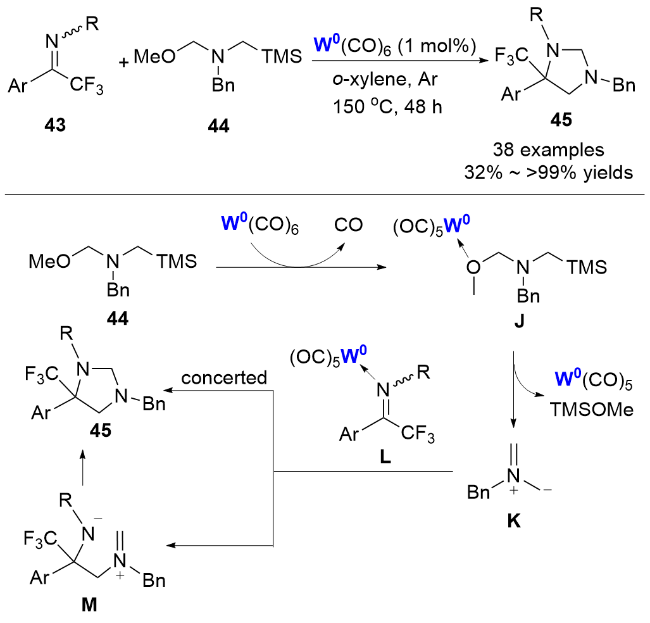
In 2021, Zhang et al.[25] presented a tungsten-catalyzed 1,3-dipolar cycloaddition strategy that merged acyclic CF3- ketimines with N-benzyl azomethine ylides, enabling the synthesis of novel imidazolidines featuring a trifluoromethylated tetrasubstituted carbon center. This approach overcomes the significant challenges of steric hindrance and electrostatic repulsions inherent in acyclic CF3- ketimines, engaging CF3-ketimines in cycloaddition reactions, which has limited access to such structurally complex motifs. The reaction employed W(CO)6 as a robust catalyst, operating under simple conditions (1 mol% catalyst loading, 150 ℃ in o-xylene under the atmosphere of Argon) to deliver a series of novel products (38 examples) in moderate to excellent yields.
Mechanistic investigations revealed that the reaction proceeded via coordination of reagent 44 with the tungsten catalyst, accompanied by CO dissociation, yielded intermediate J. This intermediate subsequently released W(CO)5 and TMSOMe to generate the active azomethine species K. Intermediate K might then react with L either via a concerted 1,3-dipolar cycloaddition to furnish 45, or via a stepwise cyclization, potentially assisted by the W- catalyst, to afford product 45 (Scheme 11).
4 Reduction reactions
4.1 Homogeneous hydrogenation
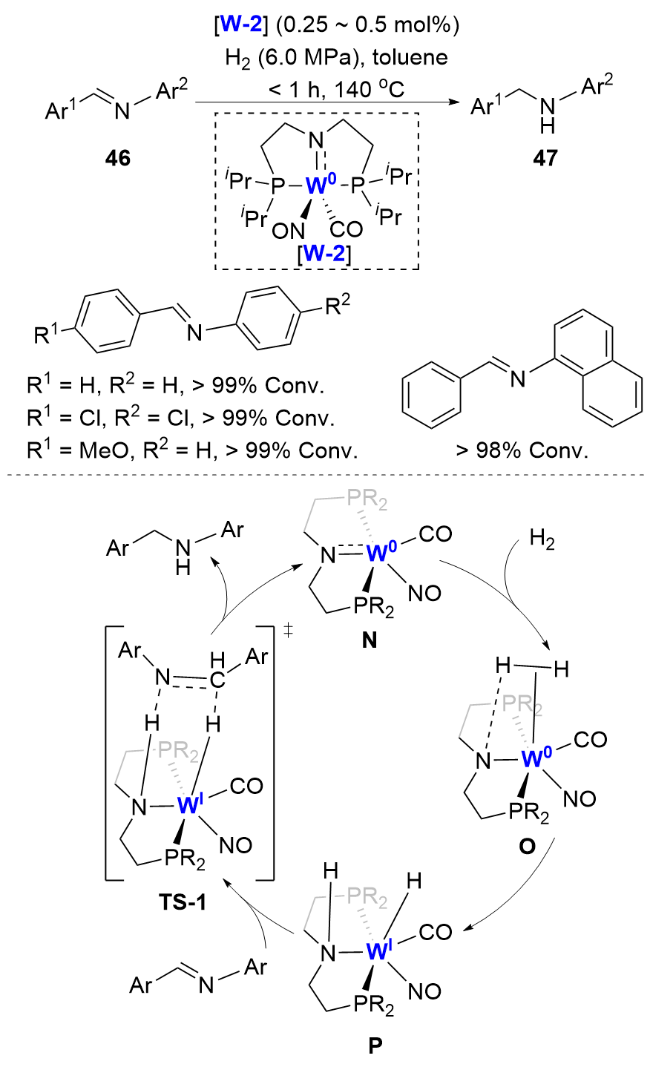
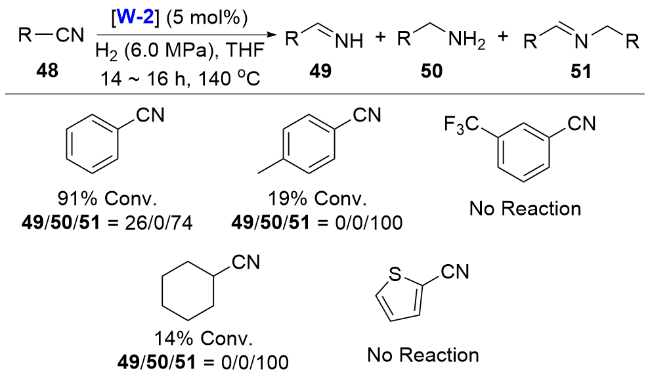
In 2014, Chakraborty et al.[26] reported that low-valent tungsten amide complexes [W(NO)(CO)(PNP)] [PNP=N(CH2CH2PiPr2)2] (W-2) enabled heterolytic splitting of H2, generating bound hydrides and proton species. At 140 ℃ and 6.0 MPa H2, W-2 efficiently hydrogenated N-arylsubstituted imines via a bifunctional mechanism involving concerted hydride transfer to Cᵢₘᵢₙₑ atom and proton delivery to Nᵢₘᵢₙₑ atom. However, N-alkylsubstituted secondary imines could not be hydrogenated (Scheme 12).
In 2021, Topf and co-workers[28] presented a tungsten- based approach for the homogeneous hydrogenation of quinolines using molecular hydrogen. The reaction used bench-stable tungsten pre-catalyst [WCl(η5-Cp)(CO)3] (W-3), which is easily synthesized on a multi-gram scale and stored indefinitely under ambient conditions. The catalytic system operated under moderate hydrogen pressures (5.0~7.0 MPa) and elevated temperatures (80~120 ℃), achieving high conversions and yields across a diverse range of substituted quinolines. This method circumvents the need for expensive phosphine ligands or auxiliary hydride reagents, offering a cost-effective and atom-efficient pathway to 1,2,3,4-tetrahydroquinolines (Scheme 14).
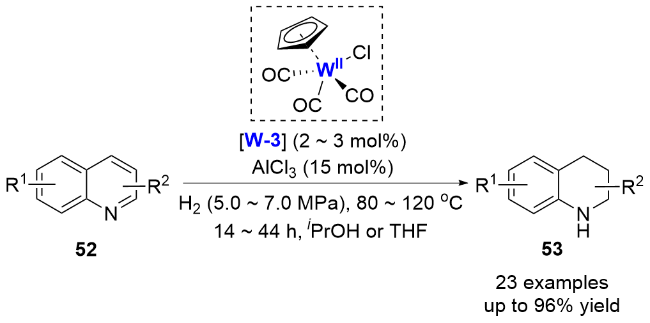
Key to the success of this method is the in situ generation of the active hydride species [WH(η5-Cp)(CO)3], confirmed through 1H NMR studies. The presence of Lewis acids, such as AlCl3, significantly enhanced catalytic activity by shifting the equilibrium toward the hydride intermediate, likely through chloride abstraction. Brønsted acids, including HCl, also improved reaction rates, though synergistic effects between Brønsted and Lewis acids were not observed. Solvent optimization revealed that polar protic solvents, particularly iso-propanol, are optimal, while neat conditions led to full substrate conversion but lower yields due to undesirable oligomerization side reactions. Mechanistic insights from control experiments suggested a stepwise 1,2- and 3,4-hydrogenation pathway, with no detectable mono-hydrogenated intermediates.
4.2 Hydroboration
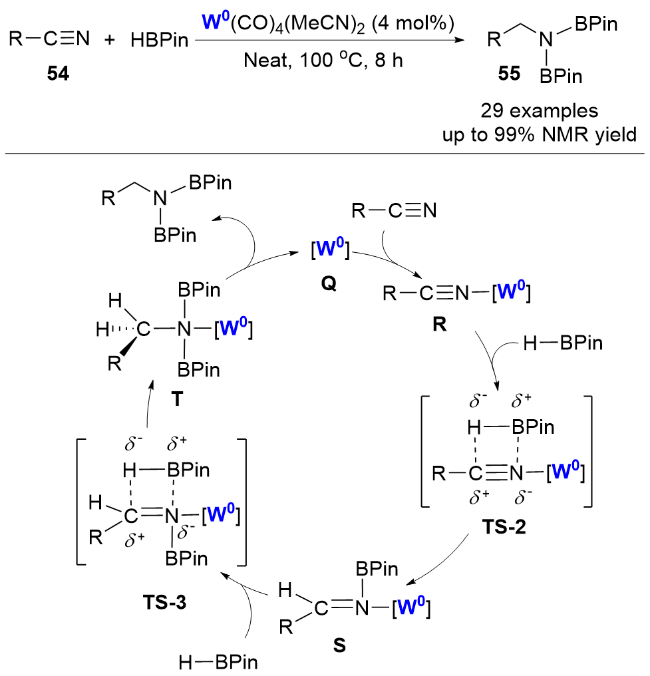
In 2024, Song and co-workers[29] presented a low-valent tungsten-catalyzed hydroboration of nitriles utilizing W(CO)4(MeCN)2 as a precatalyst under solvent-free conditions. This system efficiently converted diverse aromatic and aliphatic nitriles to N,N-diborylamines with exceptional chemoselectivities (up to 99% NMR yield), tolerating halogens, electron-withdrawing or strongly electron-dona- ting groups, and aromatic heterocycles. Based on experimental findings, a plausible mechanism for nitrile hydroboration was proposed. This mechanism initiated with ligand exchange, forming R. The transfer of hydride from 4,4,5,5-tetramethyl-1,3,2-dioxaborolane (Hbpin) to the C≡N moiety produced S at an elevated temperature and was envisaged as a rate-limiting step according to experimental results. Finally, an additional hydride transfer from HBpin to S via TS-3 yielded T, followed by catalyst regeneration concomitant with the release of hydroboration product (Scheme 15).
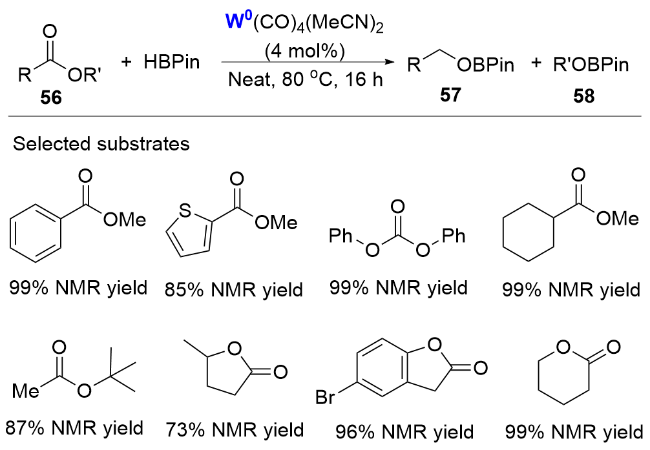
The same catalytic system was extended to aromatic and aliphatic esters, affording the corresponding alcohol derivatives with broad substrate compatibility, including lactones reduced to 1,4- or 1,5-diols without a competitive reaction such as polymerization occurring (Scheme 16).
4.3 Deoxygenative reduction
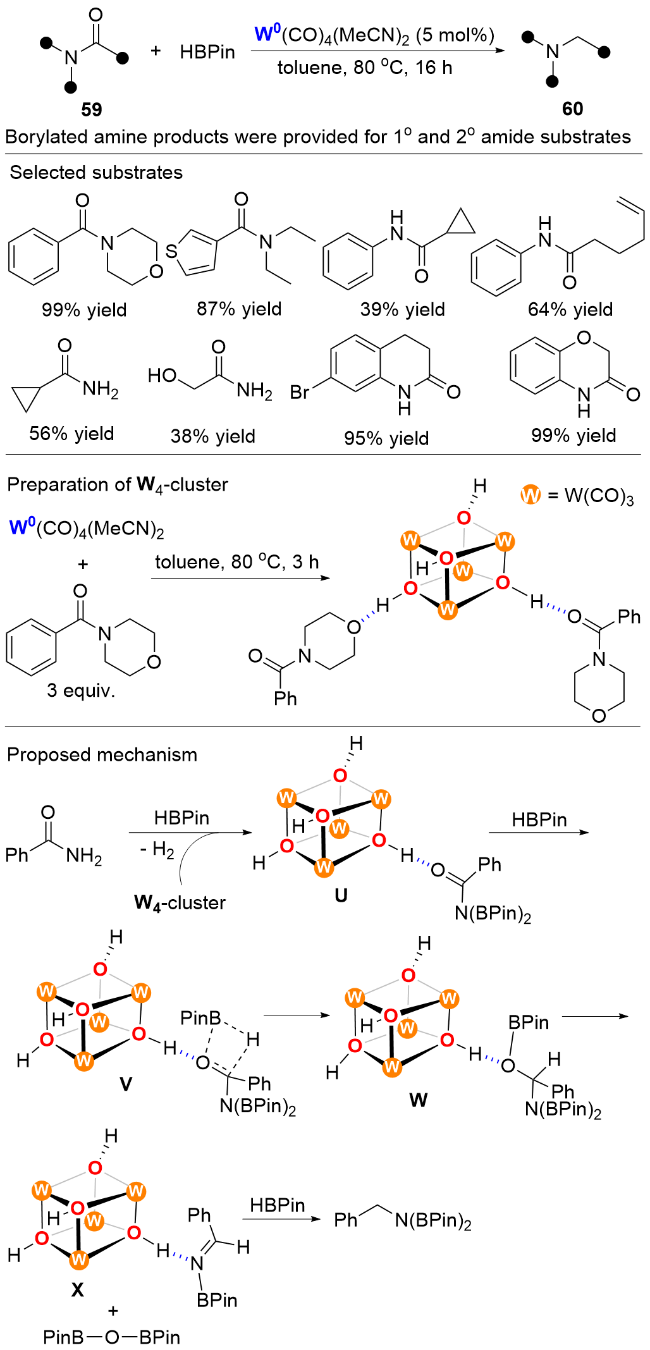
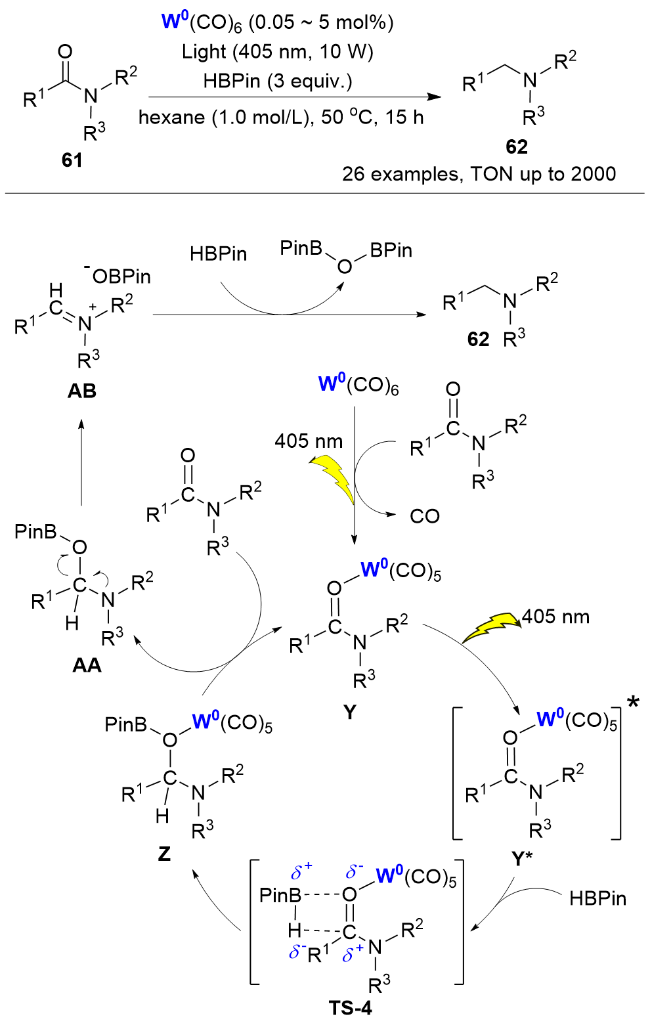
On the basis of the above work, Song et al.[30] subsequently developed a deoxygenative reduction of primary, secondary, and tertiary amides using W(CO)4(MeCN)2 as a precatalyst. The protocol achieved broad scope (49 examples), reducing 1°, 2°, 3° amides and lactams to amines or borylated amines (for 1°/2° amides) at 80 ℃.
Mechanism studies unraveled that the in situ generated W4-cluster was potentially a vital species in activating C=O of amides by providing the H-bonding network during the catalytic cycle. Significantly, this H-bonding activation mode provided a complementary approach to conventional metal-catalyzed deoxygenative reactions, which typically relied on direct coordination to the C=O bond of amides. This strategy thereby offers a promising platform for employing H-bonding networks in challenging transformations (Scheme 17).
Concurrently, Cheng and co-workers[31] reported a photo-chemical strategy for tertiary amide deoxygenative reduction. The protocol used commercially available W(CO)6 as precatalyst in a solution of hexane under the irradiation of visible light (405 nm) without other additives, and the turnover number (TON) is up to 2000. The proposed mechanism is as follows. Under 405 nm irradiation, W(CO)₆ underwent ligand exchange to form Y, which was activated under light irradiation to afford Y*. Subsequent interaction of the polar chemical bonds B—H with C=O led to Z via transition state TS-4. Following ligand exchange with a second substrate molecule, Z regenerated Y while forming AA. AA converted to the iminium species AB, which is further reduced to the corresponding amine by another HBPin (Scheme 18).
5 Amination reactions
5.1 N‑Alkylation of anilines with alcohols
In 2021, Ke and co-workers[32] developed a tungsten- catalyzed direct N-alkylation of anilines with primary alcohols via a borrowing hydrogen/hydrogen autotransfer (BH/HA) strategy. This work introduced a phosphine-free W(phen)(CO)4 (phen=1,10-phenanthroline) as an efficient and accessible catalytic system for the synthesis of a broad range of secondary amines (up to 49 examples, including 16 previously undisclosed products) (Scheme 19). However, aliphatic amines were not suitable for this system.
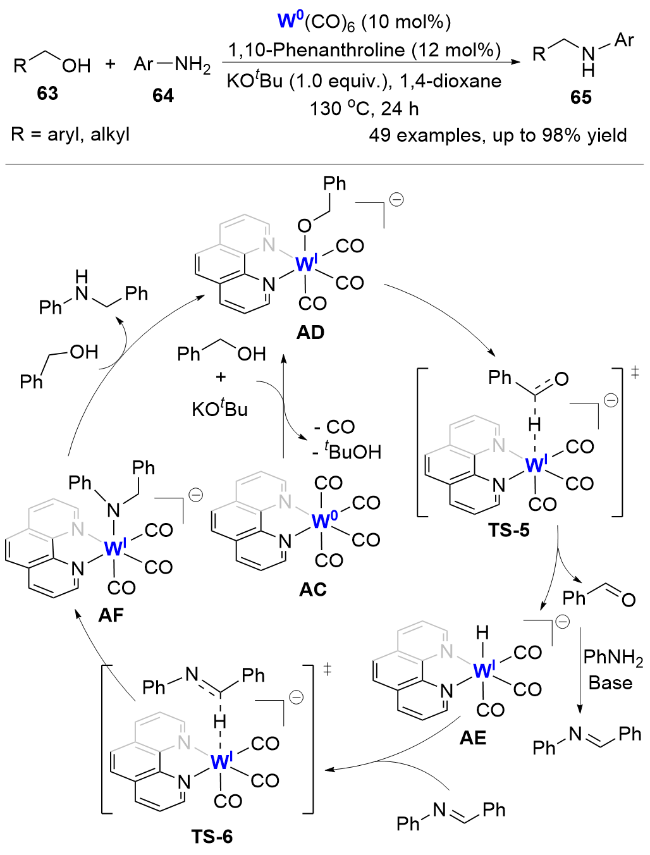
Based on experimental and computational studies, a plausible direct outer-sphere mechanism was presented (Scheme 19). Precatalyst AC reacted with alcohol in the presence of a base, dissociating a CO ligand to form alkoxy complex AD. This active species AD subsequently underwent an outer sphere hydride elimination to release aldehyde. Subsequent base mediated coupled reaction between aldehyde and amine produced the imine. The resulting highly active W-H (AE) reduced this imine to yield amido complex AF. Finally, protonation of AF by alcohol liberated the N-alkylated product and regenerated AD, completing the catalytic cycle (Scheme 19).
5.2 Amination of boronic acids with nitroaromatics
The development of efficient and mild methods for C—N bond formation between nitroaromatics and boronic acids has garnered significant attention since most prior works were carried out under harsh conditions, and sometimes suffered from poor chemo- or regio-selectivity. In 2022, Song and colleagues[33] reported a novel low-valent tungsten-catalyzed protocol that enabled the reductive coup-ling of nitroaromatics with aryl or alkyl boronic acids under ambient temperature and light irradiation (365 nm). Utilizing the readily available W(CO)6 as a precatalyst and PPh3 as a reductant, the reaction achieved high chemoselectivity and functional group tolerance without requiring external-photosensitizers. The method accommodated over 50 substrates, delivering secondary amines in yields up to 96% (Scheme 20).
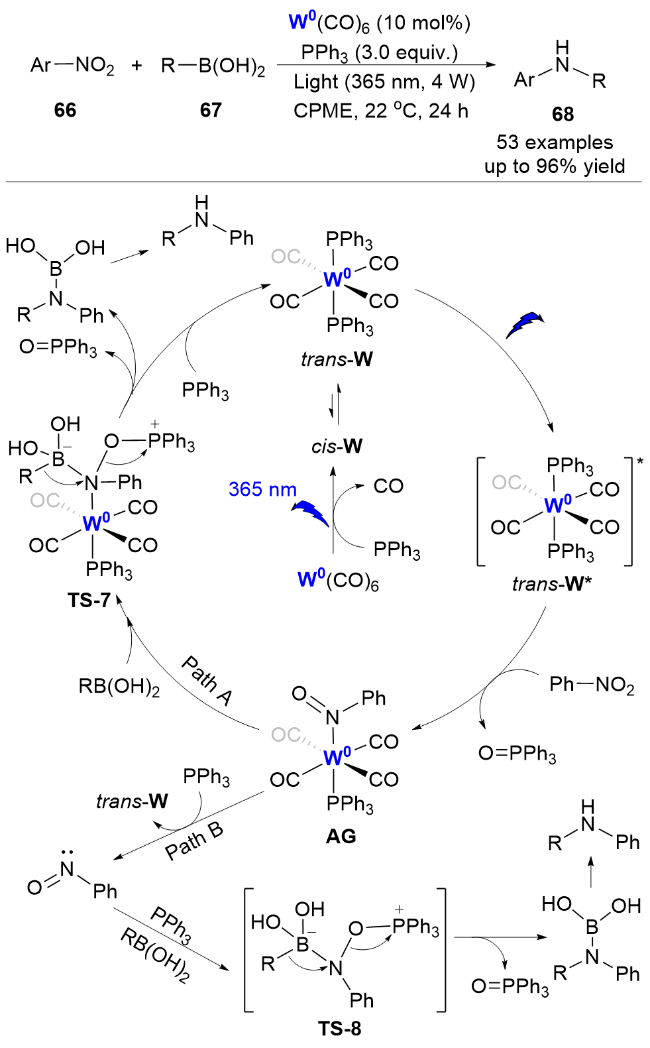
A catalytic cycle for the mechanism was proposed. The precatalyst W(CO)6 underwent photoinduced dissociation of two CO ligands under 365 nm irradiation. Subsequent coordination with PPh3 generated trans-[W(CO)4(PPh3)2] (trans-W). Photoexcitation of trans-W afforded trans-W*, which underwent retro-[2+2] fragmentation to release Ph3P=O and yielded a tungsten-nitrosyl intermediate (AG). At this step, two different pathways might be considered for C—N bond formation. In path A, direct nucleophilic attack of the N atom in AG on the boronic acid formed a nitrenoid transition state (TS-7). Rearrangement of TS-7 gives aminoboronic acid, and following coordination with Ph3P results in the regeneration of the catalyst trans-W. In path B, dissociation of AG liberated free Ph—N=O, which interacted with both triphenylphosphine and boronic acid. Subsequently, C—N bond formation took place after the 1,2-migration of the R group from boron to nitrogen. Ultimately, the desired coupling product was produced by hydrolysis. This work expanded the toolkit for C—N bond formation by leveraging the unique reactivity of low-valent tungsten catalysts under mild photochemical conditions, offering a sustainable and versatile alternative to conventional methods.
6 Isomerization−functionalization reactions
6.1 Isomerization-carbonylative functionalization of alkenes
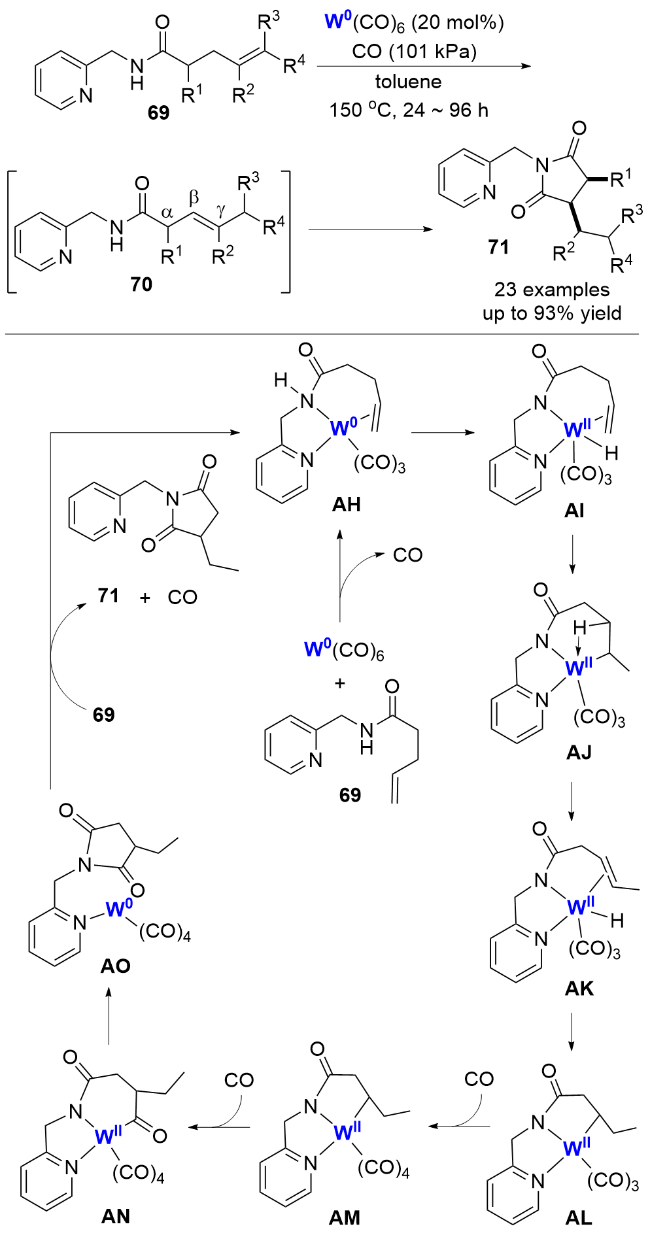
The development of catalytic methods for controlled isomerization and functionalization of alkenes represents a significant challenge in synthetic chemistry, particularly when targeting traditionally disfavored internal positions. In 2022, Engle and colleagues[34] demonstrated the unique capabilities of low-valent tungsten redox catalyst to enable controlled isomerization and carbonylative functionalization of alkenes. The reaction employed W(CO)6 as a pre- catalyst under thermal conditions, with a bidentate directing group (NH-Pic) enabling alkene isomerization to unactivated internal positions and subsequent hydrocarbonylation with CO. The interconversion between six- and seven-coordinate geometries, a hallmark of the W(0)/W(II) redox cycle, together with the conformational flexibility of the directing group, is critical for facilitating isomerization across multiple positions and selective termination at a specific unactivated internal site, which is primed for in situ functionalization.
Based on mechanistic experiments and density functional theory (DFT) calculations, the following catalytic cycle was proposed. W(CO)6 underwent thermal dissociation of CO ligands and coordination with the alkenyl amide substrate to generate the six-coordinate W(0) complex AH, which underwent oxidative addition into the N—H bond of the amide directing group, leading to a seven-coordinate W(II)—H (AI). The W(II)—H inserted into the alkene via migratory insertion, forming an alkyltungsten(II) species (AJ). AJ underwent the endocyclic β-H elimination facilitated by an agostic interaction with a β-C—H bond. This isomerized the alkene to an internal position, generating a new alkene-coordinated W(II) intermediate (AK). Reinsertion of the W—H into the isomerized alkene formed a stabilized five-membered metallacycle (AL). AL coordinated CO to form a seven-coordinate species (AM). Carbonyl insertion into the W—C bond then occurred, yielding an acyl tungsten(II) intermediate (AN). AN underwent facile C—N reductive elimination to release the cyclic carbonylative product and regenerated the active W(0) catalyst (AH).
Despite its advances, the method requires stoichiometric directing groups and elevated catalyst loadings [20 mol% W(CO)6], which are limitations that future research should strive to overcome. Nonetheless, this work establishes an experimental and computational framework for exploring W(0)/W(II) catalytic processes. These findings pave the way for further innovations in alkene isomerization-fun- ctionalization, particularly in the synthesis of complex molecules with exceptional regioselectivity (Scheme 21).
6.2 Isomerization-hydroboration of alkenes
Chain-walking has emerged as a powerful strategy for forging bonds at remote C(sp3) sites via controlled migration of a metal catalyst along an alkyl chain. However, conventional protocols are largely limited to C—C bond formation and typically functionalize either terminal positions or sites adjacent to stabilizing groups. On the basis of their previous work, where a W-catalyst and bidentate directing group were used to control an isomerization- hydrocarbonylation reaction, Engle and co-workers[35] developed a tungsten-catalyzed isomerization-hydroboration of unactivated alkenes (Scheme 22). This method uniquely leveraged native directing groups to override traditional chain-walking preferences, enabling site-selective borylation of unactivated alkenes at distal β-C(sp3)—H positions. The reaction employed commercially available W(CO)3- (MeCN)3 and HBpin under mild conditions, achieving high yields (up to 93%) and exceptional regioselectivities (>50∶1 rr).
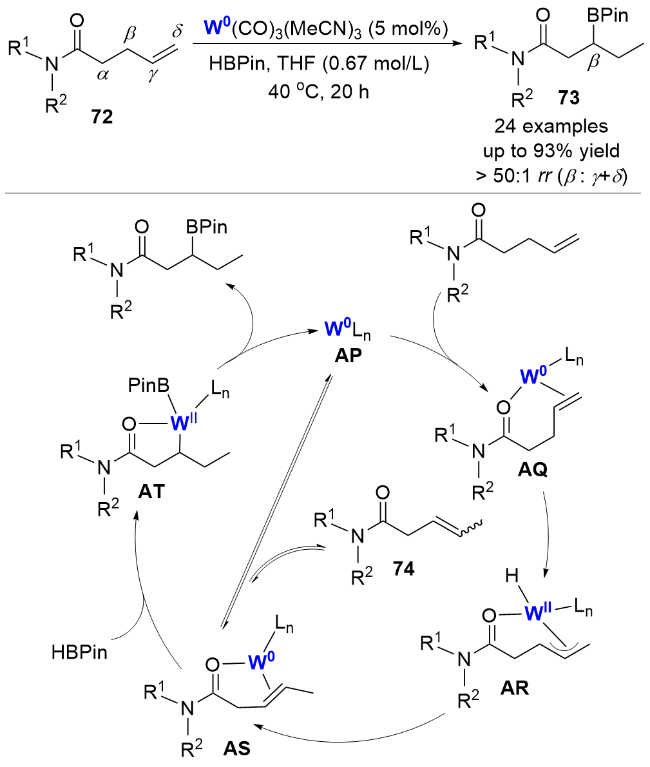
Mechanistic investigations suggested a pathway involving W(0) coordination to both carbonyl group and alkene to form AQ, which underwent allylic C(sp3)—H oxidative addition to generate AR. Reinsertion of the metal hydride to the π-allyl moiety triggered olefin isomerization, thus setting the stage for an oxidative addition of H-Bpin to W(0) intermediate AS. Subsequent exo-hydride insertion to the β,γ-alkene formed AT, which underwent C—B reductive elimination to afford the final product while regenerating the W(0) catalyst AP. Notably, the isomerized alkene 74 reversibly dissociated from intermediate AS, as free 74 could be detected by in situ 1H NMR (Scheme 22).
This work establishes the first tungsten-catalyzed hydro- boration of alkenes, which not only significantly expands the boundaries of chain-walking reactions by offering a complementary site-selectivity profile, but also paves the way for broader adoption of underutilized low-valent tungsten catalysts in alkene functionalization. Furthermore, the reaction operates under mild conditions, exhibits exceptional chemo-, regio-, and diastereo-selectivity, and tolerates a wide range of functional groups, providing a valuable and practical tool for synthesizing complex organoboranes (Scheme 22).
6.3 Isomerization of N-allyl amides to enamides
In 2025, Hu, Zheng, and co-workers[36] reported a low- valent tungsten-catalyzed stereoselective isomerization of N-allyl amides that provided efficient access to geometrically defined enamides. Using inexpensive and bench- stable W(CO)6 (10 mol%) as the precatalyst and LiOH (25 mol%) as an additive in THF at 100 ℃, a wide range of secondary and tertiary N-allyl amides were converted to the corresponding Z enamides in good to excellent yields with high stereoselectivity (Z/E up to >95/5). The reaction demonstrated broad functional group tolerance, and was successfully applied to late-stage functionalization of drug derivatives and peptide scaffolds without racemization (Scheme 23).
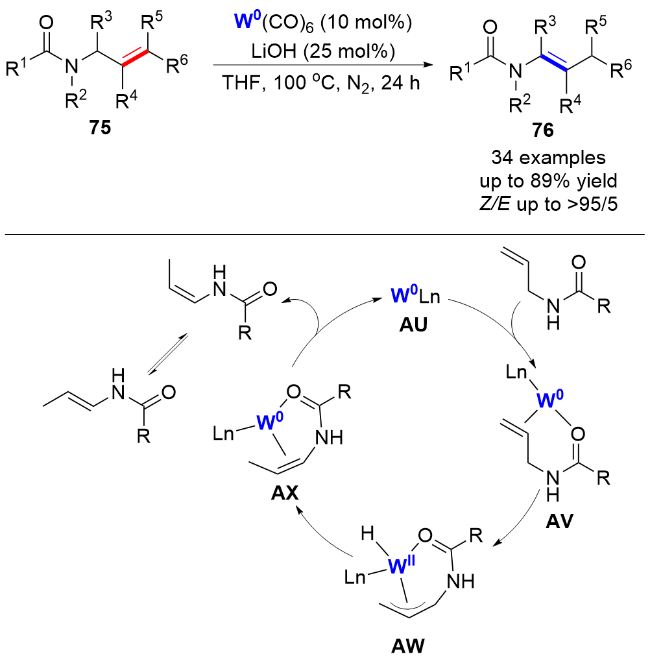
Mechanistic studies supported a pathway initiated by chelation of W0 catalyst to both the amide and olefin, lead- ing to the intermediate AV. Subsequent allylic C(sp3)—H oxidative addition generated the allylic-WII intermediate AW. The WII-H species reinserted into π-allyl moiety, providing the chelating intermediate AX. Final dissociation released the enamide product and regenerated the W0 catalyst. The additive, LiOH, was proposed to suppress further undesired Z/E isomerization of the product.
This method highlights the ability of low-valent tungsten catalysts to enforce kinetically favored Z selectivity in alkene isomerization, expanding the synthetic utility of tungsten in stereoselective transformations.
7 Oxidative dehydrogenative coupling reactions
7.1 Controllable oxidative dehydrogenative coupling of anilines
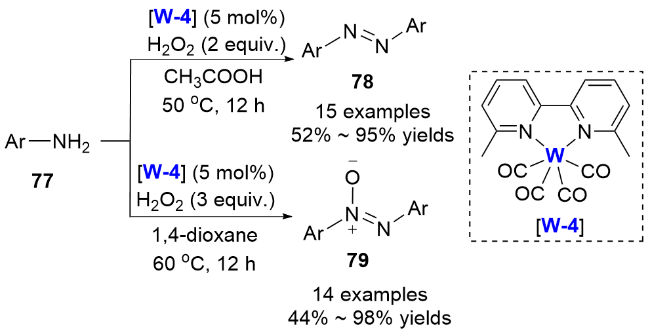
In 2023, Song and co-workers[37] reported a homogeneous low-valent tungsten-catalyzed system for the oxidative dehydrogenative coupling of anilines, enabling precise control over product outcomes through simple solvent modulation. Utilizing bench-stable tungsten complexes derived from W(CO)6 and bidentate ligands, the protocol employed H2O2 as a green oxidant under additive-free conditions. This approach provided switchable access to either azoaromatics or azoxyaromatics. For synthesizing azoaromatics, optimal conditions involved 5 mol% W-4 precatalyst, 2 equiv. of H2O2, and CH3COOH as the solvent at 50 ℃ for 12 h. Under these conditions, diverse symmetric azoaromatics were afforded in isolated yields of 52%~95%. To access azoxyaromatics, selectivity is redirected by switching to neutral solvents such as 1,4-dio- xane, increasing H2O2 to 3 equiv., and elevating the temperature to 60 ℃ for 12 h (5 mol% W-4), affording products in moderate to good yields (44%~98%) (Scheme 24).
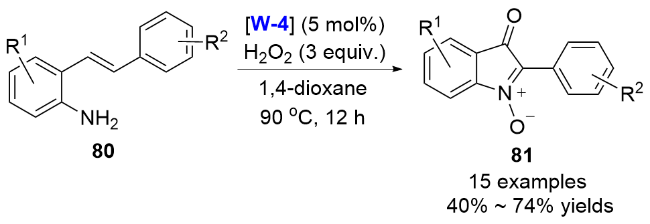
Additionally, the protocol was extended to intramolecular oxidative dehydrogenative C—N coupling of o-vinyl- aniline derivatives, furnishing 2-substituted indolone N-oxides (isatogens). Optimal conditions employed 5 mol% W-4 precatalyst, 3 equiv. of H2O2 as the terminal oxidant, and 1,4-dioxane as the solvent at 90 ℃ for 12 h. This protocol delivered isatogens in moderate to good isolated yields (55%~85%) across a diverse range of functionalized substrates (Scheme 25).
7.2 Oxidative cross-dehydrogenative coupling
Li and co-workers[38] expanded the synthetic utility of low-valent tungsten catalysis to aerobic oxidative cross- dehydrogenative coupling (CDC) reactions, enabling efficient synthesis of thiophosphates and 3-sulfenylated indoles under O₂ atmosphere (101 kPa) using W(CO)6 as a precatalyst (10 mol%) in THF at 100 ℃. This protocol showcases exceptional atom economy by directly coupling thiols with P(O)-H compounds or indoles without prefunctionalization (Scheme 26).
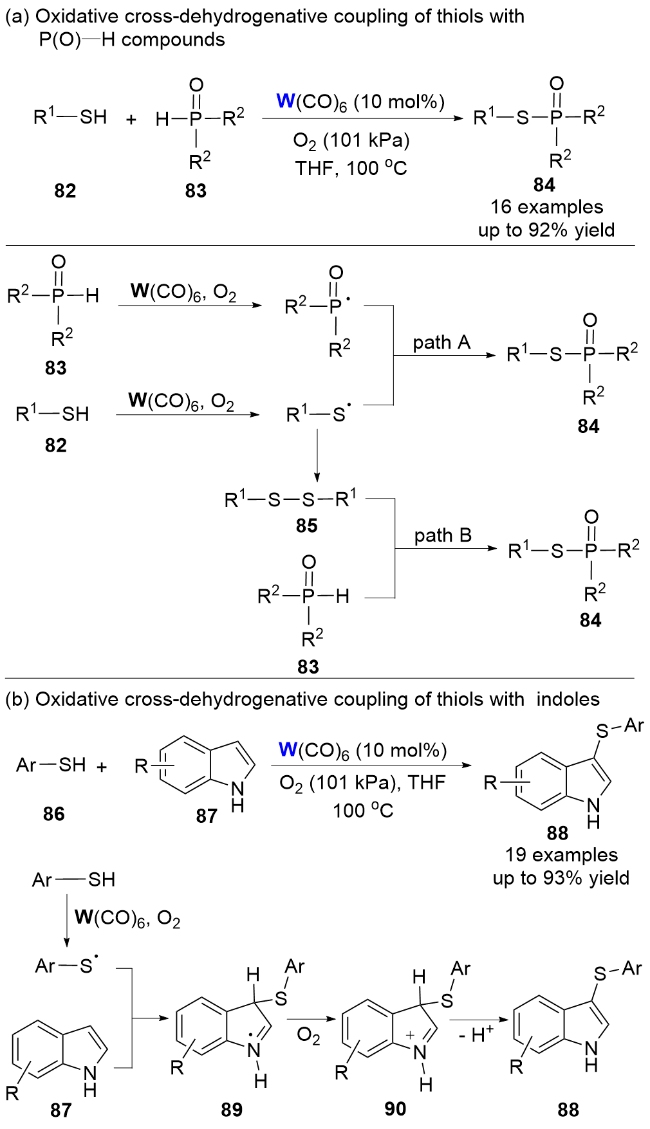
Mechanistic investigations revealed a radical-based pathway. For thiophosphate synthesis, two plausible pathways were proposed. Path A involved direct coupling of the thiyl radical (generated from thiol 82) with a P-radical (generated from phosphonates 83), delivering the desired product 84. Path B involved the formation of the disulfide product 85, which was coupled with phosphonates 83 to generate the corresponding product 84 (Scheme 26, a). The possible catalytic cycle for the 3-sulfenylation of indoles is as follows: The thiyl radical, generated under O₂ atmosphere, reacts with indole 87 to give the radical intermediate 89. Subsequent oxidation of 89 yields the cationic intermediate 90, which undergoes deprotonation to afford the 3-sulfenylated indole product 88 (Scheme 26, b).
8 Carbonylation reactions
Carbonylation reactions represent a powerful strategy for the introduction of carbonyl groups into organic molecules, enabling the synthesis of valuable ketones, esters, and other carbonyl-containing compounds. Recent advances have demonstrated the capability of low-valent tungsten catalysts to mediate such transformations under mild conditions, offering a sustainable alternative to noble- metal systems.
In 2024, Li and colleagues[39] reported a low-valent tungsten-catalyzed carbonylative Sonogashira coupling of aryl iodides with terminal alkynes for the synthesis of alkynones (Scheme 27, a). Using commercially available W(CO)6 as a precatalyst under atmospheric CO pressure, the reaction proceeded efficiently in toluene with triethylamine as base at 100 ℃. Notably, the method was also extended to 2-iodoanilines, which underwent intramolecular cyclization in the presence of PPh3 to afford indoxyls in good yields (Scheme 27, b). In a complementary study, they disclosed a low-valent tungsten-catalyzed carbonylative synthesis of benzoates from aryl iodides and alcohols or phenols (Scheme 27, c).[40]
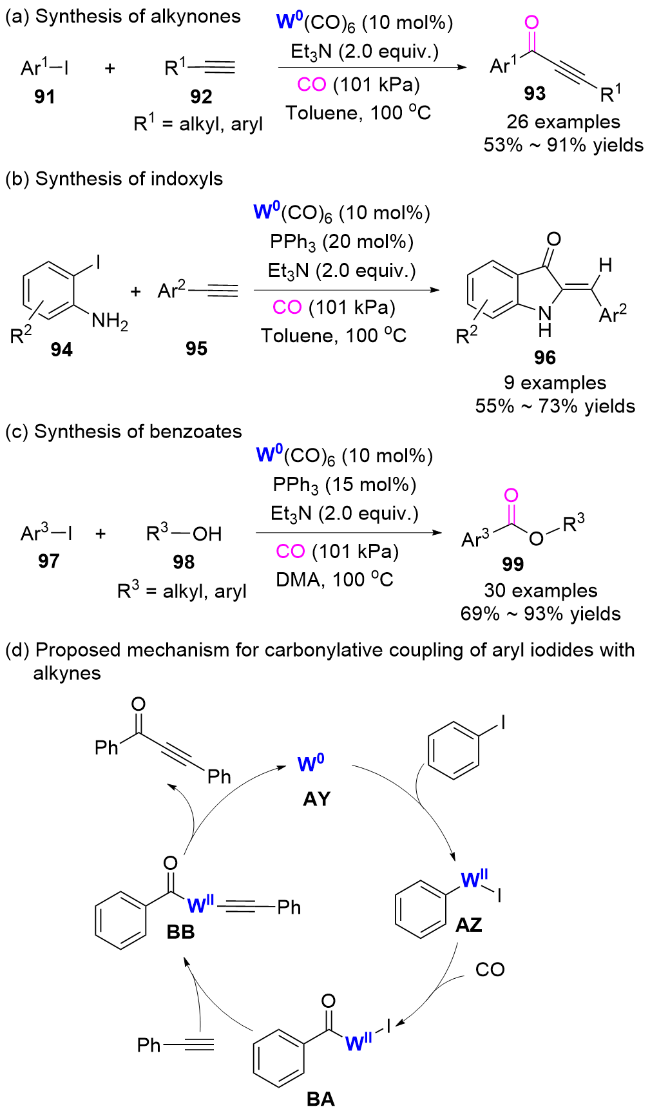


Mechanistic studies for carbonylative coupling of aryl Iodides with alkynes suggested a pathway involving oxidative addition of aryl iodide to tungsten, CO insertion, alkyne coordination, and reductive elimination to form the alkynone product (Scheme 27, d).
These studies underscore the versatility and efficiency of low-valent tungsten catalysts in mediating carbonylative transformations under mild conditions. The use of inexpensive and readily available W(CO)6, combined with operational simplicity and good functional group compatibility, positions tungsten as a promising non-noble metal catalyst for carbonylation chemistry.
9 Conclusions
Low-valent tungsten catalysis has evolved into a versatile and efficient approach for organic transformations, exhibiting unique catalytic behavior complementary to conventional noble-metal systems. The inherent features of low-valent tungsten, such as redox flexibility, variable coordination geometries, and high Lewis acidity, have driven growing interest in this field. Despite considerable progress in recent years, substantial challenges persist in this field. First, the application of low-valent tungsten catalysts in organic reactions is still limited, demanding continued exploration to unlock its potential in organic transformations. Second, catalytic efficiency remains suboptimal, as reports of catalyst loadings below 1 mol% are still scarce. Therefore, innovations in ligand design or activation strategies are essential to improve performance. Third, low-valent tungsten catalysis remains virtually unexplored for enantioselective reactions, beyond asymmetric allylic alkylation, demanding dedicated efforts to expand its utilities in enantioselective transformations. Fourth, low-valent tungsten has demonstrated promise in photo-induced reactions (notably nitroarene amination and deoxygenative reduction of amides), however, focused research efforts are required to unlock its full potential in light-activated organic synthesis.
The synergy of tungsten’s natural abundance, low toxicity, and distinctive properties positions it as a compelling candidate for sustainable catalysis. Addressing the aforementioned challenges will unlock its full potential in complex molecule synthesis and practical industrial applications.
(Zhao, C.)