


1 Introduction
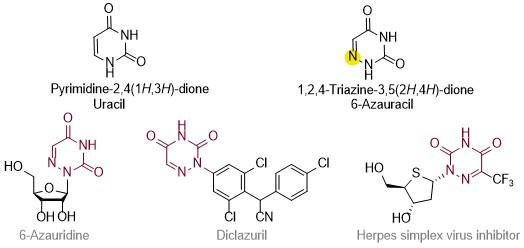
1,2,4-Triazine-3,5(2H,4H)-diones, in which the C-6 carbon of the canonical uracil scaffold is formally replaced by a nitrogen atom, are consequently designated as 6-azau- racils (Scheme 1). Due to their specific structure, 6-azau- racil and its derivatives have exhibited various biological activities, including antiviral, antibacterial, and antitumor effects.[1] Examples include Diclazuril, a veterinary drug for coccidiosis,[2] D-amino acid oxidase inhibitors for schizo-phrenia, herpes simplex virus inhibitors for treating herpes,[3] and bifunctional nucleoside probes for acquired immune deficiency syndrome (AIDS),[4] etc. Therefore, the development of novel methods for modifying the 6-azau- racil skeleton to create new derivatives has drawn huge attention.
For the functionalization of 1,2,4-triazine-3,5(2H,4H)-diones, conventional strategies typically require pre-func- tionalization via C6 bromination, followed by Suzuki cross- coupling or nucleophilic substitution reactions to introduce amino, aryl, and related functional groups at the C6-position of 1,2,4-triazine-3,5(2H,4H)-diones (Scheme 2a).[5] However, these methods exhibit critical limitations: (1) the requirement for tedious pre-functionalization steps, (2) harsh reaction conditions limiting substrate compatibility and diminished regioselectivity. Consequently, the development of novel methods enabling direct C(sp2)—H functionalization of 1,2,4-triazine-3,5(2H,4H)-diones under mild conditions represents an urgent demand.
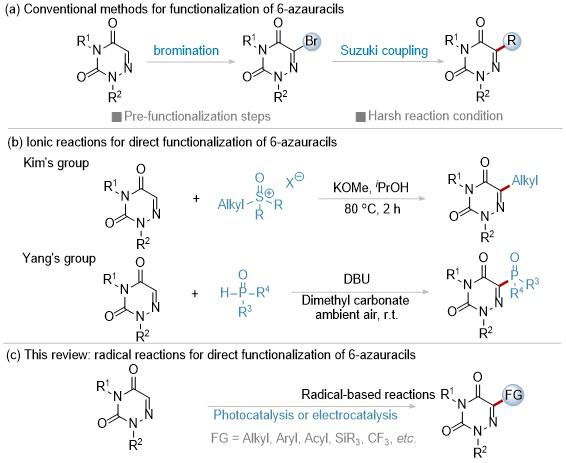
For the direct C(sp2)—H functionalization of 1,2,4-triazine-3,5(2H,4H)-diones, ionic reactions have been reported (Scheme 2b). For example, Kimʼs group[6] employed sulfoxonium ylides as an alkylating agent to achieve direct C6 alkylation under 80 ℃ in 2021. Subsequently, Yangʼs group[7] reported a metal-free procedure for the phosphorylation of 1,2,4-triazine-3,5(2H,4H)-diones in 2023. These ionic reactions circumvent the need for pre-functionaliza-tion steps, significantly expanding the substrate scope. Despite these advances, the development of novel strategies with milder conditions and improved sustainability is a continuous research hotspot in organic chemistry.
In this context, radical-mediated C—H functionalization has emerged as a transformative approach for direct modification, particularly through recent advances in photochemical and electrochemical technologies.[8] These methods leverage mild initiation conditions, high selectivity, and tunable reaction parameters to enable sustainable radical transformations. Nevertheless, comprehensive reviews on photo-/electrocatalytic functionalization of 1,2,4- triazine-3,5(2H,4H)-diones remain notably absent. A systematic analysis of progress in this field is therefore imperative to consolidate mechanistic insights and stimulate future development.[9]
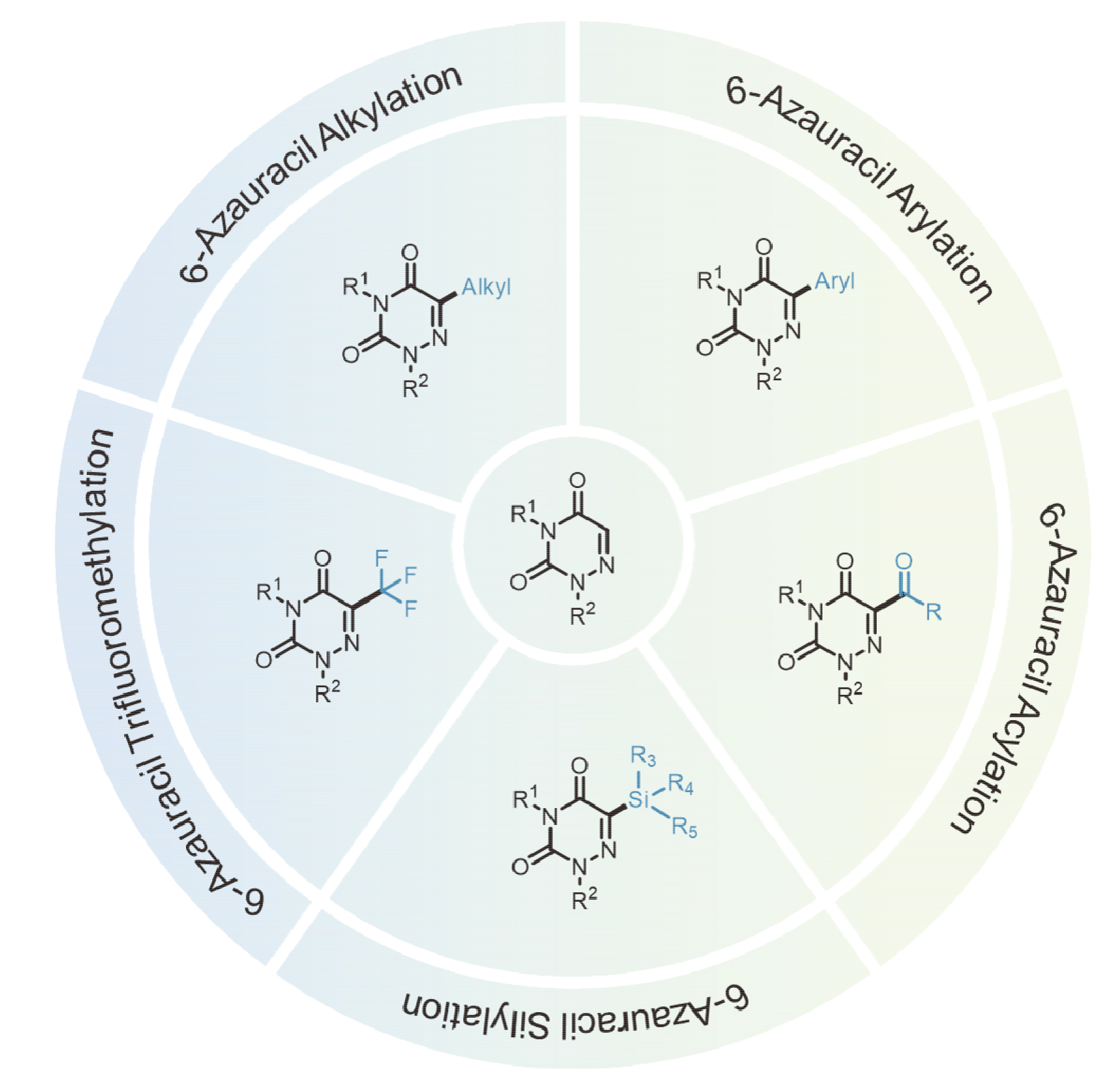
This review provides a focused analysis of radical-me- diated C6—H functionalization of 6-azauracils since 2021, including photoredox catalysis, electrochemical activation, and other radical-based strategies. It systematically addresses key aspects, including reaction design principles, mechanistic insights, and the diversity of introduced functional groups. We anticipate that this review will not only inspire further scientific exploration but also highlight the significant untapped application potential of modified 6-azauracil derivatives in drug discovery and the synthesis of functional materials.
2 Functionalization of 6-azauracil
2.1 Alkylation of 6-azauracil
N-Heterocycles constitute core scaffolds in drug molecules, where direct C—H alkylation can significantly enhance metabolic stability and membrane permeability.[10] As a key bioactive pharmacophore, 6-azauracil derivatives are extensively utilized in drug design.[11] Consequently, direct alkylation at the C6 position of 1,2,4-triazine-3,5 (2H,4H)-diones has attracted considerable attention in recent research.
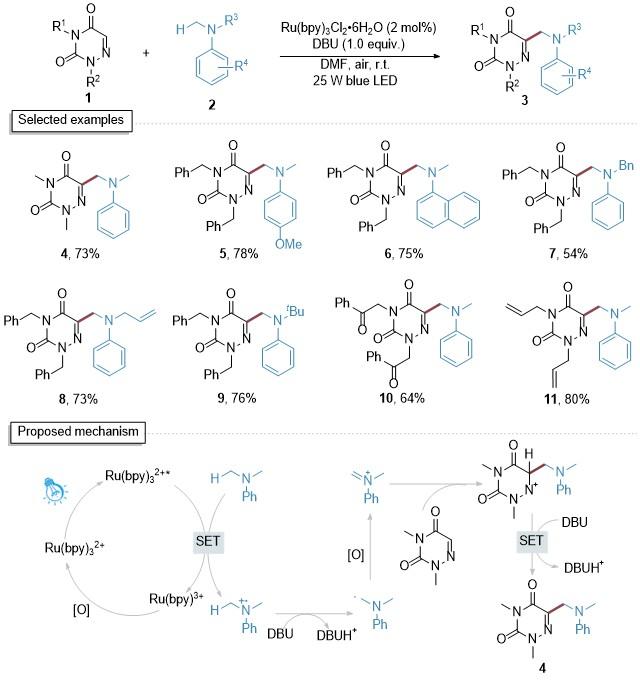
In 2021, Zhangʼs group[12] reported the first visible- light-induced cross-dehydrogenative coupling (CDC) between the C(sp2)—H bond of 6-azauracils and the C(sp3)—H bond of N,N-dimethylaniline. In this approach, atmospheric oxygen is utilized as a sustainable oxidant, thereby eliminating the need for stoichiometric oxidants commonly used in conventional methods. Characterized by high atom economy, environmental friendliness, and operational simplicity, this method provides a novel route to synthesize amino-methyl-substituted N-heterocyclic compounds with potential pharmaceutical applications. Based on controlled experiments and mechanistic studies, the group proposed a plausible reaction pathway: Initially, Ru(bpy)3Cl2•6H2O undergoes photoexcitation under visible light irradiation. Subsequent single-electron transfer to N,N-dimethylaniline generates radical intermediates. Dehydrogenation, oxidation, and addition steps then lead to the desired product 4. While Ru(bpy)3Cl2•6H2O is a widely used photocatalyst, its cost is relatively high. Future efforts could focus on the recovery and reuse of the catalyst to enhance the sustainability of the reaction. Furthermore, structural advances in photocatalytic materials, such as the construction of semiconductor photocatalysts,[13] offer novel approaches to improve the efficiency of photocatalytic functionalization of 6-azauracils (Scheme 3).
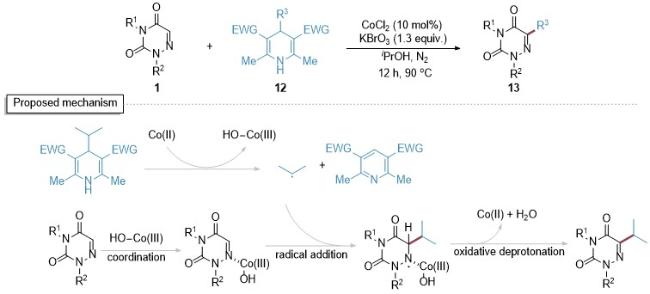
In 2022, Kimʼs group[14] developed a cobalt(II)-catalyzed C—H alkylation protocol for N-heterocycles employing 1,4-dihydropyridines (DHPs) as the radical precursors. This system operates through synergistic Co(II)/KBrO3 catalysis, which efficiently generates alkyl radicals under mild conditions, enabling functionalization of diverse N-heterocyclic scaffolds, including quinolines, pyridines, and pyrazines. Significantly, DHPs also serve as acylating agents within this unified platform, expanding its synthetic utility. This protocol offers an operationally simple, mild, and environmentally benign strategy featuring broad substrate scope and excellent functional group tolerance. It provides an effective approach for rapid assembly of drug leads in discovery campaigns and holds significant promise for late-stage diversification of bioactive molecules, as exemplified by the synthesis of antimalarial drug 4-amino- quinoline (DAQ) analogue. Collectively, this work constitutes a notable advance in C—H functionalization methods (Scheme 4).
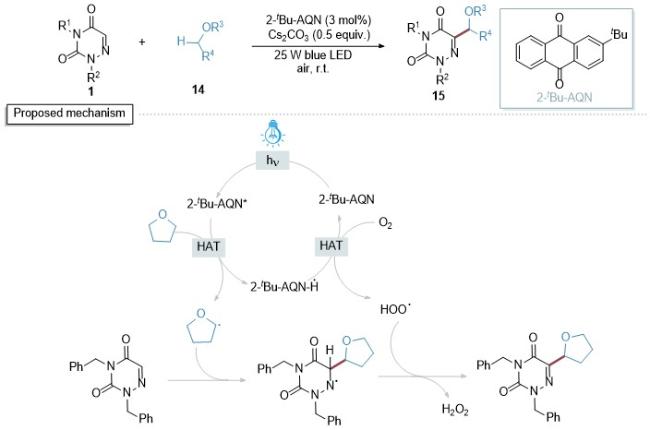
In 2022, Zhaoʼs group[15] reported a cross-dehydrogena-tive coupling reaction between 1,2,4-triazine-3,5(2H,4H)-diones and ethers. This method provides an efficient and convenient route for synthesizing 6-oxo-alkylated 1,2,4-triazine-3,5(2H,4H)-diones (2-tBu-AQN). A cost-effective and low-toxicity aromatic ketone photocatalyst 2-tert-butyl-anthraquinone, and the green oxidant air, were employed at room temperature. Furthermore, sunlight can serve as a clean energy source to drive the reaction. The protocol also exhibits high scalability, operational simplicity, and broad functional group tolerance (Scheme 5).
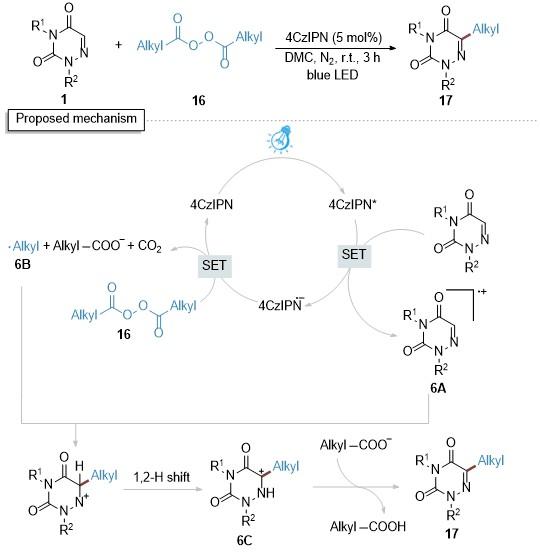
In 2023, Yu and Chenʼs group[16] reported a novel method for the direct C—H alkylation of 6-azauracils. This method employs alkyl diacyl peroxides as alkylating reagents and achieves efficient alkylation of various N-heteroarenes under a catalytic system comprising the organic photocatalyst 4CzIPN and the green solvent dimethyl carbonate (DMC). This approach offers advantages such as the absence of metals and other additives, room temperature conditions, and operational simplicity, aligning with the principles of green chemistry. Furthermore, the reaction system exhibits broad substrate scope and excellent functional group tolerance, providing a new strategy for synthesizing potentially bioactive molecules. Mechanistic studies revealed a radical-based pathway: Upon photoexcitation, 4CzIPN reaches its excited state [4CzIPN]*, which interacts with 6-azauracils 1 via a single electron transfer (SET) process to generate radical cation 6A and the reduced photocatalyst 4CzIPN•⁻. Subsequently, 4CzIPN•⁻ is oxidized by acyl peroxide 16, regenerating ground-state 4CzIPN. Concurrently, acting as an electron donor, 4CzIPN•⁻ triggers the cleavage of acyl peroxide 16, generating alkyl radical 6B, carboxylate ion, and CO2. Alkyl radical 6B then adds to radical cation 6A. The resulting adduct undergoes a 1,2-hydride migration to form carbocationic intermediate 6C. Finally, 6C is deprotonated by the carboxylate group to obtain the desired product 17 and the corresponding alkyl carboxylic acid (Scheme 6).
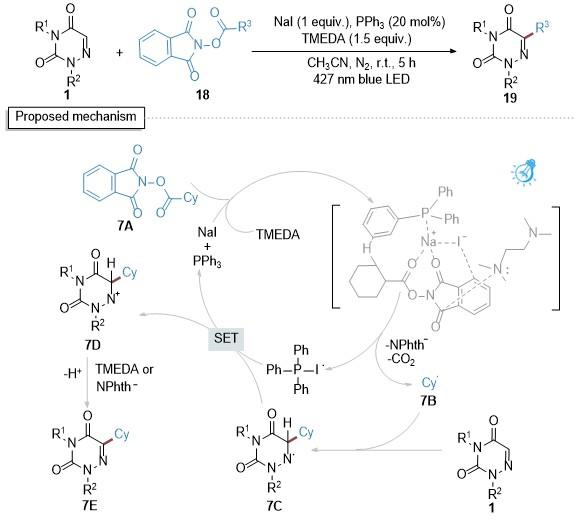
Photoactive electron donor-acceptor (EDA) complexes represent a class of visible-light-absorbing systems formed through charge-transfer interactions. Upon photoexcitation, these complexes undergo intramolecular single-electron transfer, efficiently generating radical intermediates without the need for external photocatalysts.[17] In recent years, this strategy has garnered significant attention in synthetic chemistry due to its alignment with green chemistry principles and operation under mild reaction conditions.[18] In 2023, Murarkaʼs group[19] developed a visible-light-pro- moted alkylation of 6-azauracils using EDA complexes. This approach enabled alkylation with alkyl N-hydroxy-phthalimide (NHPI) esters, affording the corresponding products in good yields. The EDA complex formed between the NHPI ester and the NaI/PPh3 system, with N,N,N',N'-tetramethylethylenediamine (TMEDA) significantly enhancing photoredox activity. Based on UV-vis spectroscopy, quantum yield measurements, and on/off light experiments, a possible mechanism was proposed (Scheme 7). Upon light irradiation, a single electron transfer (SET) occurs from the iodide anion to NHPI ester 7A, generating an alkyl radical 7B and an iodine radical while releasing carbon dioxide and the phthalimide anion. The alkyl radical 7B then adds to the C6-position of 6-azauracils 1, forming nitrogen-centered radical intermediate 7C. A subsequent SET process generates cationic intermediate 7D. Finally, deprotonation of 7D, assisted by either TMEDA or the phthalimide anion, affords the desired product 7E.
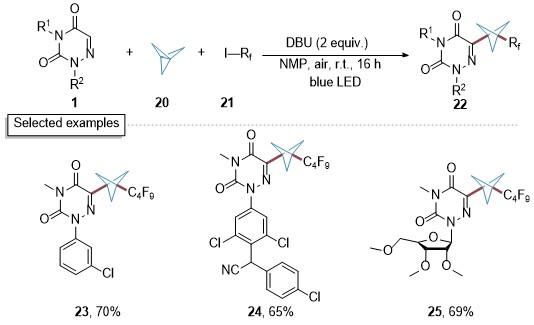
Bicyclo[1.1.1]pentane (BCP) is a unique bioisomer com- posed of alkyne, tert-butyl, and benzene rings. The introduction of this fragment can significantly improve metabolic stability, water solubility, and passive permeability.[20] Therefore, the development of new methods for incorporating bicyclo[1.1.1]pentanes into organic compounds has garnered significant attention. In 2023, Xuʼs group[21] developed a BCP direct perfluoroalkylation method of [1.1.1]- propellane with heteroarene and perfluoroalkyl iodine, which promoted the transformation by using visible light without any transition metal catalyst or photocatalyst. This method offers an efficient and practical mean to obtain perfluoroalkyl compounds featuring the bicyclo[1.1.1]- pentane framework, achieved through radical cascade reactions with good yields (Scheme 8).
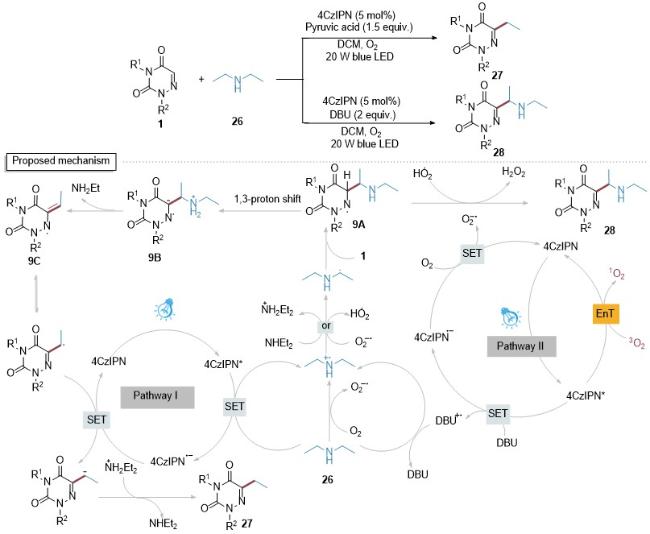
In 2024, Zhaoʼs group[22] developed an organic photoredox strategy enabling the alkylation and N-alkylamination of 1,2,4-triazine-3,5(2H,4H)-diones. This approach employed suitable Brønsted acids and eliminated the requirement for transition metal catalysts. Key mechanistic steps involved intramolecular hydrogen migration and C—N bond cleavage to achieve the alkylation. Based on mechanistic studies and prior work, a mechanism was proposed. This mechanism encompasses two distinct pathways: Path- way I: Under visible light irradiation, 4CzIPN is excited to 4CzIPN*, which interacts with diethylamine 26 to generate an amine radical cation and 4CzIPN•⁻. Deprotonation of the amine radical cation generates an α-amino radical, which adds to 1 to form intermediate 9A. Intermediate 9A coordinates with pyruvate and undergoes an intramolecular 1,3-proton shift to give intermediate 9B, which then undergoes C—N bond cleavage to form intermediate 9C.
Finally, intermediate 9C is converted to the alkylation product 27 via tautomerization, a SET process, and protonation. Pathway II: The catalytic cycle of 4CzIPN and α-amino radical formation proceeds via two alternative routes: (i) In the absence of 1,8-diazabicyclo[5.4.0]undec-7-ene (DBU), excited 4CzIPN* participates in an energy transfer process with triplet oxygen (3O2), regenerating ground-state 4CzIPN. (ii) In the presence of DBU, excited 4CzIPN* is reductively quenched by DBU, producing 4CzIPN•⁻ and radical cation (DBU•+). Subsequently, 4CzIPN•⁻ undergoes a SET with O2 to regenerate 4CzIPN and form $\mathrm{O}_{2}^{-\cdot}$. The α-amino radical is then generated through the SET process and the proton-coupled electron transfer (PCET) process, respectively. Finally, the nitrogen radical intermediate 9A undergoes hydrogen atom transfer process to afford the C6-α-aminoalkylation product 28 (Scheme 9).
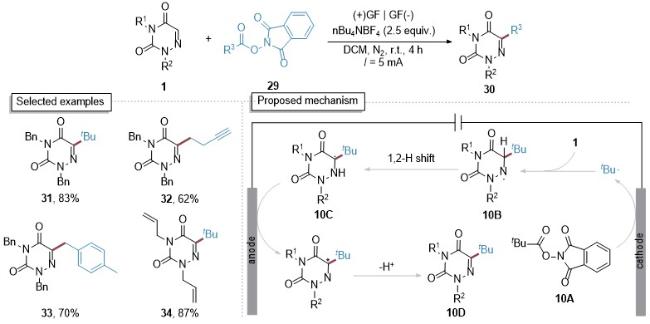
Electrochemical organic synthesis offers significant potential as a sustainable approach by using electrons as trace- less reagents to drive molecular transformations, thereby eliminating stoichiometric oxidants/reductants.[23] In recent years, decarboxylative coupling of NHPI esters as alkyl radical precursors has emerged as an efficient strategy for diverse transformations.[24] Notably, NHPI esters can serve as practical redox-active mediators in electrochemical systems, where cathodic reduction generates alkyl radicals, enabling efficient electroorganic synthesis.[25] In 2024, Murarkaʼs group[26] utilized NHPI esters as readily available alkyl radical precursors for the metal- and additive-free electrochemical alkylation of 6-azauracils. This method features broad substrate scope, scalability, excellent functional group tolerance, and compatibility with both batch and flow reactors, enhancing its industrial applicability. Based on the previous work and mechanism research, the research group proposed a possible mechanism. Initially, NHPI ester 10A is reduced cathodically to generate the alkyl radical while eliminating the anions of carbon dioxide and phthalimide. Subsequently, the alkyl radical adds to the C6-position of 6-azauracil 1 to form the N-centered radical 10B, and the carbon-centered radical 10C is obtained at 1,2-hydrogen shift. Finally, the carbon center radical 10C is anodized and then deprotonated to obtain the desired product 10D (Scheme 10).
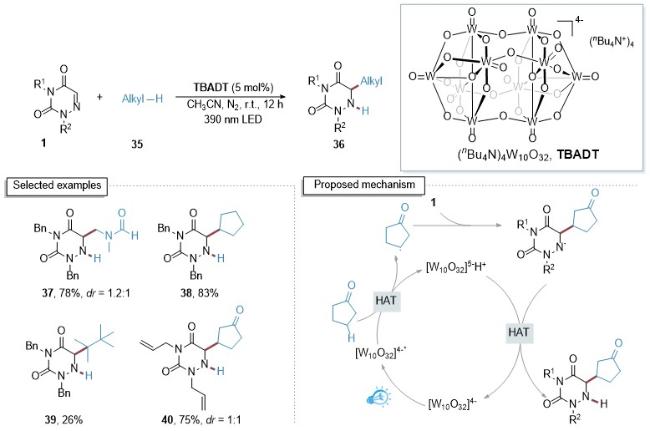
As a cheap, stable and widely utilized chemical raw material, alkanes are considered ideal alkyl precursors.[27] However, due to their high dissociation energy, low acidity, and minimal differences in dissociation energy between different alkanes, the selective functionalization of C(sp3)—H bonds in inert alkanes remains a significant challenge.[28] In 2024, Yuʼs group[29] successfully employed different alkanes as alkylation reagents to develop a method for direct hydroalkylation of 6-azauracils using tetrabutylammonium decatungstate (TBADT) as a photocatalyst. The functional group compatibility of the method was used to modify various active molecules successfully (Scheme 11).
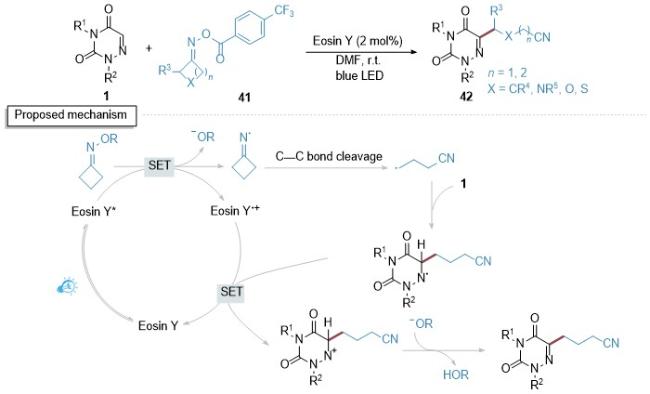
In 2024, Yuʼs group[30] established a metal- and base-free photoinduced Minisci-type cyanoalkylation of 6-azauracils. This method employs readily available cyclobutanone oxime esters as cyanoalkylating reagents, achieving γ-cyano- alkylated of 6-azauracils via C—C bond cleavage. The reaction demonstrates broad functional group tolerance and substrate scope, affording cyanoalkylated 6-azauracil derivatives in moderate to good yields (Scheme 12).
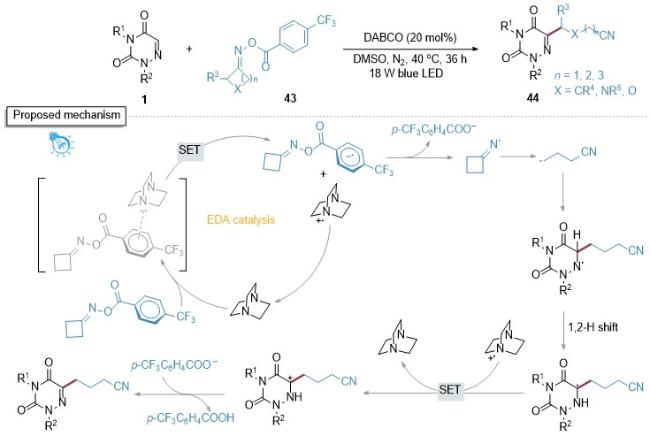
In the same year, Zhuʼs group[31] reported a photoinduced C—H cyanoalkylation of 6-azauracils using inexpensive 1,4-diazabicyclo[2.2.2]octane (DABCO) as an electron- donor catalyst and cyclobutanone oxime esters as cyano- alkylating reagents. Mechanistic studies revealed that EDA complex formation between the oxime ester and DABCO is essential for cyanoalkyl radical generation. This synthetic method operates under mild, photocatalyst-free, and redox-neutral conditions, delivering products in high yields while demonstrating broad applicability for synthesizing pharmacologically active compounds (Scheme 13).
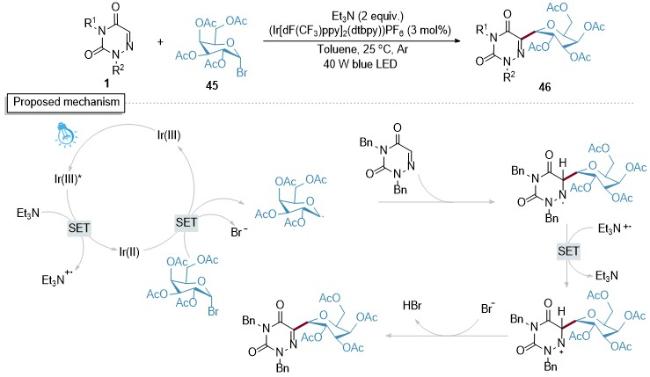
C-Nucleosides represent a class of compounds with sig-nificant biological activities and therapeutic potential. In 2025, Kunduʼs group[32] reported a visible-light-driven, Ir(III)-catalyzed stereoselective method for synthesizing 6-azauracil C-nucleosides. This approach employs 1-bro- mosugars as glycosyl radical precursors and 6-azauracils as the nucleobase electrophilic coupling partner, achieving high α-selectivity and excellent functional group tolerance. The synthesis of bioactive 6-azauracil analogues via this methodology represents a novel strategy for C-nucleoside preparation and application (Scheme 14).
2.2 Arylation of 6-azauracil
Arylation reactions represent fundamental transformations in organic synthesis. The introduction of aryl groups enables precise modulation of molecular physicochemical properties and enhances biological activity. These transformations consequently serve as indispensable tools across diverse fields, including pharmaceutical discovery, materials science, and agrochemical development.[33]
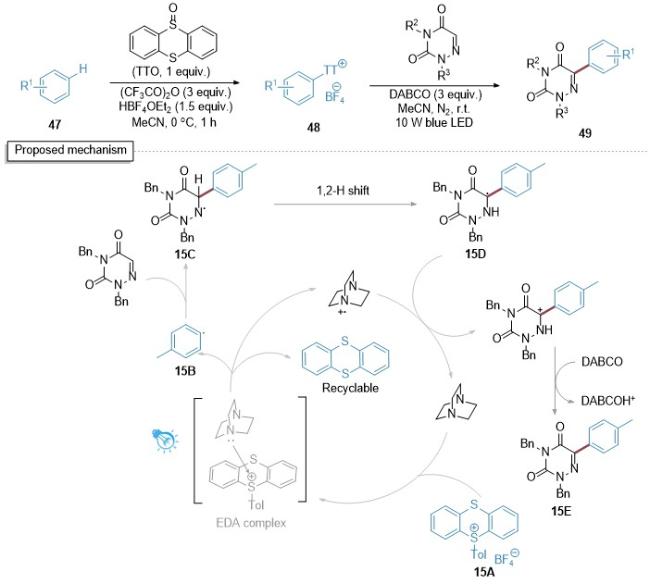
In 2022, Yuʼs group[34] developed a photochemical method for generating aryl radicals via light activation of arylthianthrenium salts. Irradiation of the EDA complex formed between arylthianthrenium salts and DABCO under weak visible light or sunlight generates aryl radicals capable of arylating diverse N-heterocycles. This EDA complex strategy enables the assembly of challenging bi(hetero)aryl scaffolds. Mechanistic studies combining UV-vis spectroscopy and density functional theory (DFT) calculations revealed that DABCO initially combines with arylthianthrenium salt 15A to form an EDA complex. This complex undergoes homolysis to produce an aryl radical 15B, thianthrene, and DABCO•+. Subsequently, aryl radical 15B adds to the 6-azauracil to form radical intermediate 15C. A 1,2-hydrogen shift then affords radical 15D, which is oxidized by DABCO•+ to a carbocation. Deprotonation of this carbocation in the presence of DABCO yields the desired product 15E (Scheme 15).
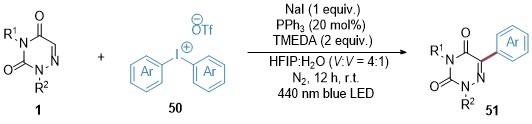
In 2023, Murarkaʼs group[35] extended the EDA complex strategy to achieve metal-free arylation of 6-azauracils. This photoredox system employs a self-assembled tetrameric EDA complex comprising sodium iodide, triphenylphos- phine, TMEDA, and diaryliodonium salts. Upon visible- light irradiation, the complex generates aryl radicals that effectively arylate diverse substrates, including electron- deficient, electron-rich, aromatic, and non-aromatic compounds, demonstrating broad functional group compatibility. Notably, the method offers a convenient approach for the arylation of various natural products, bioactive compounds, and drug-derived heterocyclic compounds, facilitating the late diversification of drug molecules (Scheme 16).
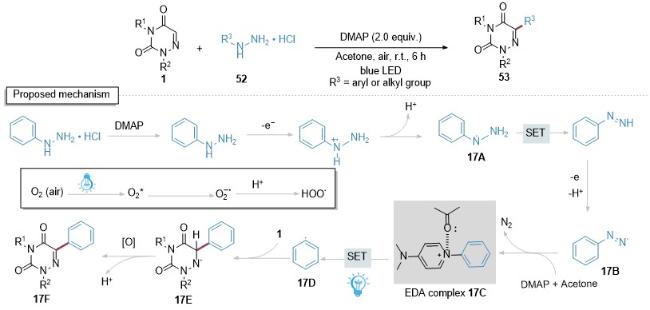
In 2024, Huangʼs group[36] utilized hydrazine derivatives as arylation reagents, achieving visible-light-induced, metal-free arylation of 6-azauracils. This strategy successfully constructs structurally diverse arylated and alkylated 6-azauracil derivatives, affording products in up to 85% yield. Notably, the reaction is readily scaled to the millimole level while maintaining moderate to good isolated yields (up to 69%) under simulated sunlight irradiation, underscoring significant industrial applicability. Significantly, this method circumvents traditional requirements for transition metal catalysts, high temperatures, or strong oxidants, embodying mild, green, economical, and sustainable synthetic principles. Based on prior mechanistic insights, a reaction pathway was proposed: Blue LED irradiation initially excites molecular oxygen (O2) to form singlet oxygen (1O2). This oxidizes arylhydrazine to a radical cation, which undergoes deprotonation to generate radical 17A. Subsequent single-electron oxidation and deprotonation of 17A generate aryldiazene 17B. This aryldiazene 17B then forms an EDA complex 17C with DMAP and acetone. Irradiation of complex 17C with blue LED light produces radical 17D. The radical 17D adds to substrate 1, forming radical intermediate 17E. Finally, deprotonation affords the desired product 17F (Scheme 17).
2.3 Acylation of 6-azauracil
Acylation is a pivotal molecular modification strategy for precisely modulating the chemical properties, biological activities, and physicochemical characteristics of organic molecules.[37] The incorporation of acyl groups into heterocyclic scaffolds significantly alters their reactivity/selec-tivity and pharmacokinetic profiles, establishing N-hetero- cycle acylation as a fundamental transformation in modern synthesis.[38]
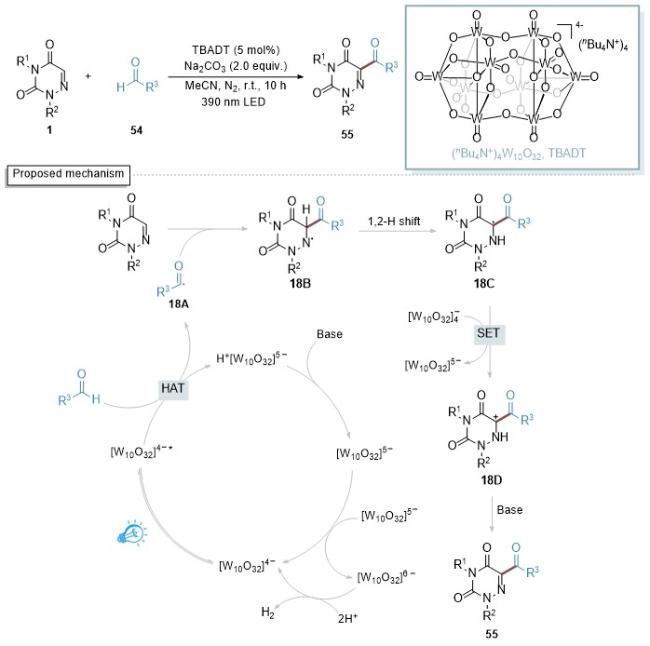
In 2024, Yuʼs group[39] developed a photocatalytic acylation reaction using TBADT as the photocatalyst, enabling direct acylation of N-heterocycles with alkyl/aromatic aldehydes at room temperature. This work represents the first reported photoinduced acylation of N-heterocycles using aldehydes under mild conditions, accommodating diverse substrates with broad functional group tolerance. Based on prior mechanistic studies and literature precedents, a feasible reaction mechanism was proposed. Upon blue light irradiation, excited TBADT acts as a hydrogen-atom trans- fer (HAT) reagent with aldehydes, generating an acyl radical 18A and H+[W10O32]5-. The acyl radical 18A adds to substrate 1, forming radical intermediate 18B. A subsequent intramolecular 1,2-hydrogen shift generates radical intermediate 18C. 18C undergoes single-electron oxidation by ground-state [W10O32]4-, yielding [W10O32]5- and cationic intermediate 18D. Deprotonation of 18D by base delivers acylation product 55 (Scheme 18).
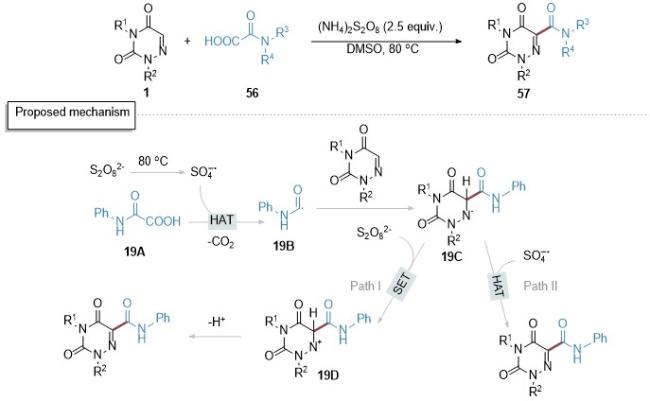
Amides represent an important class of functional molecules with excellent physicochemical properties.[40] In- depth investigation of amidation reactions expands the synthetic toolkit of organic chemistry and provides critical theoretical foundations for developing novel materials and pharmaceuticals.[41] In 2024, Yuʼs group[42] developed an efficient, atomically economical amidation of 6-azauracils under the heating conditions of 80 ℃. The method has the advantages of high atomic economy, good functional group compatibility, and convenient operation. Based on the previous work and mechanism exploration, a possible mechanism was proposed. Initially, the homolysis of disulfate peroxide forms the sulfate anion radical $\mathrm{SO}_{4}^{-\cdot}$. Then, the anion radical $\mathrm{SO}_{4}^{-\cdot}$ with the substrate 19A produces carbamyl radical 19B via a HAT and decarboxylation process. Next, 19B adds to the C6-position of 6-azauracils to obtain radical 19C at the nitrogen center. The radical 19C is converted into the nitrogen-centered cation 19D through a SET process. The target product is obtained via deprotonation of nitrogen-centered cation 19D (Scheme 19).
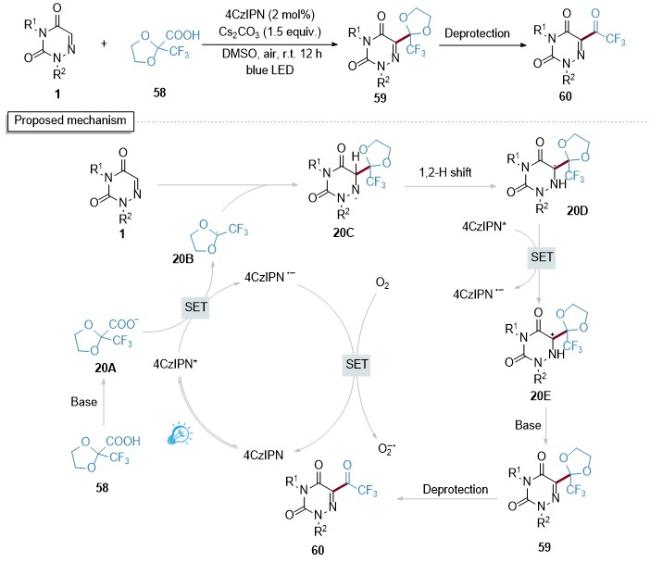
Trifluoromethyl ketones represent an important class of fluorinated compounds, widely found in various biologically active molecules.[43] In 2025, Yuʼs group[44] developed a novel method for the trifluoroacetylation of 6-azauracils using oxygen as the green oxidant and a masked trifluoroacetylation reagent as the trifluoroacetyl radical precursor. This strategy requires no transition metals, ligands, or other additives, and demonstrates excellent substrate generality, good scalability, and broad functional group tolerance. Based on mechanistic investigations and supporting literature, a plausible reaction mechanism was proposed: Upon visible-light irradiation, 4CzIPN is photoexcited to the excited state 4CzIPN*. Substrate 58 undergoes deprotonation to form the anionic species 20A. The species 20A then engages in a SET process with excited-state 4CzIPN*, generating the radical intermediate 20B, while 4CzIPN* is reduced to the radical anion 4CzIPN•⁻. Subsequently, radical intermediate 20B reacts with substrate 1 to form radical intermediate 20C, which undergoes an intramolecular 1,2- hydrogen shift to afford intermediate 20D. Intermediate 20D is then oxidized by 4CzIPN* to generate intermediate 20E, which finally undergoes deprotonation to yield product 59. Concurrently, the radical anion 4CzIPN•⁻ is reoxidized by atmospheric oxygen to 4CzIPN, closing the photocatalytic cycle. The resulting product 59 can be further deprotected to give the final trifluoroacetylated product 60 (Scheme 20).
2.4 Silylation of 6-azauracil
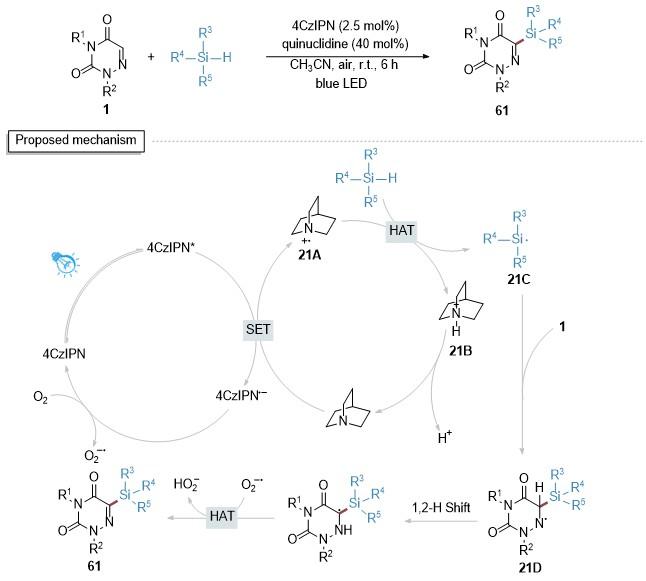
Silicon, belonging to the same group as carbon, is incorporated into organic molecules to modulate their properties and create novel compounds. This strategy is frequently crucial in pharmaceutical chemistry for drug candidate optimization.[45] Given the significance of organosilicon and 6-azauracils, developing an efficient and gentle method for synthesizing 6-azauracil silicide holds considerable synthetic value. In 2024, Liʼs group[46] reported a visible-light-mediated C—H silylation of 6-azauracils. This method employs 4CzIPN as a photocatalyst, quinuclidine as a hydrogen atom transfer (HAT) reagent, and silanes as silicon radical precursors. The research group proposed a potential mechanism based on mechanistic inquiry experiments and literature precedents. Initially, the blue LED irradiates the photocatalyst 4CzIPN, generating the excited state 4CzIPN*, which is quenched by quinine to produce a quinine radical cationic intermediate 21A and 4CzIPN•⁻. Subsequently, 4CzIPN•⁻ is oxidized with O2 as the oxidizing agent to regenerate the ground state 4CzIPN. Concurrently, the quinine radical cationic intermediate 21A captures a hydrogen atom from silane to form intermediate 21B, and the silicon radical 21C, which adds to substrate 1 to form the radical intermediate 21D. The intermediate 21D undergoes a 1,2-hydrogen shift followed by deatomization and aromatization to yield the target product 61 (Scheme 21).
2.5 Trifluoromethylation of 6-azauracil
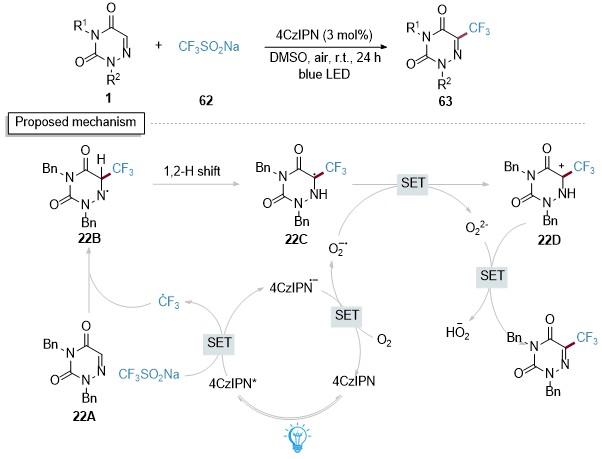
Fluorination modification of organic molecules can significantly improve their physicochemical properties.[47] The trifluoromethyl group, as an important fluorine-containing moiety, plays a crucial role in pharmaceuticals, agrochemicals, and material science due to its strong electron-withdrawing nature, ability to markedly enhance metabolic stability, and high lipophilicity.[48] 6-Azauracil represents an important class of heterocyclic compounds, widely found in natural products and drug molecules, and exhibits significant biological relevance.[49] Given the importance of both entities, introducing the trifluoromethyl group into 6-azauracils is of substantial significance. In 2025, Hajraʼs group[50] developed a metal-free, visible- light-mediated photoredox trifluoromethylation of 6-azauracils. This system employs 4CzIPN as the photocatalyst and O2 as the green terminal oxidant, aligning with green chemistry principles. Based on prior work and control experiments, the following feasible mechanism was proposed: Under blue light irradiation, the photocatalyst 4CzIPN is excited to its singlet excited state 4CzIPN*. Subsequently, 4CzIPN* undergoes SET process, generat-ing the 4CzIPN•⁻. Concurrently, CF3SO2Na is oxidized, yielding •CF3. The •CF3 radical adds to 22A to form a nitrogen-centered radical intermediate 22B. The intermediate 22B then undergoes a 1,2-hydrogen shift to convert into intermediate 22C. Subsequently, this intermediate 22C is oxidized by the superoxide radical anion ($\mathrm{O}_{2}^{-\cdot}$) to afford intermediate 22D. Finally, this carbocation intermediate 22D undergoes deprotonation to furnish the target product (Scheme 22).


3 Conclusions
6-Azauracil is an organic compound with broad application potential. The introduction of functional groups into its molecular structure effectively modulates its chemical properties and reactivity, rendering it highly valuable in drug synthesis, materials science, and biochemistry. This review focuses on summarizing recent research advances in the functionalization of 6-azauracils using radical reactions under photocatalysis, electrocatalysis and other strategies. Methods enabling alkylation, arylation, acylation, silylation, and trifluoromethylation, primarily through the construction of C—C and C—Si bonds, are now well-estab- lished. Although acylation and silylation reactions have also been developed, research in these areas remains relatively limited.
Given the significant application value of phosphorus- and boron-containing compounds, the construction of C—P and C—B bonds to achieve phosphorus- or boron-func-tionalized 6-azauracil derivatives represents a highly promising research direction. While significant progress has expanded the scope of 6-azauracil functionalizations, the full application potential of its derivatives across various scientific fields merits further exploration. Future research should focus on leveraging emerging catalytic strategies, such as advancing photocatalysis, electrocatalysis, or their synergistic combination, to develop more efficient and novel functionalization pathways. Crucially, systematic evaluation of the performance of the functionalized products in diverse application scenarios is essential.
(Lu, Y.)