


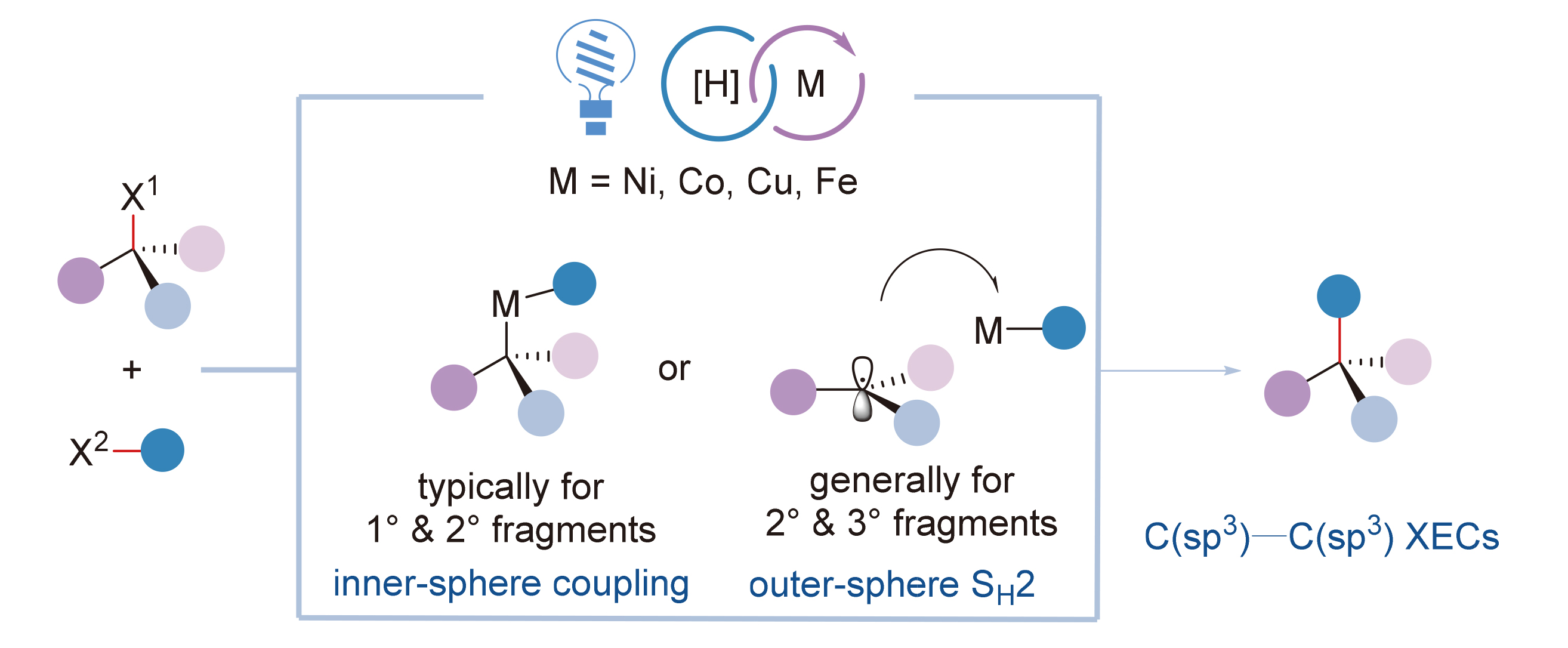
The construction of C—C bonds represents a central objective in synthetic organic chemistry, with the formation of C(sp3)—C(sp3) bonds being particularly significant due to their prevalence in pharmaceutical molecules, natural products, and biologically active compounds.[1] Cross-electrophile coupling (XEC) offers a straightforward and atom-economical synthetic strategy that enables direct C—C bond formation from two electrophilic partners via a reductive process, thereby circumventing the need for preparation and handling of often sensitive organometallic reagents.[2] Conventional XEC reactions typically employ stoichiometric quantities of metal reductants, such as manganese (Mn) or zinc (Zn) powder, to regenerate the active catalyst. In these transformations, a single transition metal catalyst, most commonly nickel, undergoes redox cycling between distinct oxidation states to sequentially activate two different (pseudo)halide electrophiles.[3] While significant progress has been achieved in XEC methodology through systematic optimization of metal catalyst properties, the development of efficient C(sp3)—C(sp3) XEC variants remains a formidable challenge.[4] These reactions are particularly prone to homocoupling side products, as orchestrating the multiple catalytic roles required to distinguish between two structurally similar C(sp3)-electrophiles is inherently challenging.[5] This synthetic limitation underscores the urgent need for innovative mechanistic strategies to overcome these fundamental obstacles.
In recent years, the integration of photoredox catalysis with transition metal catalysis has emerged as a highly effective solution to these challenges.[6] This dual catalytic approach leverages homogeneous organic reductants to facilitate turnover of low-valent metal species and/or decouples the activation of two C(sp3)-electrophiles into separate catalytic cycles governed by photoredox and transition metal catalysis, respectively, thereby greatly simplifying the execution of C(sp3)—C(sp3) XECs.[7] Specifically, photoredox catalysis enables efficient activation of typically inert C(sp3) electrophiles through mild single-electron transfer (SET) processes, generating highly reactive radical intermediates while simultaneously modulating the oxidation state of the metal catalyst.[8] Concurrently, transition metals (including nickel, cobalt, copper, and iron) mediate subsequent radical cross-coupling through either inner-sphere or outer-sphere mechanisms. As a result, cooperative metal and photoredox-catalyzed C(sp3)—C(sp3) XECs have emerged as a powerful and increasingly versatile platform for constructing C(sp3)-rich molecular architectures.
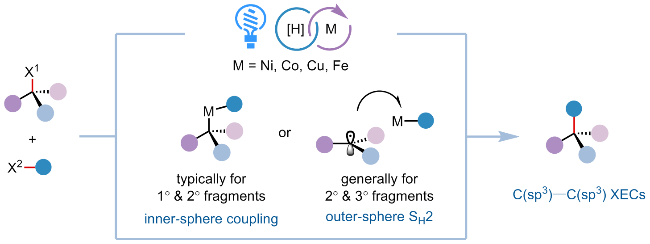
This review systematically summarizes recent advances in metal/photoredox-catalyzed C(sp3)—C(sp3) XECs, with particular emphasis on reaction design principles, mechanistic insights, outstanding challenges, and future opportunities. We aim to provide comprehensive understanding of the current state of this field and to delineate promising directions for future research in earth-abundant base metal-catalyzed C(sp3)—C(sp3) XEC reactions. While the broader field of C(sp3)—C(sp3) cross-coupling encompasses thermal,[9] electrochemical,[10] and photochemical approaches,[7d] including redox-neutral,[11] reductive, and oxidative manifolds,[12] this contribution focuses exclusively on reductive XEC methodologies that rely on the combined action of a photocatalyst and a base metal catalyst (Ni, Co, Cu, Fe)(Figure 1). Noble-metal-based systems, such as palladium catalysis, fall outside the scope of this discussion.[13]
2 Ni/photoredox-catalyzed C(sp3)—C(sp3) XECs
In 2018, MacMillan and coworkers reported a seminal contribution to metal/photoredox-catalyzed XEC, establishing a robust platform for the construction of C(sp3)—C(sp3) bonds from two aliphatic halide partners (Scheme 1).[14] The key synthetic achievement lies in the use of tris(trimethylsilyl)silanol as a halogen abstraction reagent, which circumvents the undesired reductive dehalo- genation pathway commonly observed with silane-based reagents. A diverse array of pharmaceutically relevant aliphatic bromides, including substituted piperidines, tetrahydropyrans, pyrrolidines, and strained ring systems such as cyclobutanes and azetidines, were successfully methylated using methyl tosylate under mild, visible-light-mediated conditions. Notably, the protocol was extended to the coupling of secondary aliphatic centers—a long-standing cha- llenge in organic synthesis—by employing a tridentate PyBOX-ligated nickel catalyst to suppress undesired alkyl isomerization. The method also demonstrated remarkable functional group tolerance and chemoselectivity, enabling iterative cross-coupling sequences that combine aryl-alkyl and alkyl-alkyl bond formations in a modular fashion.
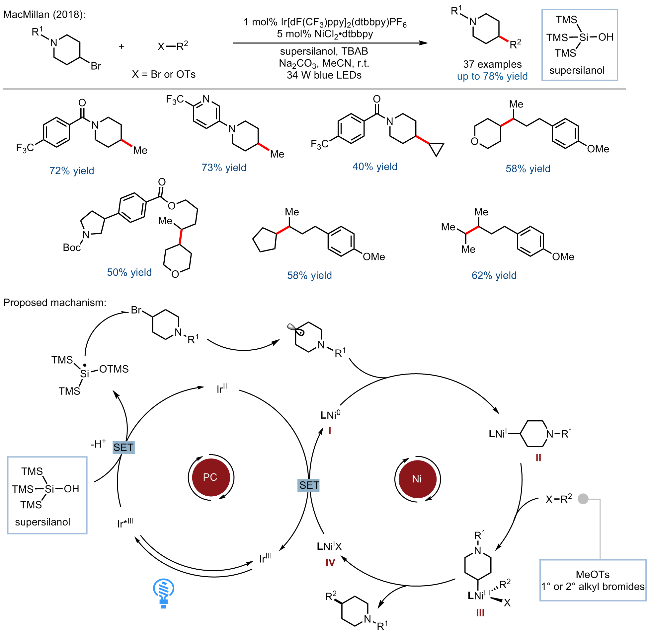
Mechanistically, the transformation proceeds through a dual photoredox and nickel catalytic cycle. Visible-light excitation of the iridium photocatalyst generates a long- lived excited state capable of oxidizing the silanolate derived from supersilanol, leading to the formation of a silyl radical after bond isomerization. This silyl radical facilitates halogen atom abstraction (XAT) from the aliphatic bromide to generate a key alkyl radical intermediate. Concurrently, single-electron reduction of a nickel(II) precatalyst by the reduced iridium species affords a nickel(0) complex, which intercepts the alkyl radical to form an alkylnickel(I) species. Oxidative addition into the second alkyl electrophile (e.g., methyl bromide generated in situ from methyl tosylate) yields a nickel(III) dialkyl intermediate, which undergoes rapid reductive elimination to forge the desired C(sp3)—C(sp3) bond. The catalytic cycles are closed by a final single-electron transfer between the resulting nickel(I) species and the reduced iridium catalyst, regenerating both the nickel(0) and iridium(III) active species. This radical-relay mechanism bypasses the challenges associated with direct oxidative addition of hindered alkyl electrophiles to low-valent metals, offering a conceptually distinct and synthetically versatile approach to aliphatic C—C bond formation.
In 2020, Martin and coworkers[15] reported a distinct dual catalytic platform for forging C(sp2)—C(sp3) and C(sp3)—C(sp3) bonds via β-scission of aliphatic alcohol derivatives (Scheme 2). Unlike conventional strategies that rely on prefunctionalized sp3 electrophiles or nucleophiles, this approach harnesses naturally abundant aliphatic alcohols as adaptive sp3 handles through the intermediacy of N-phthalimide ethers. The key synthetic achievement lies in the use of a photoredox/nickel dual catalytic system to enable both arylation and alkylation events following β-C—C bond cleavage. A wide array of primary, secondary, and tertiary alcohol derivatives are successfully coupled with aryl bromides under mild conditions, delivering the corresponding sp3-arylated products with excellent functional group tolerance. Notably, the protocol was extended to the challenging C(sp3)—C(sp3) coupling with unactivated alkyl halides by switching to a tridentate pyridine ligand, highlighting the critical role of ligand denticity in modulating reactivity. The method also demonstrated remarkable utility in the ring-opening arylation of cyclic alcohols, the late-stage functionalization of complex molecules, and the modification of saccharide derivatives with high diastereoselectivity.
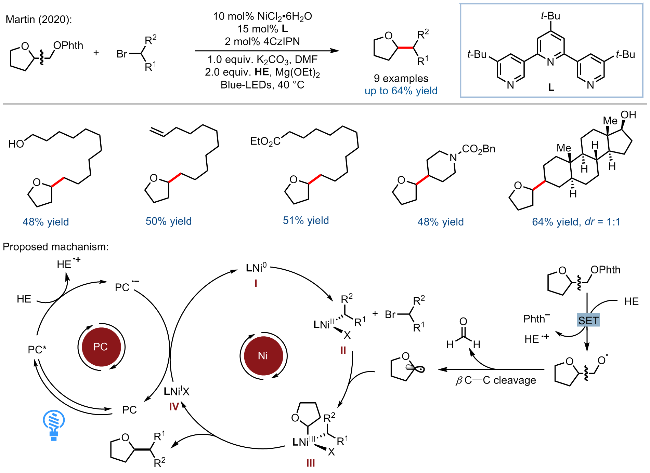
The transformation proceeds through a synergistic photoredox and nickel catalytic manifold. A key feature is the formation of an electron donor-acceptor (EDA) complex between the N-phthalimide ether substrate and Hantzsch ester, which upon visible-light irradiation undergoes single-electron transfer to generate an alkoxyl radical intermediate. Subsequent β-scission of this alkoxyl radical results in the formation of a carbon-centered radical and a carbonyl byproduct. Concurrently, oxidative addition of the aryl or alkyl halide to a nickel(0) species generates the corresponding organonickel(II) intermediate. The alkyl radical is then intercepted by this nickel(II) species, and reductive elimination delivers the desired C—C coupled product while regenerating a nickel(I) species. A final single-electron transfer from the reduced photocatalyst—ob- tained by reductive quenching of 4-CzIPN with Hantzsch ester—returns the nickel(I) species to the catalytically active nickel(0) state. This dual catalytic cycle elegantly circumvents the need for preformed organometallic reagents and leverages the inherent reactivity of aliphatic alcohols as versatile sp3 building blocks, establishing a complementary and broadly applicable strategy to existing XEC methodologies.
In 2021, Koh and coworkers introduced an innovative photoinduced nickel-catalyzed deaminative XEC that enables both C(sp2)—C(sp3) and C(sp3)—C(sp3) bond formation under mild, base-free conditions (Scheme 3).[16] The key synthetic advance lies in the use of air- and moisture- stable N-alkylpyridinium salts (Katritzky salts), readily accessible from abundant primary amines, as alkyl radical precursors. These substrates form EDA complexes with Hantzsch ester, which upon visible-light irradiation undergo single-electron transfer and fragmentation to generate alkyl radicals without the need for external photocatalysts or stoichiometric metallic reductants. Notably, the system achieves orthogonal site-selective cross-coupling in substrates bearing multiple halides, enabling iterative functionalization that is difficult to realize under conventional reductive conditions. The extension to deaminative alkylation with unactivated alkyl iodides was accomplished using a tridentate ligand to suppress homocoupling and optimize efficiency.
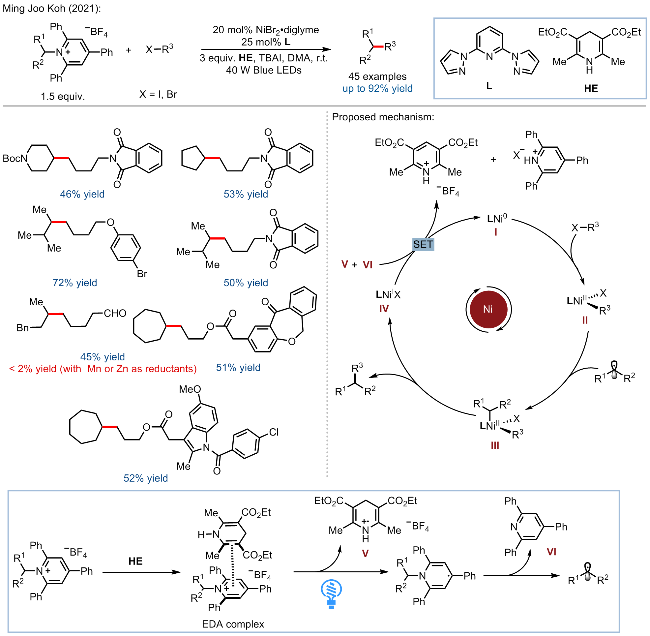
A dual activation manifold operates wherein photoexcitation of the EDA complex between the pyridinium salt and Hantzsch ester initiates the formation of an alkyl radical. Concurrently, oxidative addition of the organohalide to a nickel(0) species generates an organonickel(II) intermediate. The alkyl radical is intercepted by this nickel(II) species, and subsequent reductive elimination delivers the cross-coupled product while regenerating a nickel(I) species, which is reduced back to nickel(0) by the radical cation derived from Hantzsch ester. Mechanistic experiments, including radical trapping with 2,2,6,6-tetramethylpi-peridin-1-oxyl (TEMPO) and complete erosion of stereochemistry from an enantioenriched pyridinium salt, support the involvement of free alkyl radical intermediates. The ability to selectively activate either the pyridinium salt or the organohalide by tuning the nickel ligand environment provides a distinctive platform for chemoselective cross- coupling.
In 2023, Koh, Wang, and coworkers further advanced the XEC paradigm by developing a photoinduced nickel-catalyzed strategy for the stereoselective synthesis of C- alkyl glycosides and glycopeptides (Scheme 4).[17] The key synthetic achievement lies in the coupling of glycosyl halides with redox-active electrophiles derived from abundant aliphatic carboxylic acids (NHPI esters) and primary amines (pyridinium salts) under mild, visible-light-media- ted conditions. The protocol delivers a diverse array of C- alkyl glycosides with high diastereoselectivity, accommodating primary and secondary alkyl fragments bearing terminal alkynes, esters, phthalimides, and heterocyclic motifs. Notably, the method enables late-stage glycosylation of complex peptides by selectively capping native CO2H and NH2 groups on the C-terminus, N-terminus, or side chains of amino acids and oligopeptides, affording glycopeptide conjugates that would be challenging to access via conventional organometallic coupling approaches. The transformation proceeds under ambient temperature with blue LED irradiation, circumventing the need for preformed organometallic reagents or stoichiometric metal reductants.
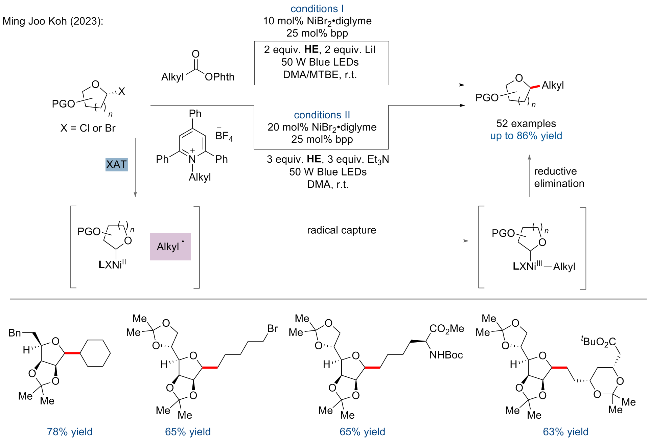
The reaction operates through a dual activation manifold wherein the redox-active electrophile (NHPI ester or pyridinium salt) forms a ternary EDA complex with Hantzsch ester and either LiI or Et3N, as evidenced by UV/Vis absorption spectroscopy. Photoexcitation of this complex triggers single-electron transfer and subsequent decarboxylative or deaminative fragmentation to generate an alkyl radical. Concurrently, a nickel(0) species engages the glycosyl halide via halogen atom abstraction to form a glycosyl radical, which recombines diastereoselectively with the nickel center to afford a glycosyl-nickel(II) intermediate. Capture of the alkyl radical by this organonickel species followed by reductive elimination delivers the C-alkyl glycoside product with retention of anomeric stereochemistry. Radical trapping experiments and radical clock studies corroborate the involvement of both alkyl and glycosyl radical intermediates. This synergistic photoinduced/nickel catalytic platform provides a modular and chemoselective entry to structurally diverse C-alkyl glycosides and glycopeptides, substantially expanding the toolbox for carbohydrate and glycoprotein synthesis.
In 2022, Maji and coworkers[18] reported a distinct application of photoredox/nickel dual catalysis for the intramolecular C(sp3)—C(sp3) XEC of unactivated 1,3-dialkyl electrophiles, enabling the efficient synthesis of mono-, 1,1-, and 1,2-disubstituted cyclopropanes under mild conditions (Scheme 5). The key synthetic achievement lies in overcoming the long-standing challenge of cyclopropane formation from primary alkyl electrophiles, which had proven elusive under previously reported reductive cyclization conditions. Through systematic optimization, the authors identified that in situ conversion of 1,3-dimesylates to the corresponding 1,3-dibromides in the presence of tetrabutylammonium bromide was critical for reactivity, allowing the use of triethanolamine as a sacrificial electron donor under blue LED irradiation with a nickel/4,4'-di-tert- butyl-2,2'-bipyridine catalyst system. Importantly, aryl halides remained intact under the reaction conditions, enabling orthogonal reactivity. The method was successfully extended to secondary alkyl electrophiles, delivering 1,2-di- substituted cyclopropanes with moderate diastereoselectivity, and demonstrated scalability to gram-scale synthesis as well as compatibility with complex molecular frameworks derived from borneol, cholesterol, and menthol.
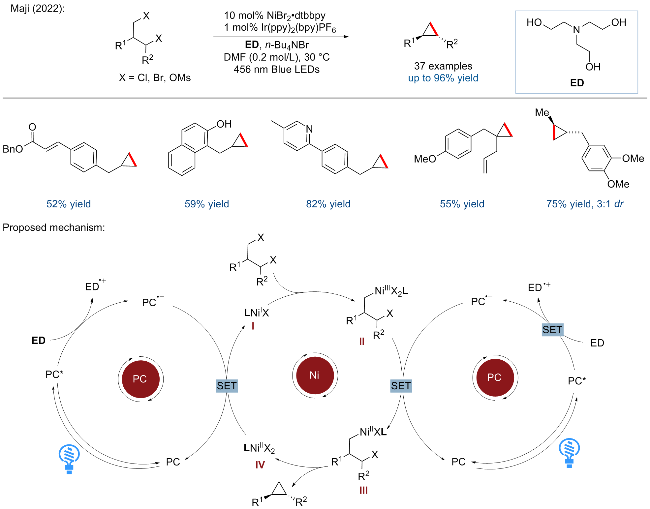
The reaction is proposed to proceed through a synergistic photoredox/nickel dual catalytic cycle. Stern-Volmer quen- ching experiments confirmed that triethanolamine acts as the terminal reductant, reductively quenching the photoexcited iridium photocatalyst to generate a strongly reducing Ir(II) species. Cyclic voltammetry studies revealed that this reduced photocatalyst is capable of reducing the nickel(II) precatalyst to a nickel(I) species, which undergoes oxidative addition with the 1,3-dibromide substrate. The observed increase in reductive current upon substrate addition and the disappearance of the return peak for the Ni(II)/Ni(I) couple support a Ni(I)-mediated oxidative addition path-way. Radical trapping experiments with TEMPO resulted in diminished product yield and detection of a TEMPO adduct, suggesting the involvement of alkyl radical intermediates. However, a radical clock substrate bearing a cyclopropylmethyl group led exclusively to ring-opened products, indicating the formation of a very short-lived radical species. In contrast, a substrate containing a pendant alkene underwent 5-exo-trig cyclization to form a cyclopentane ring rather than the cyclopropane, implying that the final ring- closure step proceeds via an intramolecular nucleophilic displacement (SN2-like) from a 3-bromoalkylnickel(II) intermediate rather than a radical cyclization pathway.
In 2022, Oestreich and coworkers[19] reported a distinctive photochemical, nickel-catalyzed C(sp3)—C(sp3) XEC between α-silylated alkyl bromides and an allylic sulfone (Scheme 6). Unlike conventional XEC protocols that rely on stoichiometric metal reductants, this method employs a Hantzsch ester as the terminal reductant and operates without an exogenous photocatalyst—irradiation with a 40 W blue LED alone suffices to drive the catalytic turnover. The key synthetic achievement lies in the strategic use of the α-silyl group, which stabilizes the intermediate carbon-centered radical and suppresses undesired alkyl isomerization pathways that often plague secondary alkyl electrophiles. The protocol exhibits broad substrate scope and excellent functional group tolerance, accommodating various primary and secondary alkyl bromides and sterically hindered silyl substituents, as well as complex molecular frameworks. The allylic sulfone coupling partner proved optimal, with carbonate serving as a viable alternative, while halide and acetate leaving groups were less effective.
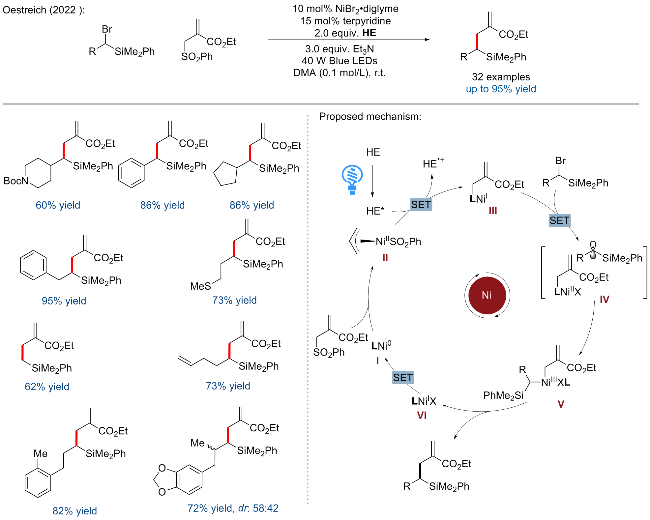
The reaction is proposed to proceed through a photoinduced electron transfer pathway wherein the Hantzsch ester serves as both the photoreductant and the stoichiometric reducing agent. Upon blue LED irradiation, the Hantzsch ester undergoes photoexcitation and delivers a single electron to generate a low-valent nickel species, which then engages the α-silylated alkyl bromide via oxidative addition. The stabilizing α-silicon effect is critical for the success of the transformation; control experiments demonstrated that the non-silylated secondary alkyl bromide led to a mixture of regioisomeric products due to β-hydride elimination and migratory insertion, whereas the silylated counterpart delivered a single regioisomer in good yield. The allylic sulfone likely undergoes oxidative addition to the nickel center, followed by reductive elimination to forge the C(sp3)—C(sp3) bond. Fluorescence titration studies suggested no ground-state interaction between the Hantzsch ester and the substrates, consistent with a photoinduced electron transfer mechanism rather than an EDA complex pathway.
In 2023, Xu and coworkers[20] reported a landmark achievement in enantioselective C(sp3)—C(sp3) XEC by developing a dual nickel/photoredox-catalyzed cross-coup- ling of unactivated alkyl iodides with racemic α-chloro- boronates (Scheme 7). This protocol delivers chiral secondary alkyl boronic esters bearing α,α-dialkyl stereocenters with high enantioselectivities (up to 97% ee) under mild reaction conditions, addressing an important challenge in asymmetric cross-coupling. The key synthetic achievement lies in the direct coupling of two different alkyl halides without the need for preformed organometallic reagents, enabling rapid construction of enantioenriched boron- containing building blocks that serve as versatile intermediates for downstream transformations. The method exhibits exceptional functional group tolerance, accommodating ethers, aryl halides, nitriles, sulfonamides, esters, ketones, amides, and various heterocyclic and steroid-derived frameworks. Notably, the reaction operates with only 1.5 equiv. of the alkyl iodide partner, overcoming the typical requirement for a large excess of one electrophile to suppress homocoupling.
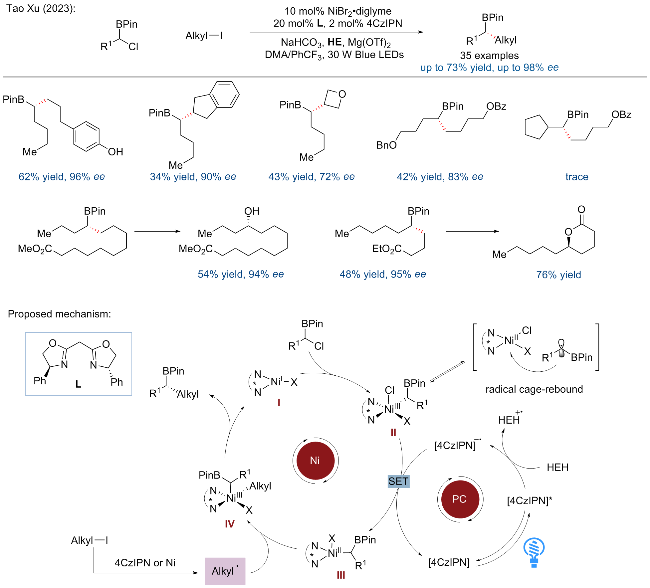
The reaction is proposed to proceed through a synergistic dual catalytic cycle wherein the photoredox catalyst (4Cz- IPN) is reduced by the Hantzsch ester-derived electron donor to generate a strongly reducing species, which facilitates the reduction of the nickel(II) precatalyst to a nickel(I) active species. Mechanistic studies, including radical trapping with TEMPO and radical clock experiments with cyclopropylmethyl-substrates, confirmed the generation of alkyl radicals from both coupling partners. Distinct radical pathways were identified for each electrophile: the alkyl iodide undergoes out-of-cage radical formation via single-electron reduction, while the α-chloroboronate engages in a cage-rebound radical mechanism through oxidative addition to the nickel(I) species, as evidenced by differential cyclization behavior in radical clock experiments. Cyclic voltammetry and luminescence quenching studies estab- lished that the Hantzsch ester is primarily responsible for reductive quenching of the photoexcited photocatalyst, while the α-chloroboronate is not reduced by the photocatalyst alone due to its strongly negative reduction potential (-2.8 V vs SCE). The use of Mg(OTf)2 as an additive proved crucial for promoting the reduction of nickel species and suppressing reductive dehaloprotonation side reactions. This work establishes the first example of metal/photo- redox-catalyzed enantioselective C(sp3)—C(sp3) cross- coupling, providing a powerful platform for the stereocontrolled synthesis of chiral organoboron compounds and demonstrating the unique capabilities of metal/photoredox catalysis in addressing previously intractable asymmetric transformations.
3 Co/photoredox-catalyzed C(sp3)—C(sp3) XECs
In addition to nickel-based systems, in 2023, Maji and coworkers demonstrated that cobalt can serve as an effective transition metal catalyst in metal/photoredox-catalyzed C(sp3)—C(sp3) reductive coupling, reporting the first asy- mmetric alkene-alkene reductive cross-coupling via visible-light-driven photoredox/cobalt dual catalysis (Scheme 8).[21] This protocol enables the desymmetrization of meso-heterobicyclic alkenes (oxa- and azabenzonorbornadienes) with vinyl electrophiles such as vinyl ketones, acrylates, and vinyl sulfones, delivering highly functionalized products bearing up to five stereocenters in a single operation. The optimized conditions employ a chiral bisphosphine ligand with Co(OAc)2•4H2O as the cobalt precatalyst, an iridium photocatalyst, and triethylamine as the sacrificial electron donor under 440 nm blue LED irradiation. The protocol affords the desired products in up to 95% yield with exceptional stereocontrol, achieving >99∶1 diastereomeric ratio and up to 98∶2 enantiomeric ratio. The reaction accommodates a broad range of substrates, including variously substituted aryl groups on the bicyclic alkene, as well as alkyl, aryl, and heteroaryl vinyl ketones, and is scalable to 1 mmol. Synthetic utility is further demonstrated through derivatization to quinones and epoxides without erosion of stereochemical integrity.
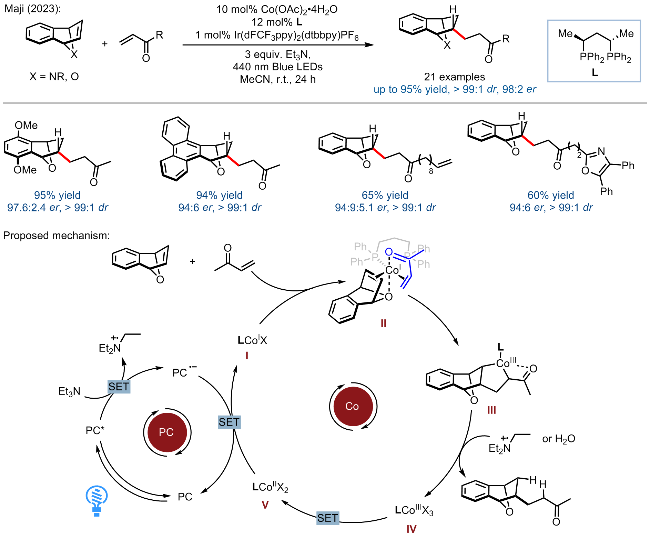
The reaction is proposed to proceed through a synergistic photoredox/cobalt dual catalytic cycle. Stern-Volmer quenching experiments confirmed that triethylamine acts as the terminal reductant, reductively quenching the photoexcited iridium photocatalyst to generate a strongly reducing Ir(II) species, which subsequently reduces the Co(II) precatalyst to a low-valent Co(I) active species. This Co(I) complex coordinates to both the heterobicyclic alkene and the vinyl electrophile, and oxidative cyclometalation forms a stereodefined cobaltacyclopentane intermediate, wherein the chiral ligand environment dictates the absolute stereochemistry. Double protolysis of this metallacycle, facilitated by water or the triethylammonium cation, delivers the cross-coupled product and a Co(III) species. A second photocatalytic reduction event regenerates the Co(II) catalyst, closing both catalytic cycles. Deuterium labeling experiments with D2O confirmed that protonation occurs from both water and the triethylammonium source rather than the solvent. This work establishes cobalt as a viable alternative to nickel in metal/photoredox-catalyzed asymmetric C(sp3)—C(sp3) cross-coupling, expanding the toolbox for constructing densely functionalized chiral architectures from simple π-components.
4 Cu/photoredox-catalyzed C(sp3)—C(sp3) XECs
In 2019, MacMillan and coworkers[22] extended the metal/photoredox-catalyzed XEC paradigm to copper catalysis, reporting a mild and broadly applicable protocol for the trifluoromethylation of alkyl bromides (Scheme 9). This work represents a significant innovation that overcomes the long-standing challenge of copper oxidative addition into unactivated aliphatic C—Br bonds by leveraging a radical-based mechanism. The key synthetic achievement lies in the use of tris(trimethylsilyl)silanol as a halogen abstraction reagent in conjunction with an iridium or organic photocatalyst (4CzIPN) and a copper(II) salt, enabling the efficient conversion of a diverse array of alkyl bromides to the corresponding trifluoromethylated products under blue LED irradiation. The protocol exhibits exceptional functional group tolerance, accommodating primary, secondary, and cyclic alkyl bromides bearing alcohols, esters, amides, and protected amines, as well as activated allylic and benzylic bromides. Notably, hetero- aromatic motifs such as pyridines, isoxazoles, oxadiazoles, pyrazoles, and imidazoles are well-tolerated, and the method is amenable to the late-stage trifluoromethylation of complex medicinal agents including celecoxib and ticagrelor derivatives, as well as the synthesis of a trifluoromethyl isostere of pregabalin.
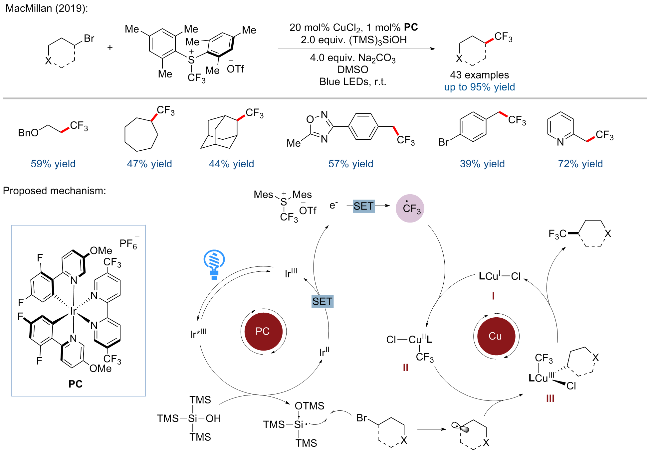
The reaction is proposed to proceed through a synergistic photoredox/copper dual catalytic cycle. Visible-light excitation of the photocatalyst generates a long-lived excited state that oxidizes the silanolate derived from supersilanol, leading to the formation of a silyl radical after deprotonation and radical Brook rearrangement. This silyl radical rapidly abstracts a bromine atom from the alkyl bromide to generate an alkyl radical, which is captured by a copper(I) species at near diffusion-controlled rates to form a copper(II) alkyl intermediate. Concurrently, single- electron reduction of the electrophilic trifluoromethylating reagent by the reduced photocatalyst generates a trifluoromethyl radical, which is rapidly trapped by a separate copper(I) species to afford a copper(II)—CF3 adduct. Combination of the alkyl radical with this copper(II)—CF3 species yields a critical alkyl-Cu(III)—CF3 intermediate, whi- ch undergoes rapid reductive elimination to deliver the desired trifluoromethylated product and regenerate the copper(I) catalyst. Radical clock experiments using cyclopropylmethyl bromides resulted in ring-opened products, providing direct evidence for the involvement of discrete alkyl radical intermediates and distinguishing this radical pathway from direct oxidative addition mechanisms. This work establishes copper as a competent metal in metal/ photoredox-catalyzed C(sp3)—C(sp3) cross-coupling, offering a complementary approach to nickel-based systems with particular utility for trifluoromethylation and other transformations involving electronegative coupling partners.
In 2025, MacMillan and coworkers[23] further advanced the copper/photoredox manifold by developing a unified platform for the modular synthesis of 3-substituted bicyclo[1.1.1]pentanes (BCPs), addressing a critical need for C(sp3)-rich bioisosteres in drug discovery (Scheme 10). The success lies in the use of a bench-stable NHPI ester-func-tionalized BCP as a universal linchpin, which undergoes decarboxylative radical generation under mild photoredox conditions, enabling both 3-alkylation and 3-arylation with abundant alkyl and (hetero)aryl bromides. The protocol operates under blue LED irradiation using 4CzIPN as the photocatalyst, a tert-butyl-methyl aminosilane as the XAT reagent, and copper(II) salts as the cross-coupling catalyst, entirely obviating the need for stoichiometric metal reductants, sensitive organometallic reagents, or the preparation of reactive [1.1.1]propellane. The method demonstrates exceptional functional group tolerance, accommodating a diverse range of primary, secondary, and tertiary alkyl bromides, including spirocyclic scaffolds, as well as electronically diverse aryl and heteroaryl bromides such as pyridines, quinoxalines, and triazoles. The utility of this approach is underscored by the late-stage functionalization of complex pharmaceuticals, enabling rapid access to previously underdeveloped quaternary 3-alkylated BCP bioisosteres of benzylic environments.
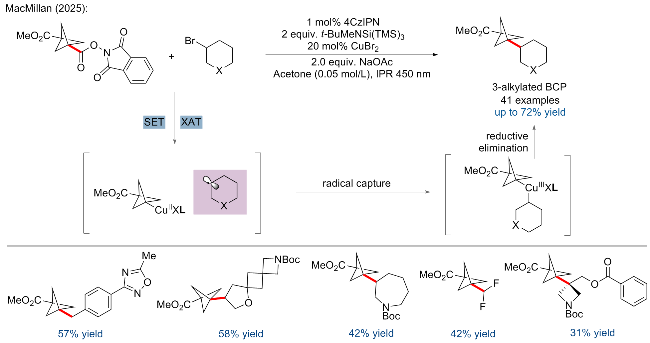
Mechanistically, the transformation proceeds through a synergistic photoredox/copper dual catalytic cycle. Visible- light excitation of 4CzIPN generates a long-lived excited state that is reductively quenched by the aminosilane reagent, affording a reduced photocatalyst and a silyl radical after aza-Brook rearrangement and migration. This silyl radical engages in a polarity-matched XAT with the alkyl bromide to generate an alkyl radical, while simultaneously, the reduced photocatalyst reduces the copper(II) precatalyst to copper(I). The alkyl radical is rapidly captured by a copper(I) species to form a copper(II) alkyl intermediate. In parallel, single-electron reduction of the NHPI-BCP ester by the reduced photocatalyst promotes decarboxylative fragmentation to generate a BCP radical, which is trapped by the copper(II) species to afford a copper(III)-BCP intermediate. This copper(III) species undergoes inner-sphere reductive elimination to forge the C(sp3)—C(sp3) or C(sp3)— C(sp2) bond, delivering the 3-substituted BCP product and regenerating the copper(I) catalyst. The careful tuning of silane structure and reaction parameters suppresses competing reductive protodehalogenation and homodimerization pathways, enabling efficient cross-coupling.
5 Fe/photoredox-catalyzed C(sp3)—C(sp3) XECs
In 2021, MacMillan and coworkers[24] reported a paradigm-shifting approach to C(sp3)—C(sp3) XEC by leveraging a biomimetic bimolecular homolytic substitution (SH2) mechanism, enabled by dual iron/photoredox catalysis (Scheme 11). This independent innovation addresses the long-standing challenge of constructing quaternary sp3- carbon centers—a structural motif of profound importance in medicinal chemistry yet notoriously difficult to access via traditional two-electron cross-coupling manifolds. The key synthetic achievement lies in the use of iron porphyrin [Fe(OEP)Cl] as the SH2 catalyst, which selectively partitions the bond-forming roles of primary and tertiary radicals generated in situ. Primary alkyl radicals derived from alkyl bromides via silyl radical-mediated XAT are rapidly captured by iron(II) to form a 1° alkyl-Fe(III) intermediate, while tertiary radicals generated from decarboxylation of redox-active esters (derived from abundant carboxylic acids) serve as the nucleophilic radical partners. This mechanistically orthogonal platform enables the highly selective formation of sterically congested C(sp3)—C(sp3) bonds under mild conditions using blue LED irradiation. The method exhibits broad substrate scope, accommodating a diverse array of tertiary and secondary redox-active esters, primary alkyl bromides bearing varied functional groups, and medicinally relevant heterocycles. Additionally, the protocol enables rapid access to spirocyclic frameworks via a formal decarboxylative cycloaddition strategy, de- monstrating its utility in constructing conformationally restricted, C(sp3)-rich scaffolds.
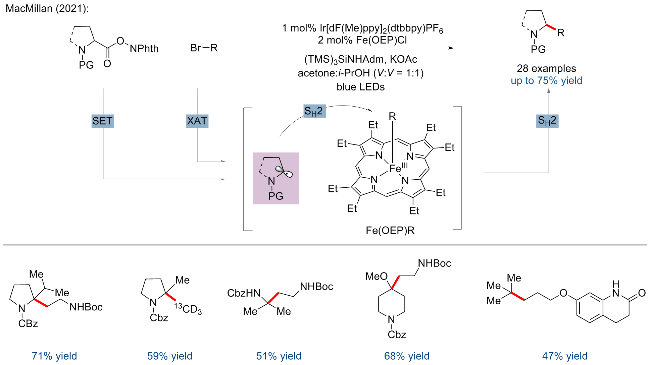
Mechanistically, the transformation proceeds through a synergistic photoredox/iron dual catalytic cycle wherein the reduced iridium photocatalyst, generated via reductive quenching by an aminosilane reagent, simultaneously promotes the reduction of the redox-active ester to form a tertiary radical and the reduction of iron(III) porphyrin to the active iron(II) catalyst. The key bond-forming step involves SH2 displacement of the primary alkyl fragment from the 1° alkyl-Fe(III) intermediate by the electron-rich tertiary radical, which is kinetically favored due to the high nucleophilicity of tertiary radicals and the weak Fe—C bond. Detailed mechanistic studies, including in situ photo- NMR observation of the n-butyl-Fe(OEP) intermediate, stoichiometric experiments with preformed alkyl-iron complexes, and diastereoselectivity experiments demonstrating 3.2∶1 diastereocontrol in the presence of iron versus 1∶1 diastereocontrol without iron, collectively support the proposed SH2 pathway and rule out competing free radical-radical coupling. Notably, the C—C bond- forming step does not require light, confirming that the iron catalyst, not photoirradiation, is responsible for the critical bond construction. This work establishes iron as a powerful and mechanistically distinct metal in metal/pho- toredox catalysis, providing a general and modular platform for the construction of quaternary sp3-carbons that complements nickel- and copper-based systems.
In 2024, MacMillan and coworkers[25] further advanced the iron/photoredox manifold by developing a XEC platform that forges all-carbon quaternary centers through the coupling of tertiary bromides and primary alkyl electrophiles, representing a significant extension of their biomimetic SH2 strategy (Scheme 12). The key synthetic achie- vement lies in the orthogonal activation of two distinct electrophiles: tertiary bromides undergo silyl radical- mediated XAT to generate tertiary radicals, while primary electrophiles—including bromides, mesylates, and tosylates are activated via an SN2-type mechanism by a highly nucleophilic iron(I) porphyrin species generated through photoredox reduction. This dual activation paradigm obviates the need to generate primary radicals, thereby expanding the scope of accessible primary coupling partners to include abundant alcohol-derived sulfonates that would be incompatible with traditional radical-generation methods. The protocol exhibits broad functional group tolerance, accommodating indazoles, pyridines, protected amino acids, adenine, and pharmaceutically relevant heterocycles such as the quinolone core of aripiprazole, the triazole fragment of suvorexant, and the benzophenone moiety of isoxepac. The reaction is scalable to gram quantities and operates under concentrated, homogeneous conditions, offering practical advantages for preparative synthesis.
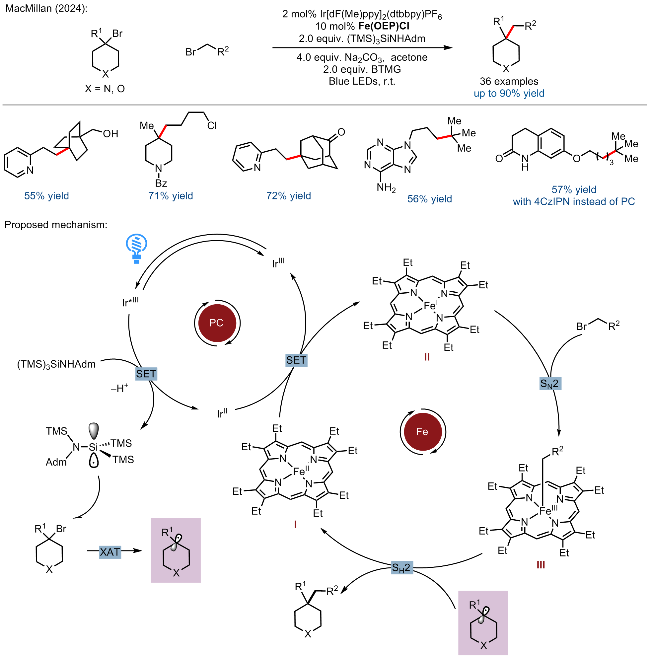


Mechanistically, the transformation proceeds through a synergistic photoredox/iron dual catalytic cycle wherein the reduced iridium photocatalyst, generated via reductive quenching by an aminosilane, performs two critical functions: single-electron reduction of the iron(III) porphyrin precatalyst to generate the nucleophilic iron(I) species, and promotion of the aza-Brook rearrangement of the aminosilane to furnish a silyl radical that selectively abstracts bromine from the tertiary bromide over the primary electrophile. Competition experiments confirmed that XAT occurs preferentially at tertiary bromides, while independent stoichiometric studies demonstrated that the iron(I) species engages primary mesylates via an SN2 pathway to form the key primary alkyl-Fe(III) intermediate. Photo- NMR experiments revealed the presence of both iron(I) and primary alkyl-iron(III) species in situ, corroborating the proposed activation sequence. The resultant primary alkyl-Fe(III) complex then undergoes bimolecular homo- lytic substitution (SH2) with the tertiary radical to forge the quaternary C(sp3)—C(sp3) bond and regenerate the iron(II) catalyst. This work establishes a distinct mechanistic paradigm within XEC-one that leverages SN2 activation for primary electrophiles and radical-based activation for tertiary partners—providing a complementary approach to quaternary carbon construction that capitalizes on the unique reactivity profiles of iron porphyrin complexes.
6 Conclusions
The integration of photoredox and transition metal catalysis has enabled unprecedented control over challenging C(sp3)—C(sp3) XECs, providing versatile strategies for constructing complex, sp3-rich molecular architectures with broad functional group tolerance and increasing stereochemical sophistication. Despite these significant achieve- ments, several challenges remain that provide opportunities for future exploration. First, the scope of reductants employed in current reductive dual metal/photoredox coupling systems remains limited, predominantly relying on Hant- zsch esters and silanes. The development of more readily available, structurally tunable reductants tailored to diverse synthetic demands is highly desirable to enhance reaction efficiency and selectivity. Second, enantioselective C(sp3)—C(sp3) XEC transformations are still nascent, with only a few examples demonstrating asymmetric induction. Expanding the repertoire of chiral catalysts and ligands to enable broadly applicable, high-fidelity asymmetric cross- electrophile coupling represents a critical frontier. Third, while photoredox/nickel dual catalysis has dominated the field, the synergistic potential of other base metals such as cobalt, copper, and iron remains underexplored. Further investigations into these alternative metal systems could unlock new mechanistic paradigms and broaden the synthetic utility of metal/photoredox C(sp3)—C(sp3) XEC methodologies.
(Lu, Y.)