

化学学报 ›› 2026, Vol. 84 ›› Issue (1): 93-100.DOI: 10.6023/A25060234 上一篇 下一篇
研究论文
杜云哲b, 李曙懿b, 程思柳b, 贾慧劼b, 王政a,*( ), 韩利民b,c, 竺宁b,*()
投稿日期:2025-06-23
发布日期:2025-07-21
基金资助:
Yunzhe Dub, Shuyi Lib, Siliu Chengb, Huijie Jiab, Zheng Wanga,*(), Limin Hanb,c, Ning Zhub,*()
Received:2025-06-23
Published:2025-07-21
Contact:
* E-mail: sjtubt_wangzheng@163.com,zhuning@imut.edu.cn
Supported by:文章分享
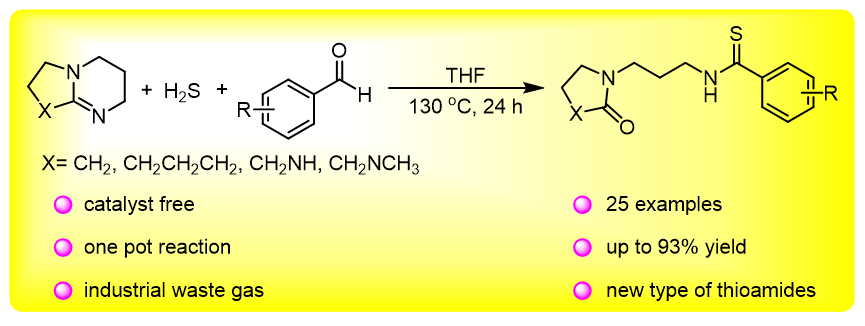
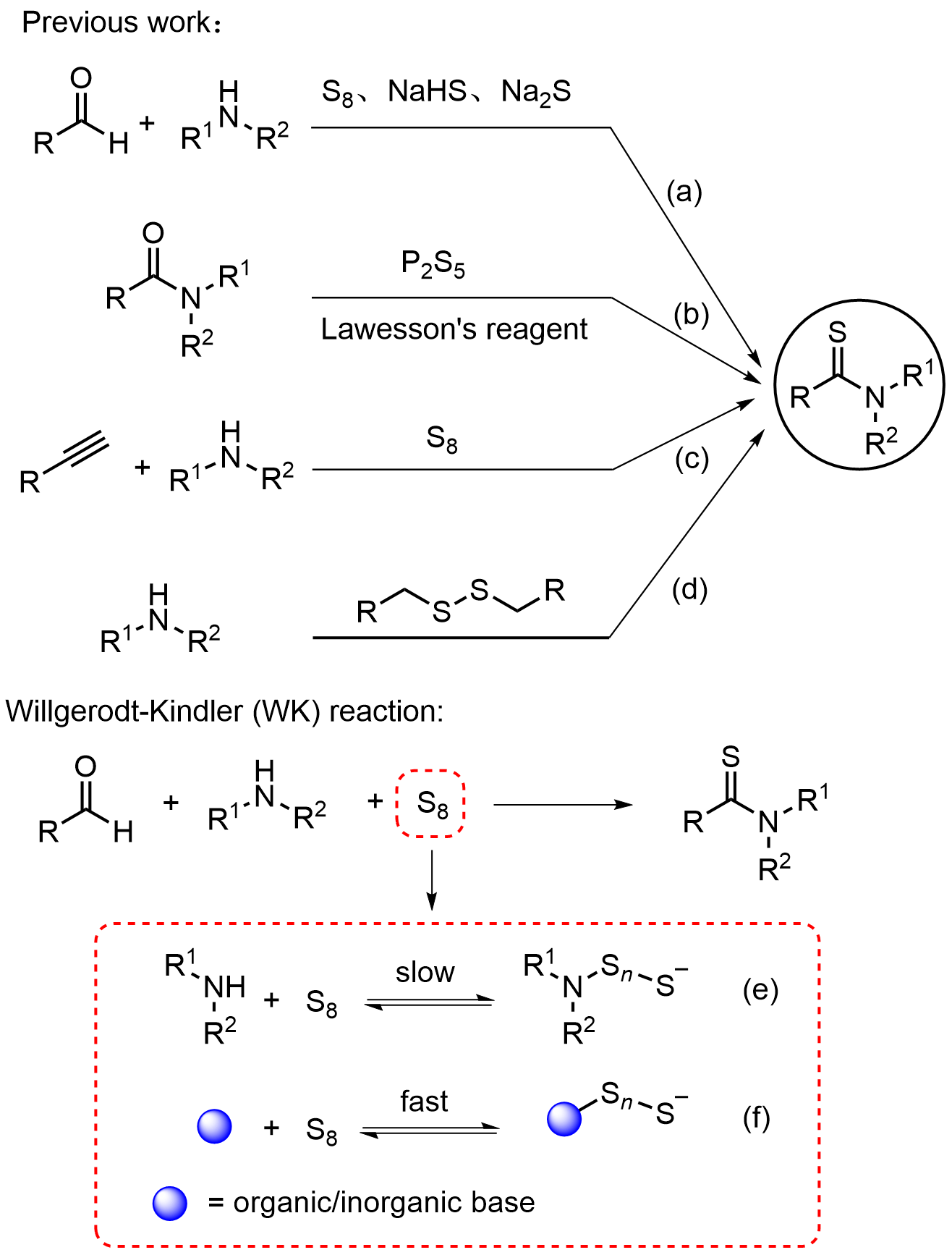
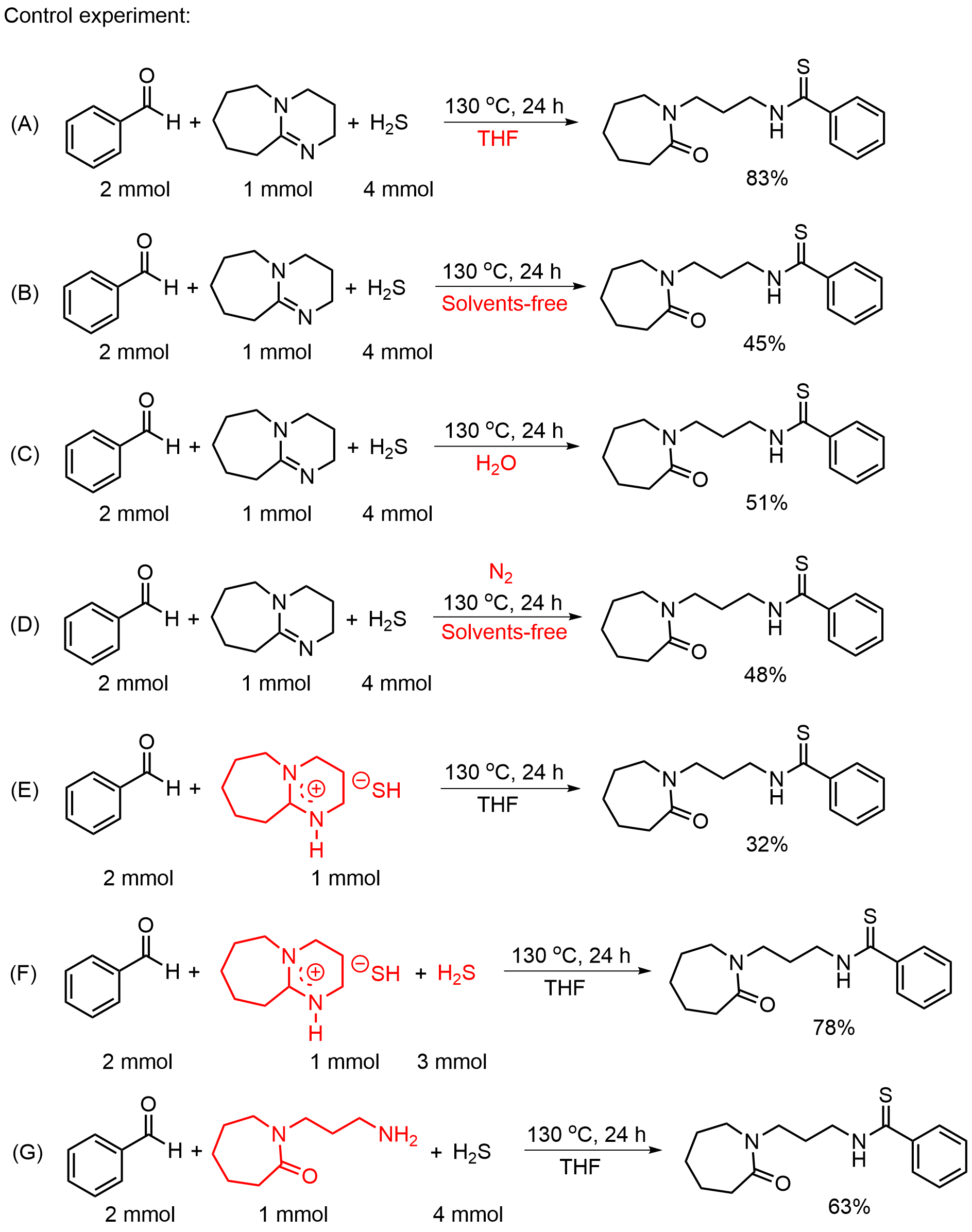
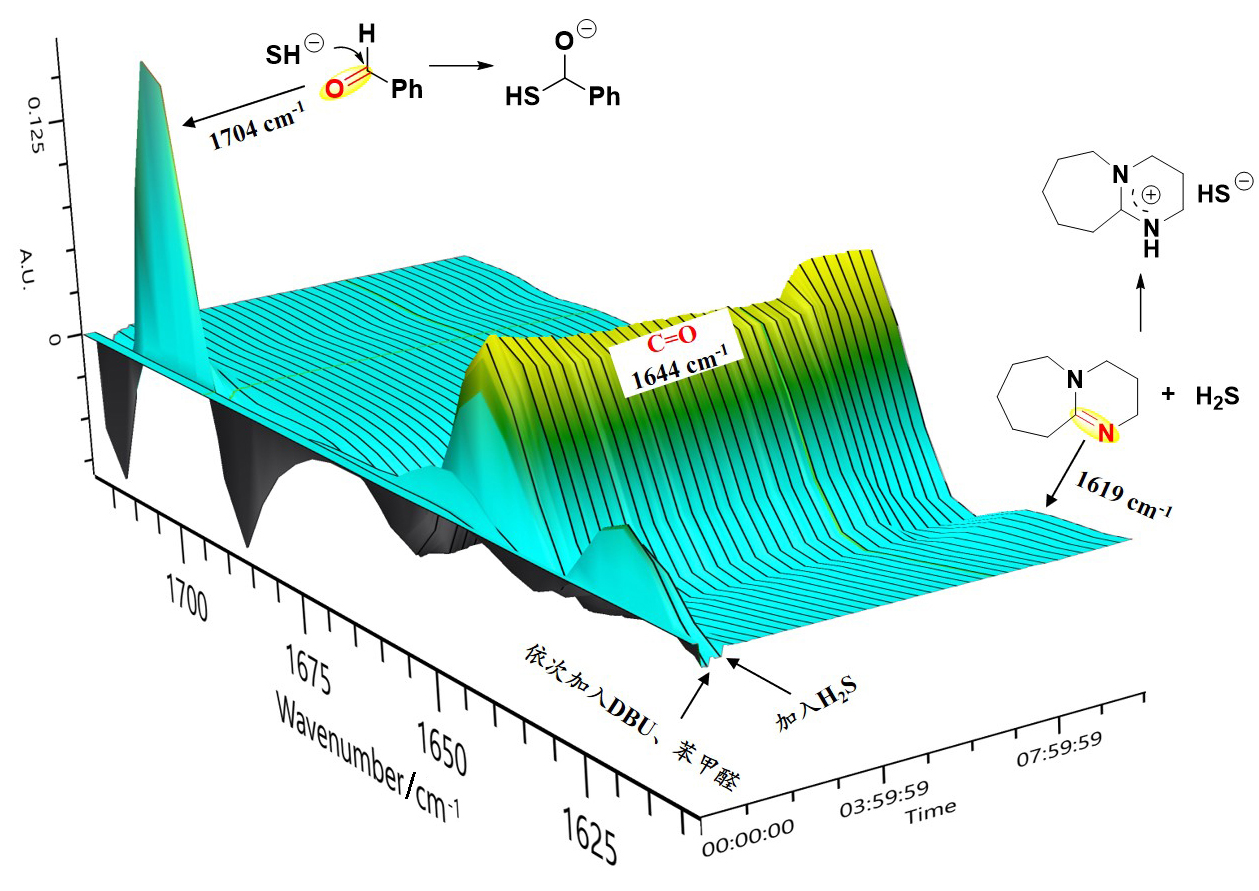
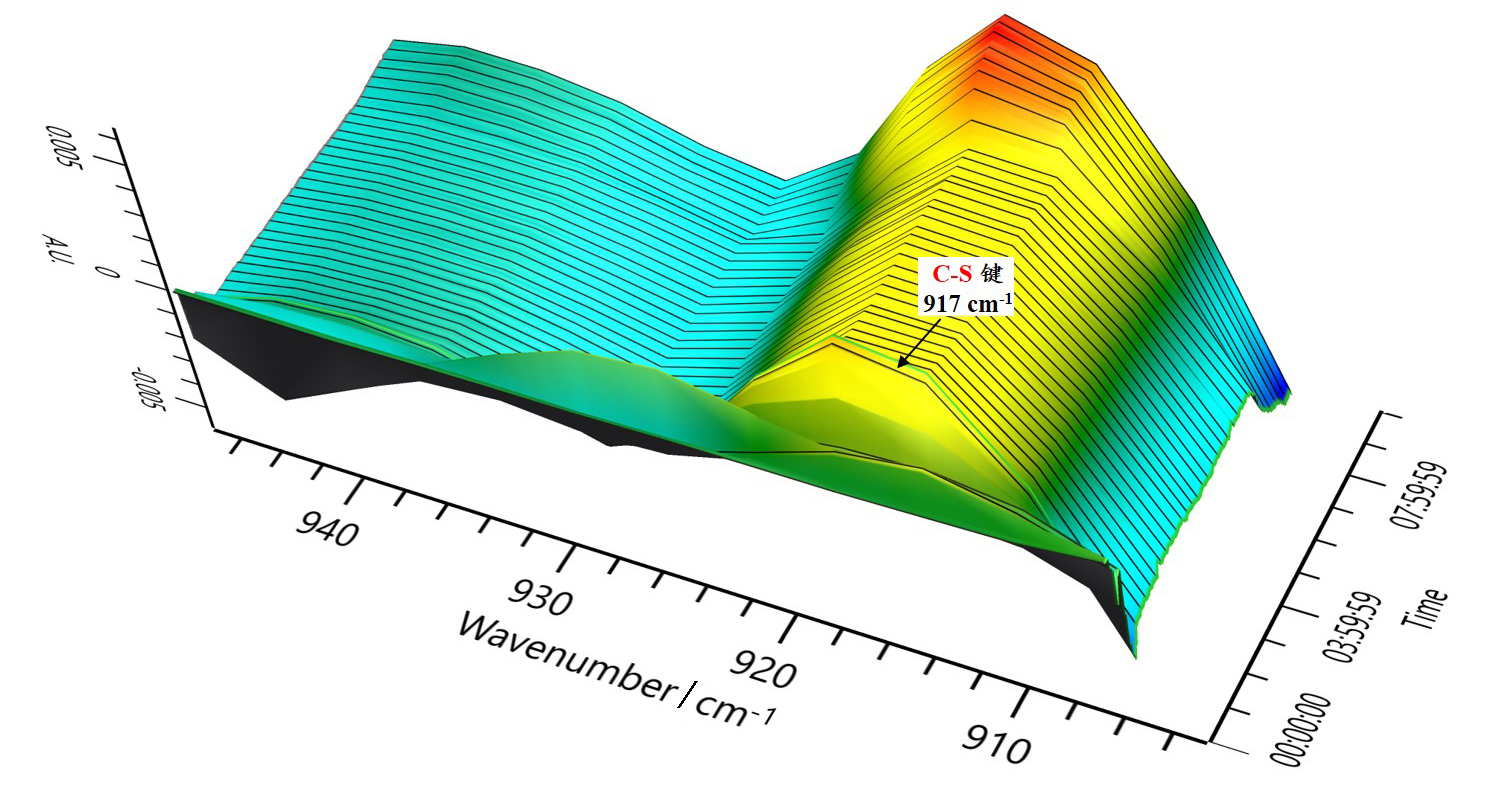
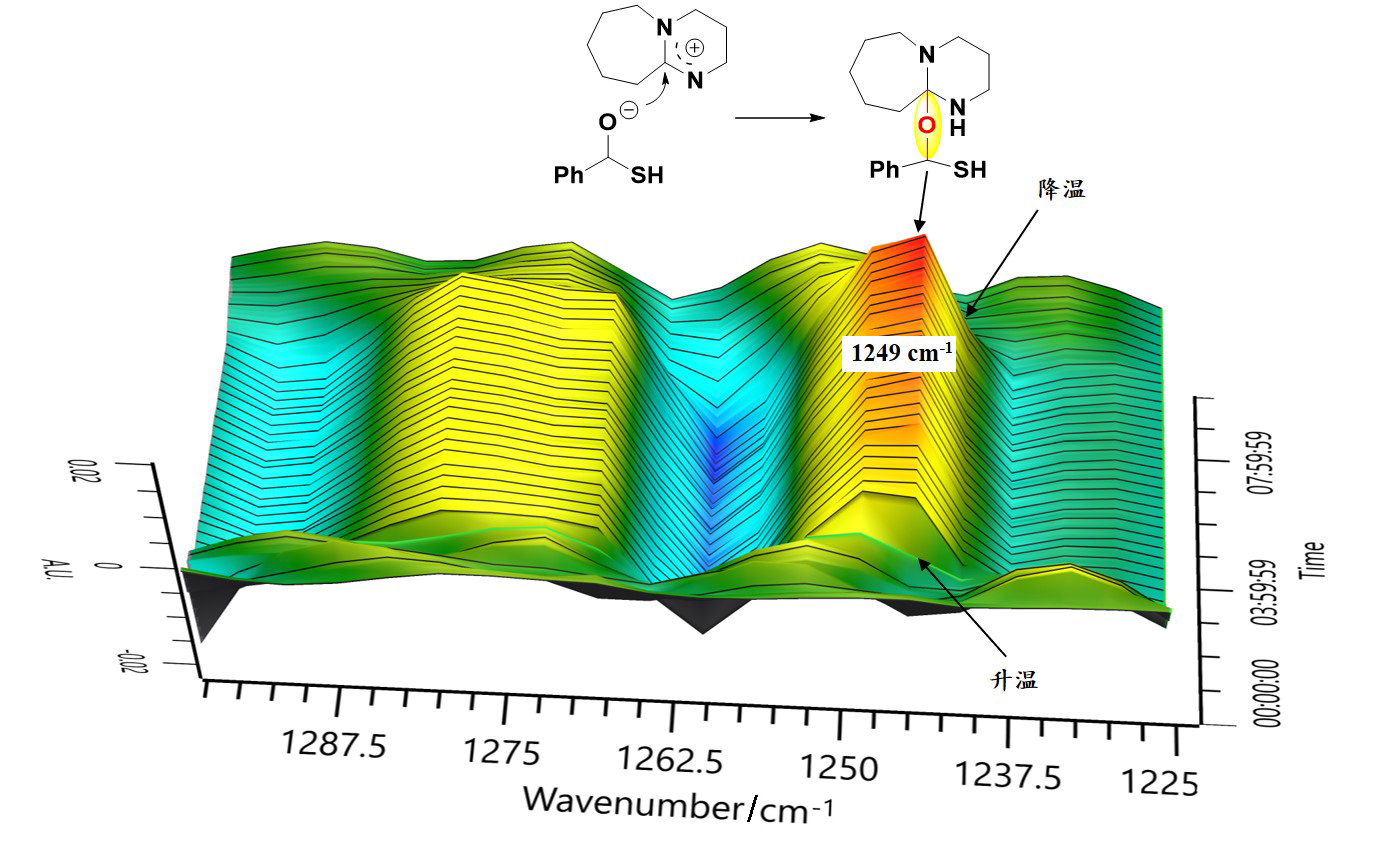
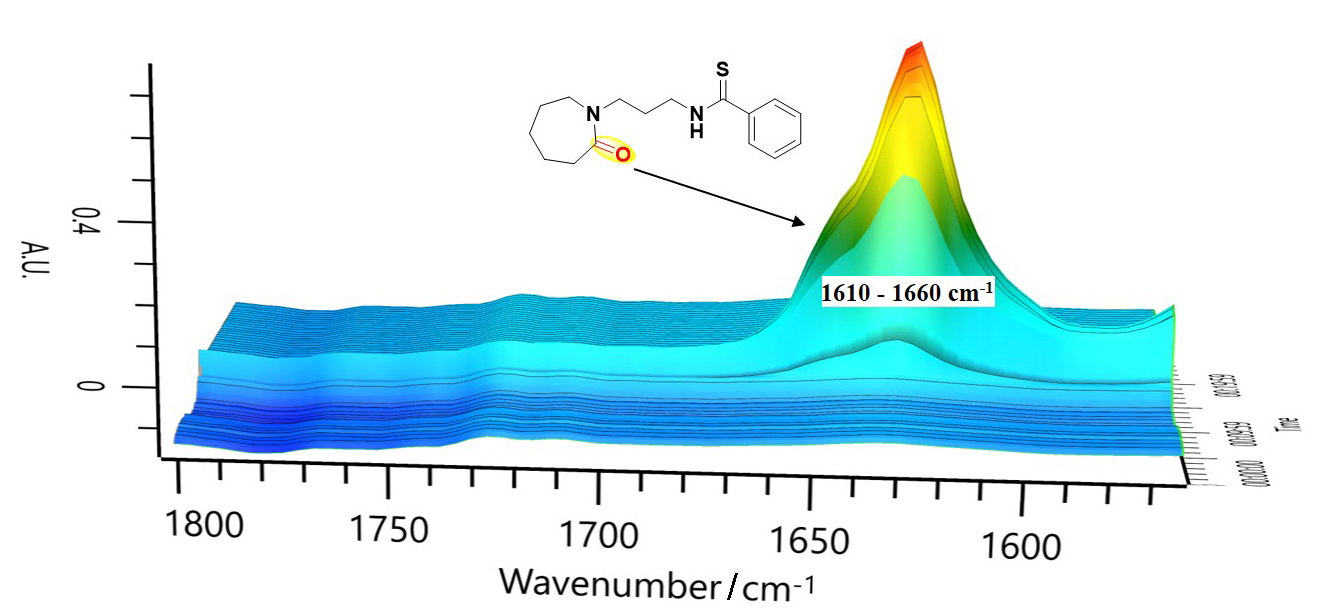
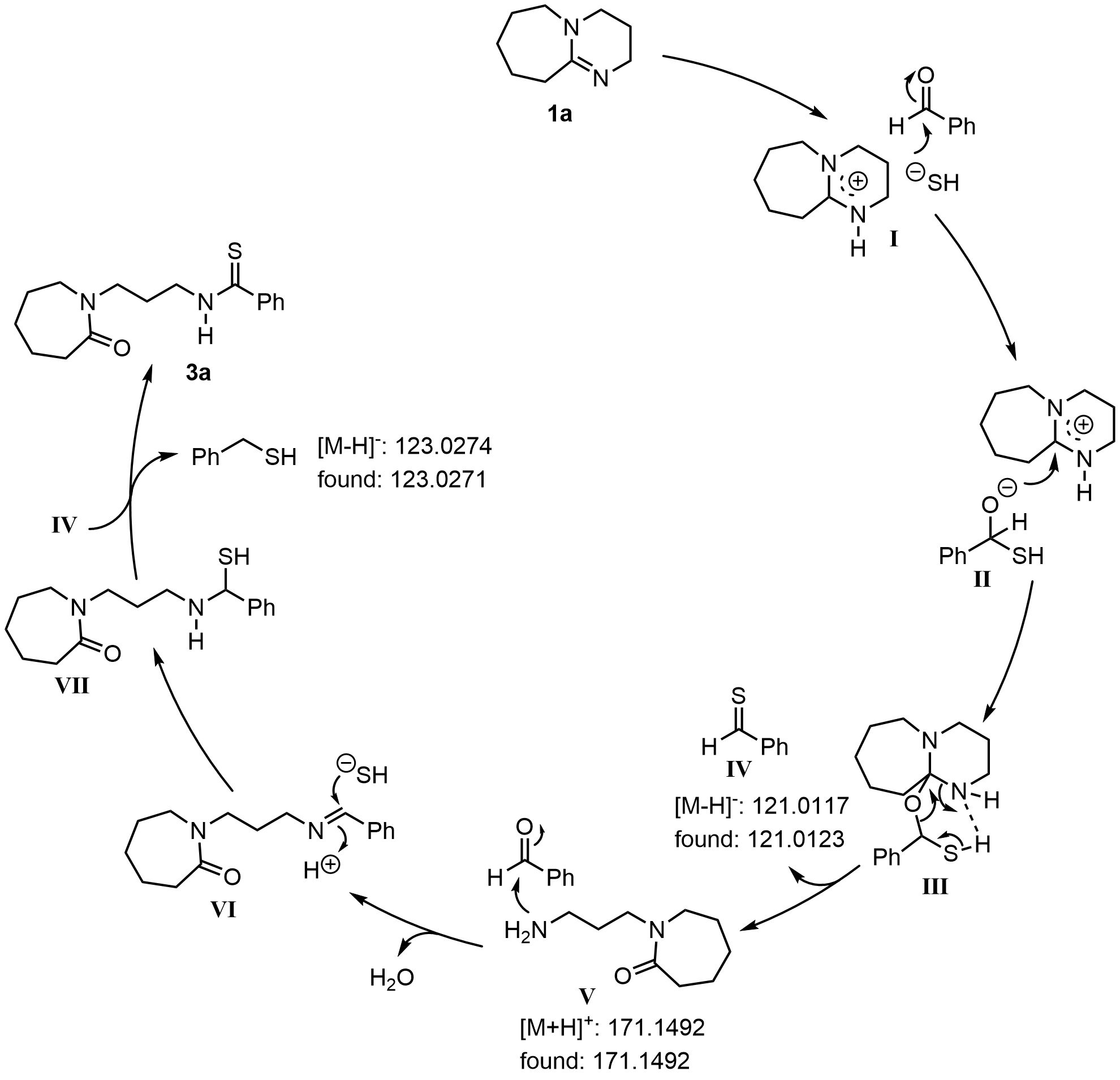
硫代酰胺作为重要的功能分子骨架, 在农药、医药领域具有广泛的应用价值, 同时也是合成含硫精细化学品的关键中间体. 本研究开发了一种以环脒(CA)、苯甲醛和H2S为原料合成新型硫代酰胺的高效方法, 该方法以H2S为硫源替代传统试剂, 成功合成了多种新型硫代酰胺类衍生物. 此外, 通过原位红外光谱监测了反应过程, 揭示了其反应机理: 首先环脒吸收H2S生成CAH⁺HS⁻中间体, 随后HS⁻作为亲核硫源进攻苯甲醛的醛羰基, 发生亲核加成形成含O⁻的活性中间体, 然后该中间体亲核进攻CAH⁺生成C—O—C关键中间体, 继而通过分子内重排转化为内酰胺和硫代苯甲醛, 最终通过串联反应高效构建了一系列新型硫代酰胺类衍生物. 本研究首次提出并证实苯甲醛中的氧原子具有双重功能, 既作为亲核试剂进攻CAH⁺引发环脒开环, 又通过分子内重排定向迁移至产物, 为含硫精细化学品的分子设计提供了新思路.
杜云哲, 李曙懿, 程思柳, 贾慧劼, 王政, 韩利民, 竺宁. H2S促使环脒开环与醛发生三组分串联反应高效构建硫代酰胺类衍生物[J]. 化学学报, 2026, 84(1): 93-100.
Yunzhe Du, Shuyi Li, Siliu Cheng, Huijie Jia, Zheng Wang, Limin Han, Ning Zhu. Efficient Three-Component Tandem Reaction for Synthesizing Thioamide Derivatives via the Ring Opening Reaction of Cyclic Amidines with Aldehydes Promoted by H2S[J]. Acta Chimica Sinica, 2026, 84(1): 93-100.
| Entry | Feed ratioa | Temp./℃ | Time/h | Yieldb/% |
|---|---|---|---|---|
| 1 | 1∶2∶1 | 130 | 24 | trace |
| 2 | 1∶2∶2 | 130 | 24 | 7 |
| 3 | 1∶2∶3 | 130 | 24 | 56 |
| 4 | 1∶2∶4 | 130 | 24 | 83 |
| 5 | 1∶2∶5 | 130 | 24 | 70 |
| 6 | 1∶1∶4 | 130 | 24 | 51 |
| 7 | 1∶3∶4 | 130 | 24 | 71 |
| 8 | 1∶4∶4 | 130 | 24 | 72 |
| 9 | 1∶2∶4 | 80 | 24 | 9 |
| 10 | 1∶2∶4 | 90 | 24 | 27 |
| 11 | 1∶2∶4 | 100 | 24 | 53 |
| 12 | 1∶2∶4 | 110 | 24 | 57 |
| 13 | 1∶2∶4 | 120 | 24 | 74 |
| 14 | 1∶2∶4 | 140 | 24 | 80 |
| 15c | 1∶2∶4 | 130 | 24 | 74 |
| 16d | 1∶2∶4 | 130 | 24 | 20 |
| 17e | 1∶2∶4 | 130 | 24 | 8 |
| 18f | 1∶2∶4 | 130 | 24 | 35 |
| 19g | 1∶2∶4 | 130 | 24 | trace |
| 20h | 1∶2∶4 | 130 | 24 | trace |
| 21 | 1∶2∶4 | 130 | 12 | 64 |
| 22 | 1∶2∶4 | 130 | 36 | 79 |
| 23 | 1∶2∶4 | 130 | 48 | 84 |
| Entry | Feed ratioa | Temp./℃ | Time/h | Yieldb/% |
|---|---|---|---|---|
| 1 | 1∶2∶1 | 130 | 24 | trace |
| 2 | 1∶2∶2 | 130 | 24 | 7 |
| 3 | 1∶2∶3 | 130 | 24 | 56 |
| 4 | 1∶2∶4 | 130 | 24 | 83 |
| 5 | 1∶2∶5 | 130 | 24 | 70 |
| 6 | 1∶1∶4 | 130 | 24 | 51 |
| 7 | 1∶3∶4 | 130 | 24 | 71 |
| 8 | 1∶4∶4 | 130 | 24 | 72 |
| 9 | 1∶2∶4 | 80 | 24 | 9 |
| 10 | 1∶2∶4 | 90 | 24 | 27 |
| 11 | 1∶2∶4 | 100 | 24 | 53 |
| 12 | 1∶2∶4 | 110 | 24 | 57 |
| 13 | 1∶2∶4 | 120 | 24 | 74 |
| 14 | 1∶2∶4 | 140 | 24 | 80 |
| 15c | 1∶2∶4 | 130 | 24 | 74 |
| 16d | 1∶2∶4 | 130 | 24 | 20 |
| 17e | 1∶2∶4 | 130 | 24 | 8 |
| 18f | 1∶2∶4 | 130 | 24 | 35 |
| 19g | 1∶2∶4 | 130 | 24 | trace |
| 20h | 1∶2∶4 | 130 | 24 | trace |
| 21 | 1∶2∶4 | 130 | 12 | 64 |
| 22 | 1∶2∶4 | 130 | 36 | 79 |
| 23 | 1∶2∶4 | 130 | 48 | 84 |

| [1] |
doi: 10.1021/jacs.7b08417 |
| [2] |
doi: 10.1021/jacs.9b11097 |
| [3] |
doi: 10.1007/s10947-010-0178-9 |
| [4] |
doi: 10.1016/j.ejps.2010.10.005 pmid: 20969955 |
| [5] |
doi: 10.1038/nm.1950 |
| [6] |
doi: 10.1038/195495a0 |
| [7] |
doi: 10.1002/anie.v57.36 |
| [8] |
pmid: 6422042 |
| [9] |
doi: 10.1055/s-0036-1591758 |
| [10] |
doi: 10.6023/cjoc202004051 |
| [11] |
doi: 10.1021/acscatal.7b00426 |
| [12] |
doi: 10.1021/jacs.5c01175 pmid: 40071831 |
| [13] |
doi: 10.3987/COM-15-13336 |
| [14] |
doi: 10.1016/j.cclet.2014.05.019 |
| [15] |
doi: 10.1002/cjoc.v39.7 |
| [16] |
doi: 10.1002/cjoc.v30.8 |
| [17] |
doi: 10.1002/cjoc.v40.6 |
| [18] |
doi: 10.1039/c3cs60154d pmid: 23793793 |
| [19] |
doi: 10.1039/D1RA09225A |
| [20] |
doi: 10.1021/acs.joc.1c02307 |
| [21] |
doi: 10.1016/j.jcat.2025.116180 |
| [22] |
doi: 10.1016/0040-4020(96)00119-6 |
| [23] |
doi: 10.1055/s-0028-1083253 |
| [24] |
doi: 10.1016/j.tet.2010.05.100 |
| [25] |
doi: 10.1002/ejoc.v27.10 |
| [26] |
doi: 10.1021/ol403345e pmid: 24308719 |
| [27] |
doi: 10.1002/adsc.201801695 |
| [28] |
doi: 10.1039/C9RA05939C |
| [29] |
doi: 10.1055/s-2007-991073 |
| [30] |
doi: 10.1080/17415993.2014.955026 |
| [31] |
doi: 10.1002/jhet.v54.5 |
| [32] |
doi: 10.1021/acs.orglett.5b03541 |
| [33] |
doi: 10.1002/aoc.v36.12 |
| [34] |
doi: 10.1016/j.tet.2019.130575 |
| [35] |
doi: 10.1002/slct.v3.11 |
| [36] |
doi: 10.1038/s41467-019-10651-w |
| [37] |
doi: 10.1021/acs.orglett.1c03370 |
| [38] |
|
| [39] |
doi: 10.1080/10426507.2019.1603231 |
| [40] |
doi: 10.1016/j.jiec.2023.02.032 |
| [41] |
doi: 10.1016/j.jconrel.2022.07.001 |
| [42] |
doi: 10.1016/j.combustflame.2016.03.008 |
| [43] |
doi: 10.1016/j.cej.2023.141398 |
| [44] |
doi: 10.1021/acs.est.4c00312 |
| [45] |
doi: 10.1021/acs.iecr.8b05052 |
| [46] |
doi: 10.1039/C8RA02993H |
| [47] |
doi: 10.1021/ol9026599 |
| [48] |
doi: 10.1021/ol501822c |
| [49] |
doi: 10.1021/acs.orglett.5b02240 |
| [50] |
pmid: 12688784 |
| [51] |
doi: 10.1002/ajoc.v8.1 |
| [52] |
doi: 10.1002/slct.v5.37 |
| [53] |
doi: 10.1039/B307186C |
| [1] | 殷正旭, 徐国强, 陈腾祥, 韩俊斌. β-氟胺类化合物18F 放射性标记方法的开发[J]. 化学学报, 2024, 82(11): 1120-1123. |
| [2] | 于海波, 李红玲, 张新富, 肖义, 方沛菊, 吕春娇, 侯伟. 基于Nile Red的线粒体靶向性增强型硫化氢荧光探针及其细胞成像[J]. 化学学报, 2015, 73(5): 450-456. |
| [3] | 范雪峰, 赵会君, 朱晨. 羰基兼容的氟代反应及远端氟代脂肪酮合成的近期进展[J]. 化学学报, 2015, 73(10): 979-983. |
| [4] | 陈花磊, 李嗣锋, 徐建斌, 杨清镜, 刘珊珊, 周永云, 黄超, 樊保敏. 钯催化芳基乙炔对氧/氮杂苯并降冰片烯开环反应研究[J]. 化学学报, 2013, 71(9): 1243-1247. |
| [5] | 马淳安, 廖艳梅, 朱英红, 吴玲玲. 碱性溶液中苯甲醇的选择性电催化氧化研究[J]. 化学学报, 2010, 68(16): 1649-1652. |
| [6] | 张福兰, 张迪, 胡武洪, 李来才. 4-氟苯甲醛、β-萘胺和Meldrum酸一锅反应生成1-(4-氟苯基)-1,2-二氢苯并[f]喹啉-3(4H)-酮的反应机理理论研究[J]. 化学学报, 2010, 68(08): 760-768. |
| [7] | 纪红兵,黄丽泉,吴犇. β-环糊精选择性催化氧化对甲氧基苯甲醛的研究[J]. 化学学报, 2009, 67(9): 910-916. |
| [8] | 王若曦, 张冬菊, 武剑, 刘成卜. 硼氮掺杂的碳纳米管对硫化氢气敏性能的理论研究[J]. 化学学报, 2007, 65(2): 107-110. |
| [9] | 杨先金, 袁文娇, 刘金涛. 3-(1-亚胺基氟烷基)-1H-喹啉-2-酮类化合物的合成研究[J]. 化学学报, 2007, 65(15): 1511-1514. |
| [10] | 林宪杰, 徐为人, 武剑, 刘成卜. 苯甲醛肟与炔丙醇偶极环加成反应的理论研究[J]. 化学学报, 2007, 65(10): 930-936. |
| [11] | 徐华龙, 杜俊明, 黄静静, 沈伟. 钠对苯甲醛加氢合成苯甲醇催化剂Cu/SiO2的修饰作用影响活性[J]. 化学学报, 2007, 65(10): 877-880. |
| [12] | 张雪红, 管莲秀, 李军平, 魏伟, 赵宁, 董满祥, 孙予罕. 嫁接型席夫碱配合物的制备及其催化性能[J]. 化学学报, 2006, 64(24): 2479-2485. |
| [13] | 马宁, 乐英红, 华伟明, 高滋. Mg-Fe尖晶石复合氧化物对苯乙烯选择氧化反应的催化性能[J]. 化学学报, 2004, 62(3): 262-267. |
| [14] | 王琪, 陈爱平, 谢春芳, 郑泉兴, 方维平, 袁友珠, 张鸿斌, 杨意泉. 高硫化氢合成气制甲硫醇新型钼基催化剂研究[J]. 化学学报, 2004, 62(23): 2297-2302. |
| [15] | 汪小强, 欧光南, 袁友珠. 钒基催化剂在双氧水存在下对甲、乙苯液相选择氧化的研究[J]. 化学学报, 2004, 62(18): 1695-1700. |
| 阅读次数 | ||||||
|
全文 |
|
|||||
|
摘要 |
|
|||||
