

化学学报 ›› 2025, Vol. 83 ›› Issue (11): 1372-1378.DOI: 10.6023/A25060238 上一篇 下一篇
研究论文
苏秦a, 雷平a, 王栋a, Shahid Ali Khanb, 阿布拉江•克依木a,*( )
)
投稿日期:2025-06-26
发布日期:2025-08-11
通讯作者:
阿布拉江?克依木
基金资助:
Su Qina, Lei Pinga, Wang Donga, Shahid Ali Khanb, Ablajan Keyumea,*()
Received:2025-06-26
Published:2025-08-11
Contact:
Ablajan Keyume
Supported by:文章分享
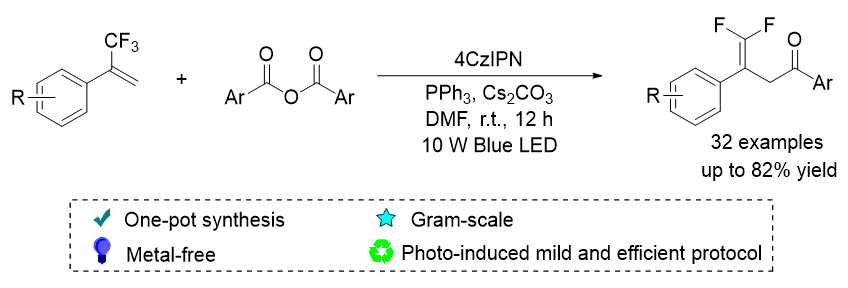
报道了一种在可见光诱导下, 利用芳香酸酐的酰基自由基与α-三氟甲基烯烃进行二氟烯基化的新策略. 该方法以廉价易得的芳香酸酐为酰基源, 在温和条件下通过蓝光照射实现酰基自由基的原位生成, 展现出优异的官能团兼容性和宽泛的底物普适性(32个实例, 最高产率82%). 另外, 酸酐上取代基的电子性质(吸电子基团促进C—O键断裂)和空间位阻(影响区域选择性)是调控反应选择性的关键因素. 机理研究表明, 可见光引发的单电子转移在自由基链的激活中起关键作用, 并通过自由基/极性交叉过程成功构建了γ,γ-二氟烯丙基酮. 放大试验和后修饰验证了该方法的实用性, 预示其在有机合成中具有广阔的应用前景.
苏秦, 雷平, 王栋, Shahid Ali Khan, 阿布拉江•克依木. 可见光诱导的α-三氟甲基烯烃与芳香酸酐的脱氟酰化反应[J]. 化学学报, 2025, 83(11): 1372-1378.
Su Qin, Lei Ping, Wang Dong, Shahid Ali Khan, Ablajan Keyume. Visible-Light-Induced Defluorinative Acylation of α-Trifluoromethyl Alkenes with Aromatic Carboxylic Anhydrides[J]. Acta Chimica Sinica, 2025, 83(11): 1372-1378.


| Entry | Variations from standard conditions | Yieldb/% |
|---|---|---|
| 1 | None | 82 |
| 2 | Ir[dF(CF3)ppy]2(dtbbpy)PF6 or Eosin Y was used | 43, 16 |
| 3 | Ru(bpy)3Cl2 was used | N.R. |
| 4 | DBU or DIPEA was used | 46, 50 |
| 5 | NaHCO3 or K2CO3 was used | 36, 38 |
| 6 | EA, MeOH, DCE or DMSO was used | 34, Trace, 33, 30 |
| 7 | Addition 4 Å molecular sieves | 64 |
| 8 | No PC, or no Cs2CO3 | trace |
| 9 | No light, or no Ph3P | N.R. |
| 10 | Under air | N.R. |
| 11 | λ=390~395 nm | 69 |
| Entry | Variations from standard conditions | Yieldb/% |
|---|---|---|
| 1 | None | 82 |
| 2 | Ir[dF(CF3)ppy]2(dtbbpy)PF6 or Eosin Y was used | 43, 16 |
| 3 | Ru(bpy)3Cl2 was used | N.R. |
| 4 | DBU or DIPEA was used | 46, 50 |
| 5 | NaHCO3 or K2CO3 was used | 36, 38 |
| 6 | EA, MeOH, DCE or DMSO was used | 34, Trace, 33, 30 |
| 7 | Addition 4 Å molecular sieves | 64 |
| 8 | No PC, or no Cs2CO3 | trace |
| 9 | No light, or no Ph3P | N.R. |
| 10 | Under air | N.R. |
| 11 | λ=390~395 nm | 69 |

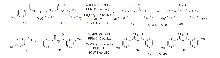


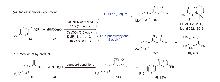


| [1] |
(a)
doi: 10.1002/ps.v80.7 |
|
(b)
doi: 10.1016/j.ecoenv.2024.117615 |
|
|
(c)
doi: 10.1016/j.cclet.2019.07.064 |
|
|
(d)
doi: 10.1021/acs.jafc.4c09728 |
|
|
(e)
|
|
|
(黄维垣, 钱昭辉, 化学学报, 1987, 45, 1175.)
|
|
|
(f)
doi: 10.6023/A2024E001 |
|
|
(胡金波, 化学学报, 2024, 82, 103.)
doi: 10.6023/A2024E001 |
|
| [2] |
(a)
doi: 10.1039/B610213C pmid: 26200936 |
|
(b)
doi: 10.1021/jm800219f pmid: 26200936 |
|
|
(c)
doi: 10.1021/acs.jmedchem.5b00258 pmid: 26200936 |
|
|
(d)
doi: 10.1021/acs.jmedchem.5b01455 pmid: 26200936 |
|
|
(e)
pmid: 26200936 |
|
|
(谷妍, 董喜城, 陈海峰, 陈敏伯, 张世相, 袁身刚, 郑崇直, 化学学报, 2000, 58, 1540.)
pmid: 26200936 |
|
| [3] |
(a)
doi: 10.1002/cjoc.v36.3 |
|
(b)
doi: 10.3390/app10196921 |
|
|
(c)
doi: 10.6023/A18080340 |
|
|
(金维则, 陆国林, 李永军, 黄晓宇, 化学学报, 2018, 76, 739.)
doi: 10.6023/A18080340 |
|
|
(d)
|
|
|
(朱万强, 唐国风, 勾华, 化学学报, 2007, 65, 1875.)
|
|
|
(e)
doi: 10.6023/A24060183 |
|
|
(王甦昊, 胡明霞, 陈卉, 赵彦英, 化学学报, 2024, 82, 925.)
doi: 10.6023/A24060183 |
|
|
(f)
doi: 10.6023/A23080387 |
|
|
(易敬霖, 陈茂, 化学学报, 2024, 82, 126.)
doi: 10.6023/A23080387 |
|
| [4] |
(a)
doi: 10.1021/cr100166a |
|
(b)
doi: 10.1021/cr500368h |
|
|
(c)
doi: 10.1021/ar500125m |
|
|
(d)
doi: 10.1002/anie.v60.21 |
|
| [5] |
(a) O’Hagan, D. Chem. Soc. Rev. 2008, 37, 308.
doi: 10.1039/B711844A |
|
(b)
doi: 10.1126/science.1215220 |
|
|
(c)
doi: 10.1039/C3CS60193E |
|
|
(d)
doi: 10.1021/jacs.7b00118 |
|
|
(e)
doi: 10.6023/A23040154 |
|
|
(秦沛, 马海, 张发光, 马军安, 化学学报, 2023, 81, 697.)
doi: 10.6023/A23040154 |
|
|
(f)
doi: 10.6023/cjoc202204060 |
|
|
(郭檬檬, 于子伦, 陈玉兰, 葛丹华, 马猛涛, 沈志良, 褚雪强, 有机化学, 2022, 42, 3562.)
doi: 10.6023/cjoc202204060 |
|
| [6] |
(a)
doi: 10.1021/ja021487+ |
|
(b)
doi: 10.1021/jm034162s |
|
|
(c)
doi: 10.1016/j.ejmech.2017.11.055 |
|
|
(d)
doi: 10.1016/j.jfluchem.2005.12.013 |
|
|
(e)
doi: 10.1021/ol017112v |
|
|
(f)
doi: 10.1021/ja00027a056 |
|
| [7] |
(a)
doi: 10.1021/acs.orglett.3c04094 pmid: 3039140 |
|
(b)
doi: 10.1021/jm900321u pmid: 3039140 |
|
|
(c)
pmid: 3039140 |
|
|
(d)
doi: 10.6023/A22110454 pmid: 3039140 |
|
|
(杨春晖, 陈景超, 李新汉, 孟丽, 王凯民, 孙蔚青, 樊保敏, 化学学报, 2023, 81, 1.)
doi: 10.6023/A22110454 pmid: 3039140 |
|
|
(e)
doi: 10.6023/cjoc202106013 pmid: 3039140 |
|
|
(李志清, 邱潇杨, 娄江, 王强, 有机化学, 2021, 41, 4192.)
doi: 10.6023/cjoc202106013 pmid: 3039140 |
|
|
(f)
doi: 10.6023/cjoc202000056 pmid: 3039140 |
|
|
(倪传法, 胡金波, 有机化学, 2020, 40, 2997.)
doi: 10.6023/cjoc202000056 pmid: 3039140 |
|
| [8] |
(a)
doi: 10.1021/jm1013693 |
|
(b)
doi: 10.1039/D0CC04318D |
|
|
(c)
doi: 10.1021/acs.orglett.0c00568 |
|
| [9] |
doi: 10.1021/acs.orglett.4c00112 |
| [10] |
doi: 10.1016/j.cclet.2023.109443 |
| [11] |
(a)
doi: 10.1039/D3QO01551C |
|
(b)
doi: 10.6023/A23080395 |
|
|
(张大伟, 赵海洋, 冯笑甜, 顾玉诚, 张新刚, 化学学报, 2024, 82, 105.)
doi: 10.6023/A23080395 |
|
|
(c)
doi: 10.1039/D3GC03471B |
|
|
(d)
doi: 10.1039/D3GC05041F |
|
| [12] |
(a)
doi: 10.1016/S0040-4039(01)89512-5 pmid: 24605155 |
|
(b)
doi: 10.3762/bjoc.10.32 pmid: 24605155 |
|
|
(c)
doi: 10.1021/acs.orglett.5b02439 pmid: 24605155 |
|
|
(d)
doi: 10.1039/c3cc44271c pmid: 24605155 |
|
| [13] |
(a)
doi: 10.1002/chem.v20.25 |
|
(b)
doi: 10.1016/j.tet.2022.132694 |
|
| [14] |
(a)
doi: 10.1016/S0040-4039(00)97899-7 |
|
(b)
doi: 10.1016/S0040-4039(00)87332-3 |
|
| [15] |
(a)
doi: 10.1021/ja409941r |
|
(b)
doi: 10.1021/jacs.5b09888 |
|
|
(c)
doi: 10.1002/anie.v55.1 |
|
| [16] |
doi: 10.1002/anie.v56.47 |
| [17] |
(a)
doi: 10.1021/acs.joc.6b01620 |
|
(b)
doi: 10.1021/acs.orglett.9b04504 |
|
|
(c)
|
|
| [18] |
doi: 10.1021/acs.orglett.4c02232 |
| [19] |
doi: 10.1039/D4OB01496K |
| [20] |
doi: 10.1039/D3QO01331F |
| [21] |
|
| [22] |
(a)
doi: 10.1039/D4QO00778F |
|
(b)
doi: 10.1021/acscatal.5c01133 |
|
|
(c)
doi: 10.6023/A25010008 |
|
|
(李国凯, 朱滨锋, 胡涛, 樊瑞峰, 孙蔚青, 和振秀, 陈景超, 樊保敏, 化学学报, 2025, 83, 319.)
|
|
| [23] |
doi: 10.1021/acs.orglett.3c01787 |
| [24] |
doi: 10.1021/acs.orglett.4c02316 |
| [25] |
doi: 10.1021/acscatal.5b02204 |
| [26] |
|
| [1] | 雷平, 苏秦, 王栋, Shahid Ali Khan, 阿布拉江•克依木. 无催化剂光化学合成吲哚酮: 电子供体-受体复合物介导的N-芳基丙烯酰胺环化反应[J]. 化学学报, 2025, 83(11): 1379-1385. |
| [2] | 王海成, 马海燕. 爪形氨基酚氧基锌氯化物催化环氧化物和酸酐共聚研究[J]. 化学学报, 2024, 82(6): 577-588. |
| [3] | 江金辉, 朱云卿, 杜建忠. 开环聚合诱导自组装的挑战与展望[J]. 化学学报, 2020, 78(8): 719-724. |
| [4] | 贾晓燕, 李振环. NaZnPO4催化碳酸二甲酯和丙氨酸“一锅法”合成N-羧基丙氨酸酸酐[J]. 化学学报, 2020, 78(6): 540-546. |
| [5] | 杨忠波, 李速家, 罗三中. (±)-Hongoquercin A全合成:可见光促进有机催化多烯环化策略[J]. 化学学报, 2017, 75(4): 351-354. |
| [6] | 郑剑峰, 谢志强, 陈欣健, 黄培强. 酰胺的直接转化:仲酰胺与丹尼谢夫斯基双烯的还原环加成反应[J]. 化学学报, 2015, 73(7): 705-715. |
| [7] | 张林雅, 矫庆泽, 赵芸, 周明吉, 冯薇, 葛艳蕊. 紫外光固化超支化聚酯的合成及性能[J]. 化学学报, 2011, 69(17): 2031-2038. |
| [8] | 仇明华, 谢文林, 刘凤萍, 陈东初. 一种磺酰胺类碳酸酐酶II抑制剂3D-QSAR分析新方法[J]. 化学学报, 2010, 68(24): 2581-2589. |
| [9] | 薛勇, 李树白, 张海涛, 聂华丽, 朱利民. 木瓜蛋白酶的化学修饰及对其酶活力的影响[J]. 化学学报, 2009, 67(20): 2390-2394. |
| [10] | 沈伟,潘超,杨新艳,徐华龙. Cr-Cu/SiO2催化剂上顺酐和1,4-丁二醇的耦合反应[J]. 化学学报, 2008, 66(11): 1287-1292. |
| [11] | 杨植,陈小华,刘云泉,陈宪宏 陈传盛,李文华,许龙山. 碳纳米管的羟甲基化及其马来酸酐接枝研究[J]. 化学学报, 2006, 64(3): 203-207. |
| [12] | 王国建, 屈泽华, 郭建龙, 李岩, 刘琳. 苯乙烯/马来酸酐共聚物修饰碳纳米管的研究[J]. 化学学报, 2006, 64(24): 2505-2508. |
| [13] | 陈文兴,吕素芳,潘勇,胡智文. 新型水溶性钴酞菁的制备及其催化氧化硫醇的性能[J]. 化学学报, 2005, 63(6): 507-511. |
| [14] | 李来才 查东 田安民. 丁二酸脱水制备丁二酸酐的微观反应机理研究[J]. 化学学报, 2005, 63(16): 1545-1550. |
| [15] | 闫宇,伊敏,彭金粉,翟茂林,哈鸿飞. 二元单体在棉纤维上的γ辐射接枝[J]. 化学学报, 2005, 63(15): 1444-1448. |
| 阅读次数 | ||||||
|
全文 |
|
|||||
|
摘要 |
|
|||||
