化学学报 ›› 2026, Vol. 84 ›› Issue (6): 1003-1018.DOI: 10.6023/A26010028 上一篇
综述
王鑫, 谭锋华, 唐晓凡, 段英琪, 宗思宇*( ), 曾景斌*()
投稿日期:2026-01-27
发布日期:2026-03-27
作者简介: |
王鑫, 中国石油大学(华东)2023级博士研究生, 目前专注于新型磷光材料的设计、合成与应用研究, 致力于开发兼具长寿命、高量子效率及环境响应特性的碳点基磷光材料体系. |
 |
谭锋华, 中国石油大学(华东)2024级硕士研究生, 目前专注于磷光碳点材料, 通过精准的界面工程与复合策略增强其发光性能, 并致力于探索该类材料在信息加密、高灵敏传感应用. |
 |
唐晓凡, 中国石油大学(华东)2025级博士研究生. 目前研究主要致力于新型碳点磷光材料的开发及其在环境检测领域的应用, 旨在构建高灵敏、高选择性的新型传感平台, 用于环境中特定目标物的分析与监测. |
 |
段英琪, 中国石油大学(华东)2025级硕士研究生. 目前研究聚焦于新型碳点磷光材料的开发, 旨在构建高灵敏、高选择性传感平台, 用于环境目标物的分析与监测. |
 |
宗思宇, 博士于2025年获得吉林大学博士学位, 同年加入中国石油大学(华东)化学化工学院曾景斌教授课题组. 其主要研究方向为分子筛限域碳点磷光材料的可控制备与性能调控, 致力于开发具有高效发光与稳定性的新型复合材料体系. 目前已在Angew. Chem. Int. Ed.、Nano Lett.等国际高水平期刊发表论文10余篇. |
 |
曾景斌, 中国石油大学(华东)化学化工学院教授、博士生导师、副院长, 山东省有突出贡献的中青年专家, 山东省杰出青年科学基金获得者, 山东省泰山学者青年专家. 2001年至2010年在厦门大学分析化学专业获得学士、博士学位; 现任化学品安全全国重点实验室副主任. 主要研究领域包括磷光分析、化学传感与纳米材料, 致力于环境检测、生物医学分析及公共安全快速检测技术的开发与应用. |
基金资助:
Xin Wang, Fenghua Tan, Xiaofan Tang, Yingqi Duan, Siyu Zong*(), Jingbin Zeng*()
Received:2026-01-27
Published:2026-03-27
Contact:
E-mail: Supported by:文章分享
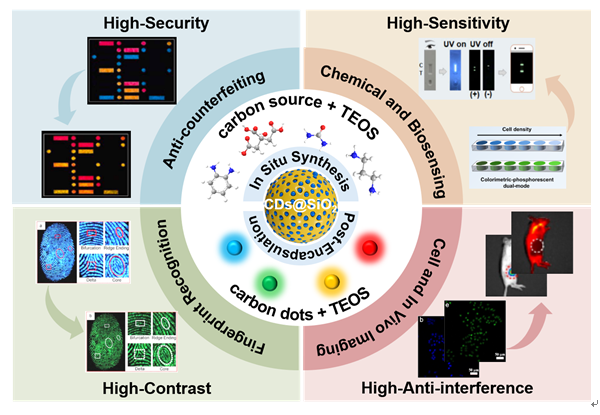
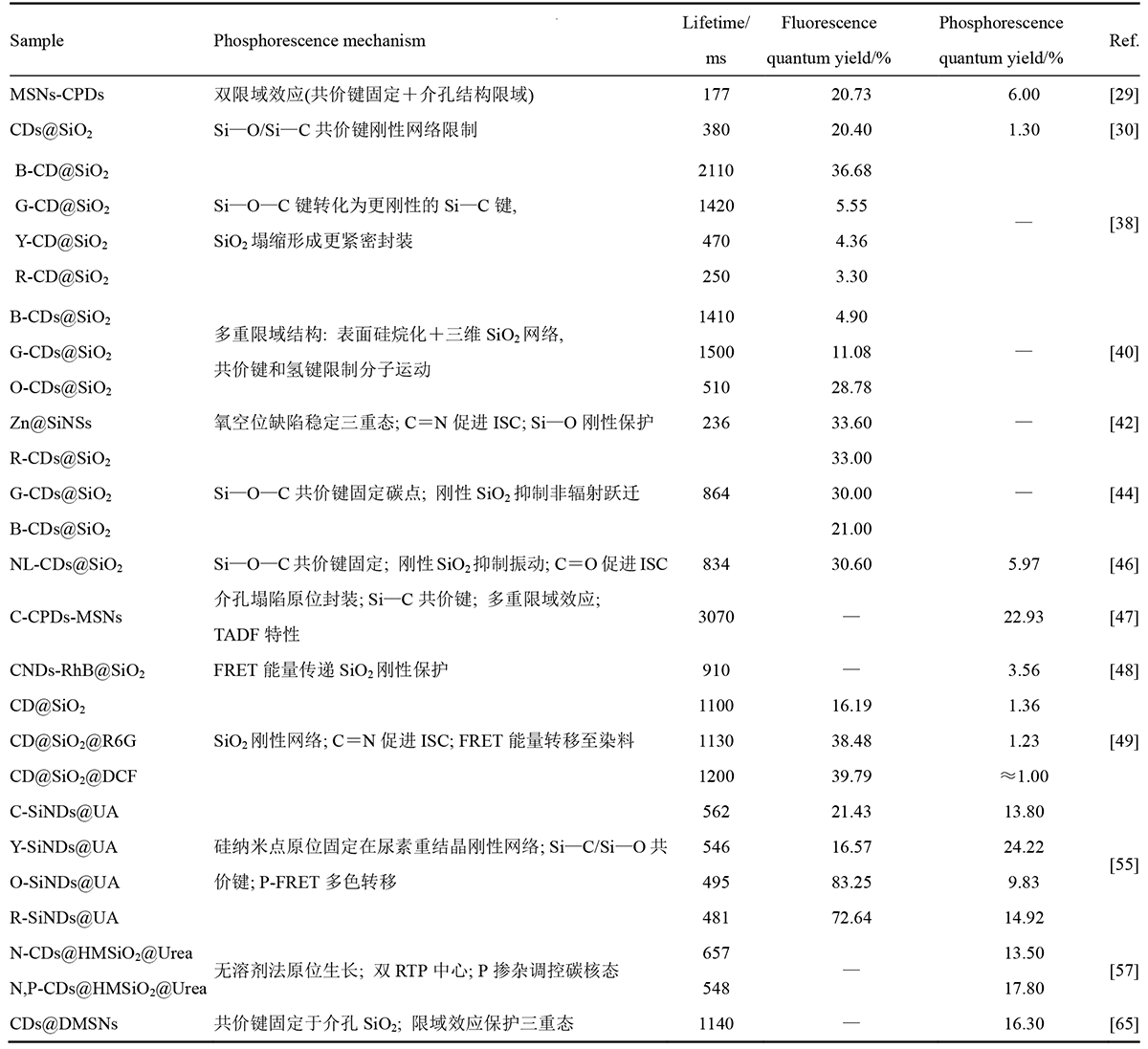
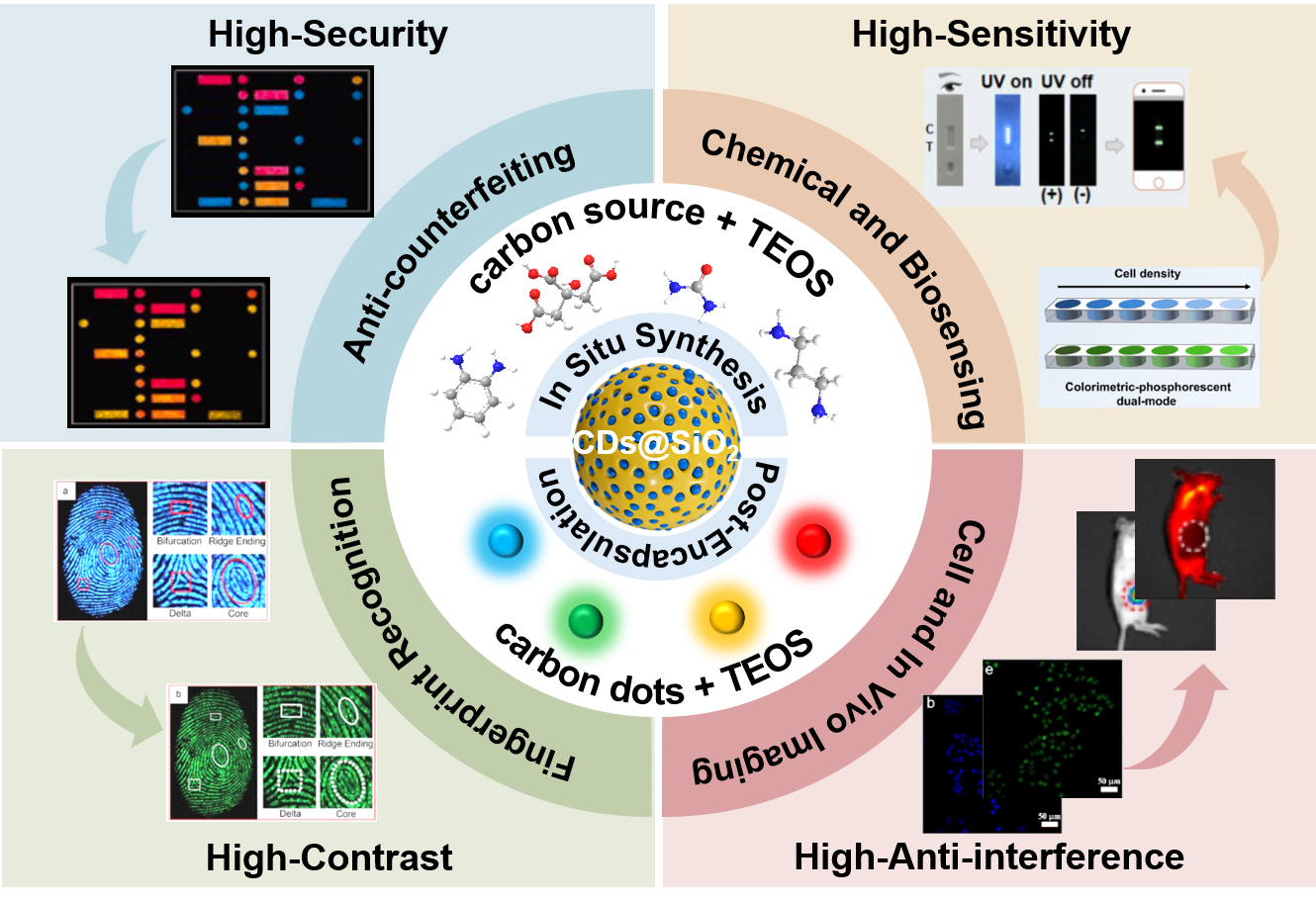
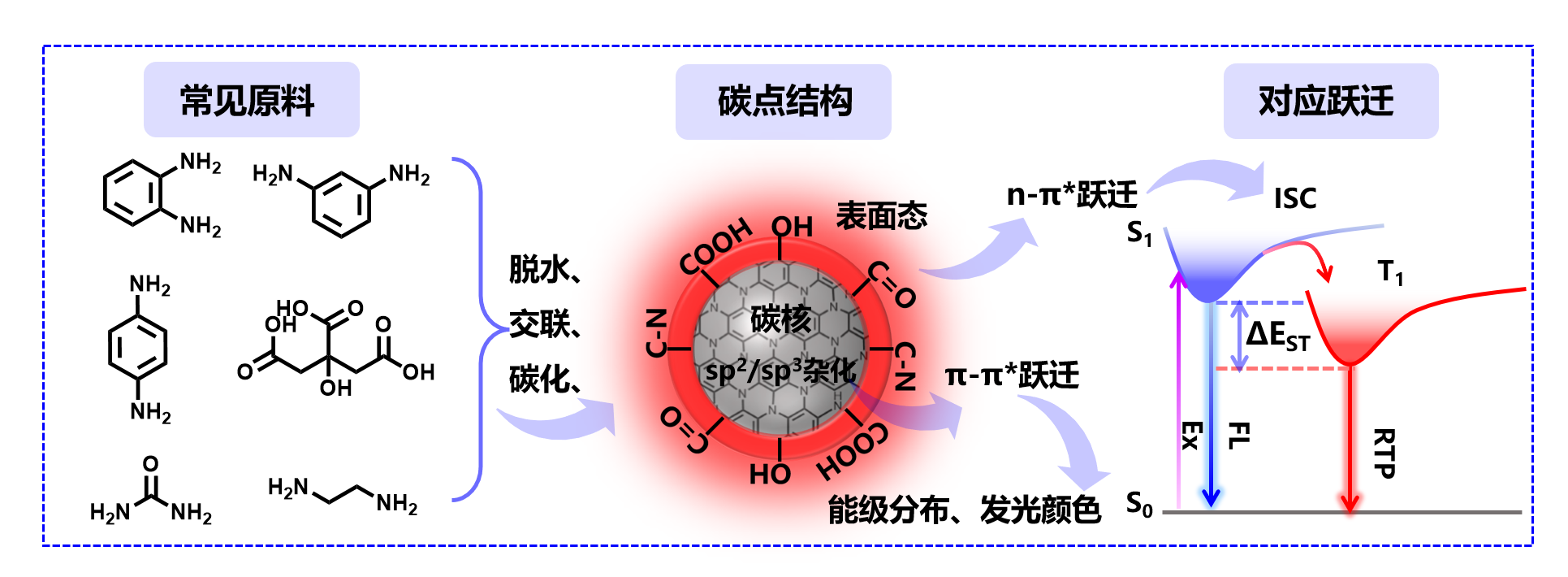
室温磷光碳点应用前景广阔, 但其三重态激子易被氧气、水分淬灭, 应用受限. 二氧化硅基质凭借刚性结构及表面可修饰性, 为碳点提供稳定磷光平台, 实现固态强磷光与水相分散性的兼顾. 此文综述了其设计策略与发光机制, 重点介绍其在动态防伪、传感、时间门控成像及指纹识别中的集成应用. 尽管效率与生物相容性仍存挑战, 但与时间门控检测、多模态成像策略结合, 正推动分析化学向智能化、便携化与诊疗一体化的发展.
王鑫, 谭锋华, 唐晓凡, 段英琪, 宗思宇, 曾景斌. 硅基限域稳定碳点三重态激子与室温磷光[J]. 化学学报, 2026, 84(6): 1003-1018.
Xin Wang, Fenghua Tan, Xiaofan Tang, Yingqi Duan, Siyu Zong, Jingbin Zeng. Silicon Confinement Stabilizes Carbon Dot Triplet Excitons for Room-temperature Phosphorescence[J]. Acta Chimica Sinica, 2026, 84(6): 1003-1018.
| [1] |
doi: 10.1002/adma.v37.28 |
| [2] |
doi: 10.1002/anie.v64.11 |
| [3] |
doi: 10.1021/jacs.5c10814 |
| [4] |
doi: 10.6023/A23040157 |
|
(田野, 司端惠, 高水英, 曹荣, 化学学报, 2023, 81, 1129.)
doi: 10.6023/A23040157 |
|
| [5] |
doi: 10.1002/cjoc.v42.24 |
| [6] |
doi: 10.1002/adma.v37.27 |
| [7] |
doi: 10.3390/app14010316 |
| [8] |
|
| [9] |
doi: 10.6023/A20060274 |
|
(刘艳红, 张东旭, 毛宝东, 黄慧, 刘阳, 谭华桥, 康振辉, 化学学报, 2020, 78, 1349.)
doi: 10.6023/A20060274 |
|
| [10] |
doi: 10.1002/cjoc.v41.18 |
| [11] |
|
|
(肖钰杰, 谭玄, 赵悦, 程轲, 张雪, 杨宪, 郑红, 分析化学, 2025, 53, 27.)
|
|
| [12] |
|
| [13] |
doi: 10.1002/anie.v62.24 |
| [14] |
|
| [15] |
doi: 10.6023/A25010004 |
|
(潘禹州, 殷炜杰, 张雨霞, 化学学报, 2025, 83, 639.)
doi: 10.6023/A25010004 |
|
| [16] |
doi: 10.1002/sstr.v2.9 |
| [17] |
doi: 10.1039/D0CS01463J |
| [18] |
|
| [19] |
doi: 10.1007/s40843-022-2163-9 |
| [20] |
doi: 10.1007/s40843-024-3119-5 |
| [21] |
doi: 10.1002/exp2.v4.6 |
| [22] |
doi: 10.1016/j.carbon.2024.119396 |
| [23] |
doi: 10.1016/j.foodchem.2025.145825 |
| [24] |
doi: 10.1039/D5SC02963E |
| [25] |
doi: 10.1039/D0TC00507J |
| [26] |
doi: 10.1021/acs.langmuir.1c01264 |
| [27] |
|
|
(杨月倩, 王鹏跃, 任嘉琪, 潘宵, 谭峰华, 马玉杰, 温聪颖, 曾景斌, 分析化学, 2025, 53, 1467.)
|
|
| [28] |
doi: 10.1016/j.cej.2025.164772 |
| [29] |
doi: 10.1016/j.cclet.2022.03.041 |
| [30] |
doi: 10.1016/j.dyepig.2022.110827 |
| [31] |
|
| [32] |
doi: 10.1021/acs.nanolett.4c05187 |
| [33] |
doi: 10.1039/D4NR01380H |
| [34] |
doi: 10.1002/smll.v21.38 |
| [35] |
doi: 10.1016/j.dyepig.2024.112002 |
| [36] |
doi: 10.1016/j.matlet.2025.139610 |
| [37] |
doi: 10.1039/D4TC01916D |
| [38] |
doi: 10.1002/smll.v19.31 |
| [39] |
doi: 10.1002/smll.v20.16 |
| [40] |
doi: 10.1016/j.nanoen.2025.111532 |
| [41] |
doi: 10.1016/j.cej.2024.156781 |
| [42] |
doi: 10.1002/anie.v60.28 |
| [43] |
doi: 10.1002/smll.v19.3 |
| [44] |
doi: 10.1021/acsami.3c18131 |
| [45] |
doi: 10.1021/acsanm.3c06041 |
| [46] |
doi: 10.1039/D2GC04370J |
| [47] |
doi: 10.1016/j.cej.2024.150436 |
| [48] |
doi: 10.1021/acsnano.1c05234 |
| [49] |
doi: 10.1016/j.saa.2023.123404 |
| [50] |
doi: 10.1016/j.jlumin.2023.120408 |
| [51] |
doi: 10.1021/acs.accounts.5c00425 |
| [52] |
doi: 10.1002/anie.v64.7 |
| [53] |
|
| [54] |
doi: 10.1002/smll.v19.31 |
| [55] |
doi: 10.1016/j.cej.2023.144349 |
| [56] |
doi: 10.1002/adfm.v34.48 |
| [57] |
doi: 10.1016/j.cej.2025.169198 |
| [58] |
doi: 10.1016/j.dyepig.2021.109955 |
| [59] |
doi: 10.1016/j.aca.2023.342102 |
| [60] |
doi: 10.1007/s00604-024-06732-3 |
| [61] |
doi: 10.1016/j.microc.2022.107408 |
| [62] |
doi: 10.1039/D2AY01587K |
| [63] |
doi: 10.1016/j.talanta.2025.127833 |
| [64] |
doi: 10.1016/j.snb.2025.137332 |
| [65] |
doi: 10.1021/acs.analchem.4c06258 |
| [66] |
doi: 10.1002/smll.v16.49 |
| [67] |
doi: 10.1016/j.dyepig.2021.109890 |
| [68] |
doi: 10.1039/D4TC02795G |
| [69] |
doi: 10.1039/D4TC00074A |
| [70] |
doi: 10.1039/D3AN01935G |
| [71] |
doi: 10.1002/adhm.v14.16 |
| [72] |
doi: 10.1016/j.snb.2023.133946 |
| [73] |
doi: 10.1016/j.optmat.2022.112356 |
| [74] |
doi: 10.1021/acsanm.2c00208 |
| [75] |
doi: 10.1002/smll.v20.23 |
| [1] | 孙玉刚,崔华,林祥钦. 鲁米诺在铂电极上阳极电致化学发光的机理研究[J]. 化学学报, 2000, 58(5): 567-571. |
| [2] | 杨景和,葛红梅,揭念琴,周广军. Tb(Sm, Dy, Tm)-BPMPHD-CTMAB共发光体系的机理探讨[J]. 化学学报, 1996, 54(4): 351-356. |
| 阅读次数 | ||||||
|
全文 |
|
|||||
|
摘要 |
|
|||||