

化学学报 ›› 2026, Vol. 84 ›› Issue (1): 109-118.DOI: 10.6023/A25090300 上一篇 下一篇
研究论文
覃其品a,b,*( ), 李秋明a, 张菊梅a, 谭明雄a,b, 梁宏b
投稿日期:2025-09-06
发布日期:2025-10-10
基金资助:
Qipin Qina,b,*(), Qiuming Lia, Jumei Zhanga, Mingxiong Tana,b, Hong Liangb
Received:2025-09-06
Published:2025-10-10
Contact:
* E-mail: qpqin2018@126.com
Supported by:文章分享
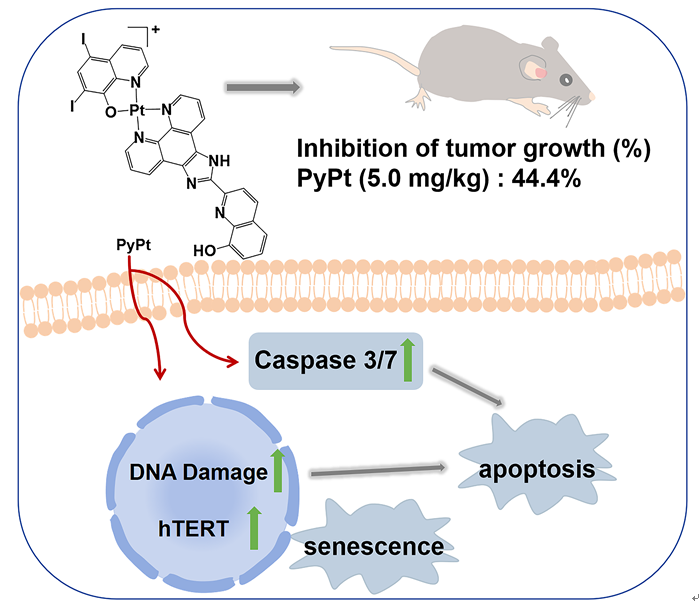
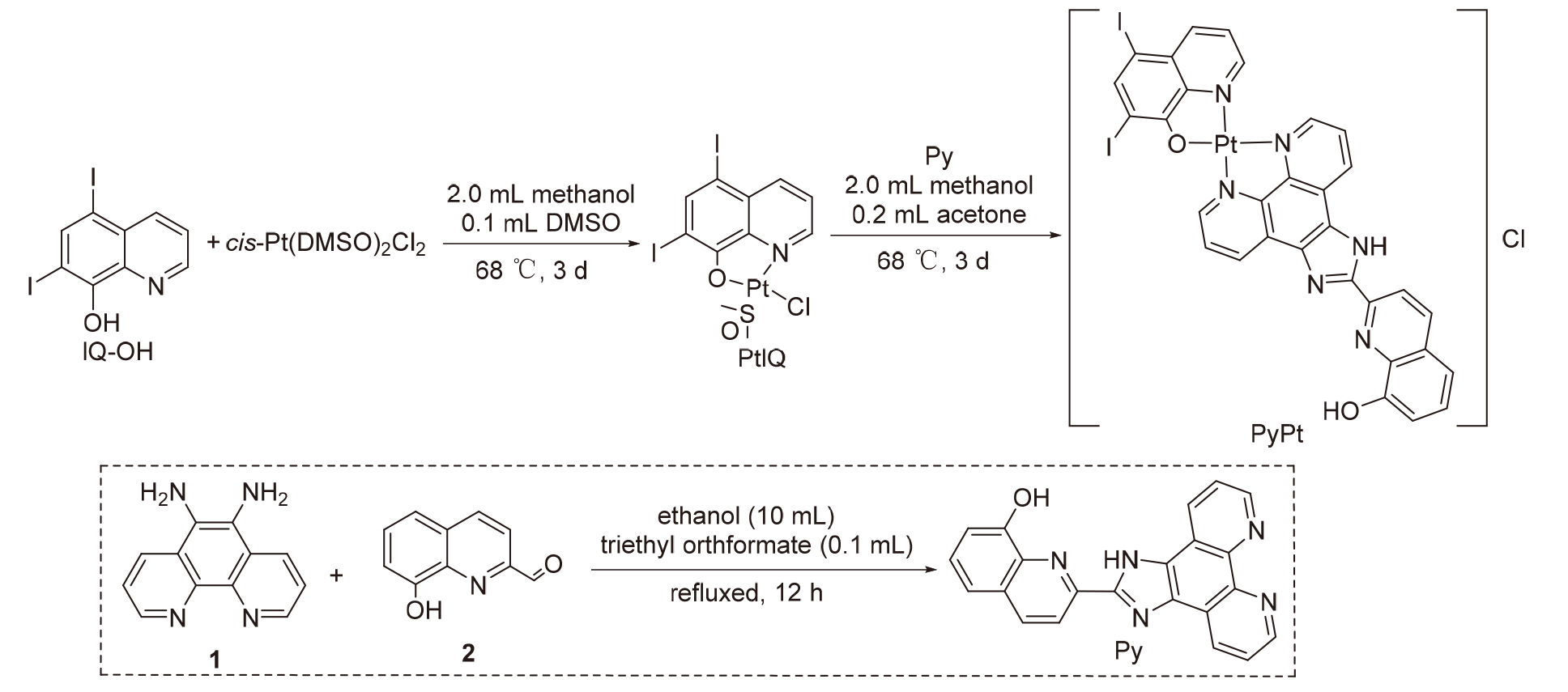
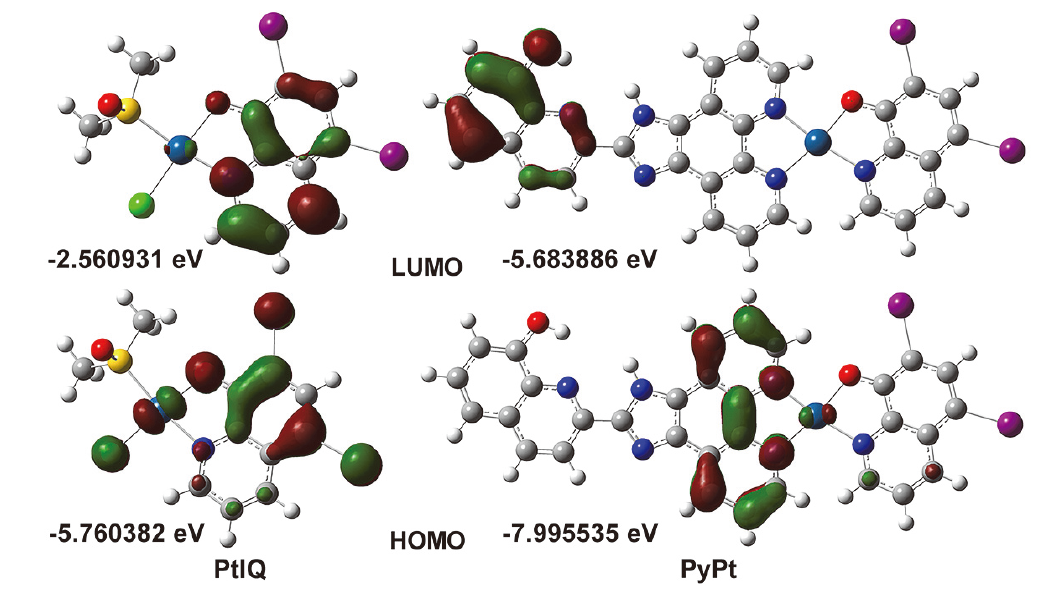
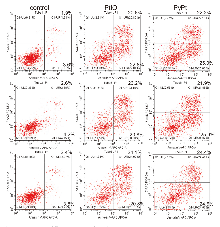
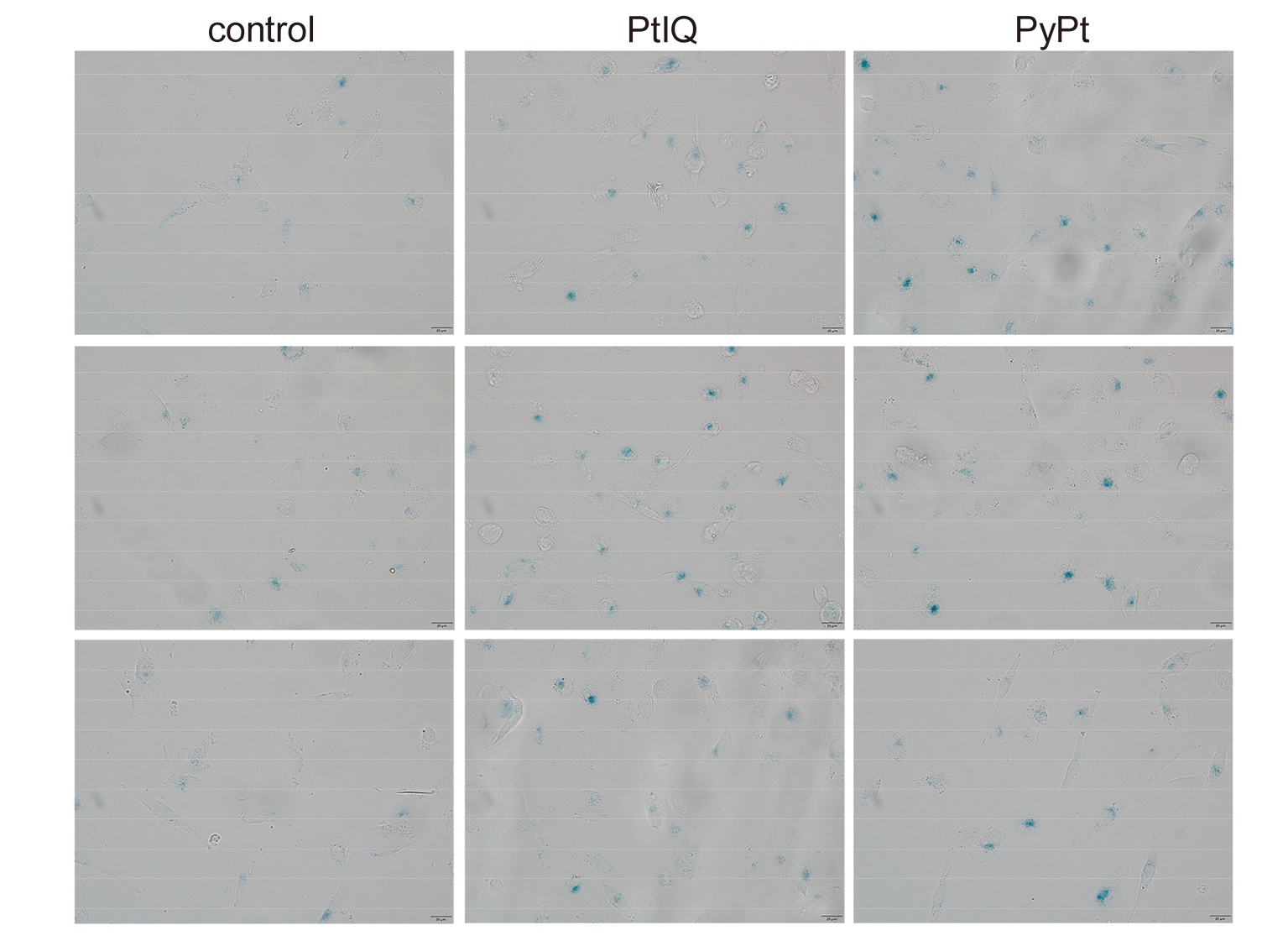
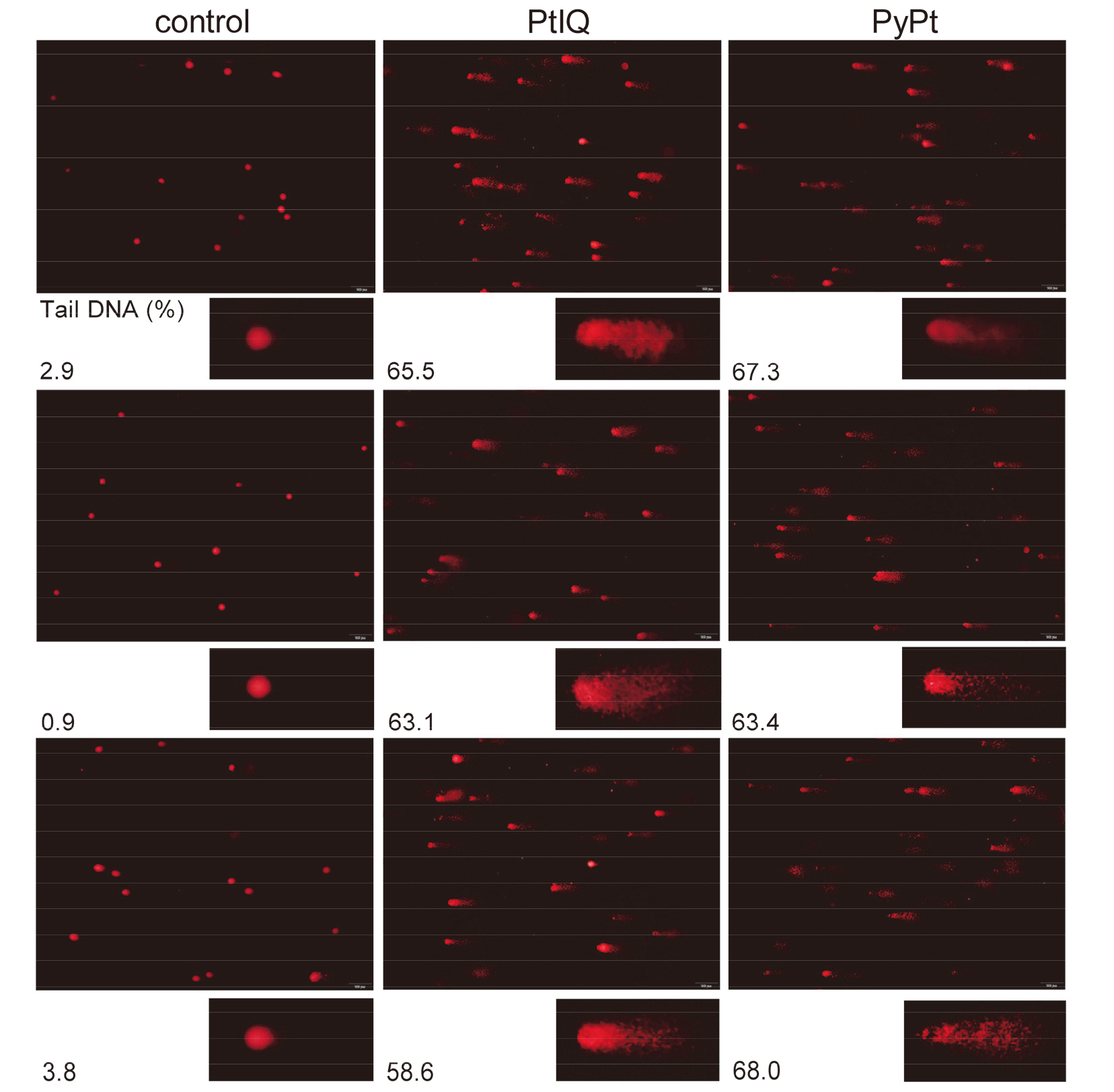
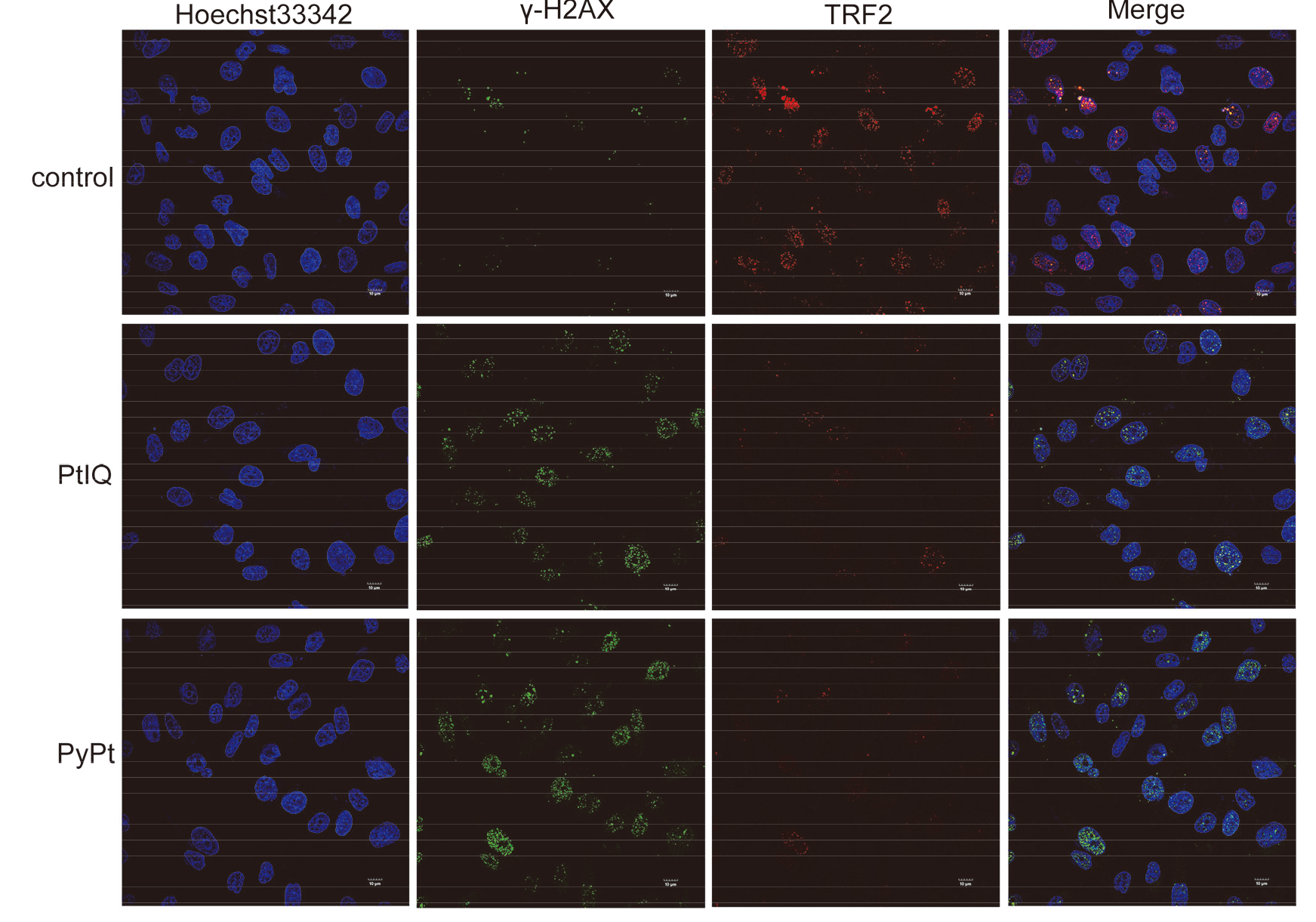
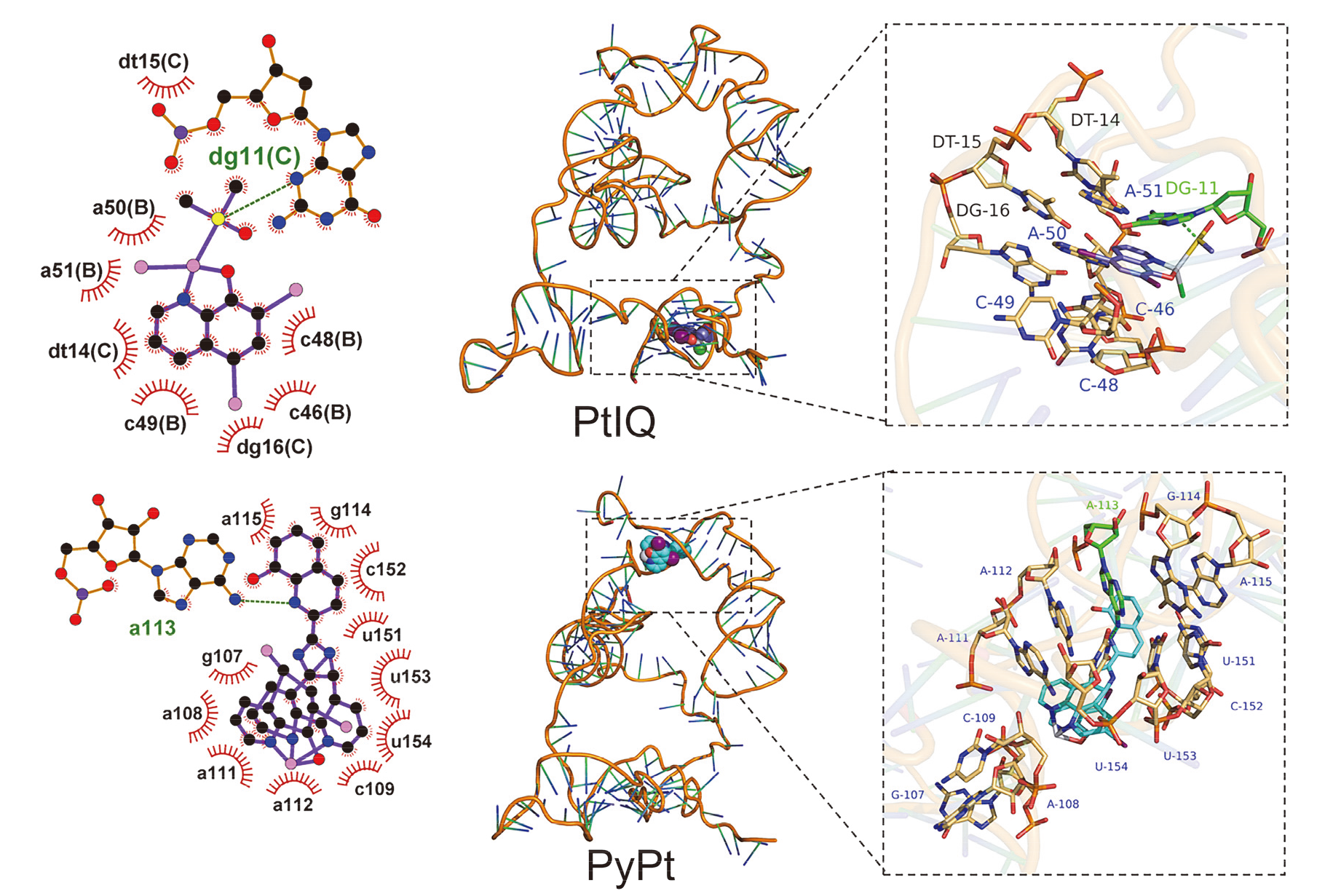
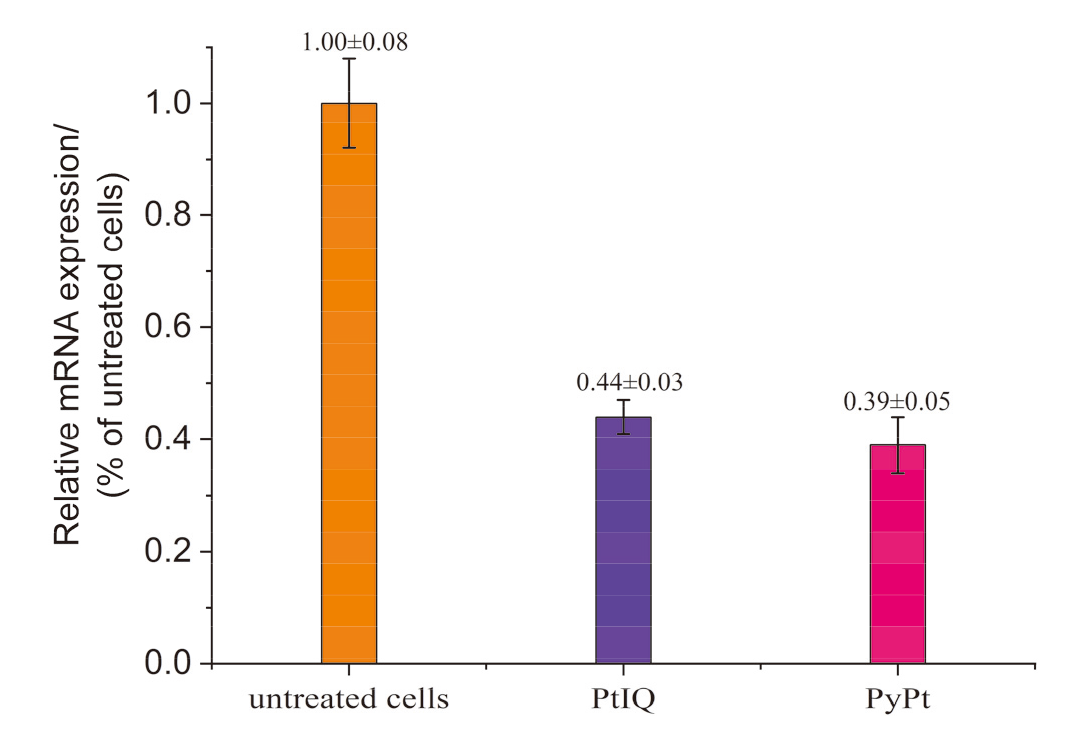
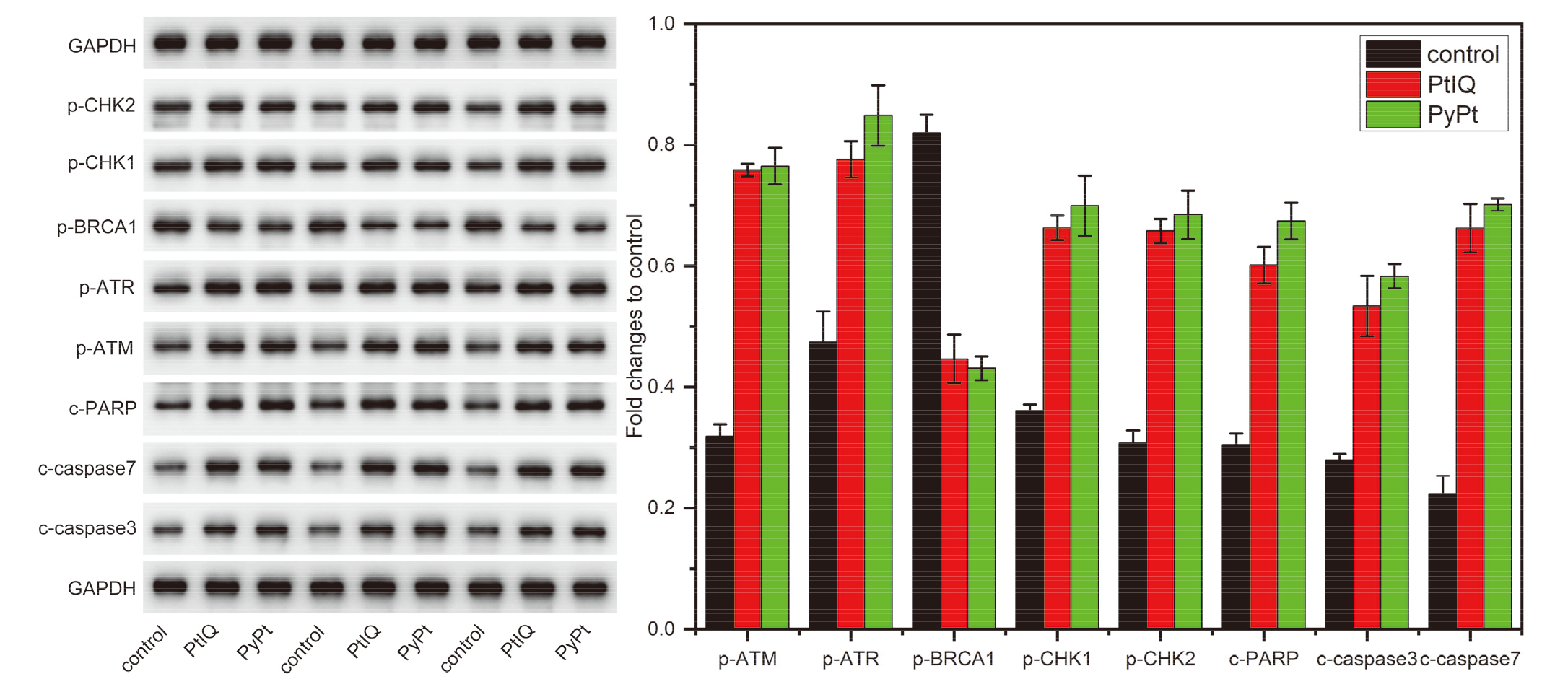
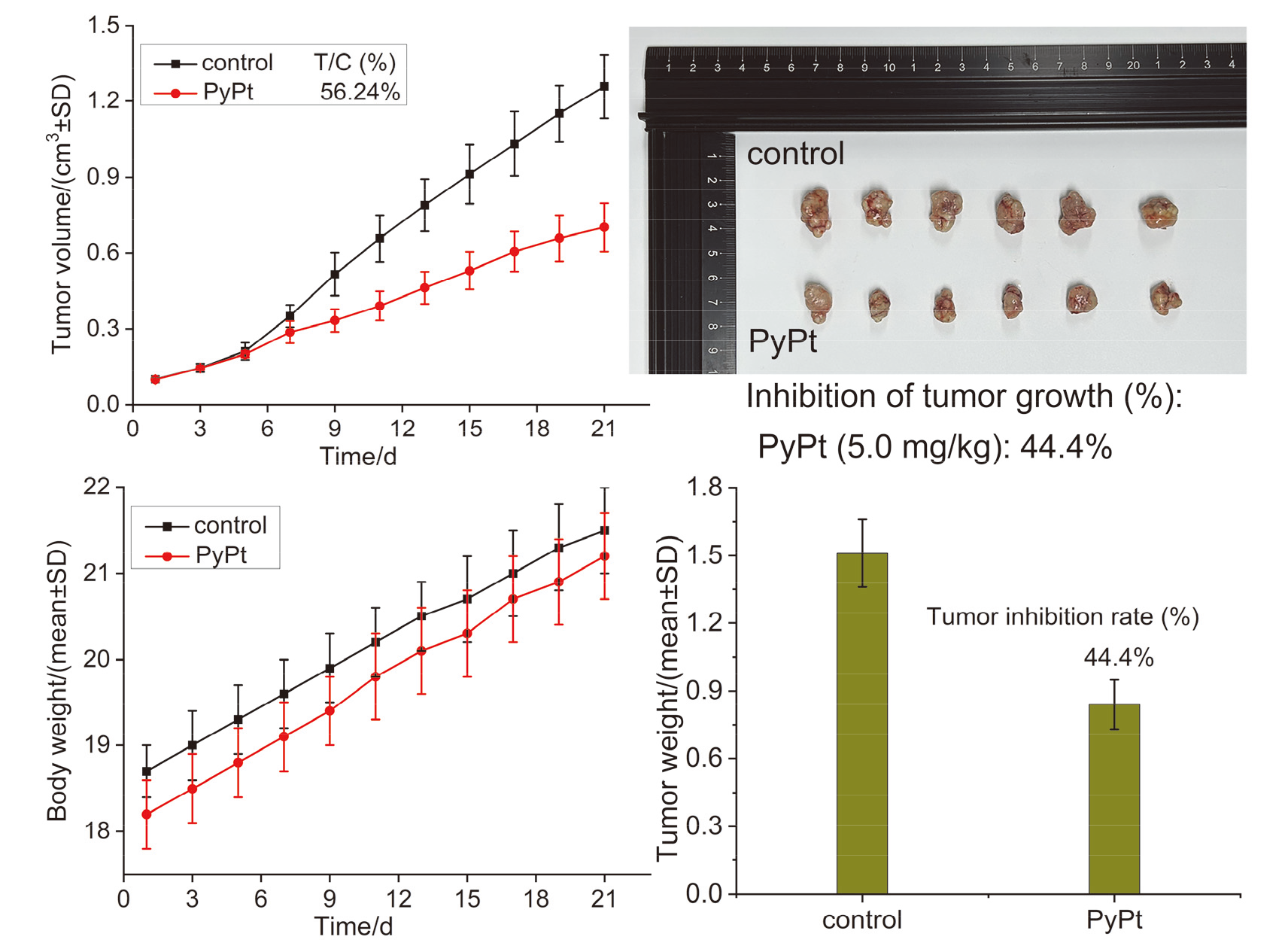
为了克服顺铂类药物的毒性大和选择性差问题, 本研究以5,7-二碘-8-羟基喹啉(IQ-OH)铂(II)配合物[Pt(IQ- O)(DMSO)Cl] (PtIQ)为中间体, 以2-(1H-咪唑并[4,5-f][1,10]菲咯啉-2-基)喹啉-8-醇(Py)为辅助配体, 合成新型的8-羟基喹啉修饰的铂(II)多吡啶配合物[Pt(IQ-O)(Py)]Cl (PyPt). 通过核磁共振(NMR)、紫外-可见分光光度法(UV-vis)、红外光谱(IR)和元素分析手段对配合物PyPt和PtIQ进行了结构表征. 密度泛函理论计算显示, PyPt和PtIQ的最高占据分子轨道(HOMO)与最低未占据分子轨道(LUMO)之间的能隙分别为2.3和3.2 eV, 说明PyPt与PtIQ的抗癌活性存在差异. 相对于人肺癌细胞(A549)和人肺癌顺铂耐药细胞(A549/DDP), PyPt对人乳腺癌细胞(MDA-MB-231)表现出更好的抑制作用, 其IC50值为(0.05±0.04) μmol/L, 优于cis-[PtCl2(DMSO)2] (>50.0 μmol/L)、PtIQ [(9.0±0.1) μmol/L]、IQ-OH (>50.0 μmol/L)、Py (>50.0 μmol/L)和临床药物顺铂[(11.1±0.3) μmol/L]; 此外, PyPt对正常肝细胞(HL-7702)的毒性很小, 说明PyPt对MDA-MB-231癌细胞具有更好的选择性. 流式细胞术和显微镜成像显示, PyPt能明显诱导细胞凋亡[ca. (48.0±0.9)%]和衰老[积分光密度(IOD)值=(1.9±0.1)×106], 优于PtIQ [凋亡率=(44.2±0.6)%, 衰老IOD值= (1.8±0.1)×106]和空白对照组[凋亡率=(6.1±0.6)%, 衰老IOD值=(2.1±0.1)×105]. 分子对接结果表明, PyPt与端粒酶逆转录酶(hTERT)中DNA链间的结合能为–53.0 kJ/mol, 明显强于PtIQ (–30.2 kJ/mol). 彗星电泳实验、免疫荧光实验、实时荧光定量PCR(RT-qPCR)和蛋白质印迹(western blotting)实验结果显示, PyPt通过抑制hTERT表达、激活caspase3/7蛋白和引起DNA损伤来诱导MDA-MB-231癌细胞凋亡和衰老, 其诱导能力强于PtIQ. 体内实验显示, PyPt对MDA-MB-231实体瘤有很好的抑制效果, 抑制率为44.4%, 且未对小鼠的存活率(n=6)和体重造成影响. 总之, 本工作开发了一种以DNA和hTERT为靶点的新型8-羟基喹啉修饰铂(II)多吡啶抗癌金属药物.
覃其品, 李秋明, 张菊梅, 谭明雄, 梁宏. 8-羟基喹啉修饰的铂(II)多吡啶配合物的合成及体内外抗癌活性评价[J]. 化学学报, 2026, 84(1): 109-118.
Qipin Qin, Qiuming Li, Jumei Zhang, Mingxiong Tan, Hong Liang. Synthesis and Evaluation of in vitro and in vivo Anticancer Activities of 8-Hydroxyquinoline-modified Platinum(II) Polypyridyl Complexes[J]. Acta Chimica Sinica, 2026, 84(1): 109-118.
| Entrya | A549 | A549/DDP | MDA-MB- 231 | HL-7702 | SIb |
|---|---|---|---|---|---|
| Py | >50.0 | >50.0 | >50.0 | >50.0 | ca. 1.0 |
| IQ-OH | >50.0 | >50.0 | >50.0 | >50.0 | ca. 1.0 |
| cis-[PtCl2- (DMSO)2] | >50.0 | >50.0 | >50.0 | >50.0 | ca. 1.0 |
| PtIQ | 7.2±0.5 | 6.1±0.9 | 9.0±0.1 | 35.5±0.4 | 4.0 |
| PyPt | 1.0±0.2 | 0.9±0.3 | 0.05±0.04 | >50.0 | >980.4 |
| PtIQ+Py | 7.0±0.5 | 6.0±0.1 | 8.8±0.4 | 36.2±0.7 | 4.2 |
| 顺铂 | 13.0±0.6 | >50.0 | 11.1±0.3 | 15.6±0.2 | 1.4 |
| Entrya | A549 | A549/DDP | MDA-MB- 231 | HL-7702 | SIb |
|---|---|---|---|---|---|
| Py | >50.0 | >50.0 | >50.0 | >50.0 | ca. 1.0 |
| IQ-OH | >50.0 | >50.0 | >50.0 | >50.0 | ca. 1.0 |
| cis-[PtCl2- (DMSO)2] | >50.0 | >50.0 | >50.0 | >50.0 | ca. 1.0 |
| PtIQ | 7.2±0.5 | 6.1±0.9 | 9.0±0.1 | 35.5±0.4 | 4.0 |
| PyPt | 1.0±0.2 | 0.9±0.3 | 0.05±0.04 | >50.0 | >980.4 |
| PtIQ+Py | 7.0±0.5 | 6.0±0.1 | 8.8±0.4 | 36.2±0.7 | 4.2 |
| 顺铂 | 13.0±0.6 | >50.0 | 11.1±0.3 | 15.6±0.2 | 1.4 |

| [1] |
doi: 10.1016/j.ccr.2023.215578 |
| [2] |
doi: 10.1021/acs.jmedchem.4c02509 |
| [3] |
doi: 10.1002/anie.v62.44 |
| [4] |
doi: 10.1039/D4QI00459K |
| [5] |
doi: 10.1039/D4QI00386A |
| [6] |
(a)
doi: 10.1021/acs.inorgchem.1c01763 pmid: 25575314 |
|
(b)
doi: S0223-5234(18)30921-8 pmid: 25575314 |
|
|
(c)
doi: 10.1016/j.ejmech.2014.12.052 pmid: 25575314 |
|
| [7] |
doi: 10.1039/D0NJ04753H |
| [8] |
doi: 10.1016/j.jinorgbio.2023.112152 |
| [9] |
doi: 10.1039/D4NJ04292A |
| [10] |
(a)
doi: 10.1021/acs.jmedchem.2c01895 pmid: 36891739 |
|
(b)
doi: 10.1039/C6MD00201C pmid: 36891739 |
|
|
(c)
doi: 10.1016/j.poly.2013.07.008 pmid: 36891739 |
|
| [11] |
doi: 10.1039/c3dt51720a |
| [12] |
doi: 10.1039/C7QI00299H |
| [13] |
doi: 10.1002/asia.v6.12 |
| [14] |
doi: 10.1016/j.jorganchem.2011.07.003 |
| [15] |
(a)
doi: 10.1007/s00044-021-02739-0 |
|
(b)
doi: 10.1021/acs.jmedchem.4c00285 |
|
| [16] |
doi: S0223-5234(18)30780-3 pmid: 30205260 |
| [17] |
doi: 10.1039/C7MD00472A |
| [18] |
doi: 10.1039/D4DT01794C |
| [19] |
(a)
doi: 10.1039/D2DT01765B |
|
(b)
doi: 10.1080/00958972.2018.1548703 |
|
| [20] |
doi: 10.1021/acs.jmedchem.3c00603 |
| [21] |
(a)
doi: 10.1002/anie.v63.31 |
|
(b)
doi: 10.1039/D3DT03197G |
|
|
(c)
doi: 10.6023/A21060282 |
|
|
(赵添堃, 王鹏, 姬明宇, 李善家, 杨明俊, 蒲秀瑛, 化学学报, 2021, 79, 1385.)
doi: 10.6023/A21060282 |
|
|
(d)
doi: 10.6023/cjoc201704006 |
|
|
(张磊, 李文赟, 刘来, 郑诚月, 王杨, 徐应淑, 史大斌, 聂绪强, 国佳莹, 朱春媛, 王京, 有机化学, 2017, 37, 1721.)
doi: 10.6023/cjoc201704006 |
|
|
(e)
doi: 10.6023/cjoc202401013 |
|
|
(胡健灵, 张超, 朱文达, 何业谱, 彭姝羚, 陈振强, 李明月, 刘志军, 陈河如, 有机化学, 2024, 44, 1870.)
doi: 10.6023/cjoc202401013 |
|
| [22] |
(a)
doi: 10.1021/acs.inorgchem.4c00060 pmid: 28657713 |
|
(b)
doi: 10.1021/acs.chemrestox.7b00131 pmid: 28657713 |
|
|
(c)
doi: 10.1021/acs.molpharmaceut.0c00417 pmid: 28657713 |
|
| [23] |
(a)
doi: 10.6023/A19110403 |
|
(刘启雁, 蔡戴宏, 戚永育, 乐学义, 化学学报, 2020, 78, 263.)
doi: 10.6023/A19110403 |
|
|
(b)
|
|
|
(王晓星, 顾彦, 陈登霞, 方艳芬, 黄应平, 化学学报, 2010, 68, 2463.)
|
|
| [24] |
doi: 10.1002/anie.v61.33 |
| [25] |
doi: 10.3389/fphar.2022.1048691 |
| [26] |
pmid: 10660911 |
| [27] |
(a)
|
|
(b)
doi: 10.1021/acs.jmedchem.3c00318 |
|
| [28] |
(a)
doi: 10.1038/35022514 |
|
(b)
doi: 10.1016/j.bioorg.2025.108507 |
|
|
(c)
doi: 10.6023/A23040154 |
|
|
(秦沛, 马海, 张发光, 马军安, 化学学报, 2023, 81, 697.)
doi: 10.6023/A23040154 |
| [1] | 赵添堃, 王鹏, 姬明宇, 李善家, 杨明俊, 蒲秀瑛. Salan钛双齿配合物的Sonogashira合成后修饰反应研究[J]. 化学学报, 2021, 79(11): 1385-1393. |
| [2] | 陈凑喜, 李学强, 李天才, 周学章. 新型18β-甘草次酸氨基二硫代甲酸酯衍生物的合成及抗癌活性研究[J]. 化学学报, 2012, 70(07): 852-858 . |
| [3] | 史艳萍, 陈宝泉, 麻静, 刘玉明, 李彩文. 2-(2-取代-1,3,4-噻二唑-5-基)-苯并异硒唑-3(2H)-酮衍生物的合成及体外抗癌活性[J]. 化学学报, 2011, 69(21): 2561-2566. |
| [4] | 周双生, 薛璇, 姜波, 鲁传华, 田玉鹏, 蒋明华. 姜黄素类铂(II)配合物的合成及其抗肿瘤活性[J]. 化学学报, 2011, 69(19): 2335-2340. |
| [5] | 孟晨鹏, 王舜, 张克军, 金辉乐, 陈锡安, 胡茂林, 熊静. 2-(5-氟尿嘧啶-1-乙酰基)氨基-1,5-戊二酸二甲酯手性异构体与双链/G-四链体DNA相互作用的电化学研究[J]. 化学学报, 2011, 69(10): 1173-1178. |
| [6] | 李美容, 蔡晓庆, 朱易峰, 刘宽冠, 胡茂林. 5-氟尿嘧啶光敏性偶联衍生物的合成、表征及抗癌活性研究[J]. 化学学报, 2011, 69(04): 425-430. |
| [7] | 王晓星, 顾彦, 陈登霞, 方艳芬, 黄应平. 超氧化物歧化酶对TiO2光催化损伤DNA的影响[J]. 化学学报, 2010, 68(23): 2463-2470. |
| [8] | 覃江克, 韩留玉, 兰文丽, 唐煌, 苏桂发, 戴支凯, 徐庆. 呋喃并呫吨酮衍生物的合成与生物活性研究[J]. 化学学报, 2009, 67(22): 2597-2606. |
| [9] | 张首才,王嵩,周欣,张红星,邵琛,李传碧. 双核Pt(II)配合物的光谱结构和激发态性质的密度泛函理论研究[J]. 化学学报, 2008, 66(8): 841-846. |
| [10] | 任云峰, 成康民, 刘贵锋, 孙艳红, 沈玉梅. β-榄香烯三羰基铼配合物的合成、放射化学合成及抗癌活性研究[J]. 化学学报, 2008, 66(4): 459-464. |
| [11] | 刘姝娜, 吴萍, 周泊, 周耀明, 蔡称心. DNA在碳纳米管表面的固定、表征及损伤的电化学检测[J]. 化学学报, 2008, 66(4): 424-432. |
| [12] | 尹 萍 胡茂林 严小威 王 舜 缪 谦 常雪琴 赵克俭. 四种5-氟尿嘧啶二肽衍生物的合成、晶体结构和抗癌活性[J]. 化学学报, 2008, 66(14): 1693-1699. |
| [13] | 宋宝安,陈才俊,杨松,金林红,薛伟, 张素梅,邹志辉,胡德禹,刘刚. 2-取代硫醚-5-(3,4,5-三甲氧基苯基)-1,3,4-噻二唑类化合物的合成、结构与体外抗癌活性[J]. 化学学报, 2005, 63(18): 1720-1726. |
| [14] | 卢文贯, 陶家洵, 王大奇. 二正丁基锡(Ⅳ)双(二茂铁硫代甲酸酯)配合物的合成、结构表征及其体外抗癌活性研究[J]. 化学学报, 2004, 62(2): 160-164. |
| [15] | 吴谊群,陈耐生,黄金陵. 八烷氧基萘酞菁锌的激发三重态性质及光动力抗癌活性[J]. 化学学报, 2001, 59(4): 619-622. |
| 阅读次数 | ||||||
|
全文 |
|
|||||
|
摘要 |
|
|||||
