
两亲性双硒聚合物的制备及其聚集体形成
收稿日期: 2013-03-14
网络出版日期: 2013-05-17
基金资助
项目受国家自然科学基金(No. 21274046)和广东省自然科学基金(No. S2012020011057)资助
Preparation of Amphiphilic Diselenide Copolymer and Formation of Its Aggregates
Received date: 2013-03-14
Online published: 2013-05-17
Supported by
Project supported by the National Natural Science Foundation of China (No. 21274046) and the Natural Science Foundation of Guangdong Province (No. S2012020011057).
顾晓瑜 , 王朝阳 , 童真 . 两亲性双硒聚合物的制备及其聚集体形成[J]. 化学学报, 2013 , 71(08) : 1136 -1140 . DOI: 10.6023/A13030275
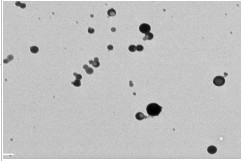
Selenium has several unique biological effects in many aspects, making use of bioactive components and inorganic selenium to prepare antitumor organic selenium compounds will have a great significant impact on cancer therapy and patient wellbeing. It was well-known that Se—Se bond is very reactive and sensitive to the dual redox environment, therefore, we can take advantage of such feature to prepare diselenide-containing polymers which can be applied in the area of drug controlled release. In this paper, we prepared amphiphilic diselenide copolymers with diselenide-containing diols (HO-SeSe-OH), isophorone diisocyanate (IPDI), and water soluble low-molecular chitosan (LW-CS). The synthetic copolymers were characterized by means of gel permeation chromatography (GPC), 1H NMR and FTIR spectroscopy. The molecular weight of CS-PUSeSe-CS copolymer was 4.42×10⁴ g/mol which calculated according to the integral ratio of the peaks at δ 4.00 and 4.42 which related to CH2O groups of chitosan and NHCOOCH2 groups of IPDI, respectively. The size distribution of aggregates measured by dynamic light scattering (DLS) measurements, which gave a result of about 130 nm in average diameter. The critical aggregate concentration (CAC) of aggregates was measured by the fluorescent probe method and the result was 0.01 mg/mL. The dual redox responsive of aggregates was studied both in VC and H2O2 solution, the results showed that amphiphilic diselenide copolymer would cause Se—Se chain scission in no matter weak oxidative or reductive ambient environment. Although negative charged drug-rhodamine B (RB) could not release out from aggregates due to electrostatic attraction. However, positive charged drug-doxorubicin hydrochloride (Doxo) can easily release from aggregates in reductive VC solution by analyzing UV-spectra at the wavelength of 500 nm, indicating aggregates assembled from diselenide-containing copolymers may act as powerful and efficient bionano reactors and realize controllable drug delivery by breaking Se—Se bonds.
Key words: diselenide; amphiphilic copolymer; dual redox; Doxo; drug release
[1] Thompson, K. L.; Chambon, P.; Verber, R.; Armes, S. P. Macromolecules 2012, 45, 8037.
[2] Liu, G. Y.; Liu, X. S.; Wang, S. S.; Chen, C. J.; Ji, J. Langmuir 2012, 28, 557.
[3] Thompson, K. L.; Chambon, P.; Verber, R.; Armes, S. P. J. Am. Chem. Soc. 2012, 134, 12450.
[4] Hickey, R. J.; Haynes, A. S.; Kikkawa, J. M.; Park, S. J. J. Am. Chem. Soc. 2011, 133, 1517.
[5] Jeong, M. G.; Jan, C. M.; Kim, K. T. Chem. Commun. 2012, 48, 3590.
[6] Wang, Z. P.; Oers, M. C. M.; Rutjes, F. P. J.; Hest, J. C. M. Angew. Chem. 2012, 124, 10904.
[7] Zhang, X.; Xu, H. P.; Dong, Z. Y.; Wang, Y. P.; Liu, J. Q.; Shen, J. C. J. Am. Chem. Soc. 2004, 126, 10556.
[8] Ma, N.; Li, Y.; Xu, H. P.; Wang, Z. Q.; Zhang, X. J. Am. Chem. Soc. 2010, 132, 442.
[9] Ma, N.; Li, Y.; Ren, H. F.; Xu, H. P.; Li, Z. B.; Zhang, X. Polym. Chem. 2010, 1, 1609.
[10] Luo, Y.; Chen, T. F.; Huang, X. C.; Wang, G.; Huang, Y. C.; Zheng, W. J. Acta Chim. Sinica 2012, 70, 1295. (罗懿, 陈填烽, 黄晓纯, 王弋, 黄荫成, 郑文杰, 化学学报, 2012, 70, 1295.)
[11] Ma, N.; Xu, H. P.; An, L. P.; Li, J.; Sun, Z. W.; Zhang, X. Langmuir 2011, 27, 5874.
[12] Ray, G. B.; Chakraborty, I.; Moulik, S. P. J. Colloid Interface Sci. 2006, 294, 248.
[13] Ren, H. F.; Wu, Y. T.; Ma, N.; Xu, H. P.; Zhang, X. Soft Matter 2012, 8, 1460.
[14] Hu, S. H.; Liao, B. J.; Chiang, C. S.; Chen, P. J.; Chen, I. W.; Chen, S. Y. Adv. Mater. 2012, 24, 3627.
[15] Klayman, D. L.; Griffin, T. S. J. Am. Chem. Soc. 1973, 95, 197.
[16] Wang, J.; Zhou, G. J.; Fan, W. Q. Acta Chim. Sinica 1992, 50, 504. (王瑾, 周沟钧, 范伟强, 化学学报, 1992, 50, 504.)
[17] Barikani, M.; Honarkar, H.; Barikani, M. Monatsh. Chem. 2010, 141, 653.Tian, F.; Liu, Y.; Hu, K.; Zhao, B. Y. Carbohydr. Polym. 2004, 3, 16.
/
| 〈 |
|
〉 |

