






1 Introduction
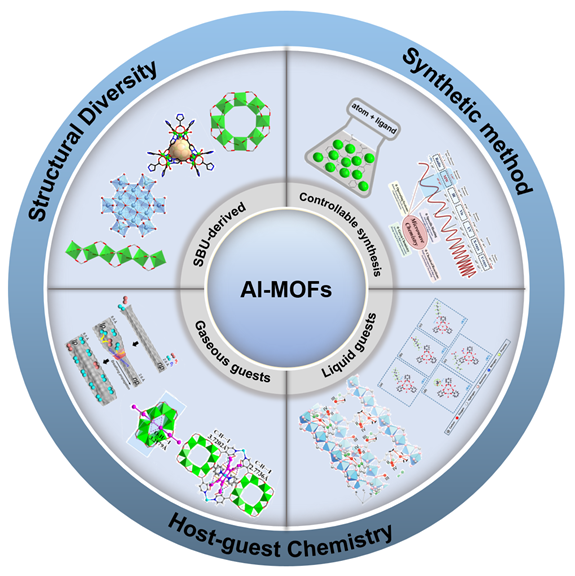
Metal-Organic Frameworks (MOFs) are a class of highly ordered, periodic porous crystalline materials self-assembled from metal ions or metal clusters and organic ligands via coordination bonds, featuring ultra-high porosity and specific surface area. Stems from the abundant and designable metal nodes and organic ligands in MOFs, they exhibit extensive application value in the fields of catalysis,[1] adsorption,[2] host-guest chemistry,[3] sensing[4] electrochemistry[5] and so on. To date, tens of thousands of MOF materials have been reported. However, many of them exhibit low stability under harsh environments and are relatively expensive. To achieve large-scale production of MOFs with low economic cost for diverse applications, researchers have increasingly shifted their focus to lighter and cheaper metal elements such as calcium, magnesium, and aluminum. Among these metals, aluminum has attracted considerable attention due to its low cost, abundant reserves, and ready availability. As the most abundant and low-cost metallic element in the Earth’s crust, aluminum exists widely in nature in forms including bauxite, corundum, aluminosilicates, and aluminum phosphates. Research on the controllable synthesis of its atomically precise crystalline compounds is not only critical for the targeted assembly of functional materials but also promotes the development of interdisciplinary fields including geochemistry, coordination chemistry, materials science, environmental chemistry, and biochemistry.
Besides its advantages in reserve abundance, aluminum also exhibits distinctive structural features. As a p-block metal in the third period with no electrons in the d orbitals, aluminum generally does not form metal-metal bonds. Instead, it tends to form stable coordination tetrahedra (four-coordinate) or octahedra (six-coordinate) with ligands (usually O as the coordinating atom). Although classified as a classic Lewis hard acid, it can also bind with N, S, and other elements, showing high coordination flexibility. Furthermore, driven by the structure-directing effects of ligands with different configurations, Al can readily form infinite chain structures via Al—O—Al connections, or cyclic structures through head-to-tail connections. Under the influence of certain special ligands, regular polyhedral structures can also be formed via Al—O bonds. These unique advantages endow Al-MOFs with remarkably fascinating structural diversity.
More importantly, these structural units formed by the hydrolysis of Al3+ also affect the topology structure of Al-MOFs to some extent. They are usually connected in the form of common edges or common vertices, forming different stacking structures. For instance, chain-like structural units tend to form close-packed or honeycomb-like packings, while the packing of cyclic structural units depends on the number of metal nuclei within the ring. Polyhedral structural units readily lead to corresponding cage-like or porous packings in MOFs.
The diverse topologies formed by these different struct-ural units directly influence the porosity and specific surface area of Al-MOFs, which have critical influence on the performances in various applications. For example, a higher porosity is beneficial for properties such as the adsorption of large guest molecules. However, excessive porosity may compromise the structural stability. Therefore, the secondary building units (SBUs) in Al-MOFs directly or indirectly determine the overall structural performance.
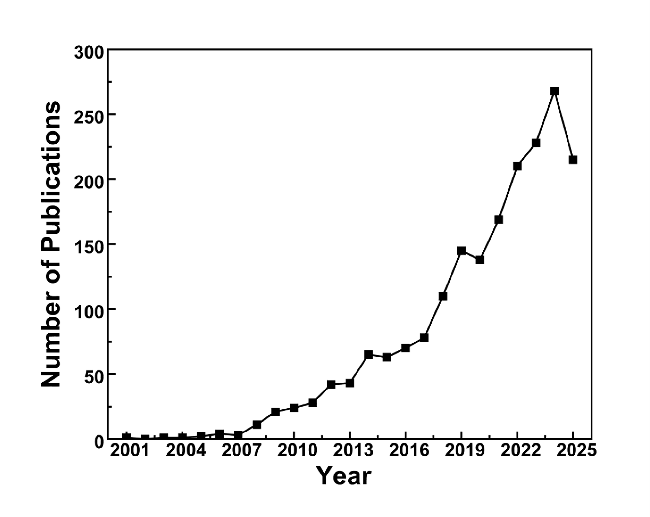
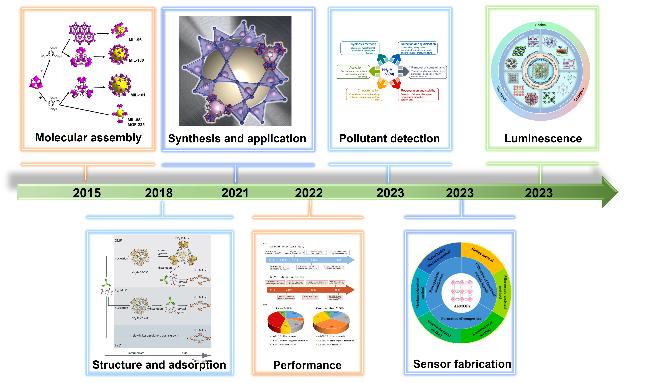
In the previous reports, several reviews have summarized the synthesis and applications of Al-MOFs, including gas adsorption, luminescence, sensing, and other scenarios[7-14] (Figure 2). However, we noticed that reviews focusing on host-guest chemistry using Al-MOFs as a platform remain scarce. Furthermore, the SBUs for constructing Al-MOFs have developed rapidly since 2023, and thus the structural diversity of Al-MOFs has been greatly expanded. Nevertheless, few reviews have covered these advances comprehensively and timely after 2023. To fill the gap in summarizing host-guest chemistry of Al-MOFs among existing reviews, this review detailly discussed the synthetic methods, SBUs, and specific structures of Al-MOFs derived from various SBUs reported after 2023. In addition, this review also highlighted the reported host-guest chemistry applications of Al-MOFs and analyzed the adsorption mechanisms and active sites of guest molecules. Finally, the current status and future prospects of Al-MOFs and their host-guest research are summarized and outlooked.
2 Synthetic Methods of Al-MOFs
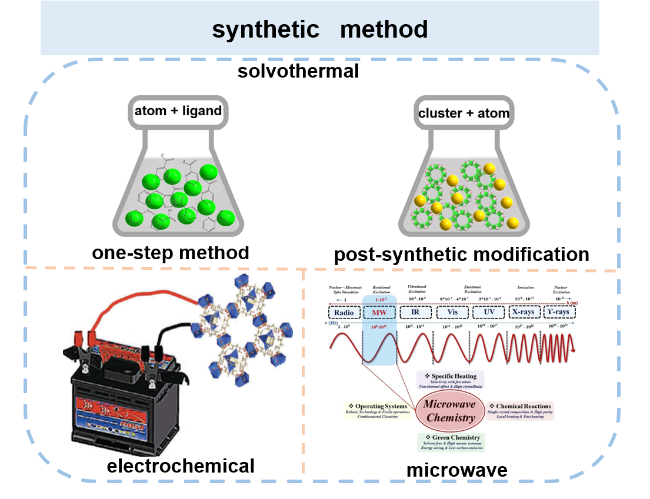
Since the development of MOFs, in addition to the traditional solvothermal synthetic method, how to synthesize MOFs under milder and more efficient conditions has become a major focus for many researchers. A series of novel synthetic methods have been continuously explored and applied, such as microwave-assisted synthesis, electrochemical synthesis, laser synthesis, dry-gel conversion, and sol-gel synthesis (Figure 3).[15] In this section, besides introducing the traditional solvothermal method, the novel synthetic methods used in the reported synthesis of Al-MOFs will be highlighted, including microwave synthesis and electrochemical synthesis, and conduct a comparative analysis of these three synthetic methods.
2.1 Solvothermal Synthesis Method
Solvothermal synthesis is a commonly employed method for the preparation of MOFs. It is highly favored among various advanced synthetic approaches due to its good operability, high crystallinity, and cost-effectiveness compared with other methods. The solvothermal method has been successfully used in the synthesis of various classic Al-MOFs, such as CAU-8,[16] MIL-96,[17] MIL-110[18] and MOF-303.[19] Solvothermal synthesis can be further categorized into one-pot synthesis and post-synthetic modifications.
2.1.1 One-pot synthesis method
In one-step synthesis, specific metal sources, ligands, and various solvents are employed and added into a reaction vessel, such as a capped glass bottle or a Teflon-lined autoclave. After thorough mixing, the mixture is heated at a constant temperature for a period ranging from one day to dozens of days. Solvothermal synthesis is easy to operate, and the reaction process can be readily controlled. Meanwhile, the high-temperature and high-pressure reaction environment may accelerate the dissolution and dispersion of reactants, thus improve the reactivity and greatly shorten the reaction period. The key to solvothermal synthesis lies in the appropriate molar ratios, reaction temperature and solvent system. By selecting different solvent systems (e.g., water, ethanol, ethylene glycol, etc.), adjusting the reaction temperature and time, and using surfactants or mineralizers (e.g., urea), the crystal phase, morphology, and size of the products can be effectively controlled.
2.1.2 Post-synthetic modification method
The two-step method, also known as post-synthetic modification (PSM), involves using pre-synthesized clusters as precursors for further assembly, and this method has been widely applied in the synthesis of various functional materials. In the synthesis of Al-MOFs, this approach is often utilized for the preparation of heterometallic Al-MOFs. Compared with the one-step method, the two-step method exhibits better controllability in materials synthesis. Notably, when processing solution-phase assembly, the high yield and good solubility of employed precursors are usually required, while pristine clusters containing coordination unsaturated sites may meet the requirement in solid-phase modification.
2.2 Microwave-assisted synthesis method
Microwave is a type of non-ionizing electromagnetic radiation with a frequency range of 300 MHz to 30 GHz, whose energy is insufficient to break chemical bonds.[20] The principle of microwave heating is that certain materials absorb electromagnetic energy and convert it into heat, involving two mechanisms: ionic conduction and dipole polarization. Specifically, when materials are exposed to microwave irradiation, an oscillating electric field is generated, which affects the rotation of dipoles and leads to the translational motion of free and bound charges.[21] Therefore, microwave-assisted synthesis can also be regarded as an alternative to solvothermal synthesis. In the synthesis of Al-MOF structures, microwave synthesis has been successfully employed by numerous research groups as an advanced method. For example, García Márquez et al.[22] optimized the synthesis of MIL-100 using microwave-assisted synthesis. Khan and co-workers[23] selectively synthesized MIL-100 and MIL-110 from the same reactants by varying experimental parameters of microwave synthesis, as well as realized their mutual transformation.
Compared with the traditional solvothermal method, microwave synthesis features faster synthesis speed, lower energy consumption, and easier access to nanocrystals with uniform size.[24] Notably, only substances with microwave-absorbing properties are suitable to be treated with microwave irradiation. Moreover, the crystal size obtained is smaller than that from the conventional solvothermal method, making it difficult to meet the requirements for single-crystal X-ray diffraction analysis. In addition, the temperature range of microwave heating is relatively narrow, which cannot satisfy the heating demands for all materials. Therefore, microwave heating is still in the early stage of application in the synthesis of Al-MOFs.
2.3 Electrochemical synthesis method
Among various novel methods for MOF synthesis, electrochemical synthesis occupies an important position in material science owing to its advantages such as mild reaction conditions and short synthesis time.[25] Electrochemical synthesis can be divided into direct electrosynthesis and indirect electrosynthesis. For direct electrosynthesis, anodic dissolution is a commonly used approach, in which potential or current is applied to the electrode (anode) immersed in a solution containing electrolyte and organic ligands. Upon application of an anodic voltage, the metal is oxidized to metal ions and released into the solution containing organic linkers. The metal ions then react with the organic linkers near the electrode surface, forming a thin MOF layer.[26] In addition, by varying the electrochemical conditions, metals can achieve different oxidation states, thereby controlling the properties of the resulting oxides.[27-28] In indirect electrosynthesis, the electrochemical reaction serves as one of the synthesis steps for MOFs. Methods include electrophoretic deposition, electro- displacement, and self-template synthesis. Furthermore, since no metal salts are used, direct deposition onto various desired substrates is possible without separating the counter anions of the metal.[29] However, MOFs obtained by electrochemical synthesis usually exhibit poor crystallinity as well and it is difficult to perform single-crystal X-ray diffraction.
Martinez Joaristi et al.[30] successfully synthesized MIL-100, MIL-53, and NH2-MIL-53 via electrochemical synthesis by adjusting the reaction conditions including solvent medium, electrode distance, pH, and current density required for the electrochemical reaction. Compared with the Al-MOFs structures obtained by the solvothermal method, the electrochemical synthesis possesses milder reaction conditions and faster speed, yet its crystallinity is not prominent.
3 Structure Types of Al-MOFs
The most common coordination numbers of aluminum are 4 and 6. In Al-MOFs, since the ligands are mostly carboxylic acid derivatives, aluminum predominantly exists in the form of AlO6 octahedra. These AlO6 building blocks use oxygen atoms as linking atoms, thereby forming a series of regularly arranged SBUs. These SBUs can be classified into infinite 1D chains, molecular rings, aggregated clusters, polyhedron, and other types (Figure 4). Among these, the infinite 1D chain structure is formed by two AlO6 octahedra linked via trans-vertex-sharing or edge-sharing to generate an infinite 1D chain. Owing to the O—C—O bond angles in the carboxylate groups, the AlO6 octahedra are not arranged in a strictly linear fashion. Instead, they form distinct repeating units depending on bond length and angles. The smallest repeating unit may contain one or more AlO6 moieties, and the chain morphology can be planar or helical. In 2012, Yang et al.[31] synthesized an infinite 1D planar chain-type Al-MOF featuring four AlO6 octahedra as a structural building unit, named NOTT-300. Subsequently, in 2015, Du et al.[32] prepared 467-MOF, which possesses the identical 1D chain. In 2018, Sun et al.[33] reported UPC-101-Al, a different infinite 1D planar Al-MOF with one AlO6 octahedron as the repeating unit. Similarly, Al-Fum synthesized by Peng et al.[34] in 2020 exhibits a comparable SBU. Although the SBUs in CAU- 10-H[35] and MIL-160[36] also adopt 1D chains composed of two AlO6 octahedra per repeating unit, they display a helical stacking arrangement. AlTCS-2,[37] which also exhibits helical chains, adopts a repeating unit consisting of four AlO6 polyhedra.
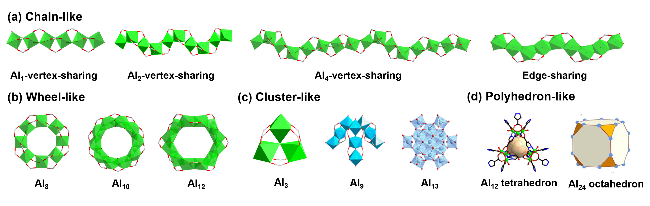
In molecular ring-type building units, the AlO6 octahedra are still arranged in a chain-like manner. However, upon reaching a specific number, the 1D chain connects head-to-tail to form a molecular ring, in which the AlO6 octahedra are mostly linked by trans vertex-sharing. Among cyclic SBUs, most reported Al-MOFs are dominated by Al8 rings, such as BIT-72[38] and AlOC-197. A small part of reported articles use Al10 (e.g. AlOC-80[39] and AlOC-81[39]) and Al12 (e.g. CAU-3[40] and AlOC-85[39]) as building blocks.
In cluster-type building units, AlO6 polyhedra are also connected via vertex-sharing or edge-sharing. However, unlike 1D chain or molecular ring SBUs, where two octahedra are infinitely linked through trans oxygen atoms, one octahedron connects to two or more octahedra, thereby forming a highly aggregated cluster-type structural unit. Among them, Al3 building blocks are dominant, such as BUT-22,[41] UPC-200[42] and PCN-332.[1] In addition, other oligomers include HIAM-340[43] with Al9 SBUs and CAU-6[44] with Al13 SBUs.
In polyhedral-type building units, multiple AlO6 nodes and ligands together constitute a class of SBUs with specific configurations (e.g., cage-type building units). Examples include AlOC-200-Cu and AlOC-200-Ag,[45] which employ an Al12 cage as the SBU, and FDM-91,[46] which innovatively uses an Al24 cage as the SBU.
In the review summarized by Liu et al.,[7] Al-MOFs reported before 2023 were classified and illustrated according to their Al-based SBUs, with detailed descriptions provided for the corresponding structure of each Al-MOF. To avoid unnecessary repetition, this review will take SBUs as the classification criterion, focusing on the synthetic methods and corresponding structures of Al-MOFs reported after 2023 for detailed supplementation (Figure 5). The following table lists the structural information of the involved Al-MOFs (Table 1).
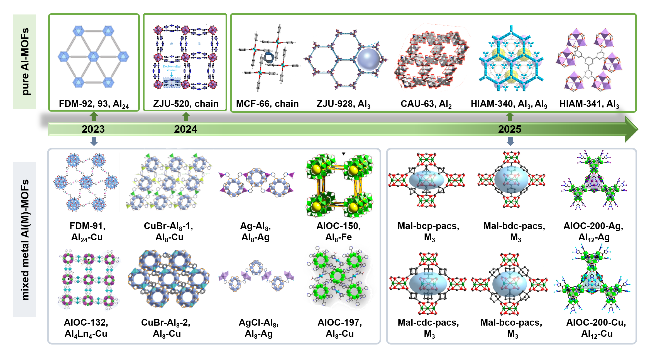
Figure 5 Al-MOFs structures and their SBUs reported from 2023~2025 (Copyright © 2022 Wiley-VCH GmbH, copyright © Hu Laigang 2024, copyright © 2025 American Chemical Society, copyright © 2025 Wiley-VCH GmbH, copyright © 2025 Wegner Lasse Published by American Chemical Society, copyright © 2025 American Chemical Society, copyright © 2025 SIOC, CAS, Shanghai, Wiley-VCH GmbH, copyright © 2023 Wiley-VCH GmbH, copyright © 2024 American Chemical Society, copyright © the Partner Organisations 2022, copyright © the Partner Organisations 2024, copyright © 2025 American Chemical Society, copyright © 2025 Wiley-VCH GmbH) |
Table 1 Summary of aluminum MOFs and their synthesis conditions |
| MOFs | Formula | Linker | SBU | Condition | BET/(m2•g-1)a | Ref. |
|---|---|---|---|---|---|---|
| ZJU-520 | AlC18H10O5N2 | H2DBP | [Al(OH)(COO)2]n | 130 ℃, 72 h | 2235 | [47] |
| MCF-66 | AlC14H11O5 | HBA | [Al(OH)(COO)2]n | 160 ℃, 48 h | — | [48] |
| ZJU-928 | Al16C90O79H42 | H3BTA | [Al8(OH)15(COO)9] | 130 ℃, 72 h | 2344 | [3] |
| HIAM-340 | Al27C222H153O141 | H6btei | [Al9(OH)15(COO)12], [Al3O(COO)4] | 155 ℃, 72 h | 2800 | [43] |
| HIAM-341 | Al3C30H12O16 | H6BHB | [Al3O(OH)3(COO)6] | 180 ℃, 72 h | 1094 | [49] |
| CAU-63 | Al7C21H24O27N3 | 2,4-H2Pydc | Al4O14N2 | 135 ℃, 6 h | — | [50] |
| AlOC-200-Cu | Al12C72H76O56N48Cu12 | HPyzc | [Al12(µ3-O)4(Hpyzc)12(COO)6(H2O)12] | 100 ℃, 24 h | 1526.2 | [45] |
| AlOC-200-Ag | Al12C72H48O40N48Ag12 | Hpyzc | [Al12(µ3-O)4(Hpyzc)12(COO)6(H2O)12] | 100 ℃, 24 h | 1461.8 | [45] |
| MAl-bcp-pacs | (M)3-x(Al2)x(O/OH)(bcp)3(tpbz) | tpbz | M2Al(OH) (M=Mg, Mn, Co, Ni) | 130 ℃, 24 h | 1027 | [51] |
| MAl-bdc-pacs | (M)3-x(Al2)x(O/OH)(bdc)3(tpt) | tpt | M2Al(OH) (M=Mg, Mn, Co, Ni) | 150 ℃, 15 h | 1328 | [51] |
| MAl-bdc-pacs | (M)3-x(Al2)x(O/OH)(bdc)3(tppy) | tppy | M2Al(OH) (M=Mg, Mn, Co, Ni) | 130 ℃, 15 h | — | [51] |
| AlOC-132 | Al4C88H120O32N16Eu4Cu4I4 | Hpyba | [Al4Eu4(IN)8(COO)8(H2O)] | 100 ℃, 96 h | — | [52] |
| AlOC-197 | Al8C96H110N12O37.25Cu2Cl3 | HNA | [Al8(µ-OH)4(OiPr)8(COO)12(Cl)] | 100 ℃, 120 h | — | [53] |
| Ag-Al8 | Al8C101H76O46N19Ag2F6S2 | HNA | [Al8(OH)8(COO)16] | 100 ℃, 168 h | — | [54] |
| AgCl-Al8 | Al8C98H86O46N16Ag6Cl20F6S2 | HNA | [Al8(OH)8(COO)16] | 100 ℃, 168 h | — | [54] |
| CuBr-Al8-1 | Al8C107H80O44N19Cu4Br3 | HNA | [Al8(OH)8(COO)16] | 100 ℃, 168 h | — | [54] |
| CuBr-Al8-2 | Al8C108H72O44N18Cu4Br2 | HNA | [Al8(OH)8(COO)16] | 100 ℃, 168 h | — | [54] |
a Langmuir surface area. Ligands are abbreviated as: H2DBP=4,6-di(4-carboxyphenyl)pyrimidine, HBA=benzoic acid, H3BTA=biphenyl-3,4′,5tricarboxylic acid, H6btei=1,3,5-tris(3,5dicarboxyphenylethynyl)benzene, H6BHB=5'-(3,5-dicarboxyphenyl)-[1,1':3',1''-terphenyl]-3,3'',5,5''-tetracarboxylic acid, 2,4-H2Pydc=pyridine-2,4-dicarboxylic acid, HPyzc=4-pyrazolecarboxylic acid, tpbz=1,3,5-tri(4pyridyl)benzene, tpt=(2,4,6-tri(4-pyridyl)-1,3,5-triazine), tppy=2,4,6-tri(4-pyridyl)pyridine, Hpyba=4-(4pyridyl) benzoic acid, HNA=nicotinic acid. |
3.1 Al-MOFs
The SBUs of Al-MOFs can be classified into aluminum-based 1D chains, polyhedra, clusters, and molecular rings. All the Al-MOF structures discussed in this review are categorized according to these SBUs.
3.1.1 1D chain SBU
Hu et al.[47] employed a one-step solvothermal method using 4,6-bis(4-carboxyphenyl)pyrimidine (H2DBP) as the ligand and aluminum nitrate nonahydrate as the aluminum source. The reaction was carried out at 130 ℃ for 72 h in a mixture of dimethylformamide (DMF) and formic acid, yielding rod-shaped crystalline product ZJU-520. In ZJU-520, which features helical chains formed by AlO6 clusters, each Al3+ center is octahedrally coordinated with oxygen atoms from four DBP2- ligands and two bridging hydroxyl anions. The AlO6 clusters are further coordinated with DBP2- ligands to construct a 3D framework.
Zhang et al.[48] obtained gram-scale MCF-66 quantitatively via a one-step solvothermal reaction of benzoic acid with aluminum hydroxide at 160 ℃ for 48 h. MCF-66 contains two Al(III) ions, and each Al(III) atom adopts an octahedral coordination geometry with four carboxylate oxygen atoms from four benzoic acid ligands and two μ-OH− groups. Each benzoic acid ligand bridges two Al(III) atoms via its two carboxylate groups. Each AlO6 octahedra form an infinite one-dimensional chain extending along the a-axis in a trans-corner-sharing mode.
3.1.2 Aggregated SBU
Li et al.[46] employed a one-step method, in which AlCl3• 6H2O, Cu(NO3)2•3H2O, and H2PyC were reacted solvothermally at 85 ℃ for 72 h in a mixed solvent of N,N-dimethylacetamide (DMA) and methanol, affording FDM-91 constructed from interconnected Al24 truncated cubic cages as SBUs. Three Al3+ ions are linked by one central μ3-OH and three μ2-OCH3 groups, forming a trimer based on three edge-sharing AlO6 octahedra. Each AlO6 octahedron in the trimer is further linked to adjacent trimers via two μ2-OH groups, and eight such trimers enclose to form a large truncated cubic unit. Subsequently, the bis-coordinated [Cu(HPyC)2] complex in FDM-91 was replaced by 1,1'-biphenyl-4,4'-dicarboxylate (BPDC) or 2,2'-bipyridine-5,5'-dicarboxylate (BPyDC), affording two new MOFs, named FDM-92 and FDM-93, respectively.
Hu et al.[3] employed a one-step method by adding biphenyl-3,4',5-tricarboxylic acid (H3BTA) and Al(NO3)3• 9H2O into a mixed solvent of DMF, water, and formic acid. After dissolution via ultrasonication, the mixture was heated at 130 ℃ for 72 h. ZJU-928 is composed of SBUs based on aggregated AlO6 clusters, Al8(OH)15(COO-)9, and H3BTA ligands linked via coordination bonds, forming ordered hexagonal channels. There are two types of aluminum sites in the SBU of ZJU-928, denoted as Al(1) and Al(2). The Al(1) octahedron has a formula of AlO3(OH)3, in which the first three oxygen atoms are from the carboxylate groups of H3BTA ligands, and the latter three are from hydroxyl groups. Al(2) octahedron (AlO2(OH)4) contains two oxygen atoms from carboxylate groups of H3BTA ligands and four oxygen atoms from hydroxyl groups.
Wang et al.[43] prepared the colorless crystalline HIAM-340 via a one-step solvothermal method. The reaction was carried out at 155 ℃ for 3 d in DMF and formic acid as solvents, using aluminum nitrate nonahydrate as the metal source and 1,3,5-tris(3,5-dicarboxyphenylethynyl)- benzene (H6btei) as the ligand. The crystal structure of HIAM-340 consists of two distinct secondary building units: a nine-connected [Al(OH)]9(COO)12 cluster (Al9) and a four-connected Al3O(COO)4 cluster (Al3). In these two clusters, the Al9 cluster is bridged by nine hydroxyl oxygen atoms and linked to twelve carboxylate groups from nine beti6- ligands. The remaining coordination sites of the Al9 cluster are occupied by six terminal hydroxyl groups and six terminal H2O molecules. The Al3 cluster, connected via μ3-O, coordinates to four carboxylate groups, two terminal formate groups, one terminal hydroxyl group, and two terminal H2O molecules, from four different beti6− ligands.
In the same year, Wang et al.[49] further synthesized HIAM- 341 via a solvothermal reaction at 180 ℃ for 3 d, using aluminum nitrate nonahydrate as the aluminum source and 5'-(3,5-dicarboxyphenyl)-[1,1':3',1''-terphenyl]- 3,3'',5,5''-tetracarboxylic acid (H6BHB) as the ligand. HIAM-341 is constructed from six-connected trinuclear Al3 clusters, which are linked by BHB6- ligands. The three Al3+ ions in the Al3 cluster are bridged by a central μ3-O unit, and each cluster is coordinated with terminal hydroxyl groups and two terminal water molecules. In addition, each Al3 cluster is connected to six carboxylate groups from H6BHB ligands, while each ligand bridges six Al3 clusters.
Stock et al.[50] obtained CAU-63 via microwave synthesis by heating pyridine-2,4-dicarboxylic acid (2,4-H2Pydc) and aluminum chloride in an aqueous aluminum hydroxide solution at 135 ℃ for 6 h. The SBU of CAU-63 consists of (Al4O14N2) tetramers, which are linked into a honeycomb network through additional corner-sharing of {AlO6} octahedra. Both carboxylate groups on each ligand and the atoms of the pyridine ring coordinate to one Al3+ center.
3.2 Heterometallic Al-MOFs
The introduction of heterometals generally involves two approaches. The first is one-pot synthesis, in which a second metal is incorporated into Al-MOFs via metal coordination using free binding sites on the ligands, forming mixed-metal Al(M)-MOFs. The second is post synthetic heterometal doping, in which additional metals are introduced into the pre-formed SBU structures of Al-MOFs. Besides these two methods, there is an uncommon stepwise approach that uses metal clusters as precursors and then assembles them with the target metals. The introduction of heterometals can significantly modify the properties of Al-MOFs.
3.2.1 Aggregated SBU
Zhang et al.[45] obtained two heterometallic Al-MOFs, namely AlOC-200-Cu and AlOC-200-Ag, via a post-synthetic modification method in which single crystals of the Al12 Archimedean cage (AlOC-200) were soaked in solutions of various metal salts, taking advantage of the nitrogen sites on the pyrazole carboxylic acid ligands. In AlOC-200, each Al3 is associated with three partially deprotonated pyrazole carboxylic acid ligands, endowing the Al12 tetrahedral cage with 24 uncoordinated nitrogen atoms and 12 terminal H2O molecules. The two MOFs share the same main structure, in which Cu2+ and Ag+ ions are inserted into the N—H…N pocket, forming N—Cu—N and O—Cu—O coordination bonds, giving rise to a square-planar coordination geometry.
Feng et al.[51] successfully synthesized a series of heterometallic trinuclear cluster-doped Al-MOFs, including MAl-bcp-pacs, MAl-bdc-pacs, MAl-cdc-pacs, and MAl-bco-pacs (where M=Mg, Mn, Co, Ni), using metal salts such as Mg, Mn, Co, and Ni, together with aluminum lactate and ligands including tpt, tppy, and tpbz, by adjusting hydrothermal reaction conditions. They also investigated the growth process of synergistic crystallization between M2+ and Al3+.
3.2.2 M8 molecular ring SBU
Based on the synergistic coordination and the hard-soft acid-base (HSAB) theory, Zhang et al.[52] realized the precise incorporation of the second and third metals into the aluminum macrocycle using a stepwise controlled strategy. They sonicated aluminum isopropoxide, europium nitrate, and sodium benzoate in a mixed solvent of N-methyldiethanolamine and DMF. After reaction at 120 ℃ for 4 d, colorless crystals of AlOC-130 were obtained. Substituting sodium benzoate with isonicotinic acid as the ligand afforded AlOC-131. Subsequently, Cu(I) was added into the mother liquor of AlOC-131, yielding the Al-MOF material AlOC-132, in which eight isonicotinic acid moieties on each heterocycle are linked to eight surrounding heterocycles via Cu2I2 units, forming a 4,8-connected scu net. Besides, Zhang et al.[53] synthesized a heterometallic Al-MOF (AlOC-197) via solvothermal reaction at 100 ℃ using nicotinic acid as the ligand, copper(I) chloride as the heterometal source, aluminum isopropoxide and propanol as reactants. The eight-membered ring is composed of eight hexacoordinate Al3+ ions, twelve deprotonated nicotinic acid ligands, eight deprotonated propanol molecules, and four bridging hydroxyl groups. The cluster core can be viewed as four edge-sharing {Al2} units bridged by four hydroxyl groups in a corner-sharing fashion. Each of the twelve deprotonated nicotinic acid ligands is located at the polar and equatorial positions of the molecular ring, respectively. {Al8} ring is connected to four copper halide clusters at the equator via nicotinic acid ligands, and copper halide cluster links to four {Al8} SBUs, thus forming a four-connected sql topology.
Wang et al.[54] also employed the Al8 molecular ring with nicotinic acid as the ligand. Through the coordination reaction between aluminum ions and Ag+/Cu+, they successfully synthesized four heterometal-doped Al-MOFs: Ag-Al8, AgCl-Al8, CuBr-Al8-1 and CuBr-Al8-2. All of them adopt Al8 clusters as building units, forming infinite network structures linked by different Ag/AgCl/CuBr- pyridyl N moieties as connecting groups.
4 Host-guest chemistry applications
Due to their ultra-large specific surface area and high porosity, Al-MOFs exhibit unique properties in various fields, such as drug encapsulation,[55] electrochemical-luminescence,[56] drug delivery,[57] fluorescent sensors,[4] electro-catalysis[58] and organocatalysis.[56] Among these applications, host-guest chemistry has attracted increasing attention in recent years. Host-guest chemistry, particularly the self-assembly of molecular systems into highly ordered functional assemblies via supramolecular interactions, has become one of the defining concepts of supramolecular chemistry.[10]
Host-guest chemistry mainly focuses on the specific interactions between host materials and guest molecules. The abundant cavities and designable organic structural units of MOFs provide them with numerous interaction sites within the pores to disperse, immobilize, or stabilize guest species,[59-60] making them excellent host platforms for host-guest chemistry research and promising wide applications in the selective capture of guest molecules (Figure 6).
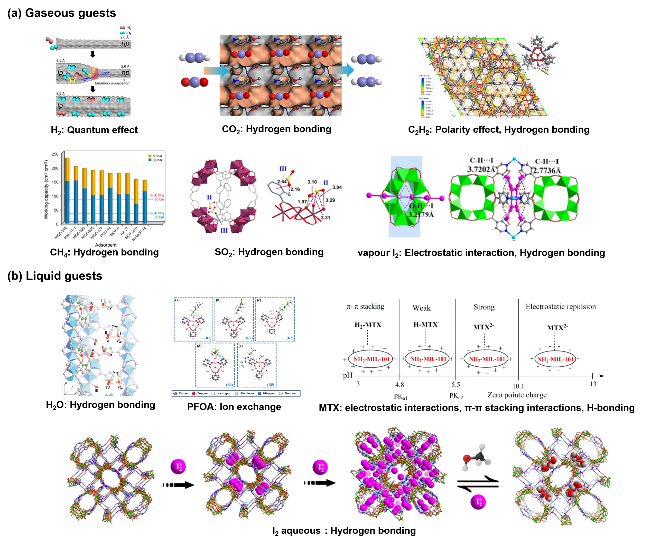


Figure 6 Host-guest chemistry of Al-MOFs: (a) gaseous guests like H2, CO2, C2H2, CH4 and I2 vapour (Copyright © 2017 American Chemical Society, copyright © 2023 American Chemical Society, copyright © 2020 American Chemical Society, copyright © 2014 American Chemical Society, copyright © 2024 the Royal Society of Chemistry © the Partner Organisations 2024) and (b) liquid guests like H2O, PFOA and aqueous I2 (Copyright © 2019, American Chemical Society, copyright © 2024 Elsevier B.V., copyright © 2021 Wiley-VCH GmbH) |
4.1 Gaseous guests
MOFs are excellent adsorbents due to their high porosity and large specific surface area, which endow them with abundant cavities and relatively exposed adsorption sites. Al-MOFs exhibit strong thermal and air stability and can even resolve specific gas adsorption sites in their single-crystal structures, granting them broader application potential in gas adsorption.
4.1.1 Hydrogen
In the hydrogen adsorption of Al-MOFs, the adsorption is mainly driven by quantum effects. After predicting the feasibility of this Al-MOF for gaseous guest adsorption via theoretical calculations based on the MOFs database, and activated the MOF, Chen et al.[61] investigated hydrogen adsorption using NU-1501-Al, which possesses an ultrahigh Brunauer-Emmett-Teller (BET) surface area, and the H2 adsorption isotherms show that the uptake reaches 47.9 g/L at 10 MPa/77 K, 46.2 g/L at 0.5 MPa/160 K, and 8.4 g/L at 10 MPa /296 K, which far exceeds the values reported for other MOFs.
Fan et al.[33] tested the permanent porosity of UPC-101-Al using N2 and then applied it to hydrogen storage and separation. They found that this MOF exhibits strong binding affinity for hydrogen, with a hydrogen uptake of 302.0 cm3/g at 77 K and 10.0 MPa, corresponding to a liquid hydrogen ratio of 64%. This is attributed to the high Al3+ density as well as its outstanding chemical and thermal stability.
4.1.2 Carbon dioxide
CO2 adsorption in Al-MOFs is mainly dominated by hydrogen bonding interactions. Volkringer et al.[62] designed and synthesized MIL-120, and tested its hydrogen adsorption performance. They sealed the samples in a closed stainless steel sample holder. Before the adsorption measurements, the sample was degassed under secondary vacuum at 200 ℃ for 10 h. The sample holder was immersed in liquid nitrogen at 77 K or a thermostatted water bath at 298 K. High-purity hydrogen was gradually introduced up to 8 MPa. After reaching thermodynamic equilibrium, the pressure changes caused by gas cooling and hydrogen adsorption were measured. The test was repeated twice, and the hydrogen uptake of the sample was determined to be 1.83 cm3/g.
Wang et al.[32] synthesized 467-MOF, which exhibits highly selective adsorption of CO2. 467-MOF is not only stable in air but also thermally stable up to at least 350 ℃. The calculated BET surface area is 557 m2/g. At 273 K and 293 K, the CO2/H2 adsorption selectivity of 467-MOF is approximately 45.
4.1.3 Acetylene
Acetylene is adsorbed in Al-MOFs primarily via polar interactions and hydrogen bonding. Fan et al.[42] reported a material UPC-200(Al)-F-BIM composed of Al3+ clusters, fluorine-functionalized organic linkers, and benzimidazole terminal ligands. Compared with the unmodified UPC- 200(Fe)-F-H2O, the introduction of fluorine functional groups and pendant benzimidazole ligands improved the separation efficiency by 74%, exhibiting the highest separation efficiency with a C2H2/CO2 uptake ratio of 2.6. Five consecutive C2H2/CO2 dynamic breakthrough experiments were carried out on UPC-200(Al)-F-BIM. And the results demonstrated that UPC-200(Al)-F-BIM maintained the same retention time and acetylene uptake capacity as the pristine adsorbent, revealing the high stability of Al-MOFs.
4.1.4 Methane
Methane is adsorbed in Al-MOFs primarily through hydrogen bonding interactions. Yaghi et al.[63] synthesized MOF-519 and MOF-520 in 2014. And the estimated BET surface areas of MOF-519 and MOF-520 are 2400 (2660) and 3290 (3630) m2•g-1. The methane adsorption isotherms of MOF-519 and MOF-520 were measured at 298 K using a high-pressure volumetric gas adsorption analyzer. The uptake saturated at approximately 8.0 MPa (215 and 288 cm3•g-1 for MOF-519 and MOF-520, respectively). In terms of gravimetric uptake capacity, MOF-520 outperforms MOF-519. The total uptake and working capacity of MOF-519 were also investigated. At 8.0 MPa, MOF-519 exhibits a total volumetric capacity of 279 cm3•cm-3, outperforming any other reported MOF.
Wang et al.[41] investigated the gas storage capacity of highly stable microporous BUT-22. At 296 K and 8.0 MPa, BUT-22 exhibits a high gravimetric CH4 storage capacity of 530 cm3 (STP)/g (or 0.379 g/g). The gravimetric deliverable capacity of BUT-22 is 0.334 g/g within the pressure range of 8.0~0.5 MPa at 296 K.
4.1.5 Sulfur dioxide
Sulfur dioxide is adsorbed in Al-MOFs mainly through hydrogen bonding interactions. Yang et al.[64] used HIAM-330 to adsorb SO2, with an adsorption capacity reaching 12.1 mmol•g-1. It is capable of selective capture of SO2 over other gases (CO2, CH4, and N2) with high adsorption selectivities of 60, 330, and 3537 for equimolar mixtures of SO2/CO2, SO2/CH4, and SO2/N2, respectively, at 298 K and 0.1 MPa. Breakthrough measurements verified the capability of HIAM-330 for selective capture of SO2 (0.25% SO2 diluted in He) over CO2 or N2.
4.1.6 Iodine vapor
The toxicity, corrosiveness, and volatility of halogens pose severe challenges to their safe storage and transportation. Therefore, adsorptive pre-immobilization using MOFs has become one of the research focuses.[65] Iodine vapor adsorption in Al-MOFs is mainly governed by the combined effects of electrostatic interactions and hydrogen bonding interactions. In 2022, Zhang et al.[66] employed AlOC-151 for liquid-phase iodine adsorption, taking advantage of the appropriate pore size of the Al8 rings and the porosity generated by the co-assembly of Al8 rings and PT ligands. They sealed an open vial containing 20 mg of the sample and 200 mg of iodine in a 100 mL blue-capped glass container, which was then placed in an oven at 80 ℃. The vial with the iodine-adsorbed sample was weighed periodically until no significant mass change was observed and plotted the kinetic curve accordingly. This porous material exhibits a considerable iodine capture capacity.
Later in 2025, Zhang et al.[45] prepared AlOC-200-Ag from Al12 Archimedean cages via a two-step method. Benefiting from its fully exposed and immobilized unsaturated metal sites, AlOC-200-Ag was applied to the adsorption of radioactive iodine vapor. At an I2 concentration of 0.16 mg•L-1 and a flow rate of 0.6 L•min-1, the dynamic I2 of AlOC-200-Ag were 0.217 g/g at 348 K and 0.207 g/g at 403 K, respectively. Considering the temperature requirements in practical applications, the dynamic adsorption behavior of AlOC-200-Ag toward CH3I at high temperatures (348 and 403 K) was further investigated. With increasing temperature, AlOC-200-Ag exhibited higher capacity and faster adsorption. It achieved an exceptional adsorption capacity of 0.239 g/g at 348 K and rapid adsorption with a kinetic constant of 1.23 h-1 at 403 K.
Different from most host-guest chemistry applications of Al-MOFs, AlOC-151 and AlOC-200-Ag allow the explicit identification of guest adsorption sites at the single-crystal level, enabling the study of the structure-activity relationship between guest-pore matching and host-guest interactions in Al-MOFs. This is of great significance for the rational construction of high-performance Al-MOF adsorbents with optimized binding sites.
4.2 Liquid guests
Water resources are fundamental for human survival and development and are of great significance. Besides their excellent gas adsorption performance, Al-MOFs also exhibit outstanding water stability, endowing them with prominent application potential in water storage and wastewater treatment.
4.2.1 Water
Water is adsorbed in Al-MOFs mainly through hydrogen bonding interactions. In 2021, Yaghi et al.[67] performed water vapor adsorption tests on MOF-303. Through a series of single-crystal X-ray diffraction measurements and density functional theory calculations, they deciphered the water-filling mechanism of MOF-303, a state-of-the-art water-harvesting metal-organic framework. The first water molecule binds to pyrazole via hydrogen bonding. Subsequently, the first water molecule binds to pyrazole via hydrogen bonding. Additional water molecules fill the pores by interacting with other water molecules rather than with the framework itself, forming isolated clusters, followed by cluster chains, and finally a continuous water network. After 2000 adsorption-desorption cycles, the adsorbent retained approximately 97% of its working capacity.
The adsorption/desorption kinetics of FDM-92 were investigated by Li et al.[46] using thermogravimetric analysis (TGA) and dynamic vapor sorption (DVS). It was found that below 353 K, the adsorbed H2O could be fully released after exposing FDM-92 to air at 70% relative humidity for 2.5 h, indicating that the material can be easily regenerated by mild heating. After being fully activated by heating at 373 K and then exposed to air at 80% relative humidity in a DVS analyzer, reached adsorption equilibrium within only 80 min at 298 K, with a weight uptake of (0.46 g/g). Owing to the abundant electrophilic OH and OCH3 on the SBUs, the gravimetric uptakes of FDM-92 and FDM-93 place them among the top-performing MOF materials for water harvesting applications. Moreover, FDM-92 exhibits a higher uptake capacity than most benchmark MOFs.
4.2.2 Wastewater
Wastewater contaminants are removed by Al-MOFs primarily via ion exchange. Bae et al.[68] employed MIL-100 for the adsorption of perfluorooctanoic acid (C7F15COOH; PFOA) in wastewater. MIL-100 was synthesized via a solvothermal method, activated at 150 ℃ for 2 h, and then used for the adsorption of red mud (RM), with a removal efficiency of 36.8% within 180 min. The effect of ligand dosage on adsorption performance was also investigated. It was found that under the same hydrothermal reaction time, the higher ligand amount, the higher adsorption capacity of the MOF. Calculations revealed that the main adsorption mechanism was Lewis acid-base complexation between Al and PFOA, together with ion exchange between coordinated $\text{NO}_{3}^{}$ and PFOA anions.
4.2.3 Drug solution
Anticancer drugs are widely used due to their growing demand, yet they pose threats to human health and the ecological environment, making them emerging pollutants in water bodies. The simple and rapid removal of such drug contaminants is also of considerable research value. Farhad et al.[69] investigated the host-guest adsorption of the anticancer drug methotrexate (MTX) using Al-MOFs including MIL-53, NH2-MIL-53, and NH2-MIL-101. They dissolved MTX in aqueous solution and placed it in 20 mL test tubes, then added MIL-53, NH2-MIL-53, and NH2-MIL-101 separately at room temperature. After stirring for 15 min, the maximum adsorption capacities of MIL-53, NH2-MIL-53, and NH2-MIL-101 were 374.97, 387.82, and 457.69 mg/g, respectively, using a spectrophotometer. Thermodynamic data revealed that the adsorption of MTX on NH2-MIL-101 is jointly governed by electrostatic interactions, π-π stacking interactions, and H-bonding.
4.2.4 Iodine solution
Iodine solution is adsorbed in Al-MOFs mainly through hydrogen bonding interactions. Zhang et al.[39] designed and synthesized AlOC-85 in 2021, which can rapidly remove iodine from cyclohexane solution. The 20 mg of the as-synthesized material was immersed in 10 mL of 1 mmol/L iodine cyclohexane solution for adsorption. The removal efficiency reached 98.8%, with an uptake capacity of 555.06 mg/g. The locations of iodine molecules were analyzed by Energy Dispersive X-ray Spectroscopy (EDS) and X-ray Photoelectron Spectroscopy (XPS). It was found that the favorable initial binding sites of I2 molecules are located in micropores, where abundant hydrogen-bonding interactions form with the pyridine ring hydrogens, along with I…π (centered on the pyridine ring). In addition, weak interactions with terminal iodide ions of the framework and C—H…halogen interactions from the isonicotinate ligands provide additional binding sites for iodine molecules. A total of five iodine molecules can be captured at the three distinct binding sites. Moreover, slow release of elemental iodine can be achieved by immersing the I2-adsorbed crystals in methanol solution.
5 Summary and Outlook
In recent years, Al-MOFs have played a crucial role in the design and synthesis of functional materials. With the growing emphasis on green chemistry, Al-MOFs have become a "hotspot" in both academic research and emerging industrial applications. In this review, we summarize the main synthetic methods of Al-MOFs, introduce the structural types of Al-MOFs and heterometallic Al-MOFs from the perspective of SBUs, and finally discuss the applications of Al-MOFs in host-guest chemistry. At present, studies on the host-guest chemistry of Al-MOFs are mostly focused on microscopic mechanisms. In the future, promoting the industrial application of host-guest chemistry based on Al-MOFs is expected to become a major trend. However, the following challenges still need to be addressed:
(1) Scalable synthesis of Al-MOFs. Most Al-MOFs can only be synthesized in small quantities in the laboratory, and only a few have been produced at the gram scale, which is still far from large-scale industrial applications. This is mainly because the crystallization of Al-MOFs requires excessively harsh growth conditions. Therefore, the synthetic methods of Al-MOFs need to be further optimized and expanded, and a universal strategy should be developed to scale up production.
(2) Expansion of guest molecules in host-guest chemistry of Al-MOFs. Although Al-MOFs have shown promising performance in host-guest chemistry, the range of investigated guest molecules still needs to be further expanded to fully exploit the advantages of Al-MOFs in this field. It is of great significance to visualize the binding sites and adsorption mechanisms of guest molecules via single-crystal X-ray diffraction and apply these mechanisms to other guest systems.
This review anticipates that the host-guest chemistry applications of Al-MOFs will give rise to more efficient and diverse adsorption systems in the future, which may promote a new paradigm for guest molecule storage. It is hoped that this review will attract broad interest from researchers and jointly advance the in-depth development of this field.
(Zhao, C.)