

Acta Chimica Sinica ›› 2026, Vol. 84 ›› Issue (8): 1376-1394.DOI: 10.6023/A26060208 Previous Articles
Review
戈楠, 鲁统部*( )
)
投稿日期:2026-06-19
发布日期:2026-09-01
作者简介: |
戈楠, 天津理工大学化学化工学院2025级硕士研究生, 主要研究方向为半导体纳米材料的合成及其在光催化领域的应用. |
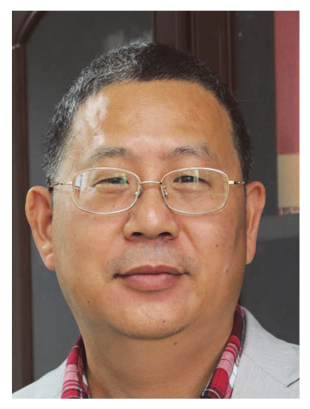 |
鲁统部, 1988年兰州大学获学士学位, 1993年兰州大学获博士学位. 随后进入中山大学博士后流动站工作, 1995年出站后留校任教. 2000年晋升教授, 2016年入职天津理工大学. 目前主要研究方向为双原子催化剂与人工光合作用研究. 已发表论文500余篇, 获授权中国发明专利42项. 论文被他引26000余次, H-指数87, 入选爱思唯尔中国高被引学者和科睿唯安全球高被引学者. 出版《人工光合作用催化剂》专著. 以第三和第五完成人获国家自然科学二等奖2项, 以第一完成人获天津市自然科学一等奖2项. |
★“纪念兰州大学化学学科创建80周年”专辑
基金资助:
Nan Ge, Tongbu Lu*()
Received:2026-06-19
Published:2026-09-01
Contact:
E-mail: About author:★For the VSI “Celebration of 80th Anniversary of Chemistry in Lanzhou University”
Supported by:Share
Nan Ge, Tongbu Lu. Design and Synergistic Mechanism of Dual-Atom Catalysts★[J]. Acta Chimica Sinica, 2026, 84(8): 1376-1394.
| 合成策略 | 锚定/配对机制 | 调控精度 | 主要优势 | 主要局限 |
|---|---|---|---|---|
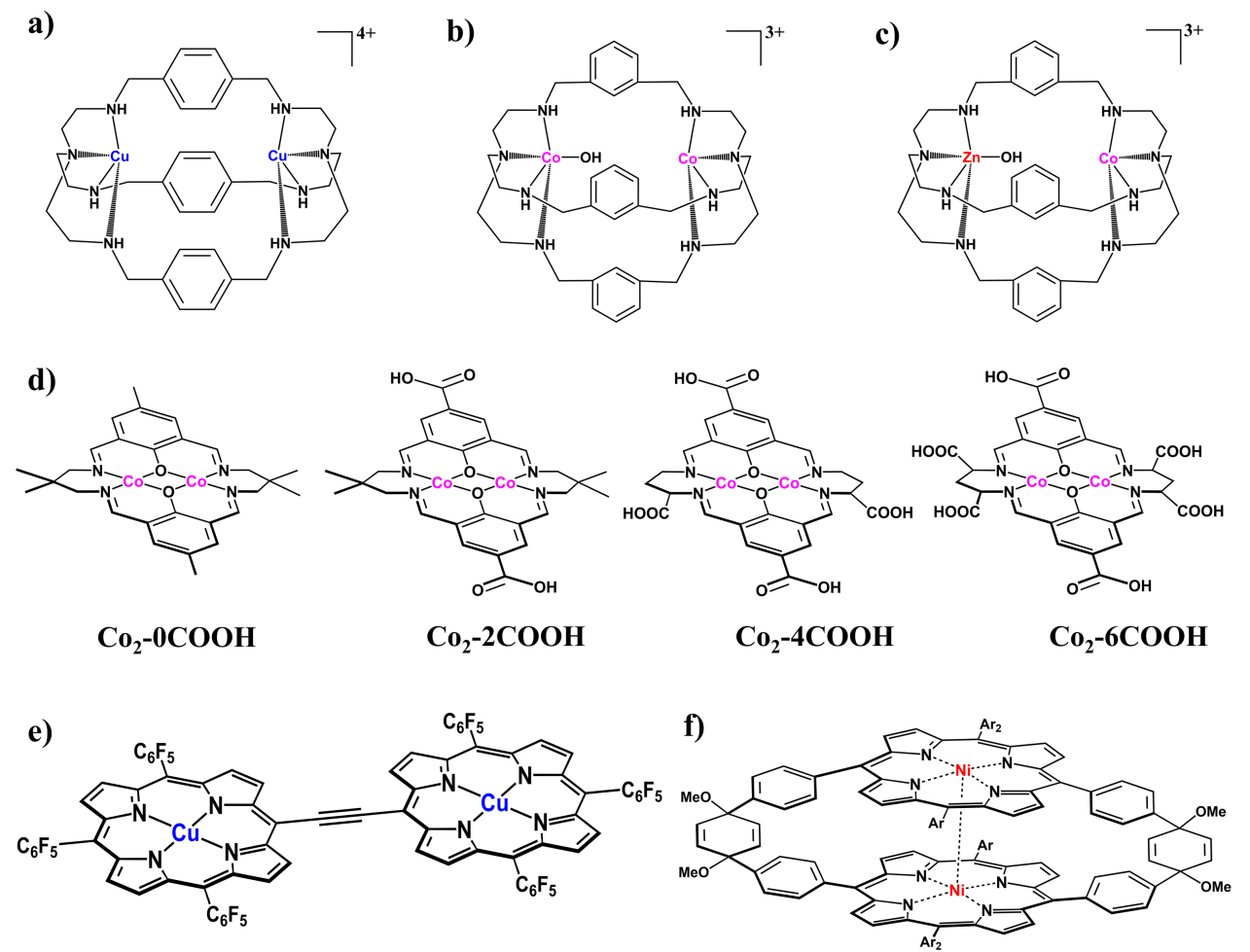
| 大环配体导向合成 | 利用大环配体的配位空腔或桥联结构锚定, 通过配位导向作用锚定双金属中心 | 高 (通过配体结构设计实现精确调控) | 可精准调控双金属间距、双原子均相催化剂纯度高 | 仅适用于双原子均相催化剂的合成 |
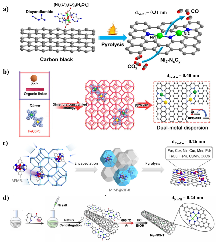
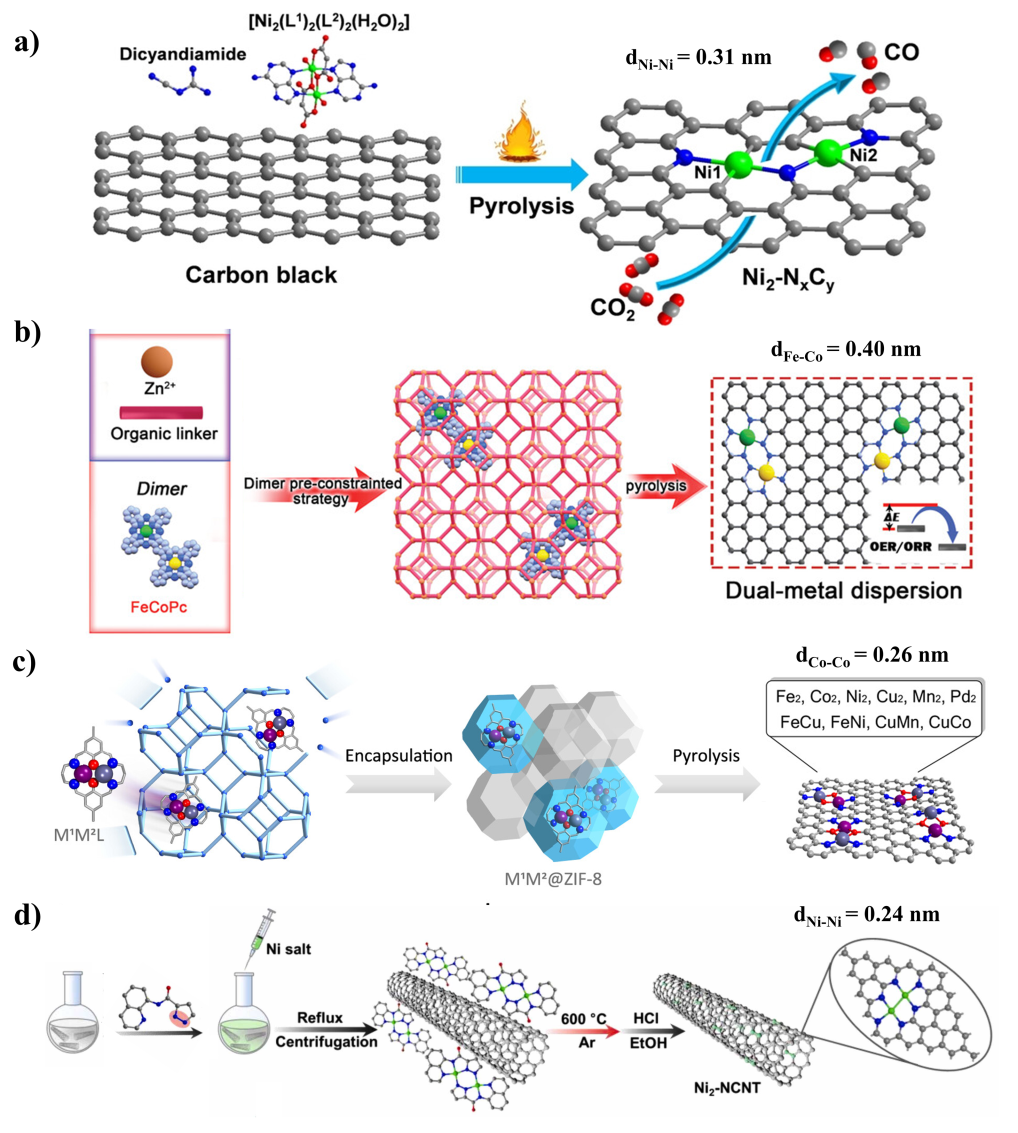
| 双核金属配合物模板合成 | 利用双核金属配合物前驱体稳定双金属位点 | 较高 (由前驱体结构决定, 热解后略有变化) | 适用范围广 | 双原子多相催化剂纯度不可控 |
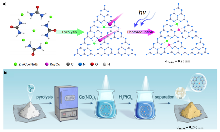
| “导航与定位”合成 | 光生电子富集诱导金属离子定向迁移与配对 | 高 | 可实现异核双原子多相催化剂的快速和宏量合成 | 仅适用于含空配位点的光敏半导体载体(氮化碳等) |
| 离子交换 | 置换晶格内部特定金属位点 | 较低 (由载体固有结构决定, 难以精确调控) | 合成工艺简便, 规模化潜力高 | 适用金属种类较窄, 金属间距不可调 |
| 合成策略 | 锚定/配对机制 | 调控精度 | 主要优势 | 主要局限 |
|---|---|---|---|---|
| 大环配体导向合成 | 利用大环配体的配位空腔或桥联结构锚定, 通过配位导向作用锚定双金属中心 | 高 (通过配体结构设计实现精确调控) | 可精准调控双金属间距、双原子均相催化剂纯度高 | 仅适用于双原子均相催化剂的合成 |
| 双核金属配合物模板合成 | 利用双核金属配合物前驱体稳定双金属位点 | 较高 (由前驱体结构决定, 热解后略有变化) | 适用范围广 | 双原子多相催化剂纯度不可控 |
| “导航与定位”合成 | 光生电子富集诱导金属离子定向迁移与配对 | 高 | 可实现异核双原子多相催化剂的快速和宏量合成 | 仅适用于含空配位点的光敏半导体载体(氮化碳等) |
| 离子交换 | 置换晶格内部特定金属位点 | 较低 (由载体固有结构决定, 难以精确调控) | 合成工艺简便, 规模化潜力高 | 适用金属种类较窄, 金属间距不可调 |
| [1] |
doi: 10.1021/acscatal.1c03260 |
| [2] |
doi: 10.1002/advs.v6.10 |
| [3] |
doi: 10.1126/science.aad4998 |
| [4] |
doi: 10.1038/s41560-017-0078-8 |
| [5] |
doi: 10.1021/acscatal.9b04217 |
| [6] |
doi: 10.1021/acscatal.0c01950 |
| [7] |
doi: 10.1002/smll.v19.40 |
| [8] |
doi: 10.1002/adfm.v30.31 |
| [9] |
doi: 10.1002/anie.v64.22 |
| [10] |
doi: 10.1021/acsnano.2c06827 |
| [11] |
doi: 10.1002/anie.v61.47 |
| [12] |
doi: 10.1038/s41467-022-33038-w pmid: 36115832 |
| [13] |
doi: 10.1038/s41563-019-0344-1 |
| [14] |
doi: 10.1016/j.joule.2021.12.011 |
| [15] |
doi: 10.1021/ja508649p |
| [16] |
doi: 10.1021/jacs.9b05268 |
| [17] |
doi: 10.1038/s41467-022-34169-w |
| [18] |
doi: 10.1038/s41560-021-00826-5 |
| [19] |
doi: 10.1021/jacs.3c08665 |
| [20] |
doi: 10.1002/anie.v62.33 |
| [21] |
doi: 10.1021/accountsmr.1c00264 |
| [22] |
doi: 10.1021/jacs.3c11632 |
| [23] |
doi: 10.1002/cssc.v15.16 |
| [24] |
doi: 10.1007/s40820-024-01347-y |
| [25] |
doi: 10.1007/s11426-024-2280-8 |
| [26] |
doi: 10.1007/s11426-021-1106-9 |
| [27] |
doi: 10.1021/ja031874z |
| [28] |
doi: 10.1002/anie.v56.3 |
| [29] |
doi: 10.1021/jacs.7b10385 |
| [30] |
doi: 10.1021/jacs.9b10597 |
| [31] |
doi: 10.1038/s41929-019-0331-6 |
| [32] |
doi: 10.1038/s41929-021-00665-3 |
| [33] |
doi: 10.1038/s44160-024-00486-9 |
| [34] |
doi: 10.1038/s41929-025-01328-3 |
| [35] |
doi: 10.1038/s41929-026-01525-8 |
| [36] |
|
| [37] |
doi: 10.1002/adma.v36.37 |
| [38] |
doi: 10.1039/D2CS00368F |
| [39] |
doi: 10.1021/acs.accounts.4c00855 |
| [40] |
|
| [41] |
doi: 10.1002/adfm.v35.13 |
| [42] |
doi: 10.1002/anie.201811010 pmid: 30362217 |
| [43] |
doi: 10.1073/pnas.2318384121 |
| [44] |
doi: 10.1039/D0CC05229A |
| [45] |
doi: 10.1007/s11426-024-2108-2 |
| [46] |
doi: 10.1002/anie.v61.51 |
| [47] |
doi: 10.1021/jacs.1c05754 |
| [48] |
doi: 10.1002/adma.v34.7 |
| [49] |
doi: 10.1021/jacs.2c13886 |
| [50] |
doi: 10.1016/j.nanoen.2021.106147 |
| [51] |
doi: 10.1002/adma.v32.30 |
| [52] |
doi: 10.1002/anie.v60.25 |
| [53] |
doi: 10.1038/s41467-021-21919-5 |
| [54] |
doi: 10.1038/s41467-023-41863-w |
| [55] |
doi: 10.1007/s40820-023-01214-2 |
| [56] |
doi: 10.1016/j.apcatb.2022.122073 |
| [57] |
doi: 10.1007/s11426-024-2198-9 |
| [58] |
doi: 10.1021/jacs.4c09611 |
| [59] |
|
| [60] |
doi: 10.1038/s41586-023-06529-z |
| [61] |
doi: 10.1002/anie.v62.40 |
| [62] |
doi: 10.1016/j.mser.2024.100886 |
| [63] |
doi: 10.1021/acs.chemrev.2c00733 |
| [64] |
doi: 10.1039/D0TA06485H |
| [65] |
doi: 10.1002/anie.v64.33 |
| [66] |
doi: 10.1038/s41467-025-55862-6 |
| [67] |
doi: 10.1021/acs.inorgchem.3c01925 |
| [68] |
doi: 10.1002/anie.v64.33 |
| [69] |
|
| [70] |
doi: 10.1039/D5SC07373A |
| [71] |
doi: 10.1002/adma.v36.33 |
| [72] |
doi: 10.1002/anie.v59.40 |
| [73] |
doi: 10.1002/anie.v64.49 |
| [74] |
doi: 10.1002/anie.v64.52 |
| [75] |
doi: 10.1002/adfm.v36.18 |
| [76] |
doi: 10.1021/acsnano.5c02353 |
| [77] |
doi: 10.1038/s41467-025-64639-w |
| [78] |
doi: 10.1038/s41467-025-64418-7 |
| [79] |
doi: 10.1038/s41467-025-64505-9 |
| [80] |
doi: 10.1002/adfm.v35.35 |
| [81] |
doi: 10.1016/j.matt.2020.06.026 |
| [82] |
doi: 10.1016/j.ijhydene.2022.06.049 |
| [83] |
doi: 10.1038/s41467-023-40177-1 |
| [84] |
doi: 10.1038/s41467-025-63322-4 |
| [85] |
doi: 10.1002/adma.v37.33 |
| [86] |
doi: 10.1021/jacs.5c01449 |
| [87] |
doi: 10.1016/j.esci.2025.100500 |
| [88] |
doi: 10.31635/ccschem.024.202404675 |
| [89] |
doi: 10.1016/j.cclet.2021.09.035 |
| [90] |
doi: 10.1016/j.apcatb.2020.118747 |
| [91] |
doi: 10.1002/anie.v60.13 |
| [92] |
doi: 10.1016/j.apcatb.2024.124420 |
| [93] |
doi: 10.1021/acscatal.4c07545 |
| [94] |
doi: 10.1021/acscatal.1c03703 |
| [95] |
doi: 10.1016/j.jallcom.2021.162290 |
| [96] |
doi: 10.1016/j.nanoen.2022.107853 |
| [97] |
doi: 10.1038/s41467-025-63637-2 |
| [98] |
doi: 10.1002/aenm.v15.39 |
| [99] |
doi: 10.1038/s41467-024-53871-5 pmid: 39487139 |
| [100] |
doi: 10.1002/anie.v64.1 |
| [1] | Fu-jia Song, Pingru Su, Yu Tang. Rare-Earth Complex Functional Materials: From Molecular Design and Property Modulation to Cutting-Edge Applications★ [J]. Acta Chimica Sinica, 2026, 84(8): 1326-1342. |
| [2] | WANG Yong-Zai*, LIAO Li-Bing, LI Guo-Wu, XIONG Ming. Hydrothermal Synthesis and Structural Characterization of Lamellar Vanadium Phosphate [NH3CH2CH2NH2][VOPO4] [J]. Acta Chimica Sinica, 2005, 63(1): 75-80. |
| Viewed | ||||||
|
Full text |
|
|||||
|
Abstract |
|
|||||
