Chinese Journal of Organic Chemistry ›› 2026, Vol. 46 ›› Issue (10): 3838-3864.DOI: 10.6023/cjoc202602015 Previous Articles Next Articles
REVIEWS
刘梦娜, 吴琼, 史延慧*( ), 曹昌盛*()
收稿日期:2026-05-22
修回日期:2026-06-09
发布日期:2026-07-14
通讯作者:
史延慧, 曹昌盛
基金资助:
Mengna Liu, Qiong Wu, Yanhui Shi*(), Changsheng Cao*()
Received:2026-05-22
Revised:2026-06-09
Published:2026-07-14
Contact:
Yanhui Shi, Changsheng Cao
Supported by:Share
Mengna Liu, Qiong Wu, Yanhui Shi, Changsheng Cao. Research Progress in Cyanidation of Aromatic Compounds[J]. Chinese Journal of Organic Chemistry, 2026, 46(10): 3838-3864.
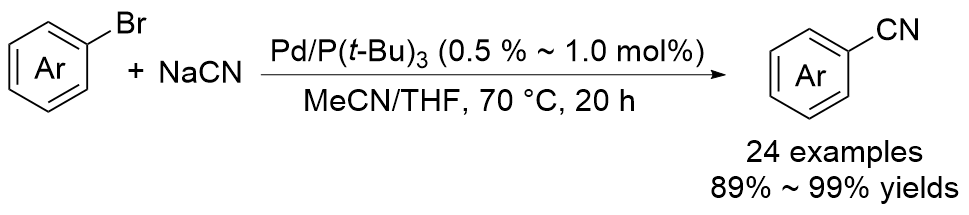
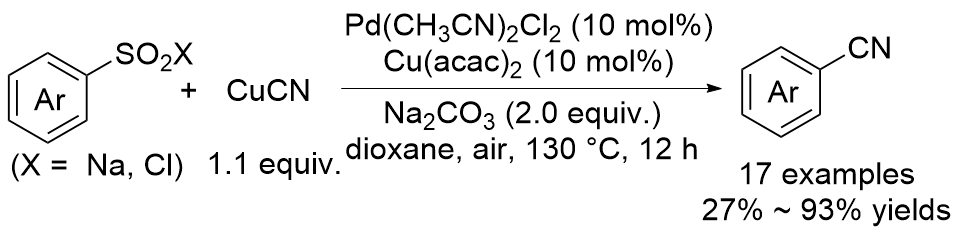
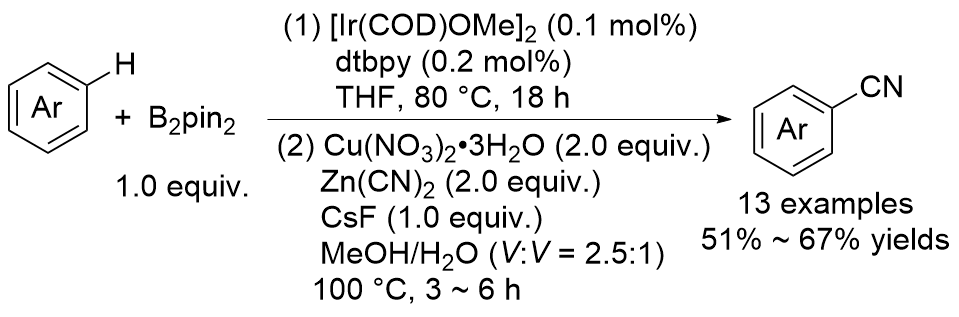
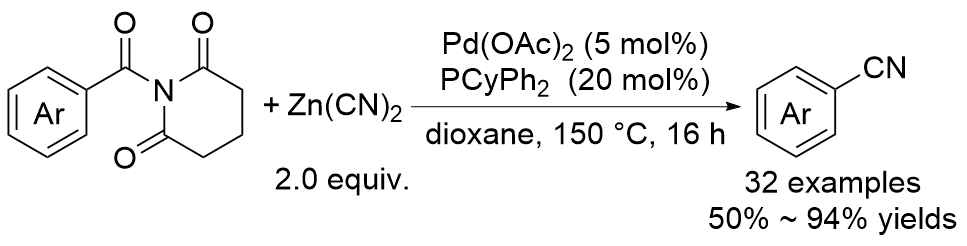


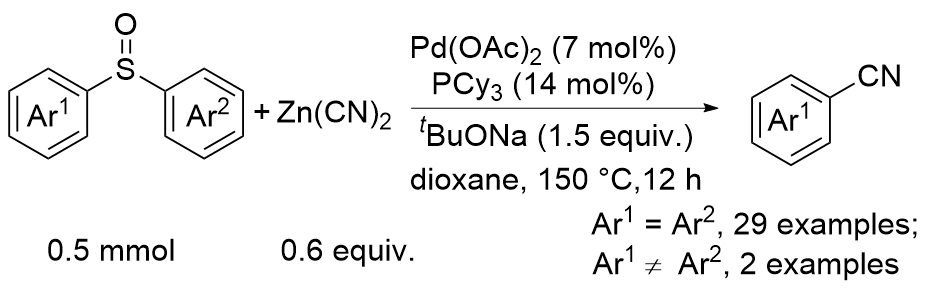
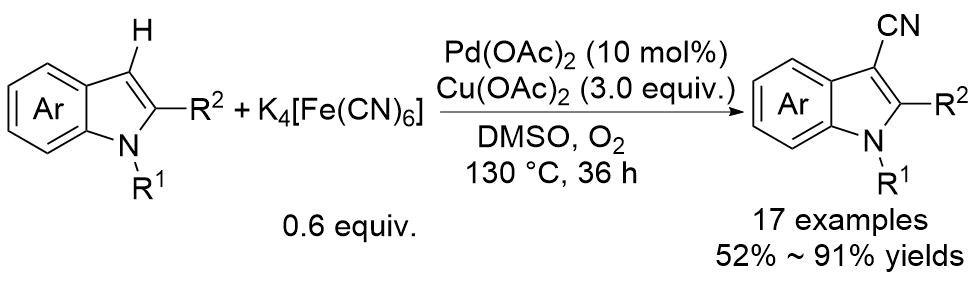
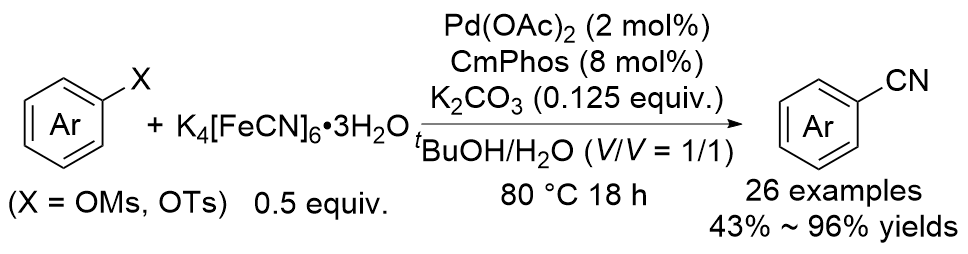
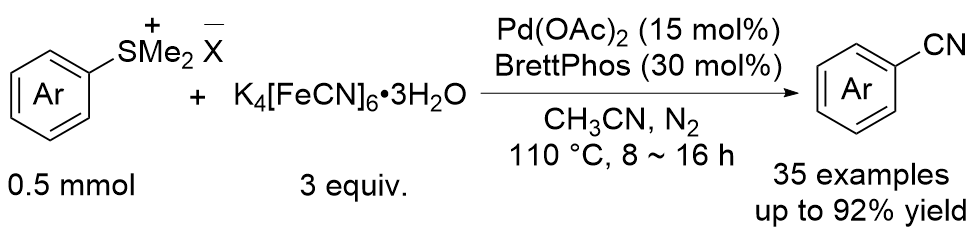
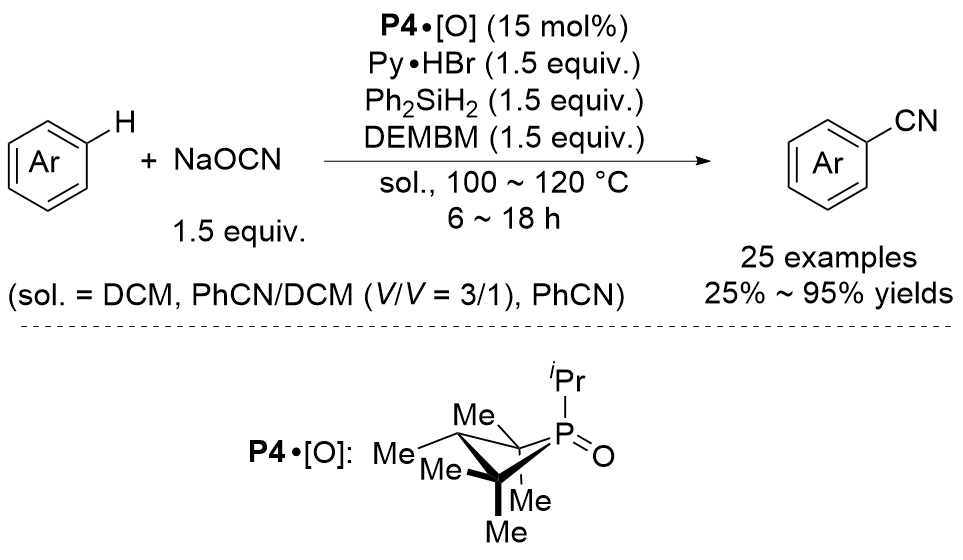
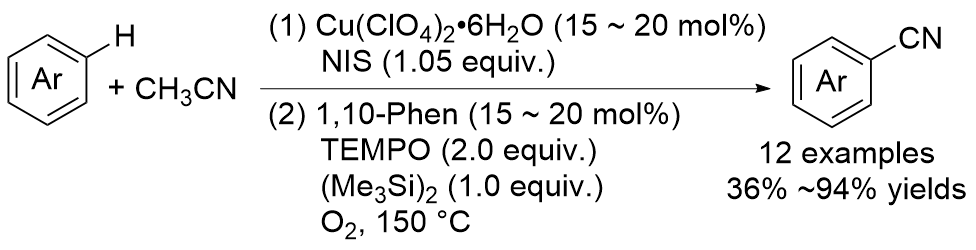


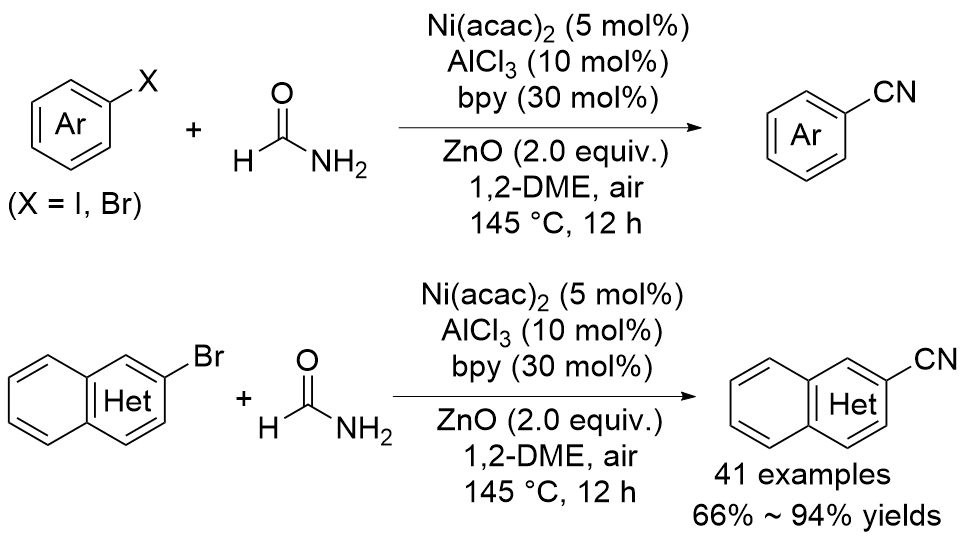
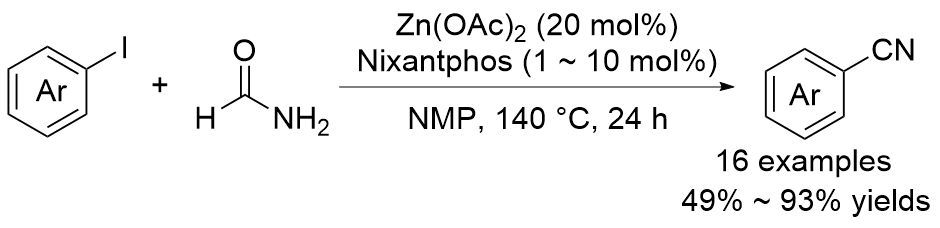
| [1] |
(a)
doi: 10.1021/ar0000354 pmid: 20804202 |
|
(b)
pmid: 20804202 |
|
|
(c)
doi: 10.1021/jm100762r pmid: 20804202 |
|
|
(d)
doi: 10.1039/c1cs15004a pmid: 20804202 |
|
|
(e)
doi: 10.1039/B702940N pmid: 20804202 |
|
| [2] |
(a)
doi: 10.1002/cber.v17:2 |
|
(b)
doi: 10.1021/cr60126a003 |
|
|
(c)
doi: 10.1021/ja01568a066 |
|
|
(d)
doi: 10.1016/S0040-4020(01)91791-0 |
|
| [3] |
doi: 10.1002/cber.v52:8 |
| [4] |
doi: 10.1021/ol1000439 |
| [5] |
(a)
doi: 10.1002/adsc.v359.23 |
|
(b)
doi: 10.1002/anie.v51.48 |
|
|
(c)
doi: 10.1002/adsc.v362.21 |
|
|
(d)
doi: 10.1039/D0RA01286F |
|
|
(e)
doi: 10.1039/D0CC07783F |
|
|
(f)
doi: 10.1021/acs.chemrev.0c00569 |
|
|
(g)
doi: 10.1039/D1QO00162K |
|
| [6] |
doi: 10.3390/molecules30163440 |
| [7] |
(a)
doi: 10.1021/jo01076a001 |
|
(b)
doi: 10.1016/S0040-4039(01)02168-2 |
|
| [8] |
(a)
pmid: 12926385 |
|
(b)
doi: 10.1081/SCC-120030308 pmid: 12926385 |
|
|
(c)
doi: 10.1021/acs.joc.5b02710 pmid: 12926385 |
|
| [9] |
(a)
doi: 10.1021/jo9808674 |
|
(b)
doi: 10.1016/S0040-4039(01)01390-9 |
|
|
(c)
doi: 10.1021/ol049621d |
|
|
(d)
doi: 10.1002/chem.v11:8 |
|
| [10] |
doi: 10.1021/ol9017529 |
| [11] |
doi: 10.1021/acscatal.8b04639 |
| [12] |
doi: 10.1016/j.jorganchem.2004.07.019 |
| [13] |
doi: 10.1021/acs.orglett.5c02410 |
| [14] |
doi: 10.1021/ja0299708 |
| [15] |
doi: 10.1021/ja2042035 |
| [16] |
doi: 10.1039/C1CC16134B |
| [17] |
(a)
doi: 10.1016/S0040-4039(98)00414-6 pmid: 17385875 |
|
(b)
doi: 10.1016/S0040-4039(99)01707-4 pmid: 17385875 |
|
|
(c)
doi: 10.1016/S0040-4039(00)00384-1 pmid: 17385875 |
|
|
(d)
pmid: 17385875 |
|
|
(e)
doi: 10.1016/j.tetlet.2006.03.026 pmid: 17385875 |
|
|
(f)
pmid: 17385875 |
|
|
(g)
doi: 10.1021/ol8016935 pmid: 17385875 |
|
| [18] |
doi: 10.1021/ja104442v pmid: 20677758 |
| [19] |
doi: 10.1021/acs.orglett.7b01199 |
| [20] |
doi: 10.1021/acs.orglett.7b01905 pmid: 28782964 |
| [21] |
doi: 10.1016/j.tetlet.2010.07.045 |
| [22] |
doi: 10.1021/jo102037y |
| [23] |
doi: 10.1021/ol5032359 |
| [24] |
doi: 10.1021/acs.orglett.7b00732 |
| [25] |
doi: 10.1039/c7ob00892a pmid: 28485450 |
| [26] |
doi: 10.1016/j.jcat.2025.116360 |
| [27] |
|
| [28] |
doi: 10.1021/acs.joc.3c00814 |
| [29] |
doi: 10.1021/acs.joc.4c02506 |
| [30] |
doi: 10.1021/acs.joc.5b02873 |
| [31] |
doi: 10.1021/jacs.5b10945 |
| [32] |
doi: 10.1002/asia.v16.21 |
| [33] |
(a)
pmid: 35519018 |
|
(b)
pmid: 35519018 |
|
|
(c)
pmid: 35519018 |
|
|
(d)
doi: 10.1016/j.tetlet.2006.12.087 pmid: 35519018 |
|
|
(e)
doi: 10.1002/chem.v13:21 pmid: 35519018 |
|
|
(f)
doi: 10.1016/j.tet.2008.02.038 pmid: 35519018 |
|
|
(g)
doi: 10.1016/j.tetlet.2008.03.071 pmid: 35519018 |
|
|
(h)
doi: 10.1002/adsc.v351:4 pmid: 35519018 |
|
|
(i)
doi: 10.1016/j.catcom.2008.11.034 pmid: 35519018 |
|
|
(j)
doi: 10.1016/j.tetlet.2015.12.019 pmid: 35519018 |
|
|
(k)
doi: 10.1021/acs.orglett.6b02113 pmid: 35519018 |
|
|
(l)
doi: 10.1021/jacs.5b13307 pmid: 35519018 |
|
|
(m)
doi: 10.1039/d0ra05960a pmid: 35519018 |
|
| [34] |
doi: 10.1002/anie.201304188 pmid: 23934947 |
| [35] |
doi: 10.1021/acscatal.5c00158 |
| [36] |
doi: 10.1039/D5MA00879D |
| [37] |
doi: 10.1002/anie.201005121 pmid: 20936618 |
| [38] |
doi: 10.1021/acs.orglett.3c00829 |
| [39] |
|
| [40] |
doi: 10.1021/acs.orglett.5b01924 |
| [41] |
doi: 10.3390/molecules29246016 |
| [42] |
doi: 10.1039/C5OB02321A |
| [43] |
doi: 10.1021/jo3025829 |
| [44] |
|
| [45] |
|
| [46] |
doi: 10.1021/acs.orglett.5b00886 |
| [47] |
doi: 10.1021/jo4014904 |
| [48] |
doi: 10.1039/D0OB00485E |
| [49] |
doi: 10.1039/C4QO00301B |
| [50] |
doi: 10.1021/acscatal.3c05836 |
| [51] |
doi: 10.1002/anie.v56.49 |
| [52] |
|
| [53] |
doi: 10.1021/acscatal.3c04745 |
| [54] |
doi: 10.1039/c2ra20770b |
| [55] |
doi: 10.1016/j.tet.2013.07.063 |
| [56] |
doi: 10.1055/a-1770-8592 |
| [57] |
doi: 10.1021/acs.orglett.6b02265 |
| [58] |
doi: 10.1021/acs.orglett.4c01118 |
| [59] |
doi: 10.1021/ol3014914 |
| [60] |
doi: 10.1039/C5OB01675D |
| [61] |
doi: 10.1039/C7NJ03405A |
| [62] |
doi: 10.1021/acs.orglett.5c01963 |
| [63] |
doi: 10.1021/jacs.6b12708 pmid: 28177237 |
| [64] |
doi: 10.1002/adsc.v353.2/3 |
| [65] |
doi: 10.1021/acs.orglett.9b02398 |
| [66] |
doi: 10.1021/acs.joc.2c01375 |
| [67] |
doi: 10.1016/S0022-328X(03)00503-5 |
| [68] |
doi: 10.1021/jacs.5b06136 |
| [69] |
doi: 10.1021/acscatal.2c01029 |
| [70] |
doi: 10.1021/acs.orglett.2c00203 |
| [71] |
doi: 10.1021/acscatal.9b04586 |
| [72] |
doi: 10.1021/acs.orglett.3c04294 |
| [73] |
doi: 10.1021/jacs.1c00529 pmid: 33655746 |
| [74] |
doi: 10.1021/jacs.2c01595 |
| [75] |
doi: 10.1021/acs.orglett.1c02285 |
| [76] |
doi: 10.1021/acs.orglett.8b01952 |
| [77] |
doi: 10.1002/adsc.201900813 |
| [78] |
doi: 10.1021/acs.orglett.5c02286 |
| [79] |
doi: 10.1002/anie.v50.2 |
| [80] |
doi: 10.1002/chem.v17.15 |
| [81] |
|
| [82] |
doi: 10.1021/ol503680d pmid: 25602639 |
| [83] |
doi: 10.1021/acs.orglett.1c00468 |
| [84] |
doi: 10.1039/D5CC02381E |
| [85] |
doi: 10.1055/a-2738-7947 |
| [86] |
doi: 10.1039/D1QO01858B |
| [87] |
doi: 10.1039/d3ob01771k pmid: 38053403 |
| [88] |
(a)
doi: 10.1002/anie.v51.45 |
|
(b)
doi: 10.1039/C4CC06427E |
|
|
(c)
doi: 10.1039/C5CC04391C |
|
|
(d)
doi: 10.1021/acs.orglett.7b01339 |
|
|
(e)
doi: 10.1021/acs.orglett.8b03868 |
|
|
(f)
doi: 10.1021/acs.orglett.1c01979 |
|
|
(g)
doi: 10.1021/acs.orglett.1c02373 |
|
| [89] |
doi: 10.1021/acs.orglett.2c03778 |
| [90] |
doi: 10.1021/acs.joc.7b02373 |
| [91] |
doi: 10.1021/ja061715q |
| [92] |
|
| [93] |
doi: 10.1002/adsc.v353.5 |
| [94] |
doi: 10.1039/C3RA48075E |
| [95] |
doi: 10.1039/C4CC08579E |
| [96] |
doi: 10.1021/acscatal.8b05111 |
| [97] |
doi: 10.1021/acs.joc.0c00269 |
| [98] |
doi: 10.1021/jacsau.4c00768 pmid: 39610718 |
| [99] |
doi: 10.1021/ja104917t |
| [100] |
doi: 10.1021/acs.orglett.9b03861 |
| [101] |
doi: 10.1039/c1cc11603g |
| [102] |
doi: 10.1021/ja211389g |
| [103] |
doi: 10.1021/ol201713b |
| [104] |
doi: 10.1039/C3CC47926A |
| [105] |
doi: 10.1039/D0OB02518F |
| [106] |
doi: 10.1016/j.tetlet.2013.07.090 |
| [107] |
doi: 10.1016/j.chempr.2018.09.009 |
| [108] |
doi: 10.1038/s41467-020-17939-2 |
| [109] |
doi: 10.1039/D0QO00775G |
| [110] |
doi: 10.1055/s-0039-1691590 |
| [111] |
doi: 10.1016/j.jcat.2024.115870 |
| [112] |
doi: 10.1021/ol400659p |
| No related articles found! |
| Viewed | ||||||
|
Full text |
|
|||||
|
Abstract |
|
|||||