ARTICLES

“Click” Tetradentate Nitrogen Donor Ligands for Nonheme Iron-Catalyzed Asymmetric Epoxidation Reactions

  • Bo Cao ,
  • Xiang Wen ,
  • Jie Chen , * ,
  • Bin Wang , *
Expand
  • School of Chemistry and Chemical Engineering, University of Jinan, Jinan 250022

Received date: 2025-03-31

  Revised date: 2025-05-08

  Online published: 2025-06-06

Supported by

National Natural Science Foundation of China(22372071)

Taishan Scholar Program of Shandong Province(tsqn202408209)

Abstract

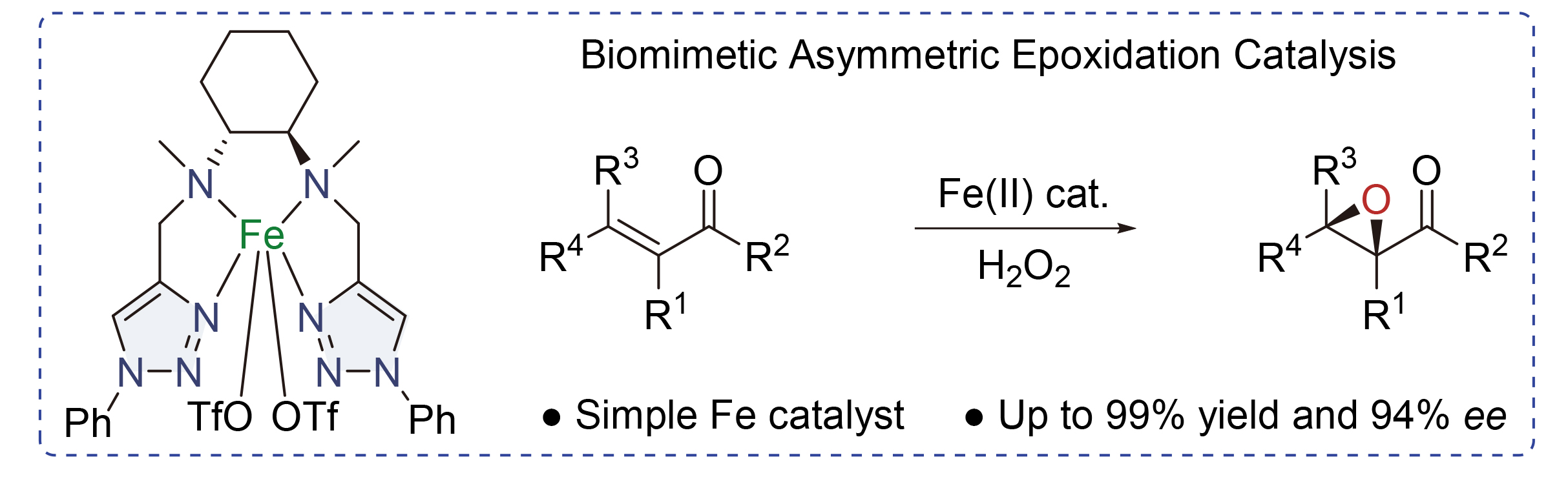
Leveraging the modularity and efficiency of click chemistry, a series of chiral diamine-triazole tetradentate nitrogen donor ligands and their corresponding nonheme iron complexes were synthesized. These iron-based catalysts demonstrated excellent catalytic activity and enantioselectivity in the asymmetric epoxidation of electron-deficient olefins using H2O2 as the terminal oxidant.

Cite this article

Bo Cao , Xiang Wen , Jie Chen , Bin Wang . “Click” Tetradentate Nitrogen Donor Ligands for Nonheme Iron-Catalyzed Asymmetric Epoxidation Reactions[J]. Chinese Journal of Organic Chemistry, 2025 , 45(12) : 4490 -4496 . DOI: 10.6023/cjoc202503031

1 Introduction

The discovery of efficient and selective catalytic systems for enantioselective epoxidation of olefins is of paramount importance in synthetic chemistry, as epoxides serve as highly versatile intermediates for the synthesis of a wide variety of biologically active molecules and fine chemicals.[1] Significant advancements have been achieved in the exploration and development of diverse catalytic systems during the past few decades, including transition metal catalysis, photocatalysis, electrocatalysis, and organocatalysis.[2] Despite these advances, several critical challenges still remain, including the design of highly active catalytic systems capable of achieving efficient and selective conversion of substrate, as well as the utilization of non-noble metals and environmentally friendly oxidants, such as molecular oxygen (O2) and hydrogen peroxide (H2O2).
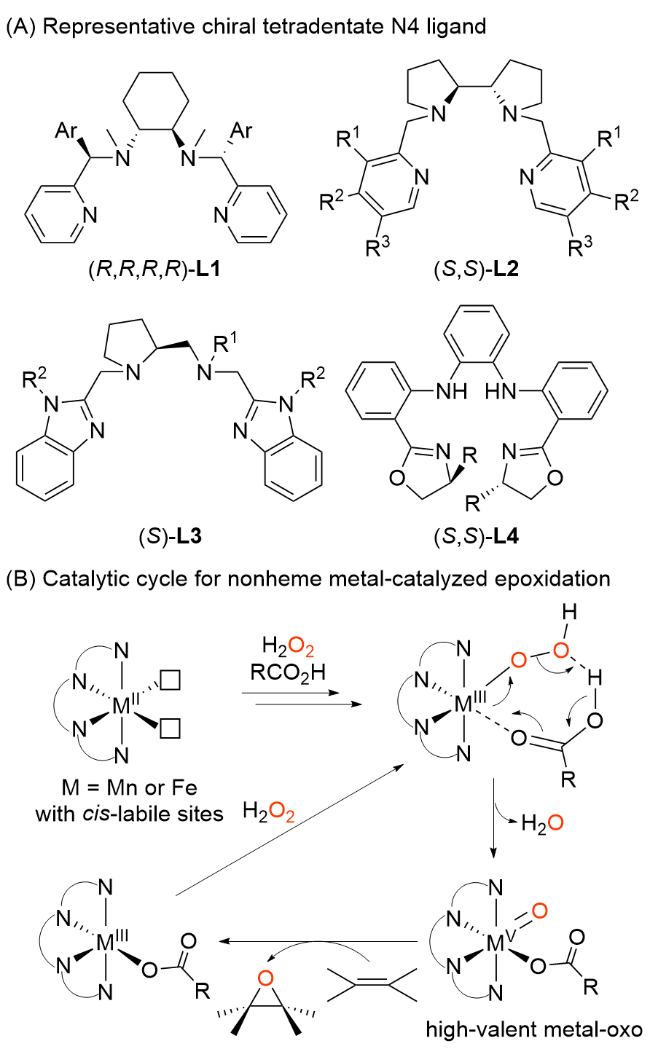
Nature has evolved a number of remarkable heme and nonheme iron oxygenases, which may hold the key to a solution.[3-4] For instance, cytochrome P450 and FeII/α- ketoglutarate (αKG)-dependent oxygenases are capable of efficiently and selectively oxidizing olefins to epoxides under mild conditions, such as ambient temperature and pressure, through the activation of O2.[3-4] Mechanistic studies have revealed that high-valent iron-oxo species, such as iron(IV)-oxo porphyrin π-cation radicals and high- spin (S=2) iron(IV)-oxo complexes, are the reactive intermediates in these catalytic processes.[3-4] Inspired by the structural features of the active sites of nonheme iron oxygenases and their catalytic reaction mechanisms, a wide range of biomimetic Mn and Fe complexes supported by chiral tetradentate N4 ligands (Figure 1A) with cis-α configuration have been prepared and applied in high-valent metal-oxo (Figure 1B) mediated asymmetric oxidation reactions.[5-7] The primary coordination sphere, where ligands are covalently bound to the metal center, not only determines the fundamental properties of the catalytic metal center, such as the geometry, Lewis acidity, and electronic structure, but also stabilizes the catalytic metal center and provides a chiral coordination environment.[8] Consequently, ligand modification has become the most powerful tool for optimizing these biomimetic catalysts, and significant efforts in the communities of bioinorganic chemistry and catalysis have focused on designing and synthesizing new ligands.[9-11] However, the availability of chiral tetradentate nitrogen donor ligands remains limited, with most of them based on chiral diamine-pyridine,[9-10] diamine- benzimidazole,[11] and diamine-oxazoline[12] frameworks (Figure 1A). The limited methods for modifying these ligand skeletons result in restricted synthetic variations of these chiral tetradentate nitrogen donor ligands. Therefore, it is necessary to develop a new type of readily available and modifiable chiral tetradentate N4 ligand and an efficient method for its construction.
Figure 1 Selected examples of chiral tetradentate N4 ligands and proposed mechanism for nonheme metal-catalyzed asym- metric epoxidation reaction
“Click chemistry” represents a category of chemical transformations with high efficiency, high selectivity, and modular nature, which proceed with remarkable rapidity under mild conditions to yield stable molecular architectures.[13] These reactions are characterized by high atom economy and functional group compatibility, making them widely applicable in fields such as chemical synthesis, materials science, and biomedicine. Sharpless and co- workers[14] coined the term “click chemistry” to describe the copper(I)-catalyzed azide-alkyne cycloaddition (CuAAC) reaction, which generates 1,2,3-triazoles. This reaction has sparked increasing interest in the design of nitrogen-based ligands due to the versatility and stability of the triazole products. Therefore, the click strategy is considered an ideal approach for constructing novel tetradentate nitrogen ligands, as it enables the concise and efficient synthesis of a wide variety of such ligands from commercially available azides and alkynes.
Herein, we report the “click” synthesis of C2-symmetric chiral diamine-triazole tetradentate nitrogen donor ligands. To demonstrate their application in asymmetric catalysis, nonheme manganese complexes bearing these chiral diamine-triazole ligands have been employed in the epoxidation of α,β-unsaturated ketones and α,β-unsaturated carboxylates using H2O2 as the terminal oxidant. Remarkably, the reactions achieved up to 99% yield and 94% enantiomeric excess (ee), demonstrating the high efficiency and enantioselectivity of these catalysts.

2 Results and discussion

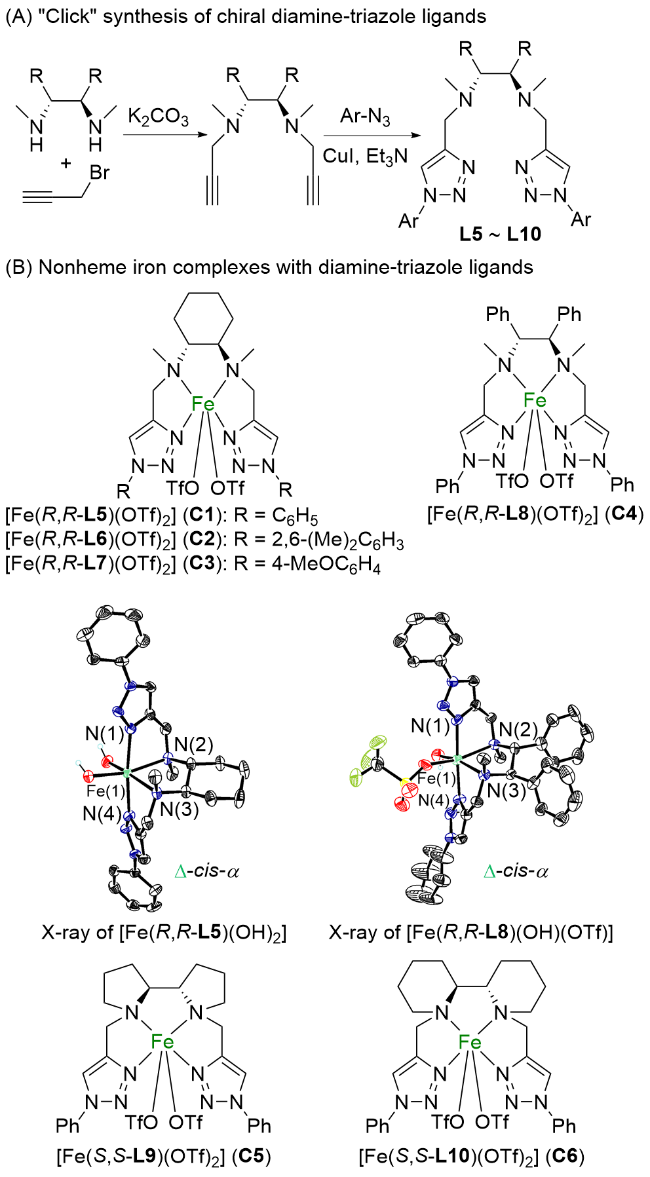
Initially, a range of diamine-triazole tetradentate N4 ligands (L5~L10) based on different chiral diamine back- bones (e.g., (1R,2R)-1,2-diaminocyclohexane, (1R,2R)-1,2- diphenylethylenediamine, (2S,2'S)-2,2'-bi-pyrrolidine, and (2S,2'S)-2,2'-bipiperidine) were synthesized through a two- step, one-pot “click” reaction (Figure 2A).[15] These ligands can be easily synthesized in multigram scale and do not require column chromatography purification, thus making this process concise and efficient. Subsequently, the corresponding nonheme iron complexes (Figure 2B, C1~C6) were prepared by reacting equimolar amounts of the linear N4 ligands with iron(II) triflate. Single crystals suitable for X-ray inspection were obtained by slowly diffusing anhydrous diethyl ether into tetrahydrofuran/dichloromethane (VV=2∶1) solutions of complexes C1 and C4 (Figure 2B). It is revealed that the chiral diamine-triazole ligands dictate the ∆-cis-α configuration of the octahedral iron center (Figure 2B).[16] The two triazole moieties coordinate in a trans manner, while the two N—Me groups adopt an anti-conformation (Figure 2B). The remaining two cis- coordination sites, which are labile and trans to the aliphatic tertiary amines, are occupied by either a hydroxide ion or a triflate ion in the solid state (Figure 2B). In addition, the average bond lengths of Fe—Ndiamine and Fe—Ntriazole for [Fe(R,R-L5)(OH)2] and [Fe(R,R-L8)(OH)(OTf)] are similar, ranging between 0.214 and 0.227 nm, characteristic of high-spin iron(II) complexes.[17]
Figure 2 “Click” synthesis of chiral diamine-triazole ligands and the corresponding nonheme iron(II) complexes.

X-ray crystal structures of [Fe(R,R-L5)(OH)2] and [Fe(R,R- L8)(OH)(OTf)] as an ORTEP drawing with 30% probability ellipsoids (Fe, aquamarine; N, new midnight blue; O, red; F, yellow green; S, yellow, C, black). Selected bond distances (nm) for [Fe(R,R-L5)(OH)2]: Fe(1)—N(1)=0.2164(7), Fe(1)—N(2)=0.2259(6), Fe(1)—N(3)=0.2236(7), Fe(1)—N(4)=0.2188(7); for [Fe(R,R-L8)(OH)(OTf)]: Fe(1)—N(1)=0.2156(6), Fe(1)—N(2)=0.2278(6), Fe(1)—N(3)=0.2259(6), Fe(1)—N(4)=0.2130(6).

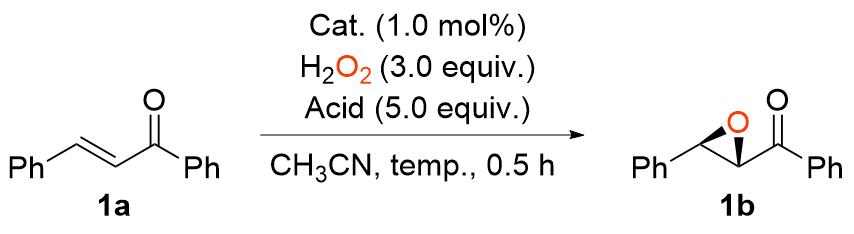
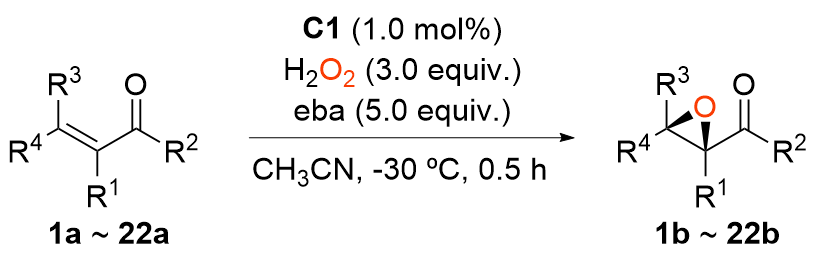
To demonstrate the application potential of the above nonheme iron complexes supported by chiral diamine-tria- zole ligands, we evaluated their catalytic activity in the asy- mmetric epoxidation of olefins using chalcone as a model substrate in the presence of acetic acid (Table 1). At room temperature, the complex C1 derived from (1R,2R)-1,2-di- aminocyclohexane achieved a yield of 93% and an enantiomeric excess (ee) of 75% (Table 1, Entry 1). Replacing the phenyl group at the 1-position of the triazole with 2,6-dimethylphenyl or 4-methoxyphenyl groups resulted in decreased yield and ee value of the epoxide product (Table 1, Entries 2 and 3). Therefore, further optimization focused solely on the chiral diamine backbone, without modifying the phenyl group at the 1-position of the triazole. It was found that replacing the (1R,2R)-1,2-diaminocyclohexane backbone with (1R,2R)-1,2-diphenylethylenediamine, (2S, 2'S)-2,2'-bipyrrolidine, or (2S,2'S)-2,2'-bipiperidine did not improve the yield or enantioselectivity (Table 1, Entries 4~6). After confirming that complex C1 was the optimal catalyst, the effect of reaction temperature was investigated (Table 1, Entries 7~9). Lowering the temperature significantly enhanced both the yield and enantioselectivity of the epoxide product. Lowering the temperature from room temperature to-30 ℃ afforded a yield of 99% and an ee of 84% (Table 1, Entry 9). Furthermore, the effect of carboxylic acids was examined (Table 1, Entries 10~16). It was shown that replacing acetic acid with steric bulkier carboxylic acids improved the enantioselectivity of the epoxide product. Among them, eba achieved a yield of 99% and an ee of 91% (Table 1, Entry 10). In contrast, chiral carboxylic acids were found to be detrimental to both the yield and ee value (Table 1, Entries 15 and 16). These experimental results demonstrated that, in the enantioselectivity-deter- mining step, the carboxylic acid molecule acts as an auxiliary ligand and participates in the active intermediate.[5] That is, the carboxylic acid facilitates the heterolytic cleavage of the O—O bond in the putative iron(III)-hydro- peroxide species via hydrogen bonding, thereby generating the catalytically active iron(V)-oxo carboxylate intermediate (Figure 1B).[5]
Table 1 Optimization of reaction conditionsa
Entry Cat. Temp./℃ Acid Yield b/% ee c/%
1 C1 r.t. HOAc 93 75
2 C2 r.t. HOAc 76 57
3 C3 r.t. HOAc 81 61
4 C4 r.t. HOAc 84 64
5 C5 r.t. HOAc 86 72
6 C6 r.t. HOAc 85 70
7 C1 0 HOAc 98 80
8 C1 -20 HOAc 99 82
9 C1 -30 HOAc 99 84
10d C1 -30 eba 99 91
11d C1 -30 2-eha 99 86
12d C1 -30 cxa 99 73
13d C1 -30 dmba 78 73
14d C1 -30 aca 81 68
15d C1 -30 (S)-2-mba 25 56
16 C1 -30 (S)-Ibuprofen 54 73

a Reaction conditions: 3.0 equiv. of H2O2 [diluted from 30% (w) H2O2 solution with acetontrile] was added dropwise via a syringe pump over a period of 0.5 h to a vigorously stirred acetonitrile solution of Fe complex (1.0 mol%), 1a (0.5 mmol), and acid (2.5 mmol). b Isolated yield. c Determined by HPLC analysis on a chiral stationary. d eba=2-ethylbutanoic acid, 2-eha=2-ethylhexanoic acid, cxa=cyclohexanecarboxylic acid, dmba=2,2-dimethylbutanoic acid, aca=1-adamantanecarboxylic acid, (S)-2-mba=(S)-2-methylbutanoic acid.

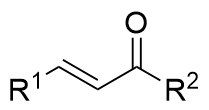
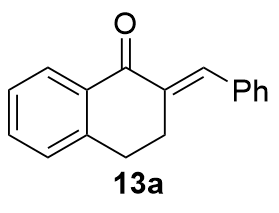
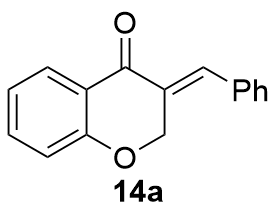
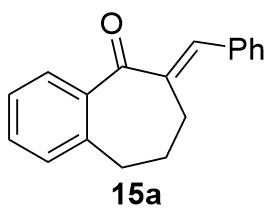
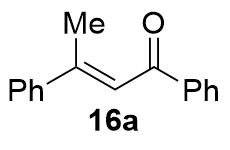
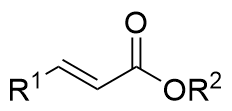
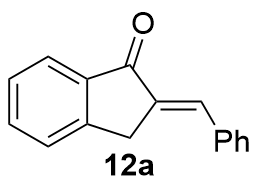
After establishing the optimal reaction conditions, the substrate scope of this catalytic system was investigated (Table 2). Firstly, this catalytic system demonstrated excellent compatibility with chalcones, achieving the target disubstituted α,β-epoxyketones with up to 99% yield and 94% ee (Table 2, Entries 1~11). The reaction proceeded smoothly regardless of the electronic properties of substituents on either the phenyl ring adjacent to the C=C double bond (Table 2, Entries 1~5) or the phenyl ring directly connected to the carbonyl group (Table 2, Entries 6~10), consistently delivering excellent yields and ee values. However, replacing the phenyl group on the carbonyl side with a 2-naphthyl group resulted in a substantial reduction in enantioselectivity (Table 2, Entry 11). The enantioselective epoxidation of trisubstituted α,β-enones enables the construction of a chiral quaternary carbon center bearing an oxygen atom. The presented catalytic system has been demonstrated to be effective for the enantioselective epoxidation of such trisubstituted α,β-enones (Table 2, Entries 12~15). High yields and moderate to high ee values were achieved for trisubstituted exocyclic enones with different ring sizes (Table 2, Entries 12~15), although the enantioselectivity significantly decreased as the ring size increased. Additionally, trisubstituted enones containing O-heterocycles proceeded smoothly, yielding moderate ee values (Table 2, Entry 14). On the other hand, the epoxidation of acyclic β,β-disubstituted enone 16a resulted in a relatively low ee value (Table 2, Entry 16), probably due to the steric repulsion at the β-carbon atom and the resulting reduction in the electrophilicity of the C=C double bond.[18] Therefore, the development of enantioselective epoxidation methods for acyclic β,β-disubstituted enones remains a formidable challenging in synthetic chemistry. Furthermore, this catalytic system is also applicable to the asymmetric epoxidation of trans-cinnamic esters, delivering excellent yields and high ee values (Table 2, Entries 17~22).
Table 2 Substrate scope of epoxidationsa
Entry Substrate Yieldb/% eec/%
1 1a: R1=R2=C6H5 99 91
2 2a: R1=p-MeC6H4, R2=C6H5 99 94
3 3a: R1=p-FC6H4, R2=C6H5 99 93
4 4a: R1=p-ClC6H4, R2=C6H5 99 92
5 5a: R1=p-BrC6H4, R2=C6H5 99 93
6 6a: R1=C6H5, R2=p-MeOC6H4 96 82
7 7a: R1=C6H5, R2=p-MeC6H4 98 85
8 8a: R1=C6H5, R2=p-FC6H4 99 91
9 9a: R1=C6H5, R2=p-ClC6H4 99 90
10 10a: R1=C6H5, R2=p-BrC6H4 99 90
11 11a: R1=C6H5, R2=2-naphthyl 94 83
12 89 87
13 95 89
14 82 52
15 92 66
16 75 19
17 17a: R1=C6H5, R2=Me 99 87
18 18a: R1=C6H5, R2=Et 99 90
19 19a: R1=o-ClC6H4, R2=Et 99 92
20 20a: R1=m-ClC6H4, R2=Et 99 91
21 21a: R1=p-ClC6H4, R2=Et 99 93
22 22a: R1=p-BrC6H4, R2=Et 99 92

a Reaction conditions: 3.0 equiv. of H2O2 [diluted from 30% (w) H2O2 solution with acetonitrile] was added dropwise via a syringe pump over a period of 0.5 h to a vigorously stirred acetonitrile solution of C1 (1.0 mol%), 1a~22a (0.5 mmol), and eba (2.5 mmol) at -30 ℃, total reaction time was 0.5 h. b Isolated yield. c Determined by HPLC analysis on a chiral stationary.

3 Conclusions

In summary, a series of chiral diamine-triazole ligands through “click” chemistry has been efficiently synthesized. The corresponding nonheme iron complexes demonstrated excellent catalytic activity and enantioselectivity in the asymmetric epoxidation of di- and trisubstituted enones, as well as trans-cinnamic esters. This work highlights the potential of “click” chemistry in the design and synthesis of chiral ligands for asymmetric catalytic transformations. Future study will focus on elucidating the reaction mechanism of the epoxidation reaction through the synthesis, spectroscopic characterization, and kinetics studies of high- valent iron-oxo intermediates. Additionally, efforts will be directed toward applying nonheme metal complexes bearing chiral diamine-triazole ligands to other types of biomimetic asymmetric oxidation reactions.

4 Experimental section

4.1 General information

All reactions were performed under argon atmosphere using dried solvent and standard Schlenk techniques unless otherwise noted. Thin layer chromatography (TLC) employed glass 0.25 mm silica gel plates. Flash column chromatography was performed on silica gel (particle size 200~300 mesh) and eluted with petroleum ether/ethyl acetate. H2O2 (w=30%) was purchased from Energy Chemical (Shanghai, China). Fe(CF3SO3)2•(CH3CN)2 was synthesized by reacting iron powder with trifluoromethane- sulfonic acid (CF3SO3H) under inert atmosphere in H2O, and then recrystallized with CH3CN/Et2O.[19]
NMR spectra were recorded on a Bruker AVQ-400 (400 MHz for 1H; 101 MHz for 13C) or a AVANCE III HD-600 (600 MHz for 1H; 151 MHz for 13C). The chemical shifts (δ) are relative to CDCl3 (δ 7.26 for 1H) or TMS (δ 0 for 1H) and CDCl3 (δ 77.0 for 13C). High-resolution mass spectra (HRMS) data were obtained with Thermo LTQ-FTICR (ESI) mass spectrometers. For X-ray structural analysis, crystallographic data collections were carried out on a Bruker SMART AXS diffractometer equipped with a monochromator in the Mo (λ=0.071073 nm) incident beam. Chromatographic resolution of enantiomers was performed on a High Performance Liquid Chromatography (HPLC, Agilent 1260 Infinity II) equipped with a diode array detector (G7115A). Melting points were recorded using a X-5 Micro melting point instrument (Beijing Tech Instrument Co., LTD.). Optical rotation was measured on a Rudolph-Autopol IV Polarimeter.

4.2 General procedure for ligand synthesis

(1R,2R)-N,N′-Dimethylcyclohexane-1,2-diamine (10 mmol, 1.42 g) was dissolved in 15 mL of tetrahydrofuran (THF), followed by the addition of anhydrous K2CO3 (30 mmol, 4.15 g). The mixture was stirred at 10 ℃ for 20 min. Propargyl bromide (22 mmol, 2.62 g) was dissolved in 6.0 mL of THF, and this solution was added dropwise to the reaction mixture over 1.0 h. The reaction was continued at 10 ℃ for 12 h. The reaction mixture was filtered, and the filtrate was collected. Under a nitrogen atmosphere, the filtrate was transferred to a 100 mL tube. Phenyl azide (30 mmol, 3.57 g), copper(I) iodide (10 mmol, 1.90 g), and 6.0 mL of triethylamine were added to the tube. The mixture was stirred in the dark for 24 h. After completion, the mixture was filtered, and the filtrate was collected. The solvent was removed under reduced pressure. Saturated brine was added to the residue, and the mixture was extracted with dichloromethane. The organic phase was collected and dried over anhydrous sodium sulfate. The dried organic phase was filtered, and the solvent was evaporated. The resulting solid was washed first with acetonitrile and then with petroleum ether, yielding (R,R)-N,Nʹ-dimethyl-N,Nʹ-bis((1-phenyl-1H-1,2,3-triazol-4-yl)methyl)cyclohe-xane-1,2-diamine (L5) as a yellow solid (2.8 g, 6.1 mmol, 61% yield). m.p. 123.4~124.8 ℃; Rf=0.20 [V(petroleum ether)∶V(DCM)∶V(TEA)=1∶1∶0.01]; ${[\alpha ]}_{\text{D}}^{\text{25}}$+19.34 (c 1.0, CHCl3); 1H NMR (400 MHz, CDCl3) δ: 8.12 (s, 2H), 7.74 (d, J=7.9 Hz, 4H), 7.48 (dd, J=8.6, 7.0 Hz, 4H), 7.42~7.36 (m, 2H), 4.00 (d, J=13.9 Hz, 2H), 3.83 (d, J=13.8 Hz, 2H), 2.71 (d, J=8.4 Hz, 2H), 2.31 (s, 6H), 1.96 (s, 2H), 1.78 (d, J=8.2 Hz, 2H), 1.22 (dd, J=27.9, 8.6 Hz, 4H); 13C NMR (101 MHz, CDCl3) δ: 148.4, 137.2, 129.7, 128.4, 120.8, 120.3, 63.9, 49.2, 36.9, 25.7, 25.5; HRMS (ESI) calcd for C26H32N8Na [M+Na] 479.2648, found 479.2647. Crystallization via diffusion of diethyl ether to a solution of L5 in a mixture solvent of CH2Cl2/CH3CN (VV=2∶1) gave white crystal suitable for X-ray analysis. CCDC 2426120 contains the supplementary crystallographic data for this paper.
(1R,2R)-N,N'-Bis((1-(2,6-dimethylphenyl)-1H-1,2,3-triazol-4-yl)methyl)-N,Nʹ-dimethylcyclohexane-1,2-diamine (L6): Using 2-azido1,3-dimethylbenzene as a starting material. Yellow oil, yield 47%. Rf=0.30 [V(petroleum ether)∶V(EtOAc)∶V(TEA)=3∶1∶0.01]; ${[\alpha ]}_{\text{D}}^{\text{25}}$-1.52 (c 1.0, CHCl3); 1H NMR (400 MHz, CDCl3) δ: 7.60 (s, 2H), 7.29 (d, J=7.6 Hz, 2H), 7.14 (d, J=7.5 Hz, 4H), 3.95 (s, 4H), 2.69 (s, 2H), 2.32 (s, 6H), 1.95 (s, 14H), 1.70 (s, 2H), 1.21 (d, J=55.0 Hz, 4H); 13C NMR (151 MHz, CDCl3) δ: 147.2, 136.1, 135.3, 129.8, 128.4, 124.3, 62.9, 49.8, 36.6, 26.0, 25.6, 17.3; HRMS (ESI) calcd for C30H40N8Na [M+Na] 535.3274, found 535.3269.
(1R,2R)-N,Nʹ-Bis((1-(4-methoxyphenyl)-1H-1,2,3-tria- zol-4-yl)methyl)-N,Nʹ-dimethylcyclohexane-1,2-diamine (L7): Using 1-azido-4-methoxybenzene as a strating material. Yellow solid, yield 50%. m.p. 121.6~122.1 ℃; Rf=0.20 [V(petroleum ether)∶V(EtOAc)∶V(TEA)=1∶1∶0.01]; ${[\alpha ]}_{\text{D}}^{\text{25}}$+24.35 (c 1.0, CHCl3); 1H NMR (600 MHz, CDCl3) δ: 7.96 (s, 2H), 7.60 (d, J=7.0 Hz, 4H), 6.94 (d, J=7.0 Hz, 4H), 3.97 (d, J=13.9 Hz, 2H), 3.83~3.76 (m, 8H), 2.68 (d, J=9.2 Hz, 2H), 2.30 (s, 6H), 1.94 (d, J=12.0 Hz, 2H), 1.75 (d, J=8.6 Hz, 2H), 1.21 (dd, J=56.0, 11.2 Hz, 4H); 13C NMR (151 MHz, CDCl3) δ: 159.5, 148.2, 130.7, 121.8, 120.9, 114.6, 63.8, 55.6, 49.2, 36.8, 25.7, 25.5; HRMS (ESI) calcd for C28H36N8NaO2 [M+Na] 539.2859, found 539.2852.
(1R,2R)-N,Nʹ-Dimethyl-1,2-diphenyl-N,Nʹ-bis((1-phen-yl-1H-1,2,3-triazol-4-yl)methyl)ethane-1,2-diamine (L8): Using (1R,2R)-1,2-diphenylethylenediamine as a strating material. White solid, yield 47%. m.p. 208.3~209.5 ℃; Rf=0.20 [V(petroleum ether)∶V(DCM)∶V(TEA)=2∶1∶0.01]; ${[\alpha ]}_{\text{D}}^{\text{25}}$-30.66 (c 1.0, CHCl3); 1H NMR (600 MHz, CDCl3) δ: 8.13 (s, 2H), 7.74 (d, J=7.7 Hz, 4H), 7.46 (t, J=7.0 Hz, 4H), 7.41~7.36 (m, 2H), 7.26 (s, 1H), 7.18 (dt, J=15.3, 8.3 Hz, 7H), 7.12 (d, J=8.3 Hz, 2H), 4.54 (s, 2H), 3.99 (d, J=13.6 Hz, 2H), 3.66 (d, J=13.6 Hz, 2H), 2.28 (s, 6H); 13C NMR (151 MHz, CDCl3) δ: 147.9, 137.2, 135.1, 129.7, 129.6, 128.3, 127.8, 127.0, 121.2, 120.1, 67.6, 48.6, 37.7; HRMS (ESI) calcd for C34H34N8Na [M+Na] 577.2804, found 577.2811. Crystallization via diffusion of diethyl ether to a solution of L8 in a mixture solvent of CH2Cl2/CH3CN (VV=2∶1) gave white crystal suitable for X-ray analysis. CCDC 2426117 contains the supplementary crystallographic data for this paper.
(2S,2'S)-1,1'-Bis((1-phenyl-1H-1,2,3-triazol-4-yl)-meth-yl)-2,2'-bipyrrolidine (L9): Using (2S,2'S)-2,2'-bipyrro- lidine as a strating material. Yellow solid, yield 57%. m.p. 82.2~83.1 ℃; Rf=0.20 [V(petroleum ether)∶V(Et- OAc)∶V(TEA)=3∶1∶0.01]; ${[\alpha ]}_{\text{D}}^{\text{25}}$-25.49 (c 1.0, CHCl3); 1H NMR (400 MHz, CDCl3) δ: 8.11 (s, 2H), 7.76 (d, J=7.9 Hz, 4H), 7.50 (t, J=7.8 Hz, 4H), 7.41 (t, J=7.4 Hz, 2H), 4.32 (d, J=14.4 Hz, 2H), 3.84 (d, J=14.4 Hz, 2H), 3.13~3.05 (m, 2H), 2.88 (t, J=5.7 Hz, 2H), 2.44 (q, J=8.2 Hz, 2H), 1.82 (d, J=8.0 Hz, 2H), 1.70 (d, J=10.8 Hz, 6H); 13C NMR (101 MHz, CDCl3) δ: 145.9, 137.2, 129.7, 128.5, 120.9, 120.4, 64.2, 54.5, 48.8, 26.6, 23.2; HRMS (ESI) calcd for C26H30N8Na [M+Na] 477.2491, found 477.2485.
(2S,2'S)-1,1'-Bis((1-phenyl-1H-1,2,3-triazol-4-yl)meth-yl)-2,2'-bipiperidine (L10): Using (2S,2'S)-2,2'-bipiperidine as a strating material. Yellow oil, yield 55%. Rf=0.20 [V(petroleum ether)∶V(EtOAc)∶V(TEA)=3∶1∶0.01]; ${[\alpha ]}_{\text{D}}^{\text{25}}$+31.28 (c 1.0, CHCl3); 1H NMR (400 MHz, CDCl3) δ: 8.12 (s, 2H), 7.80 (d, J=8.0 Hz, 4H), 7.52 (t, J=7.8 Hz, 4H), 7.42 (t, J=7.4 Hz, 2H), 4.09 (d, J=14.6 Hz, 2H), 3.78 (d, J=14.6 Hz, 2H), 2.99 (d, J=11.4 Hz, 2H), 2.87 (d, J=10.1 Hz, 2H), 2.21 (t, J=12.4 Hz, 2H), 1.96 (d, J=13.2 Hz, 2H), 1.79 (d, J=12.6 Hz, 2H), 1.61~1.44 (m, 6H), 1.26 (d, J=11.1 Hz, 2H); 13C NMR (101 MHz, CDCl3) δ: 145.2, 137.2, 129.7, 128.5, 120.8, 120.4, 60.4, 54.0, 47.8, 25.6, 25.1, 24.6; HRMS (ESI) calcd for C28H34N8Na [M+Na] 505.2804, found 505.2796.

4.3 Synthesis and characterization of nonheme iron(II) complexes

Under a nitrogen atmosphere, a solution of Fe(CF3SO3)2• (CH3CN)2 (1.2 mmol, 523 mg) in anhydrous CH3CN (2.0 mL) was added dropwise to a vigorously stirred solution of tetradentate N4 ligand (R,R)-L5 (1.0 mmol, 456 mg) in CH3CN (1.5 mL) at room temperature. After stirring for 12 h, anhydrous diethyl ether freshly taken from solvent delivery system was added to the resulting solution to precipitate out the complex. The resultant solid was washed thoroughly with ether, dried under vacuum, and recrystalized with CH3CN/ether to yield the desired complex [Fe(R,R-L5)(OTf)2] (C1) as a white solid (689 mg, 0.85 mmol, 85% yield). HRMS (ESI) calcd for C27H32F3Fe- N8O3S [M-OTf] 661.1620, found 661.1626. Single crystals suitable for X-ray crystallographic analysis were obtained by slow diffusion of anhydrous diethyl ether into a THF/CH2Cl2 (VV=2∶1) solution of [Fe(R,R-L5)- (OTf)2] (C1). CCDC 2426118 contains the supplementary crystallographic data for this paper.
[Fe(R,R-L6)(OTf)2] (C2): Following the general procedure for the preparation of complex C1 using (R,R)-L6 ligand, provided the title complex as a yellow solid (763 mg, 0.88 mmol, 88% yield). HRMS (ESI) calcd for C31H40F3FeN8O3S [M-OTf] 717.2246, found 717.2251.
[Fe(R,R-L7)(OTf)2] (C3): Following the general procedure for the preparation of complex C1 using (R,R)-L7 ligand, provided the title complex as a pale yellow solid (749 mg, 0.86 mmol, 86% yield). HRMS (ESI) calcd for C29H36F3FeN8O5S [M-OTf] 721.1831, found 721.1838.
[Fe(R,R-L8)(OTf)2] (C4): Following the general procedure for the preparation of complex C1 using (R,R)-L8 ligand provided the title complex as a pale yellow solid (790 mg, 0.87 mmol, 87% yield). HRMS (ESI) calcd for C35H34F3FeN8O3S [M-OTf] 759.1776, found 759.1769. Single crystals suitable for X-ray crystallographic analysis were obtained by slow diffusion of anhydrous diethyl ether into a THF/CH2Cl2 (VV=2∶1) solution of [Mn(R,R- L8)(OTf)2] (C4). CCDC 2426119 contains the supplementary crystallographic data for this paper.
[Fe(S,S-L9)(OTf)2] (C5): Following the general procedure for the preparation of complex C1 using (S,S)-L9 ligand provided the title complex as a pale yellow solid (679 mg, 0.84 mmol, 84% yield). HRMS (ESI) calcd for C27H30F3FeN8O3S [M-OTf] 659.1463, found 659.1457.
[Fe(S,S-L10)(OTf)2] (C6): Following the general procedure for the preparation of complex C1 using (S,S)-L10 ligand provided the title complex as a pale yellow solid (711 mg, 0.85 mmol, 85% yield). HRMS (ESI) calcd for C29H34F3FeN8O3S [M-OTf] 687.1776, found 687.1769.
4.4 General procedure for catalytic asymmetric epoxidation

H2O2 [30% (w) aqueous solution, 1.5 mmol, 3.0 equiv., diluted in 0.50 mL of CH3CN] was added dropwise via a syringe pump over 0.5 h to a solution of [Fe(R,R-L5)(OTf)2] (C1) (4.0 mg, 5.0×10⁻³ mmol, 1.0 mol%), the substrate (0.50 mmol, 1.0 equiv.), and eba (2.5 mmol, 5.0 equiv.) in CH3CN (1.5 mL) at -30 ℃. The final concentrations of reagents were 2.5 mmol/L nonheme iron catalyst, 0.75 mol/L H2O2, 1.25 mol/L eba, and 0.25 mol/L substrate. The resulting solution was concentrated and the residue was purified by column chromatography on silica gel with a gradient eluent of petroleum ether/ethyl acetate to give the desired epoxide product. Enantiomeric excess was determined by HPLC equipped with chiral column. The absolute configuration of the epoxides was determined by comparison of the optical rotation with the literature values.
Supporting Information The crystallographic data for L5, L8, C1, and C4 along with copies of NMR spectra and HPLC chromatograms for epoxides 1b~22b. The Supporting Information is available free of charge via the Internet at http://sioc-journal.cn/.
(Cheng, F.)
[1]
Matsumoto K.; Katsuki T. In Catalytic Asymmetric Synthesis, 3rd ed.,Ed.: Ojima, I., John Wiley & Sons, Hoboken, NJ, 2010.

[2]
(a) McGarrigle E. M.; Gilheany D. G. Chem. Rev. 2005, 105, 1563.

DOI PMID

(b) Xia Q. H.; Ge H. Q.; Ye C. P.; Liu Z. M.; Su K. X. Chem. Rev. 2005, 105, 1603.

PMID

(c) Wong O. A.; Shi Y. Chem. Rev. 2008, 108, 3958.

DOI

(d) De Faveri G.; Ilyashenko G.; Watkinson M. Chem. Soc. Rev. 2011, 40, 1722.

DOI

(e) Davis R. L.; Stiller J.; Naicker T.; Jiang H.; Jørgensen K. A. Angew. Chem., Int. Ed. 2014, 53, 7406.

DOI

(f) Bryliakov K. P. Chem. Rev. 2017, 117, 11406.

DOI

(g) Chakraborty P.; Mandal R.; Garg N.; Sundararaju B. Coord. Chem. Rev. 2021, 444, 214065.

DOI

(h) Shen D.; Saracini C.; Lee Y.-M.; Sun W.; Fukuzumi S.; Nam W. J. Am. Chem. Soc. 2016, 138, 15857.

DOI

[3]
Huang X.; Groves J. T. Chem. Rev. 2018, 118, 2491.

DOI

[4]
Kal S.; Que L.,Jr. J. Biol. Inorg. Chem. 2017, 22, 339.

DOI

[5]
(a) Sun W.; Sun Q. Acc. Chem. Res. 2019, 52, 2370.

DOI

(b) Oloo W. N.; Que L.,Jr. Acc. Chem. Res. 2015, 48, 2612.

DOI

(c) Vicens L.; Olivo G.; Costas M. ACS Catal. 2020, 10, 8611.

DOI

(d) Cussó O.; Ribas X.; Costas M. Chem. Commun. 2015, 51, 14285.

DOI

(e) Talsi E. P.; Bryliakov K. P. Eur. J. Org. Chem. 2024, 27, e202400664.

DOI

(f) Talsi E. P.; Bryliakov K. P. Coord. Chem. Rev. 2012, 256, 1418.

DOI

(g) Chen J.; Jiang Z.; Fukuzumi S.; Nam W.; Wang B. Coord. Chem. Rev. 2020, 421, 213443.

DOI

(h) Xiao X.; Xu K.; Gao Z.-H.; Zhu Z.-H.; Ye C.; Zhao B.; Luo S.; Ye S.; Zhou Y.-G.; Xu S.; Zhu S.-F.; Bao H.; Sun W.; Wang X.; Ding K. Sci. China Chem. 2023, 66, 1553.

DOI

[6]
(a) Costas M. Chem. Rec. 2021, 21, 4000.

DOI

(b) Olivo G.; Cussó O.; Borrell M.; Costas M. J. Biol. Inorg. Chem. 2017, 22, 425.

DOI

(c) Liu Y.; You T.; Wang H.-X.; Tang Z.; Zhou C.-Y.; Che C.-M. Chem. Soc. Rev. 2020, 49, 5310.

DOI

(d) Bryliakov K. P. ACS Catal. 2023, 13, 10770.

DOI

(e) Sun Q.; Sun W. Chin. J. Org. Chem. 2020, 40, 3686. (in Chinese)

DOI

(孙强盛, 孙伟, 有机化学, 2020, 40, 3686.)

DOI

[7]
(a) Larson V.; Battistella B.; Ray K.; Lehnert N; Nam W. Nat. Rev. Chem. 2020, 4, 404.

DOI

(b) Lyakin O. Y.; Bryliakov K. P.; Talsi E. P. Coord. Chem. Rev. 2019, 384, 126.

DOI

(c) Wu C.; Chen J.; Nam W.; Wang B. Coord. Chem. Rev. 2025, 528, 216429.

DOI

[8]
(a) de Visser S. P. Chem.-Eur. J. 2020, 26, 5308.

DOI PMID

(b) Mukherjee G.; Satpathy J. K.; Bagha U. K.; Mubarak M. Q. E.; Sastri C. V.; de Visser S. P. ACS Catal. 2021, 11, 9761.

DOI

[9]
(a) White M. C.; Doyle A. G.; Jacobsen E. N. J. Am. Chem. Soc. 2001, 123, 7194.

PMID

(b) Murphy A.; Dubois G.; Stack T. D. P. J. Am. Chem. Soc. 2003, 125, 5250.

DOI

(c) Chen M. S.; White M. C. Science 2007, 318, 783.

DOI

[10]
(a) Miao C.; Wang B.; Wang Y.; Xia C.; Lee Y.-M.; Nam W.; Sun W. J. Am. Chem. Soc. 2016, 138, 936.

DOI

(b) Lin J.; Miao C.; Wang F.; Yang P.; Sun Q.; Sun W. ACS Catal. 2020, 10, 11857.

DOI

(c) Wu M.; Wang B.; Wang S.; Xia C.; Sun W. Org. Lett. 2009, 11, 3622.

DOI

(d) Chen J.; Klein Gebbink R. J. M. ACS Catal. 2019, 9, 3564.

DOI

(e) Cussó O.; Garcia-Bosch I.; Ribas X.; Lloret-Fillol J.; Costas M. J. Am. Chem. Soc. 2013, 135, 14871.

DOI PMID

(f) Cussó O.; Ribas X.; Lloret-Fillol J.; Costas M. Angew. Chem., Int. Ed. 2015, 54, 2729.

DOI PMID

(g) Milan M.; Bietti M.; Costas M. ACS Cent. Sci. 2017, 3, 196.

DOI

(h) Palone A.; Casadevall G.; Ruiz-Barragan S.; Call A.; Osuna S.; Bietti M.; Costas M. J. Am. Chem. Soc. 2023, 145, 15742.

DOI

(i) Cianfanelli M.; Olivo G.; Milan M.; Klein Gebbink R. J. M.; Ribas X.; Bietti M.; Costas M. J. Am. Chem. Soc. 2020, 142, 1584.

DOI PMID

(j) Sherstyuk V. A.; Ottenbacher R. V.; Talsi E. P.; Bryliakov K. P. ACS Catal. 2024, 14, 498.

DOI

(k) Ottenbacher R. V.; Bryliakova A. A.; Shashkov M. V.; Talsi E. P.; Bryliakov K. P. ACS Catal. 2021, 11, 5517.

DOI

(l) Zima A. M.; Lyakin O. Y.; Ottenbacher R. V.; Bryliakov K. P.; Talsi E. P. ACS Catal. 2017, 7, 60.

DOI

(m) Zima A. M.; Lyakin O. Y.; Ottenbacher R. V.; Bryliakov K. P.; Talsi E. P. ACS Catal. 2016, 6, 5399.

DOI

(n) Ottenbacher R. V.; Samsonenko D. G.; Talsi E. P.; Bryliakov K. P. ACS Catal. 2016, 6, 979.

DOI

(o) Ottenbacher R. V.; Samsonenko D. G.; Talsi E. P.; Bryliakov K. P. ACS Catal. 2014, 4, 1599.

DOI

(p) Lyakin O. Y.; Ottenbacher R. V.; Bryliakov K. P.; Talsi E. P. ACS Catal. 2012, 2, 1196.

DOI

[11]
(a) Wang B.; Miao C.; Wang S.; Xia C.; Sun W. Chem.-Eur. J. 2012, 18, 6750.

DOI PMID

(b) Wang B.; Wang S.; Xia C.; Sun W. Chem.-Eur. J. 2012, 18, 7332.

DOI PMID

(c) Qiu B.; Xu D.; Sun Q.; Miao C.; Lee Y.-M.; Li X.-X.; Nam W.; Sun W. ACS Catal. 2018, 8, 2479.

DOI

(d) Xu D.; Sun Q.; Lin J.; Sun W. Chem. Commun. 2020, 56, 13101.

DOI

(e) Chen X.; Gao B.; Su Y.; Huang H. Adv. Synth. Catal. 2017, 359, 2535.

DOI

(f) Call A.; Capocasa G.; Palone A.; Vicens L.; Aparicio E.; Choukairi Afailal N.; Siakavaras N.; López Saló M. E.; Bietti M.; Costas M. J. Am. Chem. Soc. 2023, 145, 18094.

DOI

[12]
(a) Dai W.; Li J.; Li G.; Yang H.; Wang L.; Gao S. Org. Lett. 2013, 15, 4138.

DOI

(b) Dai W.; Li G.; Chen B.; Wang L.; Gao S. Org. Lett. 2015, 17, 904.

DOI

(c) Dai W.; Li J.; Chen B.; Li G.; Lv Y.; Wang L.; Gao S. Org. Lett. 2013, 15, 5658.

DOI

(d) Dai W.; Shang S.; Lv Y.; Li G.; Li C.; Gao S. ACS Catal. 2017, 7, 4890.

DOI

[13]
Kolb H. C.; Finn M. G.; Sharpless K. B. Angew. Chem., Int. Ed. 2001, 40, 2004.

DOI

[14]
(a) Rostovtsev V.; Green L. G.; Fokin V. V.; Sharpless K. B. Angew. Chem., Int. Ed. 2002, 41, 2596.

DOI

(b) Tornøe C. W.; Christensen C.; Meldal M. J. Org. Chem. 2002, 67, 3057.

DOI

(c) Ahlquist M.; Fokin V. V. Organometallics 2007, 26, 4389.

DOI

(d) Rodionov V. O.; Presolski S. I.; Diaz D. D.; Fokin V. V.; Finn M. G. J. Am. Chem. Soc. 2007, 129, 12705.

DOI

[15]
Hao E.; Wang Z.; Jiao L.; Wang S. Dalton Trans. 2010, 39, 2660.

DOI

[16]
Steinlandt P. S.; Zhang L.; Meggers E. Chem. Rev. 2023, 123, 4764.

DOI

[17]
(a) Chen J.; Luo X.; Sun Y.; Si S.; Xu Y.; Lee Y.-M.; Nam W.; Wang B. CCS Chem. 2022, 4, 2369.

DOI

(b) Zang Y.; Kim J.; Dong Y.; Wilkinson E. C.; Appelman E. H.; Que L.Jr. J. Am. Chem. Soc. 1997, 119, 4197.

DOI

[18]
Nishikawa Y.; Yamamoto H. J. Am. Chem. Soc. 2011, 133, 8432.

DOI PMID

[19]
Hagen K. S. Inorg. Chem. 2000, 39, 5867.

PMID

Outlines

/