

化学学报 ›› 2026, Vol. 84 ›› Issue (8): 1254-1264.DOI: 10.6023/A26060197 上一篇 下一篇
研究论文
李思飞, 吴浩, 孙浩然, 韩宇阳, 王国明, 李俊吉, 卢双慧, 白鹏*( ), 阎子峰*()
投稿日期:2026-06-13
发布日期:2026-08-17
作者简介:★“纪念兰州大学化学学科创建80周年”专辑.
基金资助:
Sifei Li, Hao Wu, Haoran Sun, Yuyang Han, Guoming Wang, Junji Li, Shuanghui Lu, Peng Bai*(), Zifeng Yan*()
Received:2026-06-13
Published:2026-08-17
Contact:
E-mail: About author:★For the VSI “Celebration of 80th Anniversary of Chemistry in Lanzhou University”.
Supported by:文章分享
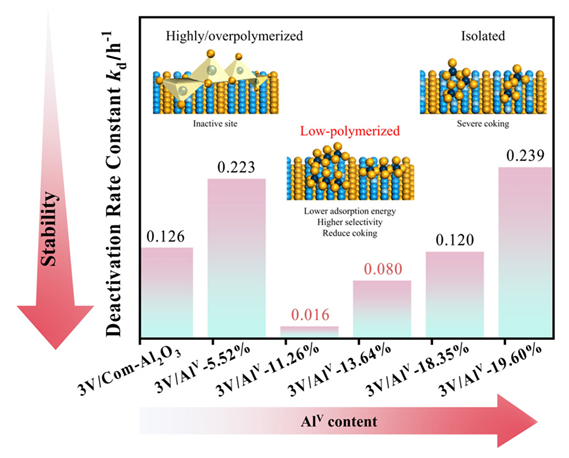
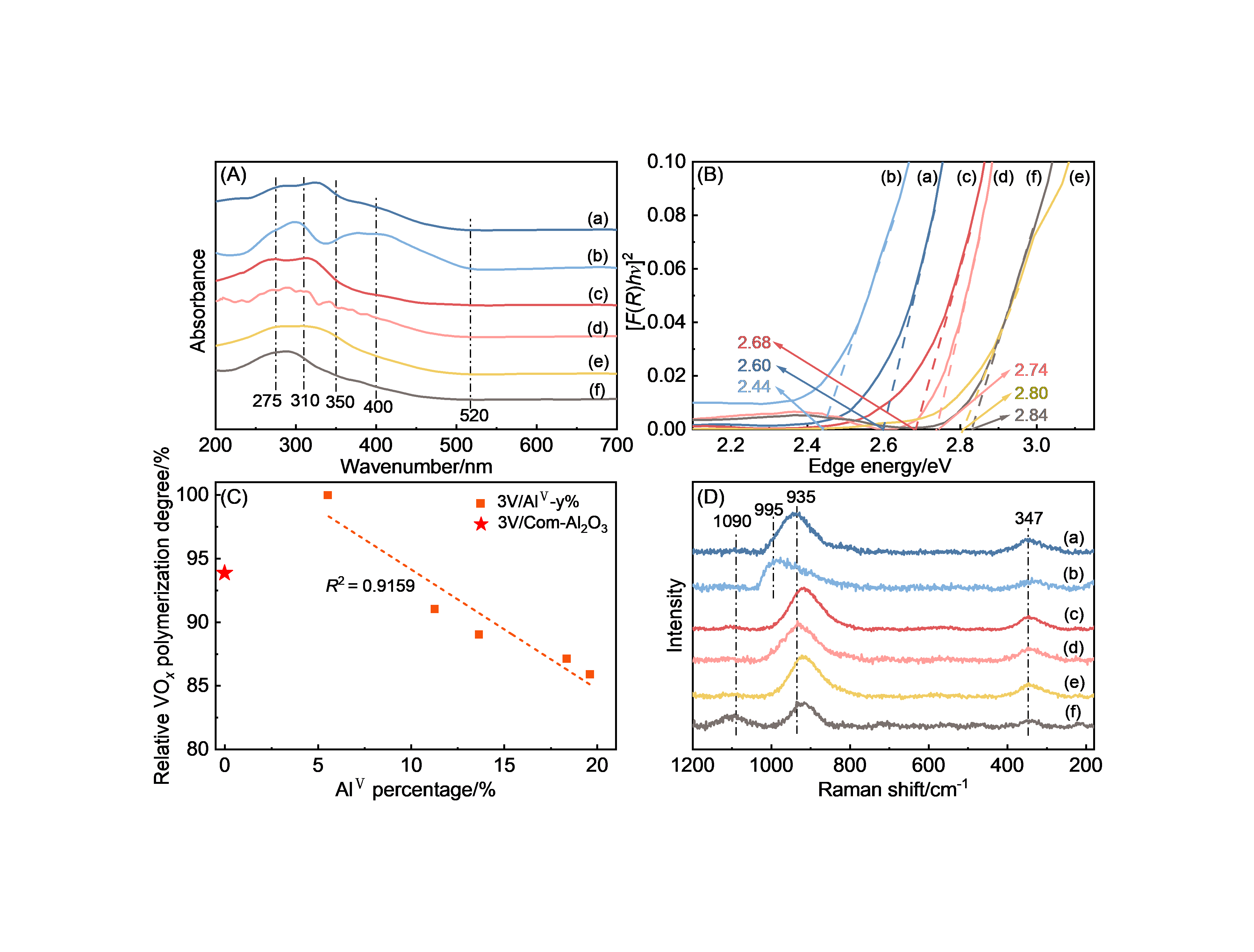
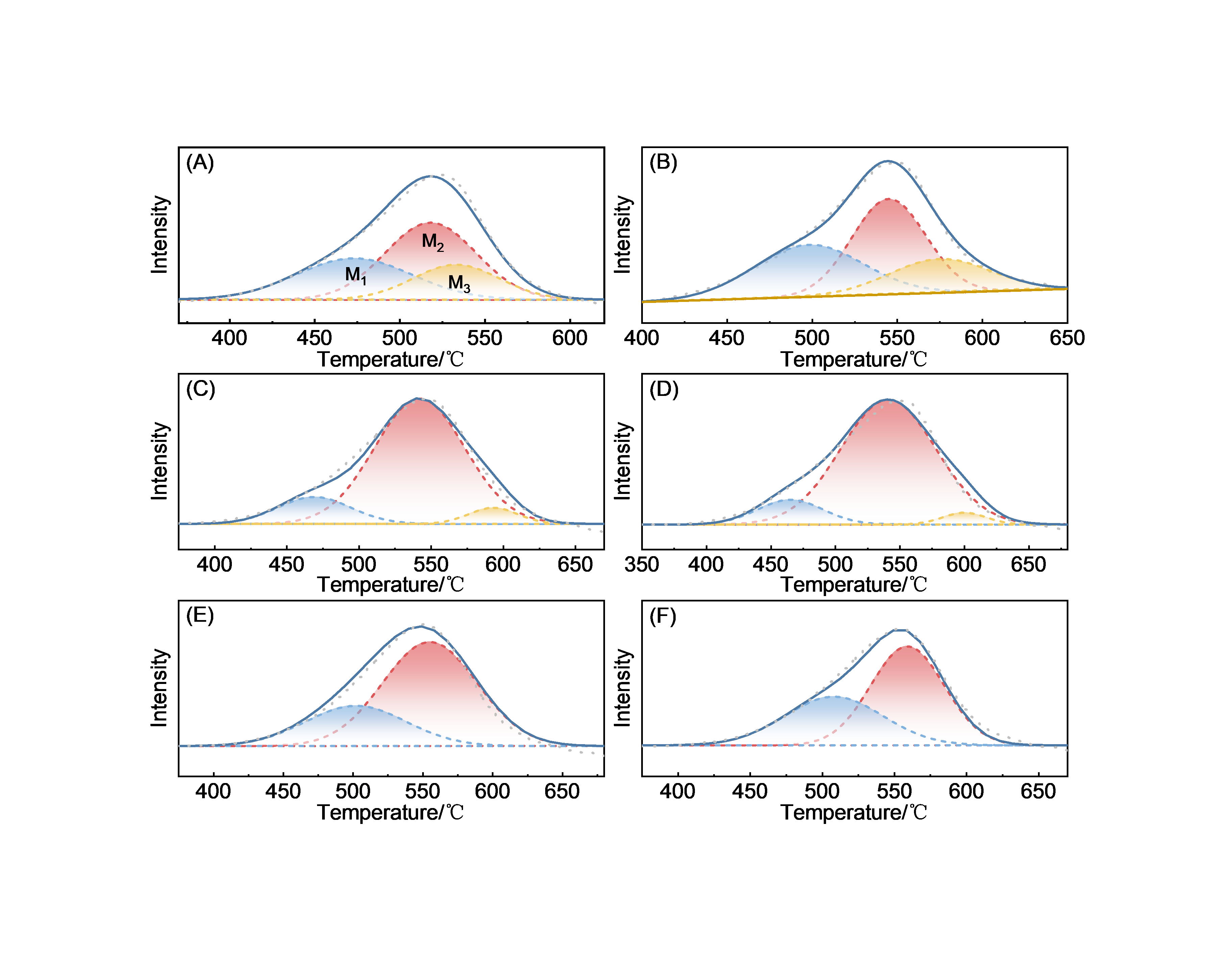
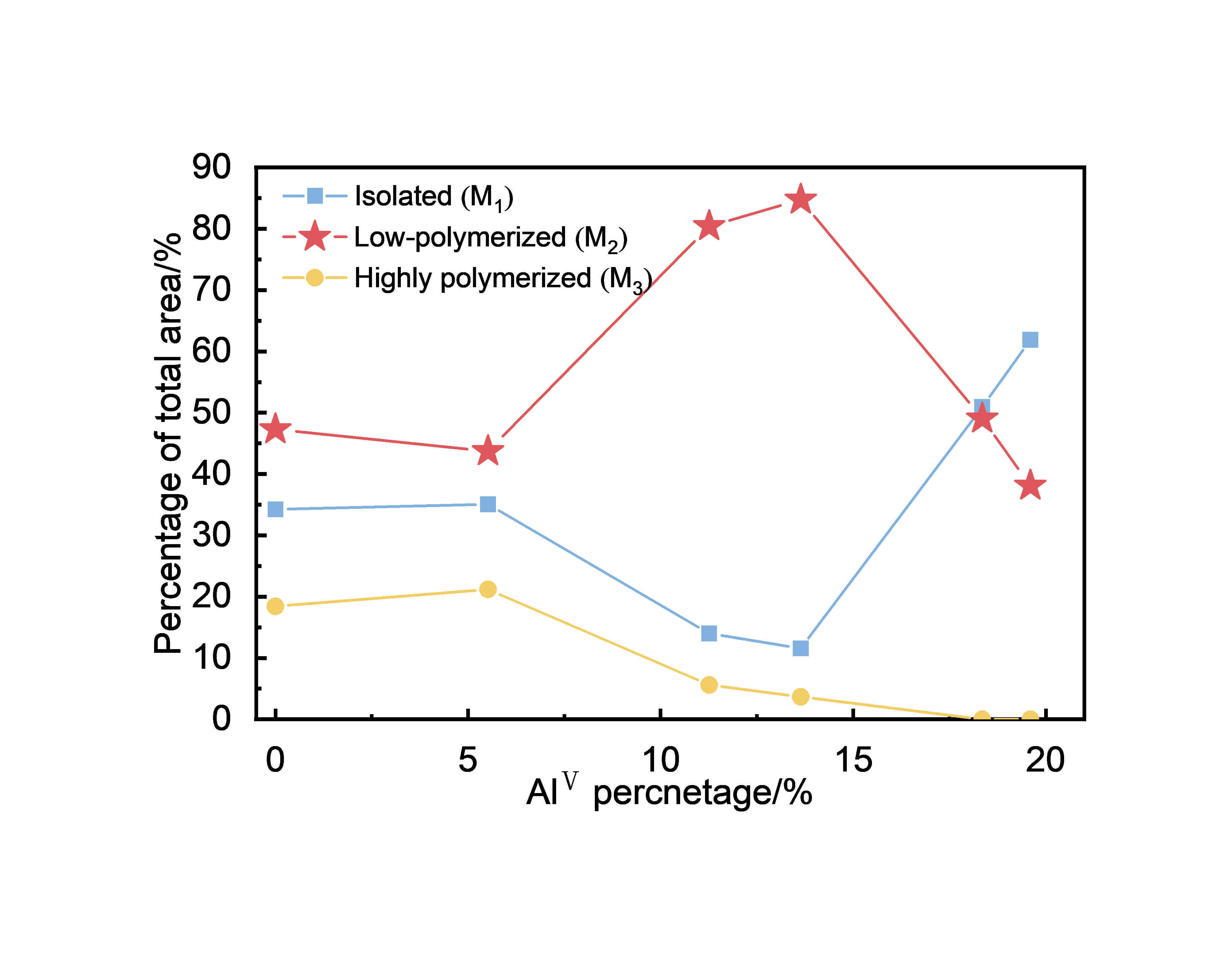
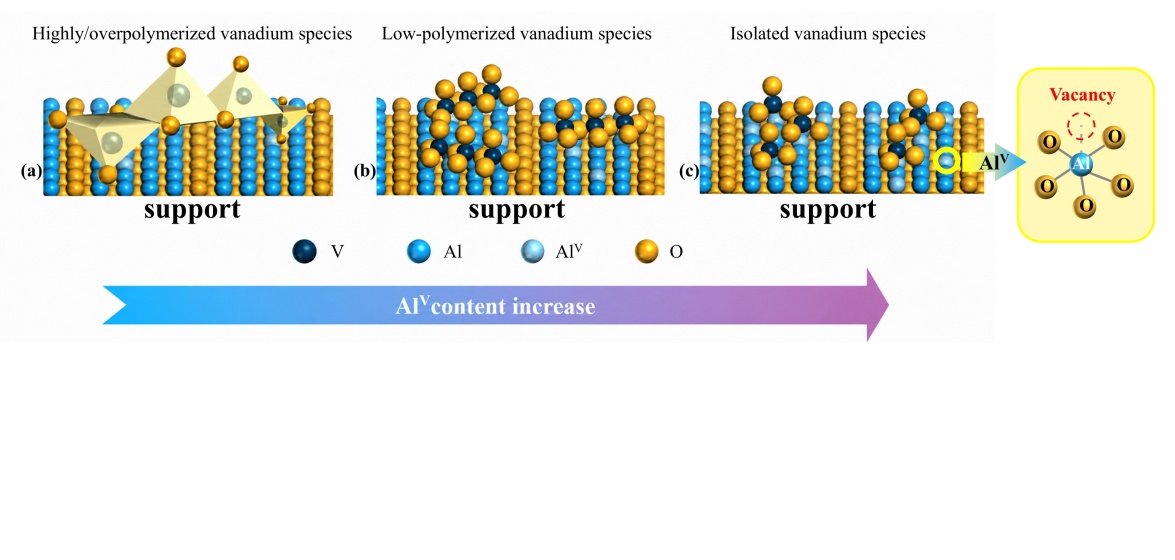
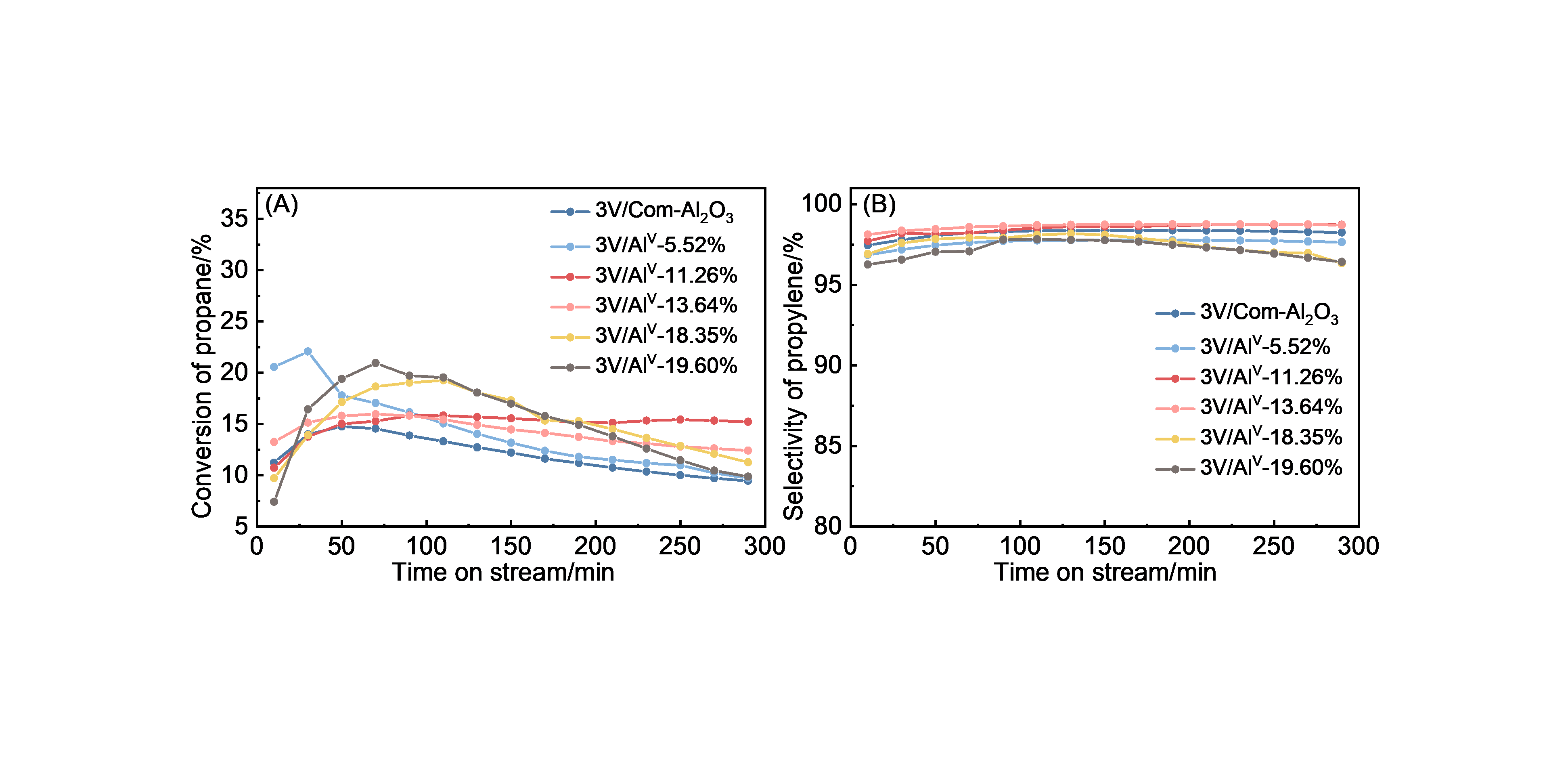
丙烷脱氢是丙烯生产的重要路线. VOx基催化剂因优异的脱氢活性、选择性及低成本表现出良好的应用前景, 但该催化剂易积炭失活, 且积炭生成速率与表面钒物种聚合度呈正相关. 本工作通过调变Al2O3载体中五配位铝(AlⅤ)位点含量, 构筑具有不同VOx聚合度的VOx/Al2O3催化剂, 并系统考察载体AlⅤ位点对VOx物种结构演变及丙烷脱氢性能的影响. 结果表明, 随着Al2O3载体中AlⅤ含量升高, 表面钒物种由高聚合态VOx逐步向低聚态VOx转化, 并进一步趋于孤立分散. 其中, 采用AlⅤ含量为11.26% (w)的Al2O3为载体制备的催化剂含有更多低聚态VOx物种, 表现出最佳丙烷脱氢性能: 丙烷转化率为15.0%, 丙烯选择性达98.5%, 丙烯时空收率为2.8 mmol·gcat-1·h-1, 稳定性显著优于商业氧化铝负载的催化剂. 本研究证实, AlⅤ位点有助于低聚态VOx的形成, 而低聚态VOx为优势脱氢物种, 有利于提高丙烯生成速率, 并降低深度脱氢和积炭倾向, 从而提升催化剂的稳定性.
李思飞, 吴浩, 孙浩然, 韩宇阳, 王国明, 李俊吉, 卢双慧, 白鹏, 阎子峰. 五配位铝位点诱导低聚态VOx形成用于稳定丙烷脱氢★[J]. 化学学报, 2026, 84(8): 1254-1264.
Sifei Li, Hao Wu, Haoran Sun, Yuyang Han, Guoming Wang, Junji Li, Shuanghui Lu, Peng Bai, Zifeng Yan. Penta-coordinated Aluminum Sites Induce Formation of Low-Polymerized VOx Species for Stable Propane Dehydrogenation★[J]. Acta Chimica Sinica, 2026, 84(8): 1254-1264.



| [1] |
doi: 10.1021/cs5003417 |
| [2] |
doi: 10.1021/cr5002436 pmid: 25163050 |
| [3] |
doi: 10.1134/S2070050415030083 |
| [4] |
|
|
(王甜, 杨利斌, 卜婷婷, 孙世林, 周金波, 董炳利, 王洛飞, 低碳化学与化工, 2026, 51, 103.)
|
|
| [5] |
doi: 10.1016/j.jcat.2012.06.005 |
| [6] |
|
|
(王延苏, 刘国柱, 于海斌, 无机盐工业, 2023, 55, 1.)
|
|
| [7] |
|
|
(洪学思, 吴省, 宋磊, 缪长喜, 杨为民, 化工进展, 2024, 43, 5517.)
doi: 10.16085/j.issn.1000-6613.2024-0476 |
|
| [8] |
doi: 10.1006/jcat.2000.2969 |
| [9] |
doi: 10.1016/j.cej.2006.03.014 |
| [10] |
doi: 10.1006/jcat.2001.3329 |
| [11] |
doi: 10.1039/c3cy01083j |
| [12] |
doi: 10.1002/cctc.v7.11 |
| [13] |
doi: 10.1002/anie.v57.23 |
| [14] |
doi: 10.1016/j.jcat.2017.12.004 |
| [15] |
doi: 10.1021/acsami.6b07779 |
| [16] |
doi: 10.1016/j.jcat.2022.07.017 |
| [17] |
doi: 10.1021/acscatal.6b00893 |
| [18] |
doi: 10.1016/j.fuproc.2016.05.024 |
| [19] |
doi: 10.1016/j.apcatb.2020.119089 |
| [20] |
doi: 10.1016/j.cattod.2022.04.015 |
| [21] |
|
| [22] |
doi: 10.1039/D0CY02154G |
| [23] |
doi: 10.1038/s41467-019-09662-4 |
| [24] |
doi: 10.1002/cctc.v13.15 |
| [25] |
|
|
(赵振祥, 博士论文, 中国石油大学(华东), 青岛, 2024.)
|
|
| [26] |
doi: 10.1021/ja0764308 |
| [27] |
doi: 10.1515/pac-2014-1117 |
| [28] |
doi: 10.1016/S0920-5861(02)00323-1 |
| [29] |
doi: 10.1021/jp046011m |
| [30] |
|
| [31] |
doi: 10.1016/j.apcata.2018.01.014 |
| [32] |
doi: 10.1016/j.jcat.2017.05.022 |
| [33] |
doi: 10.1006/jcat.1998.2143 |
| [34] |
doi: 10.1006/jcat.1998.2193 |
| [35] |
doi: 10.1016/j.cej.2015.08.048 |
| [36] |
doi: 10.1006/jcat.1995.1067 |
| [37] |
doi: 10.1016/j.cattod.2007.06.079 |
| [38] |
|
| [39] |
doi: 10.1021/acscatal.8b04701 |
| [40] |
|
|
(张晓磊, 黄意, 窦岩, 精细石油化工, 2025, 42, 57.)
|
|
| [41] |
doi: 10.1016/j.apcata.2006.01.003 |
| [42] |
doi: 10.1021/acs.iecr.7b01369 |
| [43] |
doi: 10.1021/ie50479a043 |
| [44] |
doi: 10.1016/j.apcata.2026.120946 |
| [45] |
doi: 10.1021/acscatal.8b02112 |
| [46] |
doi: 10.1021/acscatal.0c03286 |
| [47] |
doi: 10.1002/aic.v63.11 |
| [48] |
doi: 10.1016/j.jcat.2006.04.022 |
| [49] |
doi: 10.1016/0920-5861(88)80018-X |
| [50] |
doi: 10.1016/0021-9517(79)90130-1 |
| [51] |
doi: 10.1038/s41467-018-06967-8 |
| [52] |
doi: 10.1021/acs.jpcc.6b01672 |
| [53] |
doi: 10.1016/j.cej.2024.155220 |
| [1] | 王嘉玮, 张宁, 范晓强, 孔莲, 赵震. Fe助剂对PtFe/Silicalite-1催化剂丙烷脱氢性能影响研究[J]. 化学学报, 2025, 83(12): 1498-1506. |
| 阅读次数 | ||||||
|
全文 |
|
|||||
|
摘要 |
|
|||||
