

化学学报 ›› 2026, Vol. 84 ›› Issue (8): 1243-1253.DOI: 10.6023/A26060207 上一篇 下一篇
研究论文
孙晓冉, 刘子宇*( ), 刘敬楷, 刘小青*()
投稿日期:2026-06-19
发布日期:2026-08-22
作者简介:★“纪念兰州大学化学学科创建80周年”专辑.
基金资助:
Xiaoran Sun, Ziyu Liu*(), Jingkai Liu, Xiaoqing Liu*()
Received:2026-06-19
Published:2026-08-22
Contact:
E-mail: About author:★For the VSI “Celebration of 80th Anniversary of Chemistry in Lanzhou University”.
Supported by:文章分享
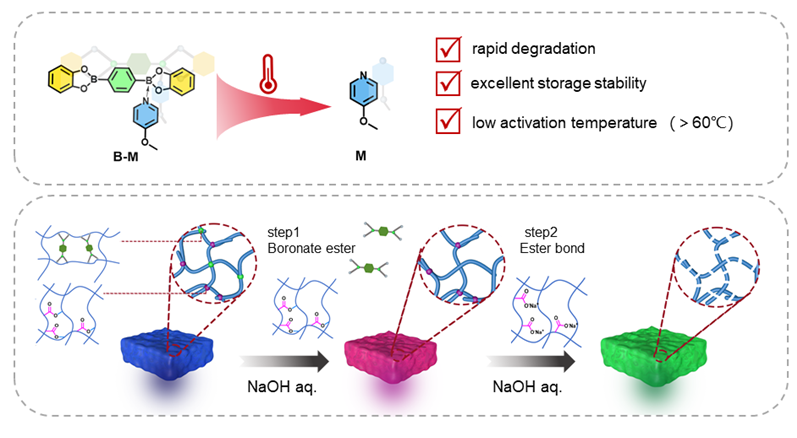
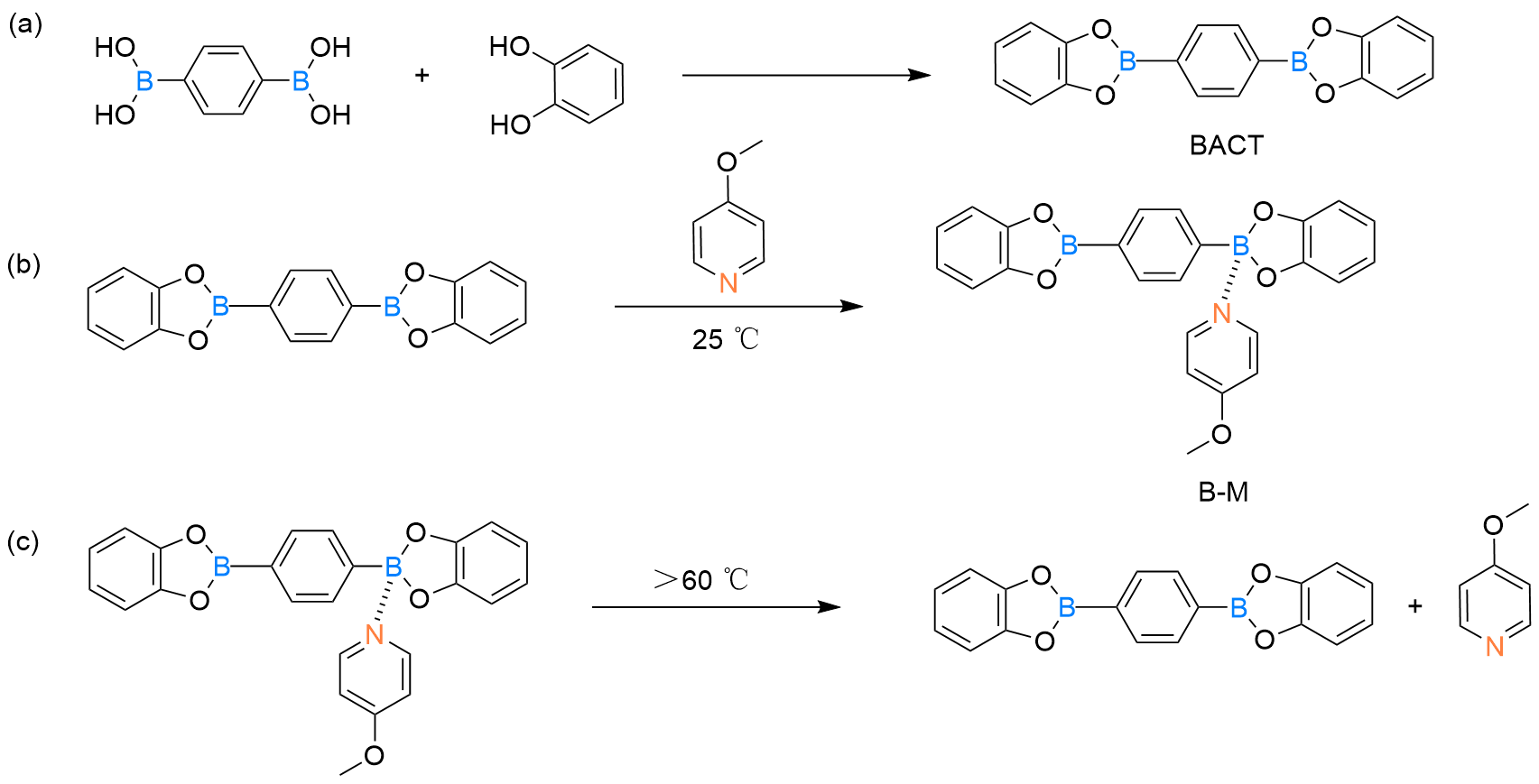
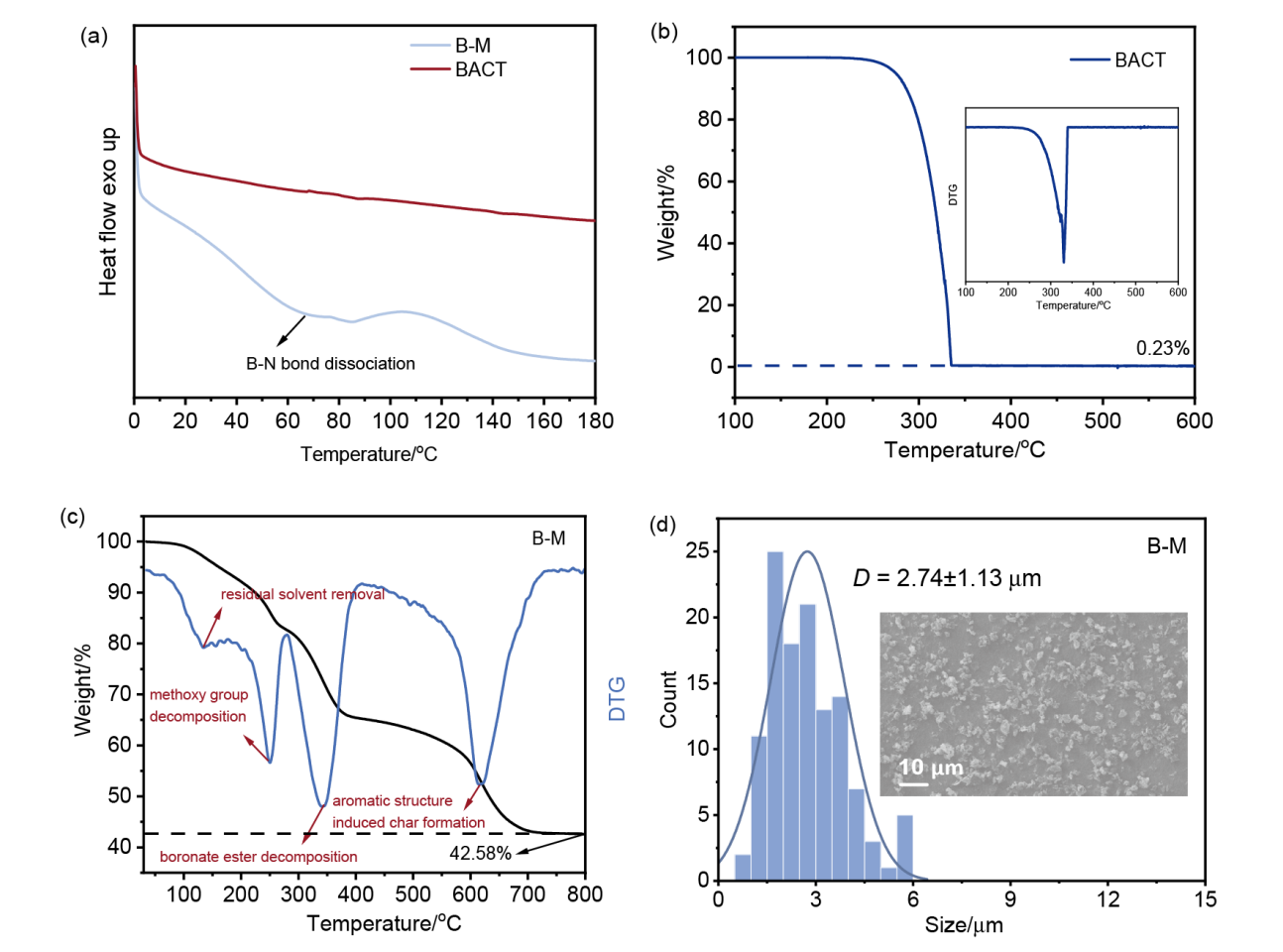
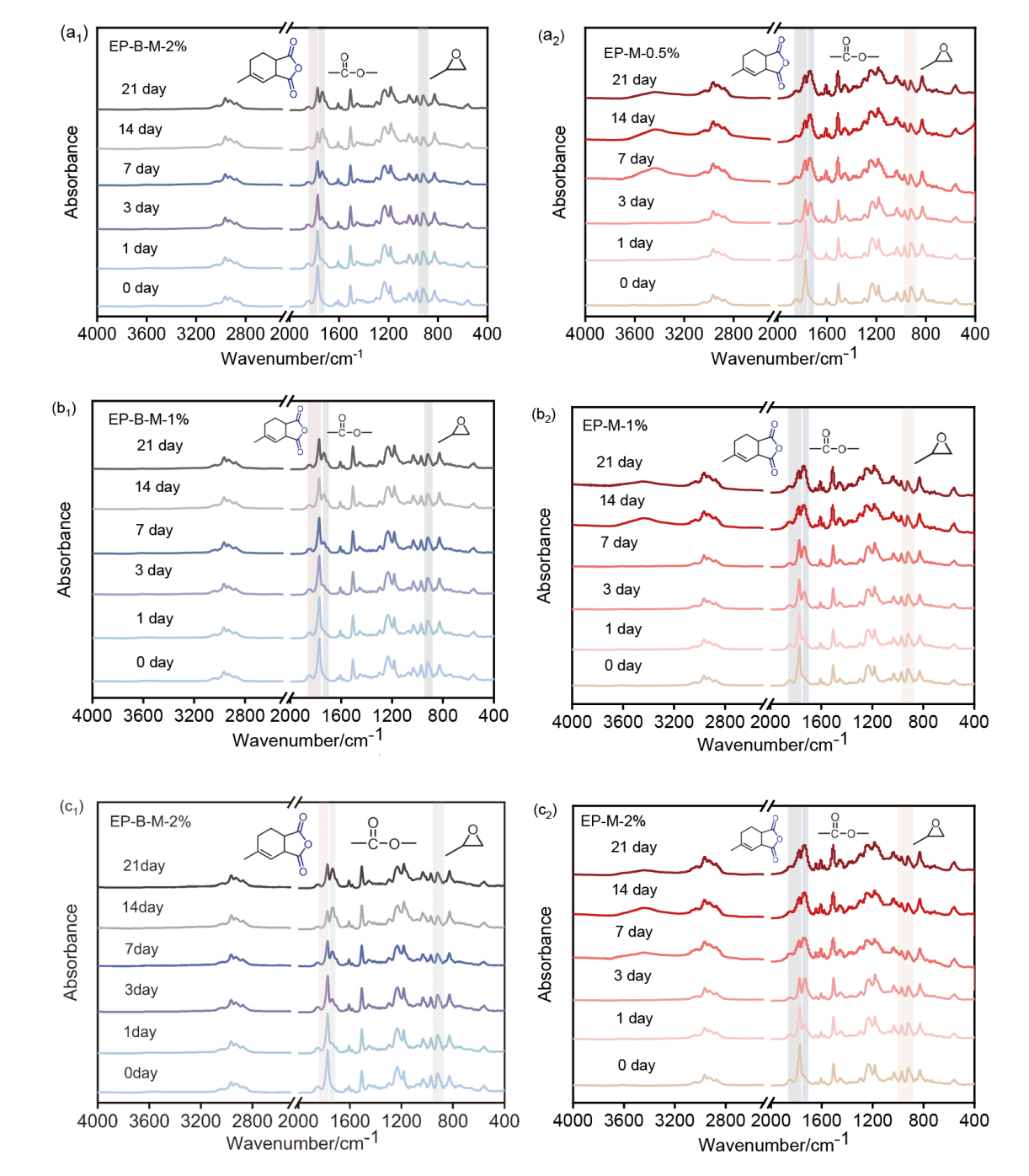
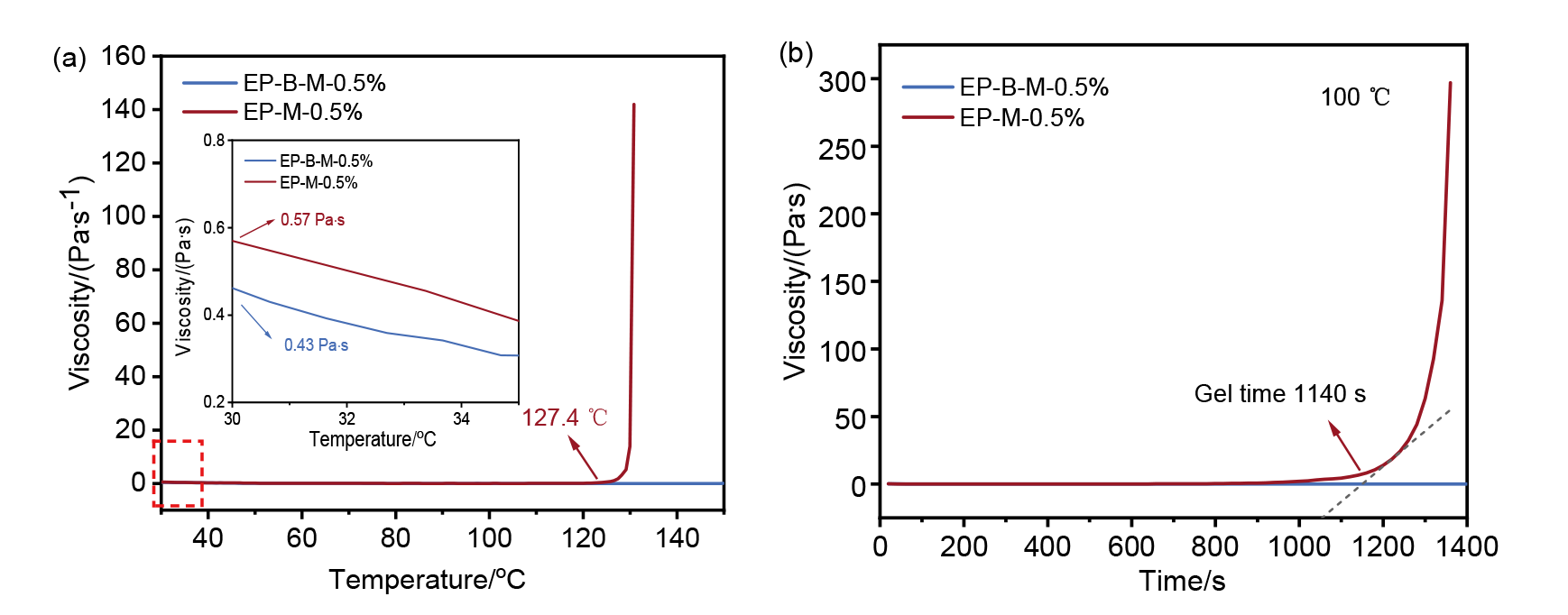
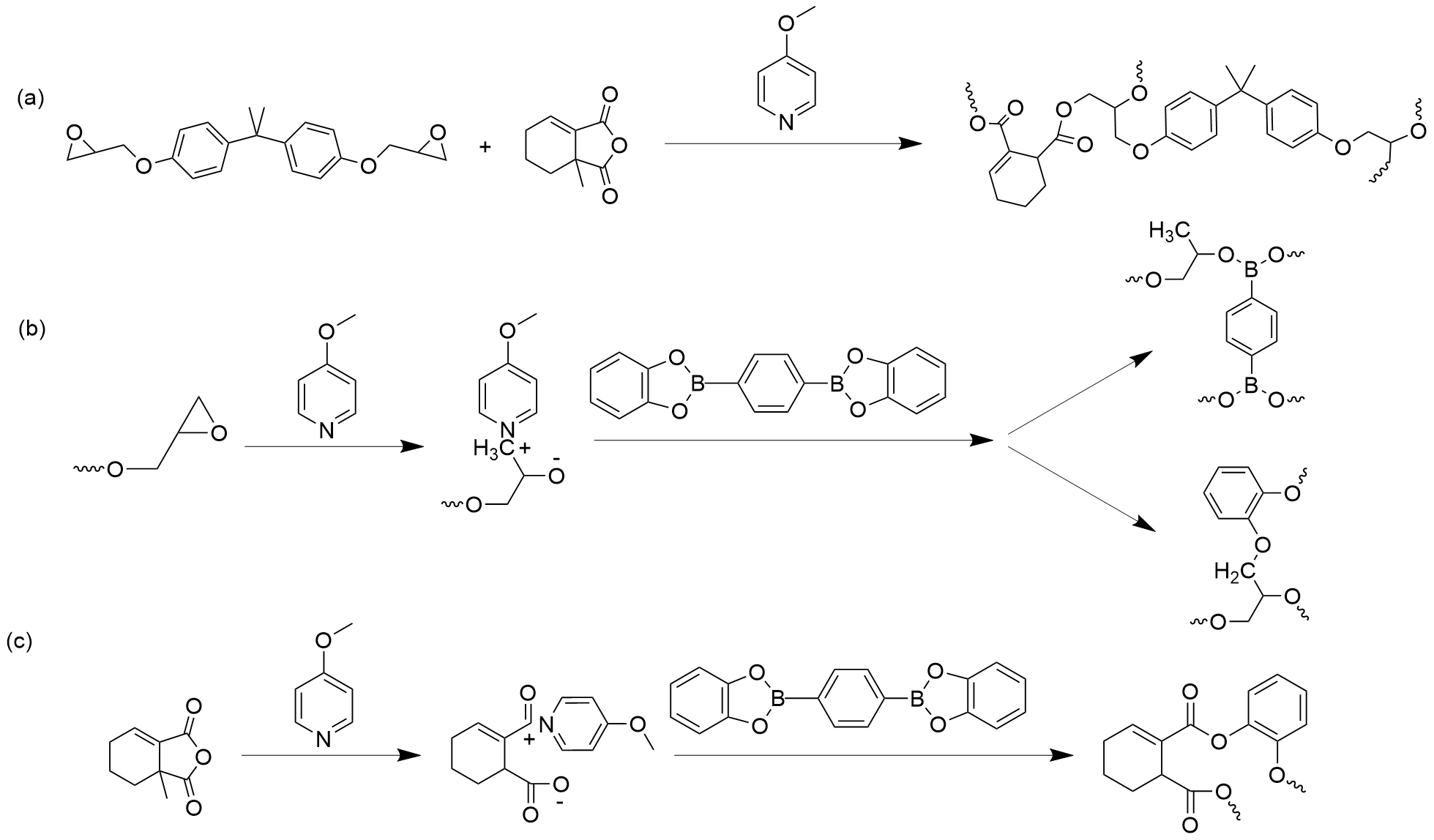
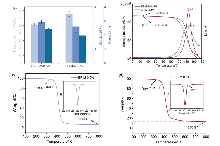
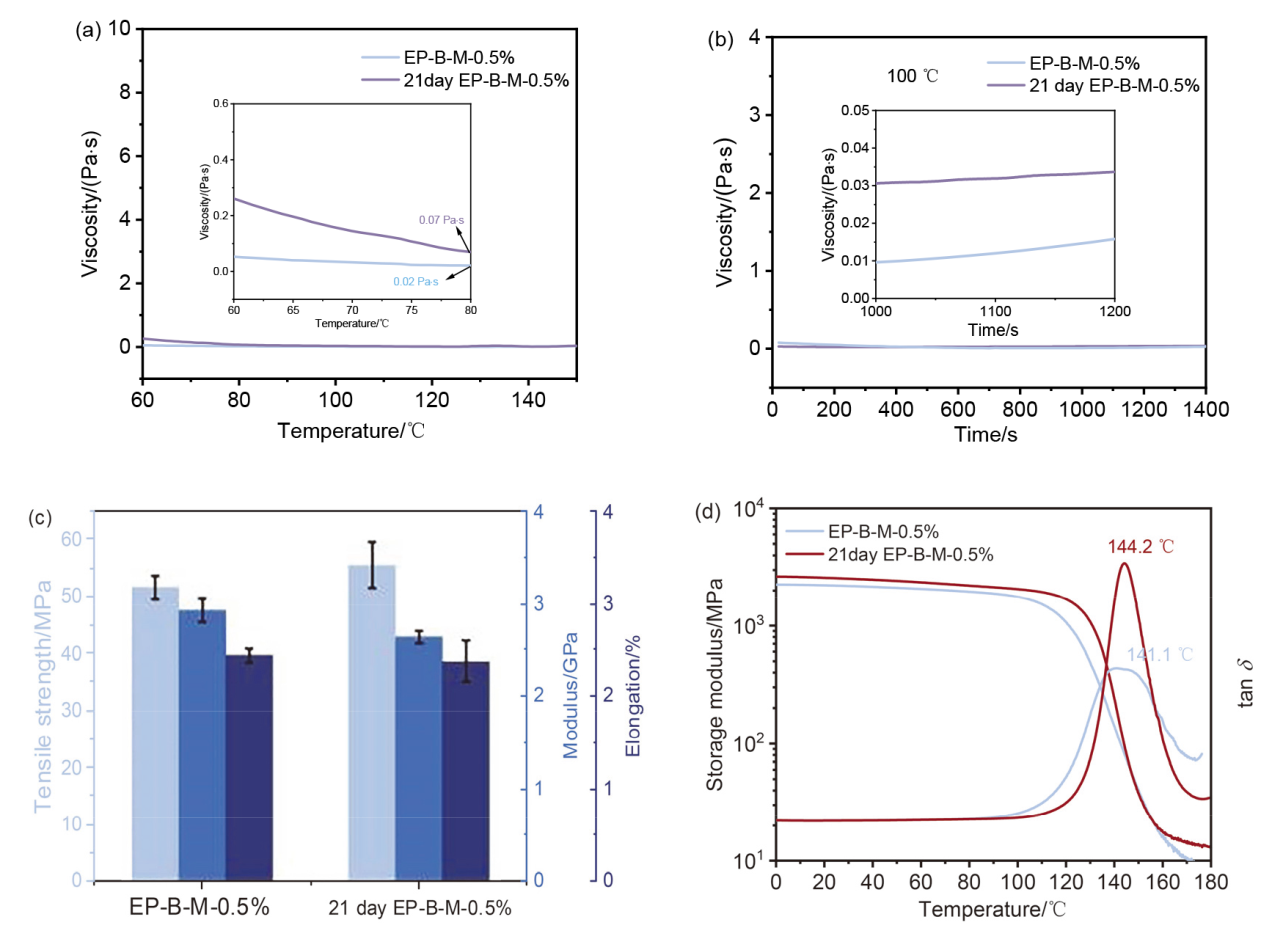
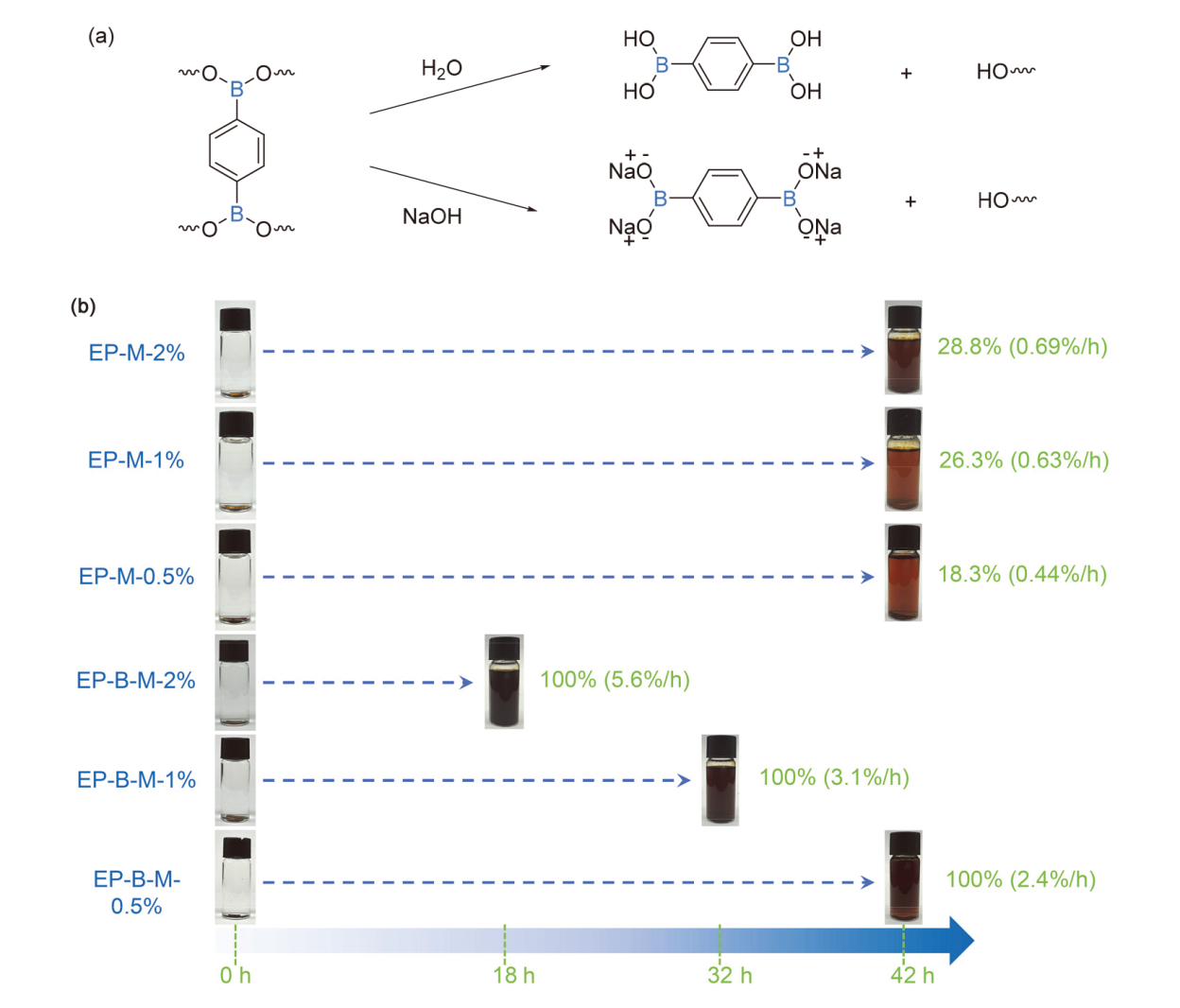
通过硼酸酯与吡啶之间的配位作用, 制备了B-N配合物(B-M)作为潜伏性固化促进剂, 用于单组分环氧树脂, 兼顾室温储存稳定性与交联网络高效降解. 吡啶N的孤对电子与B空轨道配位, 在室温下能够抑制吡啶N的固化促进作用; 中高温时B-N键解离, 释放活性吡啶N促进环氧固化. 此外, 硼酸酯参与固化反应, 其在碱性条件下的快速水解特性显著提升了交联网络的降解效率. 实验表明: 21 d室温储存后, 实验组EP-B-M-0.5%前驱体固化度仅12.2%, 80 ℃粘度增幅仅0.05 Pa•s, 而对照组EP-M-0.5%固化度达70.8%且完全硬化; 储存前后, EP-B-M-0.5%拉伸强度提升7.6%, Tg提升2.2%, 性能保持稳定; 在1 mol/L NaOH中, EP-B-M-0.5%的降解速率较EP-M-0.5%提升了4.5倍. 该策略对环氧树脂加工技术及可持续材料发展具有重要借鉴意义.
孙晓冉, 刘子宇, 刘敬楷, 刘小青. 基于B-N配位的潜伏固化与高效降解环氧体系★[J]. 化学学报, 2026, 84(8): 1243-1253.
Xiaoran Sun, Ziyu Liu, Jingkai Liu, Xiaoqing Liu. Latent Curing and Highly Efficient Degrading Epoxy System Based on B-N Coordination★[J]. Acta Chimica Sinica, 2026, 84(8): 1243-1253.
| 0 d | 1 d | 3 d | 7 d | 14 d | 21 d | α/% | |
|---|---|---|---|---|---|---|---|
| EP-B-M-0.5% | 262.8 | 257.1 | 253.0 | 244.9 | 231.1 | 230.5 | 12.2 |
| EP-B-M-1% | 295.2 | 279.4 | 269.2 | 240.5 | 210.0 | 206.2 | 30.2 |
| EP-B-M-2% | 274.2 | 265.0 | 187.5 | 160.6 | 153.4 | 150.9 | 45.0 |
| EP-M-0.5% | 272.7 | 236.4 | 163.9 | 102.3 | 85.1 | 79.7 | 70.8 |
| EP-M-1% | 297.0 | 273.2 | 201.9 | 155.2 | 100.5 | 85.0 | 71.4 |
| EP-M-2% | 292.5 | 268.1 | 230.9 | 127.6 | 71.5 | 67.9 | 76.8 |
| EP-B-2% | 73.1 | 72.5 | 71.3 | 65.0 | 61.6 | 61.0 | 16.6 |
| 0 d | 1 d | 3 d | 7 d | 14 d | 21 d | α/% | |
|---|---|---|---|---|---|---|---|
| EP-B-M-0.5% | 262.8 | 257.1 | 253.0 | 244.9 | 231.1 | 230.5 | 12.2 |
| EP-B-M-1% | 295.2 | 279.4 | 269.2 | 240.5 | 210.0 | 206.2 | 30.2 |
| EP-B-M-2% | 274.2 | 265.0 | 187.5 | 160.6 | 153.4 | 150.9 | 45.0 |
| EP-M-0.5% | 272.7 | 236.4 | 163.9 | 102.3 | 85.1 | 79.7 | 70.8 |
| EP-M-1% | 297.0 | 273.2 | 201.9 | 155.2 | 100.5 | 85.0 | 71.4 |
| EP-M-2% | 292.5 | 268.1 | 230.9 | 127.6 | 71.5 | 67.9 | 76.8 |
| EP-B-2% | 73.1 | 72.5 | 71.3 | 65.0 | 61.6 | 61.0 | 16.6 |
| [1] |
doi: 10.1007/s00289-025-05972-4 |
| [2] |
doi: 10.1007/s11426-025-2842-9 |
| [3] |
|
|
(曾昆, 邓莹, 周鲁直, 周学翔, 余传柏, 绝缘材料, 2026, 59, 23.)
|
|
| [4] |
|
|
(吕锟, 冯玉军, 殷鸿尧, 材料研究与应用, 2025, 19, 136.)
|
|
| [5] |
|
| [6] |
doi: 10.1016/j.compositesb.2019.107440 |
| [7] |
doi: 10.1002/pola.v56.5 |
| [8] |
doi: 10.1016/j.matlet.2015.08.141 |
| [9] |
doi: 10.1016/j.compositesb.2019.107380 |
| [10] |
doi: 10.1016/j.compositesb.2020.108601 |
| [11] |
|
| [12] |
|
| [13] |
|
|
(孙鑫, 苟浩澜, 周洋龙, 魏玮, 李小杰, 刘晓亚, 热固性树脂, 2022, 37, 6.)
|
|
| [14] |
doi: 10.1021/acsapm.2c00916 |
| [15] |
doi: 10.1016/j.compscitech.2017.02.014 |
| [16] |
doi: 10.1016/j.polymer.2024.127924 |
| [17] |
doi: 10.1007/s10853-022-07644-4 |
| [18] |
doi: 10.1016/j.polymdegradstab.2025.111383 |
| [19] |
doi: 10.1016/j.compositesb.2023.110571 |
| [20] |
doi: 10.1016/j.polymer.2019.121586 |
| [21] |
doi: 10.1016/j.eurpolymj.2021.110965 |
| [22] |
doi: 10.1016/j.compositesb.2019.107673 |
| [23] |
doi: 10.1016/j.cej.2024.149852 |
| [24] |
doi: 10.1016/j.polymdegradstab.2023.110261 |
| [25] |
doi: 10.1021/acsmacrolett.4c00247 |
| [26] |
|
|
(刘伟, 复合材料科学与工程, 2026, 4, 72.)
|
|
| [27] |
doi: 10.1021/acs.macromol.4c02009 |
| [28] |
doi: 10.1021/acs.chemmater.6c00015 |
| [29] |
doi: 10.1021/acs.macromol.5c02046 |
| [30] |
|
|
(刘俊, 王利祥, 高分子学报, 2017, 12, 12.)
|
|
| [31] |
doi: 10.6023/A23040142 |
|
(刘蕊, 孟彬, 胡俊丽, 刘俊, 化学学报, 2023, 81, 1295.)
doi: 10.6023/A23040142 |
|
| [32] |
doi: 10.1002/anie.v63.23 |
| [33] |
doi: 10.1039/c2cc34231f |
| [34] |
|
|
(翟丁, 高俊刚, 田庆, 蒋超杰, 河北大学学报(自然科学版), 2008, 28, 3.)
|
|
| [35] |
doi: 10.1038/s41467-026-73149-2 |
| [36] |
doi: 10.1002/app.07.v31:3 |
| [37] |
doi: 10.1002/anie.v65.5 |
| [38] |
|
|
(李亚群, 沈兰晓, 杨舒婷, 王祥, 单士常, 上海塑料, 2026, 54, 33.)
|
|
| [39] |
doi: 10.1021/acs.macromol.4c00996 |
| [40] |
|
|
(蔡程帆, 李超群, 张奇, 刘一帆, 于人同, 李雄, 魏忠正, 塑料科技, 2023, 51, 60.)
|
|
| [41] |
doi: 10.1016/j.cej.2025.161661 |
| [42] |
doi: 10.1016/j.eurpolymj.2026.114713 |
| [43] |
|
|
(郑新蕾, 吴艳玲, 刘赫, 高展瑶, 杜根行, 材料导报, 2025, 39, 72.)
|
|
| [44] |
|
|
(刘敬楷, 代金月, 王帅朋, 刘小青, 中国科学:化学, 2026, 56, 61.)
|
|
| [45] |
|
|
(姚亚琳, 肖洪晴, 闫冲冲, 沙骑骑, 苏志强, 复合材料科学与工程, 2026, 6, 146.)
|
|
| [46] |
doi: 10.1016/j.cej.2026.173029 |
| [1] | 刁智俊, 赵跃民, 陈博, 段晨龙. 印刷电路板中环氧树脂热解的ReaxFF反应动力学模拟[J]. 化学学报, 2012, 70(19): 2037-2044. |
| [2] | 段轶锋, 王小群, 刘羽中, 杜善义. 几种聚醚胺改性蒙脱土对环氧树脂固化过程的影响[J]. 化学学报, 2012, 70(10): 1179-1186. |
| [3] | 卢林刚, 王晓, 杨守生, 董希琳, 唐凯, 余厚珺. 新型树状单分子磷-氮膨胀阻燃剂的合成及阻燃性能研究[J]. 化学学报, 2012, 70(02): 190-194. |
| [4] | 赵立英, 马会茹, 孙志刚, 官建国. 非离子型活性乳化剂及其水性环氧树脂的制备和性能[J]. 化学学报, 2010, 68(02): 174-180. |
| [5] | 胡盛,赵琳,詹国柱,唐晓林,李善君. 环氧化聚丁二烯-聚苯乙烯嵌段共聚物对聚苯醚/环氧体系反应诱导 相分离行为的影响[J]. 化学学报, 2009, 67(15): 1815-1821. |
| [6] | 李唯真, 武培怡, 李善君, 杨玉良. 二维红外相关分析对乙二醇在邻甲酚环氧体系中的扩散过程的研究[J]. 化学学报, 2004, 62(17): 1641-1644. |
| [7] | 田骏翔,李善君. 活性酯固化邻甲酚环氧树脂反应机理的研究[J]. 化学学报, 2003, 61(9): 1471-1477. |
| [8] | 窦东友,王贵友,胡春圃. 网络间含离子键的聚氨酯/接枝乙烯基酯树脂互穿聚合物网络 研究[J]. 化学学报, 2001, 59(9): 1476-1483. |
| [9] | 张树永,周伟舫,罗小雯,李善君. 电化学阻抗法研究降低环氧涂层的吸水性能[J]. 化学学报, 1999, 57(3): 329-332. |
| [10] | 陈月辉,李善君,浦琮,周传舫. 电化学阻抗谱法研究环氧膜的渗水机理[J]. 化学学报, 1995, 53(4): 328-331. |
| 阅读次数 | ||||||
|
全文 |
|
|||||
|
摘要 |
|
|||||
