




1 引言
2 表面活性剂对泡沫和清洗的影响
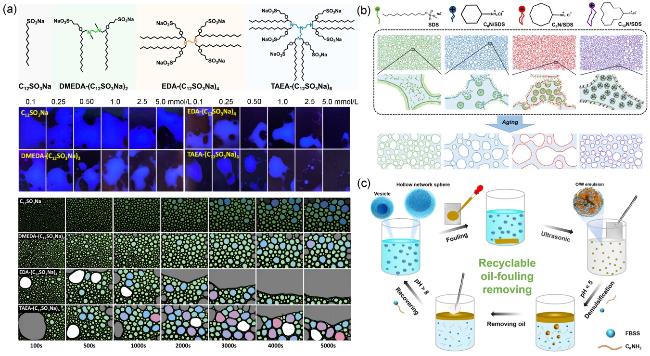
图1 低泡清洗和可循环清洗表面活性剂体系的构筑: (a)不同磺酸盐表面活性剂分子的化学结构、清洗除油效率、起泡性和泡沫稳定性[44]; (b)单独十二烷基硫酸钠(SDS)溶液以及CnN/SDS (n=6、8和12)混合体系中泡沫转变过程的可能机制[45]; (c)高效循环清洗除油示意图[46]Figure 1 Construction of low-foaming and recyclable cleaning surfactant systems: (a) Chemical structure, oil removal efficiency, foaming properties and foam stability of different sulfonate surfactants[44]; (b) Possible mechanism of the decay process for foams in single SDS solution and CnN/SDS (n=6, 8 and 12) solution[45]; (c) Schematic diagram for high-efficiency oil-fouling removal strategy[46] |
3 表面活性剂对抗菌性能的影响
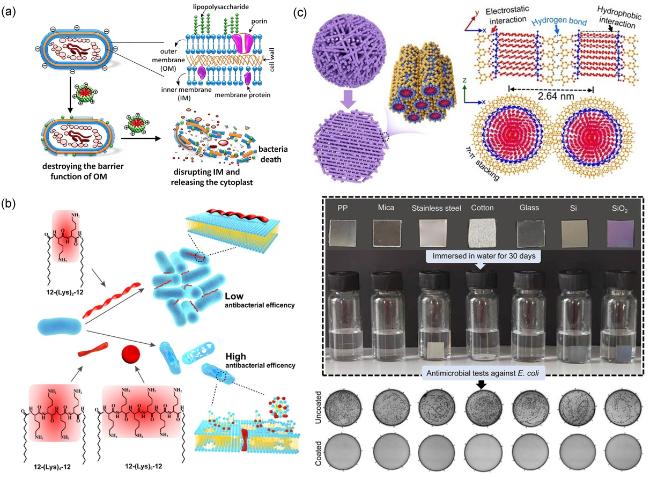
图2 表面活性剂的高效抗菌性能: (a)表面活性剂胶束对大肠杆菌的抗菌机制示意图[58]; (b)不同长度间隔基团的肽两亲分子12-(Lys)n-12抗菌机制示意图[59]; (c) GA和12-3-12分子组装形成聚集体的路径及修饰后涂层浸泡30 d后的抗菌效果[61]Figure 2 Highly efficient antibacterial performance of surfactants: (a) Schematic graph of antibacterial mechanism of the surfactant micelles to E. coli[58]; (b) Schematic graph of the antibacterial mechanism of peptide amphiphiles 12-(Lys)n-12 with varying spacer lengths[59]; (c) path of the molecular assembly of GA and 12-3-12 to form aggregates and the antibacterial effect of the modified coating after being soaked for 30 d[61] |
4 表面活性剂控制液滴撞击表面的过程
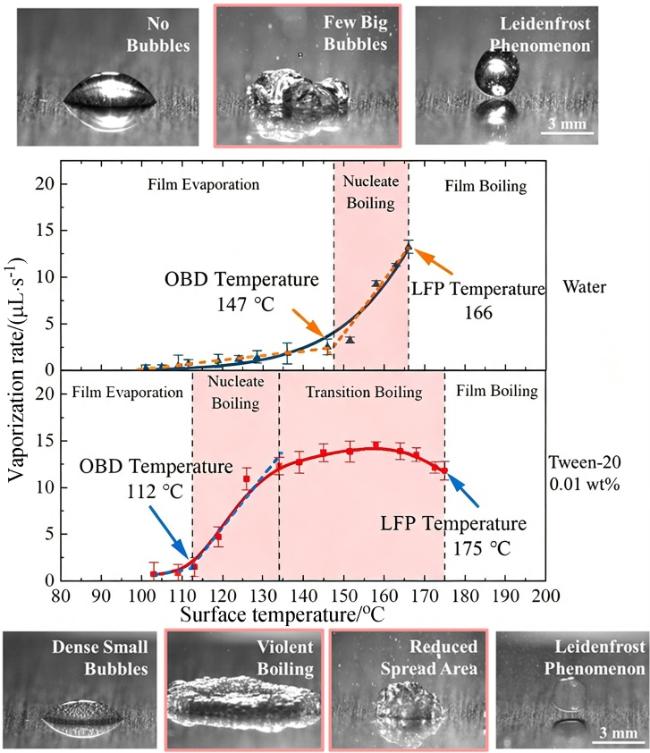
4.1 表面活性剂促进液滴撞击过热表面的沸腾换热
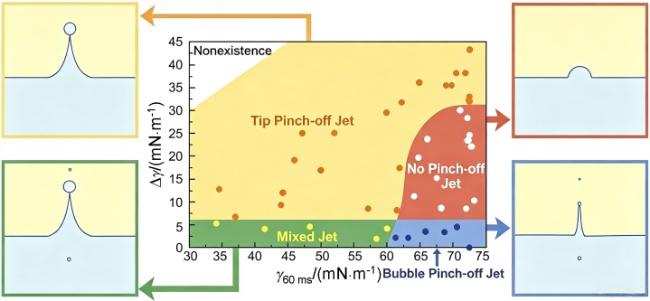
4.2 表面活性剂抑制液滴撞击液池产生的沃辛顿射流
4.3 表面活性剂促进农药液滴在叶面的高效沉积与铺展
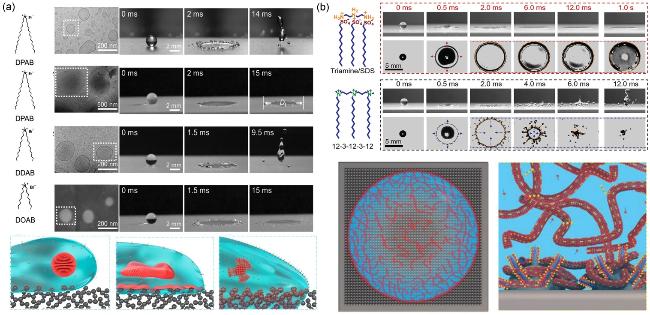
图5 表面活性剂聚集体抑制高速撞击液滴在超疏水表面的反弹飞溅: (a)单头双尾表面活性剂的分子结构、形成囊泡的Cryo-TEM图、撞击超疏水表面后液滴行为及不同囊泡高速撞击超疏水表面后高效沉积和可控渗透的示意图[103]; (b)非共价构筑(三胺/SDS)和共价构筑表面活性剂(12-3-12-3-12)的分子结构、在超疏水表面的撞击行为及高效沉积铺展机制图[104]Figure 5 Inhibition of rebound and splash of high-speed impact droplets on superhydrophobic surfaces by surfactant aggregates: (a) Molecular structure of single-head double-tail surfactant, Cryo-TEM image of formed vesicles, behavior of droplets after impacting the superhydrophobic surface, and schematic diagram of efficient deposition and controllable penetration of different vesicles after high-speed impact on the superhydrophobic surface[103]; (b) Molecular structures of non-covalently constructed (triamine/SDS) and covalently constructed surfactant (12-3-12-3-12), impact behavior on the superhydrophobic surface, and schematic diagram of the mechanism of efficient deposition and spreading[104] |
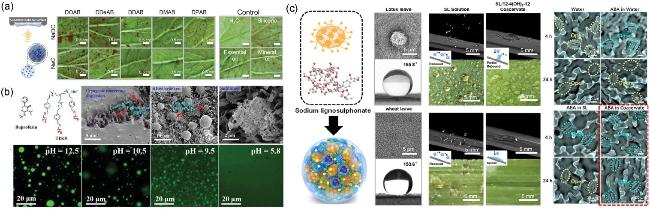


图6 液液凝聚相控制农药的整个施用过程: (a)自下向上喷洒示意图及NaDC/DXAB、NaC/DXAB、水、商业助剂在番茄叶背面沉积效果[115]; (b)农药和TIS10化学结构式、凝聚相液滴与甘蓝表面微/纳米分级结构相互缠绕的冷冻扫描电镜图像及随pH变化凝聚相液滴逐渐释放染料的过程[116]; (c)木质素磺酸钠(SL)与阳离子表面活性剂(DTAB、六亚甲基-1,6-双(十二烷基二甲基溴化铵)(12-6-12)和1,4-双(十二烷基二甲基溴化铵)-2,3-丁二醇[12-4(OH)2-12]形成的凝聚相示意图, 超疏水荷叶和小麦叶表面的SEM图像与水接触角、SL溶液和凝聚层液滴分别喷洒在倾斜10°的荷叶和小麦叶上的图像以及在光照条件下, 水、SL溶液和SL/DTAB凝聚相(均含有10 μmol/L脱落酸)喷洒后蚕豆气孔的光学图像[121]Figure 6 Control of the entire journey of pesticide application through coacervate: (a) Schematic diagram of bottom-up spraying and deposition effects of NaDC/DXAB, NaC/DXAB, water and commercial agricultural adjuvants on the abaxial side of tomato leaves[115]; (b) chemical structure of pesticides and TIS10, Cryo-SEM images of the entanglement between coacervate droplets and the micro/nano hierarchical structures on the cabbage surface, and the process of the gradual release of dyes from the coacervate droplets with the change of pH[116]; (c) Schematic diagram of the coacervate formed by sodium lignosulfonate (SL) and cationic surfactants [DTAB, hexamethylene-1,6-bis(dodecyldimethylammonium bromide) (12-6-12) and 1,4-bis(dodecyl N,N-dimethylammonium bromide)-2,3-butanediol (12-4(OH)2-12)], SEM images and water contact angles of the superhydrophobic lotus leaf and wheat leaf surfaces, images of SL solution and coacervate droplets sprayed on the lotus leaf and wheat leaf inclined at 10°, and optical images of broad bean stomata after spraying water, SL solution, and SL/DTAB condensed phase (all containing 10 μmol/L abscisic acid) under light conditions[121] |