有机化学 ›› 2026, Vol. 46 ›› Issue (7): 2589-2603.DOI: 10.6023/cjoc202603047 上一篇 下一篇
综述与进展
郑湧龙†, 罗鑫龙†, 徐裕敏, 霍浩华*( )
)
收稿日期:2026-03-31
修回日期:2026-05-10
发布日期:2026-06-10
作者简介:†共同第一作者
基金资助:
Yonglong Zheng†, Xinlong Luo†, Yumin Xu, Haohua Huo*()
Received:2026-03-31
Revised:2026-05-10
Published:2026-06-10
Contact:
*E-mail: hhuo@xmu.edu.cn
About author:†(The authors contributed equally to this work).
Supported by:文章分享
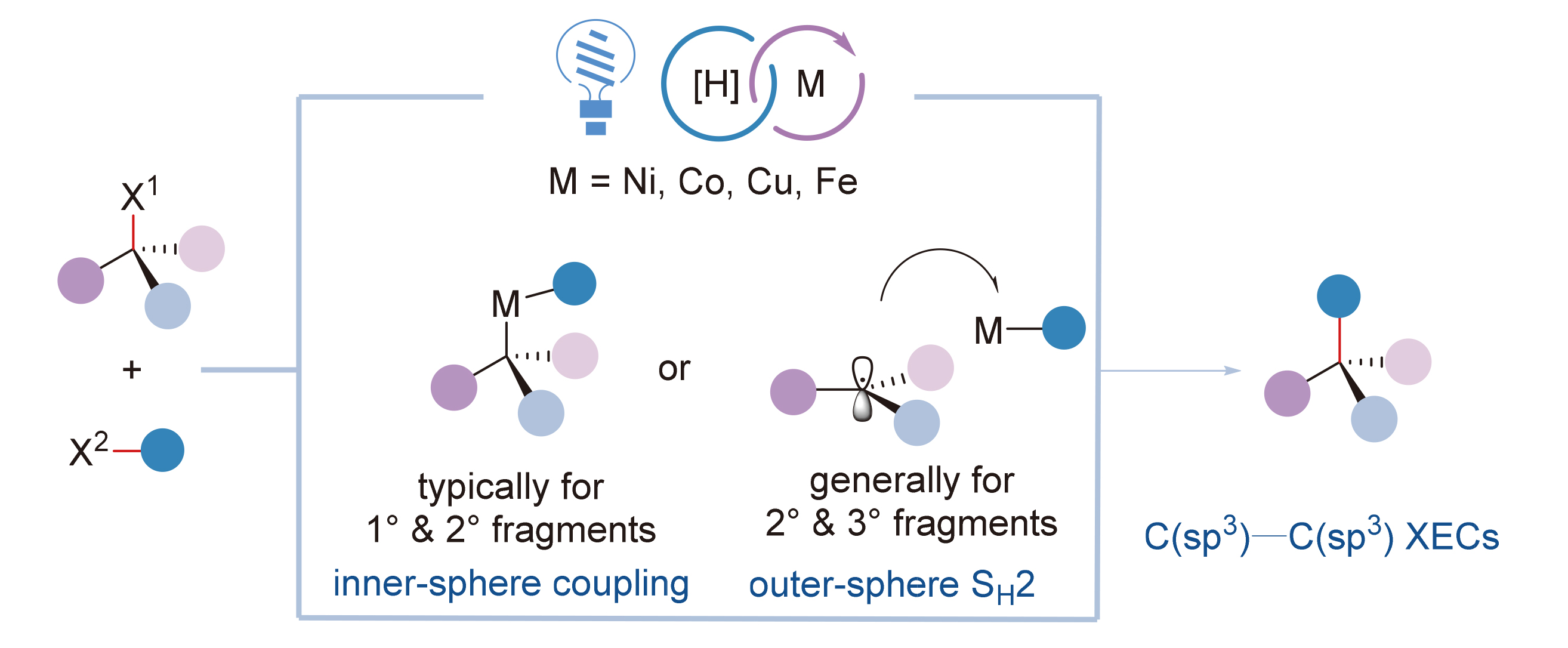
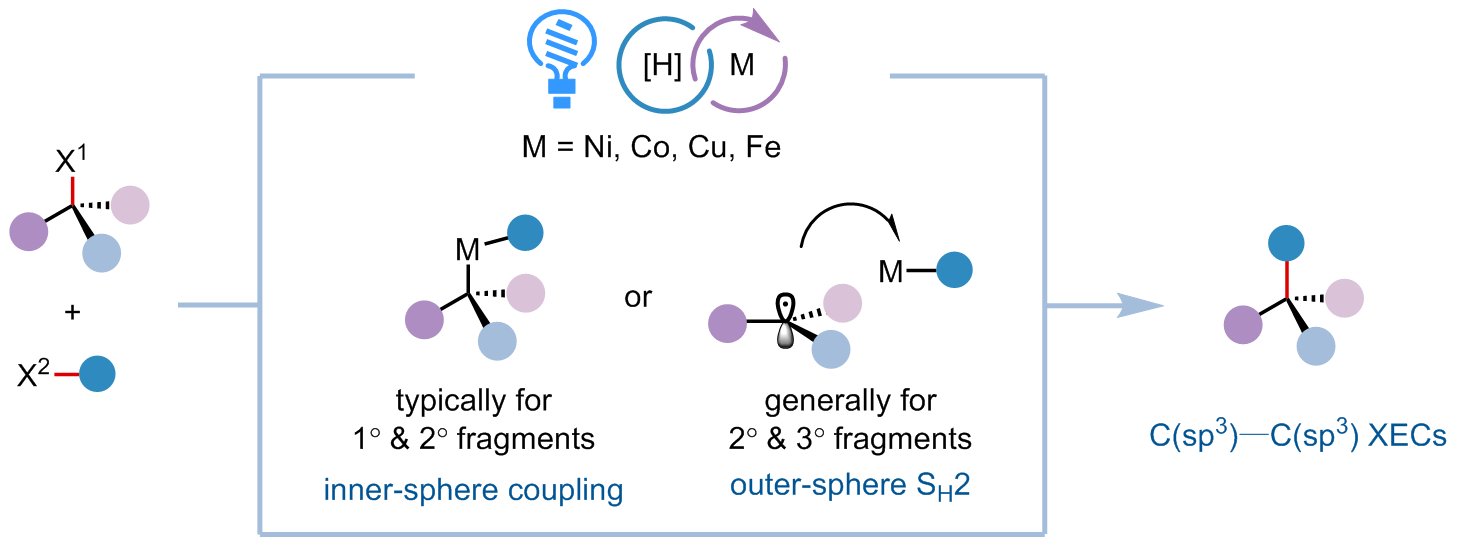
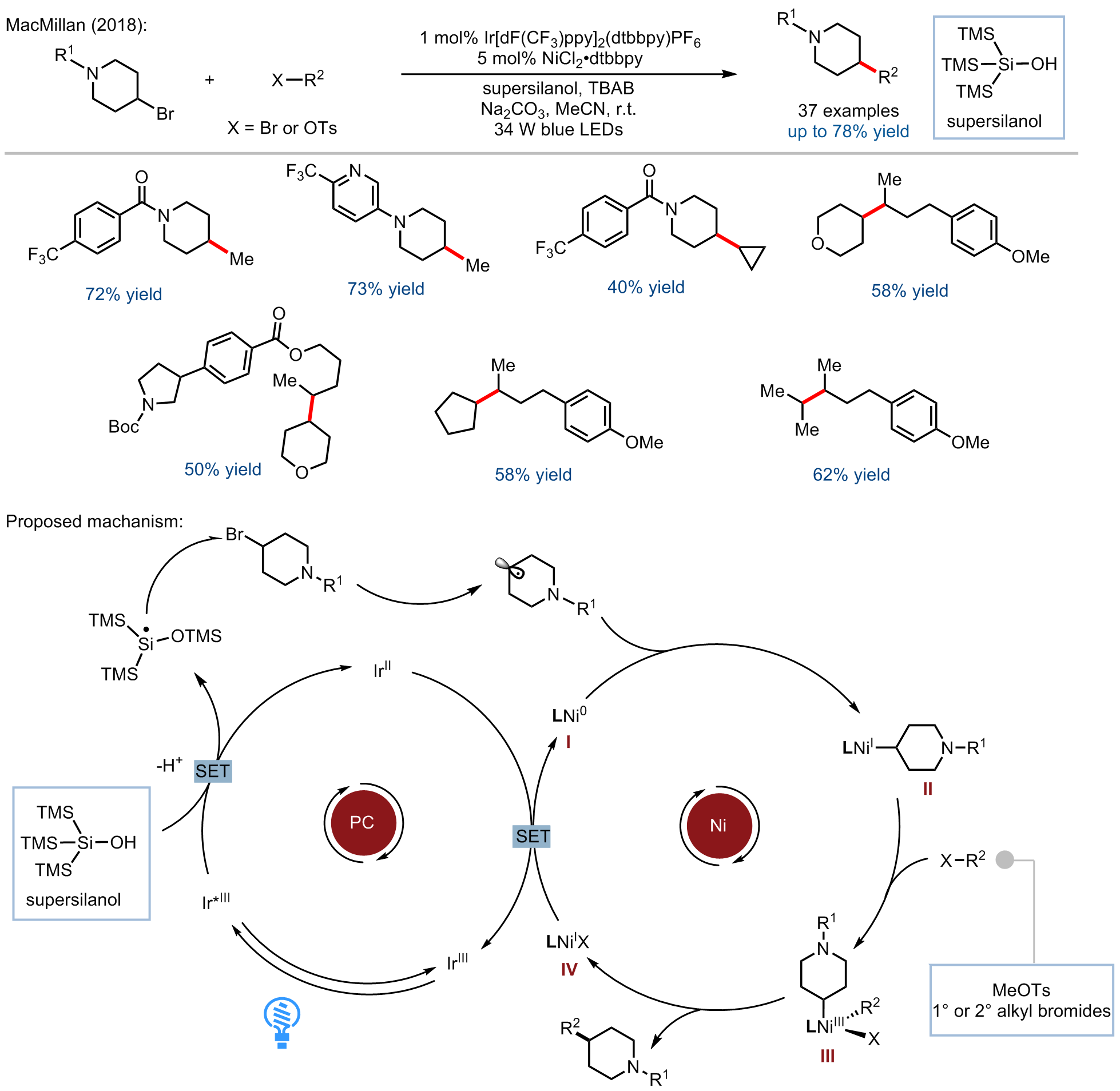
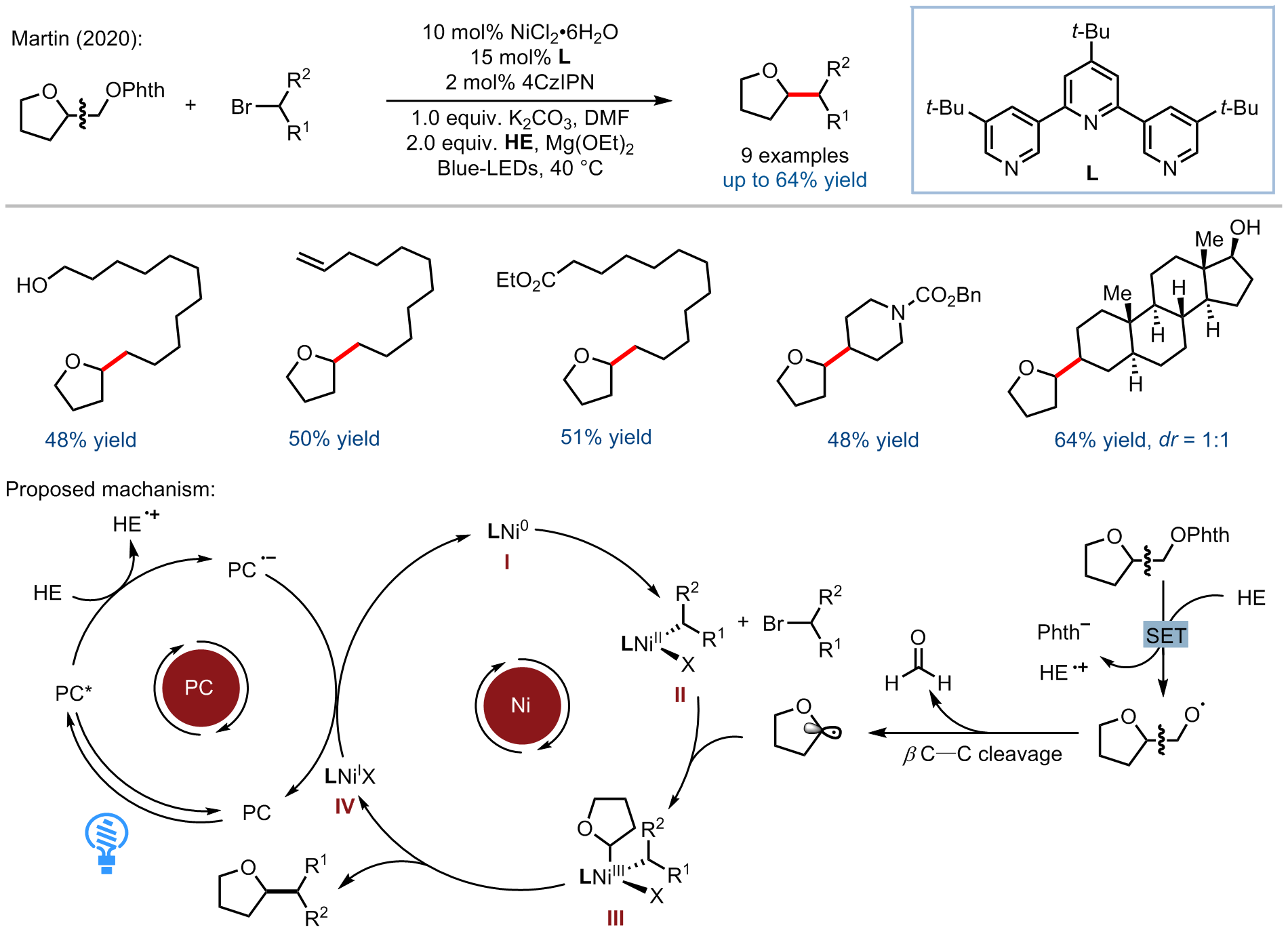
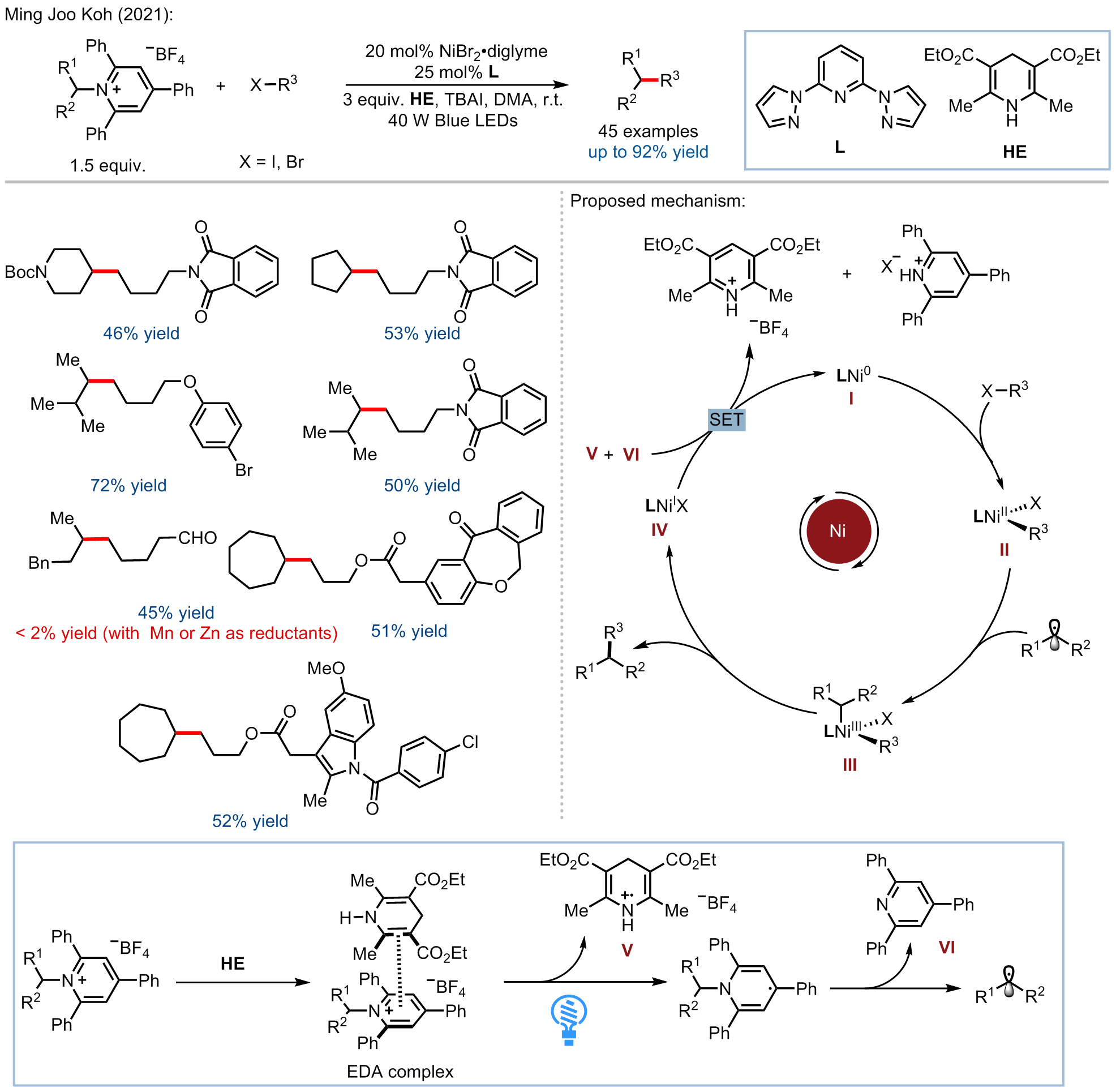
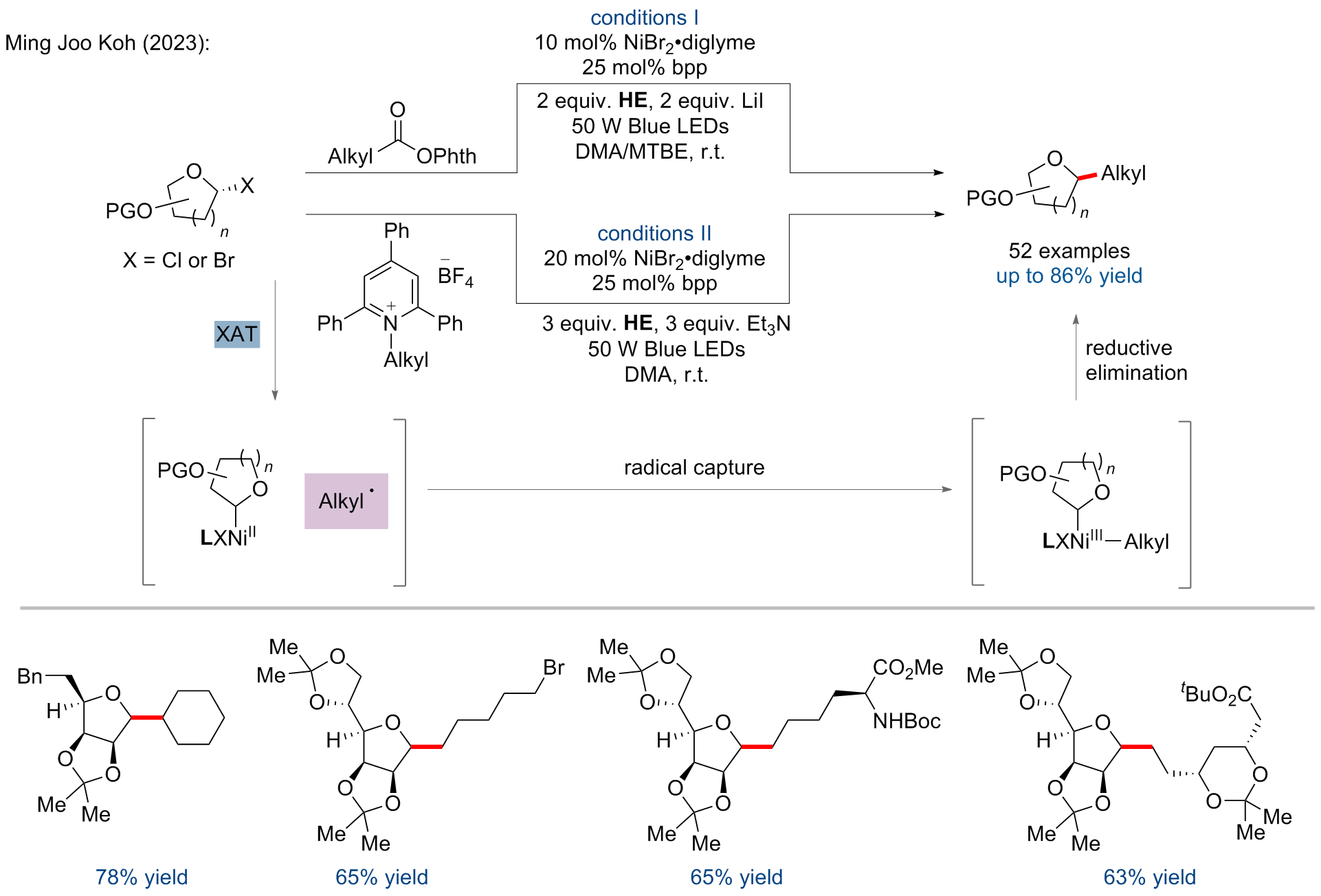
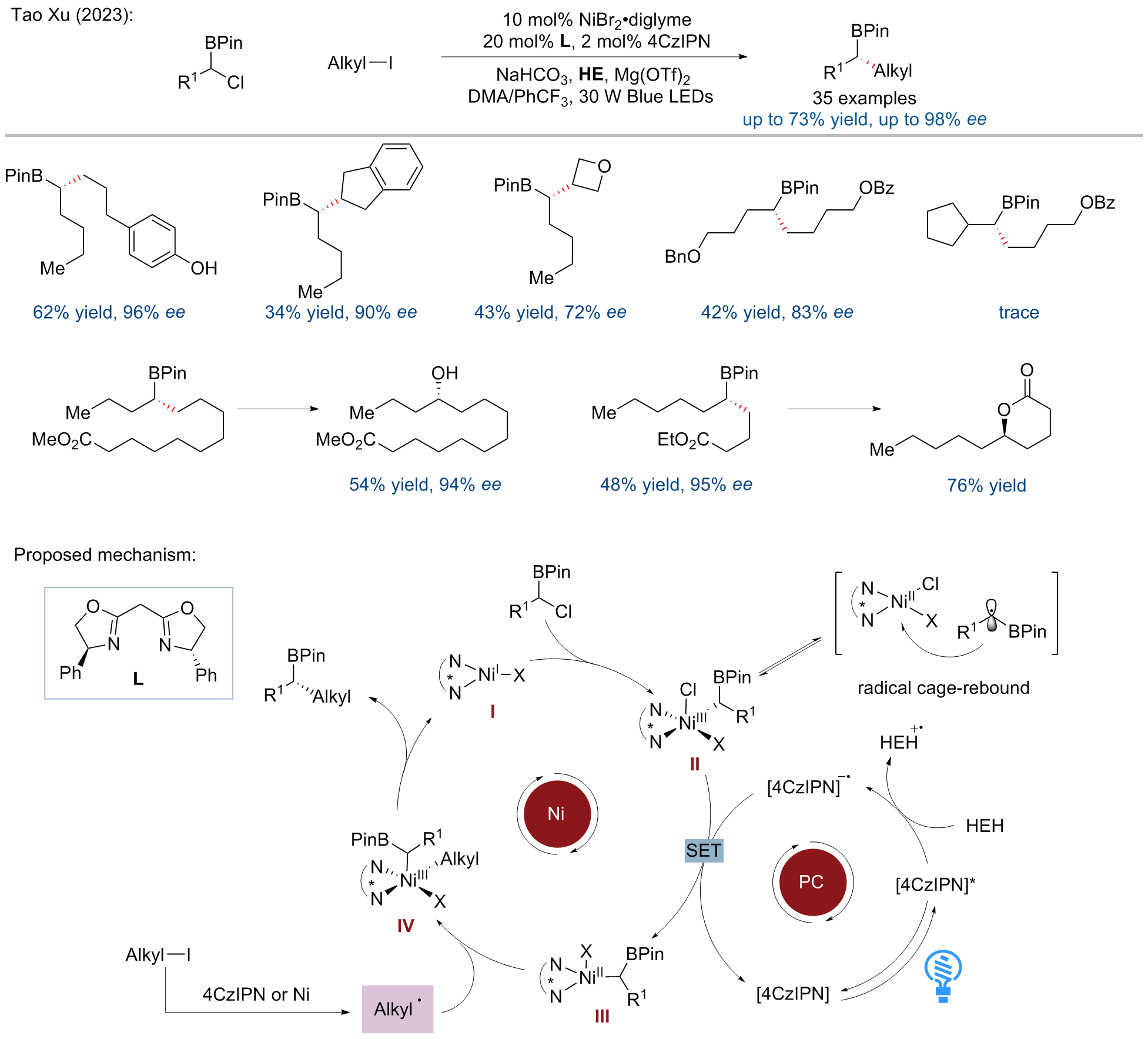
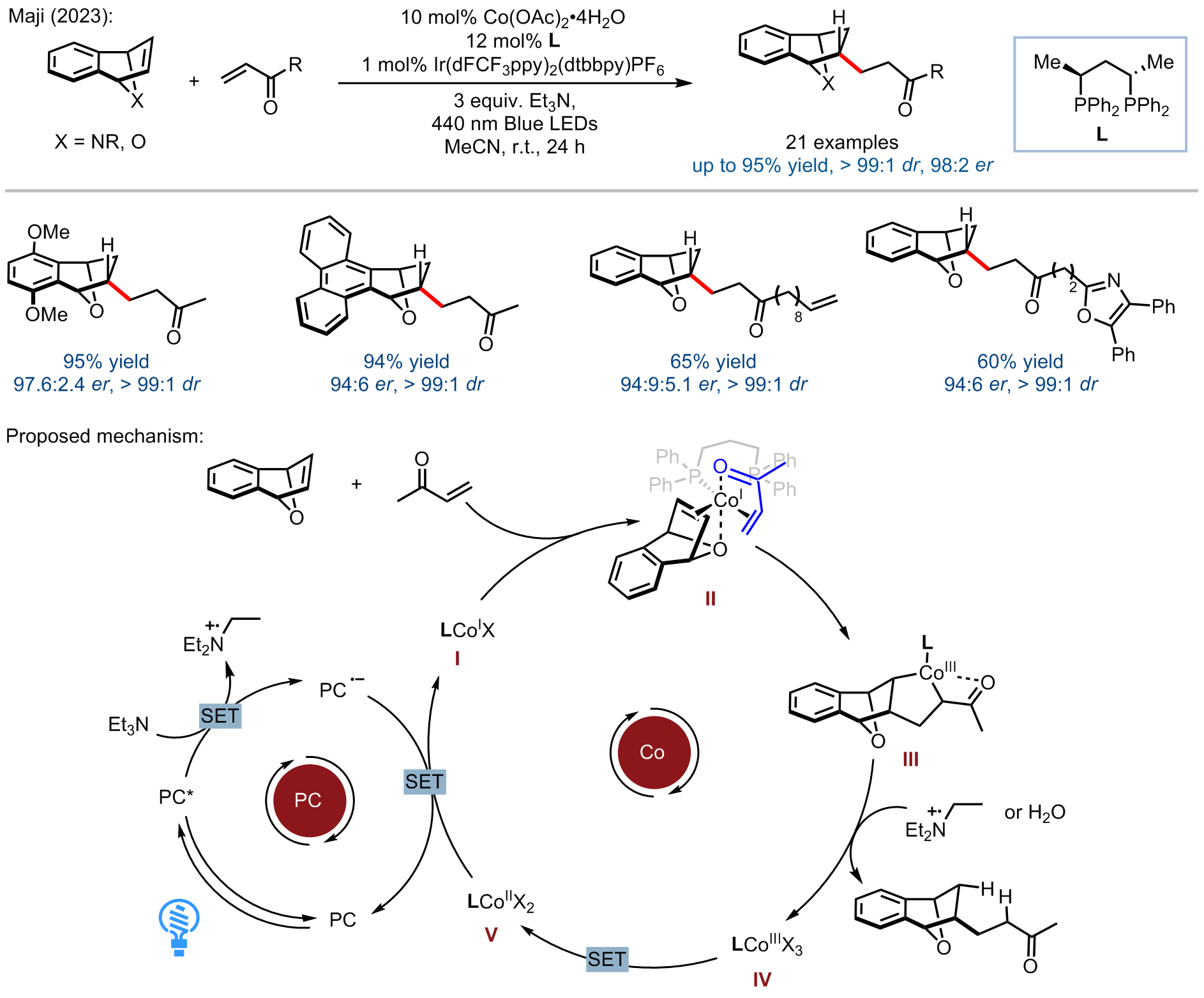
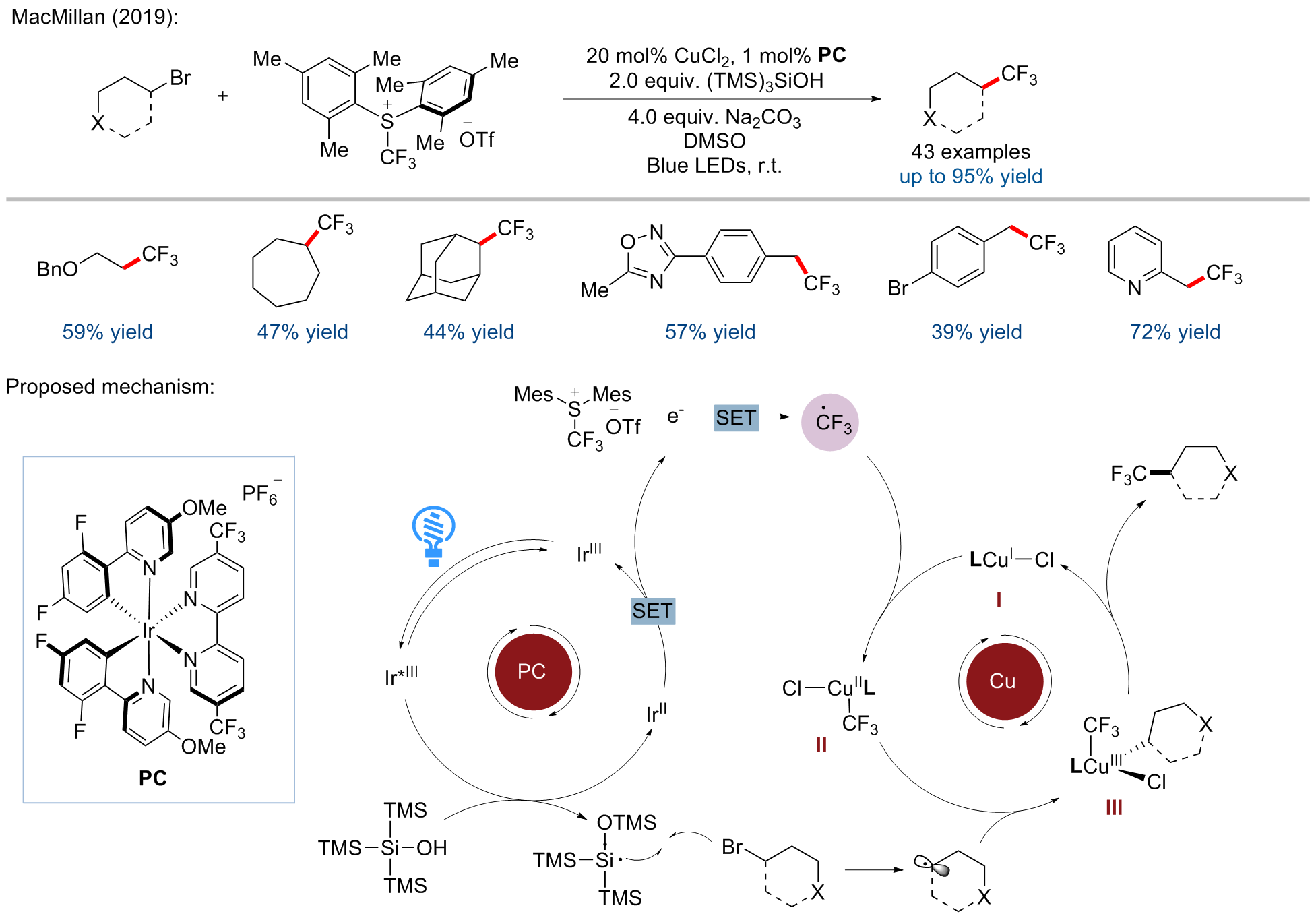
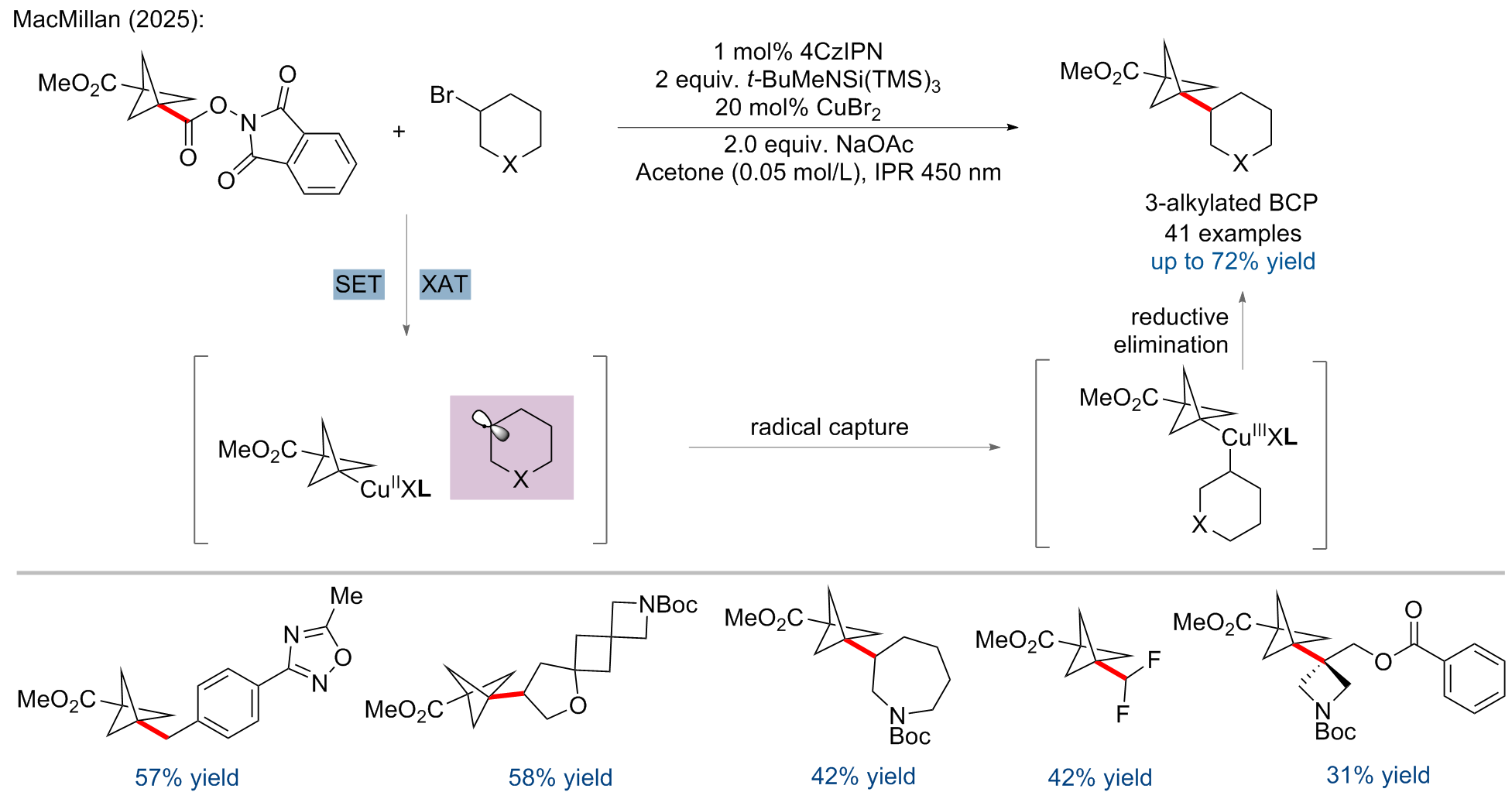
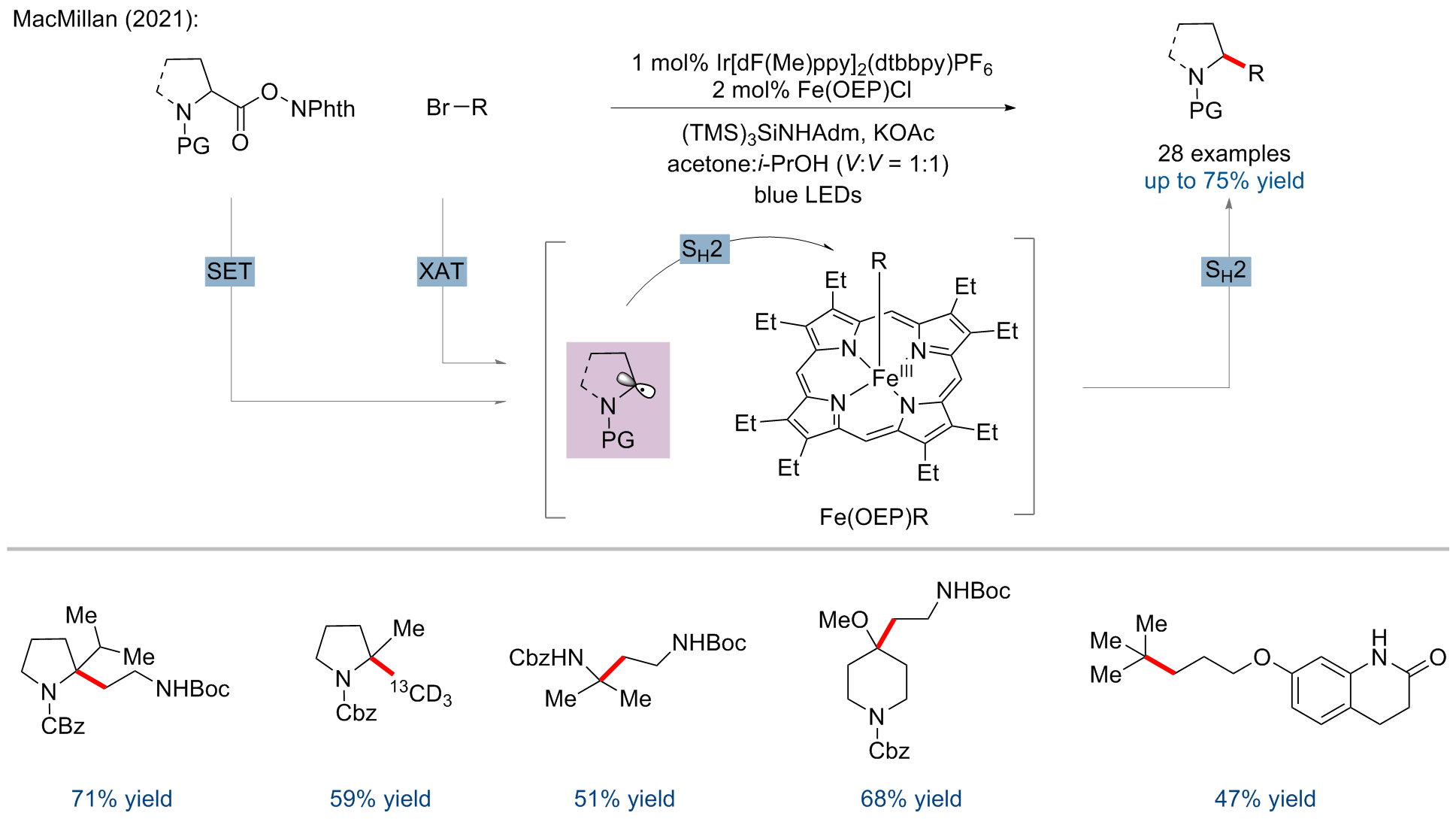
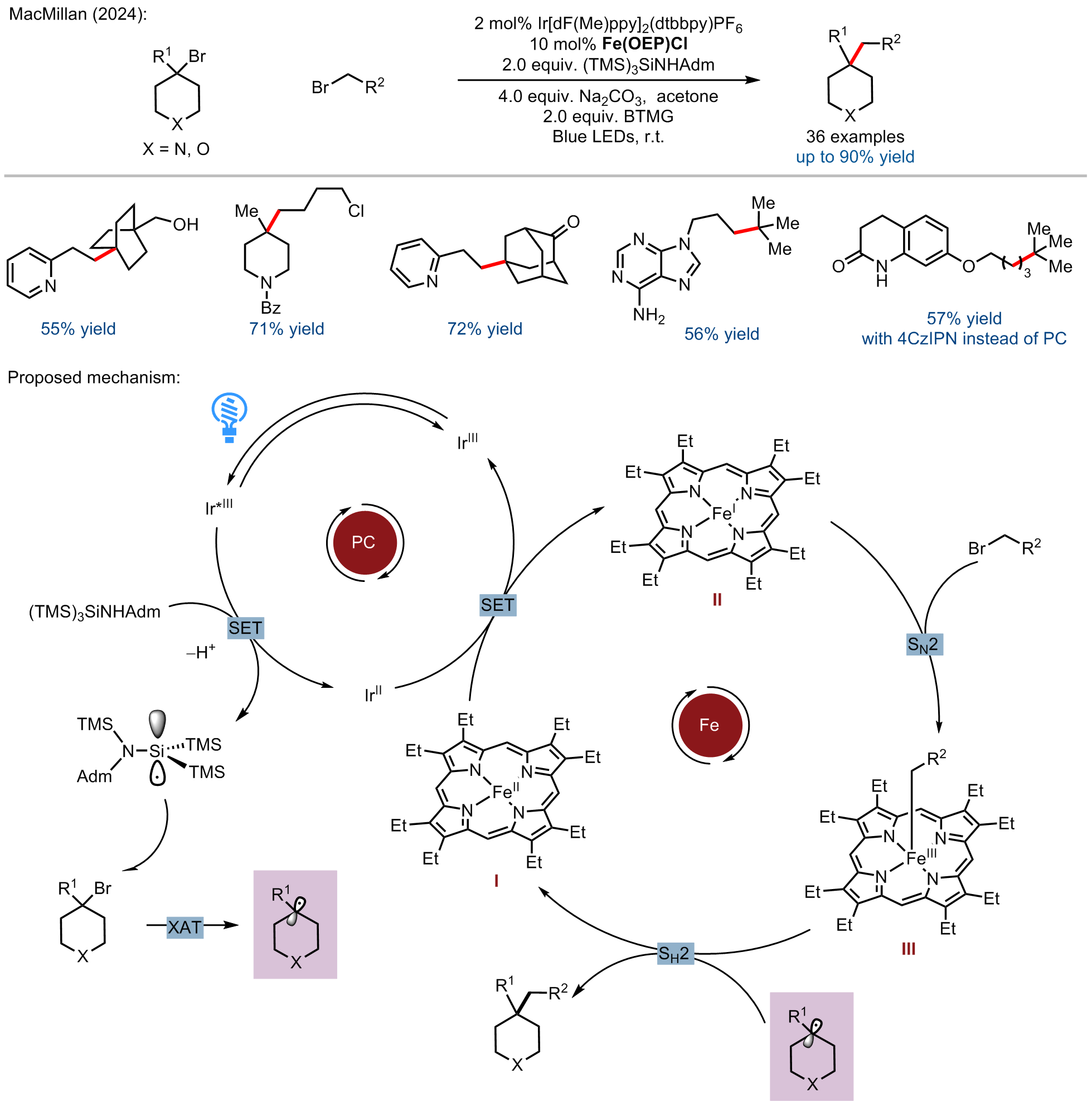
金属光氧化还原催化的C(sp3)—C(sp3)交叉亲电偶联反应(XEC)已成为构建药物、天然产物及生物活性分子中普遍存在的富含sp3碳中心分子骨架的重要策略. 该类方法通过整合光氧化还原催化与地球丰产金属催化, 能够在温和条件下直接利用丰富的亲电试剂构筑C(sp3)—C(sp3)键, 避免了敏感的有机金属试剂的使用. 系统综述了金属光氧化还原催化的C(sp3)—C(sp3)交叉亲电偶联反应的最新研究进展, 重点聚焦于镍、钴、铜和铁催化体系, 深入剖析了反应机理、设计原理、底物适用范围及新兴应用领域, 特别关注立体化学控制与官能团兼容性. 当前, 该领域仍面临诸多挑战, 包括还原剂种类有限、对映选择性反应体系尚处于起步阶段, 以及非镍基廉价金属催化潜力挖掘不足等. 此综述旨在为读者提供对该领域研究现状的全面认识, 并展望金属光氧化还原催化的C(sp3)—C(sp3)交叉亲电偶联反应在复杂分子合成中的应用范围与发展方向.
郑湧龙, 罗鑫龙, 徐裕敏, 霍浩华. 金属-光协同催化的C(sp3)—C(sp3)还原偶联[J]. 有机化学, 2026, 46(7): 2589-2603.
Yonglong Zheng, Xinlong Luo, Yumin Xu, Haohua Huo. Metal/Photoredox-Catalyzed C(sp3)—C(sp3) Cross-Electrophile Coupling[J]. Chinese Journal of Organic Chemistry, 2026, 46(7): 2589-2603.
| [1] |
(a)
doi: 10.1021/jm901241e pmid: 24573302 |
|
(b)
doi: 10.1039/c2md20347b pmid: 24573302 |
|
|
(c)
doi: 10.1039/c3np70108e pmid: 24573302 |
|
|
(d)
doi: 10.1126/science.aaf7230 pmid: 24573302 |
|
|
(e)
doi: 10.1021/acs.organomet.2c00032 pmid: 24573302 |
|
| [2] |
(a)
doi: 10.1002/chem.v20.23 |
|
(b)
doi: 10.1021/acs.accounts.5b00057 |
|
|
(c)
doi: 10.1021/acs.chemrev.4c00524 |
|
| [3] |
(a)
doi: 10.1021/acs.accounts.0c00291 |
|
(b)
doi: 10.1021/acs.accounts.2c00771 |
|
|
(c)
doi: 10.1021/acs.accounts.3c00810 |
|
|
(d)
doi: 10.1021/acs.accounts.3c00775 |
|
| [4] |
doi: 10.1021/acs.accounts.5c00906 |
| [5] |
(a)
doi: 10.1021/jo500507s pmid: 32905517 |
|
(b)
doi: 10.1021/acscatal.0c01842 pmid: 32905517 |
|
| [6] |
(a)
doi: 10.1038/s41570-017-0052 |
|
(b)
doi: 10.1002/anie.v60.4 |
|
|
(c)
doi: 10.1021/acs.chemrev.1c00383 |
|
|
(d)
doi: 10.1016/j.ccr.2022.214479 |
|
|
(e)
doi: 10.1038/s41929-024-01215-3 |
|
|
(f)
doi: 10.1038/s41929-025-01431-5 |
|
|
(g)
doi: 10.1021/acs.chemrev.2c00478 |
|
|
(h)
doi: 10.1039/D3CS00023K |
|
| [7] |
(a)
doi: 10.1021/acs.accounts.4c00309 |
|
(b)
|
|
|
(c)
doi: 10.1002/cctc.v17.11 |
|
|
(d)
doi: 10.1039/D5CS01154J |
|
| [8] |
(a)
doi: 10.1021/cr0680336 pmid: 20532341 |
|
(b)
doi: 10.1039/b913880n pmid: 20532341 |
|
|
(c)
doi: 10.1021/acs.accounts.6b00214 pmid: 20532341 |
|
| [9] |
(a)
doi: 10.1021/acs.accounts.2c00628 |
|
(b)
doi: 10.1021/jacs.1c13482 |
|
|
(c)
doi: 10.1007/s11426-024-2438-x |
|
| [10] |
(a)
doi: 10.1002/anie.v62.45 |
|
(b)
doi: 10.31635/ccschem.025.202506709 |
|
| [11] |
doi: 10.1038/s41929-024-01192-7 |
| [12] |
doi: 10.1039/D5QO01749A |
| [13] |
(a)
doi: 10.1039/D5CC02171E |
|
(b)
doi: 10.1007/s11426-024-2441-2 |
|
| [14] |
doi: 10.1021/jacs.8b12025 |
| [15] |
doi: 10.1021/jacs.0c11172 pmid: 33252234 |
| [16] |
doi: 10.1021/acscatal.1c01416 |
| [17] |
doi: 10.1002/anie.v62.5 |
| [18] |
doi: 10.1021/acs.orglett.1c04268 |
| [19] |
doi: 10.1021/acscatal.2c03070 |
| [20] |
doi: 10.1021/jacs.2c13220 |
| [21] |
doi: 10.1039/D3CC02792A |
| [22] |
doi: 10.1021/jacs.9b03024 pmid: 30983333 |
| [23] |
doi: 10.1016/j.chempr.2025.102537 |
| [24] |
doi: 10.1126/science.abl4322 |
| [25] |
doi: 10.1021/jacs.4c14942 |
| No related articles found! |
| 阅读次数 | ||||||
|
全文 |
|
|||||
|
摘要 |
|
|||||


