



1 Introduction
Carbonylation reactions, since the first discovery in 1930s, have become a straightforward and atomecono-mical strategy to synthesize diverse carbonyl-containing compounds and derivatives from readily available olefins or aryl (pseudo)halides with inexpensive and abundant CO.[1] Nowadays, carbonylation reactions are among the most important homogeneous industrial processes and have emerged as powerful synthetic tools for the production of various value-added bulk and fine chemi-cals.[1a,1b,1d,2] For instance, hydroformylation of alkenes is the largest industrialized homogeneous catalytic process, delivering over 10 million tons of aldehydes per year worldwide;[3] the alkoxycarbonylation of ethylene developed by Lucite produce methyl propionate, a key intermediate for methyl methacrylate (MMA), in more than 300000-ton-per-annum scale. In contrast to the vast achievements in carbonylation reactions, the development of asymmetric versions of such reactions for efficient synthesis of chiral carbonyl compounds has lagged behind.[4] Chiral carbonyl compounds, such as aldehydes, esters, amides, and ketones, have found widespread applications in natural products, pharmaceuticals and as catalysts or ligands. Although catalytic asymmetric carbonylation reactions have been regarded as one of the most efficient approaches to obtain these molecules,[4] several challenges still complicate these transformations: (i) the strong π-acidic nature of CO competes with chiral ligands, restraining their ability for coordination to metals and enantioselectivity control; (ii) the generation and transformation of acyl metal species require high CO pressure and elevated temperature; (iii) carbonyl compounds are prone to racemization under basic conditions due to the acidity of α-H. These challenges along with other side reactions render the asymmetric carbonylation reaction a difficult and complicated task.
The development of chiral ligands has provided broad opportunities to the successful implement of highly enantioselective carbonylative transformations, and recent several decades have witnessed the rapid development of transition-metal catalyzed asymmetric carbonylative transformations, which enables the enantioselective synthesis of carbonyl compounds with either central or axial chira-lity.[4a,5] In this context, a number of transition-metal catalysts, including Rh,[6] Pd,[4] Co,[1g,7] Ni,[1g,7] Cu,[1g,7-8] paired with chiral ligands, have enabled significant advances in this field. In particular, asymmetric carbonylative cross-coupling reactions, which involve reacting acyl metal intermediates with various nucleophiles or electrophiles, provide a straightforward approach for constructing chiral esters, thioesters, amides, and ketones. Several excellent reviews on Rh-catalyzed enantioselective hydroformylation and Pd-catalyzed asymmetric carbonylation reactions, have been documented by the groups of Zhang,[6] Wu,[4a] and Shi.[4b] Nevertheless, it is time for a comprehensive review focusing on transition-metal-catalyzed asymmetric carbonylative cross-coupling reactions. This review summarizes the important advances on transition-metal catalyzed asymmetric carbonylative C—O, C—N, C—C, and C—S cross-coupling reactions over the past decade. It is noteworthy that asymmetric hydroformylation reactions are not included in this review since H2 is generally not considered as a cross-coupling reagent. The future development and remaining challenges of this field are also prospected.
2 Asymmetric carbonylative C—O cross-coupling reactions
Optically pure esters and acids are important compounds with widespread applications in organic synthesis, materials science, pharmaceuticals, and food industry.[9] One of the most efficient methods for their synthesis is transition metal-catalyzed asymmetric carbonylative C—O cross-coupling with oxygen-containing nucleophiles. These reactions are categorized by different types of oxygenic nucleophile such as alcohols, phenols, water, and acids.
2.1 Asymmetric carbonylative C—O cross-coupling reactions with alcohols
In 2018, Correia and colleagues[10] developed a Pd-cata-lyzed intramolecular Heck-Matsuda carbonylation of arenediazonium salts, yielding a series of dihydrobenzofurans with excellent enantioselectivity (Scheme 1). The proposed catalytic cycle began with the oxidative addition of arenediazonium salts to palladium center, forming an aryl palladium species I. This species coordinated with alkenyl of substrate to generate intermediate II, followed by an enantioselective carbopalladation to provide intermediate III. Finally, CO insertion and alcoholysis occurred to afford the target products and regenerated the catalysts.

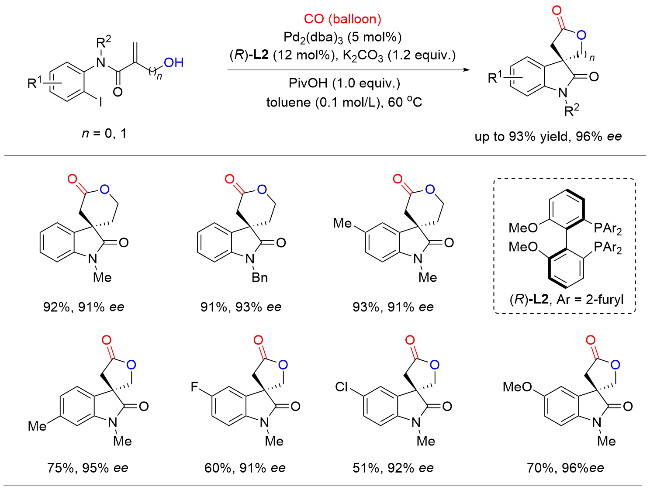
In 2019, Zhu, Luo, and colleagues[11] developed a me-thod to synthesize chiral 2-oxindole spirofused lactones from 2-amino iodobenzene derivatives through intramolecular cyclization and carbonylative esterification (Scheme 2). The combination of Pd2dba3 with (R)-2-furyl-MeO-BIPHEP (L2) as catalyst produced a diverse range of spirooxindole lactones with high yields (up to 93%) and excellent enantioselectivities (up to 96% ee) under balloon pressure of CO. This method provided an enantioselective synthetic route for the construction of all-carbon spiro-oxydoles.
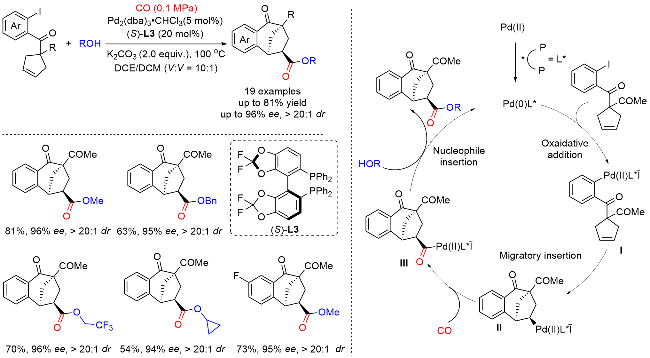
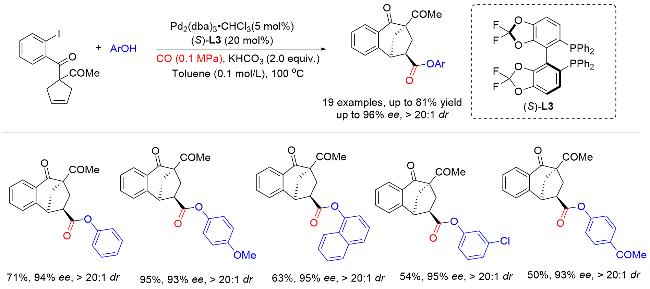
In 2020, Yao, Lin, and co-workers[12] reported a Pd-catalyzed asymmetric tandem Heck/carbonylation reaction through the desymmetrization of cyclopentene derivatives. Various alcohols were compatible with this protocol, affording diverse chiral bicyclo[3.2.1]octanes featuring one all-carbon quaternary and two tertiary carbon stereogenic centers. A possible reaction pathway was outlined in Scheme 3. Firstly, oxidative addition of the substrate to active palladium center, affording the cationic Pd(II) intermediate I, followed by intramolecular syn-migratory insertion of I to obtain the alkylpalladium intermediate II. Next, the insertion of CO provided intermediate III, which underwent the alcoholysis to produce the desired ester products. The deuterium-labeling experiments indicated that the high diastereoselectivity arose from the stereospecific syn-migratory insertion step. Later, the same group[13] efficiently synthesized five-membered lactams with quaternary carbon chiral centers through Pd-catalyzed a symmetric cyclization/carbonylation in the presence of (S)-MeO-BIPHEP, affording chiral oxindoles and γ-lactams with high yields and enantioselectivities (Scheme 4).

In 2021, Zhu, Luo and co-workers[14] realized a Pd-cata-lyzed tandem Heck/carbonylation of aryl iodides with alcohols. Various 7-acetate-substituted dibenzo[b,d]azepin-6-ones containing a thermodynamically controlled stereogenic axis were attained in good yields with excellent diastereo-and enantio-selectivities under atmospheric pressure of CO (Scheme 5). Additionally, phenols have also been shown to be effective nucleophiles for this protocol.

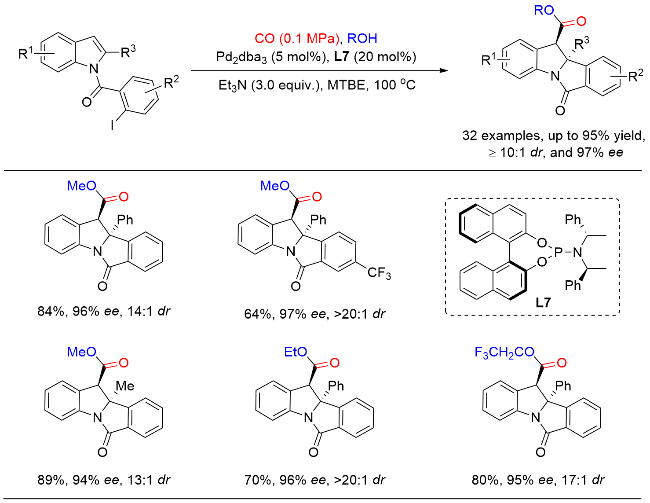
During the same year, the group of Yao and Lin[15] developed a Pd-catalyzed asymmetric 5-exo-trig cyclization/cyclopropanation/carbonylation of 1,6-enynes in atmospheric CO for the efficient synthesis of chiral 3-azabicy-clo[3.1.0]hexanes (Scheme 6), which are valuable motifs in various bioactive compounds and drug molecules. Diverse acyclic and cyclic primary, and secondary alcohols as well as other nucleophiles (phenols, amines and water) were compatible with this transformation, resulting in the formation of three C—C bonds, two rings, and two adjacent quaternary carbon stereocenters. The reaction pathway began with oxidative addition of substrate to chiral palladium center, followed by 5-exo cyclization and cyclopropanation. Finally, the target product was obtained by interacting with CO and subsequent nucleophilic attack. In the same year, the authors also reported a Pd-catalyzed asymmetric dearomatization/carbonylation of N-arylacyl indoles (Scheme 7).[16] The catalytic system was composed of Pd2dba3 and chiral phosphoramidite, efficiently preparing a class of enantioenriched indoline compounds with contiguous C2 quaternary and C3 tertiary stereocenters in good to high yields (up to 95%) with excellent enantio-(up to 97% ee) and diastereo-selectivities (up to>20∶1 dr).

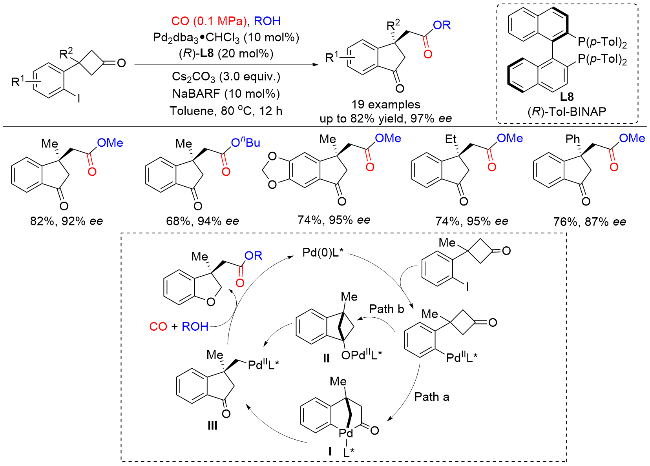
Subsequently, the same group[17] realized the C—C bond activation/alkoxycarbonylation of cyclobutanones using Pd2dba3 and (R)-TOL-BINAP as catalysts, affording various chiral indanones in high yields with excellent enantioselectivities (Scheme 8). According to the proposed mechanism by authors, the initial oxidative addition occurred to generate the arylpalladium species, which underwent the second intramolecular oxidative addition to deliver intermediate I, followed by reductive elimination to generate intermediate III. The CO insertion and subsequent alcoholysis gave the final product and regenerated the catalyst (Path a). Notably, the pathway where arylpalladium underwent intramolecular nucleophilic addition to the carbonyl group to form intermediate II, which proceeded the subsequent β-C elimination to produce intermediate III, was also possible (Path b).
In 2021, Dong and co-workers[18] developed a Pd-cataly-zed enantioselective cyclization/hydroesterification of amide-tethered 1,6-enynes with CO and alcohols for the synthesis of a variety of enantioenriched γ-lactams bearing a quaternary carbon stereocenter (Scheme 9). The approach could tolerate alkyl alcohols as nucleophiles in moderate to good yields with high enantioselectivities. It is worth noting that the substituents on the amide tether of the enyne substrates are crucial for achieving high enantioselectivity. In addition, they reported a palladium catalyzed asymmetric hydroesterification of β-carbonyl functionalized alkenes (Scheme 10) to access chiral β-carbonyl esters with high enantioselectivity.[19] Control experiments and density functional theory (DFT) calculation suggested that the β-carbonyl motif of substrates played key role in ensuring high activity and enantioselectivity. Later, they described a Pd-catalyzed intramolecular hydroxyl-oriented hydroesterification of chiral 4-hydroxy-2-methylene-4-butyric acid derivatives by using Pd(OAc)2 as metal precursor and (S)-SEGPHOS as ligand, affording a variety of chiral γ-butyrolactones bearing two stereocenters[20] (Scheme 11a). Notably, this catalytic system can also be applied to the asymmetric carbonylation of α-aryl acrylic acids[21] (Scheme 11b).

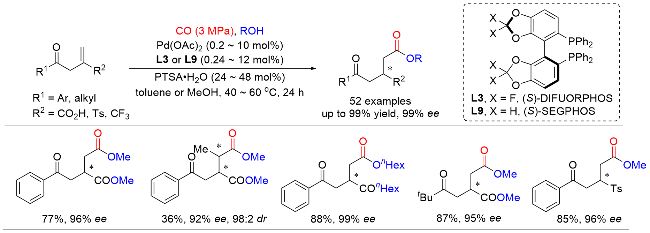
Scheme 10 Pd-catalyzed asymmetric hydroesterification of β-carbonyl functionalized alkenes |

During the same period, Guan and co-workers[5c] realized a Pd-catalyzed Markovnikov hydroesterification of simple styrenes without directing group, which could achieve high branch selectivity while maintaining excellent reactivity and enantioselectivity (Scheme 12). Using methanol and other primary and secondary alcohols as nucleophiles, 2-aryl propane can be efficiently obtained. Key to success of this reaction was the utilization of monodentate chiral phosphoramidite ligand. The deuteration experiment showed that the insertion of palladium into olefins was irreversible, and the subsequent isotope effect experiment revealed that alcoholysis of acyl palladium species may be the rate-determining step in the overall reaction.

2.2 Asymmetric carbonylative C—O cross-coupling reactions with phenols
Phenols are general and important nucleophiles used in asymmetric carbonylation to produce phenol esters, which widely existed in various natural products and active molecules.[22] In 2018, Shi and colleagues[23] developed a Pd-catalyzed intermolecular asymmetric hydroesterification of vinylarenes using phenols as nucleophiles in CO atmosphere (Scheme 13). Various chiral phenyl 2-aryl-propanoates were obtained in high yields (up to 95%) with excellent enantioselectivities (up to 97%) and high branch selectivity (up to >20∶1).

As aforementioned in the Pd-catalyzed asymmetric carbonylative C—O cross-coupling reaction developed by Yao and co-workers[12] in 2020, phenols were also demonstrated to be effective nucleophiles, affording a series of chiral bicyclo[3.2.1]octanes in moderate to excellent yields (54%~95%), excellent enantioselectivities (up to 95% ee) and diastereoselectivities (>20∶1 dr) (Scheme 14).
In 2021, Tangʼs group[24] reported a Pd-catalyzed asym-metric hydroesterification of diarylmethyl carbinols by using WingPhos ligand developed by the same team, affording a range of chiral 4-aryl-3,4-dihydrocoumarins in good yields and excellent enantioselectivities (Scheme 15). Using this strategy, natural product (R)-tolterodine was effectively synthesized in four steps with a total yield of 57%.

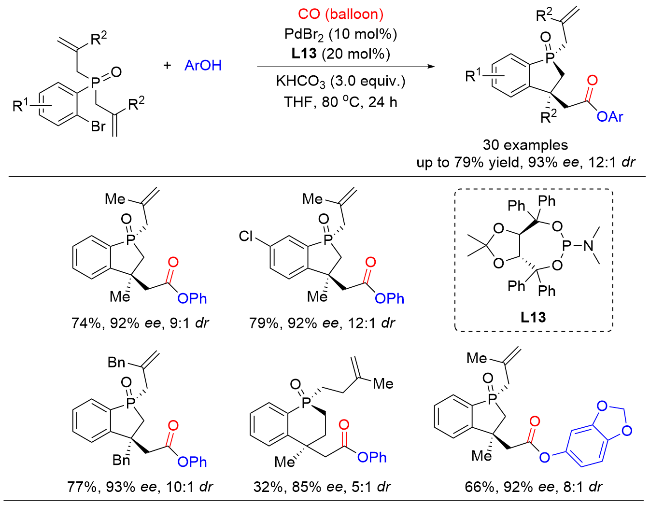
Recently, Lin, Yao and co-workers[25] developed a palladium-catalyzed asymmetric desymmetrization of prochi-ral bisallyl-phosphine oxides bearing aryl bromide through a tandem Heck/carbonylation reaction (Scheme 16). The combination of PdBr2 and TADDOL-derived phosphoramidite enabled the synthesis of benzoheterocycles containing both a chiral P-stereogenic center and a chiral quaternary carbon stereocenter in good yields with good diastereo-and enantio-selectivities. Notably, this reaction was not only compatible with a diverse array of functionalized phenols but also suitable for methanol, trifluoroethanol, cyclobutanol, and dibenzylamine.
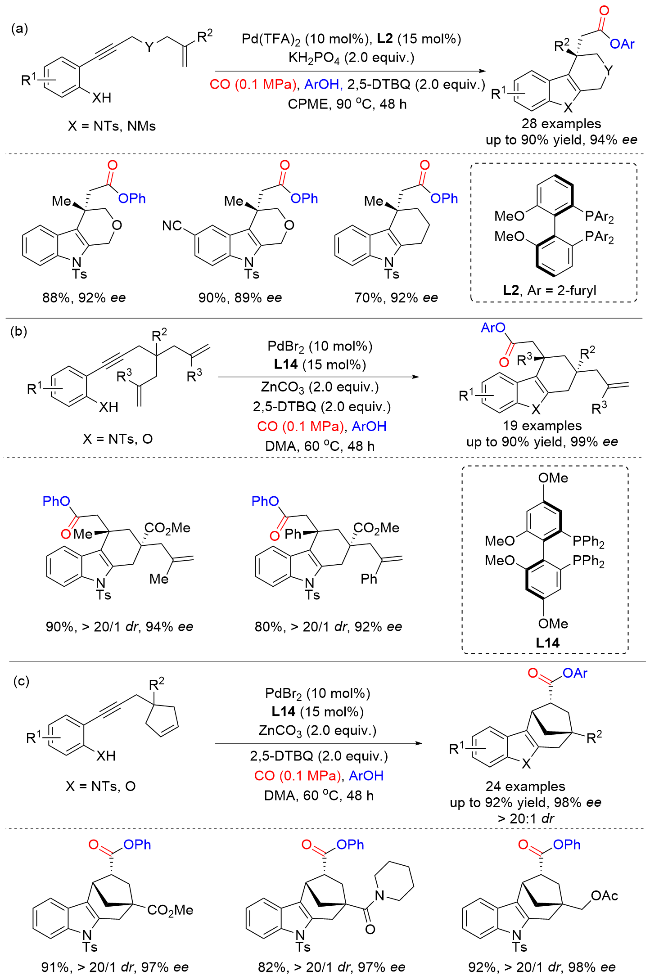
Polycyclic indoles with ester group are the dominant synthetic building blocks in various natural products and bioactive drug molecules.[26] Very recently, Lin and Yaoʼs group[27] reported a Pd-catalyzed asymmetric tandem cyclization-carbonylation of 1,6-enynes (Scheme 17). This approach created two rings and up to three stereocenters in a single step, and a wide range of chiral polycyclic indoles and benzofurans were synthesized efficiently. Notably, the reaction was suitable for a series of nucleophiles, including phenols, alcohols, and amines.
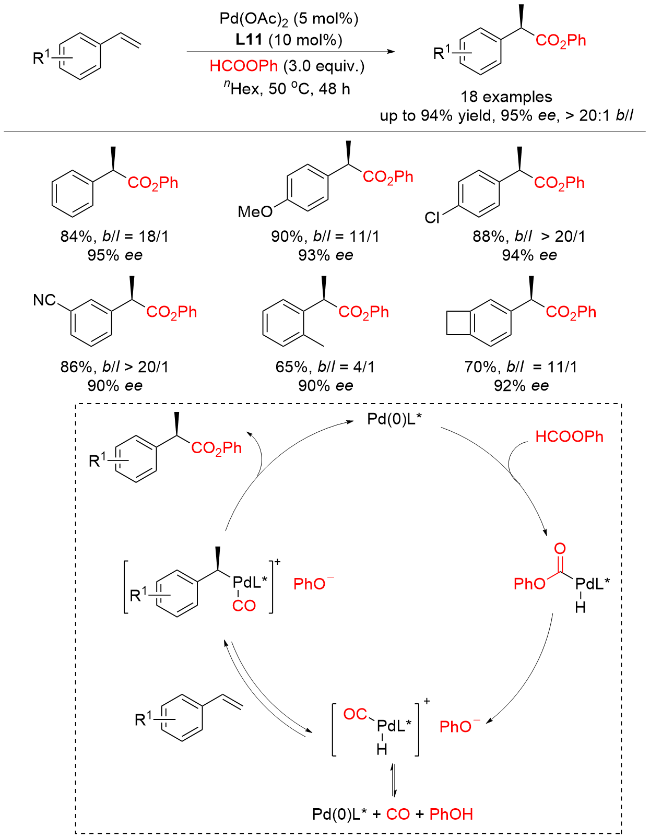
Phenyl formate is generally recognized as a CO surrogate in transition-metal-catalyzed carbonylation. In 2016, Shiʼs group[28] realized an asymmetric hydroesterification of styrene with phenyl formate, employing palladium acetate as a metal precursor and (R)-DTBM-SEGPHOS (L11) as a ligand. The possible mechanism of this reaction was proposed as shown in Scheme 18. Firstly, the chiral palladium complex was oxidatively inserted into phenyl formate to produce palladium hydrogen species, which then underwent rearrangement to give palladium carbonyl complex. Then the olefin was inserted by palladium carbonyl complex, and finally the product was obtained after reductive elimination, regenerating the palladium catalyst.
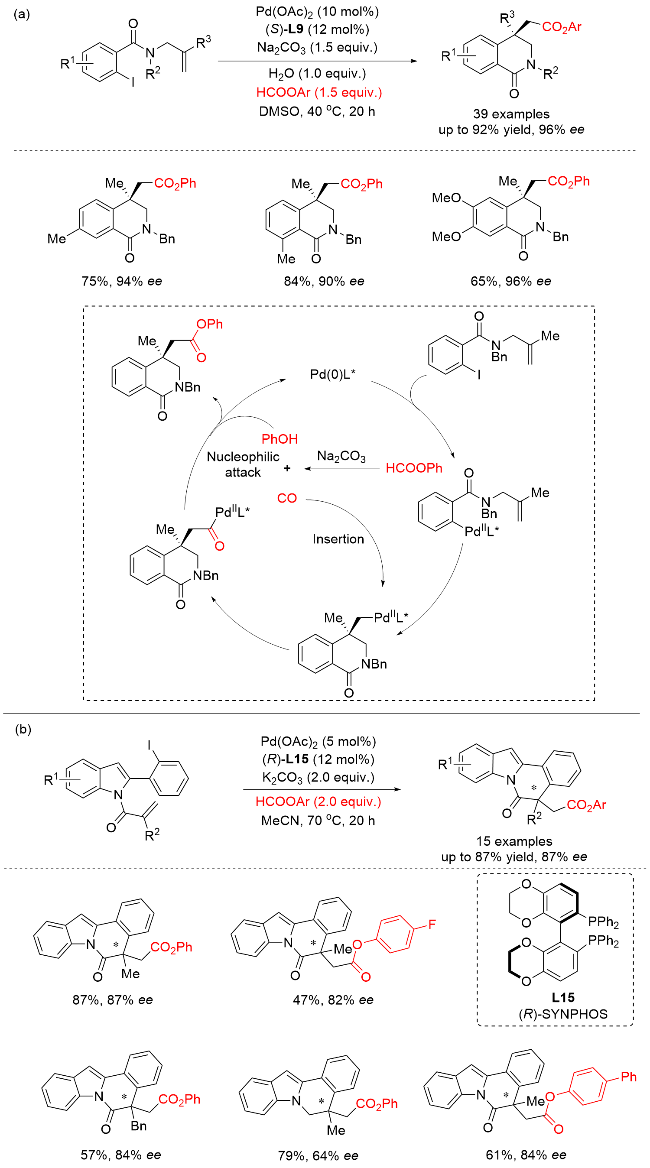
In 2019, Zhangʼs group[29] reported a palladium-cata-lyzed asymmetric carbonylative Heck reaction of aryl iodobenzenes with phenyl formate, accomplishing the synthesis of enantiopure quaternary 3,4-dihydroisoquino-lines (Scheme 19a). The authors outlined a plausible reaction mechanism, in which the phenyl formate acted as both CO surrogate and nucleophile. Recently, Chen, Wang and co-workers[30] developed a Pd-catalyzed Heck carbonylation of indoles with phenyl formate by employing (R)-SYNPHOS (L15) as the ligand (Scheme 19b). A series of indolo[2,1-a]isoquinoline scaffolds bearing ester-func-tionalized quaternary stereocenter were acquired in high yields and high enantioselectivities.
In addition to palladium catalytic system, the asymmetric carbonylation reactions using phenyl formate by non-noble metal has rarely been reported. One excellent example was reported by Fang[31] and co-workers in 2022 (Scheme 20). They developed a Ni-catalyzed asymmetric hydroesterification of cyclopropenes with phenyl formate or the combined use of CO/ROH, respectively. A broad scope of polysubstituted cyclopropanecarboxylic derivatives were attained in high yields (up to 95%), high enantioselectivities (up to 99%), and high diastereoselectivity (>20∶1). Furthermore, using this Ni-catalyzed carbonylation as a key step, they realized a rapid construction of (-)-tranylcypromine and (-)-lemborexant, demonstrating the advantages of this method for the synthesis of chiral cyclopropane compounds.

2.3 Asymmetric carbonylative C—O cross-coupling reactions with water
Chiral carboxylic acids are commonly observed in a wide range of bioactive compounds and pharmaceuticals, such as the Profen family of nonsteroidal anti-inflamma-tory drugs. Besides, they also act as chiral cocatalysts or ligands for asymmetric transformations. Transition-metal-catalyzed asymmetric carbonylation with water as a nucleophile is one of the most efficient and commonly used methods to construct chiral carboxylic acids due to its high efficiency and high atom-economy. Among them, the Pd-catalyzed asymmetric hydrocarboxylation of olefins with CO and water represents one of the most fundamental methods. However, this approach remains a formidable challenge due to the simultaneous control of regio-and enantio-selectivity, as well as the instability of palladium-hydride intermediate in the presence of water. Consequently, although this method has long been of interest to synthetic chemists, only very limited examples have been reported by Alper,[32] Masdeu-Bultó/Sinou,[33] Claver,[34] and Clarke[35-36] in Pd-diphosphine catalytic systems with low to moderate regio-and enantio-selectivities. In 2010, a seminal dipalladium-diphosphine catalyzed asymmetric hydroxycarbonylation of styrene was developed by Clarke and co-workers, affording chiral carboxylic acids in 80% ee and 52% regioselectivity.[35] In 2018, Li, Wang and co-workers further improved the regioselectivity to 99/1 by using Pd-SKP system, but the yield and ee of the product were still not satisfying.[37] Therefore, it is highly desirable to develop more efficient asymmetric hydrocarboxylation reactions towards the synthesis of chiral carboxylic acids.
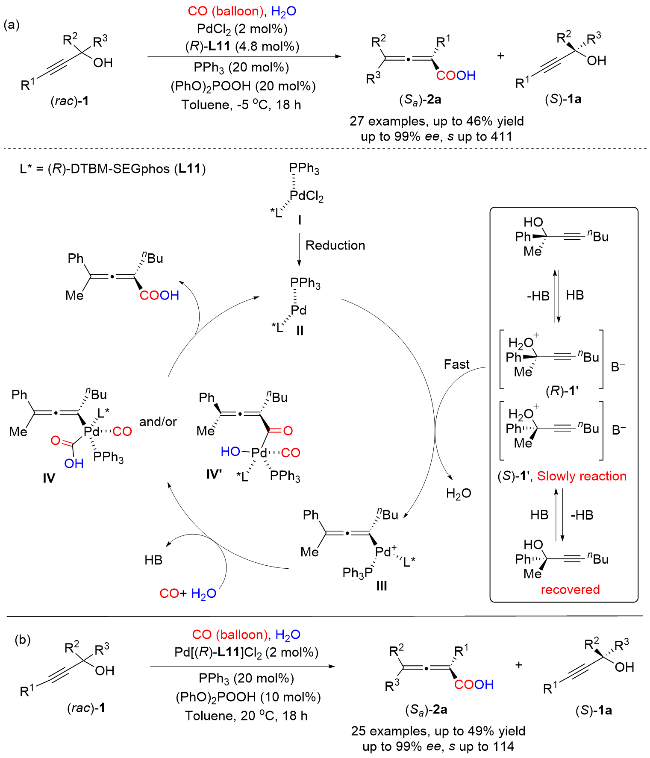
Based on their own previous works on the synthesis of allenes,[38] in 2019 Ma, Guo, Qian and their co-workers[39] realized an efficient Pd-catalyzed carbonylative kinetic resolution of propargylic alcohols in the presence of water and 0.1 MPa CO, affording tetrasubstituted 2,3-allenoic acids in excellent enantioselectivity (Scheme 21a). Based on a series of mechanistic exploration experiments, particularly utilizing the solvent-assisted electrospray ionization mass spectrometry (SAESI-MS) technology, the authors proposed a plausible reaction mechanism. Initially, the precatalyst Pd(0)((R)-L11)(PPh3)Cl2 (I) was reduced in situ to form the catalytically active Pd(0)((R)-L11)(PPh3) (II), which reacted with a Brønsted acid protonated propargyl alcohol (R)-1' (Scheme 21a) in a SN2'-type manner to yield the allenylpalladium intermediates III. Then, the species III reacted with CO and water to afford the carbonylation intermediate IV or IV', which subsequently underwent the reductive elimination to produce chiral tetrasubstituted allenoic acids. Recently, they[40] further realized the kinetic resolution of tertiary alcohols to synthesize chiral allenoic acids by directly using Pd((R)-L11)Cl2 as the catalyst (Scheme 21b).
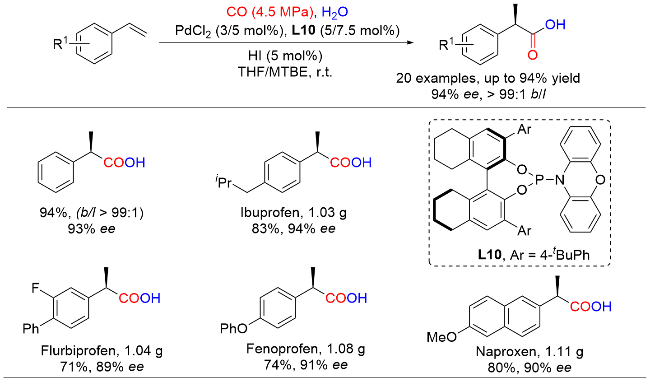
In the beginning of 2021, Guanʼs group[41] achieved a breakthrough in asymmetric hydroaminocarbonylation of olefins by using a palladium-monodentate phosphoramidite catalyst system. They subsequently applied this highly selective catalytic system to the Pd-catalyzed asymmetric Markovnikov hydroxycarbonylation of vinyl arenes using CO and water[5c] (Scheme 22). A wide variety of 2-arylpro-panoic acids with various functional groups were achieved, including several commonly used non-steroidal anti-infla-mmatory drugs.
At the same time, Dongʼs group[19] realized a palladium catalyzed asymmetric hydrocarboxylation of β-amide-alke-nes (Scheme 23). Similar to the above-mentioned hydroesterification (Scheme 10), a series of β-amide carboxylic acids were obtained in moderate to excellent yields with high enantioselectivities.

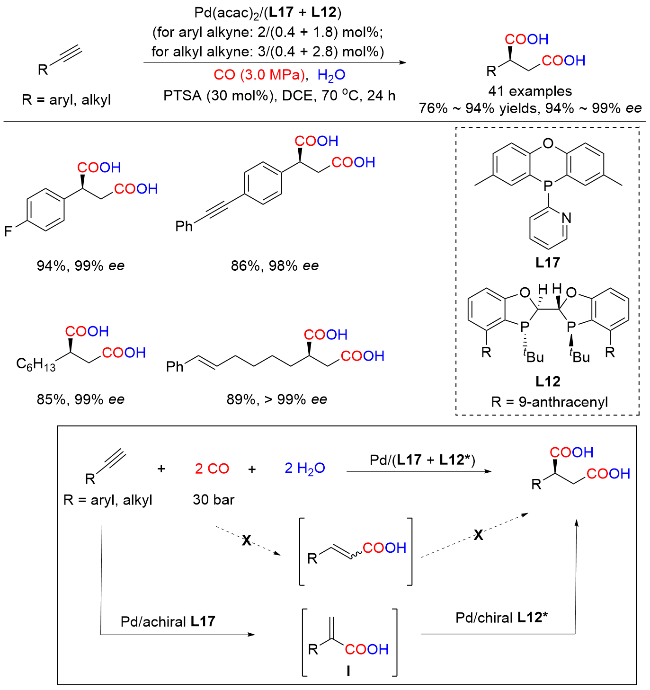
In addition to alkenes, the double hydrocarbonylation of alkynes offers a direct and efficient route to succinic acid derivatives.[42] However, the asymmetric version of this transformation has been less explored. In 2022, Dong and co-workers[43] adopted a relay catalysis strategy by combining palladium catalyst with two types of phosphine ligands, to accomplish the first asymmetric double hydroxy-carbonylation of terminal alkynes (Scheme 24). With this methodology, various readily available terminal alkynes can be efficiently transformed to chiral succinic acids. This protocol displayed broad substrate scope (41 examples) in good to excellent yields (76%~94%) with excellent enantioselectivities (94%~99% ee). Based on detailed mechanistic studies, the authors proposed the relay mechanism that the terminal alkyne was firstly converted into bran-ched acrylic acid I by using Pd/achiral monophosphine ligand in high regioselectivity. Then, the alkene intermediate I was converted into chiral succinic acids in the presence of Pd/chiral bisphosphine ligand.
In 2022, Ding, Wang and co-workers[44] reported a Pd-catalyzed enantioselective domino Heck carbonylation reaction of o-iodoacrylanilides with water as nucleophile (Scheme 25). By employing Pd2(dba)3 as precursor and bisphosphine L2 as the chiral ligand, a wide range of chiral β-carbonylated 3,3-disubstituted oxindoles were obtained in high yields (71%~99%) with excellent enantioselectivities (up to 95% ee) under ambient pressure of CO.

2.4 Asymmetric oxidative carbonylative C—O cross-coupling reactions with carboxylic acids
The asymmetric oxidative carbonylation of alkenes is considered as an efficient methodology to achieve chiral carbonyl compounds. In this field, Liuʼs group has developed the carbonylative difunctionalization of olefin throu-gh amine-carbonylation,[45] oxy-carbonylation,[46] azido-carboxylation,[47] fluoro-carbonylation[48], and aryl-carbo-nylation.[49] Based on these previous works, in 2021, they realized a Pd-catalyzed asymmetric oxo-esterification reaction of olefins[50] by using a pyridine-2-oxazoline (Pyox, L18) ligand with an ethyl group at the C-6 position (Scheme 26). This approach featured mild reaction conditions and insensitivities to air and water. A wide substrate scope, good to excellent yields, and high enantioselectivities were readily achieved. It also facilitated the late-stage modification of olefinic sites within complex molecules.

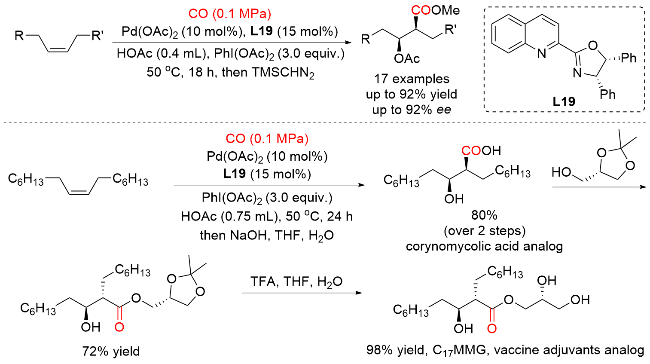
Recently, Liu and colleagues[51] has made significant advances in asymmetric catalysis with the development of a Pd-catalyzed enantioselective oxy-esterification of internal Z-alkenes (Scheme 27). This reaction employed the sterically bulky Quinox L19 as a chiral ligand, coupled with acetic acid as a nucleophile, to produce acetoxyesters in moderate to good yields and commendable enantioselectivities. The importance of this reaction was further underscored by its synthetic potential, as demonstrated by the conversion of the synthesized acetoxyesters into natural product analogs, showcasing the utility of this catalytic method in the synthesis of complex molecular architectures.
3 Asymmetric carbonylative C—N cross-coupling reactions
Amides have been considered as one of the most important structural motifs in biology, chemistry, and materials. Among the various methods for their synthesis, transition mental-catalyzed carbonylation of alkenes or aryl (pseudo)halides with CO coupled with amines, ranks among the most efficient approaches. However, the asymmetric carbonylative C—N cross-coupling reactions are very challenging due to the difficulty for simultaneous control of chemo-, regio-, and stereo-selectivities under relatively harsh conditions.
Based on the role of amines as nucleophiles or electrophiles, the recent progress on carbonylative C—N cross-coupling reactions is catalogued into two types. In Pd-catalyzed asymmetric carbonylation, acyl palladium species are formed and then attacked by amine nucleophiles, mainly including tandem cyclization carbonylation, C—H aminocarbonylation, hydroaminocarbonylation of alkenes/alkynes, and other aminocarbonylation. Another type is copper catalyzed asymmetric aminocarbonylation using hydroxylamine electrophiles.
3.1 Pd-catalyzed asymmetric tandem cyclization aminocarbonylation
Transition metal-catalyzed tandem Heck/carbonylation reaction is a highly efficient tool for the synthesis of structurally complex carbonyl molecules as well as natural products and pharmaceuticals. In 2019, Zhu and Luoʼs group[11] reported a Pd-catalyzed cascade intramolecular Heck/aminocarbonylation for the synthesis of chiral spirooxindole lactams in excellent yields and enantioselectivities (Scheme 28). This intramolecular spiro-cyclization model provides novel guidance for the construction of chiral spirals by asymmetric carbonylation reaction.

In 2020, when using a novel monodentate phosphoramidite ligand, Xida-Phos (L20), Guan and co-workers[52] realized a Pd-catalyzed enantioselective domino Heck aminocarbonylation reaction (Scheme 29). A range of oxindoles bearing β-carbonyl-substituted all-carbon quater-nary stereocenters amides were obtained in good to high yields with excellent enantioselectivities. As a sharp contrast, no reaction occurred when employing the commonly used bidentate phosphine ligands such as BINAP or DIOP. Notably, this catalytic system could also be applied to the synthesis of esters with alcohols or phenol as nucleophiles.

In the same year, Yao, Lin and co-workers[12] reported a Pd-catalyzed asymmetric tandem Heck/carbonylation de-symmetrization of cyclopentene derivatives in high diastereo-and enantioselectivities. Various nucleophiles including primary and secondary amines were compatible in the construction of chiral bicyclo[3.2.1]octanes bearing one all-carbon quaternary and two tertiary carbon stereogenic centers (Scheme 30).

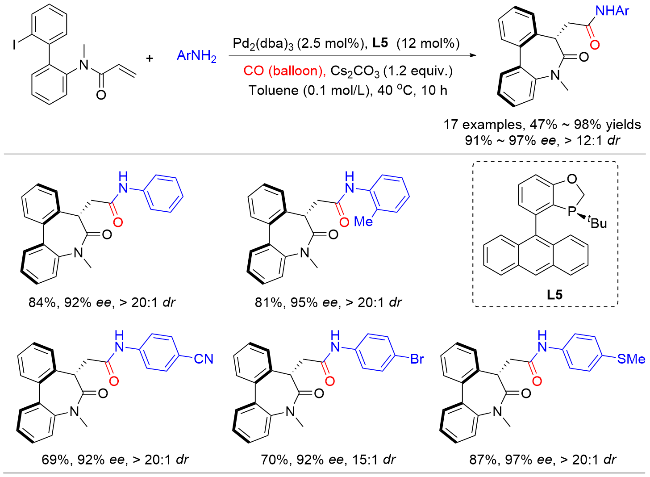
In 2021, Zhu, Luo and coworkers[14] developed an Pd-catalyzed intramolecular tandem Heck/carbonylation of aryl iodides with different nucleophiles. The carbonylation using alcohols as nucleophiles have been discussed in Section 2.1 (Scheme 5), while the similar aminocarbonylation was realized by changing the nucleophiles to amines. A series of 7-acetamide-substituted dibenzo[b,d]azepin-6-ones were attained in good yields and excellent diastereo-and enantioselectivities in the presence of balloon pressure of CO (Scheme 31).
In 2022, Zhu, Luo and co-workers[54] reported a Pd-catalyzed asymmetric Heck/carbonylation/aminocarbo-nylation cascade of N-(2-iodophenyl)-N-methylmethacryl-amide with alkylamines to afford a series of chiral heterocyclic α-ketoamides with excellent chemo-and enantio-and diastereo-selectivities under atmospheric pressure of CO (Scheme 32).

3.2 Pd-catalyzed asymmetric aminocarbonylation of C—H bonds
Over the past several decades, asymmetric carbonylation reactions mainly focused on the substrates of olefin or aryl (pseudo)halide. Nevertheless, along with development of enantioselective C—H functionalization, it also provides an alternative pathway by performing the reactions in CO atmosphere to prepare various carbonyl compounds. For example, in 2019, Xu and co-workers[55] reported a desy-mmetric C—H carbonylation of prochiral diarylsulfonamide by using Pd(OAc)2 and CuCl2 as the bimetallic catalyst, and the readily available mono-N-protected amino acids (L21) as ligands. Both the mono-N-protected amino and acid moieties were necessary and played an important role in determining enantioselectivity. A variety of the chiral lactams were obtained in 50%~94% yields with 81%~96% ee (Scheme 33a). A plausible enantioselective carbamoyl-Pd-oriented C—H activation mechanism was proposed, which was also supported by DFT calculation.
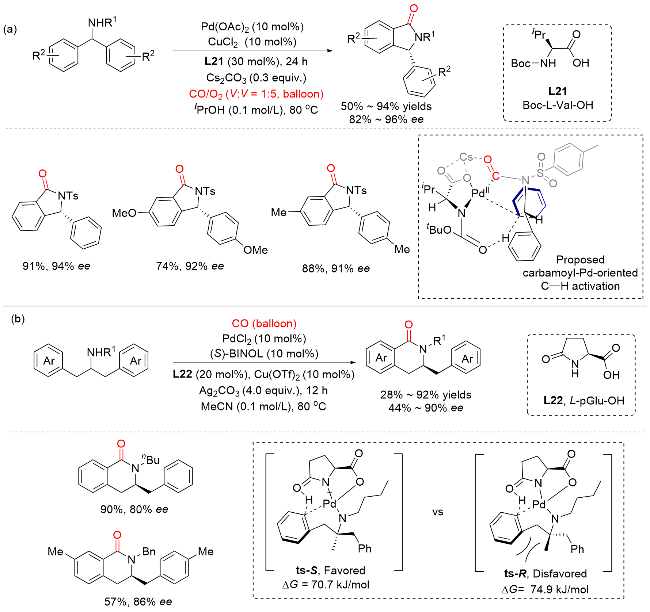
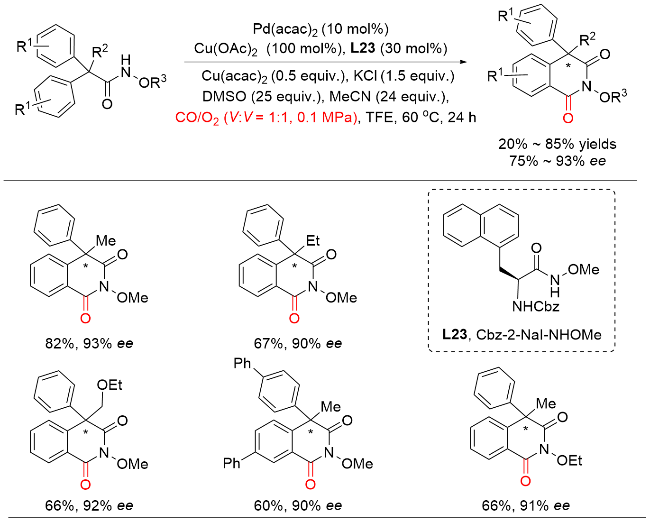
By using commercially available L-pyroglutamic acid (L22) as a chiral ligand, Xia and co-workers[56] reported a Pd/Cu catalyzed enantioselective desymmetric C—H aminocarbonylation reaction (Scheme 33b). A series of alkyl and benzyl substituted amines were transformed to chiral isoquinolinones in good yields with high enantioselectivities. Preliminary mechanistic studies and DFT calculation revealed that the C—H activation step was the rate-deter-mining step. The C—H bond cleavage would take place in the ortho-position of aromatic ring because of directing effect of amino group on palladium complex. The transition state energy of ts-S was 4.4 kJ/mol lower than that of ts-R, which agreed with the experimental results. In 2020, Wang and co-workers[57] reported a Pd-catalyzed asymmetric C(sp2)—H activation and carbonylation of N-alk-oxy-2,2-diarylpropanamides for the synthesis of tetra-hy-droisoquinolines bearing an all-carbon quaternary stereogenic center (Scheme 34). Notably, the ligand mono-N-protected-α-amino-o-methylhydroxamic acid (Cbz-2-NaI-NHOMe) improved both the yield and the enantioselectivity.
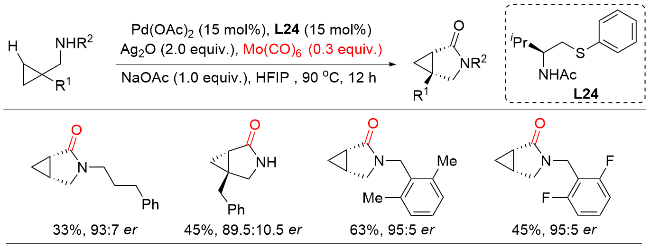
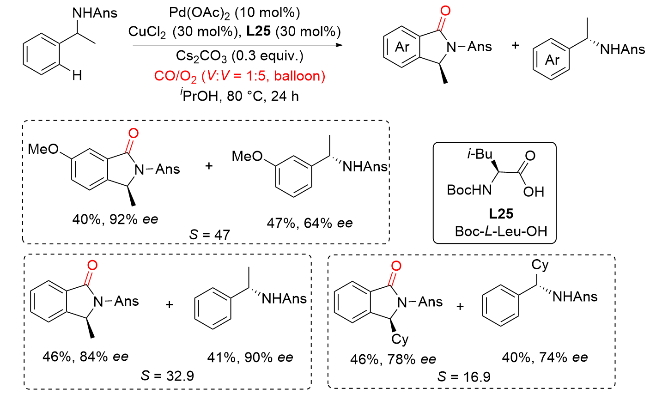
In 2020, Yu and co-workers [58] realized a Pd-catalyzed enantioselective C(sp3)—H functionalization of free aliphatic amines enabled by a single Pd(II) catalyst bearing a bidentate chiral thioether ligand (L24). In addition to arylation, they also expanded this catalytic system to the enantioselective intramolecular aminocarbonylation, affording the desired chiral lactams (Scheme 35). Later, they [59] applied this strategy to C(sp3)—H carbonylation of free carboxylic acids to prepare succinic anhydride products. In 2021, Xu, Bai and their co-workers[60] reported a Pd/Cu co-catalyzed C—H activation and oxidative carbonylation of sterically hindered benzylamines to afford chiral isoindolinones (up to 97∶3 er) via an enantioselective kinetic resolution (Scheme 36). DFT calculations elucidated the origin of chemoselectivity and stereoselectivity.
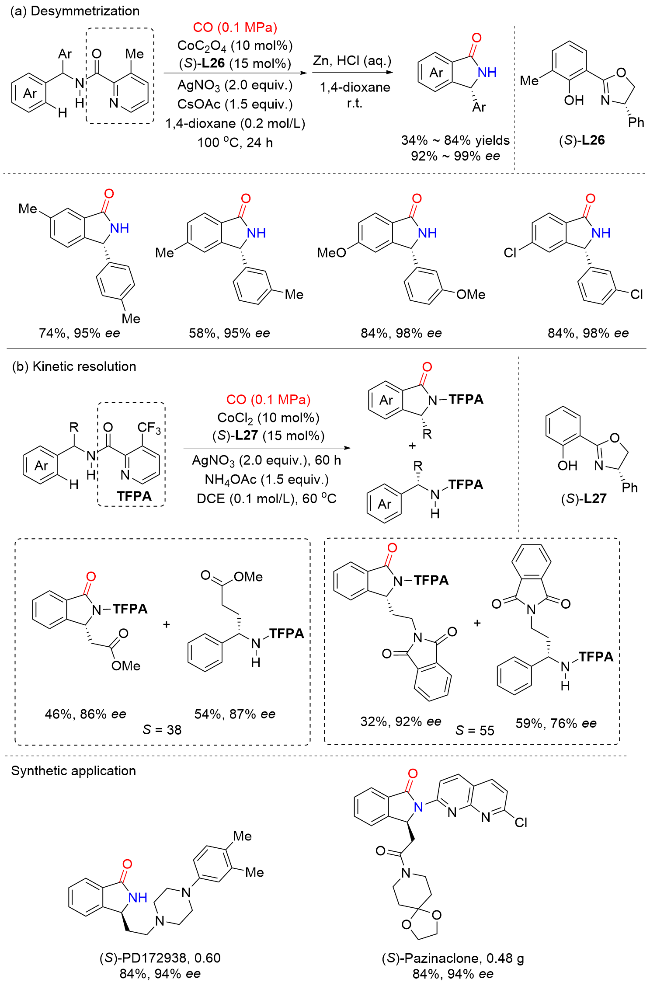
In 2024, Shi and co-workers[61] disclosed an Co-cataly-zed enantioselective C—H carbonylation via desymmetrization, kinetic resolution or parallel kinetic resolution (Scheme 37). A wide range of chiral isoindolinones were obtained in good yields (up to 92%) and excellent enantioselectivities (up to 99% ee). Importantly, this methodology can also be applied to the asymmetric synthesis of biological active compounds such as (S)-PD172938 and (S)-pazinaclone.
3.3 Pd-catalyzed asymmetric aminocarbonylation of alkenes/Alkynes
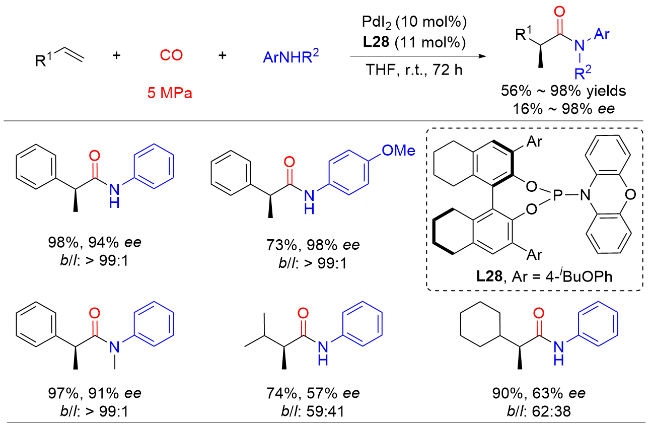
In 2021, Guan and co-workers[41] reported a Markovnikov hydroaminocarbonylation of vinyl arenes employing a new catalytic system of PdI2-phosphoramidite ligand (Scheme 38). A broad range of chiral 2-substituted propanamides were obtained in good to excellent yields with excellent enantioselectivities (up to 98% ee) at room temperature. Notably, alkyl olefins were also compatible to this catalytic system albeit the enantioselectivity significantly decreased (up to 63% ee). Control experiments revealed that trace amount of water was vital to the reaction. Mechanistic investigations disclosed that the reaction proceeded through a palladium-hydride mechanism, and the hydropalladation was irreversible and was the regio-and enantio-determining step.
In 2023, Zhu and Luoʼs[62] group reported a Pd-cata-lyzed intramolecular asymmetric hydroaminocarbonylation of 2-(tert-butyl)-N-(2-alkynylphenyl)aniline to construct indolone derivatives featuring a C—N chiral axis (Scheme 39). By using TMS-SYNPHOS (L29) as the chiral ligand, a series of unprecedented chiral N-aryl-3-alkenyl-oxindoles were prepared in high yields (up to 99%) with excellent enantioselectivities (up to 97% ee) although Z/E ratio of product was not satisfying. The deuterium labeling experiments showed that Pd—H species was derived from the transmetallation of palladium with triethylsilane.

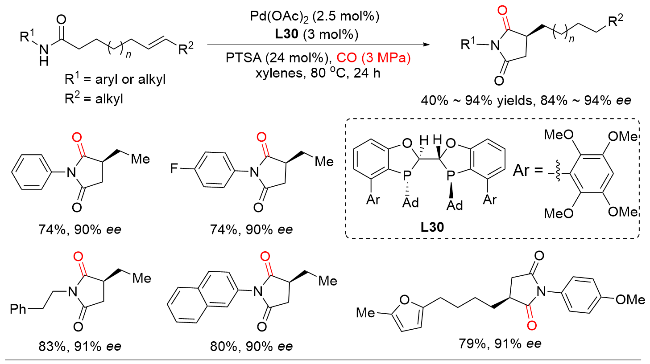
Recently, Dong and co-workers[5f] developed a Pd-catalyzed asymmetric isomerization hydroaminocarbonylation of amide-containing alkenes. Employing this protocol, various chiral α-alkyl succinimides were obtained in moderate to good yields (up to 94%) with high enantioselectivities (up to 93%) (Scheme 40). The key to success was the utilization of a novel rigid P-chirogenic bisphosphine ligand, featuring bulky 1-adamantyl P-substitution and a 2,3,5,6-tetramethoxyphenyl group, which provided increased steric hindrance and a deeper catalytic pocket.
3.4 Other types of Pd-catalyzed asymmetric aminocarbonylation
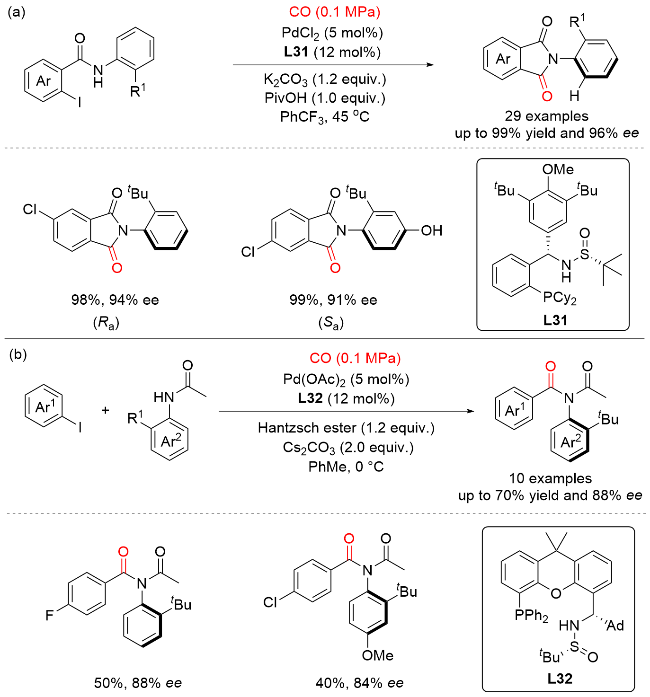
Axially biaryls bearing carbonyl groups are commonly used as chiral ligands or organo-catalysts in asymmetric catalysis. Direct asymmetric carbonylation is an efficient approach for synthesizing these compounds, yet it has rarely been reported. In 2021, Li and co-workers[63] repor-ted a Pd-catalyzed atroposelective carbonylation of aryl iodides with CO (Scheme 41), achieving a series of axially chiral cyclic 2-aryl isoindoline-1,3-diones and acyclic N-acetyl N-benzamides with excellent yields (up to 99%) and enantioselectivities (up to 96% ee). This is the first example of incorporating carbonyl groups into axially chiral amides via a carbonylation process. Notably, a pair of enantiomeric isomers of 2-arylisoindoline-1,3-diones can be constructed by controlling the positioning of substituents.
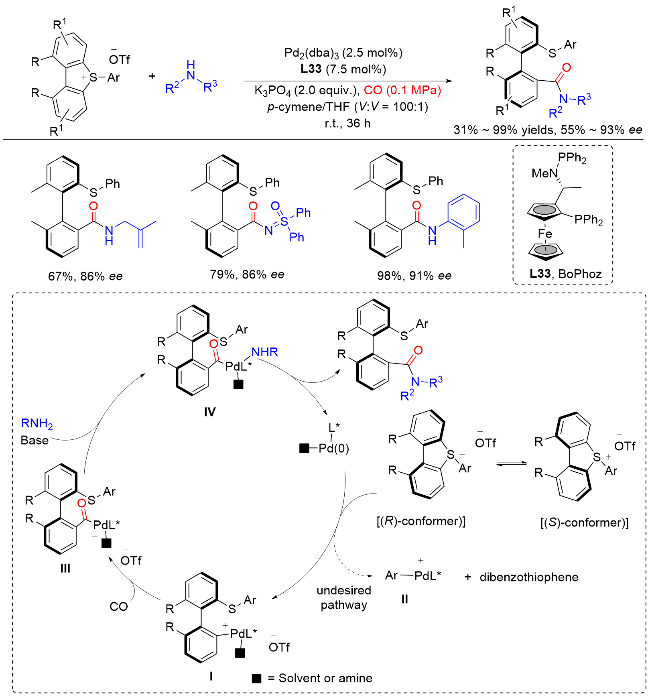
In 2022, Gu and co-workers[64] reported a novel Pd-catalyzed atroposelective ring-opening/carbonylation of cyclic diarylsulfonium salts to form thioether-containing axially chiral biaryl amides (Scheme 42). To demonstrate the scope of this method, common arylamines and alkylamines were evaluated, and the amide products were obtained in up to 99% yield with 93% ee. A plausible catalytic cycle was then proposed. Firstly, the oxidative addition of (R)-conformer with Pd(0)/(Sa,R)-BoPhoz gave the palladium intermediate I. Alternatively, the oxidative addition of the exocyclic C—S bond with Pd(0) would give II and was concomitant with the formation of undesired dibenzothiophene. This undesired pathway was unfavorable due to torsional strain caused by the steric repulsion. The palladium intermediate I interacted with CO via a migration/insertion process to form acylpalladium III. Finally, in the presence of base, amine attacked to the acylpalladium III, followed by reductive elimination, to produce amide products and regenerate the Pd(0) catalyst.
At the same time, Liaoʼs group[5d] reported a Pd-catalyzed atroposelective double carbonylation ring-open-ing reaction of cyclic diaryliodonium salts by using a chiral sulfoxide phosphine (SOP) as the ligand (L34), affording a series of axially chiral biaryl α-ketoamides (Scheme 43). The mechanism was proposed based on both experiments and DFT computation. Firstly, a carbamoyl palladium (I) species was formed, followed by atroposelective oxidative addition with a diaryliodonium salt to generate palladium (II) intermediate, which then underwent the second CO insertion and reductive elimination to obtain the double aminocarbonylation product.

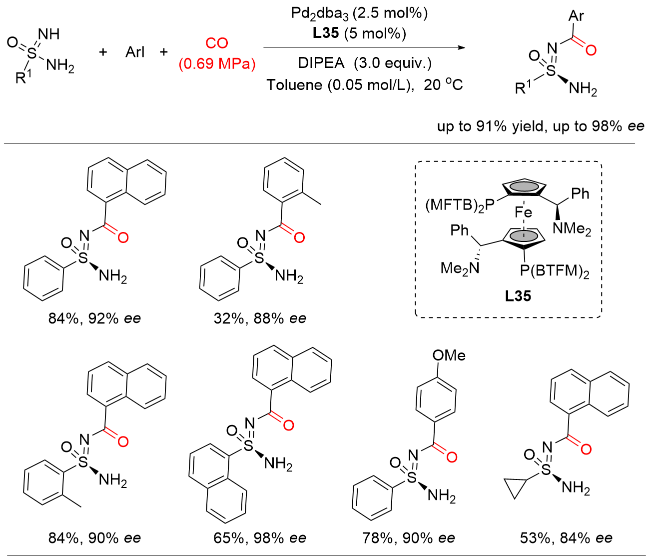
Sulfonamides widely occur in pharmaceuticals and agrochemicals due to their unique biological activity. The synthesis of chiral sulfonamides has received great attention from chemists. In 2023, Sigman and co-workers[65] reported a general and efficient strategy for accessing enantioenriched sulfonimidamides through the palladium-catalyzed carbonylative C—N cross-coupling reaction (Scheme 44). Notably, data science techniques were used in this work to guide reaction optimization. The desired sulfonimidamides products were obtained in excellent yields (up to 90%) and enantioselectivities (up to 96% ee).
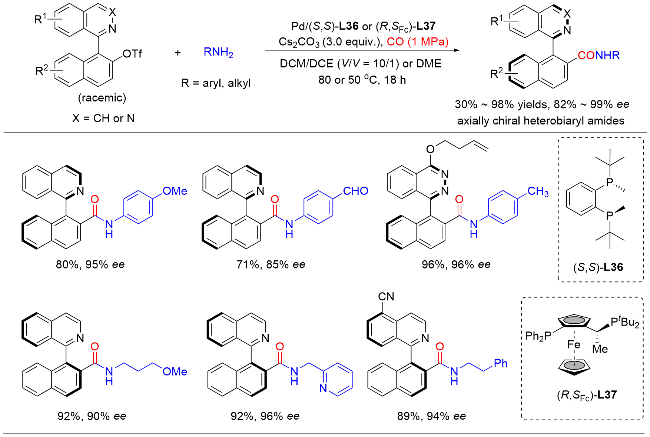
Recently, Liu and co-workers[5e] adopted a dynamic kinetic asymmetric transformation (DyTAT) strategy to accomplish a Pd-catalyzed enantioconvergent aminocarbonylation of racemic heterobiaryl triflates (Scheme 45). This method features a wide range of substrates compatibility, affording various axially chiral amides with high yields (up to 98%) with excellent enantioselectivities (up to 99% ee).
3.5 Cu-catalyzed asymmetric aminocarbonylation with hydroxylamine electrophiles
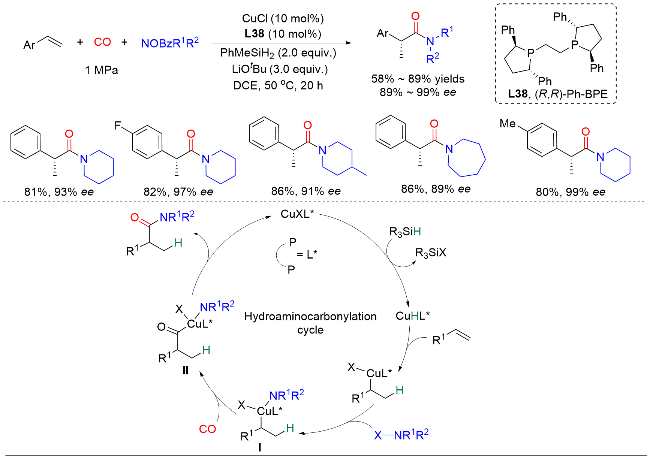
Among the transition metal catalysts, copper has a significant advantage in abundant availability, low toxicity as well as low price. Compared to noble Rh and Pd catalysts, the inexpensive and abundant copper catalysts have been less studied in asymmetric carbonylation reactions. In 2020, Wu and co-workers[66] reported a general and efficient method for branch-selective asymmetric hydroamino-carbonylation of vinylarenes with hydroxyamine electrophiles enabled by copper catalysis (Scheme 46). Using (R,R)-Ph-BPE as the chiral ligand (L38), a series of optically enriched α-chiral amides were produced in 58%~89% yields with 89%~99% ee. The authors proposed a possible mechanism, in which copper hydride species was firstly generated in the presence of silane. The subsequent insertion of olefins produced alkyl copper intermediates I, followed by oxidative addition of hydroxylamine to generate copper intermediate II. Then, CO insertion to II afforded the acyl copper intermediate III, which underwent reductive elimination to deliver the desired branched amides and release the active [(L*)Cu-X] catalyst to re-enter to the catalytic cycle.
In 2021, Wu and co-workers[67] reported a copper-catalyzed carbonylative boroamidation of 1,2-disubsti-tuted olefins with the hydroxylamines as electrophiles to synthesize chiral β-boryl amides in high yields with excellent enantioselectivities (Scheme 47). Based on literatures and mechanistic studies, a plausible mechanism was proposed. First, the Cu(I) catalyst reacted with LiOMe and B2pin2 to produce (L*)CuBpin complex, followed by insertion into alkene to generate the β-borylalkylcopper intermediate I. Subsequent CO coordination provided the CuI II, which reacted with hydroxylamine electrophile via oxidative addition to afford the intermediate III. The species III underwent CO migratory insertion to give the complex IV. Another possible route was also proposed, in which the oxidative addition of β-borylalkylcopper I with hydroxylamine electrophiles occurred prior to CO coordination. Finally, the desired β-boryl amides could be obtained after reductive elimination.

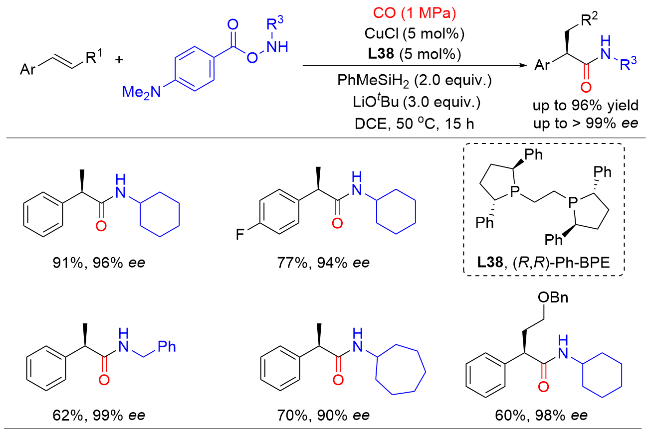
In the same year, Wu and co-workers[68] continued to report a Cu-catalyzed highly regio-and enantio-selective hydroaminocarbonylation of styrenes with electrophilic hydroxylamine derivatives, affording a set of α-chiral secondary amides in high yields (up to 96%) with excellent enantioselectivities (up to>99% ee) (Scheme 48). It is worth noting that internal olefin, such as (E)-(3-(benzyl-oxy)prop-1-en-1-yl)benzene was also compatible to this reaction.
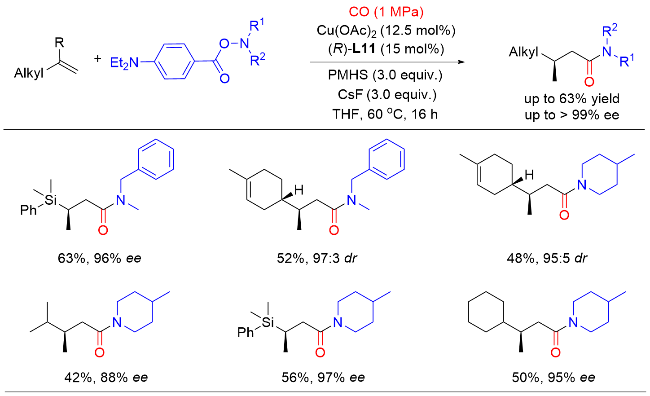
In 2023, Wu and co-workers[69] realized a Cu-catalyzed enantioselective anti-Markovnikov hydroaminocarbonyla-tion of 1,1-disubstituted alkenes to produce β-chiral amides in good yields with excellent enantioselectivities (Scheme 49). Very recently, they[70] further applied such copper catalysis to asymmetric hydroaminocarbonylation of non-activated internal olefins to obtain α-chiral amides in good yields (Scheme 50). The transformation exhibited good performance across a range of unactivated internal alkenes, including unsymmetric internal alkenes, affording the desired products in good yields with excellent enantioselectivities. For example, the challenging substrate trans-2-butene could be successfully transformed into the corresponding product with high enantioselectivity, albeit the yield was not satisfactory in current stage.
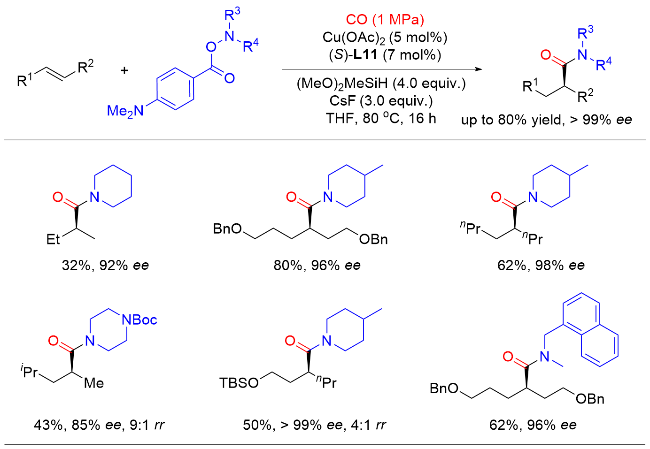
Very recently, Wuʼs group[5g] reported an efficient strategy to synthesize enantioenriched chiral amides con-taining different alkyl substituents at the γ-position through a reductive relay strategy (Scheme 51). A variety of achiral allylic benzoates with aliphatic and aromatic substituents, as well as cyclic and acyclic hydroxylamine electrophiles were demonstrated to be effective substrates, providing the corresponding γ-chiral amides, which were generally difficult to synthesize using other methods. Mechanistic investigations disclosed that terminal alkene II was the actual intermediate in the reductive carbonylation reaction.

4 Asymmetric carbonylative C—C cross-coupling reactions
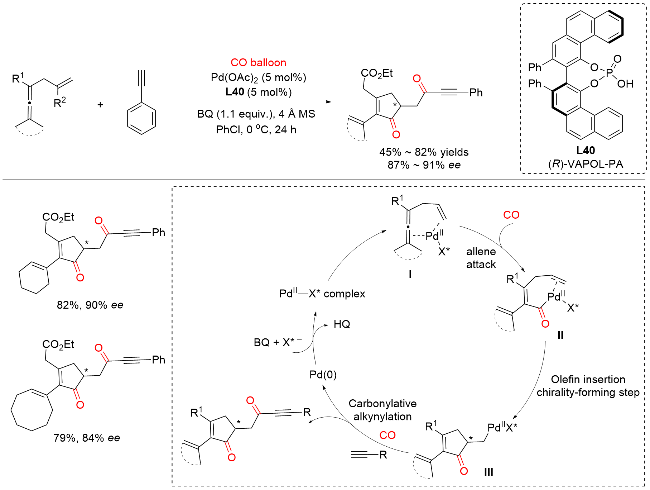
Transition metal-catalyzed carbonylative C—C cross coupling reactions are regarded as a powerful tool for preparing ketones. Although these transformations have been developed since 1970s, the asymmetric version has less been reported. In 2017, Backvallʼs group[71] reported a palladium/Brønsted acid catalyzed asymmetric dehydrogenative carbonylation-carbocyclization reaction of enallenes with CO and terminal alkynes for the construction of ketones with α-chirality (Scheme 52). The vaulted biaryl-type chiral VAPOL phosphoric acid was found to be the best co-catalyst, which was crucial in determining the enantioselectivity of α-chiral ketones. A number of enantiomerically enriched ketones with α-chirality were obtained in good yields. Mechanistic studies revealed that the transformation proceeded via cascade CO insertion, enantioselective olefin insertion, and carbonylative alkynylation. Firstly, the coordination of enallene to PdII produced intermediate I, followed by allene attack and CO insertion on chiral PdII species to form carbonyl PdII intermediate II. Subsequent olefin insertion gave intermediate III, which was also the chirality-determining step at the α-position of the ketone. Finally, compound III underwent carbonylative alkynylation to yield product chiral ketones and the generated Pd0 was again oxidized to PdII by p-benzoquinone (BQ) to restart the catalytic cycle.
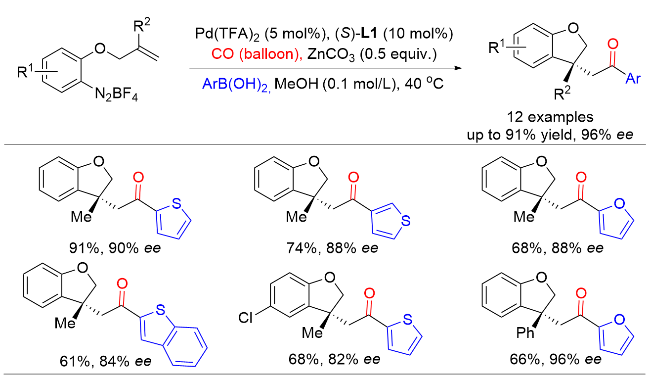
In 2018, Correiaʼs group[10] developed an intramolecular Heck-Matsuda alkoxycarbonylation of arenediazonium salts enabled by Pd/(S)-BOX (L1) catalytic system to prepare a series of dihydrobenzofurans with high enantioselectivity. This protocol could also be extended to the carbonylative C—C cross-coupling reactions of arenediazonium salts with boronic acids as the coupling partners (Scheme 53). A wide range of exo-carbonylative Heck products were obtained in good to high yields and excellent enantioselectivities under mild conditions. It is worth mentioning that the use of boronic acid with heteroatoms prevents the competitive esterification process due to the presence of excessive methanol solvent.
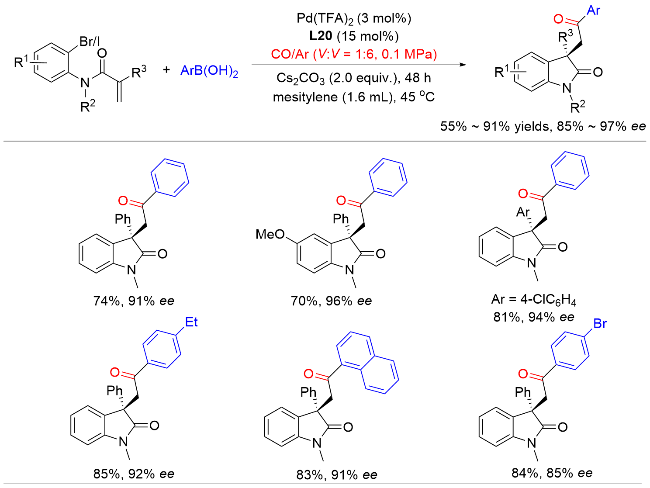
In 2020, Guan and co-workers[52] achieved a Pd-cata-lyzed enantioselective domino Heck carbonylation reaction using aryl boronic acids as nucleophiles (Scheme 54). A range of oxindoles, containing a ketone functional group, were obtained in 55%~91% yields and 85%~97% ee. The use of monodentate Xida-Phos (L20) could promote the transmetalation of the arylboronic acid to Pd via a Pd—O—B intermediate, thus substantially improving the reaction reactivity and enantioselectivity.
In 2021, Dong and co-workers[53] achieved a Pd-catalyzed intermolecular asymmetric tandem Heck/carbonylation of o-iodoaniline with allenes, affording a series of chiral dihydroquinolinone derivatives containing a chiral quaternary carbon center in moderate to high yields and enantioselectivities (Scheme 55).

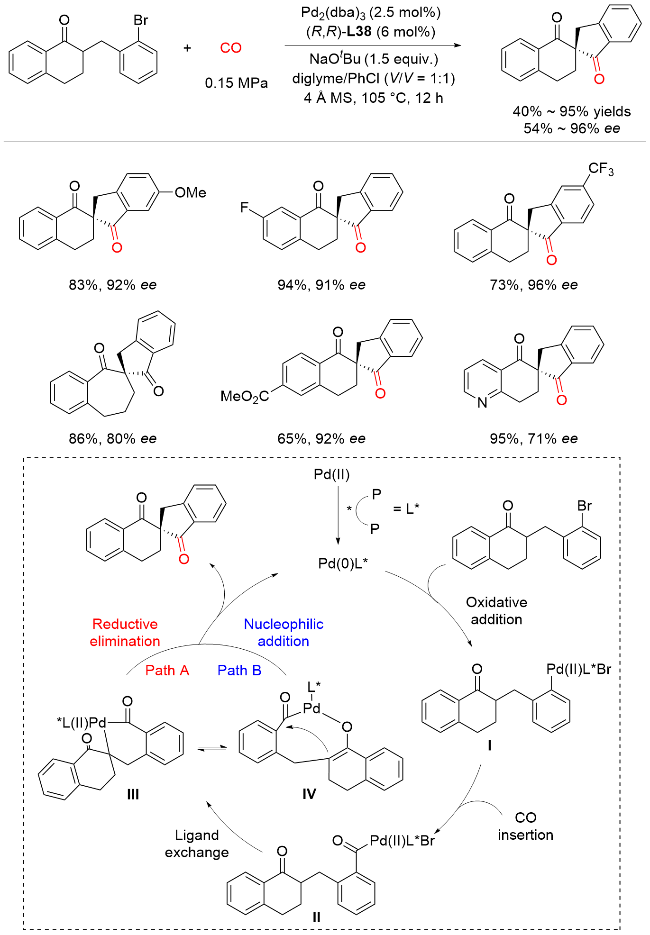
In 2021, Tang and co-workers[72] developed an Pd-catalyzed enantioselective intramolecular α-carbonylative arylation for the preparation of a wide range of chiral spirocyclic β,β′-diketones in good yields with high enantioselectivities (up to 96% ee). A plausible reaction mechanism was proposed (Scheme 56). First, an acyl palladium complex II was formed via oxidative addition and CO insertion. Ligand exchange and isomerization, then took place under basic conditions to afford the acyl palladium complex III or the palladium enolate IV. DFT calculation proved that the chiral spirocyclic β,β′-diketones was obtained through a pathway of reductive elimination of III (Path A) instead of nucleophilic addition of IV (Path B). The energy difference between transition state of the Re-face and the Si-face is 11.3 kJ/mol, which was consistent with the observed values for the enantioselectivity.
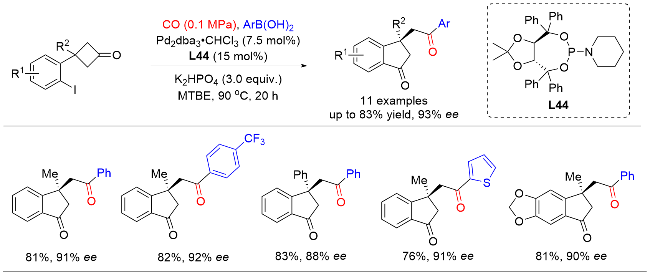
In 2022, Yao and Linʼs group[17] realized a Pd-catalyzed cascade C—C bond activation and carbonylative functionalization of cyclobutanones (Scheme 57). When using aryl-boronic acids as the nucleophiles, a wide range of chiral indanones bearing a chiral quaternary stereocenter were obtained in high yields and enantioselectivities.
During the same year, Ding, Wang and co-workers[44] reported a Pd-catalyzed enantioselective domino Heck carbonylation reaction by using o-iodoacrylanilides as the substrate and water as the nucleophiles. Meanwhile, they also found that by employing terminal acetylene as a nucleophile in the Pd/Cu co-catalytic system, a series of chiral β-carbonylated 3,3-disubstituted oxindoles could be obtained in high yields (55%~99%) and excellent enantio-selectivities (up to 99% ee) (Scheme 58).

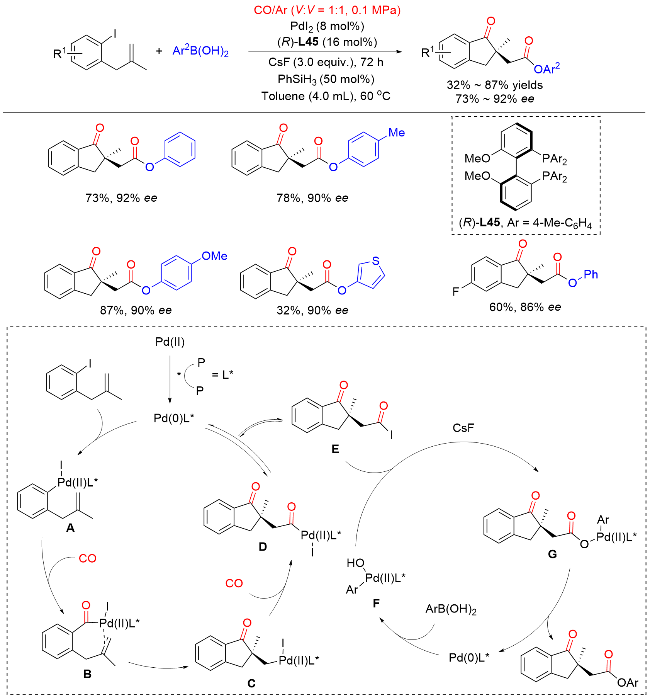
Based on their previously reported Heck carbonylation strategy, Guanʼs group[73] further developed a Pd-catalyzed domino carbonylative Heck esterification of o-iodoalkenyl-benzenes with arylboronic acids (Scheme 59). The reaction successfully constructed three carbon-carbon bonds, two carbon-oxygen bonds, and a quaternary carbon center within a single step, affording various α-chiral γ-ketoacid esters in good to high yields and enantioselectivities. A plausible mechanism was proposed. First, the oxidative addition of o-iodoalkenylbenzene with Pd(0)/ligand led to the formation of intermediate A, followed by CO migratory insertion into A to generate the acylpalladium intermediate B. Subsequently, B underwent an enantioselective Heck insertion event to provide the alkylpalladium intermediate C, which was further involved in a second migratory insertion of CO to form intermediate D. Reductive elimination of D furnished the acyl iodine E. In another catalytic cycle, [ArPd(OH)L*] species F was formed in the presence of trace oxygen and arylboronic acid. The acyl iodine E reacted with F to give intermediate G. Finally, the reductive elimination of intermediate G provided the corresponding γ-ketoacid ester, and simultaneously regenerated the active Pd(0)/L* catalyst.
In addition to carbon nucleophiles, carbon electrophiles are also used for the synthesis of ketones by using Ni catalysis. In 2021, Zhuʼs group[74] reported a nickel-catalyzed three-component reductive asymmetric carbonylation of unactivated olefins with ethyl chloroformate as the CO source (Scheme 60a). A broad scope of chiral dialkyl ketones were provided with high regio-and enantio-selecti-vity under mild conditions. Mechanistic studies revealed that NiH and olefin underwent continuous hydrogen metallization and chain walking process to form alkyl nickel intermediate I. This was followed by carbonyl migratory insertion to produce acyl nickel species II, which further occurred enantioselective coupling with benzyl chloride and reductive elimination to form chiral α-aryl ketone compounds. Recently, they[75] further developed a Ni-cata-lyzed multicomponent asymmetric carbonylation coupling reactions of simple olefins, ethyl chloroformates and racemic alkyl bromines in the presence of chiral ligand (Scheme 60b). A series of α-hydroxyketone compounds were achieved in excellent regioselectivity and enantioselectivity.

Very recently, Liaoʼs group[76] has developed an efficient Pd-catalyzed asymmetric carbonylative alkynylation via a non-classical carbonylative Sonogashira-type approach (Scheme 61), in which the acyl-Pd(II) species were generated from nucleophiles. Utilizing pentacyclic diaryl iodide as a prochiral substrate, a range of axially chiral ynones with commendable functional group compatibility (39 examples), good to excellent yields (71%~96%), and outstanding enantioselectivities (94%~99% ee) were achieved. The practicality of this protocol was further demonstrated through the synthesis of bioactive compounds, scale-up experiment, and further transformations.

In 2024, Yao, Lin and co-workers[77] reported a Pd-cata-lyzed asymmetric tandem carbonylation-Heck reaction of cyclopentenes with CO. A series of bicyclo[3.2.1]octenes with one chiral quaternary center and one tertiary center were obtained in good yields with excellent enantioselectivities (Scheme 62). This reaction proceeded via the oxidative addition of Pd(0) to an arylbromide to form an acyl-palladium intermediate, followed by the migratory insertion of an olefin. Moreover, the products could be readily further transformed to other polyfunctionalized bicyclo-[3.2.1]octanes and azabicyclo[4.2.1]nonene.

5 Asymmetric carbonylative C—S cross-coupling reactions
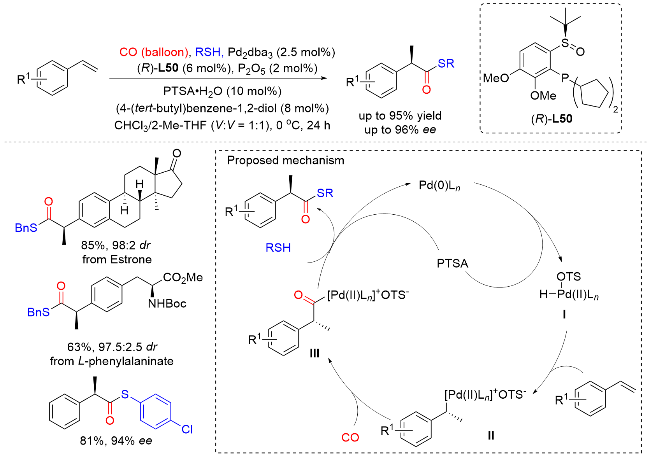
Thiols have rarely been used as nucleophiles in transition-metal-catalyzed asymmetric carbonylation because their strong binding affinity to late-transition metals can reduce catalyst activity. In addition, thiols are prone to produce thiyl radicals, which would lead to by-products via radical process. Despite these potential challenges, the asymmetric carbonylative C—S cross-coupling reaction was still realized by Alper in 2001[78]. After then, this asy-mmetric transformation has rarely been explored.
In 2019, Liaoʼs group[5a] reported a palladium-catalyzed asymmetric thiocarbonylation of styrene with thiols as nucleophiles, obtaining enantioenriched thioesters in good to excellent yields (Scheme 63). The key to success was the utilization of chiral sulfoxide-(P-dialkyl)phosphine (SOP) ligand developed by themselves. It is worth mentioning that this asymmetric thioesterification features broad substrate scope and excellent functional group tolerance. According to the control experiments, the authors proposed a mechanism. The chiral palladium complex combined with p-toluenesulfonic acid to produce Pd-H species I, which inserted into styrene to produce alkyl palladium intermediate II. Subsequently, the alkyl intermediate II reacted with CO to form acyl palladium intermediate III, followed by nucleophilic attack to afford the acquired product. Meanwhile, palladium complex and p-toluenesulfonic acid were regenerated to participate in the next catalytic cycle.
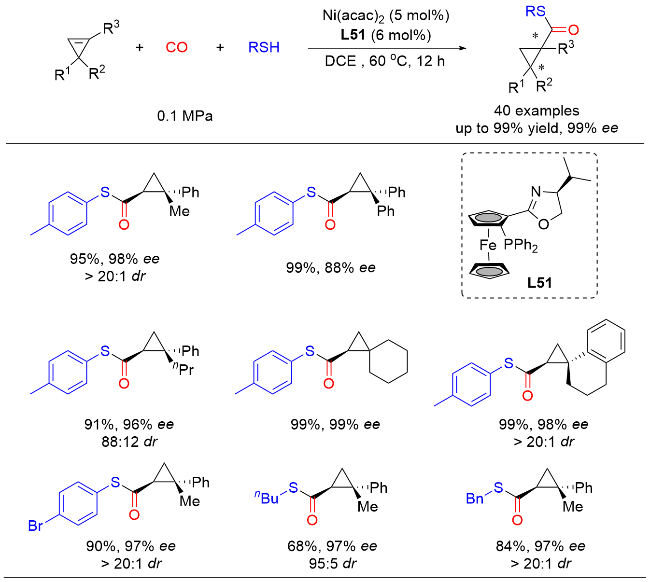
Recently, Fang and co-workers[79] developed a Ni-cata-lyzed asymmetric thioesterification of cyclopropenes. A broad scope of cyclopropanes was acquired in good to excellent yields with excellent regio-and enantio-selectivities under 101 kPa CO (Scheme 64). The use of inexpensive, air-stable Ni(II) precursor instead of Ni(0) as the nickel source enhanced catalyst robustness, functional group compatibility, and tolerance of CO gas.


6 Conclusions and outlook
In this review, we have highlighted the important advances on asymmetric carbonylative cross-coupling reactions achieved over the past decade. Most of these transformations are implemented by Pd catalysts, however, a considerable number of examples have also been attained by earth-abundant Cu, Co and Ni catalysts. A broad scope of alcohols, water, amines, boronic acids, alkynes, and thiols are found to be good nucleophiles or electrophiles for asymmetric carbonylative C—O, C—N, C—C and C—S cross-coupling reactions, affording various chiral esters, carboxylic acids, amides, ketones, and thioester. In general, combining Pd with chiral phosphine ligands provides excellent reactivity and enantioselectivity control in various carbonylation reactions of organic substrates with nucleophiles. On the other hand, the earth-abundant metal nickel, with its smaller atomic radius and lower electronegativity, typically requires chiral nitrogen ligands to complete carbonylative cross-coupling reactions with electrophiles. These differences in chiral ligands and coupling partners mainly comes from the intrinsic properties of metals.
Despite the significant progress achieved in this field, asymmetric carbonylative cross-coupling reactions remain in their infancy, with many aspects still needing further investigation. Firstly, the activity and multi-selectivities are generally not satisfying and should be further improved. More efficient catalytic systems, especially based on non-noble metals, are highly desirable. Secondly, the range of substrates for asymmetric carbonylative cross-coupling reactions is relatively limited. For example, while activated alkenes have been extensively studied, non-activated alkenes (e.g. simple alkyl alkenes) remain challenging. Additionally, combining photochemical, electrochemical, or photoelectrochemical transformations with transition metal catalysis has introduced new opportunities in organic chemistry. This integration could potentially lead to the development of novel reaction systems and modes for asymmetric carbonylative cross-coupling reactions in the future.
(Lu, Y.)