



1 Introduction
In recent years, a continuous rise in both the incidence and mortality rates of cancer has been observed. Significant advancements in chemical drugs have been made for tumor treatment.[1] Although physical therapy and surgical interventions play crucial roles in current medical practice, drug therapy remains the predominant treatment modality. However, the efficacy of drug treatment is frequently impeded by issues related to adverse effects and drug resistance. Consequently, the exploration of chemical synthesis techniques to discover lead compounds for anticancer drugs with enhanced efficiency, higher selectivity, and reduced toxicity has emerged as a prominent and actively researched topic within the field of medicinal chemistry.
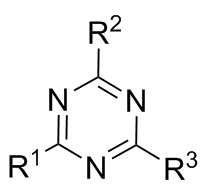
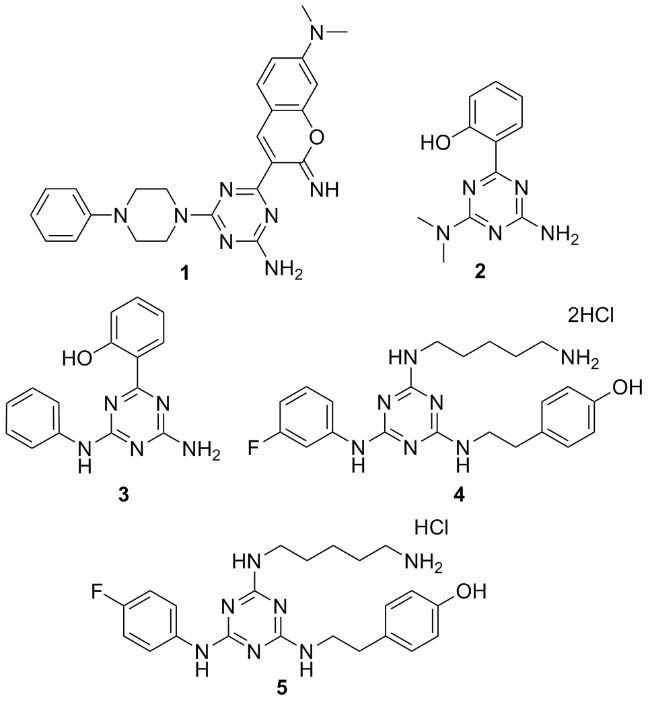
Triazine, a six-membered conjugated carbon-nitrogen ring, exists in various isomeric forms. Among these, symmetrical triazine (1,3,5-triazine or s-triazine) compounds, as depicted in Figure 1, represent the oldest and most extensively studied isomers. The widespread application of symmetrical triazine compounds in herbicides has attracted significant attention from researchers. Moreover, due to their unique chemical structures and electronic properties, these compounds have found extensive applications beyond herbicides, serving as ultraviolet absorbents, fluorescent brightening agents, cationic conversion agents, luminescent materials, liquid crystal materials, and corrosion inhibitors.[2-9] Through ongoing research efforts, it has been demonstrated that structural modifications of symmetrical triazine compounds can yield small-molecule compounds with specific functionalities. These functionalities include antidiabetic, anti-human immunodeficiency virus (HIV), antileukemic, antitubercular, antimalarial, A2A receptor antagonist, and anticancer activities.[10-16] For instance, the symmetrical triazine compound 1, featuring a basic electron-donating diethylamino group, exhibits superior inhibitory activity against A-427 cells (IC50=1.51 μmol/L) compared to the control drug cisplatin (IC50=1.96 μmol/L). Additionally, compound 1 displays comparable inhibitory activity to cisplatin against RT-4 cells (IC50=1.66 μmol/L vs. 1.61 μmol/L), as illustrated in Figure 2.[17] Symmetrical triazine compounds 2 and 3, characterized by ortho-hydroxyphenyl substituents, demonstrate high inhibitory activity against both cell types, with IC50 values comparable to those of the positive control drug cisplatin.[18] In anticancer and anti-inflammatory assays, symmetrical triazine compounds 4 and 5 exhibit moderate and significant levels of dual activities in vitro and in vivo, respectively, highlighting the molecular connection between inflammation and cancer. Notably, compound 5 has demonstrated remarkable antitumor efficacy in animal studies involving DA-3 and PC-3 cancer cells. Furthermore, at a concentration of 20 μmol/L, compound 5 reduces the proliferation of PC-3 cells by inducing cell cycle arrest in the G0/G1 phase.[19]
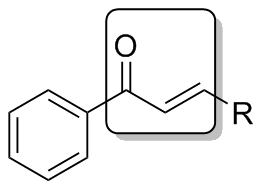
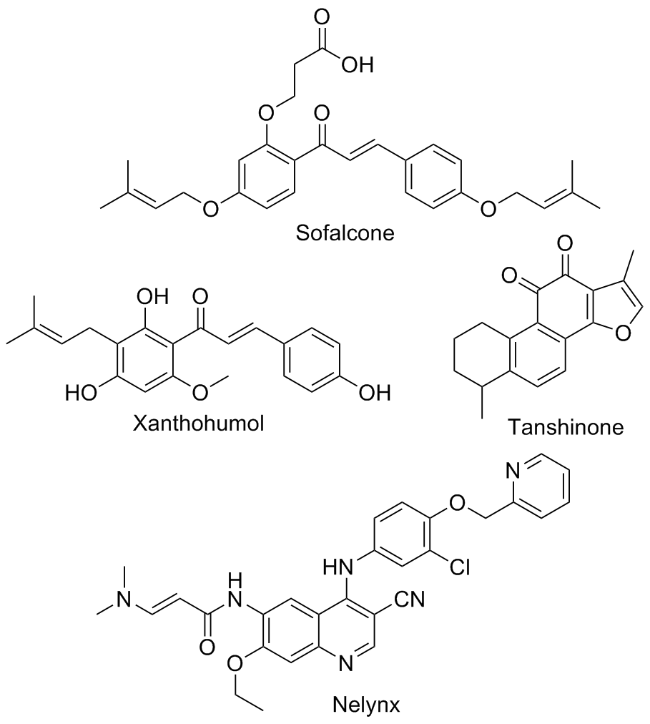
α,β-Unsaturated ketones (Figure 3) are characterized by conjugated carbon-carbon double bonds and carbonyl bifunctional groups within their structures. These structural features contribute to their diverse biological activities and their prevalence in numerous clinical drug molecules. α,β- Unsaturated ketones serve as crucial scaffolds in the development of anti-tumor drug molecules.[20] In recent years, therapies targeting specific molecular pathways have been extensively employed in the treatment of tumor diseases. Due to their low genotoxicity, α,β-unsaturated ketones can minimize damage to surrounding normal tissues, which has garnered significant attention in tumor drug research[21]. Moreover, α,β-unsaturated ketones exhibit anti-tumor effects through various mechanisms of action, as illustrated in Figure 4.[22-26]
Clinical studies have revealed that existing drug molecules are often insufficient for curing complex diseases, as simple drugs and single-target therapies prove ineffective against intricate cancers. In the design of novel drug molecules with potential homologous antitumor activity, a common approach involves integrating various frameworks and active units within a single structure. This integration results in the creation of hybrid molecular compounds that exhibit enhanced pharmacological effects. The predominant strategy in the research and development of novel antineoplastic drugs involves selecting known active unit compounds, such as symmetrical triazines and α,β- unsaturated ketones, as documented in the literature, and assembling these units into new constructs. Currently, a prevalent approach in anticancer drug development focuses on designing and synthesizing low-toxicity, high-efficacy targeted drugs based on natural product structures. This approach is complemented by computer-aided simulations for preclinical research. The present study proposes the design of new antineoplastic drugs grounded in the principle of drug activity superposition. Specifically, this design involves incorporating α,β-unsaturated ketones into symmetrical triazine compounds. The in vitro anti-proliferative activity of these novel compounds is evaluated, using cisplatin-a clinically utilized antineoplastic drug with established antitumor efficacy-as a positive control for comparison. The analysis of these new symmetrical triazine compounds aims to provide a theoretical foundation for their application in antitumor therapy. The primary objective is to identify target compounds that demonstrate superior antitumor biological activity.
2 Results and discussion
2.1 Synthesis of compounds
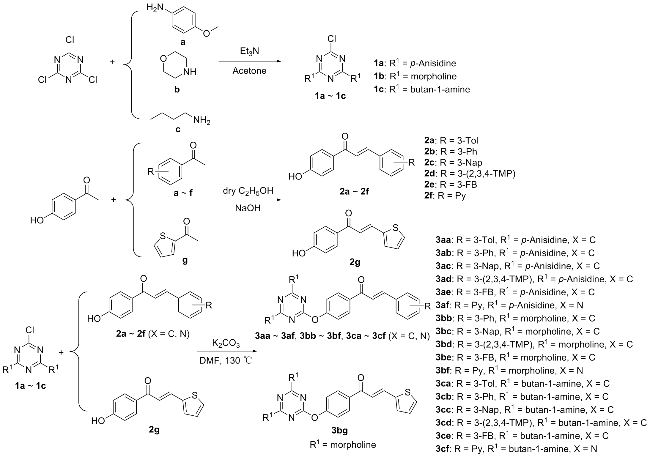
The synthesis of compounds 3aa~3af, 3bb~3bf, 3ca ~3cf (X=C, N), and 3bg was accomplished through the pathway illustrated in Scheme 1. Cyanuric chloride was utilized as the starting material and subsequently coupled with p-anisidine, morpholine, and n-butylamine to yield the corresponding disubstituted cyanuric chloride intermediates 1a~1c. In the next step, 4-hydroxyacetophenone was employed as the substrate and condensed with various aldehydes, including p-methylbenzaldehyde, benzaldehyde, 2-naphthaldehyde, 2,3,4-trimethoxybenzaldehyde, 4-fluorobenzaldehyde, pyridine-2-carboxaldehyde, and 2-thiophenecarboxaldehyde. This condensation process re- sulted in the formation of α,β-unsaturated ketone intermediates 2a~2g. The final stage of the synthesis involved subjecting intermediates 1 and 2 to nucleophilic substitution reactions. This process yielded 18 novel symmetrical triazine compounds, which have not been previously reported in the literature. The optimal synthetic conditions for these reactions were determined through a series of univariate experiments. To confirm the structural integrity of the synthesized compounds, various analytical techniques were employed. These included Fourier-transform infrared spectroscopy (FT-IR), proton nuclear magnetic resonance (1H NMR), carbon-13 nuclear magnetic resonance (13C NMR), high-resolution mass spectrometry (HRMS), and high-performance liquid chromatography (HPLC).


2.2 Cytotoxicity studies
The in vitro antitumor activity of symmetrical triazine compounds 3aa~3cf was evaluated using the MTT assay with cisplatin serving as a positive control. The assessment was conducted on tumor cells in their logarithmic growth phase, specifically human non-small cell lung cancer cells (A549), human cervical cancer cells (HeLa), human breast cancer cells (MCF-7), and human colon cancer cells (SW620). The antiproliferative activity of the target compounds was quantified and presented in Table 1. The antitumor activity assays revealed that the antiproliferative activity against tumor cells was significantly influenced by both the substituents on the symmetrical triazine compounds and the α,β-unsaturated ketone structure. Notably, compound 3bg, a novel symmetrical triazine featuring a morpholine ring substituent on the triazine molecule and a thiophene ring on the α,β-unsaturated ketone structure, exhibited potent in vitro antiproliferative activity. This compound demonstrated particular efficacy against A549, HeLa, and MCF-7 cells with IC50 values of 19.6, 18.2, and 19.6 μmol/L, respectively, establishing it as the most pro- mising drug candidate among the tested samples. How- ever, 3bg showed comparatively weaker activity against SW620 cells. The impact of substituents on both the symmetrical triazine molecule and the α,β-unsaturated ketone structure was further exemplified by compounds featuring a benzene ring without substituents in the α,β- unsaturated ketone structure. In this case, the compound with a p- anisidine group on the triazine ring exhibited stronger in vitro antiproliferative activity compared to its morpholine-substituted counterpart, while the n-butyl-amine-sub- stituted compound demonstrated the weakest activity.
Table 1 In vitro anti-tumor activity test results of triazine compound |
| Compound | IC50/(μmol•L-1) | |||
|---|---|---|---|---|
| A549 | Hela | MCF-7 | SW620 | |
| Cisplatin | 8.9±0.42 | 6.2±1.12 | 14.3±2.22 | 18.6±1.35 |
| 3aa | 35.4±0.51 | 120.3±1.39 | 81.8±1.79 | 26.8±6.92 |
| 3ab | 20.8±0.52 | 15.6±1.39 | 30.5±4.38 | 94.5±0.50 |
| 3ac | 41.3±0.77 | 92.6±0.64 | 75.1±2.40 | 42.7±2.11 |
| 3ad | 100.8±1.54 | 71.4±4.00 | 60.5±2.35 | 69.9±2.77 |
| 3ae | 18.5±0.58 | 26.3±1.14 | 33.7±7.84 | 41.4±2.80 |
| 3af | 88.6±1.84 | 51.2±6.22 | 66.8±1.74 | 36.6±0.76 |
| 3bb | 28.6±1.34 | 42.2±0.45 | 16.4±3.22 | 45.5±1.12 |
| 3bc | 39.4±5.05 | 45.9±1.22 | 25.7±2.27 | 40.6±0.45 |
| 3bd | 68.6±0.59 | 72.3±2.15 | 46.5±0.57 | 77.8±0.90 |
| 3be | 12.8±5.60 | 16.9±1.05 | 35.6±4.27 | 40.8±0.79 |
| 3bf | 26.8±1.57 | 69.3±0.95 | 70.5±1.84 | 47.7±0.92 |
| 3bg | 19.6±0.44 | 18.2±12.63 | 19.6±2.98 | 53.3±18.74 |
| 3ca | 90.6±36.70 | 77.3±0.88 | 72.6±3.00 | 81.1±9.16 |
| 3cb | 46.6±0.31 | 56.6±0.10 | 61.7±2.78 | 43.8±4.82 |
| 3cc | 91.6±3.93 | 75.5±10.18 | 42.6±0.22 | 83.6±2.45 |
| 3cd | 69.6±7.01 | 77.4±11.34 | 92.5±23.97 | 81.3±7.72 |
| 3ce | 41.5±0.52 | 56.8±1.09 | 67.6±4.87 | 48.3±4.53 |
| 3cf | 88.2±35.98 | 94.3±4.93 | 105.3±46.64 | 115.4±22.42 |
Collectively, the data indicated a consistent pattern of antiproliferative activity across the tested cell lines. The compounds exhibited the strongest activity against A549 cells, followed by MCF-7 and HeLa cells with the weakest activity observed against SW620 cells. Among the three series, the n-butylamine series (3c) demonstrated the least activity, potentially due to the influence of the long alkyl chain. The series of compounds containing morpholine (3b) demonstrated the most promising activity. Among them, compound 3bb which features a morpholine ring and a phenyl substitution emerged as the most potent inhibitor of the MCF-7 cell line. The anisamine series (3a) is close to 3b. This similarity in activity between morpholine and p-anisidine series suggests a comparable mechanism of action, possibly attributed to these substituents occupying a specific volume within the active site. While no compound with exceptionally high antitumor activity was identified, this study provides valuable insights for further research on this class of compounds.
3 Conclusion
This investigation, founded on the principles of structu- ral assembly and activity superposition, centered on the symmetrical triazine structure, which has been recognized for its antitumor properties. The α,β-unsaturated ketone structure, known for its broad-spectrum antitumor effects, was incorporated into the same molecule through a nucleophilic reaction. This innovative approach facilitated the design and synthesis of 18 novel symmetrical triazine compounds, previously unreported in the literature. The design scheme was demonstrated to be feasible, characterized by mild reaction conditions and favorable yields. The structural characterization of the synthesized compounds was conducted using FT-IR, 1H NMR, 13C NMR, and MS techniques. The in vitro antiproliferative activities of these compounds were evaluated using the MTT assay. The results revealed that compounds containing a morpholine ring and a 4-fluoro-substituted phenyl group exhibited the most potent inhibitory effects on the proliferation of human non-small cell lung cancer cells (A549). Compounds with a p-anisidine group and a phenyl substituent demonstrated significant cytotoxic effects on human cervical cancer cells (HeLa). The compound with the strongest inhibitory activity against the MCF-7 cell line was 3bb, which contained a morpholine ring and a phenyl substitution. At the same time, the compound also exhibited inhibitory activity against the proliferation of human normal breast epithelial cells (MCF-10A) with an IC50 value of 23.50 μmol/L. On this basis, the structure can be further optimized by improving its selectivity to enhance its antitumor activity and reduce its toxicity. This discovery provides a certain reference value for the further development of such compounds, and on this basis, it is expected to enhance their anti-proliferative activity and reduce toxicity through structural optimization. The compound with a p-anisidine group and a 4-methyl-substituted phenyl group displayed the most potent inhibitory activity against the proliferation of human colon cancer cells (SW620). Furthermore, the symmetrical triazine compounds containing a morpholine ring and a thiophene ring exhibited strong in vitro antiproliferative activity against human non-small cell lung cancer cells (A549), human cervical cancer cells (HeLa), and human breast cancer cells (MCF-7). These compounds were identified as the most active among the samples tested in this study. Future research directions could include investigations into the mechanisms of action of these compounds. Additionally, lead compounds with enhanced drug activity may be designed based on these structures.
4 Experimental section
4.1 Instruments and reagents
RE 2000A rotary evaporator (Shanghai Yarong Biochemical Instrument Factory); FA-2004 electronic analytical balance (Shanghai Sunny Hengping Scientific Instrument Co., Ltd.); DGF30/2-IA electric blast drying oven (Shanghai Yiheng Scientific Instrument Co., Ltd.; Bruker); ZF-20D type dark box UV analyzer (Gongyi Yuhua Instrument Co., Ltd.); SHZ-(D) III type circulating water multi-purpose vacuum pump (Zheng Great Wall Science and Technology Industry and Trade Co., Ltd.); DHJF-8002 type low temperature Constant temperature magnetic stirring bath (Zheng Great Wall Science and Technology Industry and Trade Co., Ltd.); Nicolet Nexus 110W Fourier transform infrared spectrometer (Nicole, USA); HWCL-1 type collector type constant temperature magnetic stirring bath (Zheng Great Wall Science and Technology Industry and Trade Co., Ltd.); BIOBASE enzyme-linked immunoassay instrument (Shandong Boguan Biotechnology Co., Ltd.); Far-infrared rapid constant temperature drying oven (Shanghai Yuejin Medical Equipment Factory); Constant temperature oscillating incubator (Changzhou Zhongcheng Instrument Manufacturing Co., Ltd.); Medical CNC ultrasonic cleaning (Kunshan Ultrasonic Instrument Co., Ltd.); LS4000 low-speed centrifuge (Shanghai Bowen Instrument Co., Ltd.); Qingdao Ocean Chemical Co., Ltd. GF254 silica gel plate, observed under ultraviolet light; column chromatography silica gel 300~400 mesh.
All reagents were purchased from commercial reagent companies and were of analytical grade. Unless otherwise specified, they were used directly without treatment. Human lung cancer cells (A549), human cervical cancer cells (HeLa), human breast cancer cells (MCF-7) and human colon cancer cells (SW620) were purchased from Shanghai Xianding Biotechnology Co., Ltd.
4.2 Experimental method
4.2.1 Synthesis of intermediate 1
A 250 mL three-neck round-bottom flask was charged with cyanuric chloride (5.00 g, 27.11 mmol) and acetone (40 mL). The flask was subsequently immersed in an ice water bath. The reaction mixture was cooled to 0 ℃, followed by the introduction of a solution comprising ani- sidine (6.68 g, 54.23 mmol) dissolved in acetone (15 mL). Triethylamine (8.23 g, 81.34 mmol) was then added dropwise to the vigorously stirred solution at 0 ℃. Upon completion of the addition, the ice bath was removed, and the reaction mixture was heated to 40 ℃ with continuous agitation for 3 h, with progress monitored by thin-layer chromatography (TLC). After cooling the reaction mixture to ambient temperature, the contents were poured into 200 mL of water and subjected to vigorous stirring until a solid precipitated. The precipitate was subsequently isolated via suction filtration. The crude product underwent recrystallization from a mixture of petroleum ether and ethyl acetate, yielding the purple product 1a (9.30 g, 96% yield).
4.2.2 Synthesis of intermediate 2
4-Hydroxyacetophenone (30.00 mmol) and the aromatic aldehyde (32.2 mmol) were combined in 100 mL of anhydrous ethanol and stirred in an ice bath. Subsequently, 40 mL of 20% NaOH solution was introduced to the reaction mixture. Following the complete addition, the ice bath was removed. The reaction mixture was then stirred at room temperature with progress monitored by TLC. Upon completion, the reaction mixture was poured into ice water. The pH of the solution was carefully adjusted to neutrality through the gradual addition of dilute hydrochloric acid, resulting in the precipitation of a yellow solid. The solid was subsequently isolated by filtration, yielding intermediates 2a~2g with yields ranging from 64% to 87%.
4.2.3 General procedure for the preparation of 3aa~3cf
A 100 mL three-necked round-bottom flask was charged with 1a (357.80 mg, 1 mmol), 2a (285.94 mg, 1.2 mmol), potassium carbonate (414.61 mg, 3 mmol), and dimethylformamide (10 mL) at ambient temperature. The reaction mixture was subsequently heated to 130 ℃ and subjected to continuous stirring for 8 h, with progress monitored by thin-layer chromatography (TLC). Upon completion of the reaction, the temperature was meticulously reduced to below 50 ℃. The reaction mixture was then transferred into an excess of a 30% sodium chloride solution to facilitate solvent extraction. Vigorous stirring was employed to promote solid precipitation, after which the resultant solid product was isolated via filtration. The collected solid underwent purification through recrystallization, utilizing a solvent mixture comprising ethyl acetate and 95% ethanol. This process yielded a yellow solid, identified as (E)-1- (4-((4,6-bis((4-methoxyphenyl)amino)-1,3,5-triazin-2-yl)oxy)phenyl)-3-(p-tolyl)prop-2-en-1-one (3aa) (514.85 mg, 92% yield). m.p. 196~197 ℃; 1H NMR (400 MHz, DMSO-d6) δ: 9.62 (s, 2H, NH), 8.26 (d, J=8.5 Hz, 2H, PhH), 7.96 (d, J=15.4 Hz, 1H, CH), 7.81 (d, J=8.1 Hz, 2H, PhH), 7.76 (d, J=15.4 Hz, 1H, PhH), 7.65 (s, 1H, CH), 7.50~7.43 (m, 5H, PhH), 7.29 (d, J=8.0 Hz, 2H, PhH), 6.92~6.68 (m, 4H, PhH), 3.74 (s, 6H, CH3), 2.37 (s, 3H, CH3); 13C NMR (101 MHz, DMSO-d6) δ: 188.6, 170.8, 165.6, 156.7, 155.5, 144.6, 141.3, 135.3, 132.5, 130.7, 130.0, 129.5, 123.0, 122.9, 122.6, 121.4, 114.0, 55.6, 21.6; FT-IR (KBr) ν: 3404, 3249, 3085, 3002, 2952, 2836, 1592, 1508, 1402, 1339, 1295, 1215, 1162, 1020, 806, 560, 507 cm-1; HRMS (ESI) calcd for C33H30N5O4 [M+H]+ 560.2292, found 560.2292.
Other target compounds 3ab~3cf were obtained using the same method as 3aa.
(E)-1-(4-((4,6-Bis((4-methoxyphenyl)amino)-1,3,5-triazin-2-yl)oxy)phenyl)-3-phenylprop-2-en-1-one (3ab): Yellow solid (491.24 mg, 90%). m.p. 210~211 ℃; 1H NMR (400 MHz, DMSO-d6) δ: 9.63 (s, 2H), 8.28 (d, J=8.5 Hz, 2H), 8.02 (d, J=15.6 Hz, 1H), 7.94~7.91 (m, 2H), 7.79 (d, J=15.6 Hz, 1H), 7.73~7.27 (m, 9H), 6.80 (d, J=54.4 Hz, 4H), 3.73 (s, 6H); 13C NMR (101 MHz, DMSO-d6) δ: 188.6, 170.8, 165.5, 156.7, 155.5, 144.6, 135.2, 132.7, 132.6, 132.5, 131.2, 130.8, 129.4, 123.1, 122.6, 122.4, 114.0, 55.6; FT-IR (KBr) ν: 3291, 3240, 3002, 2941, 2825, 3102, 1603, 1510, 1401, 1339, 1295, 1213, 1026, 971, 824, 758, 560 cm-1; HRMS (ESI) calcd for C32H28N5O4 [M+H]+ 546.2141, found 546.2148.
(E)-1-(4-((4,6-Bis((4-methoxyphenyl)amino)-1,3,5-triazin-2-yl)oxy)phenyl)-3-(naphthalen-2-yl)prop-2-en-1-one (3ac): Yellow solid (468.59 mg, 79%). m.p. 206~207 ℃; 1H NMR (400 MHz, DMSO-d6) δ: 9.64 (s, 2H), 8.52~8.30 (m, 3H), 8.24~8.11 (m, 2H), 8.10~7.86 (m, 4H), 7.83~7.33 (m, 8H), 6.81 (d, J=52.4 Hz, 4H), 3.74 (s, 6H); 13C NMR (101 MHz, DMSO-d6) δ: 188.6, 170.9, 165.6, 156.8, 155.5, 144.6, 135.2, 134.5, 133.5, 132.8, 132.5, 131.3, 130.8, 129.0, 129.0, 128.2, 128.0, 127.3, 125.0, 123.1, 122.7, 114.0, 55.6; FT-IR (KBr) ν: 3320, 2834, 2951, 3054, 1590, 1501, 1393, 1344, 1237, 1026, 822, 564, 518, 751 cm-1; HRMS (ESI) calcd for C36H30- N5O4 [M+H]+ 596.2292, found 596.2292.
(E)-1-(4-((4,6-Bis((4-methoxyphenyl)amino)-1,3,5-triazin-2-yl)oxy)phenyl)-3-(2,3,4-trimethoxyphenyl)prop-2-en-1-one (3ad): White solid (597.92 mg, 94%). m.p. 213~214 ℃; 1H NMR (400 MHz, DMSO-d6) δ: 9.63 (s, 2H), 8.23 (d, J=8.4 Hz, 2H), 7.98~7.90 (m, 2H), 7.83 (d, J=8.9 Hz, 1H), 7.51~7.43 (m, 6H), 6.95~6.72 (m, 5H), 3.89 (s, 6H), 3.76 (d, J=23.9 Hz, 9H); 13C NMR (101 MHz, DMSO-d6) δ: 188.6, 170.9, 165.7, 156.6, 156.3, 155.4, 153.6, 142.2, 139.0, 135.4, 132.6, 130.6, 124.0, 123.0, 122.6, 121.5, 120.8, 114.0, 109.0, 62.0, 61.0, 56.6, 55.6; FT-IR (KBr) ν: 3349, 3214, 3080, 2940, 2834, 1593, 1510, 1410, 1351, 1297, 1240, 1164, 1091, 1029, 826, 564,509 cm-1; HRMS (ESI) calcd for C35H34N5O7 [M+ H]+ 636.2453, found 636.2459.
(E)-1-(4-((4,6-Bis((4-methoxyphenyl)amino)-1,3,5-triazin-2-yl)oxy)phenyl)-3-(4-fluorophenyl)prop-2-en-1-one (3ae): White solid (487.78 mg, 87%). m.p. 168~169 ℃; 1H NMR (400 MHz, DMSO-d6) δ: 9.62 (s, 2H), 8.28 (d, J=8.5 Hz, 2H), 8.03~7.98 (m, 3H), 7.79 (d, J=15.5 Hz, 2H), 7.49 (d, J=18.9 Hz, 3H), 7.43 (d, J=7.1 Hz, 2H), 7.35~7.30 (m, 2H), 6.87~6.72 (m, 4H), 3.74 (s, 6H); 13C NMR (101 MHz, DMSO-d6) δ: 188.5, 170.8, 165.2, 162.7, 156.7, 155.5, 143.3, 135.1, 131.9, 131.8, 131.8, 130.8, 123.1, 122.3, 116.5, 116.3, 114.0, 55.6; FT-IR (KBr) ν: 3427, 3258, 3000, 2947, 2834, 1586, 1510, 1402, 1342, 1291, 1217, 1164, 1028, 822, 558, 513 cm-1; HRMS (ESI) calcd for C32H27FN5O4 [M+H]+ 564.2047, found 564.2051.
(E)-1-(4-((4,6-Bis((4-methoxyphenyl)amino)-1,3,5-triazin-2-yl)oxy)phenyl)-3-(pyridin-2-yl)prop-2-en-1-one(3af): White solid (490.07 mg, 90%). m.p. 222~223 ℃; 1H NMR (400 MHz, DMSO-d6) δ: 9.63 (s, 2H), 8.71 (d, J=4.6 Hz, 1H), 8.23~8.18 (m, 3H), 7.96~7.90 (m, 2H), 7.76 (d, J=15.4 Hz, 2H), 7.50~7.40 (m, 6H), 6.79 (d, J=54.5 Hz, 4H), 3.73 (s, 6H); 13C NMR (101 MHz, DMSO- d6) δ: 189.0, 170.9, 165.7, 156.9, 155.5, 153.3, 150.5, 143.6, 137.7, 134.9, 132.5, 130.8, 125.6, 125.4, 125.4, 123.2, 122.6, 114.0, 55.6; FT-IR (KBr) ν: 3273, 3156, 3063, 3000, 2949, 2831, 1664, 1577, 1504, 1393, 1335, 1226, 1026, 826, 564, 513 cm-1; HRMS (ESI) calcd for C31H27N6O4 [M+H]+ 547.2094, found 547.2097.
(E)-1-(4-((4,6-Dimorpholino-1,3,5-triazin-2-yl)oxy)-phenyl)-3-phenylprop-2-en-1-one (3bb): White solid (421.25 mg, 89%). m.p. 196~197 ℃; 1H NMR (400 MHz, DMSO-d6) δ: 8.24 (d, J=8.6 Hz, 2H), 8.00 (d, J=15.6 Hz, 1H), 7.92~7.90 (m, 2H), 7.76 (d, J=15.6 Hz, 1H), 7.48~7.46 (m, 3H), 7.39 (d, J=8.6 Hz, 2H), 3.65 (d, J=50.5 Hz, 16H); 13C NMR (101 MHz, DMSO-d6) δ: 188.4, 170.5, 166.0, 156.5, 144.4, 135.2, 134.7, 131.1, 130.6, 129.4, 122.4, 66.3, 43.9; FT-IR (KBr) ν: 3065, 2962, 2900, 2851, 1657, 1599, 1493, 1444, 1361, 1213, 1253, 1164, 1110, 1017, 833, 760, 689, 529 cm-1; HRMS (ESI) calcd for C26H28N5O4 [M+H]+ 474.2141, found 474.2141.
(E)-1-(4-((4,6-Dimorpholino-1,3,5-triazin-2-yl)oxy)-phenyl)-3-(naphthalen-2-yl)prop-2-en-1-one (3bc): Yellow solid (419.39 mg, 80%). m.p. 228~229 ℃; 1H NMR (400 MHz, DMSO-d6) δ: 8.36 (s, 1H), 8.28 (d, J=8.7 Hz, 2H), 8.16~8.11 (m, 2H), 8.01~7.94 (m, 4H), 7.60~7.58 (m, 2H), 7.41 (d, J=8.7 Hz, 2H), 3.65 (d, J=51.0 Hz, 16H); 13C NMR (101 MHz, DMSO-d6) δ: 188.3, 170.5, 166.0, 156.5, 144.4, 134.7, 134.4, 133.4, 132.9, 131.2, 130.6, 129.0, 129.0, 128.2, 128.0, 127.3, 125.0, 122.7, 122.4, 66.3, 43.9; FT-IR (KBr) ν: 2962, 2905, 2854, 1588, 1501, 1439, 1362, 1299, 1255, 1211, 1111, 1013, 806, 737, 538, 473 cm-1; HRMS (ESI) calcd for C30H30N5O4 [M+H]+ 524.2292, found 524.2295.
(E)-1-(4-((4,6-Dimorpholino-1,3,5-triazin-2-yl)oxy)-phenyl)-3-(2,3,4-trimethoxyphenyl)prop-2-en-1-one (3bd): Yellow solid (510.96 mg, 91%). m.p. 160~161 ℃; 1H NMR (400 MHz, DMSO-d6) δ: 8.18 (d, J=8.7 Hz, 2H), 7.95~7.80 (m, 3H), 7.37 (d, J=8.7 Hz, 2H), 6.94 (d, J=8.9 Hz, 1H), 3.88 (d, J=3.8 Hz, 6H), 3.78 (s, 3H), 3.64 (d, J=50.8 Hz, 16H); 13C NMR (101 MHz, DMSO-d6) δ: 188.4, 170.5, 166.0, 156.3, 153.6, 142.2, 138.8, 135.0, 130.4, 124.0, 122.4, 121.5, 120.8, 109.0, 66.3, 62.0, 61.0, 56.6, 43.9; FT-IR (KBr) ν: 2967, 2907, 2854, 1586 1501, 1364, 1295, 1219, 1162, 1104, 1017, 848, 798, 496 cm-1; HRMS (ESI) calcd for C29H34N5O7 [M+H]+ 564.2453, found 564.2457.
(E)-1-(4-((4,6-Dimorpholino-1,3,5-triazin-2-yl)oxy)-phenyl)-3-(4-fluorophenyl)prop-2-en-1-one (3be): White solid (434.79 mg, 88%). m.p. 221~222 ℃; 1H NMR (400 MHz, DMSO-d6) δ: 8.24 (d, J=8.8 Hz, 2H), 8.02~7.95 (m, 2H), 7.97 (d, J=15.6 Hz, 1H), 7.76 (d, J=15.6 Hz, 1H), 7.39 (d, J=8.7 Hz, 2H), 7.34~7.29 (m, 2H), 3.65 (d, J=50.4 Hz, 16H); 13C NMR (101 MHz, DMSO-d6) δ: 188.3, 170.5, 166.0, 162.7, 156.5, 143.2, 131.8, 131.7, 130.6, 122.4, 122.3, 116.5, 116.3, 66.3, 43.9; FT-IR (KBr) ν: 3062, 2963, 2901, 2852, 1657, 1599, 1502, 1435, 1359, 1215, 1164, 1106, 1011, 826, 631, 533 cm-1; HRMS (ESI) calcd for C26H27FN5O4 [M+H]+ 492.2042, found 492.2045.
(E)-1-(4-((4,6-Dimorpholino-1,3,5-triazin-2-yl)oxy)-phenyl)-3-(pyridin-2-yl)prop-2-en-1-one (3bf): White solid (407.09 mg, 86%). m.p. 195~196 ℃; 1H NMR (400 MHz, DMSO-d6) δ: 8.70 (d, J=4.1 Hz, 1H), 8.20~8.16 (m, 3H), 7.95~7.91 (m, 2H), 7.73 (d, J=15.4 Hz, 1H), 7.45~7.38 (m, 3H), 3.64 (d, J=50.5 Hz, 16H); 13C NMR (101 MHz, DMSO-d6) δ: 188.7, 170.5, 166.0, 156.7, 153.3, 150.5, 143.5, 137.7, 134.4, 130.6, 125.6, 125.4, 125.3, 122.5, 66.3, 43.9; FT-IR (KBr) ν: 3058, 2980, 2861, 1664, 1579, 1490, 1371, 1224, 1317, 1113, 1011, 853, 788, 536, 737 cm-1; HRMS (ESI) calcd for C25H27N6O4 [M+H]+ 475.2088, found 475.2084.
(E)-1-(4-((4,6-Dimorpholino-1,3,5-triazin-2-yl)oxy)-phenyl)-3-(thiophen-2-yl)prop-2-en-1-one (3bg): White solid (462.87 mg, 97%). m.p. 196~197 ℃; 1H NMR (400 MHz, DMSO-d6) δ: 8.16 (d, J=8.7 Hz, 2H), 7.93 (d, J=15.3 Hz, 1H), 7.80 (d, J=5.0 Hz, 1H), 7.71 (d, J=3.5 Hz, 1H), 7.62 (d, J=15.3 Hz, 1H), 7.37 (d, J=8.7 Hz, 2H), 7.22~7.19 (m, 1H), 3.64 (d, J=50.4 Hz, 16H); FT-IR (KBr) ν: 2969, 2856, 1581, 1497, 1441, 1359, 1253, 1208, 1162, 1111, 1015, 848, 727, 536 cm-1; 13C NMR (101 MHz, DMSO-d6) δ: 187.9, 170.5, 166.0, 156.4, 140.2, 137.1, 134.6, 133.4, 131.0, 130.4, 129.2, 122.4, 120.7, 66.3, 43.9; HRMS (ESI) calcd for C24H26N5O4S [M+H]+ 480.1700, found 480.1700.
(E)-1-(4-((4,6-Bis(butylamino)-1,3,5-triazin-2-yl)oxy)-phenyl)-3-(p-tolyl)prop-2-en-1-one (3ca): Yellow solid (397.68 mg, 87%). m.p. 165~166 ℃; 1H NMR (400 MHz, DMSO-d6) δ: 8.21~8.18 (m, 2H), 7.91 (d, J=15.6 Hz, 1H), 7.80 (d, J=8.0 Hz, 2H), 7.73 (d, J=15.6 Hz, 1H), 7.43~7.20 (m, 6H), 3.27~3.05 (m, 4H), 2.36 (s, 3H), 1.49~1.39 (m, 4H), 1.32~1.19 (m, 4H), 0.90~0.80 (m, 6H); 13C NMR (101 MHz, DMSO-d6) δ: 188.4, 170.4, 167.3, 156.9, 144.4, 141.2, 134.8, 132.5, 130.5, 130.0, 129.4, 122.6, 121.4, 40.7, 31.6, 21.6, 20.0, 14.1; FT-IR (KBr) ν: 3347, 3258, 3118, 2956, 2861, 1603, 1552, 1421, 1342, 1215, 1155, 1022, 808, 744, 669, 498 cm-1; HRMS (ESI) calcd for C27H34N5O2 [M+H]+ 460.2713, found 460.2711.
(E)-1-(4-((4,6-Bis(butylamino)-1,3,5-triazin-2-yl)oxy)-phenyl)-3-phenylprop-2-en-1-one (3cb): Yellow solid (368.66 mg, 83%). m.p. 165~166 ℃; 1H NMR (400 MHz, DMSO-d6) δ: 8.22~8.20 (m, 2H), 7.99~7.95 (m, 1H), 7.92~7.89 (m, 2H), 7.76 (d, J=15.6 Hz, 1H), 7.50~7.19 (m, 7H), 3.29~3.02 (m, 4H), 1.54~1.35 (m, 4H), 1.30~1.26 (m, 4H), 0.90~0.80 (m, 6H); 13C NMR (101 MHz, DMSO-d6) δ: 188.5, 170.4, 167.2, 157.0, 144.4, 135.1, 134.7, 131.1, 130.6, 129.4, 122.7, 122.4, 40.7, 31.6, 20.0, 14.2; FT-IR (KBr) ν: 3351, 3265, 3120, 2952, 2860, 1603, 1546, 1417, 1342, 1213, 1157, 1013, 809, 678, 558 cm-1; HRMS (ESI) calcd for C26H32N5O2 [M+H]+ 446.2551, found 446.2556.
(E)-1-(4-((4,6-Bis(butylamino)-1,3,5-triazin-2-yl)oxy)-phenyl)-3-(naphthalen-2-yl)prop-2-en-1-one (3cc): Yellow solid (378.26 mg, 76%). m.p. 150~151 ℃; 1H NMR (400 MHz, DMSO-d6) δ: 8.36 (s, 1H), 8.27~8.24 (m, 2H), 8.16~8.08 (m, 2H), 8.01~7.90 (m, 4H), 7.62~7.57 (m, 2H), 7.44~7.33 (m, 4H), 3.27~3.09 (m, 4H), 1.50~1.38 (m, 4H), 1.32~1.18 (m, 4H), 0.90~0.80 (m, 6H); 13C NMR (101 MHz, DMSO-d6) δ: 188.4, 170.4, 167.3, 157.0, 144.4, 134.7, 134.4, 133.5, 132.9, 131.2, 130.7, 130.6, 129.0, 129.0, 128.2, 127.9, 127.3, 124.9, 122.7, 40.6, 31.6, 20.0, 14.1; FT-IR (KBr) ν: 3436, 3271, 3127, 2925, 1593, 1541, 1348, 1217, 1157, 1009, 813, 744, 475, 615, 2863 cm-1; HRMS (ESI) calcd for C30H34N5O2 [M+H]+ 496.2707, found 496.2709.
(E)-1-(4-((4,6-Bis(butylamino)-1,3,5-triazin-2-yl)oxy)-phenyl)-3-(2,3,4-trimethoxyphenyl)prop-2-en-1-one (3cd): Yellow solid (477.85 mg, 89%). m.p. 139~140 ℃; 1H NMR (400 MHz, DMSO-d6) δ: 8.17~8.15 (m, 2H), 7.93 (d, J=15.7 Hz, 1H), 7.85 (d, J=15.7 Hz, 1H), 7.82~7.79 (m, 1H), 7.41~7.24 (m, 4H), 6.94 (d, J=8.9 Hz, 1H), 3.88~3.79 (m, 9H), 3.26~3.16 (m, 4H), 1.49~1.37 (m, 4H), 1.32~1.19 (m, 4H), 0.90~0.80 (m, 6H); 13C NMR (101 MHz, DMSO-d6) δ: 188.4, 170.4, 167.2, 156.8, 156.3, 153.6, 142.2, 138.8, 135.0, 130.4, 124.0, 122.7, 121.5, 120.8, 109.0, 62.0, 61.0, 56.6, 40.6, 31.6, 20.0, 14.2; FT-IR (KBr) ν: 3374, 3273, 3125, 2949, 2863, 1597, 1548, 1419, 1348, 1217, 1095, 1008, 802, 495 cm-1; HRMS (ESI) calcd for C29H38N5O5 [M+H]+ 536.2867, found 536.2869.
(E)-1-(4-((4,6-Bis(butylamino)-1,3,5-triazin-2-yl)oxy)-phenyl)-3-(4-fluorophenyl)prop-2-en-1-one (3ce): White solid (393.79 mg, 85%). m.p. 155~156 ℃; 1H NMR (400 MHz, DMSO-d6) δ: 8.22~8.19 (m, 2H), 8.01~7.96 (m, 2H), 7.93 (d, J=15.6 Hz, 1H), 7.76 (d, J=15.6 Hz, 1H), 7.42~7.22 (m, 6H), 3.26~3.06 (m, 4H), 1.49~1.35 (m, 4H), 1.31~1.18 (m, 4H), 0.90~0.80 (m, 6H); 13C NMR (101 MHz, DMSO-d6) δ: 188.4, 170.4, 167.3, 165.1, 162.7, 157.0, 143.1, 134.6, 131.8, 130.6, 122.7, 122.3, 116.4, 40.6, 31.6, 20.0, 14.1; FT-IR (KBr) ν: 3351, 3265, 3118, 2958, 2863, 1604, 1548, 1417, 1348, 1213, 1157, 1019, 973, 817, 667, 502 cm-1; HRMS (ESI) calcd for C26H31F- N5O2 [M+H]+ 464.2456, found 464.2458.
(E)-1-(4-((4,6-Bis(butylamino)-1,3,5-triazin-2-yl)oxy)-phenyl)-3-(pyridin-2-yl)prop-2-en-1-one (3cf): Yellow solid (363.81 mg, 81%). m.p. 149~150 ℃; 1H NMR (400 MHz, DMSO-d6) δ: 8.70 (d, J=4.6 Hz, 1H), 8.29~8.14 (m, 3H), 7.95~7.91 (m, 2H), 7.73 (d, J=15.4 Hz, 1H), 7.47~7.25 (m, 5H), 3.26~3.09 (m, 4H), 1.49~1.37 (m, 4H), 1.32~1.19 (m, 4H), 0.90~0.80 (m, 6H); 13C NMR (101 MHz, DMSO-d6) δ: 188.8, 170.4, 167.2, 157.1, 153.3, 150.5, 143.4, 137.7, 134.4, 130.7, 130.6, 125.5, 125.4, 122.8, 40.6, 31.6, 20.0, 14.1; FT-IR (KBr) ν: 3391, 3267, 3129, 2960, 2861, 1604, 1561, 1419, 1339, 1222, 1162, 1019, 793, 576, 482 cm-1; HRMS (ESI) calcd for C25H31- N6O2 [M+H]+ 447.2503, found 447.2509.
4.2.4 Antiproliferative activity test in vitro
Cell culture preparation was initiated by harvesting approximately 80%~90% confluent human non-small cell lung cancer A549 cells, human cervical cancer HeLa cells, human breast cancer MCF-7 cells, and human colon cancer SW620 cells from the incubator. The cells were subjected to trypsin digestion, followed by rinsing with PBS (pH 7.4). Subsequently, 2 mL of culture medium was introduced, ensuring homogeneous distribution through pipetting. Cell counting was performed using a suspension sample from the edge of the counting plate, with the mean of three counts recorded. Logarithmically growing tumor cells were seeded into 96-well plates at a density of approximately 5000 cells per well, with 100 μL of suspension added to each well. To mitigate marginalization of cell growth, PBS was introduced to the peripheral wells. The 96-well plates were then incubated at 37 ℃ in 5% CO2 atmosphere for 24 h. Post-incubation, the culture medium was aspirated and discarded. Subsequently, 100 μL of the prepared test sample solution was introduced to each well with four replicate wells established for each concentration. The blank group received 100 μL of culture medium containing 0.1% DMSO, while the positive control group was treated with 100 μL of cisplatin solution. Following an additional 24-hour incubation period, the culture medium was removed, and 20 μL of MTT solution was added to each well. After a 4-hour incubation, the supernatant was aspirated, and 150 μL of DMSO was introduced to each well. The plate was then agitated for 15 min to facilitate the dissolution of the generated formazan crystals. Cell growth inhibition rates and IC50 values were calculated based on absorbance measurements obtained at 490 nm using a microplate reader. The experiment was conducted in triplicate, and the mean IC50 value for each tested sample was determined.
Growth inhibition rate (%)=(1-OD value of experimental group/OD value of blank group)×100%
Supporting Information 1H NMR, 13C NMR, high- resolution mass spectrometry (HRMS) and HPLC of compounds 3aa~3cf. The Supporting Information is available free of charge via the Internet at http://sioc-journal.cn/.
(Cheng, F.)