



1 Introduction
Alcohols are among the most widely occurring and easily accessible chemical substances. They not only stand as the most prevalent structural motifs in both natural and synthetic organic molecules, but also serve as highly versatile building blocks in organic synthesis.[1] Therefore, chemical transformations involving alcohols to construct complex molecular architectures have drawn great interest among synthetic organic chemists. It is of great appeal to build C—hetero and C—C bonds using alcohols as raw materials through dehydroxylative coupling strategy.[2] In general, the direct functionalization of alcohols continues to pose significant challenges, primarily due to the inherent stability of the C—O bonds, and the weak tendency of hydroxyl group to act as a leaving group and acidic nature of the hydroxyl group.[3,4] Thus, early strategies for dehydroxylative functionalization heavily relied on the pre- activation of the hydroxyl group to more reactive leaving groups by using certain activating reagents, such as (CF3SO)2O, RSO2Cl, RCOCl, and RCO2Me.[5] Besides, early dehydroxylative reactions of alcohols were typically initiated by large amounts of oxidants and were constrained by the sensitivity of precursors and the use of toxic reagents.
Accordingly, there is an urgent need to develop general methods for the dehydroxylative coupling of alcohols. To enable the conversion of hydroxyl groups (OH) into various other functional groups (e.g., C—X, C—C) to diversify molecular structures. The key strategies and specific methods for dehydroxylative functionalization can be categorized into the following classifications: (1) transition metal-catalyzed C—O bond activation which uses metals to insert into C—O bonds for cross-coupling and is useful for selective deoxygenation in complex molecules; (2) radical-mediated dihydroxylation which is suitable for inert C—OH bond cleavage under mild conditions; (3) oxidative dehydroxylation which eliminates hydroxyl groups or adjacent hydrogens via oxidation; (4) acid-catalyzed dehydration which eliminates OH under acidic conditions. In the last decade, tremendous progresses in the dehydroxylative functionalization of the alcohols have been achie- ved (Scheme 1), including borylation, amination, stannylation, silylation, phosphonylation, sulfuration, alkynylation, vinylation, esterification, arylation, and alkylation of the alcohols.
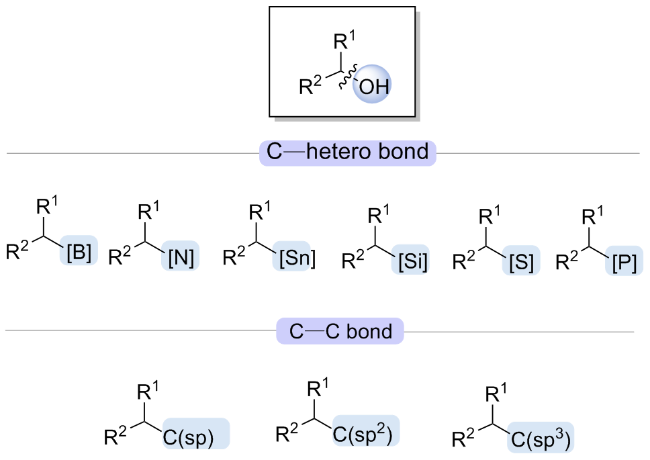
The aim of this review is to summarize the different approaches available for achieving the formation of new bonds via the cleavage of C—OH bonds, focusing on various transformations through transition metal catalysis,[6] transition metal-free system, electrochemical deoxygenation reactions[7] and photoredox catalysis.[8] In this review, we will give a timely review of this topic and also directly point out its unsolved scientific problems as well as future directions in this field. According to the types of the new bonds, we have categorized this review into four different broad sections: (1) C—hetero bond forming, (2) C(sp3)— C(sp) bond forming, (3) C(sp3)—C(sp2) bond forming, (4) C(sp3)—C(sp3) bond forming. Each section is further divided into several parts depending on the reaction mechanisms, catalyst types and substrates specificity.
2 Dehydroxylative functionalization for C(sp3)—hetero bond forming
2.1 C—B bond forming
Organoboron compounds are characterized by good functional groups tolerance, non-toxicity, and increasing commercial availability. Therefore, organoboron compounds are extensively utilized in pharmaceutical and material science and organic synthesis due to their high efficiency in some coupling reaction and other significant transformations.[9] In light of the importance of organoboron compounds, we have summarized several key methods for synthesizing organoboron compounds via the dehydro- xylative borylation of the alcohols.
In 2015, Shi and co-workers[10] discovered a Pd-cataly- zed borylation of arylmethanols with B2pin2 toward the benzylboron reagent under mild conditions. When simple benzyl alcohol was subjected to the reaction, 0.75 equiv. of Ti(OiPr)4 was needed to promote the borylation reaction efficiently. The mechanism showed that arylmethanols interacted with B2pin2 in a reversible way to form the key intermediate A, in which the C—O bonds of alcohols were weakened to engage in the oxidative addition with Pd(0) species. Then, the B—B bond of B2pin2 was activated to promote the transmetallation of B with alcohols as an inner-base. Finally, the catalytic cycle was completed with the reductive elimination of C, in which released the desired product and regenerated the active Pd(0) species. For benzyl alcohol, the C—O bond was excited by the Ti(OiPr)4 (Scheme 2a).
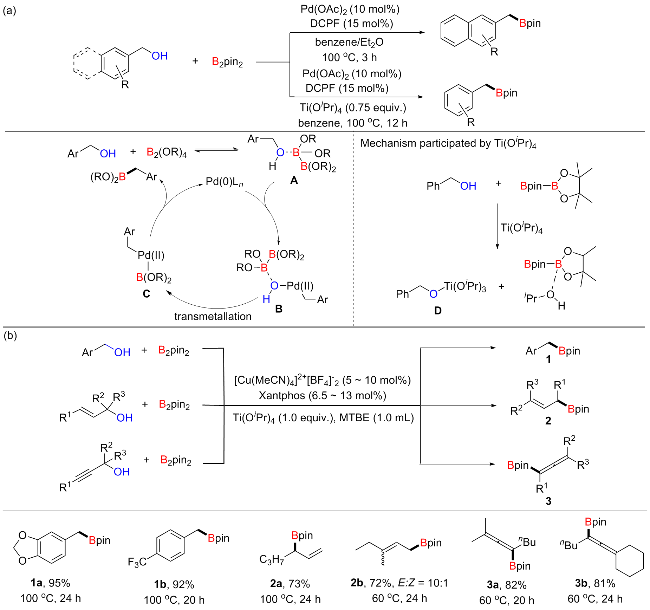
Two years later, the borylations of benzylic, allylic and tertiary allylic alcohols catalyzed by copper species was reported by Marder (Scheme 2b).[11] This strategy demonstrated a broad reaction scope and high efficiency under mild conditions. The benzylic alcohols embedded with electron-donating and electron-withdrawing groups worked well to give borylation products 1a and 1b in 95% and 92% yields. When it came to allylic alcohols, a nucleophilic substitution mechanism was involved. Various allylic boronates could be obtained as the sole products from primary, secondary, and tertiary allylic alcohols via the Cu-catalyzed dehydroxylative borylation. The Cu-cataly- zed borylation reaction could be also applied to the synthesis of allenylboronates from propargylic alcohols. The corresponding products were produced in good yields. The observed regioselectivity with propargyl alcohols also suggested that the reaction proceeds via an SN2'-type pathway.
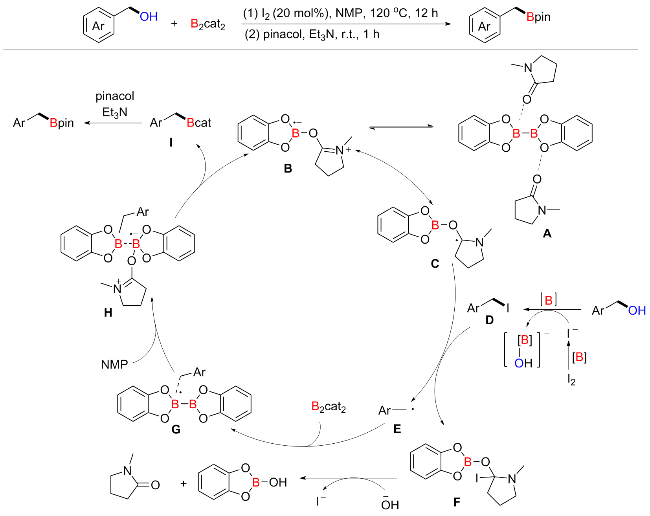
In 2023, Zhang and co-workers[12] developed a transition-metal-free borylation of benzylic alcohol via iodine-catalyzed process (Scheme 3). A wide range of benzylic boronate esters were obtained from widely available benzylic alcohols. Preliminary mechanistic investigations indicated that benzylic iodide and benzylic radicals are involved as the key intermediates in this borylation reaction. Initially, the thermal homolytic fragmentation of NMP/B2cat2 complex A produced two NMP-stabilized boryl radicals B, which would tautomerize into carbon radical C. Carbon radical C reacted with benzylic iodide D to give the benzylic radical E, which reacted with B2cat2 to afford boron-centered radical G. Then, radical H was produced after the radical G was captured by NMP. Finally, radical H released the desired compound products and the radical B to complete the reaction cycle.
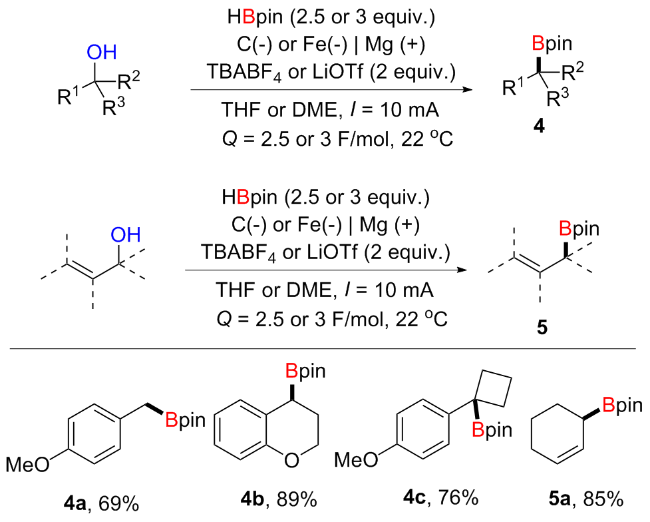
In the same year, Lin and co-workers[13] developed an electrochemical strategy to achieve the deoxygenative borylation of alcohols and carbonyl compounds (Scheme 4). Benzylic and allylic alcohols were transformed into boronic esters by leveraging the redox activity of in situ generated trialkyl borate intermediates. In the reactions, the boron reagent pinacolborane (HBpin) not only served as an activator but also participated in the reaction. This method was applicable to a wide range of substrates. Firstly, the methodology can efficiently transform primary, secondary and tertiary alcohols into boronic esters. For example, p-methoxy benzyl alcohol and chroman-4-ol can give the desired products 4a, 4b in good yields (69%, 89%), and cyclobutanol substrate give the product 4c in yield of 76% without ring-opening. The scope of this methodology was then expanded to allylic alcohols that could also form stabilized carbanion nucleophiles upon electroreduction.
2.2 C—N bond forming
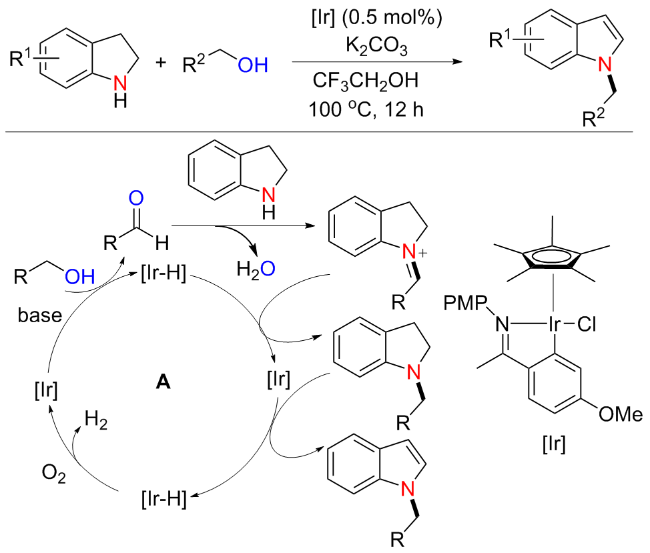
The use of alcohol to construct C—N bonds via dehydroxylation was the most ideal method. In 2017, Wang and co-workers[14] successfully developed an iridium-catalyzed dehydroxylative coupling reactions between indolines and alcohols (Scheme 5). The iridacycle catalyst plays multiple roles in these reactions, which dehydrogenates alcohols and catalyzes the coupling reactions to achieve N-alkyla- tion and C3-alkylation reactions. Mechanistic studies revealed that a borrowing hydrogen-dehydrogenation process and a dehydrogenation-borrowing hydrogen process are involved. When K2CO3 was added at the beginning, N-alkylated indole was as the major product.
In general, the organic azide compounds are synthesized through the substitution reaction of organic halides or pseudo halides with sodium azide. Therefore, the straightforward azidations of allylic/benzylic alcohols with an azide reagents are regarded as attractive methods for producing allylic/benzylic azides.
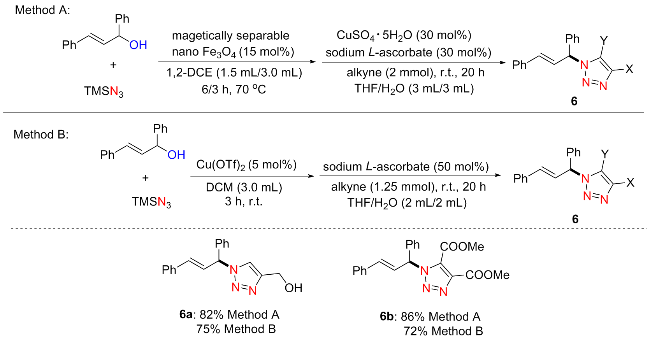
In 2015, Naveenʼ group[15] reported two methods for the building of substituted 1,2,3-triazoles from allylic/benzylic alcohols in one-pot process via the click reaction (Scheme 6). The method A involves magnetically separable nano Fe3O4-catalyzed direct azidation of alcohols with TMSN3 as the first step followed by the Cu-catalyzed click reaction with alkynes as the second step. In the method B, the azi- dation was catalyzed by the Cu(OTf)2. Cu(OTf)2 acted as a dual-purpose catalyst, facilitating both the azidation of alcohols and the subsequent click reaction. Gratifyingly, various alkynes gave the corresponding substituted 1,2,3- triazole derivatives 6a, 6b in good yields. The direct conversion of (E)-4-phenylbut-3-en-2-ol failed to afford corresponding substituted 1,2,3-triazole derivative through method A, while method B provided the desired product smoothly.
2.3 C—Sn and C—Si bonds forming
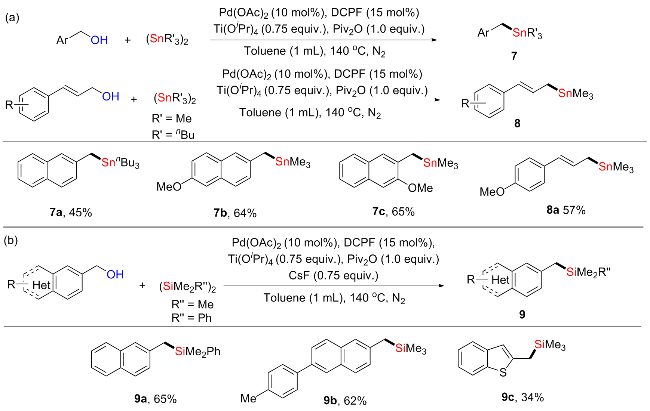
Organotin reagents usually serve as crucial molecular building blocks in organic synthesis. Mo and co-workers have explored the possibility of forming C(sp3)—Sn bond through the cleavage of C(sp3)—O bond, particularly focusing on achieving this transformation directly from alcohols without the need of any pre-activation steps. In 2023, they developed the direct conversion of non-prea- ctivated benzyl alcohols into benzyl stannanes and benzyl silanes via a Pd-catalyzed C(sp3)—O bond activation with diverse tin and silicon reagents (Scheme 7).[16] These reactions demonstrated wide substrate compatibilities and operations efficiently under mild conditions. They also discovered that this stannylation method was applicable to allyl alcohol, affording 8a in moderate yield of 57% (Scheme 7a). Besides, they found that adding 0.75 equiv. of CsF under the standard condition can efficiently promote the silylation process, providing the corresponding silylation products smoothly (9a~9c) (Scheme 7b).
2.4 C—P bond forming
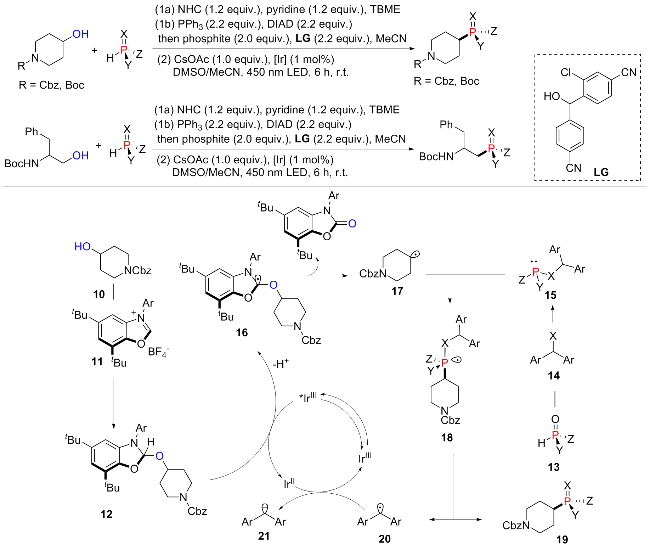
In 2024, MacMillan and co-workers[17] developed a redox-switchable organophosphorus alkyl radical trap for the deoxyphosphonylation of alcohols (Scheme 8). Under the mild photocatalytic conditions, the generation of activated P(III) enabled the formation of a diverse array of alkyl-P(V) species with broad alkyl substrate tolerance. The condensation of alkyl radical precursor 10 and the deoxazole 11 (NHC, N-heterocyclic carbene) furnishes the activated alcohol adduct 12, which undergoes oxidation and subsequent deprotonation to give the heterocyclic radical 17. Next, a phosphoranyl radical 18 is formed via the reversible addition of 17 to the activated P(III) species; a subsequent irreversible β-scission driven by the weak C—O bond leads to the formation of the deoxyphosphonylated product. This work provided an efficient method to diversify the synthesis ofmedicinally relevant phosphonate esters by direct installation of the desired P(V) motifs. Importantly, this deoxygenative strategy gives access to an expansive feedstock of radical precursors, while the complexity of the phosphites utilized can furnish valuable prodrug motifs in a single synthetic step.
2.5 C—S bond forming
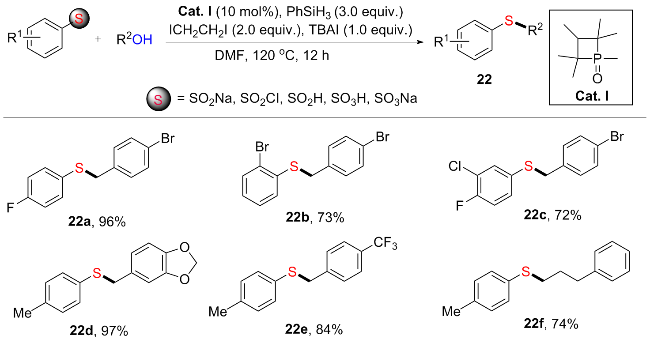
In 2024, Xu and co-workers[18] disclosed an organophos- phorus-catalyzed direct dehydroxylative thioetherification of alcohols with hypervalent organosulfur compounds (Scheme 9). This method involves the "dual substrate deoxygenation" approach through the PIII/PV=O catalytic system. This redox cycling was used to drive the stepwise reduction of arenesulfinate to afford the nucleophilic agent with the aid of silane. A wide scope of substrate with excellent broad group tolerance could engage in the reaction. The sodium arenesulfinates with various substituents at the phenyl ring (22a~22c) could provide the products in modern to good yields. For alcohols, both electron-donat- ing (22d) and electron-withdrawing (22e) substituents were tolerated, producing the desired products in 97%, 84% yields. The inactivated alcohol was also found to be suitable for this reaction and afforded the product 22f in 74% yield.
3 Dehydroxylative functionalization for C(sp3)—C(sp) bond forming
In 2012, Carreira group[19] disclosed the enantioselective allylic alkynylation of racemic allylic alcohols, using a readily accessible potassium alkenyltrifluoroborates as the alkynylation reagents. This method allows rapid access to various 1,4-dienes. Inspired by this work, they developed a Ir-catalyzed enantioselective allylic alkynylation with secondary allylic alcohols and potassium alkynyltrifluoroborates, affording various products 1,4-enynes (Scheme 10a).[20] Salient features of the process are excellent bran- ched-to-linear selectivity and enantioselectivity. In addition, in 2020, Loh and colleagues[21] developed an efficient and environmentally benign route to access 1,4-enynes via Pd-Ca co-catalyzed dehydrative cross-coupling of allylic alcohols with terminal alkynes (Scheme 10b). The oxidative addition involving C—OH bond cleavage could be facilitated by Ca(NTf2)2 due to the formation of the Ca—OH bond. The in situ-generated hydroxide ion was crucial for the deprotonation of the terminal alkyne, promoting the formation of allylalkynylpalladium intermediate.
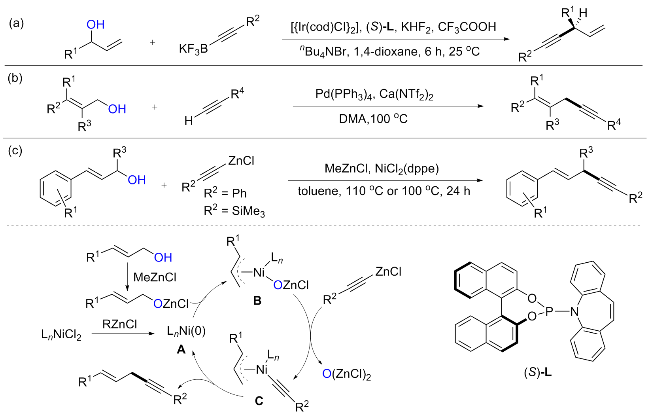
Then, in 2021, a nickel-catalyzed cross-coupling of allylic alcohols with alkynylzinc reagents to access 1,4-enynes was reported by Wang and co-workers (Scheme 10c).[22] A broad range of substrates such as aryl-, alkyl-, and silyl-ethynylzinc reagents were suitable for this transformation. Silyl-ethynylzinc reagents generally have a higher reactivity compared with aryl- and alkyl-ethynyl- zinc reagents. When 1- or 3-aryl-substituted allyl alcohols were used as the substrates, the reaction exhibited high regio- and E/Z-selectivity, giving linear and E-configurated products. The oxidative addition of Ni(0) species with in situ formed allyloxyzinc(II) chloride results in the cleavage of C—OH bond. Intermediate C was formed through the transmetalation between B and alkynylzinc chloride. The subsequent reductive elimination yielded the cross-coup-ling product.
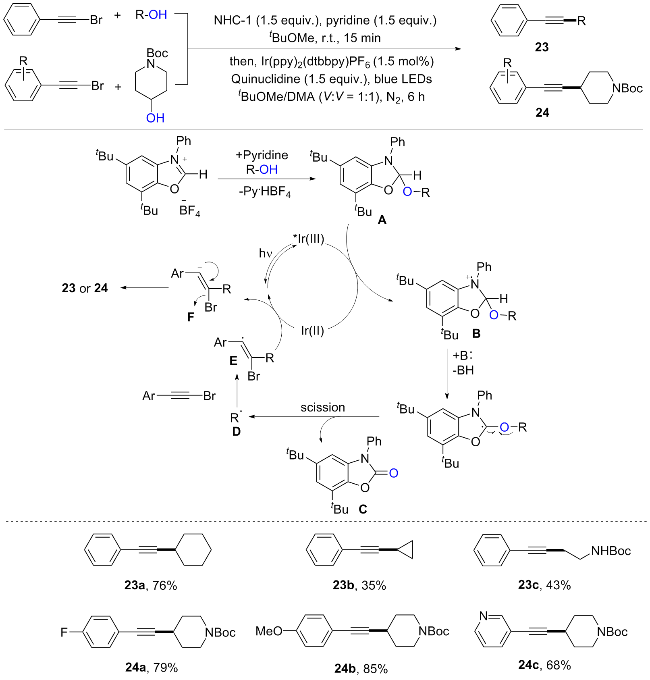
In 2023, Ma, Wang and co-workers[23] developed a NHC-mediated deoxygenation of alcohols under photocatalytic conditions to build C(sp3)—C(sp) bond with 1-bromoalkynes (Scheme 11). Various alkyl radicals can react with 1-bromoalkyne via C(sp3)—C(sp) coupling to afford internal alkynes in moderate to good yields. The active NHC-alcohol adduct A is oxidized by *Ir(III) to give nitrogen radical cation intermediate B. The R radical was then generated from B upon sequential proton transfer/β-scission in the presence of quinuclidine. The radical addition of R radical toward 1-bromo-phenylacetylene give rise to carbon-centered brominated-alkenyl radical intermediate E, which was reduced by Ir(II) to engage in the following debromination to furnish internal alkyne. A wide range of secondary, primary and tertiary alcohols with various substituents were examined. When the ring size of the alcohol became smaller, the yield declined (23a, 76%, 23b, 35%). For primary and tertiary alcohols, N-Boc-ethanolamine obtained product 23c in 43% yield, while 1-adamantanol provided the desired product in good yield, because of the stability of radicals derived from tertiary carbons. The aromatic rings of 1-bromo-phenylacetyl-enes were also screened with various common functional groups and aza-heterocyclic ring (24a, 24b and 24c).
4 Dehydroxylative functionalization for C(sp3)—C(sp2) bond forming
4.1 Radical addition reaction
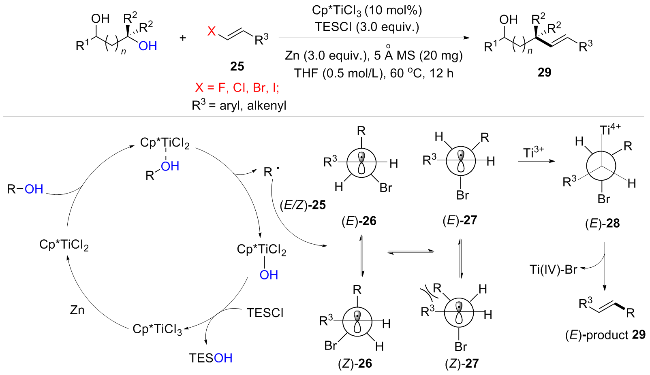
As the highly reactive and prevalent intermediates in synthetic chemistry, radicals have recently emerged as a potent tool for the alcohol-involved dehydroxylative coupling reaction. In 2022, Shuʼs group[24] reported a highly selective dehydroxylative vinylation of tertiary alcohols for the construction of vinylated all-carbon quaternary centers (Scheme 12). The reaction involved a catalytic cycle for titanium catalysis, in which Cp*TiCl2 interacts with the alcohol to deliver the alkyl radical. Addition of the alkyl radical toward vinylbromide affords complexes (E)-26 and (Z)-26, respectively, which are in equilibrium with (E)-27 and (Z)-27. The bulky R group on the alcohol will drive the E⇌Z interconversion to favor the E conformation because of the steric considerations. Various vinyl halides, including fluorides, chlorides, bromides, and iodides, could engage in the reaction smoothly. The selective vinylation of tertiary alcohol was further proved by the diol that contains primary/secondary and tertiary alcohols.
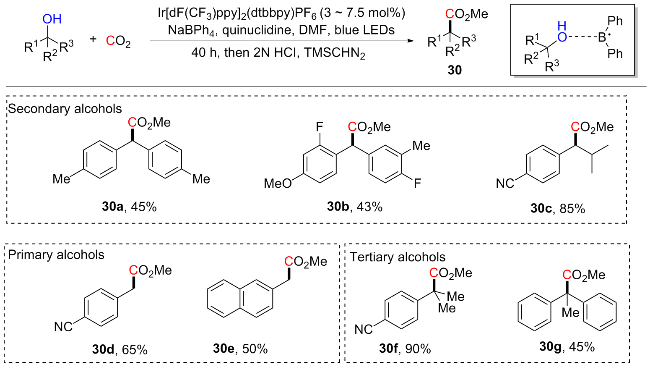
In the same year, Xia and co-workers illuminated the direct synthesis of carboxylic acids through the coupling of free alcohols and CO2, which is a plentiful, non-toxic, and sustainable source of C1 building blocks (Scheme 13).[4a] A neutral boryl radical was used as the activating agent to cleave the C(sp3)—OH bond under mild visible light photoredox conditions. In the work, the diaryl boryl radical generated from tetraarylborate, coordinated with alcohol to form a boryl radical complex. Then, the alkyl radical generated via the C—O bond cleavage can be further turned into carbon anion and attacked to CO2. This method had a wide range of free alcohols under the optimal reactions. A range of primary, secondary, and tertiary benzyl alcohols can be tolerated, affording the corresponding products 30a~30g in 43%~90% good yields.
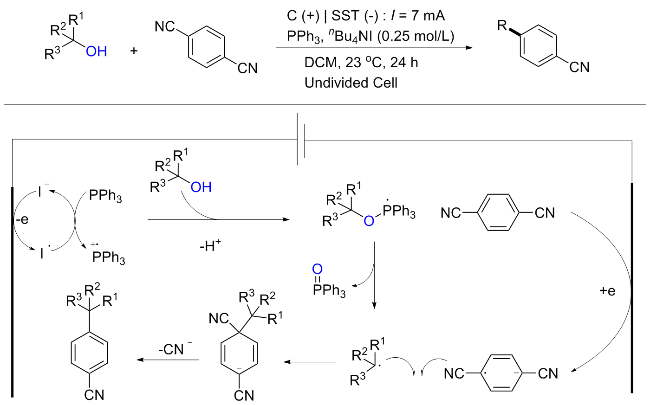
Apart from the photocatalysis, the electrochemistry has also exhibited distinctive capacity to produce highly reactive radical intermediates in a controlled manner under mild conditions.[25] In 2022, Wang et al.[26] demonstrated the construction of C(sp3)—C(sp2) bond in electrochemical dehydroxylative arylation process enabled by paired electrolysis, in which the alcohol reacted with arene without preactivation to obtain the dehydroxylative arylated product (Scheme 14). After the single-electron anodic oxidation, the PPh3 was oxidized to radical cation and could work as an activating reagent to interact with the alcohol to produce an alkoxytriphenylphosphine radical. Through spontaneous β-scission of the phosphoranyl radical, the C—O bond is cleaved to form the alkyl radical species, which couples with the radical anion generated by cathodic reduction of the electron-poor arene to afford the dehydroxylative arylated product. A variety of primary alcohols featuring diverse functional groups, as well as natural products and drug molecules containing alcoholic groups, could yield the target products in moderate to good yields. Besides, secondary and tertiary alcohols with various functional groups could react with 1,4-dicyanobenzene to produce the corresponding arylated compounds.
4.2 Arene-participated coupling reactions
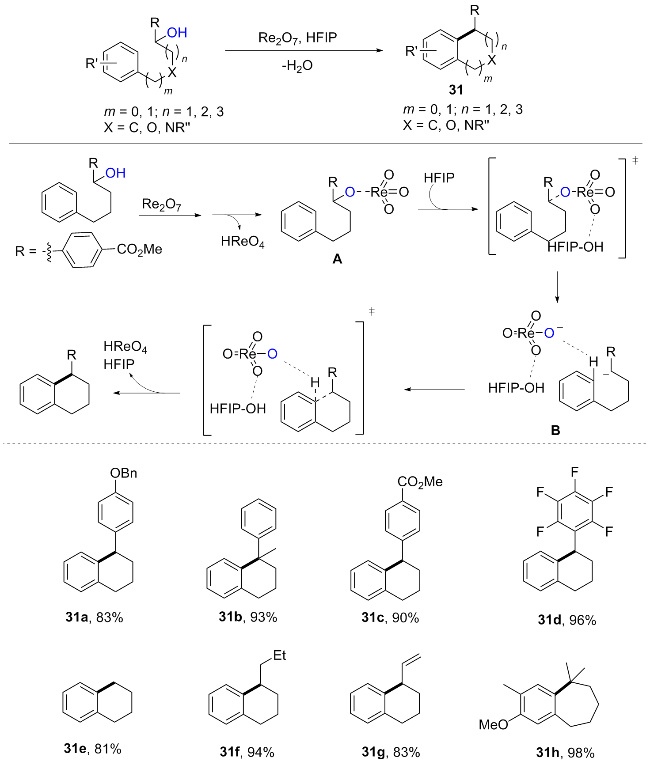
The substitutions of alkyl chlorides with less toxic alkylating agents, such as alcohols, are highly desirable in Friedel-Crafts reaction.[27] In 2022, Xie and co-workers[28] enabled a broadly applicable and highly efficient intramolecular dehydrative Friedel-Crafts reaction to synthesize tetrahydronaphthalene, utilizing Re2O7 as the catalyst in hexafluoroisopropanol (HFIP) (Scheme 15). Re2O7 was used as the catalyst, and reacted with the alcohol directly via a six-membered ring transition state to afford a perrhenate ester A, which attacked by one HFIP molecule to produce a carbon cation intermediate B. Then, the carbon cation was attacked by the phenyl ring to give the cyclic products. This dehydrative Friedel-Crafts strategy could be extended to a wide range of alcohols, including primary and teretiary benzyl alcohols, giving the products 31a, 31b in 83% and 93% yields. It was remarkable that the substrates with a primary aliphatic alcohol, tertiary alcohol and allyl alcohol afforded the corresponding products 31e~31h in 81% to 98% yields.
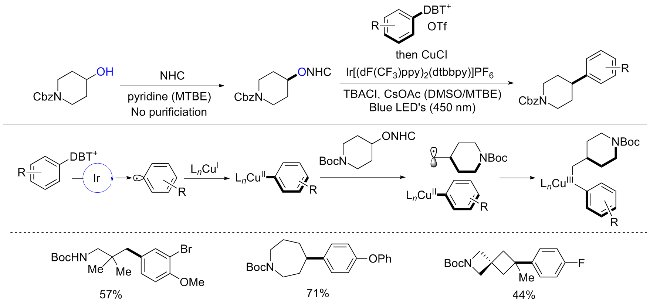
In 2025, MacMillanʼs group[29] have developed the direct alkylation of native arene C—H bonds using alcohols as the alkylating agents (Scheme 16). The benzoxazolium-based reagents were used as NHC reagents for the activation of alcohols and the release of alkyl radicals by means of photoredox chemistry. The arene was activated with dibenzothiophene oxide (DBTO) and triflic anhydride in a telescoped protocol without additional column purification. Only copper-based catalysts, particularly Cu(I)Cl, were capable to deliver the cross-coupled products. DBT-arene adduct led to the release of the aryl radical which can immediately be captured by Cu(I), forming a Cu(II)-aryl complex. The free alcohols are activated in situ by N-heterocyclic carbene salts which would result in the formation of alkyl radicals. Then, the copper-mediated radical coupling was achieved to deliver the coupling products.
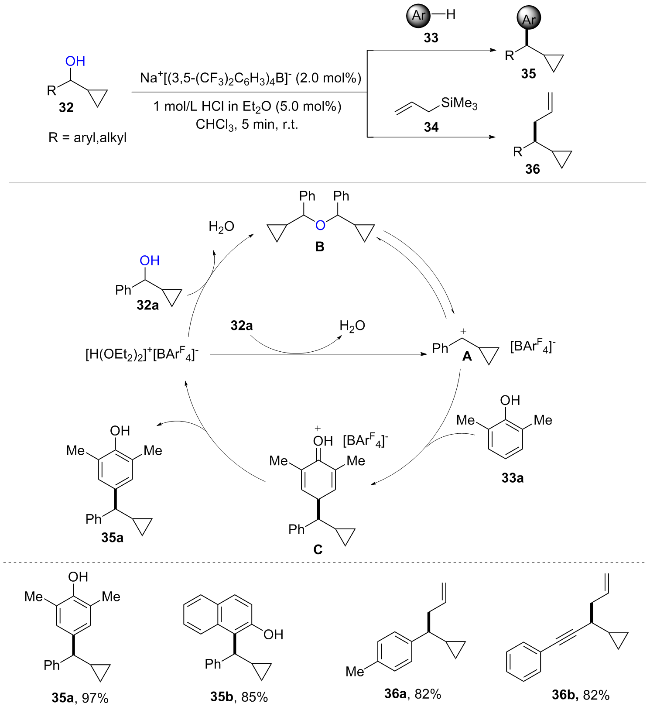
As the smallest three-membered carbocycle, cyclopropane and its derivatives are well-known building blocks involving ring-opening rearrangement.[30] In 2022, Hazra and co-workers[31] described a straightforward and metal-free dehydrative coupling method for the regioselective synthesis of cyclopropane derivatives without rearrangement (Scheme 17). Brookhart’s acid that was generated in situ from NaBArF4 and HCl was used as the catalyst. They proposed two plausible pathways to account for the deoxygenation. The alcohol in the presence of Brookhart’s acid could lead to carbocation A. Alternatively, reaction path is possible via the formation of ether B in the presence of catalyst. The ether was then transformed into carbocation A. This method is well tolerated with a vast range of cyclopropylcarbinols. Numerous carbon nucleophile such as phenol, naphthol, ailine derivatives, indole, pyrrole and allylsilanes were examined and proved to be the competent coupling partners.
4.3 Grignard reagent-participated coupling reactions
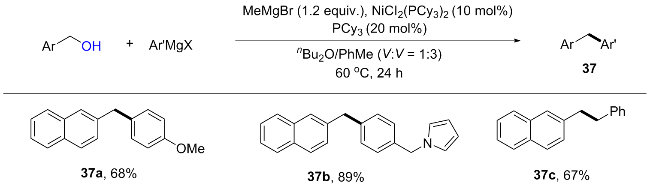
In 2012, Shiʼs group[32] have developed the first nickel- catalyzed cross coupling of benzylic alcohols in the presence of different Grignard reagents via sp3-C—O bond activation (Scheme 18). Various arylmagnesium bromides with electron-donating groups showed good reactivity. Heterocycles such as pyrrole (37b) can be tolerated in this dehydroxylative coupling. Besides, benzylmagnesiumchloride (37c) also gave a moderate yield of product. Moreover, benzyl alcohols with many functional groups such as amino group and sp2-C—OMe and C—F bonds, were well tolerated to give the desired products.
4.4 Aryl halide-participated coupling reactions
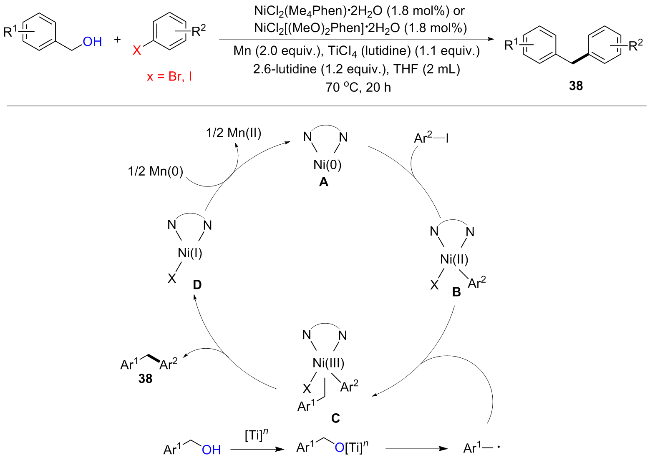
In 2018, a nickel-catalyzed cross-electrophile coupling reaction via homolytic C—O bond cleavage of benzyl alcohols with aryl halides has been developed by Ukaji and Suga (Scheme 19).[33] The treatment of benzyl alcohol with low-valent titanium reagent generated from TiCl4 afforded the benzyl radical. The aryl halide underwent oxidative addition with Ni(0) complex to form the Ni(II) species B. Subsequently, a one-electron oxidative addition of the benzyl radical toward B leaded to the formation of the Ni(III) species C, which would give the product 38 and the Ni(I) species D after the reductive elimination.
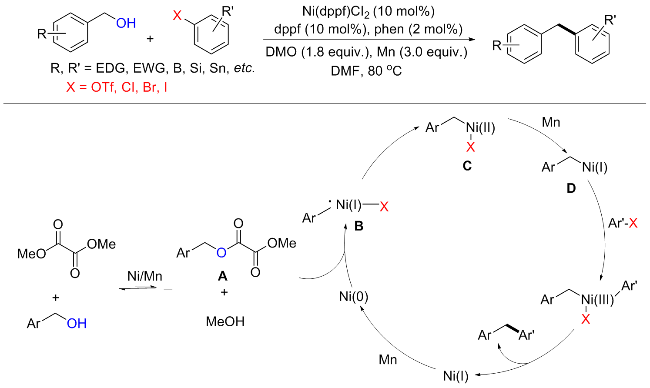
In 2021, Shu and co-workers[34] reported the first dynamic kinetic cross-electrophile reaction that enables the deoxyarylation of benzylalcohols with aryl halides (Scheme 20). The dynamic nature of this method enabled the direct arylation of benzylic alcohol in the presence of various nucleophilic groups, including nonactivated primary/secondary/tertiary alcohols, phenols, and free indoles. The success of this reaction hinged on the use of dimethyl oxalate (DMO) as an activator. This reagent undergoes equilibrium reaction with alcohols, and the formed alkyl oxalates A would participate in coupling reactions while generating. The reaction of oxalate with Ni(0) would afford benzyl-Ni(I) D after the reduction with Mn. The oxidative addition of benzyl-Ni(I) intermediate with aryl halides, followed by reductive elimination, would afford the desired product.
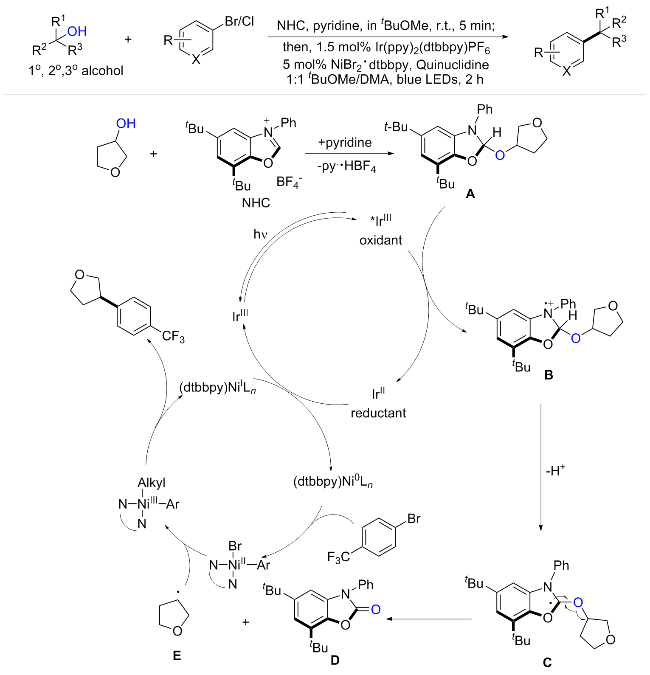
In the same year, MacMillan and Dong[35] have reported a metallaphotoredox-based cross-coupling method in which alcohols were activated in situ by N-heterocyclic carbene salts for carbon-carbon bond formation with aryl halide coupling partners (Scheme 21). The anilinic nitro gen atom NHC-alcohol adduct A would be oxidized by the excited photocatalyst via a single electron transfer to produce nitrogen radical cation B. After the deprotonation, the carbon-centred radical C, located adjacent to three heteroatoms, would undergo rapid β-scission to give carbamate D, and deoxygenated alkyl radical E. The subsequent nickel catalytic cycle would achieve the deoxygenative arylation with aryl halides.
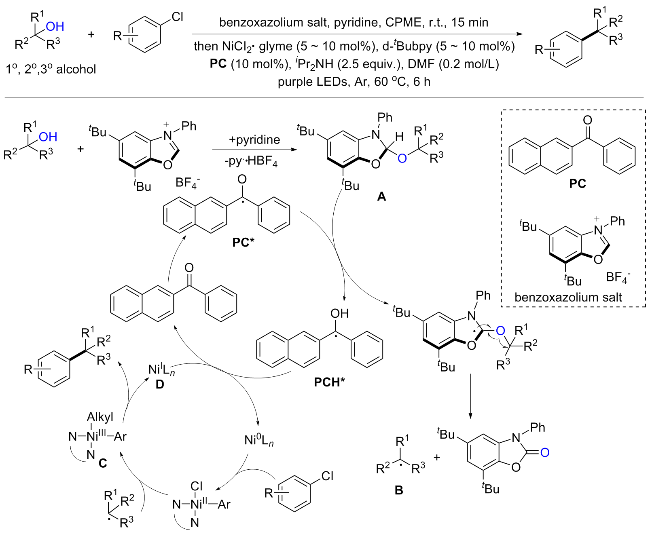
In 2024, Xue and co-workers have developed the similar deoxygenative cross-coupling reaction using alcohols and aryl chlorides as coupling partners by the merging of photoredox and nickel catalysis (Scheme 22).[36] The diaryl ketone was used as a photocatalyst to trigger the hydrogen atom transfer (HAT) process with amide acetal A, resulting in the formation of PCH* radical and carbon radical intermediate, which would undergo a rapid β-scission to furnish a deoxygenated alkyl radical B. The resultant alkyl radical would trap the oxidative addition-produced Ni(II) species to afford the key Ni(III) species C. Finally, reductive elimination leads to the deoxygenative arylation product and regeneration of Ni(I) intermediate.
4.5 Organoboron reagent-participated coupling reactions
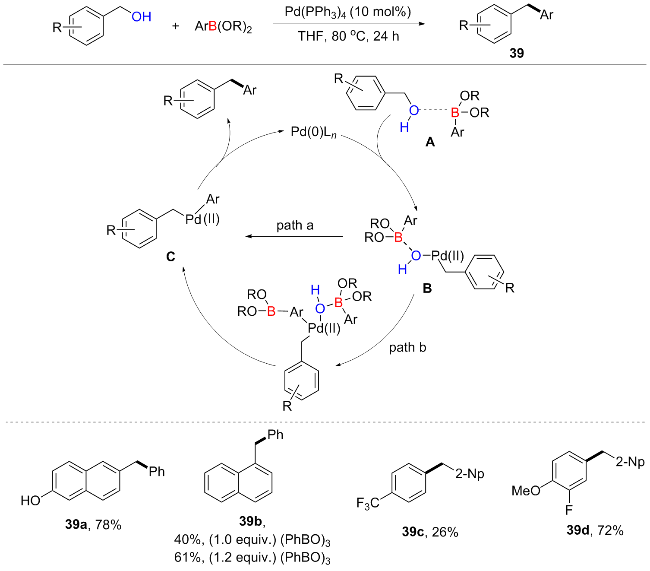
Apart from acting as coupling partner, the phenylboroxine has another important effect to weaken the benzylic C—O bond in the benzylic alcohols. Besides, the coordination of the boranes-alcohols could weaken the benzylic C—O bond and activate the C—B bond. The oxidative addition- resulted Pd(II) species proceeded intramolecular or intermolecular transmetallation to form the key intermediate C, which underwent the reductive elimination to get the desired product. The scope of benzylic alcohols was mainly focus on the naphthylmethanols. The method can survive a diverse array of functional groups efficiently.
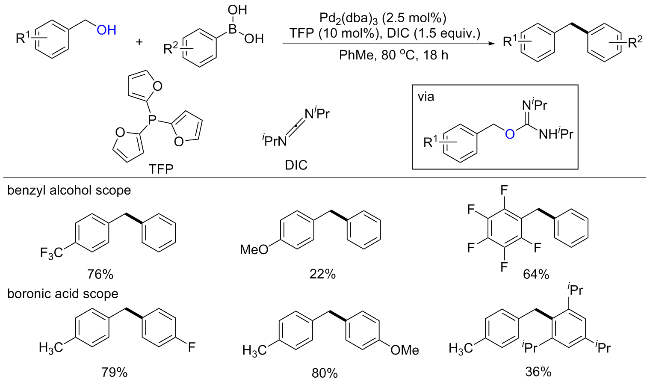
In 2022, Morandi and co-workers[38] have also developed a Pd(PPh3)4-catalyzed deoxygenative arylation of benzyl alcohols with boronic acids via transient formation of non-innocent isoureas (Scheme 24). The transient formation of non-innocent isoureas from the alcohols and DIC could not only activate the C—O bond by further pol- arizing, but also release isourea that contains a masked base to enable catalytic turnover under exogenous base- free conditions. This reaction successfully achieved the coupling of a range of differently substituted non-deriva- tized benzyl alcohols and boronic acids. Notably, the approach proved orthogonal to multiple canonical cross-coupling moieties on both coupling partners and allowed for the employment of highly base-sensitive boronic acids.
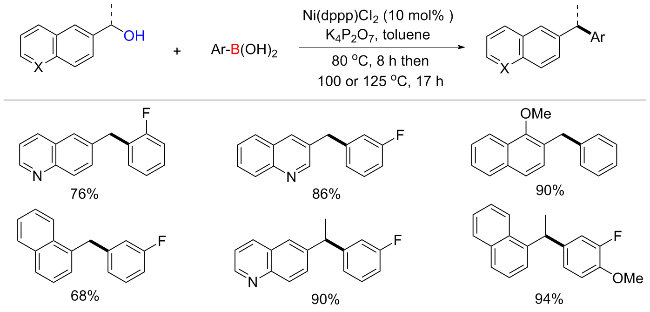
In 2019, Samec and co-workers[39] have also developed a Suzuki-Miyaura cross-coupling reaction of naphthyl and quinolyl alcohols with the boronic acids as reaction partners (Scheme 25). Mechanistic studies support that the C—O bond of the alcohol is activated via formation of arylboronate esters which is then cleaved via Ni(I) aryl species. Thus, the aryl boronic acid has several roles: it acts not only as both a coupling partner and an activating agent for the alcohols but also to initiate the catalyst. This Suzuki-Miyaura cross-coupling had a broad substrate scope in respect to naphthyl and quinolyl alcohols, and boronic acids.
5 Dehydroxylative functionalization for C(sp3)—C(sp3) bond forming
5.1 Dehydroxylative alkylation of alcohols with allylsilanes
For more challenging C(sp3)—C(sp3) bond-building, which is a long-standing and difficult synthetic problem, the alcohol-involved dehydroxylative coupling has proven to be a more ideal approach. In this context, a range of reactions that could construct C(sp3)—C(sp3) bonds from alcohols have been developed.
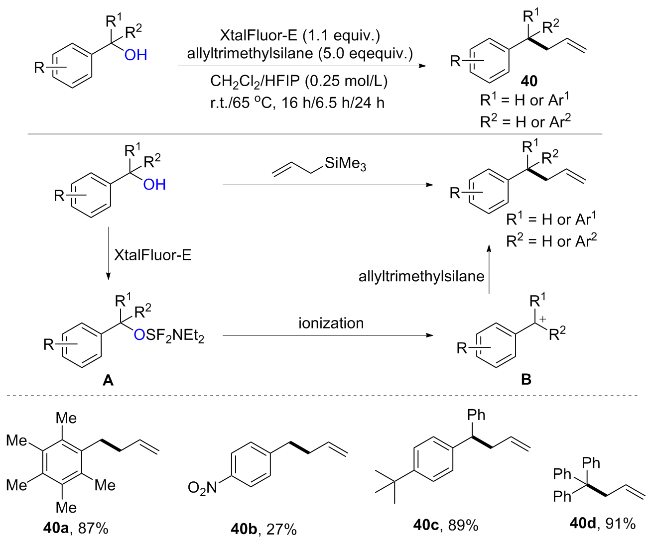
Among these works, the allylation reactions with the allyltrimethylsilane serving as coupling partner have demonstrated their good efficiency in the dehydroxylative C(sp3)—C(sp3) bond-forming of alcohols. In 2016, Paquin and co-workers[40] reported the direct allylation of benzyl alcohols, diarylmethanols and triarylmethanols mediated by XtalFluor-E in the presence of allytrimethysilane (Scheme 26). The alcohol reacted with XtalFluor-E to generate the intermediate complex A, which was ionized to generate the carbocation B that reacted with the allytrinethlsilane nucleophile to provide the product 40. The resulting allylated products were obtained in moderate to high yields. Electron-rich benzyl alcohol provided the desired product 40a in excellent yield (87%). In contrast, electron-poor benzyl alcohol delivered the product 40b in lower yield of 27%. The desired products (40c, 40d) using diarylmethanlos and triarylmethanols could be obtained in moderate to excellent yields.
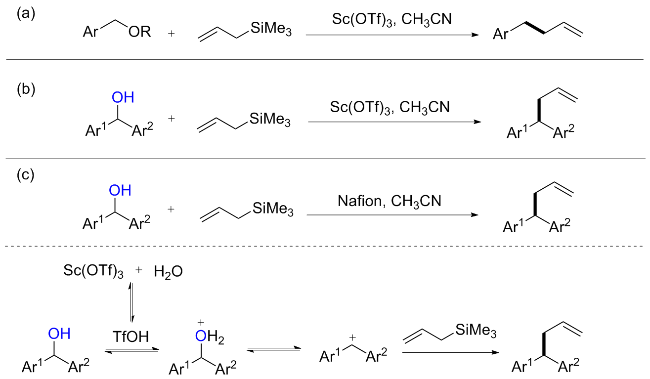
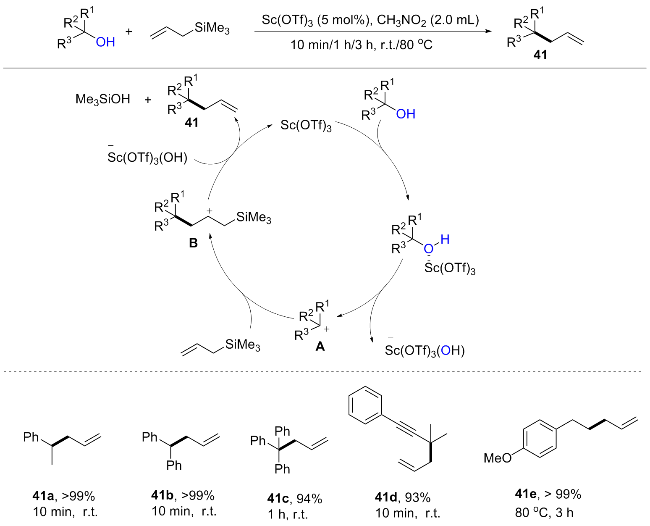
In 2018, Bates and co-workers[41] reported the deoxygenative allylation of benzylic alcohols proceed through a “hidden Brønsted acid” mechanism, in which scandium triflate was as a pre-catalyst (Scheme 27). The reaction was also applicable to the various benzhydryl alcohols. Additionally, Nafion, a perfluorinated sulfonic acid resin, can serve as a catalyst for this process. In this study, scandium triflate formed triflic acid after hydrolysis, which would react with benzyl alcohols to give carbocation. The carbocation was attacked by the allylsilane to afford the desired product. Meanwhile, Kondo et al.[42] also depicted the direct allylation reactions of general alcohols catalyzed by Sc(OTf)3 (Scheme 28). Various alcohol substrates can well apply to the present Sc(OTf)3-catalyzed direct allylation reaction with allyltrimethylsilane in CH3NO2. For example, the allylation of secondary benzylic alcohols can give the desired products 41a, 41b in high yields (>99%) without forming the byproduct. Additionally, tertiary benzylic alcohol, tertiary propargylic alcohol, and aliphatic alcohol catalyzed by Sc(OTf)3 afforded the products 41c~41e in good to high yields (93%~>99%).
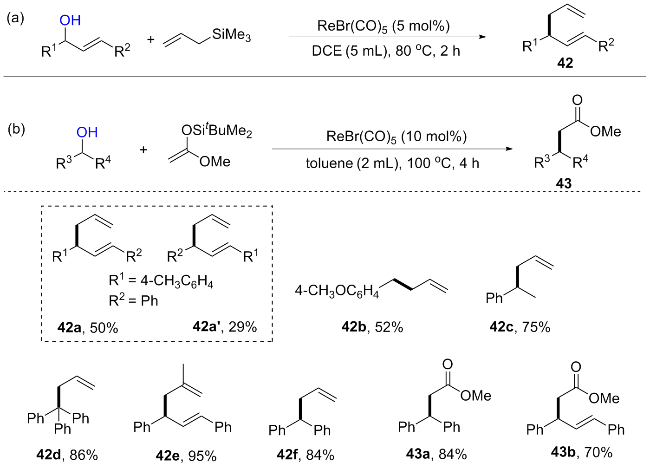
In the same year, Nishiyamaʼs group[43] documented the rhenium complex-promoted coupling reaction of alcohols with allyltrimethylsilane or ketene silyl acetals to give the corresponding alkenes or esters (Scheme 29). The alcohols such as primary, secondary, and tertiary benzylic alcohols have been applied to this method, leading to the corresponding products 42b, 42c, 42d in 52% to 86% yields. 2-Methyl-3-trimethylsilyl-1-propene furnished the corresponding product 42e in high yield of 95%. And both diphenylmethanol and 1,3-diphenylprop-2-en-1-ol could react with ketene silyl acetal to produce the corresponding esters 43a and 43b in modern to good yields of 84% and 70%.
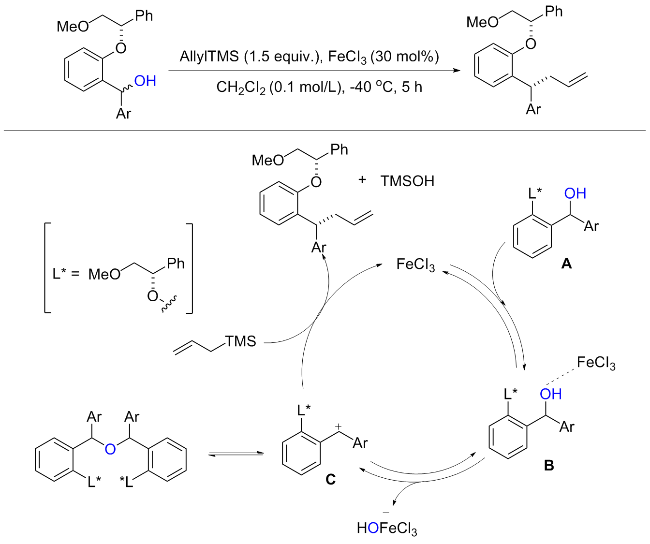
In 2018, Nakata et al.[44] reported the chiral-auxiliary- controlled diastereoconvergent allylation reactions of allyltrimethylsilane with diastereomeric mixtures of diarylmethanols in the presence of FeCl3 (Scheme 30). FeCl3 would coordinated to the hydroxyl oxygen of the diarylmethylsilane A to generate B, which eliminated ferric hydroxide anion to give the corresponding carbocation C. The carbocation is stabilized through cation chelation by the methoxy group on the chiral auxiliar.
5.2 Dehydroxylative alkylation of alcohols via C(sp3)—H activation
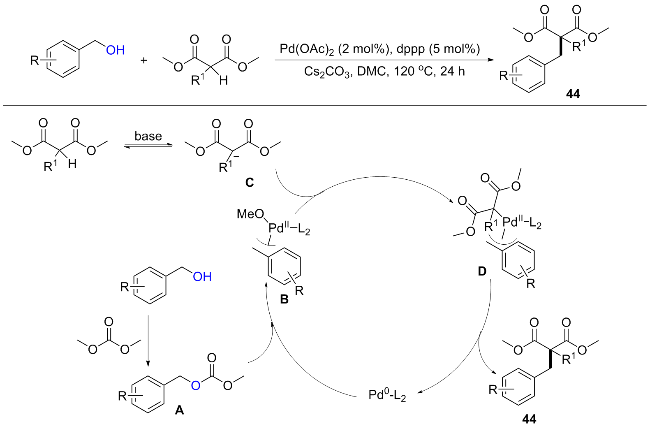
According to the above, the platform for the coupling of strong C(sp3)—H bonds with alcohols has seldom been realized on account of the relatively strong bond dissociation energy of the C—O bond (ca. 402 kJ/mol) and C(sp3)—H bond (ca. 418 kJ/mol).[4,45] Thus, the development of reactions to achieve the coupling of them is a field worthy of extensive study. In 2016, Zhang et al.[46] reported a method for directly coupling benzyl/allyl alcohols with malonates via a palladium catalyzed Tsuji-Trost type reaction (Scheme 31). The reaction was carried out in an organic carbonate solvent which would activate alcohols in situ, replacing the traditional pre-synthesized carbonates. The benzyl alcohols reacted with dimethyl carbonate under basic conditions to form an intermediate A, which interacted with Pd(0) to form intermediate B through the cleavage of C—O bond. Simultaneously, the malonate was activated through deprotonation, generating intermediate C, which underwent an ion-exchange with intermediate B to form D. Finally, the reductive elimination regenerated the palladium catalyst and afforded the desired product 44.
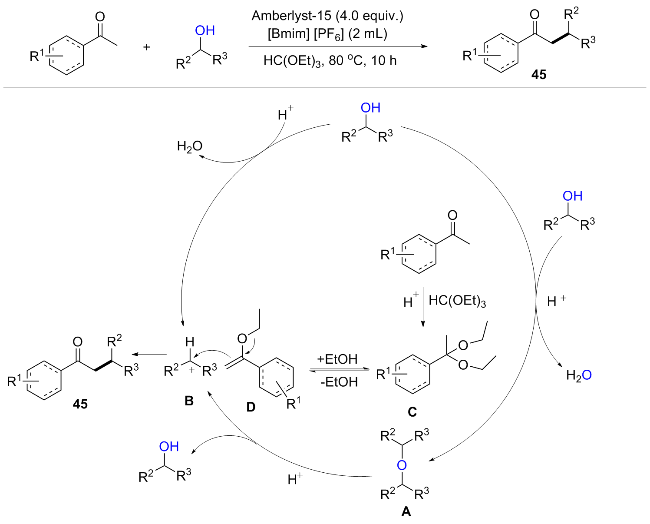
In 2016, the direct α-alkylation of acetophenones with benzhydrols and 1-phenylethanols has been developed by Bhanage et al., using Amberlyst-15/[Bmim][PF6] ionic liquid as an affordable catalytic system (Scheme 32).[47] This methodology is moisture-stable and operationally simple, and can be recycled up to four cycles without much significant loss in its catalytic activity. The acetophenones reacted with HC(OEt)3 to afford C in present of acid, which existed in equilibrium with ethyl vinyl ether D. Alkylation of ether D reacted with carbocation B to afford the product 45. Alternatively, the alcohols were converted into carbocations B through ethers A promoted by Amberlyst- 15/[Bmim][PF6]. Then, the interaction between ethers D and carbocations B afforded the desired product 45.
5.3 Dehydroxylative alkylation of alcohols with benzyltrifluoroborates
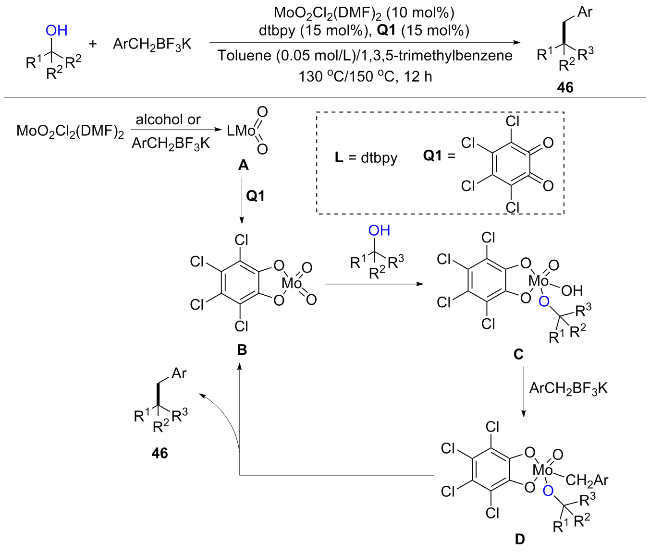
In 2022, Xuʼs group[48] described an intermolecular cross-coupling of benzylic alcohols with benzyltrifluoroborates catalyzed by a high-valent molybdenum-oxo complexes (Scheme 33). In this process, the Mo(IV) species A was formed from the MoO2Cl2(DMF)2 by reducing of alcohols or ArCH2BF3K. Then, A was oxidized with Q1 to obtain the real active catalyst B. Sequentially, B reacted with an alcohol via [2+2] type addition to deliver C. Then, C was attacked by ArCH2BF3K to give the Mo species D. Finally, the desired product 46 was formed via the reverse [2+2]-type elimination process.
5.4 Dehydroxylative alkylation of alcohols via C(sp3)—C(sp3) cleavage
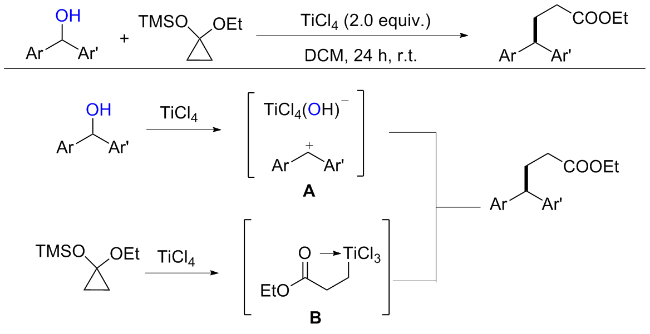
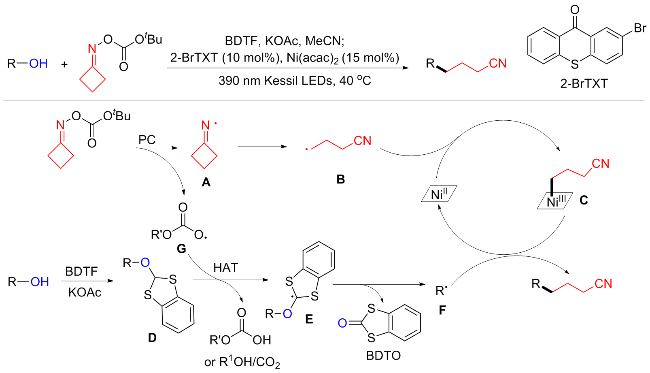
In 2021, Shen and co-workers[49] developed the titanium(IV)-catalyzed ring-opening and dehydroxylative cross- coupling reactions between diaryl methanols and cyclopropanol derivatives (Scheme 34). In this study, the interaction of the alcohol with TiCl4 formed the electrophilic diarylmethyl cation A. Simultaneously, the ring-opening of cyclopropanol derivative with TiCl4 gave the nucleophilic metallic homoenolate B. The reactions proceeded efficient- ly to provide synthetically useful γ,γ-diaryl esters in moderate to good yields Very recently, Wu and co-workers[50] developed the photocatalytic deoxygenative radical functionalization of alcohols with 1,3-benzodithiolylium cation acted as an efficient hydroxyl-activating reagent (Scheme 35). Under the irradiation of the photosensitizers, the N—O bond hemolysis delivered the ethyloxylcarbonyloxyl radical G and the iminyl radical A. The cyclic iminyl radical underwent β-scission to give the cyanoalkyl radical B. Site-elective HAT between the O-centered radical G and the alcohol-derived 2-alkoxy-1,3-benzodithiole D followed by β-scission, furnished a 1,3-benzodithiol-2-one (BDTO) and a alkyl radical F. The resulting cyanoalkyl radical B was then preferentially intercepted by Ni(II) complexes to form the corresponding alkyl Ni(III) complexes C, which would undergo SH2 homolytic substitution with the alkyl radicals F, yielding the desired nitriles.
5.5 Dehydroxylative alkylation of alcohols with olefin
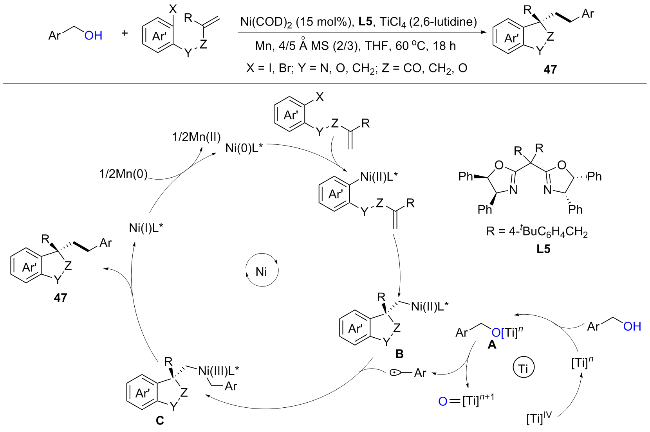
In 2023, Wang et al.[51] have developed the asymmetric reduction of tethered alkenes to construct the benzene- fused cyclic scaffolds with all-carbon quaternary centers via the nickel-titanium bimetallic system-mediated C(sp3)—O bond cleavage of benzyl alcohol (Scheme 36). The benzylic alcohol reacted with low valent titanium species to form A, which underwent thermal decomposition to produce the benzylic radical. The oxidative addition of aryl halides to the Ni(0) species gave the Ni(II) species, followed by a stereoselective intramolecular arylation process to produce the species B. Subsequently, the species C was afforded through the one-electron oxidative addition of radicals to B. After the reductive elimination, the desired product 47 was obtained. This transformation proceeds under mild reaction conditions with a broad substrate scope and high tolerance of functional groups, providing various chiral benzene-fused cyclic compounds including oxindoles, dihydrobenzofurans, tetralins, indane, and isochroman bearing an all-carbon quaternary center with excellent enantioselectivities.
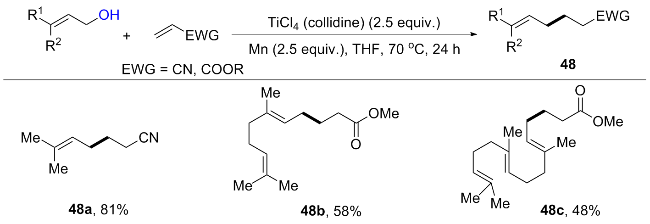
In 2024, Gui et al.[52] reported an efficient method for Ti(III)-mediated dehydroxylative cross-coupling reaction of allylic alcohols via the homolysis of allylic alcohols without preactivation (Scheme 37). The resulted radical was trapped by the electron-deficient olefins to achieve the dehydroxylative C—C bond formation. This reaction provided a general method for the direct three-carbon homologation of allylic alcohols to afford the desired olefinic esters and nitriles in synthetically useful yields. To demonstrate the synthetic utility, examples to simplify the preparation of useful synthetic building blocks were screened. The reductive coupling of allylic alcohols with acrylonitrile or methyl acrylate could readily access the corresponding nitrile (48a) or ester (48b, 48c), while the previous methods required several steps.
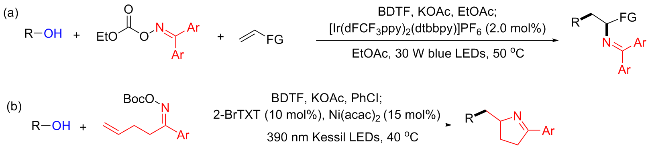
Besides, Wu’s[50] method using benzodithiolylium for deoxygenative alkylation mentioned above could also achieve dehydroxylative alkylation of alcohols with ethyl acrylate and γ,δ-unsaturated oximes (Scheme 38). A variety of cyclic and acyclic secondary alcohols were well tolerated in the reaction with oxime carbonate and ethyl acrylate, furnishing the desired α-amino acid derivatives in good yields. A variant of the established EnT/Ni dual catalytic conditions using PhCl as the solvent could realize the deoxygenation of alcohols and 5-exo-trig cyclization of iminyl radicals to construct C(sp3)—C(sp3) bonds. Alcohols bearing various functional groups readily underwent selective deoxygenative cross-coupling with O-Boc γ,δ-un- saturated oximes to produce the pyrrolines in good to excellent yields.
5.6 Dehydroxylative alkylation with alcohol as alkylation reagent
The use of two alcohol molecules, which can be the same or different to achieve C—C bond formation through dehydroxylative coupling for the conversion into long- chain alkanes is highly attractive. Over the past few decades, most studies on dehydroxylative coupling of alcohols focused on the cleavage of a single C—O bond in one alcohol molecule. However, the simultaneous cleavage of two C—O bonds (from two alcohol molecules) in one step is highly challenging.
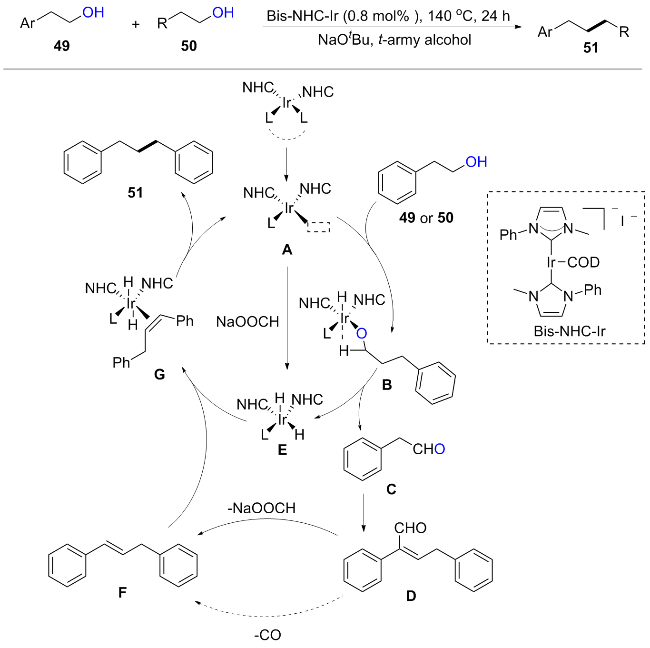
In 2021, the strategy of the deoxygenative coupling of aryl ethanols with primary alcohols catalyzed by bis-NHC- Ir and synergistic hydrogenation with sodium formate to obtain alkanes was explored by Tu and co-workers[53] (Scheme 39). The conversions of alcohols into long-chain alkanes were achieved utilizing a hydrogen-borrowing strategy. Furthermore, the direct coupling of two different alcohols was realized. A plausible reaction mechanism was proposed. Firstly, the bis-NHC-Ir complex A reacted with alcohols to provide B through addition reaction, which would undergo dehydrogenation to obtain the phenylacet- aldehyde C and bis-NHC-Ir-hydride species E. Then, the aldegyde C underwent an aldol condensation to give the α,β-unsaturated aldehyde D, which would engage in the decarboxylation to produce the alkene F and formate. The hydrogenation of the alkene F with bis-NHC-Ir-hydride species led to the formation of the desired product 51.
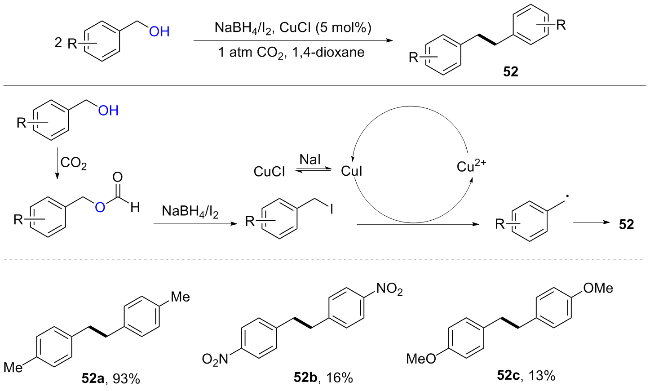
In 2024, Wei and co-workers[54] developed the dehydroxylative coupling of benzylic alcohols catalyzed by the ligand-free cuprous chloride in a mild NaBH4/I2 system (Scheme 40). In reaction, CO2 served a vital function in forming the benzyl formates, which would transform to benzyl iodide assisted by NaBH4/I2. Catalyzed by CuCl, the benzyl radical was formed. Then, the coupling reaction of benzyl radicals provided the desired product 52. Various functional groups on phenyl moiety with different electronic and steric effects were well-tolerated. Substrates with electron-donating substituents performed well, while the para-substituted benzyl alcohols with electron-withdrawing groups are relatively inert due to their weak nucleophilicity. The substrates bearing a strong electron-withdrawing group (NO2, 52b) or a strong electron-donating group (OMe, 52c) afford the corresponding products in low yields.
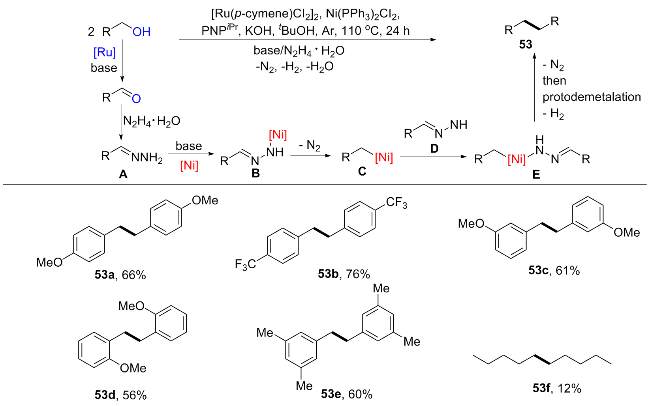
In the same year, Liʼs group[55] reported a direct deoxygenative homocoupling of alcohols to access C(sp3)— C(sp3) bonds via catalysis of nickel and ruthenium, using hydrazine as a mediator (Scheme 41). The interaction of the ruthenium catalyst with alcohol leads to the formation aldehyde, which would react with hydrazine to form a hydrazone anion through a hydrazone intermediate assisted by a base. The coordination of nickel catalyst with the hydrazone anion furnished complex B, which further underwent rapid Wolff-Kishner reductive denitrogenation and an intramolecular benzyl migration to afford intermediate C. Then, the combination of intermediate C with another hydrazone anion produced complex E. After the N2 extrusion of complex E, the protodemetalation and hydrogen release would happen to give the product 53. A series of benzyl alcohols bearing a strong electron-withdrawing group or a strong electron-donating group at the para- or meta-posi- tion were all well-tolerated to afford the corresponding products (53a~53e, 56%~76% yields). Alkyl alcohol and secondary alcohol showed poor reactivity, affording the desired compounds in low yields.


6 Conclusions
In this review, we have summarized the recent ten-years progresses in dehydroxylative functionalization reactions. The dehydroxylative functionalization reactions have been well categorized according to the chemical bond types. Four types of deoxygenation have been discussed: (1) C—hetero bond forming, (2) C(sp3)—C(sp) bond forming, (3) C(sp3)—C(sp2) bond forming, (4) C(sp3)—C(sp3) bond forming. The established examples presented in this review convincingly document the high application potential of the dehydroxylative functionalization strategy in C(sp3)— OH activation. Most of these reactions have mild reaction conditions and construct a variety of chemical bonds, such as C—B, C—N, C—Si, C—Sn, C—P, C—S, and C—C. There is no doubt that future improvements of taking full advantages of the emerging dehydroxylative functionalization strategy will attract much more attentions.
Despite significant progresses that have been made in this field, many ongoing challenges still exist. (1) The application of dehydroxylative functionalization in the stereoselective chemistry was still challenging. More attention should be devoted to the asymmetric functionalization. (2) The reactions were mainly promoted by metal-catalyst. The developed of more challenged metal-free version is still inaccessible. (3) Few examples have used alcohol as starting materials in total synthesis of natural products and pharmaceutical molecule. We hope that this brief review will inspire further studies on dehydroxylative functionalization reactions.
(Lu, Y.)