研究论文

基于两面针碱骨架的新型含氮杂环化合物设计、合成及抗肿瘤活性评价

  • 粟晓微 ,
  • 徐浩 ,
  • 周华锋 ,
  • 王夏洁 ,
  • 李培源 ,
  • 夏星 ,
  • 陈文雅 , * ,
  • 霍丽妮 , *
展开
  • 广西中医药大学药学院 南宁 530222

共同第一作者

收稿日期: 2025-04-28

  修回日期: 2025-07-01

  网络出版日期: 2025-08-27

基金资助

国家自然科学基金(22567007)

国家自然科学基金(22067001)

广西自然科学基金(2023GXNSFAA026476)

广西药物发现与优化重点实验室(GKLPM-DDO2022B02)

广西中医药大学研究生教育创新计划(YCSW2024425)

广西中医药大学“岐黄工程”高层次人才团队培育项目(202405)

桂派中医药传承创新团队(2022B005)

广西中医药大学“桂派中医药传承创新团队”项目及广西壮瑶药物实验室2023重点实验室(壮瑶药物实验室协同创新中心)自主研究(GXZYYZZ2023-08)

Design, Synthesis and Anticancer Activity Evaluation of Novel Nitrogen-Containing Heterocyclic Compounds Based on Nitidine Skeleton

  • Xiaowei Su ,
  • Hao Xu ,
  • Huafeng Zhou ,
  • Xiajie Wang ,
  • Peiyuan Li ,
  • Xing Xia ,
  • Wenya Chen , * ,
  • Lini Huo , *
Expand
  • Institute of Pharmacy, Guangxi University of Chinese Medicine, Nanning 530222
* E-mail: ;

The authors contributed equally to this work

Received date: 2025-04-28

  Revised date: 2025-07-01

  Online published: 2025-08-27

Supported by

National Natural Science Foundation of China(22567007)

National Natural Science Foundation of China(22067001)

Natural Science Foundation of Guangxi Province(2023GXNSFAA026476)

Project Program of Guangxi Key Laboratory of Drug Discovery and Optimization(GKLPM-DDO2022B02)

Innovation Project of Guangxi Graduate Education of Guangxi University of Chinese Medicine(YCSW2024425)

Qihuang High-Level Talent Team Cultivation Project of Guangxi University of Chinese Medicine(202405)

Inheritance and Innovation Team of Guangxi Traditional Chinese Medicine(2022B005)

2023 Key Laboratory of Guangxi Zhuang and Yao Medicinal Laboratory (Collaborative Innovation Center for Zhuang and Yao Medicinal Laboratory) Independent Research Project(GXZYYZZ2023-08)

摘要

利用Heck反应设计合成了一系列基于氯化两面针碱(NC)母核的新型含氮杂环化合物, 包括磺酰胺类衍生物、哌嗪类衍生物及噻唑类衍生物. 通过体外细胞毒性实验, 评估了目标化合物对四种肿瘤细胞株(HL-60、HeLa、HepG2、H460)及正常肝细胞(LO2)增殖的抑制活性. 结果显示, 磺酰胺类衍生物对HeLa细胞表现出选择性抑制作用. 其中, 2,4,6-三甲基-N-[6-(6-氧代苯并[c]菲啶-5(6H)-基)己基]苯磺酰胺(14c)活性最强[IC50=(1.83±0.24) μmol/L], 其活性与氯化两面针碱及顺铂相当, 且对正常LO2细胞无明显毒性. 哌嗪类衍生物对多数测试肿瘤细胞具有抑制作用, 但同时也具有一定的细胞毒性, 噻唑类衍生物则基本无活性. 作用机制研究表明, 代表性化合物14c通过诱导HeLa细胞凋亡及周期阻滞发挥抗肿瘤作用, 其特征为G0/G1期细胞比例显著降低(69.90%±5.80%)并促进S/G2/M期进程. 拓扑异构酶I (Topo I)抑制实验表明, 哌嗪衍生物能够有效抑制Topo I的活性. 综上, 化合物14c可作为高效低毒的抗肿瘤候选化合物, 表明两面针碱的含氮杂化修饰是研究开发新型Topo I抑制剂潜在的有效途径.

本文引用格式

粟晓微 , 徐浩 , 周华锋 , 王夏洁 , 李培源 , 夏星 , 陈文雅 , 霍丽妮 . 基于两面针碱骨架的新型含氮杂环化合物设计、合成及抗肿瘤活性评价[J]. 有机化学, 2026 , 46(1) : 250 -265 . DOI: 10.6023/cjoc202504032

Abstract

A series of novel nitrogen-containing heterocyclic compounds based on the nitidine chloride (NC) core were designed and synthesized through the Heck reaction. The derivatives included sulfonamide analogs, piperazine analogs, and thiazole analogs. Their antiproliferative activities were evaluated against four tumor cell lines (HL-60, HeLa, HepG2, H460) and normal liver cells (LO2) via in vitro cytotoxicity assays. The results showed that sulfonamide derivatives selectively inhibited HeLa cells. Among them, 2,4,6-trimethyl-N-(6-(6-oxobenzo[c]phenanthridin-5(6H)-yl)hexyl)benzenesulfonamide (14c) exhibited the most potent activity [IC50=(1.83±0.24) μmol/L], comparable to nitidine chloride and cisplatin, while showing no significant toxicity toward LO2 cells. Piperazine analogs displayed broad inhibitory effects against tumor cells but accompanied by cytotoxicity, whereas thiazole analogs were largely inactive. Mechanistic studies revealed that the representative compound 14c exerted antitumor effects by inducing apoptosis and cell cycle arrest in HeLa cells, manifested by a significant reduction in the proportion of G0/G1 phase cells (69.90%±5.80%) and promotion of S/G2/M phase progression. The topoiso-merase I (Topo I) inhibition assay demonstrated that the piperazine derivative effectively inhibits Topo I activity. Overall, compound 14c emerges as a promising antitumor candidate with high efficacy and low toxicity, demonstrating that nitrogen-containing hybridization of nitidine chloride provides a potential strategy for developing novel Topo I inhibitors.

1 Introduction

Cancer is one of the leading causes of morbidity and mortality globally. Recent epidemiological data indicate that approximately 20 million new cancer cases occurred globally in 2022, with projections suggesting this number will rise to around 35 million by 2050.[1] Topoisomerase I (Topo I) represents a critical nucleic acid enzyme that maintains DNA topological integrity during essential cellular processes including replication, transcription, and repair.[2] Given that DNA damage constitutes a hallmark of diverse malignancies, inhibiting Topo I catalytic activity or inducing the DNA damage mediated by it has been widely regarded as a crucial anti-tumor treatment strategy. Among the topoisomerase I inhibitors currently used in clinical practice, camptothecin derivatives such as irinotecan and topotecan remain the most widely utilized. However, these agents face significant limitations including poor aqueous solubility, inadequate target specificity, limited chemical stability, and substantial toxicity.[3] Consequently, developing novel Topo I inhibitor-based anticancer therapeutics exhibiting enhanced efficacy and reduced toxicity constitutes a critical research imperative.
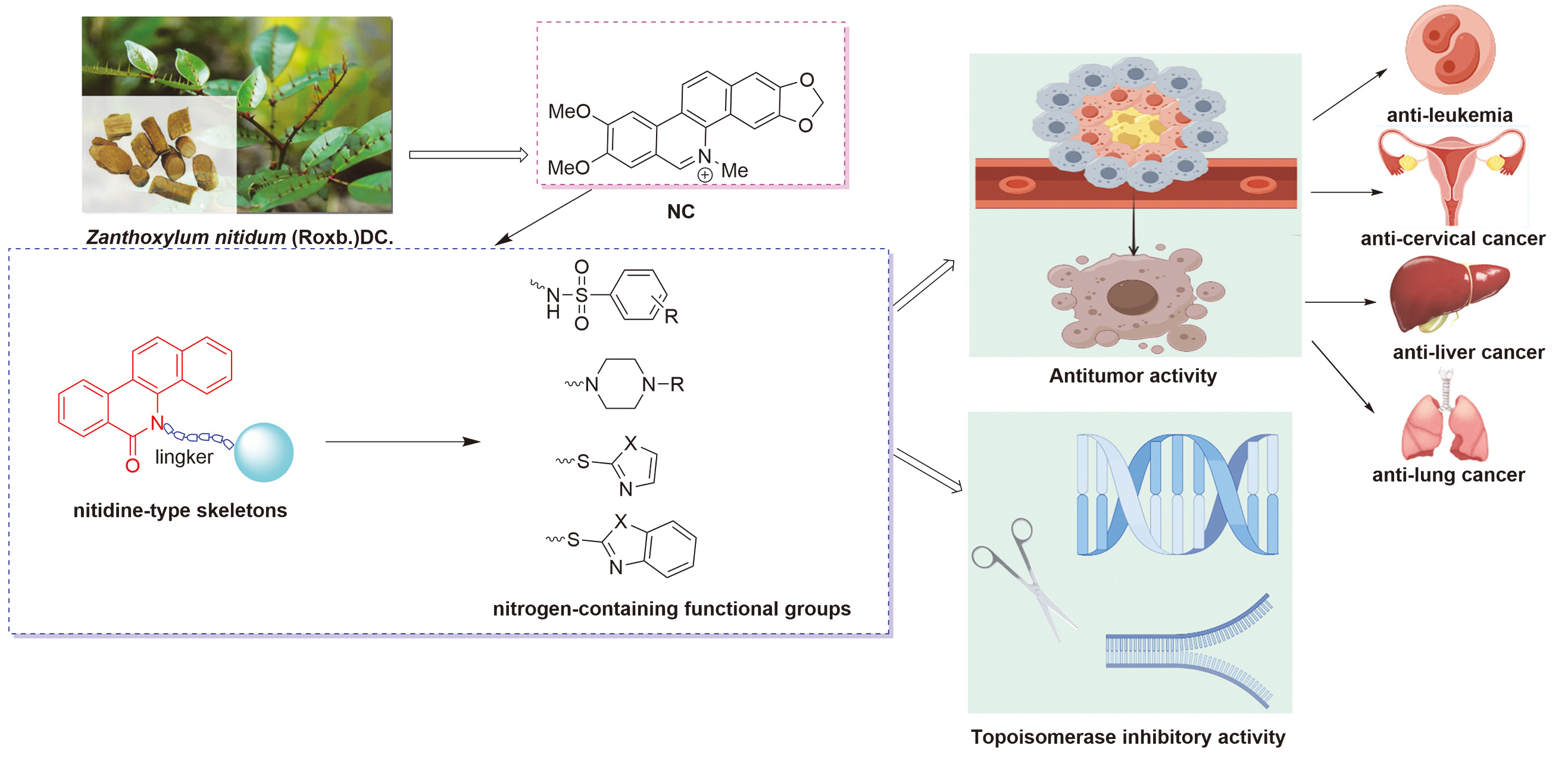
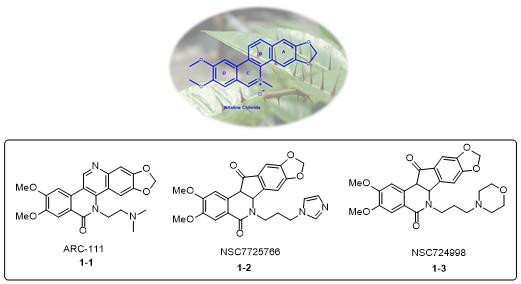
Nitidine chloride (NC, Figure 1), a type of benzo[c]- phenanthridine alkaloids that has been extensively studied, is mainly derived from the root of the traditional Chinese medicine Zanthoxylum nitidum (Roxb.) DC. Studies have demonstrated that NC exhibits significant inhibitory effects on the proliferation of various tumor cells,[4] and its mechanism of action may be closely related to its inhibitory activity on Topo I. According to literature,[5] NC has a stable four-ring conjugated planar structure and can bind to the DNA-topoisomerase I complex through non-covalent bonding insertion, thereby interfering with the single-strand DNA break repair process mediated by topoisomerase I and causing irreversible DNA damage, resulting in apoptosis or programmed necrosis. Statistical evidence indicates that nitrogen-containing heterocycles play a crucial role in enhancing the efficacy of drugs. Among the 321 novel small molecule drugs approved between 2013 and 2023, 82% incorporate these structures.[6] Therefore, a series of nitrogen-containing derivatives based on NC and its analogues have been synthesized and identified (Figure 1).[7] Notably, Topovale (ARC 111, 1-1) potently inhibits Topo I by inducing reversible Topo I-DNA cleavage complexes, exhibiting antitumor activity several tens of times greater than camptothecin. Concurrently, indeno[2-b]isoquinolinones, as one of the most notable structural analogues of NC, exhibit comparable anti-tumor activity to that of camptothecin derivatives. Representative compounds 1-2 and 1-3 have shown nanomolar-level IC₅₀ values in various tumor cell lines. [8] These compounds maintain good anti-tumor activity while demonstrating significantly improved safety, with their myelosuppressive toxicity being significantly lower than that of traditional camptothecin.[9] Among them, compounds 1-2 and 1-3 have successfully completed preclinical studies and entered the Phase I clinical trial stage.[10] At present, the total synthesis of NC and its analogues still faces technical challenges such as complicated steps, low yield and difficult availability of raw materials. These challenges have largely impeded the systematic development of its derivatives and the advancement of subsequent drug research and development.[11]
Figure 1 Structures of nitidine chloride and its analogues
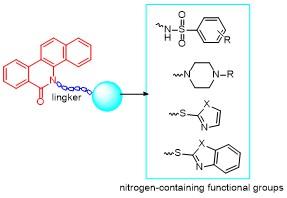
To simplify the skeleton construction method and expand the diversity of derivatives, novel NC derivatives were designed by introducing nitrogen-containing heterocycles with enhanced anti-tumor activity effects, such as sulfonamide, piperazine and thiazole, into the nitrogen atom of the B ring of the NC skeleton analogues through variable-length connecting chains (Figure 2). This design preserves the tetracyclic planar structure essential for Topo I binding, capitalizing on the hydrogen-bonding capacity of nitrogenous compounds to target biological sites including nuclear receptors and enzymes.[12] Antitumor activity and mechanisms of action were subsequently assessed using in vitro systems.
Figure 2 Design of hybrids tetracyclic skeleton of nitidine and nitrogen-containing functional groups

2 Results and discussion

2.1 Chemistry

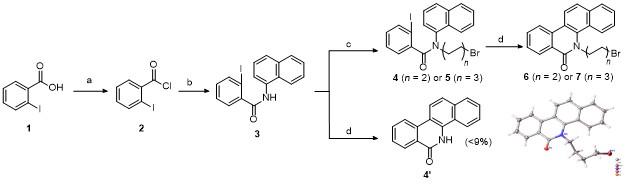
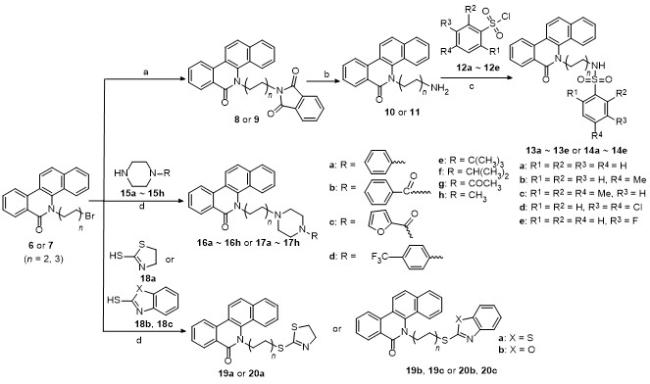
The key intermediate N-bromoalkyl tetracyclic skeletonof nitidine (6 or 7) was synthesized as illustrated in Scheme 1. Additionally, a series of novel nitrogen-contain- ing derivatives based on nitidine skeleton were developed, including hybrids of nitidin-sulfonamide (13a~13e, 14a~14e), hybrids of nitidine-piperazine (16a~16e, 17a~17e) and hybrids of nitidin-mercaptothiazole (19a~19c, 20a~20c), as shown in Scheme 2.
Scheme 1 Synthetic routes of tetracyclic analogue skeletons of nitidine (6 and 7)

Reagents and conditions: (a) N2, oxalyl chloride, DCM, r.t.; (b) 1-naphthylamine, dichloromethane (DCM), triethylamine (TEA), r.t.; (c) 1,4- dibromobutane or 1,6-dibromohexane, NaH, DMF, r.t.; (d) N2, Pd(OCOCH3)2, tri(o-tolyl)phosphine, Ag2O, EtOAc, reflux.

Scheme 2 Synthetic routes of nitrogen-containing derivatives based on nitidine skeletons

Reagents and conditions: (a) phthalimide, KI, K2CO3, CH3CN, reflux; (b) 40% methylamine, r.t.; (c) TEA, DCM, r.t.; (d) KI, K2CO3, CH3CN, 60 ℃, reflux.

As illustrated in Scheme 1, the synthesis starts with o-iodobenzoic acid (1) as the initial material, and through acyl chlorination and nucleophilic substitution reactions, the amide intermediate 3 is obtained. Subsequently, a palladium-catalyzed cross-coupling reaction [Pd(OAc)₂/P(o- tol)3/Ag₂CO3] is employed to construct the B ring of the tetracyclic skeleton of nitidine, yielding the core skeleton of 4'. However, this step proceeded in low yield (<9%) and generated significant byproducts, complicating the purification process. Despite attempts to optimize the yield by increasing the catalyst loading and reaction temperature, the expected results were not achieved. However, this step proceeded in low yield (<9%) and generated significant byproducts, complicating the purification process. Therefore, the synthetic strategy requires further optimization.
To address the issue that the free NH group on the amide nitrogen of intermediate 3 could potentially lead to reduced yield in the Heck cyclization, literature precedent indicates that introducing a substituent onto the amide nitrogen prior to cyclization significantly improves reaction efficiency.[13] Adopting this strategy, the amide nitrogen of intermediate 3 was first functionalized via nucleophilic substitution using dihaloalkanes of varying chain lengths. Subsequent Heck cyclization successfully afforded the key cyclized intermediates 6 and 7. These products were readily isolated and purified with yields exceeding 75%. Furthermore, the structure of the cyclized product was unambiguously confirmed by single-crystal X-ray diffraction analysis of intermediate 6 (CCDC 2440612). To optimize the synthesis of core skeleton of nitidine, the effects of reaction temperature, time, solvent type, and catalyst loading on the yield of cyclization product 6 were systematically investigated (Table 1). The results indicated that under conditions of 24 h reaction time, 0.2 mmol of Pd(OAc)₂, and N,N-dimethyl- formamide (DMF) as solvent, the yield of intermediate 6 showed no significant variation when the temperature was varied between 60~120 ℃. However, when the temperature was reduced to 40 ℃, the yield significantly decreased from 67.6% to 45.9%. Under fixed conditions [DMF as solvent], extending the reaction time from 3 h to 24 h had minimal impact on the yield. Conversely, shortening the time to 1.5 h resulted in a decrease in yield from 67.1% to 55.2%. Furthermore, at 60 ℃, 3 h reaction time, and in DMF solvent, reducing the catalyst loading to 0.1 mmol still afforded a yield of 65.3%. However, a further reduction to 0.05 mmol led to a significant decrease in yield, dropping to 35.3%. Therefore, the optimal conditions for this cyclization reaction were determined as 60 ℃, 0.1 mmol of Pd(OAc)₂, and 3 h reaction time. Under these optimized conditions, replacing DMF with ethyl acetate increased the yield to 71.3%. This improvement is likely attributable to the lower boiling point of ethyl acetate as well as simplified workup procedures.
Table 1 Effect of various influencing factors on yield of cyclization product 6
Entry Temp./℃ Time/h Catalyst/mmol Solvent Yield/%
1 120 24 0.2 DMF 67.6
2 100 24 0.2 DMF 66.3
3 80 24 0.2 DMF 66.4
4 60 24 0.2 DMF 67.1
5 40 24 0.2 DMF 45.9
6 60 12 0.2 DMF 65.9
7 60 6 0.2 DMF 65.7
8 60 3 0.2 DMF 65.4
9 60 1.5 0.2 DMF 55.2
10 60 3 0.1 DMF 65.3
11 60 3 0.05 DMF 35.3
12 60 3 0.1 EtOAc 71.3
In the process of synthesizing primary amine inter- mediates 8 and 9 by referring to literature,[14] the reaction solvent was replaced from DMF to acetonitrile and reflux conditions were adopted, which significantly increased the reaction yield to 69%~75%. Subsequent nucleophilic substitution with benzenesulfonyl chloride derivatives successfully afforded sulfonamide derivatives 13a~13e and 14a~14e. Investigation revealed that the bridging chain length (n) profoundly influenced the physical state of products: compounds with a four-carbon chain (n=2) existed as solids, whereas extending to a six-carbon chain (n=3) yielded yellow oils. However, chain length exhibited minimal impact on yields (n=2: 60%~85%, n=3: 69%~80%). This trend persisted in synthesizing piperazine derivatives (16a~16h, 17a~17h) and mercaptothiazole compounds (19a~19c, 20a~20c), where chain length similarly showed negligible influence on yields. Notably, mercaptothiazole derivatives consistently demonstrated higher yields (>75%) than piperazine analogs, with reaction times of approximately 3 h. This enhanced efficiency can be ascribed to the superior nucleophilicity of sulfur atoms, facilitating nucleophilic substitution with brominated compounds and thereby improving overall reaction yields.

2.2 Biological study

2.2.1 Anti-proliferative activity screening

The cytotoxic effects of all synthesized compounds were evaluated across four human cancer cell lines and one human normal cell line. The cell lines included leukemia cells (HL-60), cervical cancer cells (HeLa), human hepatocellular carcinoma cells (HepG 2), human lung cancer cells (H460) and normal human hepatocytes (LO2). The IC50 values obtained for the synthesized compounds were compared to the positive control nitidine chloride (NC) and cisplatin, as presented in Table 2.
Table 2 IC50 values (μmol/L) of the synthesized compounds obtained for anti-proliferative activity on different tumor cell lines
Compd. HL-60 HeLa HepG2 H460 LO2
13a >40 19.47±0.19 >40 >40 >40
13b >40 >40 >40 >40 >40
13c >40 >40 >40 >40 >40
13d >40 >40 >40 >40 >40
13e >40 11.75±1.16 >40 >40 >40
14a >40 9.27±1.45 >40 >40 >40
14b >40 7.39±0.24 >40 >40 >40
14c >40 1.83±0.24 >40 >40 >40
14d 0.96±0.01 17.48±2.80 >40 >40 1.07±0.10
14e >40 4.20±0.12 >40 >40 >40
16a >40 4.89±0.42 >40 >40 >40
16b >40 19.35±0.48 >40 >40 >40
16c >40 >40 >40 >40 >40
16d >40 >40 >40 >40 >40
16e 16.47±0.48 14.69±0.49 19.97±0.12 19.82±0.52 27.15±1.13
16f 13.78±0.09 9.62±0.51 14.54±0.15 >40 16.23±0.19
16g >40 >40 >40 >40 >40
16h 13.29±0.11 10.35±0.67 14.24±0.53 17.61±0.12 15.69±0.02
17a >40 >40 >40 >40 >40
17b 7.38±0.33 5.03±0.38 16.76±0.16 16.66±0.25 16.63±0.12
17c >40 >40 >40 >40 >40
17d 9.68±0.46 >40 >40 >40 >40
17e >40 14.48±0.11 16.04±0.24 16.88±0.41 15.90±0.23
17f 16.70±0.92 3.47±0.10 10.52±0.28 4.657±0.07 11.13±0.06
17g 10.22±0.51 18.55±0.50 >40 >40 25.17±0.31
17h 12.92±0.65 7.59±0.84 17.09±0.13 17.25±0.29 16.10±0.17
19a >40 >40 >40 >40 >40
19b >40 >40 >40 >40 >40
19c >40 >40 >40 >40 >40
20a >40 >40 >40 >40 >40
20b >40 >40 >40 >40 >40
20c >40 >40 >40 >40 >40
NC 13.47±0.38 1.48±0.11 3.41±0.09 3.37±0.22 4.10±0.11
cisplatin 2.44±0.08 2.01±0.14 3.86±0.15 15.08±0.39 8.65±0.10
It was observed that most of the nitidine-sulfonamide hybrids (13a~13e, 14a~14e) exhibited selective cyto- toxicity toward HeLa cells, while demonstrating minimal inhibitory effects against the other three cancer cell types. Among these compounds, compound 14c demonstrated the highest potency in this series [IC50=(1.83±0.24) μmol/L against HeLa], comparable to positive controls NC [(1.483±0.106) μmol/L] and cisplatin [(2.01±0.14) μmol/ L]. Notably, compound 14c showed significantly reduced cytotoxicity toward normal LO2 hepatocytes relative to both controls. A notable exception in this series was compound 14d, which exhibited remarkable anti-leukemic activity against HL-60 cells [IC50=(0.96± 0.01) μmol/L], demonstrating a 14-fold greater potency than NC [(13.47± 0.38) μmol/L] and 2.5-fold enhancement over cisplatin [(2.44±0.08) μmol/L]. However, 14d demonstrated substantial toxicity exceeding both controls.
Among the nitidine-piperazine hybrid series, compounds 16a [IC50=(4.89±0.42) μmol/L] and 16b [IC50=(19.35± 0.48) μmol/L] exhibited selective inhibitory activity against HeLa cells, with weaker effects on other cancer cell lines and relatively low cytotoxicity. Under the tested conditions, no detectable biological activity was observed for compounds 16c, 16d, 16g, 17a and 17c. In contrast, compounds 16e, 16f, 16h, 17e, 17f, 17g and 17h demonstrated broad-spectrum antitumor activity, showing varying degrees of inhibition against all four cancer cell lines. However, their inhibitory potency remained lower than that of positive control drugs (NC and cisplatin), while exhibiting relatively reduced cytotoxicity.

2.2.2 Topo I inhibitory activity of all compounds

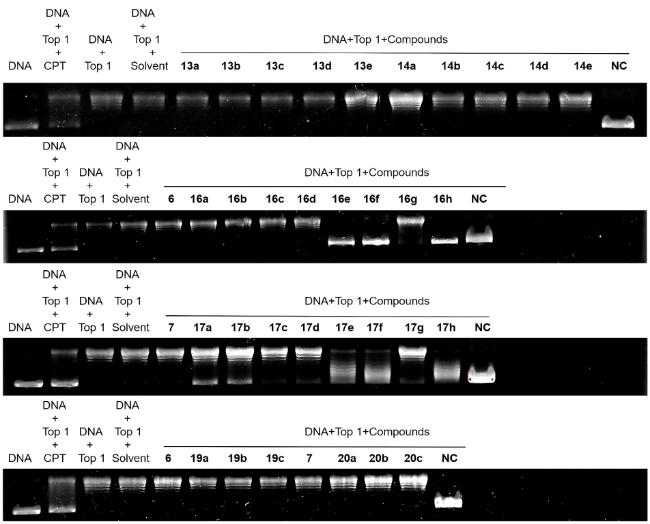
To further verify the results from molecular docking and explore new Topo I inhibitors, all synthetic compounds were evaluated for their Topo I inhibitory activity using a Topo I-mediated DNA cleavage assay. Camptothecin (CPT) and NC served as positive controls for this evaluation. The inhibitory activity of the target compounds on topoisomerase I was assessed through a DNA loosening experiment mediated by Topo I. As illustrated in Figure 3, the nitidine-sulfonamide heterocyclic compounds as well as the nitidine-thiazole and nitidine-oxazole hybrids did not demonstrate significant inhibitory effects on Topo I. In contrast, several nitidine-piperazine hybrids exhibited strong inhibitory activity against Topo I, including compounds 16e, 16f, 16h, 17e, 17f and 17h at 1 mmol//L concentrations. This finding is not entirely consistent with the observed anti-tumor activity. For instance, the introduction of the sulfonamide group did not enhance the inhibitory activity of the parent nucleus (NC) on Topo I, suggesting that its significant anti-tumor effect may involve other potential pharmacological mechanisms. This study reveals a significant correlation between the volume of the compounds and their Topo I inhibitory activity. Specifically, benzosulfan and thiazole or oxazole compounds failed to exhibit any Topo I inhibitory activity due to their relatively large molecular volumes. Conversely, within the nitidine- piperazine hybrid series, only alkyl-substituted derivatives (16e, 16f, 16h, 17e, 17f, 17h) demonstrated discernible Topo I inhibition. Substitution with aryl or acetyl groups (17a, 17b) significantly diminished or abolished inhibitory activity.
Figure 3 DNA Topo I inhibitory activity of compounds at concentration of 1 mmol/L (using CPT and NC as positive controls)
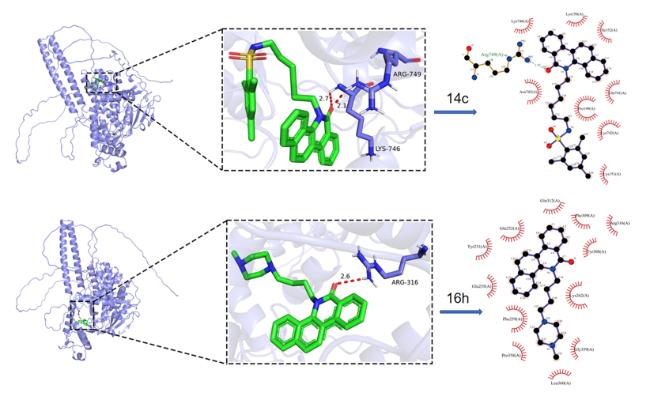
To elucidate the mechanism of Topo I inhibitory activity, molecular docking studies of representative compounds 14c and 16h were conducted using Autodock vina (Figure 4). Comparative analysis revealed that compounds 14c and 16h exhibited superior binding affinities, with calculated ΔG values of -29.29 and -36.42 kJ/mol, respectively. Compound 16h which achieved the highest scores is surrounded by the residues Gln312, Glu232, Tyr231, Glu255, Phe259, Pro358, Leu360, Phe309, Arg316, Tyr308, Lys262 and Gly359, forming a stable hydrophobic interaction. The oxygen atom of the B ring of 16h exerts a moderate binding force by forming a hydrogen bond with the adenosine Arg 316 (bond length: 0.260 nm). Furthermore, the sulfonamide structure of compound 14c is predominantly located outside the active pocket, which primarily accounts for the lower scores of this class of compounds compared to those of the piperazine series. This observation also reasonably explains why sulfonamide compounds exhibit almost no Topo I inhibitory activity.
Figure 4 The best pose of the binding mode of compounds 14c and 16h with DNA Topo I complex (PDB:1T8I)

3.2.3 Apoptosis and Cell-cycle analysis

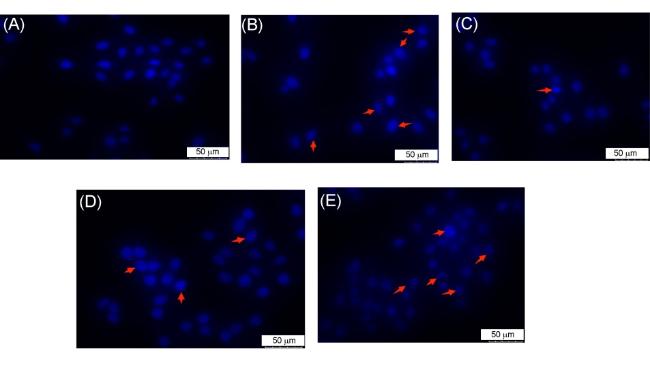
Anticancer drugs inhibit the proliferation of cancer cells through various mechanisms, primarily by inducing apoptosis and initiating cell cycle arrest. These pharma- cological actions collectively contribute to tumor growth inhibition. Hoechst 33258 is capable of penetrating the cell membrane and binding to DNA. Under fluorescence microscopy, typical morphological characteristics of apoptosis can be observed, including condensed chromatin, nuclear marginalization, and bright blue fluorescence signals, with the formation of apoptotic bodies. The Hoechst 33258 staining results indicated that the staining intensity in the blank control group was relatively uniform, with no apparent abnormalities in nuclear morphology (Figure 5A). In contrast, cells treated with NC (Figure 5B), low concentration of 14c (1.83 μmol/L, Figure 5C), medium concentration of 14c (9.15 μmol/L, Figure 5D), and high concentration of 14c (18.3 μmol/L, Figure 5E) exhibited nuclear fragmentation and chromatin condensation, indicative of apoptotic features. Furthermore, as the concentration of 14c increased, the extent of abnormal changes in nuclear morphology became progressively more pronounced, accompanied by an increase in fluorescence intensity. In the drug treatment group, the number of cells exhibiting these apoptotic characteristics increased significantly with rising concentration of compound 14c, indicating that this compound effectively induces apoptosis in HeLa cells.
Figure 5 Morphological observation of 14c with Hoechst 33258 staining under fluorescence microscope

(A) HeLa cells line treated with only 5% DMSO solution (control); (B) Nitidine chloride treated at concentrations of 1.48 μmol/L; (C, D and E) Compound 14c treated at concentrations of 1.83, 9.15 and 18.3 μmol/L, respectively

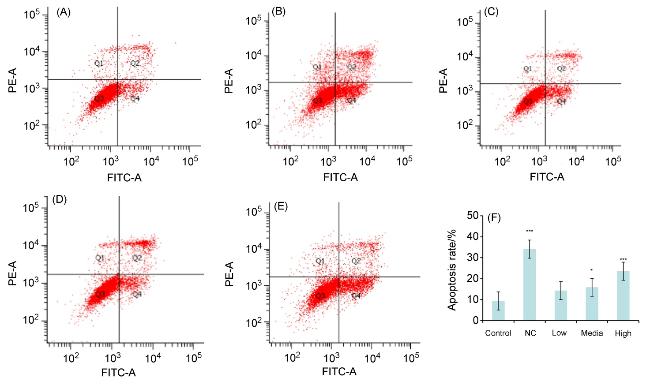
To determine apoptosis ratios of compound 14c in both early and late stages of apoptosis, flow cytometry analysis was conducted using double staining with Fluorescein Isothiocyanate (FITC) and Propidium Iodide (PI). HeLa cell lines were treated with 1.83, 9.15 and 18.3 μmol/L of compound 14c, and the apoptosis ratios were subsequently obtained. The four quadrants, representing damaged, necrotic/apoptotic, normal and early apoptotic cells were observed in quadrants Q1, Q2, Q3, and Q4, respectively, during the flow cytometry analysis.[12e] The sum of quadrants Q2 and Q4 is used to calculate the apoptosis ratio. As illustrated in Figure 6, the apoptosis ratios of compound 14c measured at different concentrations were found to be (14.33%±0.90%) (1.83 μmol/L), (15.83%±0.90%) (9.15 μmol/L) and (23.57%±2.81%) (18.3 μmol/L), respectively, which were significantly higher compared to the control [(9.26%±2.65%)]. These results indicate that compound 14c suppresses cell proliferation by inducing apoptosis. The apoptosis of HeLa cell lines treated with compound 14c increased gradually in a concentration-dependent manner. However, the apoptotic rate induced by this compound is less pronounced compared to that of NC, which demonstrated an apoptosis induction rate of 34.07% at 1.48 μmol/L.
Figure 6 Apoptosis ratio detection of compound 14c by FITC and PI assay

(A) HeLa cells line treated with 8% DMSO for 24 h used as control; (B) Treament with NC at 1.83 μmol/L for 24 h; (C, D and E) Treament with compound 14c at 1.83, 9.15 and 18.3 μmol/L for 24 h, respectively; (F) Percentage of quadrants Q2 and Q4 expressed as mean±standard errors (n=3, ***p<0.05)

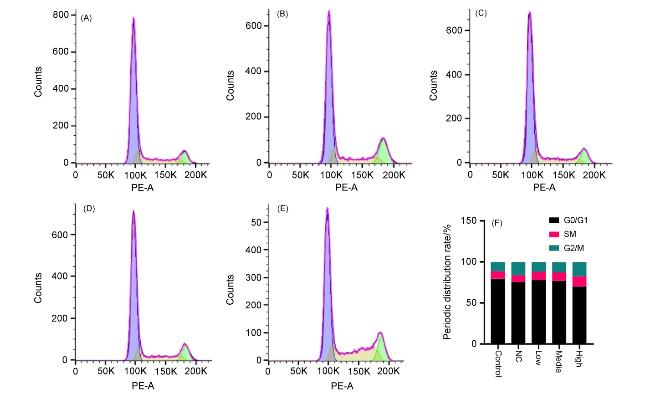
The flow cytometry analysis of HeLa cell cycle distribution (Figure 7) indicated that compared to the blank control group [G0/G1 phase: (79.13%±2.62%), S phase: (9.40%± 1.67%), G2/M phase: (11.20%±0.96)%], the 14c-treated groups exhibited concentration-dependent alterations in cell cycle distribution. Specifically, the proportions of G0/G1 phase cells in the low-, medium-, and high-concentration 14c treatment groups decreased to (77.67%±1.27%),(76.73%±1.54%), and (69.90%±5.80%) (p<0.05), respectively. Concurrently, the proportions of S phase cells increased to (8.50%±1.42%), (10.17%±0.39%), and (12.47%±3.21%) (p<0.05), while the proportions of G2/ M phase significantly rose to (15.93%±3.30%), (12.07%± 0.57%), and (17.07%±2.43%) (p<0.05). These findings demonstrate that 14c significantly reduces the G0/G1 phase cell population and promotes cell progression into S and G2/M phases, consistent with the mechanism of action associated with NC.
Figure 7 Cell-cycle analysis by flow cytometry of HeLa cells line treated with compound 14c

(A) HeLa cells line treated with 8% DMSO for 24 h used as control; (B) Treament with NC at 1.83 μmol/L for 24 h; (C, D and E) Treament with compound 14c at 1.83, 9.15 and 18.3 μmol/L for 24 h, respectively; (F) The percentages of each population are expressed as mean±standard erros (n=3, *p<0.05)

3 Conclusions

A series of novel N-nitidine derivatives were designed and synthesized. The cytotoxic activity of the synthetic compounds against HL-60, HeLa, HepG2, H460, and LO2 cell lines in vitro was evaluated using 3-(4,5-dimethylthia- zol-2-yl)-5-(3-carboxymethoxyphenyl)-2-(4-sulfophenyl)-2H-tetrazolium (MTS) assay. Notably, most classes of nitidine-sulfanilamide derivatives exhibited sensitivity towards HeLa cell line. The results indicated that compound 14c demonstrated the strongest anti-tumor effect on the HeLa cell line, comparable to that of the positive control NC and cisplatin while exhibiting lower cytotoxicity towards normal LO2 cells. Preliminary investigations into the antitumor mechanism suggest that the cytotoxicity of compound 14c is mediated by blocking tumor cells in the G0/G1 phase and inhibiting cell proliferation through apoptosis induction. Consequently, compound 14c shows promise as a highly effective antitumor lead compound with low toxicity.

4 Experimental section

4.1 Instruments and reagents

All chemicals employed in this study were reagent grade and commercially available. The yields reported refer to those of isolated products following purification. NMR spectra were recorded on a Bruker DRX-500 instrument (1H: 500 MHz, 13C: 126 MHz) utilizing CDCl3 as the solvent. Mass spectra were obtained using a Thermo Fisher LCQ Fleet (ESI) instrument. Melting points were determined with an X-4 apparatus and reported as uncorrected.

4.2 Synthesis methods

4.2.1 General procedure for the synthesis of hybrids of nitidine analogue and sulfonamide (6 or 7)

2-Iodobenzoic acid (1.340 g, 5.633 mmol) was dissolved in dichloromethane (DCM, 80 mL) and the solution was cooled to 0 ℃ under a nitrogen atmosphere. Oxalyl chloride (0.960 mL, 11.3 mmol) was then added dropwise using a constant-pressure dropping funnel over a period of 5 min. Subsequently, 1~3 drops of DMF were introduced as a catalyst. After 5 min, the mixture was allowed to warmed to room temperature (25 ℃) and stirred for 2 h. Upon complete consumption of the starting material, as monitored by thin-layer chromatography (TLC), the solvent was removed by rotary evaporation under reduced pressure, yielding compound 2 as a pale yellow solid with a yield of 95%.
A solution of 1-naphthylamine (0.865 g, 1.0 mmol) in dichloromethane (DCM, 20 mL) was prepared in a 50 mL round-bottom flask equipped with a magnetic stirrer. Tri- ethylamine (TEA, 1.58 mL, 1.9 mmol) and compound 2 (1.932 g, 1.2 mmol) were sequentially added to the reaction mixture under ambient conditions. The mixture was stirred at 25 ℃ for 2 h. Upon completion of the reaction, monitored by thin-layer chromatography (TLC) using a hexane/ethyl acetate (VV=2∶1) solvent system, the precipitated solids were isolated by vacuum filtration through a Büchner funnel, washed with cold DCM (5 mL×2) and dried under reduced pressure at 50 ℃ for 12 h to yield compound 3 as a white crystalline solid with a yield of 91%.
Compound 3 (0.335 g, 0.86 mmol) was dissolved in anhydrous DMF (5 mL) under a nitrogen atmosphere. Sodium hydride (NaH, 60% dispersion in mineral oil, 0.108 g, 2.7 mmol) was added to the solution in a portionwise mannerat 0 ℃. After stirring for 1 h, either 1,4-dibro- mobutane (0.312 mL, 2.58 mmol) or 1,6-dibromobutane (0.384 mL, 2.58 mmol) was introduced. The reaction mixture was allowed to reach room temperature (25 ℃) and stirred for an additional 8 h. Upon completion of the reaction, it was quenched with ice-cold water (50 mL). The aqueous layer was extracted with ethyl acetate (EA, 20 mL×3), and the combined organic phases were dried over anhydrous Na₂SO₄. Following filtration and removal of the solvent under reduced pressure, using a petroleum ether/ ethyl acetate (VV=4∶1) eluent, yielding compounds 4 and 5 as colorless oils with yields of 81% and 79%, respectively.
Under a nitrogen atmosphere, a 50 mL round-bottom flask was equiped with either 4 or 5 (1 mmol), palladium acetate (0.044 g, 0.1 mmol), tris(o-tolyl)phosphine (0.122 g, 0.4 mmol), and silver carbonate (0.548 g, 2 mmol). The reagents were dissolved in 30 mL of ethyl acetate and stirred at 60 ℃ under reflux for 12 h. Upon completion of the reaction, the hot mixture was immediately filtered through a Büchner funnel under vacuum to remove dark insoluble residues. The collected filtrate was concentrated under reduced pressure and subsequently purified by flash column chromatography, using a petroleum ether/ethyl acetate (VV=4∶1) eluent, yielding compounds 6 and 7 as white crystalline solids with yields of 75% and 69%, respectively.
5-(4-Bromobutyl)benzo[c]phenanthridin-6(5H)-one (6): Light yellow crystals, yield 75%. m.p. 196.06~199.2 ℃; 1H NMR (500 MHz, CDCl3) δ: 8.53 (dd, J=7.9, 1.5 Hz, 1H), 8.25 (d, J=8.2 Hz, 1H), 8.20 (dd, J=7.6, 3.2 Hz, 2H), 7.91~7.87 (m, 1H), 7.80~7.75 (m, 1H), 7.71 (d, J= 8.7 Hz, 1H), 7.62~7.57 (m, 1H), 7.56~7.50 (m, 2H), 4.62~4.53 (m, 2H), 3.30 (t, J=6.7 Hz, 2H), 2.15~2.06 (m, 2H), 1.79~1.73 (m, 2H); 13C NMR (126 MHz, CDCl3) δ: 164.8, 136.0, 134.8, 133.8, 132.8, 128.7, 128.66, 128.1, 126.5, 125.8, 125.4, 125.0, 124.6, 124.3, 122.1, 120.0, 117.9, 51.2, 32.9, 30.1, 27.6; HRMS (ESI) calcd for C21H19BrNO [M+H] 380.0582, found 380.064.
5-(6-Bromohexyl)benzo[c]phenanthridin-6(5H)-one (7): Yellow powder, yield 69%. m.p. 94.1~95.0 ℃; 1H NMR (500 MHz, CDCl3) δ: 8.54 (dd, J=8.0, 1.5 Hz, 1H), 8.28~8.24 (m, 1H), 8.21 (d, J=8.8 Hz, 2H), 7.92~7.86 (m, 1H), 7.81~7.74 (m, 1H), 7.72 (d, J=8.6 Hz, 1H), 7.63~7.56 (m, 1H), 7.55~7.50 (m, 2H), 4.60~4.55 (m, 2H), 3.27 (t, J=6.8 Hz, 2H), 1.93~1.87 (m, 2H), 1.74~1.68 (m, 2H), 1.36~1.29 (m, 2H), 1.25~1.15 (m, 2H); 13C NMR (126 MHz, CDCl3) δ: 164.8, 136.1, 134.7, 133.8, 132.7, 128.7, 128.6, 128.0, 126.5, 125.9, 125.2, 125.1, 124.8, 124.1, 122.1, 120.0, 117.9, 52.0, 33.6, 32.5, 28.6, 27.6, 25.9; HRMS (ESI) calcd for C23H23BrNO [M+H] 408.0885 found 408.0959.

4.2.2 General procedure for the synthesis of tetracyc- lic analogue-sulfonamide heterodimers of nitidine chlo- ride (13a~13e, 14a~14e)

A mixture of 6 or 7 (2 mmol) in anhydrous acetonitrile (ACN, 20 mL) was supplemented with o-phthalimide (0.294 g, 2 mmol), potassium iodide (0.033 g, 0.2 mmol), and potassium carbonate (0.829 g, 6 mmol). The reaction was maintained at a temperature of 80 ℃ under reflux for 36 h. The progress of the reaction was monitored by thin-layer chromatography (TLC) using petroleum ether/ethyl acetate (VV=2∶1). Upon completion, the crude product was purified by column chromatography with petroleum ether/ ethyl acetate (VV=5∶1), yielding compounds 8 and 9 in 75% and 69% yields, respectively.
Under magnetic stirring, compounds 8 and 9 (3 mmol each) were dissolved in 30 mL of a 40% aqueous methyl- amine solution. The mixture was stirred at room tempera- ture for 12 h. Upon completion, the solution was extracted with dichloromethane (10 mL×3). The combined organic phases were washed with water, dried over anhydrous sodium sulfate overnight, filtered through a Büchner funnel, and concentrated under reduced pressure, yielding com- pounds 10 and 11 in 81% and 75% yields, respectively.
Compounds 10 and 11 (0.5 mmol) were dissolved in triethylamine (TEA, 0.5 mL, 3.6 mmol) in dichloromethane (15 mL). The solution was then cooled to 0 ℃, and benzene sulfonyl chloride derivatives 12a~12e (0.5 mmol) were added dropwise, ensuring that the temperature remained below 5 ℃. After stirring at 0 ℃ for 5 min, the reaction mixture was allowed to warm to room temperature [(25±2) ℃] and stirred until the starting materials were completely consumed, as monitored by thin-layer chromatography (TLC) using petroleum ether/ethyl acetate mixture (VV=2∶1). The crude product was purified by flash column chromatography, yielding target compounds 13a~13e and 14a~14e with isolated yields ranging from 60% to 85%.
N-(4-(6-Oxobenzo[c]phenanthridin-5(6H)-yl)butyl)ben-zenesulfonamide (13a): Yellow powder, yield 63%. m.p. 102.7~103.6 ℃; 1H NMR(500 MHz, CDCl3) δ: 8.52 (d, J=7.3 Hz, 1H), 8.27 (d, J=8.1 Hz, 1H), 8.21 (d, J=8.7 Hz, 1H), 8.15 (d, J=8.2 Hz, 1H), 7.90 (d, J=7.0 Hz, 1H), 7.81 (d, J=7.1 Hz, 3H), 7.74 (d, J=8.7 Hz, 1H), 7.60 (t, J=7.5 Hz, 1H), 7.58~7.47 (m, 3H), 7.44 (t, J=7.5 Hz, 2H), 5.07 (s, 1H), 4.50 (s, 2H), 2.92 (t, J=6.7 Hz, 2H), 2.07~1.67 (m, 4H); 13C NMR (126 MHz, CDCl3) δ: 164.8, 139.9, 135.7, 134.7, 133.8, 132.9, 132.5, 129.0, 128.7, 128.6, 128.1, 127.0, 126.5, 125.6, 125.4, 124.9, 124.5, 124.3, 122.1, 119.9, 117.9, 51.1, 42.4, 26.7, 25.7; HRMS (ESI) calcd for C27H25N2O3S [M+H] 457.1586, found 457.1588.
4-Methyl-N-(4-(6-oxobenzo[c]phenanthridin-5(6H)-yl)butyl)benzenesulfonamide (13b): White powder, yield 60%. m.p. 164.8~165.2 ℃; 1H NMR (500 MHz, CDCl3) δ: 8.51 (d, J=7.3 Hz, 1H), 8.26 (d, J=8.1 Hz, 1H), 8.21 (d, J=8.7 Hz, 1H), 8.15 (d, J=8.5 Hz, 1H), 7.90 (d, J=9.0 Hz, 1H), 7.79 (t, J=7.6 Hz, 1H), 7.73 (d, J=8.6 Hz, 1H), 7.69 (d, J=8.2 Hz, 2H), 7.60 (t, J=7.5 Hz, 1H), 7.54 (q, J=5.3, 3.5 Hz, 2H), 7.23 (d, J=7.9 Hz, 2H), 4.93 (s, 1H), 4.55~4.45 (m, 2H), 2.89 (t, J=6.8 Hz, 2H), 2.38 (s, 3H), 1.91 (p, J=7.6 Hz, 2H), 1.41 (p, J=6.8 Hz, 2H); 13C NMR (126 MHz, CDCl3) δ: 164.8, 143.2, 136.9, 135.8, 134.7, 133.8, 132.8, 129.6, 128.7, 128.6, 128.1, 127.1, 126.5, 125.6, 125.4, 124.9, 124.5, 124.3, 122.1, 119.9, 117.8, 51.2, 42.5, 26.7, 25.7, 21.5; HRMS (ESI) calcd for C28H26N2- O3SNa [M+Na] 493.1562, found 493.1559.
2,4,6-Trimethyl-N-(4-(6-oxobenzo[c]phenanthridin-5-(6H)-yl)butyl)benzenesulfonamide (13c): White powder, yield 61%. m.p. 182.5~182.9 ℃; 1H NMR (500 MHz, CDCl3) δ: 8.51 (d, J=7.9 Hz, 1H), 8.27 (d, J=8.1 Hz, 1H), 8.22 (d, J=8.7 Hz, 1H), 8.14 (d, J=7.9 Hz, 1H), 7.91 (d, J=7.4 Hz, 1H), 7.80 (t, J=7.5 Hz, 1H), 7.74 (d, J=8.6 Hz, 1H), 7.60 (t, J=7.5 Hz, 1H), 7.53 (p, J=6.6 Hz, 2H), 6.88 (s, 2H), 4.87 (s, 1H), 4.56~4.46 (m, 2H), 2.85 (t, J=6.6 Hz, 2H), 2.58 (s, 6H), 2.25 (s, 3H), 1.98~1.84 (m, 2H), 1.38 (p, J=8.3, 7.0 Hz, 2H); 13C NMR (126 MHz, CDCl3) δ: 164.8, 142.0, 138.9, 135.8, 134.7, 133.8, 133.6, 132.8, 131.9, 128.7, 128.6, 128.1, 126.5, 125.7, 125.4, 124.9, 124.5, 124.3, 122.1, 119.9, 117.8, 51.2, 41.8, 26.8, 25.8, 22.9, 20.9; HRMS (ESI) calcd for C30H30N2O3SNa [M+Na] 521.1828, found 521.1829.
3,4-Dichloro-N-(4-(6-oxobenzo[c]phenanthridin-5(6H)-yl)butyl)benzenesulfonamide (13d): White powder, yield 85%. m.p. 165.2~166.3 ℃; 1H NMR (500 MHz, CDCl3) δ: 8.52 (d, J=7.9 Hz, 1H), 8.27 (d, J=8.1 Hz, 1H), 8.22 (d, J=8.8 Hz, 1H), 8.16 (d, J=8.3 Hz, 1H), 7.96 (d, J=1.9 Hz, 1H), 7.91 (d, J=7.1 Hz, 1H), 7.80 (t, J=7.0 Hz, 1H), 7.74 (d, J=8.6 Hz, 1H), 7.66 (d, J=8.4 Hz, 1H), 7.60 (t, J=7.5 Hz, 1H), 7.58~7.50 (m, 3H), 5.60 (s, 1H), 4.57~4.44 (m, 2H), 2.97 (t, J=6.3 Hz, 2H), 1.96 (p, J=7.3 Hz, 2H), 1.47 (p, J=6.8 Hz, 2H); 13C NMR (126 MHz, CDCl3) δ: 164.9, 140.0, 137.2, 135.6, 134.7, 133.84, 133.6, 133.0, 131.0, 129.1, 128.7, 128.6, 128.1, 126.6, 126.1, 125.5, 125.4, 124.8, 124.5, 124.4, 122.1, 119.9, 117.9, 50.9, 42.4, 26.4, 25.6; HRMS (ESI) calcd for C27H22Cl2N2O3SNa [M+Na] 547.0626, found 547.0628.
3-Fluoro-N-(4-(6-oxobenzo[c]phenanthridin-5(6H)-yl)-butyl)benzenesulfonamide (13e): Orange-red powder, yield 70%. m.p. 95.2~96.1 ℃; 1H NMR(500 MHz, CDCl3) δ: 8.51 (d, J=7.9 Hz, 1H), 8.26 (d, J=8.1 Hz, 1H), 8.21 (d, J=8.7 Hz, 1H), 8.15 (d, J=7.7 Hz, 1H), 7.91 (d, J=7.8 Hz, 1H), 7.79 (t, J=7.6 Hz, 1H), 7.73 (d, J=8.6 Hz, 1H), 7.61 (q, J=7.5 Hz, 2H), 7.54 (s, 3H), 7.43 (q, J=7.8, 7.0 Hz, 1H), 7.21 (t, J=8.2 Hz, 1H), 5.44 (s, 1H), 4.53~4.47 (m, 2H), 2.95 (q, J=6.1 Hz, 2H), 1.92 (p, J=7.3 Hz, 2H), 1.96~1.88 (m, 2H), 1.46~1.40 (m, 2H); 13C NMR (126 MHz, CDCl3) δ: 164.8, 161.3, 142.1, 142.1, 135.7, 134.7, 133.8, 132.9, 130.8, 128.7, 128.6, 128.1, 126.6, 125.5, 125.4, 124.8, 124.5, 124.4, 122.1, 119.9, 117.9, 114.5, 114.3, 51.0, 42.4, 26.6, 25.7; HRMS (ESI) calcd for C27H23FN2O3SNa [M+ Na] 497.1311, found 497.1310.
N-(6-(6-Oxobenzo[c]phenanthridin-5(6H)-yl)hexyl)ben-zenesulfonamide (14a): Yellow oily substance, yield 73%. 1H NMR (500 MHz, CDCl3) δ: 8.53 (d, J=7.9 Hz, 1H), 8.27 (d, J=8.1 Hz, 1H), 8.22 (d, J=8.7 Hz, 1H), 8.19 (d, J=7.9 Hz, 1H), 7.91 (d, J=7.9 Hz, 1H), 7.87~7.77 (m, 3H), 7.73 (d, J=8.6 Hz, 1H), 7.60 (t, J=7.5 Hz, 1H), 7.58~7.50 (m, 3H), 7.47 (t, J=7.4 Hz, 2H), 5.30 (s, 1H), 4.56~4.52 (m, 2H), 2.83 (q, J=6.7 Hz, 2H), 1.82 (p, J=7.1 Hz, 2H), 1.33~1.29 (m, 2H), 1.18~1.07 (m, 4H); 13C NMR (126 MHz, CDCl3) δ 164.8, 139.9, 136.0, 134.7, 133.8, 132.8, 132.5, 129.0, 128.6, 128.0, 127.0, 126.5, 125.8, 125.2, 125.1, 124.7, 124.2, 122.0, 120.0, 117.8, 51.7, 42.9, 29.2, 28.4, 26.0, 25.7; HRMS (ESI) calcd for C29H29N2O3S [M+H] 485.1189, found 485.1902.
4-Methyl-I-(6-(6-oxobenzo[c]phenanthridin-5(6H)-yl)-hexyl)benzenesulfonamide (14b): Yellow oily substance, yield 80%. 1H NMR (500 MHz, CDCl3) δ: 8.53 (d, J=7.9 Hz, 1H), 8.27 (d, J=8.1 Hz, 1H), 8.22 (d, J=8.7 Hz, 1H), 8.19 (d, J=8.0 Hz, 1H), 7.90 (d, J=8.3 Hz, 1H), 7.79 (t, J=7.6 Hz, 1H), 7.73 (d, J=8.7 Hz, 1H), 7.70 (d, J=8.1 Hz, 2H), 7.60 (t, J=7.5 Hz, 1H), 7.53 (p, J=6.7 Hz, 2H), 7.27 (s, 2H), 5.30 (s, 1H), 4.58~4.51 (m, 2H), 2.81 (q, J=6.7 Hz, 2H), 2.39 (s, 3H), 1.83 (p, J=6.9, 6.5 Hz, 2H), 1.34~1.29 (m, 2H), 1.18~1.07 (m, 4H); 13C NMR (126 MHz, CDCl3) δ: 165.3, 165.0, 135.9, 135.6, 134.7, 133.85, 132.9, 132.8, 130.5, 129.2, 128.6, 128.5, 128.1, 126.5, 126.1, 125.7, 125.3, 125.0, 124.7, 124.3, 122.1, 120.0, 117.9, 51.5, 45.6, 39.9, 28.9, 28.4, 25.9, 25.8; HRMS (ESI) calcd for C30H30N2O3SNa [M+Na] 521.1875, found 521.1870.
2,4,6-Trimethyl-N-(6-(6-oxobenzo[c]phenanthridin-5-(6H)-yl)hexyl)benzenesulfonamide (14c): Yellow oily substance, yield 69%. 1H NMR (500 MHz, CDCl3) δ: 8.53 (d, J=7.9 Hz, 1H), 8.27 (d, J=8.1 Hz, 1H), 8.22 (d, J=8.7 Hz, 1H), 8.18 (d, J=8.3 Hz, 1H), 7.90 (d, J=7.3 Hz, 1H), 7.79 (t, J=7.6 Hz, 1H), 7.73 (d, J=8.6 Hz, 1H), 7.60 (t, J=7.5 Hz, 1H), 7.53 (p, J=6.7 Hz, 2H), 6.91 (s, 2H), 5.30 (s, 1H), 4.58~4.49 (m, 2H), 2.76 (t, J=6.9 Hz, 2H), 2.59 (s, 6H), 2.25 (s, 3H), 1.86~1.78 (m, 2H), 1.30 (q, J=8.3, 7.5 Hz, 2H), 1.17~1.05 (m, 4H); 13C NMR (126 MHz, CDCl3) δ: 164.8, 142.0, 139.0, 136.0, 134.7, 133.8, 133.6, 132.7, 131.9, 128.6, 128.0, 126.5, 125.8, 125.2, 125.1, 124.7, 124.1, 122.0, 120.0, 117.8, 51.7, 42.3, 29.3, 28.4, 26.1, 25.9, 22.9, 20.9; HRMS (ESI) calcd for C32H34N2- O3SNa [M+Na] 549.2188, found 549.2189.
3,4-Dichloro-N-(6-(6-oxobenzo[c]phenanthridin-5(6H)-yl)hexyl)benzenesulfonamide (14d): White powder, yield 79%. m.p. 174.5~174.9 ℃; 1H NMR (500 MHz, CDCl3) δ: 8.50 (d, J=7.8 Hz, 1H), 8.28 (d, J=8.1 Hz, 1H), 8.23 (d, J=8.4 Hz, 2H), 7.91 (s, 2H), 7.79 (t, J=7.4 Hz, 1H), 7.74 (d, J=8.6 Hz, 1H), 7.64 (d, J=8.3 Hz, 1H), 7.59 (t, J=7.5 Hz, 1H), 7.57~7.50 (m, 2H), 7.47 (d, J=8.3 Hz, 1H), 6.51 (s, 1H), 4.61 (t, J=7.2 Hz, 2H), 3.32 (q, J=6.6 Hz, 2H), 1.88 (p, J=7.2 Hz, 2H), 1.52 (p, J=7.0 Hz, 2H), 1.33 (p, J=7.6 Hz, 2H), 1.21 (p, J=7.3 Hz, 2H); 13C NMR (126 MHz, CDCl3) δ: 165.3, 165.0, 135.9, 135.6, 134.7, 134.5, 133.8, 132.9, 132.8, 130.5, 128.6, 128.5, 128.1, 126.5, 126.1, 125.7, 125.3, 125.0, 124.7, 124.3, 122.1, 120.0, 117.9, 51.5, 39.9, 28.9, 28.4, 25.9, 25.8; HRMS (ESI) calcd for C29H26Cl2N2O3SNa [M+Na] 575.0939, found 575.0936.
3-Fluoro-N-(6-(6-oxobenzo[c]phenanthridin-5(6H)-yl)-hexyl)benzenesulfonamide (14e): Yellow oily substance, yield 71%. 1H NMR (500 MHz, CDCl3) δ: 8.52 (d, J=7.9 Hz, 1H), 8.26 (d, J=8.1 Hz, 1H), 8.21 (d, J=8.7 Hz, 1H), 8.18 (d, J=8.0 Hz, 1H), 7.90 (d, J=7.9 Hz, 1H), 7.78 (t, J=7.6 Hz, 1H), 7.73 (d, J=8.6 Hz, 1H), 7.62 (d, J=7.9 Hz, 1H), 7.58 (d, J=7.3 Hz, 1H), 7.54 (d, J=7.6 Hz, 1H), 7.52 (d, J=6.1 Hz, 2H), 7.46 (q, J=7.9 Hz, 1H), 7.23 (t, J=8.1 Hz, 1H), 4.85 (t, J=5.8 Hz, 1H), 4.61~4.50 (m, 2H), 2.85 (q, J=6.6 Hz, 2H), 1.82 (p, J=7.2 Hz, 2H), 1.34 (p, J=6.9 Hz, 2H), 1.20~1.09 (m, 4H); 13C NMR (126 MHz, CDCl3) δ 164.8, 163.4, 142.2, 142.1, 134.7, 133.8, 132.8, 130.9, 130.8, 128.6, 128.6, 128.0, 125.7, 125.2, 125.0, 122.7, 122.0, 120.0, 119.8, 119.6, 117.8, 114.5, 114.3, 51.6, 43.0, 29.2, 28.4, 26.0, 25.6; HRMS (ESI) calcd for C29H28FN2O3S [M+H] 503.1805, found 503.1802.

4.2.3 General procedure for the synthesis of hybrids of nitidine analogue and piperazine heterodimers (16, 17)

Compound 6 or 7 (1.0 mmol) was dissolved in 20 mL of acetonitrile, and then K2CO3 (0.552 g, 4.0 mmol), KI (8.3 mg, 5% mol) and a series of piperazine compounds 15a~15h (1.2 mmol) were subsequently added. The reaction was monitored by TLC with reflux agitation for 8 h at 60 ℃. Upon completion the reaction, the solution was extracted with ethyl acetate (20 mL×3), combined, dried over anhydrous sodium sulfate, filtered, concentrated under reduced pressure, the crude residue was then finally purified by column chromatography (petroleum ether/ethyl acetate, VV=2∶1) to afford compounds 16a~16h and 17a~17h in 43%~81% yields..
5-(4-(4-Phenylpiperazin-1-yl)butyl)benzo[c]phenanth-ridin-6(5H)-one (16a): White powder, yield 73%. m.p. 125.3.6~126.1 ℃; 1H NMR (500 MHz, CDCl3) δ: 8.55 (d, J=7.9 Hz, 1H), 8.28 (d, J=8.2 Hz, 1H), 8.24 (d, J=8.7 Hz, 2H), 7.91 (d, J=6.9 Hz, 1H), 7.80 (t, J=7.1 Hz, 1H), 7.74 (d, J=8.7 Hz, 1H), 7.61 (t, J=7.5 Hz, 1H), 7.54 (q, J=5.2, 3.3 Hz, 2H), 7.24 (d, J=7.7 Hz, 2H), 6.90 (d, J=8.0 Hz, 2H), 6.84 (t, J=7.3 Hz, 1H), 4.68~4.62 (m, 2H), 3.16~3.08 (m, 4H), 2.49~2.41 (m, 4H), 2.33~2.25 (m, 2H), 1.96 (p, J=7.6 Hz, 2H), 1.41 (p, J=7.7 Hz, 2H); 13C NMR (126 MHz, CDCl3) δ: 164.8, 151.3, 136.1, 134.7, 133.8, 132.7, 129.0, 128.6, 128.6, 128.0, 126.4, 125.9, 125.2, 125.1, 124.7, 124.1, 122.0, 120.0, 119.6, 117.9, 116.0, 57.9, 53.0, 51.9, 49.0, 26.8, 23.9; HRMS (ESI) calcd for C31H32N3O [M+H] 462.2545, found 462.2546.
5-(4-(4-Benzoylpiperazin-1-yl)butyl)benzo[c]phenanth-ridin-6(5H)-one (16b): Pale yellow powder, yield 48%. m.p. 140.6~141.2 ℃; 1H NMR (500 MHz, CDCl3) δ: 8.54 (d, J=7.6 Hz, 1H), 8.28 (d, J=7.9 Hz, 1H), 8.23 (dd, J=7.6, 4.0 Hz, 2H), 7.91 (d, J=7.3 Hz, 1H), 7.80 (t, J=7.5 Hz, 1H), 7.74 (d, J=8.5 Hz, 1H), 7.61 (t, J=7.4 Hz, 1H), 7.54 (p, J=6.6 Hz, 2H), 7.45~7.34 (m, 5H), 4.64 (t, J=7.1 Hz, 2H), 3.68 (s, 2H), 3.32 (s, 2H), 2.32 (s, 2H), 2.26~2.22 (m, 2H), 2.20 (s, 2H), 2.01~1.88 (m, 2H), 1.39~1.31 (m, 2H); 13C NMR (126 MHz, CDCl3) δ: 170.2, 164.8, 136.0, 135.8, 134.7, 133.8, 132.8, 129.6, 128.6, 128.4, 128.0, 127.0, 126.5, 125.8, 125.2, 125.1, 124.7, 124.2, 122.0, 120.0, 117.9, 57.6, 51.7, 47.6, 42.0, 26.6, 23.7; HRMS (ESI) calcd for C32H32N3O2 [M+H] 490.2495, found 490.2490.
5-(4-(4-(Furan-2-carbonyl)piperazin-1-yl)butyl)benzo-[c]phenanthridin-6(5H)-one (16c): White powder, yield 51%. m.p. 143.4~144.1 ℃; 1H NMR (500 MHz, CDCl3) δ: 8.55 (d, J=7.6 Hz, 1H), 8.29 (d, J=8.2 Hz, 1H), 8.24 (d, J=8.7 Hz, 2H), 7.92 (d, J=7.1 Hz, 1H), 7.80 (t, J=7.1 Hz, 1H), 7.75 (d, J=8.6 Hz, 1H), 7.61 (t, J=7.4 Hz, 1H), 7.54 (p, J=6.8 Hz, 2H), 7.47 (s, 1H), 6.98~6.94 (m, 1H), 6.48~6.46 (m, 1H), 4.65 (t, J=7.2 Hz, 2H), 3.70 (s, 4H), 2.31 (s, 4H), 1.93 (p, J=7.5 Hz, 2H), 1.60 (s, 2H), 1.36 (s, 2H); 13C NMR (126 MHz, CDCl3) δ: 164.8, 158.9, 147.9, 143.6, 136.0, 134.7, 133.8, 132.8, 128.6, 128.0, 126.5, 125.9, 125.2, 125.1, 124.7, 124.2, 122.0, 120.0, 117.9, 116.2, 111.2, 57.6, 51.8, 51.1, 47.4, 26.6, 23.8; HRMS (ESI) calcd for C30H29N3O3Na [M+Na] 502.2107, found 502.2101.
5-(4-(4-(4-(Trifluoromethyl)phenyl)piperazin-1-yl)-butyl)benzo[c]phenanthridin-6(5H)-one (16d): White powder, yield 79%. m.p. 178.2~178.4 ℃; 1H NMR (500 MHz, CDCl3) δ: 8.55 (d, J=7.9 Hz, 1H), 8.28 (d, J=8.1 Hz, 1H), 8.24 (d, J=8.5 Hz, 2H), 7.91 (d, J=8.5 Hz, 1H), 7.80 (t, J=7.6 Hz, 1H), 7.74 (d, J=8.6 Hz, 1H), 7.61 (t, J=7.5 Hz, 1H), 7.54 (p, J=7.0 Hz, 2H), 7.46 (d, J=8.5 Hz, 2H), 6.88 (d, J=8.5 Hz, 2H), 4.64 (t, J=7.3 Hz, 2H), 3.18 (s, 4H), 2.42 (s, 4H), 2.28 (t, J=7.4 Hz, 2H), 1.95 (p, J=7.6 Hz, 2H), 1.40 (p, J=7.5 Hz, 2H, CH2); 13C NMR (126 MHz, CDCl3) δ: 164.8, 153.2, 136.1, 134.7, 133.8, 132.7, 128.6, 128.0, 126.4, 126.4, 126.3, 126.3, 125.9, 125.2, 125.1, 124.7, 124.1, 122.0, 120.0, 117.9, 114.4, 57.7, 52.7, 51.8, 47.8, 26.7, 23.9; HRMS (ESI) calcd for C32H31F3N3O [M+H] 530.2419, found 530.2422.
5-(4-(4-(tert-Butyl)piperazin-1-yl)butyl)benzo[c]phenan-thridin-6(5H)-one(16e): White powder, yield 65%. m.p. 178.2~178.4 ℃; 1H NMR (500 MHz, CDCl3) δ: 8.54 (d, J=7.9 Hz, 1H), 8.28 (d, J=8.0 Hz, 1H), 8.23 (d, J=8.5 Hz, 2H), 7.91 (d, J=7.1 Hz, 1H), 7.79 (t, J=7.5 Hz, 1H), 7.74 (d, J=8.6 Hz, 1H), 7.60 (t, J=7.3 Hz, 1H), 7.53 (p, J=7.1 Hz, 2H), 4.61 (t, J=7.1 Hz, 2H), 2.45 (d, J=91.0 Hz, 8H), 2.27~2.21 (m, 2H), 1.93 (p, J=7.6 Hz, 2H), 1.38 (p, J=7.7 Hz, 2H), 1.05 (s, 9H); 13C NMR (126 MHz, CDCl3) δ 164.8, 136.1, 134.7, 133.8, 132.7, 128.6, 128.6, 128.0, 126.4, 125.8, 125.2, 125.1, 124.7, 124.1, 122.0, 120.0, 117.8, 57.9, 53.7, 53.4, 52.0, 45.5, 26.8, 25.8, 24.0; HRMS (ESI) calcd for C29H36N3O [M+H] 442.2858, found 442.2854.
5-(4-(4-Isopropylpiperazin-1-yl)butyl)benzo[c]phenan-thridin-6(5H)-one (16f): Pale yellow powder, yield 43%. m.p. 91.3~91.9 ℃; 1H NMR (500 MHz, CDCl3) δ: 8.54 (d, J=7.9 Hz, 1H), 8.27 (d, J=8.1 Hz, 1H), 8.22 (d, J=8.8 Hz, 2H), 7.90 (d, J=8.7 Hz, 1H), 7.79 (t, J=7.6 Hz, 1H), 7.73 (d, J=8.7 Hz, 1H), 7.60 (t, J=7.5 Hz, 1H), 7.53 (p, J=6.9 Hz, 2H), 4.67~4.57 (m, 2H), 2.74~2.69 (m, 1H), 2.49 (d, J=67.0 Hz, 8H), 2.30~2.22 (m, 2H), 1.92 (p, J=7.6 Hz, 2H), 1.37 (p, J=7.8 Hz, 2H), 1.07 (d, J=6.5 Hz, 6H); 13C NMR (126 MHz, CDCl3) δ: 164.8, 136.0, 134.7, 133.8, 132.7, 128.6, 128.0, 126.4, 125.8, 125.2, 125.1, 124.7, 124.1, 122.0, 120.0, 117.8, 57.7, 54.8, 52.7, 51.9, 48.3, 26.7, 23.8, 18.3. HRMS (ESI) calcd for C28H34N3O [M+H] 428.2702, found 428.2705.
5-(4-(4-Acetylpiperazin-1-yl)butyl)benzo[c]phenanthri-din-6(5H)-one (16g): Yellow powder, yield 43%. m.p. 157.5~158.3 ℃; 1H NMR (500 MHz, CDCl3) δ 8.55 (d, J=7.7 Hz, 1H), 8.29 (d, J=8.0 Hz, 1H), 8.24 (t, J=7.1 Hz, 2H), 7.92 (d, J=7.3 Hz, 1H), 7.80 (t, J=7.5 Hz, 1H), 7.75 (d, J=8.5 Hz, 1H), 7.61 (t, J=7.4 Hz, 1H), 7.54 (p, J=6.6 Hz, 2H), 4.64 (t, J=7.1 Hz, 2H), 3.51 (s, 2H), 3.36 (s, 2H), 2.26 (s, 2H), 2.21 (s, 4H), 2.06 (s, 3H), 1.92 (p, J=7.6 Hz, 2H), 1.35 (s, 2H); 13C NMR (126 MHz, CDCl3) δ: 168.8, 164.8, 136.0, 134.7, 133.8, 132.8, 128.6, 128.0, 126.5, 125.8, 125.2, 125.1, 124.7, 124.2, 122.0, 120.0, 117.9, 57.6, 53.1, 52.5, 51.7, 46.1, 41.2, 26.6, 23.8, 21.3; HRMS (ESI) calcd for C27H30N3O2 [M+H] 428.2338, found 428.2339.
5-(4-(4-Methylpiperazin-1-yl)butyl)benzo[c]phenanthri-din-6(5H)-one (16h): Pale yellow powder, yield 53%. m.p. 92.6~93.3 ℃; 1H NMR (500 MHz, CDCl3) δ: 8.54 (d, J=7.9 Hz, 1H), 8.28 (d, J=8.1 Hz, 1H), 8.25~8.18 (m, 2H), 7.91 (d, J=6.7 Hz, 1H), 7.79 (t, J=7.6 Hz, 1H), 7.74 (d, J=8.7 Hz, 1H), 7.60 (t, J=7.5 Hz, 1H), 7.54 (q, J=5.3, 3.3 Hz, 2H), 4.67~4.58 (m, 2H), 3.14 (s, 2H), 2.43 (s, 8H), 2.29~2.24 (m, 3H), 1.93 (p, J=7.6 Hz, 2H), 1.38 (p, J=8.3, 7.7 Hz, 2H); 13C NMR (126 MHz, CDCl3) δ: 164.8, 136.0, 134.7, 133.8, 132.7, 128.6, 128.0, 126.5, 125.8, 125.2, 125.1, 124.7, 124.1, 122.0, 120.0, 117.8, 57.6, 54.6, 52.4, 53.4, 51.8, 45.6, 29.7, 26.7, 23.7; HRMS (ESI) calcd for C26H30N3O [M+H] 400.2389, found 400.2391.
5-(6-(4-Phenylpiperazin-1-yl)hexyl)benzo[c]phenanthri-din-6(5H)-one (17a): Pale yellow powder, yield 70%. m.p. 159.6~160.3 ℃; 1H NMR (500 MHz, CDCl3) δ: 8.55 (d, J=7.9 Hz, 1H), 8.27 (d, J=8.1 Hz, 1H), 8.22 (d, J=8.5 Hz, 2H), 7.90 (d, J=6.2 Hz, 1H), 7.78 (t, J=7.6 Hz, 1H), 7.73 (d, J=8.6 Hz, 1H), 7.60 (t, J=7.5 Hz, 1H), 7.57~7.50 (m, 2H), 7.29~7.24 (m, 2H), 6.92 (d, J=8.1 Hz, 2H), 6.85 (t, J=7.2 Hz, 1H), 4.65~4.53 (m, 2H), 3.17 (s, 4H), 2.52 (s, 4H), 2.32~2.19 (m, 2H-), 1.91 (s, 2H), 1.43~1.38 (m, 2H), 1.21 (s, 4H); 13C NMR (126 MHz, CDCl3) δ: 164.8, 151.3, 136.2, 134.7, 133.8, 132.7, 129.1, 128.6, 128.6, 128.0, 126.4, 125.9, 125.2, 125.1, 124.8, 124.1, 122.0, 120.0, 119.6, 117.8, 116.0, 58.5, 53.2, 52.1, 49.1, 29.7, 28.8, 27.0, 26.6; HRMS (ESI) calcd for C33H36N3O [M+H] 490.2858, found 490.2856.
5-(6-(4-Benzoylpiperazin-1-yl)hexyl)benzo[c]phenanth-ridin-6(5H)-one (17b): Yellow oily substance, yield 67%. 1H NMR (500 MHz, CDCl3) δ: 8.54 (d, J=7.9 Hz, 1H), 8.27 (d, J=8.1 Hz, 1H), 8.23 (d, J=8.6 Hz, 2H), 7.90 (d, J=8.2 Hz, 1H), 7.79 (t, J=7.6 Hz, 1H), 7.73 (d, J=8.7 Hz, 1H), 7.60 (t, J=7.5 Hz, 1H), 7.53 (p, J=8.6, 7.9 Hz, 2H), 7.40 (s, 5H), 4.64~4.53 (m, 2H), 3.76 (s, 2H), 3.39 (s, 2H), 2.43 (s, 2H), 2.29 (s, 2H), 2.26~2.18 (m, 2H), 1.93~1.86 (m, 2H), 1.39~1.32 (m, 2H), 1.23~1.15 (m, 4H); 13C NMR (126 MHz, CDCl3) δ: 170.2, 164.8, 136.1, 135.8, 134.7, 133.8, 132.7, 129.6, 128.6, 128.6, 128.4, 128.0, 127.0, 126.4, 125.9, 125.2, 125.1, 124.7, 124.1, 122.0, 120.0, 117.8, 58.2, 53.5, 52.8, 52.0, 47.6, 42.0, 28.7, 26.8, 26.5, 26.4; HRMS (ESI) calcd for C34H35N3O2Na [M+ Na] 540.2627, found 540.2620.
5-(6-(4-(Furan-2-carbonyl)piperazin-1-yl)hexyl)benzo-[c]phenanthridin-6(5H)-one(17c): White powder, yield 55%. m.p. 140.3~141.0 ℃; 1H NMR (500 MHz, CDCl3) δ: 8.55 (d, J=7.7 Hz, 1H), 8.28 (d, J=8.2 Hz, 1H), 8.24 (d, J=8.6 Hz, 2H), 7.91 (d, J=6.9 Hz, 1H), 7.79 (t, J=7.5 Hz, 1H), 7.74 (d, J=8.6 Hz, 1H), 7.61 (t, J=7.5 Hz, 1H), 7.58~7.50 (m, 2H), 7.48 (s, 1H), 6.98 (d, J=3.1 Hz, 1H), 6.50~6.46 (m, 1H), 4.65~4.54 (m, 2H), 3.77 (s, 4H), 2.41 (s, 4H), 2.28~2.17 (m, 2H), 1.94~1.86 (m, 2H), 1.41~1.33 (m, 2H), 1.20 (s, 4H); 13C NMR (126 MHz, CDCl3) δ: 164.8, 159.0, 147.9, 143.6, 136.1, 134.7, 133.8, 132.7, 128.6, 128.6, 128.0, 126.4, 125.9, 125.2, 125.1, 124.8, 124.1, 122.0, 120.0, 117.8, 116.2, 111.2, 58.2, 52.0, 28.7, 26.9, 26.5, 26.4. HRMS (ESI) calcd for C32H33N3O3Na [M+Na] 530.2420, found 530.2417.
5-(6-(4-(4-(Trifluoromethyl)phenyl)piperazin-1-yl)hexyl)-benzo[c]phenanthridin-6(5H)-one (17d): White powder, yield 81%. m.p. 180.6~181.2 ℃; 1H NMR (500 MHz, CDCl3) δ: 8.55 (d, J=7.9 Hz, 1H), 8.29 (d, J=8.1 Hz, 1H), 8.24 (d, J=8.4 Hz, 2H), 7.91 (d, J=7.4 Hz, 1H), 7.80 (t, J=7.6 Hz, 1H), 7.75 (d, J=8.6 Hz, 1H), 7.61 (t, J=7.5 Hz, 1H), 7.57~7.51 (m, 2H), 7.47 (d, J=8.2 Hz, 2H), 6.91 (d, J=8.2 Hz, 2H), 4.60 (t, J=7.0 Hz, 2H), 3.25 (s, 4H), 2.52 (s, 4H), 2.31~2.22 (m, 2H), 1.93~1.89 (m, 2H), 1.41 (s, 2H), 1.22 (s, 4H); 13C NMR (126 MHz, CDCl3) δ: 164.9, 153.2, 136.1, 134.7, 133.8, 132.7, 128.6, 128.0, 126.4, 126.3, 126.3, 126.3, 125.8, 125.2, 125.1, 124.7, 124.2, 122.0, 120.0, 117.8, 114.4, 58.4, 52.8, 52.1, 50.7, 47.8, 28.7, 26.9, 26.6, 26.4; HRMS (ESI) calcd for C34H35F3N3O [M+H] 558.2732, found 558.2727.
5-(6-(4-(tert-Butyl)piperazin-1-yl)hexyl)benzo[c]phen-anthridin-6(5H)-one (17e): White powder, yield 61%. m.p. 100.7~101.2 ℃; 1H NMR (500 MHz, CDCl3) δ: 8.54 (d, J=7.9 Hz, 1H), 8.27 (d, J=8.1 Hz, 1H), 8.22 (d, J=8.5 Hz, 2H), 7.90 (d, J=7.4 Hz, 1H), 7.78 (t, J=7.6 Hz, 1H), 7.72 (d, J=8.6 Hz, 1H), 7.60 (t, J=7.5 Hz, 1H), 7.56~7.49 (m, 2H), 4.57 (t, J=7.1 Hz, 2H), 2.67~2.35 (m, 8H), 2.22~2.15 (m, 2H), 1.90 (s, 2H), 1.36 (s, 2H), 1.18 (s, 4H), 1.06 (s, 9H); 13C NMR (126 MHz, CDCl3) δ: 164.8, 136.2, 134.7, 133.8, 132.6, 128.6, 128.6, 127.9, 126.4, 125.9, 125.2, 125.1, 124.7, 124.0, 122.0, 120.0, 117.8, 58.5, 53.8, 53.7, 52.1, 45.5, 28.8, 27.1, 26.7, 26.7, 25.8; HRMS (ESI) calcd for C31H40N3O [M+H] 470.3171, found 470.3168.
5-(6-(4-Isopropylpiperazin-1-yl)hexyl)benzo[c]phenan-thridin-6(5H)-one (17f): White powder, yield 55%. m.p. 72.3~73.0 ℃; 1H NMR (500 MHz, CDCl3) δ: 8.54 (d, J=7.9 Hz, 1H), 8.28 (d, J=8.1 Hz, 1H), 8.22 (d, J=8.7 Hz, 2H), 7.90 (d, J=6.9 Hz, 1H), 7.79 (t, J=7.1 Hz, 1H), 7.73 (d, J=8.7 Hz, 1H), 7.60 (t, J=7.5 Hz, 1H), 7.54 (q, J=5.4, 3.3 Hz, 2H), 4.63~4.54 (m, 2H), 2.71~2.66 (m, 1H), 2.65~2.32 (m, 8H), 2.27~2.17 (m, 2H), 1.90 (s, 2H), 1.37 (s, 2H), 1.18 (s, 4H), 1.08 (d, J=6.5 Hz, 6H); 13C NMR (126 MHz, CDCl3) δ: 164.8, 136.2, 134.7, 133.8, 132.7, 128.6, 128.6, 128.0, 126.4, 125.9, 125.1, 124.7, 124.1, 122.0, 120.0, 117.8, 58.3, 54.7, 53.0, 52.0, 48.4, 28.7, 27.0, 26.6, 26.5, 18.5; HRMS (ESI) calcd for C30H38N3O [M+H] 456.3015, found 456.3019.
5-(6-(4-Acetylpiperazin-1-yl)hexyl)benzo[c]phenanthri-din-6(5H)-one(17g): White powder, yield 65%. m.p. 122.9~123.4 ℃; 1H NMR (500 MHz, CDCl3) δ: 8.55 (d, J=7.8 Hz, 1H), 8.28 (d, J=8.1 Hz, 1H), 8.23 (d, J=8.5 Hz, 2H), 7.91 (d, J=6.9 Hz, 1H), 7.79 (t, J=7.5 Hz, 1H), 7.73 (d, J=8.6 Hz, 1H), 7.61 (t, J=7.5 Hz, 1H), 7.54 (p, J=7.0 Hz, 2H), 4.63~4.54 (m, 2H), 3.58 (s, 2H), 3.42 (s, 2H), 2.34 (s, 2H), 2.30 (s, 2H), 2.24~2.16 (m, 2H), 2.08 (s, 3H), 1.94~1.85 (m, 2H), 1.41~1.29 (m, 2H), 1.20 (s, 4H); 13C NMR (126 MHz, CDCl3) δ: 168.8, 164.8, 136.1, 134.7, 133.8, 132.7, 128.6, 128.6, 128.0, 126.4, 125.9, 125.2, 125.1, 124.7, 124.1, 122.0, 120.0, 117.8, 58.2, 53.2, 52.7, 52.0, 46.2, 41.3, 28.7, 26.9, 26.5, 26.5, 21.3; HRMS (ESI) calcd for C29H33N3O2Na [M+Na] 478.2470, found 478.2475.
5-(6-(4-Methylpiperazin-1-yl)hexyl)benzo[c]phenanth-ridin-6(5H)-one (17h): Pale yellow oily substance, yield 70%. 1H NMR (500 MHz, CDCl3) δ: 8.54 (d, J=7.9 Hz, 1H), 8.28 (d, J=8.1 Hz, 1H), 8.23 (d, J=8.6 Hz, 2H), 7.91 (d, J=8.8 Hz, 1H), 7.79 (t, J=7.6 Hz, 1H), 7.73 (d, J=8.7 Hz, 1H), 7.60 (t, J=7.5 Hz, 1H), 7.54 (q, J=5.2, 3.4 Hz, 2H), 4.61~4.55 (m, 2H), 2.52 (s, 8H), 2.32 (s, 3H), 2.27~2.21 (m, 2H), 1.94~1.86 (m, 2H), 1.38 (p, J=7.7 Hz, 2H), 1.19 (s, 4H); 13C NMR (126 MHz, CDCl3) δ: 164.8, 136.1, 134.7, 133.8, 132.7, 128.6, 128.6, 128.0, 126.4, 125.8, 125.2, 125.1, 124.7, 124.1, 122.0, 120.0, 117.8, 58.2, 54.6, 52.6, 52.0, 45.7, 28.7, 26.9, 26.5, 26.3; HRMS (ESI) calcd for C28H33N3ONa [M+Na] 450.2521, found 450.2525.

4.2.4 General procedure used for the synthesis of the hybrids of nitidine analogue and sulfonamide (19, 20)

Intermediate 6 or 7 (1.0 mmol) was dissolved in 20 mL of acetonitrile, followed by the addition of K2CO3 (0.552 g, 4.0 mmol), KI (8.3 mg, 5 mol%), and a series of aminothiazole compounds (18a~18c, 1.2 mmol). The reaction was monitored by TLC under reflux conditions for 2 h at 60 ℃. The reaction mixture was extracted with EA (20 mL×3), and the organic layers were combined, dried over anhydrous sodium sulfate, concentrated under reduced pressure, and the crude product was finally purified using a petroleum ether/ethyl acetate (VV=2∶1) eluent to afford products 19a~19c and 20a~20c in 75%~81% yields.
5-(4-(Thiazol-2-ylthio)butyl)benzo[c]phenanthridin-6(5H)-one (19a): White powder, yield 81%. m.p. 76.3~76.1 ℃; 1H NMR (500 MHz, CDCl3) δ: 8.54 (d, J=7.9 Hz, 1H), 8.26 (d, J=8.0 Hz, 1H), 8.20 (t, J=8.8 Hz, 2H), 7.89 (d, J=7.7 Hz, 1H), 7.79 (t, J=7.4 Hz, 1H), 7.72 (d, J=8.6 Hz, 1H), 7.60 (t, J=5.7 Hz, 2H), 7.55~7.51 (m, 1H), 7.49 (t, J=6.6 Hz, 1H), 7.16 (d, J=3.0 Hz, 1H), 4.70~4.55 (m, 2H), 3.10 (t, J=7.2 Hz, 2H), 2.09 (p, J=7.7 Hz, 2H), 1.66 (p, J=7.4 Hz, 2H); 13C NMR (126 MHz, CDCl3) δ: 164.8, 164.6, 142.6, 135.9, 134.7, 133.8, 132.7, 128.6, 128.6, 128.0, 126.5, 125.8, 125.3, 125.0, 124.6, 124.2, 122.1, 120.0, 118.7, 117.8, 51.5, 33.9, 28.0, 26.6; HRMS (ESI) calcd for C24H20N2OS2Na [M+Na] 439.0915, found 439.0920.
5-(4-(Benzo[d]thiazol-2-ylthio)butyl)benzo[c]phenanth-ridin-6(5H)-one (19b): Yellow powder, yield 77%. m.p. 121.0~121.7 ℃; 1H NMR (500 MHz, CDCl3) δ: 8.54 (d, J=7.9 Hz, 1H), 8.25~8.15 (m, 3H), 7.88 (d, J=7.4 Hz, 1H), 7.80 (d, J=8.1 Hz, 1H), 7.76 (t, J=7.7 Hz, 1H), 7.72 (t, J=8.2 Hz, 2H), 7.59 (t, J=7.5 Hz, 1H), 7.49 (p, J=6.2, 5.5 Hz, 2H), 7.40 (t, J=7.3 Hz, 1H), 7.31~7.26 (m, 1H), 4.64 (t, J=7.2 Hz, 2H), 3.22 (t, J=7.2 Hz, 2H), 2.12 (p, J=7.7 Hz, 2H), 1.71 (p, J=7.3 Hz, 2H); 13C NMR (126 MHz, CDCl3) δ: 166.7, 164.8, 153.2, 135.9, 135.1, 134.7, 133.8, 132.7, 128.6, 128.0, 126.5, 125.9, 125.7, 125.3, 124.9, 124.6, 124.2, 124.1, 122.0, 121.5, 120.9, 120.0, 117.9, 51.5, 32.9, 28.0, 26.6; HRMS (ESI) calcd for C28H22N2OS2Na [M+Na] 489.1071, found 489.1075.
5-(4-(Benzo[d]oxazol-2-ylthio)butyl)benzo[c]phenanth-ridin-6(5H)-one (19c): Orange-red powder, yield 76%. m.p. 108.4~108.9 ℃; 1H NMR (500 MHz, CDCl3) δ: 8.54 (d, J=7.9 Hz, 1H), 8.26~8.14 (m, 3H), 7.88 (d, J=6.8 Hz, 1H), 7.76 (t, J=7.6 Hz, 1H), 7.71 (d, J=8.6 Hz, 1H), 7.59 (t, J=7.5 Hz, 1H), 7.57~7.46 (m, 3H), 7.40 (d, J=7.7 Hz, 1H), 7.32~7.27 (m, 1H), 7.25~7.19 (m, 1H), 4.65 (t, J=7.2 Hz, 2H), 3.18 (t, J=7.1 Hz, 2H), 2.11 (p, J=7.6 Hz, 2H, 1.73 (p, J=7.2 Hz, 2H); 13C NMR (126 MHz, CDCl3) δ: 164.9, 164.7, 151.7, 141.8, 135.9, 134.7, 133.8, 132.8, 128.6, 128.6, 128.0, 126.5, 125.7, 125.3, 124.9, 124.6, 124.3, 124.2, 123.7, 122.0, 119.9, 118.3, 117.9, 109.8, 51.4, 31.6, 27.8, 26.6; HRMS (ESI) calcd for C28H22N2O2SNa [M+Na] 473.1300, found 473.1296.
5-(6-(Thiazol-2-ylthio)hexyl)benzo[c]phenanthridin-6(5H)-one (20a): Orange-red powder, yield 75%. m.p. 71.3~71.7 ℃; 1H NMR (500 MHz, CDCl3) δ: 8.54 (d, J=7.9 Hz, 1H), 8.27 (d, J=8.1 Hz, 1H), 8.22 (d, J=8.6 Hz, 2H), 7.90 (d, J=8.8 Hz, 1H), 7.79 (t, J=7.6 Hz, 1H), 7.73 (d, J=8.7 Hz, 1H), 7.64~7.58 (m, 2H), 7.54 (q, J=5.3, 3.6 Hz, 2H), 7.20~7.15 (m, 1H), 4.66~4.53 (m, 2H), 3.07 (t, J=7.3 Hz, 2H), 1.91 (p, J=7.6 Hz, 2H), 1.63 (p, J=7.4 Hz, 2H), 1.34 (p, J=7.6 Hz, 2H), 1.21 (p, J=7.7 Hz, 2H); 13C NMR (126 MHz, CDCl3) δ: 165.2, 164.8, 142.6, 136.1, 134.7, 133.8, 132.7, 128.6, 128.6, 128.0, 126.4, 125.8, 125.2, 125.1, 124.7, 124.1, 122.0, 120.0, 118.6, 117.8, 52.0, 34.2, 29.0, 28.6, 28.1, 26.2; HRMS (ESI) calcd for C26H25- N2OS2 [M+H] 445.1408, found 445.1412.
5-(6-(Benzo[d]thiazol-2-ylthio)hexyl)benzo[c]phenanth-ridin-6(5H)-one(20b): White powder, yield 78%. m.p. 114.8~115.7 ℃; 1H NMR (500 MHz, CDCl3) δ: 8.54 (d, J=7.9 Hz, 1H), 8.26 (d, J=8.1 Hz, 1H), 8.21 (d, J=8.6 Hz, 2H), 7.92~7.86 (m, 1H), 7.83 (d, J=8.1 Hz, 1H), 7.77 (t, J=7.6 Hz, 1H), 7.73 (t, J=8.1 Hz, 2H), 7.59 (t, J=7.5 Hz, 1H), 7.55~7.49 (m, 2H), 7.39 (t, J=7.7 Hz, 1H), 7.28 (d, J=7.9 Hz, 1H), 4.63~4.54 (m, 2H), 3.20 (t, J=7.3 Hz, 2H), 1.93 (p, J=7.6 Hz, 2H), 1.69 (p, J=7.5 Hz, 2H), 1.38 (p, J=7.6 Hz, 2H), 1.23 (p, J=7.6 Hz, 2H); 13C NMR (126 MHz, CDCl3) δ: 167.2, 164.8, 153.3, 136.1, 135.1, 134.7, 133.8, 132.7, 128.6, 128.6, 128.0, 126.4, 126.0, 125.8, 125.2, 125.1, 124.7, 124.1, 124.1, 122.0, 121.4, 120.9, 120.0, 117.8, 51.9, 33.3, 28.9, 28.6, 28.1, 26.2; HRMS (ESI) calcd for C30H26N2OS2Na [M+Na] 517.1384, found 517.1386.
5-(6-(Benzo[d]oxazol-2-ylthio)hexyl)benzo[c]phenanth-ridin-6(5H)-one (20c): White powder, yield 77%. m.p. 94.9~95.1 ℃; 1H NMR (500 MHz, CDCl3) δ: 8.54 (d, J=7.4 Hz, 1H), 8.27 (d, J=8.2 Hz, 1H), 8.23 (d, J=8.7 Hz, 2H), 7.93~7.88 (m, 1H), 7.78 (t, J=7.6 Hz, 1H), 7.73 (d, J=8.6 Hz, 1H), 7.60 (t, J=7.7 Hz, 1H), 7.57 (d, J=8.0 Hz, 1H), 7.54~7.50 (m, 2H), 7.42 (d, J=7.7 Hz, 1H), 7.28~7.24 (m, 2H), 7.23 (t, J=7.7 Hz, 1H), 4.63~4.57 (m, 2H), 3.18 (t, J=7.3 Hz, 2H), 1.93 (p, J=7.6 Hz, 2H), 1.72~1.68 (m, 2H), 1.42~1.36 (m, 2H), 1.25 (t, J=7.3 Hz, 2H); 13C NMR (126 MHz, CDCl3) δ: 165.1, 164.8, 151.7, 141.9, 136.1, 134.7, 133.8, 132.7, 128.6, 128.6, 128.0, 126.4, 125.8, 125.2, 125.1, 124.7, 124.2, 124.1, 123.7, 122.0, 120.0, 118.3, 117.8, 109.8, 51.9, 32.0, 29.0, 28.6, 28.0, 26.2; HRMS (ESI) calcd for C30H26N2O2SNa [M+Na] 501.1613, found 501.1617.

4.3 Biological activity

4.3.1 Antiproliferative activity

To determine the antitumour activity of the target compounds, an MTS assay was conducted in this study to assess the half inhibitory concentration value (IC50) of each compound. The experiments involved five human cell lines: the leukemia cell line HL-60, hepatocellular carcinoma cells (HepG2), lung cancer cells (H460), cervical cancer cells (HeLa) and normal hepatocytes (LO2). Each cell line was inoculated into 96-well plates at a density ranging from 4000 to 15000 cells per well and cultured with 100 μL of DMEM medium. The plates were incubated at 37 ℃ in a 5% CO2 incubator, protected from light for 12 to 24 h. After the cells were treated with the test drug or positive control, incubation continued for an additional 48 h. Subsequently, the culture medium in each well was aspirated and replaced with 120 μL of freshly prepared MTS solution (prepared at a ratio of 1∶5 in DMEM), followed by incubation for 4 h. The absorbance was measured at 492 nm using an enzyme marker. To correct for background absorbance, three sets of wells containing only medium (without cells) and MTS reagents were used for calibration. Each experiment was repeated at least three times and the results were expressed as mean±standard deviation (SD). Tumour cell growth inhibition rate was calculated as follows:
Inhibition rate (%)=[1-(ODAdministered group-ODBlank control group)/
(ODNegative control group-ODBlank control group)]×100%

4.3.2 Topo I inhibitory activity

To determine the catalytic activity of Topoisomerase I (Topo I), assays were conducted using supercoiled pBR32 DNA as the substrate, following a previously established protocol.[15] Topo I and supercoiled pBR322 DNA were cobtained from Takara Bio Inc. The enzyme activity was defined as the amount necessary to fully relax 0.5 μg of substrate DNA within 30 min at 37 ℃. The reaction systems (20 μL) consisted of 2 μL of 10×reaction buffer (500 mmol/L KOAc, 200 mmol/L Tris-Ac, 100 mmol/L Mg(OAc)2, 1 mg/mL BSA), 0.5 μg of pBR322 DNA, and 2 μL of test compounds (1 mmol/L), adjusted to 19 μL using distilled water. Following the addition of 1 unit of Topo I (1 unit/μL), the mixtures were incubated at 37 ℃ for 30 min. Reactions were subsequently quenched with 0.5% SDS, 0.25 μg/mL bromophenol blue, and 15% glycerol. Electrophoretic separation was performed on 0.8% agarose gels in 1×TAE buffer (80 V, 50 min, room temperature). The DNA bands were visualized using ethidium bromide staining (5 μg/mL) with a Bio-Rad Gel Documentation system.

4.3.3 Molecular docking study

The two-dimensional model of the compound was constructed using Chemdraw software. Following format conversion, a standardized “mol2” molecular file was generated. A systematic compound database for molecular docking was established. The three-dimensional crystal structure of the core target was obtained from the RCSB PDB database (https://www.rcsb.org). The receptor protein was pre-processed using a combined workflow of PyMOL 3.0.4 and AutoDockTools 1.5.7, which included topological structure optimization by removing water molecules and non-essential residues, as well as reconstructing the hydrogen bond network. Ultimately the receptor topology file in “pbdqt” format was generated. Molecular docking calculations were performed using the AutoDock Vina algorithm platform. The conformational analysis of the docking was completed through the integration of PyMOL three- dimensional visualization platform and LigPlus binding site analysis system, enabling the interpretation of structure- activity relationship of the ligand-receptor complex and the assessment of binding free energy.

4.3.4 General procedure for Hoechst 33258 staining

HeLa cells were seeded in 6-well plates at a density of 5×10⁴ cells/mL and cultured for 24 h prior to drug treat- ment. The experimental groups included a blank control, the chlorinated dioscin alkaloid group, and three groups treated with varying concentrations (1.83, 9.15, 18.3 μmol/L) of compound 14c. After 24 h of initial culture, the old medium was replaced with drug-containing medium. Following an additional 24-h incubation with the drugs, the medium was removed, and the cells were washed with PBS. Subse- quently, the cells were fixed with 1 mL of 4% parafor- maldehyde solution at 4 ℃ for 30 min. After discarding the fixative, the cells were washed again with PBS and stained with 100 μL of Hoechst 33258 solution in the dark at room temperature for 30 min. Finally, the morphological features of apoptosis were examined under a fluorescence micro- scope.

4.3.5 General procedure for apoptosis ratio determi- nation

HeLa cells were seeded at a density of 4×10⁵ cells/mL in 6-well plates and cultured for 24 h prior to the admini- stration of drug treatment. The experiment was categorized into the following groups: blank control group, alkaline dioscin chloride group, low concentration group of com- pound 14c, medium concentration group of compound 14c, and high concentration group of compound 14c. After 24 h of drug administration, the old culture medium was discarded and replaced with drug-containing culture medi- um for continued cultivation. Following another 24 h of drug exposure, the cells were digested with trypsin without EDTA, and collected according to their respective groups. The cells were washed twice with PBS and resuspended in 500 μL of Binding Buffer. Subsequently, 5 μL of Annexin V-FITC and 5 μL of PI were added and stained at room temperature in the dark for 15 min. Finally, the apoptosis rate of cells in each group was assessed using flow cyto- metry.

4.3.6 General procedure cell cycle

In this study, the intercalating blue-excited dye, propidium iodide (PI) was utilized. HeLa cell cultures were seeded in 6-well plates (Costar). Subsequently, the cells were treated with 14c (1.83, 9.15, and 18.3 μmol/L) in complete DMEM medium for 72 h. Following the incubation period, the harvest procedure was conducted as follows: the supernatant medium was transferred to centrifuge tubes, and 0.25% trypsin (Sigma) was added until all cells were detached. The cell suspension was then washed twice with PBS and resuspended. Approximately 1 mL of 70% ethanol was rapidly added to the cell suspension (5×10⁵ cells/mL), which was then incubated at 4 ℃ overnight. The samples were treated with 100 μL of RNase A at 37 ℃ for 30 min and subsequently stained with 400 μL of PI solution. After an additional 30 min of incubation at 4 ℃, the resulting nuclei suspension was analyzed using a flow cytometer (FACS Verse, BD, USA) at 488 nm excitation for red fluorescence of PI.
Supporting Information Spectral data and crystal data of 1H NMR, 13C NMR and HRMS of the target compound.. The Supporting Information is available free of charge via the Internet at http://sioc-journal.cn.
(Zhao, C.)
[1]
(a) Bray F.; Laversanne M.; Sung H.; Ferlay J.; Siegel R. L.; Soerjomataram I.; Jemal A. CA-Cancer J. Clin. 2024, 74, 229.

DOI

(b) Li Y.-H.; You Y.-L.; Wang S.-F. Chin. Sci. Bull. 2024, 69, 5197 (in Chinese).

(李煜昊, 游以勒, 王胜锋, 科学通报, 2024, 69, 5197.)

[2]
Delgado J. L.; Hsieh C. M.; Chan N. L.; Hiasa H. Biochem. J. 2018, 475, 373.

[3]
Ikegami T.; Ha L.; Arimori K.; Latham P.; Kobayashi K.; Ceryak S.; Matsuzaki Y.; Bouscarel B. Cancer Res. 2002, 62, 179.

[4]
Qin S.-Q.; Li H.-Y.; Song J.-R.; Li D.-P. Guihaia 2018, 38, 1248 (in Chinese).

(秦舒琴, 李海云, 宋静茹, 李典鹏, 广西植物, 2018, 38, 1248.)

[5]
Bai L. P.; Zhao Z. Z.; Cai Z.; Jiang Z. H. Bioorg. Med. Chem. 2006, 14, 5439.

DOI

[6]
Marshall C. M.; Federice J. G.; Bell C. N.; Cox P. B.; Njardarson J. T. J. Med. Chem. 2024, 67, 11622.

DOI

[7]
(a) Li T. K.; Houghton P. J.; Desai S. D.; Daroui P.; Liu A. A.; Hars E. S.; Ruchelman A. L.; LaVoie E. J.; Liu L. F. Cancer Res. 2003, 63, 8400.

(b) helman A. L.; Zhou N.; Liu A.; Liu L. F.; LaVoie E. J. Bioorg. Med. Chem. 2006, 14, 3131.

(c) Kiselev E.; Dexheimer T. S.; Pommier Y.; Cushman M. J. Med. Chem. 2010, 53, 8716.

[8]
Sedelnikova O. A.; Redon C. E.; Dickey J. S.; Nakamura A. J.; Georgakilas A. G.; Bonner W. M. Mutat. Res. 2010, 704, 152.

DOI

[9]
Kinders R. J.; Hollingshead M.; Lawrence S.; Ji J.; Tabb B.; Bonner W. M.; Pommier Y.; Rubinstein L.; Evrard Y. A.; Parchment R. E.; Tomaszewski J.; Doroshow J. H. Clin. Cancer Res. 2010, 16, 5447.

DOI PMID

[10]
Zhang S.; Liu X.; Bawa-Khalfe T.; Lu L. S.; Lyu Y. L.; Liu L. F.; Yeh E. T. Nat. Med. 2012, 18, 1639.

DOI PMID

[11]
(a) Liu Z.-Q. Ph.D. Dissertation, Naval Medical University, Shanghai, 2014 (in Chinese).

(刘志千, 博士论文,第二军医大学, 上海, 2014.)

(b) Nagarajan M.; Morrell A.; Fort B. C.; Meckley M. R.; Antony S.; Kohlhagen G.; Pommier Y.; Cushman M. J. Med. Chem. 2004, 47, 5651.

DOI

[12]
(a) Ghorab M.; Shaaban M.; Heiba H. I. Res. Chem. Intermed. 2015, 41, 647.

(b) Al-Ghorbani M.; Gouda M. A.; Baashen M.; Alharbi O.; Almalki F. A.; Ranganatha L. V. Pharm. Chem. J. 2022, 56, 29.

DOI

(c) Köksal Akkoç M.; Yarım Yüksel M.; Durmaz İ.; Çetin Atalay R. Turk. J. Chem. 2012, 36, 515.

(d) Yati A.; Emami S.; Moghimi S.; Foroumadi A. Future Med. Chem. 2019, 11, 1929.

DOI

(e) Elmorsy M. R.; Eltoukhi M.; Fadda A. A. Polycyclic Aromat. Compd. 2022, 43, 8048.

DOI

[13]
(a) Nakamura M.; Aoyama A.; Salim M. T. A.; Okamoto M.; Baba M.; Miyachi H.; Hashimoto Y.; Aoyama H. Bioorg. Med. Chem. 2010, 18, 2402.

DOI

(b) Ruchelman A. L.; Houghton P. J.; Zhou N.; Liu A.; Liu L. F.; LaVoie E. J. J. Med. Chem. 2005, 48, 792.

DOI

(c) Sharma L.; Tsai Y. C.; Liu A. A.; Liu L. F.; LaVoie E. J. Eur. J. Med. Chem. 2009, 44, 1471.

DOI PMID

(d) Xu X.-S.; Liu Z.-Q.; Shao W.-H.; Ye J.; Sun Q.-Y.; He W.-W.; Zhang W.-D. Chin. J. Org. Chem. 2015, 35, 1353 (in Chinese).

DOI

(许旭升, 刘志千, 邵文浩, 叶霁, 孙青龑, 何薇薇, 张卫东, 有机化学, 2015, 35, 1353.)

(e) Harayama T.; Akamatsu H.; Okamura K.; Miyagoe T.; Akiyama T.; Abe H.; Takeuchi Y. J. Chem. Soc., Perkin Trans. 1 2001, 523.

[14]
(a) Kołaczkowski M.; Marcinkowska M.; Bucki A.; Pawłowski M.; Mitka K.; Jaśkowska J.; Kowalski P.; Kazek G.; Siwek A.; Wasik A.; Wesołowska A.; Mierzejewski P.; Bienkowski P. J. Med. Chem. 2014, 57, 4543.

DOI PMID

(b) Xu M. S.; Wang Y.; Yang F. P.; Wu C. H.; Wang Z.; Ye B.; Jiang X. R.; Zhao Q. J.; Li J. F.; Liu Y. J.; Zhang J. C.; Tian G. H.; He Y.; Shen J. S.; Jiang H. L. Eur. J. Med. Chem. 2018, 145, 74.

DOI

[15]
Cho W. J.; Kim E. K.; Park I. Y.; Jeong E. Y.; Kim T. S.; Le T. N.; Kim D. D.; Lee E. S. Bioorg. Med. Chem. 2002, 10, 2953.

DOI

文章导航

/