研究论文

仿生四齿胺基吡啶锰催化剂/H2O2的醇类化合物高效氧化: 间歇和连续流研究

  • 夏春年 , a, * ,
  • 陈凯林 a ,
  • 金诺琪 a ,
  • 南欣卉 a ,
  • 汪兵洋 , b, * ,
  • 吴馨怡 a ,
  • 孙强盛 b ,
  • 孙伟 , b, *
展开
  • a 浙江工业大学药学院 杭州 310014
  • b 中国科学院兰州化学物理研究所低碳催化与二氧化碳利用国家重点实验室 低碳催化与二氧化碳利用国家重点实验室 兰州 730000

收稿日期: 2025-08-28

  修回日期: 2025-11-01

  网络出版日期: 2025-12-10

基金资助

国家自然科学基金(22361142751)

国家自然科学基金(22372183)

国家自然科学基金(22302213)

甘肃省重大科技专项(22ZD6GA003)

及中国科学院兰州化学物理研究所重点培育(ZYFZFX-9)

Efficient Oxidation of Alcohols Using a Bioinspired Tetradentate Aminopyridine Manganese Catalyst with H2O2: Batch and Continuous Flow Studies

  • Chunnian Xia , a, * ,
  • Kailin Chen a ,
  • Nuoqi Jin a ,
  • Xinhui Nan a ,
  • Bingyang Wang , b, * ,
  • Xinyi Wu a ,
  • Qiangsheng Sun b ,
  • Wei Sun , b, *
Expand
  • a College of Pharmaceutical Sciences, Zhejiang University of Technology, Hangzhou 310014
  • b State Key Laboratory for Low Carbon Catalysis and CO2 Utilization, Lanzhou Institute of Chemical Physics, Chinese Academy of Sciences, Lanzhou 730000
*E-mail: ;

Received date: 2025-08-28

  Revised date: 2025-11-01

  Online published: 2025-12-10

Supported by

National Natural Science Foundation of China(22361142751)

National Natural Science Foundation of China(22372183)

National Natural Science Foundation of China(22302213)

Major Project of Gansu Province(22ZD6GA003)

Major Program of the Lanzhou Institute of Chemical Physics, Chinese Academy of Sciences(ZYFZFX-9)

Copyright

© 2026 Shanghai Institute of Organic Chemistry, Chinese Academy of Sciences

摘要

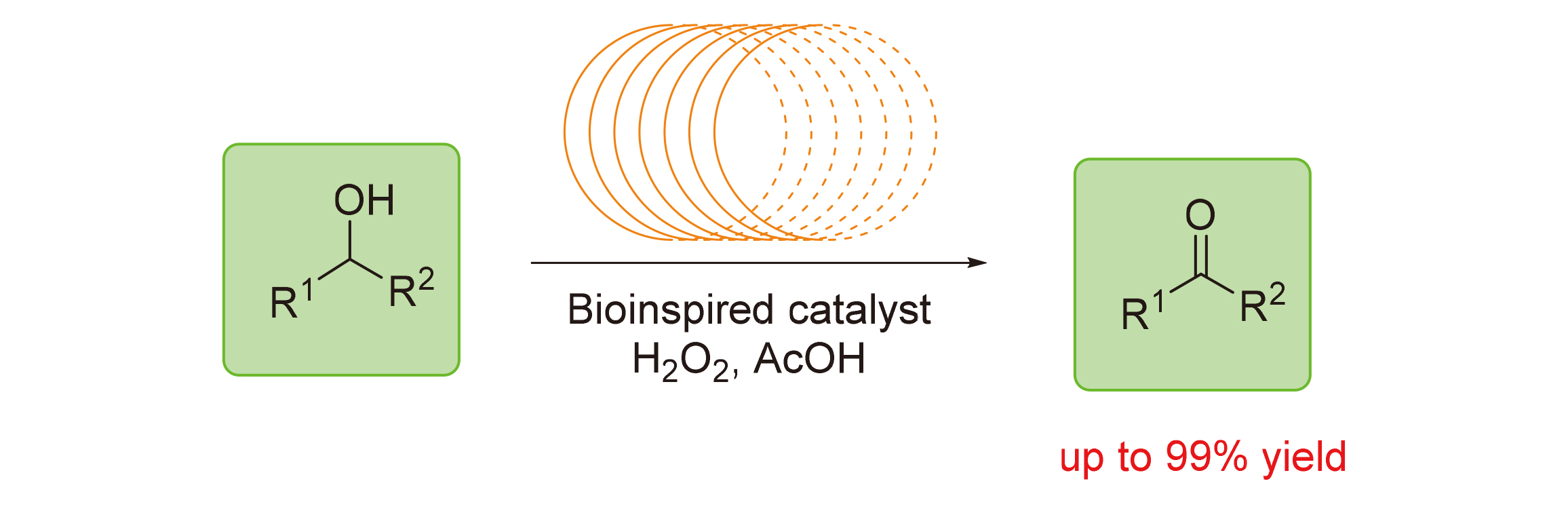
仿生四齿胺基吡啶锰配合物(Mn-N4)已在各种选择性氧化反应中展示出优异的催化活性. 报道了一系列Mn-N4的合成及其在催化仲醇氧化中的应用. 该方法利用过氧化氢(H2O2)作为环境友好的氧化剂, 并加入少量乙酸作为添加剂. 值得注意的是, 该催化剂体系的连续流工艺实现了快速转化, 将反应时间从传统间歇体系的90 min缩短到连续流工艺中的停留时间1.6 min. 这种方法为仲醇的工业氧化提供了一种有前途且实用的策略, 显示出更广泛的应用潜力.

本文引用格式

夏春年 , 陈凯林 , 金诺琪 , 南欣卉 , 汪兵洋 , 吴馨怡 , 孙强盛 , 孙伟 . 仿生四齿胺基吡啶锰催化剂/H2O2的醇类化合物高效氧化: 间歇和连续流研究[J]. 有机化学, 2026 , 46(3) : 986 -992 . DOI: 10.6023/cjoc202508025

Abstract

Bioinspired manganese complexes with tetradentate aminopyridine ligands (Mn-N4) have shown excellent promise as effective catalysts for various selective oxidation reactions. The synthesis of a series of Mn-N4 and their application in the catalytic oxidation of secondary alcohols are reported. This method utilizes hydrogen peroxide as an environmentally benign oxidant with a small amount of acetic acid as an additive. Notably, the continuous-flow process using this catalyst system achieves rapid conversion, reducing the reaction time from 90 min in a traditional batch system to 1.6 min residence time in the continuous-flow process. This approach offers a promising and practical strategy for the industrial oxidation of secondary alcohols, demonstrating significant potential for broader applications.

1 Introduction

The selective oxidation of alcohols to produce corresponding carbonyl compounds is an essential process in organic synthesis, as the resulting products serve as vital intermediates in the production of pharmaceuticals, agrochemicals, and fine chemicals.[1] Traditional oxidation methods often depend on stoichiometric oxidants, such as chromium reagents,[2] manganese,[3] and costly hypervalent iodine(V) reagents like 2-iodoxybenzoic acid (IBX).[4] From the perspective of green and sustainable chemistry, various catalytic oxidation reactions utilizing transition metal catalysts and green oxidants such as molecular oxygen and hydrogen peroxide have been developed.[5] Despite their effectiveness, these systems often require high loadings of noble metal catalysts, including Pd and Ru.[6] Therefore, there has been a growing interesting in development of efficient catalytic systems using earth-abundant metals.
In nature, metalloenzymes are capable of catalyzing numerous oxidation reactions with high efficiency and selectivity under mild conditions.[7] Inspired by the structures and functions of these metalloenzymes, researchers have developed a variety of bio-inspired catalysts for the selective oxidation of a wide range of alcohols. For instance, Stack, Hodgson, and co-workers[8] reported a Schiff- base copper complex as a galactose oxidase model, which exhibited significant activity in alcohol oxidation with O2 under mild conditions. Similarly, Nam et al.[9-10] studied alcohol oxidation using non-heme oxoiron(IV) complexes with 1,1-di(pyridin-2-yl)-N,N-bis(pyridin-2-yl-methyl)me- thanamine (N4Py) and tris(pyridin-2-ylmethyl)amine (TPA) ligands, and they demonstrated that the [Mn(BQ- EN)](OTf)2 complex could catalyze alcohol oxidation with peracetic acid as the oxidant. These studies of model complexes not only provide insights into the mechanisms of enzymatic reactions, but also contribute to the development of efficient oxidation catalysts.[11]
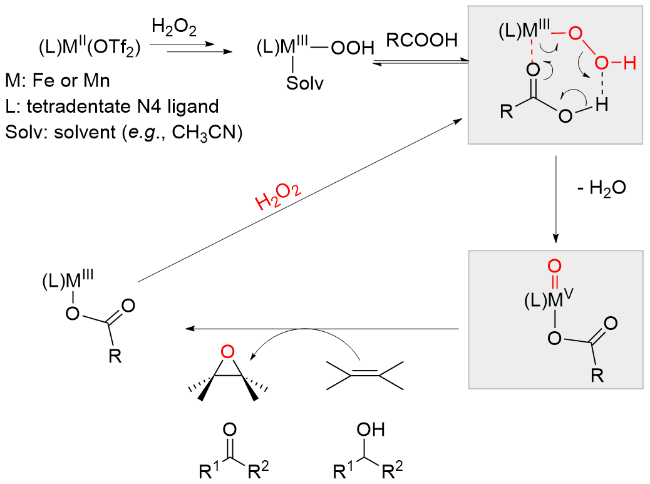
Over the past few decades, significant progresses have been made in bioinspired oxidation catalysis.[12] Among these bioinspired model complexes, iron(II) and manganese(II) complexes with tetradentate aminopyridine (N4) ligands have proven to be effective catalysts for various oxidation reactions.[13] Recently, we have developed a series of Mn- and Fe-N4 complexes for the asymmetric oxidation of C=C and C—H bonds.[14] In addition, we demonstrated that [Mn(S-PMB)](OTf)2 can catalyze alcohol oxidation efficiently albeit requiring substantial amounts of acetic acid as an additive.[15] As shown in Scheme 1, the catalytic system started from an MIII-hydro- peroxide species, followed protonation of the hydroperoxide ligand via a hydrogen bond interaction by the coordinated carboxylic acid in metal center, thereby facilitating the O—O heterolysis to form a metal-oxocarboxylato intermediate as active oxidant for the following catalytic oxidation. On the basis of experimental and theoretical studies, the roles of the carboxylic acid have been accepted.[16]
Scheme 1 Carboxylic acid-assisted heterolytic O—O bond cleavage mechanism
In exploring asymmetric epoxidation of olefins with N4 metal complexes, Costas and co-workers[17] significantly reduced the amount of carboxylic acid needed by introducing dimethylamino groups to the 4-position of PDP ligand (PDP=2-[[2-(1-(pyridin-2-ylmethyl)-pyrrolidin-2- yl)pyro-lidin-1-yl]methyl] pyridine). Given the importance of alcohol oxidation in organic synthesis, the development of a more efficient and practical catalytic system that can largely reduce the amount of carboxylic acid is highly desirable. In recent years, continuous flow methods have gained considerable attention due to their cost-effective- ness, safety, and scalability.[18] Especially, the flow process can reduce the safety hazards associated with the exothermicity of oxidation reaction, offering significant advantages in oxidation catalysis.[19] Recently, Muldoon and co- workers[19a] studied Mn(II)/2-picolinic acid with peracetic acid for epoxidation reactions, and they established a continuous flow method for the epoxidation of alkenes with this manganese catalyst. The same continuous flow method with Mn(II)/2-picolinic acid and peracetic acid was compatible for the oxidation of alcohols.[19d]
Inspired by these advantages, we became interested in exploring the continuous-flow application of non-heme metal catalysts, which can facilitate alcohol oxidation in a fast and practical manner. Herein, we report the catalytic oxidation of secondary alcohols using simple non-heme manganese complexes with linear N4 ligands. This method employs only 0.05 mol% [Mn(Me2NMEP)](OTf)2 [Me2NME- P=N,N'-bis((4-(dimethylamino)pyridin-2-yl)-methyl)-N, N'-dimethylethane-1,2-diamine] as the catalyst, 1.5 equiv. of H2O2 as the terminal oxidant, and 0.3~3.0 equiv. of acetic acid as the additive. Remarkably, continuous-flow process for alcohol oxidation with this catalyst system achieves rapid conversion, in which the reaction time from 90 min in a traditional batch system was reduced to just 1.6 min residence time in the continuous-flow process.

2 Results and discussion

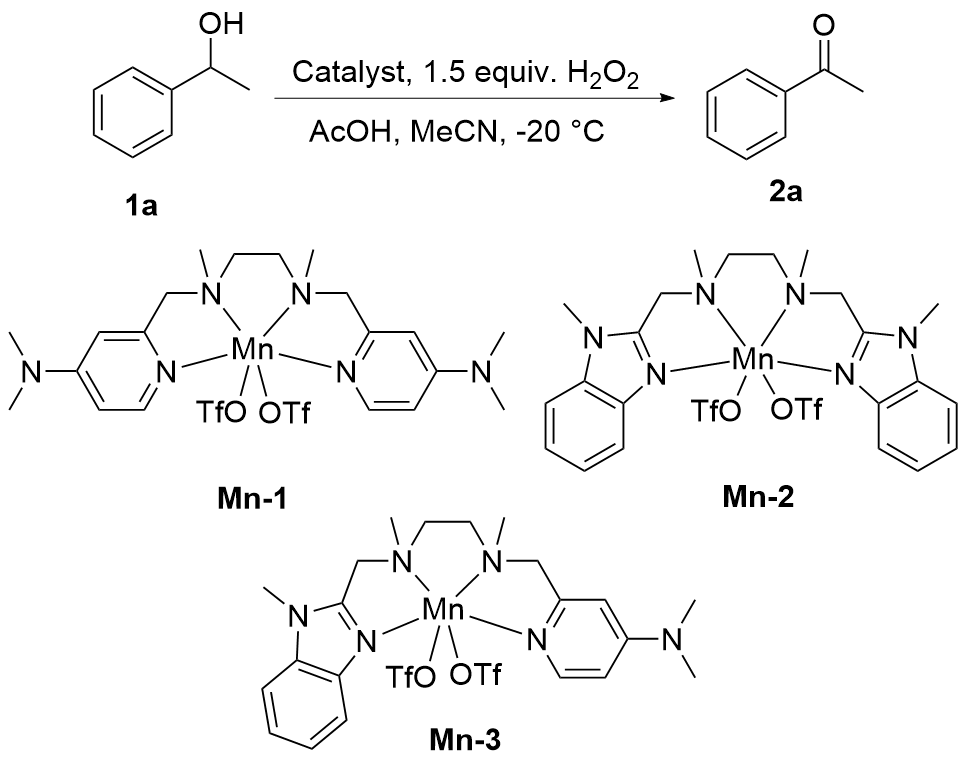
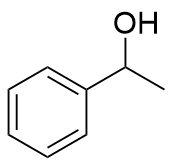
At the outset, the oxidation of 1-phenyl-ethanol (1a) to acetophenone (2a) was investigated in the present of complexes Mn-1~Mn-3 to identify the optimal reaction conditions. The results are summarized in Table 1. Using 0.05 mol% complex Mn-1 [Mn(Me2NMEP)(OTf)2] as the catalyst gave a 99% yield of 2a when 1 equiv. of AcOH was used as an additive (Entry 1). This result suggests that the introduction of Me2N groups in the N4 ligand has a similar effect to that observed in the asymmetric epoxidation of olefins, as it reduces the required amount of carboxylic acid.[17,20] As anticipated, even with 0.3 equiv. of AcOH, a 35% yield of ketone could be obtained using the same catalyst loading (0.05 mol% Mn-1, Entry 2). It was found that the conversion of alcohol improved with an increase in the amount of AcOH to 0.5 equiv. while maintaining the same catalyst loading, resulting in a yield of 60% (Entry 3). Additionally, the applicability of other complexes of N4 ligands was also investigated, and it was found that the catalytic activity of complexes Mn-2 and Mn-3 was lower than that of Mn-1 under the same conditions (Entries 4, 6, 1.0 equiv. of AcOH). The complex Mn-3, which was supported by a N4 ligand containing a benzimidazole and a Me2N functionalized pyridine unit, led to a better result than the Mn-2 complex (Entry 8). Thus, the conditions involved in Entry 1 with Mn-1 (0.05 mol%) as the catalyst, were found to be the optimal choice.
Table 1 Optimization of alcohol oxidation reaction conditiona
Entry Catalyst AcOH GC conv./% GC yield/%
1 Mn-1 1 99 99
2 Mn-1 0.3 36 35
3 Mn-1 0.5 63 60
4 Mn-2 1 5 4
5 Mn-2 6 35 31
6 Mn-3 1 26 24
7 Mn-3 3 64 63
8 Mn-3 6 99 99

a Reaction condition: 1.5 equiv. of 30% aqueous hydrogen peroxide diluted with 0.5 mL of MeCN was delivered by syringe pump over 1 h to a stirred solution of catalysts Mn-1~Mn3 (0.05 mol%), AcOH (0.3~6 equiv.), and substrate (0.5 mmol) in 1.0 mL of MeCN at -20 ℃. After the injection, the reaction was stirred at -20 ℃ for an additional 30 min.

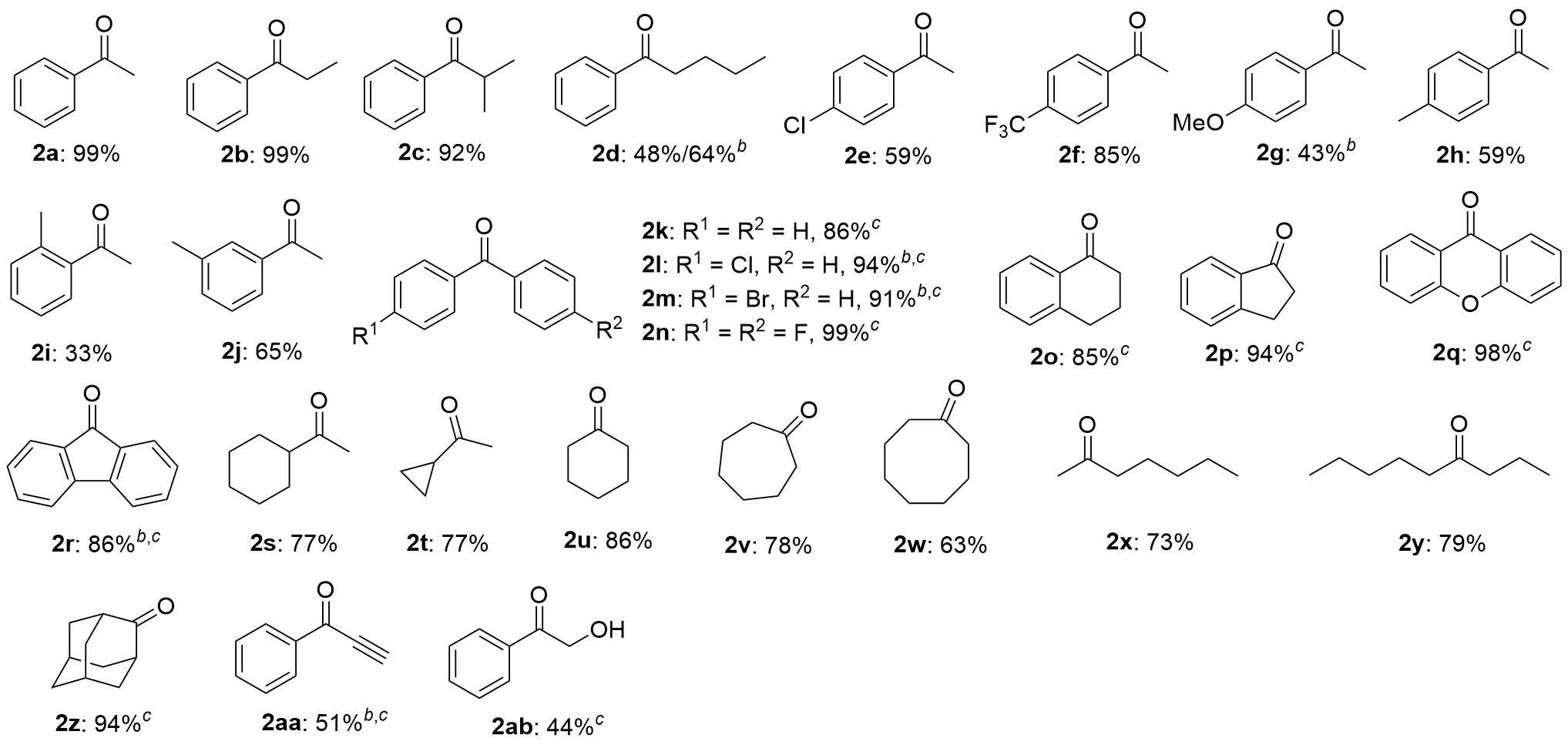
With the optimal reaction conditions established, the substrate scope of the reaction was subsequently explored. As shown in Table 2, generally, most secondary alcohols could be converted to the corresponding ketones in good to excellent yields. Secondary benzyl alcohols with various alkyl chains were easily converted (2a~2c), with the exception of substrate 1d which provided a moderate yield due to its long alkyl chain. For secondary benzylic alcohols with electron-donating and electron-withdrawing substituents at the para-position of the aromatic ring, moderate yields were obtained (2e~2h). In the case of the substrate (1i) bearing a methyl group at the ortho-position, a 33% yield of product was observed (2i). When the substituent was at the meta- position, the reaction proceeded well to give the desired ketone in 65% yield (2j). Furthermore, various diphenyl methanol derivatives were successfully oxidized to their corresponding ketones in excellent isolated yields, including substrate 1n which features para-fluoro groups on both benzene rings (2k~2n). Next, the catalytic system was applied to the oxidation of cyclic benzylic secondary alcohols and alcohols containing heteroatoms, yielding good to excellent results (2o~2r). For cyclic aliphatic secondary alcohols, the oxidation reaction proceeded smoothly to provide the desired ketones in good yields under optimized conditions (2s~2w). Furthermore, long-chain aliphatic secondary alcohols were also successfully oxidized in good yields (2x and 2y). As known for its unique steric effect, 2-admantanol yielded an excellent conversion to its corresponding ketone (2z). The present catalytic system was applicable to the primary propargylic alcohol, albeit with a moderate yield in the presence of 3 equiv. of AcOH (2aa, 51% isolated yield). To explore the chemoselectivity of the oxidation of vicinal diols, 1-phenyl-1,2-ethanediol was chosen as the substrate, and a 44% yield was obtained under optimized conditions (2ab).
Table 2 Substrate scope for the oxidation of secondary alcoholsa

a Unless otherwise specified, typically, substrate (0.5 mmol), Mn-1 catalyst (0.05 mol%), AcOH (1 equiv.) and MeCN (1.0 mL) were added into a tube; then, H2O2 (1.5 equiv., 30% aqueous solution diluted in 0.5 mL of MeCN) was added dropwise to the solution using a syringe pump over a period of 1 h, and the reaction solution was stirred at -20 ℃ for an additional 30 min. The yield was determined by GC. b 3 equiv. of acetic acid is used. c Isolated yield.

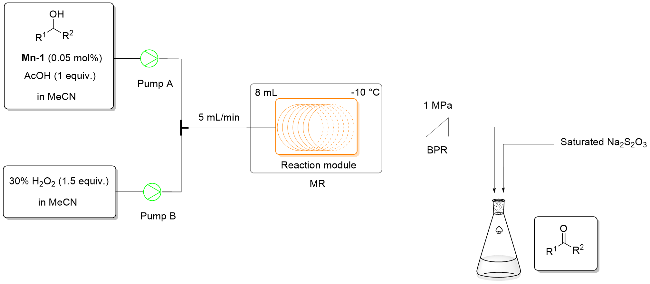
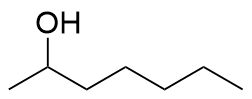
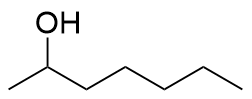
To explore the application of Mn-1 in a continuous flow process, a series of continuous flow experiments were then conducted. As shown in Scheme 2, pump A introduced the substrate (0.5 or 1 mol/L in MeCN), catalyst Mn-1, and additive AcOH, while pump B transferred H2O2 (30% H2O2 in MeCN), and a back-pressure regulator was used. When 1-phenyl ethanol (1a) was used, the oxidation proceeded smoothly, achieving a 100% ketone yield within a single reaction module (8 mL, with a 1.6 min residence time, Table 3, Entry 1). Under identical conditions, the oxidation of 2-heptanol (1x, 1.0 mol/L in MeCN) was evaluated, resulting in a 46% yield of ketone (2x) (Table 3, Entry 2). This yield was lower than that obtained in batch reaction. To address this, the substrate concentration was reduced to 0.5 mol/L and the residence time was extended by utilizing two reaction modules. This modification led to a 3.2 min residence time, producing ketone 2x in a 60% yield (Table 3, Entry 3). Collectively, the continuous flow oxidation proved successful, significantly reducing the overall process time compared to the traditional batch system. On the other hand, the batch approach necessitated the slow addition of H2O2 using a syringe pump to prevent its decomposition. Importantly, continuous flow system facilitated the safe and rapid handling of H2O2. The application of this highly efficient Mn-catalyzed flow oxidation process to 1-phenyl- ethanol (1a) replicated the batch results more rapidly, achieving a 100% yield at a 50 mmol scale with 1.6 min residence time in the continuous-flow process.
Scheme 2 Continuous flow process for alcohol oxidation with the Mn-1 (0.05 mol%)/H2O2 (1.5 equiv.)/AcOH (1 equiv.) (each reaction module is 8 mL)
Table 3 Development of Mn-1 catalytic system for the oxidation of secondary alcohols in flow systema
Entry Substrate Substrate concentration/(mol•L-l) Residence time/min Yield/%
1 1 1.6 100
2 1 1.6 46
3b 0.5 3.2 60

a In the continuous flow system, the yield was determined by GC. b In continuous flow system, two reaction modules were used.

3 Conclusions

In conclusion, a series of manganese complexes of N4 ligands have been synthesized and employed in the catalytic oxidation of alcohols. Notably, the Mn-N4 complex featuring a Me2NMEP ligand demonstrated exceptional catalytic performance in the oxidation of various secondary alcohols, utilizing low catalyst loading and a minimal amount of acid. Moreover, we successfully adapted this catalytic system for continuous flow processes, achieving a remarkable result in the oxidation of 1-phenylethanol with a 100% yield at a 50 mmol scale in a residence time of 1.6 min. This research presents an efficient and practical methodology for the scalable oxidation of secondary alcohols. Future investigations will focus on exploring the continuous flow process in other catalytic oxidation reactions using H2O2.

4 Experimental section

4.1 General information

All solvents and commercially available compounds were used as received unless stated otherwise. Analytical thin-layer chromatography (TLC) was carried out using 0.25 mm commercial silica gel plates. Visualization was accomplished with UV light. Purification of reactions was carried out by flash chromatography using Huanghai silica gel (300~400 mesh). NMR spectra were recorded at 298 K on a Bruker avance 400 or 500 equipment. ESI-MS spectra were collected using a Bruker Daltonics microTOF-Q II mass spectrometer. GC-MS was recorded on an Agilent 7890A/5975C equipment. GC analysis for yields was determined with an Agilent 7890 GC with a HP-5 column.
All reactions were performed under air unless stated otherwise. Absolute-grade solvents were used for the catalytic runs without further purification. The continuous flow system utilizes the S3 model modular microreactor from Shandong Yinglewei Equipment Technology Co., Ltd. It can accommodate up to eight reaction modules. The reactor chip is made of pressureless sintered silicon carbide, with a typical liquid hold-up capacity of 8 mL. The piston pumps are the JJRZ-10005F model from Hangzhou Jingjin Technology Co., Ltd. The backpressure regulator (BPR) is the BP1-A2F1J4A21 model from Shanghai Yufa Fluid Technology Co., Ltd.

4.2 Synthesis of Mn-N4 complexes

The ligands L1 (Me2NMEP) was prepared according to previously reported methods.[21] The ligands L2 and L3 were synthesized by modified procedures reported in literature.[22] Mn(CF3SO3)2 (1.0 mmol) was added to a stirred solution of chiral ligand L1~L3 (1.0 mmol) in acetonitrile (2 mL) at room temperature. The reaction mixture was stirred for 24 h, and the solvent was removed under vacuum. The result solid was washed thoroughly with diethyl ether for three times, then dried under vacuum to give the Mn-N4 complexes.
N,N'-Dimethyl-N,N'-bis((1-methyl-1H-benzo[d]imidazol- 2-yl)methyl)ethane-1,2-diamine (L2): White solid. m.p. 155~156 ℃; 1H NMR (400 MHz, CDCl3) δ: 7.74~7.69 (m, 2H), 7.31~7.23 (m, 6H), 3.83 (s, 4H), 3.76 (s, 6H), 2.68 (s, 4H), 2.28 (s, 6H); 13C NMR (101 MHz, CDCl3) δ: 151.63, 142.17, 136.28, 122.57, 121.93, 119.60, 109.15, 55.42, 55.23, 42.70, 30.03; HRMS (ESI-MS) calcd for C22H28N6 [M+H] 377.2443, found 377.2448.
N-((4-(Dimethylamino)pyridin-2-yl)methyl)-N,N'-dimethyl-N'-((1-methyl-1H-benzo[d]imidazol-2-yl)methyl)-ethane-1,2-diamine (L3): Yellow oil. 1H NMR (400 MHz, CDCl3) δ: 8.13 (d, J=6.1 Hz, 1H), 7.72~7.70 (m, 1H), 7.29~7.21 (m, 3H), 6.62 (d, J=2.7 Hz, 1H), 6.37 (dd, J=2.7, 6.1 Hz, 1H), 3.83 (s, 3H), 3.82 (s, 2H), 3.61 (s, 2H), 2.93 (s, 6H), 2.70~2.61 (m, 4H), 2.27 (d, J=5.2 Hz, 6H); 13C NMR (101 MHz, CDCl3) δ: 155.14, 151.99, 142.23, 136.37, 122.44, 121.79, 119.56, 109.11, 105.25, 105.20, 55.79, 55.60, 55.29, 43.02, 42.79, 39.19, 30.17; HRMS (ESI-MS) calcd for C21H30N6 [M+H] 367.2598, found 367.2605.
Mn-1: Brown solid, yield 88%. HRMS (ESI-MS) calcd for C20H32MnN6 [M-2OTf]2+ 205.6024, found 205.6029.
Mn-2: White solid, yield 94%. HRMS (ESI-MS) calcd for C23H28F3MnN6O3S [M-OTf] 580.1272, found 580.1276.
Mn-3: Brown solid, yield 87%. HRMS (ESI-MS) calcd for C22H30F3MnN6O3S [M-OTf] 570.1425, found 570.1433.

4.3 General procedure for the Mn-catalyzed oxidation of secondary alcohols (batch reaction)

In a typical reaction, a MeCN (1 mL) solution of substrate (0.5 mmol), Mn-N4 catalyst (0.05 mol%) and acetic acid (0.3~6 equiv.) was added to a 10 mL flask at -20 ℃. A H2O2 solution (1.5 equiv., diluted from a 30% aqueous solution in 0.5 mL of MeCN) was added via a syringe pump over 1 h with stirring at -20 ℃. The solution was further stirred at room temperature for 30 min. At this point, 1,1,2,2-tetrachloroethane was added to the mixture as the internal standard. After the reaction was quenched with saturated NaHCO3 aqueous solution and saturated Na2S2O3 aqueous solution, the mixture solution was extracted with ether, then the yield was determined by GC or directly loaded on a flash column chromatography to get pure product.

4.4 General procedure for the Mn-catalyzed oxidation of secondary alcohols (continuous flow)

A solution of substrate (50 mmol), Mn-1 (0.05 mol%) and acetic acid (1 equiv.) in MeCN (1 mol/L, 50 mL; 0.5 mol/L, 100 mL) was prepared. The second solution was H2O2 in MeCN (1.5 equiv., 30% aqueous solution diluted in 50 mL of MeCN). The reaction mixture was loaded into the agitated tube reactor (ATR) with a piston pump through a polytetrafluoroethylene (PTFE) feed tube and a T-shaped inlet adaptor at a flow rate of 10 mL/min. At the same time, a solution of H2O2 in 50 mL of MeCN was loaded into the ATR at a flow rate of 5 mL/min via piston pump through the T-shaped inlet adaptor. The reaction was carried out at -10 ℃ with the pressure maintained at 1 MPa (Back pressure regulator was placed at the end of the line). The resulting yellow solution was flowed out through an L-shaped outlet elbow, and the corresponding internal standard (1,1,2,2- tetrachloroethane) was added into the reaction mixture. Afterwards, saturated Na2S2O3 aqueous solution was added to the reaction mixture, and the product was extracted with ether, then the yield was determined by GC analysis.
Benzophenone (2k): White solid, 86% yield [eluent: petroleum ether (PE)/ethyl acetate (EA) (VV=10∶1)]. m.p. 49.8~50.3 ℃ (lit.[23] 47~49 ℃); 1H NMR (400 MHz, CDCl3) δ: 7.83~7.80 (m, 4H), 7.61~7.57 (m, 2H), 7.51~7.46 (m, 4H); 13C NMR (101 MHz, CDCl3) δ: 196.79, 137.61, 132.45, 130.09, 128.30.
4-Chlorobenzophenone (2l): White solid, 94% yield [eluent: PE/EA (VV=3∶1)]. m.p. 74~75 ℃(lit.[23] 75~76 ℃); 1H NMR (400 MHz, CDCl3) δ: 7.78~7.72 (m, 4H), 7.61~7.55 (m, 1H), 7.50~7.42 (m, 4H); 13C NMR (101 MHz, CDCl3) δ: 195.43, 138.88, 137.24, 135.88, 132.67, 131.48, 129.94, 128.65, 128.43.
4-Bromobenzophenone (2m): White solid, 91% yield [eluent: PE/EA (VV=3∶1)]. m.p. 81~82 ℃ (lit.[24] 80~82 ℃); 1H NMR (400 MHz, CDCl3) δ: 7.79~7.76 (m, 2H), 7.69~7.62 (m, 4H), 7.61~7.58 (m, 1H), 7.49 (dd, J=7.0, 8.4 Hz, 2H); 13C NMR (101 MHz, CDCl3) δ: 195.67, 137.19, 136.32, 132.70, 131.64, 131.59, 129.96, 128.43, 127.54.
Bis(4-fluorophenyl)-methanone (2n): White solid, 99% yield [eluent: PE/EA (VV=10∶1)]. m.p. 107~108 ℃ (lit.[25] 106~108 ℃); 1H NMR (400 MHz, CDCl3) δ: 7.84~7.79 (m, 4H), 7.20~7.14 (m, 4H); 13C NMR (101 MHz, CDCl3) δ: 193.84, 166.68, 164.15, 133.72, 133.69, 132.56, 132.47, 115.69, 115.49.
1-Tetralone (2o):[15] Yellow oil, 5% yield [eluent: PE/EA (VV=10∶1)]. 1H NMR (400 MHz, CDCl3) δ: 8.04 (dd, J=1.5, 7.7 Hz, 1H), 7.50~7.45 (m, 1H), 7.32~7.24 (m, 2H), 2.97 (t, J=6.1 Hz, 2H), 2.66 (dd, J=5.8, 7.3 Hz, 2H), 2.17~2.11 (m, 2H); 13C NMR (101 MHz, CDCl3) δ: 198.43, 144.51, 133.41, 132.63, 128.79, 127.18, 126.65, 39.19, 29.73, 23.30.
1-Indanone (2p): Yellow solid, 94% yield [eluent: PE/EA (VV=10∶1)]. m.p. 41~42 ℃ (lit.[15] 41~43 ℃); 1H NMR (400 MHz, CDCl3) δ: 7.74~7.71 (m, 1H), 7.58~7.54 (m, 1H), 7.47~7.44 (m, 1H), 7.36~7.32 (m, 1H), 3.13~3.10 (m, 2H), 2.69~2.64 (m, 2H); 13C NMR (101 MHz, CDCl3) δ: 207.08, 155.18, 137.07, 134.61, 127.28, 126.72, 123.68, 36.22, 25.81.
Xanthone (2q): White solid, 98% yield [eluent: PE/EA (VV=10∶1)]. m.p. 171~172 ℃ (lit.[15] 172~173 ℃); 1H NMR (400 MHz, CDCl3) δ: 8.35 (dd, J=1.7, 8.0 Hz, 2H), 7.76~7.71 (m, 2H), 7.50 (dd, J=1.1, 8.5 Hz, 2H), 7.41~7.39 (m, 2H); 13C NMR (101 MHz, CDCl3) δ: 177.27, 156.20, 134.85, 126.77, 123.94, 121.88, 118.01.
9-Fluorenone (2r): Yellow solid, 86% yield [eluent: PE/EA (VV=3∶1)]. m.p. 84~85 ℃ (lit.[15] 84~86 ℃); 1H NMR (400 MHz, CDCl3) δ: 7.67 (d, J=7.3 Hz, 2H), 7.56~7.47 (m, H), 7.32~7.28 (m, 2H); 13C NMR (126 MHz, CDCl3) δ: 193.95, 144.45, 134.70, 134.17, 129.09, 124.34, 120.32.
2-Adamantanone (2z): White solid, 94% yield [eluent: PE/EA (VV=10∶1)]. m.p. 256~257 ℃ (lit.[15] 256~258 ℃); 1H NMR (400 MHz, CDCl3) δ: 2.54 (t, J=2.6 Hz, 2H), 2.17~1.92 (m, 13H); 13C NMR (126 MHz, CDCl3) δ: 218.51, 46.98, 39.26, 36.30, 27.45.
1-Phenyl-2-propyn-1-one (2aa): Yellow solid, 51% yield [eluent: PE/EA (VV=3∶1)]. m.p. 49~50 ℃ (lit.[25] 51~52 ℃); 1H NMR (400 MHz, CDCl3) δ: 8.19~8.16 (m, 2H), 7.66~7.62 (m, 1H), 7.53~7.49 (m, 2H), 3.43 (s, 1H); 13C NMR (126 MHz, CDCl3) δ: 177.41, 136.16, 134.54, 129.73, 128.71, 80.77, 80.29.
2-Hydroxyacetophenone (2ab): White solid, 44% yield [eluent: PE/EA (VV=3∶1)]. m.p. 87~88 ℃ (lit.[15] 87~89 ℃); 1H NMR (400 MHz, CDCl3) δ: 7.93~7.91 (m, 2H), 7.65~7.61 (m, 1H), 7.50 (t, J=7.8 Hz, 2H), 4.88 (s, 2H); 13C NMR (101 MHz, CDCl3) δ: 198.42, 134.32, 133.39, 129.00, 127.71, 65.48.
Supporting Information Continuous flow equipment and 1H NMR and 13C NMR spectra of compounds L2, L3, 2k~2r, 2z, 2aa and 2ab. The Supporting Information is available free of charge via the Internet at http://sioc-journal.cn.
(Zhao, C.)
[1]
(a) Caron, S.; Dugger, R. W.; Ruggeri, S. G.; Ragan, J. A.; Ripin, D. H. B. Chem. Rev. 2006, 106, 2943.

DOI

(b) Sheldon, R. A.; Arends, I. W. C. E.; ten Brink, G.-J. Dijksman, A. Acc. Chem. Res. 2002, 35, 774.

DOI

(c) Davis, S. E.; Ide, M. S.; Davis, R. J. Green Chem. 2013, 15, 17.

DOI

[2]
(a) Bowden, K.; Heilbron, I. M.; Jones, E. R. H.; Weedon, B. C. L. J. Chem. Soc. 1946, 39.

(b) Corey, E. J.; Suggs, J. W. Tetrahedron Lett. 1975, 16, 2647.

DOI

(c) Piancatelli, G.; Scettri, A.; D’Auria, M. Synthesis 1982, 245.

[3]
Ladbury, J. W.; Cullis, C. F. Chem. Rev. 1958, 58, 403.

DOI

[4]
(a) Yoshimura, A.; Zhdankin, V. V. Chem. Rev. 2016, 116, 3328.

DOI PMID

(b) Frigerio, M.; Santagostino, M. Tetrahedron Lett. 1994, 35, 8019.

DOI

(c) More, J. D.; Finney, N. S. Org. Lett. 2002, 4, 3001.

DOI

[5]
(a) ten Brink, G. J.; Arends, I. W. C. E.; Sheldon, R. Science 2000, 287, 1636.

DOI PMID

(b) Hoover, J. M.; Stahl, S. S. J. Am. Chem. Soc. 2011, 133, 16901.

DOI

[6]
(a) Steinhoff, B. A.; Fix, S. R.; Stahl, S. S. J. Am. Chem. Soc. 2002, 124, 766.

PMID

(b) Bailie, D. S.; Clendenning, G. M. A.; McNamee, L.; Muldoon, M. J. Chem. Commun. 2010, 46, 7238.

DOI

(c) Dijksman, A.; Arends, I. W. C. E.; Sheldon, R. A. Chem. Commun. 1999, 1591.

(d) Markó, I. E.; Giles, P. R.; Tsukazaki, M.; Chélle-Regnaut, I.; Urch, C. J.; Brown, S. M. J. Am. Chem. Soc. 1997, 119, 12661.

DOI

(e) Patil, M. R.; Kapdi, A. R.; Kumar, A. V. ACS Sustainable Chem. Eng. 2018, 6, 3264.

DOI

[7]
(a) Grogan, G. JACS Au 2021, 1, 1312.

DOI

(b) Sigmund, M. C.; Poelarends, G. J. Nat. Catal. 2020, 3, 690.

DOI

[8]
Wang, Y.; DuBois, J. L.; Hedman, B.; Hodgson, K. O.; Stack, T. D. P. Science 1998, 279, 537.

PMID

[9]
Oh, N. Y.; Suh, Y.; Park, M. J.; Seo, M. S.; Ki, J.; Nam, W. Angew. Chem., Int. Ed. 2005, 44, 4235.

DOI

[10]
Nehru, K.; Kim, S. J.; Kim, I. Y.; Seo, M. S.; Kim, Y.; Kim, S.-J.; Kim, J.; Nam, W. Chem. Commun. 2007, 44, 4623.

[11]
(a) Que, L. Jr.; Tolman, W. B. Nature 2008, 455, 333.

DOI

(b) Guo, M.; Corona, T.; Ray, K.; Nam, W. ACS Cent. Sci. 2019, 5, 13.

DOI

(c) Ray, K.; Pfaff, F. F.; Wang, B.; Nam, W. J. Am. Chem. Soc. 2014, 136, 13942.

DOI

[12]
(a) Oloo, W. N.; Que, L. Jr. Acc. Chem. Res. 2015, 48, 2612.

DOI

(b) Nam, W. Acc. Chem. Res. 2015, 48, 2415.

DOI

(c) Larson, V. A.; Battistella, B.; Ray, K.; Lehnert, N.; Nam, W. Nat. Rev. Chem. 2020, 4, 404.

DOI

(d) Chen, Z.; Yin, G. Chem. Soc. Rev. 2015, 44, 1083.

DOI

[13]
(a) Bryliakov, K. P. Chem. Rev. 2017, 117, 11406.

DOI

(b) Vicens, L.; Olivo, G.; Costas, M. ACS Catal. 2020, 10, 8611.

DOI

(c) Chen, J.; Jiang, Z.; Fukuzumi, S.; Nam, W.; Wang, B. Coord. Chem. Rev. 2020, 421, No. 213443.

[14]
Sun, W.; Sun, Q. S. Acc. Chem. Res. 2019, 52, 2370.

DOI

[15]
Shen, D. Y.; Miao, C. X.; Xu, D. Q.; Xia, C. G.; Sun, W. Org. Lett. 2015, 17, 54.

DOI

[16]
(a) Lyakin, O. Y.; Ottenbacher, R. V.; Bryliakov, K. P.; Talsi, E. P. ACS Catal. 2012, 2, 1196.

DOI

(b) Oloo, W. N.; Banerjee, R.; Lipscomb, J. D.; Que, L. Jr. J. Am. Chem. Soc. 2017, 139, 17313.

DOI

(c) Ottenbacher, R. V.; Samsonenko, D. G.; Talsi, E. P.; Bryliakov, K. P. ACS Catal. 2016, 6, 979.

DOI

(d) Cussó, O.; Serrano-Plana, J.; Costas, M. ACS Catal. 2017, 7, 5046.

DOI

(e) Du, J.; Miao, C.; Xia, C.; Lee, Y.-M.; Nam, W.; Sun, W. ACS Catal. 2018, 8, 4528.

DOI

(f) Mas-Ballesté, R.; Que, L. J. Am. Chem. Soc. 2007, 129, 15964.

PMID

(g) Lin, J.; Wang, F.; Tian, J.; Zhang, J.; Wang, Y.; Sun, W. Chin. Chem. Lett. 2022, 33, 1515.

DOI

[17]
(a) Cussó, O.; Garcia-Bosch, I.; Ribas, X.; Lloret-Fillol, J.; Costas, M. J. Am. Chem. Soc. 2013, 135, 14871.

DOI PMID

(b) Cussó, O.; Garcia-Bosch, I.; Font, D.; Ribas, X.; Lloret-Fillol, J.; Costas, M. Org. Lett. 2013, 15, 6158.

DOI PMID

[18]
(a) Movsisyan, M.; Delbeke, E. I. P.; Berton, J. K. E. T.; Battilocchio, C.; Ley, S. V.; Stevens, C. V. Chem. Soc. Rev. 2016, 45, 4892.

DOI PMID

(b) Gutmann, B.; Cantillo, D.; Kappe, C. O. Angew. Chem., Int. Ed. 2015, 54, 6688.

DOI

(c) Sagandira, C. R.; Nqeketo, S.; Mhlana, K.; Sonti, T.; Gaqa, S.; Watts, P. React. Chem. Eng. 2022, 7, 214.

DOI

(d) Baumann, M.; Moody, T. S.; Smyth, M.; Wharry, S. Org. Process Res. Dev. 2020, 24, 1802.

DOI

[19]
(a) Ryan, A. A.; Dempsey, S. D.; Smyth, M.; Fahey, K.; Moody, T. S.; Wharry, S.; Dingwall, P.; Rooney, D. W.; Thompson, J. M.; Knipe, P. C.; Muldoon, M. J. Org. Process Res. Dev. 2023, 27, 262.

DOI

(b) Brandolese, A.; Lamparelli, D. H.; Pericàs, M. A.; Kleij, A. W. ACS Sustainable Chem. Eng. 2023, 11, 4885.

DOI

(c) Naik, P.; García-Lacuna, J.; O’Neill, P.; Baumann, M. Org. Process Res. Dev. 2024, 28, 1587.

DOI

(d) Ryan, A. A.; Dempsey, S. D.; Smyth, M.; Fahey, K.; Moody, T. S.; Wharry, S.; Dingwall, P.; Rooney, D. W.; Thompson, J. M.; Knipe, P. C.; Muldoon, M. J. ChemCatChem 2024, 16, e202301709.

DOI

[20]
Shen, D. Y.; Qiu, B.; Xu, D. Q.; Miao, C. X.; Xia, C. G.; Sun, W. Org. Lett. 2016, 18, 372.

DOI

[21]
Wang, B. Y.; Cao, X. Y.; Wang, L. X.; Meng, X. Y.; Wang, Y.; Sun, W. Inorg. Chem. 2024, 63, 9156.

DOI

[22]
(a) Shen, D. Y.; Miao, C. X.; Wang, S. F.; Xia, C. G.; Sun, W. Org. Lett. 2014, 16, 1108.

DOI

(b) Wang, W. F.; Xu, D. Q.; Sun, Q. S.; Sun, W. Chem.-Asian J. 2018, 13, 2458.

DOI

[23]
Wang, B. Y.; Lin, J.; Xia, C. G.; Sun, W. J. Catal. 2022, 406, 87.

DOI

[24]
Shen, D. Y.; Ren, T.; Zhang, H. X.; Chao, M. R.; Sun, C. Y.; Gong, P. W.; Zhang, S. M.; Lee, Y.-M.; Fukuzumi, S.; Nam, W. ACS Catal. 2024, 14, 2162.

DOI

[25]
Dai, W.; Lv, Y.; Wang, L. Y.; Shang, S. S.; Chen, B.; Li, G. S.; Gao, S. Chem. Commun. 2015, 51, 11268.

DOI

文章导航

/