

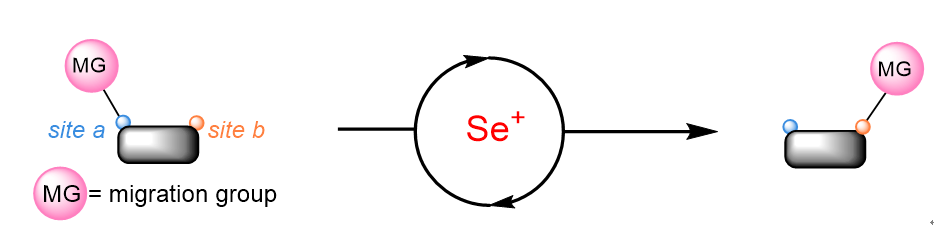
不同元素具有其独特的特性, 若能充分挖掘并利用这些特性进行化合物的构建, 进而将其作为催化剂, 则有望实现难以达成的化学转化. 在过去数十年间, 过渡金属元素的催化应用已成为研究热点, 并受到学术界的广泛关注[1]. 一方面, 此类金属元素具有未填满的d轨道, 与配体结合形成配合物后, 能够通过多样化的配位模式与待活化底物发生相互作用, 进而发挥特异性的活化功能; 另一方面, 过渡金属通常具备丰富的氧化态变化能力, 能够通过参与氧化还原循环驱动各类有机化学转化. 因此, 过渡金属催化已成为合成化学中一种常用的工具. 然而, 过渡金属在活化底物时, 受限于活化能力, 所形成中间体的活性也会受到一定制约, 部分化学转化无法高效完成. 基于此, 开发新型催化策略以突破现有技术瓶颈, 已成为合成化学领域的重要前沿研究方向之一.
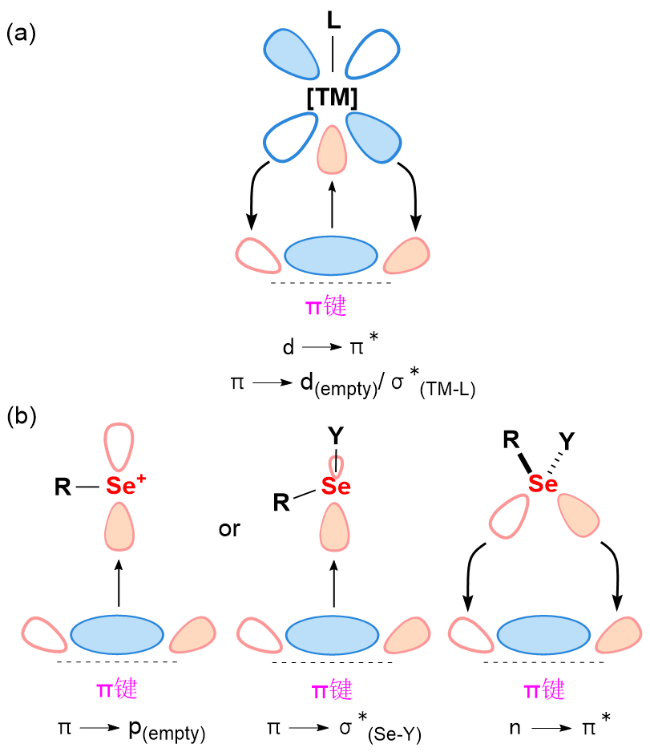
与过渡金属元素不同, p区主族元素的价电子分布于s轨道和p轨道. 这类元素所形成的化合物在底物活化过程中,其活化模式与活化效率均与过渡金属化合物存在显著差异. 因此, p区主族元素催化作为过渡金属催化的重要合成互补策略, 近年来备受学术界的广泛关注, 并逐渐发展成为合成化学领域的重要前沿研究方 向[2-6]. 尤其值得注意的是, p区主族元素中的硒作为一种人体必需的微量元素, 不仅参与抗氧化防御、蛋白质合成调控[7], 还在材料、生物医药以及营养学等领域得到应用[8]. 特别地, 在催化合成领域, 硒所形成的亲电硒物种不仅具有优异的亲碳性, 还能与杂原子型亲核基团发生有效结合, 且其与底物相互作用的活化模式及活化程度均与过渡金属物种存在显著差异. 例如, 过渡金属通常借助空的d轨道/σ*轨道与π键的成键轨道结合, 并通过d轨道与π键的反键轨道形成反馈π键以增强相互作用. 相比之下,亲电硒则可通过空的p轨道与π键的成键轨道作用, 或者通过σ*轨道与π键的成键轨道作用, 同时伴随着n电子所在的p轨道与π键的反键轨道作用, 实现对底物的活化(Scheme 1)[9]. 亲电硒与π键作用后形成高活性中间体. 该中间体易受亲核试剂进攻, 生成稳定的硒化中间体, 随后通过含硒基团的氧化-脱硒过程, 诱发各类有机化学转化, 同时释放低价亲电硒物种. 基于上述特性, 经历低价到高价再到低价硒催化循环的亲电硒催化, 已成为合成化学领域中一类重要的合成工具[6].
亲电硒催化的相关报道可追溯至1979年, Sharpless团队[10]利用亲电硒催化实现了烯烃的烯丙基氯化反应. 在此后的数十年间, 由于该类催化反应中氧化体系存在诸多限制, 这一研究领域的发展进程相对迟缓[11]. 直至2013年以后, 随着更多高效催化氧化体系的开发, 亲电硒催化才逐渐受到更多关注[12]. 该催化策略可广泛应用于烯、炔烃等各种转化反应, 包括应用在重排反应中. 尽管已有综述类文献从不同角度总结了亲电硒催化的研究进展[6,13], 但截至目前, 尚未有专门针对其在重排反应中应用的综述报道.
众所周知, 重排反应是有机合成领域中一类重要反应. 通过重排反应, 分子中的原子或基团从一个原子转移至另一个原子上, 进而构建出具有全新骨架结构的分子. 这类反应不仅能改变分子的骨架结构, 还能伴随官能团的转化, 在天然产物合成、药物研发等领域应用广泛. 根据反应机理的差异, 重排反应可分为基团迁移反应和周环反应两大类. 其中, 基团迁移反应依据反应中间体的不同, 又可细分为亲核重排、亲电重排与自由基重排[14]. 本文将简要概述亲电硒催化在重排反应研究中的进展, 并按重排反应的机理分类.
1 亲核重排(缺电子重排)
亲核重排又称缺电子重排, 在这类重排反应中, 迁移基团携带一对电子向分子中缺电子中心, 如缺电子的碳、氮、氧等发生迁移, 最终实现分子骨架或官能团的重排[14], 其核心是迁移基团作为一种“亲核试剂”. 在亲电硒催化的亲核重排反应中, 亲电硒物种可在反应进程中诱导缺电子中心的形成, 进而驱动重排反应的发生. 重排的基团可以是含碳基团、氧原子或者含氧基团.
1.1 含碳基团迁移的Wagner-Meerwein型重排反应
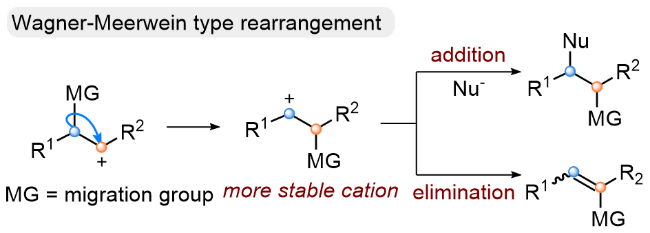
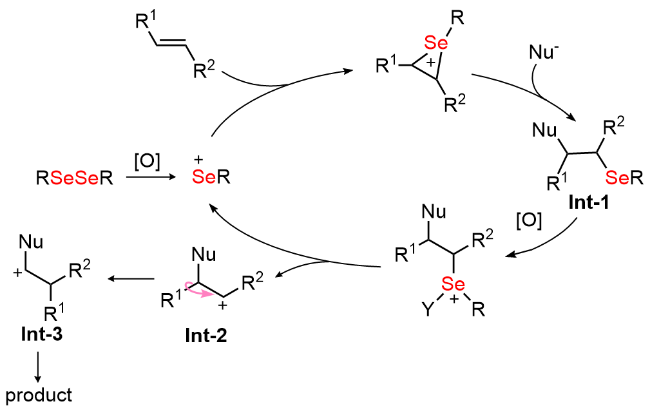
亲电硒物种可以与烯烃相互作用, 形成缺电子中心, 进而引发基团重排. 在此基础上, 发展了亲电硒催化的重排反应. 重排的过程类似Wagner-Meerwein型重排反应. 通常, 该反应的机理概括如下: 二硒醚在氧化剂的作用下形成二价的亲电硒物种, 其与烯烃的π键作用生成高活性的三元环硒鎓离子, 受到亲核试剂的进攻后得到硒醚中间体Int-1. 这种中间体被氧化剂氧化成高价态的四价硒, 然后分解生成催化剂物种和一种碳正离子中间体Int-2. Int-2的基团发生迁移重排, 生成热力学相对稳定的中间体Int-3, 其进一步转化为目标产物(Scheme 3).
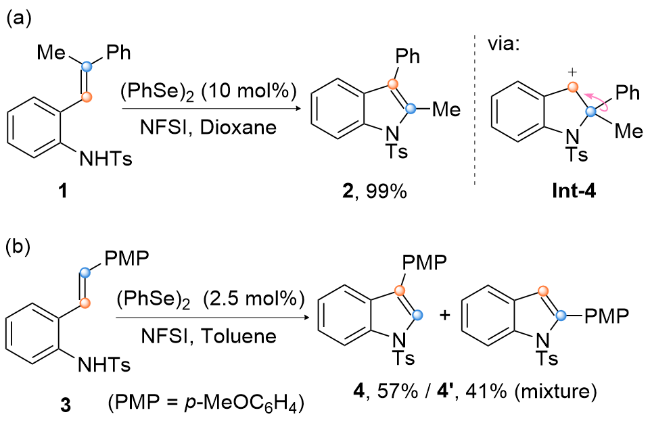
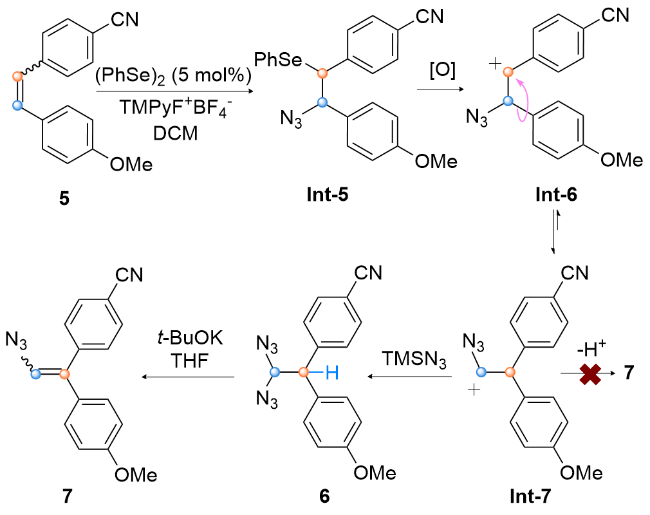
2024年, 赵晓丹团队报道, 通过亲电硒催化烯烃偕二叠氮化反应, 构建了系列β-芳基取代的烷基偕二叠氮产物, 反应经历了重排过程[17]. 该反应的发生得益于不同碳正离子中间体稳定性的精准调控. 以烯烃5为例, 利用烯烃两侧电子效应的不同, 高区域选择性地生成了硒化叠氮化中间体Int-5. 接着发生氧化脱硒, 在缺电子芳环的苄基位生成热力学相对不稳定的碳正离子Int-6, 随后富电子芳环发生迁移生成更稳定的叠氮取代的正离子中间体Int-7[18], 实现了热力学促进的芳基迁移. 最后, 通过亲核加成生成偕二叠氮化的目标产物6. 反应中没有观测到β-H消除产物7的生成. 后续产物6的转化实验揭示, 消除HN3的反应需要在强碱条件下进行, 这一现象既证实了β-H的酸性较弱, 又说明了Int-7具有相对高的稳定性(Scheme 5). 同样的底物在高价碘催化体系下并不能发生迁移重排, 这一结果凸显了经历二价到四价的亲电硒催化体系具有独特反应特性.
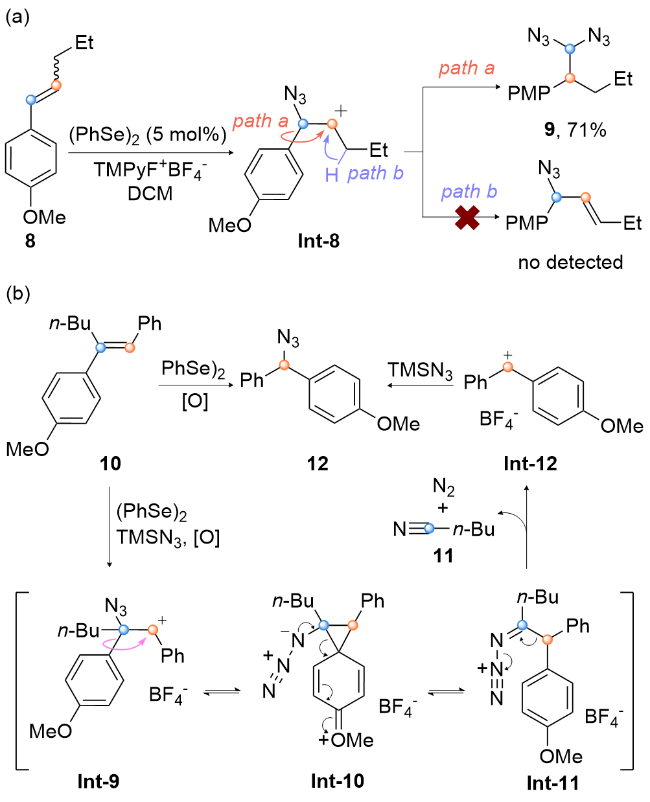
同年, Breder等[19]也报道了类似的迁移反应, 在光催化条件下, 以水作为亲核试剂, 利用底物10也观察到芳基迁移-偕二官能化过程的发生, 生成β-芳基取代的酮类化合物. 该研究借助计算化学手段提出, 脱硒化与芳基迁移过程可能由自由基引发.
1.2 氧原子或者含氧基团迁移的重排反应
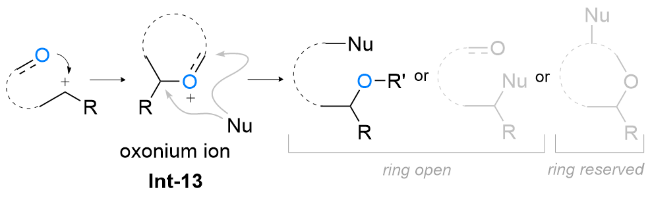
与Wagner-Meerwein型重排反应不同, 分子内氧迁移反应同样广泛存在于亲电硒催化的烯烃、炔烃官能团化反应体系中. 这类反应通常会经历氧鎓离子中间体, 该中间体被亲核试剂进攻后, 开环生成氧原子或含氧基团迁移的重排产物. 整个过程, 需先形成缺电子的碳正离子中心, 氧原子进攻形成氧鎓中间体Int-13, 随后被亲核试剂进攻开环并发生氧原子迁移(Scheme 7).
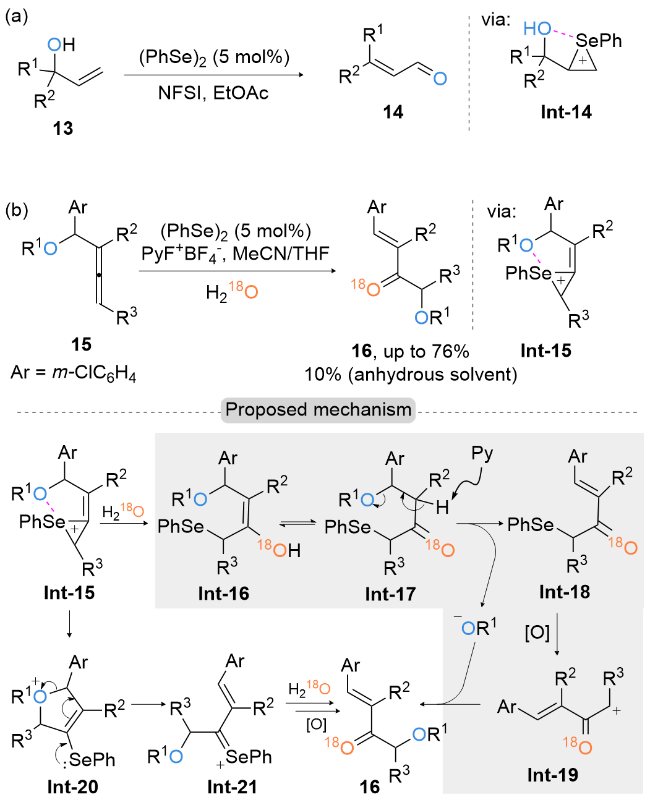
2015年, 赵晓丹团队[24]报道, 以末端烯丙基醇13为底物,在亲电硒催化下进行胺化反应时, 选用乙酸乙酯作为溶剂, 最终生成反式α,β-不饱和醛14, 而非目标胺化产物(Scheme 8a). 这种醛的形成可能是胺化中间体发生分子内氧原子迁移过程所致, 同时也不能排除羟基直接进攻硒鎓离子后转化为该产物的可能性. 2020年, Almendros课题组[25]报道了一例亲电硒催化的α-烷氧基联烯烷氧基迁移的反应, 成功合成了一系列烷氧基迁移产物α,β-不饱和酮(Scheme 8b). 机理研究表明, 该反应的顺利进行需有水的参与; 通过同位素标记及其他控制实验可明确酮羰基中氧原子的来源. 文中给出了分步的分子间重排机理, 但并未完全排除经由环氧鎓中间体Int-20协同迁移生成目标产物的可能性(Scheme 8b).
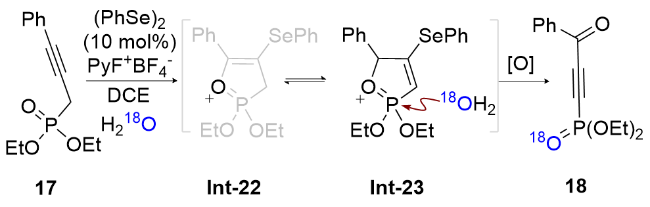
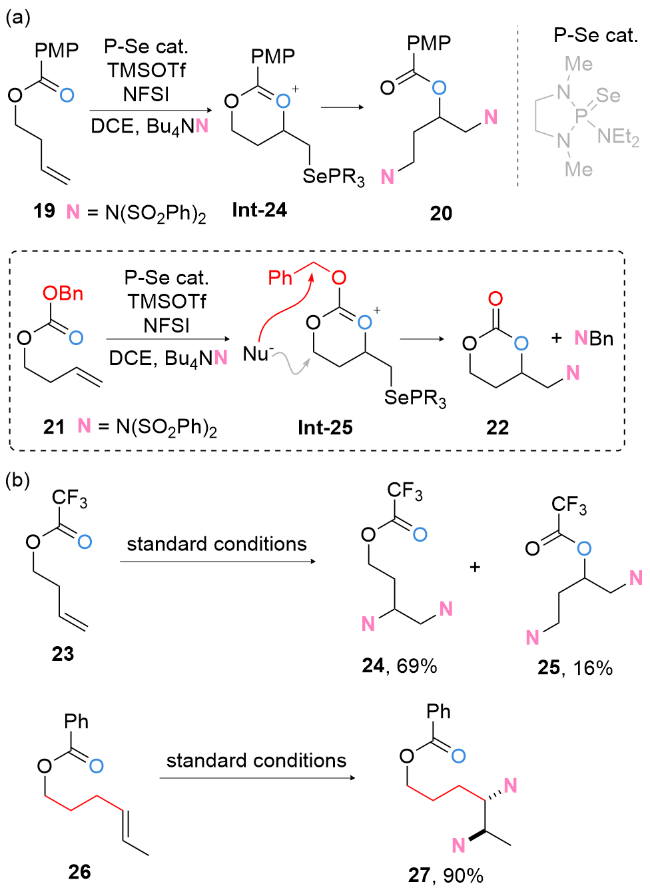
近几年, 其他课题组也报道了氧原子或者含氧基团迁移的相关实例. 2020年, Michael课题组[27]在实现亲电硒催化烯烃的分子间双胺化反应过程中, 观察到了含氧基团迁移的现象. 在双官能团化的反应中, 部分含有酯基的底物会通过邻基参与生成碳酸酯氧鎓盐中间体,盐中间体, 随后根据底物类型的不同, 碳酸酯氧鎓盐中间体开环形成酯基迁移产物或碳酸酯产物(Scheme 10a). 有趣的是, 并非所有含酯基的底物均能发生有效的邻基参与, 而双官能团化产物27的反式构型则为此提供了明确佐证. 只有当底物中的酯基兼具适宜的电子效应与匹配的烷基链长度时, 分子内邻基参与过程方可高效进行; 反应先形成碳酸酯氧鎓离子中间体, 继而引发后续转化(Scheme 10).
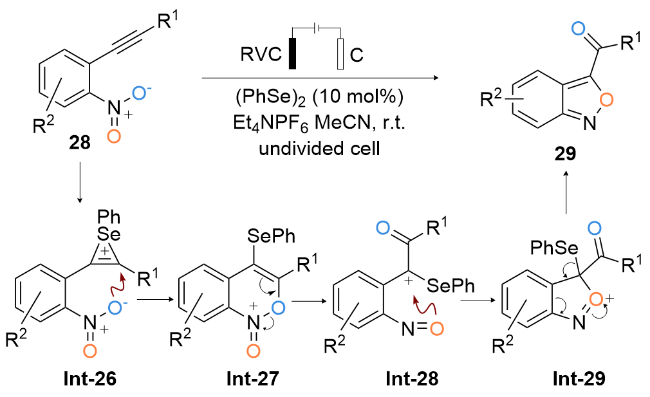
与以往的电化学还原反应不同, 体系中硝基未首先直接还原为亚硝基, 而是进攻硒鎓离子发生分子内环化, 生成六元环中间体Int-27; 随后经氧鎓开环实现分子内氧转移(Scheme 11), 中间体Int-28进一步通过亚硝基亲核关环, 最终生成苯并噁唑化合物29.
2 [2.3] σ重排
σ重排被定义为: 与一个或多个π体系相连的σ键发生的分子内迁移过程. 在迁移过程中, σ键转移至新的位置, 同时π体系发生重组; 这类反应通常经由环状过渡态完成价键的协同重组. [2.3] σ重排便是其中的一种.
2018年, 赵劲课题组[31]报道了亲电硒催化异羟肟酸芳基酯经历[2.3] σ重排合成一系列对氨基苯酚化合物的反应. 该研究通过系列控制实验证实, 反应的第一步是异羟肟酸芳基酯32与催化剂作用, 形成N-Se键, 随后经两次分子内[2.3] σ重排, 生成醌式中间体35. 该中间体发生脱氢芳构化得到N-苯硒基中间体36, 其不稳定的N—Se键在酸性条件下断裂, 重新释放的苯基硒正离子参与下一个催化循环. 然而, 不稳定的N—Se键在催化循环中起重要作用, 当使用亲电硫试剂启动反应时, 相对稳定的N—S键会导致N-苯硫基对氨基苯酚36无法释放亲电硫物种, 使反应停留在N-苯硫基对氨基苯酚36作为产物的阶段. 因而, 反应只能实现计量转化(Scheme 12a).
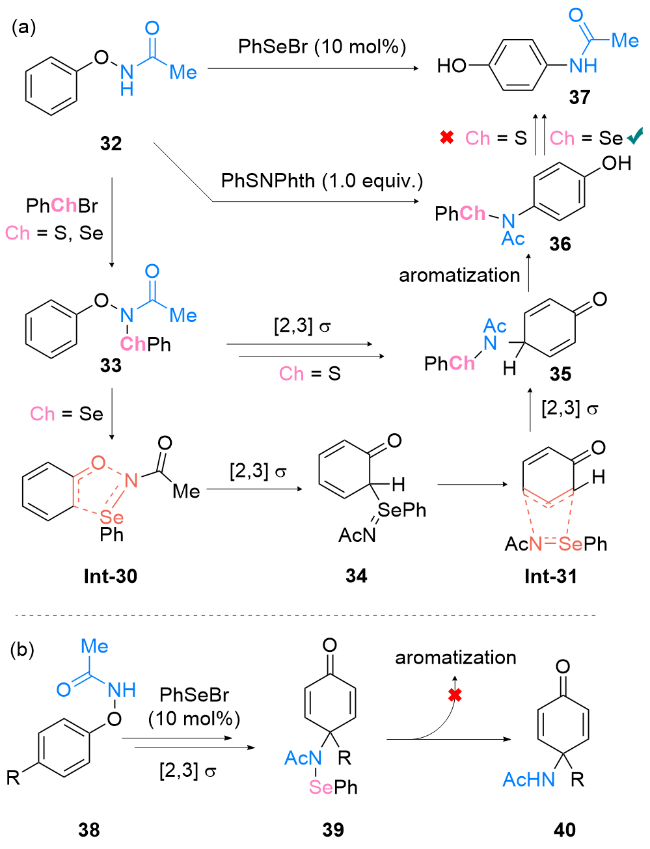
需要特别指出的是, 在该反应中, 当使用对位带有烷基取代基的底物38时, 反应经历两次分子内[2.3] σ重排, 得到的醌式中间体39无法再次芳构化, 不稳定的N—Se键断裂得到去芳构化产物40 (Scheme 12b).
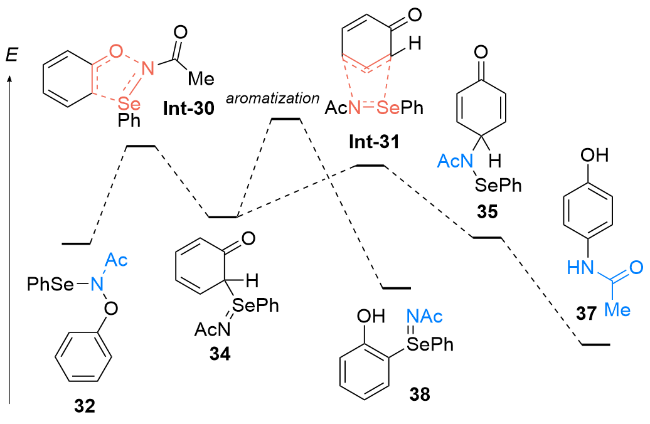
在该研究中, 作者借助计算化学手段阐释了两次 [2.3] σ重排连续发生的原因. 首次[2.3] σ重排后生成的去芳构化中间体34, 除可继续发生[2.3] σ重排外, 还可通过芳构化作用生成邻硒基苯酚38, 进而对催化循环产生抑制作用. 密度泛函理论(DFT)计算结果显示, 这一副反应尽管在热力学上具有优势, 但存在更高的活化能垒; 而在动力学优势的驱动下, 第二次[2.3] σ重排得以顺利进行(Scheme 13).
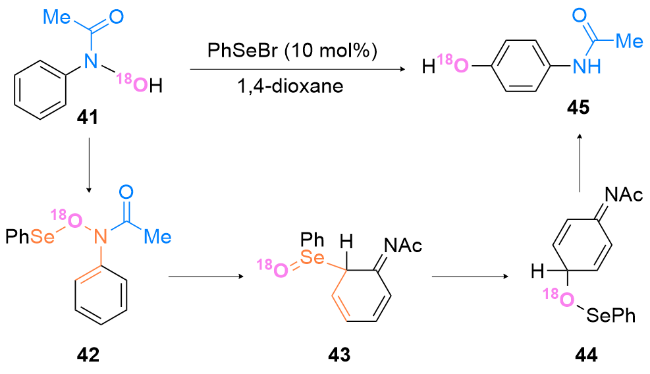
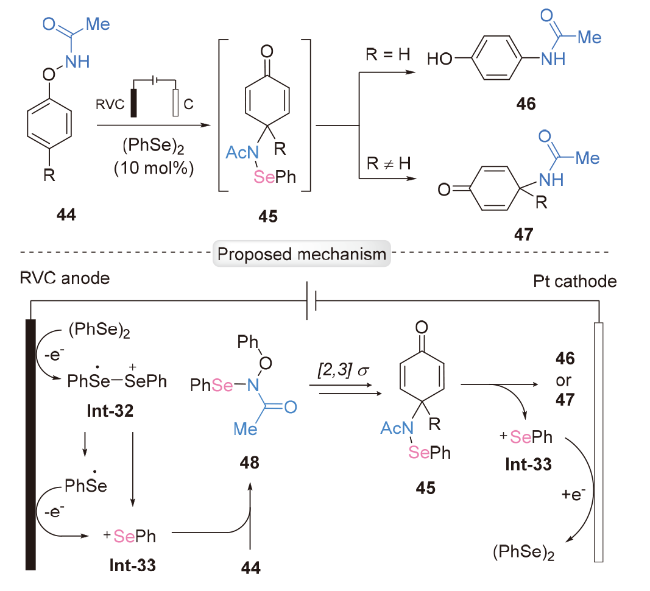
采用温和的电化学方法氧化二苯基二硒醚, 原位生成亲电硒试剂时, 同样能够诱导异羟肟酸芳基酯发生两次[2.3] σ的重排反应[34](Scheme 15). 与上述重排反应类似, 当底物对位带有烷基取代基时, 反应会终止于醌式结构阶段, 生成去芳构化产物47. 通过循环伏安法对反应体系中各物质的氧化还原行为进行了研究: 二苯基二硒醚在阳极氧化形成阳离子自由基Int-32, 随后生成苯基硒阳离子Int-33与苯基硒自由基. 其中, 苯基硒自由基通过阳极的氧化也能够产生苯基硒阳离子Int-33. 苯基硒阳离子与底物结合形成中间体48, 随后经历两次分子内[2.3] σ重排生成相应的产物. 同时, 苯基硒阳离子Int-33在阴极被还原产生二苯基二硒, 实现催化剂再生.


3 总结与展望
作为一类强有力的合成策略, 亲电硒催化正逐渐在有机合成化学领域发挥日益重要的作用. 过去十年间, 该策略已被用于以烯烃、炔烃、芳烃为底物的重排反应中. 值得注意的是, 催化重排反应得以顺利进行的关键在于两点: 一是催化剂的再生, 二是对中间体热力学与动力学稳定性的精准调控.
(Li, L.)