


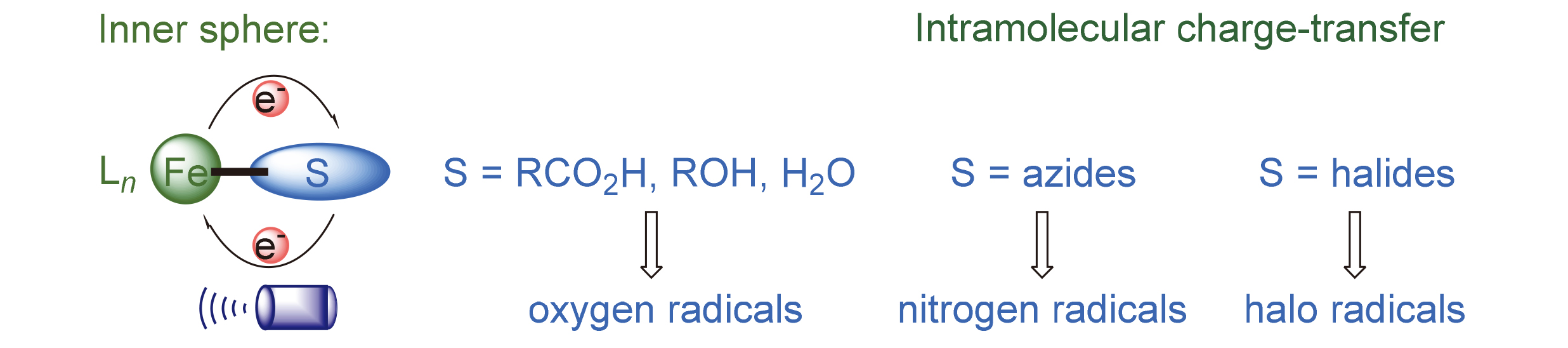
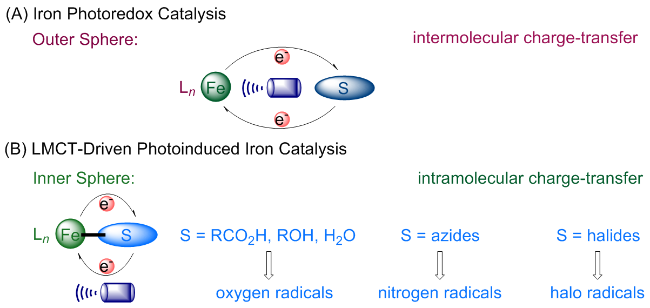
光氧化还原催化在过去二十年获得了长足的发展, 其主要依赖于光氧化还原催化剂的激发态与底物(或试剂)发生分子间的单电子转移(SET)或能量转移(EnT), 从而引发有机化学反应[1-4]. 这类催化体系通常要求光催化剂具有足够长的激发态寿命(纳米至微秒级), 以便在扩散控制的条件下与底物发生双分子碰撞, 从而引发SET或EnT反应. 近十年来, 光促金属催化也逐渐成为有机光催化领域的另一个热门研究方向[5-12]. 其中一大类光促金属催化反应是通过配体-金属电荷转移(LMCT)途径来实现的, 即底物(或试剂)充当配体, 先与金属配位, 形成的配合物被光子激发后快速发生分子内电子转移, 导致配体-金属键的均裂, 生成被氧化的配体自由基和还原态的金属中心, 从而引发后续反应[13-19]. 铁是地壳中含量第二丰富的金属元素, 仅次于铝, 具有储量丰富、价格低廉且生物兼容好的特点. 因此, 发展铁基光催化符合绿色、可持续发展的趋势. 按照不同的单电子转移细分类型, 可以将铁基光催化大致分为两类: 铁基光氧化还原催化和光促铁催化(图1)[20-21]. 与钌、铱基多吡啶配合物相比, 较弱的配位场使得铁基多吡啶配合物的金属-配体电荷转移(MLCT)激发态寿命往往极短, 会快速经由金属中心(MC)激发态回到基态. 因此, 采用新的配体(比如卡宾类强σ供电子配体)来延长铁基配合物MLCT激发态寿命, 提升其与底物(或试剂)发生分子间单电子转移的概率, 是铁基光氧化还原催化领域的重点研究方向之一[22-23]. 而在LMCT驱动的光促铁催化反应中, 底物(或试剂)先与金属配位, 受光激发后快速发生分子内电子转移, 对激发态的寿命并无严格要求, 这大大增加了该催化体系的转化效率和适用范围[24-35]. 在很多情况下, 往LMCT驱动的光促铁催化体系中添加额外的辅助配体(比如吡啶类配体), 能够调节铁中心氧化还原性质、提升可见光吸收效率及延长激发态寿命, 从而促使三价铁与底物(或试剂)发生LMCT反应, 或提高LMCT反应的效率. 接下来, 本文将对配体辅助LMCT驱动的光促铁催化研究进行系统的综述, 并依据参与LMCT过程的底物(或试剂)类型进行分类探讨.
1 烷基羧酸与三价铁的LMCT反应
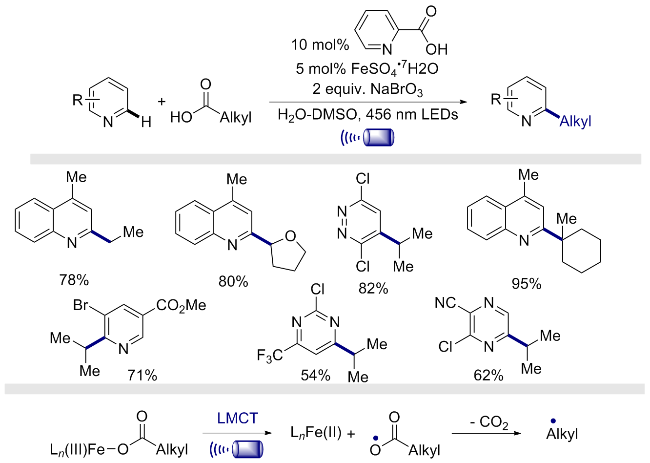
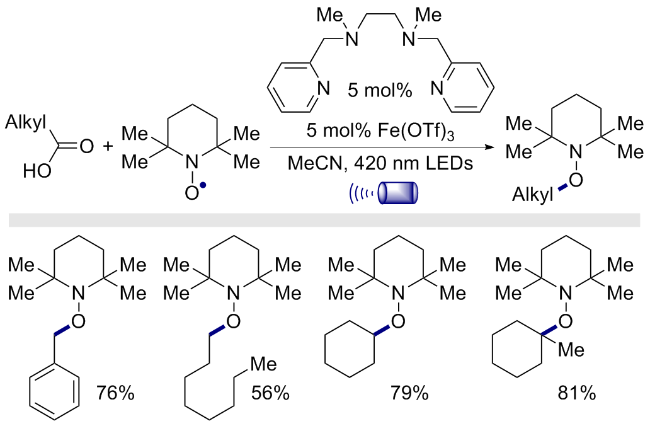
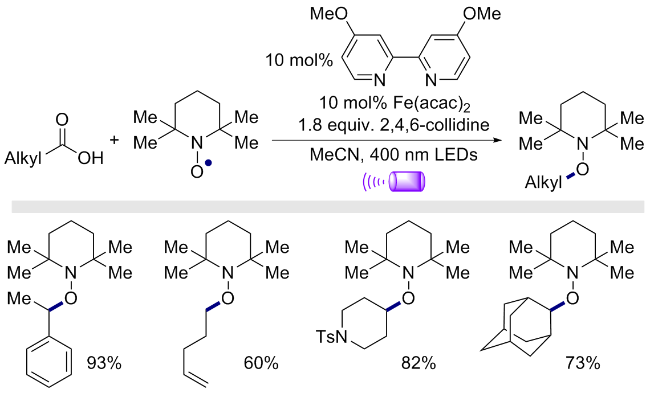
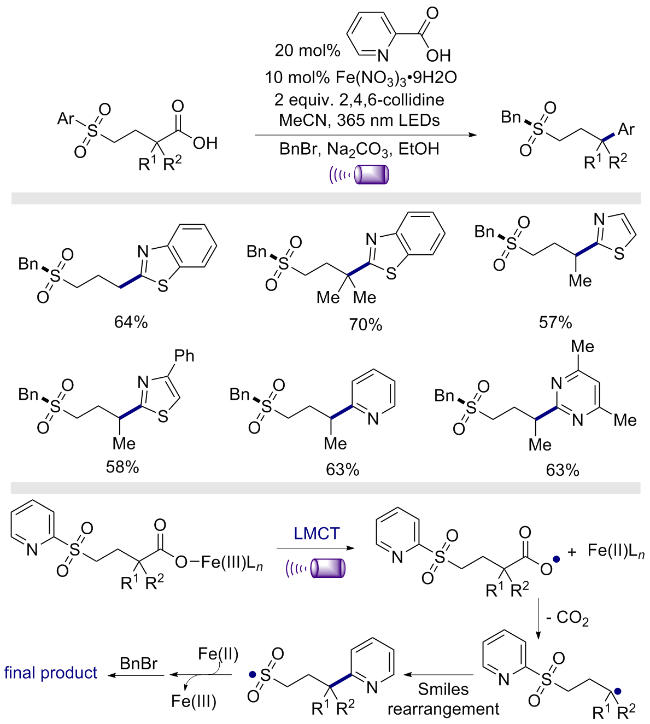
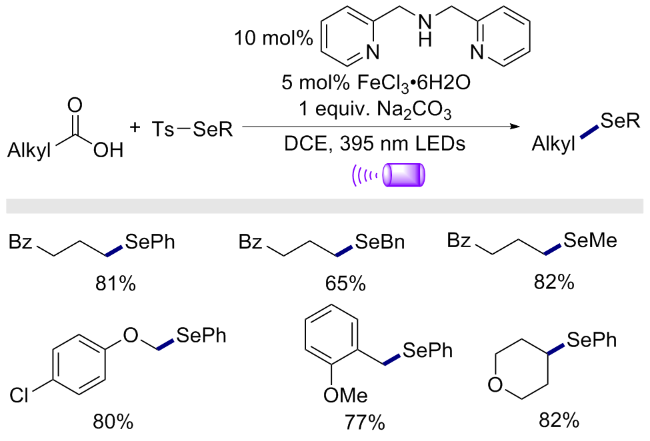
2019年金健课题组[36]报道了首例配体辅助LMCT驱动的光促铁催化Minisci反应, 实现了烷基羧酸的脱羧杂芳基化(Scheme 1). 以FeSO4•7H2O作为催化剂, 吡啶-2-甲酸作为配体, 溴酸钠作为氧化剂, 在456 nm LED光源照射下, 多种一级、二级和三级烷基羧酸能够发生氧化脱羧生成烷基自由基, 然后通过Minisci反应途径对喹啉、嘧啶等缺电子杂芳烃进行高效烷基化. 反应成功的关键在于引入了吡啶-2-甲酸作为辅助配体, 如果不加该配体则没有产物生成. 机理实验显示, 吡 啶-2-甲酸能与铁离子形成稳定的配合物, 大大增加了铁催化剂在可见光范围的吸光度, 从而吸收光能推动反应的进行. 此外, 该催化体系使用溴酸钠作为末端氧化剂, 将反应过程中生成的二价铁重新氧化为三价铁, 闭合催化循环.
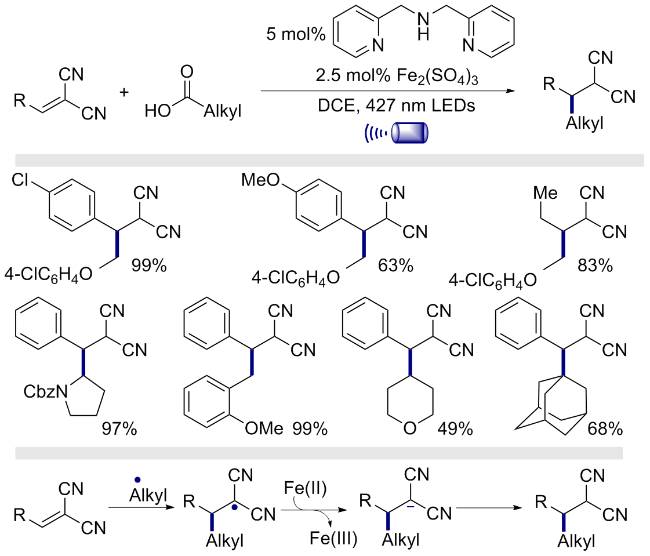
2 草氨酸与三价铁的LMCT反应
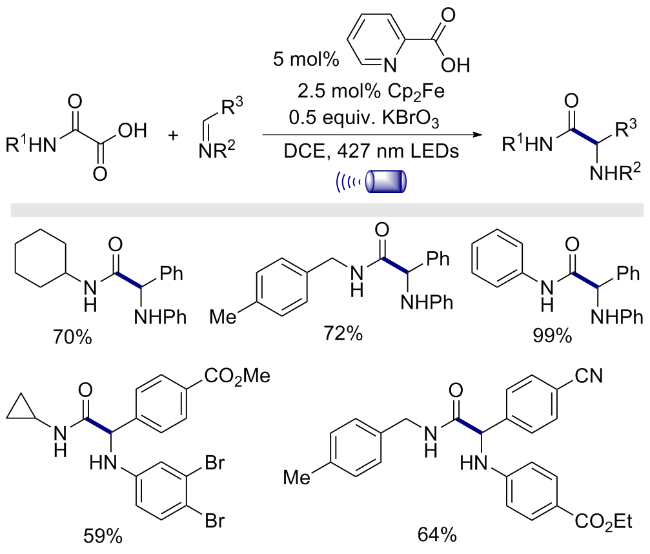
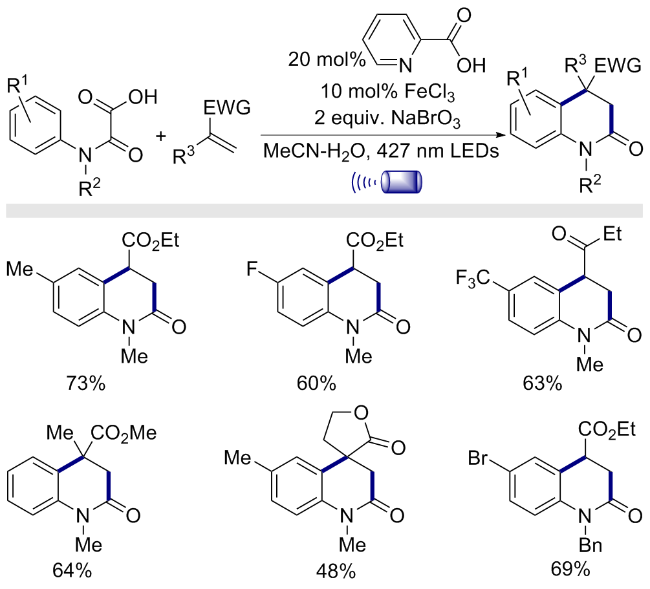
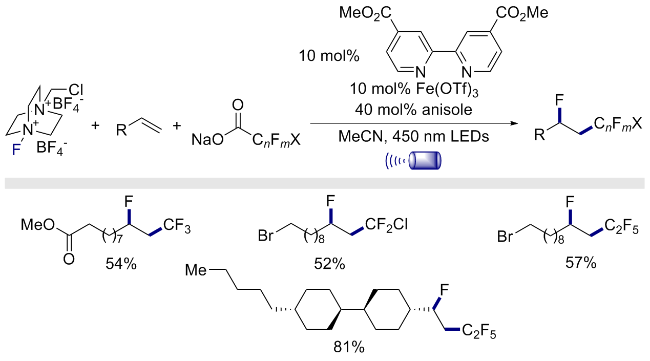
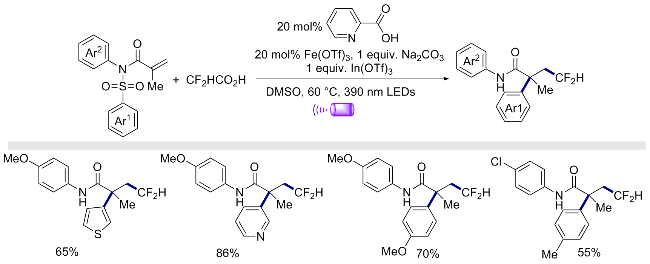
3 含氟烷基羧酸与三价铁的LMCT反应
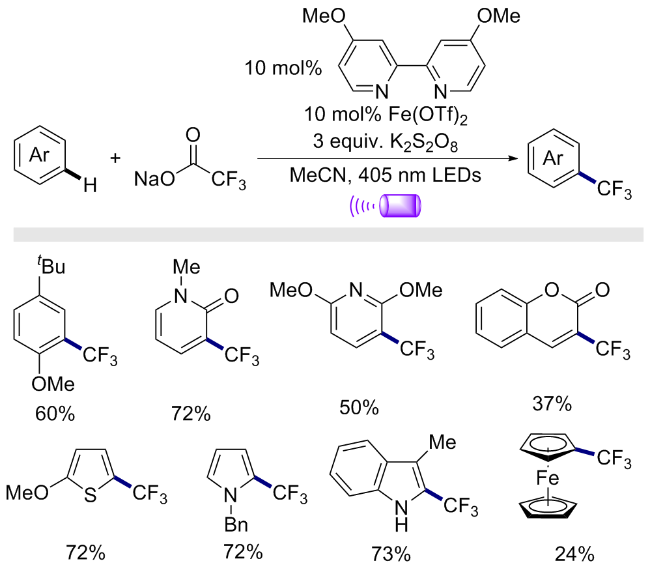
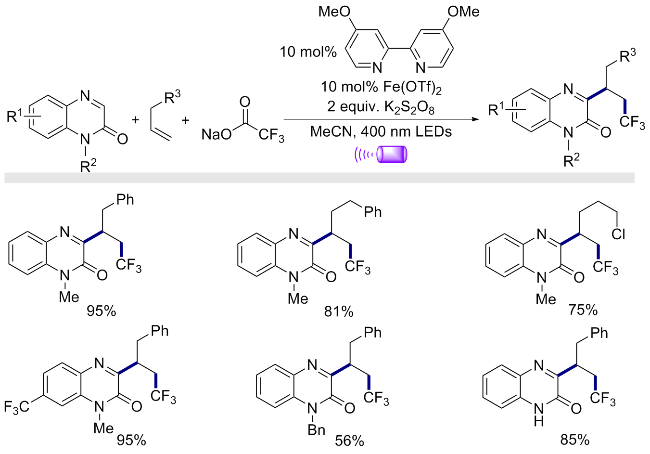
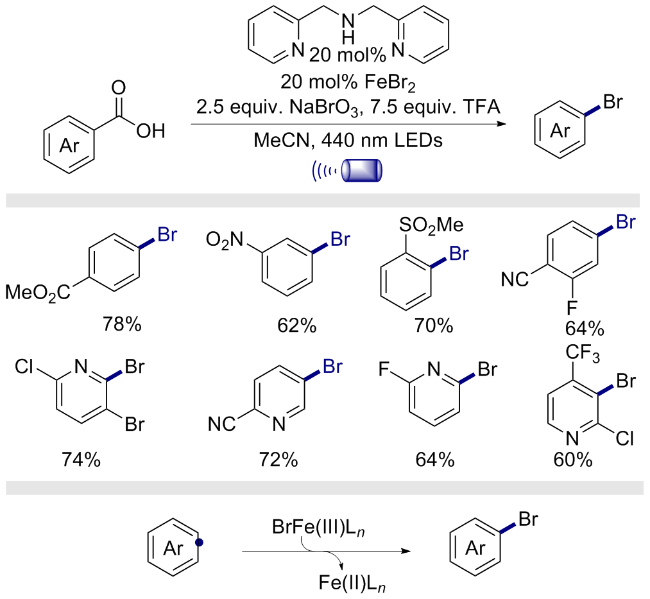
4 芳基羧酸与三价铁的LMCT反应
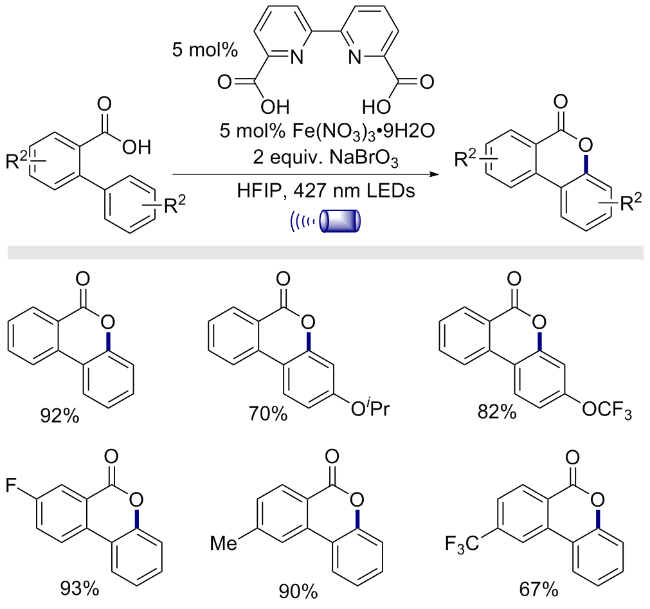
2020年, 金健课题组[64]报道了光促铁催化2-苯基苯甲酸内酯化反应(Scheme 29). 以Fe(NO3)3•9H2O作为催化剂, 2,2'-联吡啶-6,6'-二甲酸作为配体, 溴酸钠作为氧化剂, 在427 nm LED光源照射下, 2-苯基苯甲酸与三价铁配位以后发生LMCT反应, 生成2-苯基苯甲酸自由基. 由于芳基的π给体效应, 芳基与羧酸自由基之间的碳-碳键因具有部分双键性质而增强, 且脱羧后生成的芳基自由基能量较高, 因此芳基羧酸自由基脱羧的反应能垒较高, 相较于烷基羧酸自由基的脱羧, 芳基羧酸自由基的脱羧速率要慢约3个数量级, 而2-位苯基的存在使得2-苯基苯甲酸自由基优先发生分子内亲电加成形成碳-氧键, 所得碳自由基中间体经单电子氧化、去质子化, 最终生成内酯化产物.
5 醇与三价铁的LMCT反应
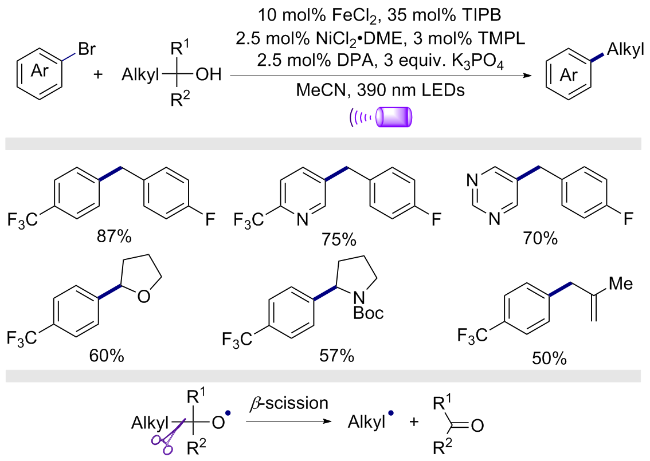
2024年, Amgoune课题组[66]报道了光促铁催化醇裂解芳化反应(Scheme 31). 以FeCl2作为LMCT催化剂, 2,4,6-三异丙基苯甲酸钾(TIPB)给铁中心提供配体, NiCl2•DME作为偶联催化剂, 3,4,7,8-四甲基-1,10-菲啰啉(TMPL)给镍中心提供配体, 9,10-二苯基蒽(DPA)作为光氧化还原催化剂, 从二价铁获得单电子再传递给三价镍, 磷酸钾作为碱, 在390 nm LED光源照射下, 醇与三价铁配位以后发生LMCT反应, 生成烷氧自由基, 随即发生β-断裂生成羰基化合物和烷基自由基. 烷基自由基加成到ArNi(II)形成ArNi(III)R, 最后发生还原消除反应生成烷基芳基偶联产物.
6 水与三价铁的LMCT反应
7 叠氮与三价铁的LMCT反应
8 氯与三价铁的LMCT反应
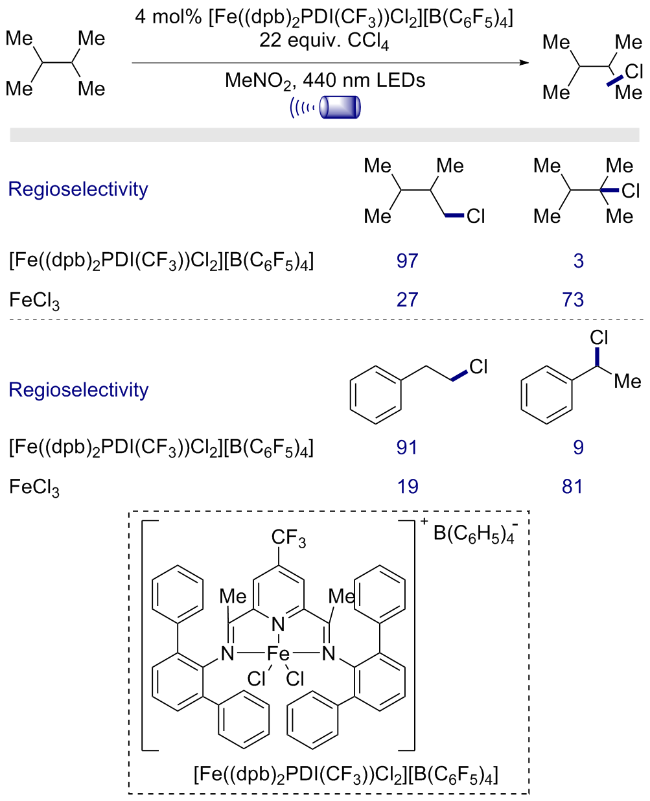
2022年, Nocera课题组[70]报道了光促铁催化烷烃氯化反应, 证明可以对氯自由基施加空间位阻效应, 促使其倾向于和烷烃上位阻较小的碳-氢键发生氢原子转移反应(Scheme 34). 以[Fe((dpb)2PDI(CF3))Cl2][B(C6F5)4]作为LMCT催化剂, 四氯化碳作为氯源, 在440 nm LED光源照射下, 三价铁氯配位物发生LMCT反应, 产生的氯自由基当即被近距离的苯环限制. 由于位阻的增加, 该受限氯自由基于是区域选择性地从烷烃的位阻较小处(比如端甲基)攫取氢原子产生氯化氢和烷基自由基, 烷基自由基可从四氯化碳获取氯原子生成烷基氯化物. 不同的是, FeCl3在类似反应条件下, 则对键能较弱的碳氢键(比如叔碳、苄位上的氢)展示出一定的选择性.
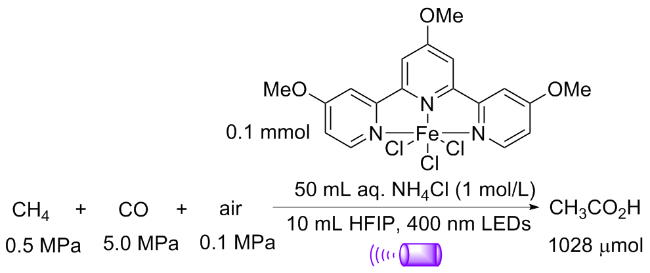
2025年, 左智伟课题组[73]报道了光促铁催化甲烷到乙酸的转化反应(Scheme 37). 以4,4',4''-三甲氧基- 2,2':6',2''-三联吡啶氯化铁作为催化剂, 氯化铵水溶液(1 mol/L)作为添加剂, 六氟异丙醇作为溶剂, 施以0.5 MPa甲烷、5.0 MPa一氧化碳和0.1 MPa空气, 在400 nm LED光源照射下, 三价铁氯配位物发生LMCT反应产生二价铁和氯自由基. 氯自由基与甲烷发生氢原子转移反应生成甲基自由基, 随即加成到已配位在二价铁上的一氧化碳, 生成的乙酰自由基同步与铁中心形成化学键, 即形成乙酰基三价铁. 接着乙酰基和氯离子从三价铁中心还原消除生成乙酰氯, 最后水解生成乙酸. 而氧气负责将一价铁氧化为二价铁、三价铁.


9 总结与展望
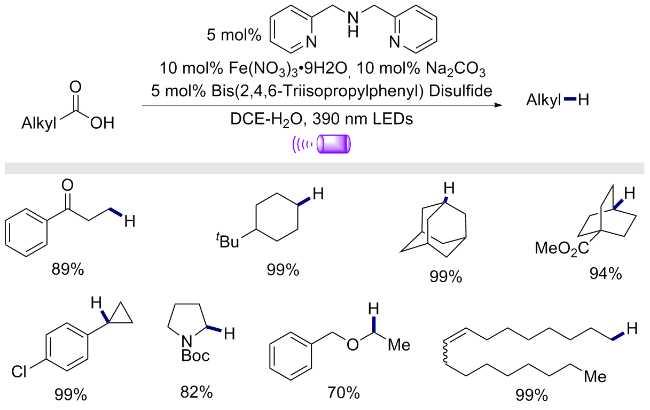
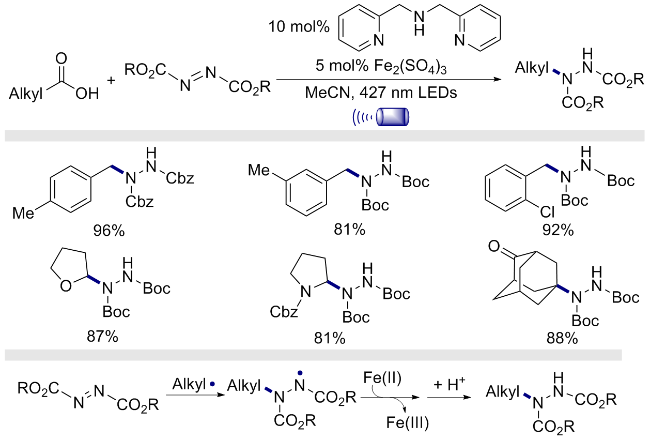
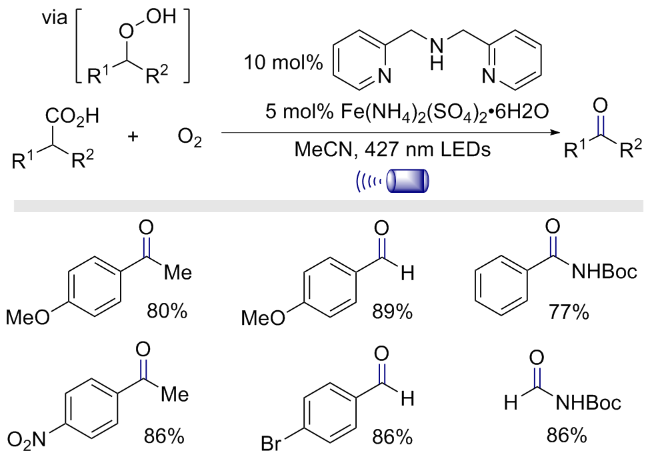
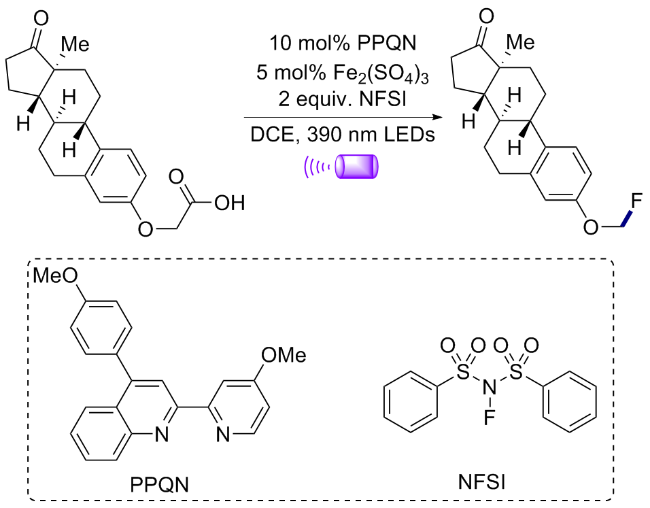
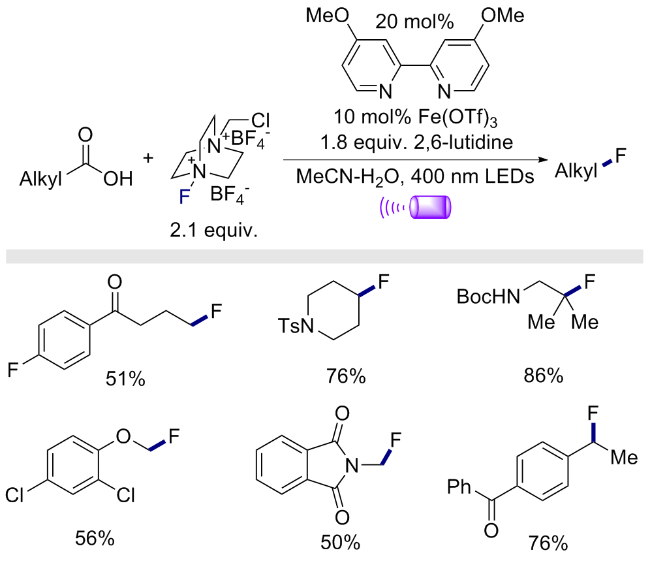
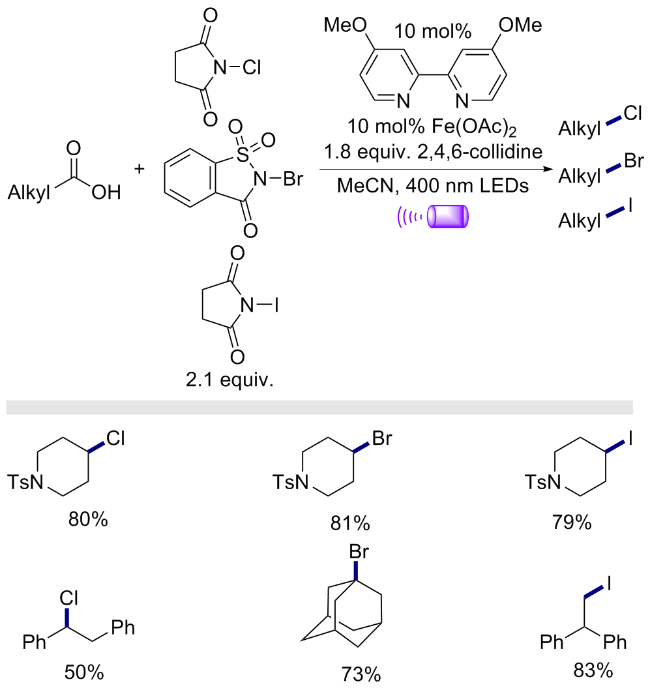
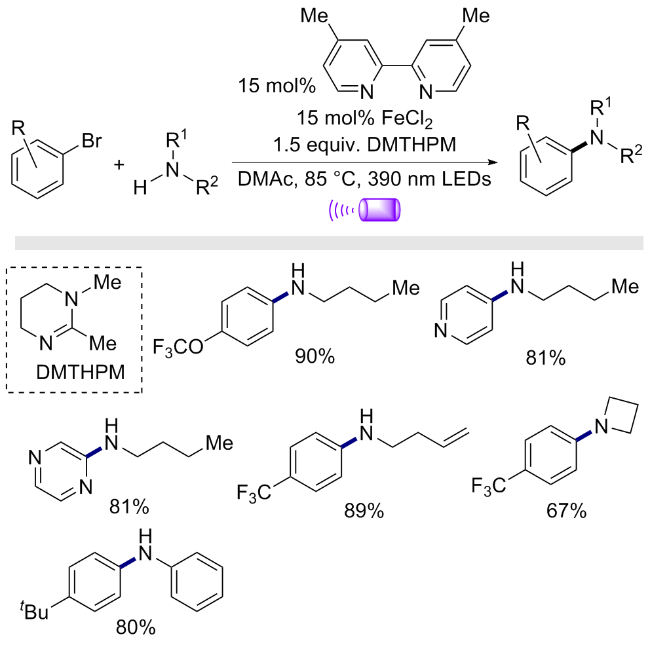
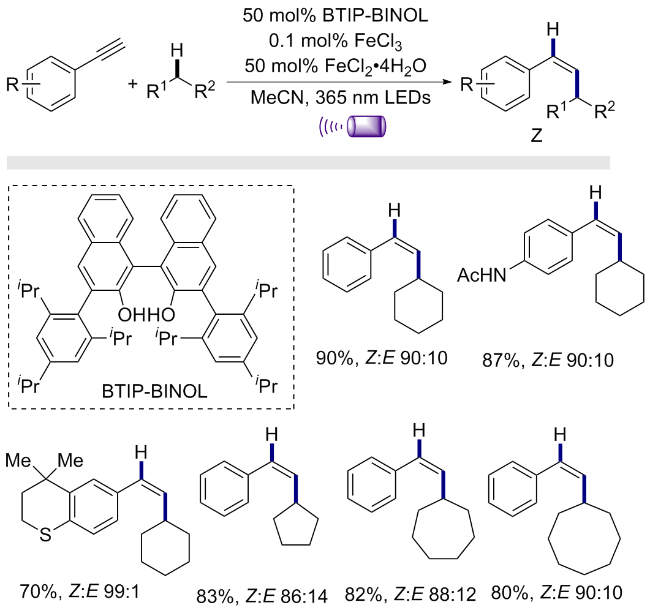
综上所述, 配体辅助的LMCT驱动的光促铁催化已成为一种强有力的合成工具. 与传统的贵金属(如钌、铱)光催化剂相比, 铁催化剂具有廉价易得、低毒环保的显著优势. 通过引入合适的配体[如吡啶-2-甲酸、二(吡啶-2-甲基)胺、联吡啶等], 不仅可以有效调节铁中心的氧化还原电位和路易斯酸性, 还能显著地改变铁配合物的配位场, 使其能够更高效地捕获可见光并引发LMCT过程. 目前, 该策略已被成功应用于烷基/芳基羧酸的脱羧官能团化(如Minisci反应、Giese反应、氧化、氟化、氯化等)、醇的β-断裂偶联、惰性烷烃甚至甲烷的碳氢键官能团化等多种反应类型, 极大地拓展了有机光催化的合成边界. 当然, 现有LMCT方法在底物普适性、管能团耐受性等方面还存在一些局限性, 目前研究主要集中在羧酸类底物, 针对醇、胺等其他类型底物的LMCT活化模式相对较少.
尽管该领域已取得令人瞩目的进展, 但仍面临一些挑战和亟待解决的问题, 也为未来的研究提供了机遇. (1)不对称催化的发展: 目前报道的光促铁催化反应绝大多数涉及自由基中间体, 且多为消旋产物. 如何设计新型手性配体, 在保持高效LMCT过程的同时, 实现对高活性自由基物种的立体选择性控制(尤其是对映选择性), 将是该领域最具挑战性也最具价值的研究方向之一. (2)反应机理的深入研究: 虽然LMCT机理已被广泛接受, 但针对具体铁配合物激发态动力学、超快电子转移过程以及配体对激发态寿命的具体影响, 仍需结合超快光谱学和理论计算进行更深入的表征, 以指导更高效催化剂的设计. (3)底物范围的拓展: 除了已研究较多的羧酸类底物, 探索更多能够与铁中心发生有效配位并诱导LMCT的新型底物或活化模式, 将进一步扩大该方法的普适范围. (4)工业应用潜力: 考虑到铁催化剂的成本和环保优势, 该类反应在药物分子的后期修饰及大规模生产中具有巨大的潜力. 结合流动化学技术, 解决光化学反应的光照效率和放大效应问题, 将有助于推动光促铁催化从实验室走向工业应用.
相信随着对铁配合物光物理化学性质的理解不断加深, 以及新型配体设计的不断突破, 光促铁催化将在有机合成、药物化学及材料科学等领域发挥越来越重要的作用.
(Zhao, C.)