


1 Introduction
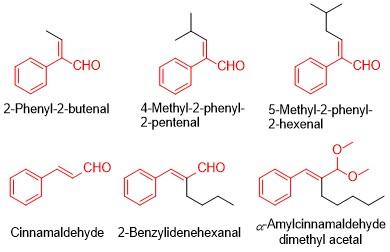
Alkenals are a class of flavor compounds widely distributed in nature, commonly found in fruits, vegetables, nuts, meats, and other everyday foods.[1-2] As important flavoring substances, they contribute significantly to the aroma profiles of many natural products.[2-3] Phenylalkenals, a key subgroup within the alkenal family, play an indispensable role in enhancing and modifying food flavors due to their distinctive odor characteristics.[3] For example, 2- phenyl-2-butenal exhibits berry, floral, honey, cocoa, and black tea-like notes, resembling phenylacetaldehyde with a pronounced floral nuance, and is frequently used in flavor formulations for cocoa, honey, bread, vegetables, coffee, and chocolate. 4-Methyl-2-phenyl-2-pentenal offers a fruity aroma, releasing fresh green fruit notes when diluted, and is applied in fruit flavors as well as in chocolate and nut flavor blends. Furthermore, 5-methyl-2-phenyl-2-hexenal possesses bitter cocoa, nutty, honey, roasted, and grassy notes, closely resembling cocoa in both aroma and taste. It is widely utilized in chocolate, cocoa, nut, and tobacco flavorings, particularly in cigarette flavoring to enhance cocoa and chocolate notes and to modify the nutty and roasted characteristics of smoke. Other notable phenyl alkenals, such as cinnamaldehyde, 2-benzylidenehexanal, and α-amylcinnamaldehyde dimethyl acetal, are also important flavoring agents extensively employed in food applications (Figure 1).[4] These examples underscore the considerable potential of phenylalkenals in diversifying aroma types and enhancing flavor complexity in products.
Despite their established use in food and related fields, the structural diversity of phenylalkenals remains relatively limited, resulting in a somewhat narrow range of available aroma profiles. This constraint limits their capacity to meet the complex and variable demands of modern flavor formulation.[5-10] In particular, the tobacco flavoring industry presents unique challenges: flavorants must not only harmonize with the inherent aroma of tobacco but also exhibit specific thermal release and pyrolysis behaviors during heating to ensure effective and consistent flavor delivery.[11-19] Currently, the selection of phenylalkenal-based flavorings lacks sufficient variety and functionality to fully meet the specific requirements of cigarette products. Therefore, the systematic development of novel phenylalkenals with diverse structures, rich aroma profiles, and suitable thermal properties is of significant importance for expanding the library of high-quality tobacco flavorings and improving the sensory quality of cigarette products.
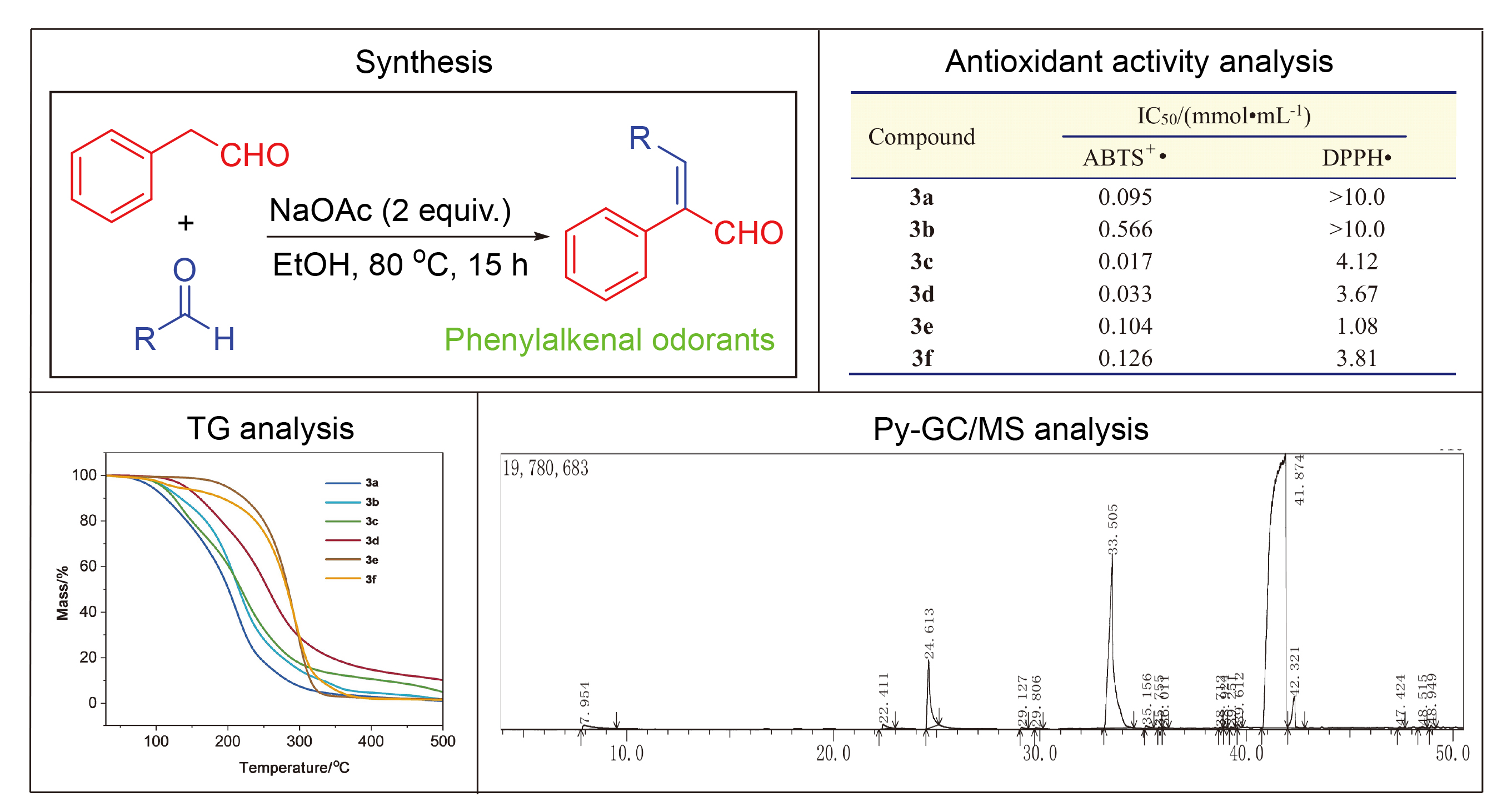
In this study, a series of novel phenylalkenals were synthesized from cost-effective phenylacetaldehyde and alkyl aldehydes via aldol condensation.[20-21] This reaction employs a low-toxicity anhydrous ethanol and a weak base system. Furthermore, all starting materials are flavoring agents already accepted in food applications, aligning with the principles of green and safe synthesis.[3] By combining two aldehydes with distinct aroma profiles, target flavor compounds integrating both characteristics were successfully prepared. Their odor characteristics were evaluated by a sensory panel.[22-23] The thermal stability and pyrolysis products of the target compounds were further analyzed using thermogravimetry-derivative thermogravimetry (TG- DTG)[24] and pyrolysis-gas chromatography/mass spectro- metry (Py-GC/MS),[25] thereby expanding the range of high-quality flavorings available for cigarette applications. The antioxidant activity was determined by assessing their scavenging capacity against 2,2'-azino-bis(3-ethylbenzo- thiazoline-6-sulfonic acid) radical cation (ABTS+•) and 2,2-diphenyl-1-picrylhydrazyl radical (DPPH•).[26]
2 Results and discussion
2.1 Synthesis of phenylalkenals
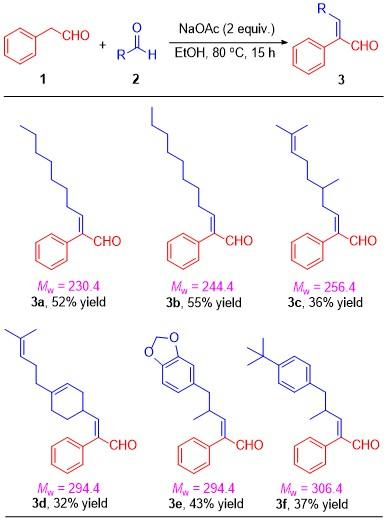
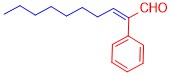
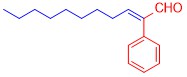
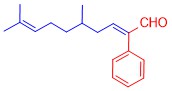
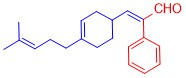
As shown in Scheme 1, the target phenylalkenals (3a~3f) with varying structures and molecular weights were synthesized via a cross-aldol condensation reaction of phenylacetaldehyde with alkyl aldehydes in anhydrous ethanol (EtOH), employing sodium acetate (NaOAc) as a base. This method is convenient and environmentally friendly. The yields of the desired products were moderate, primarily due to the self-condensation of the aldehyde starting materials. The pure products were obtained by flash column chromatography using ethyl acetate/petro- leum ether as the eluent. The structures of all synthesized compounds were fully characterized by 1H NMR, 13C NMR, IR and HRMS. The E/Z configuration was also confirmed by Nuclear Overhauser Effect (NOE) experiments.
2.2 Odor properties evaluation
The odor profiles assessed by the evaluation panel are summarized in Table 1. All six compounds display characteristic aromatic qualities derived from their shared phenylalkenal structure. The balsamic character of compounds 3a and 3b may be related to their extended alkyl chains. The citrus-green notes of compounds 3c and 3d are likely associated with the alkene chains within their structures. The vanilla-like fragrance of compound 3e may be attributed to its benzo[d][1,3]dioxol-5-yl moiety, and the fresh floral note of compound 3f is likely attributable to the presence of the 4-(tert-butyl)phenyl group.
Table 1 Odor description of compounds 3a~3f |
| Compound | Odor description |
|---|---|
| 3a | Balsamic fragrance; cocoa fragrance |
| 3b | Balsamic fragrance; cocoa fragrance |
| 3c | Citrus green fragrance; cocoa fragrance |
| 3d | Citrus green fragrance; rose fragrance |
| 3e | Vanilla-like; sweet spicy |
| 3f | Fresh floral; sweet spicy |
2.3 TG-DTG analysis
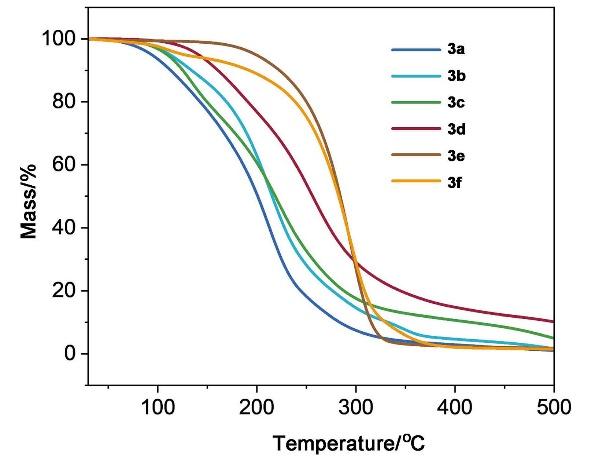
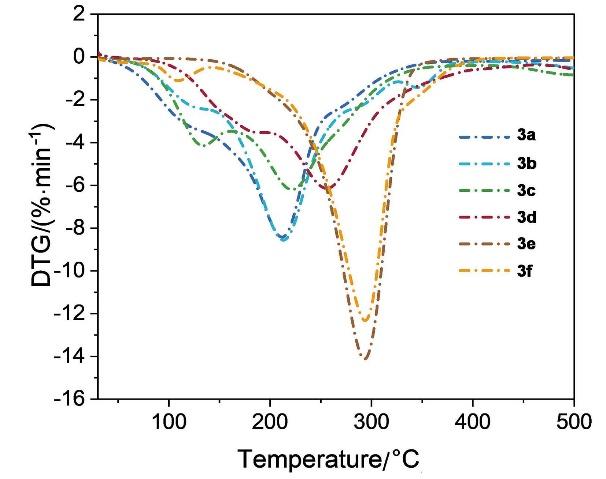
The thermal analysis data are presented in Table 2. 3a undergoes 90% mass loss within the temperature range of 83~304 ℃, with the maximum mass loss rate occurring at 211 ℃. Given that the typical operating temperature of heat-not-burn (HNB) cigarettes ranges from 270 ℃ to 350 ℃, this thermal profile satisfies the volatility require- ments for flavorants in HNB products. The temperature range for 90% mass loss and the temperature at the maximum mass loss rate of 3b are slightly higher than those of 3a, owing to its marginally higher molecular weight. Owing to structural modifications and increased molecular weight, the temperature range for 90% mass loss of 3c is broader than that of 3b, while its maximum mass loss rate temperature is only slightly elevated. The further increase in molecular weight of 3d results in a 90% mass loss range of 118~524 ℃, which exceeds the typical heating range of HNB cigarettes. This may lead to incomplete volatilization when used as a flavorant in such products. Although 3e has the same molecular weight as 3d, it exhibits a notably narrower thermal decomposition range for 90% mass loss, specifically 187~321 ℃. This thermal profile renders it particularly well suited for use in HNB products. Compound 3f possesses the highest molecular weight among the six compounds, yet its thermal profile still meets the requirements for HNB cigarette applications.
Table 2 Thermal analysis data of compounds 3a~3f |
| Compound | Trangea/℃ | Tpb/℃ |
|---|---|---|
| 3a | 83~304 | 211 |
| 3b | 94~348 | 213 |
| 3c | 92~459 | 221 |
| 3d | 118~524 | 255 |
| 3e | 187~321 | 293 |
| 3f | 92~338 | 294 |
a Temperature range corresponding to 90% mass loss. b Temperature at the maximum mass loss rate. |
2.4 Py-GC/MS analysis
To evaluate the pyrolysis behavior of the synthesized phenylalkenals under conditions relevant to HNB cigarettes, Py-GC/MS analyses were conducted at 400 ℃, a temperature slightly above the typical operating range (270~350 ℃) of HNB products, allowing for a comprehensive evaluation of potential pyrolysis products. The pyrolysis profiles of compounds 3a~3f are summarized in Tables 3~8.
Table 3 Pyrolysis products of compound 3a |
| Peak | r.t./min | Pyrolysis product | Structure | Match | Relative content/% |
|---|---|---|---|---|---|
| 1 | 8.38 | Octanal |  | 98 | 8.3 |
| 2 | 12.78 | Octanoic acid |  | 96 | 22.5 |
| 3 | 17.79 | 2-Phenyldecanal | 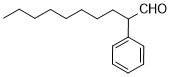 | 85 | 17.7 |
| 4 | 18.15 | Compound 3a | 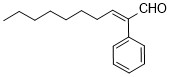 | 96 | 30.2 |
Table 4 Pyrolysis products of compound 3b |
| Peak | r.t./min | Pyrolysis product | Structure | Match | Relative content/% |
|---|---|---|---|---|---|
| 1 | 10.27 | Nonanal |  | 98 | 16.3 |
| 2 | 13.77 | Nonanoic acid |  | 96 | 10.4 |
| 3 | 18.42 | 2-Phenylundecanal | 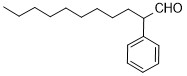 | 82 | 17.0 |
| 4 | 18.74 | Compound 3b | 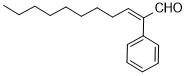 | 95 | 43.0 |
Table 5 Pyrolysis products of compound 3c |
| Peak | r.t./min | Pyrolysis product | Structure | Match | Relative content/% |
|---|---|---|---|---|---|
| 1 | 11.07 | 3,7-Dimethyloct-6-enal | 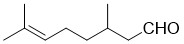 | 96 | 15.2 |
| 2 | 12.89 | 3,7-Dimethyloct-6-en-1-ol | 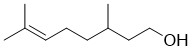 | 89 | 22.7 |
| 3 | 18.86 | (Z)-5,9-Dimethyl-2-phenyldeca-2,8-dienal | 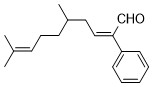 | 90 | 16.5 |
| 4 | 19.51 | Compound 3c | 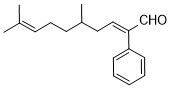 | 95 | 18.8 |
Table 6 Pyrolysis products of compound 3d |
| Peak | r.t./min | Pyrolysis product | Structure | Match | Relative content/% |
|---|---|---|---|---|---|
| 1 | 15.83 | 4-(4-Methylpent-3-en-1-yl)cyclohex-3-ene- 1-carbaldehyde | 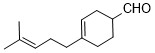 | 92 | 15.9 |
| 2 | 20.68 | (Z)-3-(4-(4-methylpent-3-en-1-yl)cyclohex- 3-en-1-yl)-2-phenylacrylaldehyde | 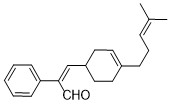 | 93 | 16.5 |
| 3 | 20.88 | Compound 3d | 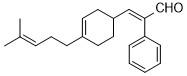 | 95 | 39.3 |
Table 7 Pyrolysis products of compound 3e |
| Peak | r.t./min | Pyrolysis products | Structure | Match | Relative content/% |
|---|---|---|---|---|---|
| 1 | 24.61 | 3-(Benzo[d][1,3]dioxol-5-yl)-2-methylpropanal | 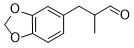 | 93 | 3.89 |
| 2 | 33.51 | Methyl 3-(benzo[d][1,3]dioxol-5-yl)-2-methylpropanoate | 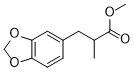 | 82 | 16.48 |
| 3 | 41.87 | Compound 3e | 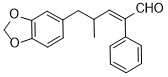 | 92 | 75.82 |
Table 8 Pyrolysis products of compound 3f |
| Peak | r.t./min | Pyrolysis product | Structure | Match | Relative content/% |
|---|---|---|---|---|---|
| 1 | 23.37 | 3-(4-(tert-Butyl)phenyl)-2-methylpropanal | 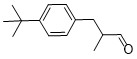 | 96 | 10.4 |
| 2 | 28.64 | 3-(4-(tert-Butyl)phenyl)-2-methylpropanoic acid | 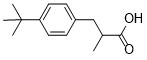 | 95 | 4.1 |
| 3 | 40.01 | Compound 3f | 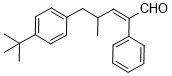 | 92 | 80.9 |
3a underwent partial pyrolysis to yield octanal (8.3 %), octanoic acid (22.5 %), and 2-phenyldecanal (17.7 %), while 30.2 % the parent compound remained unchanged. 3b exhibited a similar pattern, producing nonanal (16.3 %), nonanoic acid (10.4 %), and 2-phenylundecanal (17.0 %), with 43.0 % 3b remaining unchanged. 3c generated 3,7- dimethyloct-6-enal (15.2 %), 3,7-dimethyloct-6-en-1-ol (22.7 %), and (Z)-isomer of 3c (16.5 %), along with 18.8 % unchanged 3c. 3d afforded 4-(4-methylpent-3-en-1-yl)- cyclohex-3-ene-1-carbaldehyde (15.9 %) and (Z)-isomer of 3d (16.5 %), while 39.3 % 3d remained unchanged. 3e released 3-(benzo[d][1,3]-dioxol-5-yl)-2-methylpropanal (3.89 %) and methyl 3-(benzo[d][1,3]dioxol-5-yl)-2-meth-yl-propanoate (16.48 %), with a high residual fraction of 3e (75.82 %). 3f produced 3-(4-(tert-butyl)phenyl)-2-methyl- propanal (10.4 %) and 3-(4-(tert-butyl)phenyl)-2-methyl- propanoic acid (4.1 %), leaving 80.9 % 3f unchanged.
The primary pyrolysis pathways of 3a~3f at 400 ℃ were the cleavage of the C=C bond in the enal structure (Scheme 2), leading to the formation of corresponding aldehydes, acids, or alcohols. Both aldehyde and carboxyl groups are well-recognized aroma-contributing moieties, suggesting that these pyrolysis compounds may enrich the overall flavor profile. Importantly, no hazardous or undesirable pyrolysis products were observed under the tested conditions.
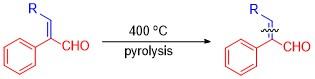
In conclusion, Py-GC/MS analysis at 400 ℃ revealed that the synthesized phenylalkenals undergo partial and predictable pyrolysis primarily via the cleavage of the C=C bond in the enal structure, releasing a variety of flavor- contributing compounds without generating hazardous products. Coupled with the volatility profiles demonstrated by TG-DTG, these results confirm that these compounds meet the key requirements for use as flavorants in HNB products.
2.5 Antioxidant activity analysis
To evaluate the antioxidant activity of the synthesized phenylalkenals, the free radical scavenging capacities toward ABTS+• and DPPH• were investigated.
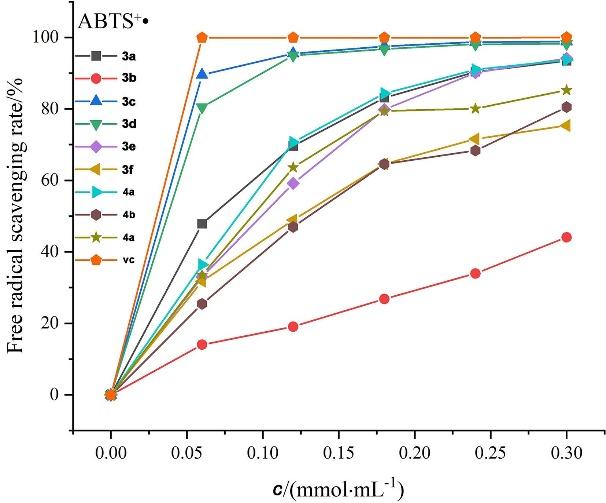
ABTS+• is a nitrogen-centered metastable cationic radical with a maximum absorption at 734 nm. When an antioxidant is introduced into an ABTS+• solution, it quenches the radical, leading to a corresponding reduction in absorbance. This principle is widely used to assess the antioxidant activity of compounds.[27] The synthesized phenylalkenals 3a~3f and commercially available phenylalke- nals 4a~4c were tested at various concentrations, with ascorbic acid (Vc) as a positive control, and their scavenging effects on ABTS+• are shown in Figure 4. All compounds exhibited certain ABTS+• scavenging activities, and their corresponding IC50 values are listed in Table 9. ABTS+• is an electron-deficient electrophilic radical that is primarily quenched by accepting electrons or hydrogen atoms from antioxidants. Phenylalkenal compounds possess a large π-conjugated system consisting of a benzene ring, a C=C bond, and an aldehyde group. This conjugated system exhibits a high degree of electron delocalization, which allows it to supply π-electrons to the electron-defi- cient ABTS+• via a single-electron transfer (SET) pathway, thereby quenching the ABTS+•. For compounds 4a, 4c, 3a, 4b, 3e, and 3f, the antioxidant capacity generally increases as the steric hindrance of the α-alkyl substituent decreases. This is likely because increased steric hindrance of the α-alkyl group disrupts the coplanarity of the conjugated π-system of the phenylalkenal, weakens the effective overlap of the large π-orbitals and the degree of π-electron delocalization, and consequently reduces the ability of the molecule to donate electrons to ABTS+•. Compounds 3c and 3d exhibited the strongest antioxidant capacity, which is proposed to arise from the presence of an additional C=C bond in their α-alkyl side chains. On one hand, the unsaturated C=C bond can directly undergo a radical addition reaction with ABTS+•; on the other hand, the presence of an allylic hydrogen atom adjacent to the double bond provides a pathway for radical quenching via hydrogen atom transfer (HAT). The synergistic effect of these multiple quenching pathways significantly enhances ABTS+• scavenging capacity of 3c and 3d.
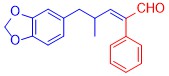
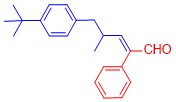


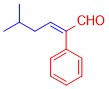
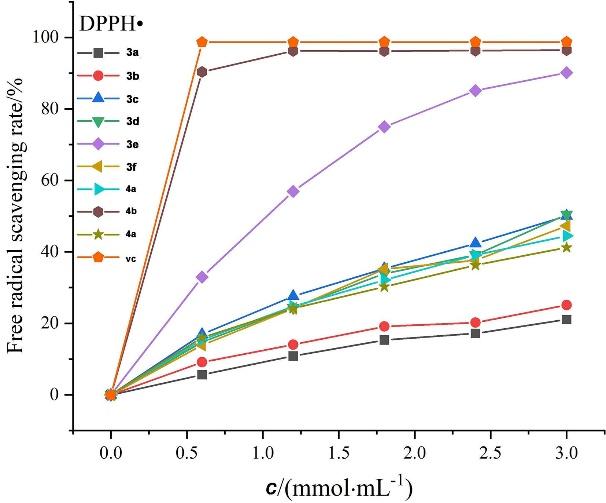
DPPH• is a stable nitrogen-centered radical that forms a purple solution in ethanol with a maximum absorption at 517 nm. Upon addition of an antioxidant, the solution color changes to pale yellow or colorless, accompanied by a decrease in absorbance. This method is widely employed to evaluate the radical scavenging activity of antioxidants.[28] The DPPH• scavenging effects of the synthesized phenylalkenals 3a~3f and the commercial phenylalkenals 4a~4c are provided in Figure 5, using Vc as a positive control. All compounds showed certain DPPH• scavenging capacities, and their IC50 values are presented in Table 9. DPPH• is a stable neutral free radical that is primarily scavenged by antioxidants via two pathways: hydrogen atom transfer (HAT) and electron transfer (ET), with a greater emphasis on the HAT mechanism. Phenylalkenal compounds exhibit a dual anti-DPPH action. On one hand, their large π-con- jugated system provides highly delocalized π-electrons that can directly neutralize the unpaired electron of DPPH• through electron transfer. On the other hand, the allylic C—H bonds in the molecule can dissociate to release labile hydrogen atoms, quenching the radical via hydrogen atom transfer. For compounds 3d, 3e, 3f, and 4b, the allylic carbon atoms are all tertiary carbons, making the C—H bonds more prone to cleavage and thus enhancing their ability to donate hydrogen radicals. After hydrogen loss, the resulting tertiary carbon radicals can delocalize unpaired electrons through the adjacent double bonds and the large π-conjugated system, forming highly stable radical intermediates. Consequently, these four compounds exhibit significantly higher DPPH• scavenging capacity than the other compounds tested.


3 Conclusions
In conclusion, a series of six novel phenylalkenals were successfully designed and synthesized via a cross-aldol condensation of phenylacetaldehyde with alkyl aldehydes in anhydrous EtOH. Their structures were fully characterized by 1H NMR, 13C NMR, IR and HRMS. Sensory evaluation revealed that all six compounds exhibit characteristic aromatic qualities derived from their shared phenylalkenal framework, while the distinct aryl substituents impart unique and differentiated fragrance profiles to each compound. TG-DTG analysis indicated that, with the exception of compound 3d, the other five compounds satisfied the volatility requirements for flavor compounds in HNB cigarettes. Py-GC/MS analysis at 400 ℃ showed that all six compounds undergo partial pyrolysis, generating various aromatic products that contribute to flavor profiles. Antioxidant activity assays demonstrated that all synthesized phenylalkenals possess significant radical scavenging activity. Notably, 3c exhibited the strongest scavenging capacity toward ABTS+•, while 3e showed the highest scavenging efficiency against DPPH•. This study provides new candidate compounds for the development of novel flavorings, particularly for HNB cigarette applications, with promising potential in tobacco product formulation and as food additives.
Future work will systematically evaluate the flavoring performance of these compounds in actual HNB cigarettes, including their compatibility with tobacco aroma and their effectiveness in improving the sensory quality of HNB products. Furthermore, systematic safety assessments will be conducted in accordance with relevant regulations on food additive management, aiming to support their inclusion in the national list of permitted synthetic food flavorings.
4 Experimental section
4.1 General information
Phenylacetaldehyde, and all other reagents and solvents were obtained commercially and used as received. NMR data were recorded on a BRUKER/AVANCE III spectrometer (400 MHz for 1H NMR and 100 MHz for 13C NMR). 1H NMR chemical shifts were referenced to tetramethylsilane signal (δ=0), 13C NMR chemical shifts were referenced to the solvent resonance (δ=77.00, CDCl3). High-resolution mass spectra (HRMS) were obtained on a high-resolution mass spectrometer (Thermo Scientific QE plus, USA). IR spectra were recorded on a Fourier transform infrared spectrophotometer (Thermo Fisher Scientific Nicolet iS20, USA). The TG analysis was performed using a simultaneous thermal analyzer (PerkinElmer STA 8000, PerkinElmer, USA). The Py-GC/MS analysis was performed on a Py(EGA3030D)-GC/MS(QP2020NX) analy- zer.
4.2 Sensory evaluation
Sensory evaluation was conducted by a panel of five healthy, non-smoking assessors (three males and two females) aged 23~29 years. All panel members were selected based on their prior experience in evaluating volatile flavor compounds in foods. Olfactory assessments were performed using smelling blotters impregnated with sample solutions at a concentration of 10% (V/V) in EtOH.
4.3 TG-DTG analysis
The TG-DTG analysis was conducted using approximately 5 mg of the target compound per measurement. High-purity argon was used as the carrier gas at a flow rate of 60 mL/min for degradation. The sample was heated from 30 ℃ to 900 ℃ at a constant heating rate of 10 ℃/min.
4.4 Py-GC/MS analysis
4.4.1 Pyrolysis conditions
The pyrolysis probe started at an initial temperature of 40 ℃ with a 0-s holding time, followed by a temperature ramp-up rate of 30 °C/s until reaching 400 °C, at which the temperature was maintained for 15 s. Helium served as the pyrolysis atmosphere.
4.4.2 Gas chromatography conditions
An Agilent HP-5MS capillary column (30 m×250 µm×0.25 µm) was used. The injection port temperature was 300 ℃. The temperature program was as follows: the oven was maintained at 50 °C for 1 min, heated at 6 °C/min to 80 °C, then ramped at 4 °C/min up to 110 °C with a 2-min holding period, and lastly raised to 280 °C at 5 °C/min and kept constant for 2 min. High-purity helium (He, 99.999%) was used as the carrier gas at a flow rate of 1 mL/min with a split ratio of 20∶1.
4.4.3 Mass spectrometry conditions
An EI ion source was used with an electron energy of 70 eV. The transfer line temperature was 300 ℃, the ion source temperature was 230 ℃, and the quadrupole temperature was 150 ℃. The scan range was m/z 30~550 with a solvent delay of 3.9 min. Compound identification was performed by searching the NIST 14 standard spectral library, with matches >80% considered for qualitative analysis.
4.5 Antioxidant activity analysis
4.5.1 ABTS+• scavenging experiments
A commercially available Total Antioxidant Capacity (T-AOC) test kit (ABTS method, Suzhou Michy Biomedical Technology Co., Ltd) was used. Six compounds to be tested were accurately weighed and dissolved in anhydrous ethanol to prepare sample solutions. A Vc (ascorbic acid) solution was prepared in parallel as the positive control. The ABTS+· working solution was prepared in anhydrous ethanol. For each concentration of every sample (including Vc), the assay was performed in triplicate sets of three tubes for a single measurement: Sample Tube: 0.01 mL of the sample solution and 0.19 mL of the ABTS+• working solution; Control Tube: 0.01 mL of anhydrous ethanol and 0.19 mL of the ABTS+• working solution; Blank Tube: 0.20 mL of anhydrous ethanol.
After thorough mixing, the reaction was carried out at room temperature in the dark for 20 min. Upon completion of the reaction, the absorbance (A) at 734 nm was measured using a UV-Vis spectrophotometer. Three parallel experiments were performed for each sample, and the average value was taken. The ABTS+• scavenging rate was calculated using the formula:
ABTS+• scavenging rate/%=[AControl-ASample]÷ [AControl-ABlank]×100%
4.5.2 DPPH• scavenging experiments
A commercially available Total Antioxidant Capacity (T-AOC) test kit (DPPH method, Suzhou Michy Biomedical Technology Co., Ltd) was used. Six compounds to be tested were accurately weighed and fully dissolved in anhydrous ethanol to prepare sample solutions. A Vc solution was prepared in parallel as the positive control. The DP- PH• working solution was prepared in anhydrous methanol. For each concentration of every sample (including Vc), the assay was performed in triplicate sets of three tubes for a single measurement:
Sample tube: Contained 0.02 mL of the sample solution and 0.38 mL of the DPPH• working solution. Control tube: Contained 0.02 mL of anhydrous ethanol and 0.38 mL of the DPPH• working solution. Blank tube: Contained 0.40 mL of anhydrous methanol.
After thorough mixing, the reaction was carried out at room temperature in the dark for 20 min. Upon completion of the reaction, the absorbance (A) at 515 nm was measured using a UV-Vis spectrophotometer. Three parallel experiments were performed for each sample, and the average value was taken. The DPPH• scavenging rate was calculated using the formula:
DPPH• scavenging rate/%=[AControl-ASample]÷ [AControl-ABlank]×100%
4.6 Synthesis procedure and structure identification of compounds 3a~3f
General procedure for the synthesis of compounds 3a~3f: A 15 mL pressure-resistant flask equipped with a magnetic stirrer was charged with phenylacetaldehyde (1.0 equiv.), the corresponding alkyl aldehyde (1.5 equiv.), NaOAc (2.0 equiv.), and EtOH (0.5 mol/L). The mixture was heated to 80 ℃ and stirred for 15 h. After cooling, the reaction mixture was filtered through a silica gel pad and washed with dichloromethane (DCM, 20 mL×3). The combined filtrates were concentrated under reduced pressure. The crude product was purified by column chromatography on silica gel using petroleum ether/ethyl acetate (V∶V=30∶1 to 10∶1) as eluent, to afford the desired product.
(E)-2-Phenyldec-2-enal (3a): 598 mg, 52% yield. Yellow oil. n20 D 1.5124; 1H NMR (400 MHz, CDCl3) δ: 9.60 (s, 1H), 7.41~7.29 (m, 3H), 7.17~7.13 (m, 2H), 6.71 (t, J=7.6 Hz, 1H), 2.34 (q, J=7.6 Hz, 2H), 1.54~1.44 (m, 2H), 1.33~1.18 (m, 8H), 0.86 (t, J=6.8 Hz, 3H); 13C NMR (100 MHz, CDCl3) δ: 193.5, 156.5, 143.8, 132.5, 129.3, 128.0, 127.7, 31.5, 29.6, 29.1, 28.8, 28.6, 22.5, 13.9; IR (KBr) ν: 2954, 2924, 2855, 1689, 1631, 698 cm-1; HRMS (ESI) calcd for C16H23O [M+H]+ 231.1743, found 231.1734.
(E)-2-Phenylundec-2-enal (3b): 671 mg, 55% yield. Yellow oil. n20 D 1.5064; 1H NMR (400 MHz, CDCl3) δ: 9.61 (s, 1H), 7.42~7.31 (m, 3H), 7.17~7.12 (m, 2H), 6.72 (t, J=7.6 Hz, 1H), 2.35 (q, J=7.6 Hz, 2H), 1.54~1.45 (m, 2H), 1.31~1.21 (m, 10H), 0.87 (t, J=6.8 Hz, 3H); 13C NMR (100 MHz, CDCl3) δ: 193.8, 156.8, 143.9, 132.7, 129.4, 128.2, 127.9, 31.8, 29.8, 29.23, 29.22, 29.1, 28.8, 22.6, 14.1; IR (KBr) ν: 2923, 2853, 1688, 1598, 1449, 1272, 698 cm-1; HRMS (ESI) calcd for C17H25O [M+H]+ 245.1900, found 245.1895.
(E)-5,9-Dimethyl-2-phenyldeca-2,8-dienal (3c): 436 mg, 36% yield. Yellow oil. n20 D 1.5121; 1H NMR (400 MHz, CDCl3) δ: 9.61 (s, 1H), 7.41~7.29 (m, 3H), 7.14 (d, J=7.4 Hz, 2H), 6.75 (t, J=7.6 Hz, 1H), 5.07~5.01 (m, 1H), 2.41~2.17 (m, 2H), 1.99~1.87 (m, 2H), 1.67 (s, 3H), 1.56 (s, 3H), 1.38~1.20 (m, 3H), 0.91 (d, J=6.8 Hz, 3H); 13C NMR (100 MHz, CDCl3) δ: 193.5, 155.5, 144.6, 132.6, 131.4, 129.3, 128.0, 127.7, 124.1, 36.62, 36.58, 32.6, 25.6, 25.3, 19.5, 17.5; IR (KBr) ν: 2955, 2924, 1689, 1448, 1377, 700 cm-1; HRMS (ESI) calcd for C17H23O [M+H]+ 243.1743, found 243.1739.
(E)-3-(4-(4-Methylpent-3-en-1-yl)cyclohex-3-en-1-yl)-2-phenylacrylaldehyde (3d): 470 mg, 32% yield. Yellow oil. n20 D 1.5488; 1H NMR (400 MHz, CDCl3) δ: 9.60 (s, 1H), 7.41~7.32 (m, 3H), 7.17~7.14 (m, 2H), 6.61 (d, J=10.4 Hz, 1H), 5.40 (d, J=19.2 Hz, 1H), 5.07 (t, J=6.8 Hz, 1H), 2.80~2.61 (m, 1H), 2.08~1.92 (m, 10H), 1.67 (s, 3H), 1.58 (s, 3H); 13C NMR (100 MHz, CDCl3) δ: 193.9, 160.4, 142.8, 137.7, 132.8, 131.5, 129.3, 128.2, 127.9, 124.1, 118.4, 37.6, 34.1, 30.7, 28.4, 26.9, 26.3, 25.6, 17.6; IR (KBr) ν: 2919, 1689, 1632, 1599, 1442, 1255, 707 cm-1. HRMS (ESI) calcd for C21H27O [M+H]+ 295.2056, found 295.2051.
(E)-5-(Benzo[d][1,3]dioxol-5-yl)-4-methyl-2-phenyl-pent-2-enal (3e): 632 mg, 43% yield. Yellow oil. n20 D 1.5791; 1H NMR (400 MHz, CDCl3) δ: 9.56 (s, 1H), 7.33 (d, J=6.8 Hz, 3H), 6.89 (dd, J=7.6, 2.0 Hz, 2H), 6.68 (d, J=8.4 Hz, 1H), 6.50~6.45(m, 3H), 5.90 (d, J=2.0 Hz, 2H), 2.87~2.82(m, 1H), 2.61 (d, J=7.2 Hz, 2H), 1.08 (d, J=6.4 Hz, 3H); 13C NMR (100 MHz, CDCl3) δ: 193.6, 160.2, 147.5, 145.9, 143.3, 132.8, 132.6, 129.1, 128.1, 127.8, 121.9, 109.3, 108.0, 100.8, 42.5, 36.1, 19.8; IR (KBr) ν: 2967, 2925, 1686, 1501, 1440, 1245 cm-1; HRMS (ESI) calcd for C19H19O3 [M+H]+ 295.1329, found 295.1324.
(E)-5-(4-(tert-Butyl)phenyl)-4-methyl-2-phenylpent-2-enal (3f): 566 mg, 37% yield. Colorless oil. n20 D 1.5349; 1H NMR (400 MHz, CDCl3) δ: 9.55 (s, 1H), 7.26~7.20 (m, 5H), 6.92 (d, J=8.2 Hz, 2H), 6.76~6.70 (m, 2H), 6.50 (d, J=10.4 Hz, 1H), 2.88~2.78 (m, 1H), 2.68~2.61 (m, 2H), 1.30 (s, 9H), 1.08 (d, J=6.4 Hz, 3H); 13C NMR (100 MHz, CDCl3) δ: 193.8, 160.6, 149.1, 143.2, 135.9, 132.6, 129.0, 128.7, 127.9, 127.6, 125.1, 42.3, 36.2, 34.3, 31.3, 20.0; IR (KBr) ν: 2961, 2865, 1688, 1633, 1510, 701 cm-1. HRMS (ESI) calcd for C22H27O [M+H]+ 307.2056, found 307.2049.
Supporting Information NMR spectra, IR spectra, and ion chromatograms of the pyrolysis products for compounds 3a~3f. The Supporting Information is available free of charge via the Internet at http://sioc-journal.cn.
(Lu, Y.)