


1 Introduction
Currently, the treatment of NSCLC is diverse, mainly including chemotherapy,[4] tyrosine kinase inhibitors,[5] monoclonal antibodies,[6] and targeted small-molecule kinase inhibitors,[7] which has significantly improved NSCLC patients’ survival. However, cancer treatment has the problems of high metastasis rate, low safety and drug resistance. Therefore, the discovery of more effective and less toxic drugs is an urgent problem.
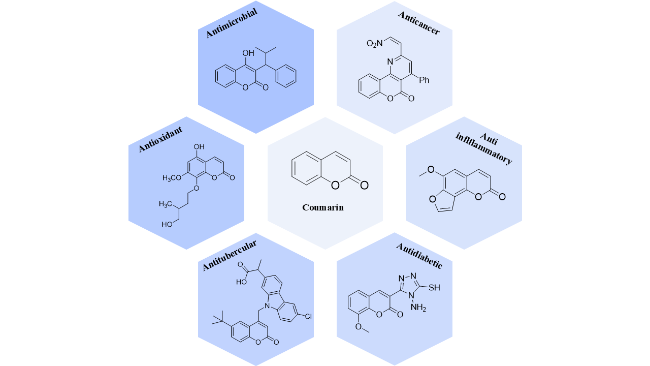
Coumarins, a plant secondary metabolite with bicyclic heterocycles scaffold,[8-9] is obtained from Lysimachia foenum-graecum Hance. Coumarins have attracted scientific attention due to their wide biological impacts including anticancer,[10] antibacterial,[11] anti-infllammatory[12] and antithrombotic activities (Figure 1).[13] Studies showed that coumarin derivatives exerted obvious anticancer activity. The mechanism of action is regulating cancer pathways, such as kinase inhibition, heat shock protein (HSP 90) inhibition and angiogenesis inhibition.[14-16] Using coumarin as the lead compound, searching for active molecules by structural modification has become a hot topic in medicinal chemistry.
Therefore, in order to further improve the anticancer activities of coumarin, coumarin derivatives 1~15 were synthesized via diversity-oriented chemical modification on the hydroxyl groups at C-7/8 positions and C-3/4 posi-tions of coumarin. All derivatives inhibitory activities on A549 evaluated by CCK-8 assay in vitro and the structure- activity relationships (SARs) were summarized.
2 Results and discussion
2.1 Chemistry
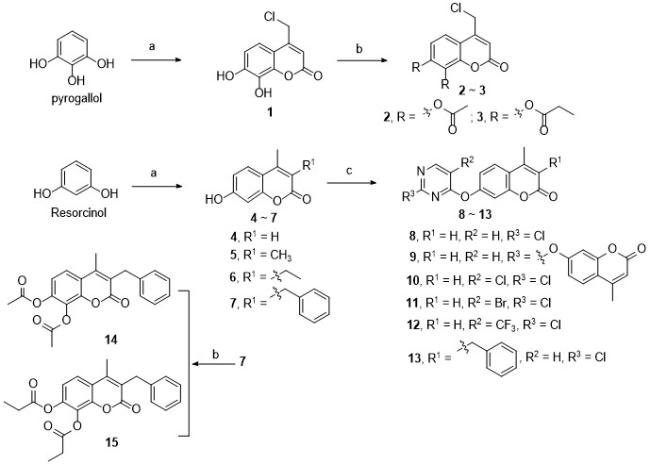
A total of 15 coumarin derivatives were synthesized and their chemical structures were validated by HRMS, 1H NMR and 13C NMR. All derivatives described herein were prepared as outlined in Scheme 1.
In the presence of scandium(III) triflate (Sc(OTf)3), the reaction of pyrogallol with β-ketoesters yielded derivative 1.[17-19] In the presence of 4-dimethylamino-pyridine (DM- AP), derivative 1 reacted with acetic anhydride and propionic anhydride to afford acyl-extended derivatives 2 and 3, respectively.[20] Using Sc(OTf)3 as the catalyst, the reaction of resorcinol with various β-ketoesters afforded derivatives 4~7.[21-23] Derivative 8 was obtained by reacting derivative 4 with 2,4-dichloroprymidine in the presence of NaOH in acetone under reflux conditions.[24] Treatment of derivatives 4~7 with aqueous NaOH and various 2,4-dichloro- pyrimidine derivatives in acetone afforded the derivatives 9~13.[25] Derivative 7 with acetic anhydride or propionic anhydride produced derivatives 14~15 in the presence of DMAP, respectively (Scheme 1).
2.2 A549 inhibitory activity and structure-activity relationship
Derivatives 1~15 were evaluated for their antiproliferation against human lung cancer A549 cell through CCK-8 assay with doxorubicin (DOX) as positive control. IC50 values (50% cell viability) of the tested compounds were shown in Table 1. Daphnetin showed moderate inhibitory activity against A549 cells, with an inhibition rate of 35.75% at 100 μmol/L. Derivative 1 exhibited more potent inhibitory activity than daphnetin at the same concentration, achieving an inhibition rate of 49.3% at 100 μmol/L, suggesting that introduced Cl is important for enhancing anticancer activity. Introducing acetyl and propionyl groups to C-7 position of pyrogallol afforded ester derivatives 2~3. Acetylated derivative 2 (IC50=11.7±0.2 μmol/L) and propionylated derivative 3 (IC50=38.7±1.1 μmol/L) showed higher A549 inhibitory activity compared to daphnetin. However, the inhibitory activity of propylated isosteviol derivative 3 decreased inhibitory activity. It is meaningful that acetylation at C-7 position was beneficial to A549 inhibitory activity.
Table 1 IC50 values of tested compounds against A549 cells |
| Compound | IC50/(μmol•L-1) |
|---|---|
| Daphnetin | >100 |
| 1 | >100 |
| 2 | 11.7±0.2 |
| 3 | 38.7±1.1 |
| 4 | >100 |
| 5 | 29.6±0.9 |
| 6 | 31.7±0.6 |
| 7 | 22.0±0.3 |
| 8 | 61.4±1.5 |
| 9 | >100 |
| 10 | 59.2±0.6 |
| 11 | >100 |
| 12 | >100 |
| 13 | 4.7±0.7 |
| 14 | 11.8±1.3 |
| 15 | 17.9±2.1 |
| DOX | 1.3±0.5 |
To investigate the effect of the SAR of C-3 position, methyl, ethyl and benzyl were introduced to C-3 positions to obtain derivatives 5~7. Derivative 4 had no inhibitory activity on A549. Benzyl derivative 7 displayed much stronger inhibitory activity (IC50=22.0±0.3 μmol/L) than CH3 derivative 5 (IC50=29.6±0.9 μmol/L) and ethyl derivative 6 (IC50=31.7±0.60 μmol/L). It is meaningful that aromatized at C-3 position was beneficial to increase A549 inhibitory activity.
Derivatives 8~12 were synthesized by introducing different substituents (Br, Cl, CF3) at pyrimidine ring. Cl derivative 8 possessed inhibitory activity on A549 with IC50 values of 61.4±1.5 μmol/L. Derivative 9 had no inhibi-tory activity, indicating that the Cl at C-7 positions is mostly helpful for enhancing the bioactivities. Cl derivative 10 had moderate inhibitory activities with IC50 values of 59.2±0.6 μmol/L. Br derivative 11 and CF3 derivative 12 showed weaker inhibitory activity than derivative 10, indicating Cl substitution possessed remarkable inhibitory activity on A549 cell. It is obvious that introducing pyrimidine ring of halogen atom at C-7 position is beneficial to enhancing inhibitory potency on A549.
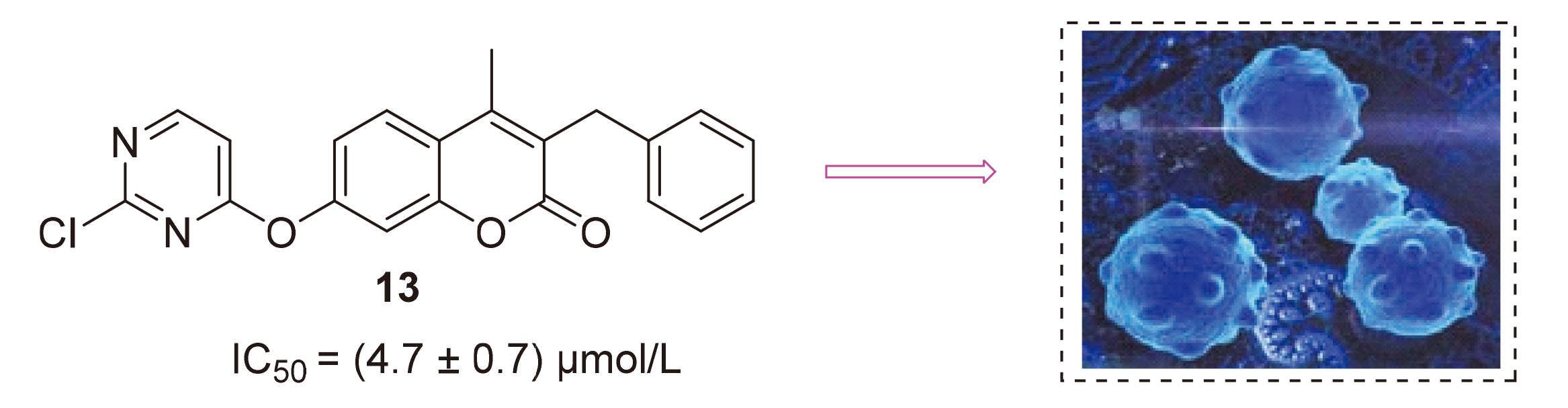
To investigate the inhibitory effect of C-3 position on A549, derivative 13 was obtained. Interestingly, derivative 13 with benzene ring at C-3 positions displayed higher potent inhibitory activity than derivative 8 with H at C-3 positions (13: IC50=4.7±0.7 μmol/L vs. 8: IC50=61.4±1.5 μmol/L), meaning that benzyl is necessary for the improvement of anticancer activity.
In the next step, derivatives 14~15 were obtained by derivative 7 acylation of hydroxyl groups. Acetylated derivative 14 and propylated derivative 15 showed remarkable inhibitory activity on A549 with IC50=(11.8±1.3) μmol/L and (17.9±2.1) μmol/L, respectively. In addition, derivatives 14 and 15 showed a decreasing inhibitory potency with increasing length of the sidechain.
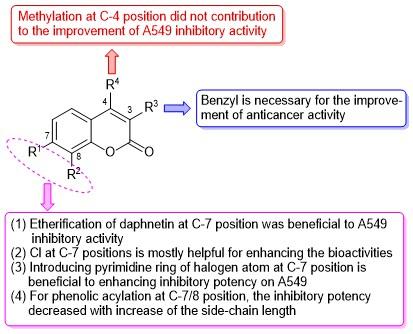
Derivative 13 exhibited strong inhibitory activity against A549 cells (IC50=4.7±0.7 μmol/L). From SAR study, A549 inhibitory activity was affected by the modifications at C-3 and C-7 positions. Furthermore, introducing pyrimidine ring of halogen atom at C-7 position is helpful for enhancing the inhibitory activity (Figure 2).
3 Network pharmacology analysis
3.1 Prediction of potential targets for derivative 13
Target prediction for the derivative 13 was performed via ligand-based reverse target prediction using multiple online databases, a total of 391 potential protein targets for derivative 13 were obtained from the SwissTargetPrediction (https://www.swisstargetprediction.ch/), PharmMapper (https://lilab-ecust.cn/pharmmapper/), and Comparative Toxicogenomics Database (CTD, https://ctdbase.org/) databases.
3.2 Derivative 13-target-disease network
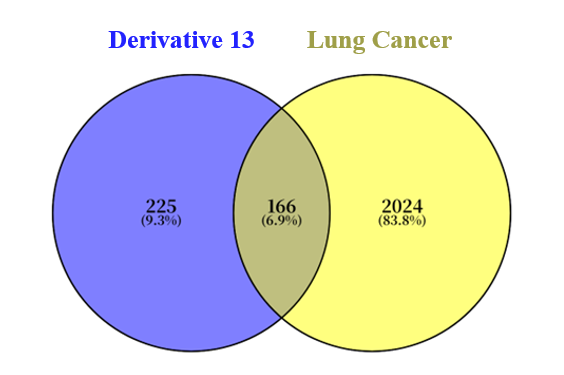
Lung cancer-related targets were retrieved from the GeneCards database (https://www.genecards.org/, relevance score>20) and the Therapeutic Target Database (TTD, https://ttd.idrblab.cn/). As shown in the Venn diagram (Figure 3), 166 targets overlapped between the predicted targets of derivative 13 and the lung cancer-related targets.
3.3 PPI network analysis
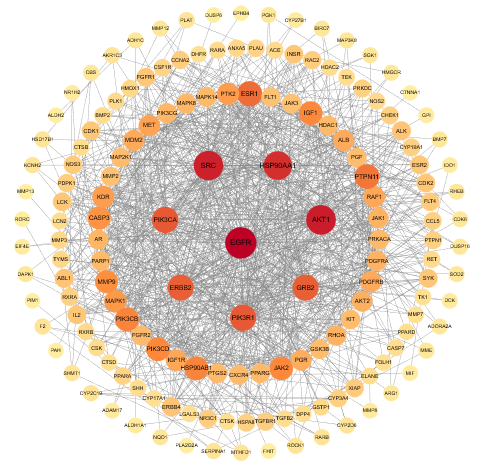
A protein-protein interaction (PPI) network was constructed to analyze the interactions among the common targets identified in the compound-target-disease network. In this network, node size is proportional to the degree of connectivity, where larger nodes represent targets with more interactions and potentially greater relevance to disease progression (Figure 4).
3.4 Enrichment analysis of GO terms and KEGG pathways
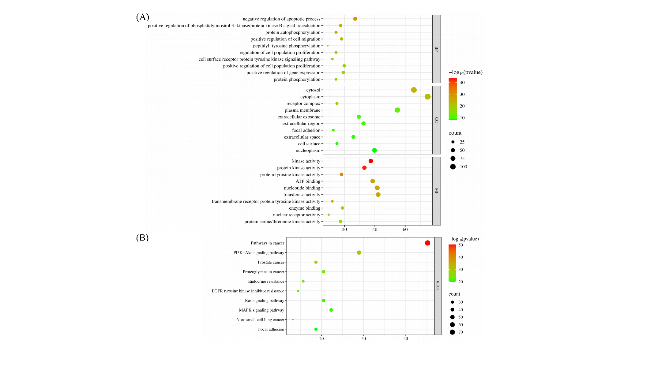
To investigate the interaction between derivative 13 and lung cancer target genes as well as the underlying mechanism, Gene Ontology (GO) and Kyoto Encyclopedia of Genes and Genomes (KEGG) enrichment analyses were performed on the anti-lung cancer targets of derivative 13 using the DAVID (Database for Annotation, Visualization, and Integrated Discovery) database. The top 10 terms in biological processes (BP), cellular components (CC), and molecular functions (MF) identified in the GO enrichment analysis were visualized as bubble charts via the Wei- ShengXin (https://www.bioinformatics.com.cn/) platform. In these charts, larger bubble size indicates a higher number of enriched genes, and darker bubble color represents a smaller P-value with higher statistical significance.
The GO enrichment analysis identified 30 GO terms, including 10 BP entries, 10 CC entries, and 10 MF entries (Figure 5A). BP terms were mainly enriched in negative regulation of apoptotic process, regulation of cell population proliferation, positive regulation of cell migration, phosphatidylinositol 3-kinase/protein kinase B signal trans- duction, protein phosphorylation, and cell surface receptor protein tyrosine kinase signaling pathway. MF terms were predominantly concentrated in kinase activity, protein kinase activity, protein tyrosine kinase activity, adenosine triphosphate (ATP) binding, and transmembrane receptor protein tyrosine kinase activity. CC terms were mainly asso-ciated with cytosol, cytoplasm, plasma membrane, cell surface, receptor complex, and focal adhesion. These results suggested that derivative 13 could inhibit lung cancer cell by regulating cell population, apoptosis, and migration, primarily through modulating kinase activity, phosphorylation events, and key signaling pathways including the PI3K/ Akt pathway. KEGG pathway analysis further demonstrated that the targets were significantly enriched in pathways in Pathways in cancer, PI3K-Akt signaling pathway, MAPK signaling pathway, Ras signaling pathway, non- small cell lung cancer, EGFR tyrosine kinase inhibitor resistance, and focal adhesion. The resulting data were presented using bubble charts and analyzed with the bioinformatics platform tools (Figure 5B).
4 Molecular docking analysis
EGFR is a proto-oncogene that serves as a key regulator and cellular hub for inflammatory cytokine signaling, thereby promoting the proliferation, invasion, migration, metastasis, and survival of tumor cells. To verify whether derivative 13 inhibited lung cancer cell growth by suppressing EGFR, molecular docking was performed between derivative 13 and EGFR (Figure 6).
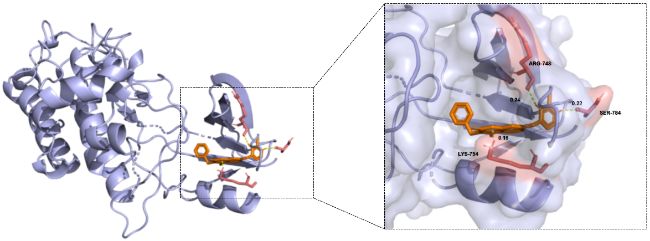
Derivative 13 interacted with EGFR by forming three hydrogen bonds, resulting in a docking score of -33.18 kJ/mol. Specifically, one nitrogen atom formed a hydrogen bond with the residue Ser-784 at 0.22 nm, while the other nitrogen atom bonded with Arg-748 at 0.24 nm. Additionally, an oxygen atom formed a hydrogen bond with Lys- 754 at 0.19 nm. These interactions provide novel structural insights into a potential mechanism by which derivative 13 may exert its anti-proliferative activity, possibly through binding to EGFR.
5 Cell cycle analysis
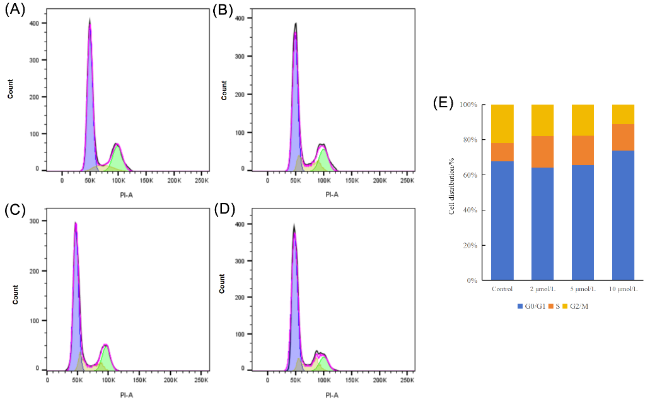
To identify the phase of the cell cycle affected by derivative 13, the current study employed flow cytometer. Treatment with derivative 13 led to a significant increase in the proportion of cell in G0/G1-phase, along with corresponding decrease in S- and G2/M-phase cell populations, indicating that the derivative 13 induced cell cycle arrest at G0/G1-phase in A549 cells (Figure 7). Although an increase in S-phase cells and a decrease in G2/M-phase cells were observed at some concentrations, these changes did not show an obvious dose-dependent manner. Therefore, the primary effect of the derivative 13 on cell cycle distribution was identified as G0/G1 phase arrest (Figure 7).


6 Conclusion
In summary, coumarin derivatives 1~15 were synthesized and their antiproliferative activities were also evaluated. The results showed that derivatives 2~3, 5~7 and 13~15 possessed moderate A549 inhibitory potency with IC50 value in the range of (4.7±0.7)~(38.7±1.1) μmol/ L. Among them, derivatives 2, 13~15 presented remarkable inhibitory potency on tested cancer cells with IC50 values in the range of (4.7±0.7)~(17.9±2.1) μmol/L. Among them, derivative 13 exerted a significant inhibitory effect on tumor cell growth, with an IC50 value of (4.7±0.7) μmol/L. The SAR of coumarin derivatives was shown in Figure 2 based on the bio-evaluation data (Table 1). Moreover, the molecular docking analysis revealed that the amino acid residues Ser-784, Arg-748 and Lys-754 played a crucial role in the binding of derivative 13 to the active sites of EGFR. Meanwhile, derivative 13 arrested the A549 cell cycle in the G0/G1-phase. The results suggest that derivative 13 could be further developed as a high-performance anticancer agent.
7 Experimental section
7.1 General
All solvents were distilled and dried prior to use. Reagents and materials were obtained from commercial suppliers and were used without further purification. Thin- layer chromatography (TLC) and column chromatography (300~400 mesh) were purchased from Qingdao Makall Group Co., Ltd. (Qingdao, China). Spots were visualized by UV light or by spraying with bismuth potassium iodide reagents. 1H NMR and 13C NMR spectra were recorded on a Bruker 400 or 500 MHz instruments and obtained as CDCl3 and CD3OD solutions (reported in ppm), using CDCl3 (δ 7.26 and 77.00) and CD3OD (δ 3.31 and 49.00) as the reference standard. Column Chromatography was performed using silica gel (300~400 mesh). ESI mass spectrometry (ESIMS) data were acquired on an Orbitrap Exploris mass spectrometer (Thermo Scientific, America).
7.2 Chemistry
7.2.1 General procedure for preparation of derivative 1
To a solution of pyrogallol (1.2 equiv., 51.8~85.2 mg) in different β-ketoesters (1.0 equiv., 100 μL) was added Sc(OTf)3 (0.1 equiv., 49.2 mg). The mixture was heated to 85 ℃ for 2.0 h. The reaction mixture was diluted with cold water and extracted with CH2Cl2 (30 mL×3). The organic layer was dried over anhydrous Na2SO4, and filtered. The filtrate was evaporated under reduced pressure. The crude material was purified by column chromatography to afford pure derivative 1 as a white amorphous powder with 36% yield [eluent: V(DCM)∶V(MeOH)=20∶1]. 1H NMR (400 MHz, CD3OD) δ: 7.19 (d, J=8.7 Hz, 1H), 6.84 (d, J=8.7 Hz, 1H), 6.37 (s, 1H), 4.80 (s, 2H); 13C NMR (100 MHz, CD3OD) δ: 161.5, 152.1, 149.6, 143.5, 132.4, 115.1, 112.1, 110.5, 110.1, 40.8; ESI-MS m/z: 226.98 [M+H]+.
7.2.2 General procedure for preparation of derivatives 2~3
To a solution of 1 (1.0 equiv., 100 mg) in pyridine (1.0 mL) with catalytic amount of dimethylaminopyridine (DMAP) were added acetic anhydride (4.0 equiv., 375.4 μL) and propionic anhydride (4.0 equiv., 514.9 μL), respectively. The resulting mixture was stirred at room temperature until the starting material was not observed by TLC. The reaction mixture was filtered, and the residue was washed with ethyl acetate (30 mL×3). Then, the ethyl acetate solution was washed with 5% HCl (30 mL×3), saturated NaHCO3 (30 mL×3) and saturated brine (30 mL×3), respectively. Subsequently, the organic layer was dried over anhydrous Na2SO4 and filtered. The filtrate was evaporated under reduced pressure. Finally, the residue was purified by column chromatography over silica gel to obtain the pure target derivatives 2~3.
4-(Chloromethyl)-2-oxo-2H-chromene-7,8-diyl diaceta- te (2): White amorphous powder, yield 62%. 1H NMR (400 MHz, CDCl3) δ: 7.53 (d, J=8.8 Hz, 1H), 7.16 (d, J=8.8 Hz, 1H), 6.51 (s, 1H), 4.60 (s, 2H), 2.38 (s, 3H), 2.31 (s, 3H); 13C NMR (100 MHz, CDCl3) δ: 167.9, 167.5, 158.9, 149.3, 147.2, 145.7, 130.8, 121.6, 119.1, 116.3, 115.7, 41.2, 20.8, 20.4; ESI-MS m/z: 311.01 [M+H]+.
4-(Chloromethyl)-2-oxo-2H-chromene-7,8-diyl dipro- pionate (3): White amorphous powder, yield 62%. 1H NMR (400 MHz, CDCl3) δ: 7.50 (d, J=8.8 Hz, 1H), 7.11 (d, J=8.8 Hz, 1H), 6.47 (s, 1H), 4.58 (s, 2H), 2.61 (q, J=7.6 Hz, 2H), 2.53 (q, J=7.6 Hz, 2H), 1.22~1.16 (m, 6H); 13C NMR (100 MHz, CDCl3) δ: 171.4, 171.1, 158.9, 148.9, 145.8, 144.6, 131.8, 125.9, 122.4, 119.1, 115.8, 41.2, 29.8, 27.2, 9.2 (2C); ESI-MS m/z: 339.46 [M+H]+.
7.2.3 General procedure for preparation of derivatives 4~7
To a solution of resorcinol (1.0 equiv., 100 mg) in different β-ketoesters (1.1 equiv., 126~216 μL) was added Sc(OTf)3 (0.1 equiv., 49.2 mg). The mixture was heated to 85 ℃ for 0.5~2.0 h. The reaction mixture was diluted with cold water and extracted with CH2Cl2 (30 mL×3). The organic layer was dried over anhydrous Na2SO4, and filtered. The filtrate was evaporated under reduced pressure. The crude material was purified by column chromatography to afford pure derivatives 4~7.
7-Hydroxy-4-methyl-2H-chromen-2-one (4): White amorphous powder, yield 71% [eluent: V(ether)∶V(ethyl acetate)=2∶1]. 1H NMR (500 MHz, CDCl3) δ: 7.51 (d, J=8.7 Hz, 1H), 6.95 (dd, J=8.7, 2.4 Hz, 1H), 6.86 (s, 1H), 6.17 (s, 1H), 2.43 (s, 3H); 13C NMR (125 MHz, CDCl3) δ: 162.5, 161.7, 155.2, 154.7, 126.1, 113.0, 112.5, 109.9, 102.1, 17.3; ESI-MS m/z: 177.00 [M+H]+.
7-Hydroxy-3,4-dimethyl-2H-chromen-2-one (5): White amorphous powder, yield 60% [eluent: V(DCM)∶V(MeOH)=80∶1]. 1H NMR (500 MHz, CD3OD) δ: 7.63 (d, J=8.8 Hz, 1H), 6.83 (dd, J=8.8, 2.4 Hz, 1H), 6.70 (d, J=2.4 Hz, 1H), 2.43 (s, 3H), 2.16 (s, 3H); 13C NMR (125 MHz, CD3OD) δ: 163.7, 160.1, 153.5, 148.1, 125.7, 117.4, 113.3, 113.1, 102.3, 14.7, 12.5; ESI-MS m/z: 191.01 [M+H]+.
3-Ethyl-7-hydroxy-4-methyl-2H-chromen-2-one (6): White amorphous powder, yield 62% [eluent: V(DCM)∶V(MeOH)=80∶1]. 1H NMR (500 MHz, CD3OD) δ: 7.49 (d, J=8.8 Hz, 1H), 6.70 (dd J=8.8, 2.4 Hz, 1H), 6.57 (s, 1H), 2.54 (q, J=7.5 Hz, 2H), 2.31 (s, 3H), 1.01 (t, J=7.5 Hz, 3H); 13C NMR (125 MHz, CDCl3) δ: 167.2, 164.0, 157.5, 151.5, 129.7, 127.5, 117.4, 117.1, 106.4, 24.5, 18.3, 16.8; ESI-MS m/z: 205.02 [M+H]+.
7-Hydroxy-4-methyl-2H-chromen-2-one (7): White amorphous powder, yield 83% [eluent: V(DCM)∶V(Me- OH)=150∶1]. 1H NMR (400 MHz, CD3OD) δ: 7.57 (d, J=8.8 Hz, 1H), 7.24~7.07 (m, 5H), 6.78 (dd, J=8.8, 2.4 Hz, 1H), 6.68 (s, 1H), 3.97 (s, 2H), 2.39 (s, 3H); 13C NMR (100 MHz, CD3OD) δ: 163.3, 160.8, 153.9, 149.6, 139.4, 128.2 (2C), 127.9 (2C), 126.2, 125.9 120.5, 113.1 (2C), 102.0, 32.1, 14.4; ESI-MS m/z: 267.02 [M+H]+.
7.2.4 General procedure for preparation of derivative 8
To a solution of derivative 4 (1.2 equiv., 100 mg) was dissolved in a solution of NaOH (10 equiv., 16.4 mg) in water (0.41 mL) at 0 ℃. A solution of 2,4-dichloro- prymidine (2.0 equiv., 122.1 mg) in acetone (1.6 mL) was added dropwise. The resulting mixture was stirred at reflux temperature to 12 h. The organic layer was dried over anhydrous Na2SO4, and filtere. The filtrate was evaporated under reduced pressure. The crude material was purified by column chromatography to afford pure derivative 8 as the white amorphous powder with 49% yield [eluent: V(ether)∶V(DCM)=5∶1]. 1H NMR (500 MHz, CDCl3) δ: 8.52 (d, J=5.6 Hz, 1H), 7.68 (d, J=8.7 Hz, 1H), 7.20 (d, J=2.3 Hz, 1H), 7.15 (dd, J=8.7, 2.3 Hz, 1H), 6.93 (s, 1H), 6.31 (s, 1H), 2.47 (s, 3H); 13C NMR (125 MHz, CDCl3) δ: 169.45, 160.68, 160.49, 160.44, 154.42, 154.00, 151.96, 125.86, 118.15, 117.77, 114.69, 110.22, 107.33, 18.81; ESI-MS m/z: 289.04 [M+H]+.
7.2.5 General procedure for preparation of derivatives 9~13
To a solution of derivative 4/7 (1.2 equiv., 100 mg) was dissolved in a solution of NaOH (10 equiv., 16.4 mg) in water (0.41 mL). A solution of pyrimidine (2.0 equiv., 122.1 mg) in acetone (1.6 mL) was added dropwise. The resulting mixture was stirred at reflux temperature to 12~24 h. The organic layer was dried over anhydrous Na2SO4, and filtered. The filtrate was evaporated under reduced pressure. The crude material was purified by column chro- matography to afford pure derivatives 9~13.
7,7'-(Pyrimidine-2,4-diylbis(oxy))bis(4-methyl-2H-chro-men-2-one) (9): White amorphous powder, yield 30% [eluent: V(ether)∶V(DCM)=1∶5]. 1H NMR (500 MHz, CD3OD) δ: 8.09 (d, J=4.9 Hz, 1H), 7.68 (dd, J=7.5, 3.6 Hz, 2H), 7.17 (d, J=2.0 Hz, 1H), 7.11 (d, J=1.9 Hz, 1H), 7.04~6.91 (m, 2H), 6.51 (d, J=4.9 Hz, 1H), 6.16 (s, 2H), 2.43 (s, 6H); 13C NMR (125 MHz, CD3OD) δ: 167.1, 164.8, 160.2, 159.6, 157.5, 156.1, 155.1, 155.0, 152.5 (2C), 127.6, 127.6, 119.2, 117.3, 115.6, 113.3 (2C), 104.3, 103.1, 102.9, 20.6 (2C); HRMS (ESI) calcd for C24H17- N2O6 [M+H]+ 429.1087, found 429.1091.
7-((2,5-Dichloropyrimidin-4-yl)oxy)-4-methyl-2H-chromen-2-one (10). White amorphous powder, yield 43% [eluent: V(ether)∶V(DCM)=1∶3]. 1H NMR (500 MHz, CD3OD) δ: 8.10 (s, 1H), 7.67 (d, J=7.5 Hz, 1H), 7.21 (s, J=1.9 Hz, 1H), 7.03 (dd, J=7.5, 2.0 Hz, 1H), 6.16 (s, 1H), 2.43 (s, 3H); 13C NMR (125 MHz, CD3OD) δ: 164.8, 161.2, 158.5, 156.1, 155.2, 152.5, 146.2, 127.6, 117.3, 115.7, 113.3, 113.1, 104.2, 20.6; HRMS (ESI) calcd for C14H9Cl2N2O3 [M+H]+ 322.9990, found 322.9996.
7-((5-Bromo-2-chloropyrimidin-4-yl)oxy)-4-methyl-2H-chromen-2-one (11): White amorphous powder, yield 56% [eluent: V(ether)∶V(DCM)=1∶3]. 1H NMR (500 MHz, CDCl3) δ: 8.20 (s, 1H), 7.67 (d, J=7.5 Hz, 1H), 7.21 (d, J=1.9 Hz, 1H), 7.02 (dd, J=7.5, 2.0 Hz, 1H), 6.16 (s, 1H), 2.43 (s, 3H); 13C NMR (125 MHz, CDCl3) δ: 164.8, 160.4, 159.7, 155.2, 155.1, 152.5, 147.1, 127.6, 117.3, 115.7, 113.3, 104.3, 100.7, 20.6; HRMS (ESI) calcd for C14H9BrClN2O3 [M+H]+ 366.9485, found 366.9485.
7-((2-Chloro-5-(trifluoromethyl)pyrimidin-4-yl)oxy)-4-methyl-2H-chromen-2-one (12): White amorphous powder, yield 56% [eluent: V(ether)∶V(DCM)=1∶3]. 1H NMR (500 MHz, CD3OD) δ: 8.66 (s, 1H), 7.67 (d, J=7.5 Hz, 1H), 7.21 (d, J=1.9 Hz, 1H), 7.02 (dd, J=7.5, 2.0 Hz, 1H), 6.16 (s, 1H), 2.43 (s, 3H); 13C NMR (125 MHz, CD3OD) δ: 164.8, 161.1, 159.3, 155.1, 154.7, 152.5, 147.2, 127.6, 125.0, 117.3, 115.7, 113.3, 104.3, 101.7, 20.6; ESI- MS m/z: 358.01 [M+H]+.
3-Benzyl-7-((2-chloropyrimidin-4-yl)oxy)-4-methyl-2H-chromen-2-one (13): White amorphous powder, yield 30% [eluent: V(ether)∶V(DCM)=1∶3]. 1H NMR (500 MHz, CD3OD) δ: 8.31 (d, J=4.9 Hz, 1H), 7.65 (d, J=7.5 Hz, 1H), 7.29~7.25 (m, 2H), 7.2~7.19 (m, 3H), 7.07 (d, J=2.0 Hz, 1H), 7.02 (dd, J=7.5, 2.0 Hz, 1H), 6.51 (d, J=4.9, 1H), 3.96~3.83 (m, 2H), 2.45 (s, 3H); 13C NMR (125 MHz, CD3OD) δ: 167.4, 164.9, 159.2, 156.2, 154.7, 154.5, 150.1, 138.5, 131.08 (2 C), 131.10 (2 C), 131.1, 130.3, 127.5, 120.7, 120.0, 115.1, 105.8, 104.4, 33.2, 20.1; ESI- MS m/z: 379.08 [M+H]+.
7.2.6 General procedure for preparation of derivatives 14~15
To a solution of 7 (1.0 equiv., 100 mg) in pyridine (1.0 mL) with catalytic amount of dimethylaminopyridine (DMAP) were added acetic anhydride (4.0 equiv., 375.4 μL) and propionic anhydride (4.0 equiv., 514.9 μL), respectively. The resulting mixture was stirred at room temperature until the starting material was not observed by TLC. The reaction mixture was filtered, and the residue was washed with ethyl acetate (30 mL×3). Then, the ethyl acetate solution was washed with 5% HCl (30 mL×3), saturated NaHCO3 (30 mL×3) and saturated brine (30 mL×3), respectively. Subsequently, the organic layer was dried over anhydrous Na2SO4, and filtered. The filtrate was evaporated under reduced pressure. Finally, the residue was purified by column chromatography over silica gel to obtain the pure target derivatives 14~15.
3-Benzyl-4-methyl-2-oxo-2H-chromene-7,8-diyl diacetate (14): White amorphous powder, yield 11% [eluent: V(ether)∶V(DCM)=5∶1]. 1H NMR (400 MHz, CD3Cl) δ: 7.61 (d, J=8.7 Hz, 1H), 7.28~7.15 (m, 5H), 7.09 (d, J=2.3 Hz, 1H), 7.05 (dd, J=8.7, 2.3 Hz, 1H), 4.05 (s, 2H), 2.62 (q, J=7.5 Hz, 2H), 2.43 (s, 3H), 1.27 (t, J=7.5, 3H); 13C NMR (100 MHz, CDCl3) δ: 169.0, 161.8, 153.0, 152.4, 147.2, 138.8, 128.7 (2C), 128.3 (2C), 126.5, 125.6, 124.9, 118.6, 118.2, 110.3, 33.0, 21.2, 15.6; ESI-MS m/z: 309.19 [M+H]+.
3-Benzyl-4-methyl-2-oxo-2H-chromene-7,8-diyl dipro- pionate (15): White amorphous powder, yield 6% [eluent: V(ether)∶V(DCM)=5∶1]. 1H NMR (400 MHz, CD3OD) δ: 7.61 (d, J=8.7 Hz, 1H), 7.30~7.13 (m, 5H), 7.09 (d, J=2.3 Hz, 1H), 7.04 (dd, J=8.7, 2.3 Hz, 1H), 2.62 (q, J=7.5 Hz, 2H), 2.43 (s, 3H) 1.27 (t, J=7.5 Hz, 3H); 13C NMR (100 MHz, CDCl3) δ: 172.5, 161.8, 152.9, 152.6, 147.3, 138.8, 128.7 (2 C), 128.4 (2 C), 126.5, 125.6, 124.8, 118.4, 118.2, 110.2, 33.0, 27.8, 15.6, 9.0; ESI-MS m/z: 323.12 [M+H]+.
7.3 Biological evaluation and pharmacological me- chanisms
7.3.1 Sample pretreatment
All the synthesized coumarin derivatives were dissolved in dimethyl sulfoxide (DMSO) to obtain 100 mmol/L of original diethylene glycol monomethyl ether (DEM) derivatives solution. Then the original solution was diluted to 3.12, 6.25, 12.5, 25.0, 50.0, 100.0 μmol/L by minimum essential medium (MEM) and stored in a refrigerator at -20 ℃ for reserve.
7.3.2 Cell culture and treatments
RPMI-1640 medium (RPMI-1640), high glucose Dulbecco’s modified Eagle medium (DMEM) and phosphate buffered saline (PBS) were purchased from Wisent (Nanjing, China). Fetal bovine serum (FBS), trypsin and penicillin streptomycin were purchased from Shanghai QiDa Biotechnology Co., Ltd. (China). Cell Counting Kit-8 (CCK-8), cell cycle and apoptosis analysis kit from Beyotime Biotechnology CO., Ltd. (China). Doxorubicin hydrochloride (DOX•HCl) with the purity of 98% used as the positive control was obtained from Shanghai Macklin Biochemical Technology Co., Ltd. (China). Cancer cell lines A549 was obtained from the American Type Culture Collection (ATCC, VA, USA). The cell lines were mycoplasma-free and have been authenticated using STR profiling. Cells were cultured in RPMI-1640 (Wisent, Nanjing, China) or high glucose DMEM (Wisent, Nanjing, China) medium supplemented with 10% FBS, and penicillin & streptomycin (100 U/mL) at 37 ℃ in a humidified incubator containing 5% CO2.
7.3.3 Antiproliferative activity in vitro
The antiproliferative activities of all coumarin derivatives were evaluated against lung carcinoma cells (A549) by CCK-8 assay. For this assay, 100 μL (5×10³ cells/mL) cells per well were seeded in 96-well plates and allowed to incubate for 12 h. Then, the compounds with different concentrations were added. After 24 h of incubation, CCK-8 solution was added, and the plates were incubated again for another 1 h at 37 ℃. The absorbance at 450 nm was measured using a microplate reader (Spectramax Plus 384, Molecular Devices, Sunnyvale, CA, USA). IC50 was determined by Graph Pad Prism 8.0 software. Three independent experiments were performed. Data are presented as mean±SD (n=3).
7.3.4 Cell cycle research
A549 cells were exposed to 2, 5, and 10 μmol/L concentrations of derivative 13 solution for 48 h. Cells were then dissociated by using 0.25% trypsin, washed and resuspended in 0.5 mL of pre-cooled PBS. Cells were initially fixed in 70% ice-cold ethanol at 4 ℃ for 1 h and subsequently stored at -20 ℃. Prior to analysis, the cells were washed with ice-cold PBS and resuspended in 1 mL of PBS containing 50 µg/mL RNase A and 10 µg/mL propidium iodide (PI). Following a 30 min incubation at 37 ℃, DNA content was analyzed using a Accuri™ flow cytometer (Becton Dickinson Immunocytometry Systems, San Jose, CA, USA). For each sample, 10000 events were acquired. Cell cycle distribution was calculated using Flowjo software (Becton Dickinson Immunocytometry Systems, San Jose, CA, USA).
(Cheng, F.)