


1 Introduction
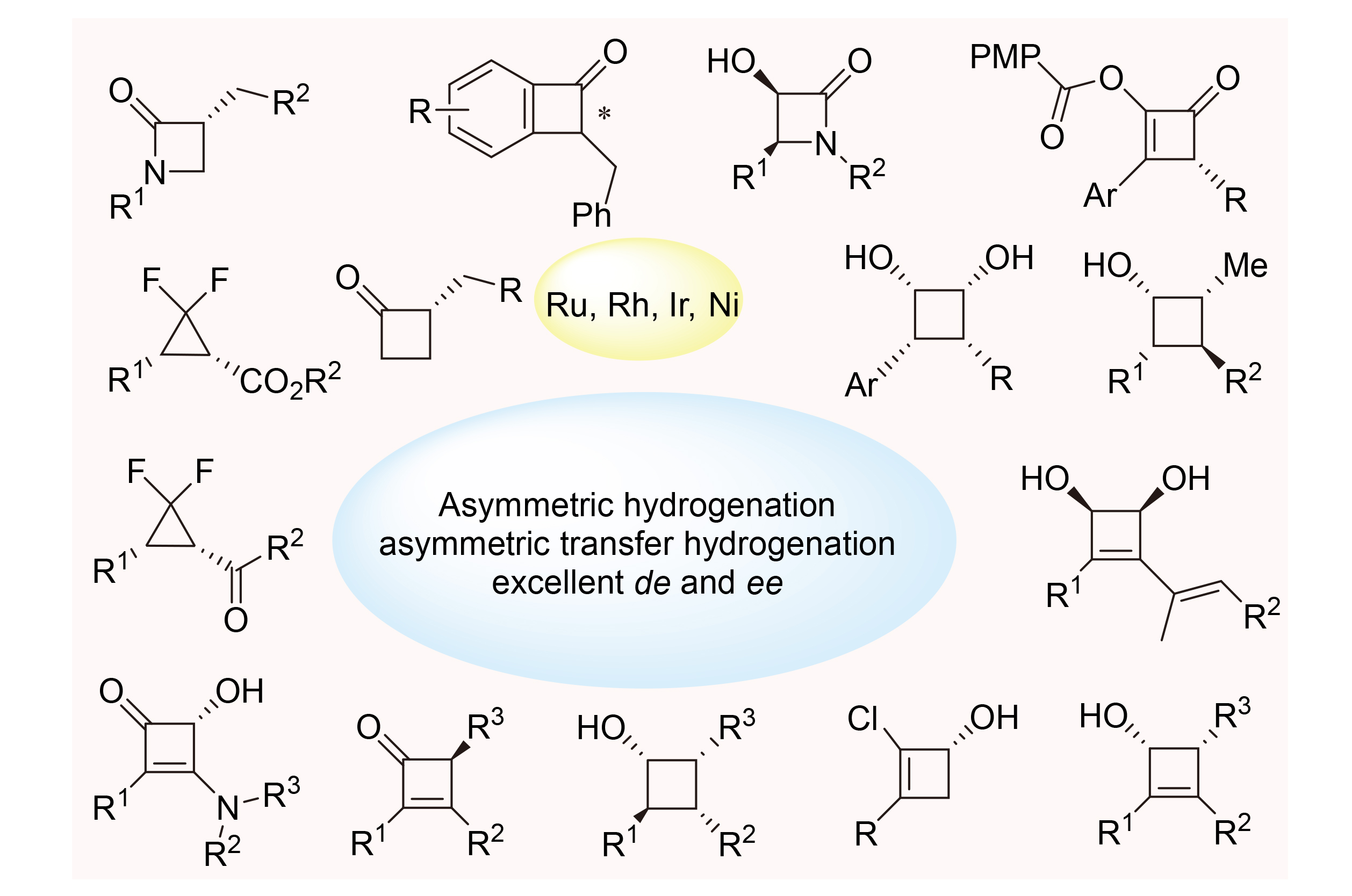
The synthesis of chiral cyclic compounds holds significant importance in the realm of organic synthesis. Compounds featuring three- or four-membered rings serve as the fundamental structural units in biologically active natural products and pharmaceuticals,[1] while also acting as crucial intermediates because of their highly strained molecular structures.[2] The asymmetric synthesis of these two categories of small-ring compounds has long been a topic of sustained interest. In contrast to the synthesis of large- and medium-sized cyclic compounds, the construction of chiral three- or four-membered cyclic compounds has been less extensively documented.[3]
Over the past few decades, asymmetric hydrogenation has increasingly attracted attention in both academic research and industrial application, thanks to its remarkable efficiency, high enantioselectivity, and straightforward procedures for constructing enantioenriched compounds.[4] The asymmetric hydrogenation of prochiral small-ring compounds stands out as the most straightforward and highly effective method for synthesizing chiral small-ring compounds. However, substantial challenges emerge: First, small-ring molecules feature rigid structures, in which the substituted groups are oriented at certain inflexible angles, and the molecular configurations are difficult to adjust. This makes the control of stereochemistry very challenging in distinguishing between the Re and Si faces. Second, the ring strain renders the opening of these substrates relatively easier than that of common ring compounds, which leads to a series of side reactions. Third, the rigid structures of small-ring molecules make their matching with catalysts more difficult through either steric or electronic interactions. Nevertheless, recent years have witnessed an emerging trend of asymmetric (transfer) hydrogenation of small-ring compounds, which has greatly enriched the toolbox of synthetic chemists and assisted drug discovery. In this review, we provide a detailed exposition on the applications of asymmetric hydrogenations in the construction of chiral three- and four-membered ring compounds. We hope that this review will serve as a valuable guide for the design of novel catalysts and reactions, facilitating the high- ly efficient, regio- and stereoselective asymmetric hydrogenation of small-ring molecules.
2 Asymmetric hydrogenation of four- membered ring substrates
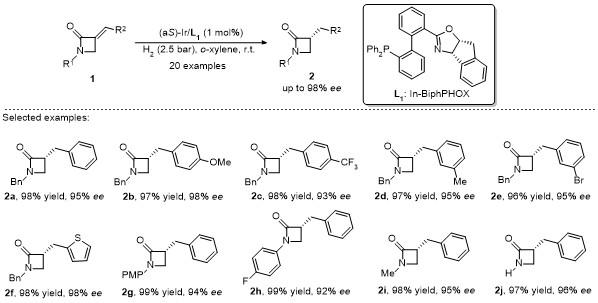
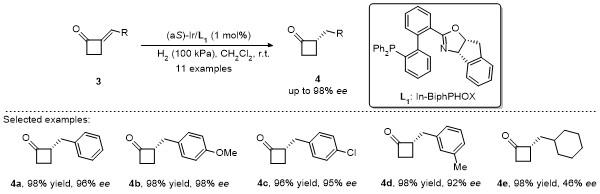
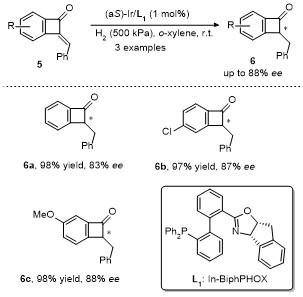
In 2018, Zhang et al.[5] pioneered the highly stereocontrolled synthesis of four-membered β-lactams and cyclobutanones through Ir/In-BiphPHOX-catalyzed asymmetric hydrogenation. By subtly adjusting the reaction conditions, chiral α-substituted β-lactams 2a~2j (Scheme 1), cyclobutanones 4a~4e (Scheme 2), and benzo-fused cyclobutanones 6a~6c (Scheme 3) could be obtained with out- standing enantioselectivities (up to 98% ee). The successful realization of this reaction demonstrated the feasibility of constructing chiral small-ring compounds via asymmetric hydrogenation.
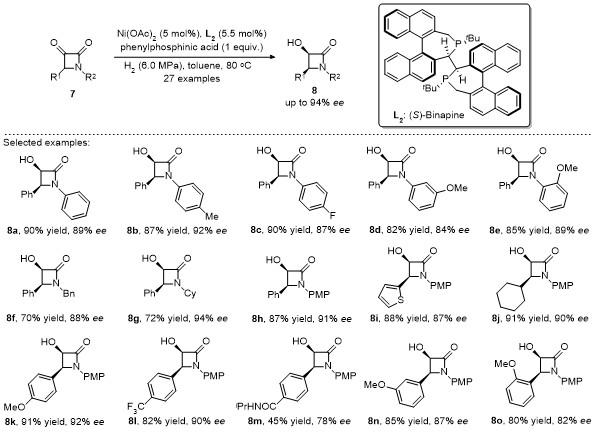
Chiral α-hydroxy-β-lactams serve as crucial structural motifs in numerous bioactive compounds and antibiotics. The asymmetric hydrogenation of α-keto-β-lactams stands out as one of the most direct and promising routes to access these chiral entities. However, due to their inherent instability under basic conditions, reports on the dynamic kinetic resolution (DKR) of α-keto-β-lactams are scarce. Zhang et al.[6] proposed that an acidic proton-shuttling catalyst could facilitate the interconversion between the two enantiomers of α-keto-β-lactams. Through Ni-catalyzed asymmetric hydrogenation, a wide range of α-keto-β-lactams 7a~7o were efficiently and enantioselectively reduced, yielding the corresponding α-hydroxy-β-lactam derivatives 8a~8o with high yields and enantioselectivities (Scheme 4). Deuterium-labeling experiments revealed that phenylphos- phinic acid plays a critical role in the DKR process of α- keto-β-lactams by promoting enolization.
In 2024, Fang et al.[7] reported the first asymmetric transfer hydrogenation (ATH) of cyclobutenediones. Depending on the substitution patterns and reaction conditions employed, three distinct types of four-membered ring compounds including cyclobutenones, cyclobutanediols and cyclobutenediols were obtained in high yields with excellent stereoselectivities (Schemes 5~7). For 4-aryl-3-alkylcyclobutenediones, regioselective conjugate asymmetric transfer hydrogenation was observed, and since the monohydrogenated products exhibit relatively low stability, the resulting products 10a~10h were isolated as enol esters. With an increased catalyst loading and the addition of LiCl as an additive, the reaction proceeded further through sequential asymmetric transfer hydrogenation of the carbonyl groups, accompanied by dynamic kinetic resolution (Scheme 6, 11a~11h). When the alkyl chain was substituted with a β-styryl group, sequential asymmetric transfer hydrogenation of the carbonyl groups occurred, leading to the formation of cis-cyclobutene-1,2-diols 13a~13d. Notably, the incorporation of electron-deficient phenyl groups markedly reduced the ee values of the final products (Scheme 5, 10e). However, when the monohydrogenated product 10e' was directly analyzed following rapid filtration, an ee value of 92% was observed, suggesting that racemization occurs during the enol-protection step. These highly functionalized products offer versatile platforms for further chemical transformations, enabling the synthesis of an even broader range of diversified four-membered compounds.
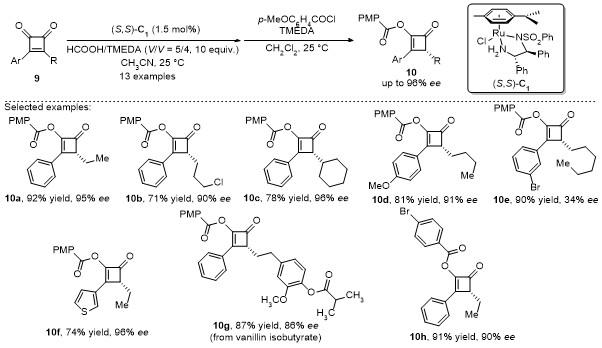
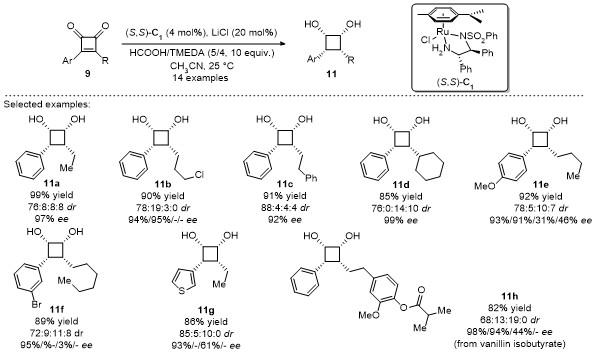
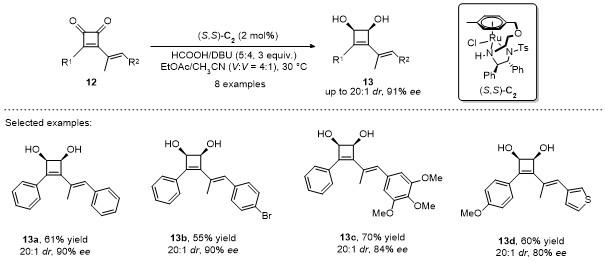
Additionally, the asymmetric synthesis of di-, tri-, and tetrasubstituted bioactive molecules has been successfully accomplished. Through systematic mechanistic investigations and theoretical calculations, the origins of regioselectivity, key transition state models for hydrogenation, and the sequential order of double and triple hydrogenation processes have been elucidated.
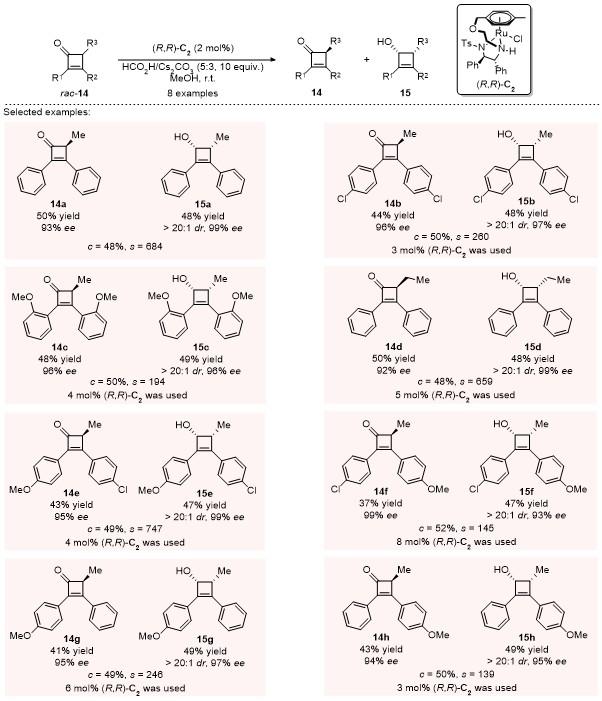
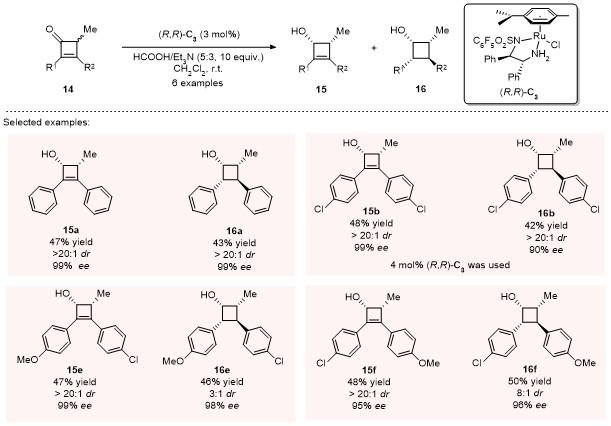
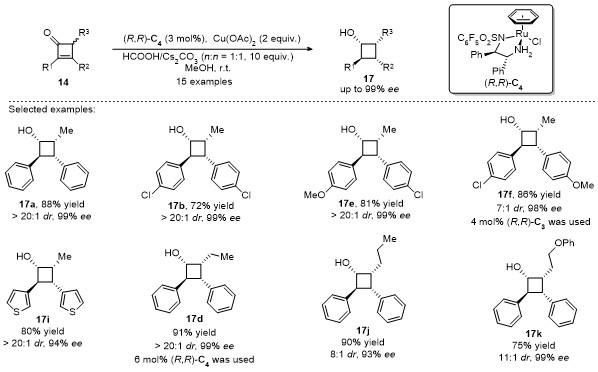
Catalytic asymmetric transformations that yield products with a variety of stereo-configurations hold significant appeal in synthetic chemistry and drug discovery. This is because, in numerous instances, the stereoisomers of a bioactive molecule display either similar or markedly different physiological and pharmacological properties. Fang et al.[8] pioneered the diverse kinetic resolutions of diaryl- substituted cyclobutenones via Ru-catalyzed asymmetric transfer hydrogenation (Schemes 8~10). By adjusting the reaction conditions, they achieved three distinct resolution patterns, resulting in the production of enantioenriched cyclobutenones 14a~14f, cyclobutenols 15a~15f, and two diastereomers of cyclobutanols 16a~16f and 17a~17i. The protocol utility has been demonstrated through the asymmetric synthesis of six related bioactive molecules with different configurations, all of which represent the first asymmetric syntheses. Detailed mechanistic investigations have revealed that the catalysts play a pivotal role in dictating the resolution modes.
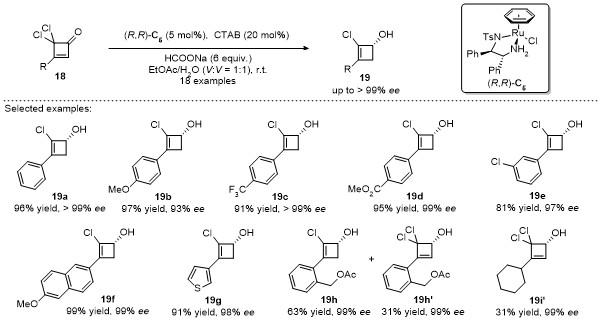
In 2024, Meyer and Charron, along with their collea- gues,[9] unveiled a novel allylic reduction-asymmetric transfer hydrogenation cascade starting from 3-(hetero)aryl gem-dichlorocyclobutenones 18, catalyzed by a Noyori-Ikariya ruthenium complex (Scheme 11). This reaction offered an efficient route to (chloro)cyclobutenols 19a~19h with exceptionally high enantiomeric purities. For substrate 18h bearing an ortho-substituted aromatic moiety, chlorocyclobutenol 19h (63%) resulting from the allylic reduction-asymmetric transfer hydrogenation (ATH) cascade was obtained in moderate yields, accompanied by dichlorocyclobutenol 19h' (31%). The steric hindrance imposed by the ortho-substituent presumably slows down the rate of allylic reduction of the C—Cl bond in substrate 18h by the ruthenium hydride species, thereby allowing direct ATH of the carbonyl group to become competitive. Furthermore, in the case of cyclohexyl-substituted cyclobutenone 18i, a regioselective direct 1,2-reduction of the carbonyl group occurred, exclusively yielding dichlorocyclobutenol 19i'. The allylic reduction of gem-dichloro- cyclobutenones likely proceeds through a stepwise mechanism involving the addition of a ruthenium hydride followed by β-elimination of a chlorine atom, which could account for the observed difference in reactivity between aryl- and alkyl-substituted substrates. These findings not only enrich the arsenal of enantioselective catalytic transformations involving cyclobutenones but also highlight the capability of the ruthenium catalysts involved to initiate other reductive transformations.
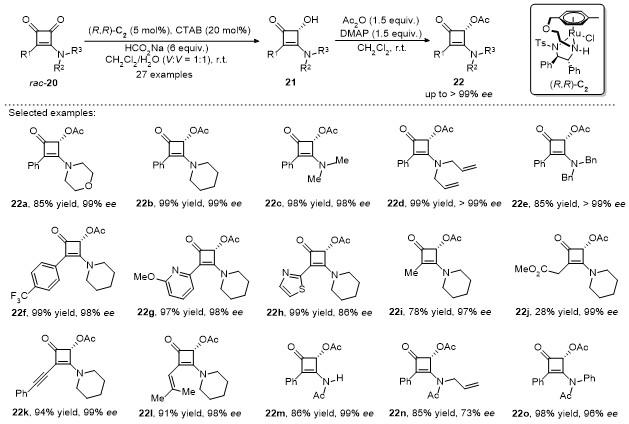
Inspired by Fangʼs research on how substituents impact the results of asymmetric transfer hydrogenation of cyclobutenediones, Meyer and Charron et al.[10] accomplished the asymmetric transfer hydrogenation of easily accessible hemisquaramides (Scheme 12). The reaction was catalyzed by tethered Noyori-Ikariya-type complex (R,R)-C2. The process proceeded with complete chemoselectivity and, upon acylation, afforded derivatives of enantioenriched α-hydroxy-3-aminocyclobutenones 22a~22o in excellent yields and high enantioselectivities. This research not only broadens the range of asymmetric transfer hydrogenation to encompass new classes of strained substrates, but also highlights the significant effect of reaction conditions on enantioselectivity.
3 Asymmetric hydrogenation of three- membered ring substrates
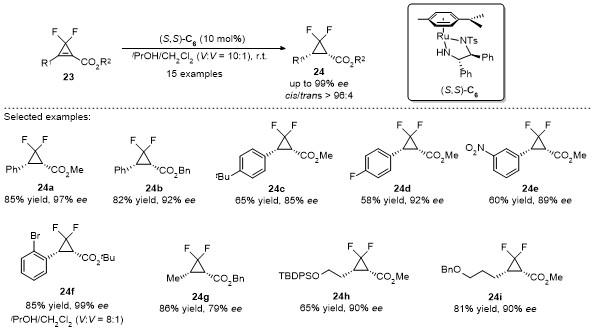
In 2020, Cossy and Meyer et al.[11] made the initial report on the asymmetric transfer hydrogenation of gem-difluoro-cyclopropenyl esters by using freshly prepared catalyst (S,S)-C6 (Scheme 13). They suggested that the significant ring strain inherent in difluorocyclopropenylcarbonyl compounds could supply the driving force necessary for the catalytic transfer hydrogenation of the C=C bond to occur under mild conditions, without compromising the integrity of the three-membered ring. A 1,4-addition mechanism was proposed rather than a concerted hydrogenation of the olefin or migratory insertion of the latter into a Rh—H bond. The reaction yielded cis-gem-difluorocyclopropyl esters 24a~24i with moderate to high enantioselectivity (66%~99% ee). Additionally, post-functionalization reactions provided access to valuable building blocks featuring either a cis- or trans-gem-difluorocyclopropyl motif.
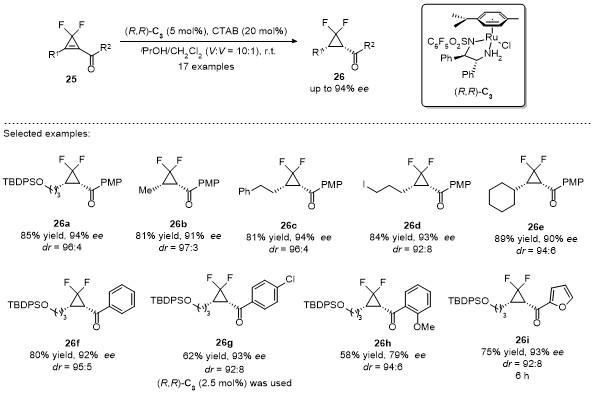
Later, Meyer and Charron et al.[12] employed the more user-friendly precatalyst (R,R)-C3 to achieve the asymmetric transfer hydrogenation of gem-difluorocyclopropenyl ketones (Scheme 14). Unlike the mechanism observed in the hydrogenation of gem-difluorocyclopropenyl esters, a second stereodiscriminating event took place during protonation. They proposed that the inclusion of protic additives could significantly influence the rates of enolate protonation, thereby enhancing both diastereo- and enantio-selectivity. This approach yielded a series of enantioenriched cis-gem-difluorocyclopropyl ketones 26a~26i. Notably, a further reduction of the carbonyl group was detected in products 26g, 26h, and 26i, but this could be mitigated by employing a lower catalyst loading or shortening the reaction time.
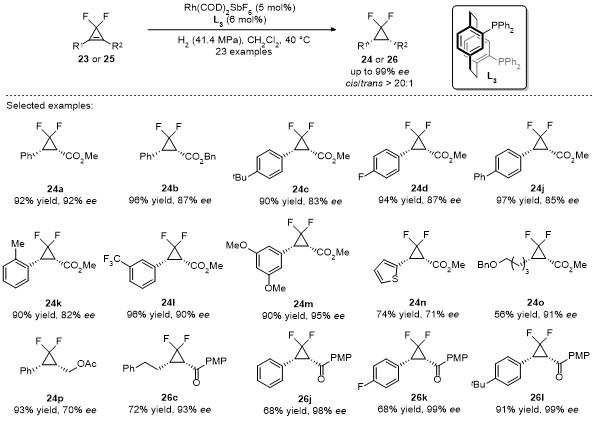
Recently, Chen and his colleagues[13] have devised a rho- dium-catalyzed asymmetric hydrogenation for gem-difluo- rocyclopropenyl esters or ketones (Scheme 15), which successfully produced disubstituted cis-gem-difluorocyclo- propanes (24a~24d, 24j~24p, 26c, 26j~26l) with outstanding enantio- and diastereoselectivities (up to 99% ee and >20∶1 dr). Moreover, this hydrogenation reaction proceeds seamlessly on a gram scale, maintaining both its activity and enantioselectivity without any degradation.


4 Conclusions
In conclusion, the asymmetric hydrogenation of small- ring compounds represents a rapidly evolving area for the synthesis of chiral cyclic compounds. This review un- derscores the significant strides made in the asymmetric hydrogenation of small-rings. However, the field remains in its infancy and requires urgent further development. Key priorities include the design of more robust and enantioselective catalysts for diverse strained ring systems (e.g., heteroatom-bearing three-membered rings and racemic substrates), the integration of computational screening to accelerate ligand discovery, and a stronger emphasis on applications in natural product synthesis and pharmaceutical scaffolds to maximize practical utility. Merging asymmetric hydrogenation with other catalytic methods such as organocatalysis or photocatalysis offers a promising avenue toward more sustainable and scalable processes. Ultimately, deeper mechanistic insights and catalyst innovation will expand the chiral pool from small-ring precursors and enable new retrosynthetic disconnections. We anticipate that continued efforts in this direction will lead to the discovery of even more efficient and selective methodologies, ultimately contributing to the advancement of organic synthesis and drug discovery.
(Lu, Y.)