

化学学报 ›› 2026, Vol. 84 ›› Issue (3): 448-458.DOI: 10.6023/A25110365 上一篇
综述
莫秋红, 张峻, 尚品, 周怡波*( ), 卿志和
投稿日期:2025-11-11
发布日期:2025-12-16
作者简介: |
莫秋红, 2023年长沙理工大学在读硕士研究生, 主要从事有机小分子探针合成及其在生物化学传感与生物成像领域的应用. |
 |
张峻, 2025年长沙理工大学在读博士研究生, 主要从事聚合物信号放大探针的构建及其在生物化学传感与生物成像领域的应用. |
 |
尚品, 2024年长沙理工大学在读硕士研究生, 主要从事有机小分子荧光探针的构建及其在生物化学传感与生物成像领域的应用. |
 |
周怡波, 副教授, 硕士生导师, 长沙市杰青, 湖南省青年骨干教师. 2017年获湖南大学化学博士学位; 2018年至今工作于长沙理工大学, 2025年至英国巴斯大学化学系访问学者. 在Angew. Chem. Int. Ed.、Anal. Chem.、Biosens. Bioelectron等期刊发表论文30余篇. 获得湖南省自然科学二等奖、湖南省化学化工学会第十八届青年化学化工奖、湖南省优秀硕士学位论文指导教师等荣誉. |
 |
卿志和, 教授, 博士生导师, “国家优秀青年科学基金”获得者. 2014年获湖南大学化学博士学位; 2015年至今工作于长沙理工大学, 其间, 2019年至2020年于(加拿大)滑铁卢大学化学系访问学者. 从事化学生物传感与荧光成像研究, 相关成果发表在 PNAS、Angew. Chem.、Chem. Sci.、Anal. Chem.、 CCS Chem.等国内外高水平期刊上, 授权国家发明专利10余项. 担任Chin. Chem. Lett.、The Innovation、《分析试验室》等国内外期刊的编委或青年编委. 获得湖南省自然科学一等奖、湖南省青年科技奖、湖南省优秀研究生导师等. |
基金资助:
Mo Qiuhong, Zhang Jun, Shang Pin, Zhou Yibo*(), Qing Zhihe
Received:2025-11-11
Published:2025-12-16
Contact:
*E-mail: yibozhou@163.com
Supported by:文章分享
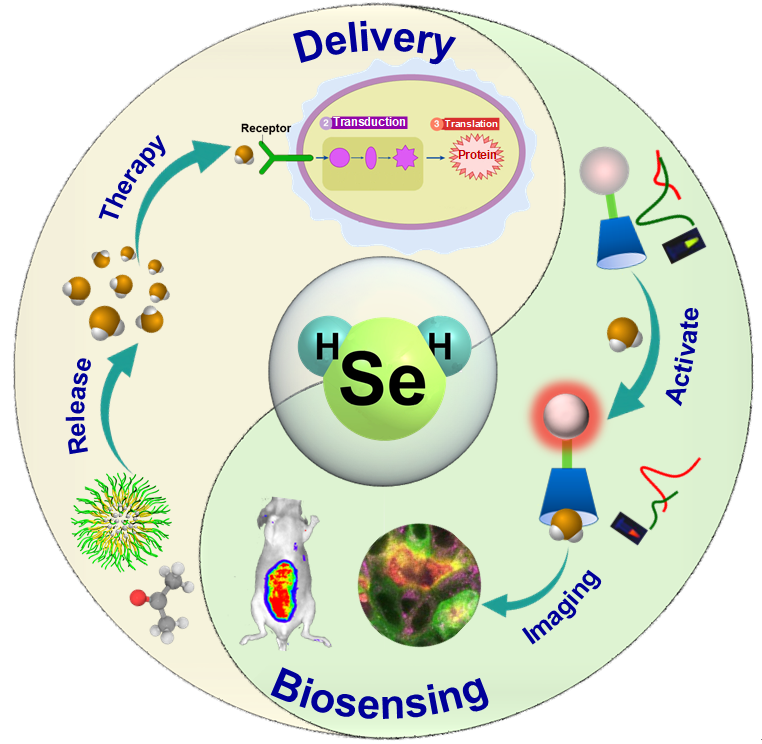
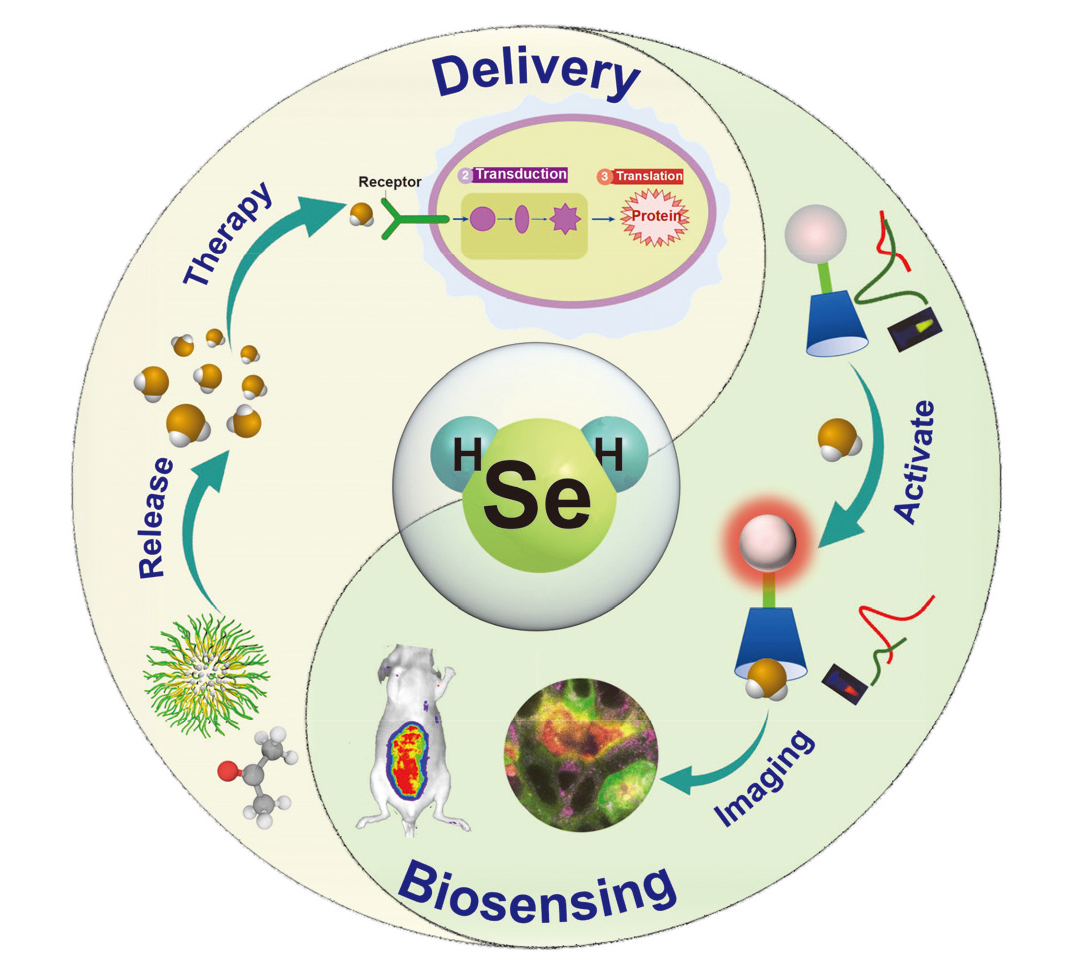
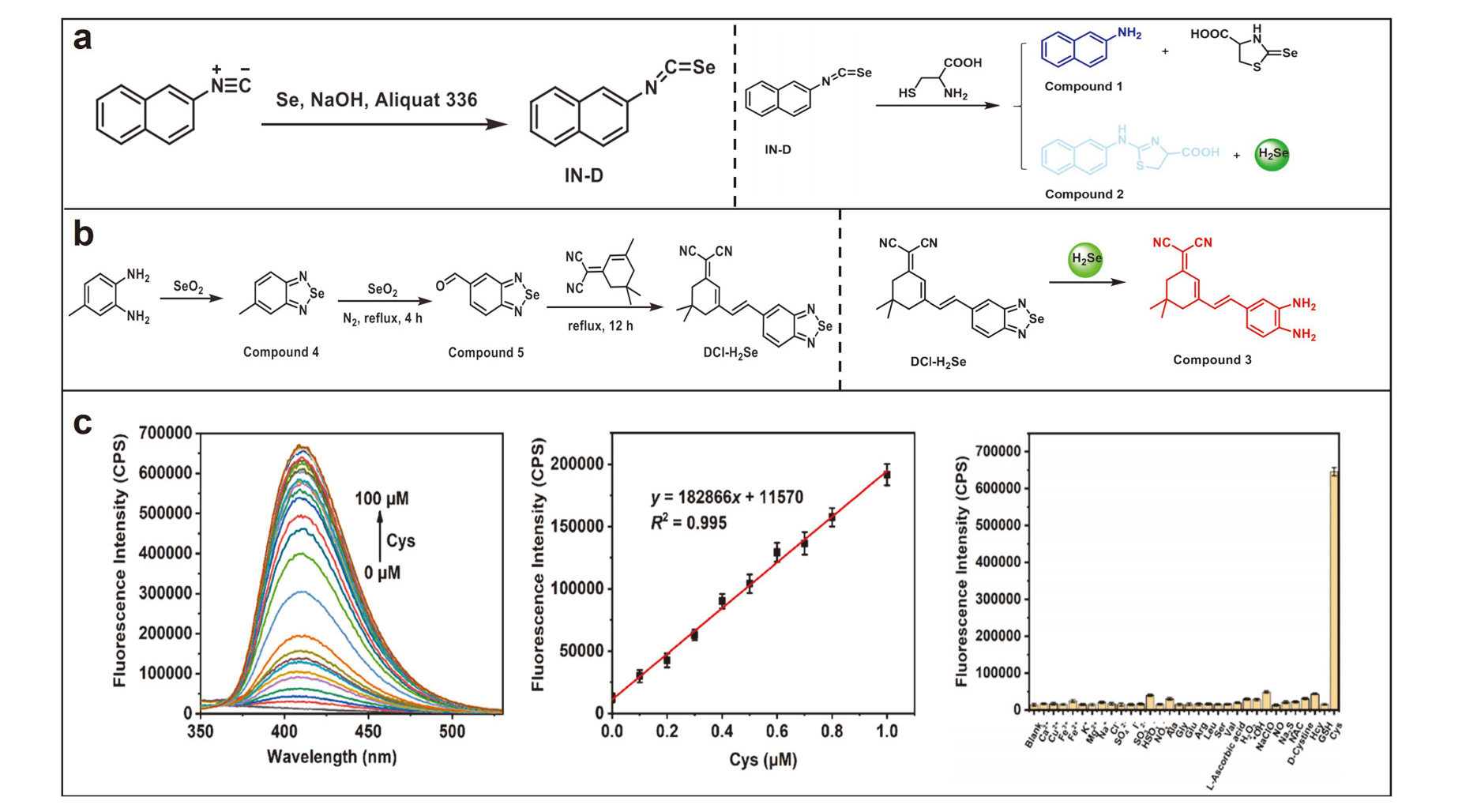
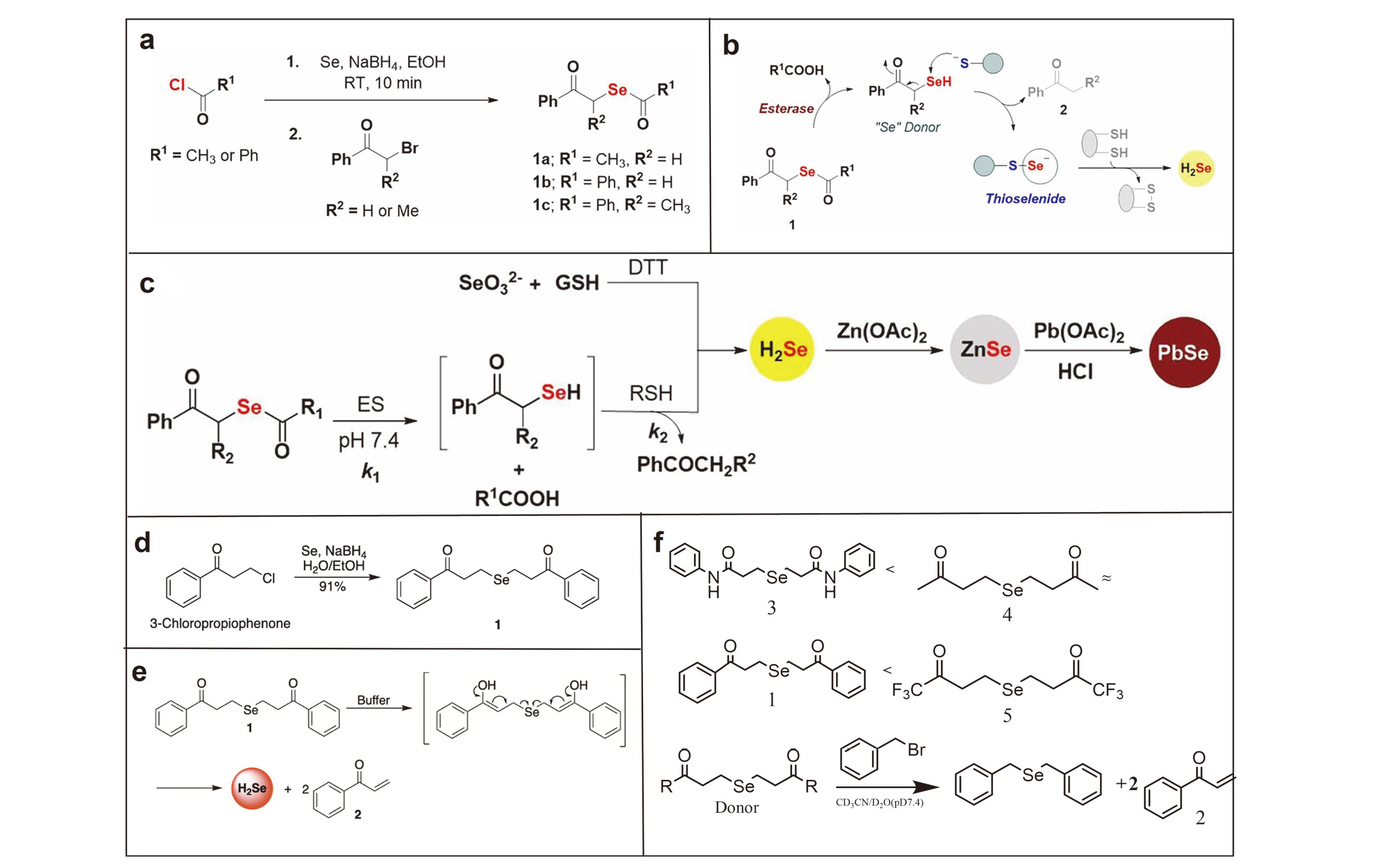
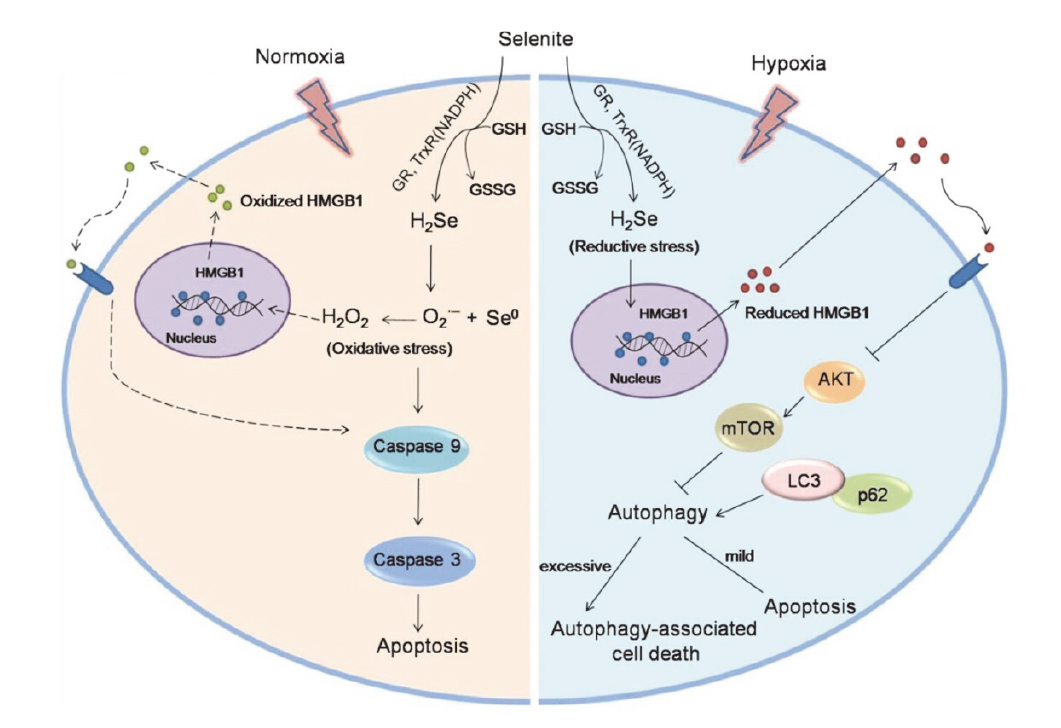
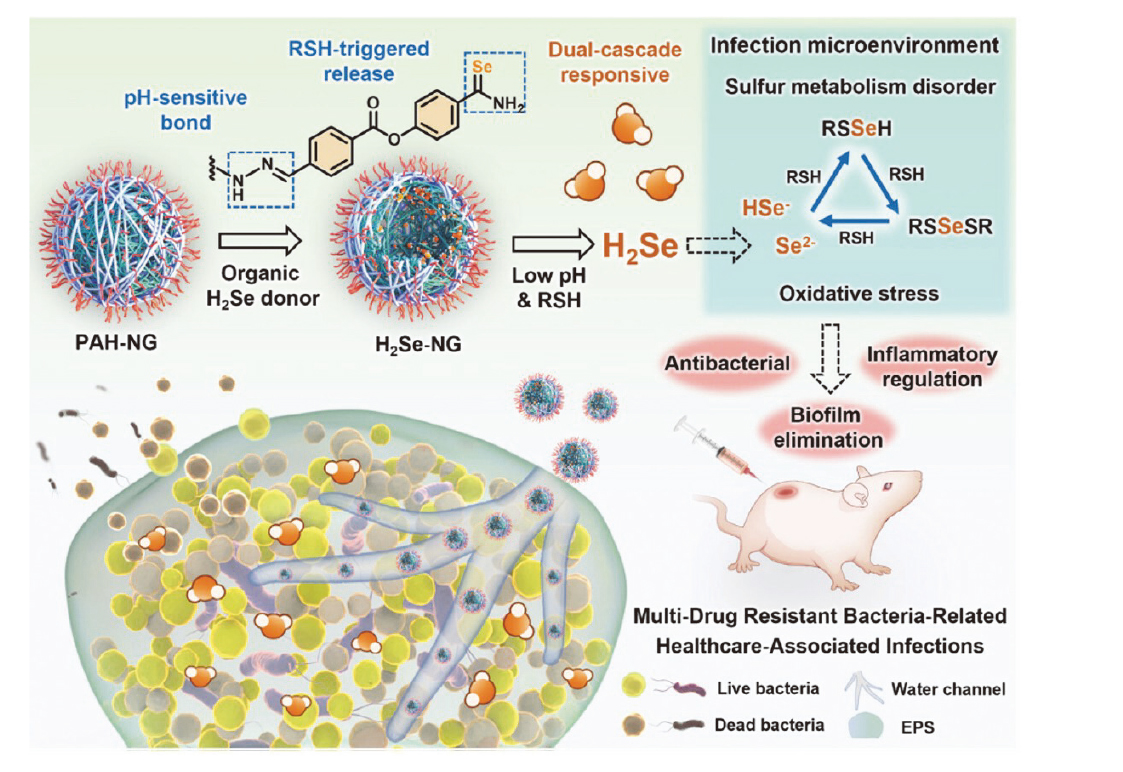
硒化氢(H2Se)作为继NO、CO、H2S后第四种被证实具有重要信号转导功能的内源性气体递质, 在生物体内具有多种重要的生理功能, 包括抗氧化、细胞信号传导和基因表达调控等. 然而, 由于其高毒性和不稳定性, 硒化氢的检测、供体合成及其在生物医学中的应用研究仍面临诸多挑战. 针对此问题, 已有文章报道多种基于水解反应或亲核反应的硒化氢供体, 同时利用硒化氢特异性反应设计合成多种不同识别位点的荧光探针, 通过细胞成像证明硒化氢供体能够显著增强细胞的抗氧化能力, 抑制炎症反应, 并在多种细胞模型中展现出良好的生物活性. 本综述主要针对硒化氢供体合成、释放机制、硒化氢的检测以及其在生物医学中的潜在应用等领域进行了归纳总结, 并对该领域的发展前景进行了展望.
莫秋红, 张峻, 尚品, 周怡波, 卿志和. 生物体内硒化氢气体递送及检测研究进展[J]. 化学学报, 2026, 84(3): 448-458.
Mo Qiuhong, Zhang Jun, Shang Pin, Zhou Yibo, Qing Zhihe. Research Progress on Delivery and Detection of Hydrogen Selenide in Vivo[J]. Acta Chimica Sinica, 2026, 84(3): 448-458.
| [1] |
|
| [2] |
doi: 10.1021/ol501169y pmid: 24852128 |
| [3] |
doi: 10.1152/physrev.00039.2013 |
| [4] |
doi: 10.1038/35035189 |
| [5] |
doi: 10.1038/s42255-020-0224-7 |
| [6] |
doi: 10.1039/c3cs60272a pmid: 24030774 |
| [7] |
|
| [8] |
doi: 10.1016/j.tibs.2013.12.007 pmid: 24485058 |
| [9] |
doi: 10.1016/j.cell.2019.03.032 |
| [10] |
doi: 10.1038/s41593-021-00862-0 |
| [11] |
doi: 10.1038/s41594-024-01329-z |
| [12] |
doi: 10.1016/j.molcel.2024.10.028 |
| [13] |
doi: 10.1016/j.chemosphere.2022.135531 |
| [14] |
|
| [15] |
doi: 10.1021/acsami.8b09423 |
| [16] |
doi: 10.1021/acsnano.9b01798 |
| [17] |
|
| [18] |
doi: 10.34133/bmef.0055 |
| [19] |
|
| [20] |
|
| [21] |
doi: 10.1177/0271678X231156981 |
| [22] |
doi: 10.1016/S0140-6736(08)61339-2 |
| [23] |
doi: 10.3390/pharmaceutics14081737 |
| [24] |
doi: 10.3390/antiox11030466 |
| [25] |
doi: 10.1002/ejhf.1644 |
| [26] |
doi: 10.1007/s11897-021-00511-4 |
| [27] |
pmid: 21434702 |
| [28] |
doi: 10.1002/exp2.v1.1 |
| [29] |
doi: 10.1002/mnfr.200700330 pmid: 18384097 |
| [30] |
|
| [31] |
|
| [32] |
doi: 10.3390/ijms23042215 |
| [33] |
doi: 10.1016/j.nantod.2021.101240 |
| [34] |
doi: 10.1139/cjc-2017-0637 |
| [35] |
|
| [36] |
doi: 10.1021/acs.chemrev.3c00549 pmid: 38717865 |
| [37] |
doi: 10.1016/S0753-3322(03)00035-0 |
| [38] |
doi: 10.3390/nu6115061 pmid: 25401501 |
| [39] |
doi: 10.1016/j.nut.2011.03.002 |
| [40] |
doi: 10.1007/s12011-019-01759-7 |
| [41] |
doi: 10.1007/s11427-013-4495-z |
| [42] |
doi: 10.3390/ijms221910713 |
| [43] |
|
| [44] |
doi: 10.1039/C9SC04616J |
| [45] |
doi: 10.1021/jacs.1c09525 |
| [46] |
doi: 10.1021/jacs.1c12006 |
| [47] |
doi: 10.1021/jacs.4c09215 |
| [48] |
doi: 10.1021/acs.analchem.5c03272 |
| [49] |
doi: 10.1016/j.snb.2025.137263 |
| [50] |
doi: 10.1039/d4sc05788k pmid: 39568918 |
| [51] |
doi: 10.1039/d2sc03533b pmid: 36425500 |
| [52] |
doi: 10.7150/thno.31841 |
| [53] |
doi: 10.1002/adfm.v35.12 |
| [54] |
|
| [55] |
doi: 10.3390/molecules29163863 |
| [56] |
doi: 10.1186/s40635-019-0281-y pmid: 31845001 |
| [57] |
|
| [58] |
|
| [59] |
doi: 10.1016/j.tet.2021.132174 |
| [60] |
doi: 10.1016/j.cbi.2024.111328 |
| [61] |
doi: 10.1007/s00217-025-04671-8 |
| [62] |
doi: 10.1021/acs.analchem.9b02006 |
| [63] |
doi: 10.1007/s00216-024-05274-0 |
| [64] |
|
| [65] |
doi: 10.1007/s00216-019-02106-4 pmid: 31654101 |
| [66] |
doi: 10.1021/ac200158e |
| [67] |
doi: 10.1360/SSC-2024-0110 |
| [68] |
doi: 10.6023/cjoc202305030 |
|
(张莹珍, 江丹丹, 李娟华, 王菁菁, 刘昆明, 刘晋彪, 有机化学, 2024, 44, 41.)
doi: 10.6023/cjoc202305030 |
|
| [69] |
doi: 10.1039/C5SC03471J |
| [70] |
doi: 10.1021/acs.analchem.6b03136 |
| [71] |
|
| [72] |
doi: 10.6023/A24060181 |
|
(刘童, 皮慧慧, 陈冰昆, 张小玲, 化学学报, 2024, 82, 1001.)
doi: 10.6023/A24060181 |
|
| [73] |
doi: 10.6023/A24070218 |
|
(蒋励, 陈子晗, 凡勇, 化学学报, 2024, 82, 1069.)
doi: 10.6023/A24070218 |
|
| [74] |
doi: 10.1039/C8TB03169J |
| [75] |
doi: 10.1021/acsami.8b02206 |
| [76] |
|
|
(张春香, 王慧平, 刘梦琴, 申有名, 谷标, 分析测试学报, 2020, 39, 1494.)
|
|
| [77] |
doi: 10.1039/D2RA04549D |
| [78] |
doi: 10.3390/s25051290 |
| [1] | 郭煜静, 张梦盼, 巩子彤, 赵云莉, 石康琦, 何磊良. 基于大环主体分子的核酸探针设计策略及生物应用[J]. 化学学报, 2025, 83(3): 309-318. |
| [2] | 李兰英, 陶晴, 闻艳丽, 王乐乐, 郭瑞妍, 刘刚, 左小磊. 多聚腺嘌呤DNA探针及其生物传感应用★[J]. 化学学报, 2023, 81(6): 681-690. |
| [3] | 朱子煜, 梁阿新, 浩天瑞霖, 唐珊珊, 刘淼, 解炳腾, 罗爱芹. 生物传感器在新冠病毒检测中的应用[J]. 化学学报, 2023, 81(3): 253-263. |
| [4] | 贺晓梦, 袁方, 张素雅, 张健健. 基于尼罗红类ONOO–近红外荧光探针的开发及其成像应用[J]. 化学学报, 2023, 81(11): 1515-1521. |
| [5] | 刘超, 田飞, 邓瑾琦, 孙佳姝. 基于微流控热泳的生物传感技术※[J]. 化学学报, 2022, 80(5): 679-689. |
| [6] | 浩天瑞霖, 朱子煜, 蔡艳慧, 王微, 王祯, 梁阿新, 罗爱芹. 基于共价有机框架的电化学生物传感器在生物样品检测中的应用[J]. 化学学报, 2022, 80(11): 1524-1535. |
| [7] | 师瑶, 夏乾峰, 何政清, 鞠熀先. 登革热病毒检测的生物传感技术[J]. 化学学报, 2022, 80(1): 69-79. |
| [8] | 高贺麒, 焦迪, 欧翰林, 章经天, 丁丹. 高性能聚集诱导发光纳米探针用于肿瘤切除手术导航[J]. 化学学报, 2021, 79(3): 319-325. |
| [9] | 廖妮, 钟霞, 梁文斌, 袁若, 卓颖. ECL金属-有机框架(MOF)生物传感平台用于肿瘤细胞分泌H2O2的测定[J]. 化学学报, 2021, 79(10): 1257-1264. |
| [10] | 樊蕾, 江群英, 潘敏, 王文晓, 张丽, 刘晓庆. 基于模拟酶-天然酶级联反应的双模式传感平台用于生物标志物的超灵敏检测[J]. 化学学报, 2020, 78(5): 419-426. |
| [11] | 金鑫, 王晓英. 口腔癌相关唾液肿瘤生物标志物的分析检测研究进展[J]. 化学学报, 2019, 77(4): 340-350. |
| [12] | 熊麟, 凡勇, 张凡. 稀土纳米晶用于近红外区活体成像和传感研究进展[J]. 化学学报, 2019, 77(12): 1239-1249. |
| [13] | 关晓琳, 李志飞, 王林, 刘美娜, 王凯龙, 杨学琴, 李亚丽, 胡丽丽, 赵小龙, 来守军, 雷自强. 具有AIE效应的Eu (III)-聚(N-乙烯基吡咯烷酮)配位聚合物Pdots的制备及双色肿瘤细胞成像[J]. 化学学报, 2019, 77(12): 1268-1278. |
| [14] | 孙权洪, 李智, 马楠. (NH4)2MoS4引导CdTe QDs自组装及光学性质调控和细胞成像[J]. 化学学报, 2018, 76(1): 43-48. |
| [15] | 王少静, 李长伟, 李锦, 陈邦, 郭媛. 新型香豆素类氟离子荧光探针的合成及细胞成像研究[J]. 化学学报, 2017, 75(4): 383-390. |
| 阅读次数 | ||||||
|
全文 |
|
|||||
|
摘要 |
|
|||||
