

Acta Chimica Sinica ›› 2026, Vol. 84 ›› Issue (5): 775-804.DOI: 10.6023/A26010037 Previous Articles
Special Issue: “框架材料化学”合集
Review
何乾龙, 胡洁颖, 钟礼匡*( ), 何军*()
投稿日期:2026-01-31
发布日期:2026-04-03
作者简介:★“框架材料化学”专辑
基金资助:
Qianlong He, Jieying Hu, Lai-Hon Chung*(), Jun He*()
Received:2026-01-31
Published:2026-04-03
Contact:
* E-mail: laihonchung@gdut.edu.cn;junhe@gdut.edu.cn
About author: |
Qianlong He is now pursuing a master's study under the supervision of Prof. Jun He at Guangdong University of Technology. His research interests focus on MOF-based catalysts for electrocatalytic nitrate reduction. |
 |
Jieying Hu received her PhD in Chemical Engineering and Technology from Guangdong University of Technology in 2023 under the supervision of Prof. Jun He. She is currently a Postdoctoral Researcher at Guangdong University of Technology, in ongoing collaboration with Prof. Jun He, working on the design and synthesis of sulfur- and alkyne-enriched porous organic frameworks and on their applications. |
 |
Lai-Hon Chung is an Associate Professor at the School of Light Industry and Chemical Engineering, Guangdong University of Technology. He received his bachelor’s degree from City University of Hong Kong in 2010 and his PhD in 2015 under the supervision of Professor Chun-Yuen Wong. His early research focused on organometallic chemistry, particularly transition-metal-mediated alkyne cyclization and functionalization mechanisms, as well as exploration of metalated heterocycles. He joined Guangdong University of Technology in 2019 and was promoted to Associate Professor in 2025. He has published over 70 SCI-indexed papers and co-authored two book chapters. His current research interests focus on metallolinker-based crystalline frameworks for sustainable catalysis. |
 |
Jun He is currently a Professor, PhD supervisor, and Vice Dean of the School of Light Industry and Chemical Engineering at Guangdong University of Technology. He has been selected as a Distinguished Professor under the Pearl River Scholars Program of Guangdong Province, a recipient of Guangdong Provincial Science Fund for Distinguished Young Scholars, and a Top Young Talent of the Guangdong Special Support Program (the “Hundred-Thousand-Ten Thousand” Young Talent Project). His research focuses on the design and synthesis of sulfur-enriched metal-organic frameworks (MOFs) and covalent organic frameworks (COFs), as well as their applications in energy catalysis and conversion. He has published nearly 150 SCI-indexed papers in leading journals, including JACS, Angew. Chem., Nat. Commun., CCS Chem., and holds over 20 granted invention patents. He has served as principal investigator for multiple projects funded by the National Natural Science Foundation of China (4 grants), Department of Science and Technology of Guangdong Province (15 grants) and industries (>10 grants). |
★ For the VSI “Chemistry of Framework Materials”.
Supported by:Share
Qianlong He, Jieying Hu, Lai-Hon Chung, Jun He. Metal-Organic Framework-Based Electrocatalysts for Neutral Nitrate-to-Ammonia Conversion: Design Strategies and Mechanistic Insights★[J]. Acta Chimica Sinica, 2026, 84(5): 775-804.
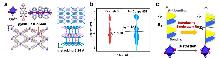
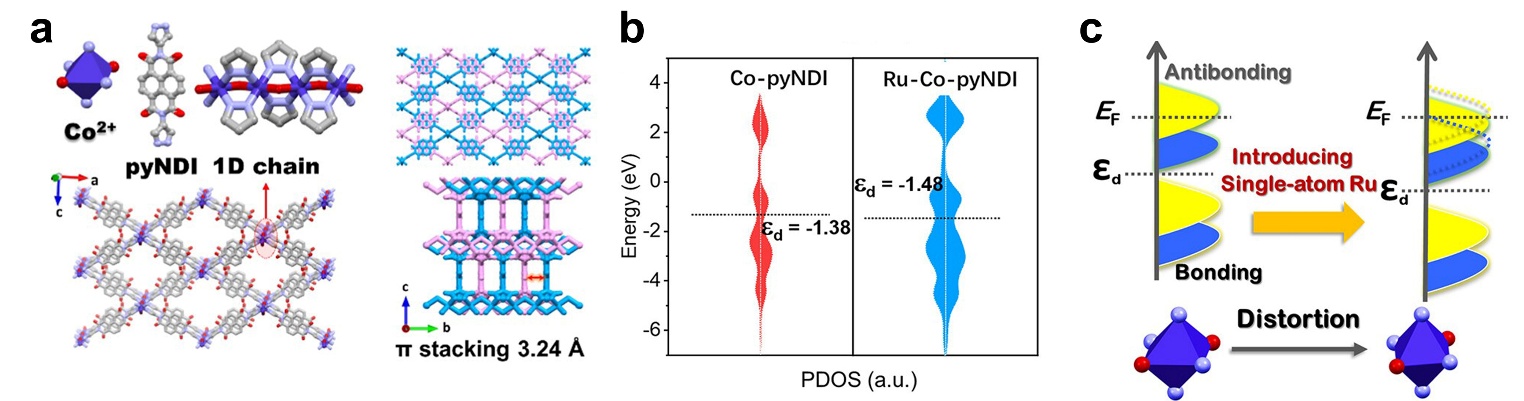
| Electrocatalyst | Electrolyte | NH3 yield | NH3 Selectivity | FENH3 | Optimal potentials | Stability | Ref. |
|---|---|---|---|---|---|---|---|
| Cu-BDC | 0.5 mol•L−1 Na2SO4 + 0.05 mol•L−1 NaNO3 | 130.16 μmol•h−1•cm−2 | — | 67.42% | −0.946 V | 5 r | [ |
| Zn-MOF | 0.1 mol•L−1 Na2SO4 + 500 ppm KNO3 | 461.1 μmol•h−1•mgcat−1 | — | 80.50% | −1.1 V | 10 r | [ |
| Zn5-NiS4TP MOF | 0.05 mol•L−1 K2SO4 + 0.5 mol•L−1 KNO3 | 1378.52 μmol•h−1•mgcat−1 | 96.20% | 92.87% | −1.3 V | 20 r | [ |
| InCu-MOF | 0.5 mol•L−1 K2SO4 + 300 ppm KNO3 | 52.37 μmol•h−1•mgcat−1 | — | 82% | −1.0 V | 5 r | [ |
| Co-TATB | 0.1 mol•L−1 Na2SO4 + 0.1 mol•L−1 KNO3 | 378.8 mmol•h−1•gcat−1 | — | 98% | −1.0 V | 8 r | [ |
| Co-bpta-btc | 0.05 mol•L−1 Na2SO4 + 0.1 mol•L−1 KNO3 | 604.78 μmol•h−1•mgcat−1 | — | 83.3% | −1.0 V | 12 h | [ |
| HUST-38 | 0.5 mol•L−1 K2SO4 + 0.1 mol•L−1 NO3- | 785.63 μmol•h−1•mgcat−1 | 92.7% | 95.7% | −0.6 V | 96 h | [ |
| agCu(Melm)2-CC | 0.5 mol•L−1 K2SO4 + 75 mmol•L−1 KNO3 | 1.20 mmol•h−1•cm−2 | — | 91% | −1.8 V | 16 h | [ |
| DiMe-Cu3-MOF | 0.5 mol•L−1 K2SO4 + 50 mmol•L−1 KNO3 | 23.54 μmol•h−1•cm−2 | — | 95% | −1.55 V | 12 h | [ |
| Fe-pyNDI | 0.5 mol•L−1 K2SO4 + 0.1 mol•L−1 KNO3 | 861.78 μmol•h−1•mgcat−1 | — | ≈90% | −1.2 V | 10 r | [ |
| Cu-CA | 0.1 mol•L−1 Na2SO4 + 0.1 mol•L−1 KNO3 | 186.72 μmol•h−1•mgcat−1 | — | 90.3% | −0.9 V | 10 r | [ |
| NJUZ-2 | 0.1 mol•L−1 Na2SO4 + 0.1 mol•L−1 KNO3 | 253.7 mmol•h−1•gcat−1 | — | 98.4% | −0.8 V | 70 r | [ |
| NJUZ-3 | 0.1 mol•L−1 Na2SO4 + 0.1 mol•L−1 KNO3 | 214.5 mmol•h−1•gcat−1 | — | 98.8% | −0.8 V | — | [ |
| Cu-BTA | 0.5 mol•L−1 Na2SO4 + 100 ppm KNO3 | 133.87 μmol•h−1•cm−2 | 79.46% | — | −1.2 V | 20 r | [ |
| CuNi0.75-MOF/NF | 0.5 mol•L−1 Na2SO4 + 0.1 mol•L−1 NaNO3 | 3.04 mmol•h−1•cm−2 | — | 95.88% | −1.0 V | 10 r | [ |
| Electrocatalyst | Electrolyte | NH3 yield | NH3 Selectivity | FENH3 | Optimal potentials | Stability | Ref. |
|---|---|---|---|---|---|---|---|
| Cu-BDC | 0.5 mol•L−1 Na2SO4 + 0.05 mol•L−1 NaNO3 | 130.16 μmol•h−1•cm−2 | — | 67.42% | −0.946 V | 5 r | [ |
| Zn-MOF | 0.1 mol•L−1 Na2SO4 + 500 ppm KNO3 | 461.1 μmol•h−1•mgcat−1 | — | 80.50% | −1.1 V | 10 r | [ |
| Zn5-NiS4TP MOF | 0.05 mol•L−1 K2SO4 + 0.5 mol•L−1 KNO3 | 1378.52 μmol•h−1•mgcat−1 | 96.20% | 92.87% | −1.3 V | 20 r | [ |
| InCu-MOF | 0.5 mol•L−1 K2SO4 + 300 ppm KNO3 | 52.37 μmol•h−1•mgcat−1 | — | 82% | −1.0 V | 5 r | [ |
| Co-TATB | 0.1 mol•L−1 Na2SO4 + 0.1 mol•L−1 KNO3 | 378.8 mmol•h−1•gcat−1 | — | 98% | −1.0 V | 8 r | [ |
| Co-bpta-btc | 0.05 mol•L−1 Na2SO4 + 0.1 mol•L−1 KNO3 | 604.78 μmol•h−1•mgcat−1 | — | 83.3% | −1.0 V | 12 h | [ |
| HUST-38 | 0.5 mol•L−1 K2SO4 + 0.1 mol•L−1 NO3- | 785.63 μmol•h−1•mgcat−1 | 92.7% | 95.7% | −0.6 V | 96 h | [ |
| agCu(Melm)2-CC | 0.5 mol•L−1 K2SO4 + 75 mmol•L−1 KNO3 | 1.20 mmol•h−1•cm−2 | — | 91% | −1.8 V | 16 h | [ |
| DiMe-Cu3-MOF | 0.5 mol•L−1 K2SO4 + 50 mmol•L−1 KNO3 | 23.54 μmol•h−1•cm−2 | — | 95% | −1.55 V | 12 h | [ |
| Fe-pyNDI | 0.5 mol•L−1 K2SO4 + 0.1 mol•L−1 KNO3 | 861.78 μmol•h−1•mgcat−1 | — | ≈90% | −1.2 V | 10 r | [ |
| Cu-CA | 0.1 mol•L−1 Na2SO4 + 0.1 mol•L−1 KNO3 | 186.72 μmol•h−1•mgcat−1 | — | 90.3% | −0.9 V | 10 r | [ |
| NJUZ-2 | 0.1 mol•L−1 Na2SO4 + 0.1 mol•L−1 KNO3 | 253.7 mmol•h−1•gcat−1 | — | 98.4% | −0.8 V | 70 r | [ |
| NJUZ-3 | 0.1 mol•L−1 Na2SO4 + 0.1 mol•L−1 KNO3 | 214.5 mmol•h−1•gcat−1 | — | 98.8% | −0.8 V | — | [ |
| Cu-BTA | 0.5 mol•L−1 Na2SO4 + 100 ppm KNO3 | 133.87 μmol•h−1•cm−2 | 79.46% | — | −1.2 V | 20 r | [ |
| CuNi0.75-MOF/NF | 0.5 mol•L−1 Na2SO4 + 0.1 mol•L−1 NaNO3 | 3.04 mmol•h−1•cm−2 | — | 95.88% | −1.0 V | 10 r | [ |
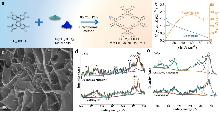
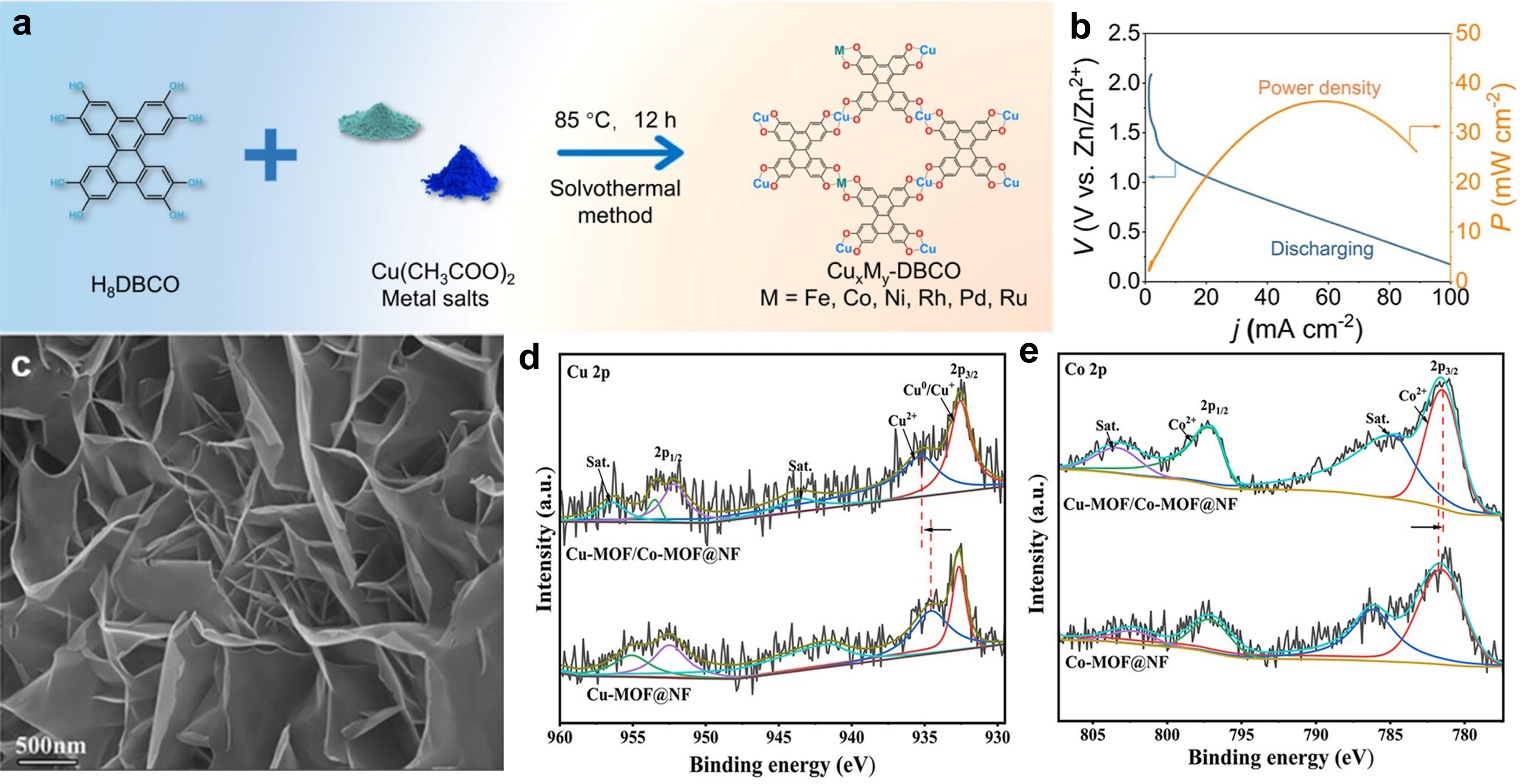
| Electrocatalyst | Electrolyte | NH3 yield | NH3 Selectivity | FENH3 | Optimal potentials | Stability | Ref. |
|---|---|---|---|---|---|---|---|
| Cu/SO3-MOF-808 | 0.5 mol•L−1 Na2SO4 + 0.1 mol•L−1 NaNO3 | 0.383 mmol•h−1•mgcat−1 | 95.6% | 87.5% | −1.19 V | — | [ |
| CoP/Zn-ZIF | 0.5 mol•L−1 Na2SO4 + 0.1 mol•L−1 NaNO3 | 0.9 mmol•h−1•cm−2 | — | ≈97% | −1.0 V | 30 r | [ |
| Cu3P-a | 0.5 mol•L−1 K2SO4 + 50 ppm KNO3-N | 31.86 μmol•h−1•cm−2 | 83.62% | 90.95% | −0.5 V | 8 r | [ |
| FeNx-PC-Fe NPs | 0.5 mol•L−1 Na2SO4 + 1.0 mol•L−1 NaNO3 | 1.77 ± 0.06 mmol•h−1•mgcat−1 | — | 93.5% | −1.0 V | 120 h | [ |
| AuPt@ZIF-8 | 0.5 mol•L−1 Na2SO4 + 50 ppm NaNO3 | 7.72 μmol•h−1•mgcat−1 | 96% | (95.8 ± 3.0)% | −0.5 V | 6 r | [ |
| Ni-MOFs@HsGDY@Cu | 0.5 mol•L−1 Na2SO4 + 0.1 mol•L−1 KNO3 | 0.321 mmol•h−1•cm−2 | — | 95.5% | −0.11 V | 12 r | [ |
| CuCeOx/C | 0.5 mol•L−1 Na2SO4 + 0.5 mol•L−1 NaNO3 | — | 73.40% | 75.5% | −1.29 V | 1 h | [ |
| Cu-Co HOC | 0.5 mol•L−1 K2SO4 + 50 ppm KNO3-N | 0.022 mmol•h−1•cm−2 | — | 90.68% | −0.5 V | — | [ |
| UiO-CuZn | 0.5 mol•L−1 Na2SO4+ 200 ppm NaNO3 | 228.11 μmol•h−1•mgcat−1 | 95.2% | 92.6% | −1.0 V | — | [ |
| UiO-66-derived M-SAC | 1 mol•L−1 KNO3 | 1.76 mmol•h−1•cm−2 | — | >96% | −1.0 V | — | [ |
| Fe-S-Z-C | 0.02 mol•L−1 Na2SO4 + 100 mg•L−1 NO3--N | — | — | 93.9% | −0.47 V | 6 r | [ |
| Cu-Ru@C | 0.1 mol•L−1 Na2SO4 + 50 μg•mL−1 NaNO3 | 99.84 μmol•h−1•mgcat−1 | 84.70% | 90.4% | −0.9 V | 25 h | [ |
| Cu-Co3O4/NF | 0.2 mol•L−1 K2SO4 + 2 mmol•L−1 KNO3 | 0.076 mmol•h−1•cm−2 | — | 92.4% | −0.53 V | 6 r | [ |
| NiPC | 0.5 mol•L−1 Na2SO4 + 200 mg•L−1 KNO3 | 108.04 μmol•h−1•cm−2 | 99.04% | 96.68% | −1.0 V | — | [ |
| NiCoO2@Cu | 0.1 mol•L−1 Na2SO4 + 0.1 mol•L−1 NaNO3 | 348.82 μmol•h−1•cm−2 | 99.7% | 94.2% | −0.7 V | 33 h | [ |
| Co-N-C-500 | 0.05 mol•L−1 K2SO4 + 0.05 mol•L−1 KNO3 | 66.93 μmol•h−1•cm−2 | 74% | 86.8% | −0.6 V | 30 h | [ |
| Co3O4@MoS2 | 0.1 mol•L−1 Na2SO4 + 0.2 mol•L−1 KNO3 | 266.55 μmol•h−1•mgcat−1 | — | 52.69% | −0.64 V | 10 r | [ |
| Electrocatalyst | Electrolyte | NH3 yield | NH3 Selectivity | FENH3 | Optimal potentials | Stability | Ref. |
|---|---|---|---|---|---|---|---|
| Cu/SO3-MOF-808 | 0.5 mol•L−1 Na2SO4 + 0.1 mol•L−1 NaNO3 | 0.383 mmol•h−1•mgcat−1 | 95.6% | 87.5% | −1.19 V | — | [ |
| CoP/Zn-ZIF | 0.5 mol•L−1 Na2SO4 + 0.1 mol•L−1 NaNO3 | 0.9 mmol•h−1•cm−2 | — | ≈97% | −1.0 V | 30 r | [ |
| Cu3P-a | 0.5 mol•L−1 K2SO4 + 50 ppm KNO3-N | 31.86 μmol•h−1•cm−2 | 83.62% | 90.95% | −0.5 V | 8 r | [ |
| FeNx-PC-Fe NPs | 0.5 mol•L−1 Na2SO4 + 1.0 mol•L−1 NaNO3 | 1.77 ± 0.06 mmol•h−1•mgcat−1 | — | 93.5% | −1.0 V | 120 h | [ |
| AuPt@ZIF-8 | 0.5 mol•L−1 Na2SO4 + 50 ppm NaNO3 | 7.72 μmol•h−1•mgcat−1 | 96% | (95.8 ± 3.0)% | −0.5 V | 6 r | [ |
| Ni-MOFs@HsGDY@Cu | 0.5 mol•L−1 Na2SO4 + 0.1 mol•L−1 KNO3 | 0.321 mmol•h−1•cm−2 | — | 95.5% | −0.11 V | 12 r | [ |
| CuCeOx/C | 0.5 mol•L−1 Na2SO4 + 0.5 mol•L−1 NaNO3 | — | 73.40% | 75.5% | −1.29 V | 1 h | [ |
| Cu-Co HOC | 0.5 mol•L−1 K2SO4 + 50 ppm KNO3-N | 0.022 mmol•h−1•cm−2 | — | 90.68% | −0.5 V | — | [ |
| UiO-CuZn | 0.5 mol•L−1 Na2SO4+ 200 ppm NaNO3 | 228.11 μmol•h−1•mgcat−1 | 95.2% | 92.6% | −1.0 V | — | [ |
| UiO-66-derived M-SAC | 1 mol•L−1 KNO3 | 1.76 mmol•h−1•cm−2 | — | >96% | −1.0 V | — | [ |
| Fe-S-Z-C | 0.02 mol•L−1 Na2SO4 + 100 mg•L−1 NO3--N | — | — | 93.9% | −0.47 V | 6 r | [ |
| Cu-Ru@C | 0.1 mol•L−1 Na2SO4 + 50 μg•mL−1 NaNO3 | 99.84 μmol•h−1•mgcat−1 | 84.70% | 90.4% | −0.9 V | 25 h | [ |
| Cu-Co3O4/NF | 0.2 mol•L−1 K2SO4 + 2 mmol•L−1 KNO3 | 0.076 mmol•h−1•cm−2 | — | 92.4% | −0.53 V | 6 r | [ |
| NiPC | 0.5 mol•L−1 Na2SO4 + 200 mg•L−1 KNO3 | 108.04 μmol•h−1•cm−2 | 99.04% | 96.68% | −1.0 V | — | [ |
| NiCoO2@Cu | 0.1 mol•L−1 Na2SO4 + 0.1 mol•L−1 NaNO3 | 348.82 μmol•h−1•cm−2 | 99.7% | 94.2% | −0.7 V | 33 h | [ |
| Co-N-C-500 | 0.05 mol•L−1 K2SO4 + 0.05 mol•L−1 KNO3 | 66.93 μmol•h−1•cm−2 | 74% | 86.8% | −0.6 V | 30 h | [ |
| Co3O4@MoS2 | 0.1 mol•L−1 Na2SO4 + 0.2 mol•L−1 KNO3 | 266.55 μmol•h−1•mgcat−1 | — | 52.69% | −0.64 V | 10 r | [ |
| Electrocatalyst | Electrolyte | NH3 yield | FENH3 | Optimal potentials | Stability | Cost Evaluation | Ref. |
|---|---|---|---|---|---|---|---|
| Au/Cu SAA | 0.5 mol•L−1 Na2SO4+100 ppm of NO3−−N | 0.193 mmol•h−1•cm−2 | 99.69% | −0.8 V | 45 h | High | [ |
| Bi/Cu2O | 0.5 mol•L−1 K2SO4+1000 ppm NO3− | 0.150 mmol•h−1•mgcat−1 | 99.2% | −0.8 V | 14 h | Low | [ |
| Ni1Cu-SAA | 0.5 mol•L−1 K2SO4+200 ppm NO3−−N | 0.326 mmol•h−1•cm−2 | ≈100% | −0.55 V | ≈8.89 h | Medium | [ |
| Rh@Cu-0.6% | 0.1 mol•L−1 Na2SO4 + 0.1 mol•L−1 KNO3 | 1.27 mmol•h−1•cm−2 | 93 % | −0.2 V | 30 h | High | [ |
| Fe-N-C | 0.1 mol•L−1 K2SO4 +0.5 mol•L−1 KNO3 | 0.46 mmol•h−1•cm−2 | 75% | −0.66 V | 20 r | Medium | [ |
| P-Cu0.51Ni0.49 | 0.5 mol•L−1 K2SO4 + 50 ppm KNO3 | 94.94 μmol•h−1•cm−2 | 98.38% | −0.55 V | 10 h | Low | [ |
| hcp/fcc Cu10Ni₉₀ | 0.5 mol•L−1 K2SO4 + 100 mmol•L−1 KNO3 | 3.37 mmol•h−1•mgcat−1 | 98.1% | −0.7 V | 12 r | Low | [ |
| Cl-Cu | 0.1 mol•L−1 K2SO4 + 50~200 mg•L−1 NO3−−N | 4.32 μmol•h−1•cm−2 | 82.5% | −0.65 V | >100 h | Low | [ |
| Cu-SA/UiO-bpy | 0.5 mol•L−1 K2SO4 + 0.1 mol•L−1 KNO3 | 434.5 μmol•h−1•cm−2 | 98.1% | −0.8 V | 10 r | Medium | [ |
| NJUZ-2 | 0.1 mol•L−1 Na2SO4 + 0.1 mol•L−1 KNO3 | 253.7 mmol•h−1•mgcat−1 | 98.8% | −0.8 V | 70 h | Medium | [ |
| Zn5-NiS4 TP MOF | 0.05 mol•L−1 K2SO4 + 0.5 mol•L−1 KNO3 | 1.348 mmol•h−1•mgcat−1 | 92.87% | −1.3 V | 20 r | High | [ |
| FeNx-PC-Fe NPs | 0.5 mol•L−1 Na2SO4 + 1.0 mol•L−1 NaNO3 | 1.77±0.06 mmol•h−1•mgcat−1 | 98.4% | −1 V | 120 h | Medium | [ |
| CuNi0.75-MOF/NF | 0.5 mol•L−1 Na2SO4 + 0.1 mol•L−1 NaNO3 | 3.04 mmol•h−1•cm−2 | 95.88% | −1 V | 10 r | Low | [ |
| HUST-38 | 0.5 mol•L−1 K2SO4 + 0.1 mol•L−1 NO3− | 0.785 mmol•h−1•mgcat−1 | 95.7% | −0.6 V | 96 h | Medium | [ |
| Electrocatalyst | Electrolyte | NH3 yield | FENH3 | Optimal potentials | Stability | Cost Evaluation | Ref. |
|---|---|---|---|---|---|---|---|
| Au/Cu SAA | 0.5 mol•L−1 Na2SO4+100 ppm of NO3−−N | 0.193 mmol•h−1•cm−2 | 99.69% | −0.8 V | 45 h | High | [ |
| Bi/Cu2O | 0.5 mol•L−1 K2SO4+1000 ppm NO3− | 0.150 mmol•h−1•mgcat−1 | 99.2% | −0.8 V | 14 h | Low | [ |
| Ni1Cu-SAA | 0.5 mol•L−1 K2SO4+200 ppm NO3−−N | 0.326 mmol•h−1•cm−2 | ≈100% | −0.55 V | ≈8.89 h | Medium | [ |
| Rh@Cu-0.6% | 0.1 mol•L−1 Na2SO4 + 0.1 mol•L−1 KNO3 | 1.27 mmol•h−1•cm−2 | 93 % | −0.2 V | 30 h | High | [ |
| Fe-N-C | 0.1 mol•L−1 K2SO4 +0.5 mol•L−1 KNO3 | 0.46 mmol•h−1•cm−2 | 75% | −0.66 V | 20 r | Medium | [ |
| P-Cu0.51Ni0.49 | 0.5 mol•L−1 K2SO4 + 50 ppm KNO3 | 94.94 μmol•h−1•cm−2 | 98.38% | −0.55 V | 10 h | Low | [ |
| hcp/fcc Cu10Ni₉₀ | 0.5 mol•L−1 K2SO4 + 100 mmol•L−1 KNO3 | 3.37 mmol•h−1•mgcat−1 | 98.1% | −0.7 V | 12 r | Low | [ |
| Cl-Cu | 0.1 mol•L−1 K2SO4 + 50~200 mg•L−1 NO3−−N | 4.32 μmol•h−1•cm−2 | 82.5% | −0.65 V | >100 h | Low | [ |
| Cu-SA/UiO-bpy | 0.5 mol•L−1 K2SO4 + 0.1 mol•L−1 KNO3 | 434.5 μmol•h−1•cm−2 | 98.1% | −0.8 V | 10 r | Medium | [ |
| NJUZ-2 | 0.1 mol•L−1 Na2SO4 + 0.1 mol•L−1 KNO3 | 253.7 mmol•h−1•mgcat−1 | 98.8% | −0.8 V | 70 h | Medium | [ |
| Zn5-NiS4 TP MOF | 0.05 mol•L−1 K2SO4 + 0.5 mol•L−1 KNO3 | 1.348 mmol•h−1•mgcat−1 | 92.87% | −1.3 V | 20 r | High | [ |
| FeNx-PC-Fe NPs | 0.5 mol•L−1 Na2SO4 + 1.0 mol•L−1 NaNO3 | 1.77±0.06 mmol•h−1•mgcat−1 | 98.4% | −1 V | 120 h | Medium | [ |
| CuNi0.75-MOF/NF | 0.5 mol•L−1 Na2SO4 + 0.1 mol•L−1 NaNO3 | 3.04 mmol•h−1•cm−2 | 95.88% | −1 V | 10 r | Low | [ |
| HUST-38 | 0.5 mol•L−1 K2SO4 + 0.1 mol•L−1 NO3− | 0.785 mmol•h−1•mgcat−1 | 95.7% | −0.6 V | 96 h | Medium | [ |
| [1] |
doi: 10.1002/eft2.2017.5.issue-9 |
| [2] |
doi: 10.1021/cr8003696 |
| [3] |
doi: 10.1039/C9CS00159J |
| [4] |
doi: 10.1016/j.scitotenv.2020.144674 |
| [5] |
|
| [6] |
doi: 10.1038/ncomms10571 pmid: 26853267 |
| [7] |
doi: 10.1016/j.scitotenv.2025.180473 |
| [8] |
doi: 10.1016/j.scitotenv.2017.12.252 |
| [9] |
doi: 10.1016/j.chempr.2021.01.009 |
| [10] |
doi: 10.1039/D5CS00969C |
| [11] |
|
| [12] |
doi: 10.1002/cctc.v16.5 |
| [13] |
|
| [14] |
doi: 10.1002/adsu.v9.11 |
| [15] |
|
| [16] |
doi: 10.1039/D1CS00116G |
| [17] |
doi: 10.1002/smll.v21.39 |
| [18] |
doi: 10.1016/j.cej.2022.135104 |
| [19] |
doi: 10.1073/pnas.2209979120 |
| [20] |
doi: 10.1039/C4CS00003J |
| [21] |
doi: 10.1039/b804680h |
| [22] |
doi: 10.1039/b802258p |
| [23] |
doi: 10.1039/c4cs00101j pmid: 24875583 |
| [24] |
doi: 10.1002/asia.v16.22 |
| [25] |
doi: 10.1002/cssc.v18.8 |
| [26] |
doi: 10.1002/advs.v8.20 |
| [27] |
doi: 10.1016/j.ccr.2020.213191 |
| [54] |
doi: 10.2175/106143006X110665 |
| [55] |
doi: 10.1016/j.jpowsour.2025.236748 |
| [56] |
doi: 10.1038/s41467-024-45534-2 |
| [57] |
doi: 10.1021/acs.est.5c14726 |
| [58] |
doi: 10.1038/s41929-023-00951-2 |
| [59] |
doi: 10.1002/anie.v65.1 |
| [60] |
doi: 10.1002/eem2.v5.1 |
| [61] |
doi: 10.1021/acscatal.1c03666 |
| [62] |
doi: 10.1016/j.ijhydene.2025.01.342 |
| [63] |
doi: 10.1021/acscatal.9b02179 |
| [64] |
doi: 10.1039/D2FD00145D |
| [65] |
doi: 10.1039/D4TA08757G |
| [66] |
doi: 10.1021/acs.jpcc.5c02461 |
| [67] |
doi: 10.1039/D5TA07089A |
| [68] |
doi: 10.1039/c0ee00071j |
| [69] |
|
| [70] |
doi: 10.1016/j.nanoen.2024.109499 |
| [71] |
doi: 10.1039/D4SC07132H |
| [72] |
doi: 10.1016/j.jcis.2023.01.014 |
| [73] |
doi: 10.1016/j.cej.2025.166374 |
| [74] |
doi: 10.1016/j.jhazmat.2024.136036 |
| [75] |
doi: 10.1021/acsnano.2c12491 |
| [76] |
doi: 10.1039/D3GC01914D |
| [77] |
doi: 10.1016/j.seppur.2025.134976 |
| [78] |
doi: 10.1021/cs3005264 |
| [79] |
doi: 10.1021/acs.analchem.3c05095 |
| [80] |
doi: 10.1002/adma.v34.39 |
| [28] |
doi: 10.1039/C6RA01536K |
| [29] |
doi: 10.1039/D4GC03381G |
| [30] |
doi: 10.1021/acsaem.5c00651 |
| [31] |
doi: 10.1021/acscatal.5c00591 |
| [32] |
doi: 10.1002/anie.v65.5 |
| [33] |
doi: 10.1002/cssc.v18.9 |
| [34] |
doi: 10.1002/agt2.v6.5 |
| [35] |
doi: 10.1002/anie.v63.31 |
| [36] |
doi: 10.1021/acscatal.1c01525 |
| [37] |
doi: 10.1021/acs.jpclett.2c02452 |
| [38] |
doi: 10.1021/jacs.2c00089 |
| [39] |
doi: 10.1016/j.ccr.2024.216061 |
| [40] |
doi: 10.1002/anie.v63.11 |
| [41] |
|
| [42] |
doi: 10.1016/j.watres.2024.123077 |
| [43] |
doi: 10.1021/acs.est.4c03949 |
| [44] |
doi: 10.1021/jacs.5c07066 pmid: 40765371 |
| [45] |
doi: 10.1021/acs.inorgchem.9b01611 pmid: 31661254 |
| [46] |
doi: 10.1039/D3GC02613B |
| [47] |
doi: 10.1002/anie.v64.6 |
| [48] |
doi: 10.1002/chem.v26.31 |
| [49] |
doi: 10.1039/C5SC01784J |
| [50] |
doi: 10.1038/s41467-023-43577-5 |
| [51] |
doi: 10.1002/cssc.v18.19 |
| [52] |
doi: 10.1039/D5TA09605G |
| [53] |
doi: 10.1002/aenm.v15.38 |
| [81] |
doi: 10.1016/j.jcis.2025.139141 |
| [82] |
doi: 10.1016/S1872-2067(23)64622-4 |
| [83] |
doi: 10.1039/D2TA08735A |
| [84] |
|
| [85] |
doi: 10.1002/smll.v20.46 |
| [86] |
doi: 10.6023/A25060221 |
|
(王佳雨, 赵文娟, 贾宏宇, 刘永博, 张敏, 董龙龙, 张安杰, 王锐, 化学学报, 2025, 83, 1507.)
doi: 10.6023/A25060221 |
|
| [87] |
doi: 10.6023/A23110508 |
|
(韩晶, 廖润华, 邓文强, 梁博宇, 周雨晴, 任帅, 洪燕, 化学学报, 2024, 82, 295.)
doi: 10.6023/A23110508 |
|
| [88] |
doi: 10.1038/s43246-024-00535-y |
| [89] |
doi: 10.1021/jacs.5c06650 |
| [90] |
doi: 10.1039/C9EE04040D |
| [91] |
doi: 10.1039/D4SC08498E |
| [92] |
doi: 10.1002/anie.v63.47 |
| [93] |
doi: 10.1039/D4CS00962B |
| [94] |
doi: 10.1002/anie.v64.12 |
| [95] |
doi: 10.1039/D5SC02208H |
| [96] |
doi: 10.6023/A25040140 |
|
(吴子林, 张璐, 陈杨, 李晋平, 李立博, 化学学报, 2025, 83, 917.)
doi: 10.6023/A25040140 |
|
| [97] |
doi: 10.1002/cjoc.v43.8 |
| [98] |
doi: 10.1002/cjoc.v43.12 |
| [99] |
doi: 10.1002/anie.v62.48 |
| [100] |
doi: 10.1002/anie.v63.21 |
| [101] |
|
| [102] |
doi: 10.1016/j.jes.2024.01.046 |
| [103] |
doi: 10.1002/anie.v64.11 |
| [104] |
doi: 10.1039/D4GC02536A |
| [105] |
doi: 10.1039/C9TA13473E |
| [106] |
doi: 10.1039/D1TA01970H |
| [107] |
doi: 10.1021/acscatal.5c04411 |
| [108] |
doi: 10.26599/NR.2025.94907592 |
| [109] |
doi: 10.1002/anie.202016591 pmid: 33511743 |
| [110] |
doi: 10.1016/j.jece.2024.115182 |
| [111] |
doi: 10.1016/j.fuel.2024.134021 |
| [112] |
doi: 10.1039/D3EE00840A |
| [113] |
doi: 10.1021/acs.chemmater.3c03222 |
| [114] |
doi: 10.1021/acs.inorgchem.5c02389 |
| [115] |
doi: 10.31635/ccschem.025.202505556 |
| [116] |
doi: 10.1002/adfm.v34.49 |
| [117] |
doi: 10.1021/jacs.4c06098 |
| [118] |
doi: 10.1016/S1872-2067(24)60059-8 |
| [119] |
doi: 10.1039/D4TA09189B |
| [120] |
doi: 10.1021/jacs.5c11655 |
| [121] |
doi: 10.1002/aesr.v2.11 |
| [122] |
|
| [123] |
doi: 10.1021/acsami.0c12388 |
| [124] |
doi: 10.1038/s41467-019-09682-0 |
| [125] |
doi: 10.1002/chem.v26.72 |
| [126] |
doi: 10.1021/acs.langmuir.5c04125 |
| [127] |
doi: 10.1021/acsami.3c16456 |
| [128] |
|
| [129] |
doi: 10.1016/j.jelechem.2019.113301 |
| [130] |
doi: 10.6023/A25040117 |
|
(高春, 张松涛, 庞欢, 化学学报, 2025, 83, 962.)
doi: 10.6023/A25040117 |
|
| [131] |
doi: 10.1002/adfm.v36.18 |
| [132] |
doi: 10.1002/tcr.v22.12 |
| [133] |
doi: 10.1016/j.cej.2024.148776 |
| [134] |
|
| [135] |
doi: 10.1002/anie.v64.46 |
| [136] |
doi: 10.1126/science.ads1466 |
| [137] |
doi: 10.1016/j.jcis.2024.09.185 |
| [138] |
|
| [139] |
doi: 10.1007/s12274-024-6470-3 |
| [140] |
doi: 10.1039/D4CC05045B |
| [141] |
|
| [142] |
doi: 10.1016/j.mser.2024.100886 |
| [143] |
doi: 10.1002/adma.v30.39 |
| [144] |
doi: 10.1007/s40843-022-2374-3 |
| [145] |
doi: 10.6023/A24010040 |
|
(王南南, 陈玉贞, 化学学报, 2024, 82, 621.)
doi: 10.6023/A24010040 |
|
| [146] |
doi: 10.1021/acscatal.6b01222 |
| [147] |
doi: 10.1002/adma.v37.8 |
| [148] |
doi: 10.1039/C9CS00906J |
| [149] |
doi: 10.1039/D4TA05443A |
| [150] |
doi: 10.1016/j.apsusc.2024.161264 |
| [151] |
doi: 10.3390/nano10050983 |
| [152] |
doi: 10.1007/s10853-024-10246-x |
| [153] |
doi: 10.1021/acsami.4c14786 |
| [154] |
doi: 10.1002/adma.v36.26 |
| [155] |
doi: 10.1039/D5TC02164B |
| [156] |
|
| [157] |
doi: 10.1002/anie.v63.30 |
| [158] |
doi: 10.1016/j.electacta.2024.144348 |
| [159] |
doi: 10.1021/acscatal.3c01821 |
| [160] |
doi: 10.1016/j.jhazmat.2024.133484 |
| [161] |
doi: 10.1021/acs.inorgchem.3c04446 |
| [162] |
doi: 10.1016/j.cej.2024.152543 |
| [163] |
doi: 10.1016/j.jelechem.2023.117702 |
| [164] |
doi: 10.1039/D5EY00217F |
| [165] |
doi: 10.1021/acssuschemeng.3c01057 |
| [166] |
doi: 10.1016/j.ces.2025.121845 |
| [167] |
doi: 10.1021/acs.iecr.4c02212 |
| [168] |
doi: 10.1016/j.jcis.2023.01.121 |
| [169] |
doi: 10.1016/j.jcis.2025.137506 |
| [170] |
doi: 10.1038/s41929-024-01200-w |
| [171] |
doi: 10.1002/smll.v22.19 |
| [172] |
doi: 10.1002/smll.v20.43 |
| [173] |
doi: 10.3389/fendo.2024.1429884 |
| [174] |
doi: 10.3390/antiox9030241 |
| [175] |
doi: 10.3390/toxics11020190 |
| [176] |
doi: 10.1016/j.chempr.2023.05.037 |
| [177] |
doi: 10.1016/j.jhazmat.2025.137093 |
| [178] |
doi: 10.1039/C8NR06360E |
| [179] |
doi: 10.1021/acsami.5c05397 |
| [180] |
doi: 10.1002/celc.v9.1 |
| [181] |
doi: 10.1021/acscatal.2c05136 |
| [182] |
doi: 10.1016/j.bej.2012.04.016 |
| [183] |
doi: 10.1039/D4TA08090D |
| [184] |
doi: 10.1016/j.ccr.2024.216361 |
| [185] |
doi: 10.1016/j.esen.2025.100005 |
| [186] |
doi: 10.1002/adma.v34.20 |
| [187] |
|
| [188] |
doi: 10.1016/j.ica.2020.119801 |
| [189] |
doi: 10.1021/jacs.5c05507 pmid: 40503660 |
| [190] |
doi: 10.1039/D5CP04782J |
| [191] |
doi: 10.1021/jacs.5c15567 |
| [192] |
|
| [193] |
doi: 10.1016/j.molstruc.2024.139959 |
| [194] |
doi: 10.1038/s41467-023-41055-6 |
| [195] |
doi: 10.1021/acs.jpcc.5c00971 |
| [196] |
doi: 10.1021/jacs.3c13288 |
| [197] |
doi: 10.1021/acscatal.4c03336 |
| [198] |
doi: 10.1002/aenm.v14.7 |
| [199] |
doi: 10.1002/anie.v65.4 |
| [200] |
doi: 10.1002/anie.v59.13 |
| [201] |
doi: 10.1021/acsami.5c01200 |
| [202] |
doi: 10.1002/advs.v12.39 |
| [203] |
doi: 10.1021/acs.est.2c07968 |
| [204] |
|
| [205] |
doi: 10.1002/anie.v64.28 |
| [206] |
doi: 10.1002/anie.v61.23 |
| [207] |
|
| [208] |
doi: 10.1038/s41467-021-23115-x |
| [209] |
doi: 10.1002/smll.v21.16 |
| [210] |
doi: 10.1002/anie.v64.28 |
| [211] |
doi: 10.1016/j.mser.2025.101123 |
| [212] |
|
| [213] |
|
| [214] |
doi: 10.1016/j.cej.2025.161533 |
| [215] |
doi: 10.1002/advs.v13.11 |
| [216] |
doi: 10.1007/s44422-025-00010-w |
| [217] |
doi: 10.1016/j.rser.2025.116201 |
| [1] | Chen Lei, Xin Zhao, Jing Dong, Wenjun Lin, Rui Zhang, Chuanjun Wang, Guoqiang Wang. Biomass-derived Carbon-supported Nickel-iron Phosphide Catalyst for Electrocatalytic Synthesis of Ammonia from Nitrogen-containing Pollutants [J]. Acta Chimica Sinica, 2026, 84(4): 490-497. |
| [2] | Yi Ye, Zhengyi Huang, Xinglei Zhao, Yali Zhao, Longjie Liu, Wufeng Wu, Yanying Wei. Vertically Aligned Metal-organic Framework Nanosheet Membranes for Efficient H2 Transport [J]. Acta Chimica Sinica, 2026, 84(1): 129-134. |
| [3] | Jiayu Wang, Wenjuan Zhao, Hongyu Jia, Yongbo Liu, Min Zhang, Longlong Dong, Anjie Zhang, Rui Wang. Enhancing Electrocatalytic Nitrate Reduction to Ammonia via Copper-Coordinated Three-Dimensional Covalent Organic Frameworks [J]. Acta Chimica Sinica, 2025, 83(12): 1507-1513. |
| [4] | Tan Zhang, Zhongliang Yu, Jiaqi Yu, Huining Wan, Chengyu Bao, Wenqiang Tu, Song Yang. Chemical Looping Ammonia Synthesis with High Performance Supported Molybdenum-based Nitrogen Carrier [J]. Acta Chimica Sinica, 2022, 80(6): 788-796. |
| [5] | Xiawei Ying, Jianjun Fu, Min Zeng, Wen Liu, Tianyu Zhang, Peikang Shen, Xinyi Zhang. BiOCl-Fe2O3@TiO2 Mesoporous Composite for Photoelectrochemical Synthesis of Ammonia [J]. Acta Chimica Sinica, 2022, 80(4): 503-509. |
| [6] | Su Zhan, Fuxiang Zhang. Recent Progress on Electrocatalytic Synthesis of Ammonia Under Amibent Conditions [J]. Acta Chimica Sinica, 2021, 79(2): 146-157. |
| [7] | Zhi Chang, Yu Qiao, Huijun Yang, Han Deng, Xingyu Zhu, Ping He, Haoshen Zhou. Applications of Metal-organic Frameworks (MOFs) Materials in Lithium-ion Battery/Lithium-metal Battery Electrolytes [J]. Acta Chimica Sinica, 2021, 79(2): 139-145. |
| [8] | Xia Gao, Huibin Pan, Zengxian He, Ke Yang, Chengfang Qiao, Yongliang Liu, Chunsheng Zhou. Construction and Structure-Activity Relationship of Immobilized Enzyme Reactor Based on Al-MOF-Derived Al2O3 with Hierarchical Structure [J]. Acta Chimica Sinica, 2021, 79(12): 1502-1510. |
| [9] | Feng Sheng, Gao Wenbo, Cao Hujun, Guo Jianping, Chen Ping. Advances in the Chemical Looping Ammonia Synthesis [J]. Acta Chimica Sinica, 2020, 78(9): 916-927. |
| [10] | Jia Jiangtao, Wang Lei, Zhao Qing, Sun Fuxing, Zhu Guangshan. Design and Synthesis of a Metal-organic Framework with nia Topology [J]. Acta Chimica Sinica, 2013, 71(11): 1492-1495. |
| [11] | Wang Ziqing, Chen Geng, Lin Jianxin, Wang Rong, Wei Kemei. Preparation of Ru/Ba-ZrO2 Catalyst and Its Performance for Ammonia Synthesis [J]. Acta Chimica Sinica, 2013, 71(02): 205-212. |
| [12] | Lin Jianxin, Zhang Liuming, Ni Jun, Wang Rong, Wei Kemei. Effect of Redox Co-precipitation Methods on Structure and Catalytic Activity of Ru/CeO2 Catalysts for Ammonia Synthesis [J]. Acta Chimica Sinica, 2012, 70(02): 137-142. |
| [13] | . Proton Conduction in La0.9M0.1Ga0.8Mg0.2O3-α at Intermediate Temperature and Its Application to Synthesis of Ammonia at Atmospheric Pressure [J]. Acta Chimica Sinica, 2009, 67(7): 623-628. |
| [14] | LUO Xiao-Jun, WANG Rong, NI Jun, LIN Jian-Xin, WEI Ge-Mei. Effect of Precipitants on Structure and Catalytic Activity of Ru/CeO2 Catalysts for Ammonia Synthesis [J]. Acta Chimica Sinica, 2009, 67(22): 2573-2578. |
| [15] | LIN Jing-Dong, HUANG Gui-Yu, XU Zong-Xiang, LIAO Dai-Wei. Effects of Fluoride on Activities of Ru-based Ammonia Synthesis Catalysts [J]. Acta Chimica Sinica, 2004, 62(18): 1717-1720. |
| Viewed | ||||||
|
Full text |
|
|||||
|
Abstract |
|
|||||
