

Acta Chimica Sinica ›› 2026, Vol. 84 ›› Issue (1): 8-19.DOI: 10.6023/A25080275 Previous Articles Next Articles
Article
翁惠琼a,†, 黄河a,†, 王雯菲a, 李和国b, 李晓鹏b, 张守鑫b, 李树华a, 赵越b,*( ), 吴玉芳a,*(), 乔智威a,*()
投稿日期:2025-08-08
发布日期:2025-10-23
基金资助:
Huiqiong Wenga, He Huanga, Wenfei Wanga, Heguo Lib, Xiaopeng Lib, Shouxin Zhangb, Shuhua Lia, Yue Zhaob,*(), Yufang Wua,*(), Zhiwei Qiaoa,*()
Received:2025-08-08
Published:2025-10-23
Contact:
* E-mail: zy291857261@126.com;yufang.wu@gzhu.edu.cn;zqiao@gzhu.edu.cn
About author:Supported by:Share
Huiqiong Weng, He Huang, Wenfei Wang, Heguo Li, Xiaopeng Li, Shouxin Zhang, Shuhua Li, Yue Zhao, Yufang Wu, Zhiwei Qiao. AI Big-Data Mining Empowered by MOFid for High-Performance Chemical Warfare Agent Adsorbents[J]. Acta Chimica Sinica, 2026, 84(1): 8-19.
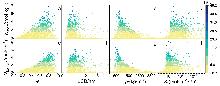

| 气体 | 描述符 | 吸附量N/(mol•kg-1) | 选择性S |
|---|---|---|---|
| 梭曼、沙林 | φ | 0.71~0.78 | 0.22~0.90 |
| VSA/(m2•cm-3) | 2446~2647 | 328~1160 | |
| LCD/nm | 0.664~0.918 | 0.496~0.755 | |
| PLD/nm | 0.542~0.868 | 0.262~0.589 | |
| ρ/(kg•m-3) | 421~635 | 915~1953 | |
| K/(mol•kg-1•Pa-1) | 0.18×10⁻²~1.5×10⁷ | 1.73×10⁻³~1.13×10³ | |
| Q0st/(kJ•mol-1) | 19.37~86.02 | 24.52~68.22 | |
| DIFP | φ | 0.67~1.02 | 0.14~0.73 |
| VSA/(m2•cm-3) | 1065~3290 | 334.3~1099.7 | |
| LCD/nm | 0.665~1.336 | 0.504~1.164 | |
| PLD/nm | 0.493~1.362 | 0.219~1.164 | |
| ρ/(kg•m-3) | 392.7~690.9 | 1125.3~3260.5 | |
| K/(mol•kg-1•Pa-1) | 0.0001~5.33×10⁶ | 0.12~5.8×10¹¹ | |
| Q0st/(kJ•mol-1) | 24.19~85.41 | 45.20~105.73 | |
| DMMP | φ | 0.67~1.14 | 0.13~0.64 |
| VSA/(m2•cm-3) | 1065 ~3290 | 309.4~2383.7 | |
| LCD/nm | 0.664~0.930 | 0.433~0.787 | |
| PLD/nm | 0.493~1.092 | 0.242~0.659 | |
| ρ/(kg•m-3) | 392.72~808.97 | 728.76~3370.18 | |
| K/(mol•kg-1•Pa-1) | 0.62~9.41×10⁶ | 0.003~2.28×10⁹ | |
| Q0st/(kJ•mol-1) | 55.69~228.24 | 46.63~203.89 |
| 气体 | 描述符 | 吸附量N/(mol•kg-1) | 选择性S |
|---|---|---|---|
| 梭曼、沙林 | φ | 0.71~0.78 | 0.22~0.90 |
| VSA/(m2•cm-3) | 2446~2647 | 328~1160 | |
| LCD/nm | 0.664~0.918 | 0.496~0.755 | |
| PLD/nm | 0.542~0.868 | 0.262~0.589 | |
| ρ/(kg•m-3) | 421~635 | 915~1953 | |
| K/(mol•kg-1•Pa-1) | 0.18×10⁻²~1.5×10⁷ | 1.73×10⁻³~1.13×10³ | |
| Q0st/(kJ•mol-1) | 19.37~86.02 | 24.52~68.22 | |
| DIFP | φ | 0.67~1.02 | 0.14~0.73 |
| VSA/(m2•cm-3) | 1065~3290 | 334.3~1099.7 | |
| LCD/nm | 0.665~1.336 | 0.504~1.164 | |
| PLD/nm | 0.493~1.362 | 0.219~1.164 | |
| ρ/(kg•m-3) | 392.7~690.9 | 1125.3~3260.5 | |
| K/(mol•kg-1•Pa-1) | 0.0001~5.33×10⁶ | 0.12~5.8×10¹¹ | |
| Q0st/(kJ•mol-1) | 24.19~85.41 | 45.20~105.73 | |
| DMMP | φ | 0.67~1.14 | 0.13~0.64 |
| VSA/(m2•cm-3) | 1065 ~3290 | 309.4~2383.7 | |
| LCD/nm | 0.664~0.930 | 0.433~0.787 | |
| PLD/nm | 0.493~1.092 | 0.242~0.659 | |
| ρ/(kg•m-3) | 392.72~808.97 | 728.76~3370.18 | |
| K/(mol•kg-1•Pa-1) | 0.62~9.41×10⁶ | 0.003~2.28×10⁹ | |
| Q0st/(kJ•mol-1) | 55.69~228.24 | 46.63~203.89 |

| 毒剂 | Linker | 相应 次数 | Topology | 次数 | ||
|---|---|---|---|---|---|---|
| sarin | QMKYBPDZANOJGF C9H6O6 | OYFRNYNHAZOYNF C8H6O6 | LSHYAWDVBASRBW PO4 | 8/5/4 | srs | 13 |
| DIFP | GZJYHAYPVZNUJX C8H6O4 | SATWKVZGMWCXOJ C27H18O6 | QMKYBPDZANOJGF C9H6O6 | 8/5/4 | sql | 14 |
| soman | GZJYHAYPVZNUJX C8H6O4 | QMKYBPDZANOJGF C9H6O6 | KKEYFWRCBNTPAC C8H6O4 | 16/5/3 | kgm | 12 |
| DMMP | GZJYHAYPVZNUJX C8H6O4 | QMKYBPDZANOJGF C9H6O6 | KKEYFWRCBNTPAC C8H6O4 | 15/8/3 | sql | 15 |
| 毒剂 | Linker | 相应 次数 | Topology | 次数 | ||
|---|---|---|---|---|---|---|
| sarin | QMKYBPDZANOJGF C9H6O6 | OYFRNYNHAZOYNF C8H6O6 | LSHYAWDVBASRBW PO4 | 8/5/4 | srs | 13 |
| DIFP | GZJYHAYPVZNUJX C8H6O4 | SATWKVZGMWCXOJ C27H18O6 | QMKYBPDZANOJGF C9H6O6 | 8/5/4 | sql | 14 |
| soman | GZJYHAYPVZNUJX C8H6O4 | QMKYBPDZANOJGF C9H6O6 | KKEYFWRCBNTPAC C8H6O4 | 16/5/3 | kgm | 12 |
| DMMP | GZJYHAYPVZNUJX C8H6O4 | QMKYBPDZANOJGF C9H6O6 | KKEYFWRCBNTPAC C8H6O4 | 15/8/3 | sql | 15 |
| [1] |
doi: 10.1021/cr500567r pmid: 25651137 |
| [2] |
doi: 10.1017/S1816383118000450 |
| [3] |
|
|
(崔根源, 李欣庭, 何洪源, 贾镇, 何伟文, 李玉静, 环境化学, 2025, 44, 85.)
|
|
| [4] |
|
| [5] |
doi: 10.1021/acs.chemrev.9b00828 pmid: 32207607 |
| [6] |
doi: 10.1002/slct.v10.6 |
| [7] |
doi: 10.1016/j.diamond.2023.109884 |
| [8] |
|
| [9] |
doi: 10.1021/acssensors.3c00744 |
| [10] |
|
| [11] |
doi: 10.3390/gels9100815 |
| [12] |
doi: 10.1140/epjp/s13360-024-05582-5 |
| [13] |
doi: 10.1016/j.ccr.2023.215289 |
| [14] |
|
|
(刘克清, 崔燕, 于琼, 陈立坤, 郑永超, 乔智威, 郑禾, 化工学报, 2024, 75, 616.)
doi: 10.11949/0438-1157.20231210 |
|
| [15] |
doi: 10.1038/s41560-023-01417-2 |
| [16] |
|
| [17] |
doi: 10.1016/j.actphy.2025.100046 |
|
(何世央, 储丹丹, 庞志鑫, 杜雨航, 王嘉怡, 陈雨鸿, 苏雨蒙, 秦建华, 潘湘蓉, 周战, 李景果, 马录芳, 谭超良, 物理化学学报, 2025, 41, 100046.)
|
|
| [18] |
doi: 10.6023/A24110333 |
|
(王跃, 邹莹, 张元, 郑舒婕, 王恒宇, 刘天赋, 李仁富, 化学学报, 2025, 83, 45.)
doi: 10.6023/A24110333 |
|
| [19] |
|
|
(王宗兴, 张月, 赵鹏程, 王逸飞, 南策, 张祉悦, 化学进展, 2025, 37, 612.)
doi: 10.7536/PC240526 |
|
| [20] |
doi: 10.1016/j.actphy.2025.100074 |
|
(杨雪琦, 赵俊涛, 叶家伟, 周德森, 狄廷敏, 张军, 物理化学学报, 2025, 41, 100074.)
|
|
| [21] |
doi: 10.6023/A23010001 |
|
(张慧颖, 于淑艳, 李从举, 化学学报, 2023, 81, 420.)
doi: 10.6023/A23010001 |
|
| [22] |
|
|
(张珂, 屈小虎, 朱元军, 林建英, 赵志换, 樊惠玲, 化工进展, 2022, 41, 5465.)
doi: 10.16085/j.issn.1000-6613.2021-2561 |
|
| [23] |
doi: 10.1039/D2RA01505F |
| [24] |
doi: 10.3866/PKU.WHXB201810059 |
|
(程龙, 刘公平, 金万勤, 物理化学学报, 2019, 35, 1090.)
|
|
| [25] |
|
|
(杨强, 王仁娟, 黄博文, 鲁浩, 范绎蒙, 孔赟, 材料研究与应用, 2024, 18, 309.)
|
|
| [26] |
|
|
(冯丽, 邵兰兴, 李思骏, 全文选, 庄金亮, 高等学校化学学报, 2022, 43, 57.)
|
|
| [27] |
|
|
(吴遥, 张秀玲, 习海玲, 李从举, 化工新型材料, 2021, 49, 209.)
doi: 10.19817/j.cnki.issn 1006-3536.2021.01.046 |
|
| [28] |
|
| [29] |
doi: 10.1021/acsanm.4c02149 |
| [30] |
doi: 10.26599/NR.2025.94907196 |
| [31] |
|
|
(张诗雨, 姚依婷, 董晨珊, 张如全, 杨红军, 顾绍金, 黄菁菁, 杜杰毫, 纺织学报, 2024, 45, 134.)
doi: 10.13475/j.fzxb.20230703201 |
|
| [32] |
doi: 10.1016/j.snb.2024.136722 |
| [33] |
doi: 10.1021/acsomega.4c04872 |
| [34] |
doi: 10.1021/acs.chemmater.0c00986 |
| [35] |
|
|
(周印洁, 吉思蓓, 何松阳, 吉旭, 贺革, 化工学报, 2025, 76, 1093.)
|
|
| [36] |
doi: 10.6023/A22010031 |
|
(王诗慧, 薛小雨, 程敏, 陈少臣, 刘冲, 周利, 毕可鑫, 吉旭, 化学学报, 2022, 80, 614.)
doi: 10.6023/A22010031 |
|
| [37] |
|
| [38] |
|
| [39] |
doi: 10.1021/acs.cgd.9b01050 |
| [40] |
|
| [41] |
doi: 10.1021/acs.chemmater.4c00762 |
| [42] |
|
|
(胡嘉朗, 姜明源, 金律铭, 张永刚, 胡鹏, 纪红兵, 化工学报, 2025, 76, 1973.)
|
|
| [43] |
doi: 10.6023/A24010040 |
|
(王南南, 陈玉贞, 化学学报, 2024, 82, 621.)
doi: 10.6023/A24010040 |
|
| [44] |
|
| [45] |
doi: 10.1016/j.seppur.2023.124546 |
| [46] |
doi: 10.1016/j.isci.2024.110042 |
| [47] |
doi: 10.1016/j.cej.2022.136651 |
| [48] |
doi: 10.1021/jacs.5c01399 |
| [49] |
doi: 10.1016/j.chroma.2015.07.077 pmid: 26239699 |
| [50] |
doi: 10.1039/D1RE00090J |
| [51] |
doi: 10.1021/acs.chemmater.8b00843 |
| [52] |
doi: 10.1021/acsami.3c02713 |
| [53] |
|
| [54] |
doi: 10.1002/aic.v67.10 |
| [55] |
doi: 10.1021/ja00051a040 |
| [56] |
doi: 10.1016/j.micromeso.2011.08.020 |
| [57] |
|
| [58] |
doi: 10.1002/anie.201408464 pmid: 25319881 |
| [59] |
doi: 10.1021/acs.iecr.8b04084 |
| [60] |
doi: 10.1016/j.cej.2021.131604 |
| [61] |
doi: 10.1039/C5TA06472D |
| [62] |
doi: 10.1016/j.cej.2021.129653 |
| [63] |
|
| [64] |
|
| [65] |
doi: 10.1016/j.jclepro.2024.142634 |
| [66] |
doi: 10.6023/A22040186 |
|
(程敏, 王诗慧, 罗磊, 周利, 毕可鑫, 戴一阳, 吉旭, 化学学报, 2022, 80, 1277.)
doi: 10.6023/A22040186 |
|
| [67] |
doi: 10.1016/j.jtice.2022.104479 |
| [68] |
doi: 10.1016/j.memsci.2018.01.020 |
| [69] |
doi: 10.3390/nano15030183 |
| [70] |
|
| [71] |
doi: 10.1007/s10462-011-9272-4 |
| [72] |
doi: 10.1023/A:1010933404324 |
| [73] |
|
| [74] |
|
| [75] |
doi: 10.1021/acs.jpcc.0c10773 |
| [76] |
doi: 10.1016/j.energy.2020.118874 |
| [1] | Ziyi Shui, Shurui Yin, Jintao Deng, Liuyun Xu, Li Guo. Polyvinylpyrrolidone-Assisted Synthesis of Metal-organic Framework-Derived Hierarchically Porous Carbon for Bifunctional Electrocatalysis [J]. Acta Chimica Sinica, 2026, 84(1): 53-63. |
| [2] | Yunhe Mo, Weigang Cao, Lequan Zhao, Zhenqiang Tang, Long Zheng, Zongying Cai. Screening Vanadium-Based Electrode Materials for Lithium-Ion Batteries Based on Machine Learning and First-Principles [J]. Acta Chimica Sinica, 2025, 83(5): 518-526. |
| [3] | Chengqiu Li, Jiajun Yu, Xiao Feng. Research Progress of Covalent Organic Frameworks as Proton Conductors★ [J]. Acta Chimica Sinica, 2025, 83(10): 1223-1236. |
| [4] | Junqing Li, Qianxi Song, Ziyi Liu, Dongqi Wang. Machine Learning for Predicting Band Gap in Boron-containing Materials [J]. Acta Chimica Sinica, 2024, 82(4): 387-395. |
| [5] | Bo Sun, Wenwen Ju, Tao Wang, Xiaojun Sun, Ting Zhao, Xiaomei Lu, Feng Lu, Quli Fan. Preparation of Highly-dispersed Conjugated Polymer-Metal Organic Framework Nanocubes for Antitumor Application [J]. Acta Chimica Sinica, 2023, 81(7): 757-762. |
| [6] | Junchang Chen, Mingxing Zhang, Shuao Wang. Research Progress of Synthesis Methods for Crystalline Porous Materials [J]. Acta Chimica Sinica, 2023, 81(2): 146-157. |
| [7] | Xingyi Qi, Yaofeng Hu, Ruoyu Wang, Yaqing Yang, Yufei Zhao. Recent Advance of Machine Learning in Selecting New Materials [J]. Acta Chimica Sinica, 2023, 81(2): 158-174. |
| [8] | Yizhi Han, Jianhui Lan, Xue Liu, Weiqun Shi. Advances in Molecular Dynamics Studies of Molten Salts Based on Machine Learning [J]. Acta Chimica Sinica, 2023, 81(11): 1663-1672. |
| [9] | Min Cheng, Shihui Wang, Lei Luo, Li Zhou, Kexin Bi, Yiyang Dai, Xu Ji. Large-Scale Computational Screening of Metal-Organic Framework Membranes for Ethane/Ethylene Separation [J]. Acta Chimica Sinica, 2022, 80(9): 1277-1288. |
| [10] | Xiaojuan Li, Ziyu Ye, Shuhan Xie, Yongjing Wang, Yonghao Wang, Yuancai Lv, Chunxiang Lin. Study on Performance and Mechanism of Phenol Degradation through Peroxymonosulfate Activation by Nitrogen/Chlorine Co-doped Porous Carbon Materials [J]. Acta Chimica Sinica, 2022, 80(9): 1238-1249. |
| [11] | Xu Yan, Hemi Qu, Ye Chang, Xuexin Duan. Application of Metal-Organic Frameworks in Gas Pre-concentration, Pre-separation and Detection [J]. Acta Chimica Sinica, 2022, 80(8): 1183-1202. |
| [12] | Linan Cao, Min Wei. Recent Progress of Electric Conductive Metal-Organic Frameworks Thin Film [J]. Acta Chimica Sinica, 2022, 80(7): 1042-1056. |
| [13] | Fang Liu, Tingting Pan, Xiurong Ren, Weiren Bao, Jiancheng Wang, Jiangliang Hu. Research on Preparation and Benzene Adsorption Performance of HCDs@MIL-100(Fe) Adsorbents [J]. Acta Chimica Sinica, 2022, 80(7): 879-887. |
| [14] | Yuze Liu, Kunhua Li, Jiaxing Huang, Xi Yu, Wenping Hu. Accurate Prediction of the Boiling Point of Organic Molecules by Multi-Component Heterogeneous Learning Model [J]. Acta Chimica Sinica, 2022, 80(6): 714-723. |
| [15] | Shihui Wang, Xiaoyu Xue, Min Cheng, Shaochen Chen, Chong Liu, Li Zhou, Kexin Bi, Xu Ji. High-Throughput Computational Screening of Metal-Organic Frameworks for CH4/H2 Separation by Synergizing Machine Learning and Molecular Simulation [J]. Acta Chimica Sinica, 2022, 80(5): 614-624. |
| Viewed | ||||||
|
Full text |
|
|||||
|
Abstract |
|
|||||
