有机化学 ›› 2026, Vol. 46 ›› Issue (9): 3688-3696.DOI: 10.6023/cjoc202604002 上一篇 下一篇
研究论文
种千惠a,b,†, 王光明b,†, 吴国伊b, 闫倩倩b, 王标兵a,*( ), 张卡卡b,*()
收稿日期:2026-04-01
修回日期:2026-05-27
发布日期:2026-07-14
作者简介:† 共同第一作者.
基金资助:
Qianhui Chonga,b,†, Guangming Wangb,†, Guoyi Wub, Qianqian Yanb, Biaobing Wanga,*(), Kaka Zhangb,*()
Received:2026-04-01
Revised:2026-05-27
Published:2026-07-14
Contact:
About author:Dedicated to the 100th anniversary of the birth of Professor Xikui Jiang.
† These authors contributed equally to this work
Supported by:文章分享

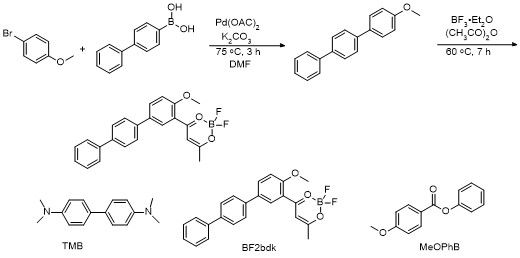
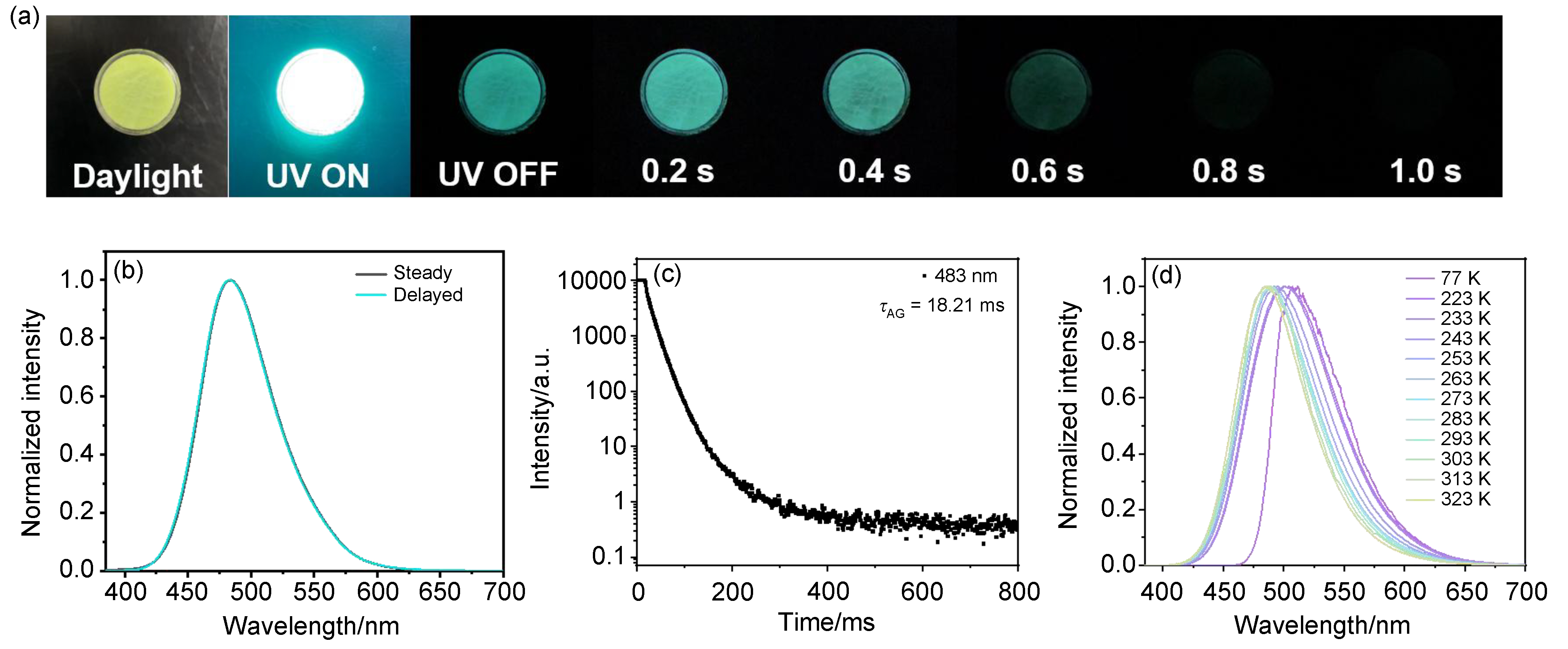
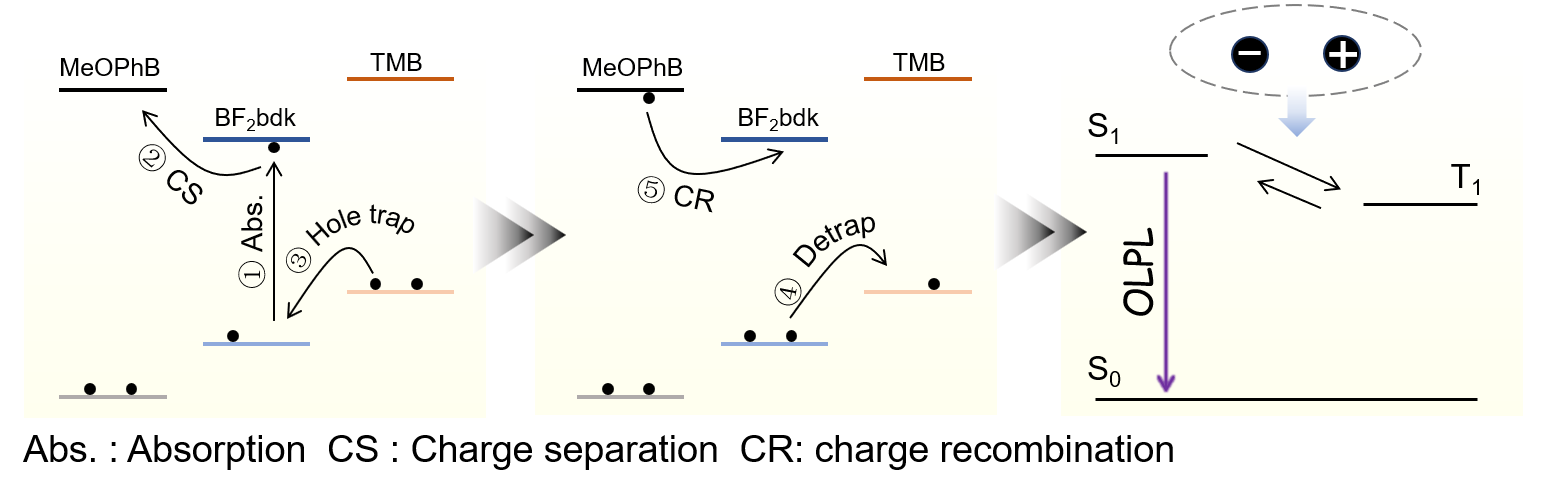
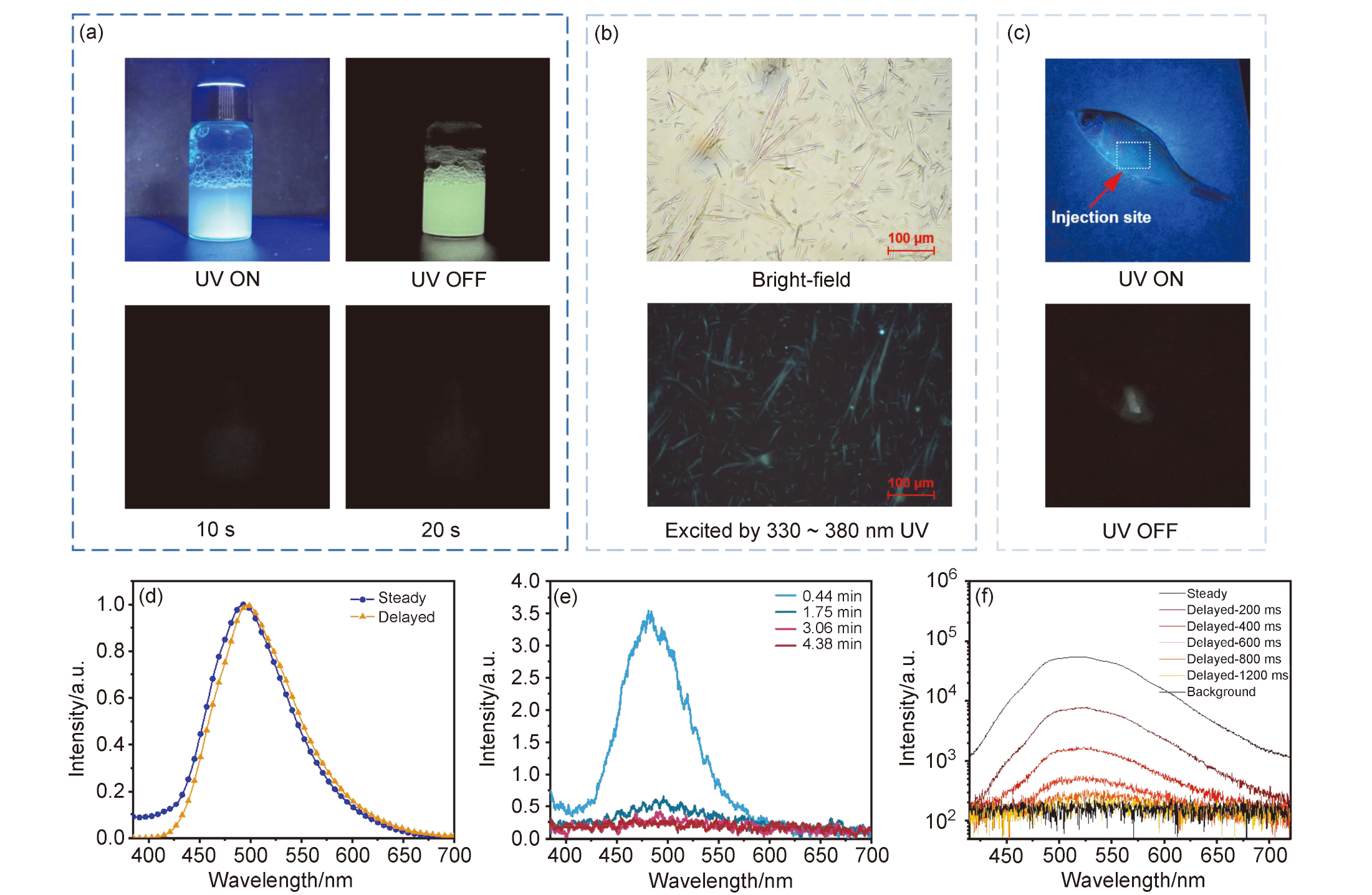
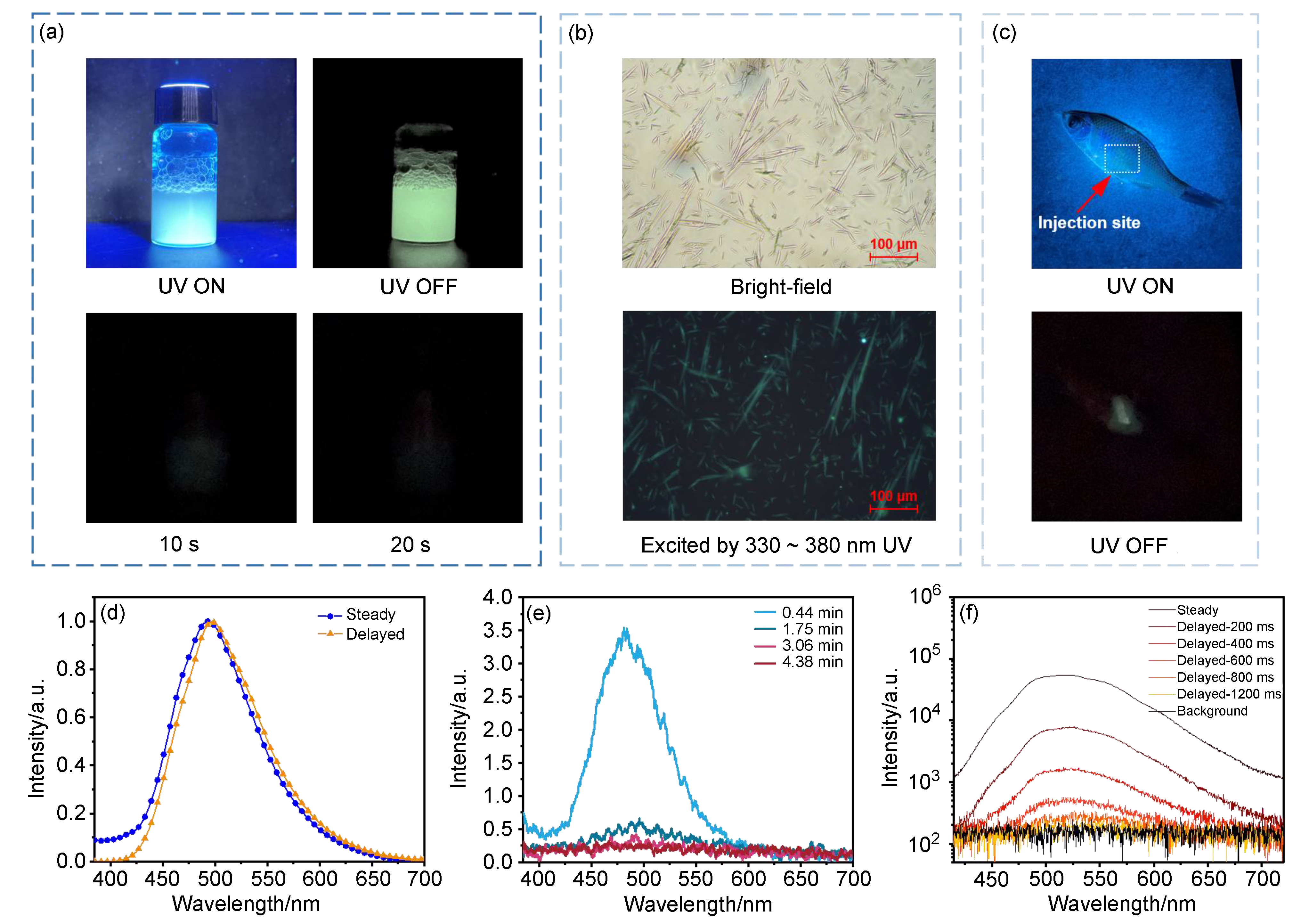
有机长效发光(OLPL)材料在生物医学领域前景广阔, 但由于水和氧的淬灭作用, 制备水性OLPL分散体系仍然具有挑战性. 通过供体-敏化剂-受体(DSA)三组分策略, 制备了水性OLPL分散体系. 将二氟化硼β-二酮(BF2bdk, 光敏剂)、N,N,N',N'-四甲基联苯胺(TMB, 电子供体)和4-甲氧基苯甲酸苯酯(MeOPhB, 电子受体兼有机基质)相结合, 制备出了具有数小时余辉时长和可见光激发特性的固态OLPL材料. 利用MeOPhB适中的熔点(74 ℃), 该固态材料可以在表面活性剂的辅助下, 简便地加工成水性分散体系. 联用光谱的荧光显微镜证实了水性分散体系中OLPL微粒的结晶性质, 并能原位收集其发射光谱. 水性OLPL分散体保留了特征性的幂律发射衰减, 并在水中表现出显著的余辉, 这是由于结晶态的MeOPhB基质保护了电荷分离态免受淬灭. 这项工作填补了水性OLPL领域的空白, 并为将固态OLPL转化为水基体系提供了一种通用策略.
种千惠, 王光明, 吴国伊, 闫倩倩, 王标兵, 张卡卡. 水中分散的有机长效发光材料[J]. 有机化学, 2026, 46(9): 3688-3696.
Qianhui Chong, Guangming Wang, Guoyi Wu, Qianqian Yan, Biaobing Wang, Kaka Zhang. Organic Long Persistent Luminescence Materials in Aqueous Medium[J]. Chinese Journal of Organic Chemistry, 2026, 46(9): 3688-3696.
| [1] |
doi: 10.1021/acs.chemrev.5b00074 |
| [2] |
doi: 10.1002/adfm.v28.51 |
| [3] |
doi: 10.1038/s41467-019-10033-2 pmid: 31068598 |
| [4] |
doi: 10.1038/s41578-020-0223-z |
| [5] |
doi: 10.1039/D2CS00993E |
| [6] |
doi: 10.1038/nature24010 |
| [7] |
doi: 10.1021/acs.accounts.8b00620 |
| [8] |
doi: 10.1039/C8TC01007B |
| [9] |
doi: 10.1002/adom.v5.17 |
| [10] |
doi: 10.1021/acs.accounts.0c00060 |
| [11] |
doi: 10.1002/anie.201915433 pmid: 31876988 |
| [12] |
doi: 10.1002/agt2.v2.4 |
| [13] |
|
| [14] |
doi: 10.1002/adom.v9.10 |
| [15] |
doi: 10.1063/5.0066613 |
| [16] |
doi: 10.1002/smll.v18.1 |
| [17] |
doi: 10.1016/j.chempr.2023.05.023 |
| [18] |
doi: 10.1021/accountsmr.3c00090 |
| [19] |
doi: 10.1038/s42004-025-01465-7 |
| [20] |
doi: 10.1002/adma.v36.18 |
| [21] |
doi: 10.1002/anie.v60.22 |
| [22] |
doi: 10.1038/s41467-020-18520-7 |
| [23] |
doi: 10.1002/adma.v29.33 |
| [24] |
doi: 10.1021/jacs.9b00859 |
| [25] |
doi: 10.1002/cjoc.v41.8 |
| [26] |
doi: 10.1002/agt2.v4.1 |
| [27] |
doi: 10.1002/adma.v33.18 |
| [28] |
doi: 10.1002/adom.v10.22 |
| [29] |
doi: 10.1002/anie.201914513 pmid: 31799773 |
| [30] |
doi: 10.1002/adma.v30.38 |
| [31] |
doi: 10.1002/adma.v30.45 |
| [32] |
doi: 10.1002/adma.v32.22 |
| [33] |
doi: 10.1038/s41467-019-14035-y |
| [34] |
doi: 10.1002/adfm.v30.22 |
| [35] |
doi: 10.1002/adma.v33.23 |
| [36] |
doi: 10.1038/s41563-021-01150-9 |
| [37] |
doi: 10.1039/D3SC01500A |
| [38] |
doi: 10.1007/s40843-023-2590-x |
| [39] |
doi: 10.1016/j.cej.2023.141916 |
| [40] |
doi: 10.1021/jacs.1c11480 |
| [41] |
doi: 10.1002/adma.v32.45 |
| [42] |
doi: 10.1002/anie.202106472 pmid: 34086404 |
| [43] |
doi: 10.1021/jacs.4c05531 |
| [44] |
|
| [45] |
doi: 10.31635/ccschem.025.202505511 |
| [46] |
doi: 10.1002/advs.v12.15 |
| [47] |
doi: 10.1002/advs.v12.37 |
| [48] |
doi: 10.1002/cjoc.v40.21 |
| [49] |
doi: 10.1002/anie.v60.31 |
| [50] |
doi: 10.1021/acsanm.3c02770 |
| [51] |
doi: 10.6023/cjoc202503027 |
|
(罗婷, 肖宇峰, 李珣, 夏雯, 张卡卡, 有机化学, 2025, 45, 4202.)
|
|
| [52] |
doi: 10.1016/j.cej.2025.163359 |
| [1] | 张梦媛, 袁之敏. 多功能圆偏振发光有机小分子[J]. 有机化学, 2026, 46(5): 1871-1882. |
| [2] | 高玉兰, 龙江琴, 王秋生. 9-芴基甲氧基羰基-酪氨酸掺杂聚乙烯醇室温磷光薄膜性质研究[J]. 有机化学, 2025, 45(4): 1261-1267. |
| [3] | 吴建荣, 宋敏, 刘釜铭, 周东营, 廖良生, 蒋佐权. 双功能修饰策略构建蓝光发射的硼基多重共振热激活延迟荧光材料[J]. 有机化学, 2025, 45(11): 4152-4162. |
| [4] | 罗婷, 肖宇峰, 李珣, 夏雯, 张卡卡. 基于分子内电荷转移技术构建高效热激活延迟荧光型有机余辉材料[J]. 有机化学, 2025, 45(11): 4202-4209. |
| [5] | 李楠, 王雲生, 李振. 三苯胺-吩噻嗪衍生物掺杂聚合物的光诱导室温磷光[J]. 有机化学, 2024, 44(8): 2487-2494. |
| [6] | 黄凯航, 尹理, 姜青云, 汪乾, 石光, 许炳佳. 具有聚集诱导发光性质的高效热激活延迟荧光材料用于脂滴成像[J]. 有机化学, 2024, 44(8): 2479-2486. |
| [7] | 张惟, 李庚辰, 苏昊, 戴文博, 孙鹏, 石建兵, 佟斌, 蔡政旭, 董宇平. 基于主客体掺杂室温磷光材料的氧气传感材料[J]. 有机化学, 2024, 44(8): 2523-2529. |
| [8] | 崔怡静, 朱天文, 张强, 袁望章. 共晶提升纯有机材料室温磷光余辉性能[J]. 有机化学, 2024, 44(8): 2588-2594. |
| [9] | 齐云鹏, 刘伟, 王俊龙, 杜涛, 矫淞霖. 二氟化硼β-二酮类近红外荧光染料的设计、合成及细胞成像[J]. 有机化学, 2024, 44(11): 3357-3364. |
| [10] | 严子昂, 邹雷, 马骧. 纯有机超分子发光材料的研究进展[J]. 有机化学, 2020, 40(7): 1814-1822. |
| [11] | 张亮, 李猛, 高庆宇, 陈传峰. 基于卤素取代邻苯二甲酰亚胺新型有机发光材料的合成及其性能研究[J]. 有机化学, 2020, 40(2): 516-520. |
| [12] | 郑月游, 谢琼琳, 王炳喜. 10-甲基-10H-吩噻嗪-5,5-二氧化物衍生物的合成及其光物理和电化学性质[J]. 有机化学, 2016, 36(4): 803-811. |
| 阅读次数 | ||||||
|
全文 |
|
|||||
|
摘要 |
|
|||||


