
铵盐为胺源的不对称还原胺化反应研究进展
 |
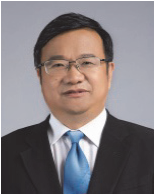
代增进, 博士, 南方科技大学博士后. 2012年6月本科毕业于湖南科技大学化学化工学院, 指导老师为蔡铁军和周再春; 2012年9月到2017年6月期间在武汉大学化学与分子科学学院硕博连读, 导师为彭天右教授和张静副教授; 2017年9月到2019年4月期间在公司工作; 2019年5月到2020年5月期间于加拿大Wilfrid Laurier University从事博士后研究, 合作导师为Dmitry. G. Gusev; 2020年8月至今在南方科技大学张绪穆课题组从事博士后研究工作. 研究兴趣为实用型过渡金属配合物的设计合成, 及其催化的(不对称)氢化反应和醇类无受体脱氢反应. |
 |
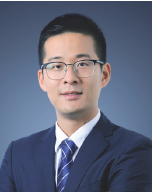
张绪穆, 博士生导师, 南方科技大学化学系讲席教授. 1982年在武汉大学获得学士学位; 1985年在中国科学院福建物质结构研究所获得硕士学位, 师从卢嘉锡院士; 1987年在加州大学圣地亚哥分校获得硕士学位, 师从Gerhard N. Schauzer教授; 1992年在斯坦福大学获得博士学位, 师从James P. Collman教授; 1992~1994年在斯坦福大学做博士后研究; 1994~2006年任教于美国宾夕法尼亚州州立大学并获终身教授职位; 2007~2015年任新泽西州立大学化学学院杰出教授; 2015年8月全职加入南方科技大学. 主要研究兴趣包括: 开发新型手性配体并探索其在高效、高选择性不对称氢化、氢甲酰化和烯炔环异构化等反应中的应用; 利用高效不对称氢化规模化制备重磅原料药工艺开发等. |
 |
殷勤, 博士生导师, 中国科学院深圳理工大学药学院副教授和中国科学院深圳先进技术研究院医药所副研究员. 2009年本科毕业于湖南师范大学, 师从李金恒教授; 2014年博士毕业于中国科学院上海有机化学研究所, 师从游书力研究员; 2015~2017年, 在德国“洪堡奖学金”支持下, 于柏林工业大学进行博士后研究, 师从Martin Oestreich教授; 2017年6月到2021年6月期间在南方科技大学前沿与交叉科学研究院开展研究工作; 2021年7月加入中国科学院深圳理工大学药学院和中国科学院深圳先进技术研究院医药所, 任课题组长. 研究方向主要聚焦于不对称催化及其在药物制备以及新药发现中的应用. |
收稿日期: 2022-03-30
修回日期: 2022-05-04
网络出版日期: 2022-05-18
基金资助
国家自然科学基金(22071097); 国家自然科学基金(21991113)
Advances on Asymmetric Reductive Amination with Ammonium Salts as Amine Sources
Received date: 2022-03-30
Revised date: 2022-05-04
Online published: 2022-05-18
Supported by
National Natural Science Foundation of China(22071097); National Natural Science Foundation of China(21991113)
α-手性伯胺结构不仅广泛存在于药物分子中, 而且是制备众多含胺药物的关键中间体. 通过对伯胺基团进行多样性转化, 可以快速构建复杂分子. 此外, 手性伯胺本身可以作为配体或者有机催化剂应用于有机合成. 因此, 手性伯胺的高效合成方法备受关注. 目前, 直接合成手性伯胺的不对称催化方法还特别少. 过渡金属催化的不对称还原胺化是获取手性胺最直接的方法之一, 反应以简单易得的酮和胺源为原料, 在还原剂和手性金属催化剂的存在下, 可以一步合成手性胺. 然而, 与亚胺的不对称氢化相比, 不对称还原胺化的报道非常有限, 主要原因是存在酮还原这一竞争反应. 当使用铵盐为胺源时, 潜手性酮可以通过还原胺化直接转化为手性伯胺, 极具吸引力且意义重大. 然而该反应除了面临酮还原这一竞争副反应外, 还面临着其他的挑战, 包括: (1)氨气或者生成的一级胺能够与金属配位从而产生毒化作用; (2)胺配位也可以导致金属发生配体交换, 加大反应手性控制难度; (3)伯胺有可能与羰基发生二次还原胺化, 使反应产出变得极为复杂. 这些问题和挑战的解决依赖于发展合适的催化体系. 针对铵盐参与的不对称还原胺化这一挑战性课题, 我们团队在过去的几年进行了深入的研究, 本文将系统地介绍我们在该领域取得的成果.

代增进 , 张绪穆 , 殷勤 . 铵盐为胺源的不对称还原胺化反应研究进展[J]. 有机化学, 2022 , 42(8) : 2261 -2274 . DOI: 10.6023/cjoc202203058
α-Chiral primary amine subunits are widespread structural units in a large number of pharmaceutical molecules and are key intermediates toward the preparation of numerous amine-containing drugs. Versatile functionalizations on the NH2 group also supply a quick way to construct molecular complexity. Additionally, chiral primary amines can serve as ligands or organocatalysts which can be applied in organic synthesis. Therefore, efficient synthetic routes toward chiral primary amines have attracted tremendous attention. Asymmetric chemo-catalytic reactions that are capable of directly preparing chiral primary amines remain scarce. Transition-metal-catalyzed asymmetric reductive amination (ARA), a reaction type that transforms easily available ketones and amines into chiral amines in the presence of a chiral metal-catalyst and reductant, is among the most straightforward methods to access chiral amines. However, studies on ARA are still limited compared to that on imine hydrogenation, probably due to the presence of competitive ketone reduction as the side reaction. ARA using ammonium salts as the amine sources can directly yield chiral primary amines from prochiral ketones and are thus highly attractive and of great significance. In addition to competition with ketone reduction process, this reaction also faces some other challenges, including: (1) NH3 or the produced primary amines can coordinate to the metal center which results in catalyst poisoning effect; (2) the coordination of amine ligand to the metal center may lead to ligand exchange that enhances the challenge on asymmetric control; (3) the produced primary amines may undergo further alkylation process via double reductive amination, thus providing more complicated outcome. The existing problems and challenges in ARA require urgent development of applicable catalytic systems. Aiming to solve some challenges in the field of ARA with ammonium salts, we have carried out systematic studies and will present the latest progress achieved from our team in this account.
| [1] | Top 200 SMALL Molecule Drugs by Sales in 2020, a poster made by Jon, T. Njardarson’s group, https://njardarson.lab.arizona.edu/content/top-pharmaceuticals-poster. |
| [2] | Noyori, R.; Ohkuma, T. Angew. Chem. Int. Ed. 2001, 40, 40, and references therein. |
| [3] | Chen, Y.-C. Synlett 2008, 1919. |
| [4] | Glamkowski, E. J.; Gal, G.; Purick, R.; Davidson, A. J.; Sletzinger, M. J. Org. Chem. 1970, 35, 3510. |
| [5] | Faber, K.; Fessner, W.-D.; Turner, N. J. SOS Science of Synthesis: Biocatalysis in Organic Synthesis, Vol. 1-3, Thieme, Germany, 2015. |
| [6] | Ricci, A.; Bernardi, L. Methodologies in Amine Synthesis: Challenges and Applications, WILEY‐VCH GmbH, Weinheim, 2021. |
| [7] | For selected recent reviews on transition-metal-catalyzed ARA, see: (a) Tian, Y.; Hu, L.; Wang, Y. Z.; Zhang, X.; Yin, Q. Org. Chem. Front. 2021, 8, 2328. |
| [7] | (b) Reshi, N. U. D.; Saptal, V. B.; Beller, M.; Bera, J. K. ACS Catal. 2021, 11, 13809. |
| [8] | Yin, Q.; Shi, Y.; Wang, J.; Zhang, X. Chem. Soc. Rev. 2020, 49, 6141. |
| [9] | (a) Abdine, R. A. A.; Hedouin, Gaspard.; Colobert, F.; Wencel-Delord, J. ACS Catal. 2021, 11, 215. |
| [9] | (b) Cabré, A.; Verdaguer, X.; Riera, A. Chem. Rev. 2022, 122, 269. |
| [9] | (c) Wang, D.; Hou, C.; Chen, L.; Liu, X.; An, Q.; Hu, X. Chin. J. Org. Chem. 2013, 33, 1355. (in Chinese) |
| [9] | (王东, 侯传金, 陈丽凤, 刘小宁, 安庆大, 胡向平, 有机化学, 2013, 33, 1355.) |
| [10] | Hou, G.; Gosselin, F.; Li, W.; McWilliams, J. C.; Sun, Y.; Weisel, M.; O’Shea, P. D.; Chen, C.; Davies, I. W.; Zhang, X. J. Am. Chem. Soc. 2009, 131, 9882. |
| [11] | Hou, G.; Tao, R.; Sun, Y.; Zhang, X.; Gosselin, F. J. Am. Chem. Soc. 2010, 132, 2124. |
| [12] | Zhao, Q.; Wen, J.; Tan, R.; Huang, K.; Metola, P.; Wang, R.; Anslyn, E. V.; Zhang, X. Angew. Chem., Int. Ed. 2014, 53, 8467. |
| [13] | (a) Matsumura, K.; Saito, T WO 2005/028419, 2005. |
| [13] | (b) Bunlaksananusorn, T.; Rampf, F. Synlett 2005, 2682. |
| [14] | Steinhuebel, D.; Sun, Y.; Matsumura, K.; Sayo, N.; Saito, T. J. Am. Chem. Soc. 2009, 131, 11316. |
| [15] | Matsumura, K.; Zhang, X.; Hori, K.; Murayama, T.; Ohmiya, T.; Shimizu, H.; Saito, T.; Sayo, N. Org. Process Res. Dev. 2011, 15, 1130. |
| [16] | Mattei, P.; Moine, G.; Püntener, K.; Schmid, R. Org. Process Res. Dev. 2011, 15, 353. |
| [17] | Lou, Y.; Hu, Y.; Lu, J.; Guan, F.; Gong, G.; Yin, Q.; Zhang, X. Angew. Chem. Int. Ed. 2018, 57, 14193. |
| [18] | Hsiao, Y.; Rivera, N. R.; Rosner, T.; Krska, S. W.; Njolito, E.; Wang, F.; Sun, Y.; Armstrong, J. D.; Grabowski, E. J. J.; Tillyer, R. D.; Spindler, F.; Malan, C. J. Am. Chem. Soc. 2004, 126, 9918. |
| [19] | Kadyrov, R.; Riermeier, T. H. Angew. Chem. Int. Ed. 2003, 42, 5472. |
| [20] | Tan, X.; Gao, S.; Zeng, W.; Xin, S.; Yin, Q.; Zhang, X. J. Am. Chem. Soc. 2018, 140, 2024. |
| [21] | Donaire, J. G.; Hermsen, M.; Wysocki, J.; Ernst, M.; Rominger, F.; Trapp, O.; Hashmi, A. S. K.; Scha?fer, A.; Comba, P. Schaub, T. J. Am. Chem. Soc. 2018, 140, 355. |
| [22] | (a) Hu, L.; Zhang, Y.; Zhang, Q. -W.; Yin, Q.; Zhang, X. Angew. Chem. Int. Ed. 2020, 59, 5321. |
| [22] | (b) Huang, H. Chang, M. Chin. J. Org. Chem. 2020, 40, 1802. (in Chinese) |
| [22] | (黄海洲, 常明欣, 有机化学, 2020, 40, 1802.) |
| [23] | Olyaei, A.; Sadeghpour, M. RSC Adv. 2019, 9, 18467. |
| [24] | Pan, H.; Xie, Y.; Liu, M.; Shi, Y. RSC Adv. 2014, 4, 2389. |
| [25] | Shi, Y.; Wang, J.; Yang, F.; Wang, C.; Zhang, X.; Chiu, P.; Yin, Q. Chem. Commun. 2022, 58, 513. |
| [26] | Xie, Y.; Pan, H.; Liu, M.; Xiao, X.; Shi, Y. Chem. Soc. Rev. 2015, 44, 1740. |
| [27] | Hu, L.; Wang, Y.-Z.; Xu, L.; Yin, Q.; Zhang, X. Angew. Chem. Int. Ed. 2022, e202202552. |
| [28] | Mourelle-Insua, Á.; Zampieri, L. A.; Lavandera, I.; Gotor-Fernándeza, V. Adv. Synth. Catal. 2018, 360, 686. |
| [29] | Shi, Y.-J.; Tan, X.-F.; Gao, S.; Zhang, Y.; Wang, J.-X.; Zhang, X.-M.; Yin, Q. Org. Lett. 2020, 22, 2707. |
| [30] | Zhang, Y.; Liu, Y.-Q.; Hu, L.-A.; Zhang, X.-M.; Yin, Q. Org. Lett. 2020, 22, 6479. |
| [31] | For an iridium catalytic system, see: Gao, Z.; Liu, J.; Huang, H.; Geng, H.; Chang, M. Angew. Chem. Int. Ed. 2021, 60, 27307. |
| [32] | (a) Talwar, D.; Salguero, N. P.; Robertson, C. M.; Xiao, J. Chem.- Eur. J. 2014, 20, 245. |
| [32] | (b) Wang, C.; Pettman, A.; Bacsa, J.; Xiao, J. Angew. Chem. Int. Ed. 2010, 49, 7548. |
| [32] | (c) Tanaka, K.; Miki, T.; Murata, K.; Yamaguchi, A.; Kayaki, Y.; Kuwata, S.; Ikariya, T.; Watanabe, M. J. Org. Chem. 2019, 84, 10962. |
| [33] | Dai, Z.; Pan, Y.; Wang, S.; Zhang, X.; Yin, Q. Org. Biomol. Chem. 2021, 19, 8934. |
/
| 〈 |
|
〉 |

