


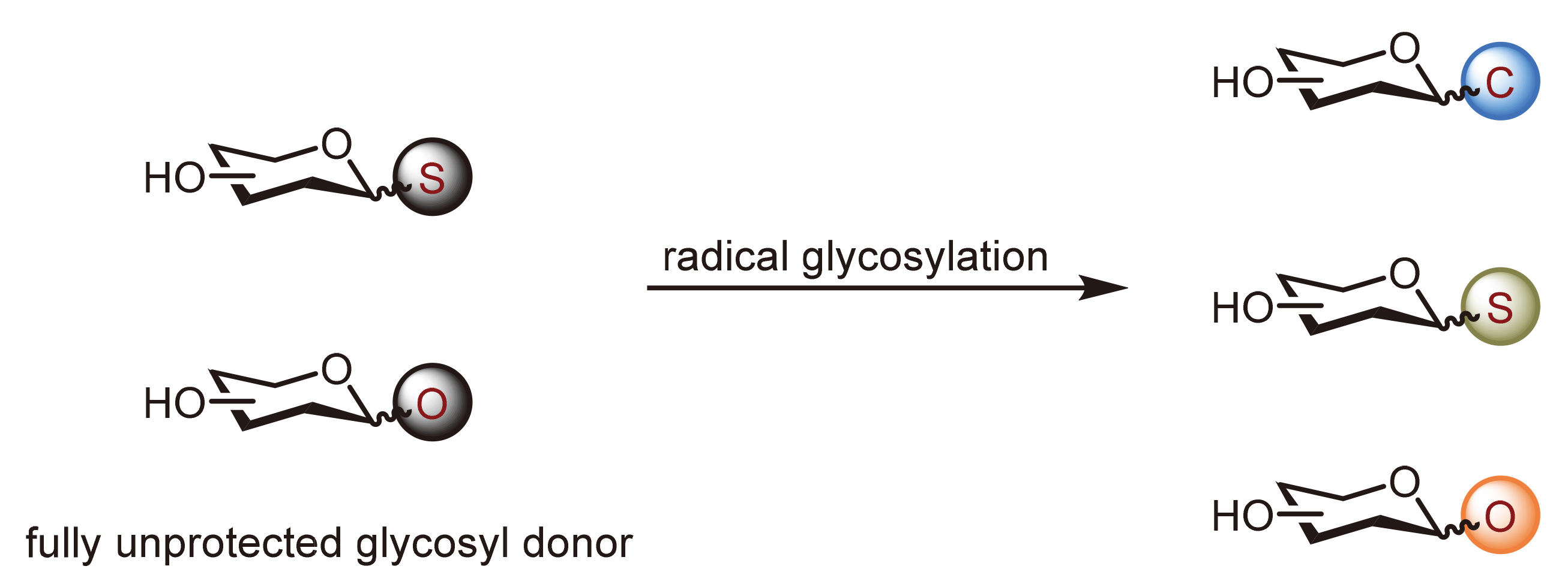
Carbohydrates, among the most abundant biomolecules in living organisms, not only provide structural scaffolds and energy storage but also act as critical “information molecules” mediating essential biological processes such as cellular recognition, immune response, and signal transduction.[1] Understanding their structures and functions is therefore fundamental to life sciences and drug discovery. In this context, chemical glycosylation has emerged as an indispensable tool in the laboratory for the construction of well-defined and diverse glycoconjugates, including glycoproteins and glycolipids, effectively linking simple sugar units to complex biological functions.[2]
However, traditional glycosylation synthesis relies heavily on laborious protection and deprotection steps to differentiate the multiple, chemically similar hydroxyl groups on sugar scaffolds. These procedures are time-consuming and inefficient, often requiring sensitive reagents and harsh reaction conditions, which substantially restrict their practical applicability.[3] Such limitations are particularly pronounced in the direct glycosylation modification of condition-sensitive complex biomolecules, including proteins and nucleic acids. Consequently, the development of protecting-group-free glycosylation strategies, which directly employ natural and unmodified sugars as feedstocks for selective functionalization, has emerged as one of the most challenging and frontier goals in modern glycoscience. These strategies aim to emulate the precision and efficiency of enzymatic glycosylation by introducing innovative activation modes, such as photocatalysis and radical-me- diated pathways, to enable direct, one-step transformations of native sugars into target glycoconjugates. Beyond simplifying synthetic routes and improving atom economy, protecting-group-free glycosylation also enables direct late-stage functionalization of complex biomolecules, including antibodies, peptides, and nucleic acids. As such, it offers a transformative toolkit for glycobiology research, glyco-drug development, and the design of advanced biomaterials, and represents a promising future direction for synthetic carbohydrate chemistry.
This review is organized according to the types of unprotected glycosyl donors and summarizes key advances in protecting-group-free glycosylation over the past five years. We focus on the construction of unprotected C-, S-, and O-glycosidic bonds and conclude with perspectives on the remaining challenges and future opportunities in this rapidly evolving field.
1 Radical glycosylation of fully unprotected thioglycosides
1.1 Fully unprotected glycosyl dithiocarbamates as glycosyl radical precursors
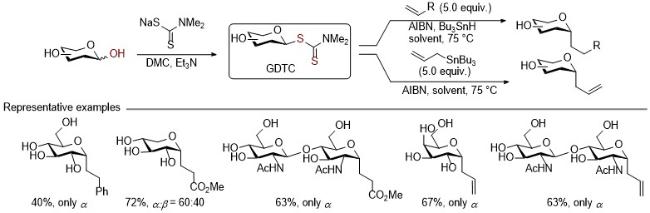
In 2021, Shoda and co-workers[4] reported a convenient protecting-group-free strategy for C-glycosylation using unprotected glycosyl dithiocarbamates (GDTCs) as donors (Figure 1). This method enables the direct synthesis of α-C-glycosides under mild conditions, completely avoiding the need for laborious protection and deprotection of hydroxyl groups. A key advance of this approach lies in the one-step, 2-chloro-1,3-dimethylimidazolinium chloride (DMC)-mediated preparation of unprotected GDTCs, which streamlines the synthetic sequence and underpins the first example of protection-free addition of unprotected glycosyl radicals to a broad range of alkenes. Notably, this strategy is also applicable to the C-glycosylation of oligosaccharides, highlighting its potential utility in the development of functional glycomaterials.
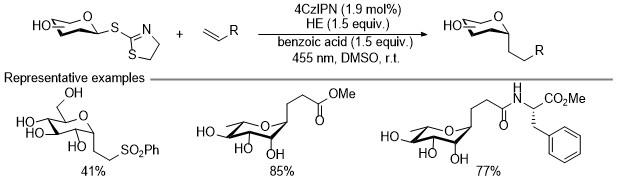
In 2024, Nitz and co-workers[5] reported a class of readily accessible and bench-stable glycosyl dithioimidocarbonates that serve as unprotected glycosyl radical precursors (Figure 2). Under visible-light irradiation in the presence of a weak acid, the photocatalyst 2,4,5,6-tetra(9H-carbazol-9-yl)isophthalonitrile (4CzIPN), and a Hantzsch ester, these donors undergo desulfurization to generate glycosyl radicals. The resulting radicals participate efficiently in Giese-type additions, delivering C-glycosides with high levels of stereoselectivity.
1.2 Fully unprotected glycosyl sulfoxides or sulfones as glycosyl radical precursors
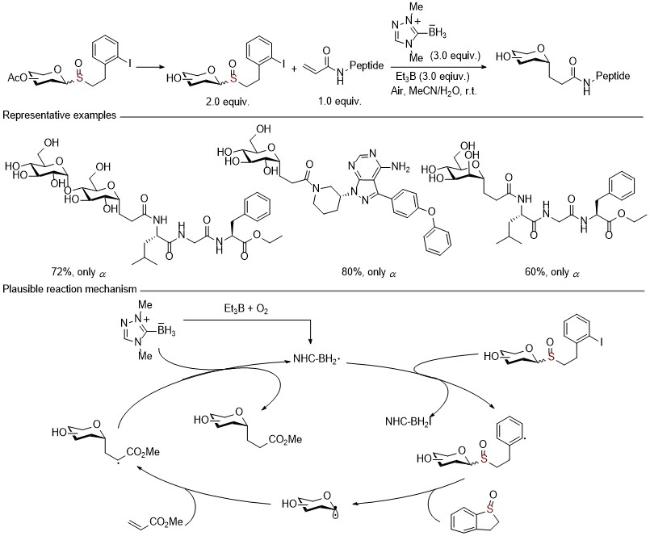
In 2021, the Niu group[6] reported a class of readily accessible and bench-stable unprotected glycosyl radical precursors and demonstrated their utility in the synthesis of structurally diverse C-glycosides (Figure 3). This strategy exploits an efficient radical substitution at the sulfur center, enabling the generation of glycosyl radicals from the corresponding glycosyl sulfoxides. The transformation proceeds under mild conditions, exhibits broad functional group tolerance, operates smoothly in aqueous media, and is applicable to the synthesis of complex glycopeptidomimetics. A plausible reaction mechanism was proposed in which NHC-BH3 generates an NHC-BH2• radical in the presence of Et3B and oxygen. This radical species undergoes halogen atom transfer (XAT) with unprotected glycosyl sulfoxides to produce glycosyl radicals. The resulting glycosyl radicals then add to alkenes to form carbon-centered radicals, which subsequently react with NHC-BH3 to furnish the desired products while regenerating the NHC-BH2• radical, thereby closing the catalytic cycle.
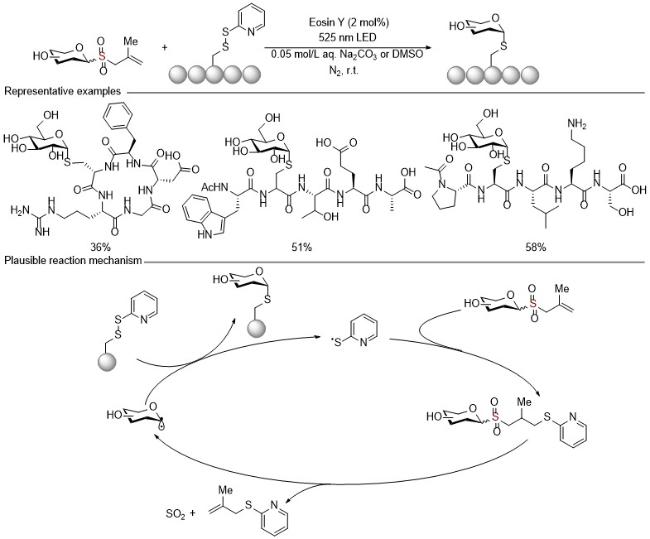
In 2021, Niu and co-workers[7] reported a simple and general strategy for S-glycosylation under biorelevant conditions (Figure 4). Central to this method is the design of bench-stable allyl glycosyl sulfones as precursors to unprotected glycosyl radicals, capitalizing on the excellent functional group tolerance of radical processes. This approach enables the highly selective installation of a broad range of unprotected glycosyl units onto cysteine residues in peptides. Moreover, it was successfully extended to the direct glycosylation of complex polypeptides and proteins. A plausible mechanism involves addition of a heteroaryl thiyl radical to the allyl glycosyl sulfone, followed by radical migration to generate a glycosyl radical. Subsequent reaction with a disulfide affords the desired S-glycosylated product while regenerating the heteroaryl thiyl radical, thereby closing the catalytic cycle.
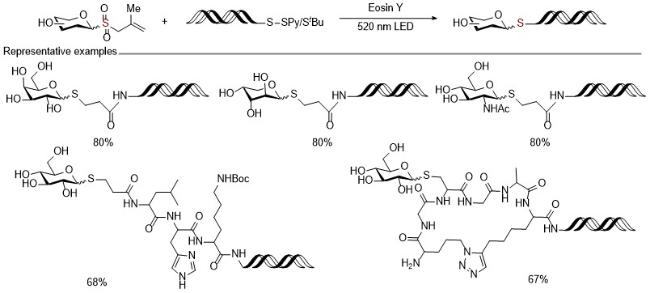
Subsequently, Lu and co-workers[8] extended this strategy to enable the coupling of allyl glycosyl sulfones, serving as glycosyl donors, with DNA-conjugated compounds under green-light irradiation (Figure 5). This DNA-com- patible glyco-chemical transformation exhibits broad functional group tolerance toward both sugar moieties and peptide motifs, affording the corresponding glycosylated DNA conjugates in good to excellent yields. Notably, this pioneering example of DNA-compatible S-glycosylation provides a powerful platform for the rapid construction of glycosylated DNA-encoded libraries and opens new opportunities for the development of glycan-modified delivery systems.
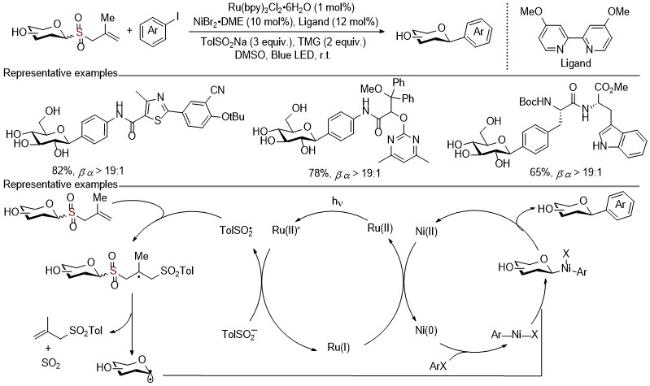
Unprotected aryl C-glycosides constitute a highly valuable class of carbohydrate scaffolds that have significantly advanced research in drug discovery, chemical biology, and materials science. Traditionally, their synthesis has depended on fully protected intermediates and moisture- sensitive reagents, necessitating tedious protecting-group manipulations and complex experimental procedures. In 2023, the Niu group[9] leveraged their previously developed unprotected glycosyl allyl sulfones as glycosyl radical donors to achieve the efficient and stereoselective synthesis of unprotected aryl C-glycosides via coupling with aryl halides under photoredox-nickel dual catalytic conditions (Figure 6). This approach is broadly compatible with diverse sugar motifs and a wide range of drug-like aryl halides, delivering the target C-glycosides in moderate to excellent yields with high stereocontrol. Mechanistic investigations indicate a photoredox-promoted Ni(I)/Ni(III) catalytic cycle, in which the additive TolSO2Na plays a pivotal role in the generation of glycosyl radicals. This methodology not only streamlines the synthesis of complex C-glycosides but also offers a versatile platform for constructing structurally diverse glycoconjugates with potential applications in medicinal chemistry and functional materials development.
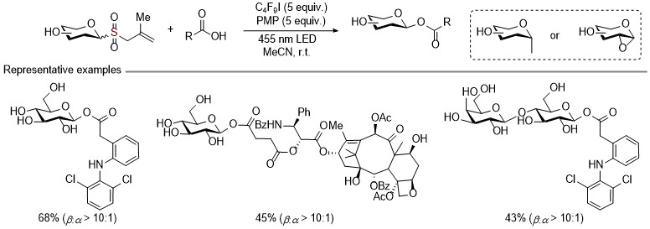
In 2023, the Niu group[10] demonstrated the use of unprotected allyl glycosyl sulfones as glycosyl donors for the direct 1,2-trans glycosylation of carboxylic acids (Figure 7). This transformation proceeds under visible-light irradiation without the need for transition metals, providing mild and operationally simple conditions. The reaction displays excellent functional group tolerance and is applicable to the direct glycosylation of commercial drugs and natural products. Notably, the process is stereoconvergent, allowing the use of stereochemical mixtures of donors, and eliminates the need for protecting-group manipulations, offering a practical strategy for synthesizing structurally complex and O-glycosides. Mechanistic studies suggest that the selectivity arises from either an epoxide intermediate or an axially configured glycosyl iodide, although these pathways cannot yet be fully distinguished.
1.3 Fully unprotected glycosyl sulfinate as glycosyl radical precursors
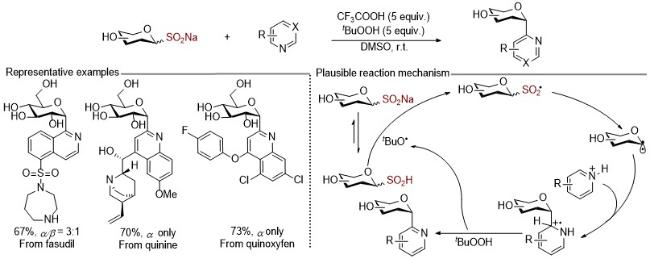
In 2023, the Niu group[11] reported the use of unprotected glycosyl sulfinate salts as precursors for unprotected glycosyl radicals, enabling Minisci-type glycosylation of pyridine derivatives under acidic and oxidizing conditions (Figure 8). This strategy displays broad substrate scope and excellent tolerance toward diverse sugar motifs and N- containing heteroarenes. The approach was further applied to the late-stage functionalization of drug molecules, de- monstrating its generality and potential utility. Mechanistically, under acidic conditions, the glycosyl sulfinate salt is converted to the corresponding unprotected glycosyl sulfinic acid, which undergoes hydrogen atom transfer (HAT) with a tert-butoxyl radical to generate a glycosyl sulfinyl radical. Subsequent desulfonylation produces the glycosyl radical, which then participates in a Minisci-type addition to the pyridine heterocycle under the acidic and oxidizing conditions.
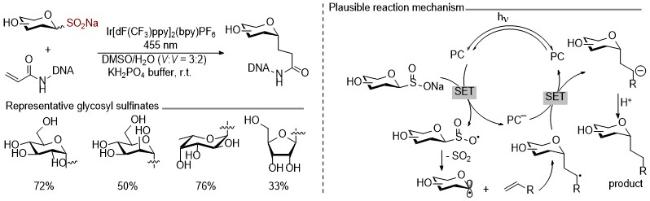
Subsequently, the same group[12] developed a mild, general, and operationally convenient strategy for Giese-type additions using unprotected glycosyl sulfinate salts as glycosyl radical donors (Figure 9). This approach enables the efficient incorporation of glycosyl radicals into electron-deficient alkenes tethered to DNA, allowing the precise synthesis of carbohydrate-DNA conjugates. Beyond providing a novel route for glycoconjugate construction, this method significantly expands the chemical diversity of DNA-encoded libraries, offering a powerful molecular platform for high-throughput, data-driven drug discovery.
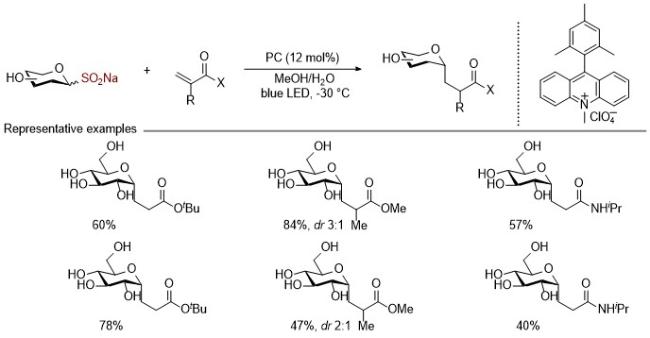
Around the same period, Hirai and co-workers[13] reported a notable advancement by developing a mild, protecting-group-free, photoredox-catalyzed C-glycosylation method. In this strategy, glycosyl sulfinates serve as radical precursors, which undergo Giese-type radical addition to Michael acceptors, enabling the direct and stereoselective construction of C-glycoside structures. This approach not only streamlines the synthesis but also provides an efficient and versatile route for accessing structurally complex C-glycoside analogs of native glycoconjugates (Figure 10).
1.4 Fully unprotected polyfluorinated glycosyl thio- pyridines as glycosyl donors
Recently, Koh and co-workers[14] reported a groundbreaking protecting-group-free glycosylation strategy. Drawing inspiration from enzymatic S-glycosylation, they developed a photoinduced “cap-and-glycosylate” protocol that selectively activates the anomeric hydroxyl group of native sugars to generate a transient thioglycoside donor. Under visible-light irradiation, this donor undergoes desulfurative radical cross-coupling with a variety of electrophiles, efficiently producing C-, S-, and Se-glycosides with high stereoselectivity. Notably, the mild and biocompatible reaction conditions allow direct chemical glycosylation of proteins, eliminating the need for protecting-group manipulations. This approach not only streamlines the synthesis of complex glycoconjugates but also opens new avenues for the precision engineering and functional investigation of glycoproteins, offering significant potential for applications in biomedicine and chemical biology (Figure 11).
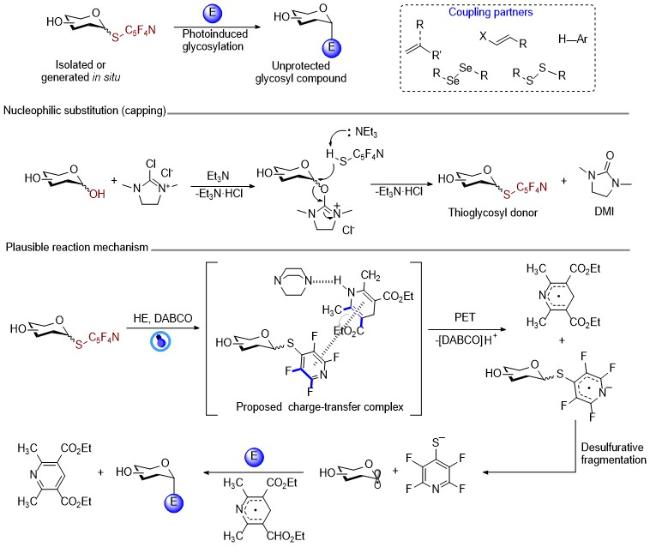
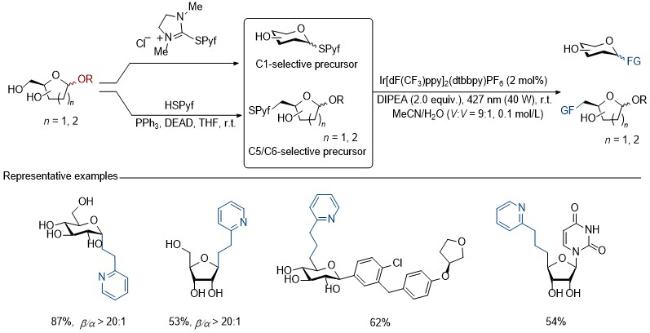
Around the same period, Zhang and colleagues[15] reported a complementary strategy for protecting-group-free glycosylation. By introducing a polyfluorinated thiopyridyl activating group (SPyf) in a single step at the C1, C5, and C6 positions of unprotected monosaccharides and glycans, they achieved highly efficient and site-selective Giese-type radical addition reactions (Figure 12). Central to this approach is the photoexcitation of the polyfluorinated thiopyridyl group, which generates the key glycosyl radical intermediate. This intermediate subsequently engages with a range of radical acceptors, enabling diverse functionalization of the sugar scaffold. This strategy provides a powerful and versatile platform for late-stage modification of unprotected carbohydrates, offering significant potential for the synthesis of structurally complex glycoconjugates and glyco-functional materials.
2 Radical glycosylation of fully unprote- cted O-based glycosides
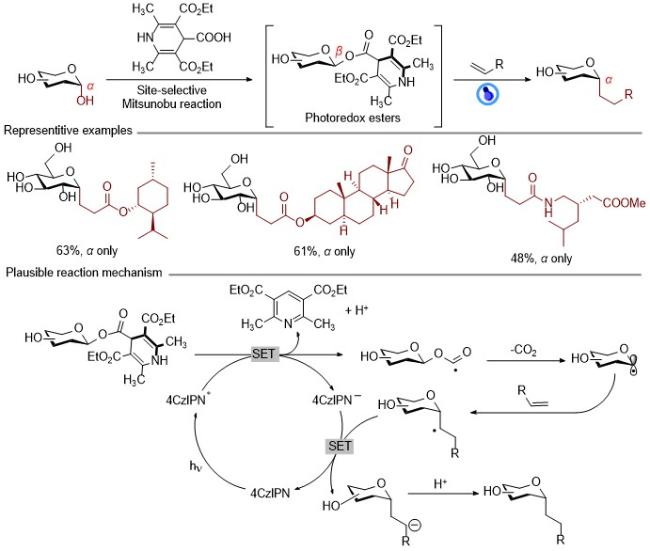
The Chi group[16] developed a photoredox-based strategy using glycosyl esters derived from native sugars via a site-selective Mitsunobu reaction. These bench-stable esters serve as efficient radical precursors under visible-light irradiation, enabling the direct synthesis of unprotected C-glycosides with broad substrate scope and excellent stereoselectivity. In a complementary approach, Chi and co- workers reported a two-step “Mitsunobu esterification/ photoredox coupling” protocol. In this method, native sugars are first converted into redox-active glycosyl esters, which subsequently undergo photocatalytic decarboxylative Giese-type addition to alkenes, providing unprotected C-glycosides without the need for protecting groups (Figure 13).
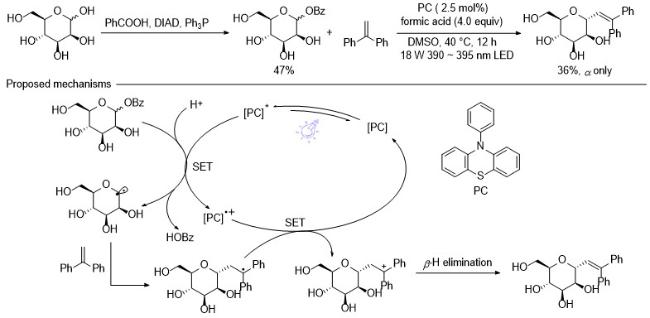
Recentyl, Zhu, Yang and co-workers[17] developed a photocatalytic deoxygenative C-glycosylation strategy for the direct and efficient synthesis of unprotected alkenyl C-glycosides. As an example, the C1—OH position of native mannose underwent a one-step, highly selective benzoylation to afford an unprotected mannose benzoate radical donor in 47% yield. This donor then underwent photocatalytic C-glycosylation with 1,1-diphenylethylene, delivering the fully deprotected alkenyl C-glycoside in 36% yield with exclusive α-anomeric selectivity. Mechanistically, the glycosyl benzoate is proposed to undergo single-electron transfer (SET) with the excited-state photosensitizer [PC]* under acidic conditions to generate a glycosyl radical. This radical adds to 1,1-diphenylethylene, followed by oxidation by the oxidized-state photosensitizer [PC]•+ to form a benzylic carbocation, which then undergoes β-H elimination to yield the alkenyl C-glycoside product. Notably, this work represents another successful demonstration of radical C-glycosylation employing a fully deprotected, O-based glycosyl radical precursor (Figure 14).
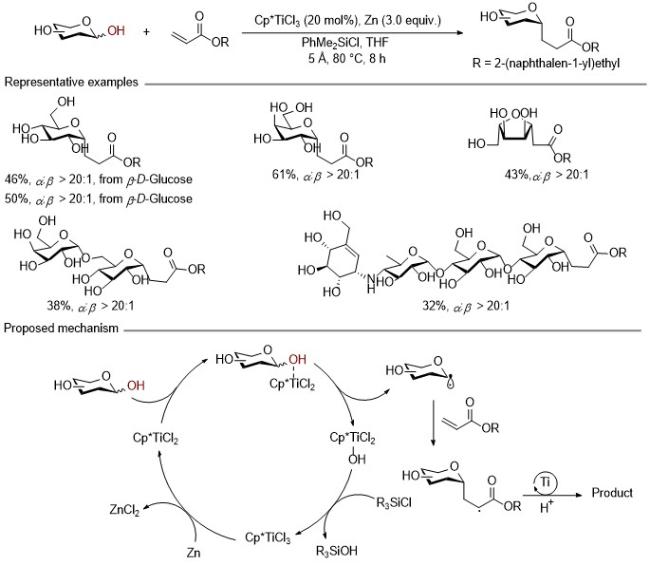
In 2024, the Shu group[18] reported a direct and streamlined alternative based on the homolytic cleavage of the anomeric C—OH bond in unmodified sugars. This strategy circumvents the need for traditional pre-protection, activa-tion, or other tedious manipulations. The resulting anomeric radicals undergo efficient and highly selective coupling with activated alkenes, affording the corresponding C-glycosylation products with excellent stereoselectivity (dr>20∶1). Notably, the protocol exhibits broad substrate scope and high functional group tolerance. A wide range of natural monosaccharides, including D-glucose, D-mannose, D-arabinose, and L-ribose, as well as various oligosaccharides, underwent smooth Giese-type additions, delivering the corresponding adducts in good yields with high levels of stereocontrol. Moreover, this strategy was successfully extended to the C-glycosylation of amino acid and peptide derivatives, enabling a concise and efficient synthesis of an anti-inflammatory agent and underscoring its synthetic utility.
On the basis of mechanistic investigations and precedent from related studies, the authors proposed a plausible catalytic cycle. Initially, CpTiCl2 coordinates to the anomeric hydroxyl group, followed by homolytic C—O bond cleavage to generate a glycosyl radical and CpTiCl2OH. The resulting glycosyl radical is subsequently captured by an electron-deficient alkene, and subsequent reduction and protonation furnish the C-glycosylation product. Finally, catalyst regeneration occurs via anion exchange between CpTiCl2OH and R3SiCl to form CpTiCl3, which is reduced by Zn to regenerate Cp*TiCl2 and close the catalytic cycle (Figure 15).[18]


In recent years, significant advances have been made in the field of protecting-group-free glycosylation. This review has systematically highlighted the development of various unprotected glycosyl donors, including glycosyl sulfinate salts, glycosyl sulfones, glycosyl dithiocarbo- nates, and others, and their applications in C-, S-, and O-glycosylation reactions. The emergence of these novel reagents, together with innovative strategies such as radical-mediated and photocatalytic approaches, has greatly improved step economy and atom economy, enabling the direct transformation of native sugars into structurally complex glycoconjugates. These methods provide powerful synthetic tools with broad potential for applications in chemical biology, glyco-drug development, and materials science.
Despite these advances, several core challenges remain. First, the preparation of many unprotected glycosyl donors still relies on traditional protection and deprotection strategies, limiting the ability to achieve truly direct conversions from natural sugars. Developing efficient, one-step protocols for generating stable glycosyl radical precursors from native sugars is therefore a key goal to overcome current synthetic bottlenecks. Second, while considerable progress has been made in constructing C-glycosidic bonds, the precise and efficient synthesis of O- and N-glycosidic linkages, ubiquitous and functionally critical in nature, remains challenging. Methods that provide high selectivity and broad substrate scope for these linkages are still needed. Addressing these challenges will further propel protecting-group-free glycosylation toward becoming a universally applicable and highly efficient synthetic paradigm. Continued innovations in donor design, activation strategies, and reaction engineering are expected to expand the scope of accessible glycoconjugates, ultimately facilitating late-stage functionalization of biomolecules and the development of new therapeutic and diagnostic tools.
(Lu, Y.)