


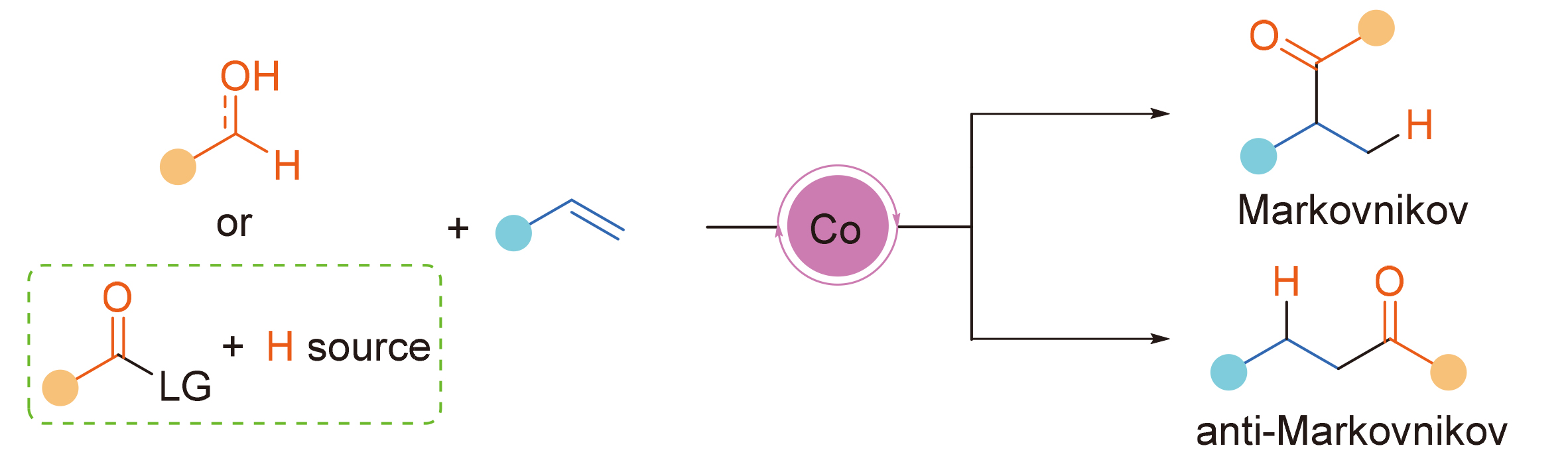
The concept of hydroacylation involves the addition of the acyl and hydrogen units of aldehydes or their surrogates across an unsaturated bond (e.g., C=C, C≡C, C=O, etc.) for ketone and ester synthesis in a completely atom-economical manner. From the perspective of synthetic chemistry, the development of regio-, chemo-, and enantiocontrolled hydroacylation of unsaturated hydrocarbons has been a persistent pursuit. Over the past few decades, precious metals, such as Rh, Ru, Ir, and Pd, have played a pivotal role in the hydroacylation of alkenes and alkynes to access a large number of valuable ketone products.[1] Mechanistically, the hydroacylation proceeds through oxidative addition of the aldehyde C(sp2)—H bond to the metal, followed by alkene or alkyne coordination, either Markovnikov- or anti-Markovnikov-selective migratory insertion, and reductive elimination.[2] Guided by this mechanistic scenario, miscellaneous approaches for selective hydroacylation have been successfully implemented by an ingenious choice of a catalyst and a ligand. However, the major limitation associated with conventional hydroacylation is the requirement of incorporating a chelating group into either the aldehyde or the unsaturated substrates to suppress decarbonylation of the resulting acylmetal species, which makes the overall process—hydroacylation followed by removal of the coordinating group—tedious.[3] To address this challenging issue, a broad range of alternative methods using nonchelating materials, including photoredox,[4] electrochemical,[5] organocatalytic,[6] and me- chanoredox-mediated strategies,[7] have been developed to provide convenient access to the desired carbonyl compounds.
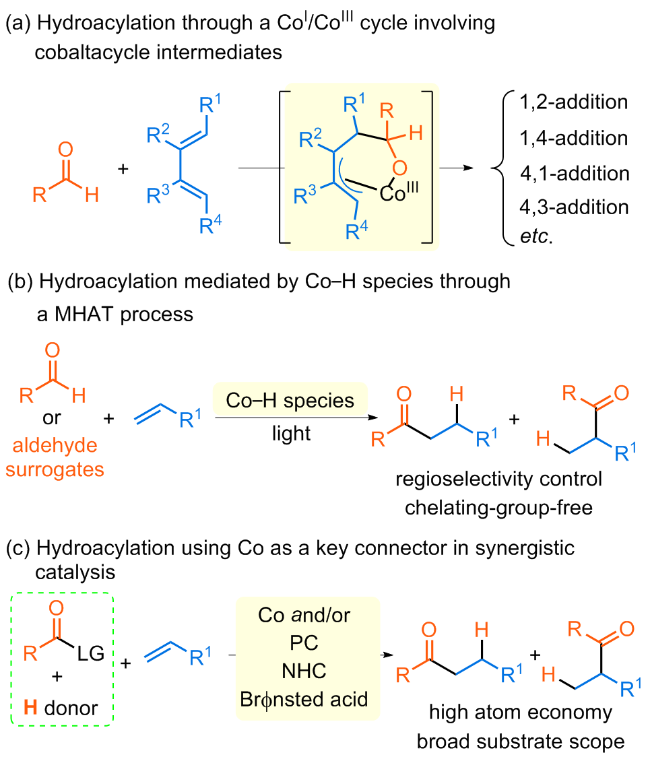
Recently, earth-abundant transition-metal catalysts for hydroacylation reactions have garnered considerable attention. Compared to noble metals, the use of these earth- abundant catalysts offers a series of extraordinary advantages, including broad accessibility, reduced environmental impact, and distinctive reactivity profiles, thus aligning with the principle of sustainable development. Consequently, research interest in advancing innovative hydroacylation under earth-abundant metal catalysis has witnessed a marked increase. In this regard, several first-row (3d) metals, such as Ni,[8] Cu,[9] and Fe,[10] have been widely employed for highly efficient and selective hydroacylation. Meanwhile, as a member of the 3d metals, cobalt catalysis has also been recognized as a powerful tool for the hydroacylation of unsaturated hydrocarbons,[11] owing to its cost-effectiveness, low biological toxicity, and versatile catalytic performance and selectivity. Notably, in comparison with other earth-abundant metal catalysts, cobalt catalysts typically exhibit superior functionalities, including the following aspects: (i) serving as a well-establi- shed redox catalytic center through the CoI/CoIII cycle involving cobaltacycle intermediates to facilitate versatile transformations (Figure 1a); (ii) acting as an effective hydrogen atom transfer (HAT) agent mediated by Co-H species in metal-hydride hydrogen atom transfer (MHAT) processes, which enables radical-chain reactions under mild and chelating-group-free conditions (Figure 1b); and (iii) functioning as a key connector in multicomponent cooperative catalysis, synergizing with photocatalysts, N-heterocyclic carbenes (NHCs), or Brønsted acids to achieve high atom economy and broad substrate tolerance (Figure 1c). In principle, the hydrofunctionalization of unactivated alkenes catalyzed by in situ-generated metal- hydride species proceeds via a radical process initiated by HAT, which is collectively known as MHAT.
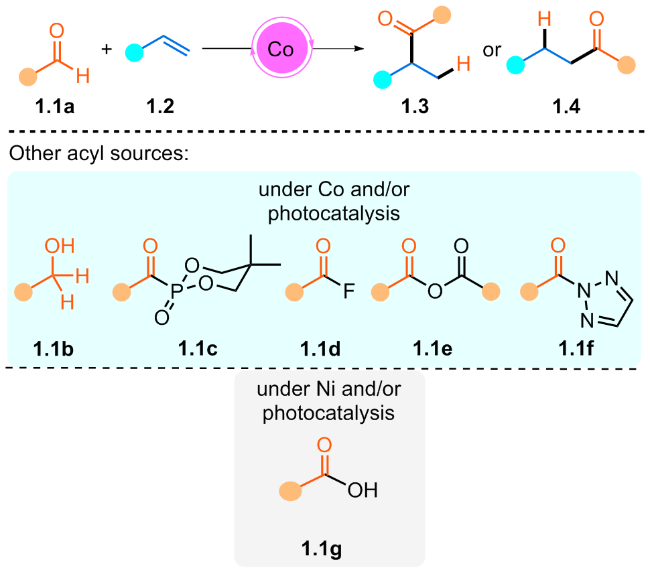
In the past few years, our endeavors have been devoted to transition-metal-catalyzed selective functionalization of small-molecule unsaturated hydrocarbons,[12] with a particular emphasis on hydroacylation reactions.[1a,13] This review focuses on recent advances in alkene hydroacylation enabled by cobalt catalysis or photo/cobalt synergistic catalysis during the period from January 2021 to December 2025 (Scheme 1). Selected representative examples involving triple or even quadruple catalysis are also discussed. Beyond the widely investigated aldehydes 1.1a, a range of other coupling partners, including primary alcohols 1.1b, acylphosphonates 1.1c, aroyl fluorides 1.1d, carboxylic anhydrides 1.1e, and acyl triazoles 1.1f, can serve as aldehyde alternatives to participate in the hydroacylation (vide infra). Moreover, the Xie group demonstrated that bench-stable carboxylic acids 1.1g can also function as aldehyde surrogates via nickel- and/or photoredox-catalyzed C—O bond cleavage.[14] Accordingly, based on the aforementioned acyl sources, we categorize Co-catalyzed alkene hydroacylation into two sections: (i) direct hydroacylation with aldehydes or primary alcohols; and (ii) hydroacylation with other acyl sources combined with hydrogen sources. We strive to provide readers with a comprehensive mechanistic perspective pertaining to both cobaltacycle intermediates and radical pathways.
2 Alkene hydroacylation under cobalt catalysis or photo/cobalt synergistic catalysis
2.1 Direct hydroacylation with aldehydes or primary alcohols
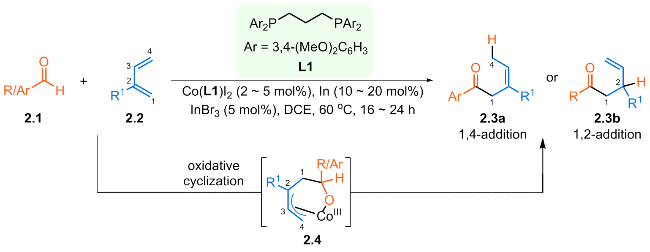
1,3-Dienes, which are either commercially available or readily accessible, can be employed as versatile building blocks in transition-metal-catalyzed hydrofunctionalization. However, the hydroacylation reactions of 1,3-dienes still pose formidable challenges in terms of activation modes and regioselectivity. In 2014, the Dong group[15] disclosed a cobalt-catalyzed regioselective hydroacylation of conjugated dienes 2.2 with non-chelating aldehydes 2.1, providing either 1,4- or 1,2-hydroacylation products (2.3a or 2.3b) depending on the nature of the aldehyde. Mechanistic investigations revealed that the oxidative cyclization pathway was more favorable than the C—H activation pathway (Scheme 2). Despite this significant progress, an enantioselective version of hydroacylation of 1,3-dienes remained elusive.
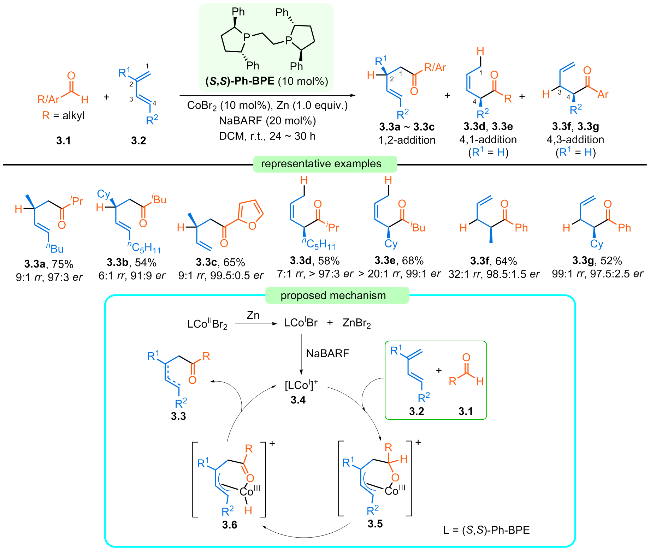
It was not until 2021 that RajanBabu and Parsutkar reported the first highly enantioselective hydroacylation of three types of 1,3-dienes 3.2—including 2- or 4-substituted and 2,4-disubstituted dienes—with simple aldehydes 3.1 catalyzed by CoBr2/(S,S)-Ph-BPE/NaBARF system in the presence of zinc as the reductant (Scheme 3).[16] The coupling of 2,4-disubstituted or 2-substituted dienes with aliphatic or aromatic aldehydes regioselectively delivered 1,2-hydroacylation products (3.3a~3.3c). Relying on the aldehyde partner, the hydroacylation of 4-substituted dienes exhibited distinct site-selectivity. Aliphatic aldehydes led to 4,1-hydroacylation products (3.3d and 3.3e), whereas aromatic aldehydes favored 4,3-hydroacylation products (3.3f and 3.3g). The authors scrutinized the role of a series of phosphine ligands in controlling the regio- and enantioselectivity. A wide range of feedstock dienes as well as common aldehydes underwent hydroacylation reactions at room temperature efficiently and selectively. In accordance with Dong’s work,[15] an oxidative dimerization mechanism involving a CoI/CoIII redox cycle was proposed. Initially, the CoII complex is reduced by zinc powder to a cationic CoI intermediate, which is further activated by NaBARF. Subsequently, oxidative cyclization between 1,3-diene 3.2 and aldehyde 3.1, initiated by an active CoI species 3.4, yields the resulting cobaltacycle 3.5, which undergoes β-H elimination to generate a CoIII-H species 3.6. Final reductive elimination of 3.6 furnishes the hydroacylation product 3.3 and regenerates the active CoI catalyst. This approach paves the way for enantioselective transformations of inexpensive feedstock dienes toward the synthesis of pharmaceutically relevant compounds.
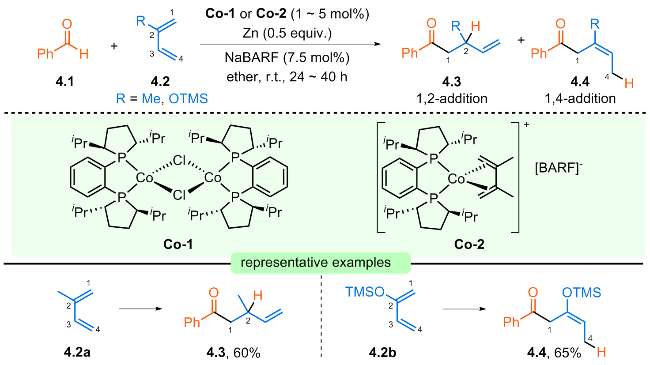
In 2022, the same group accomplished regio- and enantioselective hydroacylation reactions of 2-substituted 1,3- dienes 4.2, such as isoprene 4.2a and 2-trimethyl-silyloxy- 1,3-butadiene 4.2b, with benzaldehyde 4.1 under single-component and in situ-generated CoI catalysis (Scheme 4).[17] Using either the readily accessible Co-1 or Co-2 as the catalyst, the hydroacylation of isoprene predominantly delivered the chiral 1,2-addition product 4.3, whereas 2-trimethylsilyloxy-1,3-butadiene favored the 1,4-hydro- acylation product 4.4. It was noteworthy that single- component Co-1 proved ineffective in facilitating the coupling in the absence of the NaBARF activator, unambiguously supporting the involvement of a cationic CoI intermediate generated in situ through sequential Zn reduction and NaBARF activation.
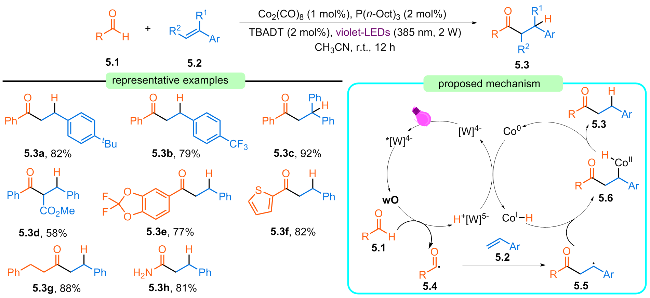
The C—H bond activation of simple aldehydes remains a key challenge, despite their potential as superior acyl sources in direct alkene hydroacylation. To overcome this challenge, tetra-n-butylammonium decatungstate (TBA- DT) was identified as an effective photocatalyst that enables homolytic cleavage of the aldehyde C—H bond via HAT.[18] Very recently, by merging cobalt catalysis with photoredox catalysis, Zhang and colleagues achieved an anti-Markovnikov-selective hydroacylation of aryl alkenes 5.2 with non-chelating aldehydes 5.1 under mild conditions (Scheme 5).[19] A wide range of mono- and disubstituted alkenes took part in the coupling reactions efficiently, affording the corresponding carbonyl products (5.3a~5.3d) in moderate to excellent yields. Furthermore, this dual photo/cobalt catalytic system can be extended to a variety of (hetero)aromatic and aliphatic aldehydes (5.3e~5.3g) as well as formamide (5.3h). A set of mechanistic studies, including radical clock, deuterium labeling, and parallel kinetic isotope effect (KIE) experiments, were conducted to elucidate the hydroacylation pathway, which starts with excitation of [W]4- (TBADT) under purple light irradiation to form *[W]4-. Subsequent intersystem crossing generates the triplet wO, which abstracts a hydrogen atom from aldehyde 5.1 via HAT to give H+[W]5- and an acyl radical 5.4. The reduced decatungstate reacts with the Co0 catalyst to yield a CoI-H complex and reproduces ground- state TBADT, thus completing the light-driven catalytic cycle. The alkyl radical 5.5, formed by regioselective addition of acyl radical 5.4 to alkene 5.2, is intercepted by the CoI-H species to produce an alkyl-CoII-hydride species 5.6. Finally, reductive elimination releases the hydroacylation product 5.3 with simultaneous regeneration of the Co0 catalyst, thereby accomplishing the cobalt catalytic cycle.
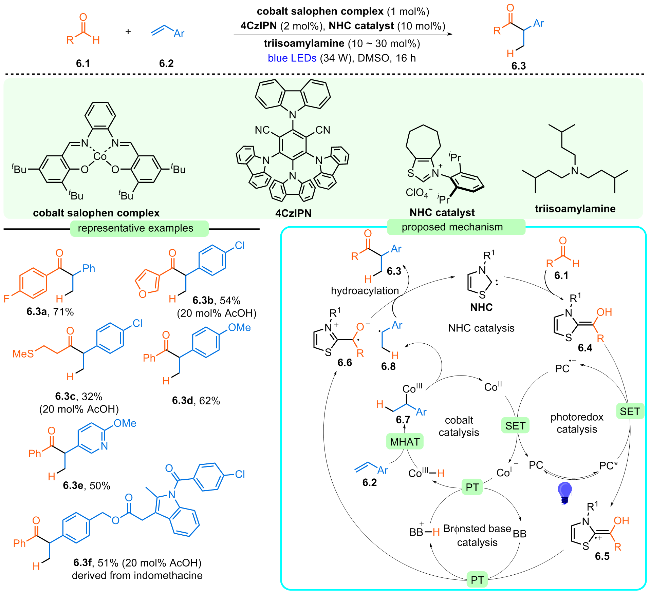
In recent years, cooperative catalysis has provided empirical insights into alkene hydroacylation through new activation modes. For instance, Nagao, Ohmiya, and co-workers[20] demonstrated that a quadruple catalytic system consisting of cobalt, photoredox, NHC, and Brønsted acid enabled Markovnikov-selective hydroacylation of aryl and heteroaryl alkenes 6.2 for accessing branched ketones 6.3 with 100% atom efficiency (Scheme 6). The authors performed meticulous reaction optimization pertaining to four classes of catalysts to maximize the hydroacylation outcome and achieve selectivity control. In terms of the substrate scope, this multiple catalytic protocol could be applicable to a large number of aldehyde substrates 6.1 bearing aryl, heteroaryl, and aliphatic groups, providing expedient access to branched ketone products (6.3a~6.3e) in moderate yields. Moreover, the hydroacylation of aryl alkenes, such as indomethacin-derived styrene (6.3f), further underscored the excellent functional group tolerance of this methodology. Several mechanistic investigations, such as hydroacylation with deuterated substrates or reagents and radical clock experiments, were performed to clarify the reaction pathway. Initially, the NHC reacts with aldehyde 6.1 to give the Breslow intermediate 6.4, which undergoes single-electron transfer (SET) to the excited photoredox catalyst (PC*) to form the corresponding radical cation 6.5 and the radical anion of PC. Subsequent deprotonation of 6.5 by a Brønsted base produces a persistent ketyl radical 6.6 and the conjugated acid of the base. Simultaneously, the CoII catalyst receives an electron and then a proton to yield a CoIII-H species, which upon MHAT to alkene 6.2 leads to alkyl radical 6.8 via the formation of alkyl-CoIII species 6.7. Ultimately, radical/radi- cal cross-coupling between 6.6 and 6.8 furnishes the ketone 6.3 and regenerates the NHC catalyst. The main limitations are as follows: (i) aliphatic alkenes are not suitable for the coupling reaction; and (ii) the quadruple catalytic system may hinder practical applications of this hydroacylation due to economic considerations.
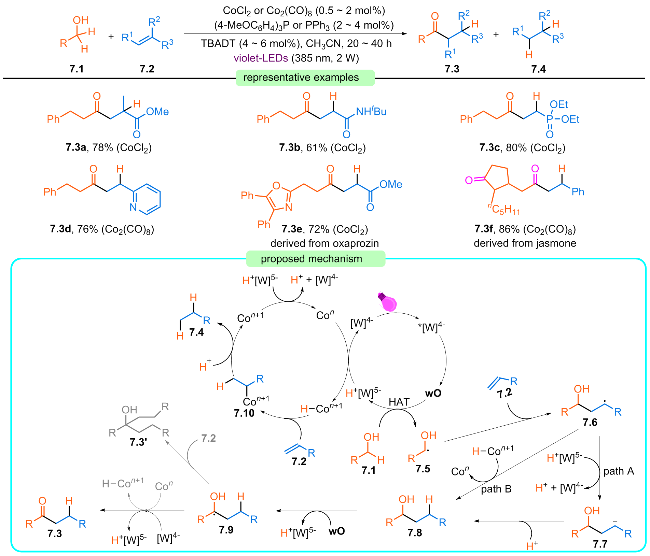
Compared to aldehydes, alcohols exhibit greater stability under ambient atmosphere, rendering them promising synthons for a multitude of coupling reactions. Consequently, it is preferable to employ alcohols—especially primary alcohols—as alternative reaction partners to perform the hydroacylation of alkenes after dehydrogenation. In 2024, Zhang et al. unveiled an oxidative coupling of primary alcohols 7.1 with alkenes 7.2 toward ketone synthesis under dual photo/cobalt catalysis with excellent regio- and chemoselectivity (Scheme 7).[21] An excess of alkenes served as the hydrogen acceptors, which was transformed into saturated hydrocarbons 7.4. This photocatalyzed cascade strategy was performed under mild conditions and tolerated a wide range of functionalities in alkene substrates, including ester (7.3a and 7.3e), amide 7.3b, phosphonate 7.3c, and heteroaryl 7.3d groups. Besides diverse primary alcohols, diols were also compatible with the dual catalytic system, leading to the formation of diketones such as 7.3f in high yield. Several control experiments as well as a series of deuterium scrambling experiments were conducted in mechanistic studies, which indicated the indispensable role of the cobalt catalyst in facilitating the reactivity and selectivity, together with the role of TBADT in promoting dihydrogen formation. The proposed mechanism begins with the excitation of the decatungstate photocatalyst ([W]4-), followed by intersystem crossing to form the triplet wO, which then activates the α-hydroxy C—H bond of the alcohol 7.1 through selective HAT to deliver the ketyl radical 7.5 and H+[W]5-. Nucleophilic addition of 7.5 to alkene 7.2 yields γ-hydroxyl carbon radical 7.6, which can be converted into the secondary alcohol 7.8 via two distinct pathways. In pathway A, reduction of 7.6 to a carbon anion 7.7 by H+[W]5- followed by protonation gives rise to 7.8. Alternatively, in pathway B, a direct HAT process from the Co-H species generates the intermediate. A second HAT from 7.8 to wO produces another ketyl radical 7.9, which upon further oxidation by [W]4- or hydrogen atom abstraction by the cobalt catalyst furnishes the ketone product 7.3. It should be noted that H+[W]5- might promote the production of tertiary alcohols 7.3′ by further addition to alkene 7.2. In the other catalytic cycle, H+[W]5- is oxidized by the cobalt catalyst to give a Co-H species and regenerate [W]4- in its ground state. Subsequently, migratory insertion of alkene 7.2 into the Co-H provides alkyl-cobalt intermediate 7.10, which undergoes protonation to afford the alkene hydrogenation product 7.4 and Con+1. This cobalt species is reduced by H+[W]5- to regenerate the cobalt catalyst as well as the photocatalyst. This protocol lays the foundation for a diverse array of fascinating transformations of primary alcohols.
2.2 Hydroacylation with other acyl sources
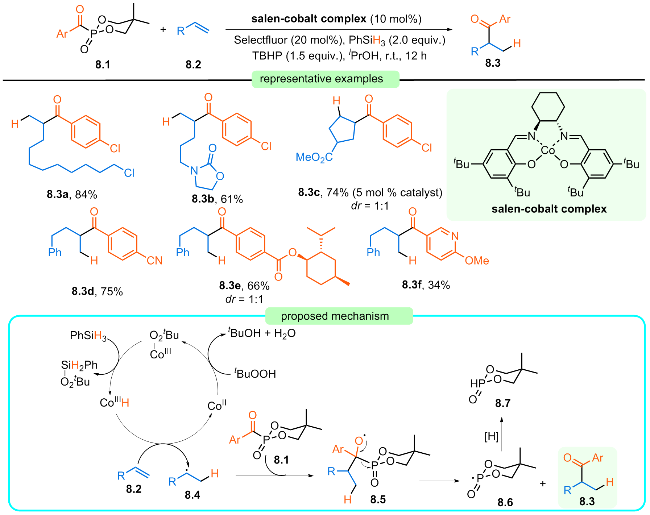
In comparison with the extensively explored anti-Markovnikov hydroacylation, general and effective approaches for Markovnikov-selective hydroacylation of unactivated alkenes remain sparse. In 2021, Fang, Li, and co-workers[22] developed an appealing radical hydroacylation of unactivated alkenes 8.2 using acylphosphonates 8.1 as acylation reagents and phenylsilane as the hydrogen source under the catalysis of a salen-CoII complex, providing expedient access to branched ketones 8.3 with excellent Markovnikov selectivity under mild reaction conditions (Scheme 8). A vast array of terminal and internal alkenes with diverse functional groups participated smoothly in the intermolecular radical hydroacylation to yield the desired ketones (8.3a~8.3d) in satisfactory yields. Besides the structurally complex benzoylphosphonate 8.3e bearing a menthol group, pyridine-3-carbonyl-phosphonate also delivered the hydroacylation product 8.3f, albeit in low yield (34%). It should be noted that alkanoylphosphonates displayed significantly lower reactivity than benzoylphosphonates (not shown). Subsequently, radical clock experiments were conducted to gain a better understanding of the hydroacylation, which unambiguously proceeded via a radical pathway. Initially, the CoII complex is oxidized by TBHP (with the assistance of Selectfluor) to give CoIIIO2tBu intermediate, which then reacts with phenylsilane to generate the CoIII-H species. An ensuing HAT process from the cobalt-hydride to alkene 8.2 occurs to form an alkyl radical 8.4 with simultaneous regeneration of the CoII catalyst. The radical 8.4 undergoes nucleophilic attack at the carbonyl group of acylphosphonate 8.1 to produce alkoxyl radical 8.5, which upon further β-scission delivers the branched ketone 8.3 as well as the phosphoryl radical 8.6. This radical can be quenched by either PhSiH3 or the CoIII-H species through hydrogen abstraction to afford dialkyl phosphite 8.7, as demonstrated by the crude 31P NMR.
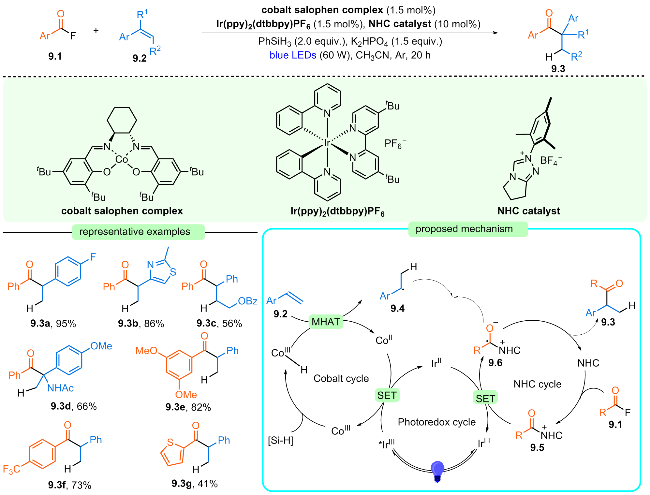
Subsequently, employing the same cobalt catalysis combined with photoredox and NHC catalysis, Wang and co-workers[23] achieved another radical Markovnikov-selective hydroacylation of aryl alkenes 9.2 with aroyl fluorides 9.1 as acylation reagents (Scheme 9). This triple catalytic protocol enabled the efficient coupling of a broad array of alkene substrates, including terminal, internal, di- and trisubstituted ones. Apart from aroyl fluorides, heterocycles such as 9.3g could also be incorporated into the branched ketones, albeit in low yields. Moreover, the successful late-stage functionalization of diverse drug molecules and naturally occurring products highlighted the excellent functional group compatibility of this protocol (not shown). Kinetic studies revealed that the production of the benzyl radical was the turnover-limiting step, and that the cycling rate of the Ir photocatalyst dictated the rate of the overall coupling. Mechanistically, the CoII complex is initially oxidized by the excited photoredox catalyst *IrIII via SET. The resulting CoIII species is captured by PhSiH3 to form a CoIII-hydride intermediate, which then reacts with alkene 9.2 via MHAT to give a benzyl radical 9.4 and regenerates the CoII catalyst. Concurrently, aroyl fluoride 9.1 couples with the NHC catalyst to produce an acyl azolium ion 9.5, which upon reduction by the IrII photocatalyst yields a ketyl radical 9.6 and the IrIII complex, thus completing the photoredox cycle. Finally, radical/radical cross-coupling between 9.6 and 9.4, with subsequent fragmentation of the NHC moiety, delivers the hydroacylation product 9.3, finishing the NHC catalytic cycle. This triple catalysis provides new opportunities for the advancement of light-driven hydroacylation by leveraging the persistent radical effect.
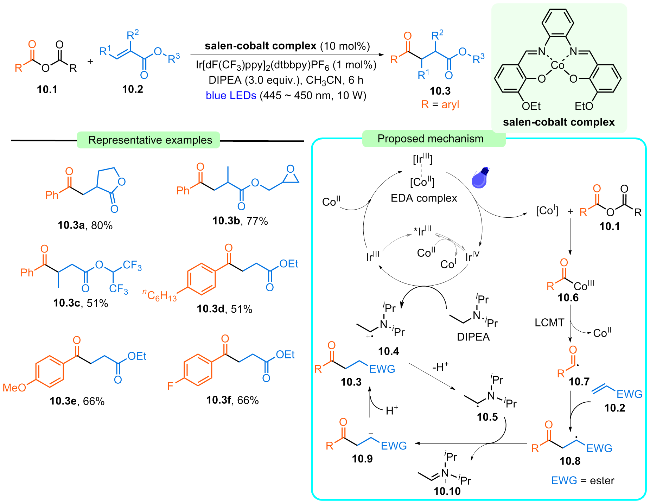
In the photo/cobalt cooperative catalytic systems, the available cobalt catalysts are often restricted due to the redox potentials of photocatalysts and cobalt catalysts. To overcome these limitations, Tian, Xiao, and co-workers[24] established a dual Co/Ir-catalyzed hydroacylation of electron-poor alkenes 10.2 using carboxylic anhydrides 10.1 as the acyl radical source and N,N-diisopropylethylamine (DIPEA) as the hydrogen source under blue light irradiation (Scheme 10). A large variety of electron-deficient alkenes bearing an ester group, even a lactone (10.3a), were successfully coupled with aromatic carboxylic anhydrides to deliver the hydroacylation products (10.3a~10.3f) in moderate to good yields. However, unactivated alkene substrates (e.g., aryl- or alkyl-substituted alkenes) and aliphatic carboxylic anhydrides were not amenable to this synergistic catalytic system. To shed light on the plausible mechanism, a radical-scavenging experiment, deuterium labeling experiments, and Stern-Volmer analysis were successively performed. First, an electron donor-acceptor (EDA) complex between the cobalt catalyst and the photosensitizer IrIII is formed. Subsequent intramolecular SET under photoexcitation results in a CoI catalyst, along with an oxidized IrIV photocatalyst. The IrIV reacts with DIPEA through an electron abstraction to form a radical cation of the tertiary amine 10.4 and regenerates the IrIII catalyst. Intermediate 10.4 loses a proton to give an alkyl radical 10.5. A second pathway proposed by the authors, involving quenching of the excited *IrIII by CoII, cannot be ruled out. On the other hand, the resulting CoI is captured by anhydride 10.1 to produce an acyl-CoIII species 10.6, which undergoes visible-light-induced ligand-to-metal charge transfer (LMCT) to give rise to an active acyl radical 10.7 with concurrent regeneration of the CoII catalyst. The ensuing radical addition of 10.7 to alkene 10.2 provides another alkyl radical 10.8, which is further reduced by the α-amino alkyl radical 10.5 to yield a carbanion 10.9 and an aminium ion 10.10. Final protonation of 10.9 delivers the ketone product 10.3.
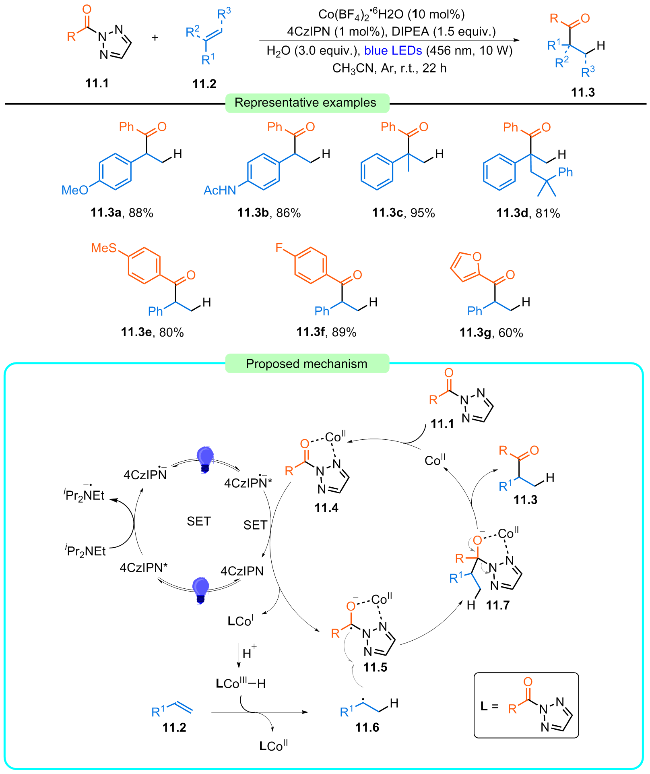
Despite the significance of Wang’s work,[23] the scope of persistent radical intermediates that enable the construction of new C—C bonds through radical/radical cross-coupling reactions remains largely underdeveloped. In 2024, Hong’s group achieved an interesting formal hydroacylation of aryl alkenes 11.2 with acyl triazoles 11.1 for the synthesis of the ketone products 11.3 with excellent Markovnikov selectivity under dual photo/cobalt catalysis, where the in situ-generated acyl triazole-coordinated cobalt complex served as both an MHAT catalyst and the precursor for persistent ketyl radicals (Scheme 11).[25] The bifunctional cobalt catalytic system tolerated a broad range of styrenes and acyl triazoles with diverse substituents, and was also suitable for the late-stage diversification of bioactive molecules. Nevertheless, aliphatic alkenes and aliphatic acyl triazoles proved not to be viable substrates for this hydroacylation. Control experiments unambiguously demonstrated the involvement of radical intermediates. The authors proposed a possible mechanism that starts with photoexcitation of 4CzIPN with subsequent SET to provide a 4CzIPN radical anion and an iPr2NEt radical cation. Mean- while, coordination of acyl triazole 11.1 to the cobalt catalyst generates intermediate 11.4, followed by a second SET to give a cobalt-coordinated persistent ketyl radical intermediate 11.5 and a CoI species. Protonation of CoI produces a CoIII-H species, which reacts with the alkene 11.2 to yield a benzyl radical 11.6 via HAT. Radical/radical cross-coupling of 11.6 with 11.5 readily forges a new C—C bond. Final departure of the triazole group furnishes ketone 11.3 with regeneration of the CoII catalyst. It should be noted that both the iPr2NEt radical cation and H2O acted as the proton source. By harnessing the persistent radical effect, this innovative platform opens new avenues for the cross-coupling of unactivated alkenes with other promising precursors.


3 Conclusions and outlook
Cobalt catalysis or photo/cobalt synergistic catalysis overcomes the constraints of precious metal catalysis and has emerged as an indispensable and versatile approach for achieving highly regio- and enantioselective hydroacylation of alkenes with aldehydes or other acyl sources in an atom-economical fashion. This protocol addresses the longstanding challenge associated with the requirement of a chelating/directing group on the substrates. The resulting carbonyl compounds can serve as important building blocks for the synthesis of a vast array of pharmaceuticals, natural products, and agrochemicals. Typically, the hydroacylation mechanism varies from a CoI/CoIII redox cycle to a complicated radical pathway depending on the catalytic system. In view of the wide availability of photocatalysts, dual photo/cobalt catalytic modes hold significant promise for the future development of state-of-the-art hydroacylation processes.
Despite remarkable progress over the past two decades, cobalt-catalyzed alkene hydroacylation still faces several fundamental challenges: (i) the need for multiple catalytic systems might restrict further application of hydroacylation in scale-up synthesis due to high cost; (ii) aside from aldehydes, acyl sources remain relatively scarce, and their use can raise compatibility issues with hydrogen sources, along with atom-economy concerns; and (iii) the advancement of cobalt-catalyzed enantioselective hydroacylation of alkenes, especially 1,3-dienes, is highly desirable but constitutes a formidable challenge. To achieve further breakthroughs, the primary directions for future hydroacylation development will involve the judicious design of single- component chiral cobalt catalysts for asymmetric transformations of unactivated alkenes, the exploration of renewable and easily accessible acyl sources, and the advancement of more practical photosensitizer- and additive- free photo/cobalt synergistic catalytic systems. We anticipate that this review will stimulate studies exploring novel hydroacylation modalities based on earth-abundant cobalt catalysts.
(Lu, Y.)