


1 Introduction
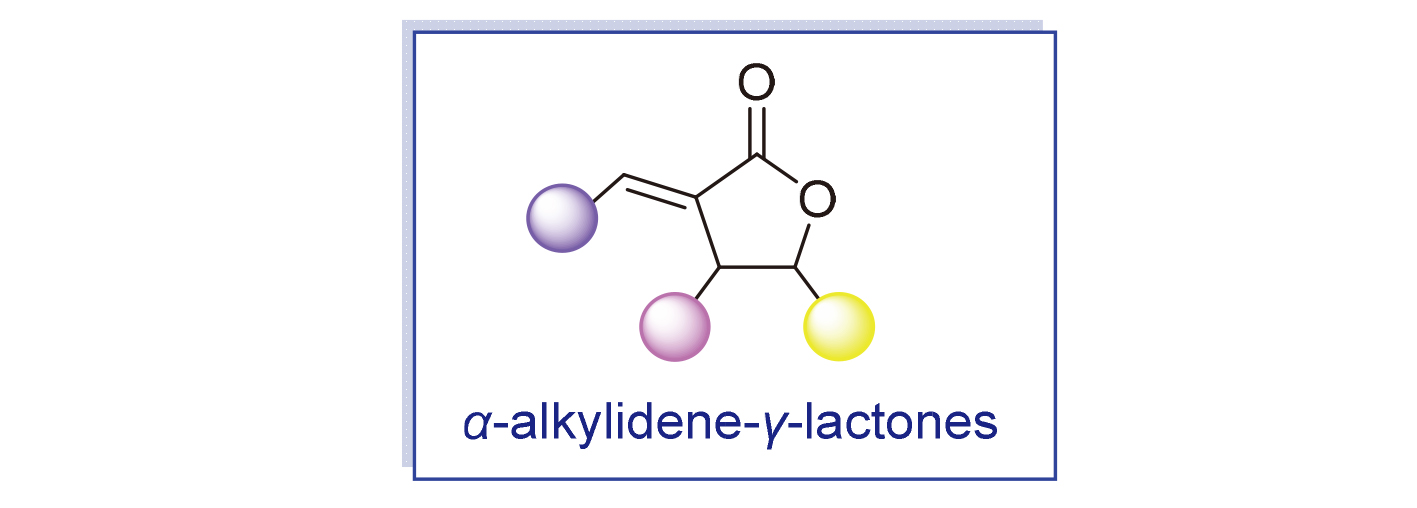
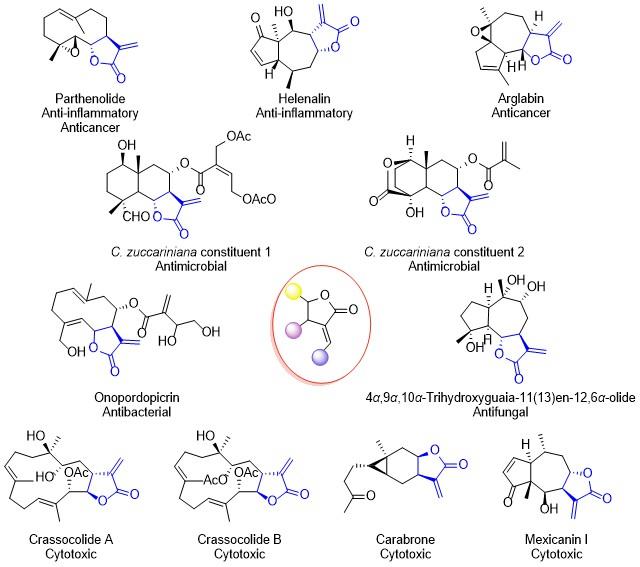
α-Alkylidene-γ-lactones are essential structural units found in a broad range of natural products and medical relevant molecules (Figure 1).[1] These compounds containing α-alkylidene-γ-lactones usually have significant biological activities (e.g. antibacterial, antimalarial, anticancer, insecticidal, herbicidal, antiviral, anti-inflamma- tory). For example, Arglabin has been successfully applied in the treatment of diseases such as breast cancer, colon cancer, ovarian cancer, and lung cancer.[2] Helenalin was isolated from Helenium Autumnale and Arnica montana.[3] Research has demonstrated that helenalin possesses potent anti-inflammatory and anti-protozoal properties.[4] Parthenolide, a sesquiterpene containing α-alkylidene-γ-lac- tone unit, was isolated from the herb feverfew (Tanacetum parthenium). Experiments showed that parthenolide possesses anti-inflammatory and anticancer activities.[5] Some α-alkylidene-γ-butyrolactones are also used in medicine as various inhibitors, such as steroid inhibitors, DNA polymerase inhibitors, and apoptosis inducers.[6] Additionally, α-alkylidene-γ-lactones could act as an important synthetic building block in organic synthesis.
Given the biological and chemical significance of α-al- kylidene-γ-lactone derivatives, chemists have been developing various strategies for the synthesis of this important structural motif for decades. Early synthetic methods, such as thermal additions of 2-(alkoxycarbonyl)allyl boronates, Barbier-type additions with zinc metal, and cycloisomerization reactions, have been widely reported.[7] However, these approaches encountered some limitations, including lengthy and cumbersome synthetic sequences, harsh reaction conditions and complex starting materials. During the past ten years, there have been significant advancements in the development of more efficient and direct synthesis methods for α-alkylidene-γ-lactone derivatives under relatively mild conditions. These new strategies hold great promise for organic synthesis.
To the best of our knowledge, recent reports have yet to provide a comprehensive summary on the chemistry of α- alkylidene-γ-lactones. As part of our ongoing research program on radical chemistry,[8] we present a perspective that highlights the latest advancements in this field over the past 10 years, focusing on product diversity, selectivity, and broad applicability, while also providing mechanistic insights where feasible. We hope that this review will inspire the development of novel approaches to the synthesis of α-alkylidene-γ-lactones and facilitate their applications in organic chemistry and drug discovery.
2 Natural products with the structure of α-alkylidene-γ-lactones
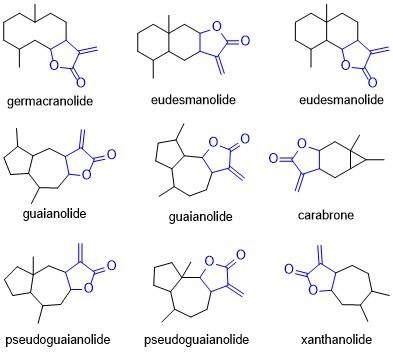
Natural products containing α-alkylidene-γ-lactone motif can be classified into three kinds: α-alkylidene-γ-lactone sesquiterpenes, α-alkylidene-γ-lactone diterpenoids and α-alkylidene-γ-lactone non-terpenoids. Among these three types, the main α-alkylidene-γ-lactone sesquiterpenes can be classified into germacranolides, guaianolides, pseudo- guaianolides, eudesmanolides, xanthanolides and carabrones (Figure 2).
2.1 Germacranolides
The germacranolide type sesquiterpene lactone compounds have a ten-membered ring skeleton (Figure 3). In 2017, Móricz and co-workers[9] isolated germacranolide sesquiterpene lactone onopordopicrin from Onopordum acanthium L. leaf, which possesses both antibacterial effect against S. aureus and antimalarial activity against Plasmodium falciparum and Trypanosoma brucei rhodesiense parasites. Recently isolated germacranolide type sesquiterpene lactones include 1,10-epoxydeltoidin A, which was isolated from the aerial parts of Ageratina vernalis, a perennial herbaceous plant native to North America, by Eleuterio Burgueño-Tapia et al.[10] in 2020.
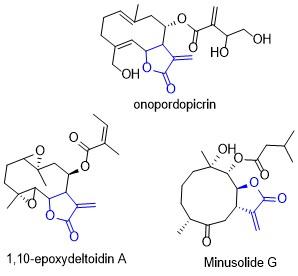
Some newly reported germacranolides are minusolides A~H (e.g. minusolide G). These eight new germacranolides were isolated by Kong and Luo in 2020 from the whole plant of Carpesium minus,[11] which has been explored for the treatment of haematemesis, mumps, and pyogenic infections in China.[12] Among them, minusolide G was determined to exhibit cytotoxic activities against human cancer cell lines.
2.2 Guaianolides
The guaianolide type sesquiterpene lactone compounds have a fused five-seven bicyclic skeleton. Guaianolides, as secondary metabolites, constitute one of the largest groups of naturally occurring sesquiterpene lactones with structural complexity and a wide range of biological activities (Figure 4).[13]
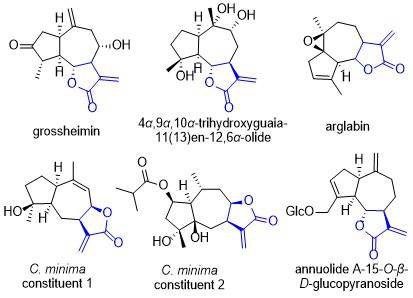
Grossheimin was first isolated from Grossheimia macrocephala (Muss.-Puschk. ex Willd.) and G. ossica (C. Koch) Sosn. et Takht, and also presented as a minor constituent in other asteraceous plants, such as Amberboa lipii DC.[14] Another example of guaianolide family of sesquiterpene lactones, 4α,9α,10α-trihydroxyguaia-11(13)en- 12,6α-olide, was isolated from the leaves of the Saudi medicinal plant Anvillea garcinii by Perveen, Taglialatela- Scafati and co-workers in 2020. This natural product demonstrated potent antifungal activity against Candida albicans and Candida parapsilosis. Moreover, it showed modest antibacterial activity against both Gram-positive and Gram-negative pathogenic bacteria.[15]
In 2007, Liang and co-workers[16] obtained several guaianolide sesquiterpene lactones from traditional Chinese medicine Centipeda minima. Antibacterial tests revealed that these compounds all exhibited antibacterial effects against Salmonella typhimurium, Salmonella paratyphi A and B, and Shigella flexneri.
Wang and co-workers[17] isolated annuolide A-15-O-β-D- glucopyranoside from the flower heads of Helianthus annuus L. in 2023. This compound showed significant inhibition of NO secretion at 12.5 μmol/L (P<0.05) and 25 μmol/L (P<0.01) in a dose-dependent manner. Arglabin was isolated from plant Artemisia glabella by Mukhametzhanov et al. in 1982. This compound shows antitumor activity and cytotoxicity against different tumor cell lines and is currently used to treat lung, liver, colon and breast cancers.[18]
2.3 Pseudoguaianolides
The structural difference between pseudoguaianolide and guaianolide type sesquiterpene lactone compounds is the position of the carbon on the five-membered ring (Figure 5).
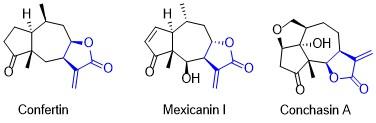
Confertin was first isolated from Ambrosia confertiflora in 1968 by Urbina et al. It exhibited significant cytotoxic activity against a panel of human tumor cell lines like human prostate carcinoma.[19]
Conchasin A was isolated from the flowers of Parthenium hysterophorus by Das and co-workers in 2006.[22] In 2019, Beer et al.[23] isolated hymenin from Parthenium hysterophorus L. In addition, Hysterolide I was isolated from Parthenium hysterophorus L. by Zhang and co-workers in 2024.[24] Experiments of hymenin and conchasin A both displayed significant inhibitory effects on NO production, as expected due to the α,β-unsaturated carbonyl group.
2.4 Eudesmanolides
Eudesmanolide type sesquiterpene lactones contain a linear fusion of the two 6-membered rings with lactone ring or the methylene lactone fused in α-position of the bridgehead of two bridged 6-membered rings (Figure 6).
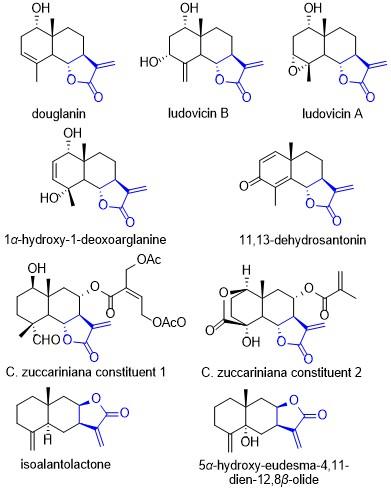
In the field of eudesmanolide sesquiterpene lactones, Ćirić et al.[25] isolated two kinds of eudesmanolides from aerial parts of the Greek plant C. zuccariniana DC in 2012. The isolated new sesquiterpene lactones showed moderate in vitro antimicrobial activity against eight bacteria and eight fungal species, such as E. coli, Proteus mirabilis, Pseudomonas aeruginosa, S. aureus, Aspergillus niger, A. versicolor and Trichoderma viride.
In 2012, Rosselli et al.[26] isolated five eudesmanolides, douglanin, ludovicin B, ludovicin A, 1α-hydroxy-1-deoxo- arglanine and 11,13-dehydrosantonin, from the flowers of a subspecies of Tanacetum vulgare growing in Sicily. All these five compounds induced high time- and concentration-dependent cytotoxic effects on human lung carcinoma epithelial-like and Chinese hamster lung fibroblast-like cells.
An example of the other type of eudesmanolides is isoalantolactone, which was first isolated from elecampane Inula helenium L. by Bohlmann and co-workers in 1978.[27] Another example is 5α-hydroxy-eudesma-4,11-dien-12,8β- olide, which was isolated from the Chinese herbs Carpesium macrocephalum Franch. Et Sav. and Carpesium cernuum L. in 2007. This compound was tested to be cytotoxic to human ovarian cell lines.[28]
2.5 Xanthanolides
Xanthanolides are a class of compounds containing a complete seven-membered ring (Figure 7).
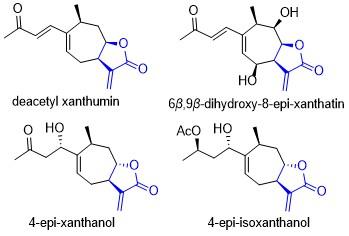
An example of xanthanolide sesquiterpene lactones is deacetyl xanthumin, which is extracted from Cocklebur (Xanthium strumarium). Deacetyl xanthumin can inhibit mycelial growth and zoospore germination of Phytophthora drechsleri, the causal agent of Atractylis rot, in vitro.[29] There are also some xanthanolide sesquiterpene lactones extracted from Xanthium strumarium. Marco and co- workers[30] isolated 4-epi-xanthanol and 4-epi-isoxanthanol from Xanthium strumarium in 1993. In 1994, Saxena and Mondal[31] extracted 6β,9β-dihydroxy-8-epi-xanthatin from Xanthium strumarium.
2.6 Carabrones
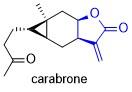
The core structure of carabrone-type sesquiterpene lactones is a three-membered ring bridging a six-membered ring (Figure 8). The first carabrone was isolated from the fruits of Carpesium abrotanoides in 1964.[32] It was found that carabrone has cytotoxic, antibacterial, antitumor activity and exhibits antifungal activities against Botrytis cinerea, Colletotrichum lagenarium, and Erysiphe graminis.[33]
2.7 α-Methylene-γ-butyrolactone diterpenoids
The most important α-alkylidene-γ-lactone diterpenoid is the cembrane diterpene family known as cembranolides (Figure 9). Cembranolide type α-alkylidene-γ-lactone diter- penes have a 14-membered ring. Mostly cembranolides are isolated from soft corals like Sarcophyton, Sinularia, and Lobophytum genera and from gorgonians of the genus Eunicea.[34]
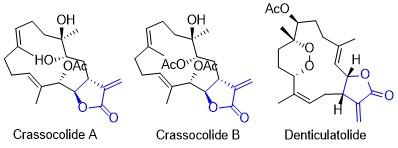
Denticulatolide, which possesses an α-alkylidene-γ- lactone ring fused to a 14-membered ring, was isolated from the soft coral Lobophytum denticulatum by Uchio and co-workers[35] in 1985. This compound was tested to be toxic to the Medaka (Oryzias latipes). In 2006, Sheu and co-workers[36] isolated crassocolides A and B from the soft coral Sarcophyton crassocaule. The relative experiments showed that crassocolides A and B are cytotoxic against a limited panel of cancer cells.
2.8 α-Alkylidene-γ-lactone non-terpenoids
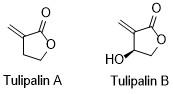
There are a lot of examples of non-terpenoid α-alkyl- idene-γ-lactone compounds (Figure 10). The simplest non- terpenoid α-methylene-γ-lactone compound is Tulipalin A. Tulipalins A and B were isolated from Tulipa gesneriana L. by Tschesche and co-workers in 1968.[37] Tulipalin A was proved to have high insecticidal activity against Thrips palmi, a kind of crop pest.[38] In 2010, Ubukata and co-workers[39] reported that non-terpenoid Tulipalins A and B demonstrate notable antibacterial activity against bacterial strains like E. coli, S. enteritidis and S. aureu.
3 Synthesis of α-alkylidene γ-lactones
3.1 Synthesis of α-alkylidene γ-lactones via intramolecular reactions
Sasai and co-workers[40] developed an enantioselective intramolecular Rauhut-Currier (RC) reaction of dienone enolates promoted by chiral acid-based organocatalysts, for the synthesis of highly functionalized α-alkylidene-γ- butyrolactones (Scheme 1). A range of aliphatic and aromatic substituted dienone substrates were successfully transformed into lactones in good yields and high enantioselectivities (up to 98% ee), and aromatic substituted substrates were proved to be more reactive than aliphatic substrates. This methodology failed when the terminal olefin on the acrylate or the α-position of the dienone featured a methyl substituent. While the reaction can construct two contiguous quaternary stereocenters, such transformations required the addition of a Brønsted acid additive to achieve high enantioselectivity at the expense of chemical yield.The mechanism of this reaction using the chiral catalysts with both Brønsted acid and Lewis base moieties was proposed. The Lewis base moiety first adds to the acrylate unit to form a phosphonium enolate intermediate, which is stabilized by the Brønsted acid, followed by a second Michael process and subsequent proton transfer to form the chiral α-alkylidene-γ-butyrolactones.
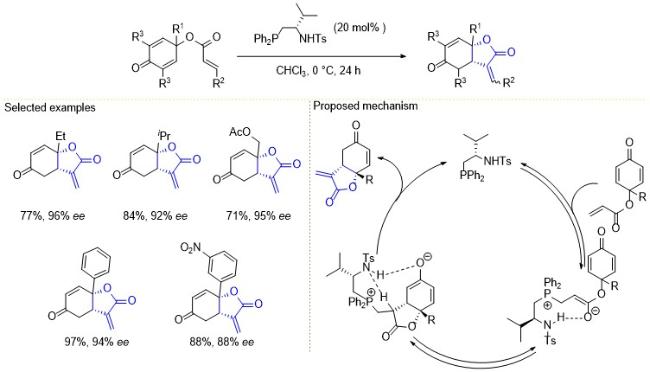
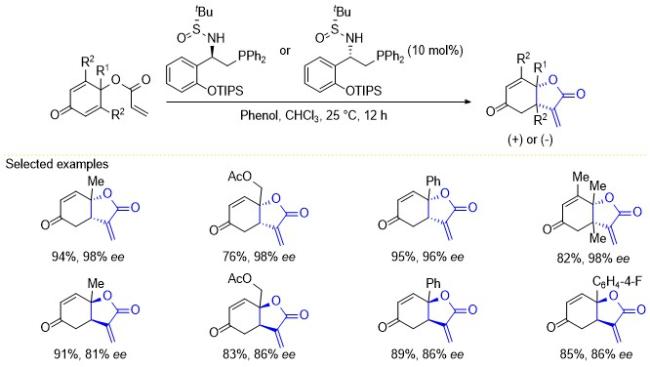
In 2015, Zhang and co-workers[41] also reported an enantioselective intramolecular Rauhut-Currier reaction catalyzed by chiral sulfinamide phosphine catalysts to afford α-methylene γ-butyrolactones in excellent yields with enantiomeric excess values of up to 99% under mild conditions (Scheme 2). This new type of chiral sulfinamide phosphine catalyst, featuring two stereocenters, an H-bonding site, and tunable side chains, was accessed concisely and efficiently from readily available materials. Under the optimal conditions (10 mol% catalyst, 50 mol% phenol as an additive and CHCl3 as the reaction medium, 25 ℃), a wide range of dienone substrates underwent efficient enantioselective cyclization, including alkyl-substi- tuted, ester-functionalized, and aryl-substituted substrates. Moreover, kinetic resolution and parallel kinetic resolution of two different substituted racemic precursors in the Rauhut-Currier reaction were realized, and two possible transition states were proposed.
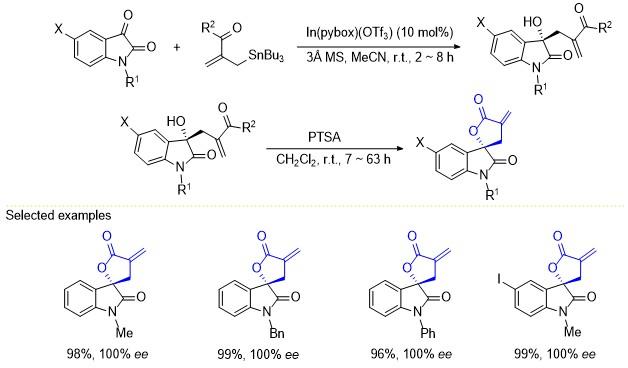
In 2013 and 2014, Yoda and co-workers[42] reported two studies on the catalytic enantioselective amide allylation of isatins, enabling the synthesis of 2-oxindole derivatives that are spiro-fused with the α-methylene-γ-butyrolactone moiety (Scheme 3). Steric influences of the chiral ligands of the reaction systems were proved to play an important role in asymmetric induction of the nucleophilic addition process, as previously demonstrated by Franz and co-workers.[43-45] The most effective chiral ligand was identified, and the optimal conditions involved using its complex with indium triflate (10 mol%) as the chiral catalyst and MeCN as the solvent. The synthetic strategy, which enabled the transition of isatin substrates and NH-containing stannylated reagents into the corresponding spirocyclic lactones, showed excellent compatibility with various functional groups, and wherein the stannylated reagents functionalized with secondary amide were thought to be the critical element. Non- NH-functionalized allylstannanes exhibited significantly diminished enantioselectivity or were completely ineffective. The pioneering work of Franz and co-workers[44,46] in isatins’ highly stereoselective catalytic allylation prompted Yoda and co-workers to prove the complete ineffectiveness of silyl reagents in these reaction systems. Moreover, their team successfully obtained diverse C(5)-halogenated derivatives in excellent isolated yields (90%~99%).
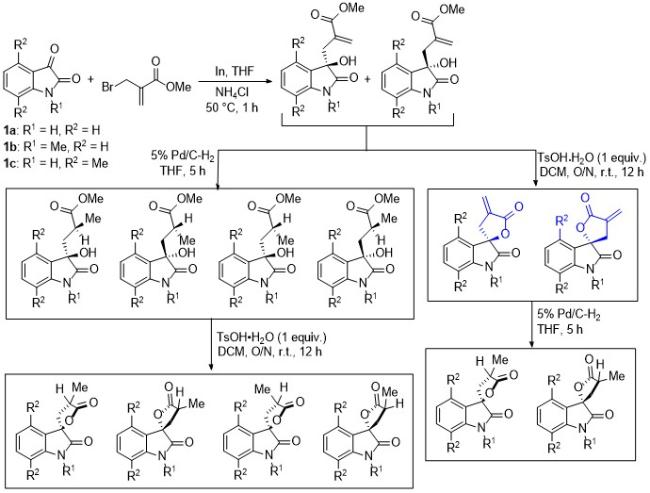
In 2013, Rana and Natarajan[47] carried out an indium- mediated Barbier-type reaction between isatin analogs and methyl 2-(bromomethyl)acrylate followed by a p-toluene- sulfonic acid-catalyzed lactonization in dichloromethane at room temperature, generating the oxindole-α-methylene- γ-butyrolactone in excellent yields (Scheme 4). Notably, they reported an unusual face selective reduction of the exocyclic double bond in these isatin derived spirocyclic lactones, observing that hydrogenation of the cyclic products in the presence of 5% Pd/C in tetrahydrofuran (THF) exhibited face selectivity and afforded only one set of diastereoisomers, while hydrogenation of the acyclic precursors followed by cyclization afforded a mixture of two sets of inseparable diastereomers. A structure-activity relationship (SAR) study conducted by Natarajan and co-workers[48] in 2016 indicated that the rigidification of the spirocyclic α-methylene-γ-butyrolactone system (derived from isatins) and the presence of the Michael acceptor were critical features for bioactivity in the development of novel anticancer agents.
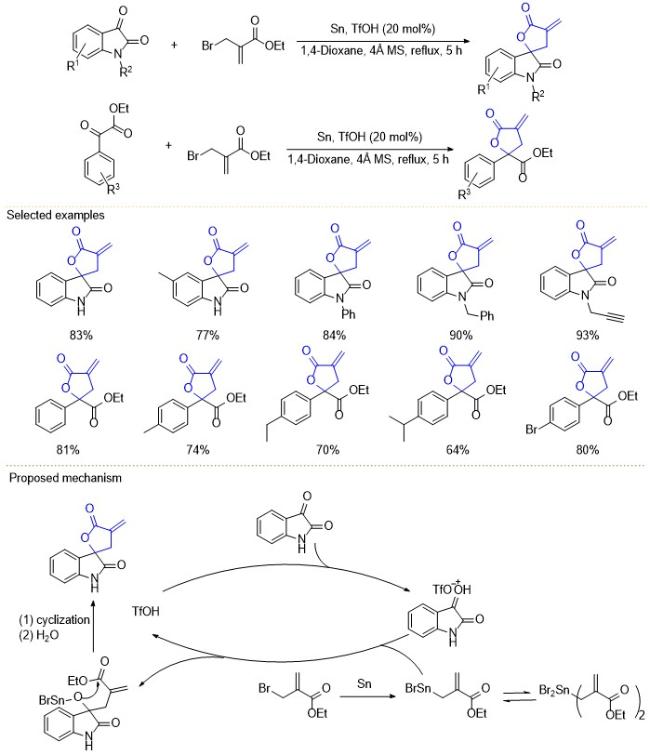
In 2018, Huang and co-workers[49] reported a tin powder- promoted one-pot synthesis of α-methylene-γ-butyrolactone derivatives via the reaction of isatin compounds or α-keto esters and ethyl 2-(bromomethyl)acrylate (Scheme 5). A variety of spirooxindole-fused or γ,γ-disubstituted α-meth- ylene-γ-butyrolactones could be obtained through this strategy in high yields using tin powder as the promoter, TfOH as the catalyst, in the presence of 4Å molecular sieves in refluxing 1,4-dioxane. The reaction showed excellent compatibility with various functional groups. Isatins with either electron-donating groups or electron-withdrawing groups on the aromatic ring, as well as either phenyl or aliphatic substituents on the nitrogen atom, could undergo this reaction, among which isatins featuring a reactive group on the nitrogen atom exhibited an improved yield. However, the reaction did not occur with 5-nitroisatin, and lower yields were obtained when the nitrogen protecting group was a benzoyl or pivaloyl group. For α-keto esters, whether electron-donating groups or electron-withdrawing groups were attached to the benzene ring, the reaction could proceed smoothly and afford target lactones in good yields, and those bearing electron-withdrawing groups displayed a higher yield. To the plausible reaction mechanism, firstly, isatins generate an intermediate under the action with TfOH, followed by a nucleophilic addition reaction with the organoallyl tin reagent formed by the reaction of tin powder and ethyl 2-(bromomethyl)acrylate. Then the final product is afforded via cyclization and hydrolysis. This method avoids the use of toxic stannanes and features various advantages, such as mild reaction conditions, high yields, and much easier operation.
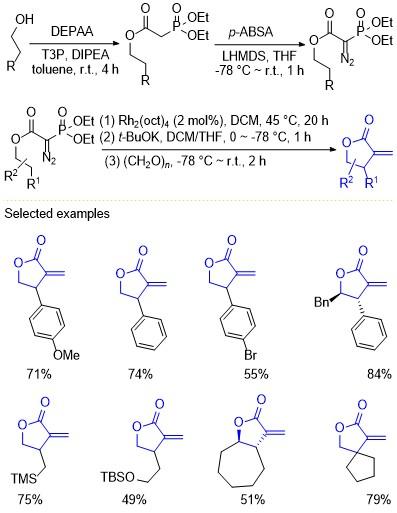
In 2015, Taylor, Unsworth and co-workers[50] reported a rhodium-catalyzed one-pot C—H insertion/olefination sequence for the synthesis of α-alkylidene-γ-butyrolactones from α-diazo-α-(diethoxyphosphoryl)acetates (Scheme 6). The only by-product of this method is nitrogen gas, eliminating the requirement for work-up or purification. The requisite diazophosphonate could be readily prepared from a concise and excellent-yielding two-step sequence from alcohol derivatives. The alcohols underwent coupling with diethyl phosphonoacetic acid (DEPAA) mediated by propyl phosphonic anhydride (T3P) and N,N-diisopropylethyl- amine (DIPEA), followed by a Regitz diazo-transfer reaction step to afford the target diazophosphonates in good yields, with lithium hexamethyldisilazide (LHMDS) serving as the base, which enabled higher yields. A wide range of α-alkylidene-γ-butyrolactones were obtained using Rh2(oct)4 (2 mol%) as the catalyst in dichloromethane (DCM) at the temperature of 45 ℃ for the C—H insertion, followed by a solvent switch to THF and subsequent Horner-Wadsworth-Emmons (HWE) reaction using t-BuOK and paraformaldehyde. However, the substrate scope was limited by the electron-withdrawing para-sub- stituents on the aromatic ring, and the presence of Lewis basic residues such as para-dimethylamine and pyridine nitrogen atoms would deactivate the catalyst. Additionally, the C—H insertion step was found to be sensitive to steric effects.
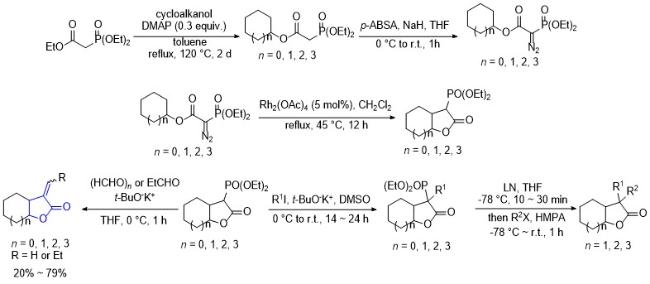
In 2016, Zhu and co-workers[51] described a Rh2(OAc)4- catalyzed intramolecular C—H insertion of α-diazo α-phosphoryl cycloalkyl esters, enabling the synthesis of bicyclic γ-butyrolactones that could be transferred into α,α-dialkyl γ-butyrolactones through a two-step alkylation/ reductive alkylation (Scheme 7). Moreover, HWE olefination reaction can be applied to the insertion products, thereby providing access to bicyclic α-alkylidene-γ-butyro- lactones. These motifs are commonly found in biologically active natural products and synthetic molecules alike.
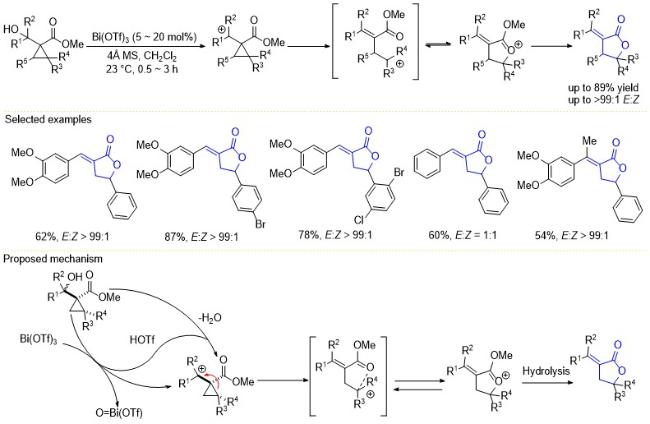
In 2017, France and co-workers[52] reported a Bi(OTf)3- catalyzed ring-opening cyclization of (hetero)aryl cyclopropyl carbinols to form α-alkylidene γ-butyrolactones in good yields, exhibiting a general tendency to favor the E-isomers (Scheme 8). The optimized reaction conditions were using Bi(OTf)3 (5 mol%) as the catalyst in CH2Cl2 at room temperature in the presence of 4Å molecular sieves. The team also investigated the substrate scope of the reaction and the impacts of modifying cyclopropane substitutes, proving that weakly stabilizing or electron-poor donor groups on the cyclopropane promote the formation of α- alkylidene-γ-butyrolactones. A tentative reaction mechanism was proposed as well, involving the key role of Bi(OTf)3 as a precursor to TfOH, which catalyzes the transformation of cyclopropyl carbinol to cyclopropyl carbinyl carbocations. Then these carbocations undergo ring opening, intramolecular trapping by the neighboring ester group, subsequent hydrolysis, and loss of methanol to furnish the α-alkylidene γ-butyrolactones.
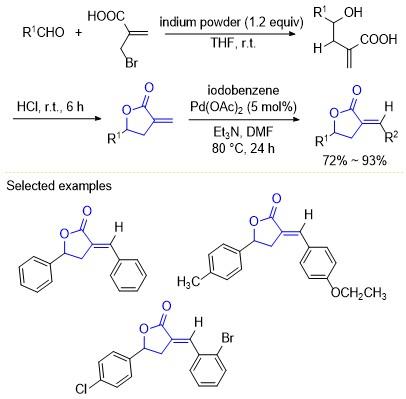
In 2017, Feng and co-workers[53] prepared a series of α- benzylidene-γ-lactones via indium-mediated Barbier allyl addition to aldehydes in 72%~93% yields to explore the influence of electron density and steric hindrance on the exocyclic carbon-carbon double bond (Scheme 9). The target compounds were obtained through indium-mediated Barbier allyl addition, with thin-layer chromatography (TLC) monitoring until the aldehyde disappeared, followed by palladium-catalyzed Heck arylation. Furthermore, the SARs and quantitative structure-activity relationship (QS- AR) researches demonstrated the promoting effect on the antifungal activity of the higher electron density around such lactones’ backbone structure and smaller steric hindrance on the benzene ring structure.
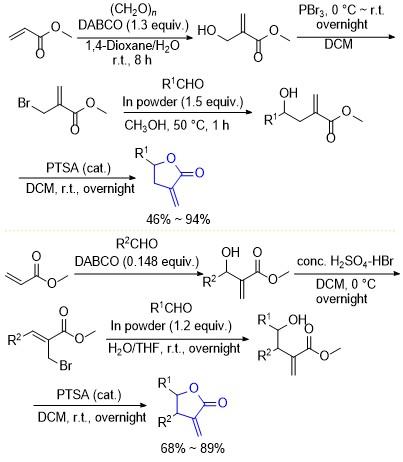
In 2023, Feng and co-workers[54] synthesized a series of novel α-methylene-γ-butyrolactone derivatives bearing heterocyclic and phenyl substituents based on the natural product carabrone, an antifungal molecule isolated from Carpesium macrocephalum (Scheme 10). Two synthetic routes were developed to access 41 target α-methylene-γ- butyrolactone (MBL) compounds. Methyl acrylate and aldehydes undergo 1,4-diazabicyclo[2.2.2]octane (DABCO)-catalyzed Baylis-Hillman adducts to form corresponding intermediates. For the first group of compounds, the intermediate is brominated, while for the second group of compounds, the intermediate reacts with a brominating reagent via an SN2 process followed by allylic rearrangement.[47,55] The resulting intermediates then participate in indium-mediated Barbier-type reactions with corresponding aldehydes and subsequent lactonization in the presence of p-toluene sulfonic acid. The promoting effect of the introduction of bulky and negatively charged groups on the antifungal activity of the MBL derivatives has been proved through the comparative molecular field analysis (CoMFA) steric and electrostatic field maps.
3.2 Synthesis of α-alkylidene γ-lactones via intermolecular reactions
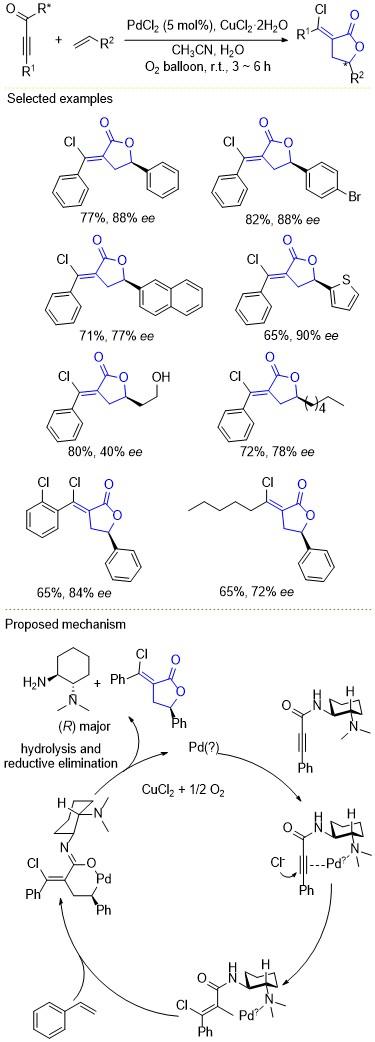
In 2015, Wu, Jiang and co-workers[56] reported a chloropalladation-initiated intermolecular asymmetric carboesterification of alkenes with alkynes under O2 using chiral amide auxiliaries, which was allowed to be easily removed via hydrolysis, aiming for the synthesis of enantioenriched α-methylene-γ-lactones in moderate to high yields (Scheme 11). The reaction exhibited broad substrate tolerance, accommodating aryl alkenes with both electron- donating and electron-withdrawing substituents, as well as alkyl alkenes, vinylnaphthalene, and thiophene-derived alkenes. Alkyne amides bearing diverse electron-rich/poor aryl and alkyl substituents are also tolerated. However, the substrate scope was limited by the failure of activated alkenes such as methyl acrylate. A tentative mechanism is proposed involving the initial coordination of Pd(Ⅱ) to the nitrogen and the carbon-carbon triple bond of the alkyne amide, followed by trans-chloropalladation to form a vinylpalladium intermediate. Subsequent syn-insertion of the alkene, stereocontrolled by steric repulsion, generates a key intermediate, which undergoes hydrolysis and reductive elimination to yield the final product.
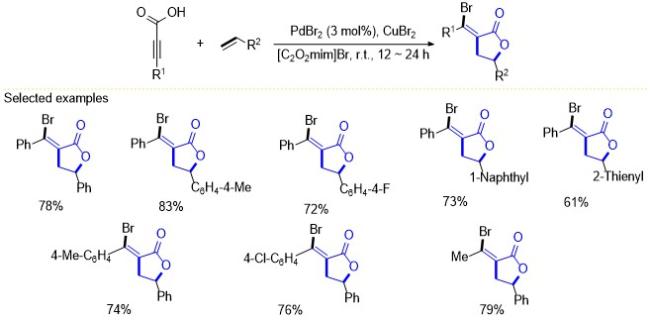
In 2015, Yang and co-workers[57] studied a palladium- catalyzed cascade carboesterification of alkynoic acids with alkenes in ionic liquids, providing a mild and efficient approach to functionalized α-methylene-γ-lactones (Scheme 12). A series of α-methylene γ-lactones were obtained in moderate to good yields (58%~83%) with high regioselectivity and diastereoselectivity using PdBr2 (3 mol%) as the catalyst, CuBr2 (2 equiv.) as the oxidant, and [C2O2- mim]Br as the solvent under air atmosphere at room temperature. A wide range of substrates were tolerated, including aryl alkenes with electron-donating and electron- withdrawing groups and alkyl alkenes, as well as alkynoic acids bearing aryl and alkyl groups, while aryl alkenes bearing electron-withdrawing groups on the phenyl ring afforded slightly lower yields compared to those with electron-donating groups.
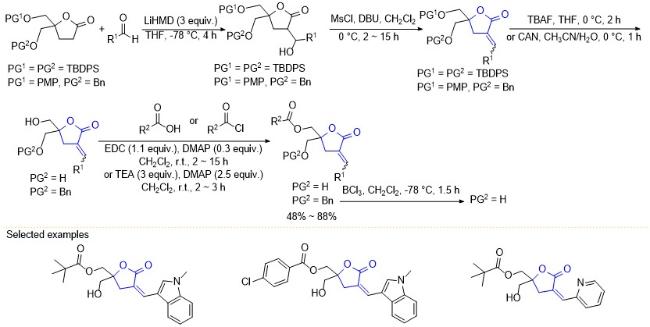
α-Arylidene diacylglycerol-lactones can serve as selective ligands for Ras Guanine-Releasing Protein 3 (RasGRP3). In 2018, Lee et al.[58] prepared a series of α-arylidene diacylglycerol (DAG)-lactones with aryl and alkyl substituents and investigated the structure activity relationship to de- monstrate the relative selectivities for RasGRP3 versus the protein kinase C (PKC). A general synthetic method to generate α-heteroarylidene DAG-lactones was described in the article (Scheme 13). α-Heteroarylidene DAG-lactones were synthesized from racemic lactones, with precursor choice based on protecting group lability during deprotection. Lactones with two tert-butyldiphenylsilyl (TBDPS) groups were exclusively used for α-heteroarylidene DAG- lactones including 1-methyl- indolidene due to lability in BCl3 and ceric ammonium nitrate (CAN) conditions. Aldol reaction of the lactone with aldehydes and subsequent β-hydroxy elimination, formed α-arylidene moieties, predominantly the more stable E isomers. After E/Z separation, bis-TBDPS protected lactones were deprotected with tetrabutylammonium fluoride (TBAF) and selectively monoacylated while p-methoxyphenyl (PMP)-protected intermediates underwent CAN deprotection and acylation, followed by a final BCl3 deprotection to yield the target α-arylidene DAG-lactones.
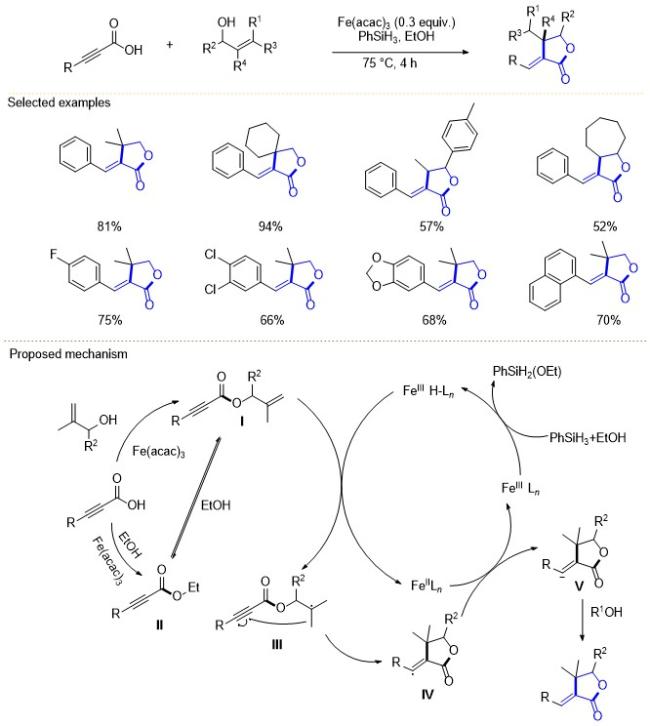
In 2020, Wang and co-workers[59] developed an iron- catalyzed reductive radical cascade reaction of allyl alcohols and acetylenic acids in mild conditions, enabling the synthesis of polysubstituted α-alkenyl lactones via reflex- Michael addition (Scheme 14). Under optimal conditions, this methodology exhibits broad functional group tolerance, making it applicable to a wide array of allyl alcohols and acetylenic acids. However, attempts to carry out the reaction using acetylenic acids with alkyl substituents failed to produce alkenyl lactones, showing the limitations of alkyl groups in this protocol. What’s more, allylic alcohols with sterically demanding substituents adjacent to the hydroxyl group resulted in diminished yields. A plausible mechanism is proposed and depicted in Scheme 14. First, ferrohydrogen species FeⅢH-Ln is generated from iron catalyst, PhSiH3, and ethanol, and at the same time acetylenic acid and alcohol undergo esterification to form intermediates Ⅰ and Ⅱ in dynamic equilibrium. Subsequent hydrogen atom transfer between ferrohydrogen species FeⅢH-Ln and intermediate Ⅰ forms a free-radical intermediate Ⅲ, which can generate Ⅳ through an intramolecular reflex-Michael addition. Then Ⅳ and FeⅡLn undergo a single-electron transfer to form intermediate Ⅴ, followed by proton transfer to yield the α-alkenyl lactone.
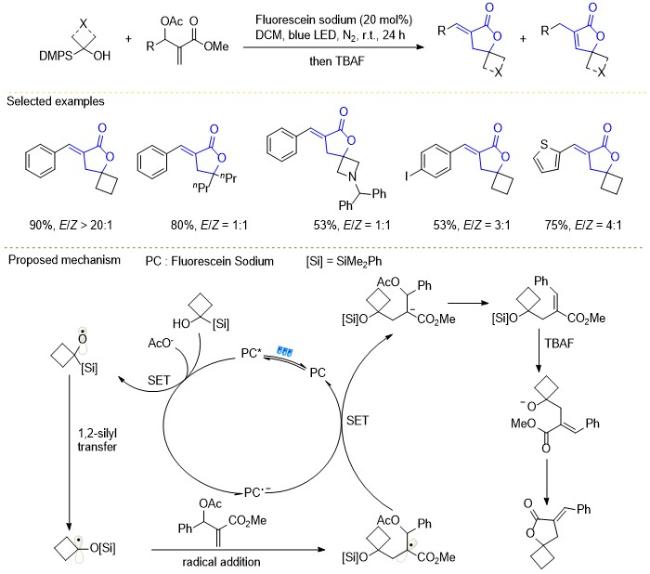
In 2025, Shu and co-workers[60] reported a novel and efficient protocol for the synthesis of α-exo-alkenyl γ-lactones via visible-light-induced radical-polar crossover cyclization (RPCC) reaction using easily obtainable Morita-Baylis- Hillman (MBH) adducts and α-silyl alcohols (Scheme 15). This reaction proceeds under irradiation with a 30 W blue LEDs (λmax=420 nm) and nitrogen atmosphere at room temperature, and reaction condition optimization shows 5 mol% fluorescein sodium is the optimal photocatalyst and DCM is the optimal solvent. A variety of functionalized silyl alcohols including cyclopropyl-substituted, azetidine- substituted and linear derivatives and MBH adducts bearing aryl with electron-donating and electron-withdrawing substituents, heteroaryl, and alkyl groups are well-tolerated. After a series of mechanistic experiments, the mechanism involving excitation of photocatalyst, single-electron transfer, radical 1,2-silyl transfer, radical addition, single- electron reduction, β-elimination, TBAF-mediated desilylation, and final in situ lactonization was proposed as depicted in Scheme 15.
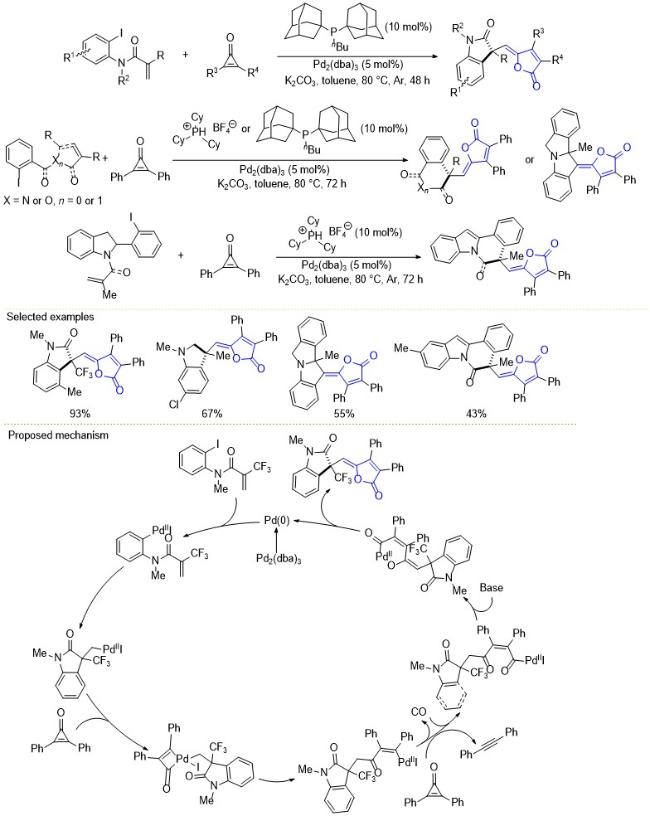
In 2025, Chen, Cui and co-workers[61] reported a novel palladium-catalyzed cascade reaction for the synthesis of diverse heterocycle-containing γ-alkylidenebutenolides, which enabled the simultaneous construction of γ-alkyl- idenebutenolide and δ-heterocycle units through one-pot multiple C—C/C—O bond formation between iodoaryl-substituted alkenes and cyclopropenones (Scheme 16). Diverse N-(2-iodophenyl)acrylamides with varied phenyl substituents or N-alkyl groups, other 2-iodophenyl-substi- tuted alkenes and 2-(2-iodophenyl)indole-incorporated alkenes could participated in the reaction effectively. For N-(2-iodophenyl)acrylamides, several factors, such as steric hindrance and asymmetric substitution, could lead to lower reaction yields. However, the dimethyl-substituted substrate failed to afford the desired product. A plausible mechanism is proposed involving oxidative addition of Pd(0) to the C—I bond, migratory insertion of alkenes, oxidative addition to the cyclopropenone, reductive elimination, in situ CO generation from the cyclopropenone, migratory insertion of CO, enol tautomerism, and final reductive elimination.


4 Conclusion
In summary, efficient and selective synthetic approaches for the synthesis of α-alkylidene γ-lactones have kept advancing over the last decade, making valuable contributions to this field. Researchers have developed innovative strategies via intramolecular and intermolecular lactonization, utilizing diverse starting materials and catalytic systems to obtain α-alkylidene γ-lactone derivatives in high yields and selectivities.
Despite the notable progress made in this field, there are still many unexplored avenues and directions. With the increasing demand for such structural motifs in a large number of natural products, active pharmaceutical ingredients, and advanced functional materials, the development of more efficient and scalable synthetic methods has become increasingly urgent. The core focus of current research remains on improving reaction performance, especially stereoselectivity for the chiral derivatives, atom economy, and the efficiency of the reactions, and expanding the range of reaction substrates. This requires a deeper analysis of the reaction mechanism, the design of more stable catalysts as well as milder reaction conditions, and the integration of emerging technologies. Currently, the direct synthetic utilization of α-alkylidene γ-lactones remains severely limited in the construction of complex natural products due to their inherent reactivity, stability issues, limited functional group compatibility, insufficient stereocontrol and other related synthetic limitations. These drawbacks make this field a key focus for future research. In addition, the principles of green and sustainable chemistry also need to be taken into account. With continuous research and advancements, we believe that this field will continue to thrive and synthetic strategies will be enriched. Meanwhile, these synthetic strategies will provide reference value for the synthesis of related structural motifs.
(Zhao, C.)