


1 Introduction
Oxidative dehydrogenation (ODH) reactions are crucial organic transformations, widely employed in the synthesis of pharmaceutical intermediates, functional materials, and bioactive molecules.[1] Nitrogen-containing aromatic derivatives, essential structural components in many natural products and pharmaceutical agents, exhibit diverse biological activities and hold significant promise in drug discovery.[2] Additionally, the dehydrogenation of aromatic hydrocarbons plays a pivotal role in the synthesis of high- performance organic semiconductors and optoelectronic materials.[3] As such, the development of efficient and highly selective oxidative dehydrogenation methodologies not only is of profound scientific importance but also has vast implications for applications in both medicinal chemistry and materials science.
Traditional oxidative dehydrogenation methods often rely on stoichiometric oxidants and/or harsh reaction conditions. Although these methods effectively generate target products, they frequently yield environmentally unfriendly by-products, limiting their practical applicability and sustainability.[4] In contrast, catalytic oxidative dehydrogenation using molecular oxygen as the sole oxidant offers distinct advantages. Molecular oxygen is inexpensive, non- toxic, and sustainable, making it an ideal oxidant for industrial-scale reactions with broad application potential.[5]
A significant body of research has been dedicated to the development of various catalytic systems for oxidative dehydrogenation. In homogeneous catalysis, metal salts and metal complexes have been extensively applied to the oxidative dehydrogenation of N-heterocycles.[6] However, homogeneous catalysts face inherent challenges, such as difficulties in catalyst separation, recycling, and the need for harsh reaction conditions. Consequently, heterogeneous catalysts have garnered increasing attention due to their ease of recovery, straightforward operation, and cost-effec- tiveness.[1a-1c,7] For instance, Beller et al.[1a] reported a nitrogen/phosphorus co-doped porous carbon (NPCH) catalyst for metal-free oxidative dehydrogenation, which efficiently catalyzed the synthesis of various quinolines, indoles, isoquinolines, and quinoline thiazoles under air atmosphere. Similarly, Zheng and co-workers[7i] developed metal-organic framework (MOF) catalysts, [MII(bibp)1.5]- [VV2O6]•H2O [M=Ni 1, Co 2; bibp=4,4'-bis(imidazol-1- ylmethyl)biphenyl], that catalyzed oxidative dehydrogenation using molecular oxygen as the oxidant, without the need for additives or solvents.
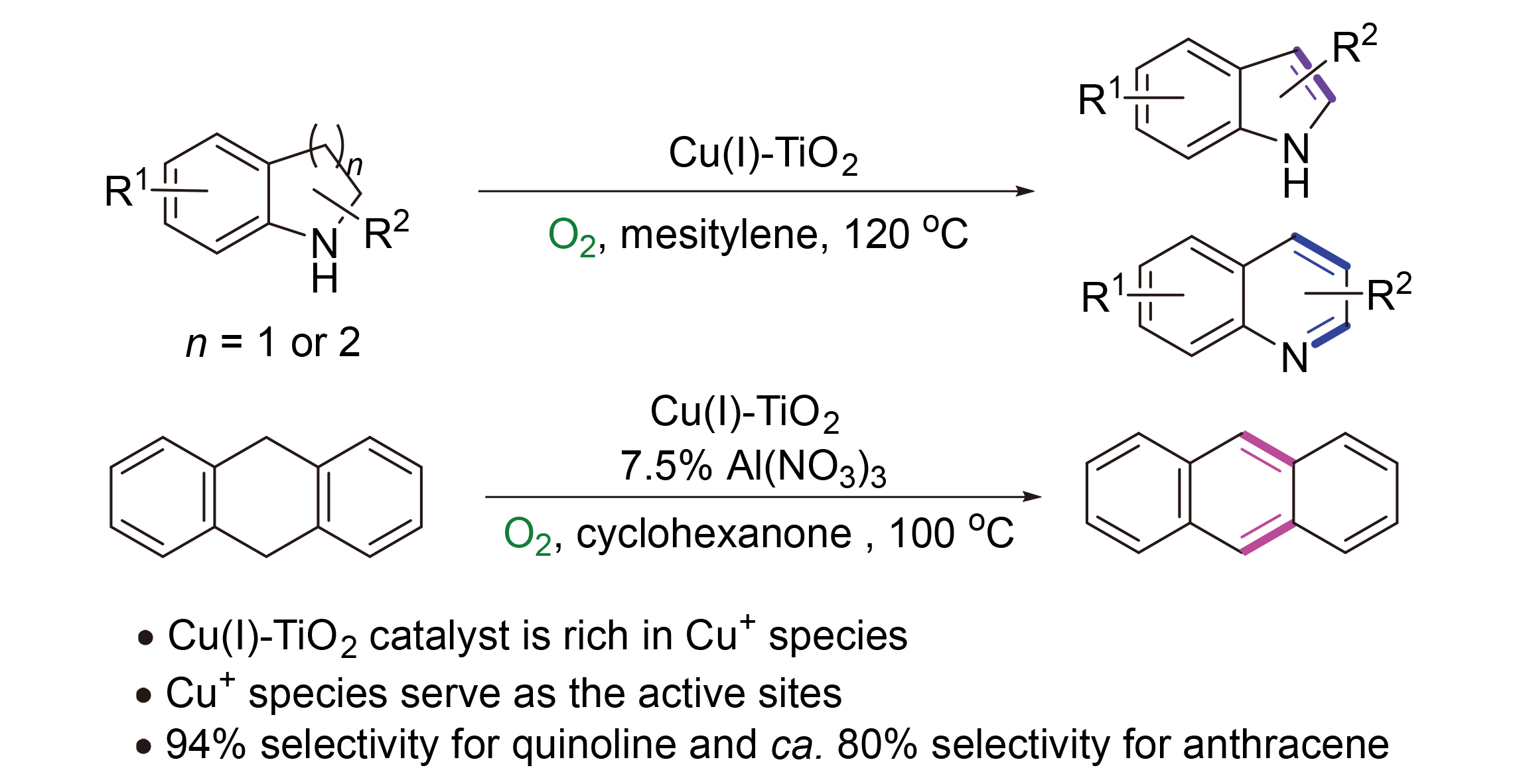
Although copper (Cu), as a non-precious metal, has been explored in catalytic oxidative dehydrogenation reactions, Studies concerning copper-catalyzed dehydrogenation of N-heterocycles remain sparse, most research having focused on homogeneous systems.[8] Building upon this, we developed a Cu(I)-rich heterogeneous catalyst for the oxidative dehydrogenation of N-heterocyclic compounds and aromatic hydrocarbons, using molecular oxygen as the sole oxidant. Through optimization of reaction conditions, this study presents an efficient and sustainable catalytic method for the oxidative dehydrogenation of N-heterocycles and aromatic hydrocarbons.
2 Results and discussion
2.1 Catalyst characterization
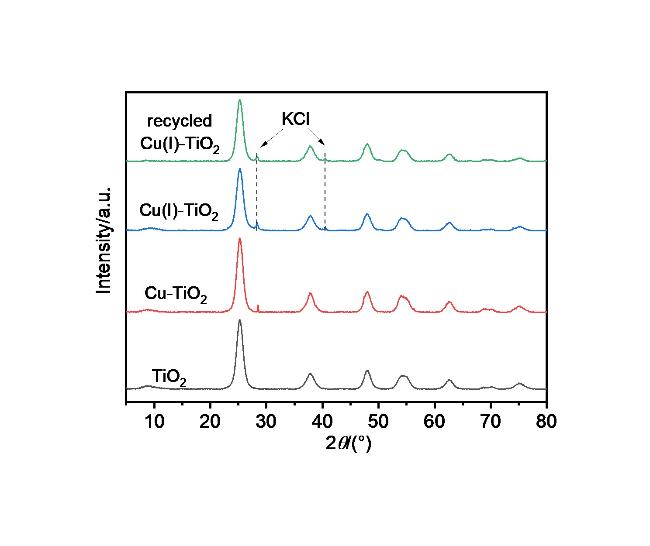
As shown in Figure 1, the X-ray diffraction (XRD) patterns of Cu-TiO2 and Cu(I)-TiO2 closely align with the standard values for anatase-phase TiO2, exhibiting characteristic diffraction peaks at 2θ=25.3°, 38.6°, 48.1°, 54.3°, 55.4°, 62.8°, 68.9°, 70.4°, and 75.2°.[9] Additionally, the peaks observed at 28.3° and 40.5° correspond to the (200) and (220) planes of KCl, respectively, indicating the presence of KCl in the samples.[10]
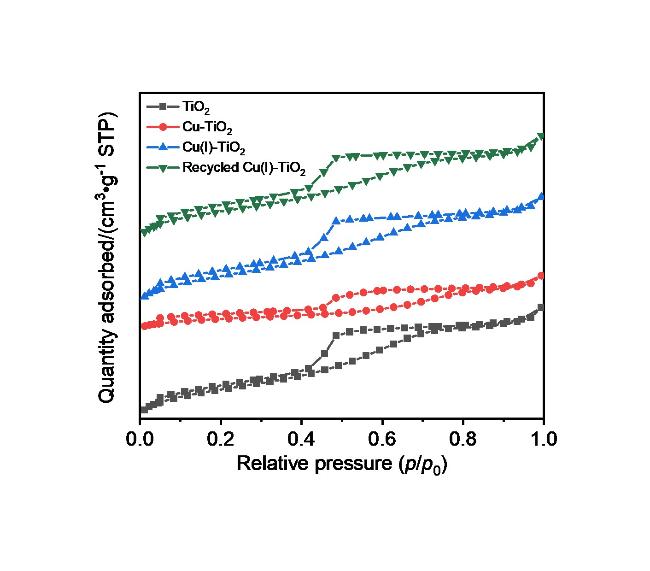
FTIR and TG analyses further confirmed the structural integrity and thermal stability of the catalyst. This indicates that the Cu(I)-TiO2 catalyst exhibits excellent mass stability across a range of temperatures. The BET characterization results show that the surface area of Cu-TiO2 significantly decreases to 17.51 m2•g-1 compared to pure TiO2, along with a reduction in pore volume and pore size, indicating that the introduction of copper alters the pore structure of TiO2. The surface area of Cu(I)-TiO2 is 51.86 m2•g-1, and its pore volume and pore size are similar to those of TiO2, suggesting that the addition of potassium improves the pore structure of the catalyst. The recycled Cu(I)-TiO2 catalyst retains a good surface area and pore structure, demonstrating excellent stability and reusability. Overall, the addition of potassium helps to maintain a better pore structure (Figure 2).
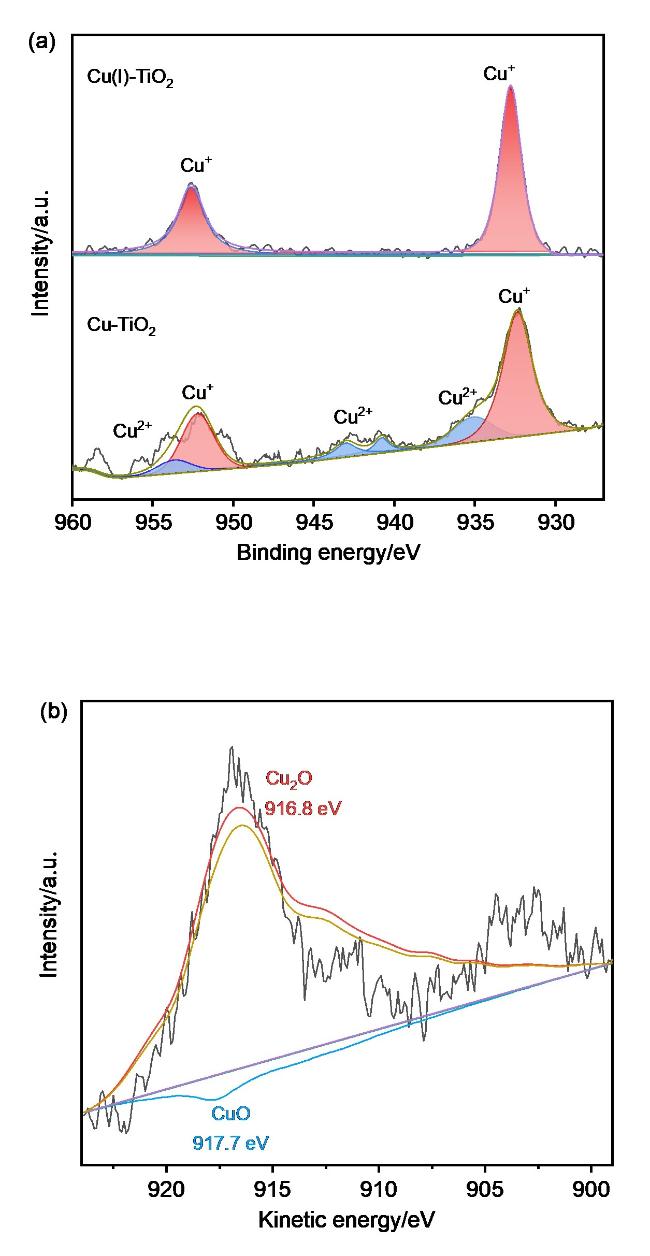
The oxidation state of surface copper strongly influences catalytic performance in selective oxidation reactions. As shown in Figure 3a, Cu-TiO2 contains both Cu+ and Cu2+species, as evidenced by the Cu+ shoulder at ca. 931.6 eV and the Cu2+ component of the Cu 2p3/2 peak at 933.7 eV accompanied by a shake-up satellite.[11] In contrast, Cu(I)- TiO2 shows a Cu 2p3/2 signal mainly centered at ca. 931.6 eV with no obvious Cu2+ satellite, indicating a Cu+-rich surface. This assignment is further supported by the Cu LMM Auger spectrum (Figure 3b), in which the dominant feature at ca. 916.8 eV is characteristic of Cu2O-like Cu+ species, while the CuO-like Cu2+ contribution at ca. 917.7 eV is much less pronounced. In addition, Cu(I)-TiO2 exhibits a much larger specific surface area than Cu-TiO2 and retains pore characteristics closer to those of pristine TiO2. Together with the KCl reflections observed by XRD, these results suggest that potassium plays a dual role in stabilizing Cu+-rich surface species and preserving the pore structure during catalyst preparation.
2.2 Optimization of reaction conditions
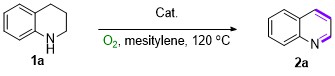
The reaction conditions for the oxidative dehydrogenation of 1,2,3,4-tetrahydroquinoline (THQ) were optimized by varying the solvent, temperature, reaction time, and catalyst loading. Initial solvent screening (Table 1, Entries 1~6) revealed that mesitylene (Entry 3) provided the highest yield (84%) at 100 ℃ for 6 h, outperforming N,N- dimethylformamide (DMF) (78%, Entry 1) and MeCN (<5%, Entry 2). Other solvents, including 1,4-dioxane (Entry 4), PhCN (Entry 5), and trifluorotoluene (Entry 6), gave inferior results, and mesitylene was therefore selected for further study. Temperature optimization (Entries 3 and 7~9) showed that increasing the temperature from 80 to 120 ℃ significantly improved the yield from 55% to 94%, whereas a further increase to 130 ℃ resulted in only a marginal change (95%). Considering energy efficiency and to maintain unified conditions for the subsequent scope studies, 120 ℃ was selected as the standard temperature. Investigation of reaction time (Entries 8 and 10~13) showed that the yield reached 94% after 6 h and did not increase further upon longer reaction times. Catalyst- loading studies (Entries 8 and 14~16) revealed that decreasing the amount of Cu(I)-TiO2 to 40 mg lowered the yield to 80%, whereas increasing the loading to 60 or 70 mg gave no additional benefit. Accordingly, 50 mg of Cu(I)- TiO2 was chosen as the optimal catalyst loading.
Table 1 Optimization of reaction conditions for the oxidative dehydrogenation of THQ |
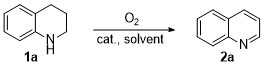
| Entry | Solvent | T/℃ | Reaction time/h | Yield/% |
|---|---|---|---|---|
| 1a | DMF | 100 | 6 | 78 |
| 2a | MeCN | 100 | 6 | <5 |
| 3a | Mesitylene | 100 | 6 | 84 |
| 4a | 1,4-Dioxane | 100 | 6 | 32 |
| 5a | PhCN | 100 | 6 | 69 |
| 6a | Trifluorotoluene | 100 | 6 | 6 |
| 7a | Mesitylene | 80 | 6 | 55 |
| 8a | Mesitylene | 120 | 6 | 94 |
| 9a | Mesitylene | 130 | 6 | 95 |
| 10a | Mesitylene | 120 | 2 | 36 |
| 11a | Mesitylene | 120 | 4 | 66 |
| 12a | Mesitylene | 120 | 7 | 94 |
| 13a | Mesitylene | 120 | 8 | 94 |
| 14b | Mesitylene | 120 | 6 | 80 |
| 15c | Mesitylene | 120 | 6 | 94 |
| 16d | Mesitylene | 120 | 6 | 94 |
a Reaction conditions: THQ (0.5 mmol), solvent (2.0 mL), Cu(I)-TiO2 (50 mg), O2 atmosphere. b THQ (0.5 mmol), mesitylene (2.0 mL), Cu(I)-TiO2 (40 mg), O2 atmosphere, 120 ℃, 6 h. c THQ (0.5 mmol), mesitylene (2.0 mL), Cu(I)- TiO2 (60 mg), O2 atmosphere, 120 ℃, 6 h. d THQ (0.5 mmol), mesitylene (2.0 mL), Cu(I)-TiO2 (70 mg), O2 atmosphere, 120 ℃, 6 h. |
To better position the present Cu(I)-TiO2 catalyst, its performance was compared with representative heterogeneous ODH systems reported for N-heterocycles, using tetrahydroquinoline as a benchmark substrate. Representative literature data show that several previously reported catalysts can outperform the present system in individual metrics under their respective optimized conditions: 2[PW]- OMS-2 affords >99% conversion with 99% selectivity,[7j] FeOx@NGr-C gives complete conversion but a lower selectivity of 83%,[12] and NiMn2-LDH achieves >99% conversion with 86% selectivity.[13] In addition, Co NCs/N- C exhibits nearly quantitative conversion with 100% selectivity in methanol under air at 50 ℃ within 4 h, still reaches 97.2% conversion at 25 ℃ after 24 h, and shows no obvious activity loss after five cycles.[14] More recently, W/ Ga2O3-NC was reported to deliver 99% conversion and 89% selectivity (88% yield) in MeOH/K2CO3 under O2 (505 kPa) at 80 ℃ for 9 h. These comparisons suggest that the present Cu(I)-TiO2 catalyst should not be regarded as universally superior in every single parameter; rather, its significance lies in providing a comparatively uncommon Cu(I)-rich heterogeneous aerobic ODH platform that operates under thermally driven conditions using O2 as the sole oxidant, without added base or elevated oxygen pressure, while still offering good recoverability, recyclability, and competitive overall performance for the substrate family examined.
2.3 Substrate scope
Under the optimized conditions, the catalytic system was evaluated for the oxidative dehydrogenation of THQ derivatives. The results showed that when the hydrogen on the aromatic ring was replaced by methyl or methoxy groups, there was no significant impact on the reaction, with yields of 89%, 86%, 80%, and 87%, respectively (Scheme 1, 2b, 2c, 2f, 2g). These results indicate that electron-donating groups, such as methyl and methoxy, are well tolerated and do not significantly hinder the oxidative dehydrogenation reaction. However, when the hydrogen on the aromatic ring was replaced by electron-withdrawing groups (such as fluorine or chlorine), moderate yields were obtained: 74%, 64%, and 63% (2d, 2e, 2h). This indicates that electron- withdrawing groups reduce reactivity to some extent, leading to lower yields and longer reaction times. At the 2-position, substitution with phenyl and methyl groups resulted in similar yields, approximately 74% (2i, 2j), suggesting that electronic effects may play a more significant role than steric hindrance in this oxidative dehydrogenation reaction. Further, the impact of methyl substitution at the 3- and 4-positions resulted in moderate yields. For disubstituted THQ derivatives, the reaction of 2-methyl substitution with varying groups at the 6-position showed different reactivity. 6-Methoxy-substituted THQ (2o) achieved the highest yield of 88%, while the 6-bromo- substituted THQ (2m) resulted in the lowest yield of 61%. These results indicate that electron-donating groups (such as methoxy) promote the reaction, while electron-with- drawing groups (such as bromine) suppress it.
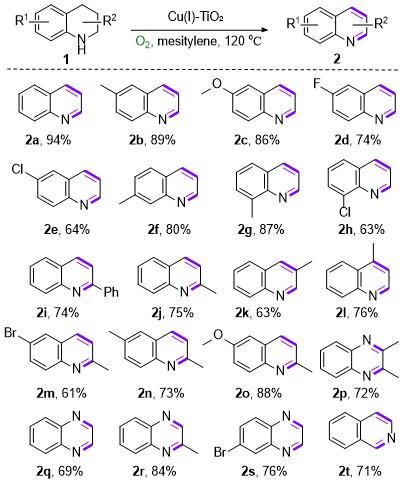
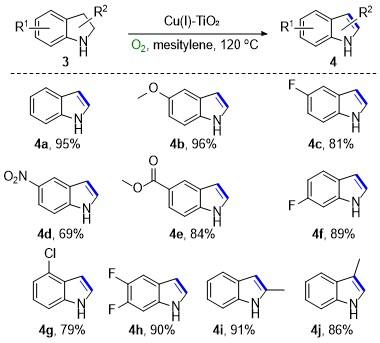
Further exploration of the catalytic system on other nitrogen-containing compounds revealed its applicability to several related heterocycles. 1,2,3,4-Tetrahydroquinoxaline and its derivatives (2p~2s) furnished the corresponding quinoxalines in moderate to good yields (69%~84%), while 1,2,3,4-tetrahydroisoquinoline underwent oxidative dehydrogenation to isoquinoline in 71% yield (2t). These results indicate that the optimized catalytic system is effective not only for tetrahydroquinoline derivatives but also for other benzo-fused N-heterocycles and quinoxaline-type substrates. At the current stage, the scope is mainly limited to these substrate classes, and extension to non-benzo-fused six-membered N-heterocycles such as piperidine derivatives merits further study. To assess the substrate scope and limitations of the copper-catalyzed oxidative dehydrogenation method, a variety of substituted indoline derivatives were examined under optimized reaction conditions (Scheme 2). The results showed that indoline derivatives bearing chloro, methyl, methoxy, fluoro, nitro and ester substituents underwent oxidative dehydrogenation to afford high yields, with products 4b, 4c and 4e~4j yielding between 79% and 96%. Notably, the 5-nitro-substituted derivative (4d) exhibited lower reactivity, with a yield of approximately 69%. These results indicate that the optimized catalytic system exhibits broad applicability to various indoline derivatives and other N-heterocyclic substrates, effectively facilitating the oxidative dehydrogenation reaction.
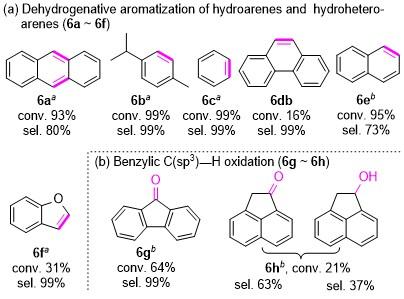
Furthermore, the catalyst was found to efficiently catalyze the dehydrogenative aromatization of 9,10-dihydro- anthracene. To further explore the potential applications of this Cu(I) heterogeneous catalyst, a preliminary optimization of the reaction conditions was conducted. Under the optimized conditions, the catalytic performance of the Cu(I)-TiO2 system was evaluated for a range of hydrocarbons (Scheme 3). For 9,10-dihydroanthracene, the oxidative dehydrogenation reaction catalyzed by Cu(I)-TiO2 achieved a conversion of 93% and a selectivity of 80% (6a). In the case of cyclic dienes, dehydrogenation proceeded to the corresponding aromatic derivatives with excellent yields (6b, 6c), which can be attributed to the active α-sites of the two alkene bonds. When 9,10-dihydrophenanthrene was used as the substrate, the conversion was only 16%, but the selectivity for phenanthrene was as high as 99% (6d). The relatively lower reactivity of 9,10-dihydrophenanthrene compared to other 1,4-dienes is likely due to the lower activity of the benzylic hydrogen. In the case of 1,2-dihy- dronaphthalene, a good yield of naphthalene was obtained without any additives (6e), likely due to the activation of the phenyl group. Interestingly, the oxidation of 2,3-dihydro- benzofuran resulted in an aromatic product with a conversion of 31% and high selectivity, which may be attributed to the activation of the oxygen atom on the phenyl group (6f). The reaction of fluorene produced the corresponding oxygenated product with a conversion of 64% and a selectivity of 99% (6g). A similar trend was observed for acenaphthene, which only gave the corresponding alcohol and ketone with a relatively low conversion (6h). In summary, the Cu(I)-TiO2 system provides an effective alternative method for the dehydrogenative aromatization of hydrocarbons.
2.4 Synthetic applications
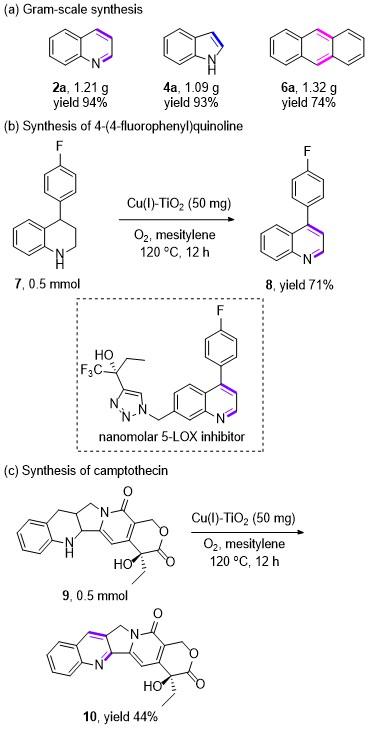
To further demonstrate the synthetic potential of this catalytic system, Cu(I)-TiO2 was applied to the gram-scale synthesis of quinoline, indole, and anthracene, achieving high yields for all tested substrates on a gram scale (Scheme 4a). Subsequently, the utility of this catalytic system for the synthesis of pharmaceutically relevant molecules was showcased. The dehydrogenation of 7 selectively produced 8 in 71% yield (Scheme 4b), which serves as a precursor for a nanomolar 5-lipoxygenase (5-LOX) inhibitor. Furthermore, the synthesis of the natural alkaloid camptothecin (10) was successfully accomplished through the dehydrogenation of 9, providing a yield of 44% (Scheme 4c).
2.5 Mechanistic studies
Control experiments were conducted to probe the catalytic roles of the copper species, oxygen, and the support in the oxidative dehydrogenation of THQ (Table 2). The Cu(I)-TiO2 catalyst (Entry 1), in which Cu+-rich surface species dominate according to XPS, achieved 99% conversion with 94% selectivity. In contrast, no reaction occurred in the absence of catalyst (Entry 2), highlighting the necessity of the catalyst. When Cu(I)-TiO2 was used under a nitrogen atmosphere (Entry 3), the conversion dropped to 24% while high selectivity was maintained, demonstrating that molecular oxygen is required for efficient catalytic turnover. The Cu-TiO2 catalyst (Entry 4), containing mixed Cu+/Cu2+species, gave only 55% conversion and 53% selectivity, indicating that the copper oxidation state strongly affects reactivity. Bare TiO2 (Entry 5) afforded only 20% conversion, confirming that copper-based redox sites are essential, whereas TiO2 mainly acts as the support and an interfacial platform for charge transfer. In addition, the radical inhibitor butylated hydroxytoluene (BHT) suppressed both conversion and selectivity (Entry 6), supporting the involvement of radical intermediates in the reaction.
Table 2 Control experiments for the oxidative dehydrogenation of THQ |
| Entry | Catalyst | Additive | Conv./% | Sel./% |
|---|---|---|---|---|
| 1a | Cu(I)-TiO2 | — | >99 | 94 |
| 2a | — | — | Trace | — |
| 3b | Cu(I)-TiO2 | — | 24 | 95 |
| 4a | Cu-TiO2 | — | 55 | 53 |
| 5a | TiO2 | — | 20 | 33 |
| 6a | Cu(I)-TiO2 | BHTc | 61 | 40 |
a Reaction conditions: THQ (0.5 mmol), mesitylene (2.0 mL), catalyst (50 mg), 120 ℃, 6 h, oxygen atmosphere. b Nitrogen atmosphere. c BHT (2 equiv. relative to THQ). |
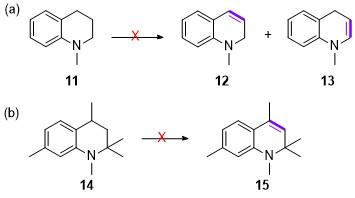
Furthermore, when N-methyl-1,2,3,4-tetrahydroquino- line (11) was used as the substrate (Scheme 5a), no dehydro- genation products were observed, and GC analysis revealed nearly quantitative recovery of the starting material. This observation highlights the essential role of the proton at the N—H position in enabling the dehydrogenation process. In contrast, the use of 2,2,4,7-tetramethyl-1,2,3,4-tetrahydro- quinoline (14) as the substrate also failed to yield the corresponding dehydrogenation product (Scheme 5b), suggesting the potential involvement of an imine intermediate during the reaction. These results collectively indicate that under the current reaction conditions, the direct formation of a C=C bond at the 3,4 positions of tetrahydroquinoline is unlikely to occur.
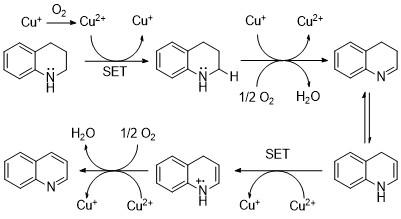
Based on the experimental results and literature reports, we propose that the reaction proceeds through a Cu+/Cu2+- mediated radical pathway (Scheme 6). Under an oxygen atmosphere, Cu+ sites on the catalyst surface can be reversibly oxidized to catalytically competent Cu2+/super- oxide-like species. Subsequent single-electron transfer (SET) from the amine substrate to the oxidized copper center generates an aminium radical cation, which undergoes C—H abstraction to form an imine intermediate. The reduced copper species is then reoxidized by molecular oxygen, closing the catalytic cycle. The imine intermediate may be in equilibrium with an enamine, which then undergoes a second oxidation/C—H abstraction sequence to deliver the final aromatic product.


The heterogeneous nature and stability of the catalyst were assessed by removing the catalyst before the reaction reached completion via simple filtration. After catalyst removal, no further conversion was observed in the filtrate, confirming the heterogeneous nature of the catalytic process and excluding a significant contribution from leached active species. Recycling experiments further demonstrated the durability of the catalyst over ten consecutive cycles. The catalyst maintained nearly unchanged activity and selectivity during the first five cycles. Starting from the 6th cycle, the conversion gradually decreased, while the selectivity only slightly declined and then remained relatively stable. In the 10th run, the catalyst still afforded 90.0% conversion and 93.1% selectivity, indicating that the Cu(I)-TiO2 catalyst possesses good selectivity and satisfactory reusability under the present reaction conditions. The gradual decline in conversion after the 6th cycle may be associated with partial deactivation of active sites or changes in the surface state of the catalyst during repeated recycling.
3 Conclusions
In conclusion, the Cu(I)-TiO2 catalyst efficiently promotes the aerobic oxidative dehydrogenation of a range of N-heterocycles using molecular oxygen as the sole oxidant. Under the optimized conditions, tetrahydroquinoline and indoline derivatives are transformed to the corresponding aromatic products in good to excellent yields, and the system also shows promising activity in the dehydrogenative aromatization of selected hydrocarbons. The K-containing catalyst exhibits improved textural properties relative to Cu-TiO2, suggesting a beneficial structural role of potassium in stabilizing Cu+-rich surface species. Control experiments support the conclusion that copper-based redox sites are essential, while TiO2 serves mainly as the support and interfacial platform. The catalyst is readily recoverable and maintains nearly unchanged activity during the first five cycles and still affords 90.0% conversion and 93.1% selectivity in the 10th run. Based on the XPS results and catalytic control experiments, Cu+-rich surface species are implicated as the key active sites, and a Cu+/Cu2+-mediated radical pathway is proposed.
4 Experimental section
4.1 Instruments and reagents
GC-MS analyses were performed on a Shimadzu GCMS-2010 instrument, and GC analyses were carried out on a Shimadzu GC-2010AF gas chromatograph. High- resolution mass spectra (HRMS) were obtained on an Agilent 6540 Q-TOF mass spectrometer. Powder X-ray diffraction (XRD) patterns were collected on a Rigaku D/MAX-2500PC X-ray diffractometer. Fourier-transform infrared (FTIR) spectra were recorded on a Nicolet iS50 FT-IR spectrometer. N2 adsorption-desorption measurements and Brunauer-Emmett-Teller (BET) surface-area analyses were performed on a Micromeritics ASAP 2020 C Surface Area and Porosimetry Analyzer. Thermogravimetric (TG) analysis was conducted on a NETZSCH STA 449 F5 Jupiter® Simultaneous Thermal Analyzer. X-ray photoelectron spectroscopy (XPS) measurements were carried out on a Thermo Scientific Nexsa G2 Surface Analysis System. All the chemicals were purchased from Energy Chemical Co., Ltd. Unless otherwise specified, reagents and solvents were used as received.
4.2 Preparation of catalysts
The preparation of the Cu(I)-TiO2 catalyst follows the steps outlined below: Dissolve 10 mmol Ti(OBu)4, 40 mmol acetic acid (99.5%), 12 mmol HCl (36%~38%), 0.50 mmol Cu(NO3)2•3H2O, and 0.50 mmol KNO3 in 2 mL of deionized water. Dissolve 1.6 g F68 in 30 mL of ethanol and stir the mixture at room temperature for 1 h. Subsequently, the mixture is treated by vacuum rotary evaporation at 50 ℃, followed by ethanol extraction. The extracted material is placed in an oven to dry overnight at 70 ℃ for 24 h. Finally, the resulting product is calcined in a nitrogen atmosphere at 350 ℃ for 5 h, and ground into fine powder before use. The preparation of Cu-TiO2 follows a similar procedure, with the only difference being the omission of KNO3.
4.3 Typical catalytic procedure for the aerobic oxidation
In a typical experimental procedure, the oxidation reaction was conducted in a rotating reaction tube under a molecular oxygen atmosphere. The reaction progress was monitored by qualitative analysis using GC-MS, and the conversion and selectivity of the products were quantified by GC. Upon completion of the reaction, the mixture was cooled, and the catalyst was recovered by filtration. The recovered catalyst was washed with solvent and dried at 100 ℃ for 12 h before being reused under similar reaction conditions.
4.3.1 General procedure for preparation of compounds 2a~2t
A mixture of 1 (0.50 mmol), Cu(I)-TiO2 (50 mg), and mesitylene (2 mL) was placed in the reaction tube and stirred magnetically at 120 ℃ under 101 kPa oxygen pressure. Upon completion of the reaction, the mixture was cooled, and the catalyst was recovered by filtration. The filtrate was concentrated under reduced pressure. The product was purified by column chromatography on silica gel (300~400 mesh), using petroleum ether/ethyl acetate (V∶V=30∶1~10∶1) as the eluent.
Quinoline (2a):[15a] Colorless oil, isolated yield 94%. 1H NMR (300 MHz, CDCl3) δ: 8.90 (d, J=4.3 Hz, 1H), 8.12 (t, J=7.2 Hz, 2H), 7.79 (d, J=8.2 Hz, 1H), 7.70 (t, J=7.9 Hz, 1H), 7.52 (t, J=7.6 Hz, 1H), 7.39~7.34 (m, 1H).
6-Methylquinoline (2b):[15b] Colorless oil, isolated yield 89%. 1H NMR (300 MHz, CDCl3) δ: 8.88~8.79 (m, 1H), 8.03 (dd, J=19.0, 8.4 Hz, 2H), 7.56 (d, J=11.4 Hz, 2H), 7.35 (dd, J=8.0, 4.1 Hz, 1H), 2.54 (d, J=2.4 Hz, 3H).
6-Methoxyquinoline (2c):[15b] Colorless oil, isolated yield 86%. 1H NMR (300 MHz, CDCl3) δ: 8.75 (dd, J=3.7, 1.9 Hz, 1H), 8.05~7.95 (m, 2H), 7.40~7.28 (m, 2H), 7.05 (d, J=2.6 Hz, 1H), 3.90 (d, J=2.3 Hz, 3H).
6-Fluoroquinoline (2d):[15c] Colorless oil, isolated yield 74%. 1H NMR (300 MHz, CDCl3) δ: 8.80 (d, J=4.4 Hz, 1H), 8.09~7.95 (m, 2H), 7.45~7.27 (m, 3H).
7-Methylquinoline (2f):[15e] Colorless oil, isolated yield 80%. 1H NMR (300 MHz, CDCl3) δ: 8.87 (dd, J=4.6, 2.6 Hz, 1H), 8.10 (d, J=8.3 Hz, 1H), 7.88 (s, 1H), 7.70 (d, J=8.4 Hz, 1H), 7.44~7.29 (m, 2H), 2.57 (s, 3H).
8-Methylquinoline (2g):[15f] Colorless oil, isolated yield 87%. 1H NMR (300 MHz, CDCl3) δ: 8.96~8.93 (m, 1H), 8.12 (dd, J=8.3, 2.5 Hz, 1H), 7.65 (d, J=8.1 Hz, 1H), 7.56 (d, J=6.9 Hz, 1H), 7.47~7.34 (m, 2H), 2.83 (s, 3H).
8-Chloroquinoline (2h):[15g] Colorless oil, isolated yield 63%. 1H NMR (300 MHz, CDCl3) δ: 9.05~8.98 (m, 1H), 8.15 (d, J=8.4 Hz, 1H), 7.81 (d, J=7.5 Hz, 1H), 7.72 (d, J=8.2 Hz, 1H), 7.45 (d, J=8.1 Hz, 2H).
2-Methylquinoline (2j):[15a] Colorless oil, isolated yield 75%. 1H NMR (300 MHz, CDCl3) δ: 8.11~7.96 (m, 2H), 7.77~7.65 (m, 2H), 7.52~7.42 (m, 1H), 7.29~7.23 (m, 1H), 2.75 (s, 3H).
3-Methylquinoline (2k):[15e] Colorless oil, isolated yield 63%. 1H NMR (300 MHz, CDCl3) δ: 8.74 (d, J=3.0 Hz, 1H), 8.05 (d, J=8.2 Hz, 1H), 7.83 (s, 1H), 7.68 (d, J=8.2 Hz, 1H), 7.60 (t, J=7.8 Hz, 1H), 7.46 (t, J=7.8 Hz, 1H), 2.45 (s, 3H).
4-Methylquinoline (2l):[15f] Colorless oil, isolated yield 76%. 1H NMR (300 MHz, CDCl3) δ: 8.75~8.68 (m, 1H), 8.07 (d, J=8.5 Hz, 1H), 7.89 (d, J=8.4 Hz, 1H), 7.69~7.59 (m, 1H), 7.53~7.42 (m, 1H), 7.12 (d, J=4.5 Hz, 1H), 2.60 (s, 3H).
6-Methoxy-2-methylquinoline (2o):[15j] Black solid, isolated yield 88%. m.p. 62~ 64 ℃; 1H NMR (300 MHz, CDCl3) δ: 7.93 (t, J=8.1 Hz, 2H), 7.36~7.31 (m, 1H), 7.23 (s, 1H), 7.05 (d, J=2.6 Hz, 1H), 3.92 (d, J=2.2 Hz, 3H), 2.71 (d, J=2.2 Hz, 3H).
2,3-Dimethylquinoxaline (2p):[15k] White solid, isolated yield 72%. m.p. 104~108 ℃; 1H NMR (300 MHz, CDCl3) δ: 8.00~7.96 (m, 2H), 7.69~7.65 (m, 2H), 2.76~2.71 (m, 6H).
2-Methylquinoxaline (2r):[15k] Red liquid, isolated yield 84%. 1H NMR (300 MHz, CDCl3) δ: 8.59 (d, J=2.3 Hz, 1H), 7.91 (dd, J=16.9, 7.9 Hz, 2H), 7.57 (t, J=7.4 Hz, 2H), 2.63 (s, J=2.5 Hz, 3H).
6-Bromoquinoxaline (2s):[15b] Red solid, isolated yield 76%. m.p. 54~59 ℃; 1H NMR (300 MHz, CDCl3) δ: 8.84 (d, J=2.3 Hz, 2H), 8.28 (d, J=2.4 Hz, 1H), 8.02~7.92 (m, 1H), 7.84 (d, J=8.9 Hz, 1H).
Isoquinoline (2t):[15d] White solid, isolated yield 71%. m.p. 26~28 ℃; 1H NMR (300 MHz, CDCl3) δ: 9.25 (s, 1H), 8.52 (dd, J=5.8, 2.1 Hz, 1H), 7.95 (d, J=8.2 Hz, 1H), 7.80 (d, J=8.2 Hz, 1H), 7.71~7.54 (m, 3H).
4.3.2 General procedure for preparation of compounds 4a~4j
A mixture of 3 (0.50 mmol), Cu(I)-TiO2 (50 mg), and mesitylene (2 mL) was placed in the reaction tube and stirred magnetically at 120 ℃ under 101 kPa oxygen pressure. Upon completion of the reaction, the mixture was cooled, and the catalyst was recovered by filtration. The filtrate was concentrated under reduced pressure. The product was purified by column chromatography on silica gel (300~400 mesh), using petroleum ether/ethyl acetate (V∶V=10∶1~5∶1) as the eluent.
5-Methoxy-1H-indole (4b):[15m] Yellow solid, isolated yield 96%. m.p. 52~55 ℃; 1H NMR (300 MHz, CDCl3) δ: 8.05 (s, 1H), 7.28 (d, J=9.2 Hz, 1H), 7.15 (d, J=17.6 Hz, 2H), 6.87 (d, J=8.8 Hz, 1H), 6.49 (d, J=3.4 Hz, 1H), 3.86 (s, 3H).
5-Fluoro-1H-indole (4c):[15n] White solid, isolated yield 81%. m.p. 45~48 ℃; 1H NMR (300 MHz, CDCl3) δ: 8.10 (s, 1H), 7.56 (t, J=7.1 Hz, 1H), 7.19 (d, J=3.3 Hz, 1H), 7.08 (d, J=9.8 Hz, 1H), 6.91 (t, J=9.3 Hz, 1H), 6.55 (d, J=3.6 Hz, 1H).
5-Nitro-1H-indole (4d):[15o] Yellow solid, isolated yield 69%. m.p. 140~142 ℃; 1H NMR (300 MHz, CDCl3) δ: 8.65 (d, J=22.5 Hz, 2H), 8.17~8.04 (m, 1H), 7.50~7.34 (m, 2H), 6.74 (s, 1H).
Methyl 1H-indole-5-carboxylate (4e):[15p] White solid, isolated yield 84%. m.p. 126~128 ℃; 1H NMR (300 MHz, CDCl3) δ: 8.46 (d, J=22.8 Hz, 2H), 7.90 (dd, J=8.7, 2.4 Hz, 1H), 7.39 (d, J=8.5 Hz, 1H), 7.30~7.24 (m, 1H), 6.64 (s, 1H), 3.93 (s, 3H).
6-Fluoro-1H-indole (4f):[15m] White solid, isolated yield 89%. m.p. 72~76 ℃; 1H NMR (300 MHz, CDCl3) δ: 8.12 (s, 1H), 7.26 (d, J=16.6 Hz, 3H), 6.93 (t, J=9.1 Hz, 1H), 6.50 (s, 1H).
4-Chloro-1H-indole (4g):[15m] Yellow oil, isolated yield 79%. 1H NMR (300 MHz, CDCl3) δ: 8.36~7.96 (m, 1H), 7.27~7.07 (m, 4H), 6.66 (d, J=3.5 Hz, 1H).
5,6-Difluoro-1H-indole (4h):[8c] Brown solid, isolated yield 90%. m.p. 92~95 ℃; 1H NMR (300 MHz, CDCl3) δ: 8.14 (s, 1H), 7.37 (dd, J=10.9, 7.9 Hz, 1H), 7.25~7.11 (m, 2H), 6.51 (s, 1H); 13C NMR (151 MHz, Chloroform-d) δ: 149.0, 148.9, 147.6, 147.5, 147.4, 147.3, 146.0, 145.9, 130.9, 130.8, 125.7, 125.7, 123.2, 123.1, 107.2, 107.1, 103.0, 103.0, 99.1, 98.9.
3-Methyl-1H-indole (4j):[15a] White solid, isolated yield 86%. m.p. 92~97 ℃; 1H NMR (300 MHz, CDCl3) δ: 7.86 (s, 1H), 7.60 (d, J=7.7 Hz, 1H), 7.36 (d, J=8.0 Hz, 1H), 7.23~7.11 (m, 2H), 6.98 (s, 1H), 2.35 (s, 3H).
4.3.3 General procedure for the preparation of compounds 6a~6h
A mixture of substrate 5 (1.0 mmol), Cu(I)-TiO2 (50 mg), and cyclohexanone (2.0 mL) was stirred at 100 ℃ under an O2 atmosphere for the indicated time. Al(NO3)3 (0.075 mmol) was additionally used for substrates 5a~5c and 5f. After completion of the reaction, the mixture was cooled and filtered through a short pad of Celite to remove the heterogeneous catalyst and inorganic solids.
For 6a, 6b, 6d~6f, the filtrate was treated with saturated aqueous NaHSO3 to remove residual cyclohexanone. After extraction, the combined organic layers were washed with saturated aqueous NaHCO3 and brine, dried over anhydrous Na2SO4, filtered, and concentrated under reduced pressure. Dichloromethane was used for 6a, 6d, and 6e, petroleum ether for 6b, and n-pentane for 6f. The NaHSO3 treatment of 6f was performed at 0~5 ℃ for 5 min, whereas the other products were treated at room temperature for 10~15 min. Compounds 6a, 6d, and 6e were purified by silica gel column chromatography using petroleum ether/dichloromethane (V∶V=100∶1). Compound 6b was purified through a short neutral-alumina plug using petroleum ether, and 6f was purified by neutral-alumina column chromatography using petroleum ether.
For 6g and 6h, the filtrates were concentrated directly under reduced pressure. The residues were purified by silica gel column chromatography using petroleum ether/ ethyl acetate (V∶V=30∶1) for 6g and a gradient of petroleum ether/ethyl acetate from 30∶1 to 10∶1 (V∶V) for 6h.
For the isolation of 6c, the reaction was performed on a 10 mmol scale under otherwise identical conditions. After cooling to 0~5 ℃, the O2 atmosphere was replaced with N2, and the catalyst was removed by filtration. The filtrate was subjected to fractional distillation using a low-holdup packed column. Fractions collected at a head temperature of 79~83 ℃ were analyzed by GC and combined to afford 6c.
Anthracene (6a):[15q] White solid, isolated yield 74%. m.p. 210~215 ℃; 1H NMR (300 MHz, CDCl3) δ: 8.44 (s, 2H), 8.02 (dd, J=6.6, 3.4 Hz, 4H), 7.50~7.46 (m, 4H).
p-Cymene (6b):[15r] Colorless oil, isolated yield 98%. 1H NMR (300 MHz, CDCl3) δ: 7.18 (s, 4H), 2.98~2.89 (m, 1H), 2.38 (d, J=2.4 Hz, 3H), 1.34~1.27 (m, 6H).
Benzene (6c):[15q] Colorless oil, isolated yield 98%. 1H NMR (300 MHz, CDCl3) δ: 7.39~7.32 (m, 6H).
Phenanthrene (6d):[15q] White solid, isolated yield 16%. m.p. 98~100 ℃; 1H NMR (300 MHz, CDCl3) δ: 8.71 (d, J=8.1 Hz, 2H), 7.90 (d, J=7.8 Hz, 2H), 7.78~7.72 (m, 2H), 7.72~7.57 (m, 4H).
Naphthalene (6e):[15q] White solid, isolated yield 69%. m.p. 80~82 ℃; 1H NMR (300 MHz, CDCl3) δ: 7.87 (dd, J=6.4, 3.4 Hz, 4H), 7.50 (dd, J=6.6, 3.5 Hz, 4H).
Benzofuran (6f):[15e] Colorless oil, isolated yield 31%. 1H NMR (300 MHz, CDCl3) δ: 7.57 (d, J=5.8 Hz, 2H), 7.48 (d, J=8.0 Hz, 1H), 7.28~7.17 (m, 2H), 6.72 (s, 1H).
9H-Fluoren-9-one 6g:[15s] Yellow solid, isolated yield 64%. m.p. 80~83 ℃; 1H NMR (300 MHz, CDCl3) δ: 7.65 (d, J=7.4 Hz, 2H), 7.54~7.44 (m, 4H), 7.30 (d, J=7.4 Hz, 2H).
Acenaphthylen-1(2H)-one (6h-1):[15t] Yellow solid, isolated yield 13%. m.p. 121~122 ℃; 1H NMR (300 MHz, CDCl3) δ: 8.09 (d, J=8.2 Hz, 1H), 7.97 (d, J=7.0 Hz, 1H), 7.83 (d, J=8.4 Hz, 1H), 7.76~7.66 (m, 1H), 7.63~7.57 (m, 1H), 7.47 (d, J=7.0 Hz, 1H), 3.83 (s, 2H).
1,2-Dihydroacenaphthylen-1-ol (6h-2):[15u] Yellow solid, isolated yield 7.8%. m.p. 145~148 ℃; 1H NMR (300 MHz, CDCl3) δ: 7.76 (dd, J=6.2, 3.0 Hz, 1H), 7.67 (d, J=8.3 Hz, 1H), 7.60~7.46 (m, 3H), 7.32 (d, J=7.0 Hz, 1H), 5.74 (s, 1H), 3.81 (dd, J=17.9, 7.2 Hz, 1H), 3.26 (d, J=17.7 Hz, 1H), 2.04 (d, J=5.9 Hz, 1H).
4.3.4 Preparation of compound 8
A mixture of 7 (0.50 mmol), Cu(I)-TiO2 (50 mg), and mesitylene (2 mL) was placed in a reaction tube and stirred at 120 ℃ for 12 h under an O2 atmosphere (101 kPa). Upon completion of the reaction, the mixture was cooled, and the catalyst was recovered by filtration. The product was purified by silica gel column chromatography using dichloromethane/methanol (V∶V=20∶1) as the eluent.
4-(4-Fluorophenyl)quinoline (8):[15v] White solid, isolated yield 71%. m.p. 78~80 ℃; 1H NMR (300 MHz, CDCl3) δ: 9.00 (t, J=3.4 Hz, 1H), 8.24 (d, J=8.5 Hz, 1H), 7.93 (d, J=8.4 Hz, 1H), 7.80 (t, J=7.8 Hz, 1H), 7.60~7.52 (m, 3H), 7.37 (t, J=3.2 Hz, 1H), 7.30 (d, J=6.6 Hz, 2H); 13C NMR (75 MHz, CDCl3) δ: 164.7, 161.4, 150.1, 148.9, 147.5, 134.1, 131.4, 131.3, 130.1, 129.6, 126.9, 126.9, 125.7, 121.5, 116.0, 115.7.
4.3.5 Preparation of compound 10
A mixture of 9 (0.50 mmol), Cu(I)-TiO2 (50 mg), and mesitylene (2 mL) was placed in a reaction tube and stirred at 120 ℃ for 12 h under an O2 atmosphere (101 kPa). Upon completion of the reaction, the mixture was cooled, and the catalyst was recovered by filtration. The product was purified by silica gel column chromatography using dichloromethane/methanol (V∶V=30∶1) as the eluent.
(S)-4-ethyl-4-hydroxy-1,12-dihydro-14H-pyrano[3',4':6,7]indolizino[1,2-b]quinoline-3,14(4H)-dione (10):[15w] Yel- low solid, isolated yield 44%. m.p. 260~262 ℃; 1H NMR (300 MHz, DMSO-d6) δ: 8.69 (s, 1H), 8.14 (dd, J=13.2, 8.7 Hz, 2H), 7.86 (t, J=7.3 Hz, 1H), 7.71 (t, J=8.0 Hz, 1H), 7.35 (s, 1H), 6.54 (d, J=2.7 Hz, 1H), 5.36 (d, J=44.5 Hz, 4H), 1.96~1.78 (m, 2H), 0.89 (s, 3H); 13C NMR (151 MHz, DMSO-d6) δ: 172.5, 156.8, 152.6, 150.0, 147.9, 145.5, 131.5, 130.4, 129.8, 129.0, 128.5, 127.9, 127.6, 119.1, 96.7, 72.4, 65.3, 50.2, 30.3, 7.8.
Supporting Information Catalyst characterization data, including FTIR spectra, TG curves, N2 adsorption-desorp- tion/BET parameters, and hot-filtration and recycling experiments; reaction-condition optimization for the Cu(I)- TiO2-catalyzed aerobic oxidation of substrates 5a~5h to afford the 6-series products, including 6a~6h; and copies of 1H NMR and 13C NMR spectra for the products 2a~2t, 4a~4j, 6a~6h, 8 and 10, where applicable. The Supporting Information is available free of charge via the Internet at http://sioc-journal.cn.
(Cheng, F.)