



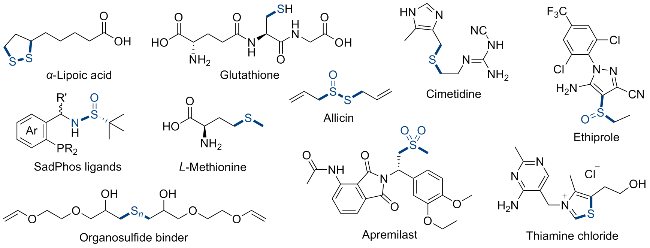
Sulfur-containing organic molecules, which offer a versatile platform for innovation in catalysis, materials engineering, and medicinal development through their distinctive reactivities and biological relevance, are indispensable in modern science (Figure 1). Owing to the six valence electrons, sulfur is capable of exhibiting a variety of oxidation states, enabling it to manifest in diverse forms.[1-3] Such unique reactivity profile of sulfur, distinct from other heteroatom analogs, renders sulfur-containing compounds indispensable as synthetic building blocks, catalysts, and ligands, facilitating a wide range of transformations for accessing complex molecular architectures and functional materials.[4-11] Beyond their chemical roles, these compounds serve as essential bioactive molecules such as L- methionine, glutathione, α-lipoic acid, and thiamine, which are integral to many vital biological processes.[12-16] Analyses of U.S. Food and Drug Administration (FDA)-app- roved drugs reveal that sulfur holds a prominent position as a privileged heteroatom in medicinal chemistry, with its presence confirmed in more than 362 approved pharmaceuticals, following only oxygen and nitrogen in frequency.[17-21] The agrochemical industry similarly relies on such motifs, with over 30% agrochemicals incorporating at least one sulfur atom, primarily found in fungicides, herbicides, and insecticides.[22-25] Consequently, the development of methodologies for the efficient and selective construction of C—S bonds remains a vibrant and enduring frontier in organic synthetic chemistry.[26-28]
Over the past decades, transition-metal-catalyzed cross- coupling has witnessed remarkable advances, establishing itself as a preferred strategy for the efficient construction of diverse chemical bonds.[29-36] Precious 4d and 5d transition-metal catalysts, such as ruthenium,[37] rhodium,[38] palladium,[39] iridium,[40] and platinum,[41] have contributed significantly to these achievements due to their high catalytic activities and excellent selectivity. Nevertheless, inherent limitations, including expensive cost, poor abundance, and biological toxicity associated with these precious metals, have promoted persistent research toward developing sustainable and earth-abundant alternatives. Among 3d transition metals, cobalt stands out for its rich redox chemistry and propensity toward single-electron oxidation-reduction events compared to commonly used precious metal catalysts. Its relatively low electronegativity further contributes to the enhanced nucleophilic behavior of organocobalt species. These distinctive properties offer great potential for innovative mechanistic pathways and unusual selectivity profiles. Coupled with its cost-effec- tiveness, abundant reserves, and low biological toxicity, cobalt emerges as an ideal and appealing candidate for developing novel catalytic transformations.[42-48]
Although the use of cobalt catalysis for C—S bond formation dates back to as early as the 1970s,[49] progress in this area has long been impeded by the inherent poisoning effect of sulfur-containing substrates. The strong coordinating ability of the lone pair electrons in organosulfur compounds can readily deactivate transition-metal catalysts such as cobalt complexes, which poses a more severe challenge relative to the construction of other carbon-hete- roatom bonds. Recently, advances in radical chemistry[50-55] and the development of novel sulfenylating reagents[56-58] have opened new avenues for establishing diverse cobalt-catalyzed C—S bond-forming reactions via non-classical pathways. These developments have led to rapid expansion of the field, yielding substantial progress in recent years. Although several reviews have addressed transition-metal-catalyzed sulfurization methodologies, they have predominantly focused on catalytic systems based on iron, nickel, and copper.[59-68] To the best of our knowledge, a comprehensive review dedicated specifically to cobalt-catalyzed C—S bond formation remains unavailable. This review aims to fill that gap by summarizing recent advances in cobalt-catalyzed C—S bond construction reported between 2021 and 2025, covering the synthesis of thioethers, sulfones, sulfur heterocycles, sulfoxides, disulfides, sulfinamides, and thiols. We focus primarily on studies related to the development of synthetic methodologies, excluding those centered on biological or material applications. Emphasis is placed on research background, substrate scope, mechanistic insights, and potential applications. By integrating perspectives informed by our own recent findings, we provide commentary on these elegant advances and conclude with an outlook on future directions in this emerging field.
1 Cobalt-catalyzed C—S bond formation to access thioethers
A pivotal and atom-economical approach to C—S bond formation is the hydrothiolation of unsaturated C—C bonds, commonly known as the thiol-ene and thiol-yne reactions, which offers direct access to valuable thioethers. The regioselectivity of these transformations is governed by their underlying mechanism: electrophilic pathways deliver Markovnikov products, while radical pathways favor anti-Markovnikov adducts. The propensity for thiyl radical generation under typical conditions invariably steers the reaction towards the anti-Markovnikov pathway, making the selective synthesis of Markovnikov products a formidable challenge in conventional reaction design.
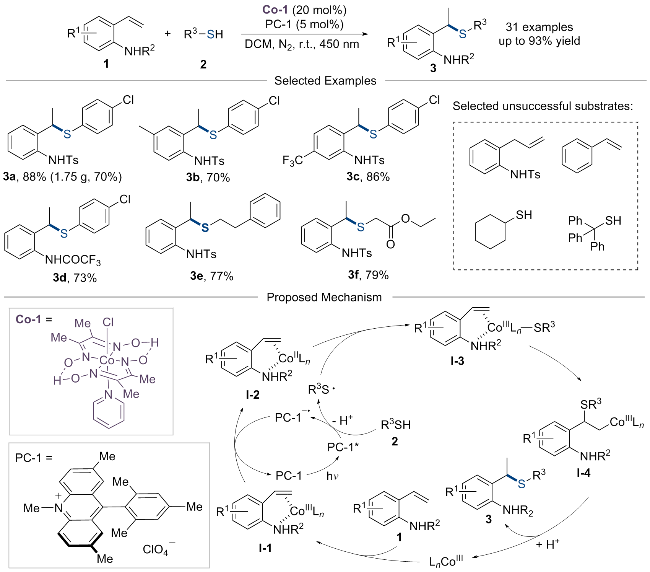
In 2021, our group[69] realized the challenging radical Markovnikov hydrothiolation of styrenes 1 with thiols 2 under remarkably mild conditions (Scheme 1). The success of this transformation relied on a synergistic combination of photoredox and cobalt catalysis, which enabled the reaction to proceed without stoichiometric additives while exhibiting exclusive regioselectivity. Although the alkene substrates were limited to ortho-substituted styrenes, the protocol demonstrated broad functional group tolerance and was amenable to gram-scale synthesis. Mechanistic studies revealed that the cobaloxime catalyst initially coordinates with the amino directing group to activate the alkene, forming intermediate I-1. Concurrently, the photoexcited acridinium species oxidizes the thiol to generate a thiyl radical. Subsequent single electron transfer (SET) between I-1 and the reduced photocatalyst affords cobalt intermediate I-2 and regenerates the photocatalytic cycle. The capture of a thiyl radical by I-2 yields cobalt-sulfur species I-3, which undergoes exclusive Markovnikov- selective migratory insertion into the double bond. Protonation of the resulting intermediate I-4 furnishes the desired product. Notably, the protected amine group plays a critical role as a directing group, as styrene is not tolerated under these conditions. Furthermore, the cobaloxime catalyst exhibits insufficient reactivity to activate non-conju- gated alkenes, and steric hindrance accounts for the incompatibility observed with secondary and tertiary thiols.
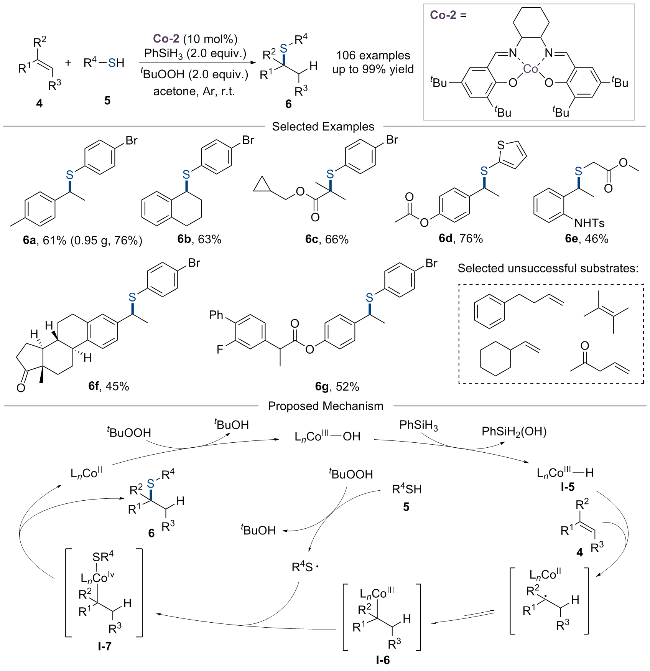
To overcome the directing-group dependence of our previously developed Markovnikov hydrothiolation, our group next focused on a cobalt-catalyzed hydrogen atom transfer (HAT) strategy. This approach enables Markovnikov-selective functionalization of alkenes without requiring a directing group, as the in situ generated cobalt hydride species mediates regioselective HAT across the double bond. Guided by this mechanistic design principle, we[70] successfully established a mild and efficient protocol for cobalt-catalyzed Markovnikov hydrothiolation of alkenes 4 with thiols 5, significantly broadening the accessible alkene scope (Scheme 2). Using salen-cobalt complex Co-2 as the catalyst, the reaction is initiated by oxidation with tert-butyl hydroperoxide, followed by reduction with phenylsilane to generate the key cobalt hydride intermediate I-5. This intermediate then participates in regioselective HAT to the alkene, affording organocobalt species I-6. Concurrently, a thiyl radical derived from the thiol undergoes oxidative addition to I-6, forming cobalt-sulfide complex I-7, which subsequently delivers the desired product via reductive elimination while regenerating the cobalt catalyst. The protocol exhibits broad substrate scope across mono-, di-, and trisubstituted alkenes and proves practical for gram-scale synthesis and late-stage modification. How- ever, its incompatibility with unactivated alkenes remains a current limitation.
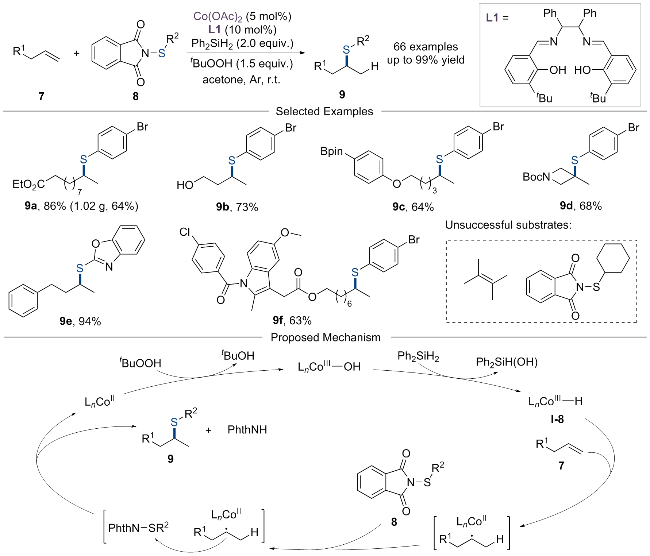
Despite the aforementioned progress in radical Markovnikov thiol-ene reactions, direct hydrothiolation of unactivated alkenes with high regioselectivity control remained elusive. Building on our earlier finding that electrophilic sulfenylating reagents, N-sulfenyl phthalimides, can serve as efficient alkyl radical acceptors in photoredox-mediated HAT catalysis for C—S bond formation,[71-72] we[73] extended this concept to a cobalt-catalyzed HAT manifold. This strategy enabled us to accomplish the challenging Markovnikov radical hydrothiolation of unactivated alkenes 7 and N-sulfenyl phthalimides 8 using a Ph2SiH2/ tert-butyl hydroperoxide (TBHP)/Co(II) catalytic system (Scheme 3). The transformation proceeded with exclusive regioselectivity and broad functional group tolerance. With the exception of tetrasubstituted alkenes and N-alkyl-sulfenyl phthalimides, a wide range of substrates including diverse unactivated alkenes, N-aryl-sulfenyl phthalimides, and structurally complex frameworks proved compatible with this cobalt catalytic system, affording Markovnikov products 9 in satisfactory yields. The synthetic utility of this protocol was demonstrated through successful scale-up synthesis and subsequent derivatization of the hydrothiolation products. Mechanistic studies, including radical trapping experiments, competition experiments, deuterium labeling, and kinetic isotope effect (KIE) measurements, revealed that the observed regioselectivity originates from the selective addition of cobalt hydride intermediate I-8 to the alkene double bond. The resulting alkyl radical is subsequently trapped by the N-sulfenyl phthalimide, enabling efficient and selective C—S bond formation.
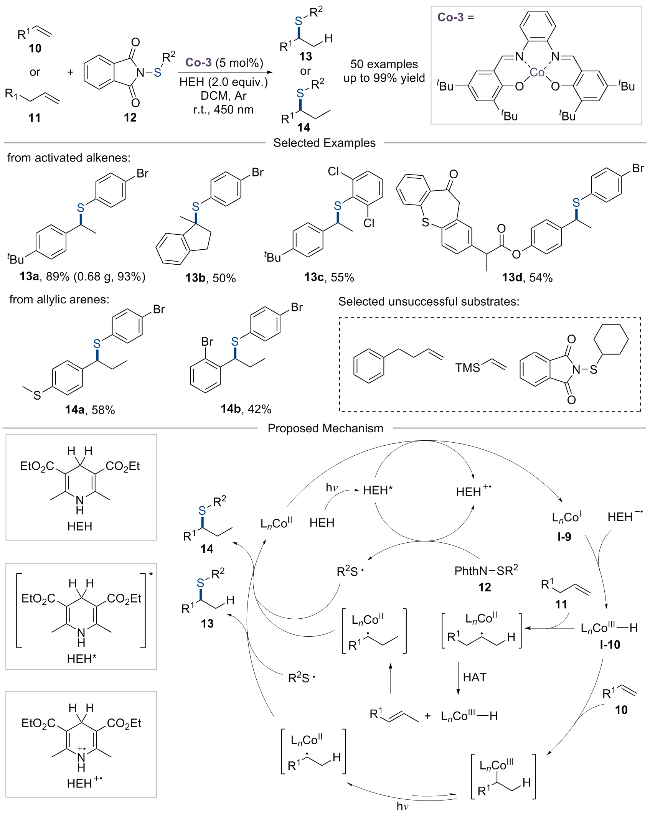
Current metal-hydride hydrogen atom transfer (MHAT) methodologies for Markovnikov hydrothiolation of alkenes predominantly rely on silane reductants, specialized sulfide nucleophiles or radical acceptors, and external oxidants. The development of simpler and more efficient catalytic alternatives therefore remains an attractive goal. Recently, our group[74] established a light-driven cobalt-catalyzed protocol for Markovnikov hydrothiolation of alkenes 10 using Hantzsch ester as a mild hydride donor and N-sul- fenyl phthalimides 12 as thiyl radical precursors (Scheme 4). This system delivers a broad range of branched thioethers 13 in moderate to good yields with exclusive regioselectivity, although unactivated alkenes and N-alkyl- sulfenyl phthalimides proved to be less ineffective substrates. Notably, when allylic arenes 11 were employed, the reaction proceeded via an MHAT/retro-MHAT process, providing access to branched benzyl thioethers 14 that are otherwise inaccessible under previous catalytic systems, underscoring the unique value of this cobalt- based protocol. Mechanistic studies confirmed that Hant- zsch ester plays a pivotal dual role, acting as both a reducing agent and a hydrogen atom donor. Upon photoexcitation, it reduces the salen-cobalt catalyst to generate low- valent cobalt species I-9 and simultaneously reduces the N-sulfenyl phthalimide to release a thiyl radical, while also supplying the hydrogen atom required for formation of the key cobalt hydride intermediate I-10.
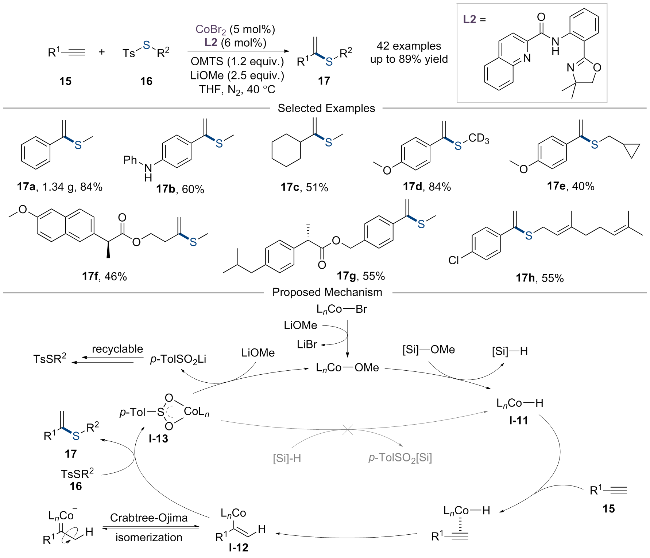
One key advantage of cobalt-catalyzed HAT as a versatile functionalization strategy lies in its broad substrate scope, which extends beyond alkenes to include alkynes. In 2024, the Lu group[75] reported a cobalt-catalyzed Markovnikov hydrothiolation of alkynes 15 with masked sulfenylating reagents 16 (Scheme 5). This method enables the diverse synthesis of branched alkenyl thioethers 17 with high regioselectivity and excellent functional group compatibility. Its practical utility and sustainability were demonstrated through scale-up synthesis, byproduct recycling, and downstream transformations of the branched alkenyl products. Notably, the branched products exhibited high air sensitivity, in contrast to their linear counterparts, and readily underwent aerobic oxidation to afford α-alkyl- thio ketones. The strategic use of masked sulfenylating reagents proved critical, as it suppressed the formation of byproducts such as thiols and disulfides, prevented excessive thioetherification, and thereby addressed the chemo- selectivity challenge inherent to this transformation. Based on control experiments, radical inhibition studies, deuterium labeling experiments, and Hammett plot analysis, the authors proposed a plausible mechanism. The catalytic cycle commences with ligand exchange between cobalt bromide and lithium methoxide, followed by hydrosilylation to generate the key cobalt hydride species I-11. After alkyne coordination, Markovnikov-selective migratory insertion affords alkenyl cobalt intermediate I-12, which subsequently reacts with the sulfenylating reagent to deliver the branched alkenyl product and p-toluenesulfonate cobalt intermediate I-13. Final ligand exchange between I-13 and lithium methoxide regenerates the cobalt catalyst, completing the catalytic cycle.
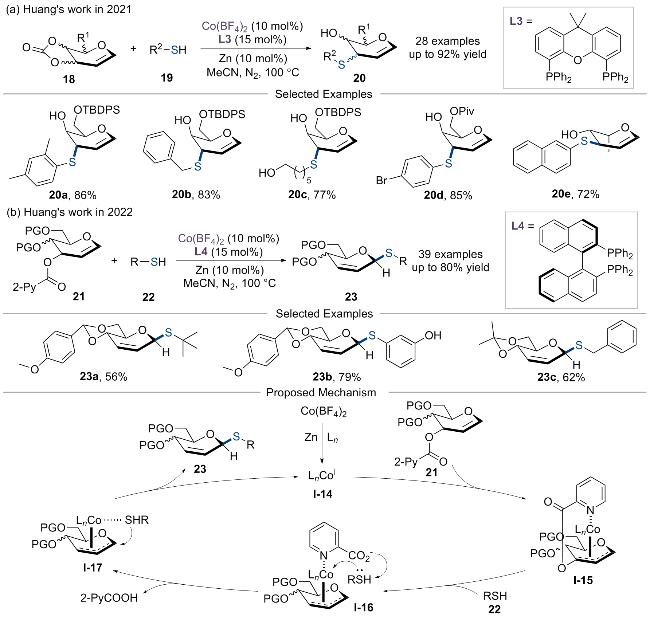
The incorporation of C—S bond into sugar scaffolds represents an important pursuit in modern glycochemistry, driven by the diverse biological activities of sulfur-con- taining sugars. However, methods for the selective and divergent synthesis of S-sugars, particularly 1-thiosugars and 3-thiosugars, remain largely underdeveloped. Recent advances in cobalt catalysis and the continuous evolution of glycosyl donors offer promising solutions to this long- standing challenge. In 2021, the Huang group[76] reported a cobalt-catalyzed thioglycosylation for the selective synthesis of 3-thiosugars 20 from 3,4-O-carbonate glycal donors 18 and thiols 19 (Scheme 6a). The reaction delivered high yields and excellent regiocontrol across a wide range of thiols and glycals, highlighting its synthetic potential. Notably, the same substrates could be efficiently converted to β-1-thiosugars under palladium catalysis. Experimental and density functional theory (DFT) studies attributed the observed regioselectivity to distinct hydrogen-bonding co- ordination modes between the thiol and the metal-glycal intermediate. Building on this work, the same group[77] subsequently developed an efficient method for the stereo- selective synthesis of β-1-thioglycosides in 2022 through strategic modification of the ligand and substrates (Scheme 6b). This optimized protocol employs glucosyl-3-pyri- dinates 21 and thiols 22 under earth-abundant cobalt catalysis, affording a series of glycosylation products 23 including thioglycopeptides in satisfactory yields. The proposed mechanism proceeds as follows: reduction of cobalt fluoroborate by Zn/phosphine generates low-valent cobalt complex I-14, which coordinates both the pyridyl nitrogen and the double bond of the substrate to form intermediate I-15. Cleavage of I-15 produces the key cobalt-π-allyl species I-16. Subsequent thiol coordination displaces the pyridylcarboxylate, giving intermediate I-17, which undergoes intramolecular nucleophilic addition to forge the C—S bond and regenerate the cobalt catalyst.
The selective difunctionalization of alkenes enables the simultaneous incorporation of two distinct functional groups in a single step, offering a direct and efficient route from simple alkenes to complex molecular architectures. Conventional thiol-ene reactions are largely limited to the synthesis of relatively simple thioethers, as a result, alkene thioetherification via a difunctionalization strategy has in- creasingly attracted attention from the synthetic community. This approach enables more efficient and diverse access to complex thioethers, addressing the inherent constraints of traditional methods.
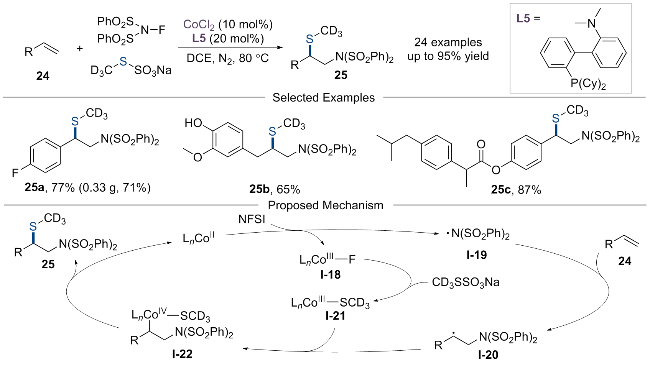
Given the importance of the trideuteromethylthiol group, the Wu group[78] developed a reliable cobalt-catalyzed stra- tegy for the radical difunctionalization of alkenes 24 in 2023 (Scheme 7). Employing the versatile deuterated Bunte salt CD3SSO3Na as the sulfenylating reagent and N-fluorobenzenesulfonimide (NFSI) as both oxidant and aminating agent, this three-component reaction provides efficient and general access to a variety of aminotrideuteromethylthiolation products 25. The strategy is amenable to gram-scale synthesis and enables the late-stage modification of diverse complex alkenes, underscoring its practical value. Notably, the Heck-type trideuteromethylthiolation proceeds effectively even in the absence of the cobalt catalyst. A series of control experiments supports the proposed mechanism: (i) NFSI oxidizes the cobalt catalyst to generate cobalt-fluoride intermediate I-18 and amidyl radical I-19; (ii) radical addition to the alkene affords alkyl radical I-20; (iii) ligand exchange between I-18 and the deuterated Bunte salt produces cobalt-sulfur species I-21; (iv) combination of I-21 with alkyl radical I-20 forms alkyl cobalt species I-22; and (v) reductive elimination delivers the product and regenerates the cobalt catalyst.
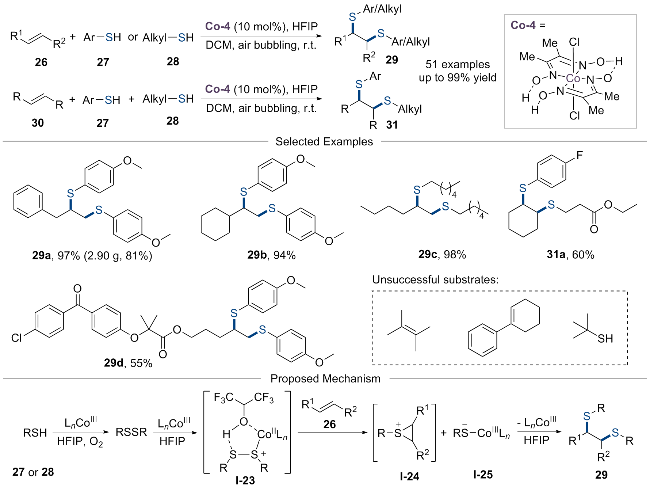
Vicinal dithioethers represent a structurally unique class of organosulfur compounds. However, the direct dithiolation of readily available alkenes with thiols, particularly for the synthesis of unsymmetric vicinal dithioethers, has rarely been reported, representing a long-standing synthetic challenge that limits access to diverse disulfide-based sca- ffolds. To address this, our group[79] recently established a simple and general strategy employing a cobaloxime catalyst under aerobic conditions (Scheme 8). With essential promotion by hexafluoroisopropanol (HFIP), a range of unactivated alkenes 26 and thiols 27 or 28 participated in this cobalt-catalyzed system, delivering the desired dithiolated products 29 in good to excellent yields. Notably, this three-component protocol also enabled challenging unsymmetric dithiolations with moderate yields. The practicality of the method was underscored by scalable synthesis and late-stage dithiolation of complex alkenes. Tetrasubstituted alkenes, aryl alkenes, and tertiary thiols were not compatible with the current system. Mechanistic investigations revealed that the cobaloxime serves a dual role as both a redox and Lewis acid catalyst. Furthermore, the high dielectric constant and excellent hydrogen-bond donating capacity of HFIP synergistically stabilize key intermediates, driving the reaction with high efficiency. The mechanism is initiated by cobaloxime-catalyzed radical oxidation of the thiol under molecular oxygen, generating disulfide. The disulfide is then converted to the HFIP- stabilized cobalt-sulfur intermediate I-23. Subsequent electrophilic addition of I-23 to the unactivated alkene produces sulfonium intermediate I-24 and nucleophilic cobalt-sulfide species I-25. A final nucleophilic substitution delivers the product and regenerates the catalytic cycle. Notably, the high chemoselectivity observed in unsymmetric dithiolation arises from the combined effects of the greater stability of aryl thiyl radicals, aromatic ring stabilization, and the enhanced nucleophilicity of the cobalt-alkylsulfide species.
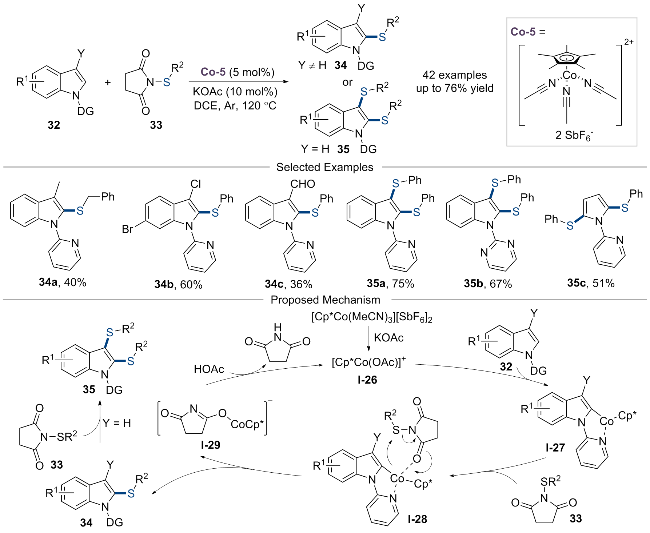
Transition metal-catalyzed direct C—H functionalization of heteroarenes has emerged as a powerful strategy for the efficient synthesis of thio-substituted heteroarenes. Recent efforts have increasingly focused on earth-abundant metal catalysts, driven by their economic and sustainability advantages. In 2021, in an effort to develop efficient and sustainable methodologies for the synthesis of arylthio substituted indoles based on earth-abundant metal catalysis, the Anbarasan group[80] disclosed a cobalt-catalyzed C2-thiolation and C2,C3-dithiolation of indoles 32 using N-arylthiosuccinimides 33 as the sulfenylating reagents (Scheme 9). This transformation operates under oxidant- free conditions, accommodates a wide array of substituents on both the indole and N-arylthiosuccinimide partners, and is successfully performed on a gram scale. The synthetic potential of this protocol is further demonstrated by the 51% yield of a 2,5-dithiolated product 35c obtained from N-pyridylpyrrole under identical conditions. Mechanistic studies suggest that the catalytic cycle commences with the conversion of the cobalt precatalyst into an active cobalt species I-26 mediated by potassium acetate. Subsequent formation of a five-membered cobaltacycle intermediate I-27 from the reaction of I-26 with indole is followed by coordination with N-arylthiosuccinimide to afford intermediate I-28. An intramolecular nucleophilic attack event then delivers the C2-thiolated products together with a cobalt complex I-29. Finally, Its protodemetalation in the presence of acetic acid regenerates the active cobalt species. It is noteworthy that the formation of the C2,C3- dithiolated products proceeds via a subsequent thermal electrophilic aromatic thiolation step.
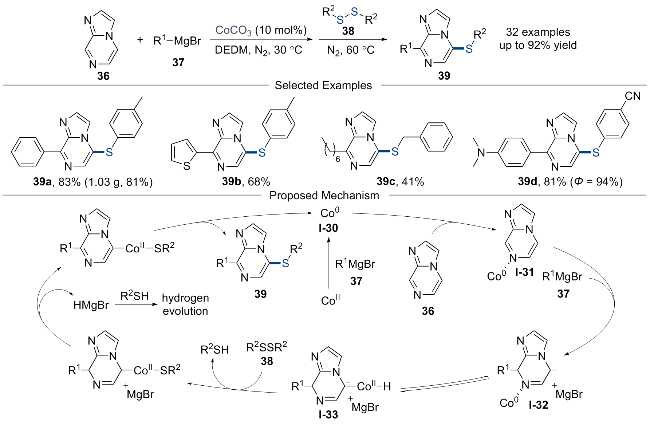
In 2022, Qiu, Wang and co-workers[81] developed a rare and efficient C5/C8 direct difunctionalization reaction of imidazo[1,2-a]pyrazines 36 (Scheme 10). While traditional syntheses of multi-functionalized imidazo[1,2-a]pyrazines rely on tedious multi-component condensation-cyclization sequences, this work employs an earth-abundant cobalt catalyst in conjunction with Grignard reagents 37 and disulfides 38, enabling a one-pot, three-component process that delivers a range of thio-substituted products 39 under mild conditions. The reaction exhibits broad substrate scope: in addition to commonly used Grignard reagents and thiophenols, benzyl mercaptan was found to react smoothly, affording the corresponding product 39c in moderate yield. Notably, spectroscopic analysis revealed promising photophysical properties for several thio-sub- stituted imidazo[1,2-a]pyrazines. The synthetic utility of this protocol was further demonstrated by gram-scale reactions and subsequent product derivatization. Based on mechanistic investigations, the authors proposed a plausible catalytic cycle. Initially, the Grignard reagent reduces the cobalt catalyst to an active species I-30, which coordinates with imidazo[1,2-a]pyrazine to form intermediate I- 31. Subsequent C8-nucleophilic addition by the Grignard reagent yields intermediate I-32, which is then converted to cobalt species I-33. Electrophilic attack of the disulfide on I-33, followed by elimination, delivers the difunctionalized product and regenerates the activated cobalt catalyst. The thiol/thiophenol byproduct generated in this step is consumed by HMgBr, accompanied by H2 evolution.
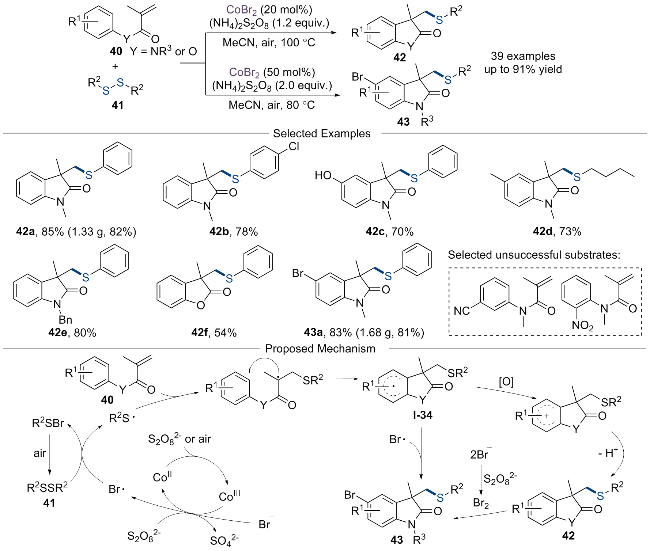
The unique nature of cobalt enables it to perform various functions in sulfurization reactions, acting either as a catalyst in most cases or as a promoter to facilitate the transformation in certain examples. In 2022, the Zhang group[82] disclosed a highly efficient cyclization reaction between N-arylacrylamides 40 and disulfides 41 (Scheme 11). With readily available cobalt bromide (CoBr2) serving as both an initiator and a promoter in the radical process, in combination with ammonium persulfate [(NH4)2S2O8], a diver-se array of thiolated and brominated/thiolated oxindoles 42 and 43 were obtained in good to excellent yields. In addition to showing tolerance to common functional groups, the reaction proves amenable to gram-scale synthesis, with the resulting products readily convertible into other important organosulfur compounds. Unfortunately, a notable limitation is observed, in cases where strong electron-withdrawing groups, such as cyano or nitro, are present on the aromatic ring of the N-arylacrylamides, the corresponding transformation cannot be achieved. Mechanistic investigations indicate that bromine radicals formed in the CoBr2/(NH4)2S2O8 system are essential for the generation of thiyl radicals. The subsequent radical cascade cyclization involving thiyl radicals leads to the formation of radical intermediate I-34, which can either undergo oxidation/aromatization to deliver thiolated oxindoles or couple with a bromine radical to yield the brominated/thio- lated oxindoles.
2 Cobalt-catalyzed C—S bond formation to access sulfones
The synthesis of sulfones via direct C—S bond forma- tion typically employs inexpensive and readily available sulfonyl derivatives as starting materials. Recent advances in sulfonylating reagents such as 1,4-diazabicyclo[2.2.2]- octane-sulfur dioxide (DABSO) and potassium persulfate (K2S2O8) have further expanded the methodological tool- kit. This strategy, which generally proceeds through a three-component reaction involving the formation of two C—S bonds, offers significant advantages in terms of synthetic diversity. In this context, cobalt-based catalytic systems are gaining increasing attention due to their cost efficiency and ability to access structurally distinctive sulfones, positioning them at the forefront of current research.
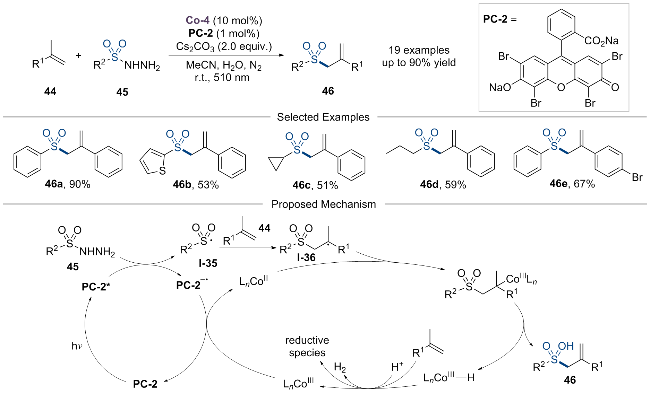
Allylic sulfones represent an important class of sulfur- containing compounds with notable chemical and biological activities. Traditional synthetic methods often rely on pre-functionalized substrates, elevated temperatures, stoichiometric oxidants, or noble-metal catalysts. Driven by the need for more sustainable routes to allylic sulfones, our group[83] introduced a mild and concise photoredox/co- baloxime co-catalysis operating via a hydrogen-evolution manifold in 2021 (Scheme 12). This reaction employs sulfonyl hydrazines 45 as radical precursors and α-methyl- styrenes 44 as coupling partners, eliminating the need for prefunctionalization and added oxidants. The combination of inexpensive organic dye eosin Y and a cobaloxime catalyst enables this transformation with good yields and broad functional group tolerance. Mechanistically, the photoexcited photocatalyst oxidizes the sulfonyl hydrazide to generate sulfonyl radical I-35, which adds to the alkene to forge the C—S bond. Concurrently, the cobaloxime traps the resulting alkyl radical I-36 and directs a selective HAT event, ultimately constructing the allylic framework.
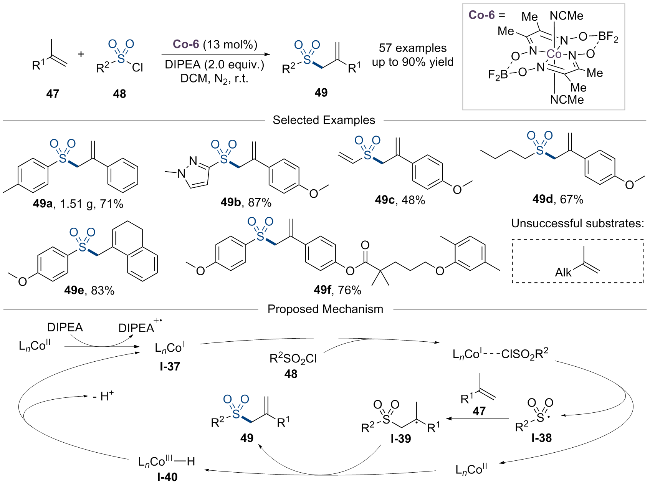
Recently, the Lei group[84] developed a cobaloxime-catalyzed radical allylic C—H sulfonylation that directly converts readily available alkenes 47 and sulfonyl chlorides 48 into a range of valuable allylic sulfones 49 under mild conditions (Scheme 13). The synergistic interplay of halogen atom transfer (XAT) and HAT processes successfully circumvents the competitive atom transfer radical addition (ATRA) pathway and suppresses the formation of alkenyl sulfone byproducts, challenges commonly encountered in direct allylic C—H sulfonylation of alkenes, there-by achieving excellent regio- and chemoselectivity. The protocol exhibits broad functional group tolerance and is amenable to gram-scale synthesis, although alkyl-sub- stituted alkenes remain incompatible. The proposed mechanism is robustly supported by multifaceted evidence, including radical trapping experiments, radical clock experiments, kinetic isotope effect (KIE) measurements, cyclic voltammetry, UV-Vis spectroscopy, and theoretical calculations. The catalytic cycle is initiated by reduction of the cobaloxime catalyst with N,N-diisopropylethylamine (DIPEA) to generate low-valent cobalt species I-37, which then engages in XAT with the sulfonyl chloride to produce sulfonyl radical I-38. Addition of I-38 across the alkene affords alkyl radical I-39, which undergoes a HAT event to deliver the allylic sulfone product and cobalt hydride intermediate I-40. Deprotonation of I-40 regenerates the cobalt catalyst, closing the catalytic cycle. Notably, the cobaloxime catalyst plays a dual and critical role, driving both XAT for sulfonyl radical generation and HAT for selective hydrogen abstraction, highlighting its multifunctional catalytic nature.
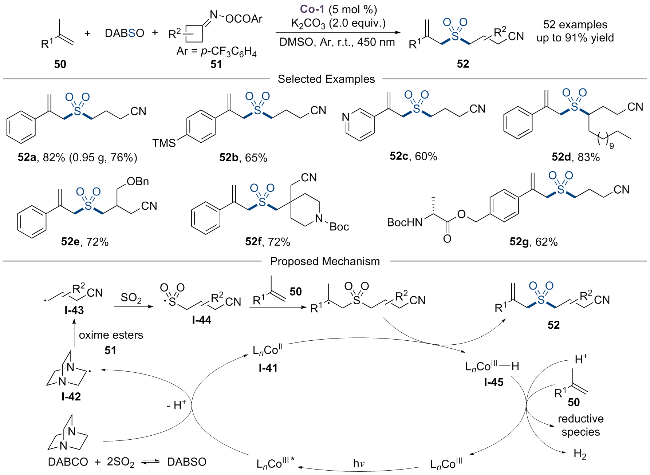
Traditional approaches to allylic sulfones not only suffer from the aforementioned limitations but also are largely confined to the synthesis of allylic aryl sulfones. To overcome this constraint, our group[85] recently developed a cobalt-based metallaphotoredox-catalyzed allylic C—H sulfonylation for the direct preparation of allylic alkyl sulfones 52 (Scheme 14). This practical approach relies on a multicomponent sulfonylation strategy involving sulfur dioxide insertion, wherein DABSO serves as a SO2 surrogate and cyclobutanone oxime esters 51 as radical precursors, enabling the efficient conversion of readily available alkenes 50 into the desired products. Without the involvement of precious metals, this cost-effective cobalt-cata- lyzed system exhibits broad functional group compatibility alongside outstanding chemo- and regioselectivity. The synthetic utility of this methodology is further demonstrated by scalable reactions and successful late-stage modification of pharmaceutical scaffolds. Detailed mechanistic investigations reveal that the cobaloxime catalyst exhibits an uncommon dual functionality in this system, integrating both photoredox and HAT capabilities. The reaction is initiated by visible-light excitation of the coba- loxime, which oxidizes 1,4-diazabicyclo[2.2.2]octane (DABCO) (released in situ from DABSO) to generate cobalt species I-41 and intermediate I-42. The oxime ester then undergoes ring-opening induced by I-42 to afford alkyl radical I-43, which rapidly couples with SO2 to form sulfonyl radical I-44. Following radical addition to the alkene, cobalt-mediated HAT furnishes the corresponding product and cobalt hydride species I-45. Protonation of I-45 regenerates the catalytic cycle. Significantly, this work represents the first example of employing a single cobaloxime complex as a unified photoredox and transition-metal catalyst for C—S bond formation, thereby broa- dening the application scope of cobaloximes in metallaphotoredox catalysis.
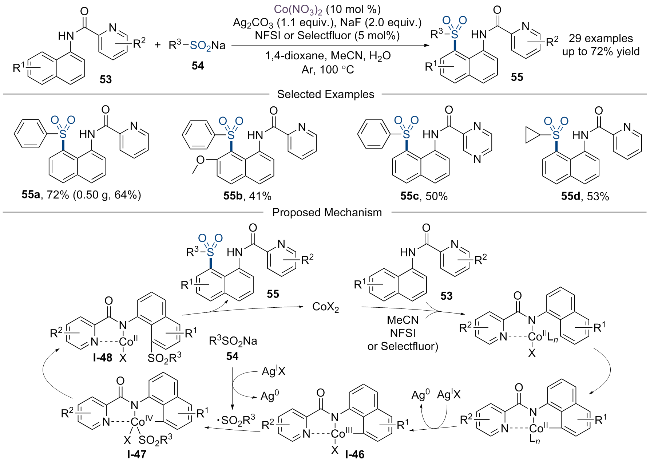
In addition to DABSO, the continued development of sulfonylating agents has provided diverse alternatives for sulfone synthesis. Simple salts such as sodium sulfinates and potassium metabisulfite (K2S2O5) have emerged as competent partners in cobalt-catalyzed sulfonylation reactions. In 2021, the Wu group[86] reported a cobalt-catalyzed regioselective C8-H direct sulfonylation of 1-naphthalenes 53 using sodium sulfinates 54 as the sulfonyl source (Scheme 15). This method employs a picolinamide moiety as a bidentate directing group and enables the efficient synthesis of 8-sulfonylated 1-naphthylamine derivatives 55 under simple cobalt salt catalysis. Catalytic amounts of NFSI or Selectfluor were introduced as auxiliary ligands, significantly enhancing reaction efficiency. Substrate scope evaluation revealed that naphthylamines bearing diverse electron-donating or electron-withdrawing groups, as well as aryl- and alkyl-substituted sodium sulfinates, were well tolerated. The catalytic system also performed smoothly when other heteroaromatic rings such as isoquinoline and pyrazine were employed as directing groups. The synthetic utility of this protocol was further demonstrated through scale-up synthesis and subsequent product transformations. Mechanistic studies support a pathway wherein the naphthylamine first coordinates to the cobalt catalyst under basic conditions. Subsequent C8-H activation and silver-mediated oxidation generate cobalt species I-46. In parallel, single electron transfer (SET) between sodium sulfinate and silver ions produces a sulfonyl radical, which adds to I-46 via oxidative addition to form hypervalent cobalt intermediate I-47. Reductive elimination from I-47 affords cobalt complex I-48, and final ligand dissociation releases the product while regenerating the catalyst.
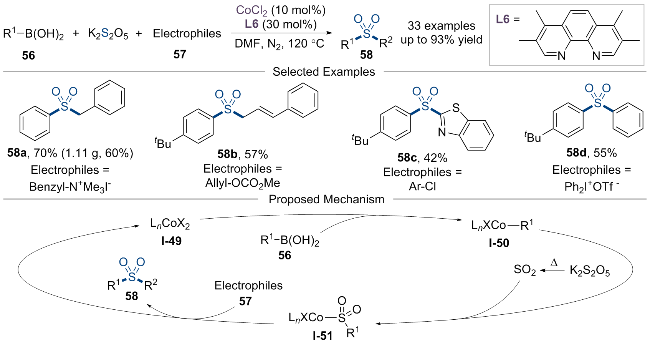
In 2022, the Zhu group[87] reported a cobalt-catalyzed sulfur dioxide insertion reaction employing K2S2O5 as the SO2 source, enabling the coupling of boronic acids 56 with various electrophiles 57 to access diverse sulfones 58 (Scheme 16). This work further underscores the significant potential of cobalt catalysis in conjunction with commercially available salts for C—S bond formation. Using a catalytic system comprising cobalt chloride and phenanthroline, the reaction efficiently assembles a range of aryl alkyl sulfones from boronic acids, ammonium salts, and K2S2O5. The broad substrate scope is further demonstrated by the compatibility with other carbon-based electrophiles, including diaryliodonium salts, heteroaryl halides, and carbonates. Moreover, gram-scale reactions and downstream product transformations proceed smoothly, highlighting the protocol’s synthetic utility. Mechanistically, the reaction is initiated by transmetalation between the boronic acid and cobalt species I-49 to afford intermediate I-50. This intermediate then captures thermally released sulfur dioxide, generating sulfonyl cobalt complex I-51. Finally, reaction of I-51 with diverse carbon electrophiles delivers the sulfone product and regenerates cobalt species I-49, completing the catalytic cycle.
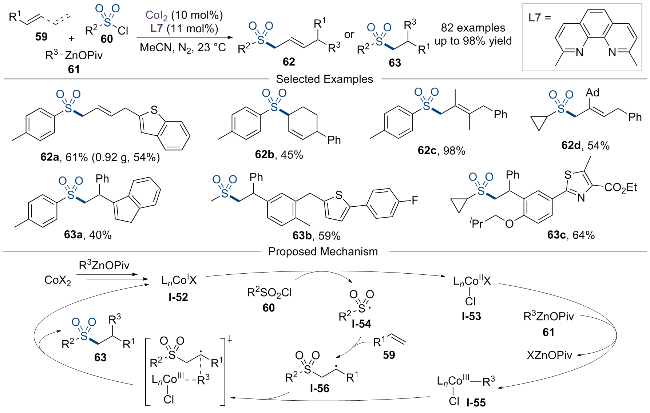
Driven by the demand for accessing structurally diverse and value-added sulfones from economical feedstocks such as sulfonyl chlorides via transition-metal catalysis, the field has increasingly focused on expanding methodological versatility. In this context, cobalt-catalyzed multicomponent reactions have emerged as a reliable synthetic strategy. Recently, the Li group[88-89] successfully introduced stable and multifunctional organozinc pivalates into cobalt catalysis, enabling the efficient synthesis of diverse structurally unique sulfones. In 2023, they disclosed a cobalt-catalyzed multicomponent sulfonylation for the difunctionalization of alkenes 59 with sulfonyl chlorides 60 and OPiv-supported organozinc reagents 61 (Scheme 17). The robustness of this transformation is evidenced by 82 examples with yields up to 98%, reflecting excellent functional group compatibility and efficiency. Furthermore, scale-up synthesis, late-stage functionalization of drug-like molecules, and downstream product transformations attest to its significant synthetic utility. A mechanistic cycle is proposed based on experimental studies and DFT calculations. The cobalt catalyst is first activated by reduction with stoichiometric organozinc to form low-valent cobalt species I-52. Subsequently, intermolecular XAT between sulfonyl chloride and I-52 generates cobalt complex I-53 and releases sulfonyl radical I-54. Transmetalation between I-53 and organozinc reagents yields aryl-cobalt species I-55. Concurrently, addition of radical I-54 to styrenes produces benzyl radical I-56, which undergoes radical-type substitution with I-55 to afford the final product.
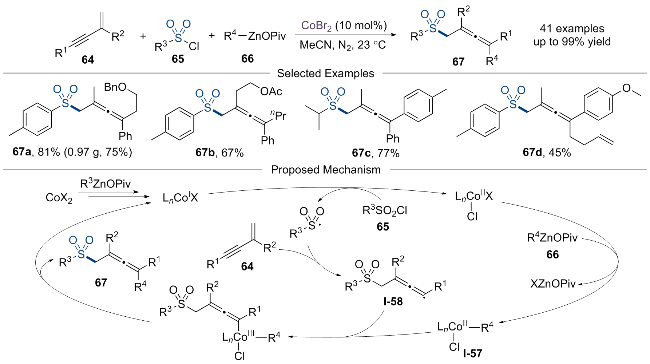
Almost simultaneously, by switching the alkene substrates, the same group achieved a highly regioselective cobalt-catalyzed three-component 1,4-carbosulfonylation of 1,3-enynes 64 with sulfonyl chlorides 65 and OPiv- supported organozinc pivalates 66 under ligand-free conditions, providing a straightforward route to polyfunctionalized carbosulfonylative allenes 67 (Scheme 18). This reaction features broad substrate scope, gram-scale feasibility, and suitability for late-stage diversification of bioactive scaffolds. Moreover, the resulting products are versatile synthetic building blocks amenable to further elaboration. While the mechanism is analogous to the previously described work, a key distinction lies in the final coupling step. here, cobalt intermediate I-57 (generated from transmetalation) and allenyl radical I-58 undergo a sequence of radical addition and subsequent elimination to form the final product, in contrast to direct radical substitution. Remarkably, the strategic use of OPiv-supported organozinc pivalates plays a critical role in both elegant cobalt-catalyzed sulfonylation reactions, as they exhibit superior reactivity compared to classical halide-based organozinc reagents.
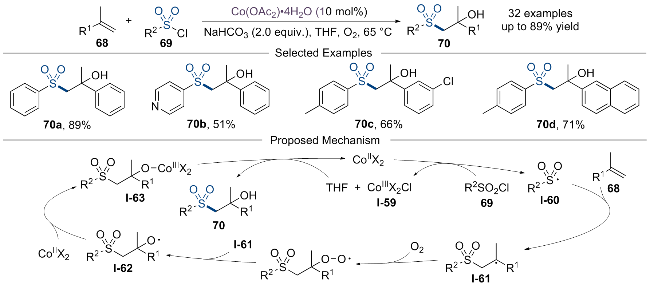
In 2023, the Li group[90] established a cobalt-catalyzed aerobic protocol for the oxysulfonylation of alkenes 68 with sulfonyl chlorides 69, providing efficient access to β-hydroxysulfones 70 (Scheme 19). This methodology further expands the toolbox for employing inexpensive sulfonyl chlorides as versatile sulfonylation reagents in cobalt-catalyzed C—S bond-forming reactions. Conducted under simple conditions with molecular oxygen as the sole oxidant, the method offers a green and practical alternative for β-hydroxysulfone synthesis. The substrate scope encompasses diverse aryl sulfonyl chlorides and styrenes, however, the reactivity of alkyl sulfonyl chlorides and unactivated alkenes within this system remains to be addressed. Mechanistically, the cobalt catalyst first reacts with the sulfonyl chloride to generate cobalt intermediate I-59 and sulfonyl radical I-60. Addition of the radical to styrene affords benzyl radical I-61, which is captured by molecular oxygen and further transformed into intermediate I-62. Combination of I-62 with the cobalt catalyst yields cobalt species I-63, and subsequent tetrahydrofuran (THF)-mediated decomposition produces the β-hydroxy- sulfone while regenerating the cobalt catalyst.
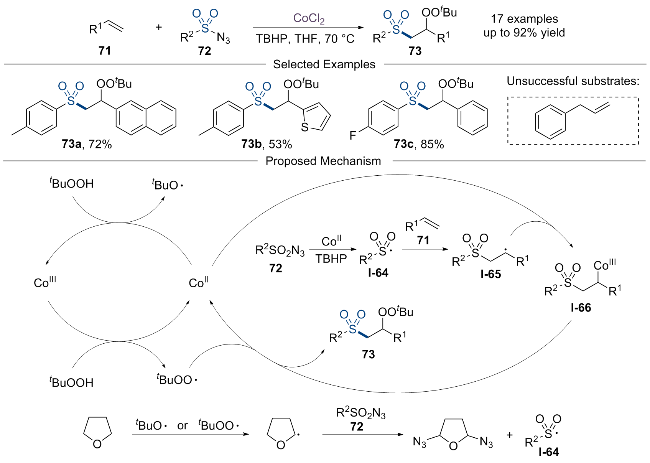
In 2023, the Liu group[91] developed a cobalt-catalyzed oxysulfonylation of alkenes 71 employing sulfonyl azides 72 as sulfonyl radical precursors, enabling the synthesis of a series of β-sulfonyl peroxides 73 in moderate to good yields (Scheme 20). The transformation is currently limited to activated alkene substrates. Notably, the cobalt catalyst operates through two parallel ligand-free pathways to generate sulfonyl radicals I-64. In one pathway, the catalyst cooperates with TBHP to efficiently convert sulfonyl azides into sulfonyl radicals. Concurrently, the cobalt catalyst also facilitates TBHP decomposition to generate tert- butoxy/tert-butylperoxy radicals, which abstract a hydrogen atom from THF, and the resulting THF radical then reacts with sulfonyl azides to produce additional sulfonyl radicals. Once formed, the key sulfonyl radical intermediate undergoes addition to the alkene, generating alkyl radical I-65. Combination with the cobalt catalyst affords alkyl cobalt intermediate I-66, which subsequently reacts with a tert-butylperoxy radical to furnish the final product and regenerate the catalyst. Interestingly, the catalyst can be switched to cuprous oxide (Cu2O), which also mediates smooth oxysulfonylation of alkenes to deliver β-ketosul- fone products.
3 Cobalt-catalyzed C—S bond formation to access sulfur-heterocycles
Transition-metal-catalyzed coupling reactions have long served as the method of choice for the synthesis and modification of sulfur heterocycles, particularly sulfur-contain- ing aromatics, a well-established paradigm in both synthetic and materials chemistry. However, this strategy is often constrained by the nature of the substrates employed, frequently requiring lengthy synthetic sequences to access structurally intricate sulfur heterocycles. In contrast, an annulation approach centered on C—S bond formation, utilizing readily functionalizable starting materials, offers a more versatile route to architecturally complex sulfur heterocycles. This advantage is particularly pronounced in the construction of polyheteroatomic, fused, or strained ring systems.
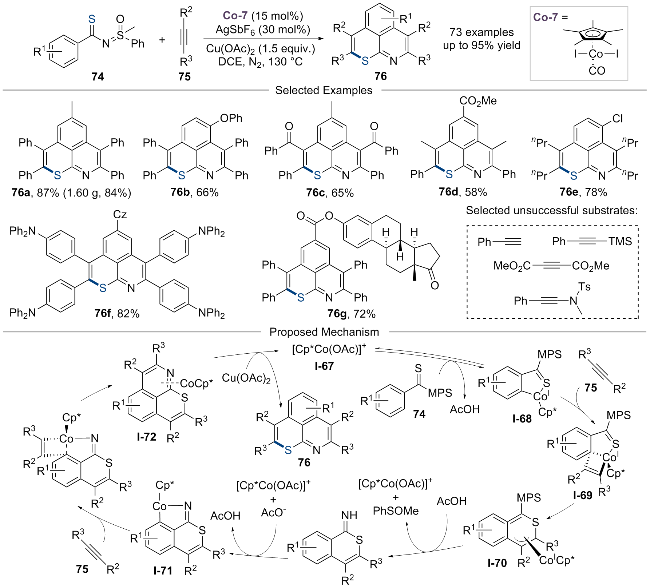
In 2021, the Gandon group[92] disclosed an innovative cobalt-catalyzed unsymmetric double C—H annulation of aryl thioamides 74 with alkynes 75 (Scheme 21). By harnessing the contrasting S/N coordination preferences of thioamides toward the cobalt catalyst and employing an N-masked methyl phenyl sulfoximine (MPS) directing group, this protocol achieves the sequential construction of four bonds including two C—C, one C—S, and one C—N in a single operation, delivering a series of structurally unique thiopyrano-isoquinoline derivatives 76. The reaction exhibits broad substrate scope and excellent functional group compatibility, and proves amenable to gram-scale synthesis and late-stage cyclization of biologically active compounds. Notably, most products exhibit strong fluorescence under ultraviolet light irradiation, suggesting potential practical applications supported by photophysical studies. Mechanistic investigations, combining controlled experiments and density functional theory (DFT) calculations, establish the indispensability of the directing group and uncover a distinctive 6π-electrocyclization of a seven- membered S-chelated cobaltacycle as a pivotal step. The catalytic cycle is initiated by formation of active cobalt species I-67 from the cobalt catalyst, silver hexafluoroantimonate (AgSbF6), and copper acetate (Cu(OAc)2). Subsequent S-coordination and ortho C—H activation yield five-membered cyclocobalated intermediate I-68. Migratory insertion of an alkyne into I-68 affords the seven- membered intermediate I-69, which undergoes 6π-electro- cyclization to give π-allyl adduct I-70. After acetate-mediated conversion of I-70 to an imine, a second ortho C—H activation generates cyclocobalated species I-71. Another alkyne insertion followed by reductive elimination produces cobalt complex I-72, which is oxidized by Cu(OAc)2 to release the final product and regenerate the active cobalt species.
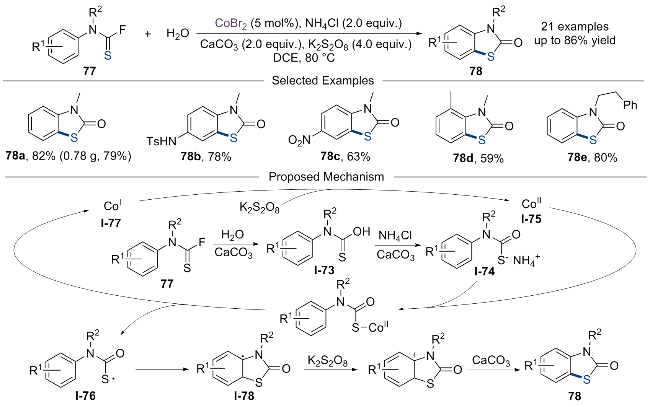
The synthesis of benzothiazolones, an important class of sulfur heterocycles, has frequently faced challenges associated with hazardous reagents, harsh reaction conditions, and low atom economy. To address these longstanding drawbacks, the Jiang group[93] developed a practical and efficient cobalt-catalyzed direct C—H thiolation in 2022 (Scheme 22). Using N-aryl thiocarbamoyl fluorides 77 and H2O in the presence of ammonium chloride (NH4Cl), calcium carbonate (CaCO3), and potassium persulfate (K2S2- O8), this transformation affords 3-alkyl-benzothiazolones 78 in moderate to good yields. Notably, the requisite thiocarbamoyl substrates are readily accessible via their previously reported four-component reaction employing elemental sulfur (S8), (trifluoromethyl)trimethylsilane (TMS- CF3), potassium fluoride (KF), and secondary amines. Mechanistically, hydrolysis of N-aryl thiocarbamoyl fluoride by H2O generates a thioacid-type species I-73, which is converted to the ammonium-stabilized sulfur-anion intermediate I-74 in the presence of CaCO3/Ca(HCO3)2 and NH4Cl. Coordination of I-74 to cobalt species I-75 triggers ligand-to-metal charge transfer (LMCT), producing sulfur radical I-76 and low-valent cobalt species I-77. Oxidation of I-77 by K2S2O8 regenerates the cobalt catalyst. Concurrently, the sulfur radical undergoes intramolecular radical cyclization to afford intermediate I-78. After oxidation and subsequent deprotonative aromatization, intermediate I-78 delivers the final benzothiazolone product.
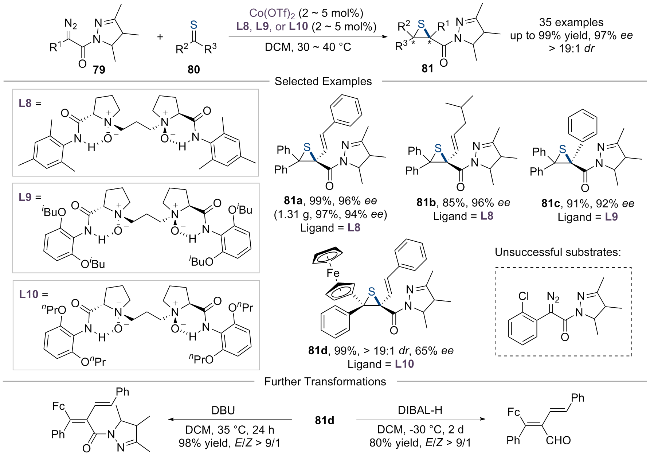
Compounds incorporating the thiirane scaffold have found broad utility in organic and medicinal chemistry due to their distinctive properties, rendering their efficient and selective synthesis a subject of considerable interest. Although the cycloaddition of thioketones with diazo compounds has proven to be a reliable method for constructing multisubstituted thiiranes, achieving enantiocontrol in this process has remained a significant challenge. In 2022, the Feng group[94] addressed this long-standing problem by employing a chiral N,N'-dioxide/Co(II) catalyst to realize the first asymmetric catalytic [2+1] cycloaddition of α-diazo pyrazoleamides 79 with thioketones 80, thereby establishing an efficient and highly selective route to tetrasubstituted thiiranes 81 (Scheme 23). The practicality of this protocol was validated through scale-up synthesis and subsequent transformation of the thiirane products to tetrasubstituted alkenes. Notably, building on their prior work, the authors attributed the success of this asymmetric catalysis to the critical pyrazoleamide moiety, whose strong coordination capability to the chiral cobalt catalyst throughout the reaction cycle was deemed essential. DFT calculations provided further mechanistic validation for this mode of action.
4 Cobalt-catalyzed C—S bond formation to access sulfoxides, disulfides, sulfinami- des, and thiols
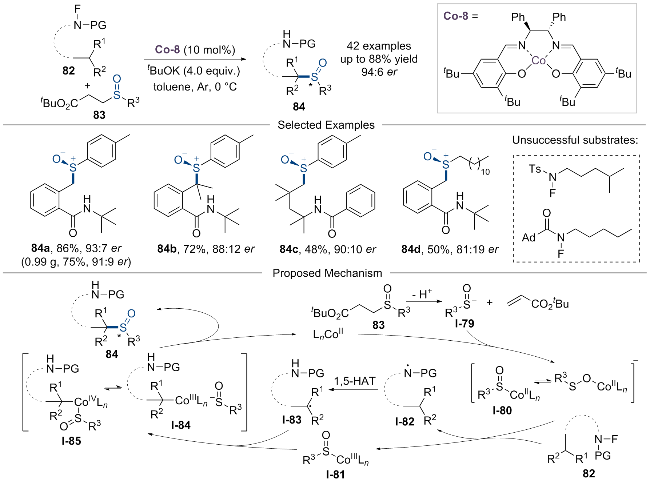
Compared with established methods such as asymmetric sulfinylation of halides and sulfoxidation, direct enantioselective C—H sulfinylation represents an attractive step- and atom-economical alternative for accessing high-value chiral sulfoxides. However, the inert nature of ubiquitous aliphatic C—H bonds in organic molecules poses a major challenge to achieving this transformation. In recent years, the development of transition-metal-catalyzed radical HAT strategies has opened a path forward. Illustrating this advance, the Liu group[95] achieved a breakthrough in 2024 with a chiral cobalt complex that catalyzes the enantioselective remote C(sp3)—H sulfinylation of N-fluoroamides 82 with sulfinyl donor 83 (Scheme 24). This cobalt-cataly- zed system couples in situ generated sulfenate anions with alkyl radicals, demonstrating good functional group tolerance, high efficiency and selectivity across both benzylic and aliphatic C(sp3)—H bonds, and compatibility with sterically hindered tertiary C—H bonds to deliver chiral sulfoxides 84 in moderate to good yields. The practicality of the method was further demonstrated by gram-scale reactions and successful derivatization of the sulfoxide products to sulfoximines. Owing to the specific nature of the 1,5-HAT process, the reaction presents a limitation in substrate scope. Mechanistically, base-induced formation of sulfenate anion I-79 is followed by its coordination to the cobalt catalyst, affording cobalt-sulfur species I-80. Oxidation of I-80 by an N-fluoroamide triggers the formation of cobalt-sulfur intermediate I-81 and amidyl radical I-82. Subsequently, radical I-82 undergoes a 1,5-HAT to generate alkyl radical I-83, which rapidly couples with species I-81 to afford pivotal cobalt intermediates I-84 and I-85. A stereocontrolled C—S bond-forming event then delivers the target product and regenerates the cobalt catalyst, closing the catalytic cycle. An alternative pathway involving an SN2-type attack of the sulfenate anion on a cationic alkyl cobalt species I-85 cannot be ruled out. Notably, while a copper-catalytic system is also capable of promoting this conversion, it delivers unsatisfactory enantioselectivity and chemical yield, highlighting the distinct advantage of the cobalt system in enantioselective C—S bond construction.
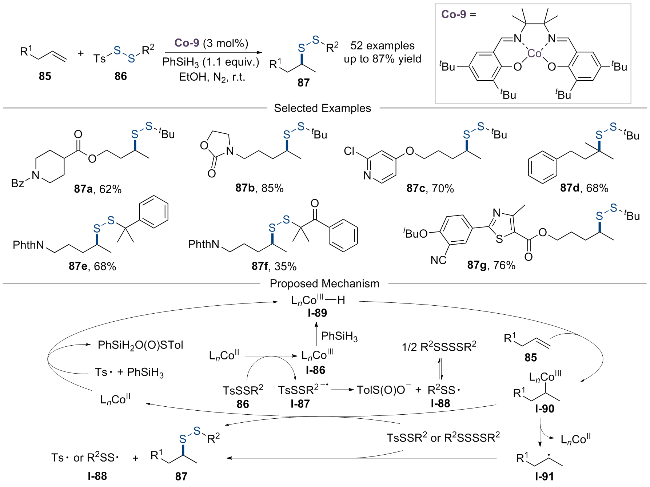
Conventional approaches for the preparation of valuable unsymmetric disulfides rely on cross-coupling between two different thiol compounds. However, these methods often suffer from chemoselectivity issues due to the susceptibility of thiols to oxidation and the tendency of the resulting thiyl radicals to undergo homodimerization. As a result, alternative pathways that directly install the disulfide group via C—S bond formation have gained prominence. Among these, transition-metal-catalyzed hydrodisulfuration of readily available alkenes with prefunctionalized disulfide transfer reagents offers distinct advantages. Nevertheless, significant challenges remain, including pro- blematic transmetalation steps, catalyst poisoning or deactivation, and indiscriminate S—S bond cleavage in sulfenylating agents that leads to undesirable side reactions. Recently, the Wang group[96] addressed these challenges by developing a cobalt-catalyzed HAT strategy employing dithiosulfonates 86 as sulfenylating reagents and silanes as the hydride source, achieving Markovnikov-selective hydrodisulfuration of unactivated alkenes 85 to access diverse unsymmetric disulfides 87 (Scheme 25). The mild reaction conditions enable a broad substrate scope, encompassing multiple substituted alkenes and functionalized dithiosulfonates, with excellent functional group compatibility. Mechanistically, the catalytic cycle is initiated by SET from the dithiosulfonate to the cobalt catalyst, generating cobalt intermediate I-86 and radical anion I-87. Dissociation of I-87 affords a sulfonate and disulfide radical I-88, the latter dimerizing to form a tetrasulfide. Concurrently, I-86 undergoes HAT with the silane to produce cobalt hydride complex I-89 in situ. Regioselective hydrocobaltation of the alkene follows, yielding alkylcobalt intermediate I-90. From here, the disulfide product can be formed either by direct reaction of I-90 with dithiosulfonates/tetrasulfides, or via homolysis of I-90 to regenerate the cobalt catalyst and release alkyl radical I-91, followed by radical substitution. The catalytic cycle is closed by reaction of the cobalt catalyst with the tosyl radical and silane. Notably, the Wang group also developed a nickel- catalyzed system that achieves anti-Markovnikov-selec-tive hydrodisulfuration of unactivated alkenes and a chain- walking variant, further diversifying the toolbox for transition-metal-catalyzed C—S bond formation to access unsymmetric disulfides.
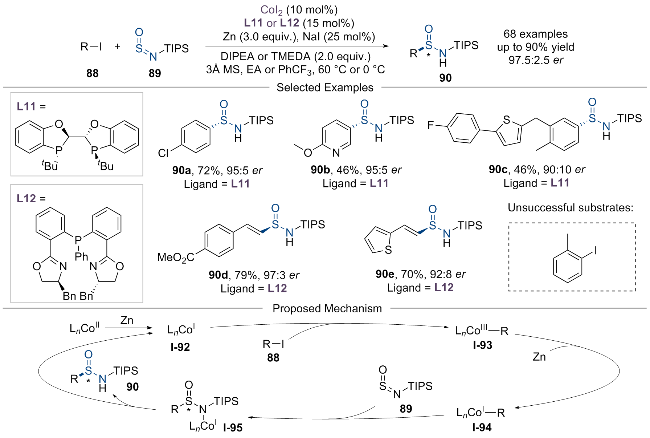
The synthesis of chiral sulfinamides has traditionally relied on multistep processes employing chiral auxiliaries, which suffer from poor atom economy and laborious purification. In recent years, the advent of readily accessible and stable sulfinylamines as versatile electrophilic sulfur donors has opened new avenues for their preparation. However, enantioselective variants employing aryl halides have remained underexplored. Addressing this gap, the Zhang group[97] recently developed a cobalt-catalyzed enantioselective reductive arylation and alkenylation of sulfinylamines 89 via direct C—S bond formation, providing an efficient route to enantiopure sulfonamides 90 (Scheme 26). Using a combination of cobalt and a chiral diphosphine/tridentate ligand system, the protocol converts a broad range of aryl and alkenyl iodides 88 into sulfinamides under mild conditions with outstanding enantioselectivity. Further derivatization of the obtained products illustrates the synthetic utility and practicality of this method. Combined mechanistic investigations and computational analysis elucidate a feasible reaction pathway. Reduction of the cobalt-ligand complex by zinc powder generates the active cobalt species I-92. Oxidative addition of the aryl or alkenyl iodide affords cobalt intermediate I-93, which undergoes a second zinc reduction to deliver aryl/alkenyl cobalt species I-94. Migratory insertion of the sulfinylamine into I-94 yields nitrogen-coordinated cobalt intermediate I-95. A concluding transmetalation step releases the desired product and regenerates the cobalt catalyst.
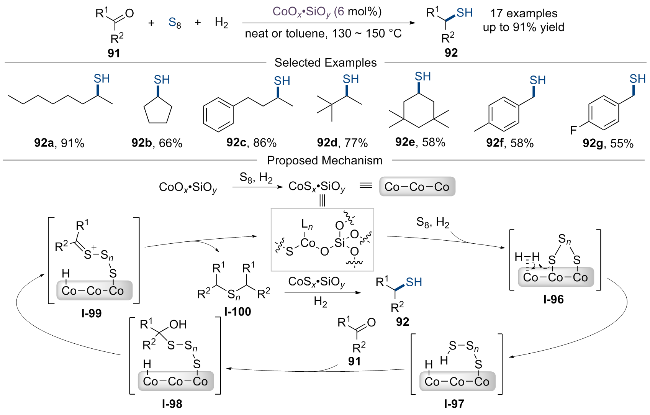
Despite its long history, the synthesis of thiols continues to face challenges such as poor atom economy, formation of multiple byproducts, and the use of highly toxic reagents. Consequently, the development of new synthetic approaches has attracted significant attention. Among them, the combination of elemental sulfur S8 with reducing agents has proven to be a reliable strategy for accessing thiols and their precursors. Building upon their prior studies, the Tokunaga group[98] established a cobalt silicate- catalyzed three-component reaction that couples carbonyl compounds 91 with S8 and hydrogen (Scheme 27). Depending on the carbonyl substrate type, ketones deliver secondary thiol products 92a~92e, while aldehydes furnish the corresponding terminal thiols 92f~92g. Compared to earlier reports, this protocol operates under milder conditions and exhibits broad compatibility with diverse carbonyl compounds. The cobalt-based catalyst also possesses excellent stability and can be efficiently recovered and reused. Mechanistically, the catalyst CoOx-SiOy is first converted to CoSx-SiOy in the presence of S8 and hydrogen, and then transformed via a radical or polar pathway into intermediate I-96, which subsequently activates hydrogen to afford intermediate I-97. The thiol group in this intermediate then adds to the carbonyl substrate, generating cobalt-bound hemi-thioacetal I-98. After conversion to the unstable electrophilic sulfonium salt I-99, this species is reduced to the relatively stable polysulfane I-100. Finally, further catalytic hydrogenation by CoSx-SiOy delivers the target thiol product.


5 Conclusion and perspective
As a member of the earth-abundant metal catalyst family, cobalt-based systems occupy a crucial position in diverse sulfurization reactions, supported by their cost- effectiveness, multiple accessible redox states, propensity for single-electron transfer (SET), and reduced biological toxicity. In recent years, with the development of direct C—S bond construction strategies, cobalt catalysis has found broad application in the synthesis of valuable organosulfur compounds, including thioethers, sulfones, sulfur heterocycles, sulfoxides, disulfides, sulfinamides, and thiols. This review provides a comprehensive and up-to-date summary of recent advances in this vibrant field. Cobalt catalysts can function as transition-metal catalysts, Lewis acid catalysts, or photocatalysts, enabling various sulfurization protocols to feature mild conditions, excellent selectivity, good functional group tolerance, and unique mechanistic profiles, thereby demonstrating reliable and versatile application potential. Beyond the confines of existing research, these outstanding contributions offer significant insights for the construction of C—S bonds and the design of novel organosulfur compounds, greatly accelerating the sustainable development of organosulfur chemistry.
Although notable progress has been achieved in cobalt-catalyzed C—S bond construction in recent years, the field continues to face scientific challenges that warrant deeper investigation. As illustrated in this review, the driving modes for these reactions rely almost exclusively on thermochemical and photochemical approaches. Establishing alternative reliable and efficient driving forces such as electrochemistry to further diversify cobalt-catalyzed organosulfur compound synthesis thus holds considerable research value. Emerging sulfenylating reagents including N-sulfenyl phthalimides, DABSO, and dithiosulfonates have demonstrated powerful potential in this area. Moving forward, the exploration of novel sulfenylating reagents that pair effectively with established cobalt-catalytic systems will offer an attractive direction. Moreover, broadening the substrate scope of cobalt-catalyzed protocols remains an important objective. In particular, the compatibility of tertiary thiol and their derivatives in thioether synthesis is currently unsatisfactory. While preliminary successes have been documented, the enantioselective preparation of diverse chiral sulfur-containing compounds via C—S bond formation under cobalt catalysis awaits further development, a goal that may benefit from pioneering research on iron, nickel, and copper catalysts. Additionally, the pursuit of cobalt catalysts that exhibit appropriate activity, recyclability, and low environmental footprint requires continued effort, which will help further reduce overall costs. This review aims to draw more research attention to the field of cobalt-catalyzed sulfurization reactions and to inspire solutions to the existing challenges. We equally trust that it will offer a constructive reference for this growing area and foster more innovative achievements.
(Cheng, F.)