

Chinese Journal of Organic Chemistry ›› 2026, Vol. 46 ›› Issue (8): 2969-2987.DOI: 10.6023/cjoc202601006 Previous Articles Next Articles
REVIEWS
吴蕊, 武治权, 张娟, 高文超, 王英雄*( ), 常宏宏*()
收稿日期:2026-01-05
修回日期:2026-03-18
发布日期:2026-05-13
基金资助:
Rui Wu, Zhiquan Wu, Juan Zhang, Wenchao Gao, Yingxiong Wang*(), Honghong Chang*()
Received:2026-01-05
Revised:2026-03-18
Published:2026-05-13
Contact:
*E-mail: wangyingxiong@tyut.edu.cn; changhonghong@tyut.edu.cn
Supported by:Share
Rui Wu, Zhiquan Wu, Juan Zhang, Wenchao Gao, Yingxiong Wang, Honghong Chang. Research Progress in the Selective Catalytic Oxidation of Ethylene Glycol to Glycolic Acid[J]. Chinese Journal of Organic Chemistry, 2026, 46(8): 2969-2987.
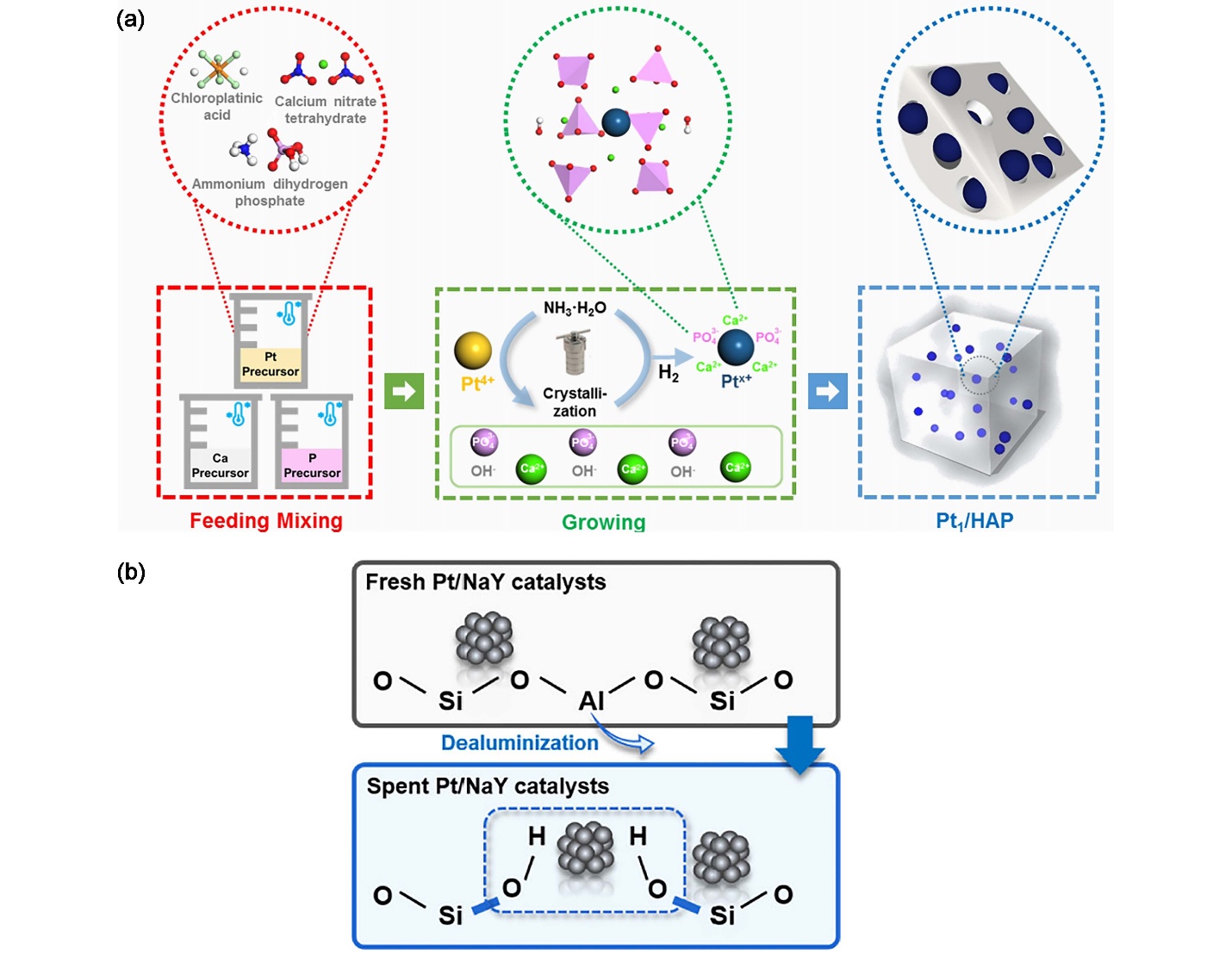


| Catalytic system | Catalyst | Alkaline condition | Reaction condition | EG conversion/% | GA selectivity/% | Ref. |
|---|---|---|---|---|---|---|
| Homogeneous | [Cp*Ir(bpyO)]OH- | Yes | 100.0 ℃, 12.0 h | 100.0 | — | [ |
| [HN(C2H4PPh2)2]Mn(CO)2Br | Yes | 140.0 ℃, 12.0 h | 100.0 | 96.0 | [ | |
| NNN-Ru | Yes | 100.0 ℃, 2.0 h | 100.0 | 94.0 | [ | |
| Heterogeneous | PtMn/MCM-41 (In-70) | No | 60.0 ℃, 8.0 h | 92.1 | 93.8 | [ |
| Pt1/HAP | Yes | 50.0 ℃, 16.0 h | 79.1 | 98.3 | [ | |
| Pt/CS | Yes | 70.0 ℃, 2.0 h | 87.3 | 93.0 | [ | |
| Pt/NaY | No | 70.0 ℃, 2.0 h | 89.6 | 91.3 | [ | |
| PtB@Cᵏ | Yes | 140.0 ℃, 3.0 h | 77.4 | 72.6 | [ | |
| Pt-Fe/CeO2 | Yes | 70.0 ℃, 4.0 h | 100.0 | 62.0 | [ | |
| Pt/Sn-Beta | No | 70.0 ℃, 2.0 h | 90.0 | 81.0 | [ | |
| Commercial Pt/C | No | 30.0 ℃, 0.5 h | 60.0 | >90.0 | [ | |
| Au/C | Yes | 70.0 ℃, 1.0 h | — | 98.0 | [ | |
| 2.78Au/Al2O3I | Yes | 70.0 ℃ | — | >95.0 | [ | |
| 2.6Au/Al2O3 (D) | Yes | 76.0 ℃ | — | >95.0 | [ | |
| AuPt/CeO2 | Yes | 70.0 ℃ | ≥90.0 | 90.0 | [ | |
| Au/NiO | Yes | 130.0 ℃, 3.0 h | ≈100.0 | 87.6 | [ | |
| Ni3Sn/CeZrO2 | Yes | 270.0 ℃, 2.0 h | 68.0 | — | [ | |
| Cu/CNF | Yes | 180.0 ℃, 15.0 h | 76.0 | 97.0 | [ |
| Catalytic system | Catalyst | Alkaline condition | Reaction condition | EG conversion/% | GA selectivity/% | Ref. |
|---|---|---|---|---|---|---|
| Homogeneous | [Cp*Ir(bpyO)]OH- | Yes | 100.0 ℃, 12.0 h | 100.0 | — | [ |
| [HN(C2H4PPh2)2]Mn(CO)2Br | Yes | 140.0 ℃, 12.0 h | 100.0 | 96.0 | [ | |
| NNN-Ru | Yes | 100.0 ℃, 2.0 h | 100.0 | 94.0 | [ | |
| Heterogeneous | PtMn/MCM-41 (In-70) | No | 60.0 ℃, 8.0 h | 92.1 | 93.8 | [ |
| Pt1/HAP | Yes | 50.0 ℃, 16.0 h | 79.1 | 98.3 | [ | |
| Pt/CS | Yes | 70.0 ℃, 2.0 h | 87.3 | 93.0 | [ | |
| Pt/NaY | No | 70.0 ℃, 2.0 h | 89.6 | 91.3 | [ | |
| PtB@Cᵏ | Yes | 140.0 ℃, 3.0 h | 77.4 | 72.6 | [ | |
| Pt-Fe/CeO2 | Yes | 70.0 ℃, 4.0 h | 100.0 | 62.0 | [ | |
| Pt/Sn-Beta | No | 70.0 ℃, 2.0 h | 90.0 | 81.0 | [ | |
| Commercial Pt/C | No | 30.0 ℃, 0.5 h | 60.0 | >90.0 | [ | |
| Au/C | Yes | 70.0 ℃, 1.0 h | — | 98.0 | [ | |
| 2.78Au/Al2O3I | Yes | 70.0 ℃ | — | >95.0 | [ | |
| 2.6Au/Al2O3 (D) | Yes | 76.0 ℃ | — | >95.0 | [ | |
| AuPt/CeO2 | Yes | 70.0 ℃ | ≥90.0 | 90.0 | [ | |
| Au/NiO | Yes | 130.0 ℃, 3.0 h | ≈100.0 | 87.6 | [ | |
| Ni3Sn/CeZrO2 | Yes | 270.0 ℃, 2.0 h | 68.0 | — | [ | |
| Cu/CNF | Yes | 180.0 ℃, 15.0 h | 76.0 | 97.0 | [ |
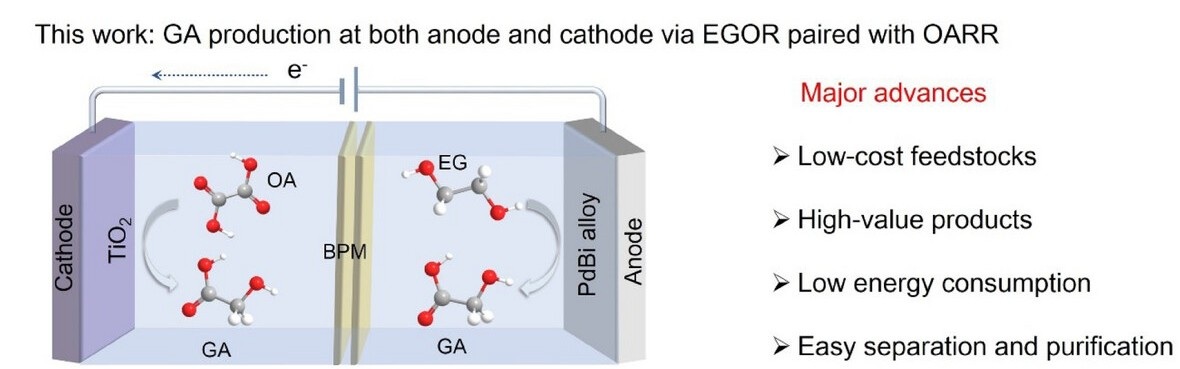
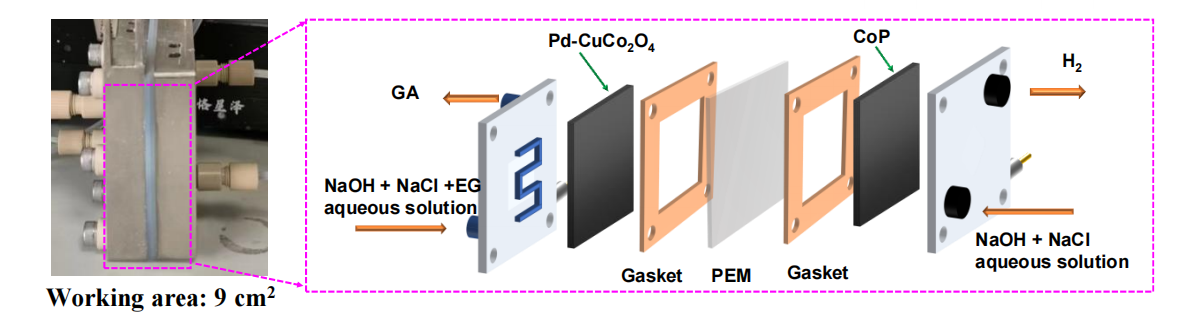
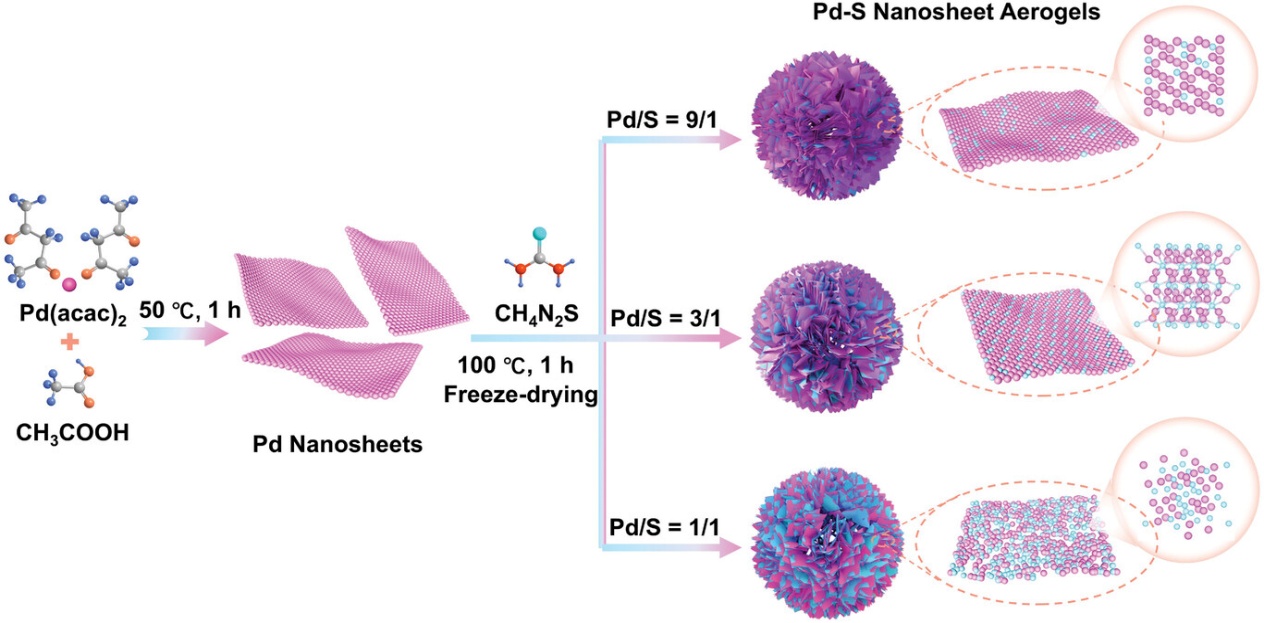
| Catalyst | Reaction condition | Working electrode potential/ (V vs. RHE) | FE/% | GA selectivity/% | Ref. |
|---|---|---|---|---|---|
| Pd1Ag1 NPs | 1.0 mol/L KOH, 1.0 mol/L EG | 0.85/50 mA/mg Pd | — | 97.0/0.75 V vs. RHE | [ |
| PdSb bimeallene | 1.0 mol/L KOH, 0.1 mol/L EG | 0.60/10 mA/cm2 | — | — | [ |
| PdSn metallene | 4.0 mol/L KOH, 2.3 mol/L EG | 0.90/100 mA/cm2 | 92.5/0.97 V vs. RHE | — | [ |
| PdCu MCs | 1 mol/L KOH, strongly alkaline hydrolysate of PET | — | 93.6/0.83 V vs. RHE | — | [ |
| PdBi/NF | 1.0 mol/L KOH, 0.5 mol/L EG | — | >99.0 | — | [ |
| PdAgPt/Co | 3.0 mol/L KOH, 2.0 mol/L EG | — | — | 93.6/200 A/m2 | [ |
| Pd-CuCo2O4 | 1.0 mol/L NaOH, 0.5 mol/L NaCl, 1.0 mol/L EG | 0.80/200 mA/cm2 | 96.1/0.90 V vs. RHE | — | [ |
| Pd/Ni(OH)2/NF | 1.0 mol/L KOH, 1.0 mol/L EG | 0.53/10 mA/cm2 | 94.2/1.20 V vs. RHE | — | [ |
| Pd/a-Fe2O3 | 1.0 mol/L KOH, 0.5 mol/L EG | 0.85/6.83 A/mg Pd | — | 93.8/6.83 A/mg Pd | [ |
| Pd-CoCr2O4 | 5.0 mol/L NaOH, 2.0 mol/L EG | 1.25/290 mA/cm2 | — | 94.5/1.25 V vs. RHE | [ |
| Pd/NiMoO4/NF | 1.0 mol/L NaOH, 1.0 mol/L EG | 0.79/100 mA/cm2 | 95.7/1.00 V vs. RHE | — | [ |
| Pd-Co3O4/NF | 1.0 mol/L KOH, 1.0 mol/L EG | 0.72/100 mA/cm2 | 93.1/0.90 V vs. RHE | — | [ |
| Pd-Ni(OH)2/NF | 1.0 mol/L KOH, 1.0 mol/L EG | 0.69/100 mA/cm2 | 94.1/1.00 V vs. RHE | 91.6/1.00 V vs. RHE | [ |
| Pd3S NAs | 1.0 mol/L KOH, 0.5 mol/L EG | — | 83.6/0.87 V vs. RHE | — | [ |
| PtAg/NF | 1.0 mol/L KOH, 1.0 mol/L EG | 0.80/264 mA/cm2 | 95.7/0.70 V vs. RHE | — | [ |
| Pt-Ni(OH)2/NF | 1.0 mol/L KOH, 1.0 mol/L EG | 0.61/100 mA/cm2 | 90.1/0.80 V vs. RHE | — | [ |
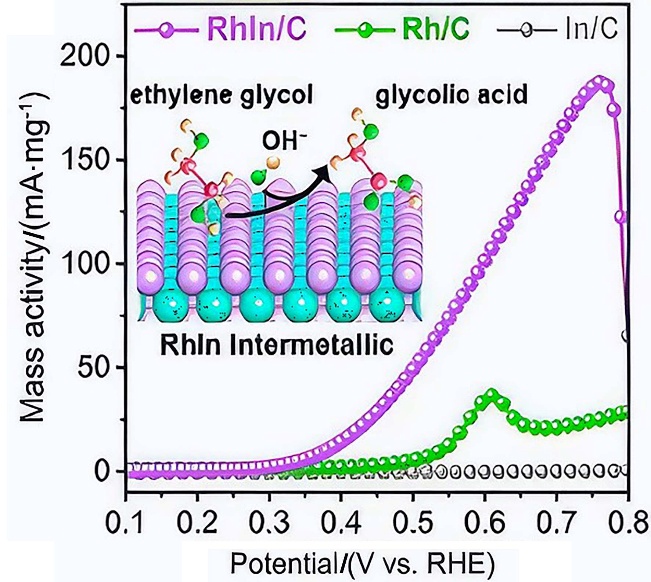
| RhIn/C | 3.0 mol/L KOH, 0.3 mol/L EG | — | 75.4/0.65 V vs. RHE | 85.0/0.65 V vs. RHE | [ |
| Co-Ni/CP | 1.0 mol/L KOH, 1.0 mol/L EG | — | 91/1.4 V vs. RHE | 96.3/150 mA/cm2 | [ |
| CoO/CFP | 1.0 mol/L KOH, 0.1 mol/L EG | 1.39/10 mA/cm2 | — | — | [ |
| Ni1-Fe1-N-C | 1.0 mol/L KOH, 1.0 mol/L EG | 0.77/100 mA/cm2 | >90.0/50~500 C | >90.0/500 C | [ |
| Catalyst | Reaction condition | Working electrode potential/ (V vs. RHE) | FE/% | GA selectivity/% | Ref. |
|---|---|---|---|---|---|
| Pd1Ag1 NPs | 1.0 mol/L KOH, 1.0 mol/L EG | 0.85/50 mA/mg Pd | — | 97.0/0.75 V vs. RHE | [ |
| PdSb bimeallene | 1.0 mol/L KOH, 0.1 mol/L EG | 0.60/10 mA/cm2 | — | — | [ |
| PdSn metallene | 4.0 mol/L KOH, 2.3 mol/L EG | 0.90/100 mA/cm2 | 92.5/0.97 V vs. RHE | — | [ |
| PdCu MCs | 1 mol/L KOH, strongly alkaline hydrolysate of PET | — | 93.6/0.83 V vs. RHE | — | [ |
| PdBi/NF | 1.0 mol/L KOH, 0.5 mol/L EG | — | >99.0 | — | [ |
| PdAgPt/Co | 3.0 mol/L KOH, 2.0 mol/L EG | — | — | 93.6/200 A/m2 | [ |
| Pd-CuCo2O4 | 1.0 mol/L NaOH, 0.5 mol/L NaCl, 1.0 mol/L EG | 0.80/200 mA/cm2 | 96.1/0.90 V vs. RHE | — | [ |
| Pd/Ni(OH)2/NF | 1.0 mol/L KOH, 1.0 mol/L EG | 0.53/10 mA/cm2 | 94.2/1.20 V vs. RHE | — | [ |
| Pd/a-Fe2O3 | 1.0 mol/L KOH, 0.5 mol/L EG | 0.85/6.83 A/mg Pd | — | 93.8/6.83 A/mg Pd | [ |
| Pd-CoCr2O4 | 5.0 mol/L NaOH, 2.0 mol/L EG | 1.25/290 mA/cm2 | — | 94.5/1.25 V vs. RHE | [ |
| Pd/NiMoO4/NF | 1.0 mol/L NaOH, 1.0 mol/L EG | 0.79/100 mA/cm2 | 95.7/1.00 V vs. RHE | — | [ |
| Pd-Co3O4/NF | 1.0 mol/L KOH, 1.0 mol/L EG | 0.72/100 mA/cm2 | 93.1/0.90 V vs. RHE | — | [ |
| Pd-Ni(OH)2/NF | 1.0 mol/L KOH, 1.0 mol/L EG | 0.69/100 mA/cm2 | 94.1/1.00 V vs. RHE | 91.6/1.00 V vs. RHE | [ |
| Pd3S NAs | 1.0 mol/L KOH, 0.5 mol/L EG | — | 83.6/0.87 V vs. RHE | — | [ |
| PtAg/NF | 1.0 mol/L KOH, 1.0 mol/L EG | 0.80/264 mA/cm2 | 95.7/0.70 V vs. RHE | — | [ |
| Pt-Ni(OH)2/NF | 1.0 mol/L KOH, 1.0 mol/L EG | 0.61/100 mA/cm2 | 90.1/0.80 V vs. RHE | — | [ |
| RhIn/C | 3.0 mol/L KOH, 0.3 mol/L EG | — | 75.4/0.65 V vs. RHE | 85.0/0.65 V vs. RHE | [ |
| Co-Ni/CP | 1.0 mol/L KOH, 1.0 mol/L EG | — | 91/1.4 V vs. RHE | 96.3/150 mA/cm2 | [ |
| CoO/CFP | 1.0 mol/L KOH, 0.1 mol/L EG | 1.39/10 mA/cm2 | — | — | [ |
| Ni1-Fe1-N-C | 1.0 mol/L KOH, 1.0 mol/L EG | 0.77/100 mA/cm2 | >90.0/50~500 C | >90.0/500 C | [ |
| Catalyst type | Catalyst | Reaction conditions | Light source | EG conversion/% | GA yield/% | Ref. |
|---|---|---|---|---|---|---|
| Non-metallic photocatalyst | CPDs-CN | Vacuum, 1.0 mol/L KOH | Xenon lamp | — | — | [ |
| B-g-C3N4NT | Argon, 0.1 mol/L NaOH | Xenon lamp | 7.8 | — | [ | |
| Metallic photocatalyst | Cu-Pt/ZrO2 | Air, alkali-free | Visible light | 94.8 | 72.0 | [ |
| Au-Pt/ZrO2 | Air, alkali-free | Xenon lamp | — | 76.9 | [ |
| Catalyst type | Catalyst | Reaction conditions | Light source | EG conversion/% | GA yield/% | Ref. |
|---|---|---|---|---|---|---|
| Non-metallic photocatalyst | CPDs-CN | Vacuum, 1.0 mol/L KOH | Xenon lamp | — | — | [ |
| B-g-C3N4NT | Argon, 0.1 mol/L NaOH | Xenon lamp | 7.8 | — | [ | |
| Metallic photocatalyst | Cu-Pt/ZrO2 | Air, alkali-free | Visible light | 94.8 | 72.0 | [ |
| Au-Pt/ZrO2 | Air, alkali-free | Xenon lamp | — | 76.9 | [ |
| Catalytic system | Microorganism species | Reaction condition | Coenzyme and concentration | EG bioconversion efficiency/% | GA concentration/ (g•L-1) | Ref. |
|---|---|---|---|---|---|---|
| Resting cell | Gluconobacter oxydans NL71 | 30 ℃, pH=5.0 | 1 g/L D-sorbitol | — | 74.3 | [ |
| Gluconobacter oxydans NL71 | 30 ℃, pH=5.5~6.5 | 1 g/L D-sorbitol | — | — | [ | |
| Gluconobacter oxydans CCT 0552 | 28 ℃, pH=5.5~6.5 | 1 g/L mannitol | 97.3 | 94.2 | [ | |
| Living cell | Escherichia coli YF2G*GA3 | 37 ℃, pH≈7.0 | — | — | 11.0 | [ |
| Catalytic system | Microorganism species | Reaction condition | Coenzyme and concentration | EG bioconversion efficiency/% | GA concentration/ (g•L-1) | Ref. |
|---|---|---|---|---|---|---|
| Resting cell | Gluconobacter oxydans NL71 | 30 ℃, pH=5.0 | 1 g/L D-sorbitol | — | 74.3 | [ |
| Gluconobacter oxydans NL71 | 30 ℃, pH=5.5~6.5 | 1 g/L D-sorbitol | — | — | [ | |
| Gluconobacter oxydans CCT 0552 | 28 ℃, pH=5.5~6.5 | 1 g/L mannitol | 97.3 | 94.2 | [ | |
| Living cell | Escherichia coli YF2G*GA3 | 37 ℃, pH≈7.0 | — | — | 11.0 | [ |
| Catalytic trategy | Reaction conditions | Scope of application | Technical maturity | Limitations |
|---|---|---|---|---|
| Thermal catalysis | Harsh reaction conditions involving high temperature, high pressure, and O2 as the oxidant; alkaline media and noble-metal-based catalytic systems are commonly employed. | Suitable for the large-scale selective conversion of high- concentration ethylene glycol feedstocks, with a balance bet- ween conversion efficiency and space-time yield. | Currently the mainstream industrial route for converting ethy- lene glycol to glycolic acid, with a high level of technological maturity. | High energy consumption and severe side reactions; catalysts are prone to deactivation due to coking or leaching of active components. |
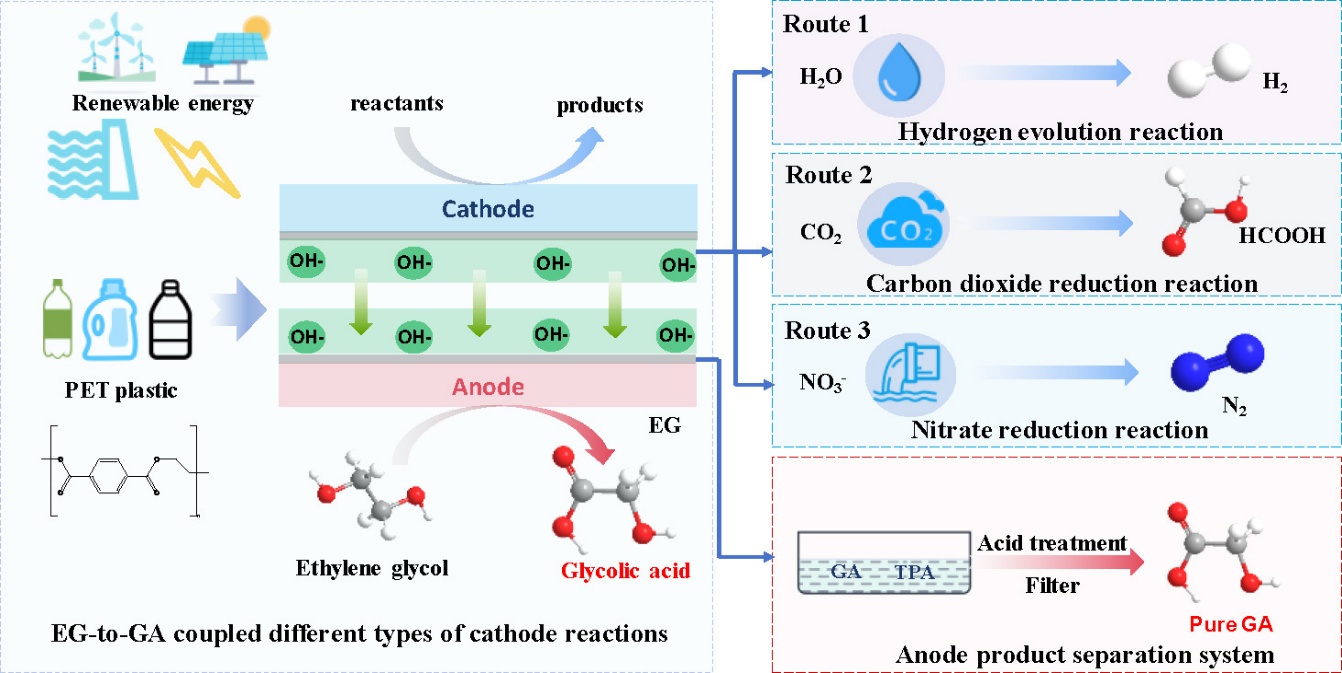
| Electrocatalysis | Operates under ambient tem- perature and pressure, typically using alkaline media and noble-metal-based catalysts. | Green and mild reaction conditions with potential integration with renewable energy sources such as solar and wind power. Different cathodic reactions can also be flexibly coupled to enable process intensification and diversified product generation ( | At a critical stage of transition from pilot- scale demonstration to industrialization. Sma- ll-scale production has been validated, showing promising prospects for practical application. | Insufficient long-term catalyst stability; metal leaching and agglomeration may occur at high potentials. The achievable current density remains to be improved, and overall energy consumption requires further optimization. The relatively high cost of electrode fabrication also limits large-scale deployment. |
| Photocatalysis | Driven by simulated or natural sunlight under ambient temperature and pressure. Semiconductor photocatalysts serve as the core catalytic materials, without the need for externally added oxidants. | Green and mild reaction conditions, suitable for the low-car- bon selective conversion of low-concentration ethylene glycol feed-stocks. | At the laboratory re- search stage. | Semiconductor materials generally have a narrow light-absorption range and low solar-energy utilization efficiency. Rapid recombination of photogenerated charge carriers leads to relatively low quantum efficiency. The overall reaction rate is relatively slow, making large-scale application challenging. |
| Enzymatic catalysis | Operates under ambient temperature and pressure and mild physiological conditions (pH 6~8, 25~40 °C), without the need for externally added oxidants. | Suitable for the synthesis of high-purity glycolic acid, offering excellent selectivity and substrate specificity. | At the laboratory re- search and small- scale production stages. | Enzyme stability is highly sensitive to temperature, pH, and substrate concentration, and enzymes are prone to deactivation during long- term operation. Low substrate tolerance limits the treatment of high- concentration ethylene glycol feedstocks. The overall reaction rate is relatively slow, and catalytic efficiency requires further improvement. |
| Catalytic trategy | Reaction conditions | Scope of application | Technical maturity | Limitations |
|---|---|---|---|---|
| Thermal catalysis | Harsh reaction conditions involving high temperature, high pressure, and O2 as the oxidant; alkaline media and noble-metal-based catalytic systems are commonly employed. | Suitable for the large-scale selective conversion of high- concentration ethylene glycol feedstocks, with a balance bet- ween conversion efficiency and space-time yield. | Currently the mainstream industrial route for converting ethy- lene glycol to glycolic acid, with a high level of technological maturity. | High energy consumption and severe side reactions; catalysts are prone to deactivation due to coking or leaching of active components. |
| Electrocatalysis | Operates under ambient tem- perature and pressure, typically using alkaline media and noble-metal-based catalysts. | Green and mild reaction conditions with potential integration with renewable energy sources such as solar and wind power. Different cathodic reactions can also be flexibly coupled to enable process intensification and diversified product generation ( | At a critical stage of transition from pilot- scale demonstration to industrialization. Sma- ll-scale production has been validated, showing promising prospects for practical application. | Insufficient long-term catalyst stability; metal leaching and agglomeration may occur at high potentials. The achievable current density remains to be improved, and overall energy consumption requires further optimization. The relatively high cost of electrode fabrication also limits large-scale deployment. |
| Photocatalysis | Driven by simulated or natural sunlight under ambient temperature and pressure. Semiconductor photocatalysts serve as the core catalytic materials, without the need for externally added oxidants. | Green and mild reaction conditions, suitable for the low-car- bon selective conversion of low-concentration ethylene glycol feed-stocks. | At the laboratory re- search stage. | Semiconductor materials generally have a narrow light-absorption range and low solar-energy utilization efficiency. Rapid recombination of photogenerated charge carriers leads to relatively low quantum efficiency. The overall reaction rate is relatively slow, making large-scale application challenging. |
| Enzymatic catalysis | Operates under ambient temperature and pressure and mild physiological conditions (pH 6~8, 25~40 °C), without the need for externally added oxidants. | Suitable for the synthesis of high-purity glycolic acid, offering excellent selectivity and substrate specificity. | At the laboratory re- search and small- scale production stages. | Enzyme stability is highly sensitive to temperature, pH, and substrate concentration, and enzymes are prone to deactivation during long- term operation. Low substrate tolerance limits the treatment of high- concentration ethylene glycol feedstocks. The overall reaction rate is relatively slow, and catalytic efficiency requires further improvement. |
| [1] |
|
| [2] |
|
|
(张亦伟, 陈艺林, 方霄龙, 袁友珠, 朱红平, 有机化学, 2017, 37, 2275.)
|
|
| [3] |
|
| [4] |
|
| [5] |
|
| [6] |
|
|
(方霄龙, 段宁, 章敏, 李斌, 有机化学, 2020, 40, 2692.)
|
|
| [7] |
|
| [8] |
|
| [9] |
|
|
(郭琛龙, 彭正奇, 姜冰雪, 吴正凯, 王德良, 王青月, 郑杰元,
|
|
| [10] |
|
| [11] |
|
| [12] |
|
| [13] |
|
| [14] |
|
| [15] |
|
| [16] |
|
|
(程金宇, 李晓敏, 刘佳, 高聪, 刘立明, 生物工程学报, 2025, 41, 1959.)
|
|
| [17] |
|
|
(江甜, 刘华伟, 天然气化工, 2022, 47, 15.)
|
|
| [18] |
|
| [19] |
|
| [20] |
|
| [21] |
|
| [22] |
|
| [23] |
|
| [24] |
|
| [25] |
|
| [26] |
|
| [27] |
|
| [28] |
|
| [29] |
|
| [30] |
|
| [31] |
|
| [32] |
|
| [33] |
|
| [34] |
|
| [35] |
|
| [36] |
|
| [37] |
|
| [38] |
|
| [39] |
|
| [40] |
|
| [41] |
|
| [42] |
|
| [43] |
|
| [44] |
|
| [45] |
|
| [46] |
|
| [47] |
|
| [48] |
|
| [49] |
|
| [50] |
|
| [51] |
|
| [52] |
|
| [53] |
|
| [54] |
|
| [55] |
|
| [56] |
|
| [57] |
|
| [58] |
|
| [59] |
|
| [60] |
|
| [61] |
|
| [62] |
|
| [63] |
|
| [64] |
|
| [65] |
|
| [66] |
|
| [67] |
|
| [68] |
|
| [69] |
|
| [70] |
|
| [71] |
|
| [72] |
|
| [73] |
|
| [74] |
|
| [75] |
|
| [76] |
|
| [77] |
|
| [78] |
|
| [79] |
|
| [1] | Lizhuo Wang, Xinyi Liu, Geyang Song, Xiaoli Shi, Dong Xue. Photoexcitation-Enabled C(sp2)—N Coupling of Aryl Halides with Sulfonamides Catalyzed by Earth-Abundant Nickel [J]. Chinese Journal of Organic Chemistry, 2026, 46(7): 2835-2852. |
| [2] | An Chen, Zeyi Wang, Wanmei Li, Jun Xu. Recent Advances in the Light-Driven One-Step Synthesis of Dual Carbon-Substituted Bicyclo[1.1.1]pentanes [J]. Chinese Journal of Organic Chemistry, 2026, 46(6): 2177-2192. |
| [3] | Ying Xu, Meilin Yang, Dapeng Cui, Miao Yu, Yingjie Liu. Research Progress on Defluorination Reactions [J]. Chinese Journal of Organic Chemistry, 2026, 46(5): 1962-1983. |
| [4] | Ziming Zhao, Jianfeng Zheng, Peiqiang Huang. Progress on the Photocatalytic Synthesis of Amines from Imines [J]. Chinese Journal of Organic Chemistry, 2026, 46(5): 1984-2001. |
| [5] | Xi Cheng, Yalin Li, Peng Wu, Min Su, Zixuan Zhang, Minjun Jiao, Xuefen Liu, Shuping Luo. Anthraquinone-Based Photosensitizers: Design, Synthesis and Application in Photocatalytic C(sp3)—H Oxidation [J]. Chinese Journal of Organic Chemistry, 2026, 46(5): 2104-2111. |
| [6] | Xinyi Hou, Tongtong Shi, Zejiang Li, Qinghao Dong, Kai Sun, Xin Wang. Visible-Light-Induced Phosphorylation Cyclization to Phosphorylated Indole-Fused Diazepines [J]. Chinese Journal of Organic Chemistry, 2026, 46(4): 1776-1787. |
| [7] | Jingfei Zheng, Qiyan Lv, Kai Sun, Xiaolan Chen, Lingbo Qu, Jinquan Wang, Bing Yu. Recent Advances in Functionalization of 6-Azauracils via Radical Reactions [J]. Chinese Journal of Organic Chemistry, 2026, 46(4): 1603-1620. |
| [8] | Yuqing Zhao, Xianjin Zhu, Lingyu Shi, Mingyu Wei, Zihan Xu, Yongjia Shi, Xufeng Li, Daoshan Yang. Research Progress on the Ring-Opening Functionalization of Cyclic Sulfonium Salts [J]. Chinese Journal of Organic Chemistry, 2026, 46(4): 1572-1602. |
| [9] | Shan Yang, Yasu Chen, Chen Zhu. Construction of N-Fused Heteroarenes via Radical-Mediated Functional Group Migration-Cyclization [J]. Chinese Journal of Organic Chemistry, 2026, 46(4): 1739-1749. |
| [10] | Linyu Lu, Yutong Qi, Tinghui Zhang, Shengnan Jin, Zhongyan Cao, Hongwei Zhang. Recent Progress in Radical Mediated 1,2,n-Trifunctiona-lization of Olefins [J]. Chinese Journal of Organic Chemistry, 2026, 46(4): 1540-1559. |
| [11] | Jianyang Dong, Dong Xue. Research Progress on the Functionalization of [1.1.1]Propellane via Radical Pathways [J]. Chinese Journal of Organic Chemistry, 2026, 46(4): 1464-1480. |
| [12] | Lingxu Meng, Lin Shen, Xiangling Luo, Yumei Lin, Lei Gong. Design of Photoactive Cr- and Co-Based Complexes and Their Applications in Organic Synthesis [J]. Chinese Journal of Organic Chemistry, 2026, 46(4): 1513-1528. |
| [13] | Ning Yu, Yuqiang Zhou, Ye Wei. Recent Advances in Photocatalytic Radical-Mediated Lactone Synthesis [J]. Chinese Journal of Organic Chemistry, 2026, 46(4): 1222-1254. |
| [14] | Ziliang Yuan, Bingdong Li, Dinghai Wang. Visible-Light Induced Hydrophosphination of Olefins [J]. Chinese Journal of Organic Chemistry, 2026, 46(4): 1677-1684. |
| [15] | Bin Zhang, Wenjing Xiao, Jiarong Chen. Controlled Generation and Transformations of Alkene Radical Anions [J]. Chinese Journal of Organic Chemistry, 2026, 46(4): 1181-1204. |
| Viewed | ||||||
|
Full text |
|
|||||
|
Abstract |
|
|||||
