

化学学报 ›› 2025, Vol. 83 ›› Issue (10): 1223-1236.DOI: 10.6023/A25060218 上一篇 下一篇
综述
李澄秋†, 余嘉俊†, 冯霄*( )
)
投稿日期:2025-06-14
发布日期:2025-08-28
通讯作者:
冯霄
作者简介: |
李澄秋, 2024年6月获得北京理工大学学士学位, 2024年9月于北京理工大学攻读硕士学位. 现主要从事共价有机框架在质子交换膜燃料电池和质子交换膜电解水中的合成与应用. |
 |
余嘉俊, 2024年6月获得北京理工大学学士学位, 2024年9月于北京理工大学攻读博士学位. 现主要从事共价有机框架在质子交换膜燃料电池中的合成与应用. |
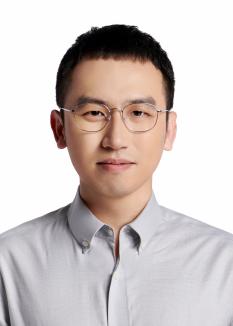 |
冯霄, 北京理工大学博士生导师, 化学与化工学院教授, 国家级领军人才. 分别于2008年和2013年于北京理工大学材料学院取得本科与博士学位, 攻读博士期间以联合培养博士研究生身份留学于日本分子科学研究所. 2013年就职于北京理工大学化学与化工学院. 主要从事关于共价有机框架材料中物质传输与能源转化研究. |
★ “中国青年化学家”专辑.
基金资助:
Chengqiu Li, Jiajun Yu, Xiao Feng*()
Received:2025-06-14
Published:2025-08-28
Contact:
Xiao Feng
About author:† These authors contributed equally to this work.
★ For the VSI “Rising Stars in Chemistry”.
Supported by:文章分享
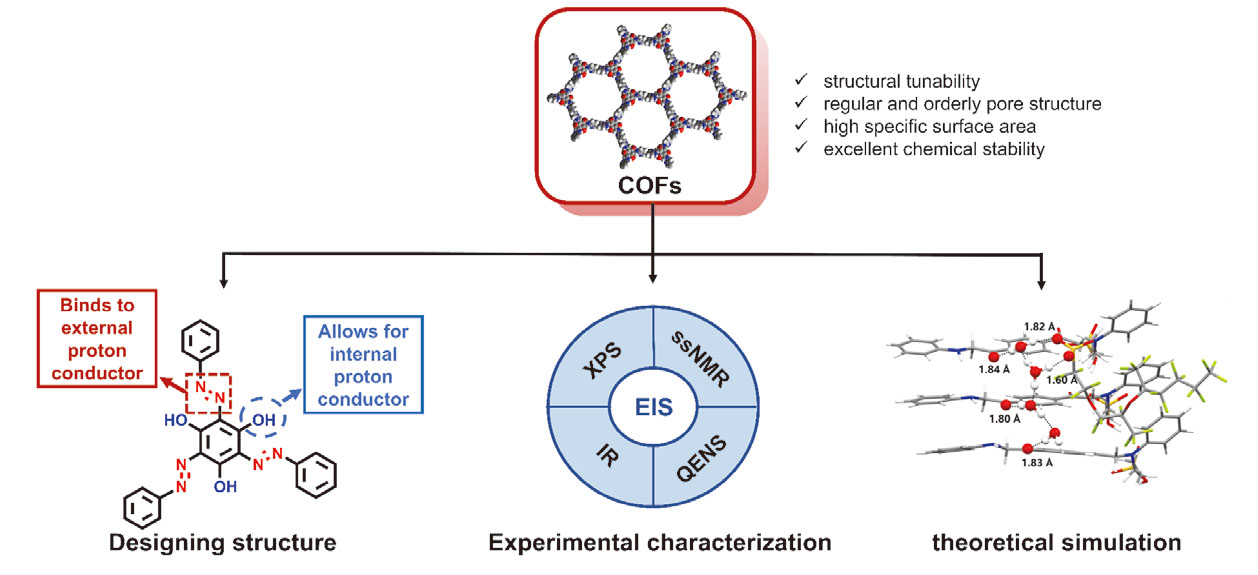
共价有机框架(covalent organic frameworks, COFs)凭借其结构可设计性、高比表面积和优异的化学稳定性, 近年来在质子导体领域引起广泛关注. 本综述概述了COFs在本征与非本征质子源体系中的质子传输机制、材料设计策略及相关研究进展, 阐明了Grotthuss机制与Vehicle机制的定义和判定标准. 将电化学阻抗谱、固体核磁、红外光谱等实验手段与密度泛函理论、分子动力学和从头算分子动力学模拟结合, 解析了COFs的微观质子传输机制及其与结构的构效关系. 最后, 本综述分析了COF质子导体在能源领域的应用前景, 并简要探讨了其结构设计、实验表征和理论模拟的发展方向.
李澄秋, 余嘉俊, 冯霄. 共价有机框架作为质子导体的研究进展★[J]. 化学学报, 2025, 83(10): 1223-1236.
Chengqiu Li, Jiajun Yu, Xiao Feng. Research Progress of Covalent Organic Frameworks as Proton Conductors★[J]. Acta Chimica Sinica, 2025, 83(10): 1223-1236.


| [1] |
|
| [2] |
|
|
(邵志刚, 衣宝廉, 中国科学院院刊, 2019, 34, 469.)
|
|
| [3] |
|
| [4] |
|
| [5] |
|
| [6] |
|
| [7] |
|
| [8] |
|
|
(陈霭瑶, 崔梅生, 白守礼, 张麦红, 罗瑞贤, 化工学报, 2003, 54, 232.)
|
|
| [9] |
|
|
(马桂林, 许佳, 张明, 王小稳, 尹金玲, 徐建红, 化学进展, 2011, 23, 441.)
|
|
| [10] |
doi: 10.1021/acs.chemrev.6b00159 pmid: 28112903 |
| [11] |
|
| [12] |
|
| [13] |
|
| [14] |
|
| [15] |
|
| [16] |
|
| [17] |
|
| [18] |
|
| [19] |
|
| [20] |
|
| [21] |
|
| [22] |
doi: 10.1021/jacs.4c14029 pmid: 39929703 |
| [23] |
|
| [24] |
|
| [25] |
|
| [26] |
|
|
(林祖金, 曹荣, 化学学报, 2020, 78, 1309.)
doi: 10.6023/A20080359 |
|
| [27] |
|
| [28] |
|
| [29] |
|
| [30] |
|
| [31] |
|
| [32] |
|
| [33] |
|
| [34] |
|
| [35] |
|
| [36] |
|
| [37] |
|
| [38] |
|
| [39] |
doi: 10.1039/d0dt04384b pmid: 33908932 |
| [40] |
|
| [41] |
|
| [42] |
|
|
(张长财, 博士论文, 中国科学技术大学, 合肥, 2024.)
|
|
| [43] |
|
| [44] |
|
| [45] |
|
| [46] |
|
| [47] |
doi: 10.1021/ja502212v pmid: 24758195 |
| [48] |
|
| [49] |
|
| [50] |
|
| [51] |
|
| [52] |
|
| [53] |
|
| [54] |
doi: 10.1002/anie.201913802 pmid: 31833630 |
| [55] |
|
|
(吕毅男, 硕士论文, 中国石油大学, 北京, 2023.)
|
|
| [56] |
|
| [57] |
|
| [58] |
|
| [59] |
|
| [60] |
|
| [61] |
|
| [62] |
|
| [63] |
|
| [64] |
|
| [65] |
doi: 10.1038/s41467-023-40282-1 pmid: 37528075 |
| [66] |
|
| [67] |
|
| [68] |
|
| [69] |
|
| [70] |
|
| [71] |
|
| [72] |
|
| [73] |
|
| [74] |
|
| [75] |
|
| [76] |
|
| [1] | 闫生荣, 刘文浩, 段芳, 陈明清, 东为富, 陆双龙, 杜明亮. 基于sp2-碳连接具有D-A结构共价有机框架的构筑及其光催化产双氧水性能研究[J]. 化学学报, 2025, 83(7): 685-693. |
| [2] | 魏颖, 王家成, 李玥, 汪涛, 马述威, 解令海. 碳碳键链接的二维共价有机框架研究进展[J]. 化学学报, 2024, 82(1): 75-102. |
| [3] | 杨蓉婕, 周璘, 苏彬. 基于共价有机框架修饰电极的维生素A和C的选择性检测★[J]. 化学学报, 2023, 81(8): 920-927. |
| [4] | 刘建川, 李翠艳, 刘耀祖, 王钰杰, 方千荣. 高稳定二维联咔唑sp2碳共轭共价有机框架材料用于高效电催化氧还原★[J]. 化学学报, 2023, 81(8): 884-890. |
| [5] | 何明慧, 叶子秋, 林桂庆, 尹晟, 黄心翊, 周旭, 尹颖, 桂波, 汪成. 卟啉基共价有机框架的光催化研究进展★[J]. 化学学报, 2023, 81(7): 784-792. |
| [6] | 陈俊畅, 张明星, 王殳凹. 晶态多孔材料合成方法的研究进展[J]. 化学学报, 2023, 81(2): 146-157. |
| [7] | 于潇涵, 黄伟, 李彦光. 二维共价有机框架材料的可控合成及其光催化应用研究进展[J]. 化学学报, 2022, 80(11): 1494-1506. |
| [8] | 浩天瑞霖, 朱子煜, 蔡艳慧, 王微, 王祯, 梁阿新, 罗爱芹. 基于共价有机框架的电化学生物传感器在生物样品检测中的应用[J]. 化学学报, 2022, 80(11): 1524-1535. |
| [9] | 王自陶, 刘耀祖, 王钰杰, 方千荣. 一种新型磺酸修饰的共价有机框架用于二氧化碳吸收和染料吸附[J]. 化学学报, 2022, 80(1): 37-43. |
| [10] | 王涛, 赵璐, 王科伟, 白云峰, 冯锋. 共价有机框架的合成及其在肿瘤治疗中的应用研究进展[J]. 化学学报, 2021, 79(5): 600-613. |
| [11] | 方婧, 赵文娟, 张明浩, 方千荣. 一种新型酰胺功能化的共价有机框架用于选择性染料吸附[J]. 化学学报, 2021, 79(2): 186-191. |
| [12] | 孙炼, 王洪磊, 余金山, 周新贵. 金属有机框架质子导体及其质子交换膜的研究进展[J]. 化学学报, 2020, 78(9): 888-900. |
| [13] | 王友付, 刘航海, 朱新远. 网状框架中的机械互锁结构[J]. 化学学报, 2020, 78(8): 746-757. |
| [14] | 蒋成浩, 冯霄, 王博. 共价有机框架膜的制备及其在海水淡化和水处理领域的研究进展[J]. 化学学报, 2020, 78(6): 466-477. |
| [15] | 刘建国, 张明月, 王楠, 王晨光, 马隆龙. 共价有机框架材料催化研究进展[J]. 化学学报, 2020, 78(4): 311-325. |
| 阅读次数 | ||||||
|
全文 |
|
|||||
|
摘要 |
|
|||||
