

化学学报 ›› 2026, Vol. 84 ›› Issue (1): 129-134.DOI: 10.6023/A25060242 上一篇 下一篇
研究论文
叶舣a,†, 黄正义b,†, 赵兴雷a, 赵娅俐b, 刘龙杰a, 吴武凤b,*( ), 魏嫣莹b,*()
投稿日期:2025-06-30
发布日期:2025-08-03
基金资助:
Yi Yea, Zhengyi Huangb, Xinglei Zhaoa, Yali Zhaob, Longjie Liua, Wufeng Wub,*(), Yanying Weib,*()
Received:2025-06-30
Published:2025-08-03
Contact:
* E-mail: wuwufeng@scut.edu.cn;ceyywei@scut.edu.cn
About author:Supported by:文章分享
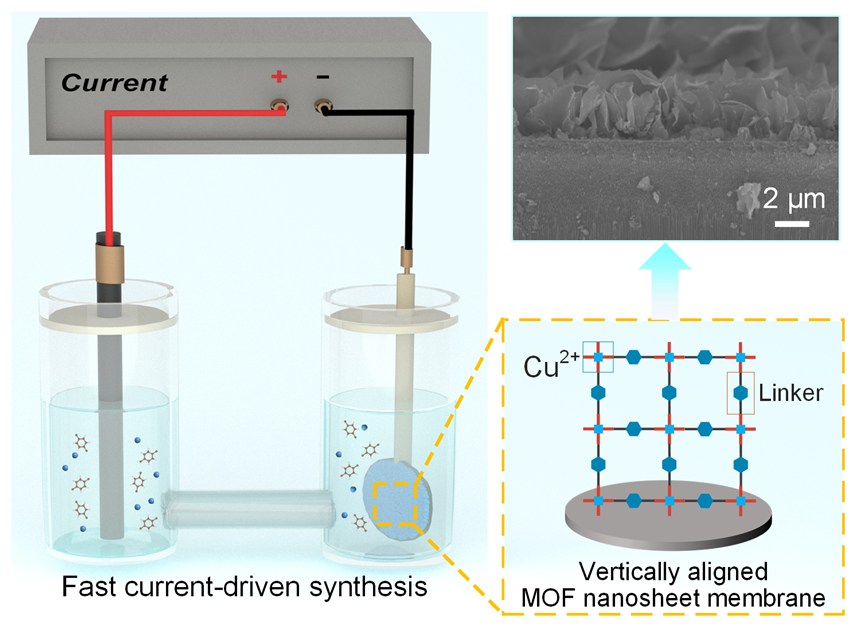
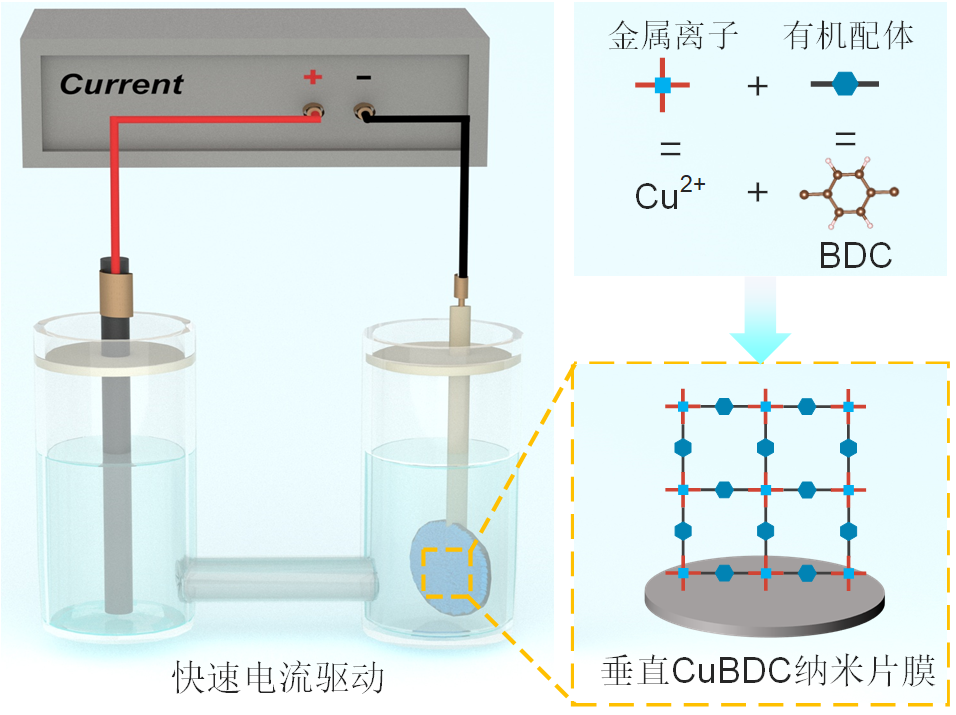
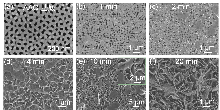
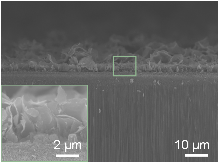
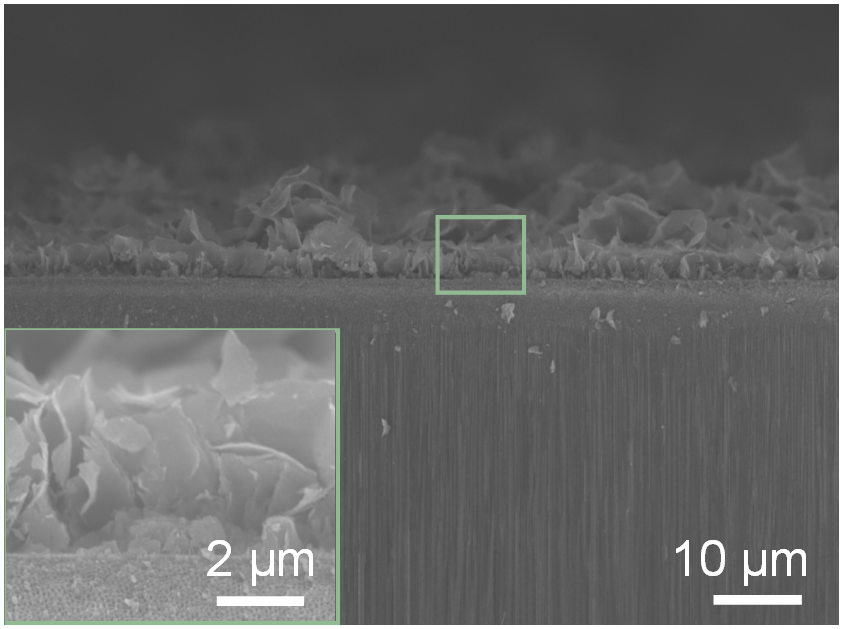
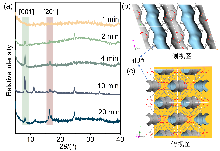
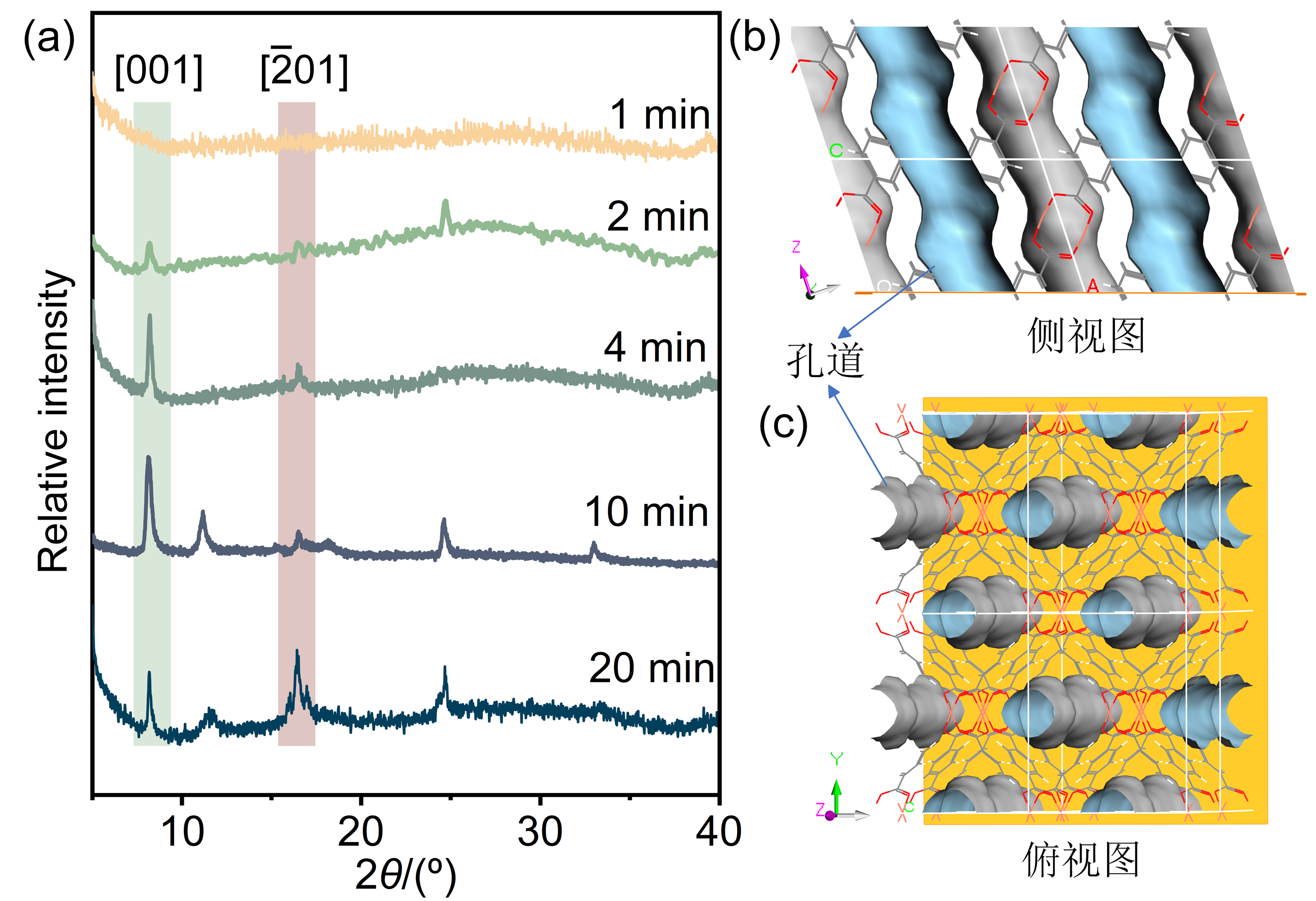
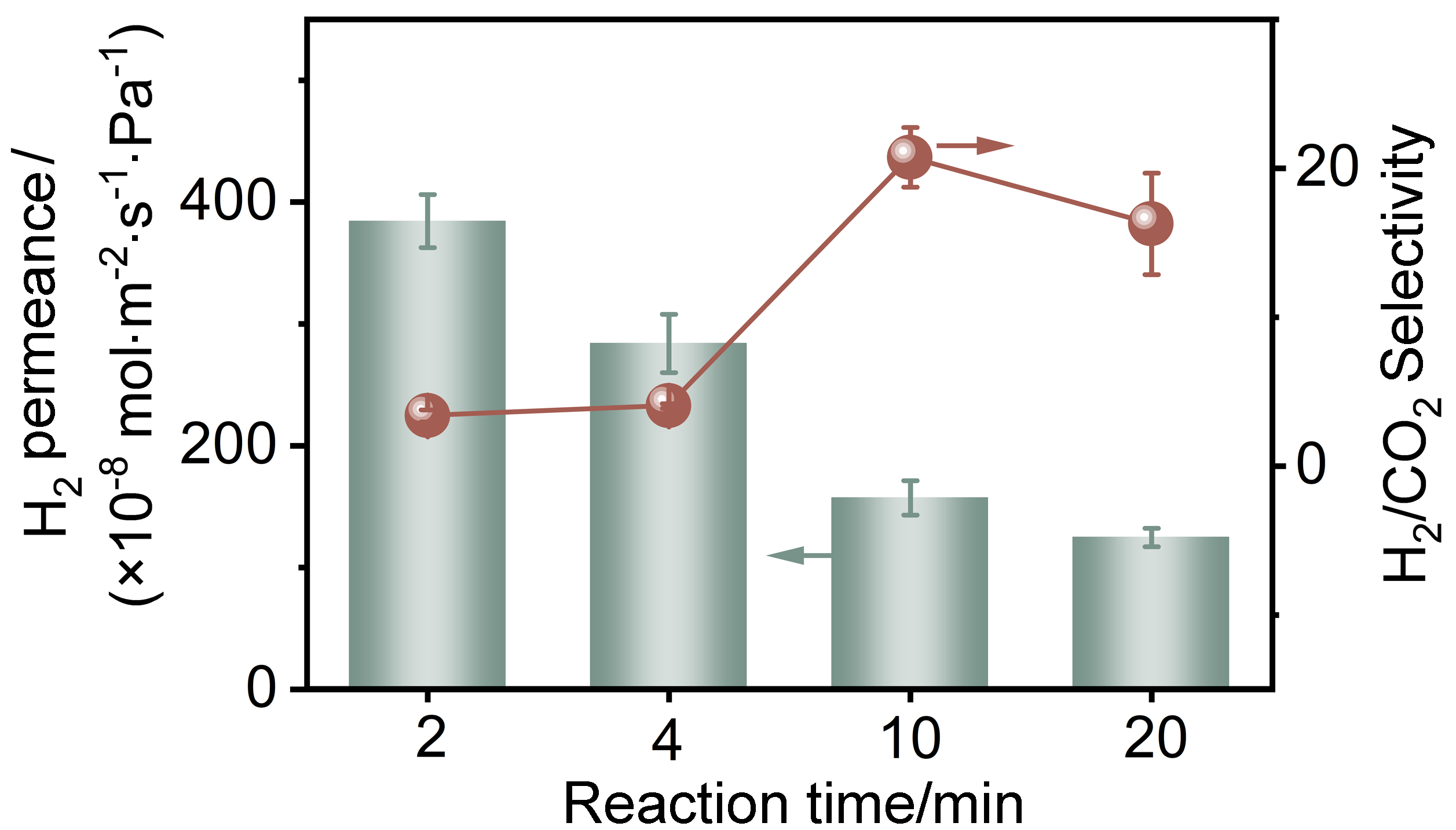
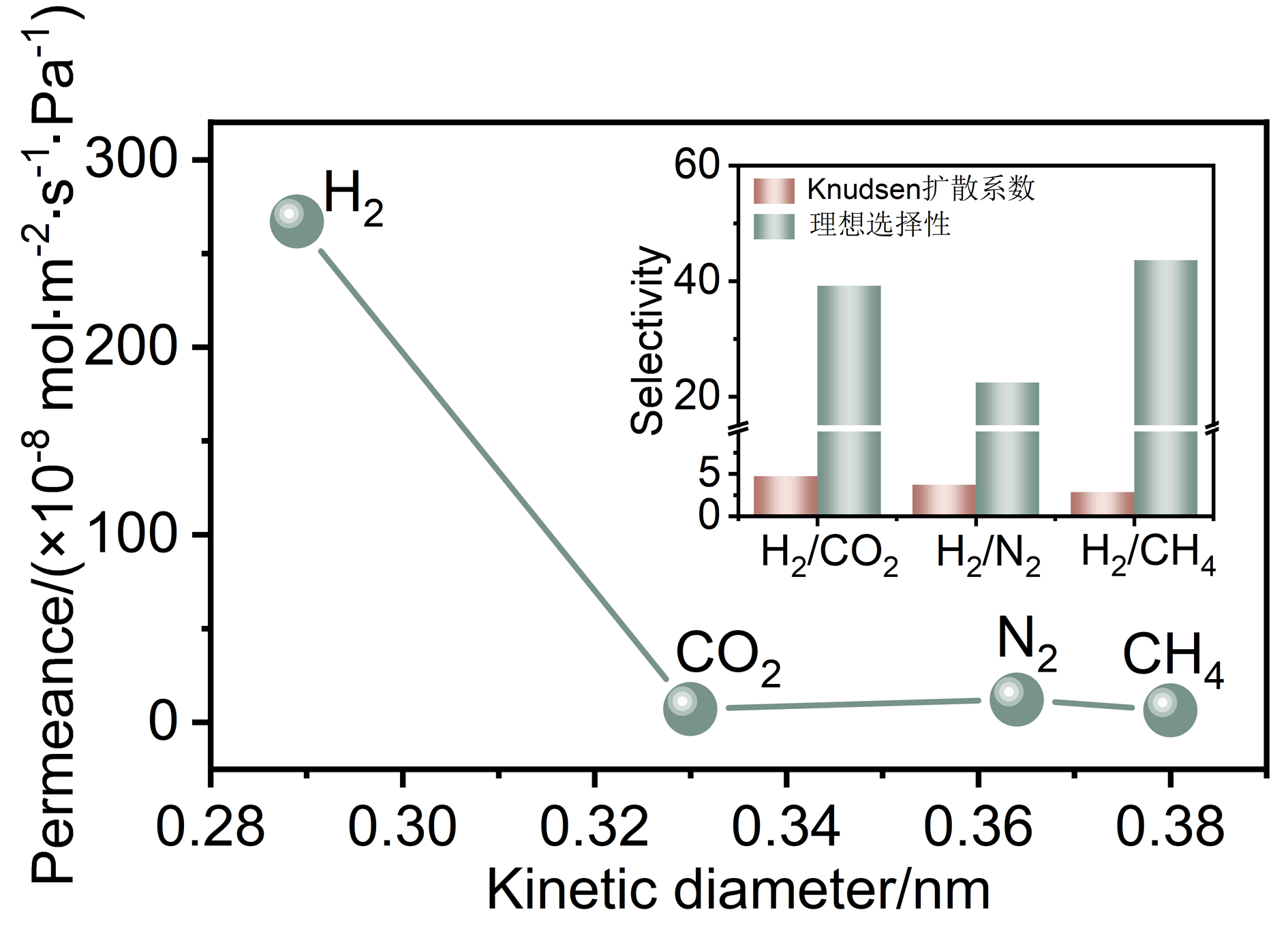
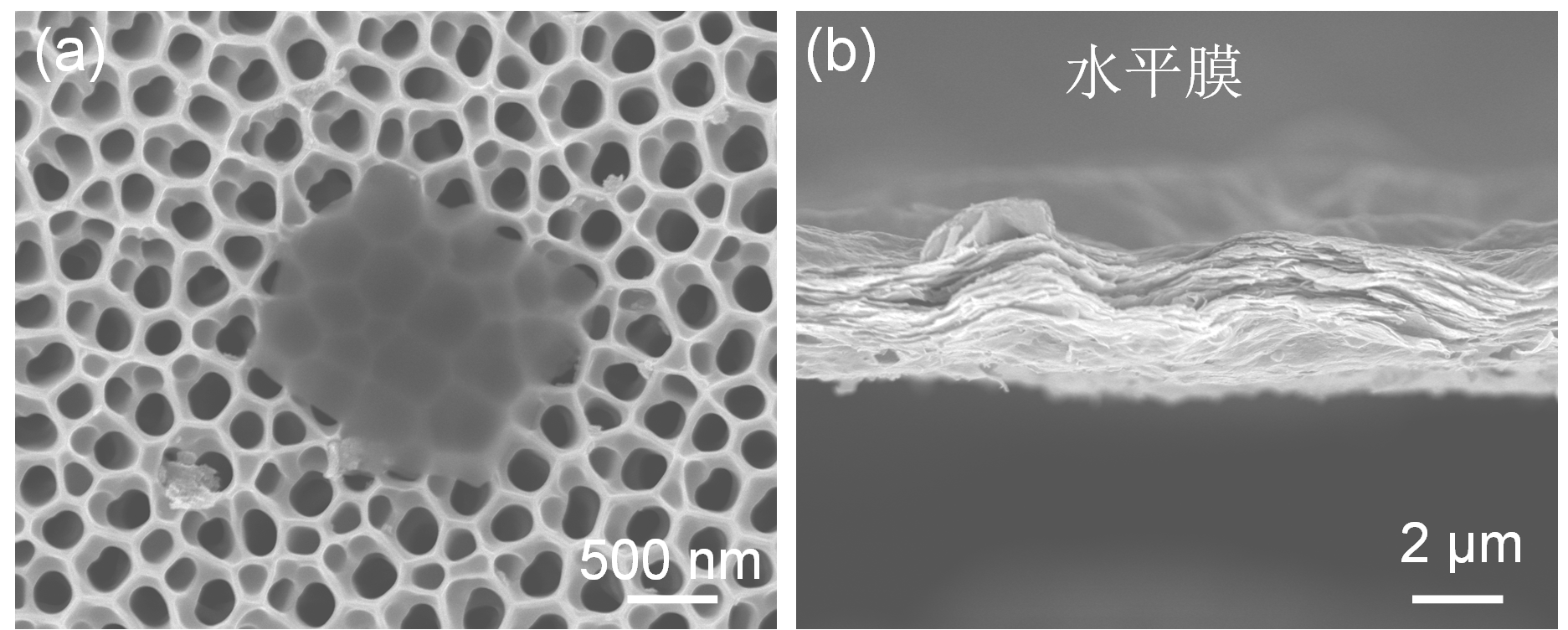
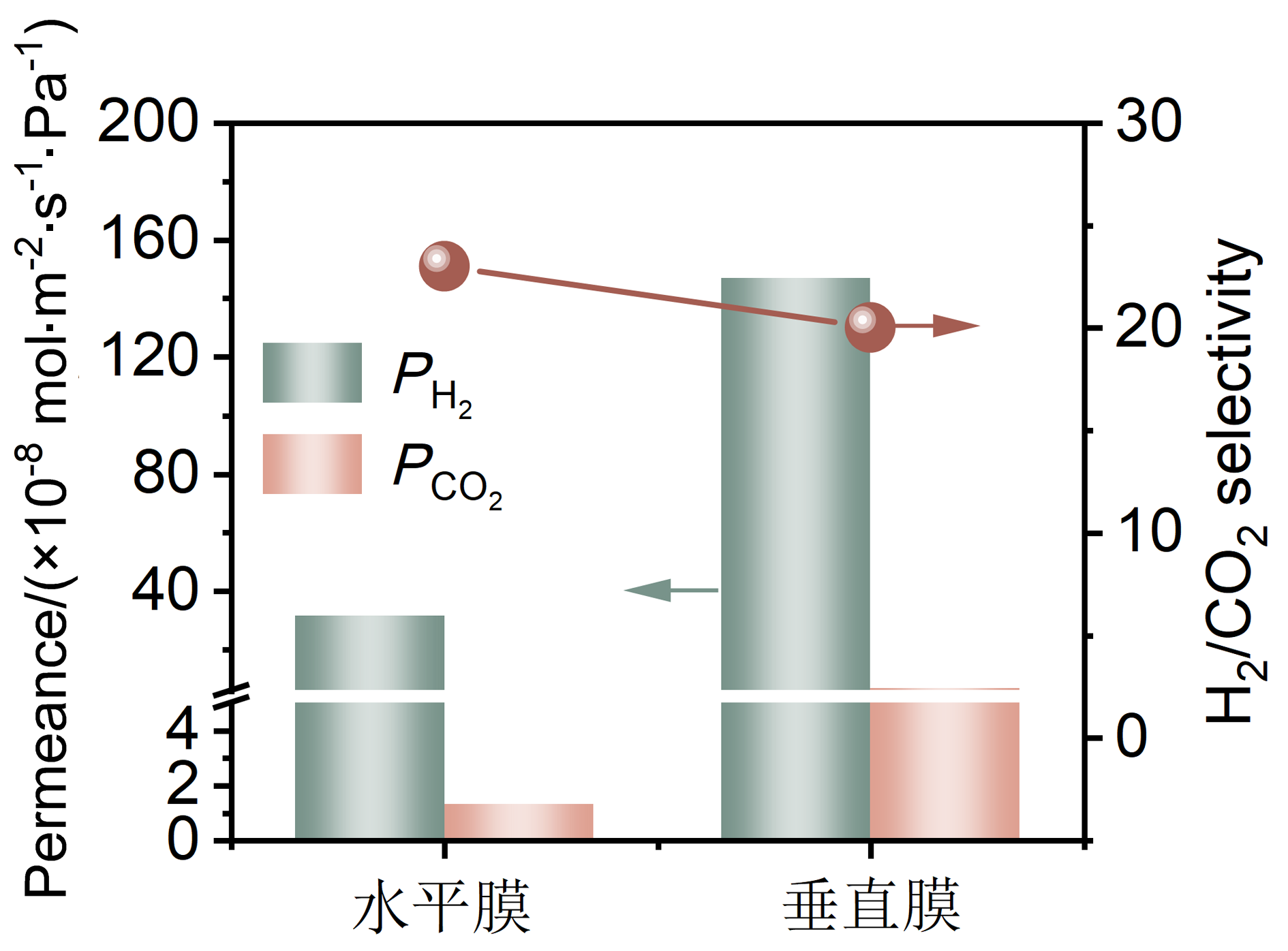
当前全球90%以上的氢气生产依赖于天然气重整工艺, 因此实现高效的碳脱除及氢气提纯对推动高纯度氢能的大规模应用具有重要意义. 具有有序多孔结构的金属有机框架(MOFs)纳米片膜在氢气纯化领域展现出巨大潜力. 然而, MOF纳米片膜面临传统水平堆叠方式所带来的气体传输路径迂回问题, 严重制约了其传质效率. 为此, 本研究采用一种快速电流驱动策略, 在短短10 min内实现了垂直MOF纳米片膜的原位构筑. 该垂直排列结构显著改善了气体分子的扩散路径, 所制备的垂直MOF纳米片膜表现出了极高的H2渗透性能, 其渗透率达到1.5×10⁻⁶ mol•m-2•s-1•Pa-1, 相较于传统的水平堆叠结构膜提升了5倍. 同时, 在H2/CO2体系中仍保持了良好的分离选择性(选择性约为20). 该研究为二维MOF材料的垂直构筑与高性能分离应用提供了新的理论基础与技术路径.
叶舣, 黄正义, 赵兴雷, 赵娅俐, 刘龙杰, 吴武凤, 魏嫣莹. 垂直排列金属有机框架纳米片膜实现高效H2传输[J]. 化学学报, 2026, 84(1): 129-134.
Yi Ye, Zhengyi Huang, Xinglei Zhao, Yali Zhao, Longjie Liu, Wufeng Wu, Yanying Wei. Vertically Aligned Metal-organic Framework Nanosheet Membranes for Efficient H2 Transport[J]. Acta Chimica Sinica, 2026, 84(1): 129-134.


| [1] |
doi: 10.1039/D3CS00731F |
| [2] |
doi: 10.1016/j.ijhydene.2025.01.033 |
| [3] |
doi: 10.1016/j.ijhydene.2018.10.149 |
| [4] |
doi: 10.1039/D3EE03875K |
| [5] |
doi: 10.1039/C9CS00756C |
| [6] |
doi: 10.1038/532435a |
| [7] |
doi: 10.6023/A24120388 |
|
(张蒙茜, 张玉莹, 秦家轩, 冯霄, 李雪艳, 畅通, 杨海英, 化学学报, 2025, 83, 132.)
doi: 10.6023/A24120388 |
|
| [8] |
doi: 10.6023/A21030099 |
|
(吕露茜, 赵娅俐, 魏嫣莹, 王海辉, 化学学报, 2021, 79, 869.)
doi: 10.6023/A21030099 |
|
| [9] |
doi: 10.1126/science.1203771 |
| [10] |
doi: 10.1126/science.aab0530 |
| [11] |
doi: 10.6023/A23100467 |
|
(何文, 王波, 冯晗俊, 孔祥如, 李桃, 肖睿, 化学学报, 2024, 82, 226.)
doi: 10.6023/A23100467 |
|
| [12] |
doi: 10.1126/science.1254227 |
| [13] |
doi: 10.1038/s41467-024-54663-7 |
| [14] |
doi: 10.1038/ncomms14460 |
| [15] |
|
| [16] |
doi: 10.1126/science.abo5680 pmid: 36264816 |
| [17] |
doi: 10.1016/j.micromeso.2009.11.035 |
| [18] |
doi: 10.1038/nmat4113 pmid: 25362353 |
| [19] |
doi: 10.1021/acs.langmuir.0c02434 |
| [20] |
|
| [21] |
doi: 10.1126/sciadv.aau1393 |
| [22] |
|
| [23] |
doi: 10.1016/j.seppur.2021.119109 |
| [24] |
doi: 10.1002/adma.201000857 |
| [25] |
doi: 10.1002/anie.v57.49 |
| [26] |
doi: 10.1021/acsami.8b19480 |
| [27] |
doi: 10.1021/jacs.1c02379 |
| [28] |
doi: 10.1002/adfm.v29.9 |
| [29] |
doi: 10.1038/s41467-020-15200-4 |
| [30] |
doi: 10.1002/aic.v68.9 |
| [31] |
doi: 10.1038/s41467-023-38155-8 pmid: 37185270 |
| [32] |
doi: 10.1002/aic.v69.6 |
| [1] | 何文, 王波, 冯晗俊, 孔祥如, 李桃, 肖睿. CO2捕集膜分离的Pebax基材料研究进展[J]. 化学学报, 2024, 82(2): 226-241. |
| [2] | 曾少娟, 孙雪琦, 白银鸽, 白璐, 郑爽, 张香平, 张锁江. CO2捕集分离的功能离子液体及材料研究进展★[J]. 化学学报, 2023, 81(6): 627-645. |
| [3] | 李崇, 李娜, 常立美, 谷志刚, 张健. 金属-有机框架HKUST-1膜在气体分离中研究进展※[J]. 化学学报, 2022, 80(3): 340-358. |
| [4] | 吕露茜, 赵娅俐, 魏嫣莹, 王海辉. 二维金属-有机骨架膜的制备及其在分离中的应用[J]. 化学学报, 2021, 79(7): 869-884. |
| [5] | 付静茹, 贲腾. 一种新型的共价有机骨架膜的制备与气体分离性能[J]. 化学学报, 2020, 78(8): 805-814. |
| [6] | 蒋成浩, 冯霄, 王博. 共价有机框架膜的制备及其在海水淡化和水处理领域的研究进展[J]. 化学学报, 2020, 78(6): 466-477. |
| [7] | 蔡铖智, 李丽凤, 邓小梅, 李树华, 梁红, 乔智威. 基于机器学习和高通量计算筛选金属有机框架的甲烷/乙烷/丙烷分离性能[J]. 化学学报, 2020, 78(5): 427-436. |
| [8] | 刘蓓, 唐李兴, 廉源会, 李智, 孙长宇, 陈光进. 互穿结构及混合配体对金属-有机骨架材料分离性能的影响[J]. 化学学报, 2013, 71(06): 920-928. |
| [9] | 付升, 于养信, 王晓琳. 纳滤膜对电解质溶液分离特性的理论研究(II): 混合电解质溶液[J]. 化学学报, 2007, 65(10): 923-929. |
| [10] | 付升, 于养信, 高光华, 王晓琳. 纳滤膜对电解质溶液分离特性的理论研究(I): 单一电解质溶液[J]. 化学学报, 2006, 64(22): 2241-2246. |
| [11] | 程志林,晁自胜,方维平,林海强,方惠霖. 添加成膜促进剂合成致密ZSM-5分子筛膜[J]. 化学学报, 2003, 61(12): 1944-1948. |
| 阅读次数 | ||||||
|
全文 |
|
|||||
|
摘要 |
|
|||||
