

化学学报 ›› 2025, Vol. 83 ›› Issue (12): 1576-1591.DOI: 10.6023/A25080274 上一篇 下一篇
所属专题: “中国青年化学家”合辑
综述
陈明, 莫贞波*( )
)
投稿日期:2025-08-06
发布日期:2025-10-10
作者简介: |
陈明, 南开大学化学学院2022级在读博士研究生, 主要研究方向为低价主族元素化学及小分子活化. |
 |
莫贞波, 博士, 南开大学化学学院研究员, 博士生导师. 长期从事主族元素化学和金属有机化学方向的研究工作, 在新型低价态主族元素化合物的合成方面取得了一系列研究成果, 迄今在Chem、J. Am. Chem. Soc.、Angew. Chem. Int. Ed.、Nat. Commun.等国际著名期刊杂志发表学术论文40余篇. |
★ “中国青年化学家”专辑.
基金资助:
Ming Chen, Zhenbo Mo*()
Received:2025-08-06
Published:2025-10-10
Contact:
* E-mail: zhenbo.mo@nankai.edu.cn
About author:★ For the VSI “Rising Stars in Chemistry”.
Supported by:文章分享
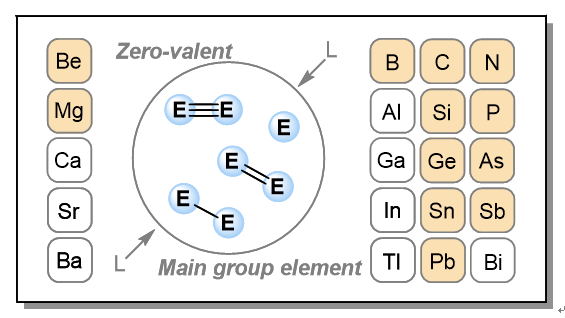
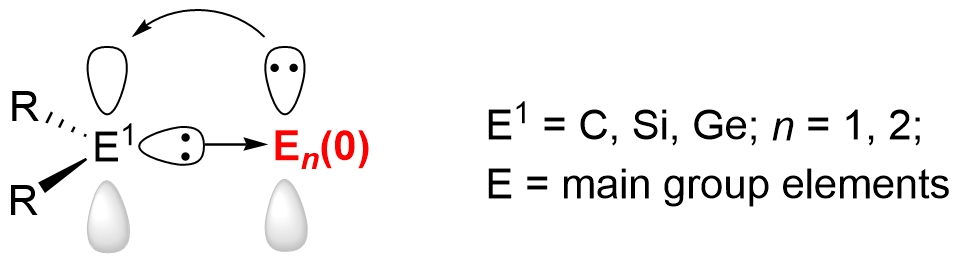
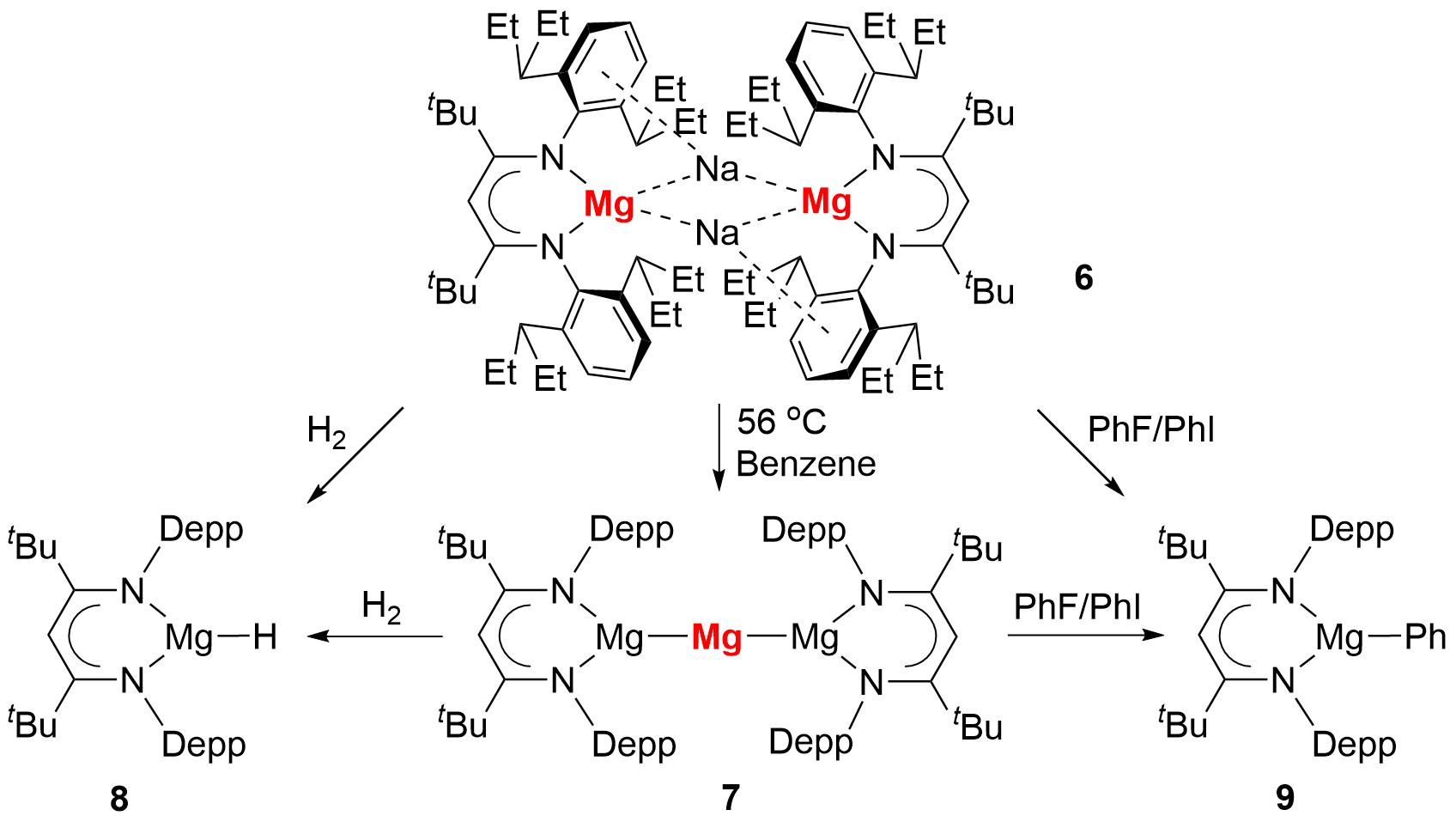
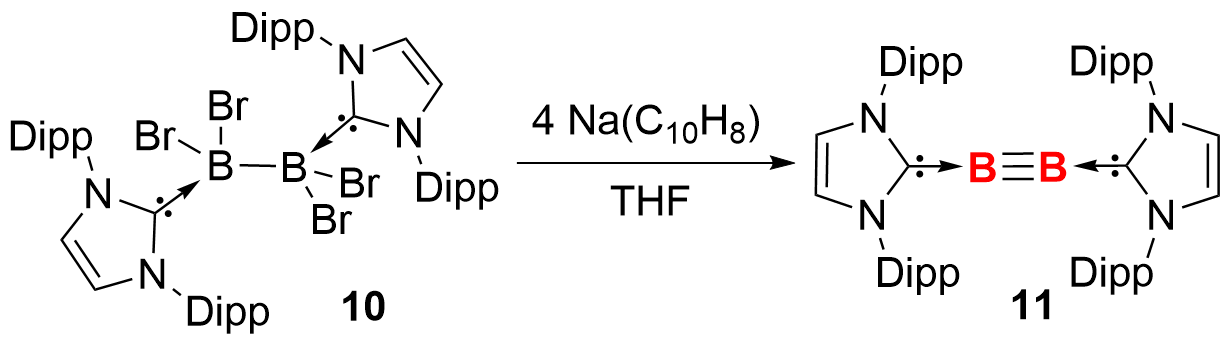
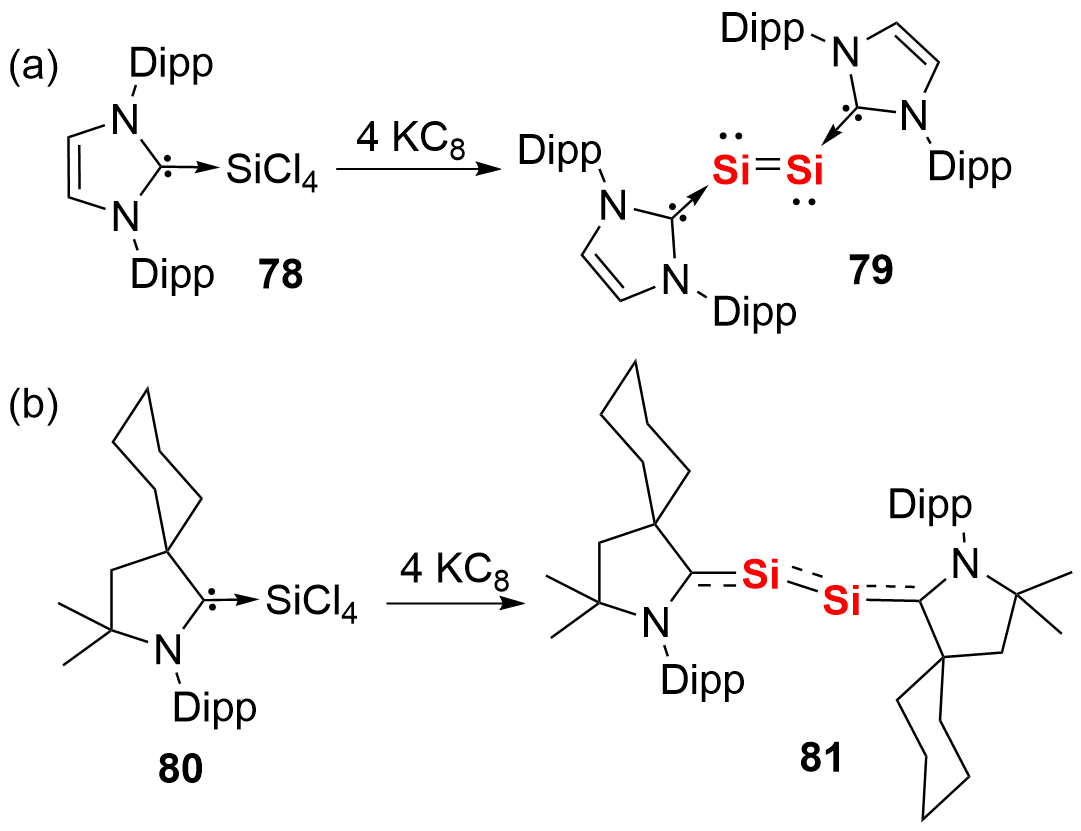
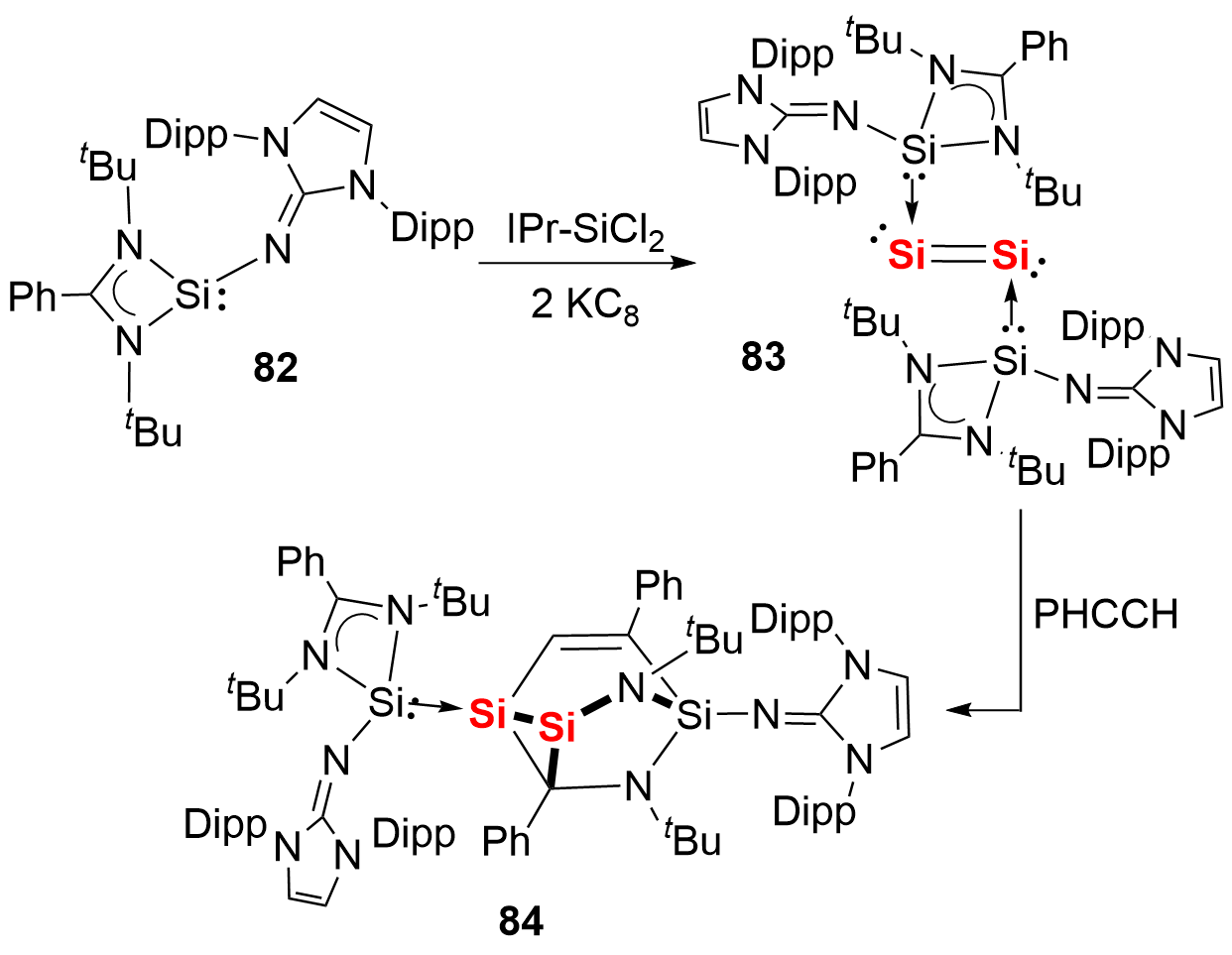
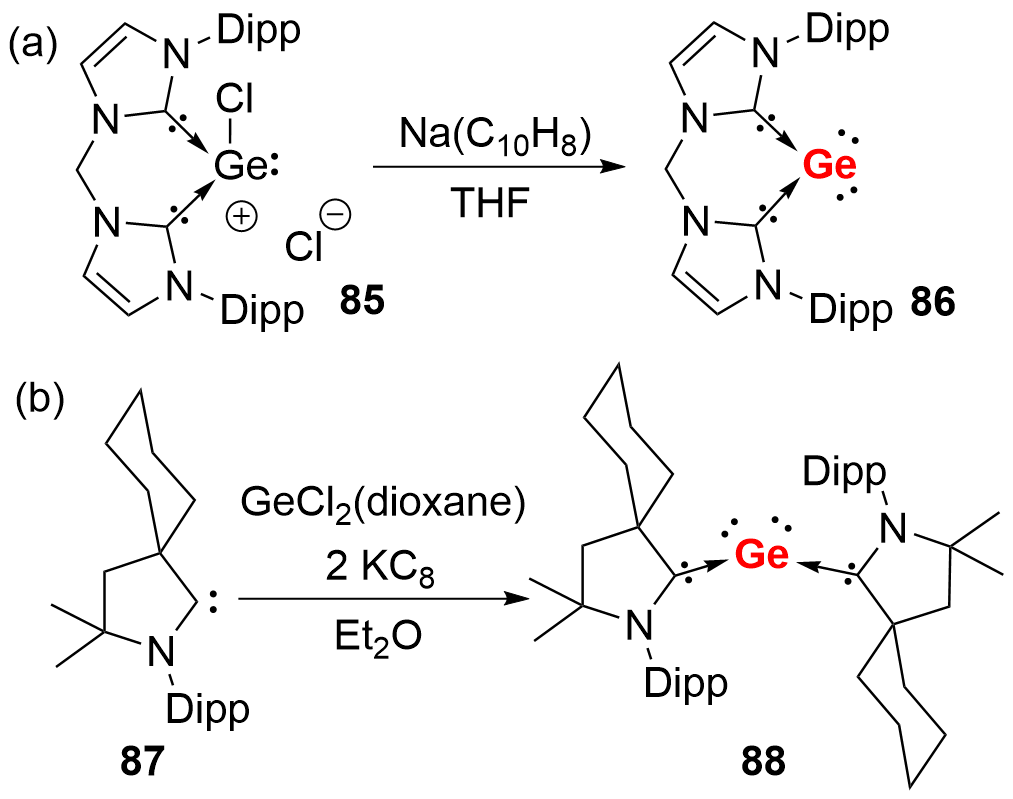
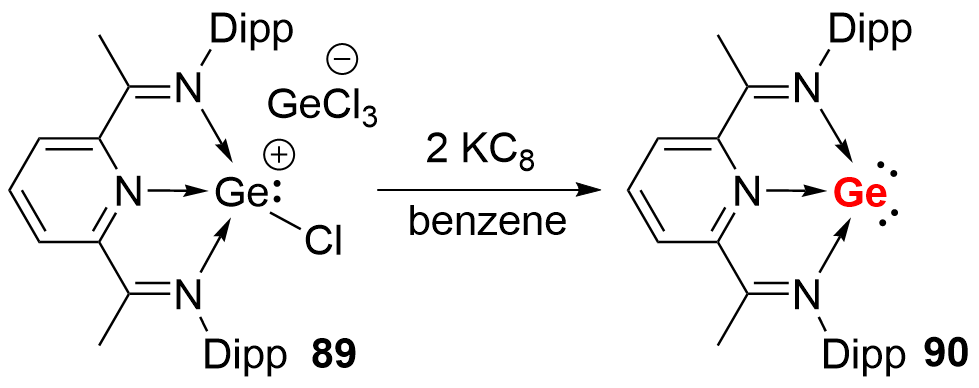
零价态主族元素以不同键合方式形成种类丰富的同素异形体, 在合成化学和新材料开发领域展现了广泛的应用潜力. 近年来, 随着主族元素化学的不断发展, 配体稳定的低价态主族元素化合物逐渐受到重视, 相关的单核和双核零价态主族元素化合物的合成研究相继被报道. 配体稳定的单核和双核零价态主族元素化合物具有独特的电子结构, 其分离与表征有助于深入理解零价态主族元素的成键机制, 而其良好的溶解性则极大地拓展了它们在合成化学中的应用. 此外, 零价主族元素化合物因中心元素的不寻常氧化态, 展现出在小分子活化方面的潜力. 本文综述了配体稳定的单核和双核零价态主族元素化合物的合成, 重点总结了零价态主族元素化合物的分离及其化学反应性, 并探讨了这一领域面临的挑战及未来的发展方向.
陈明, 莫贞波. 零价态主族元素化合物的合成、结构与反应性质研究进展★[J]. 化学学报, 2025, 83(12): 1576-1591.
Ming Chen, Zhenbo Mo. Recent Advances in the Synthesis, Structural Characterization, and Reactivity of Zero-Valent Main Group Compounds★[J]. Acta Chimica Sinica, 2025, 83(12): 1576-1591.
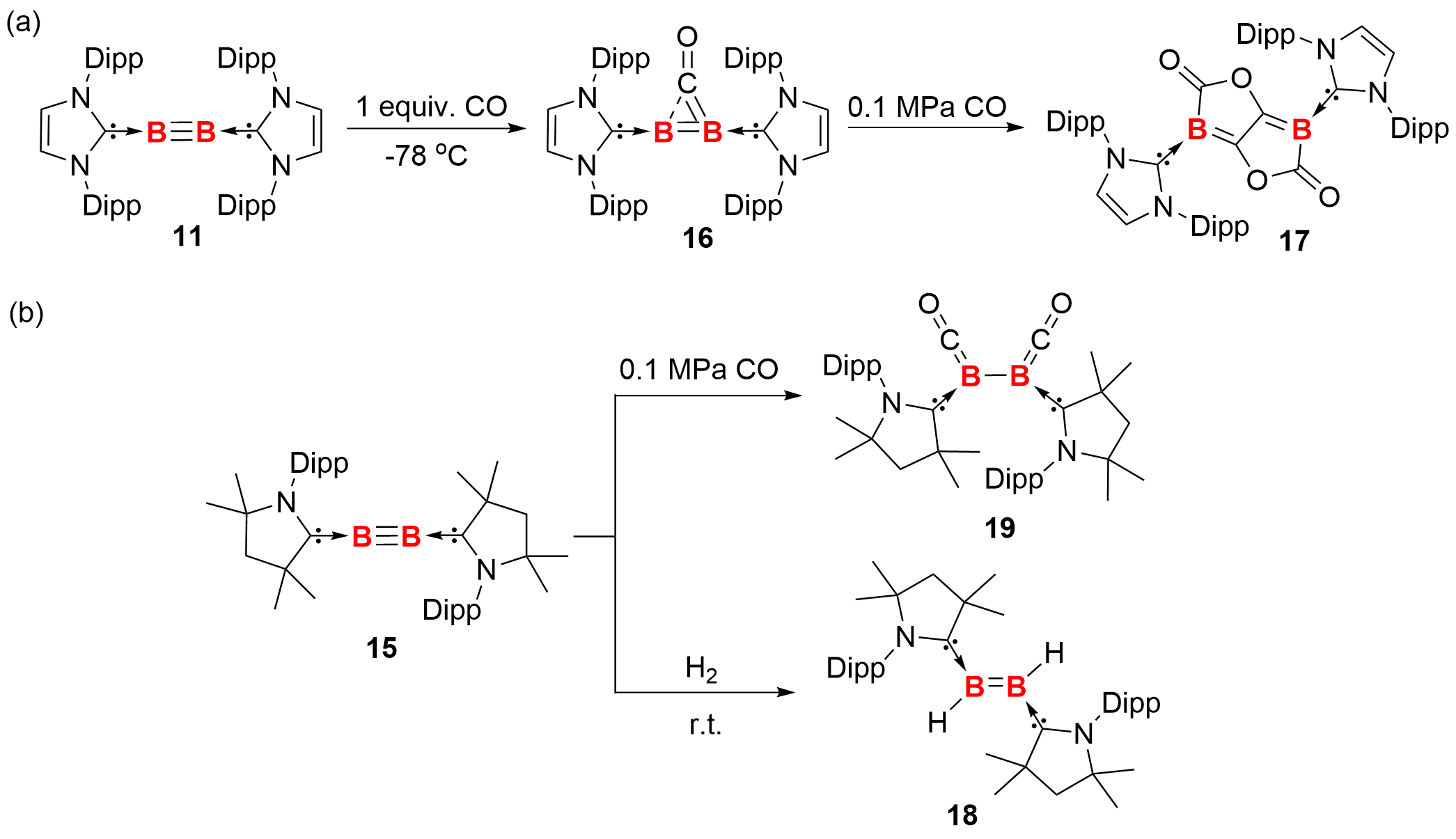
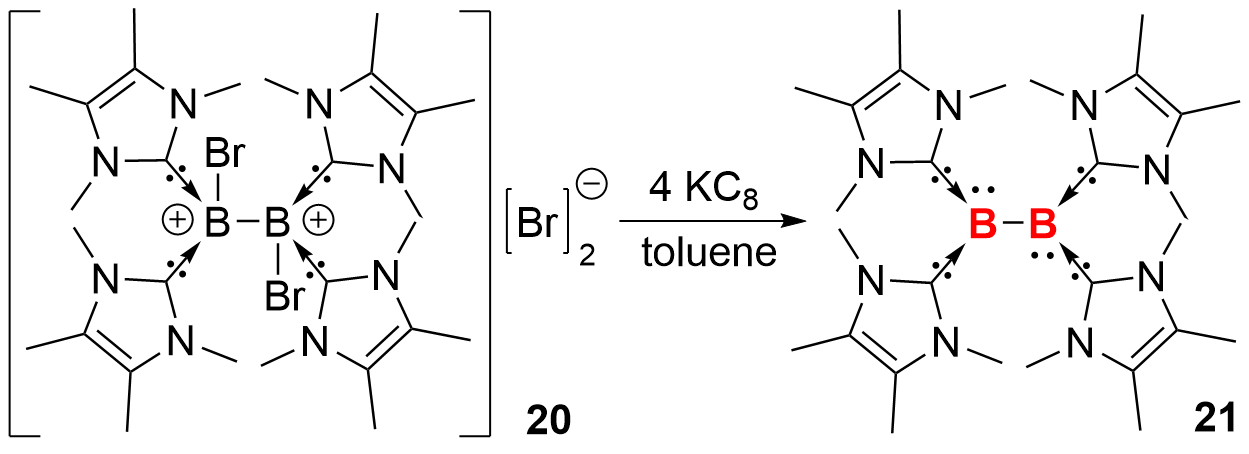
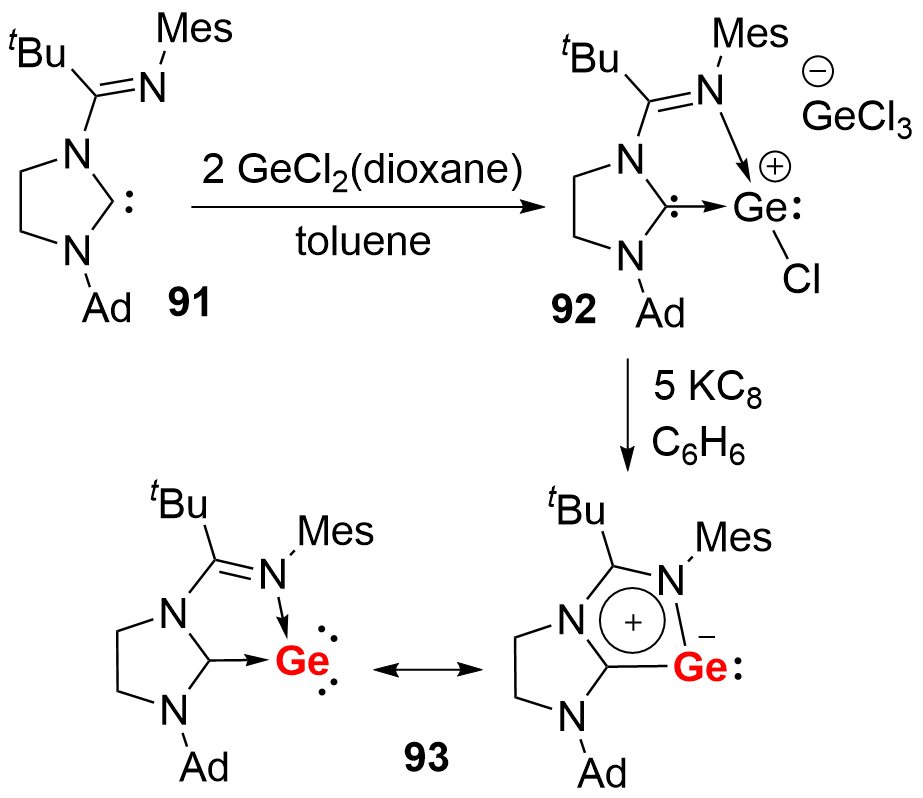

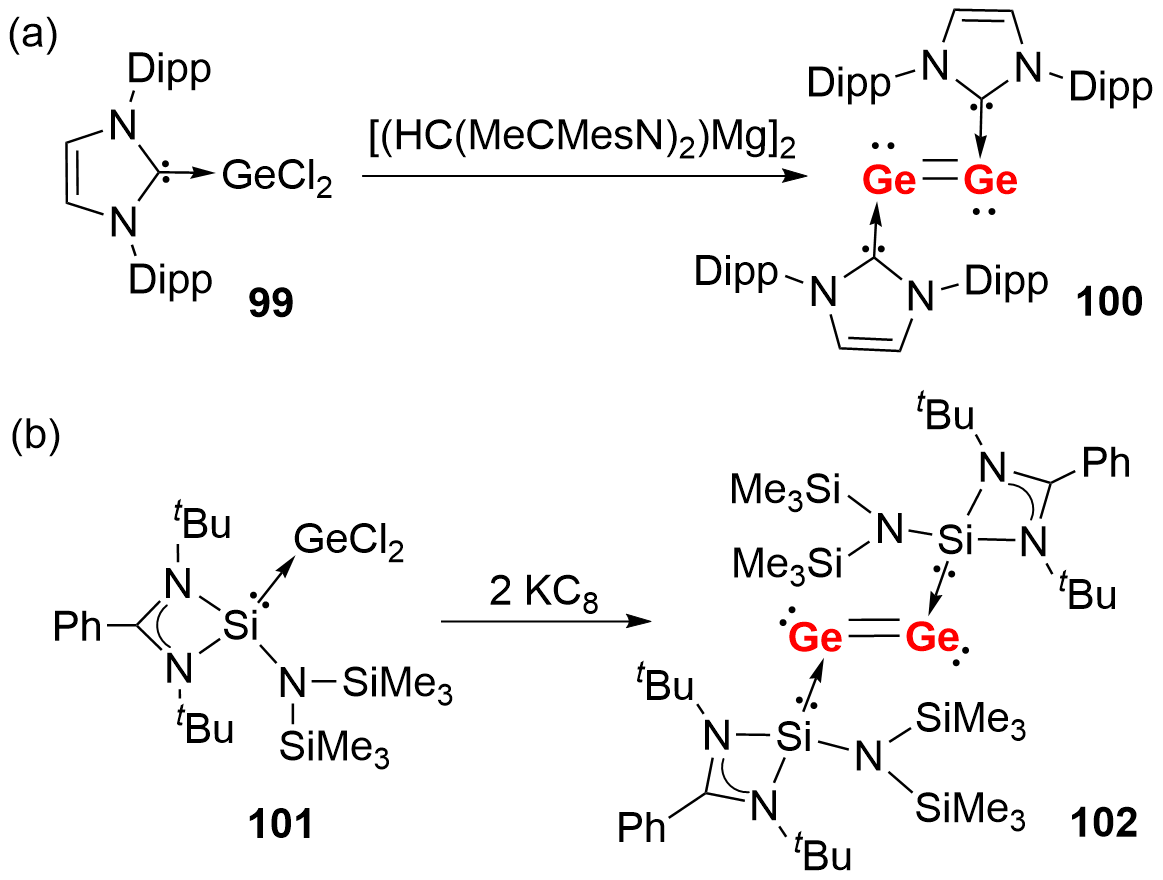
| [48] |
doi: 10.1002/anie.v53.10 |
| [49] |
doi: 10.1002/anie.v53.48 |
| [50] |
doi: 10.1002/anie.v55.48 |
| [51] |
doi: 10.1021/jacs.8b11605 |
| [52] |
doi: 10.1002/anie.v60.27 |
| [53] |
doi: 10.1002/anie.200905495 pmid: 19921732 |
| [54] |
doi: 10.1002/anie.v53.48 |
| [55] |
doi: 10.1002/chem.v19.46 |
| [1] |
doi: 10.3390/ma11020295 |
| [2] |
doi: 10.1038/s41570-016-0014 |
| [3] |
doi: 10.1063/1.1811078 |
| [4] |
doi: 10.1021/jp044528s |
| [5] |
doi: 10.1063/1.1834915 |
| [6] |
doi: 10.1021/ja026257+ |
| [7] |
doi: 10.1126/science.aau0839 |
| [8] |
doi: 10.1002/anie.v59.26 |
| [56] |
|
| [57] |
doi: 10.1021/jacs.4c03227 |
| [58] |
doi: 10.1039/c2cc35228a |
| [59] |
doi: 10.1038/s41467-023-42953-5 |
| [60] |
|
| [61] |
|
| [62] |
|
| [63] |
doi: 10.1021/ja807828t |
| [64] |
doi: 10.1002/anie.v48:30 |
| [65] |
doi: 10.1038/s41557-020-0518-0 |
| [66] |
doi: 10.1021/ja400219d |
| [67] |
doi: 10.1002/anie.201404849 pmid: 24961494 |
| [9] |
doi: 10.1021/acs.chemrev.8b00079 pmid: 29969239 |
| [10] |
doi: 10.1021/jacs.2c13574 |
| [11] |
doi: 10.1002/chem.v19.41 |
| [12] |
doi: 10.1039/c5cs00815h pmid: 26815221 |
| [13] |
doi: 10.1039/D1DT03569J |
| [14] |
doi: 10.1039/c3dt50563d pmid: 23572069 |
| [15] |
doi: 10.1038/nchem.2542 |
| [16] |
doi: 10.1126/science.adh4419 pmid: 37319227 |
| [17] |
doi: 10.1039/d2sc01401g pmid: 35756523 |
| [18] |
|
| [19] |
doi: 10.1038/s41586-021-03401-w |
| [20] |
doi: 10.1126/science.1221138 pmid: 22700924 |
| [21] |
doi: 10.1021/jacs.7b00766 pmid: 28221795 |
| [22] |
doi: 10.1002/anie.v53.34 |
| [23] |
doi: 10.1002/anie.v54.46 |
| [24] |
doi: 10.1021/jacs.3c01801 |
| [25] |
doi: 10.1021/jacs.4c14991 |
| [26] |
doi: 10.1021/jacs.4c14915 |
| [27] |
doi: 10.1002/anie.v45:47 |
| [28] |
doi: 10.1021/ja01477a052 |
| [29] |
doi: 10.1002/anie.200705620 pmid: 18311741 |
| [30] |
doi: 10.1002/anie.202014398 pmid: 33290596 |
| [31] |
doi: 10.1002/anie.v49:38 |
| [32] |
doi: 10.1126/science.ado4564 |
| [33] |
doi: 10.1126/science.ads5974 |
| [34] |
doi: 10.1002/anie.v53.16 |
| [35] |
doi: 10.1038/s41557-020-00579-w |
| [36] |
doi: 10.1038/nature01380 |
| [37] |
doi: 10.1021/jacs.1c06654 |
| [38] |
doi: 10.1002/anie.v52.10 |
| [39] |
doi: 10.1002/anie.201302537 pmid: 23729354 |
| [40] |
|
| [41] |
doi: 10.1021/jacs.9b06603 |
| [42] |
doi: 10.1002/anie.v56.33 |
| [43] |
doi: 10.1126/science.1160768 |
| [44] |
doi: 10.1021/ja504821u |
| [45] |
|
| [46] |
doi: 10.1021/ja402477w pmid: 23517068 |
| [47] |
doi: 10.1021/ja406112u |
| [1] | 刘郅勍, 刘柳. 反转电子态(σ0π2)卡宾的发展及其研究展望★[J]. 化学学报, 2025, 83(9): 1025-1034. |
| [2] | 李斌, 张静枫, 聂慧芳, 卢泽星, 杨贵东, 张生勇. Mn(0)催化酮的不对称氢化反应[J]. 化学学报, 2025, 83(7): 661-666. |
| [3] | 杨雪, 刘妍伶, 陈霞, 周晓玉, 王爱玲, 刘海龙. 草酰单胺配体促进的低剂量钯催化水相Suzuki偶联反应[J]. 化学学报, 2025, 83(4): 354-359. |
| [4] | 李帅, 刘亚婷, 仰大勇. 外泌体分离技术研究进展[J]. 化学学报, 2025, 83(4): 428-438. |
| [5] | 王玉娜, 王超, 马海燕. 苯并噁唑取代氨基酚氧基锌氯化物催化外消旋丙交酯开环聚合研究[J]. 化学学报, 2025, 83(1): 25-35. |
| [6] | 董文锋, 王楠, 杨贺, 徐广庆, 汤文军. 聚合型膦配体在除草剂灵思科中的合成应用[J]. 化学学报, 2024, 82(9): 940-953. |
| [7] | 张登朝, 贾吉慧, 梁栋, 蔡显宝, 赵雨晴, 胡祥龙, 江钰冰, 卢灿忠. 基于氮杂螺环配体的Cu(I)配合物延迟荧光材料的设计合成及性能研究[J]. 化学学报, 2024, 82(8): 887-893. |
| [8] | 江杏杏, 武卫龙, 任慧莹, 张凤, 莫文枝, 卢志强. 新型手性三齿PNN配体锰配合物催化的芳香酮类化合物的不对称氢化反应研究[J]. 化学学报, 2024, 82(7): 736-741. |
| [9] | 吕博海, 勾文峰, 许飞飞, 李艳丽, 李祎亮, 侯文彬. 适用于活性化合物靶点鉴定的无标记蛋白质分析方法[J]. 化学学报, 2024, 82(6): 629-640. |
| [10] | 陈元金, 黄大江, 石向辉, 席振峰, 魏俊年. 还原条件下非对称钳形PNN钴配合物的反应性研究[J]. 化学学报, 2024, 82(5): 471-476. |
| [11] | 王敏, 陈帮塘, 陈桥林, 王俊, 陈名钊, 蒋志龙, 王平山. 6,6″-二(2,6-二甲氧基苯)-三联吡啶及其衍生物金属配位自组装的研究进展[J]. 化学学报, 2024, 82(3): 336-347. |
| [12] | 辛翠, 蒋俊, 邓紫微, 欧丽娟, 何卫民. 可见光诱导氯化铁催化苯并噁嗪-2-酮与烷烃的脱氢偶联烷基化反应[J]. 化学学报, 2024, 82(11): 1109-1113. |
| [13] | 王镜焱, 马海燕. 2,6-二亚甲基吡啶桥联双(氨基酚氧基)钠、钾配合物的合成及催化外消旋丙交酯开环聚合研究[J]. 化学学报, 2024, 82(10): 1058-1068. |
| [14] | 郑文山, 高冠斌, 邓浩, 孙涛垒. Ag2Se@Ag2S核壳量子点的室温合成及其近红外荧光性能优化[J]. 化学学报, 2023, 81(7): 763-770. |
| [15] | 张艳东, 朱守非. 环丙烷骨架膦配体的研究展望★[J]. 化学学报, 2023, 81(7): 777-783. |
| 阅读次数 | ||||||
|
全文 |
|
|||||
|
摘要 |
|
|||||
