

化学学报 ›› 2026, Vol. 84 ›› Issue (3): 409-424.DOI: 10.6023/A25120390 上一篇 下一篇
综述
于恺然a, 张娜娜b, 刘宇博b,*( )
)
投稿日期:2025-12-01
发布日期:2026-02-10
作者简介: |
于恺然, 大连理工大学化学生物学专业在读博士生, 研究方向为O-GlcNAc糖基化修饰与肿瘤生物学行为. |
 |
刘宇博, 博士, 教授, 博士生导师. 现就职于东北大学生命科学与健康学院. 研究工作以化学生物学与糖生物学交叉融合为手段, 通过开发高效、低毒糖探针与化学糖组学新策略, 实现对肿瘤演进过程的多维度、高通量观测; 开发人源化糖链生物合成方法, 构建以糖基转移酶、糖核苷酸合成与转运模块为核心的可编程平台. 在Nature Communications、Science Advances、Oncogene、EMBO Reports等杂志发表论文50余篇. 主持国家自然科学基金, 国家重大科技专项子课题等十余项, 入选国家级青年人才, “兴辽英才”青年拔尖人才. |
基金资助:
Yu Kairana, Zhang Nanab, Liu Yubob,*()
Received:2025-12-01
Published:2026-02-10
Contact:
*E-mail: liuyubo@mail.neu.edu.cn
Supported by:文章分享
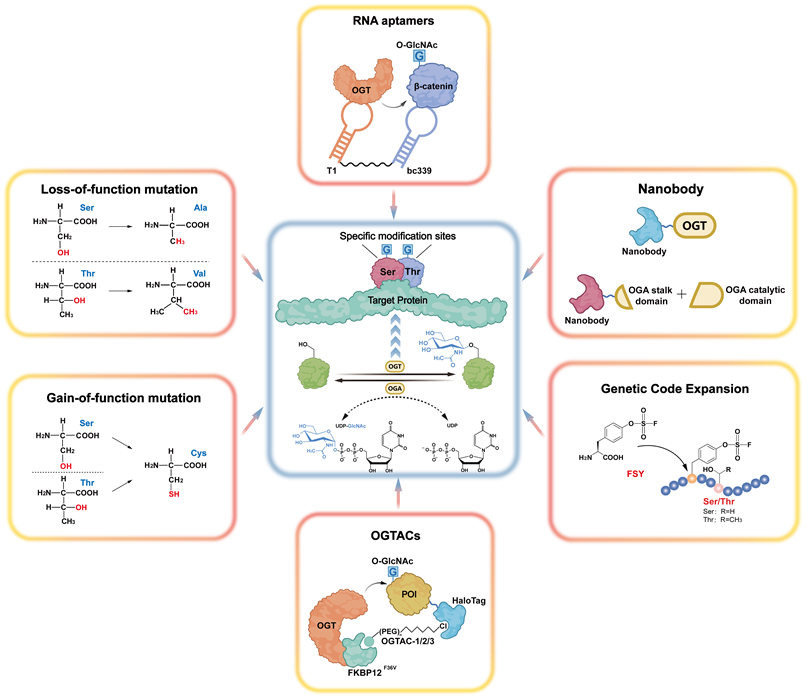
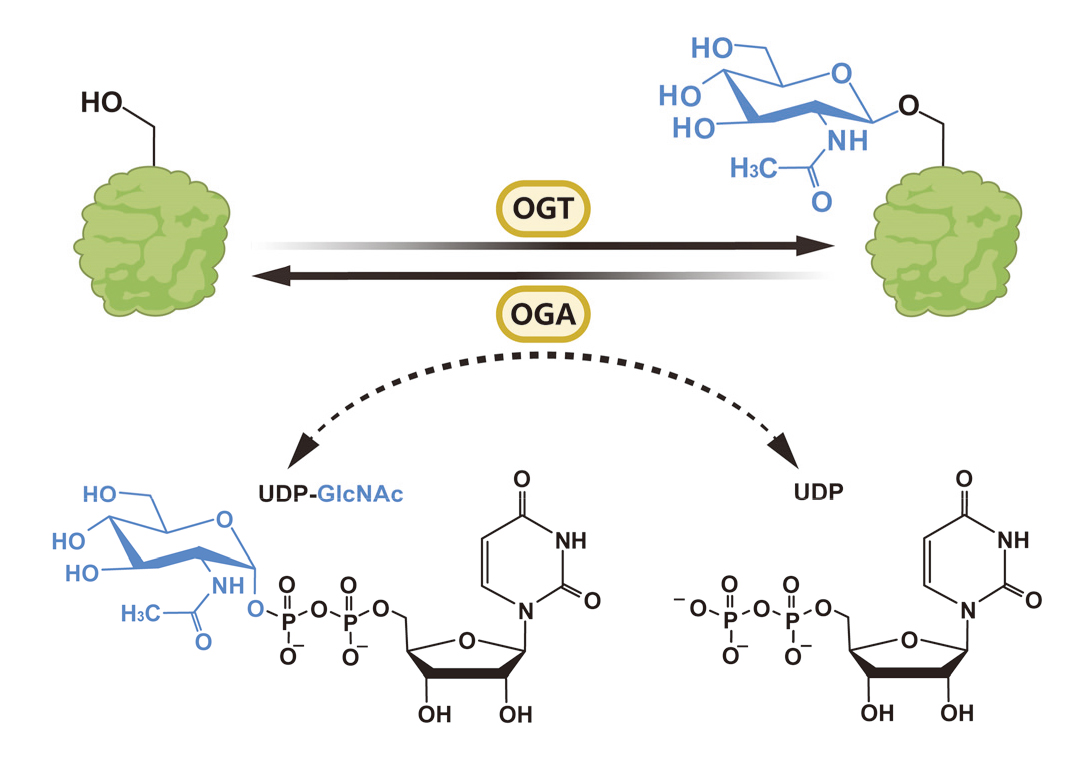
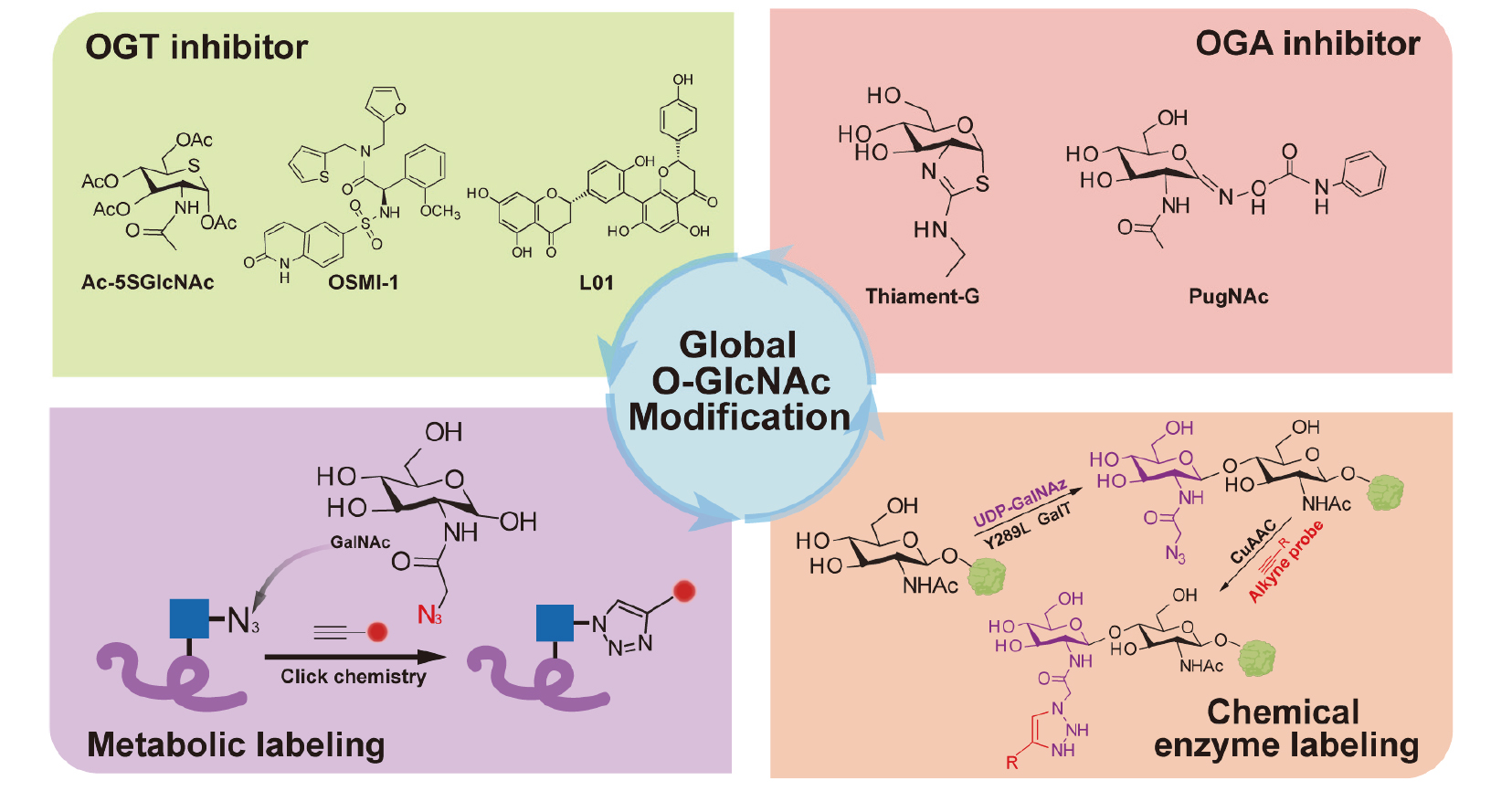
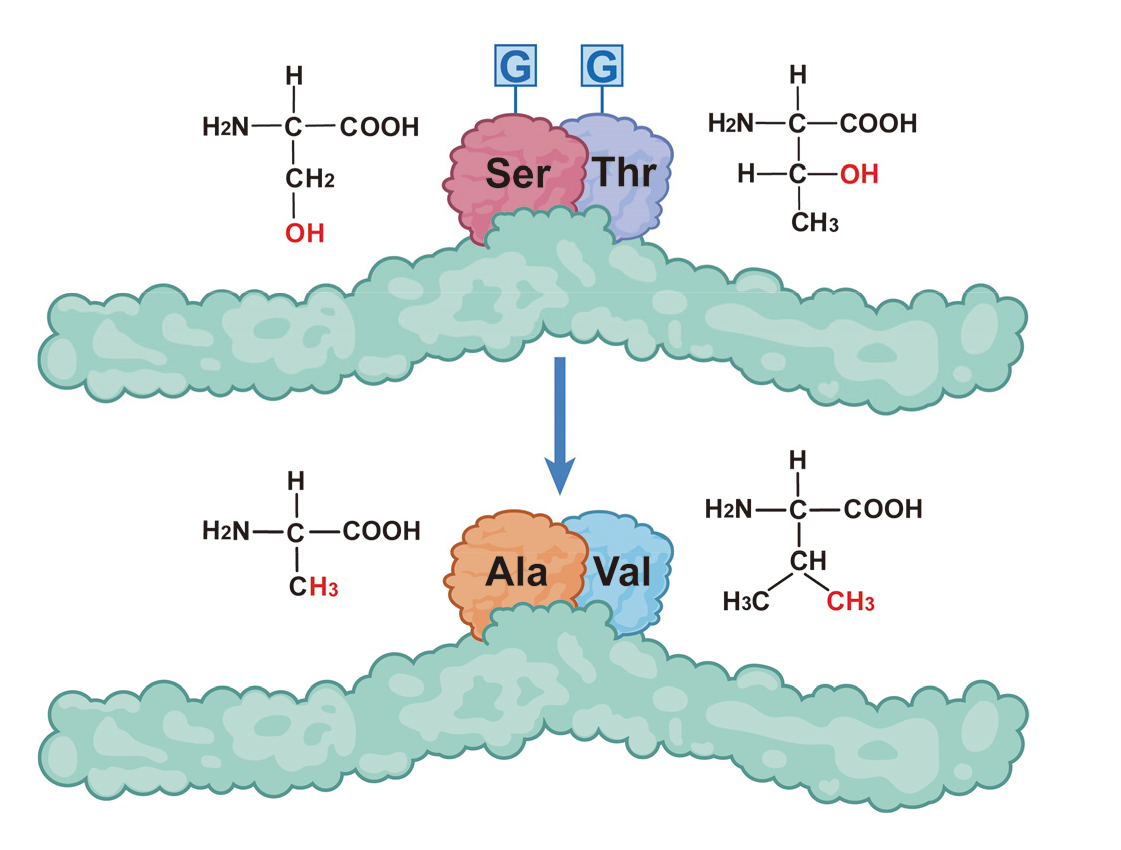
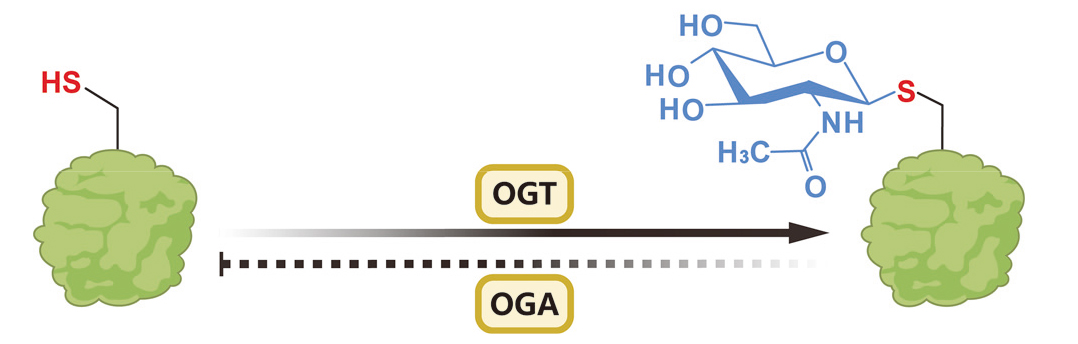
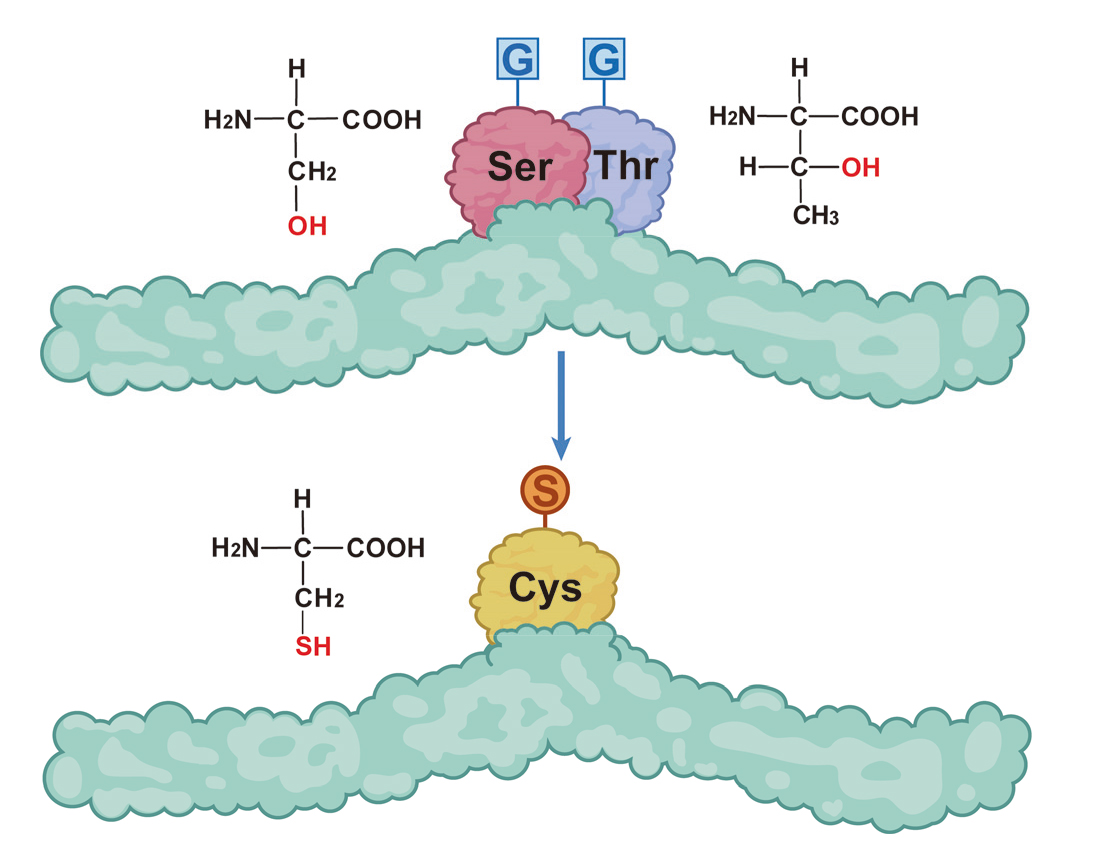
蛋白质O-连接β-N-乙酰葡萄糖胺(O-GlcNAc)糖基化是一种广泛存在于真核细胞中的动态可逆单糖修饰, 其修饰和水解过程分别由糖基转移酶(OGT)和糖基水解酶(OGA)催化完成. 该修饰参与调控基因转录、表观遗传修饰及信号转导等多种细胞过程. 随着研究的推进以及高分辨质谱等技术的应用, O-GlcNAc修饰位点鉴定数量迅速增加, 推动了其位点特异性功能研究. 然而, 直接干预OGT或OGA的策略会扰动细胞中大量蛋白的O-GlcNAc修饰, 难以解析特定蛋白修饰位点的功能. 为此, 开发靶向调控特定蛋白O-GlcNAc修饰的新工具与方法成为研究热点. 本文综述了近年来靶向调控蛋白质O-GlcNAc修饰方面的研究进展, 介绍了多种新兴化学生物学工具及策略, 并探讨了其在揭示O-GlcNAc修饰功能及疾病机制中的潜在应用价值.
于恺然, 张娜娜, 刘宇博. 靶向特定蛋白质的O-GlcNAc修饰精准调控工具:疾病机制研究与治疗机遇[J]. 化学学报, 2026, 84(3): 409-424.
Yu Kairan, Zhang Nana, Liu Yubo. Tools for Precise Control of Protein-Specific O-GlcNAcylation: Insights into Disease Mechanisms and Therapeutic Opportunities[J]. Acta Chimica Sinica, 2026, 84(3): 409-424.
| [46] |
doi: 10.1021/jacs.3c14380 |
| [47] |
doi: 10.1021/acschembio.5c00223 |
| [48] |
doi: 10.1016/j.cell.2022.12.016 pmid: 36626902 |
| [49] |
|
| [50] |
doi: 10.1038/nature09638 |
| [51] |
doi: 10.1016/j.molcel.2013.08.028 |
| [52] |
doi: 10.1128/MCB.24.8.3404-3414.2004 |
| [1] |
doi: 10.1074/jbc.274.45.32015 pmid: 10542233 |
| [2] |
pmid: 3086323 |
| [3] |
doi: 10.1074/jbc.M808518200 |
| [4] |
doi: 10.1242/jcs.00246 |
| [5] |
doi: 10.1186/s12929-022-00851-w |
| [6] |
|
|
(方丹, 章晓联, 中国生物化学与分子生物学报, 2024, 4, 484.)
|
|
| [7] |
doi: 10.1038/nrc3114 pmid: 21850036 |
| [8] |
|
| [9] |
doi: 10.1016/j.jbc.2024.107709 |
| [10] |
doi: 10.1186/s40164-024-00569-5 |
| [11] |
|
| [12] |
|
| [13] |
doi: 10.3389/fnagi.2024.1387931 |
| [53] |
doi: 10.1261/rna.074997.120 |
| [54] |
doi: 10.1038/nrm1403 |
| [55] |
doi: 10.1021/cb500499x pmid: 25101481 |
| [56] |
doi: 10.1016/0040-4039(95)01941-A |
| [57] |
doi: 10.1021/acs.orglett.8b02182 |
| [58] |
doi: 10.1126/science.7973629 pmid: 7973629 |
| [59] |
doi: 10.3389/fbioe.2020.00162 pmid: 32195241 |
| [60] |
doi: 10.1073/pnas.95.12.6705 |
| [61] |
doi: 10.1002/feb2.2017.591.issue-13 |
| [14] |
doi: 10.1021/acschemneuro.4c00301 pmid: 39082221 |
| [15] |
doi: 10.6023/A23020040 |
|
(张娜娜, 于恺然, 李际婷, 张嘉宁, 刘宇博, 化学学报, 2023, 81, 843.)
doi: 10.6023/A23020040 |
|
| [16] |
doi: 10.1073/pnas.1010045108 |
| [17] |
pmid: 14692737 |
| [18] |
doi: 10.1039/C6MB00138F |
| [19] |
doi: 10.1021/jacs.6b07132 |
| [62] |
doi: 10.1007/s00726-019-02699-1 |
| [63] |
doi: 10.1038/nchembio.771 |
| [64] |
doi: 10.1002/psc.2870 pmid: 27071766 |
| [65] |
doi: 10.1016/j.chempr.2023.10.020 |
| [66] |
doi: 10.1021/ar200056q |
| [67] |
doi: 10.1002/anie.v55.31 |
| [68] |
doi: 10.2174/0113892037275221240327042353 |
| [20] |
doi: 10.1021/acschembio.6b00678 |
| [21] |
doi: 10.1146/biochem.2011.80.issue-1 |
| [22] |
doi: 10.1073/pnas.0806216105 |
| [23] |
doi: 10.3389/fchem.2022.835733 |
| [24] |
|
| [25] |
doi: 10.1016/j.bbrc.2020.03.066 |
| [69] |
doi: 10.3389/fragi.2020.620382 |
| [70] |
|
| [71] |
doi: 10.1186/s40001-025-02886-9 |
| [72] |
doi: 10.1093/brain/awp099 |
| [73] |
doi: 10.1073/pnas.0400348101 |
| [74] |
doi: 10.1038/nchembio.96 |
| [26] |
doi: 10.1038/s41598-020-76862-0 |
| [27] |
doi: 10.1074/jbc.M116.766568 |
| [28] |
pmid: 27558639 |
| [29] |
doi: 10.1021/acs.biochem.7b00268 |
| [30] |
doi: 10.1002/anie.v58.6 |
| [31] |
doi: 10.1038/s41594-019-0325-8 pmid: 31695185 |
| [32] |
doi: 10.1093/glycob/cwad086 pmid: 37856504 |
| [33] |
doi: 10.1093/aob/mcv094 |
| [34] |
doi: 10.1038/nrm3286 |
| [35] |
doi: 10.1002/cbic.v10:18 |
| [36] |
doi: 10.1021/ja029433n |
| [37] |
doi: 10.1021/jacs.9b02611 |
| [38] |
doi: 10.1039/D0CB00052C |
| [75] |
doi: 10.1039/c0mb00337a pmid: 21327254 |
| [76] |
doi: 10.1021/ja407156m |
| [77] |
doi: 10.3389/fnagi.2023.1155630 |
| [78] |
|
| [79] |
doi: 10.1038/s41580-024-00753-9 |
| [80] |
doi: 10.1038/s41572-021-00280-3 pmid: 34210995 |
| [81] |
doi: 10.1073/pnas.1808845116 |
| [82] |
|
|
(巩金媛, 商世瑛, 谭忠平, 中国生物化学与分子生物学报, 2024, 4, 409.)
|
|
| [83] |
doi: 10.1021/acschemneuro.9b00527 pmid: 32078298 |
| [84] |
doi: 10.1038/nchem.2361 |
| [85] |
doi: 10.1021/acschembio.7b00113 pmid: 28195695 |
| [86] |
doi: 10.1088/1478-3975/abb6dc |
| [87] |
doi: 10.1016/j.bmc.2017.04.038 |
| [39] |
doi: 10.1074/jbc.M109.027409 pmid: 19666472 |
| [40] |
doi: 10.1021/jacsau.1c00455 |
| [41] |
doi: 10.1038/363446a0 |
| [42] |
|
| [43] |
doi: 10.3390/ijms24065994 |
| [44] |
doi: 10.1021/acschembio.0c00074 pmid: 32119511 |
| [45] |
doi: 10.1038/s41589-021-00757-y |
| [88] |
doi: 10.1016/j.neulet.2017.06.034 |
| [89] |
|
| [90] |
doi: 10.1021/acschemneuro.2c00057 pmid: 35357812 |
| [91] |
doi: 10.1186/s13041-017-0311-1 |
| [92] |
doi: 10.1038/s41589-024-01551-2 pmid: 38347213 |
| [93] |
doi: 10.1016/j.ceb.2020.10.011 |
| [94] |
doi: 10.1002/cm.v78.3 |
| [95] |
doi: 10.1021/acschembio.3c00292 |
| [96] |
doi: 10.1038/s41467-023-42227-0 pmid: 37848414 |
| [97] |
doi: 10.1016/j.cmet.2015.12.006 |
| [98] |
|
| [99] |
|
| [100] |
|
| [101] |
doi: 10.1186/s10020-022-00544-y |
| [102] |
doi: 10.1038/leu.2010.152 pmid: 20668475 |
| [103] |
doi: 10.3389/fimmu.2024.1327405 |
| [104] |
doi: 10.1016/j.jbc.2024.107635 |
| [105] |
doi: 10.1038/s41419-024-06700-y |
| [106] |
|
|
(薛俊杰, 孙慧, 中国生物化学与分子生物学报, 2024, 4, 474.)
|
|
| [107] |
doi: 10.1038/s41389-020-0208-1 |
| [108] |
doi: 10.1073/pnas.1704145115 |
| [109] |
doi: 10.1038/s41388-019-0975-3 |
| [110] |
doi: 10.1038/s41388-024-03035-y |
| [111] |
doi: 10.1038/s41467-019-13601-8 |
| [112] |
doi: 10.1038/s41467-017-02164-1 |
| [113] |
|
| [114] |
doi: 10.1002/anie.v60.50 |
| [115] |
|
| [116] |
doi: 10.1016/j.jbc.2023.105354 |
| [117] |
doi: 10.1038/s41467-020-19579-y |
| [118] |
doi: 10.1016/j.bbagen.2021.129930 |
| [119] |
doi: 10.1038/s41467-024-49875-w pmid: 38961064 |
| [120] |
|
| [121] |
doi: 10.1038/s41420-021-00489-x |
| [122] |
doi: 10.1038/s41598-017-10886-x pmid: 28878262 |
| [123] |
doi: 10.7150/ijbs.89700 |
| [124] |
doi: 10.1074/jbc.M113.495713 pmid: 24214978 |
| [125] |
doi: 10.1038/s41418-021-00901-0 |
| [126] |
doi: 10.1093/glycob/cww025 |
| [127] |
doi: 10.1016/j.prp.2021.153580 |
| [128] |
|
| [129] |
|
| [130] |
doi: 10.1021/acs.chemrev.4c00417 |
| [131] |
|
| [132] |
doi: 10.1038/nature06668 |
| [133] |
doi: 10.1038/emm.2005.30 |
| [134] |
doi: 10.1007/s00125-016-3919-2 pmid: 26993634 |
| [135] |
|
| [136] |
doi: 10.1038/s41467-019-13914-8 |
| [137] |
doi: 10.1074/jbc.M114.617779 pmid: 25596529 |
| [138] |
doi: 10.1016/S0003-9861(02)00397-1 |
| [139] |
doi: 10.1093/glycob/cwl067 |
| [140] |
doi: 10.1016/j.jnutbio.2023.109337 |
| [141] |
doi: 10.1074/jbc.M802240200 |
| [142] |
doi: 10.1038/s41574-018-0016-2 pmid: 29728598 |
| [143] |
doi: 10.3390/ijms160922856 pmid: 26402673 |
| [144] |
doi: 10.2174/0929866527666200813210407 |
| [1] | 张娜娜, 于恺然, 李际婷, 张嘉宁, 刘宇博. 化学生物学解析疾病中O-GlcNAc糖基化功能: 研究工具与策略[J]. 化学学报, 2023, 81(7): 843-856. |
| 阅读次数 | ||||||
|
全文 |
|
|||||
|
摘要 |
|
|||||
