

化学学报 ›› 2026, Vol. 84 ›› Issue (7): 1197-1210.DOI: 10.6023/A26030077 上一篇 下一篇
综述
徐慧妍a,b, 王爱珠a, 丁龙华a,*( ), 于欣a,*()
投稿日期:2026-03-19
发布日期:2026-05-08
作者简介: |
徐慧妍, 济南大学智能材料与工程研究院讲师, 硕士生导师. 2018年博士毕业于西安交通大学, 2015~2017年在香港城市大学攻读博士学位. 主要研究方向为纳米材料微纳结构设计及其在节能、催化及生物治疗等领域的应用研究. 以第一/通讯作者在Adv. Funct. Mater., Small, Rare Metals等学术期刊上发表论文十余篇. 授权国家发明专利5项. |
 |
王爱珠, 济南大学前沿交叉科学研究院副教授, 硕士生导师. 2016年博士毕业于山东大学, 2015~2016博士期间曾赴昆士兰科技大学联合培养, 2016~2018加入新加坡国立大学做 Research Fellow, 随后加入济南大学前沿交叉科学研究院. 主要研究方向为低维纳米材料电学、磁学、光学和力学性质的理论研究及其潜在的应用分析; 新型 2D Dirac 材料及其拓扑特效的理论设计与预测; 氧化还原反应等方面的研究. 在ACS Nano, Angew. Chem. Int. Ed., J. Phys. Chem. Lett., Nano Res.等国际核心刊物上公开发表学术论文70余篇. |
 |
丁龙华, 济南大学前沿交叉科学研究院副教授, 硕士生导师. 2015年博士毕业于浙江大学, 随后加入济南大学工作. 主要从事功能纳米材料的设计制备; 基于有机、无机复合材料在电催化、电容器方面的应用; 生物传感器的设计和构建包括电分析、荧光分析、比色分析等; 基于半导体复合材料在光/电催化方面的应用研究. 在包括Adv. Funct. Mater., Anal. Chem., Sens. Actuat. B-Chem等学术期刊上发表论文30余篇. |
 |
于欣, 济南大学前沿交叉科学研究院教授, 副院长, 博士生导师, 国家基金委优青, 山东省杰青, 泰山学者青年专家. 于2017年在中国科学院大学获得博士学位. 主要聚焦纳米催化材料在生物治疗及传感与器件领域, 开展多学科交叉的基础与应用研究. 以第一/通讯作者在Angew. Chem. Int. Ed., Adv. Mater., ACS Nano等学术期刊上发表论文70余篇. 担任Advanced Antibacterial Materials杂志的编委, BMEMat杂志的学术副主编, IJMMM的学术编辑等, 现为第七届中国青年科技工作者协会会员, 山东省高层人才发展促进会会员. |
基金资助:
Huiyan Xua,b, Aizhu Wanga, Longhua Dinga,*(), Xin Yua,*()
Received:2026-03-19
Published:2026-05-08
Contact:
* E-mail: bio_dinglh@ujn.edu.cn;
ifc_yux@ujn.edu.cn
Supported by:文章分享
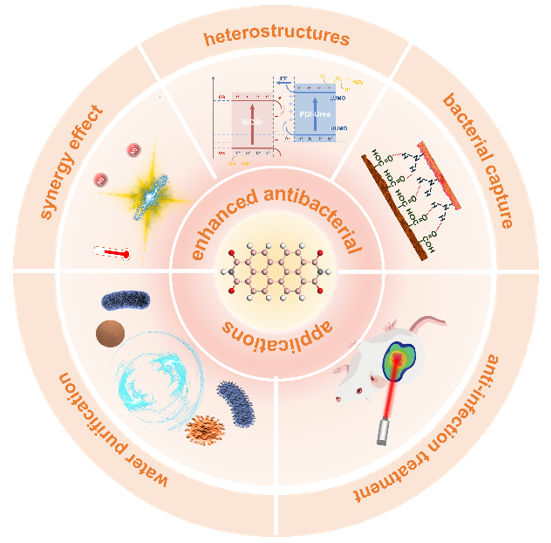
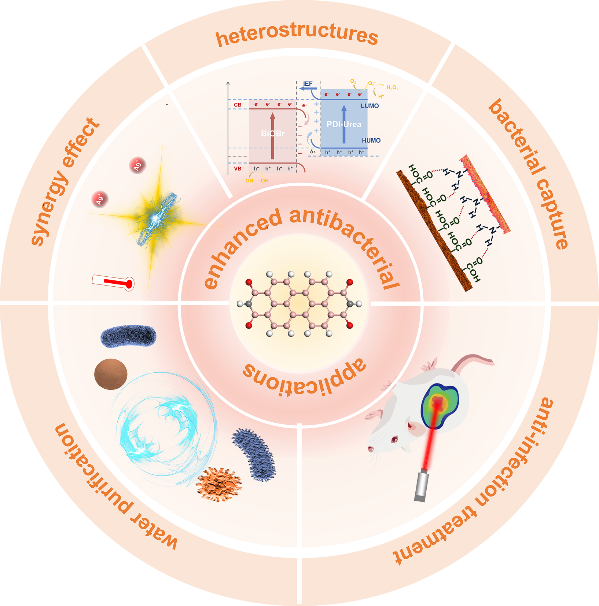
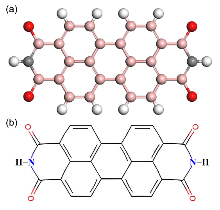
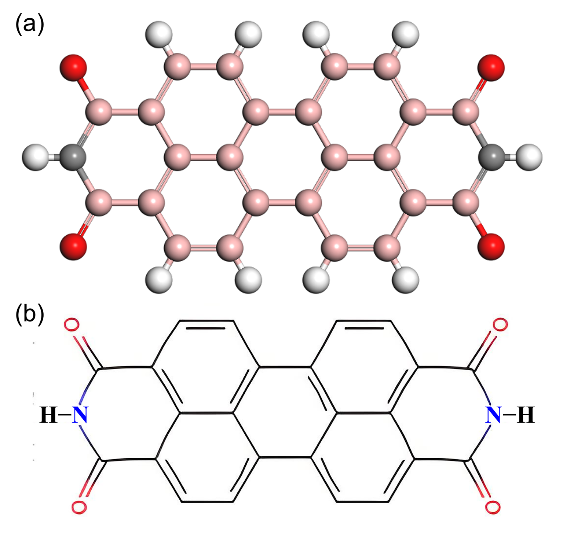
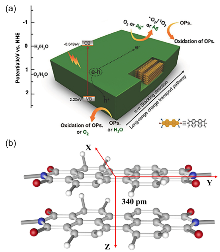
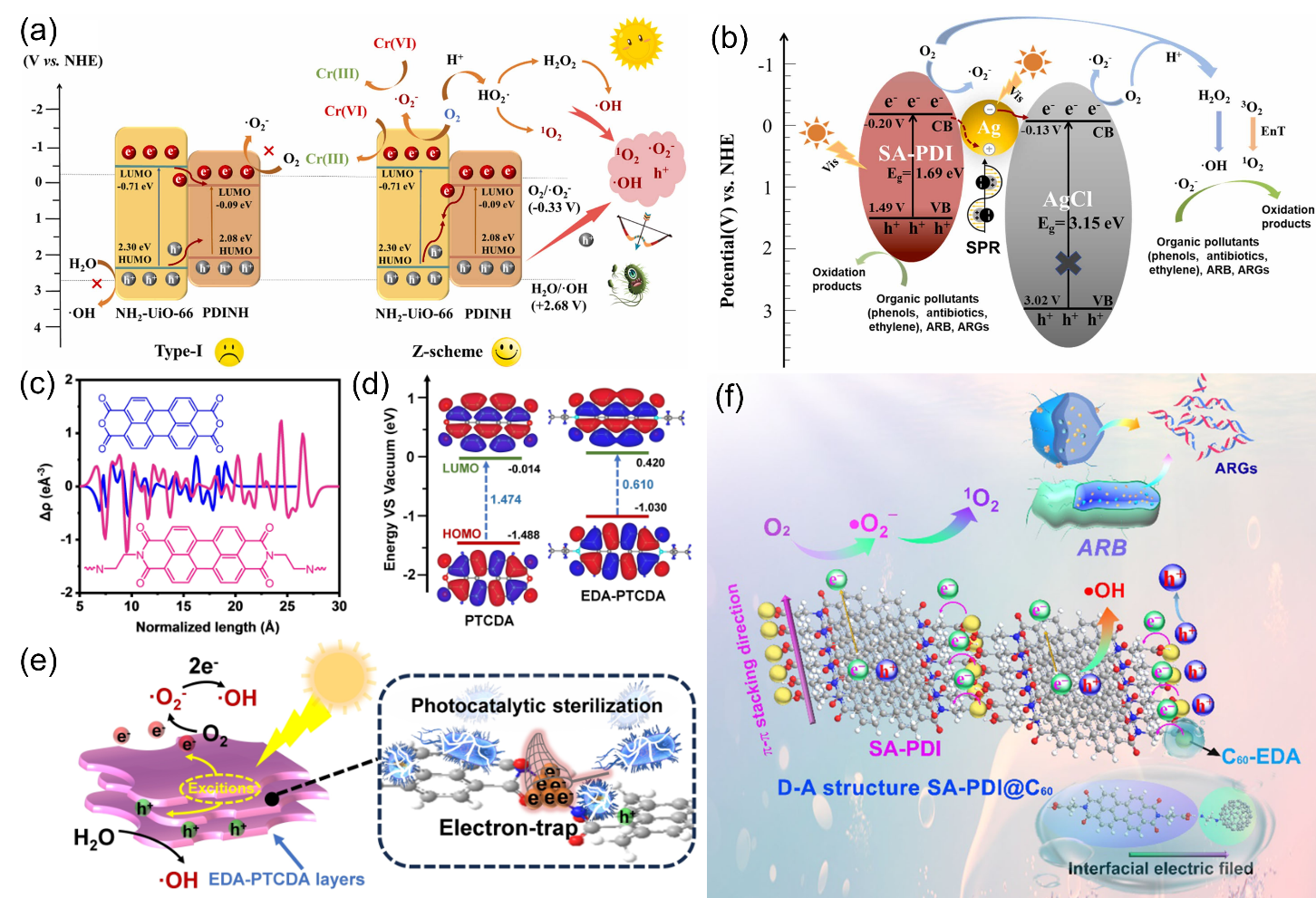
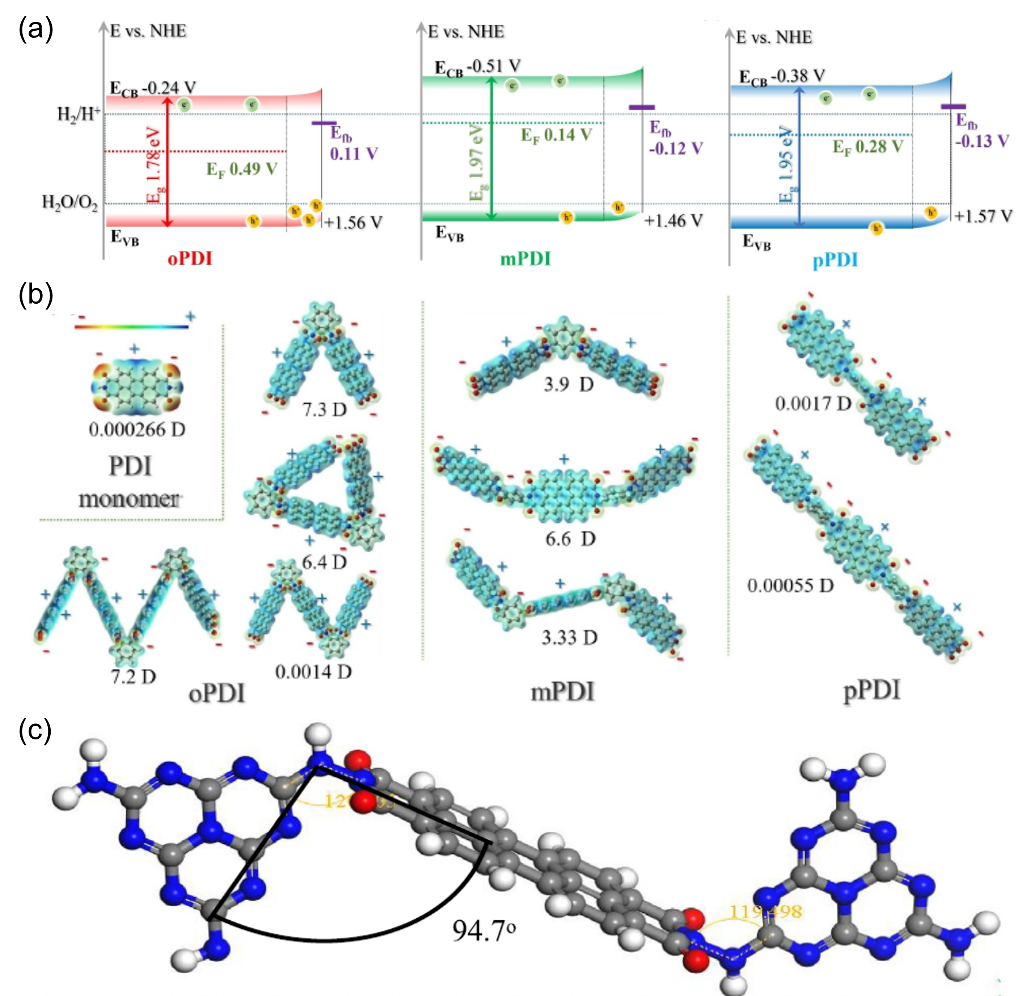
光催化抗菌技术因其不易诱导耐药性及良好的可持续性, 已成为应对细菌感染与环境污染的重要研究方向. 作为一类典型的有机半导体材料, 苝二酰亚胺(perylene diimide, PDI)因其可调的分子结构、优异的光吸收能力、稳定的π共轭体系以及良好的光电性能, 在光催化抗菌领域展现出独特优势. 本文系统综述了PDI基光催化抗菌体系的最新研究进展. 首先, 从分子结构特征与光电性质出发, 归纳了PDI材料的能带调控及光生载流子行为, 并阐明其介导活性氧物种生成的抗菌机制. 在此基础上, 重点总结了提升光催化抗菌性能的关键策略, 包括分子工程调控、异质结构构建与掺杂改性以增强光吸收与载流子分离效率, 以及界面电荷调控与功能基团引入以强化材料-细菌相互作用, 实现高效细菌捕获与局域协同杀菌效果. 同时, 概述了光催化与酶催化、光热及声动力等多效应耦合的协同抗菌模式. 进一步, 归纳了其在水体净化与细菌感染治疗中的应用进展, 并对生物安全性、复杂环境适应性及临床转化等发展方向进行了展望.
徐慧妍, 王爱珠, 丁龙华, 于欣. 基于苝二酰亚胺的光催化抗菌体系及其应用进展[J]. 化学学报, 2026, 84(7): 1197-1210.
Huiyan Xu, Aizhu Wang, Longhua Ding, Xin Yu. Advances in Perylene Diimide-Based Photocatalytic Antibacterial Systems and Their Applications[J]. Acta Chimica Sinica, 2026, 84(7): 1197-1210.
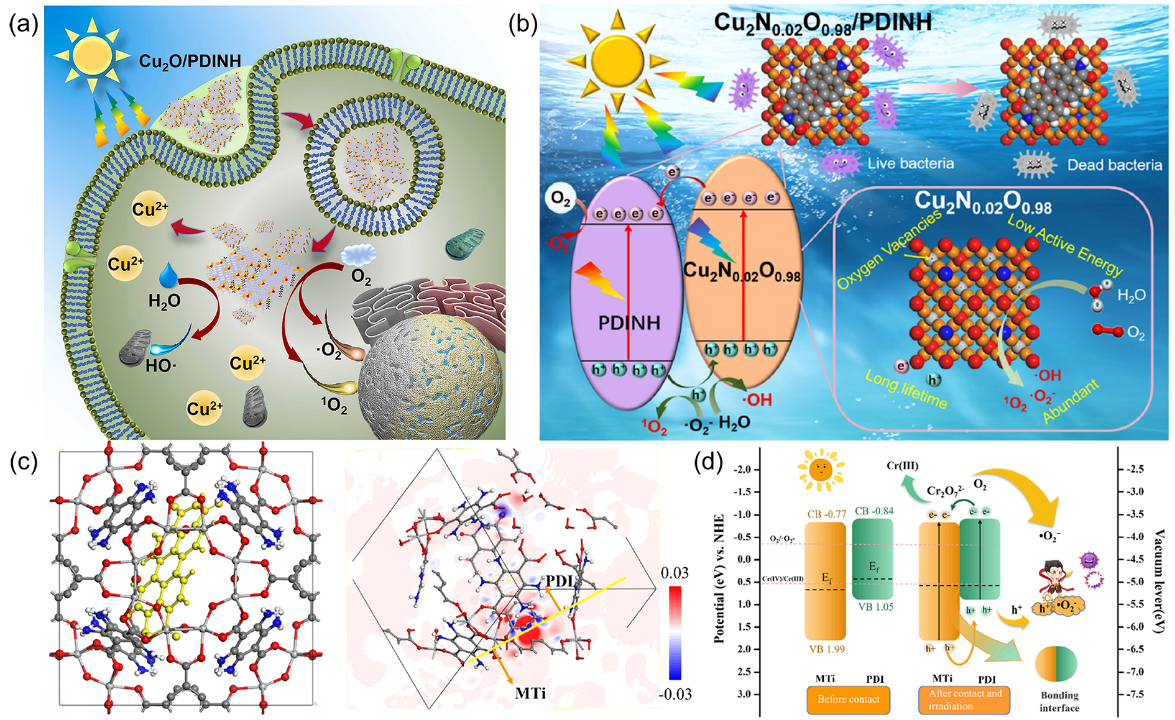
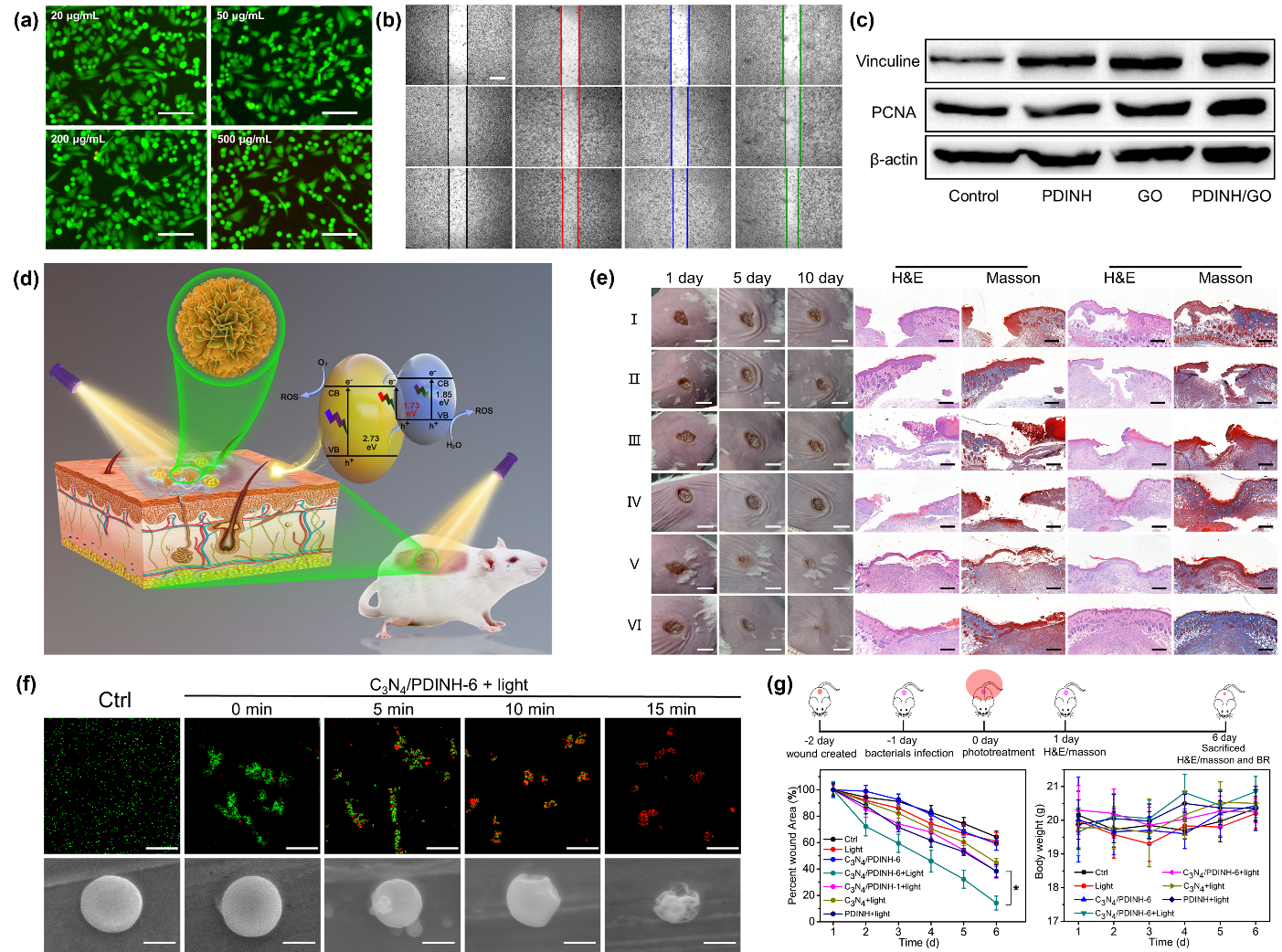
| 复合材料 | 作用菌种 | 光源 | 杀菌效率 | 循环稳定性 | 生物安全性 | PDI 核心功能 | 文献 |
|---|---|---|---|---|---|---|---|
| PDI/NH2-UiO-66 | E. coli S. aureus | 可见光 | >99% | 5次无明显下降 | 低毒 | 光敏单元 电子桥 | [ |
| Ag@AgCl/PDI | MRSA | 可见光 | 97%、95% | 5次稳定 | 良好 (无金属) | 光敏单元 捕获活化剂 | [ |
| Co-N-C/PDI | E. coli S. aureus | 可见光 | >99% | 8次 (磁分离) | 良好 | 光敏单元 H2O2原位源 | [ |
| Cu2O/PDI | S. aureus P. aeruginosa | 全光谱 | 30 d仍>90% | 10次稳定 | 低毒 (低金属泄漏) | 光敏单元 抗腐蚀 | [ |
| Sn3O4/PDI | E. coli S. aureus MRSA | 可见-近红外 | >99% | 5次高效 | 极低毒 促细胞增殖 | 光敏单元 细菌捕获 | [ |
| 复合材料 | 作用菌种 | 光源 | 杀菌效率 | 循环稳定性 | 生物安全性 | PDI 核心功能 | 文献 |
|---|---|---|---|---|---|---|---|
| PDI/NH2-UiO-66 | E. coli S. aureus | 可见光 | >99% | 5次无明显下降 | 低毒 | 光敏单元 电子桥 | [ |
| Ag@AgCl/PDI | MRSA | 可见光 | 97%、95% | 5次稳定 | 良好 (无金属) | 光敏单元 捕获活化剂 | [ |
| Co-N-C/PDI | E. coli S. aureus | 可见光 | >99% | 8次 (磁分离) | 良好 | 光敏单元 H2O2原位源 | [ |
| Cu2O/PDI | S. aureus P. aeruginosa | 全光谱 | 30 d仍>90% | 10次稳定 | 低毒 (低金属泄漏) | 光敏单元 抗腐蚀 | [ |
| Sn3O4/PDI | E. coli S. aureus MRSA | 可见-近红外 | >99% | 5次高效 | 极低毒 促细胞增殖 | 光敏单元 细菌捕获 | [ |
| [1] |
|
| [2] |
doi: 10.6023/A25050176 |
|
(施寒竹, 高雅宁, 陈昭玉, 戴陈伟, 周秀红, 张颖颖, 化学学报, 2025, 83, 1363.)
doi: 10.6023/A25050176 |
|
| [3] |
doi: 10.1002/advs.v10.11 |
| [4] |
doi: 10.6023/A24050161 |
|
(康健, 石梓煊, 李景梅, 化学学报, 2024, 82, 962.)
doi: 10.6023/A24050161 |
|
| [5] |
doi: 10.1126/science.abg9868 |
| [6] |
doi: 10.1002/smll.v19.52 |
| [7] |
|
|
(方显, 周凡, 宋晓志, 黄倩, 马一丹, 姜子涵, 薛俊杰, 顾华杰, 刘守清, 朱孟娇, 复合材料学报, 2026, 43, 2027.)
|
|
| [8] |
doi: 10.3390/molecules25071598 |
| [9] |
|
| [10] |
doi: 10.6023/A24080252 |
|
(王英辉, 王雨辉, 熊佳瑶, 苏思琪, 郝梦珂, 魏思敏, 化学学报, 2024, 82, 1150.)
doi: 10.6023/A24080252 |
|
| [11] |
doi: 10.1016/j.scitotenv.2023.169815 |
| [12] |
doi: 10.1007/s12598-022-02208-6 |
| [13] |
doi: 10.1039/D3NR06531F |
| [14] |
doi: 10.1002/smll.v18.8 |
| [15] |
doi: 10.1016/j.coche.2021.100777 |
| [16] |
doi: 10.1039/D4CS00029C |
| [17] |
doi: 10.6023/A24120373 |
|
(邹祺名, 吴振, 崔宁, 张泽天, 王国杰, 化学学报, 2025, 83, 287.)
doi: 10.6023/A24120373 |
|
| [18] |
doi: 10.1016/j.jphotochemrev.2021.100436 |
| [19] |
doi: 10.1016/j.colsurfa.2022.129902 |
| [20] |
doi: 10.1016/j.jece.2024.112962 |
| [21] |
doi: 10.1016/j.cej.2022.138129 |
| [22] |
doi: 10.1002/anie.v56.51 |
| [23] |
doi: 10.1186/s12866-023-02955-1 |
| [24] |
|
|
(陈秀琼, 步亚楠, 范吉吉, 吴婷, 颜慧琼, 林强, 复合材料学报, 2026, 43, 3754.)
|
|
| [25] |
|
| [26] |
doi: 10.1002/anie.v63.46 |
| [27] |
doi: 10.1039/D3TA06862E |
| [28] |
|
| [29] |
doi: 10.1016/j.seppur.2024.129721 |
| [30] |
doi: 10.1002/anie.v64.44 |
| [31] |
doi: 10.1016/j.seppur.2024.131146 |
| [32] |
doi: 10.1002/anie.v63.5 |
| [33] |
doi: 10.1002/adma.v28.33 |
| [34] |
|
| [35] |
doi: 10.1016/j.cej.2024.148978 |
| [36] |
doi: 10.3390/microorganisms10020437 |
| [37] |
pmid: 16045330 |
| [38] |
doi: 10.1002/adfm.v27.16 |
| [39] |
doi: 10.1039/D3DT00788J |
| [40] |
doi: 10.1016/j.jphotochem.2020.113058 |
| [41] |
|
| [42] |
doi: 10.1021/acs.jpcb.5c01366 |
| [43] |
doi: 10.1016/j.jhazmat.2023.130849 |
| [44] |
|
| [45] |
doi: 10.1016/j.jhazmat.2025.137429 |
| [46] |
doi: 10.1021/acs.nanolett.4c03853 |
| [47] |
doi: 10.1002/anie.v62.48 |
| [48] |
|
| [49] |
doi: 10.1002/cctc.v16.2 |
| [50] |
doi: 10.1021/acscatal.4c07066 |
| [51] |
|
| [52] |
doi: 10.1002/anie.v63.8 |
| [53] |
doi: 10.1002/adma.v35.25 |
| [54] |
doi: 10.1016/j.mattod.2022.10.024 |
| [55] |
doi: 10.1021/acsnano.4c07856 |
| [56] |
doi: 10.1002/adhm.v13.1 |
| [57] |
doi: 10.1038/s44222-023-00119-4 |
| [58] |
doi: 10.1002/vnl.v27.1 |
| [59] |
doi: 10.1039/c7ob02749d pmid: 29165489 |
| [60] |
doi: 10.1002/smll.v17.39 |
| [61] |
doi: 10.1016/j.cej.2022.139007 |
| [62] |
|
| [63] |
doi: 10.1016/j.dyepig.2021.109698 |
| [64] |
doi: 10.1016/j.seppur.2024.131141 |
| [65] |
doi: 10.1016/j.apsusc.2023.157554 |
| [66] |
doi: 10.1016/j.cej.2025.162373 |
| [67] |
doi: 10.1007/s11356-024-34932-0 |
| [68] |
doi: 10.1007/s00253-003-1302-y |
| [69] |
doi: 10.1007/s11356-024-34355-x |
| [70] |
doi: 10.1016/j.jece.2023.110915 |
| [71] |
doi: 10.1016/j.jhazmat.2023.130851 |
| [72] |
doi: 10.1016/j.jmst.2024.05.018 |
| [73] |
|
| [74] |
doi: 10.1002/adma.v32.48 |
| [75] |
doi: 10.1002/adma.v31.33 |
| [76] |
|
| [1] | 冯丹宁, 封波, 万坤, 谢颂海, 裴燕, 乔明华, 宗保宁. S/B/K共掺杂调控氮化碳电子结构用于高效光催化合成H2O2[J]. 化学学报, 2026, 84(7): 1140-1152. |
| [2] | 赵紫璞, 孙雨涵, 张静洁, 郭文迪, 鲍晓冰, 罗巧梅, 苟蕾, 樊小勇. 钴掺杂提升夏威夷果壳基硬碳的储钠稳定性和高倍率容量[J]. 化学学报, 2026, 84(6): 871-878. |
| [3] | 曾子杰, 彭子凌, 王晨, 谈发堂, 王新云, 王保强, 王维. 氮化碳的氮空位与可见光催化产H2O2研究[J]. 化学学报, 2026, 84(6): 879-887. |
| [4] | 陈中胜, 雷天灏, 彭炜, 陈娴琳, 燕春培, 罗峰. 共价有机框架材料在海水提铀中的研究进展★[J]. 化学学报, 2026, 84(5): 736-754. |
| [5] | 韩中艳, 陈梅梅, 张驰, 薛伟, 谷利军. 电化学芳基乙烯硫羟基化反应合成β-羟基硫醚及其抗菌活性[J]. 化学学报, 2026, 84(3): 280-286. |
| [6] | 宋玉朋, 华紫辉, 葛介超, 王春儒, 吴波. 具有强大内建电场的C60@TpPa共价有机框架材料高效光催化产氢[J]. 化学学报, 2026, 84(3): 370-376. |
| [7] | 汪晨程, 欧阳班来, 钟品勇, 张莺瑢, 刘晋彪. 光催化2-氨基苯甲醇与异硫氰酸酯脱硫环化合成2-氨基-1,3-苯并噁嗪[J]. 化学学报, 2026, 84(1): 1-7. |
| [8] | 史同同, 李佳, 殷一樊, 孙凯. 光化学驱动α-三氟甲基烯烃的多样性转化[J]. 化学学报, 2026, 84(1): 135-159. |
| [9] | 彭琼慧, 彭佳, 蔡迎丽, 王祖利, 易荣楠, 沈超, 何卫民. 二苯醚介导氧化铈半多相光催化2-异腈基联苯氟烷基化反应[J]. 化学学报, 2025, 83(9): 1013-1017. |
| [10] | 闫生荣, 刘文浩, 段芳, 陈明清, 东为富, 陆双龙, 杜明亮. 基于sp2-碳连接具有D-A结构共价有机框架的构筑及其光催化产双氧水性能研究[J]. 化学学报, 2025, 83(7): 685-693. |
| [11] | 于千水, 戚聪, 顾顺心, 杨欣达, 姜琴, 魏荣斌, 施鹏飞. 基于胸腺嘧啶三联吡啶的双核铱配合物的发光及抗肿瘤活性研究[J]. 化学学报, 2025, 83(6): 579-587. |
| [12] | 李文静, 杨黎燕, 关丽, 张雪娇, 尤静, 沈思语, 赵钰琦, 段琛. 可见光/硫酚催化烯烃C=C双键的氧化裂解反应[J]. 化学学报, 2025, 83(6): 596-601. |
| [13] | 崔雨琪, 李军玉, 孙建科. 多孔有机笼用于能源转换及储存的研究进展[J]. 化学学报, 2025, 83(6): 624-638. |
| [14] | 罗雅玲, 庄展洋, 范峰滔, 李灿. Al掺杂SrTiO3的合成调控及其光催化全分解水性能[J]. 化学学报, 2025, 83(6): 608-615. |
| [15] | 卢一林, 董盛杰, 崔方超, 薄婷婷, 毛卓. 希托夫紫磷烯/SnS2范德华异质结作为直接全解水光催化剂的理论构建[J]. 化学学报, 2025, 83(4): 377-389. |
| 阅读次数 | ||||||
|
全文 |
|
|||||
|
摘要 |
|
|||||
